
12 days in Thailand 1/7- 1/18/2025
Day 2- Ayutthaya Temples and River Cruise from Bangkok-1/8/2025
2nd Stop: Wat Phrasisanpeth, Ayutthaya
The bus dropped us off at the entrance of Wat Phrasisanpeth, one of the most important and historically significant temples in Ayutthaya. Among all the ruins in the ancient capital, this temple was the holiest royal temple of the Ayutthaya Kingdom, somewhat similar to the role of Wat Phra Kaew in modern Bangkok. Today the temple complex is part of UNESCO World Heritage Site, and the entire area is preserved as an open archaeological park.

Our tour guide telling us that Wat Phra Si Sanphet was a former royal temple in the ancient city of Ayutthaya, and one of the most significant religious monuments of the former Siamese kingdom. Built within the royal palace compound, it served as the spiritual center of Ayutthaya’s monarchy and exemplifies classical Ayutthaya architectural style.
Today, Wat Phra Si Sanphet stands as a major attraction within Ayutthaya Historical Park, drawing visitors for its archaeological importance and serene beauty. Its preserved ruins serve as a key testament to the grandeur of the Ayutthaya Kingdom and the evolution of Thai religious architecture.

The temple was built in the 15th century on the grounds of the former royal palace by King Borommatrailokkanat. When the king moved the palace to another area, the old palace grounds were converted into this sacred temple complex. Unlike many other temples in the city, Wat Phra Si Sanphet was primarily used by the royal family. Monks did not live here. Instead, the temple served as the royal chapel, where kings performed ceremonies, religious rituals, and important state events.

The stupas can be recognize by their rounded bell shape, circular base terraces, tall and tapering spires on top.
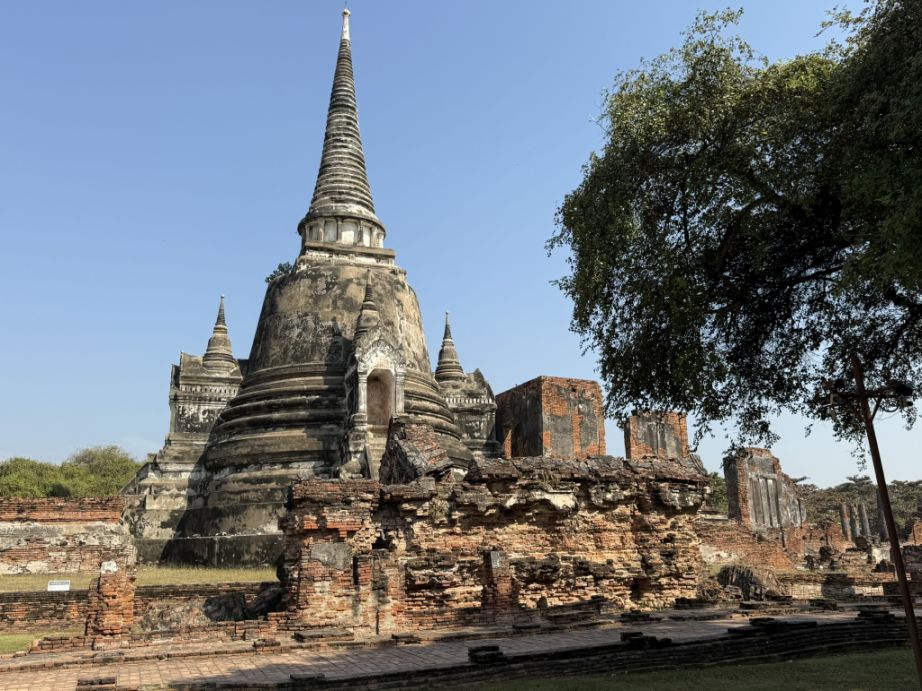
These stupas are known as chedis, and they follow a Sri Lankan–influenced bell-shaped style, which became very popular in the architecture of the Ayutthaya Kingdom.

These chedis were built to enshrine relics or cremated remains of royalty and important monks, and they were also monuments built to accumulate religious merit.

At its height, the temple was one of the most magnificent places in the kingdom, filled with large Buddha statues, ceremonial halls, and richly decorated stupas.
Sadly, like much of the city, it was destroyed in 1767 during the Burmese–Siamese War (1765–1767), when invading armies burned the temple and looted many treasures.
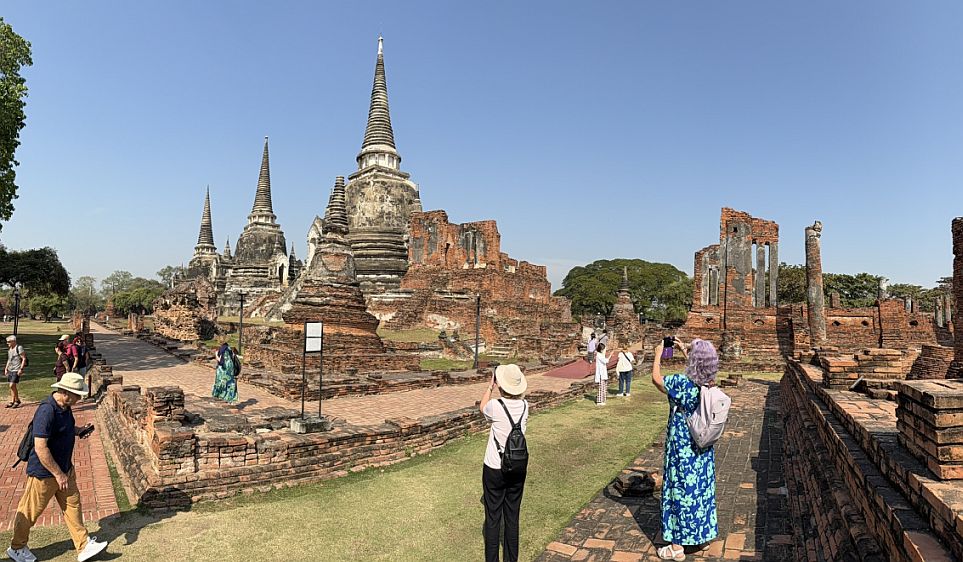
We are now at the most famous structures at the temple are the three large chedis standing in a row. These are the iconic towers you see in many photos of Ayutthaya.

Each of these stupas holds the ashes of a king: King Borommatrailokkanat, King Borommarachathirat III, and King Ramathibodi II.
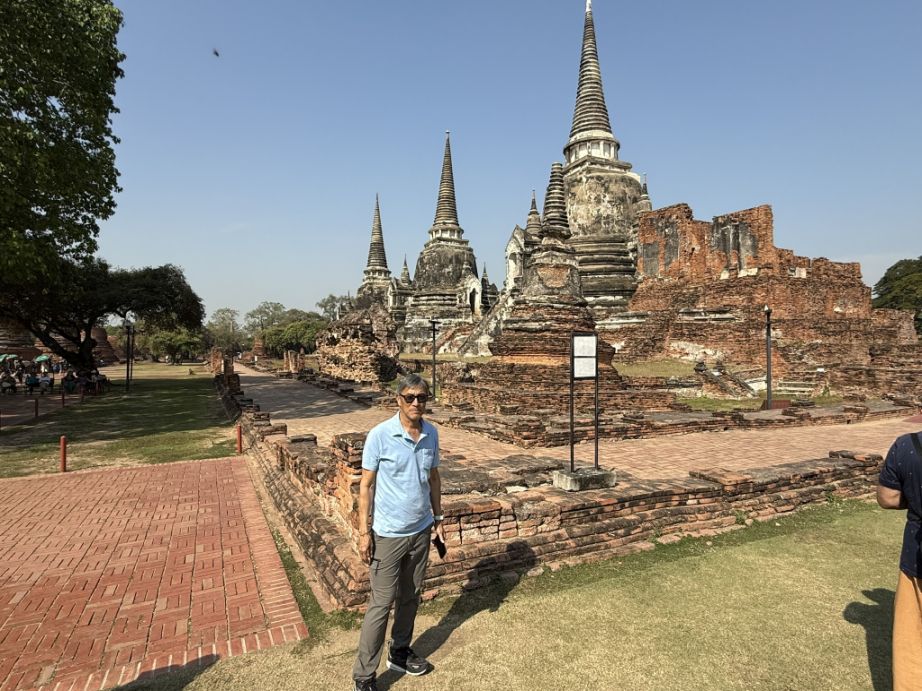
Originally these stupas were covered in white stucco, which would have made them gleam in the sunlight. Today the red brick structure underneath is visible because the decorative plaster was lost over centuries.
 |
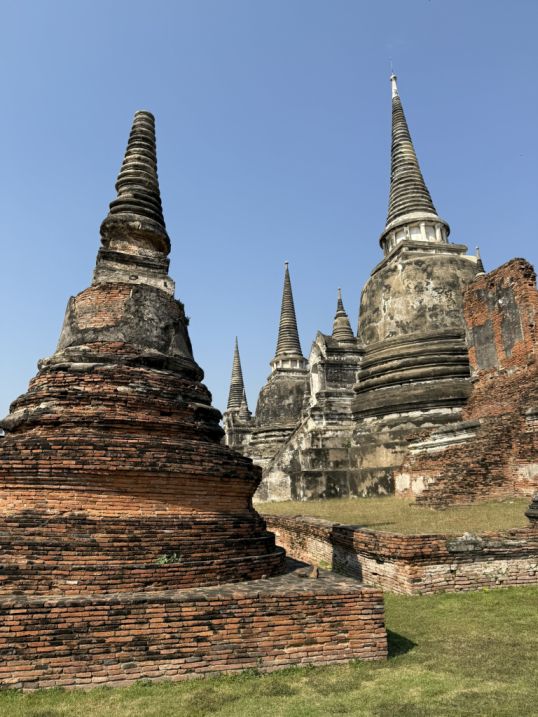 |
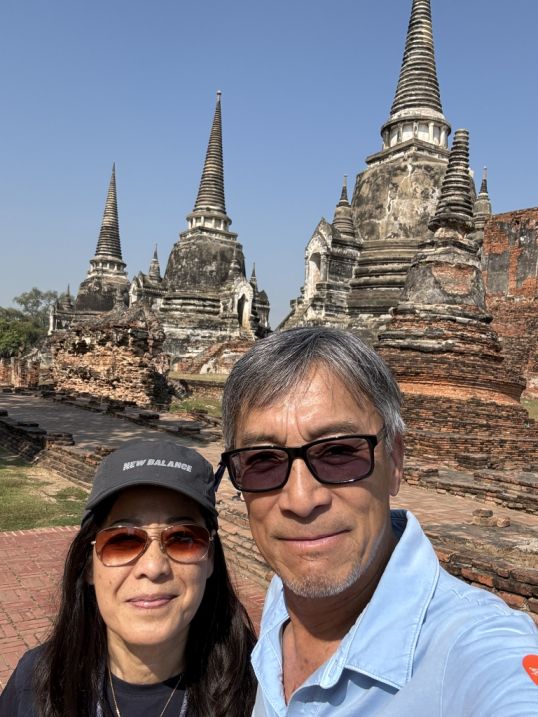
These three stupas symbolize the power and prestige of the Ayutthaya royal dynasty.
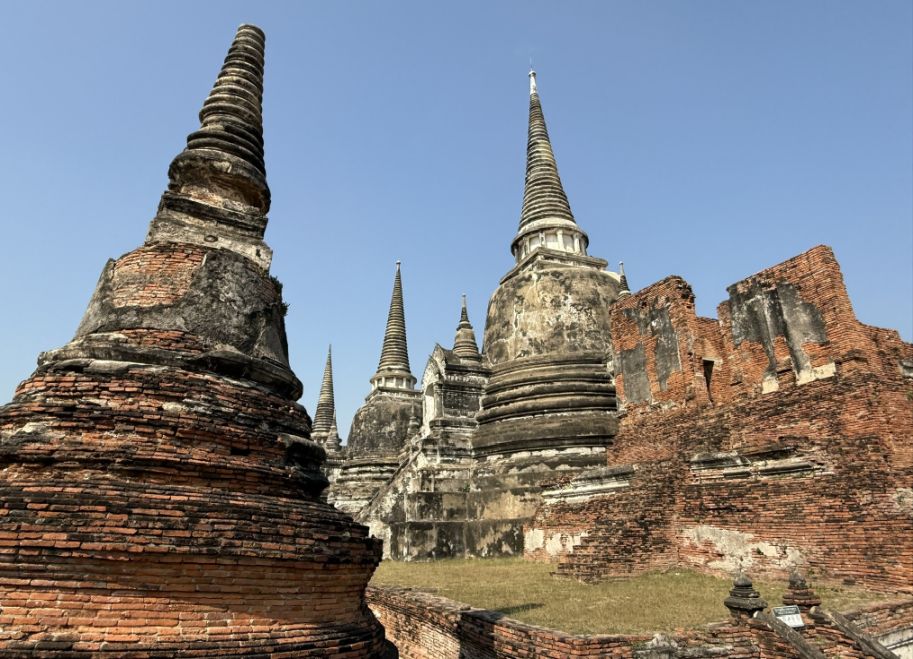

People taking pictures of the iconic 3 stupas.

Near the stupas we noticed rows of large brick pillars and foundations, which indeed can look a bit like ancient ruins in Egypt. These pillars are the remains of a large building called the viharn, or assembly hall.
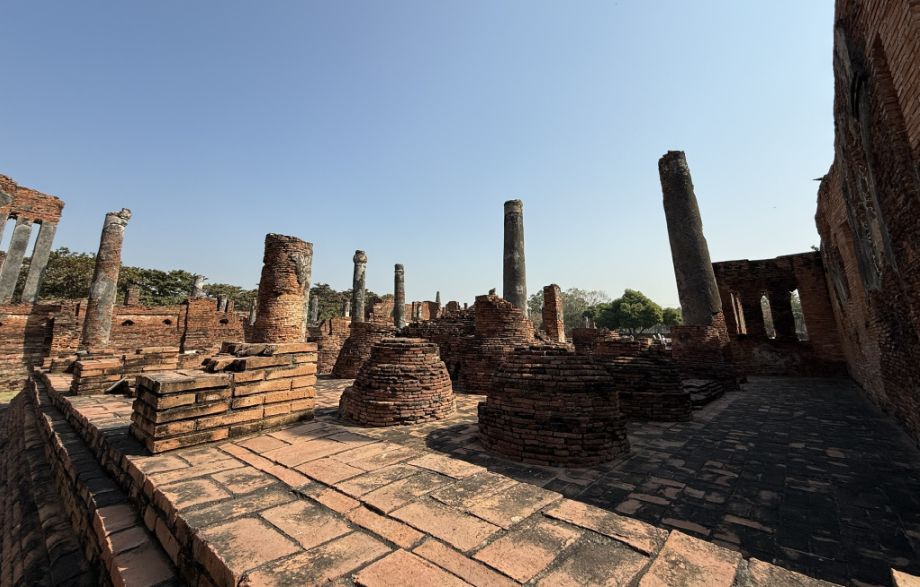
This hall once housed one of the most famous statues in Thailand, a massive standing Buddha covered with hundreds of kilograms of gold. The statue was known as Phra Si Sanphetdayan, and it stood over 50 feet tall. When the Burmese army destroyed the city in 1767, they burned the temple and melted down the gold covering the statue, leaving only the ruins of the building and its pillars behind.

The rows of columns you see today are the skeletal remains of that grand ceremonial hall, which once held one of the most magnificent Buddha statues in the kingdom.

Walking through Wat Phra Si Sanphet today, we are standing in what was once the spiritual and ceremonial heart of the royal capital. The elegant three stupas, the scattered chedis, and the ruins of the viharn create one of the most iconic landscapes in Ayutthaya.

Ruins
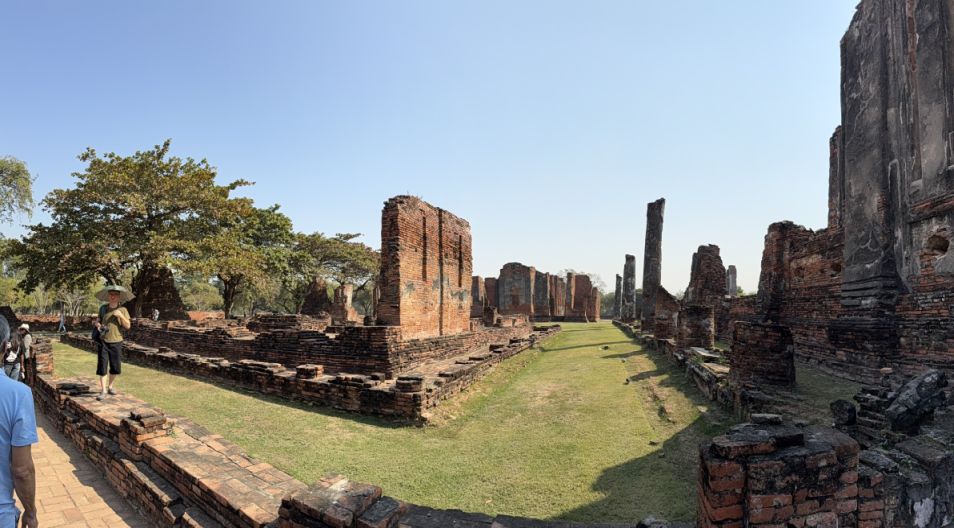
When we moved slightly away from the ruins of the viharn (the assembly hall where the giant Buddha once stood), we saw what looks like the remains of a shallow moat or water channel. What we see today are often just depressions or partial channels, but originally they would have contained water surrounding parts of the sacred structures.

As we continued walking, we passed along long brick pathways lined with trees. These paths once connected different buildings of the temple complex.
Today the trees growing along these paths create a peaceful atmosphere, but in the past these walkways would have been filled with monks, royal processions, and worshippers during ceremonies.

In the Ayutthaya period, these walkways would have linked: the royal chapel, the ordination hall, monasteries and smaller shrines, ceremonial courtyards.
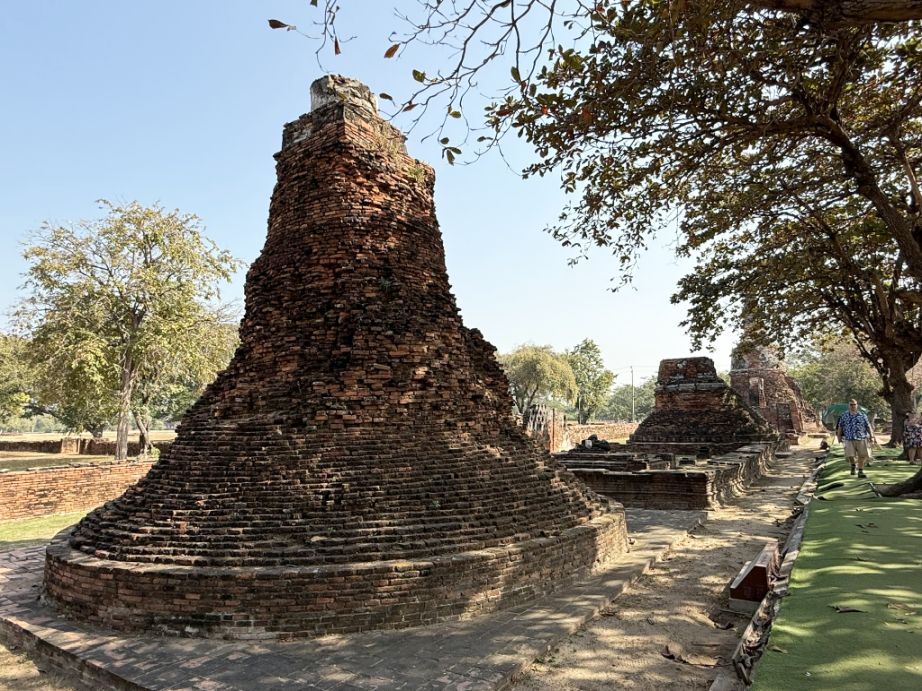
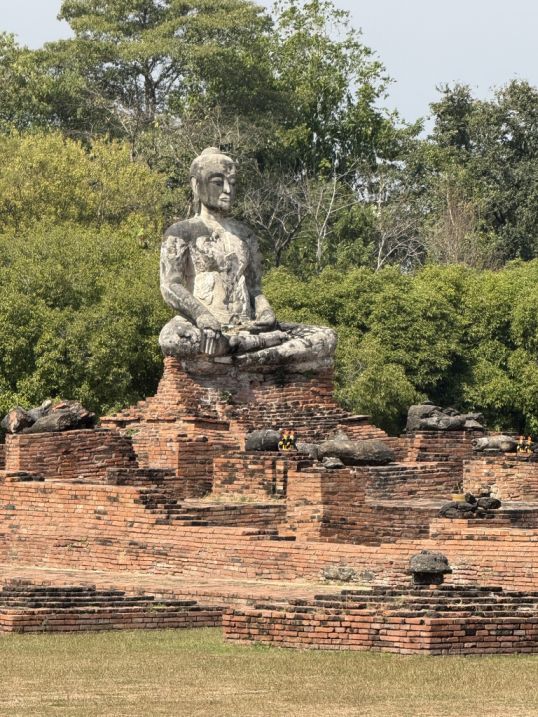
Along the path we saw several large bell-shaped chedis, some heavily damaged and others still standing in their original shape. Over the centuries, weather, earthquakes, and the destruction of the city caused many of them to lose their upper spires, which is why some appear truncated or worn down.

Further along there is a large structure with tall brick walls. These walls are typically the remains of one of the temple’s major buildings such as a viharn (assembly hall) or a royal ceremonial building.

This used to be a Vihara (assembly hall) to enshrine the Buddha image namely, Phra Lokanat. Today the image is in Wat Phrachetuphon (Wat Pho), Bangkok.
One thing many visitors notice when traveling between Ayutthaya and Bangkok is how different the temples look. The ruins in Ayutthaya are mostly red brick, while the temples in Bangkok are golden, colorful, and richly decorated. The reason lies in history, materials, and the destruction of the old capital.

During the time of the Ayutthaya Kingdom, most large buildings were constructed using brick covered with white stucco. Originally the temples you see today were not bare red brick. They would have been covered in white plaster, decorated with painted designs, sometimes covered with gold leaf, and adorned with ceramic tiles and carvings.

Over centuries, the plaster and decoration eroded, leaving only the brick core structures that you see today.

A major reason the temples look like ruins today is the destruction during the Burmese–Siamese War (1765–1767).

When the Burmese army invaded, all the temples were burned, wooden roofs collapsed, gold and bronze statues were looted or melted, and decorations were destroyed. hat remained were the brick skeletons of the buildings, the walls, stupas, and prangs. After Ayutthaya was destroyed, the Thai kingdom eventually moved its capital to Bangkok in 1782 under Rama I.
 |
 |
Instead of rebuilding the old capital, the Thai kings left the ruins mostly untouched. Over time the jungle and trees grew among the temples, creating the archaeological landscape you see today.
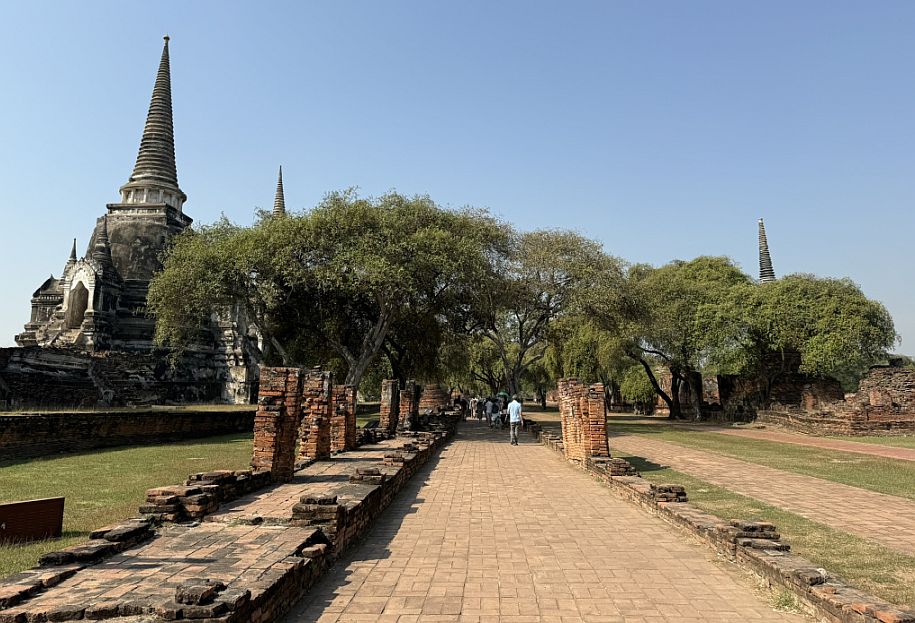
This is why walking through Ayutthaya feels like exploring an ancient lost city, while Bangkok temples feel alive, colorful, and active with worshippers.

This large chedi with stairs leading up to is another example of the grand Sri Lankan–style chedi common in the temples of the Ayutthaya Kingdom. These chedis were built on high square bases with stairways so that worshippers or monks could reach the upper terraces.
 |
 |
From the terraces people could walk around the stupa as part of devotional practice, symbolically circling the sacred relics inside.

We are passing by the Cruciform Vihara. The name “cruciform” refers to the cross-shaped floor plan of the building.
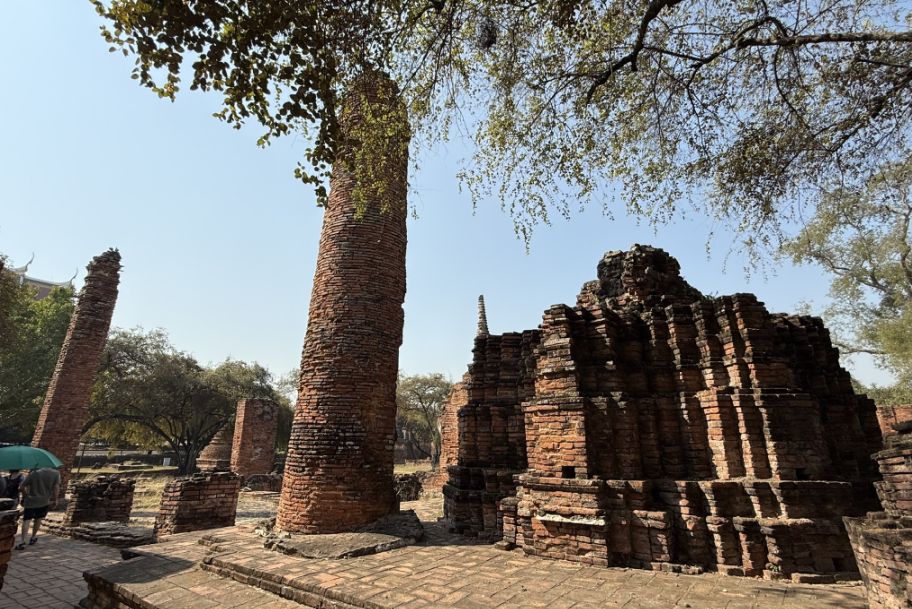
This type of vihara (assembly hall) had four projecting wings, forming a cross-like shape, which allowed worshippers to approach the central Buddha statue from multiple directions.
Inside this hall once stood one of the most magnificent Buddha statues of the Ayutthaya kingdom.

More chedis along the way.

Straight ahead is the interpretive museum pavilion located within the grounds of Wat Phra Si Sanphet.

It is designed to resemble a traditional Thai temple hall, which is why from the outside it looks similar to a small temple rather than a modern museum.

Before entering, we walked through a courtyard filled with large pots of lotus flowers.
 |
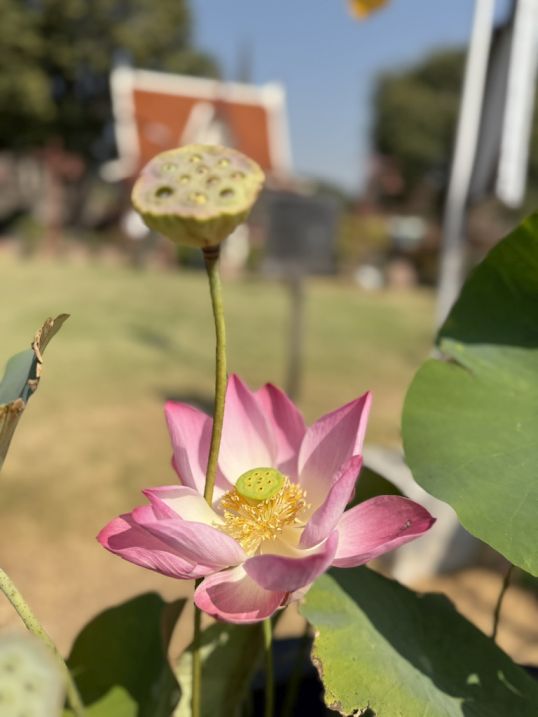 |
The lotus is one of the most important symbols in Buddhism. It represents purity, enlightenment, and spiritual awakening because the flower grows from muddy water but blooms beautifully above the surface.
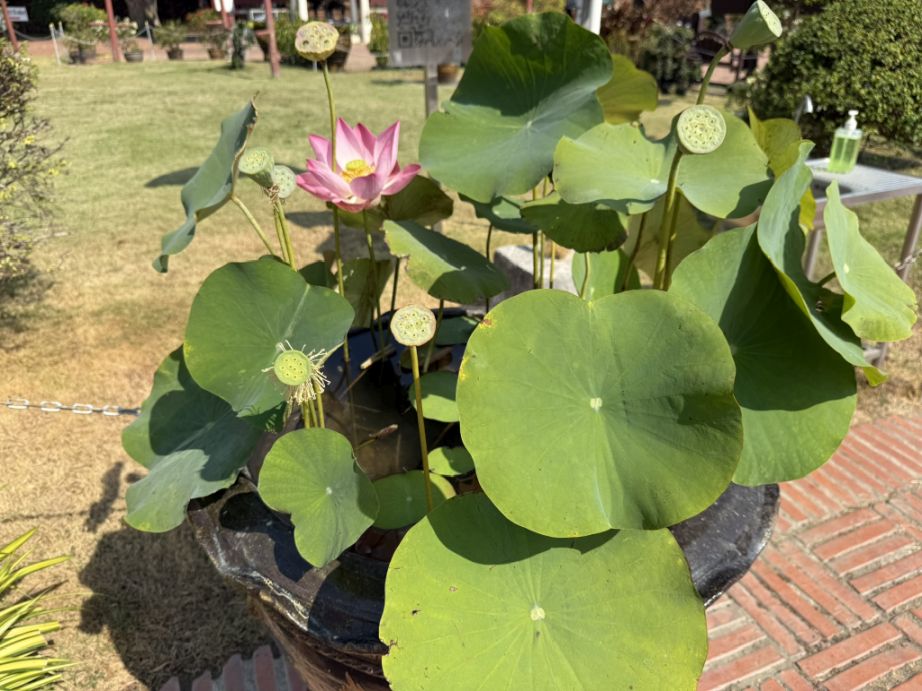
Placing lotus plants in temple courtyards creates a peaceful and sacred atmosphere for visitors before entering the building.
 |
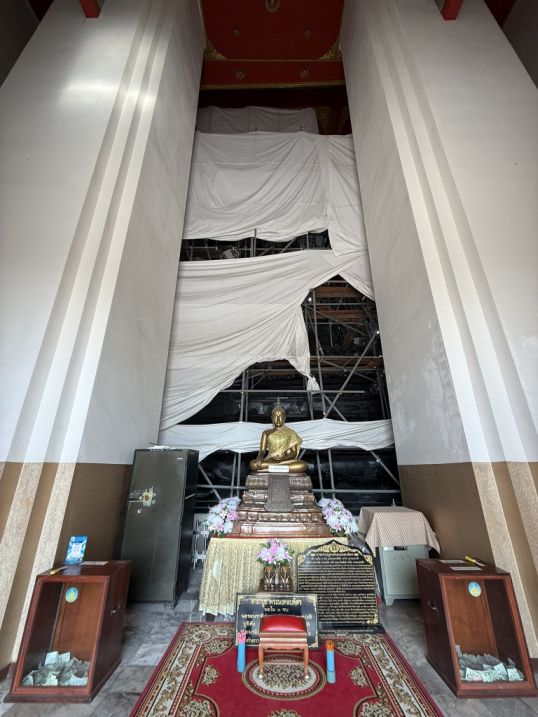 |
Entering the Museum
 |
 |
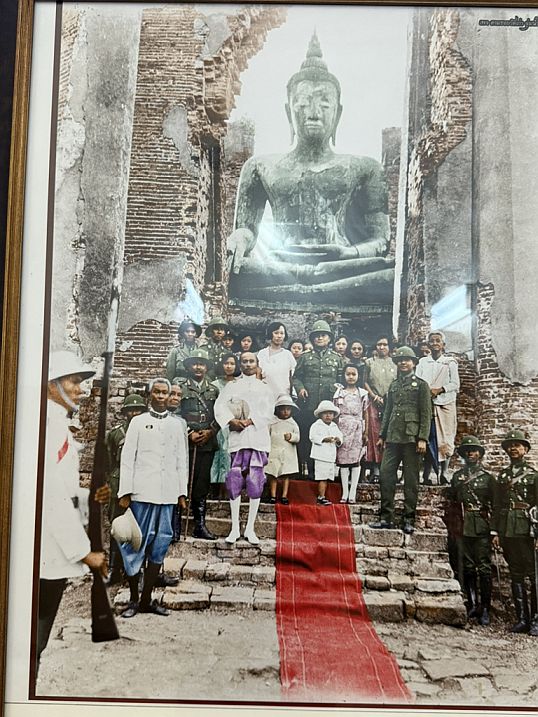
Inside the pavilion there are displays with many historic photographs that are fascinating. The large Buddha behind the group is Phra Si Sanphetdayan, covered with hundreds of kilograms of gold, and said to be over 50 ft. high, and was housed inside the main viharn of the royal temple.
 |
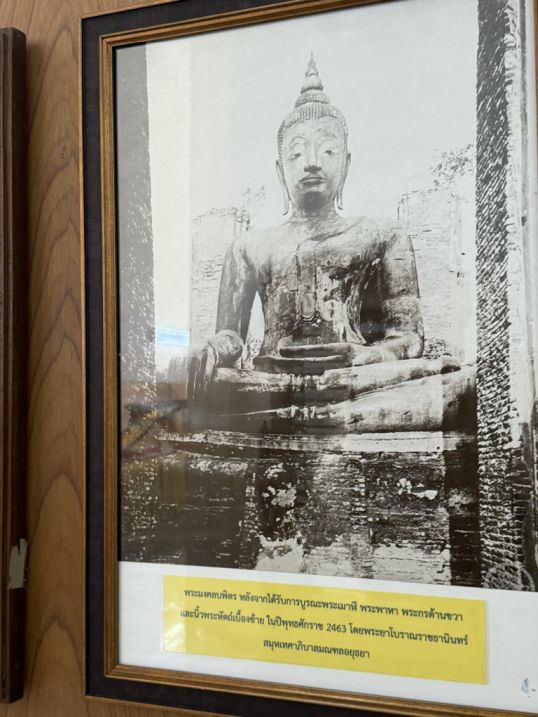 |
When the Burmese–Siamese War (1765–1767) destroyed the city, the Burmese army burned the viharn and stripped the gold from the statue. But the core structure of the Buddha (brick and bronze) likely remained standing for some time, though badly damaged.
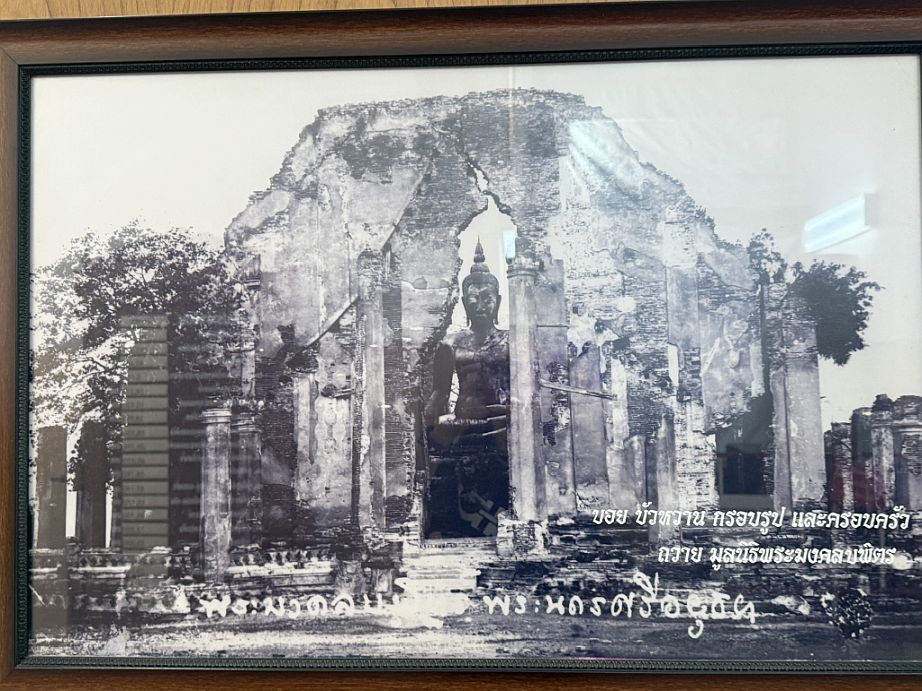
This picture was taken much later, probably in the early 20th century, when Ayutthaya had already become an archaeological ruin. These types of visits happened during the period when Thailand began preserving ancient ruins as national heritage sites. Even though the statue survived the initial destruction of Ayutthaya, it did not survive the following centuries. The viharn roof was gone, the statue was exposed to weather, The structure weakened and eventually collapsed.
 |
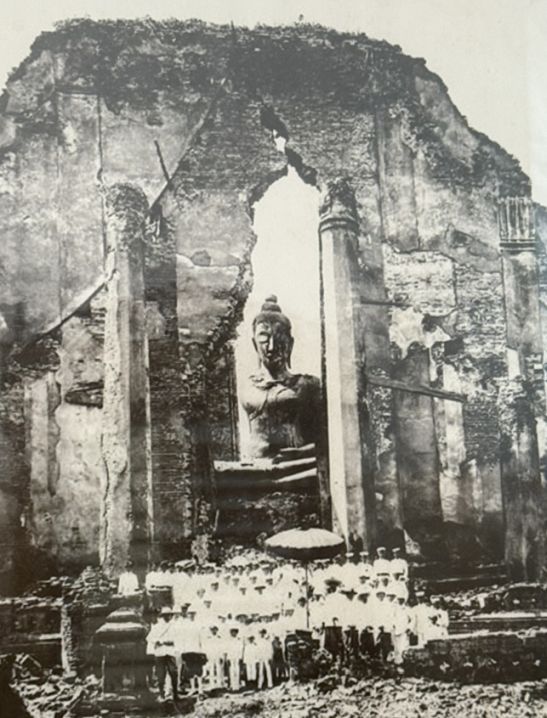 |
These photographs are valuable because it shows the giant Buddha still standing among the ruins, and a moment when the site was beginning to be treated as a historic monument rather than an active temple.

Display of gilded Buddha's head.
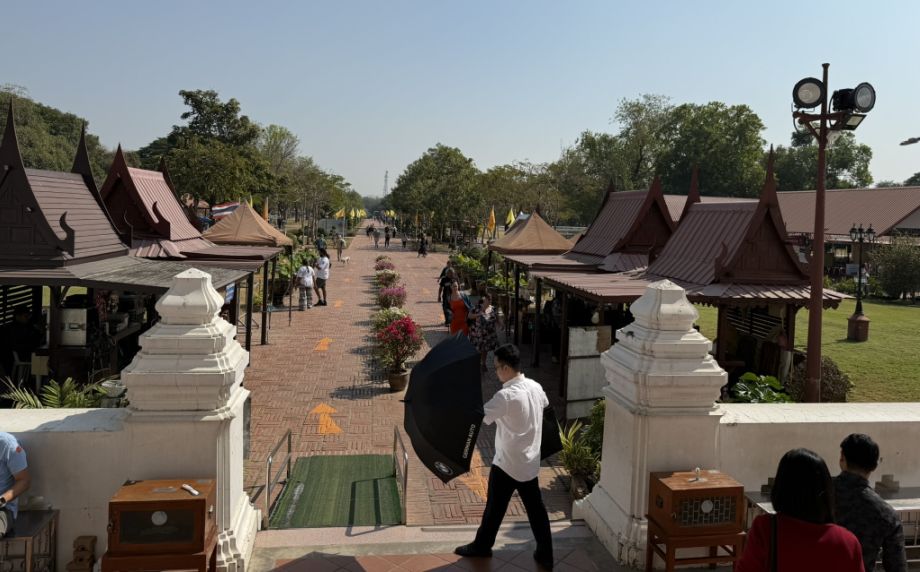
We are now leaving the museum.

We are walking toward our bus to the next stop at Wat Lokayasutharam, home to one of the most famous statues in Ayutthaya.

The highlight of this temple is the enormous Reclining Buddha of Wat Lokayasutharam, which is about 120 feet long and about 26 ft. high. The Buddha lies on his right side with his head resting on one hand, a position that represents the moment before the Buddha entered Nirvana, the final stage of enlightenment in Buddhism. The reclining Buddha posture represents peace and the final release from the cycle of rebirth. In Buddhist art, this pose reminds followers of the Buddha’s last moments on earth and the attainment of complete enlightenment.

Unlike many temples in Thailand where the reclining Buddha is inside a building, this statue rests outdoors in the open air. Over the centuries the temple buildings around it disappeared, leaving the statue exposed against the sky. Today the Buddha is covered with a bright saffron or yellow robe, which is periodically replaced as part of religious offerings.
 |
 |
When we approached the statue, and we noticed the serene face of the Buddha.
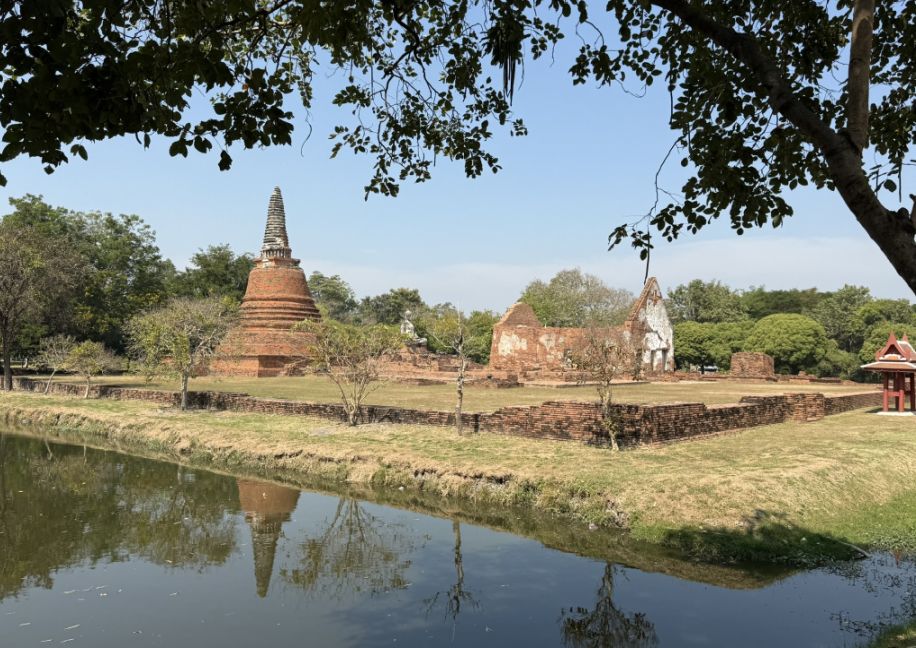
As we walked around Wat Lokayasutharam, the body of water is likely part of the old canal or pond system that once surrounded many temples in the ancient capital. The city of Ayutthaya was originally built on an island formed by several rivers, including the Chao Phraya River, and water was an essential part of the city’s layout.

Across the water we can see ruins of brick structures and a chedi standing near the bank. These were likely part of smaller monasteries or shrine buildings that once surrounded the larger temples of the area. Many of these structures collapsed after the destruction of the city in 1767 during the Burmese–Siamese War , leaving only the brick foundations and towers.
 |
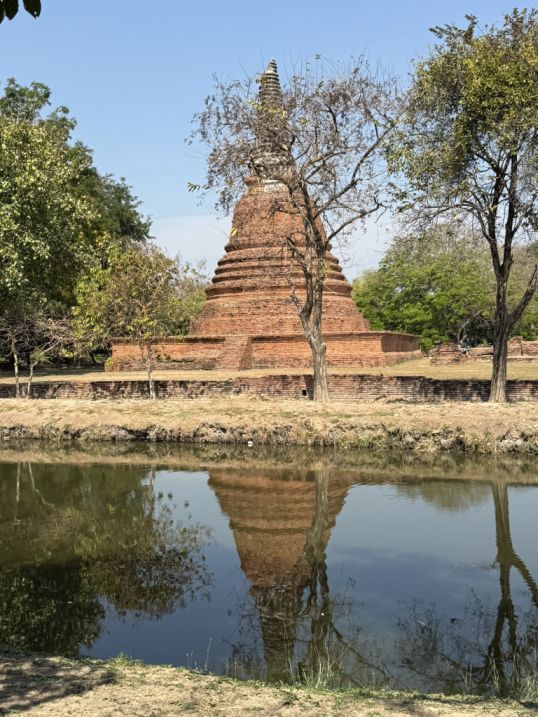 |
The reflection of the chedi and ruins on the calm water is one of the most beautiful scenes in Ayutthaya.
.
NEXT... Day 2- Cruise on the Chao Phraya River