A week in Saigon-1/19- 1/25/2025
Day 6- Mekong Delta guide tour-1/24/2025
1st Stop: Vĩnh Tràng temple
This morning we are on a Mekong Delta guided tour.
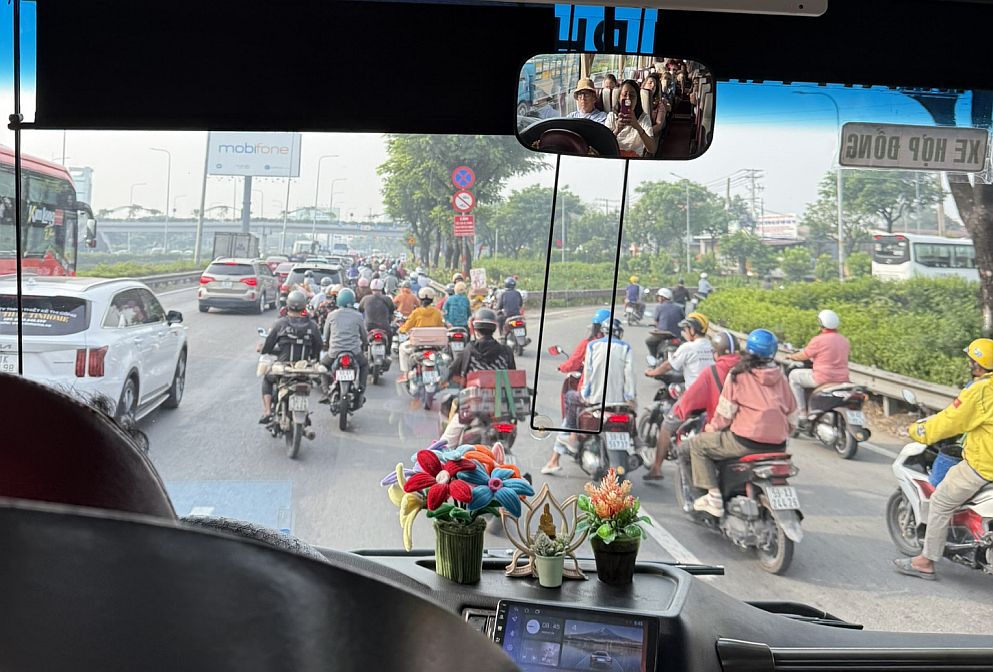
Our tour guide picked us up at 7:45 am and the bus is now leavig the city. The city is already buzzin with so many motorcycles on the road very early in the morning.
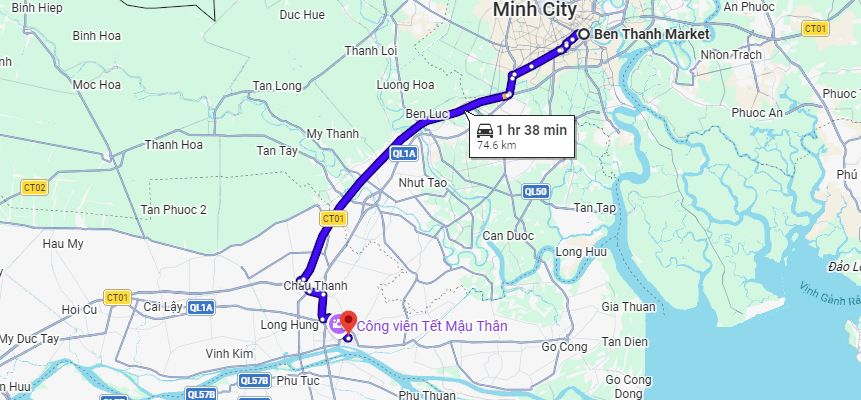
Our drive took about 1.5 hours before reaching our first stop.
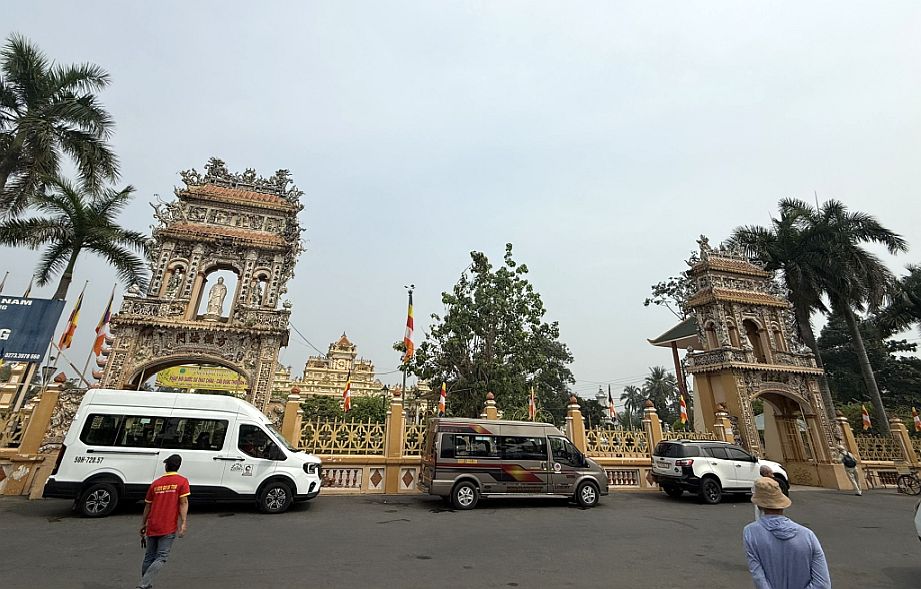
Our first stop of the morning was Vinh Trang Pagoda, the largest and one of the most significant temples in the Mekong Delta. Built in the early 19th century, the pagoda began as a modest sanctuary before being expanded and restored over time, especially after damage during the French colonial period. What makes it particularly unique is its striking blend of architectural influences—Vietnamese at its core, but with visible elements of Khmer design and even European touches like Roman-style arches and decorative motifs, reflecting the cultural crossroads of southern Vietnam.
 |
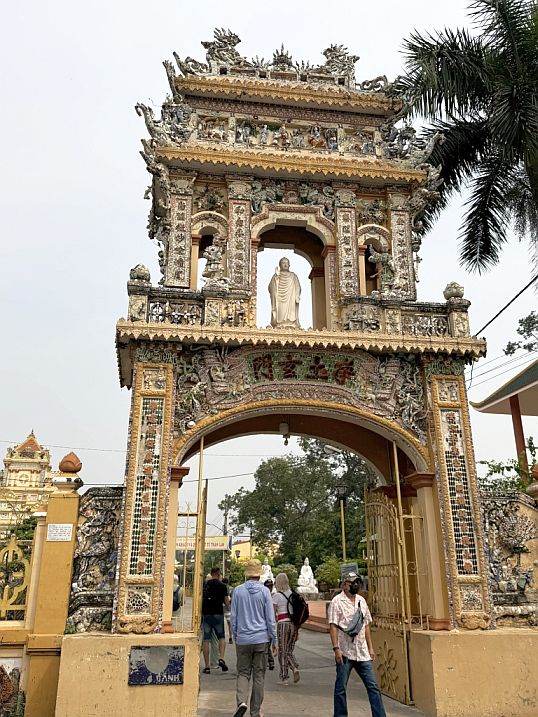 |
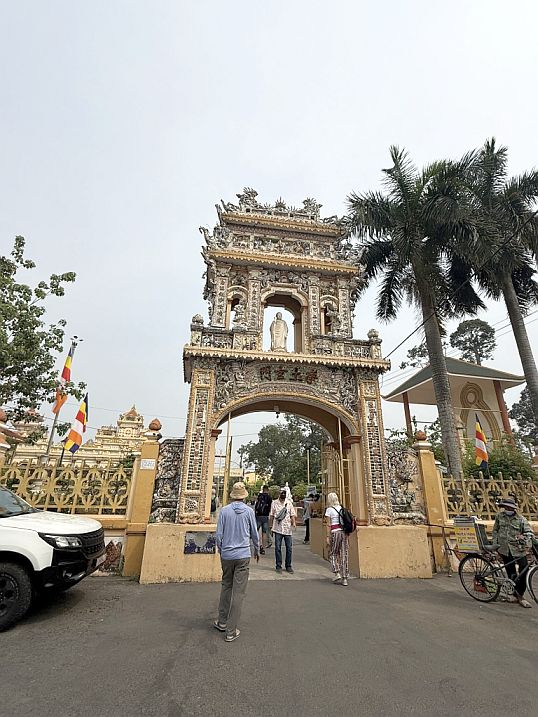
As we approached the entrance, the pagoda reveals itself through an ornate gate framed by delicate carvings.
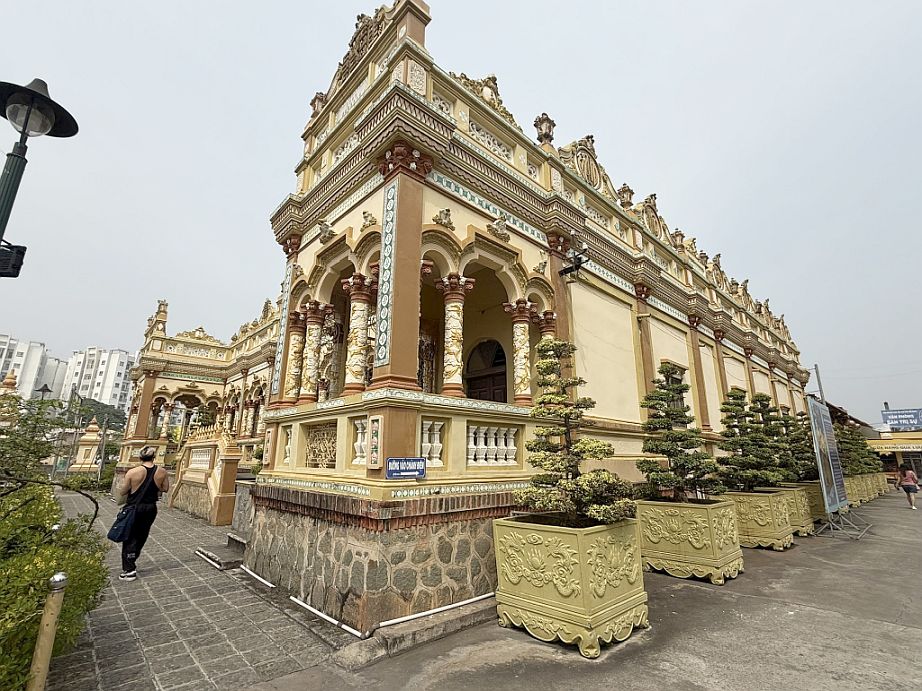
This the main temple hall of Vinh Trang Pagoda. The facade itself is elegant and symmetrical, with columns, arched windows, and intricate reliefs that hint at both Eastern and Western styles.
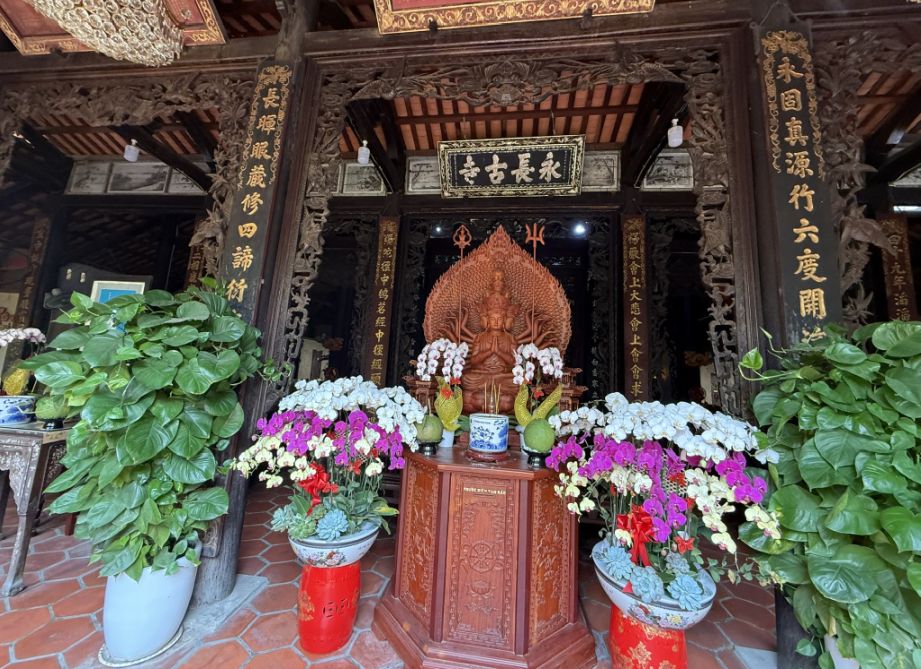
Passing by one of the altar along the main hall.

The courtyard opens up into a peaceful, airy space filled with greenery and quiet corners.
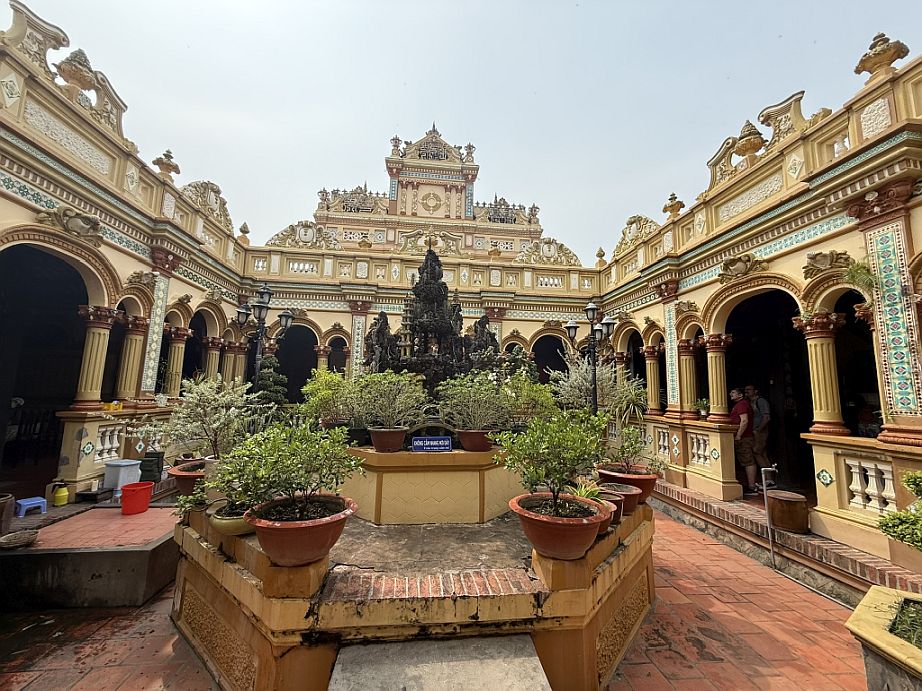
It feels both grand and serene, with tiled walkways guiding us toward the main hall.
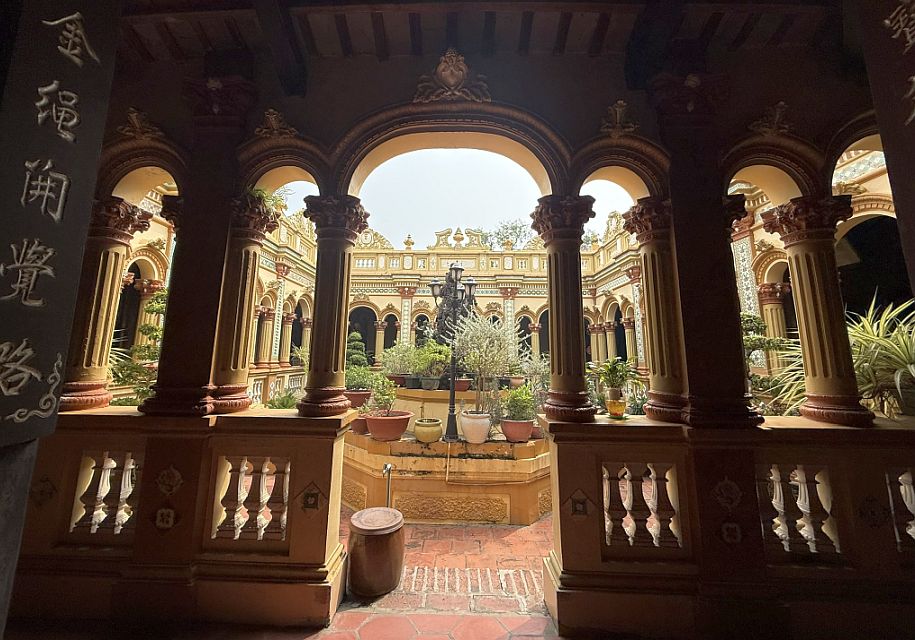
View of the courtyard as we stepped inside.
 |
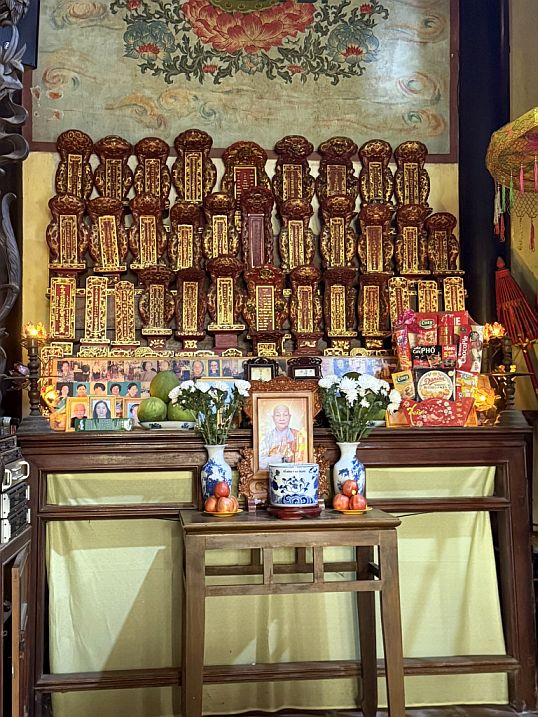 |
Inside, the atmosphere shifts, dimly lit, fragrant with incense, and deeply spiritual.
 |
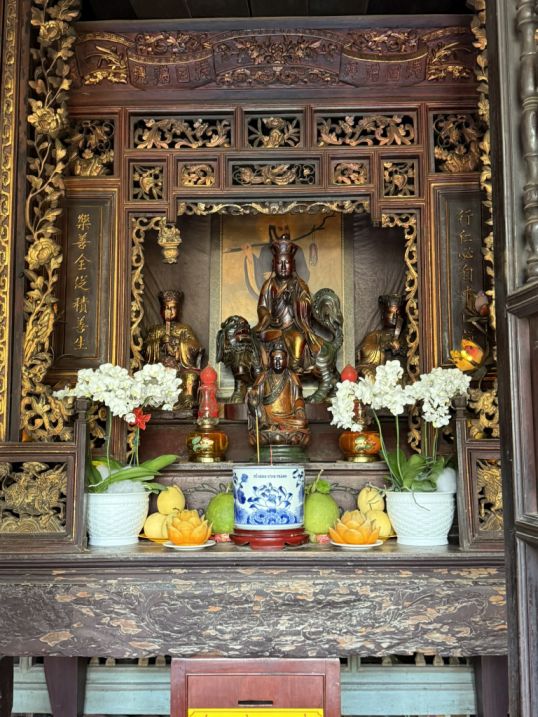 |
Rows of altars are arranged with great care, each dedicated to different Buddha and bodhisattvas.
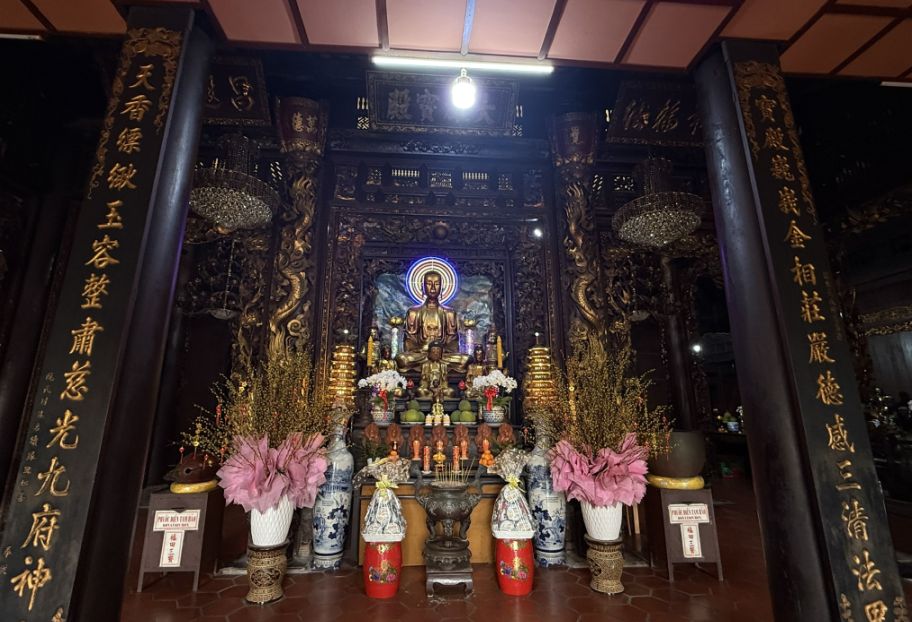
Inside the main hall, your eyes are immediately drawn to the central altar, which is the most elaborate and sacred space in the temple. The seated Buddha is calm and composed. It is likely a representation of Shakyamuni Buddha, the historical Buddha. The central altar is the most elaborate, drawing your eyes immediately with its scale and shimmering gold tones. In front of and around this central figure, offerings are carefully arranged, fresh fruit, flowers, incense, and candles, placed by devotees as acts of respect and prayer. The altar itself is richly layered, rising in tiers, each level intricately carved and gilded, creating a sense of depth and reverence.
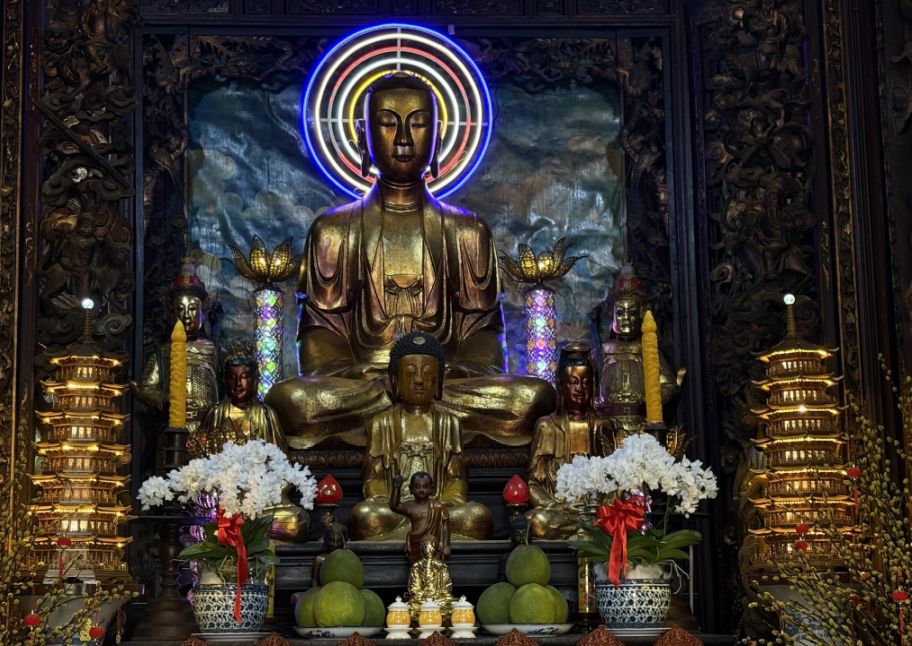
The glowing circular neon halo behind his head symbolizes enlightenment and divine radiance. While the modern lighting might feel unexpected in such an ancient setting, it actually highlights the sacred presence of the Buddha and draws focus to his serene expression.
 |
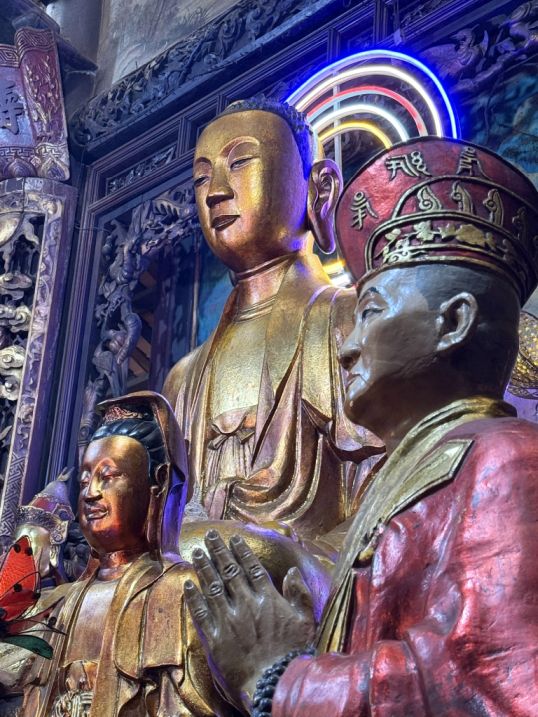 |
The statue of a standing figure in a red robe with hands pressed together in prayer is likely a monk or a bodhisattva figure. In many Vietnamese temples, you’ll often find statues representing revered monks or disciples of the Buddha, symbolizing devotion, humility, and the path of spiritual practice. The red robe and prayerful posture reinforce that sense of reverence and guidance.

The main Hall
 |
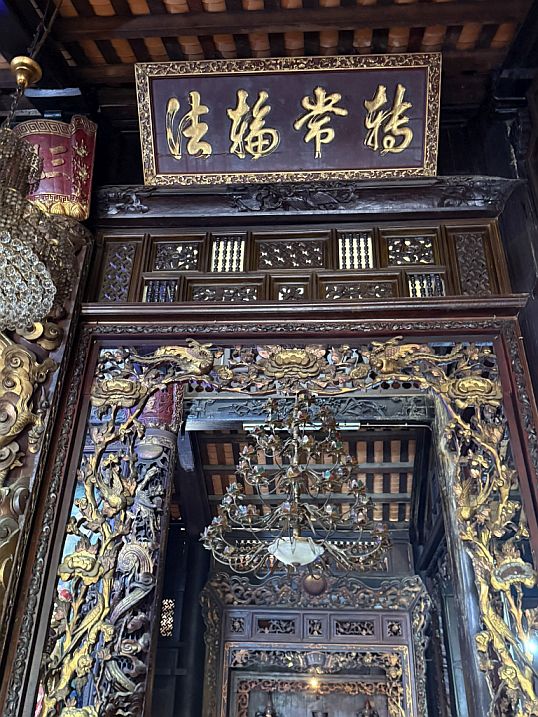 |
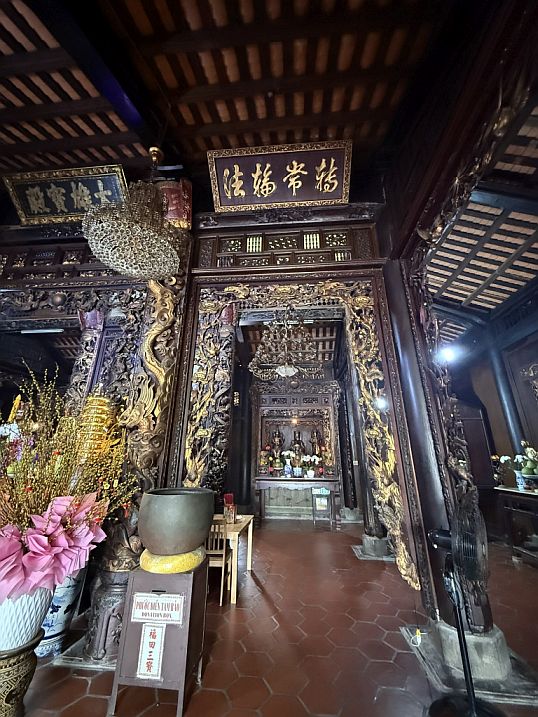
As we looked around the main hall, we noticed there isn’t just one altar but many, arranged along the walls and in side sections. Each altar is dedicated to different Buddha, bodhisattvas, or guardian figures. The craftsmanship is remarkable, dark, polished wood carved into elaborate floral and mythical patterns, with gold accents that catch the dim light. Above these altars, the horizontal panels inscribed with Chinese characters (often in gold on black or red backgrounds) typically convey blessings, teachings, or the names and virtues of the deities being honored.
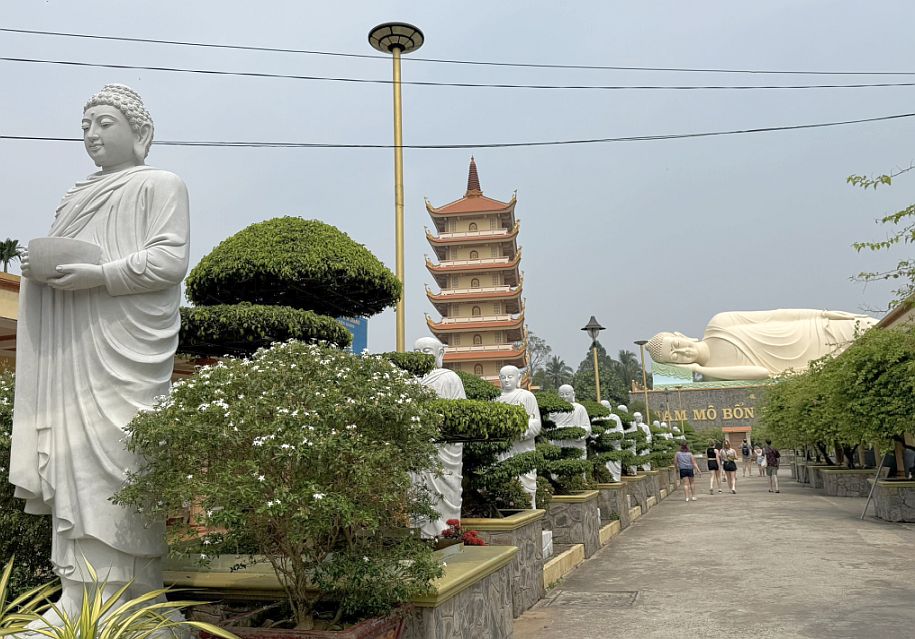
Outside in the garden, the space becomes more open and striking.
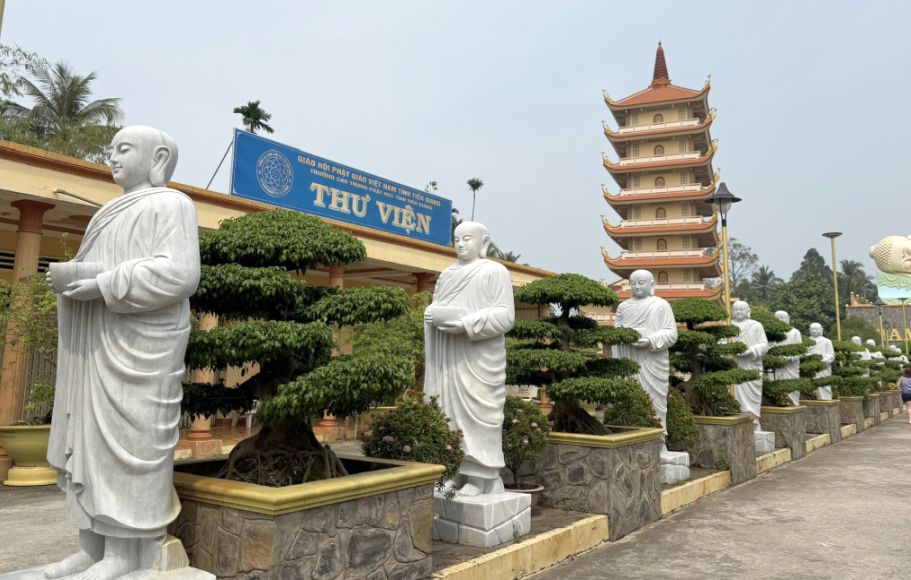
A row of monk statues lined up between the large bonsai planters likely represents devoted disciples or enlightened practitioners. Each figure stands quietly, almost lifelike, as if in meditation or contemplation.
The carefully pruned bonsai trees beside them add to that sense of discipline and patience, both central ideas in Buddhist practice.
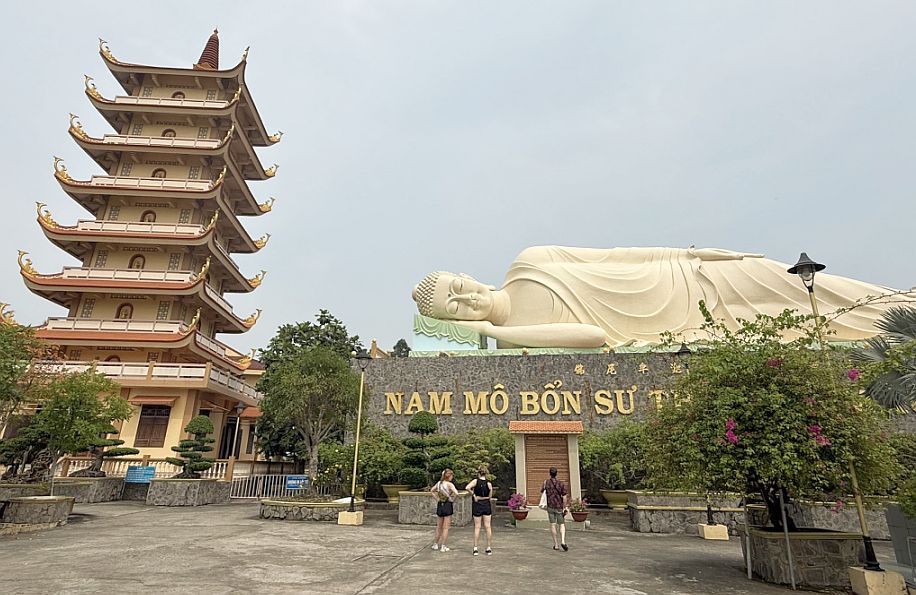
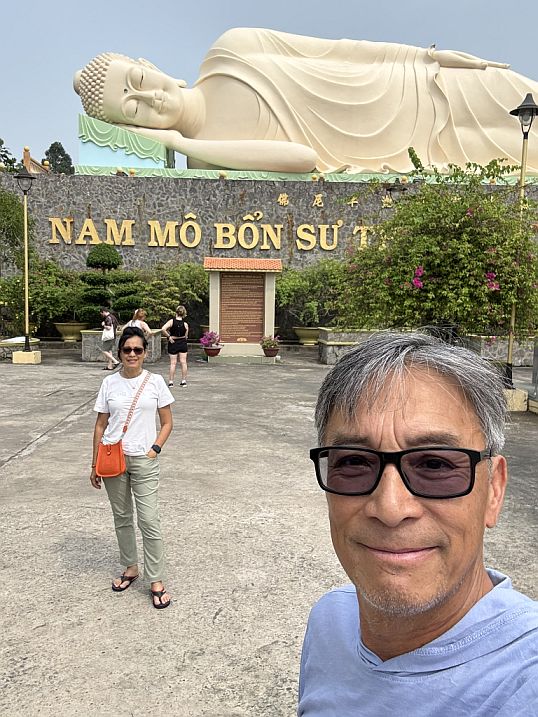
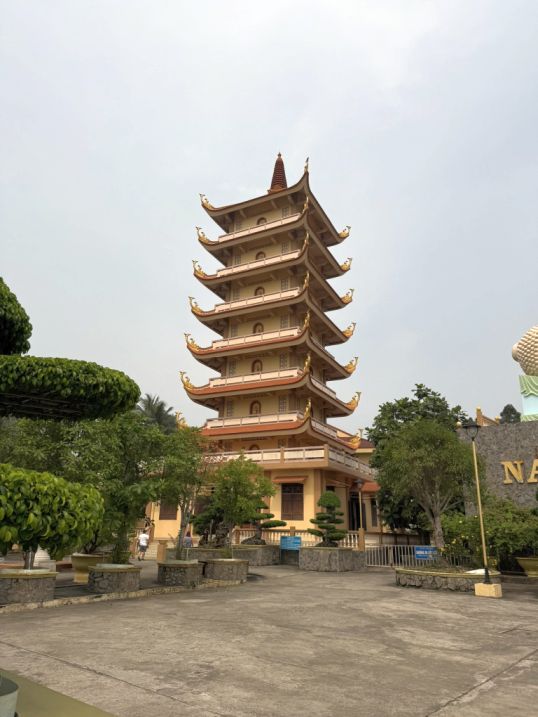
Further along, the multi-tiered pagoda rising on the left and on the right a gigantic reclining Buddha.
 |
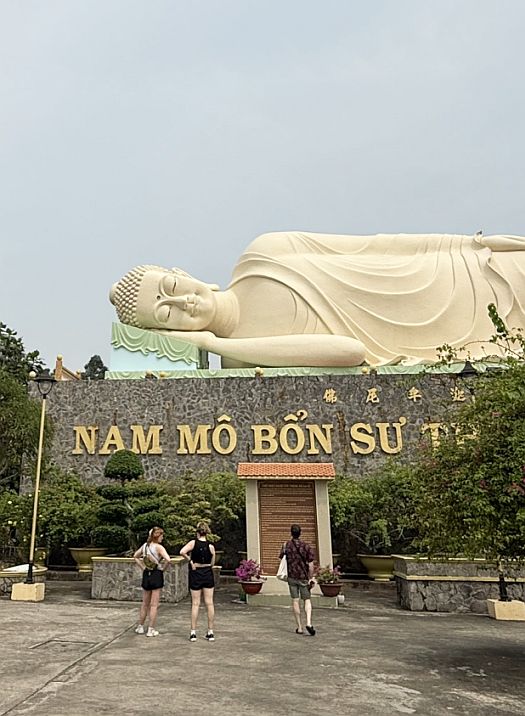 |
We are now heading to the reclinng Buddha.
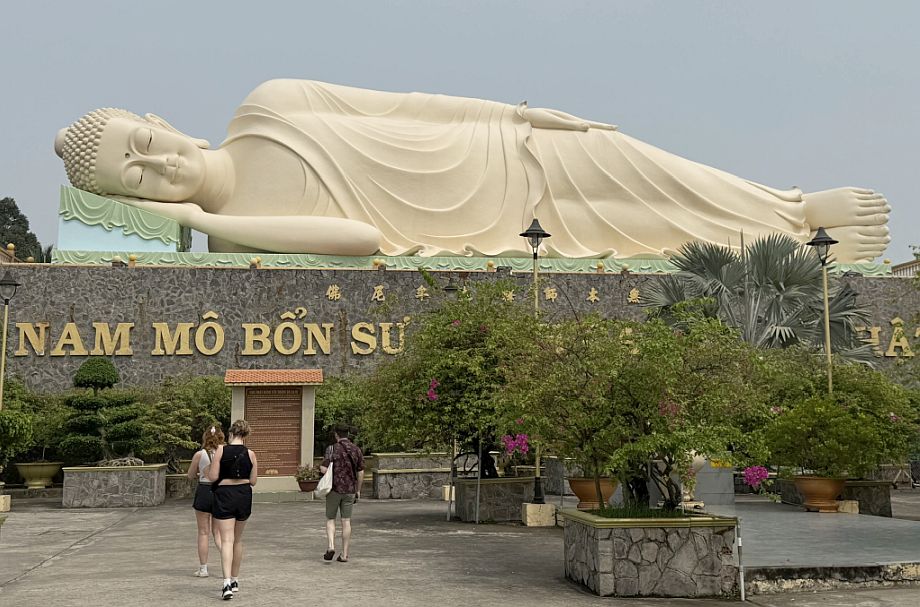
The most striking feature in that area is the reclining Buddha. This large, serene figure represents the moment of the Buddha’s passing into nirvana, the final stage of enlightenment where one is freed from the cycle of rebirth. Unlike the seated or standing Buddha that often symbolize teaching or compassion, the reclining posture conveys peace, completion, and release. His expression is calm, almost gently smiling, suggesting acceptance and transcendence rather than sadness.
 |
 |
The 7 levels is a classic Buddhist tower structure, often associated with preserving sacred relics or symbolizing the path toward enlightenment, each level representing a step upward, both physically and spiritually.
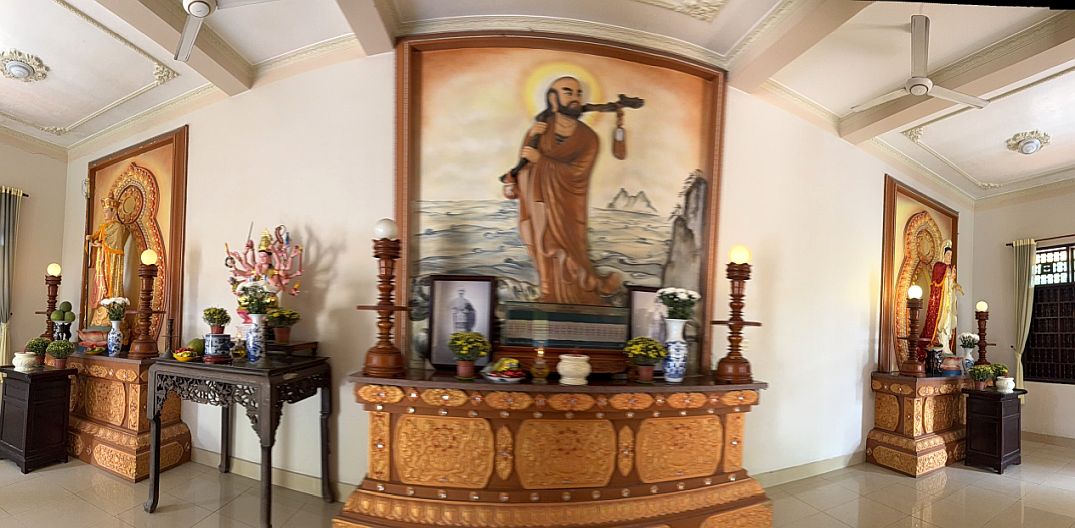
When we stepped inside the structure near the reclining Buddha, the space becomes more intimate again. The altars inside are smaller but still richly arranged.
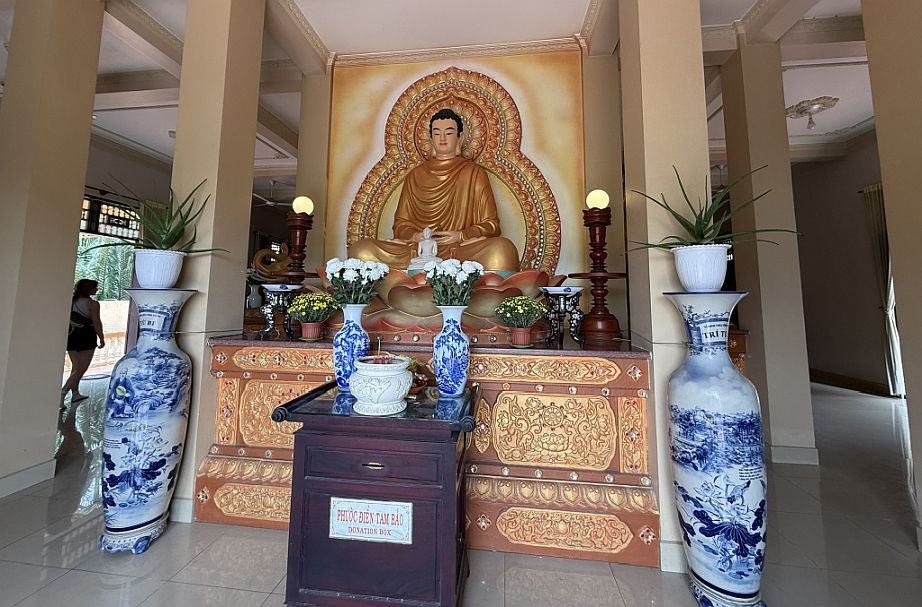
A seated Buddha figure likely represent different aspects or manifestations of the Buddha, offering visitors multiple points for prayer and reflection.
 |
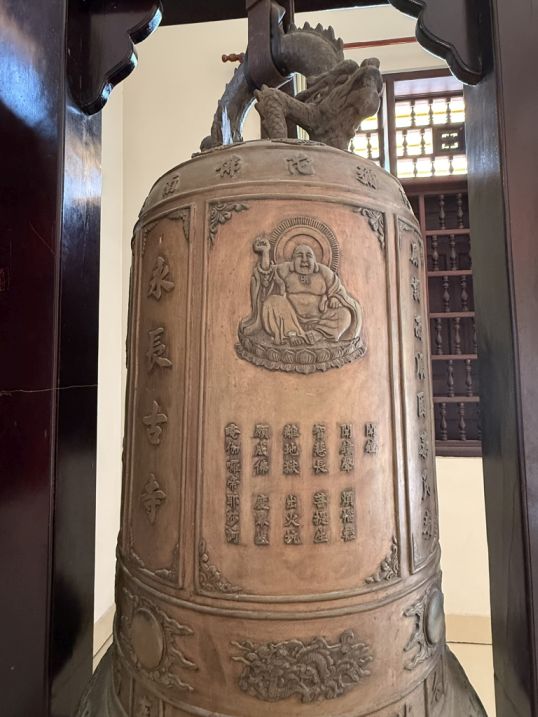 |
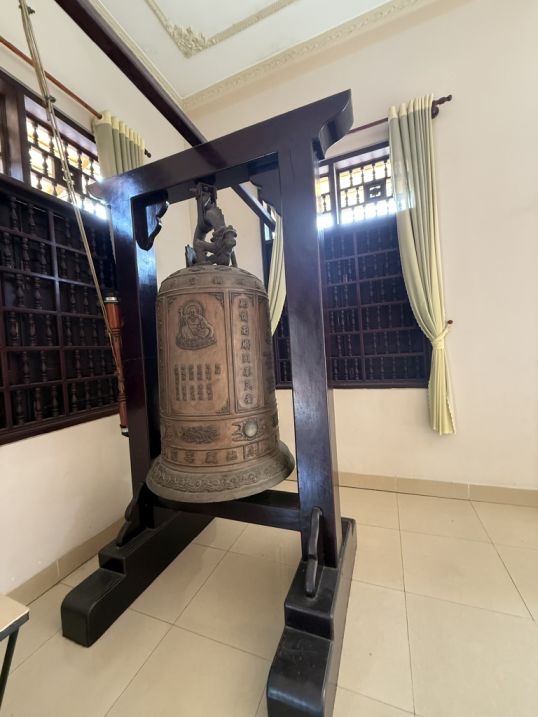
This large bronze bell is another important element. Bells in Buddhist temples are not just decorative, they are symbolic tools used during rituals. When struck, the deep, resonant sound is believed to awaken mindfulness, dispel negative thoughts, and carry prayers outward. The Chinese characters engraved on the bell often include blessings, dedications, or inscriptions honoring donors or spiritual teachings. The carved seated Buddha , contrasts with the metallic bell, quiet, grounded, and timeless.
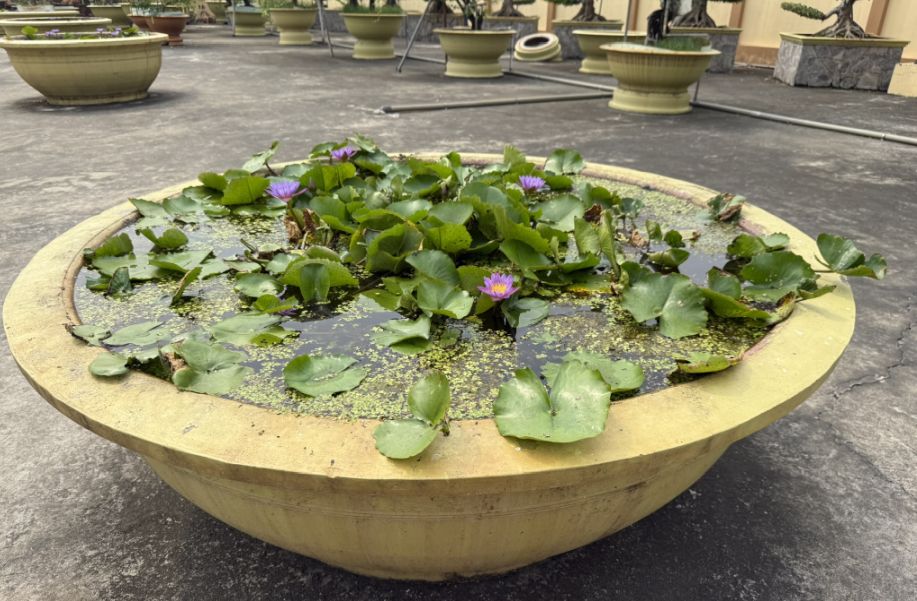
Walking back into the garden after that, the transition feels noticeable, the stillness of the interior gives way again to open air, greenery.
 |
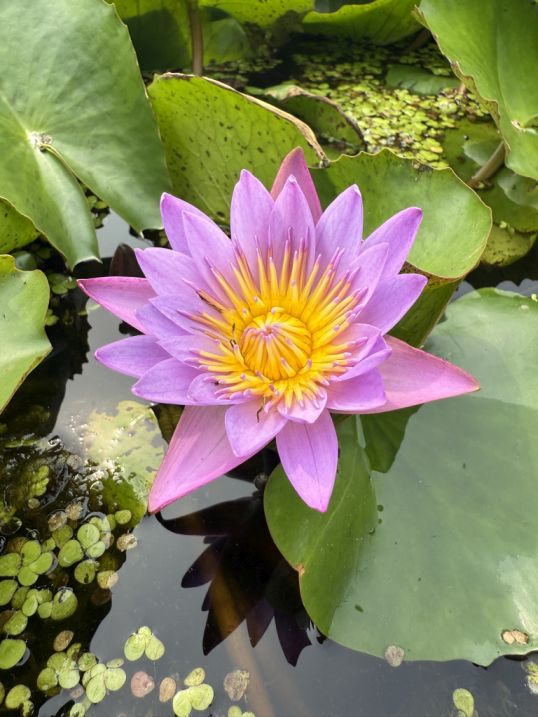 |
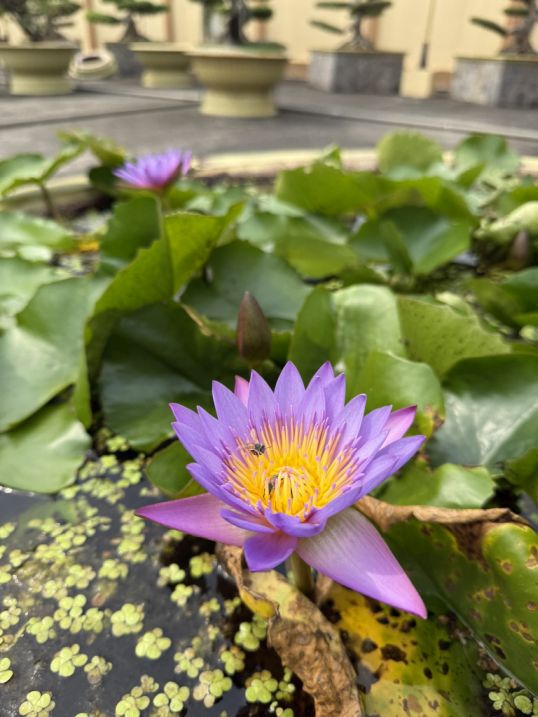
Beautiful lotus blossoms.
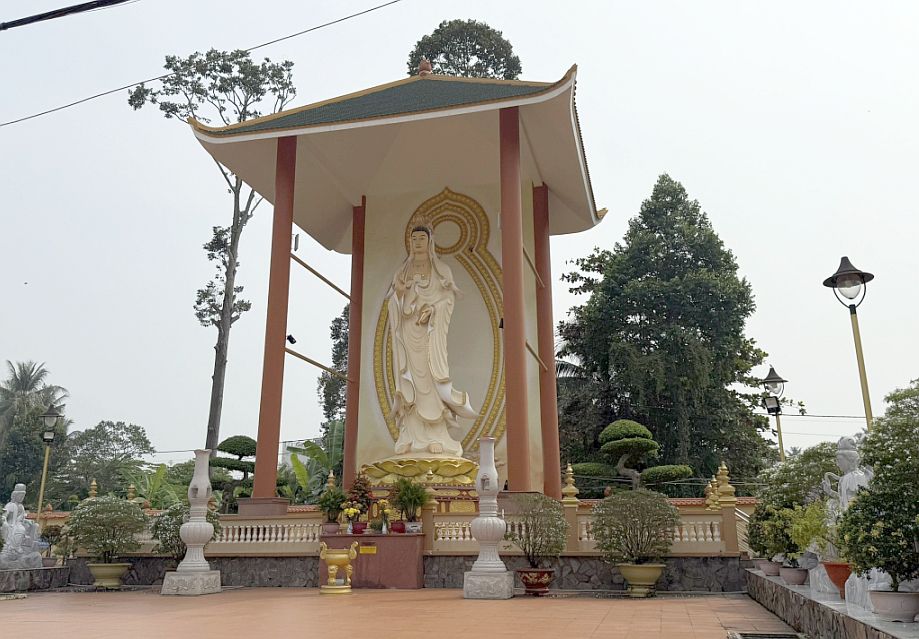
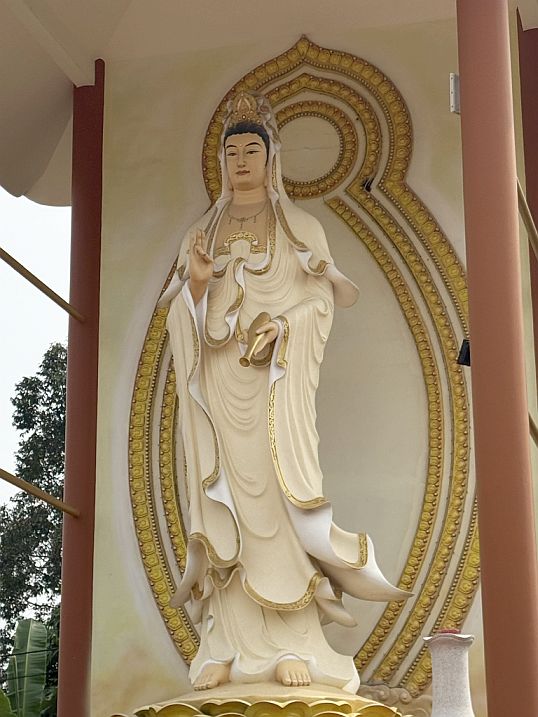
As we continued through the garden of Vinh Trang Pagoda, the statues you’re seeing each represent different figures and meanings in Buddhist tradition, and they’re placed very intentionally throughout the grounds. The graceful standing figure in a white flowing robe under the small pavilion with red columns is Guanyin (called Quan Âm in Vietnamese).
 |
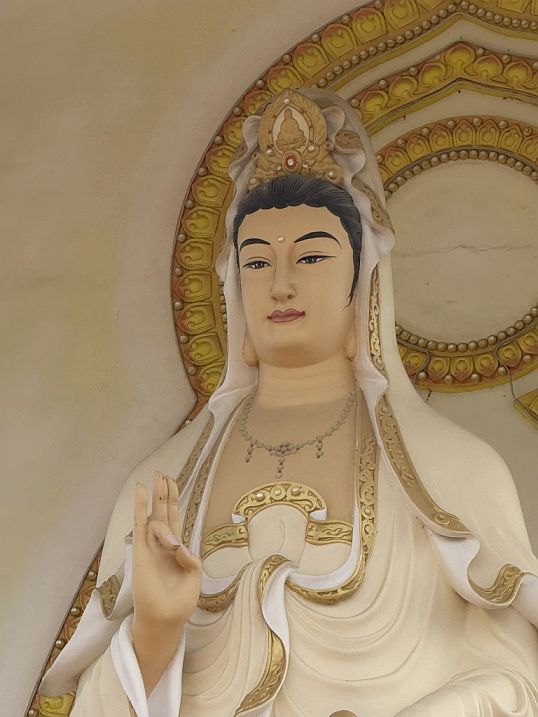 |
Quan Âm is one of the most beloved figures in Buddhism, known as the embodiment of compassion and mercy. Her calm expression and elegant posture reflect kindness and protection, and devotees often pray to her for guidance, healing, and safety. The white robe symbolizes purity, and the sheltered structure around her gives the space a quiet, sacred focus, almost like a place for personal reflection.
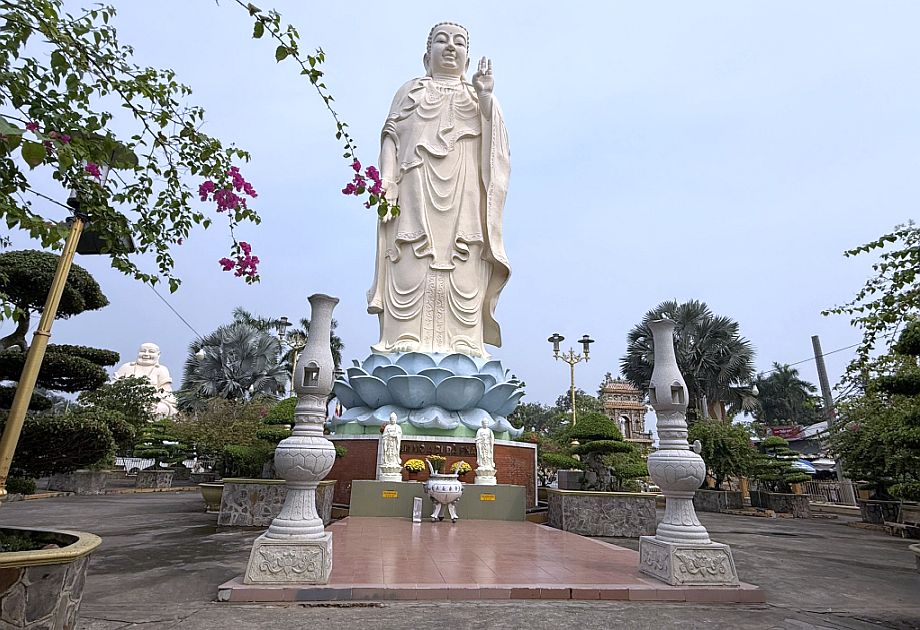
Further along, the tall standing Buddha on a blue lotus is another powerful symbol. The lotus flower in Buddhism represents purity and enlightenment, rising clean and beautiful out of muddy water.
 |
 |
A Buddha standing on a lotus signifies transcendence over the material world. The blue lotus, in particular, is often associated with wisdom and knowledge. This statue feels more elevated and monumental, almost watching over the entire garden.
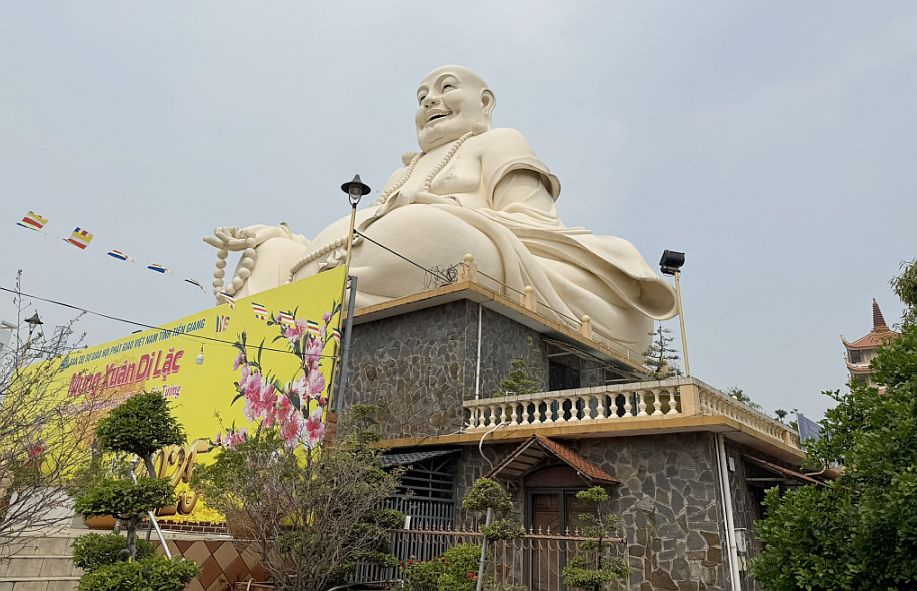
Then the seated figure with the big belly and joyful smile is not the historical Buddha, but actually Budai, often mistaken as such. He’s a beloved figure in East Asian Buddhism and folklore, symbolizing happiness, abundance, and contentment.
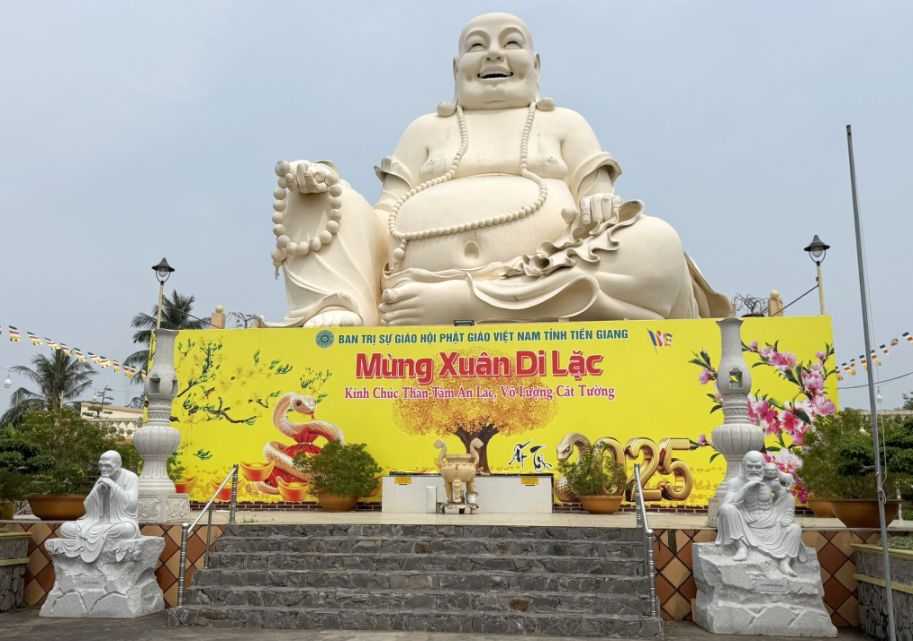
His large belly and cheerful expression represent prosperity and a carefree spirit. You’ll often see people rubbing his belly for good luck.
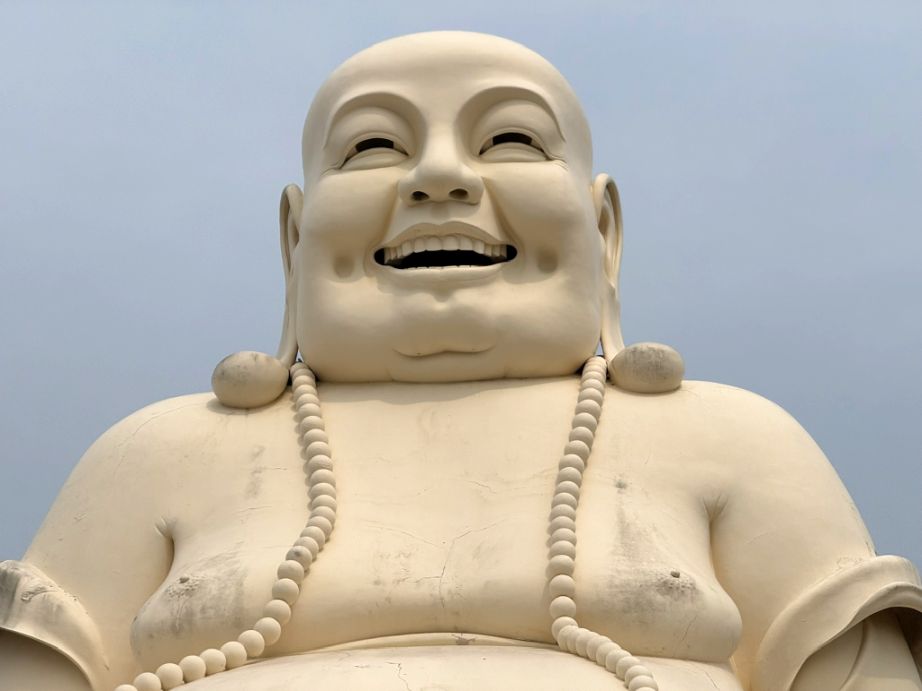
He is sometimes placed near entrances or open spaces to welcome visitors with positivity and joy.
Together, these 3 statues create a beautiful balance, compassion (Guanyin), enlightenment (the standing Buddha), and happiness (the Laughing Buddha). making the garden feel not just decorative, but deeply symbolic as you walk through it.
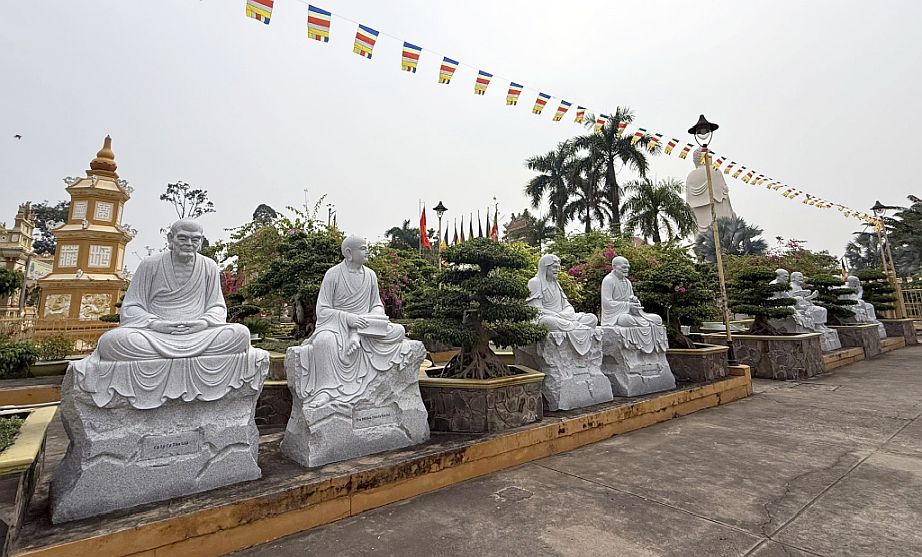
As we made your way out of the garden at Vinh Trang Pagoda, those rows of seated male sculptures between the bonsai planters are likely representations of arhats, enlightened disciples of the Buddha. Each one is intentionally different in expression, posture, and features. Some look serene, others more stern or contemplative. This variety reflects individual paths to enlightenment, suggesting that wisdom and awakening can take many forms. Placing them among the carefully shaped bonsai trees reinforces that idea of discipline, patience, and personal cultivation.
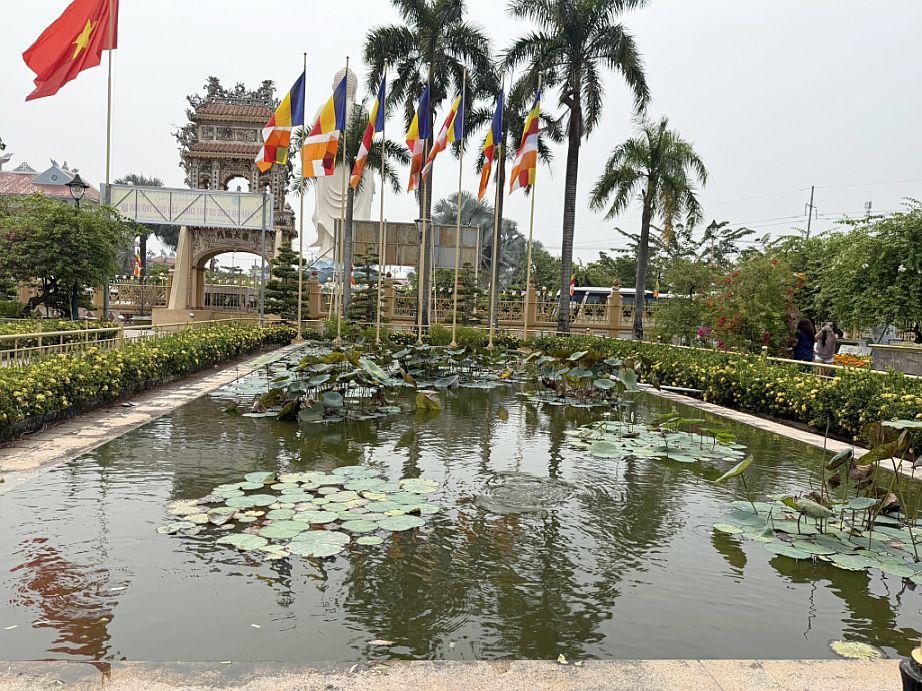
And then, just before exiting, the lotus pond feels like a gentle closing moment to the visit. In Buddhism, the lotus is one of the most important symbols, it grows out of muddy water yet blooms clean and beautiful, representing purity, renewal, and spiritual awakening. Seeing the lotus floating calmly on the water after walking through the statues and temples almost feels intentional, like a final reminder of that journey, from complexity and imperfection toward clarity and peace.
NEXT... Day 6-Unicorn Island