3 days in Nha Trang-1/26- 1/29/2025
| Day-1 Arrival Dinner at Hanh Xuan |
Day-2 Museum of Oceanography Hon Chong Po Nagar Cham Towers Christ the King Cathedral Fuit stall and Dinner |
Day-3 Cho Dam Lunch and Beach Dinner at Ot Hiem |
Day 2-Guided tour -1/27/2025
4th stop: Christ the King Cathedral
Our next stop took us from the ancient Cham civilization to one of Nha Trang's most recognizable landmarks, Christ the King Cathedral, more commonly known as the Nha Trang Cathedral or the Stone Church.
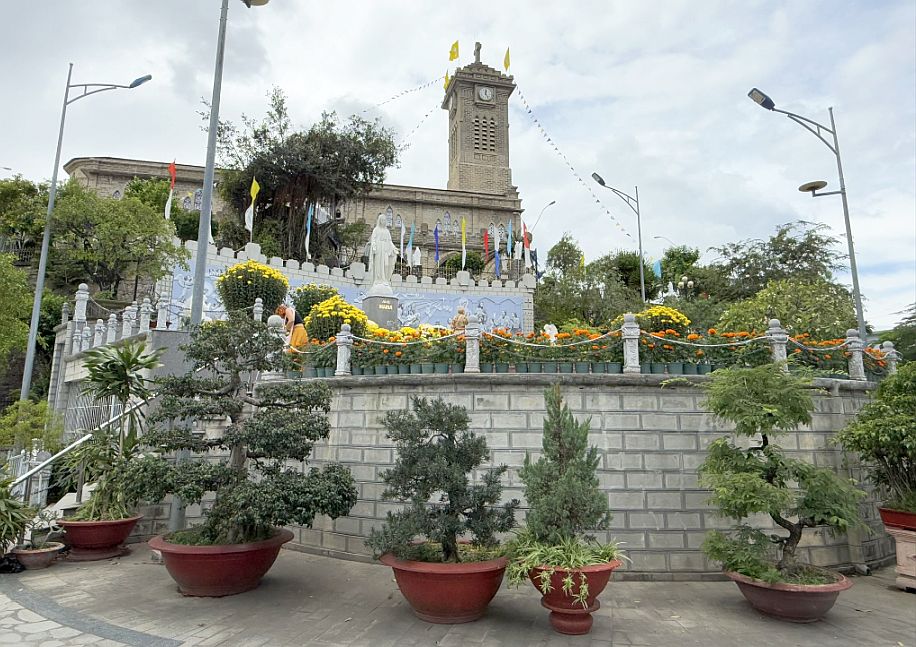
As our bus pulled up, the cathedral immediately caught our attention. Perched on a small hill overlooking the city, its towering bell tower and gray stone façade stood in striking contrast to the modern buildings surrounding it. Built in the French Gothic style, the cathedral features soaring pointed arches, tall stained-glass windows, and a prominent clock tower that can be seen from many parts of Nha Trang.
Construction of the cathedral began in 1928 under the direction of French missionary Father Louis Vallet and was completed in 1933. To create a level foundation for the church, workers carved away part of the rocky hillside, an enormous undertaking at the time. The cathedral was dedicated to Christ the King and has served as the seat of the Roman Catholic Diocese of Nha Trang ever since.
Today, most Vietnamese people practice Buddhism, yet here stands the impressive Christ the King Cathedral, a reminder of another important chapter in Vietnam's history. During the period of French colonial rule (1887–1954), Catholicism spread throughout the country as French missionaries established churches, schools, hospitals, and seminaries. Although Catholics make up only about 7% of Vietnam's population today, Catholicism remains one of the country's largest religions, and churches like Christ the King Cathedral continue to serve active congregations. Visiting both the ancient Po Nagar Cham Towers, rooted in Hindu and later Buddhist traditions, and the French-built cathedral on the same day beautifully illustrated Vietnam's rich cultural heritage, a country where different faiths and histories have blended together over the centuries to create the diverse nation we see today.
 |
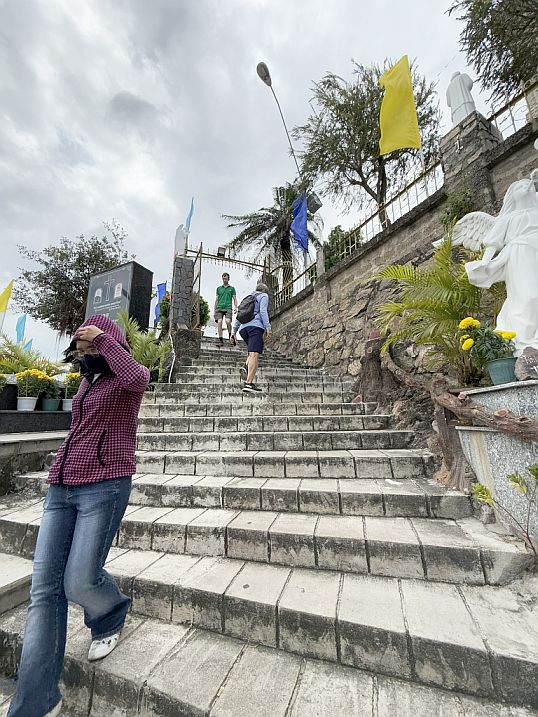 |
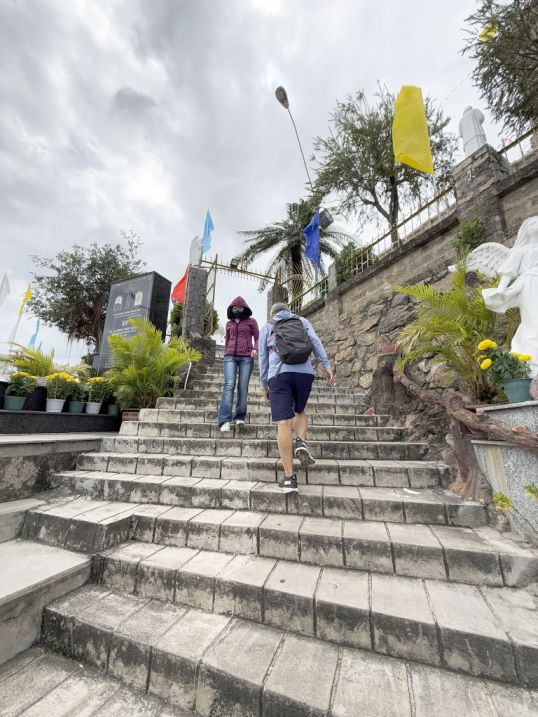
A broad flight of stone steps led us up the hillside to the cathedral. Although we were disappointed to learn that the church was closed during our visit, the magnificent exterior alone made the climb worthwhile.
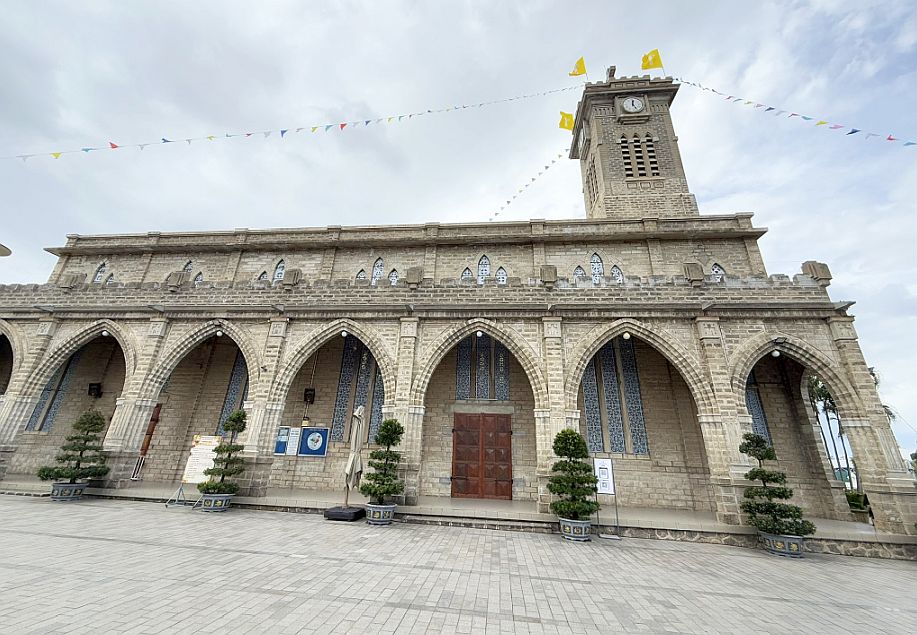
Climbing the stone staircase, the first view of Christ the King Cathedral was not the front façade but its elegant side elevation. A series of graceful Gothic arches stretched along the length of the building, creating a beautiful covered walkway that seemed to invite visitors toward the entrance. The repeating arches, carved from gray stone, gave the cathedral a timeless elegance reminiscent of the great churches of Europe.
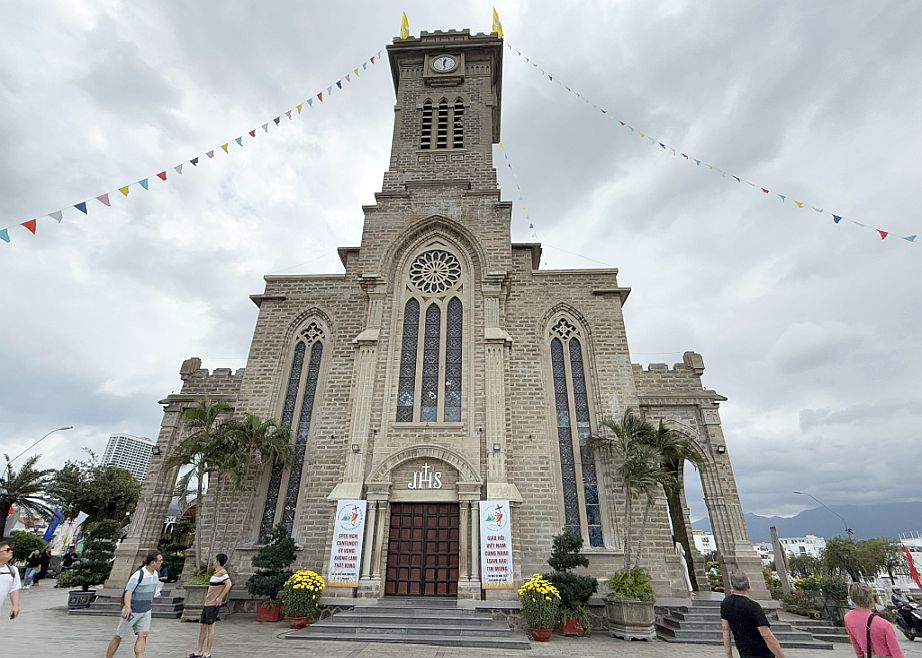
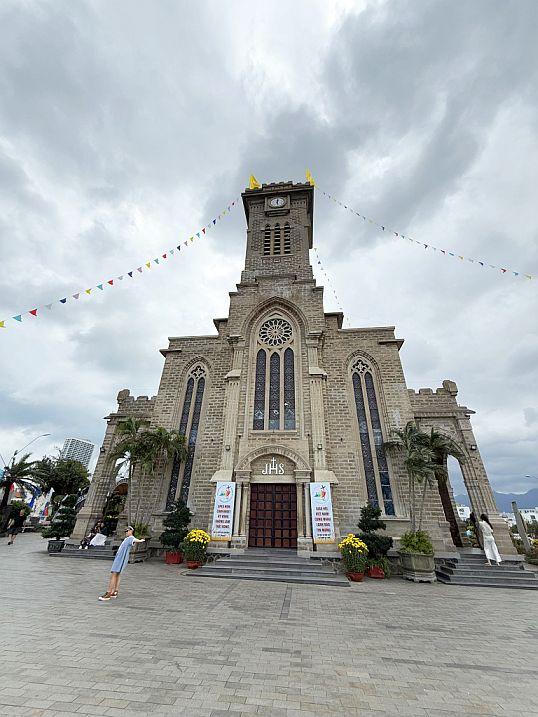
Continuing around the cathedral, we soon arrived at the main entrance, where the full grandeur of the church came into view. Standing directly in front of it, the impressive bell tower dominated the skyline. Rising nearly 38 meters (125 feet) above the terrace, the tower seemed to soar toward the clouds, its pointed Gothic spire crowned by a simple cross. A large clock was mounted high on the façade, while arched openings near the top housed the cathedral's bells, which have called worshippers to Mass for generations.
 |
 |
From this angle, the symmetry of the cathedral was especially striking. The weathered gray stone walls, pointed arch windows, decorative tracery, and soaring vertical lines are classic features of French Gothic architecture. Although nearly a century old, the building has lost none of its elegance. It stands as one of Nha Trang's most recognizable landmarks and a reminder of the city's French colonial heritage.
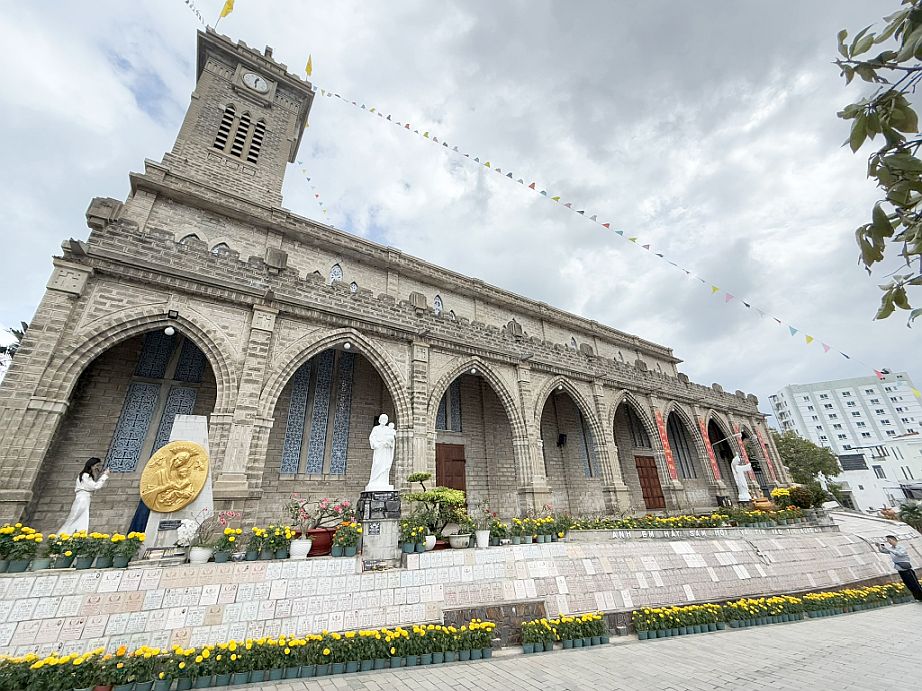
Unable to step inside, we lingered for a few moments on the plaza, taking photographs and admiring the craftsmanship of the façade.
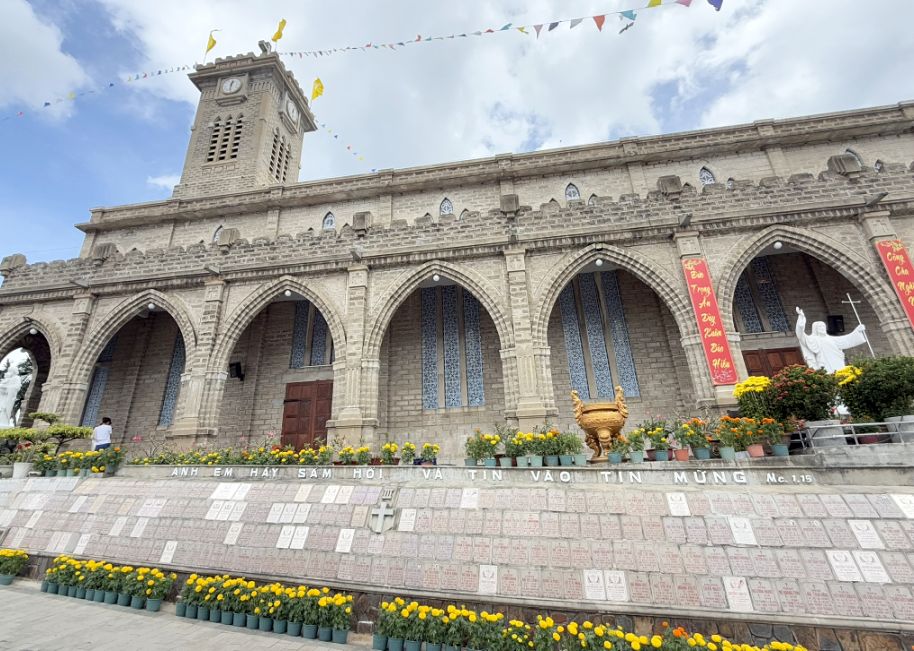
Looking up at the towering bell tower against the bright blue Vietnamese sky, it was easy to appreciate why the cathedral has become one of the city's most photographed buildings. Even viewed only from the outside, Christ the King Cathedral left us with a lasting impression of beauty, history, and quiet dignity.
.

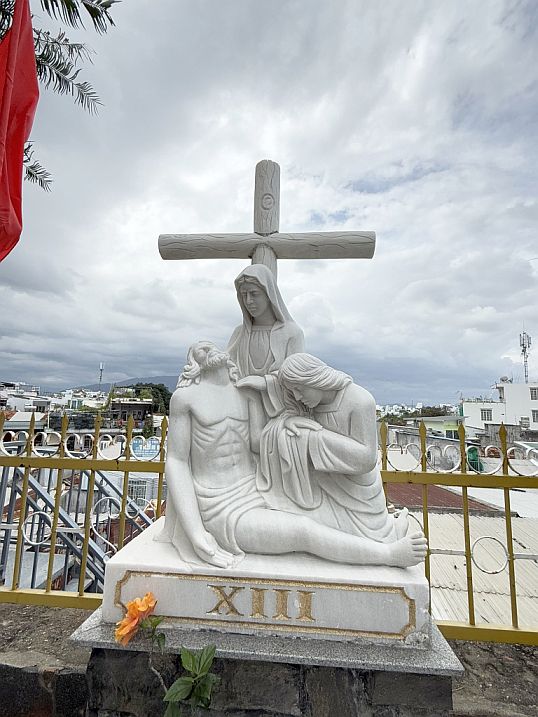
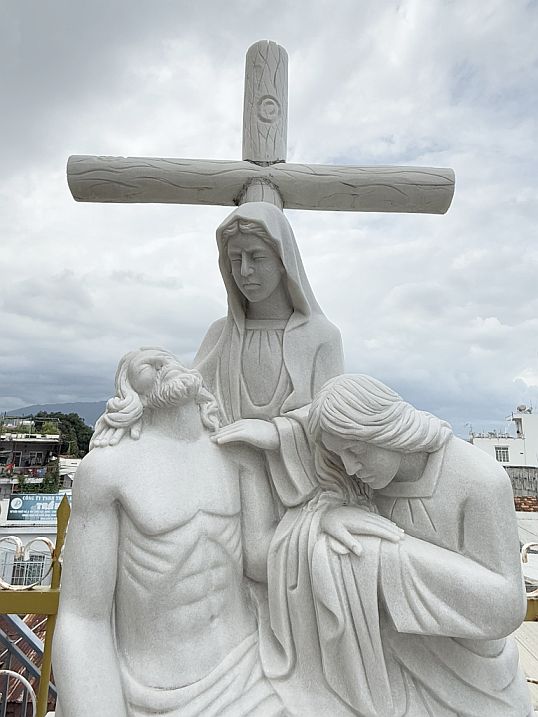
As we continued walking around the perimeter of the cathedral, we came upon a series of beautifully crafted statues lining the pathway. They were part of the Stations of the Cross, a devotional tradition that tells the story of Jesus' final journey to Calvary. Each station is numbered and portrays a significant moment from the Passion of Christ.
We first encountered Station VII, where Jesus falls for the second time while carrying the heavy wooden cross. The sculpture captures both His physical exhaustion and His determination to continue despite the weight of His suffering.
 |
 |
A few steps farther stood Station VIII, where Jesus meets the women of Jerusalem. Even in the midst of His own suffering, He pauses to comfort them, reminding them to have faith and hope.
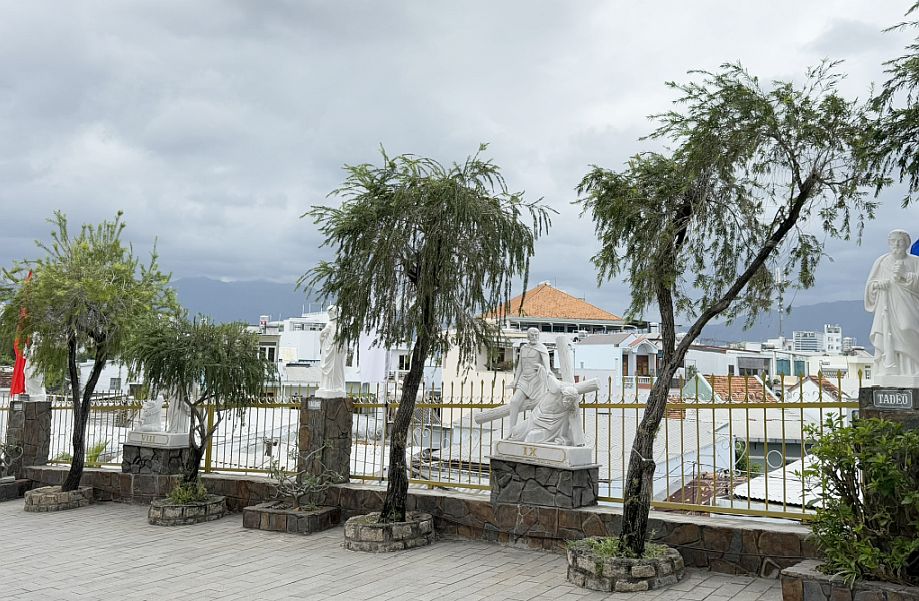
At Station IX, Jesus falls for the third and final time. The statue conveys the immense burden He carried, yet also His unwavering resolve to complete His journey.

Next was Station X, where Roman soldiers strip Jesus of His garments before the crucifixion. It is a solemn reminder of the humiliation He endured before His death.

Finally, we reached Station XI, depicting Jesus being nailed to the cross. Though heartbreaking, the sculpture also symbolizes the sacrifice at the heart of the Christian faith.
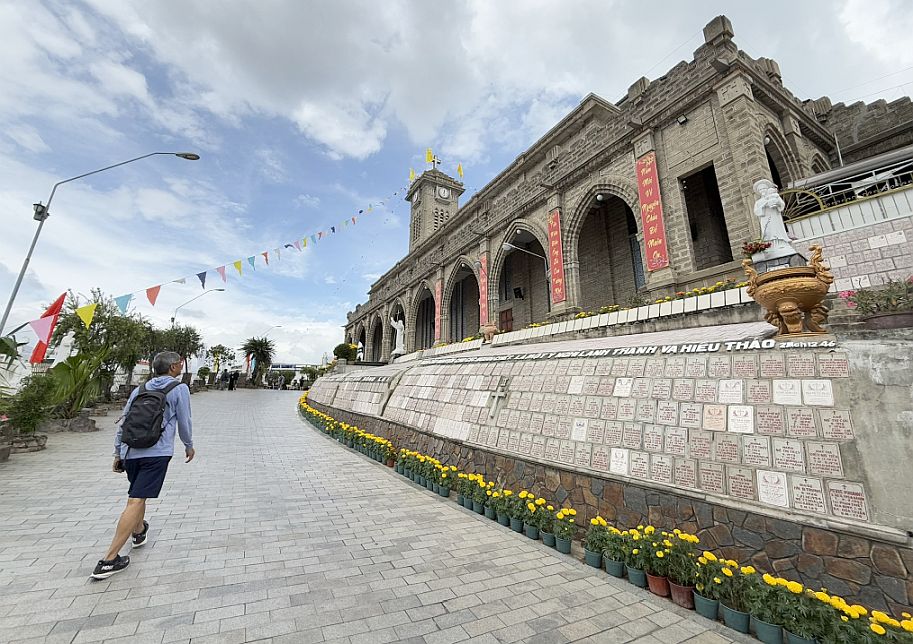
Walking quietly from one station to the next, I realized these statues were more than works of art. They form a pathway for prayer and reflection, allowing worshippers to retrace Christ's final hours. Set against the peaceful grounds of the cathedral, they added another layer of meaning to our visit, reminding us that this beautiful landmark is not only an architectural treasure but also a place of deep spiritual significance.
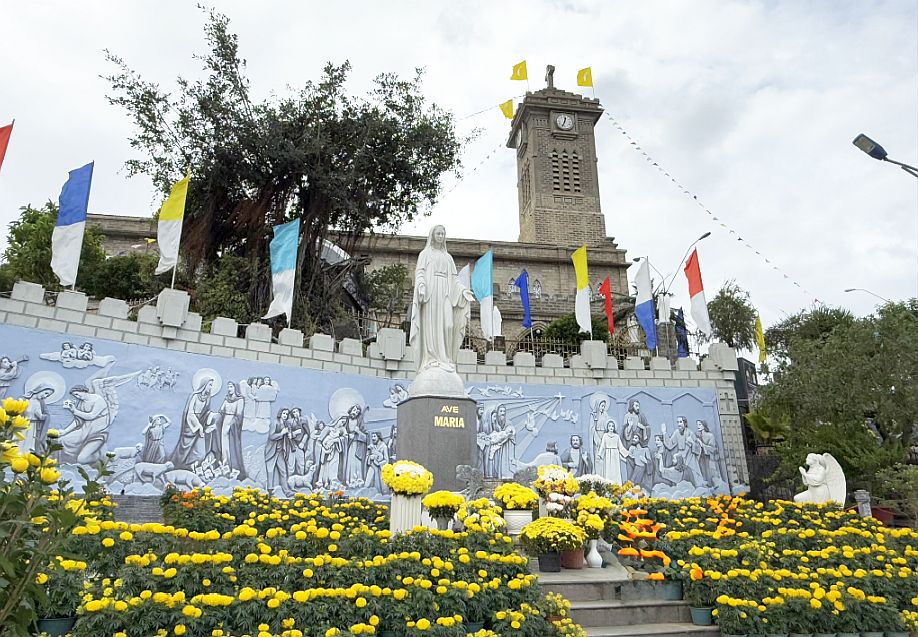
As we made our way back down the stone steps toward our bus, we paused one final time at the base of the cathedral grounds. There, standing peacefully in a small garden, was a graceful statue of the Virgin Mary (Ave Maria). With her hands gently folded in prayer and her serene expression looking out over the visitors, she offered a quiet moment of reflection before we continued our journey. Because our visit took place just days before Tet, the statue was surrounded by a stunning display of golden flowers, the traditional color of prosperity, good fortune, and happiness in Vietnamese culture. The brilliant yellow blossoms formed a beautiful contrast against the gray stone of the cathedral and the lush green gardens, creating one of the most colorful scenes of the day.
 |
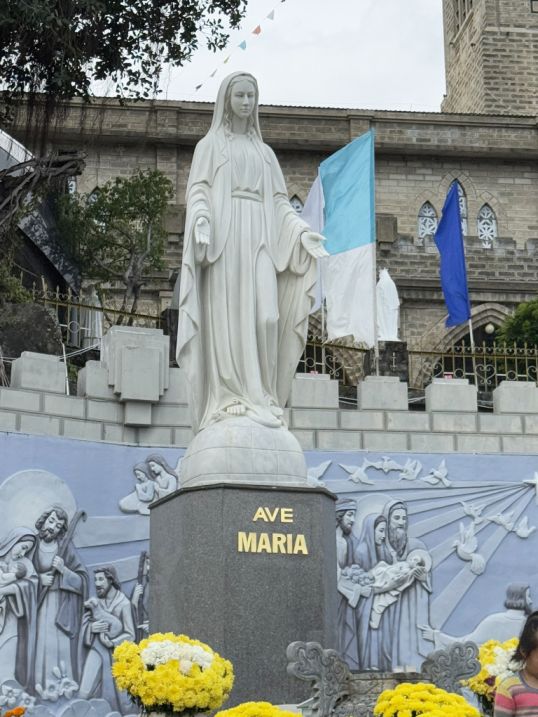 |
t was a fitting way to end our visit. After admiring the soaring Gothic architecture, the impressive bell tower, and the Stations of the Cross, the peaceful statue of Ave Maria seemed to symbolize the warmth and hope of the upcoming Lunar New Year. The combination of Christian tradition and Vietnamese Tết celebrations created a unique and memorable scene, one that beautifully reflected Nha Trang's blend of cultures and faiths.
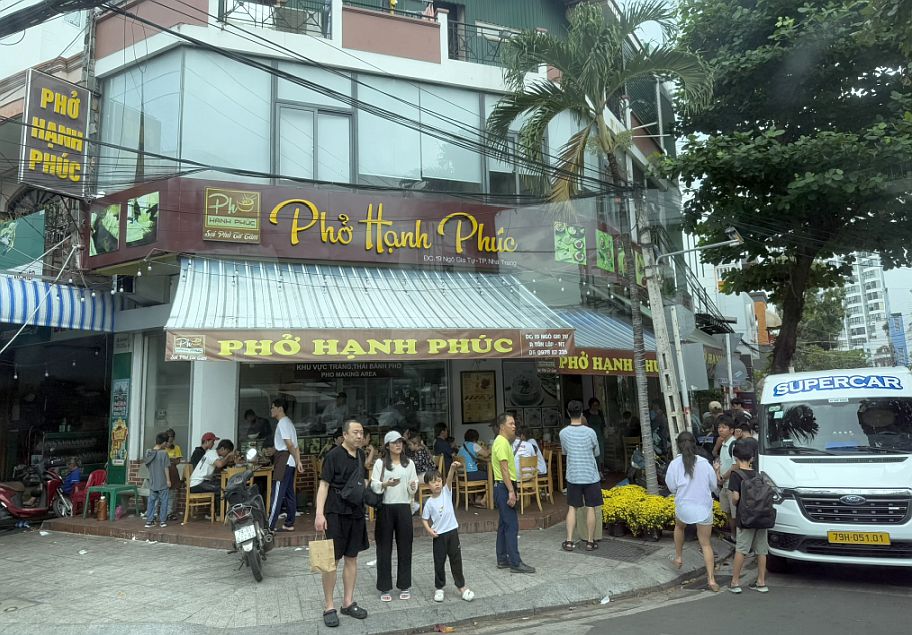
With our morning of sightseeing complete, we climbed back aboard the bus and headed to our lunch stop at Pho Hanh Phúc, a local restaurant known for serving one of Vietnam's most iconic dishes.

After a busy morning exploring museums, ancient temples, and historic landmarks, a steaming bowl of pho bò (Vietnamese beef noodle soup) was exactly what we needed. Within minutes of being seated, our bowls arrived, piping hot and fragrant. The rich, clear broth had been simmered for hours with beef bones and aromatic spices such as star anise, cinnamon, cloves, and ginger, creating the signature flavor that has made pho famous around the world.
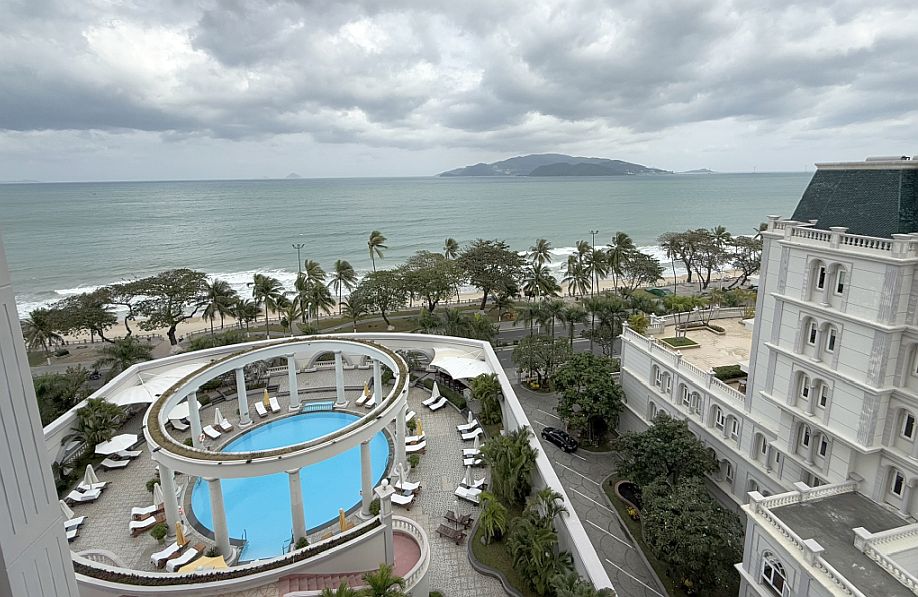
After a full day of exploring Nha Trang's cultural and historical treasures, our bus returned us to the Sunrise Nha Trang Beach Hotel & Spa. It felt good to be back after an unforgettable day of sightseeing. The first thing I did was slide open the glass doors to our private balcony. Instantly, a cool ocean breeze drifted into the room. Looking down, I was greeted by the hotel's beautiful swimming pool, its crystal-clear blue water sparkling in the afternoon sunlight. Palm trees swayed gently around the pool deck, where a few guests were relaxing after their own adventures.

NEXT... Day 2-Fruit stall and Dinner