
3 days in Nha Trang-1/26- 1/29/2025
Day 2-Guided tour -1/27/2025
1st stop: Museum of Oceanography
The next morning, we joined a four-hour sightseeing tour to discover some of Nha Trang's most iconic landmarks. Our itinerary included the National Oceanographic Museum of Vietnam, the impressive Nha Trang Cathedral, the scenic Hon Chong Promontory with its dramatic coastal rock formations, and the ancient Po Nagar Cham Towers, one of the region's most important historical sites. Along the way, we stopped at a local restaurant to sample traditional Vietnamese dishes before returning to our hotel. It was an enjoyable introduction to the city's history, culture, and beautiful coastline, all packed into one memorable morning.
Our first stop was the National Oceanographic Museum of Vietnam. Founded in 1922, the Museum of Oceanography in Nha Trang is one of the oldest marine research institutions in Southeast Asia. Established at the suggestion of renowned scientist Dr. Alexandre Yersin, it was created to study the rich marine life of Vietnam's coastline. More than a century later, the museum remains part of an active research institute under the Vietnam Academy of Science and Technology, housing over 23,000 marine specimens collected during scientific expeditions. As we wandered through its galleries, it became clear that this wasn't just a museum filled with fascinating displays, it was a century-old archive preserving the story of Vietnam's oceans.
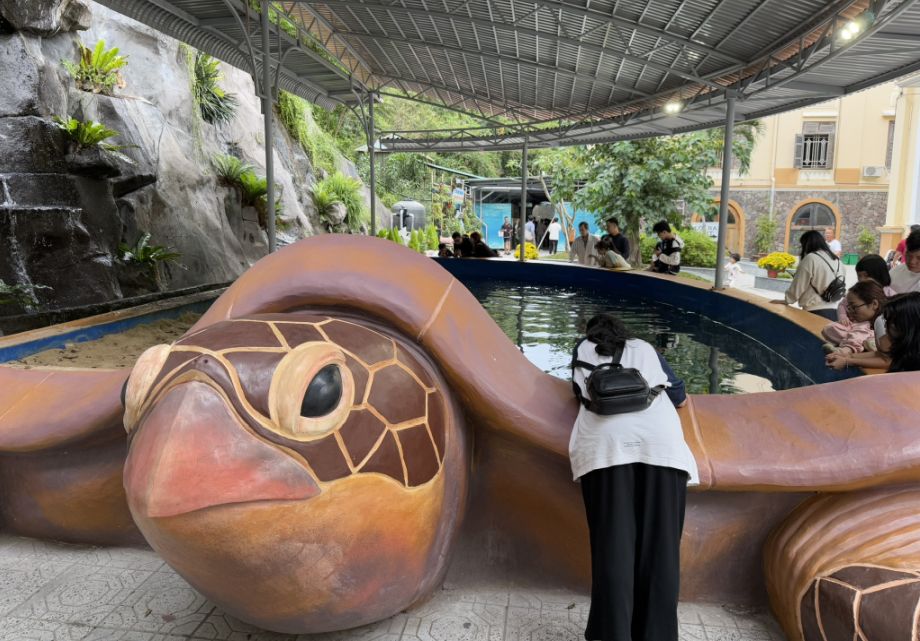
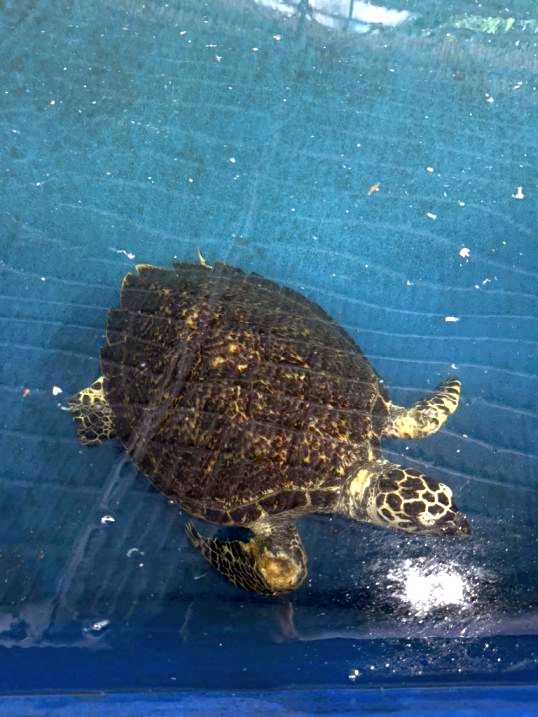
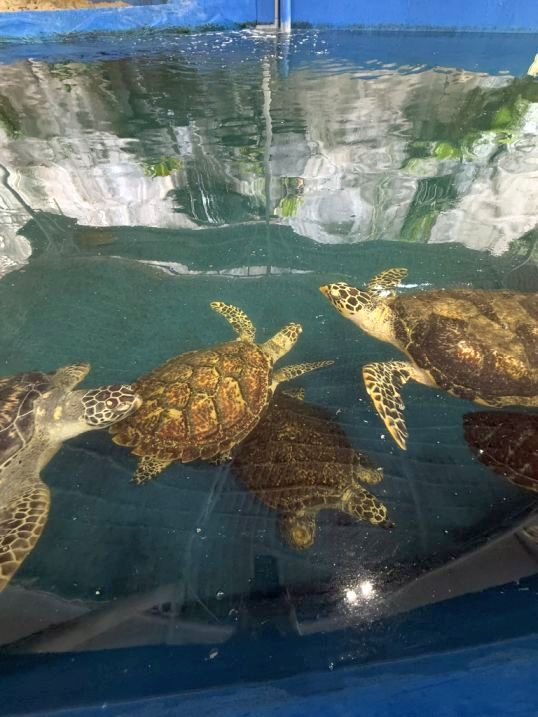
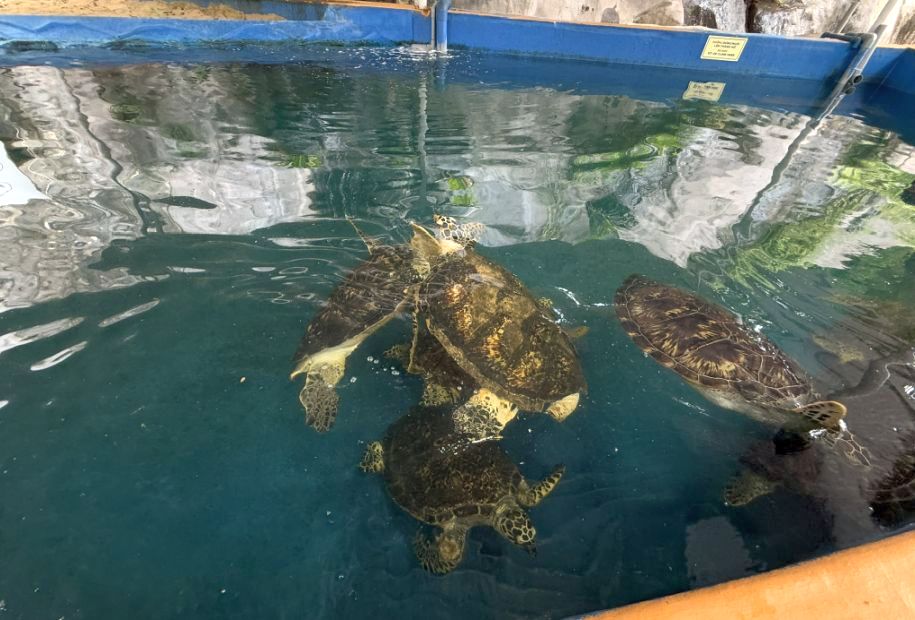
Before entering the museum, we walked through a peaceful courtyard. A large open-air basin was home to several giant sea turtles.
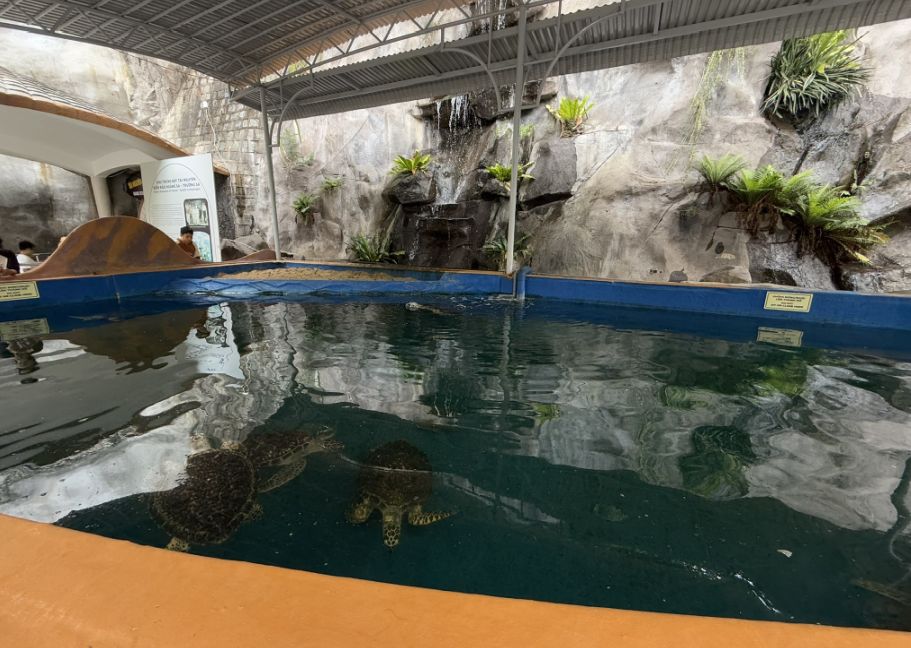
Watching these gentle creatures slowly glide through the water was a memorable welcome and a reminder of Vietnam's rich marine life.
 |
 |
recognition and awards that highlight its elevated take on classic Italian cuisine, guided by a chef who clearly values both authenticity and creativity.
 |
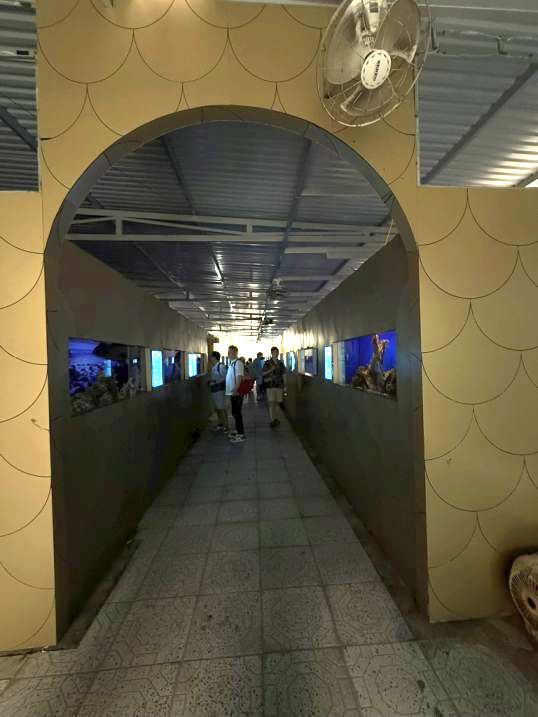 |
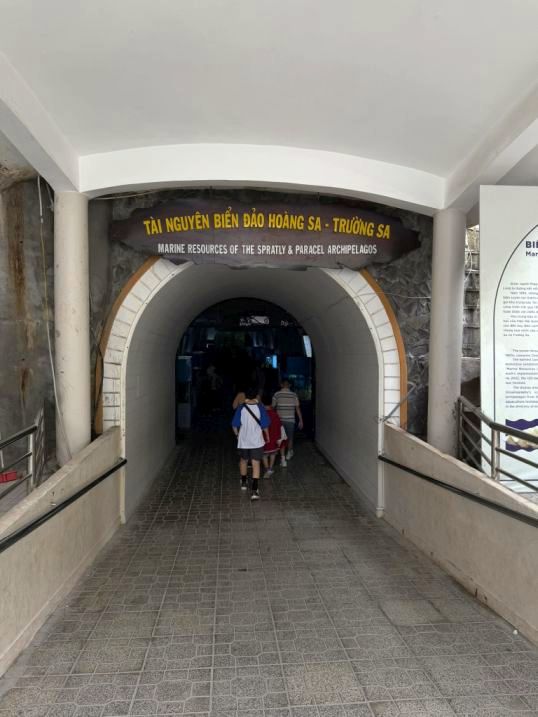
Inside, the museum showcases thousands of marine specimens collected from the South China Sea, along with aquariums featuring colorful tropical fish, sharks, rays, corals, and other sea creatures native to Vietnam's coastline. It was an interesting introduction to the incredible biodiversity found in the waters surrounding Nha Trang, one of Vietnam's most important coastal and marine research centers.
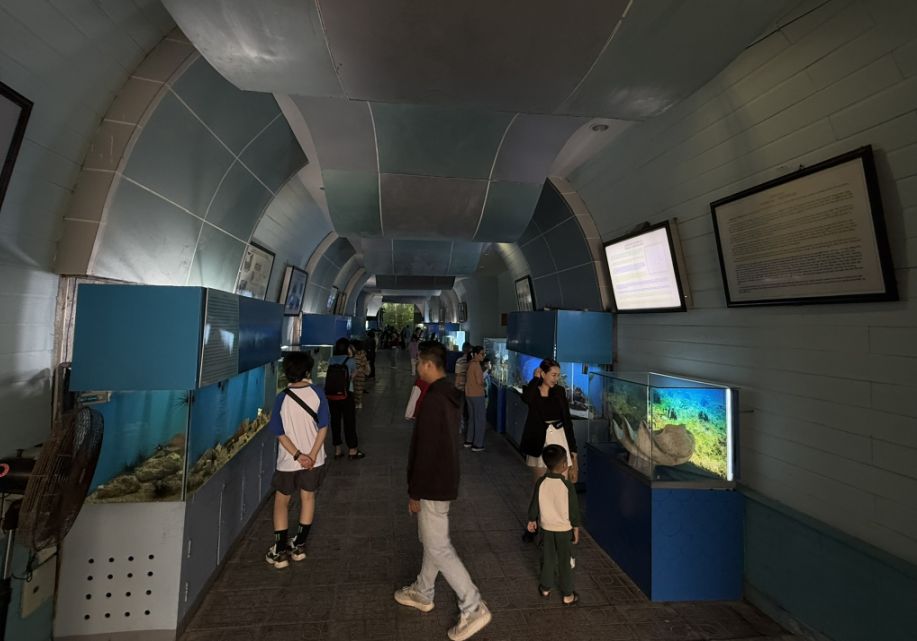
Inside the museum, aquariums lined the walls, each showcasing a different part of Vietnam's marine ecosystem.
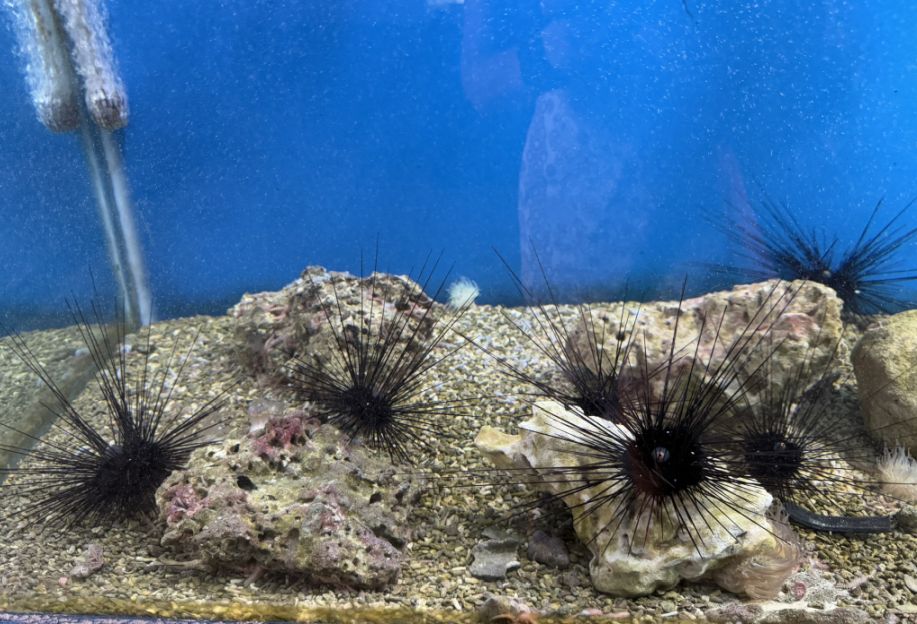
One of the first tanks that caught my attention was filled with sea urchins. These fascinating creatures are covered with long, sharp spines for protection, and hidden among the spines is a tiny mouth on the underside.
 |
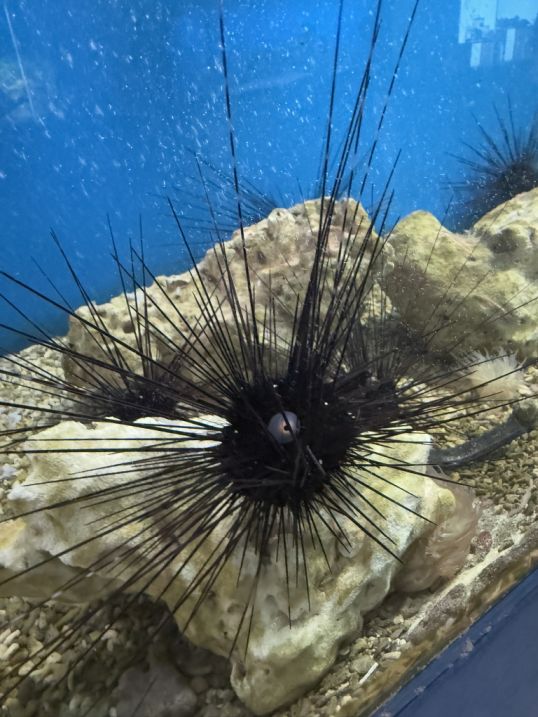 |
Although they don't have eyes like we do, they use light-sensitive cells spread across their bodies to detect light and movement, helping them navigate the ocean floor.
 |
 |
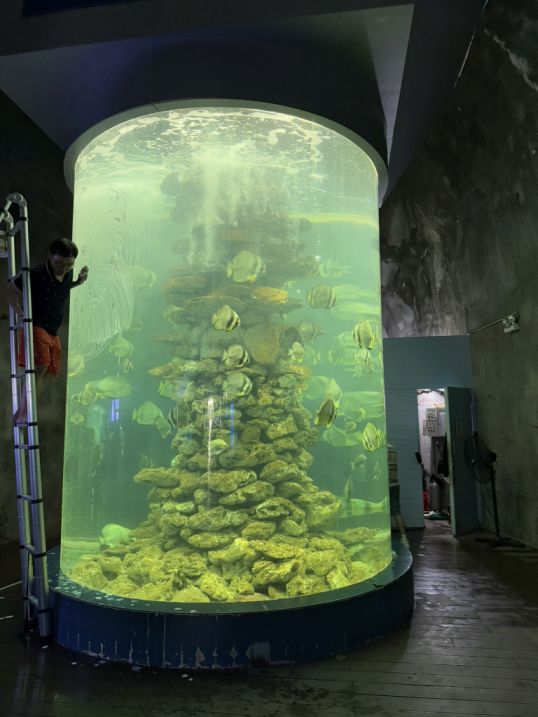
Farther along stood a tall cylindrical aquarium where schools of striped tropical fish gracefully circled towering rock formations rising from the center of the tank.

We then came upon enormous wall-sized aquariums teeming with colorful fish of every shape and size, creating the feeling of looking through a giant underwater window.

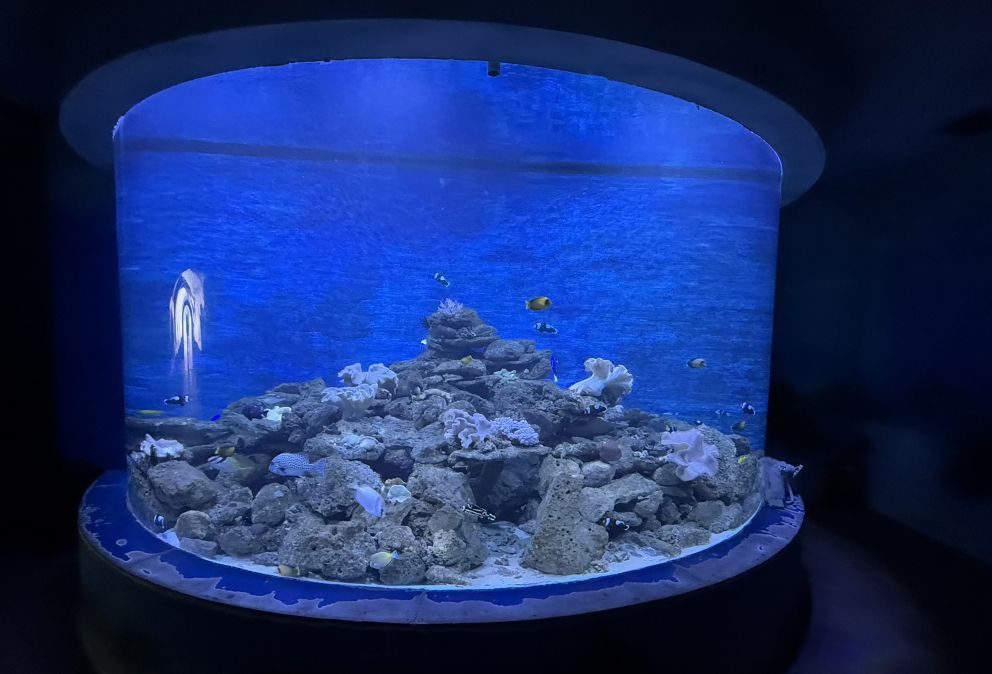
Another beautiful cylindrical tank featured a rocky reef at the bottom, where smaller fish darted in and out of the crevices, disappearing beneath the rocks before reappearing moments later.
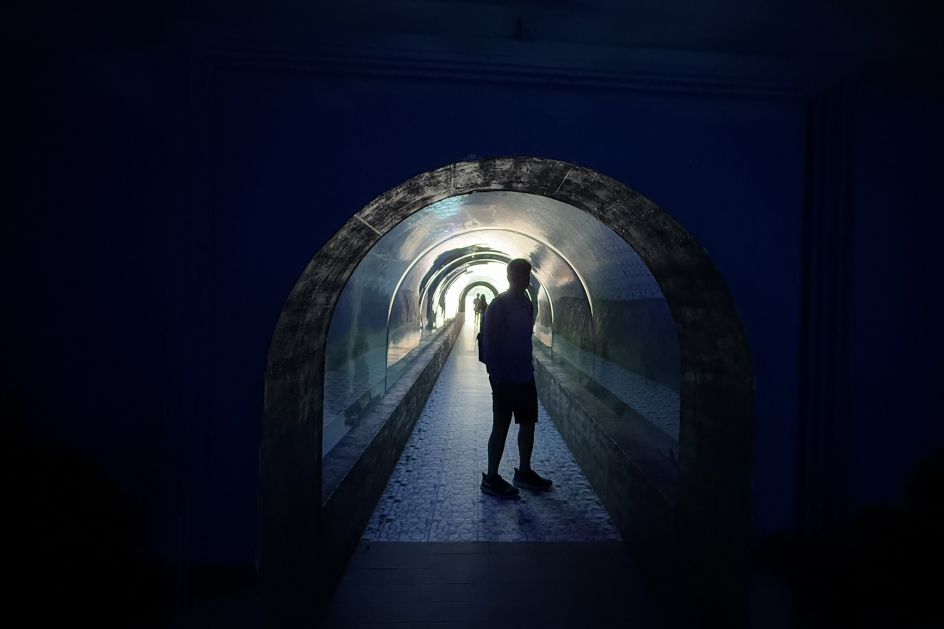
Then we entered a tunnel
 |
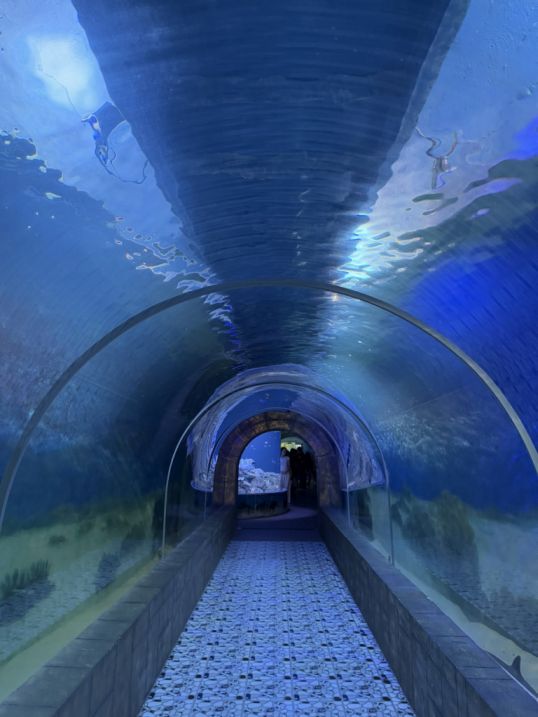 |
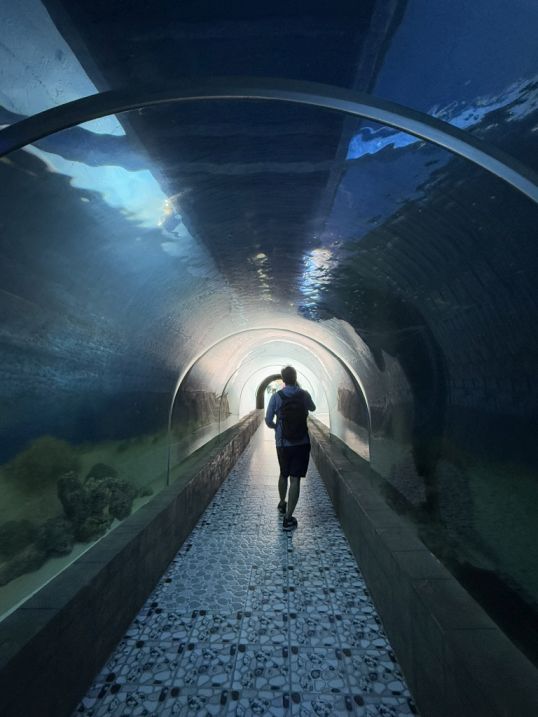
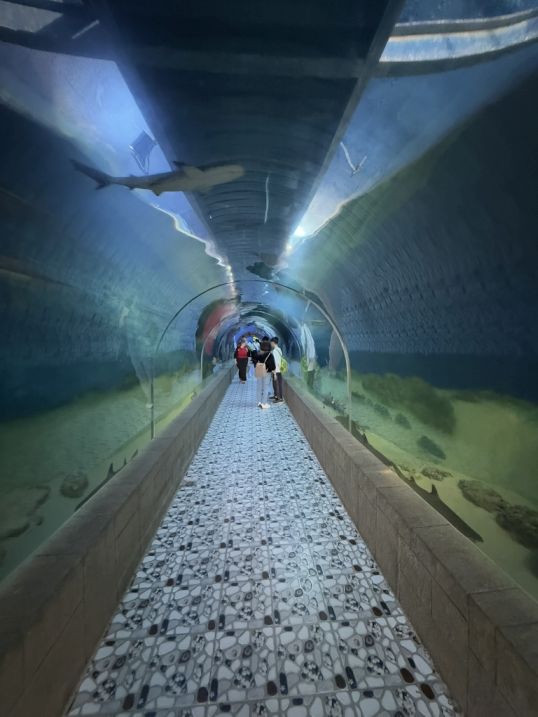
The highlight was walking through the underwater tunnel, surrounded by water on all sides as sharks, rays, and countless tropical fish glided silently overhead, making us feel as though we were strolling along the ocean floor.
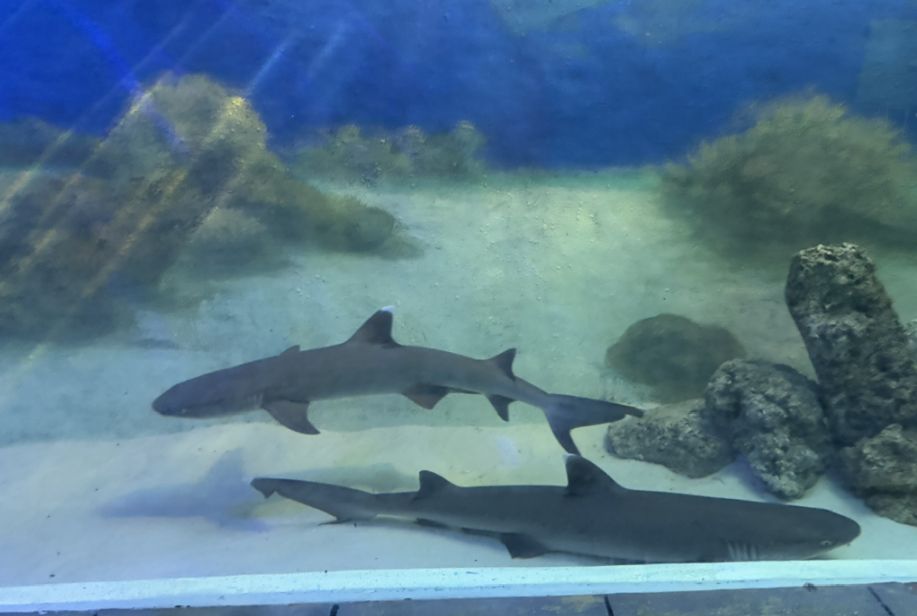
The underwater tunnel offered some of the best views in the museum.
 |
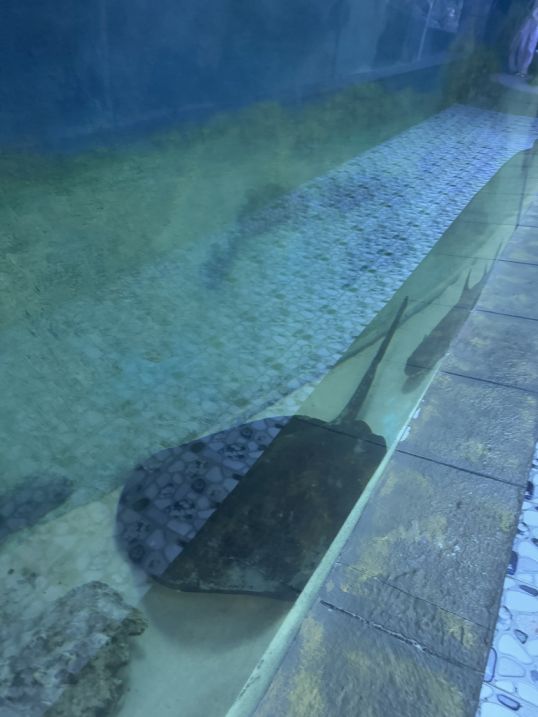 |
Sharks cruised effortlessly overhead, while graceful stingrays rested on the bottom of the tank, occasionally lifting off the sand and gliding past with their long whip-like tails trailing behind them.

Farther along, we came across the tri-spine horseshoe crab, a creature unlike anything we had seen before.
 |
 |
.Despite its name, it isn't a true crab but an ancient species that has existed for hundreds of millions of years. Its hard horseshoe-shaped shell, long pointed tail, and unusual appearance made it look like something from another era.
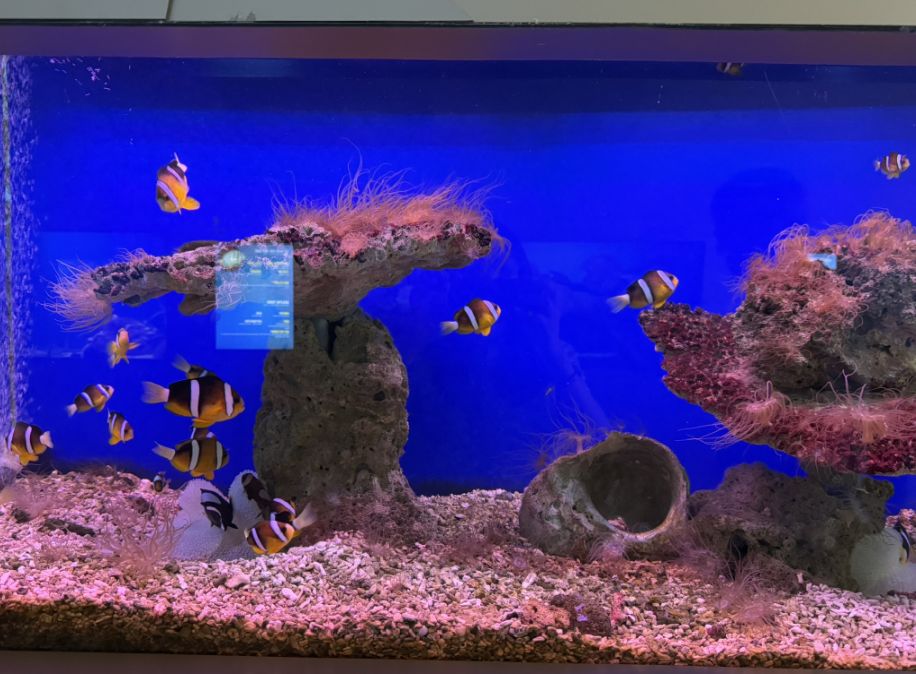
One of the most beautiful displays featured brilliant yellow fish with crisp white stripes swimming among towering rock formations topped with colorful corals and marine plants, creating a miniature coral reef.
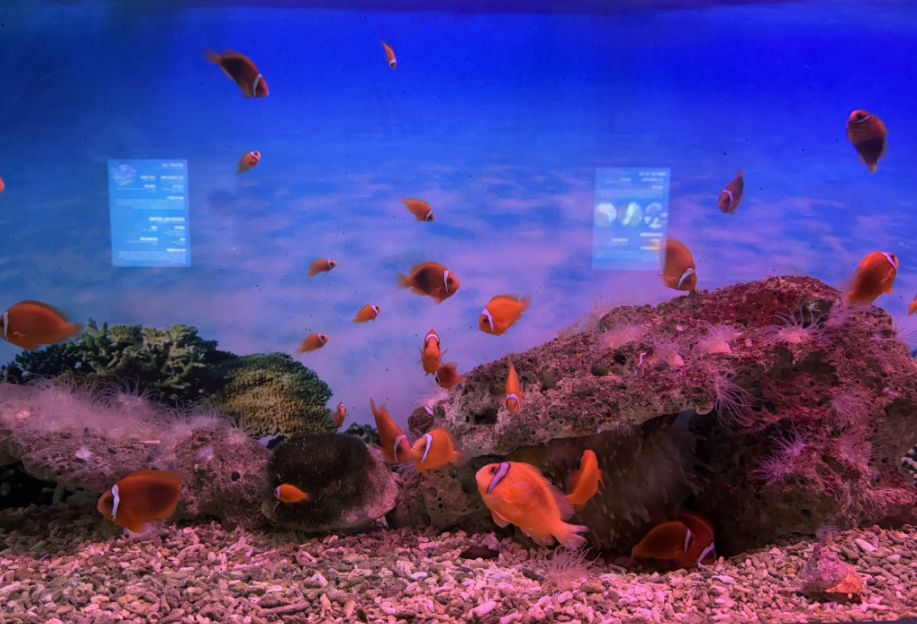
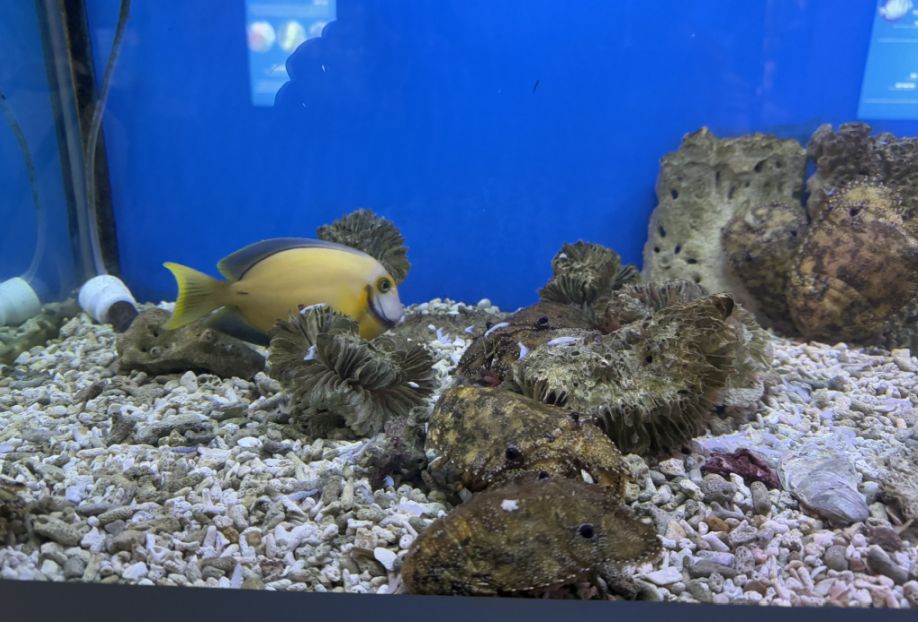
In another aquarium, we had to look carefully before spotting the slipper lobsters.
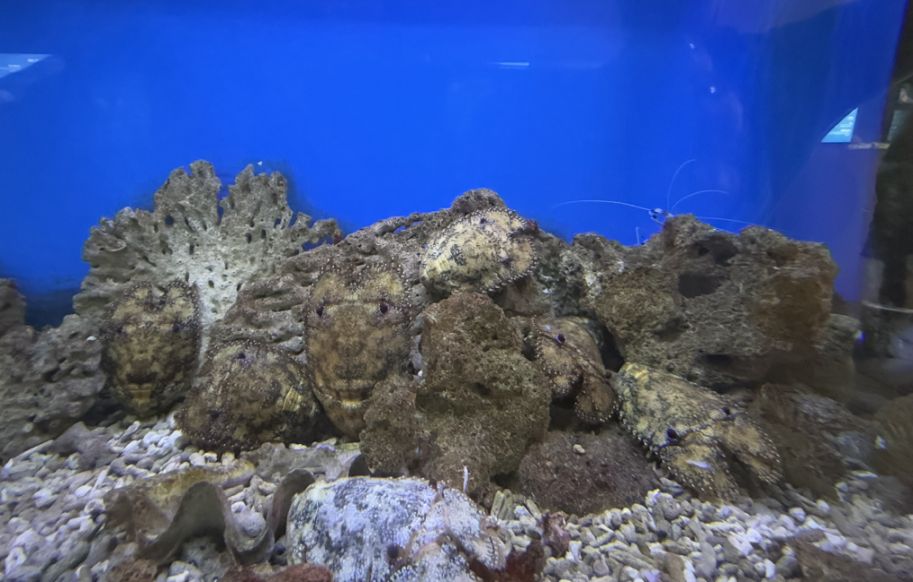
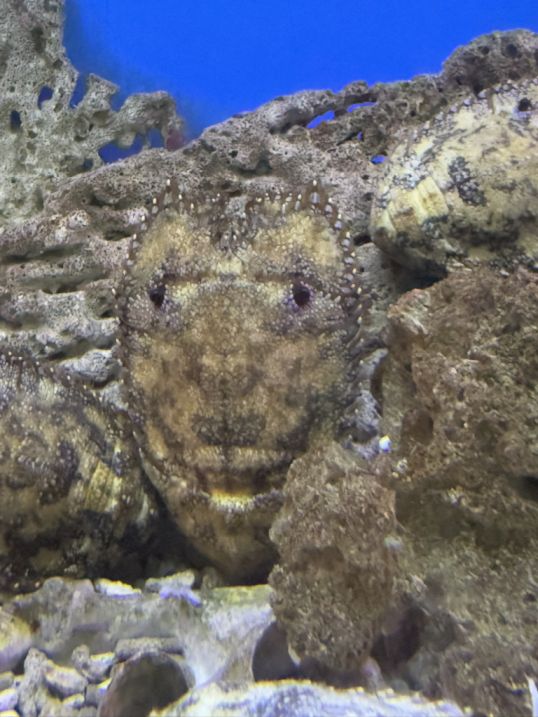
Their flattened bodies and rough, mottled shells blended so perfectly with the surrounding rocks that they almost disappeared.
 |
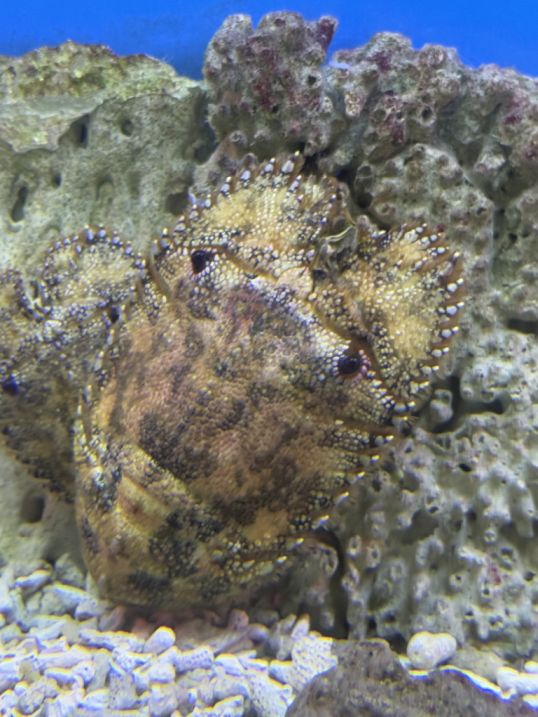 |
Unlike the familiar clawed lobster, slipper lobsters have a broad, shovel-like head that some people say resembles a human face.
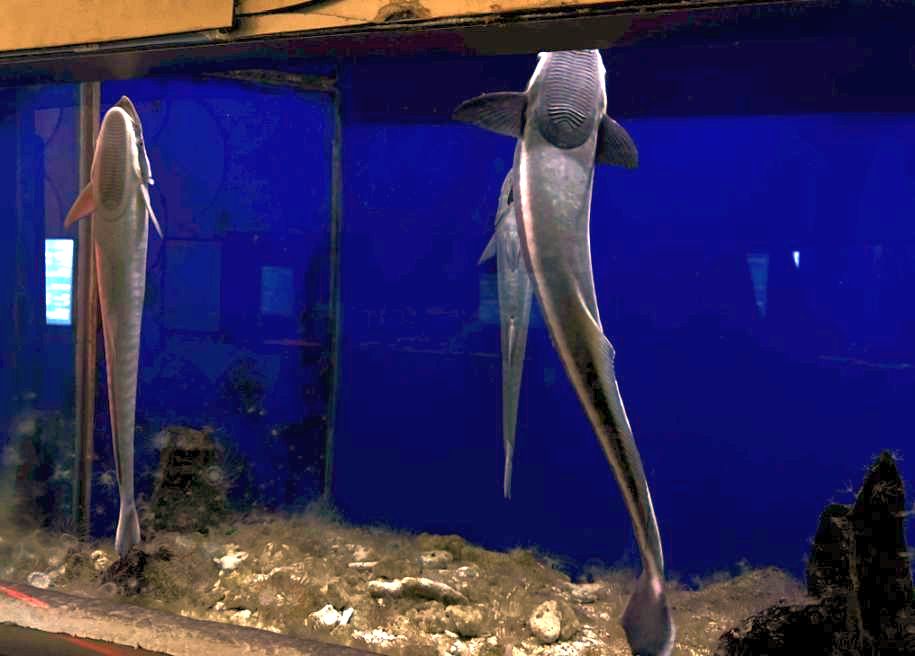
We also spotted several shark suckers (remoras), hanging almost vertically against the glass.
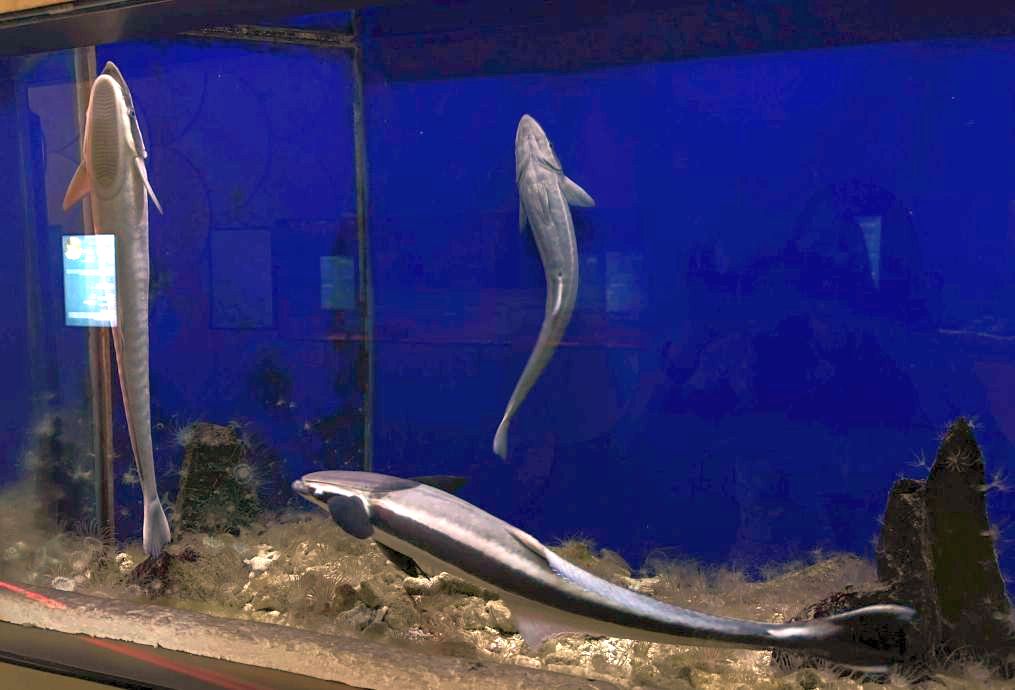
Using the suction disc on top of their heads, these remarkable fish attach themselves to sharks and other large marine animals, hitching a free ride while feeding on scraps left behind by their hosts.

Another tank was filled with moon wrasse, colorful fish with rounded faces and expressive eyes that gave them a funny, almost cartoon-like appearance as they darted around the aquarium.
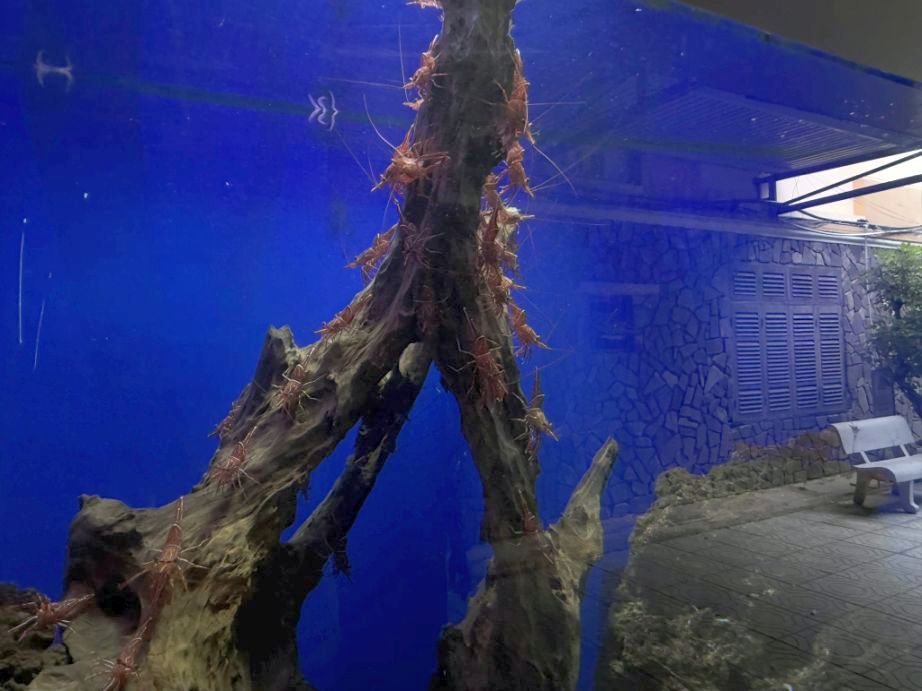
Nearby, tiny live shrimp crawled over coral that resembled the branches of a small underwater tree, creating a fascinating scene of constant movement.
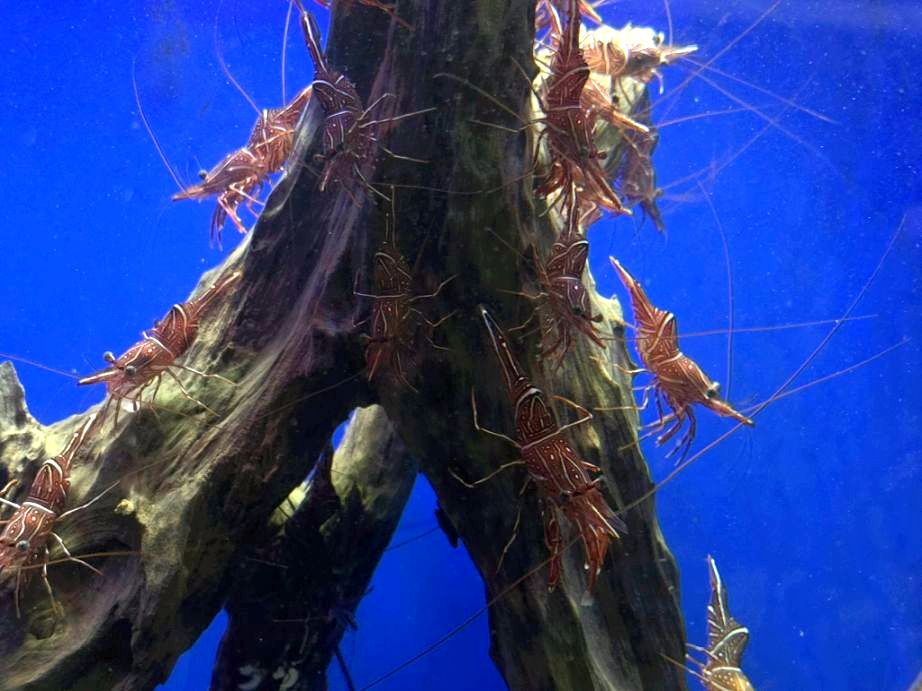
Closer view of the shrimps
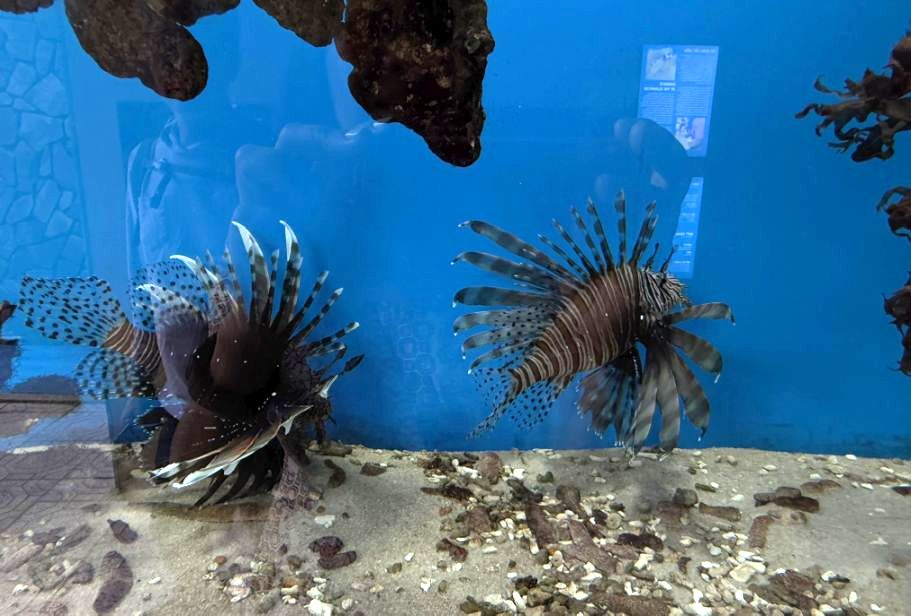
We also admired the striking red lionfish, whose flowing, fan-like fins and bold red-and-white stripes made it one of the most beautiful fish in the museum.
 |
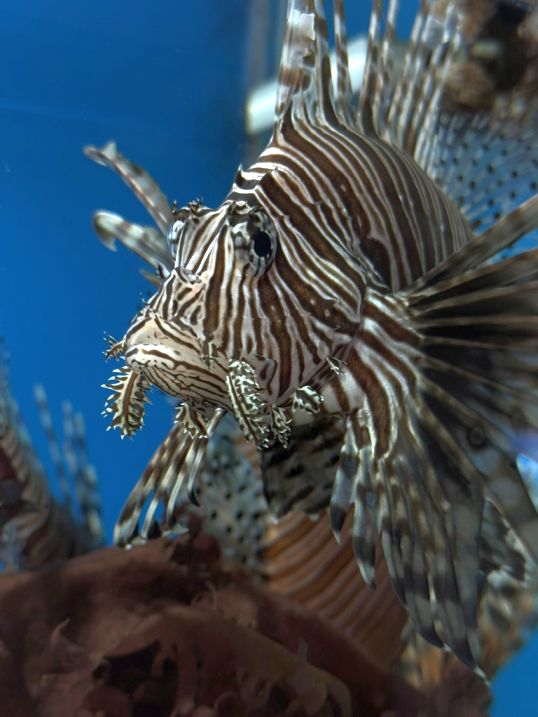 |
Despite its elegance, the lionfish is armed with venomous spines that help protect it from predators.
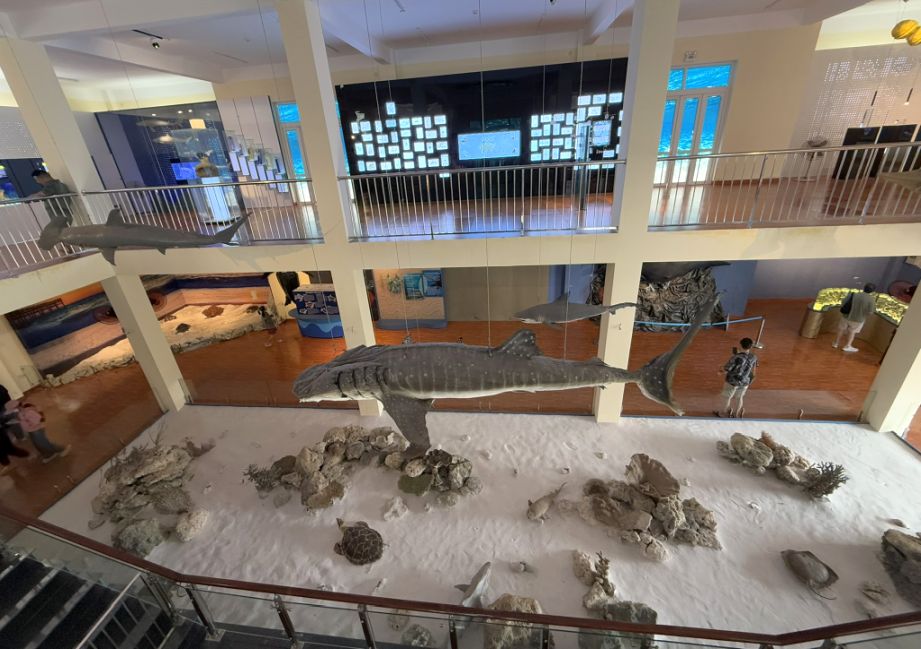
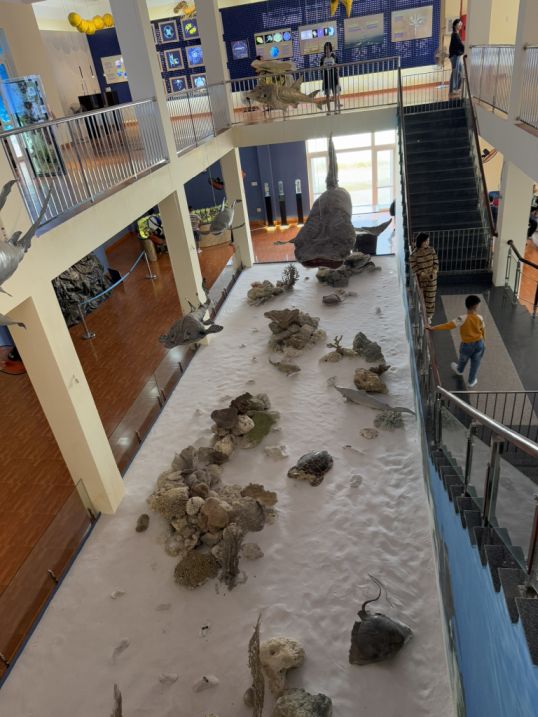
On the second floor, we looked down into a large central atrium where a giant fish was suspended from the ceiling above a display of white sand and rocks, giving the impression that it was swimming through the open space below. .

Beyond the atrium, room after room was lined with rows of glass jars containing preserved fish and other marine animals.

Fish preserved in alcohol or formalin. The clear liquid keeps the bodies from decomposing and preserves their anatomy for decades—sometimes more than a century. Scientists use these specimens to study species identification, evolution, anatomy, and how marine life changes over time.
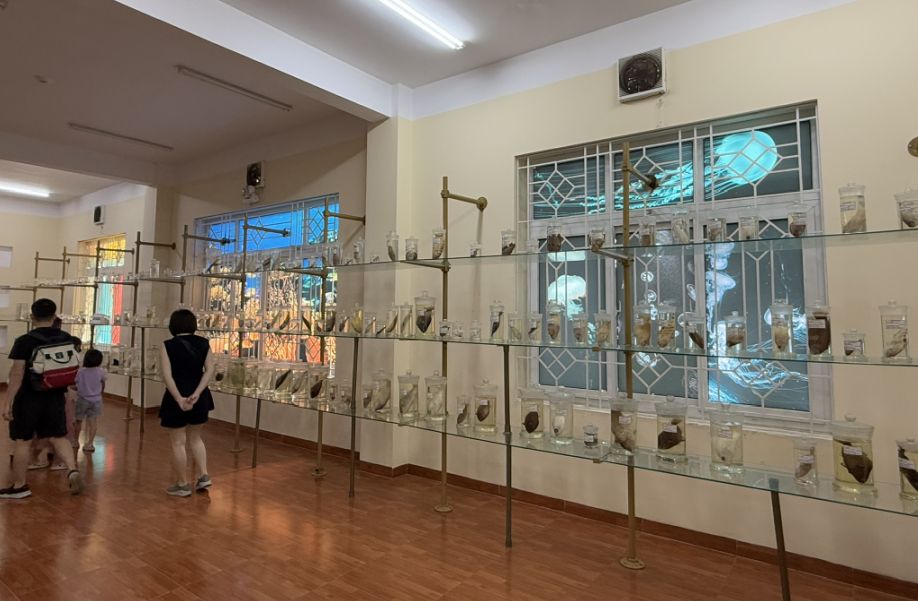
The museum holds one of Vietnam's largest marine collections, with tens of thousands of preserved specimens representing thousands of marine species from Vietnam and surrounding seas.
 |
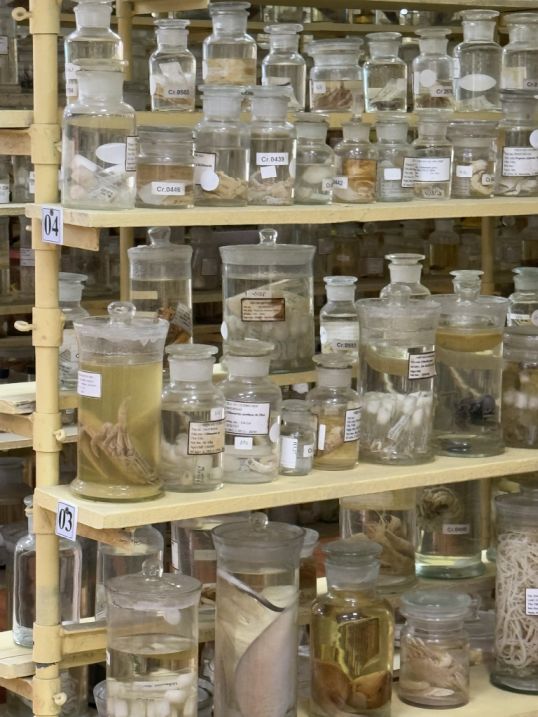 |
The jars also contain many invertebrates. One thing to notice is that the jars are carefully labeled. Museums like this organize specimens by scientific classification, related species are grouped together, so researchers and visitors can compare body shapes, fins, teeth, scales, and other features that reveal evolutionary relationships.
 |
 |
As we are going down the stairs, suspended from the ceiling is an enormous fish, frozen forever in mid-swim. For a moment, it feels as though the museum itself has become the ocean, and we're the ones drifting beneath a giant of the sea. Its body stretches overhead with effortless grace, reminding us that the open ocean is a world where size takes on an entirely different meaning.
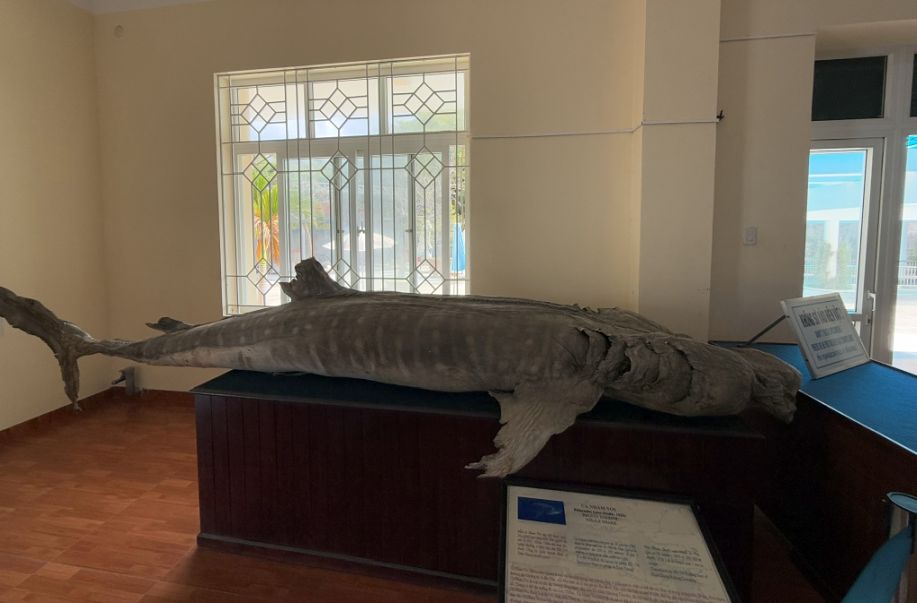
Just before we step out of the museum, one final exhibit demands our attention. Resting quietly on a raised platform is an enormous whale shark. There's no glass separating us from this gentle giant, only a low barrier, allowing us to walk around it and take in its immense size from every angle. Time has weathered its skin, and parts of the specimen have begun to show their age, but that somehow makes it feel even more authentic. This isn't a replica. It's a real animal with its own story.
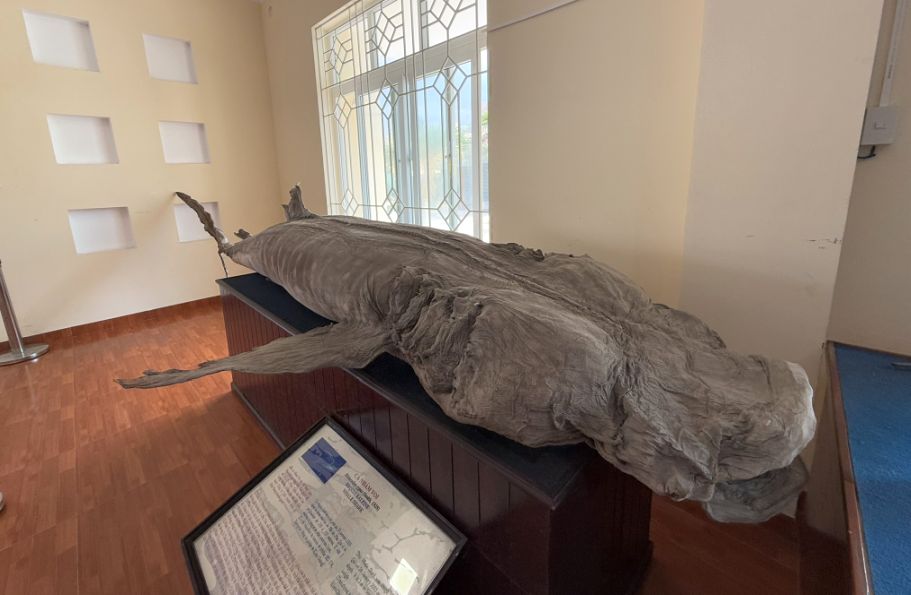
The plaque reveals that this whale shark was caught near Phú Quý Island on January 29, 2005. Knowing the exact place and date transforms it from a museum exhibit into a moment frozen in history. For years, this giant cruised the warm waters off Vietnam's southern coast, filtering tiny plankton from the sea. Today, it serves as an ambassador for a species that many divers spend a lifetime hoping to encounter in the wild. Standing beside it, it's hard to believe that an animal this large survives on some of the ocean's smallest creatures. Despite growing to lengths of more than40 feet, whale sharks are remarkably gentle filter feeders, gliding through tropical waters with their mouths open to strain plankton and small fish from the water.
NEXT... Day 2-Hon Chong