3 weeks in Bali, Indonesia- 5/28- 6/15/2024
|
Uluwatu |
Canggu &
surroundings |
Ubud & surroundings |
Sidemen/Amed |
Nusa Penida |
Day 11- Downtown Ubud-6/6/2024
Taking the shuttle bus straight to downtown Ubud makes things easy, and having a slow day where we can just wander and soak up the atmosphere is often the best kind of holiday. Ubud is fun, and taking our time will let us truly enjoy the culture, shops, and cafes.
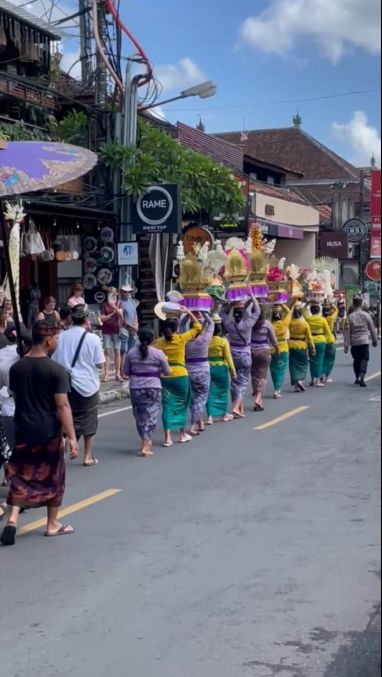
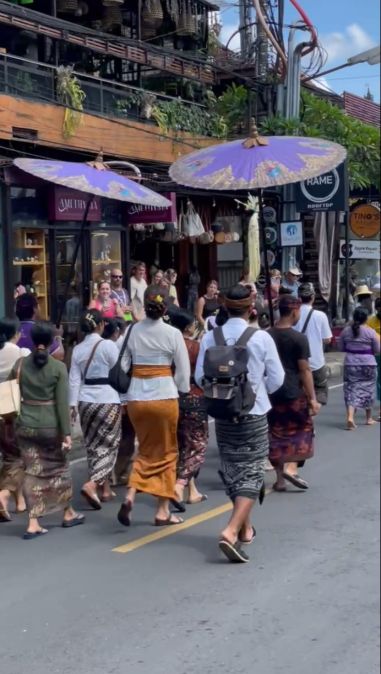
In the middle of the street we witnessed a Balinese ceremonial procession, a beautiful and very typical sight, especially in the morning. These processions often happen when a village group is headed to a temple for a ceremony or festival. In Balinese culture, women lead many ceremonial processions, carrying tall offerings on their heads, a practice called “Gebogan”.
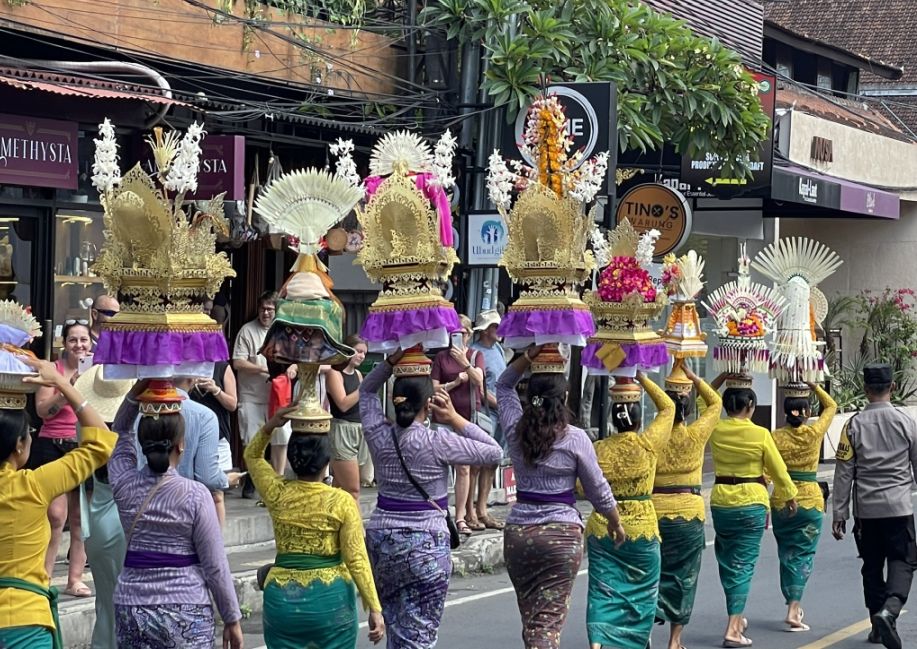
These tall offerings are meant to honor the gods and bring blessings to the community. The ladies wearing yellow blouse symbolizes purity and light, and the green sarong is connected to connected to fertility, nature, and life. The ladies wearing purple outfit are from certain banjar (village communities) or as a special group in the ceremony.
 |
 |
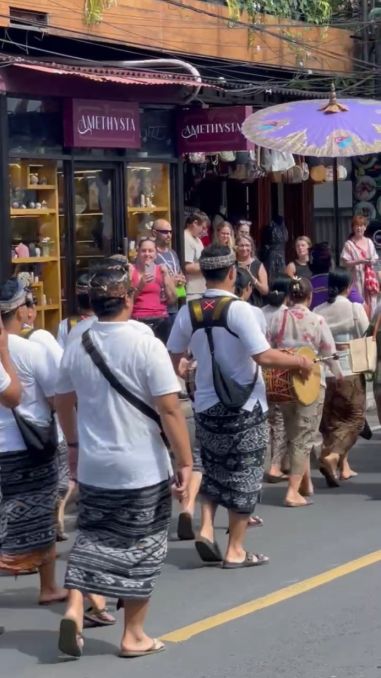 |
A traditional Balinese gamelan marching ensemble usually follows at the end of the procession. We heard gongs, drums, cymbal, and bamboo instruments. It is actually pretty low so everyone is stopping to watch the procession.
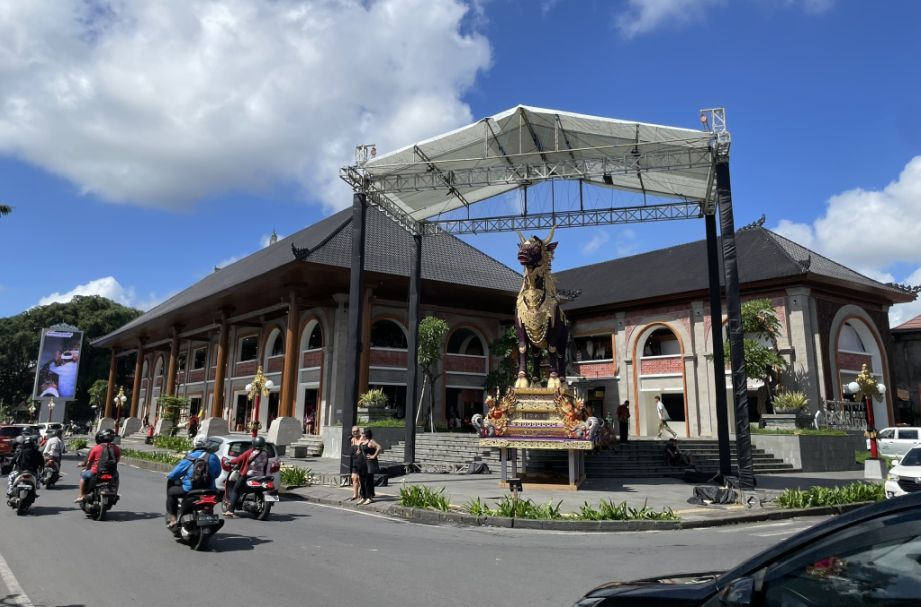
The Patar Statue, often called the “Arjuna Statue at Ubud Crossroad” sits exactly at the major intersection of Jalan Raya Ubud, Jalan Monkey Forest, and Jalan Suweta, one of the most iconic crossroads in central Ubud.
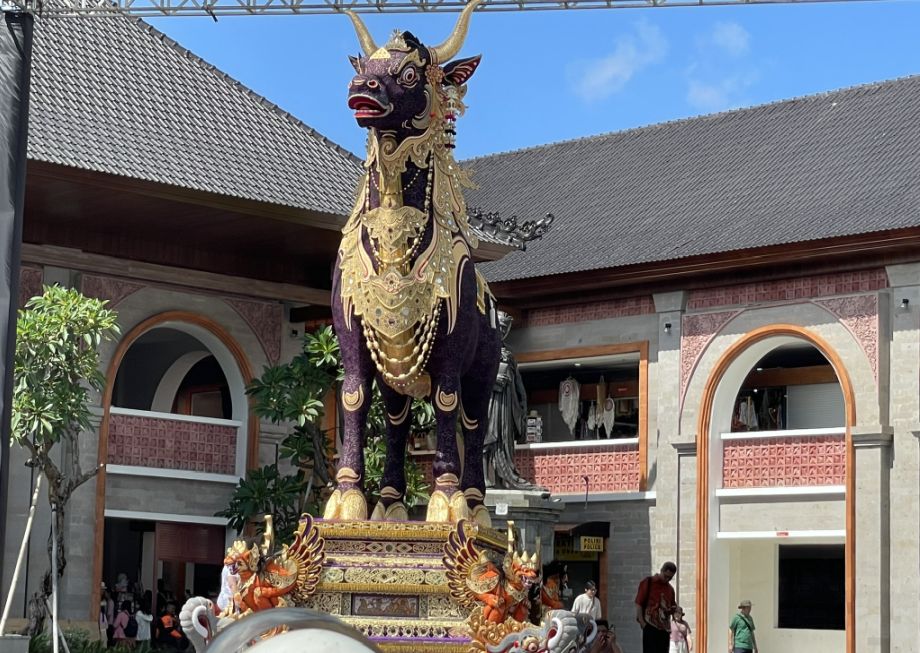
The sculpture of Arjuna represent Dharma (righteousness) and symbolizes mental focus, courage, and spiritual discipline.
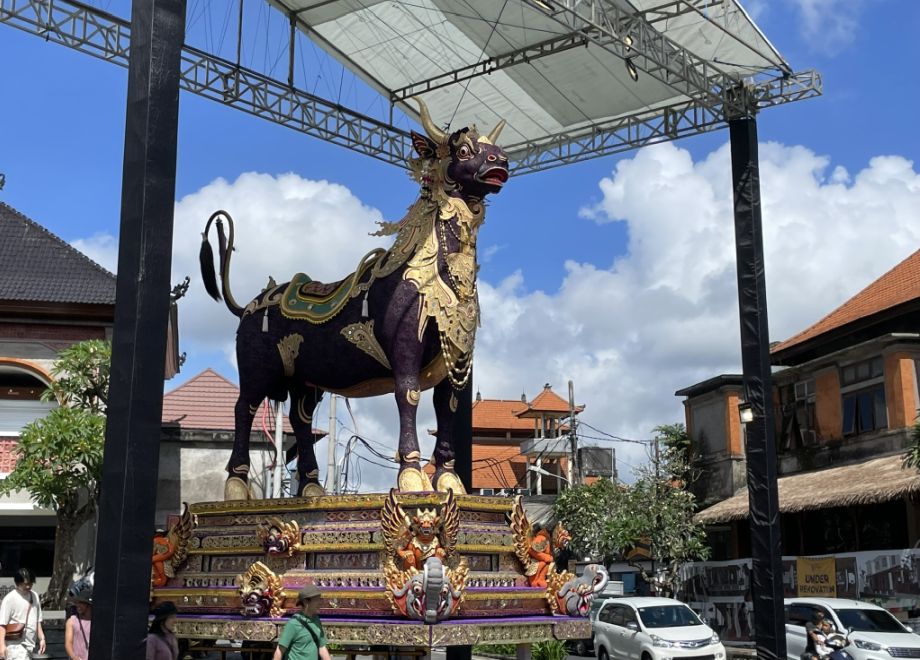
In Bali, statues like this are placed at busy intersections to guard the area spiritually, and serve as a cultural landmark.
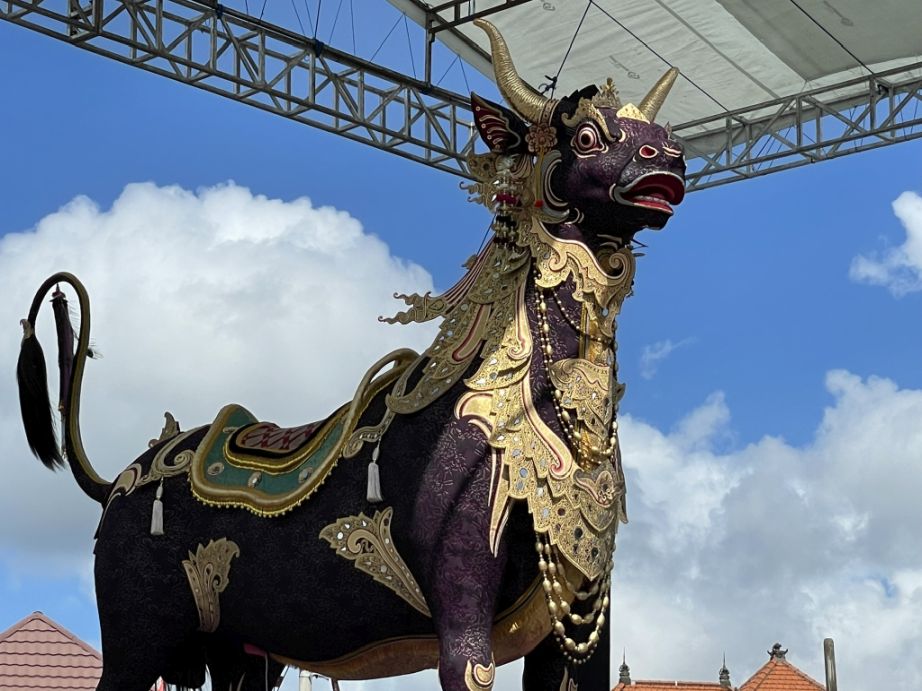
The statue towers above the three converging roads, traffic, tourists, scooters, and shops flow around it, Yet the statue gives the entire area a sense of mythic presence.
 |
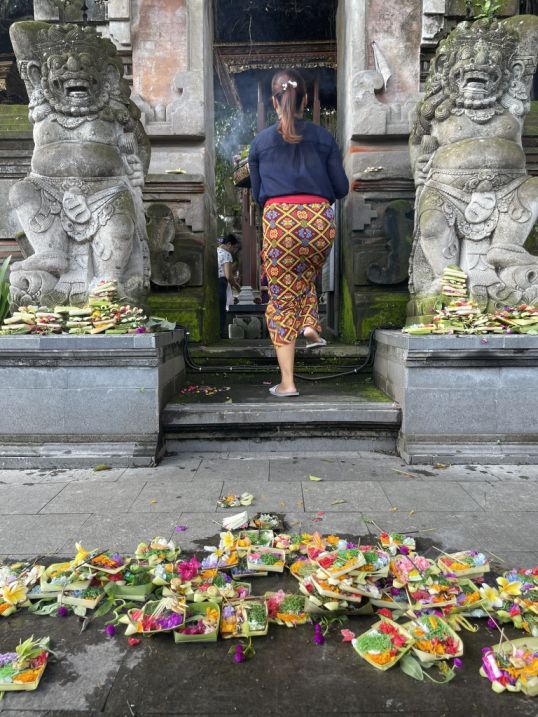 |
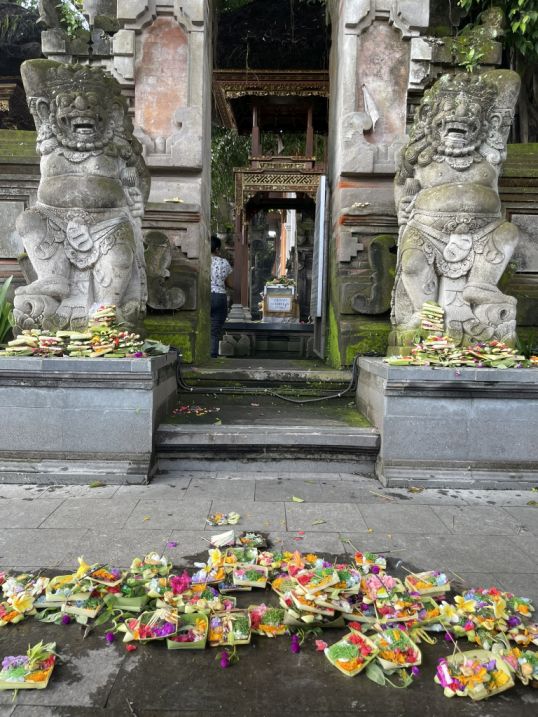
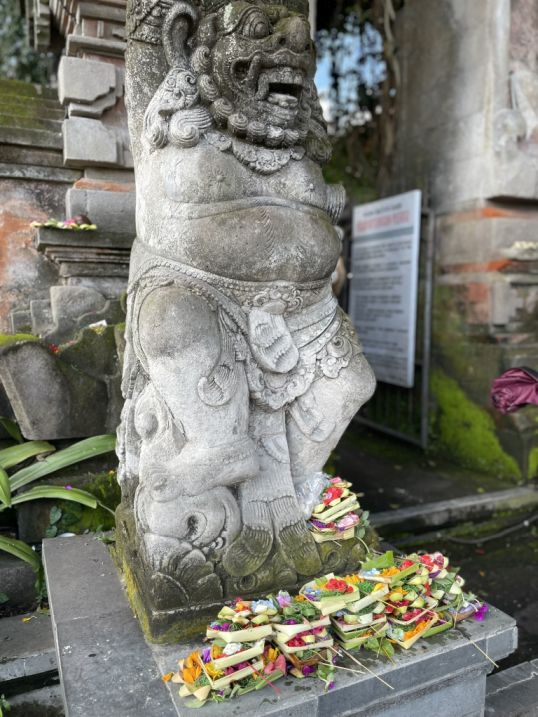
At the entrance of the Ubud Traditional Market, there are two guardian statues called Dwarapala, meaning “gate protectors.” because in the in Balinese culture, they are there to protect the space and receive offerings. Their purpose is to guard the entrance, keeping away negative spirits and ensuring the space is spiritually safe.
 |
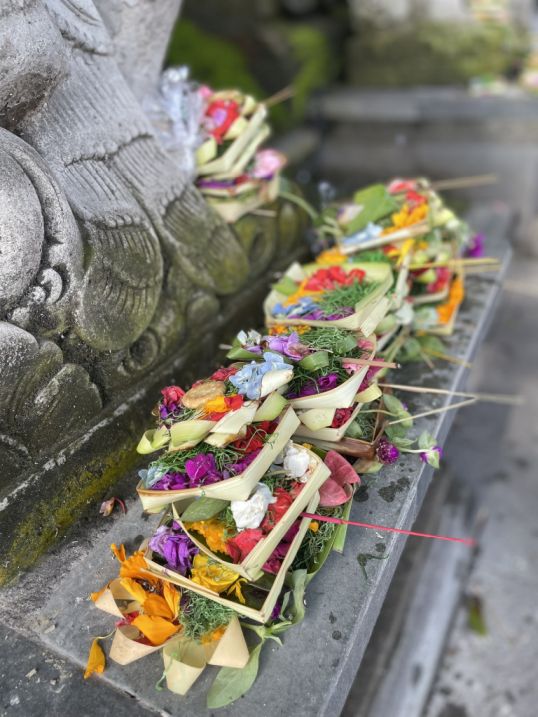 |
Balinese people place offerings, called canang sari, at the feet of these guardians for several reasons:
1-To honor the Protector Spirit
2-to Purify the entrance as entrances are spiritually sensitive places where energies come and go.
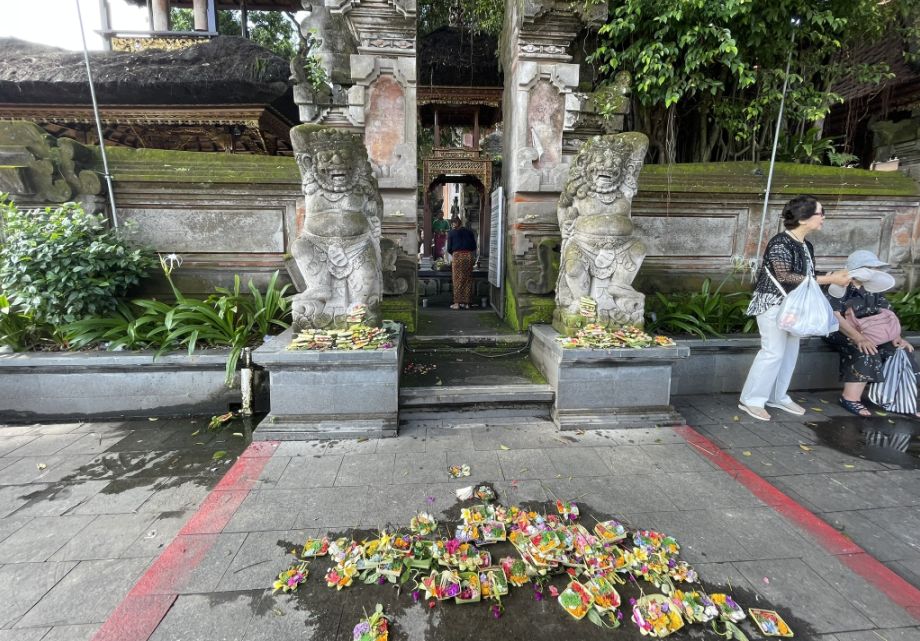
At a large entrance like the market, you’ll see many dozens of canang sari spread out because each shop owner places their own offering.
It’s one of those places where you visually see how Balinese spirituality blends seamlessly into daily life, even at the busy doorway of a market.
 |
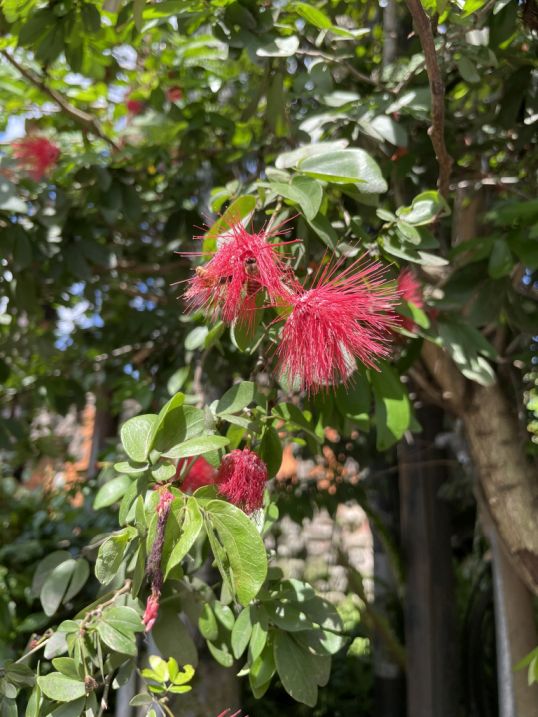 |
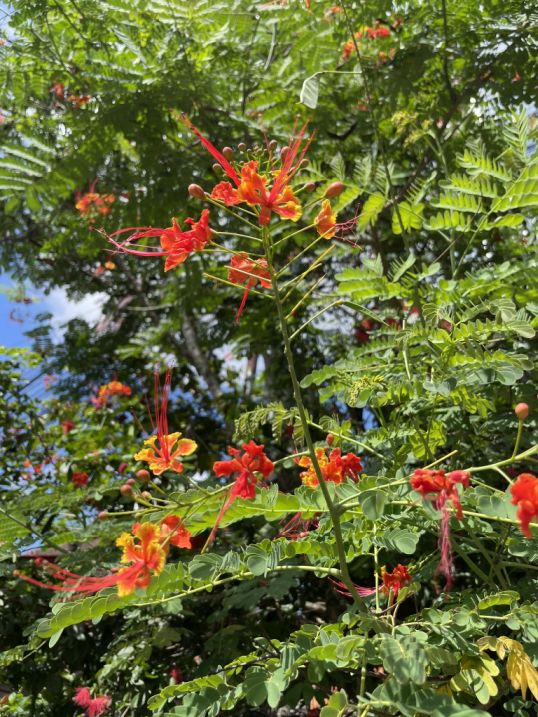
Colorful and vibrant flowers on the street.
 |
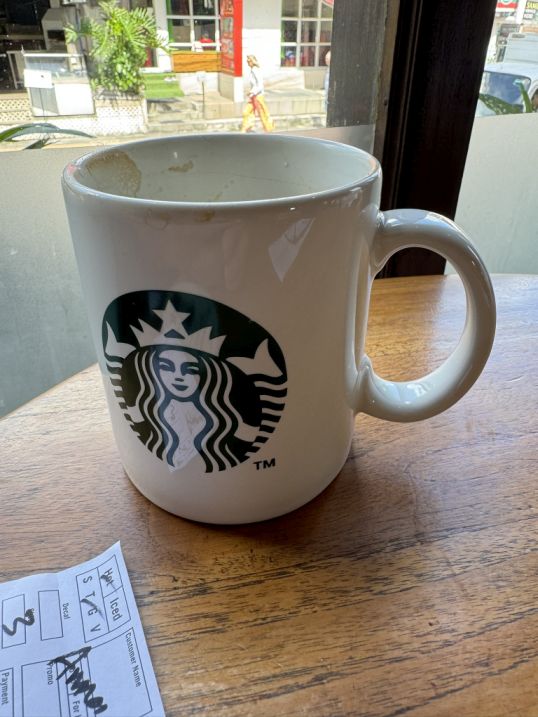 |
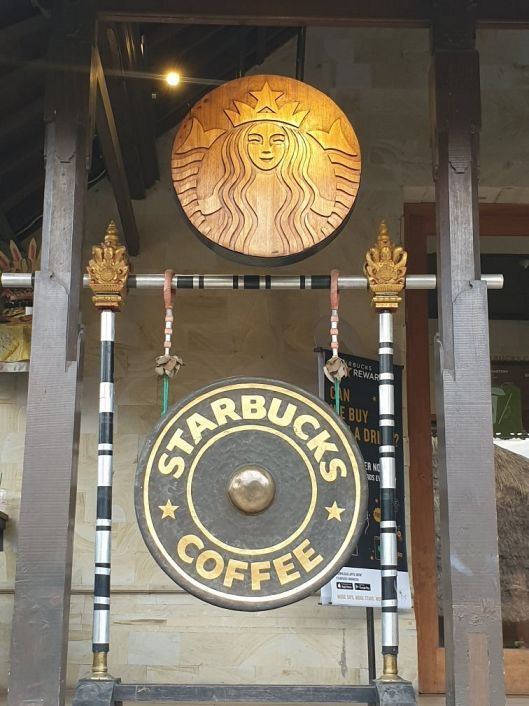
We stopped by at Starbucks for quick cup of coffee.
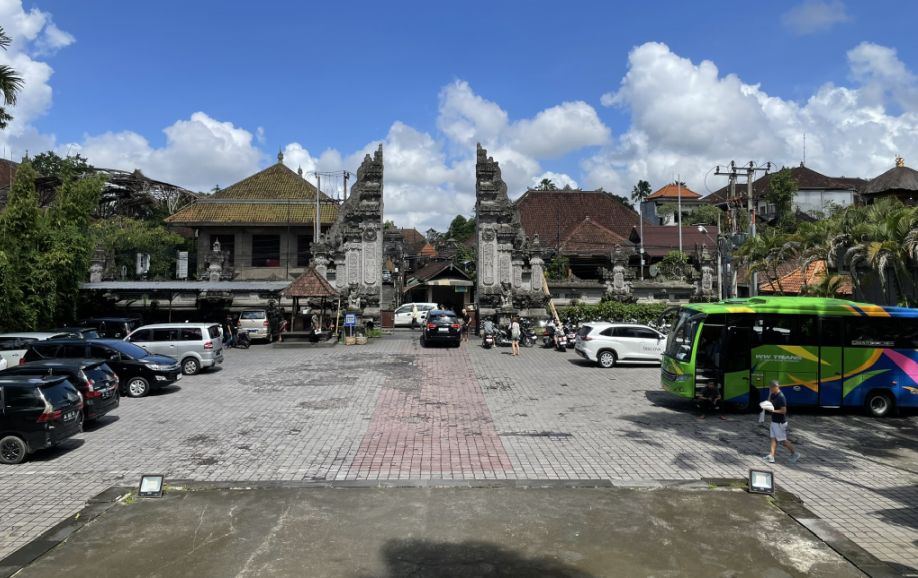
The Agung Rai Museum of Art (ARMA) has one of the most beautiful, traditional-style entrances of any museum in Ubud, and even just walking through the grounds already feels like stepping into a cultural sanctuary.
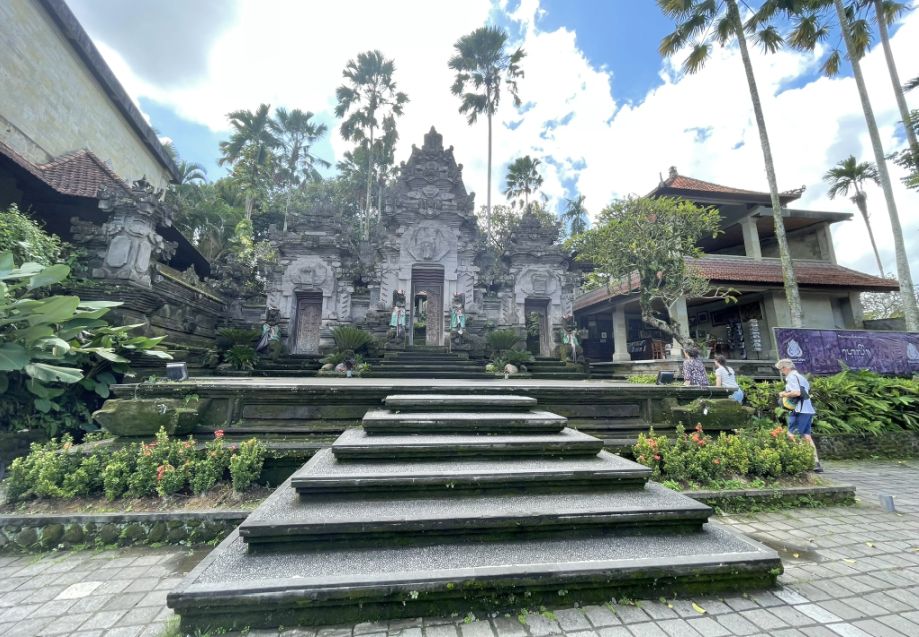
We walked around the property but we did not get inside the museum. The compound is actually really pretty.
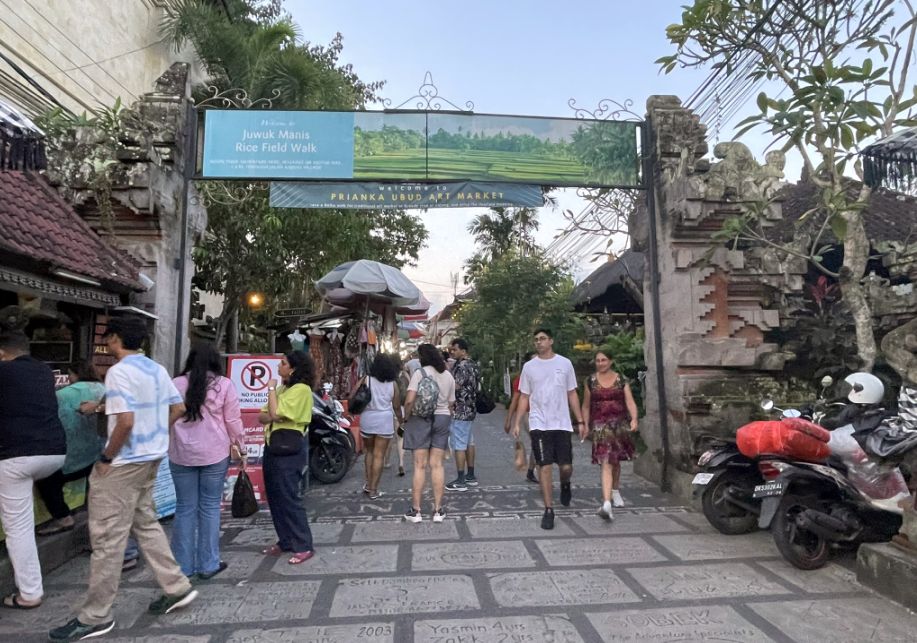
We are now at the Ubud’s most unique little landmarks, the Kajeng Walkway (often called the Kajeng Path). It’s located on Jalan Kajeng, a small street that leads from central Ubud toward rice fields and village houses.
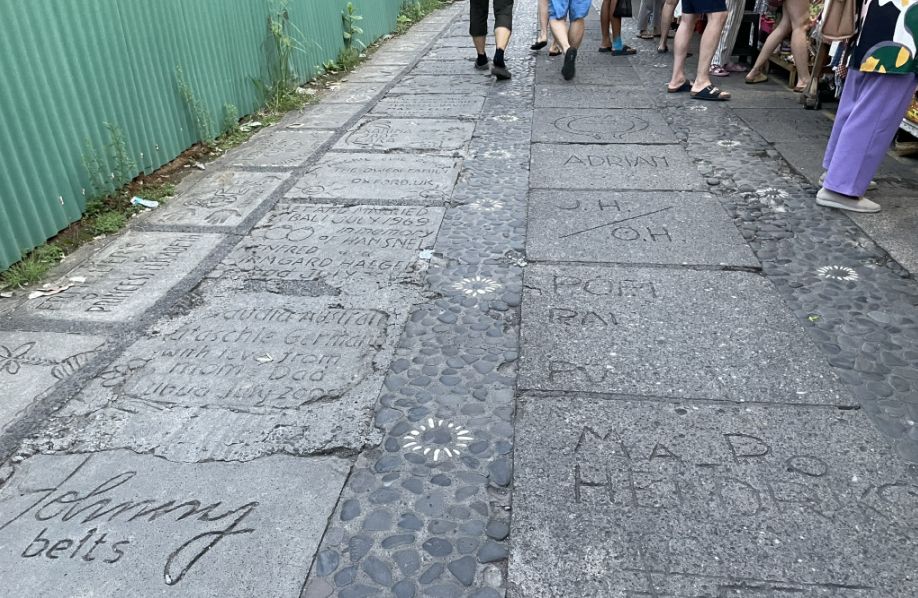
The moment you pass through that small gate-like entrance, the ground becomes covered with individual cement or stone tiles, each one engraved with writing. These tiles were donated by families, visitors, and local businesses. Each donor paid for a tile to help Ubud improve the pathway, and in return, they could engrave their name, a message, date, etc...
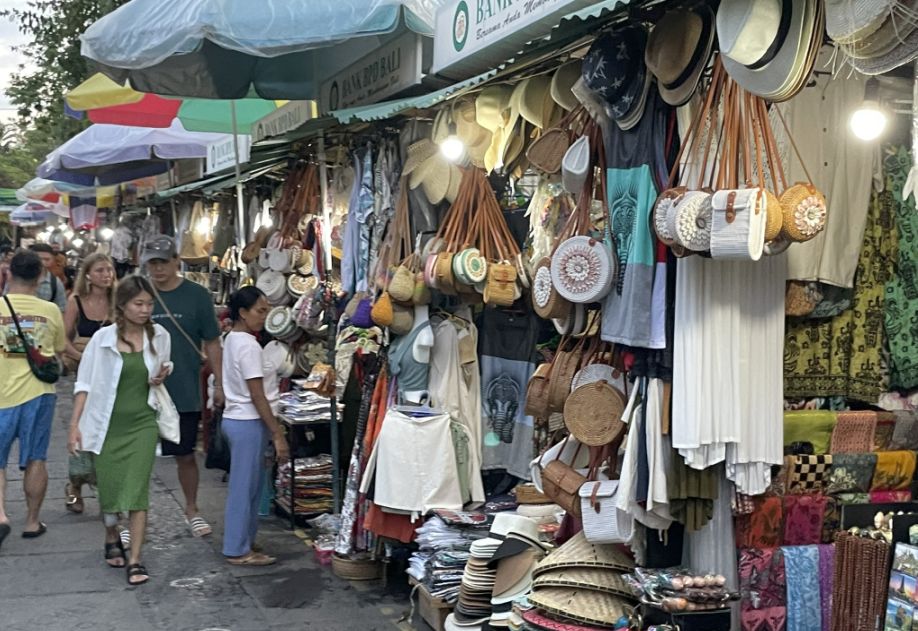
Lots of souvenirs shops.
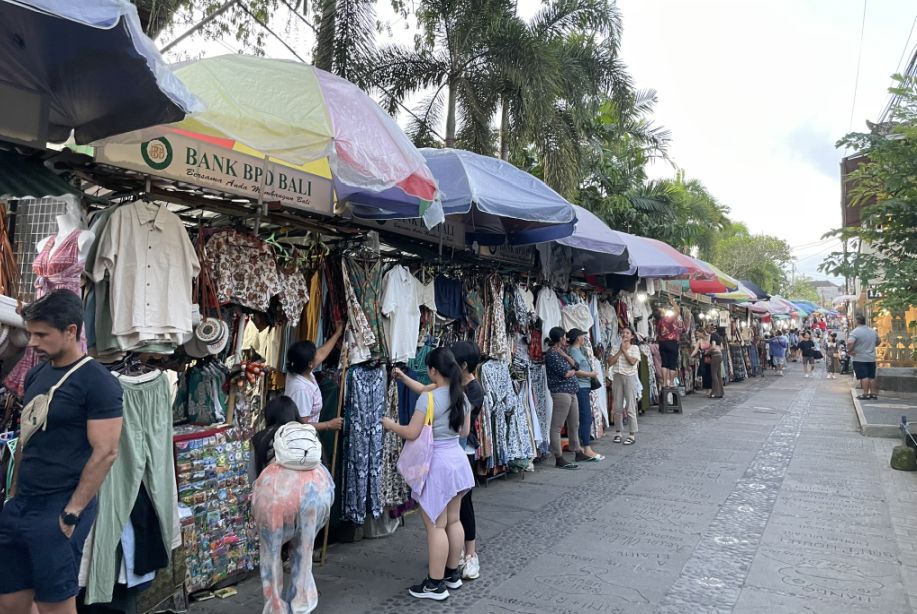
This area is mostly for clothing.
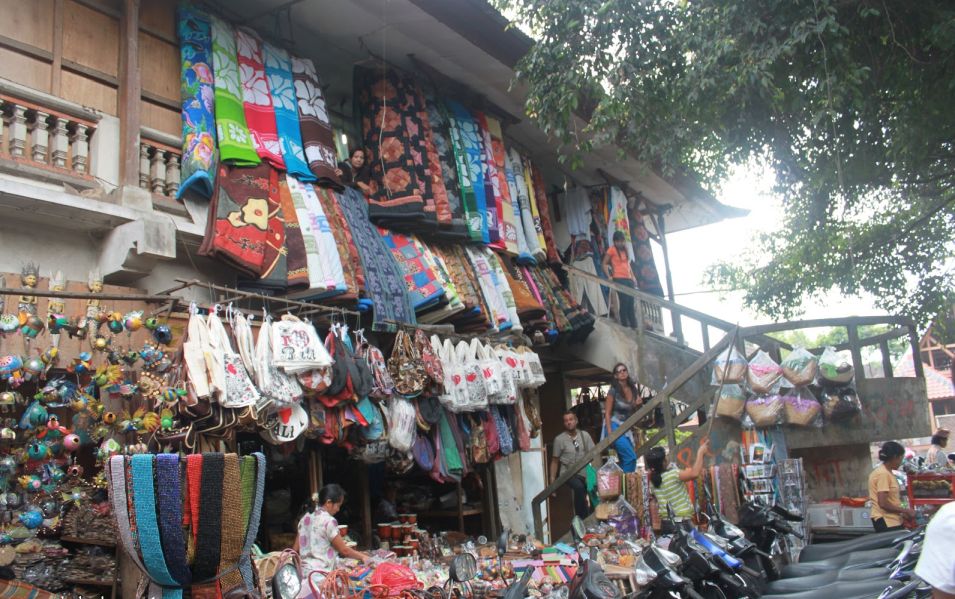
souvenirs, sarongs, and gifts.
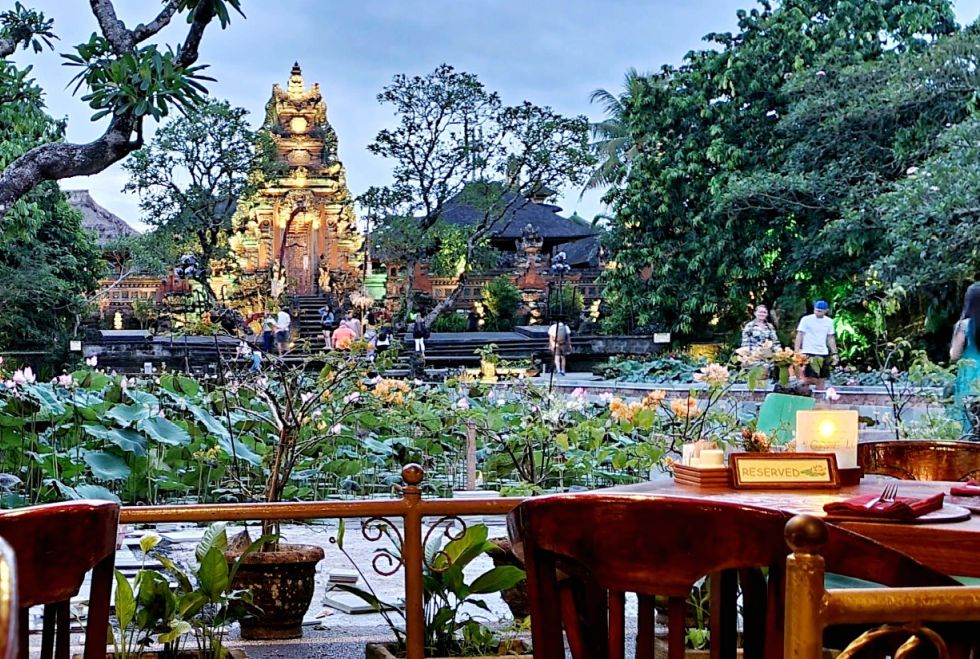
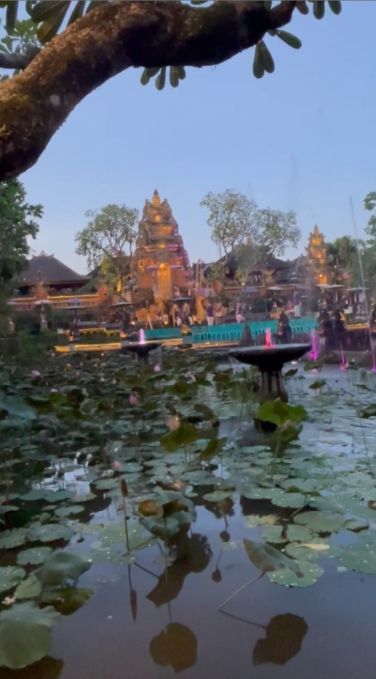
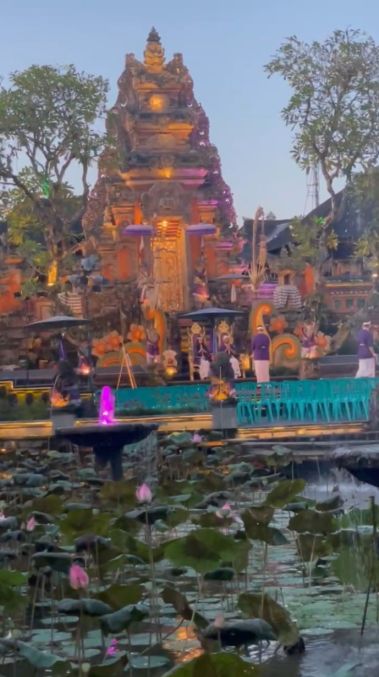
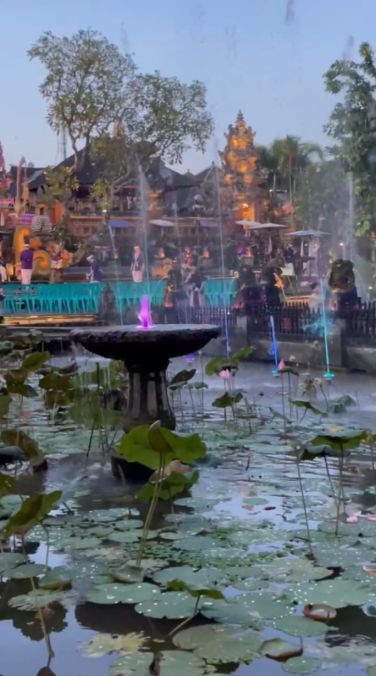
On the main street we saw Cafe Lotus with an enormous lotus pond located in front of the Saraswati Temple, and we just walked in to check it out.. The Café Lotus has been a fixture in Ubud since 1983, and it’s long been a go-to spot to combine food, ambiance, and culture.
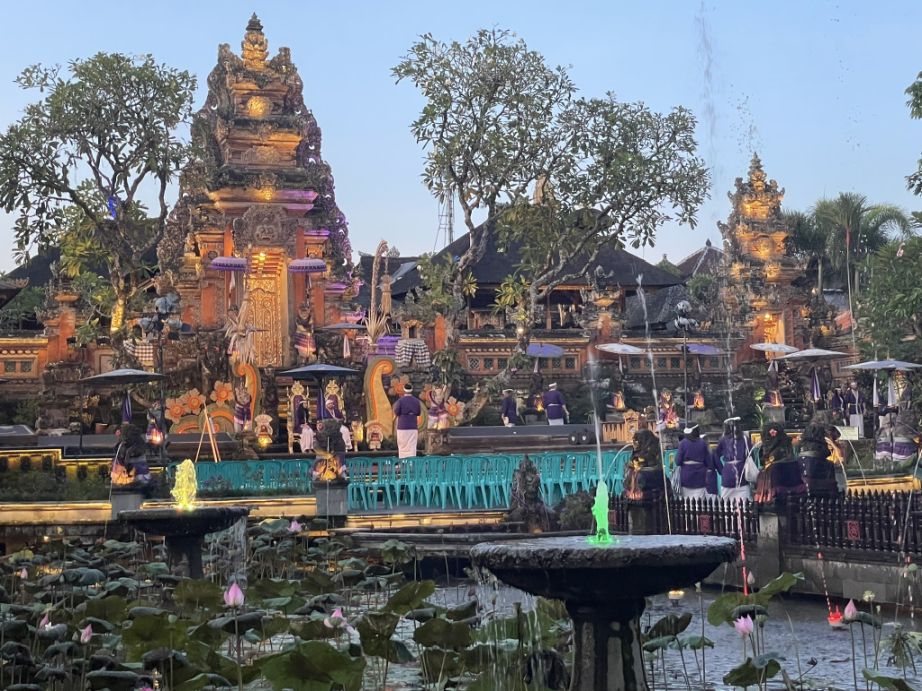
The cafe is set right next to a magnificent, large water garden pond in front of the Saraswati temple.
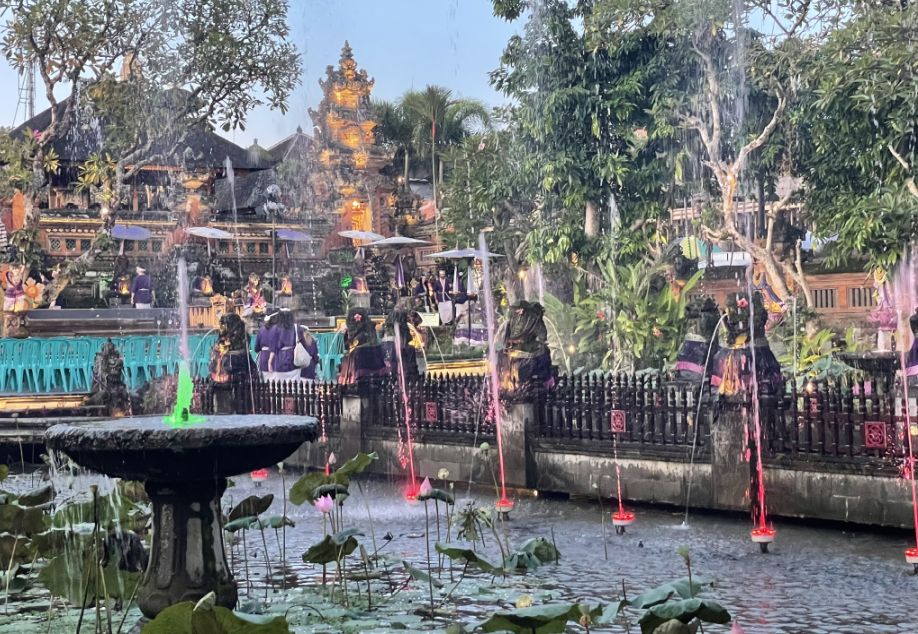
Colorful water jets send soft spraying the air. The pond is really amazing.
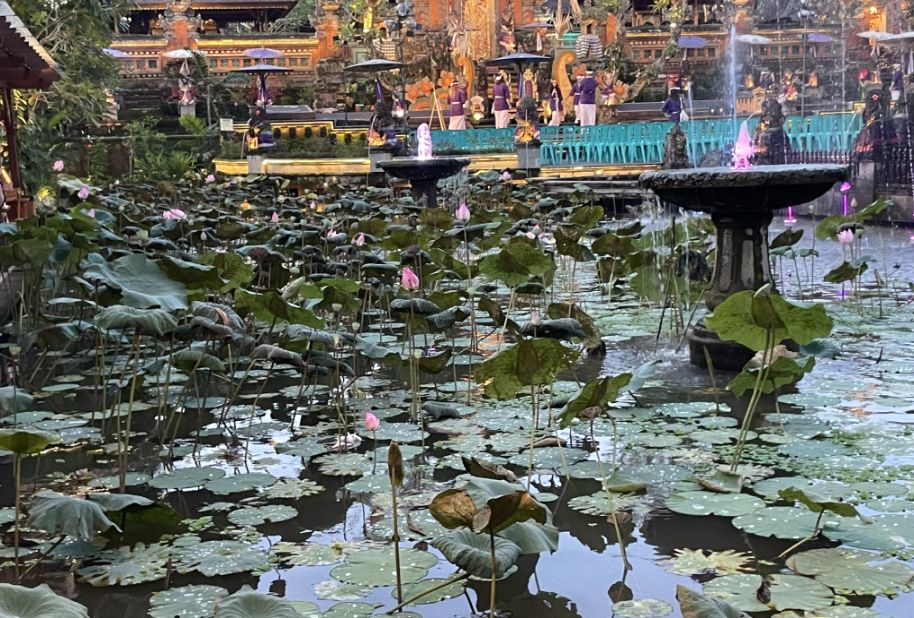
The pond is filled with thousands of vibrant green lotus pads, and seeing them with pink blossoms is so picturesque.
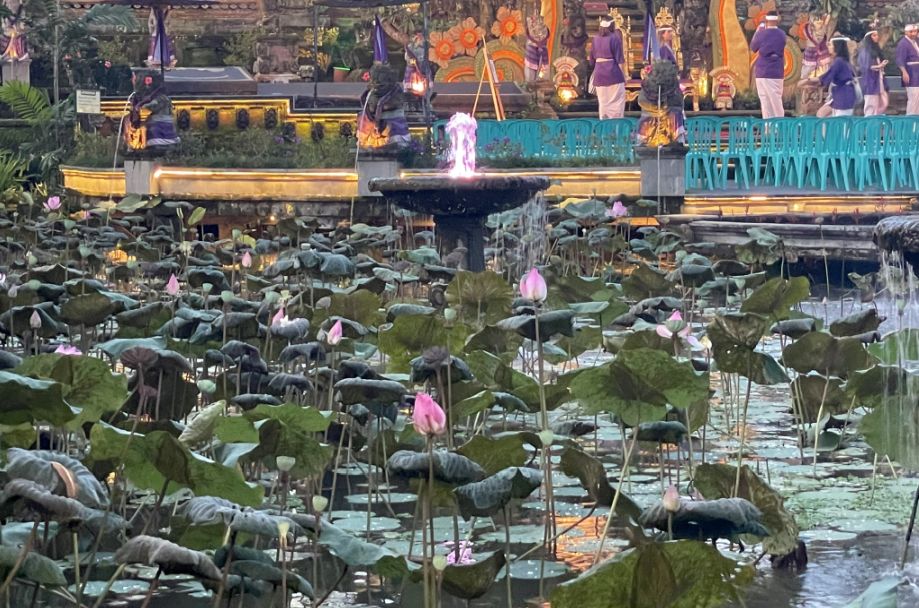
The Lotus flower is deeply symbolic in Hinduism and Buddhism, representing purity and enlightment, as it rises clean and beautiful from the muddy water.
 |
 |
 |
The temple was designed in 1951–1952 by the famous Balinese architect-artist I Gusti Nyoman Lempad for the royal family of Ubud (Sukawati). It’s dedicated to Saraswati, the Hindu goddess of knowledge, art, music, and wisdom.
 |
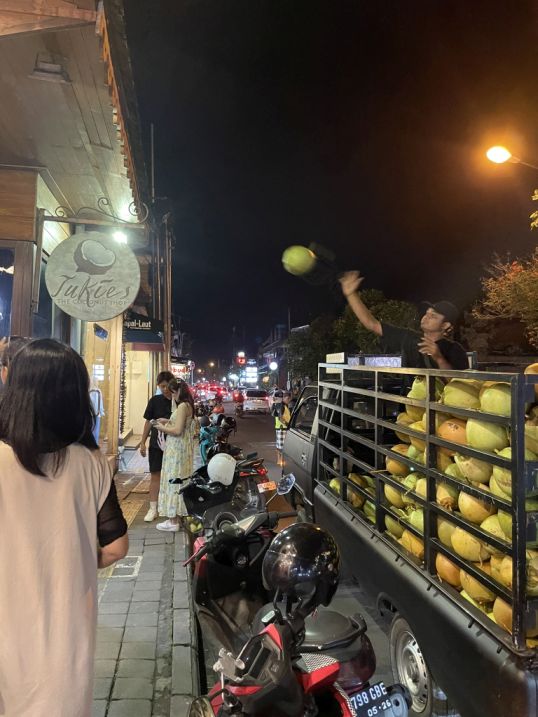 |
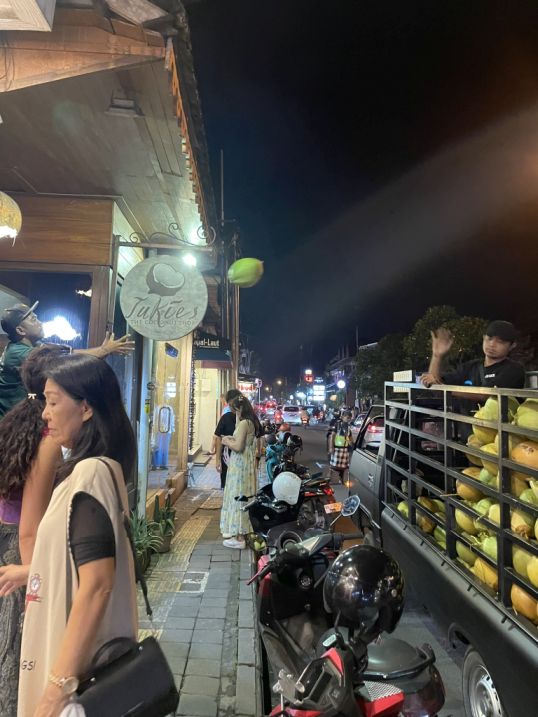
As we were working we saw two workers throwing coconut to each other so it is fast to deliver.
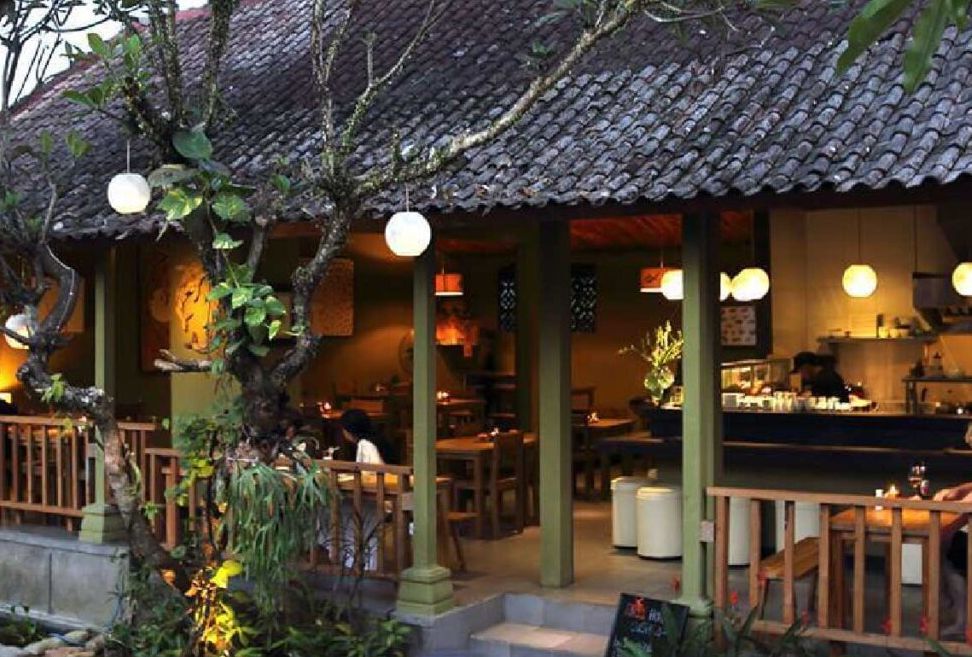
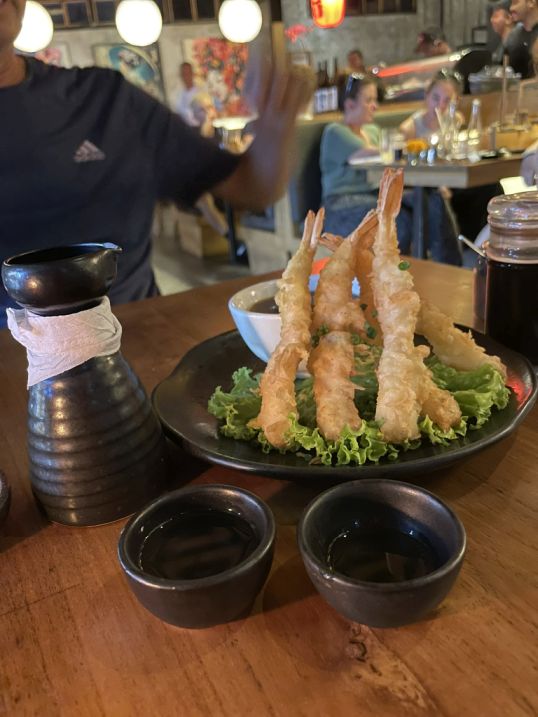
Next, we looked around for a place to eat and then we settle at Toro Sushi. It is located right in the heart of Ubub and the restaurant has a nice ambiance, and a good view of the street.
 |
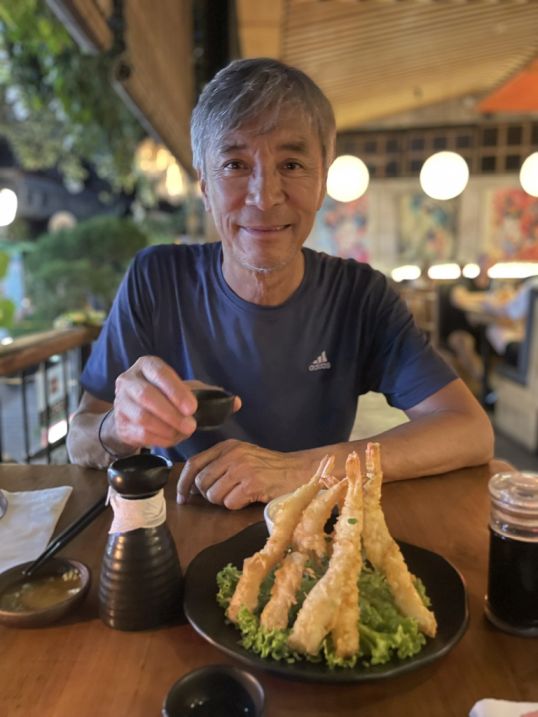 |
We ordered shrimp tempura and it was light, crispy and delicious.
 |
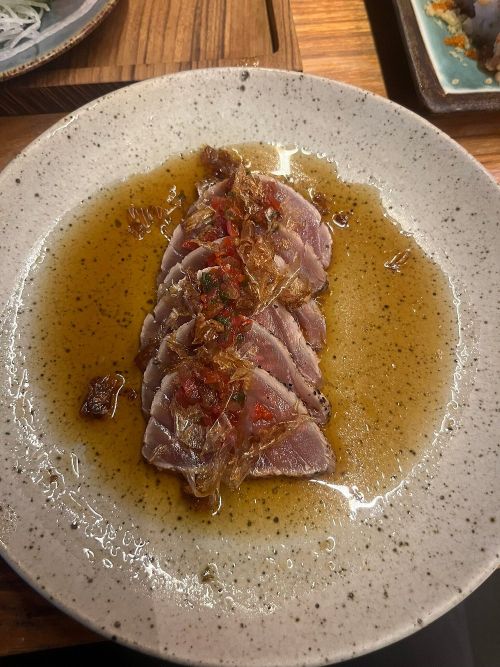 |
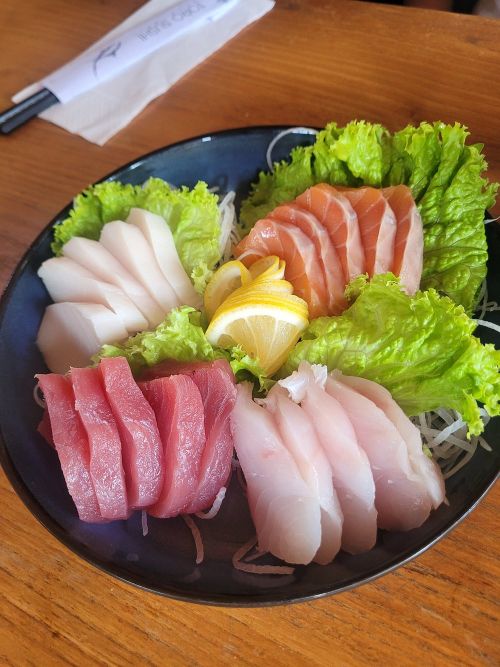
Fresh assorted sashimi, and delicate, lightly seared halibut with ponzu sauce
 |
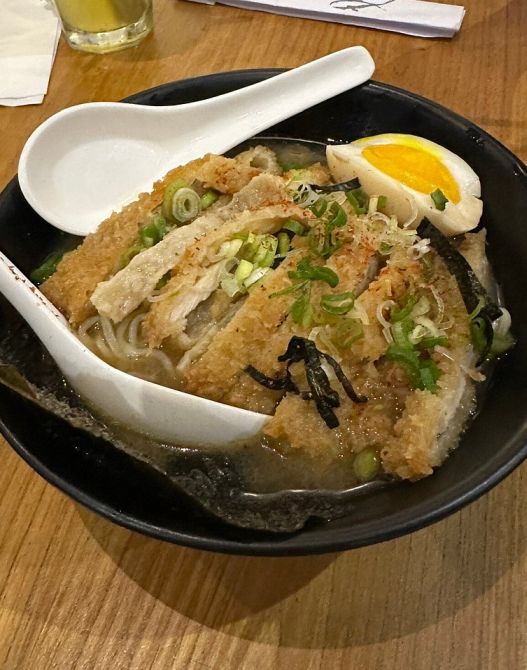 |
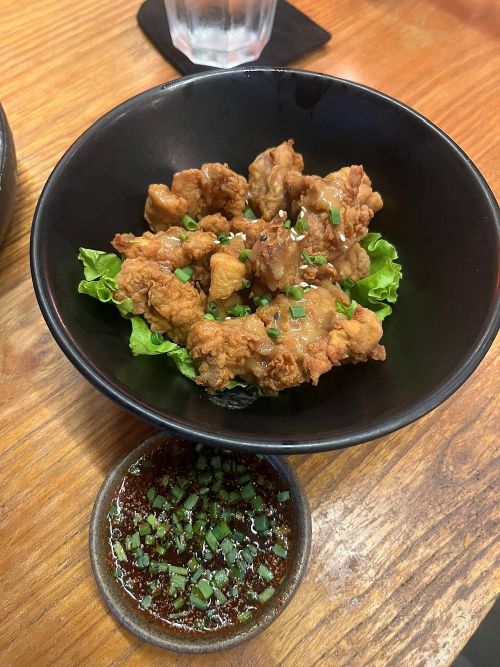
The savory chicken kaarage and a hearty bowl of noodles with tonkatsu rounded out a truly excellent and satisfying selection of dishes.
We are glad we stopped here as we had a delightful dining experience at Toro Sushi,
NEXT... Day 12-Kanto Lampo Waterfall