3 weeks in Bali, Indonesia- 5/28- 6/15/2024
|
Uluwatu |
Canggu &
surroundings |
Ubud & surroundings |
Sidemen/Amed |
Nusa Penida |
Day 15- Tirta Gangga-6/10/2024
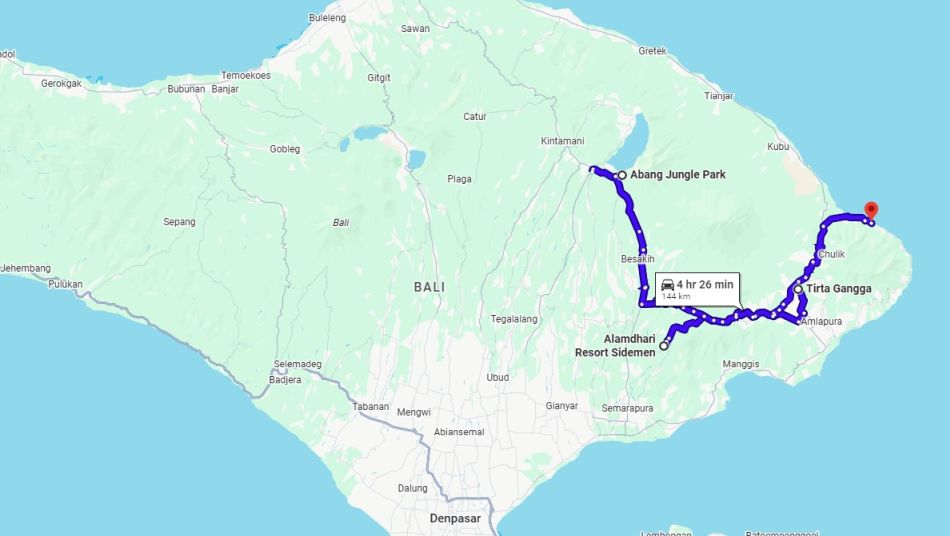
Today, we are leaving Alamdhari Resort in Sidemen and saying goodbye to the quiet valley and its rice fields. Our journey continues east as we head to Tirta Gangga, with its elegant water palace and sacred pools, followed by a visit to Abang Jungle Park, where the landscape shifts to dramatic hills and views toward the coast.
After a day of exploring, we’ll make our way to Amed, where we’ll stay at The Santai Hotel for the next two days. It feels like a gentle transition, from misty mountains and rice terraces to the drier coastline and calm sea, marking the next chapter of our Bali journey.
 |
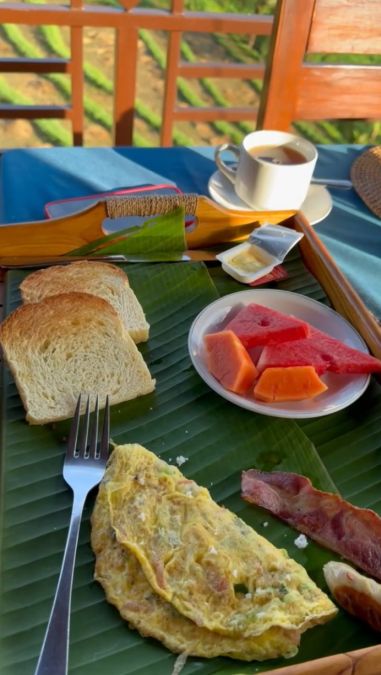 |
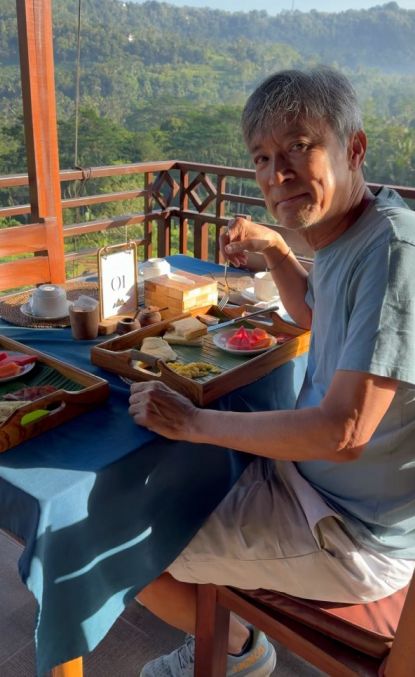
Our last breakfast in Sidemen.
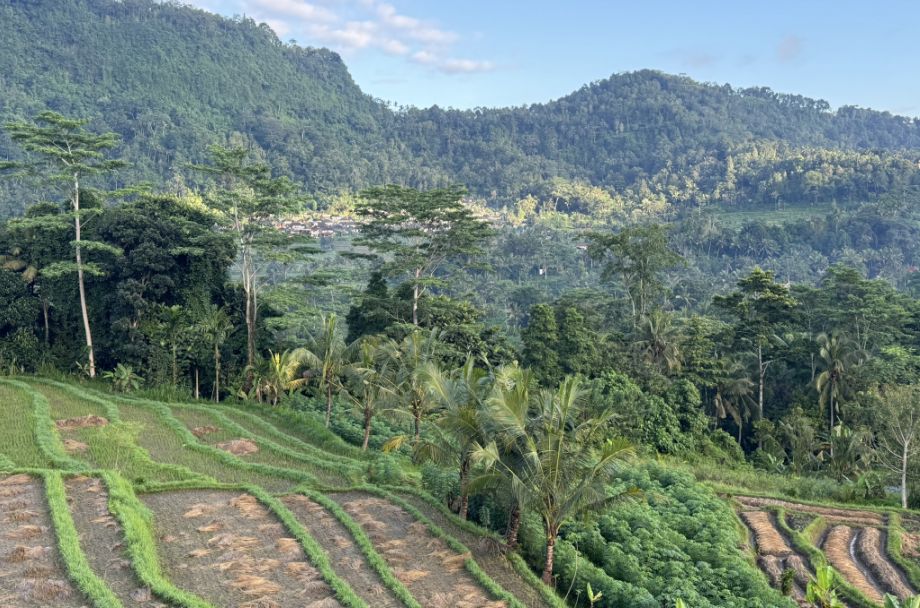
View of the rice fields right below the dinning room.
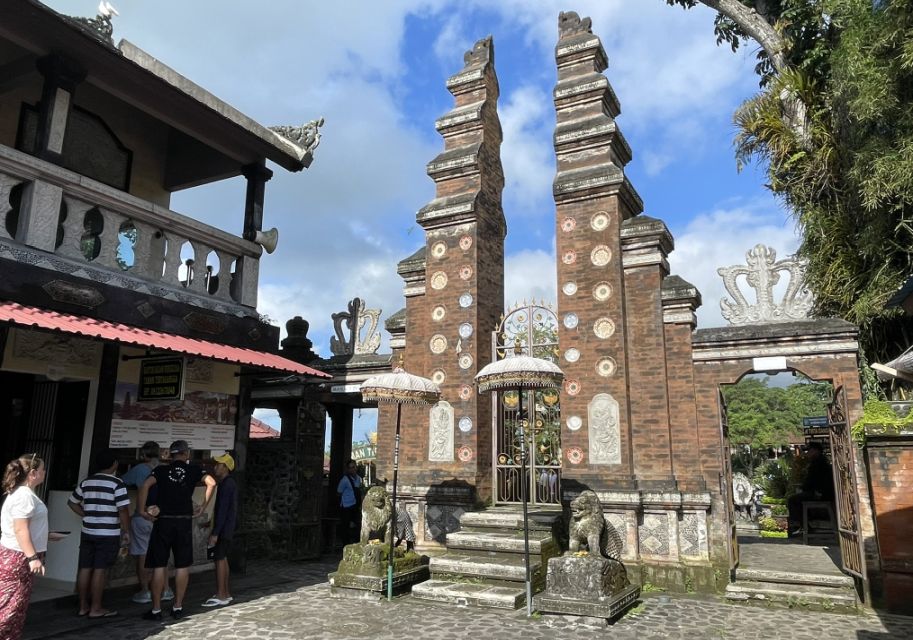
After breakfast our tour guide drove us to Tirta Gangga. Tirta Gangga is a former royal water palace located in eastern Bali, not far from Sidemen and Amed. As we arrived, the large, ornate entrance gate immediately sets the tone, marking the transition from the busy road into a carefully designed, tranquil space. On the left, Hoa is buying tickets top get in.
 |
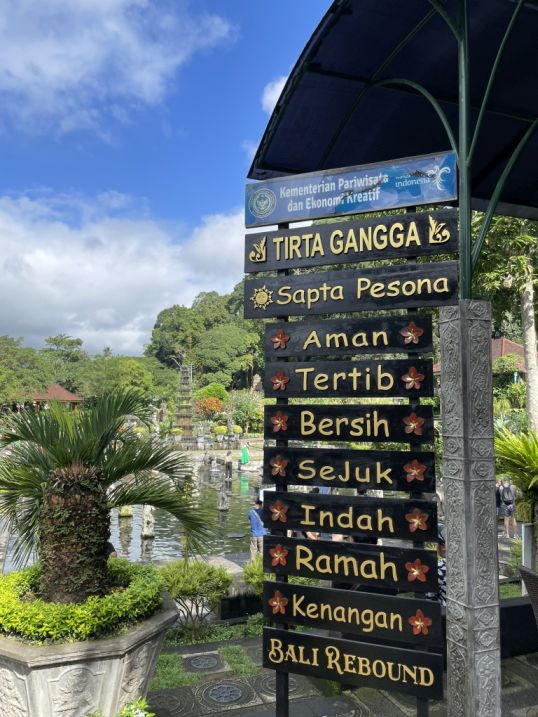 |
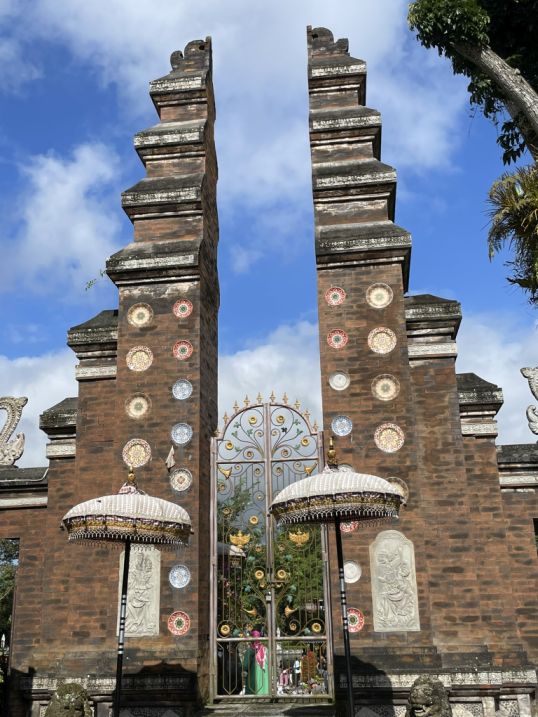
This gate is really grandiose and as we stepped into the park there is a huge sign leading to main spots in Tirta Gangga.
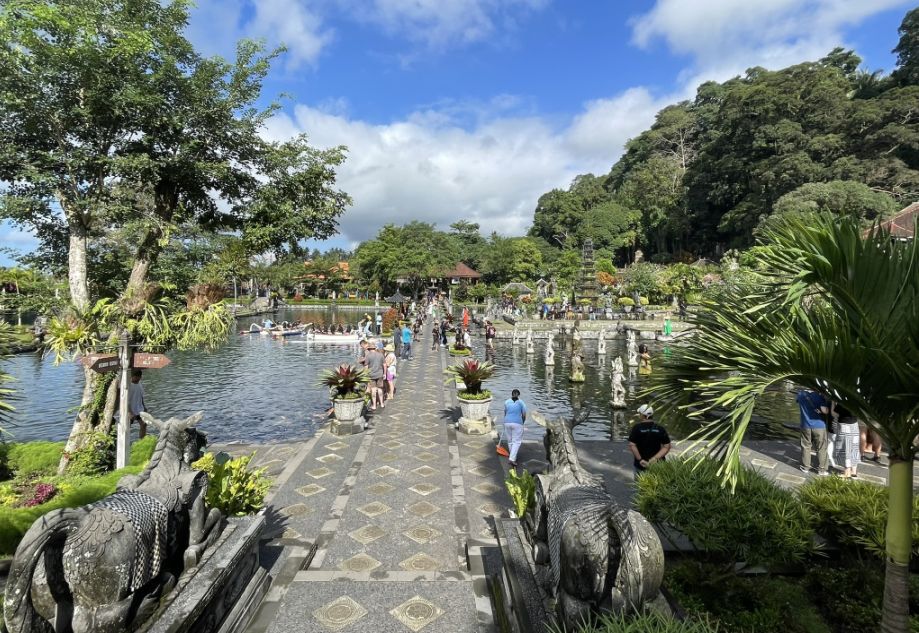
The name Tirta Gangga means “holy water of the Ganges,” reflecting the importance of water in Balinese Hindu culture. The complex was built in the late 1940s by the King of Karangasem and was designed as a place for rest, ritual, and reflection. Water flows continuously through the site, feeding fountains, pools, and gardens, all symbolizing purification and balance.
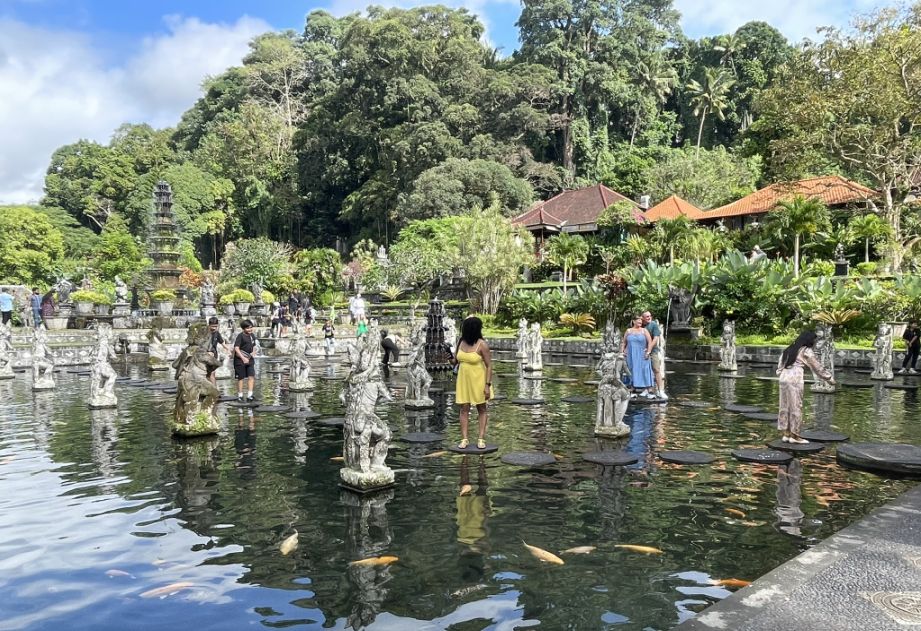
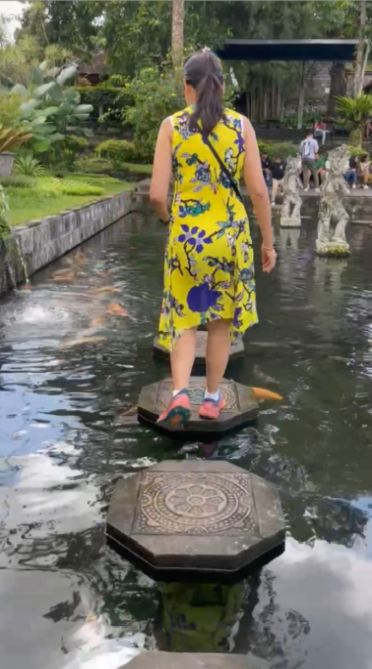
Inside, the palace is famous for its tiered fountains, stone statues, and clear pools filled with koi fish. Stepping stones laid across the water allow visitors to walk slowly through the pools, creating a calm, almost meditative experience. The gardens are symmetrical and well maintained, framed by lush greenery and views of surrounding hills.
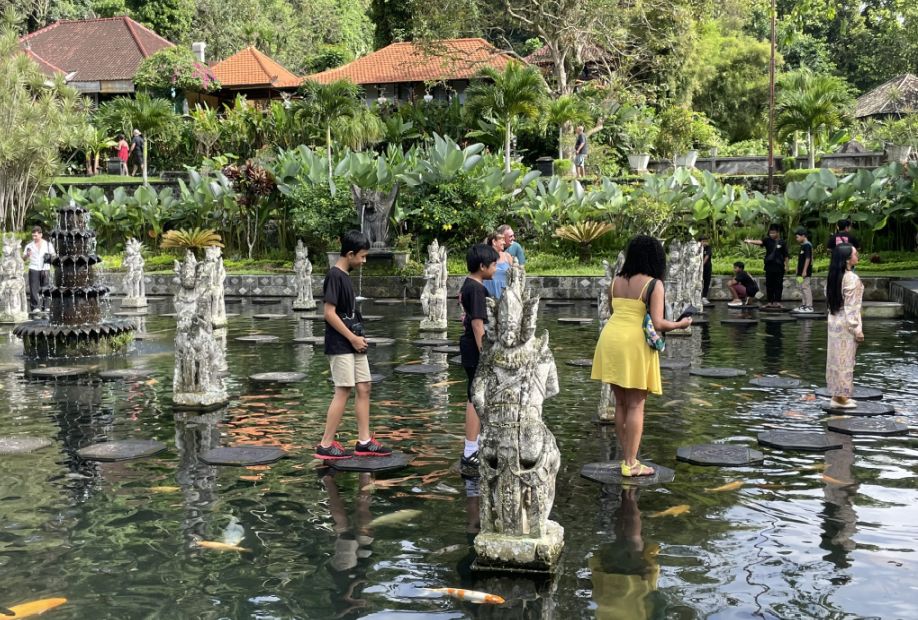
It is really fun to walk on the stepping stones that are so close to the water.
 |
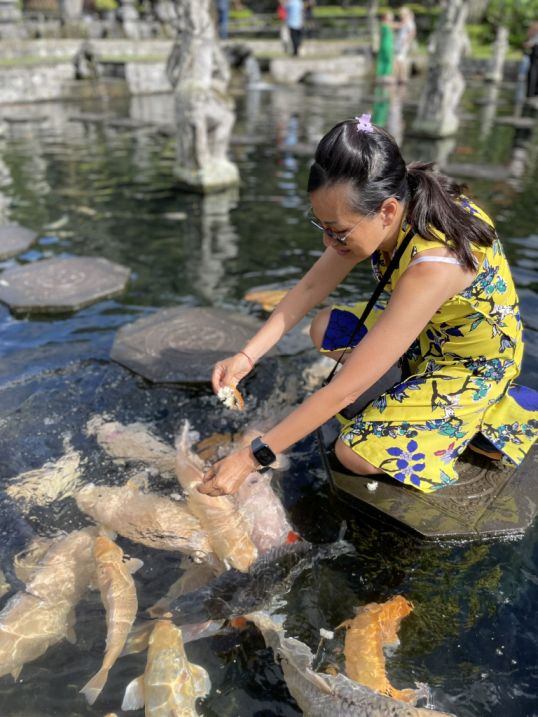 |
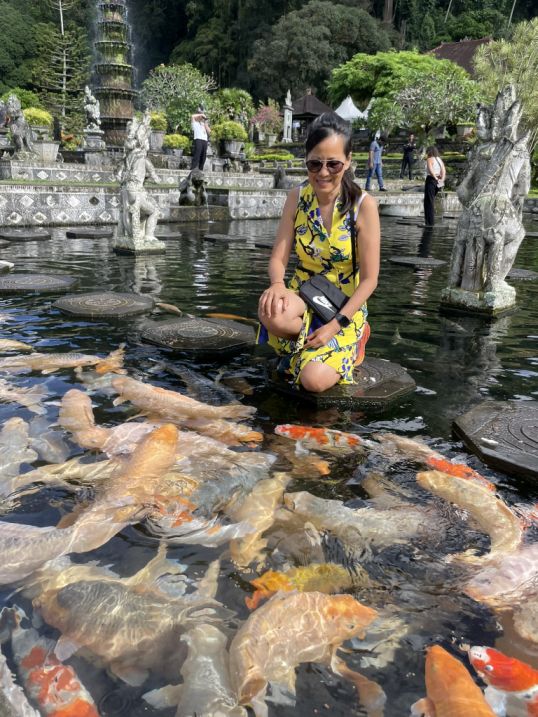
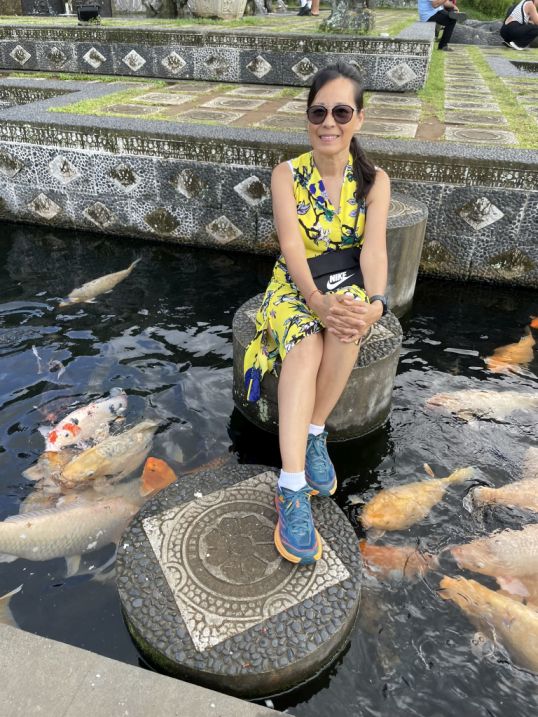
I knelt down on one of the octagonal tiles in the main pool to feed the koi fish. Almost instantly, they gathered around me, so many of them that the water seemed to come alive with movement. Their bodies shimmered in shades of orange, white, and gold as they jostled gently at the surface, creating ripples that spread across the clear pool. The moment felt playful and peaceful at the same time, a simple interaction that made the elegance of Tirta Gangga feel warm and alive rather than distant or formal.
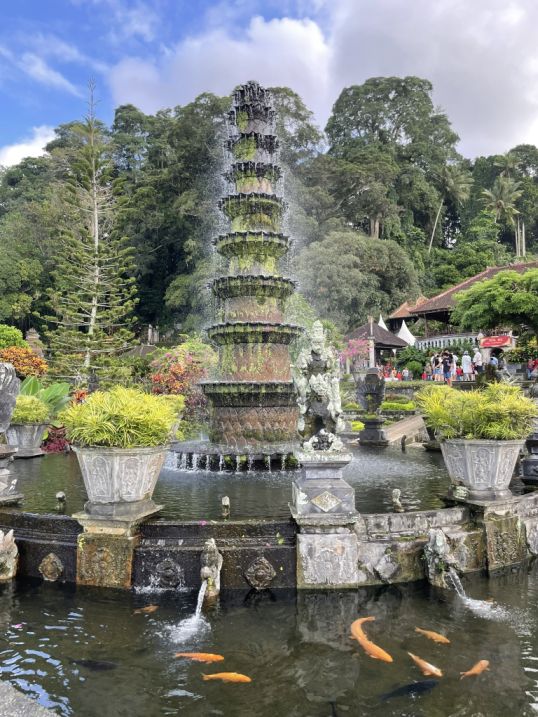
As we walked further in, the multi-tiered fountain on the left, often described as having nine layers is one of the most symbolic features of Tirta Gangga.
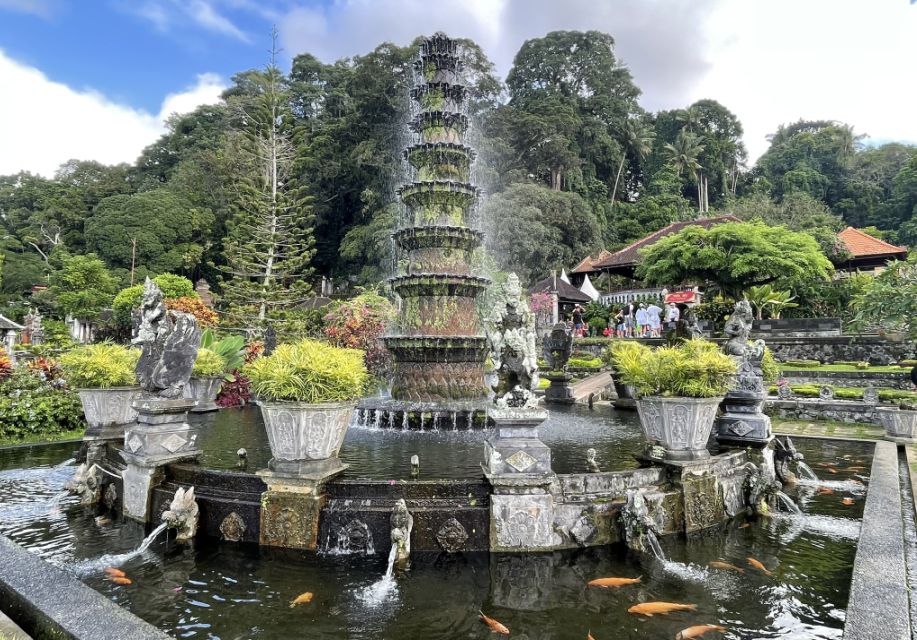
The fountain represents cosmic balance and harmony in Balinese Hindu belief. The number nine is especially significant because it reflects the concept of Nawa Sanga, the nine sacred directions of the universe: the eight cardinal and intercardinal directions plus the center. Each direction is associated with a protective deity, and together they symbolize order, balance, and protection of the world.
 |
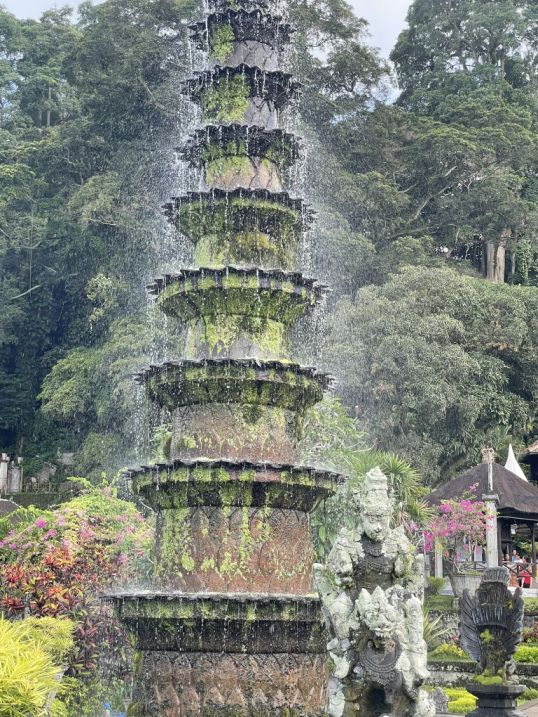 |
Water flows downward from the top tier through each level, symbolizing purification and the movement of life energy from the divine realm to the human world. This downward flow mirrors the Balinese view that water is a sacred gift from the gods—life-giving, cleansing, and essential for both spiritual rituals and agriculture.
 |
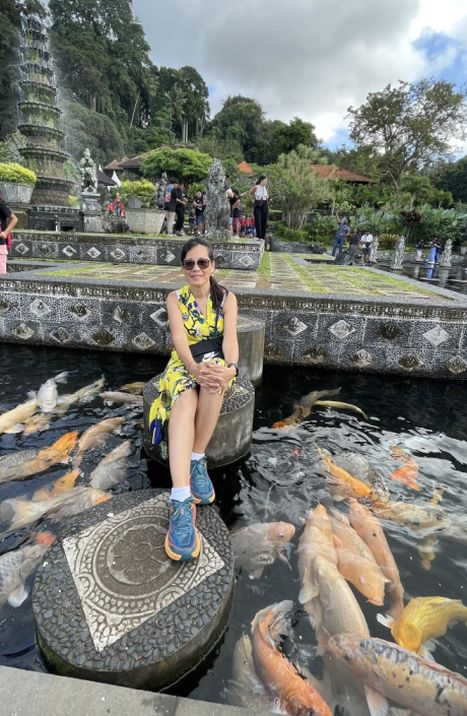 |
Sitting next to the fountain with so many koi fish around.
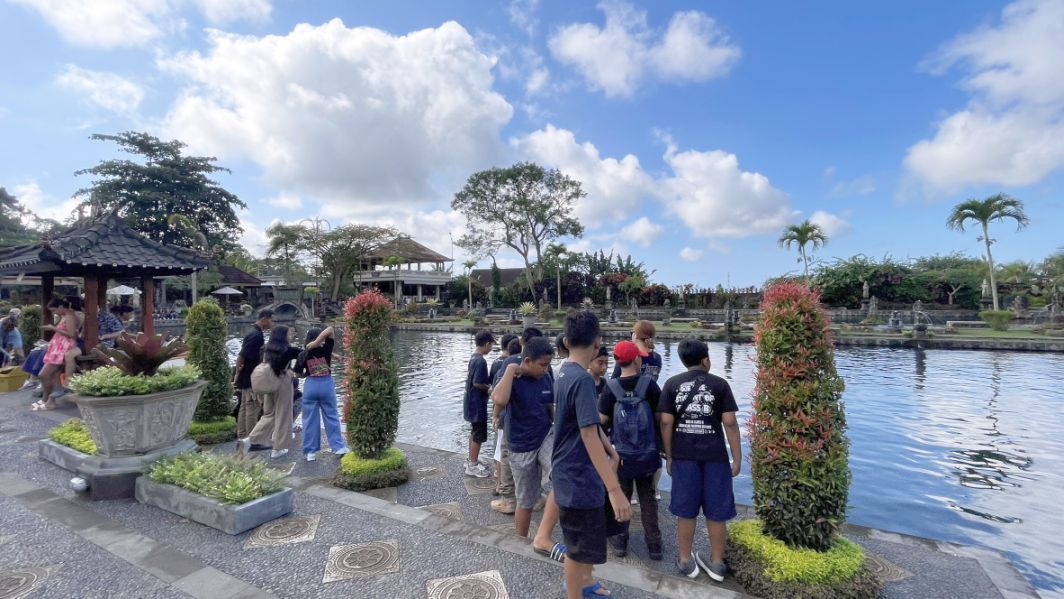
Just across from the fountain, there is a large rectangular pool, and it was filled with energy and excitement. Groups of kids, likely on a school field trip, stood along the edge, chatting and laughing as they waited patiently for their turn to get onto a small boat.
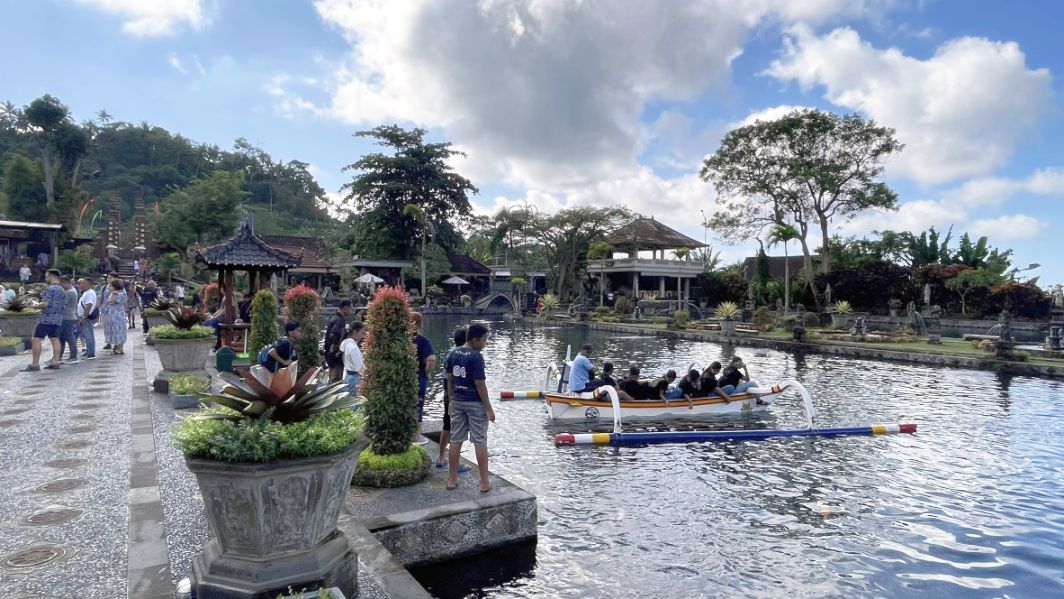
Their voices and movement brought a lively contrast to the calm elegance of Tirta Gangga, reminding us that this royal water palace is not only a historic and sacred place, but also a space where local families and children come to learn, play, and connect with their heritage.
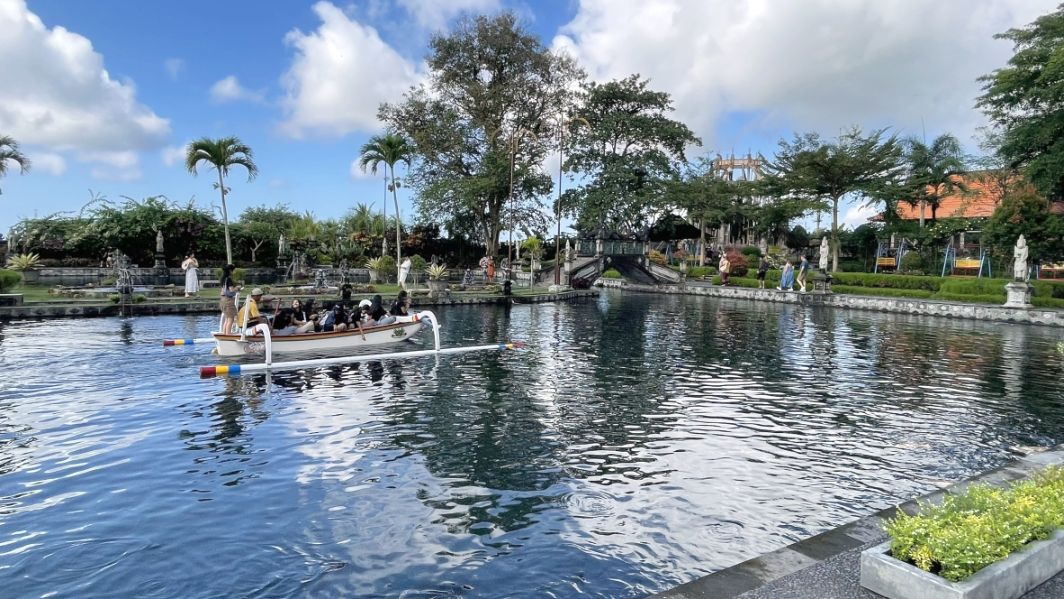
Boat ride for the kids.
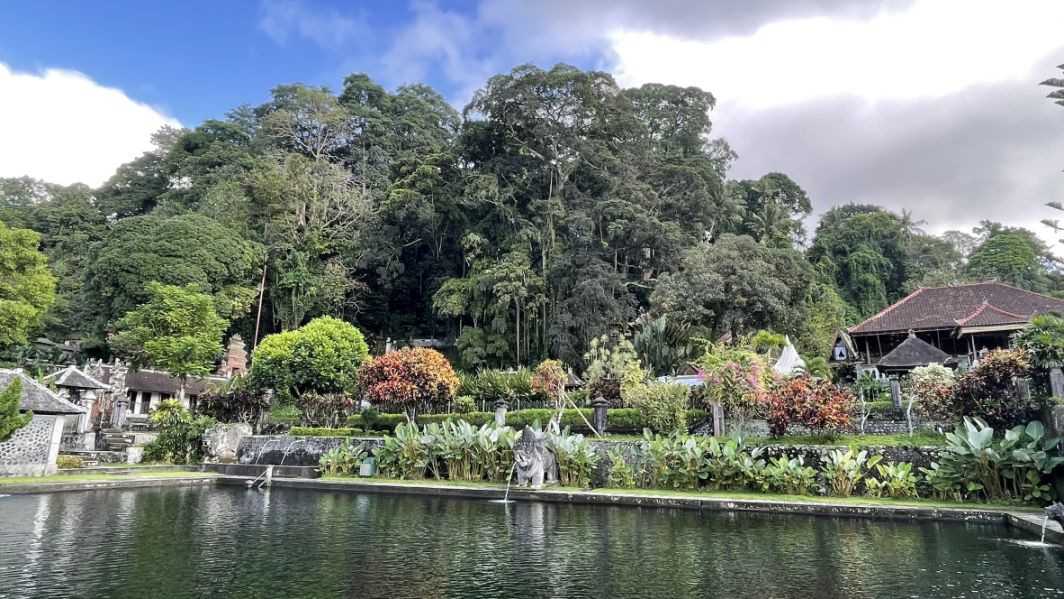
The area is surrounded by lush tall tress.
 |
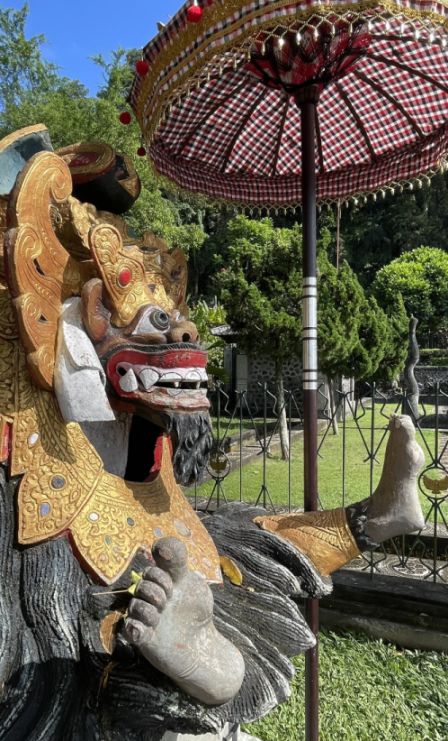 |
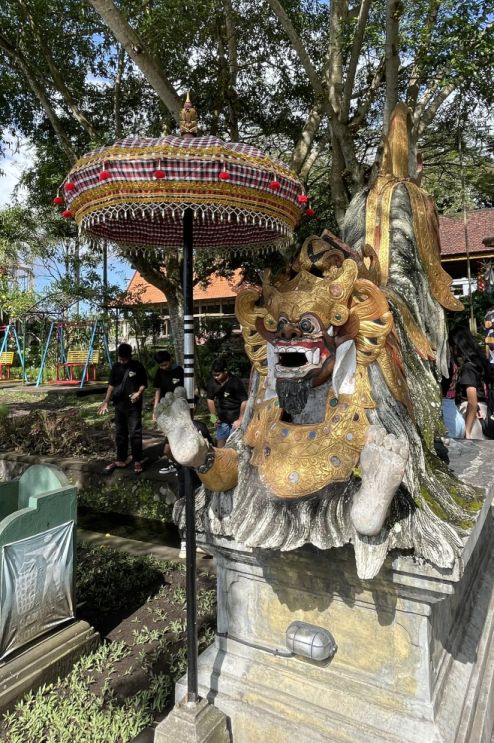
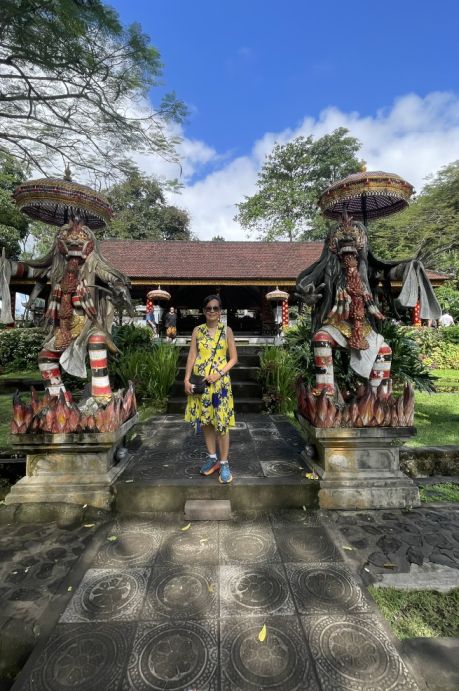
Gate with two protective figures. In Balinese Hindu architecture, these are often related to Kala or Makara figures, guardians placed at entrances to ward off negative spirits and protect what lies beyond. Passing between them symbolizes moving from a more public or worldly space into a calmer, more sacred area.
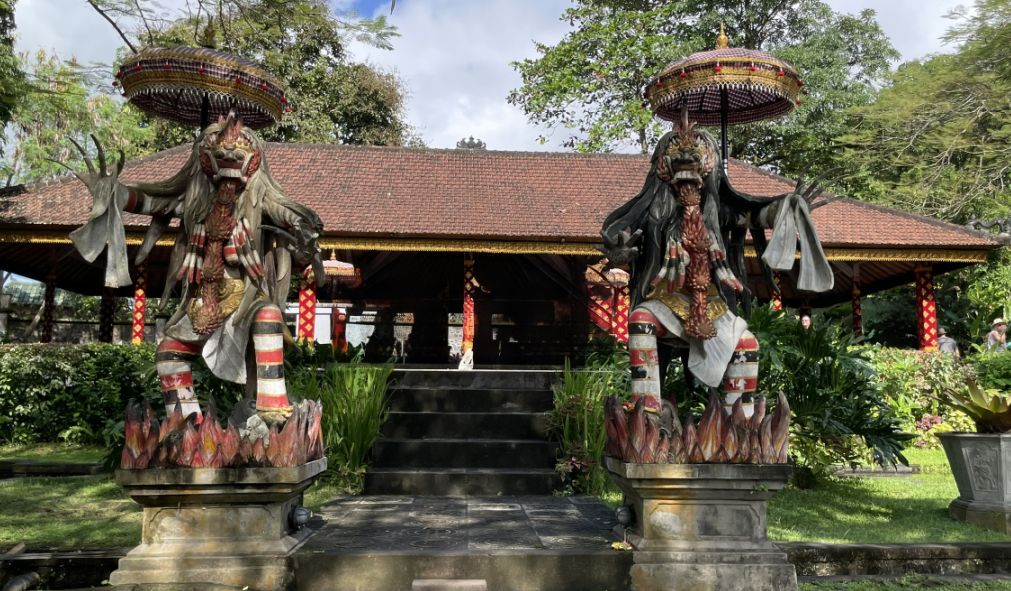
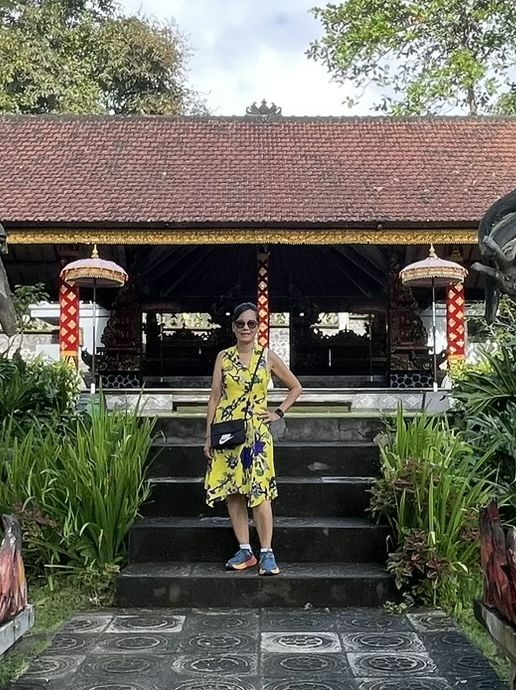
Beyond the gate, the structure with a brick roof is likely a bale, a traditional open-sided pavilion. In Tirta Gangga, these pavilions serve multiple purposes: a place for prayer or offerings, especially during ceremonies, a space for rest and contemplation, particularly for priests, royalty in the past, or visitors today, or a shaded area to sit quietly and reflect near the water.
 |
 |
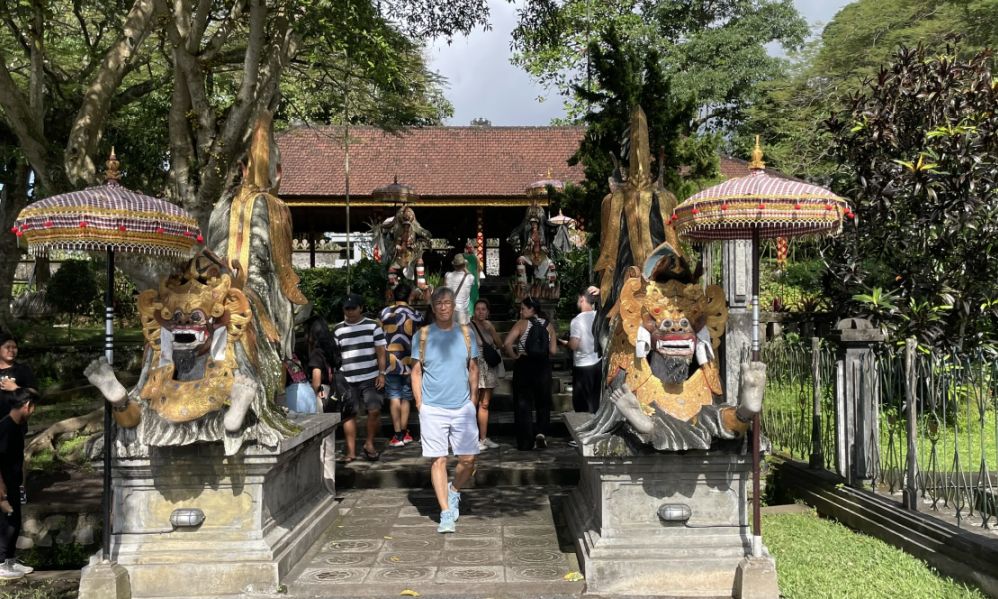
We are now leaving the area.
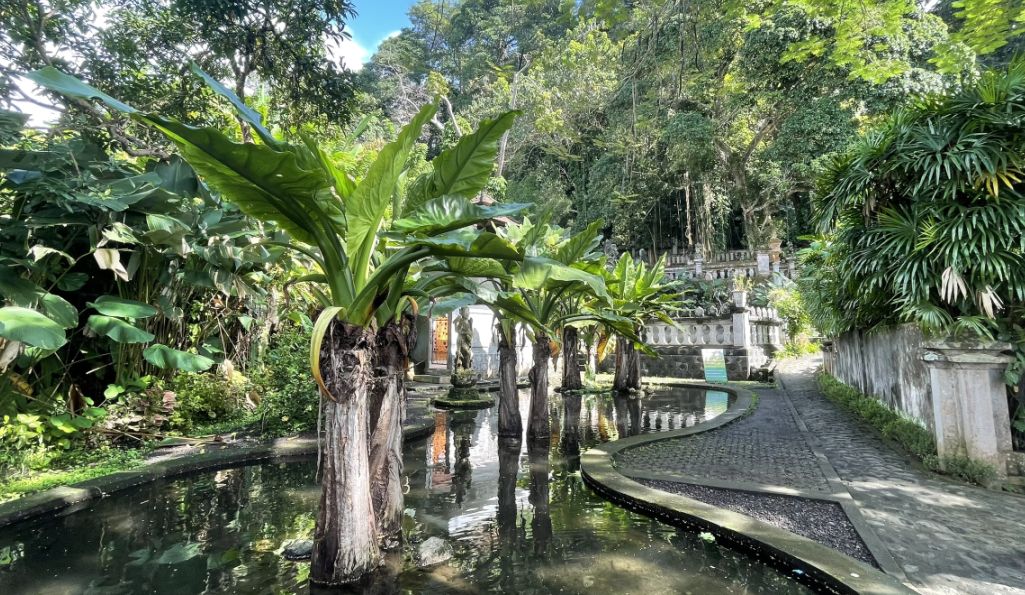
Further back in Tirta Gangga, the atmosphere changes again and becomes more dramatic and symbolic. The pool with tall plants growing directly out of the water is filled with giant taro (often locally called keladi). Iin Bali these large, thick-trunked, water-loving plants are commonly used in royal gardens and temple landscapes. Their oversized stems and broad leaves give the pool a primeval, almost jungle-like feeling, emphasizing abundance, fertility, and the life-giving power of water.
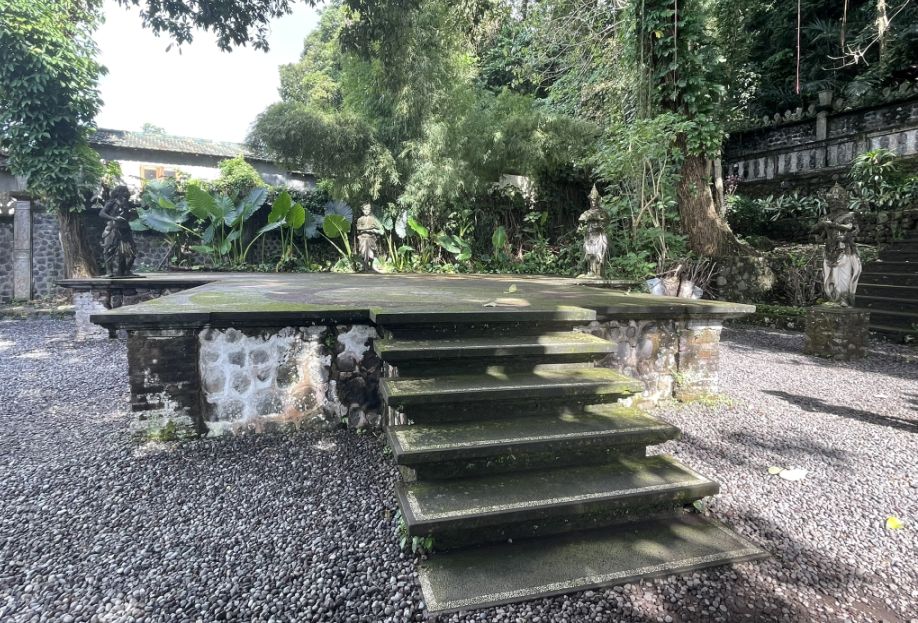
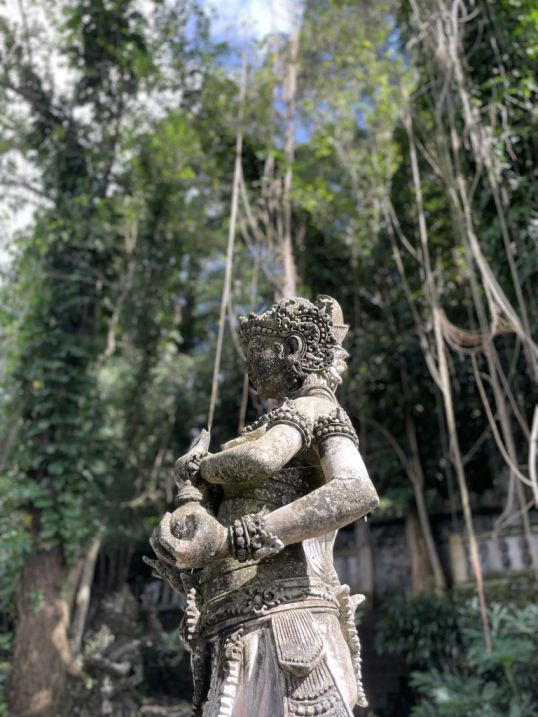
Beyond that, the stairs leading up to a raised platform surrounded by statues mark a more sacred and mythological zone of the water palace. This area is designed not just for beauty, but to visually tell stories from Balinese Hindu belief. These statues turn this part of Tirta Gangga into more than a garden, it becomes a spiritual narrative carved in stone. As we moved through the space, we are walking through a visual expression of balance: calm water and lush plants below, powerful gods and demons above, all reinforcing the idea that harmony comes from acknowledging every force in the world, not just the peaceful ones.
 |
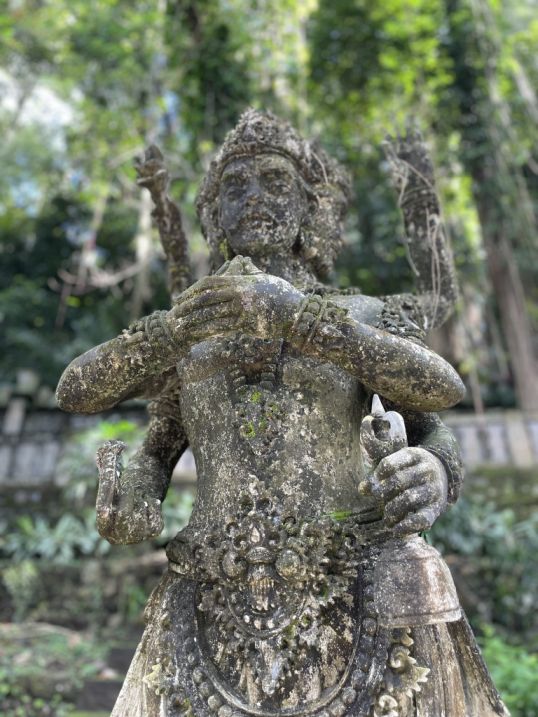 |
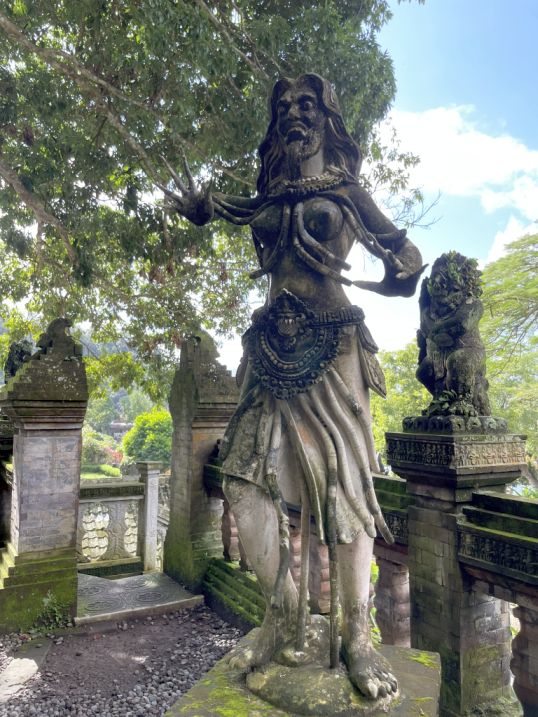
Nearby, the statue of a woman with four arms is likely Durga, a powerful protective goddess. Durga represents strength, balance, and the force that keeps chaos in check. Her presence alongside Rangda reflects a core Balinese belief: good and evil must coexist in balance, neither completely destroying the other.
 |
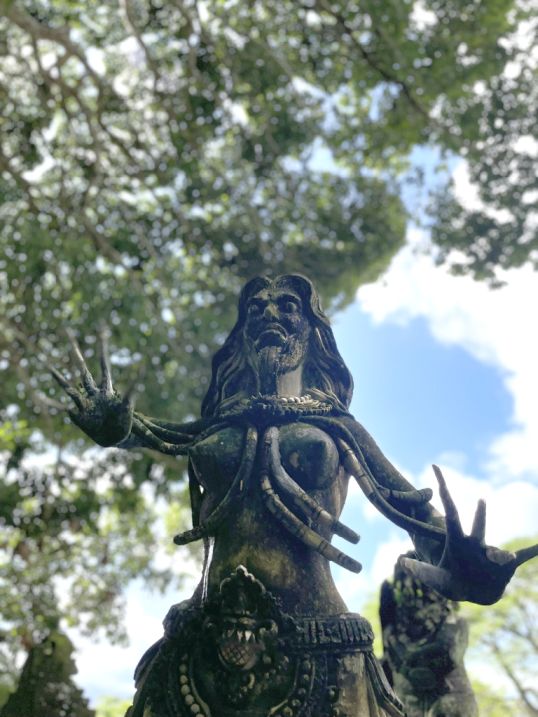 |
The frightening statue of a woman with long hair, wide eyes, and hands open with fingers pointing upward is likely Rangda, the fearsome queen of demons. She represents chaos, destruction, and dark forces. Rangda is intentionally terrifying, not to frighten visitors, but to acknowledge the existence of negative energy in the universe.
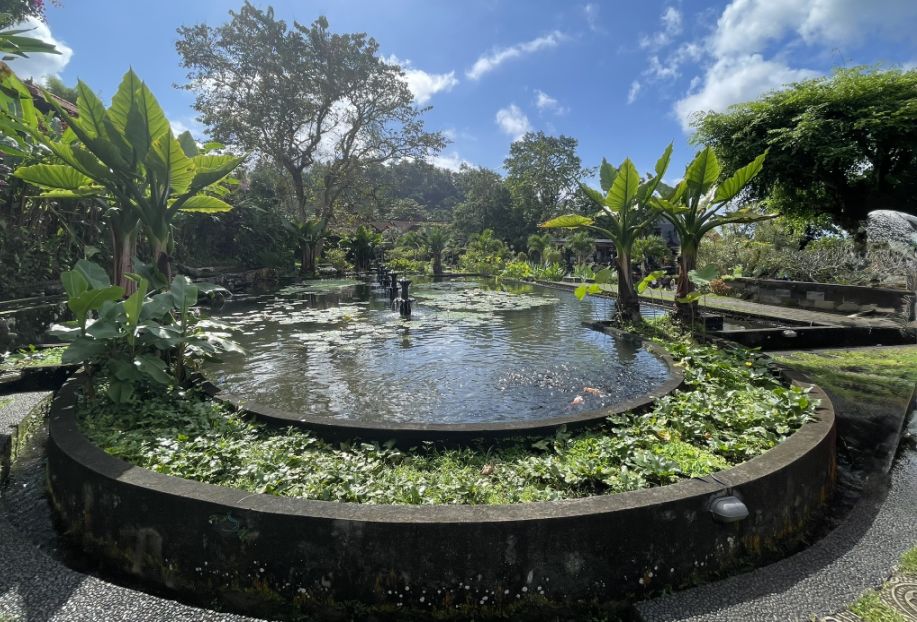
A beautiful lotus pond.
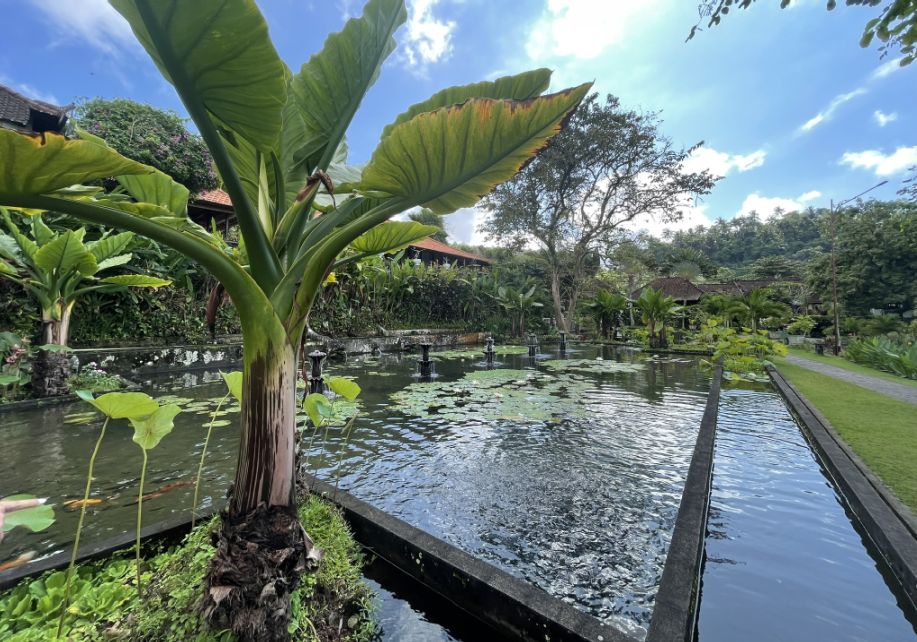
There are a lot of ponds in Tirta Gangga.
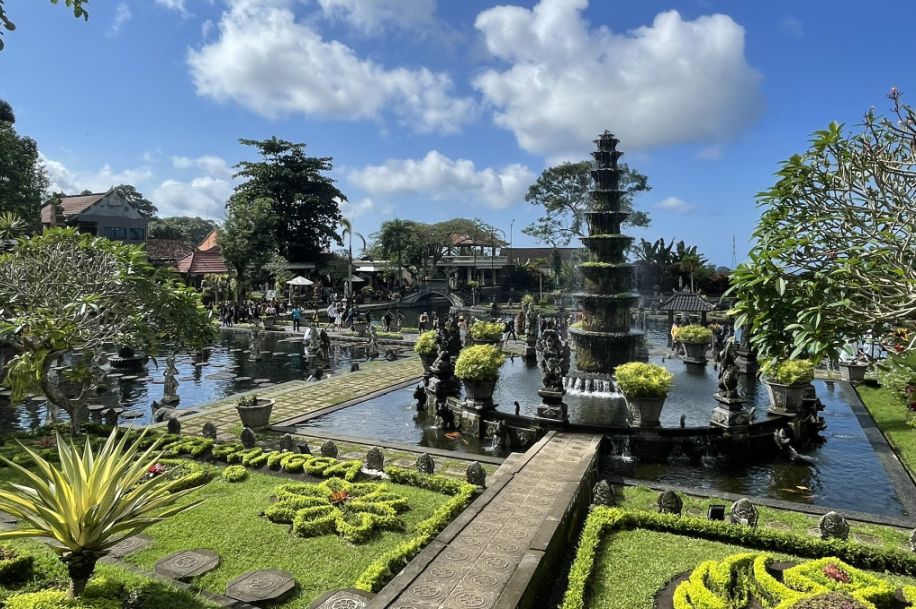
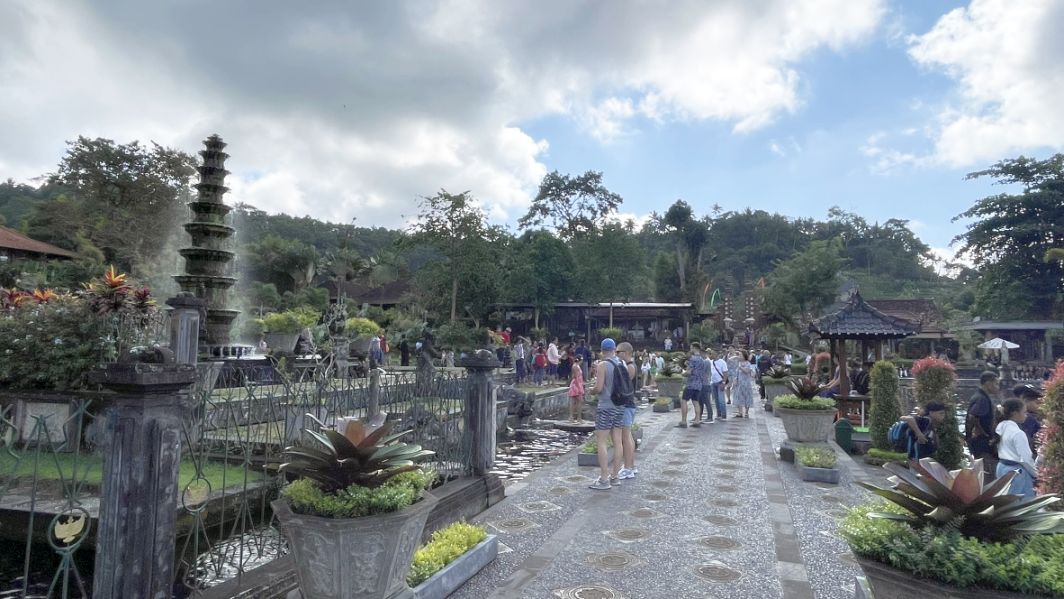
As we walked back toward the multi-layered fountain, this central garden area really reveals the full scale of Tirta Gangga. It feels almost like a royal park, carefully designed to be walked through slowly rather than just viewed from one spot.
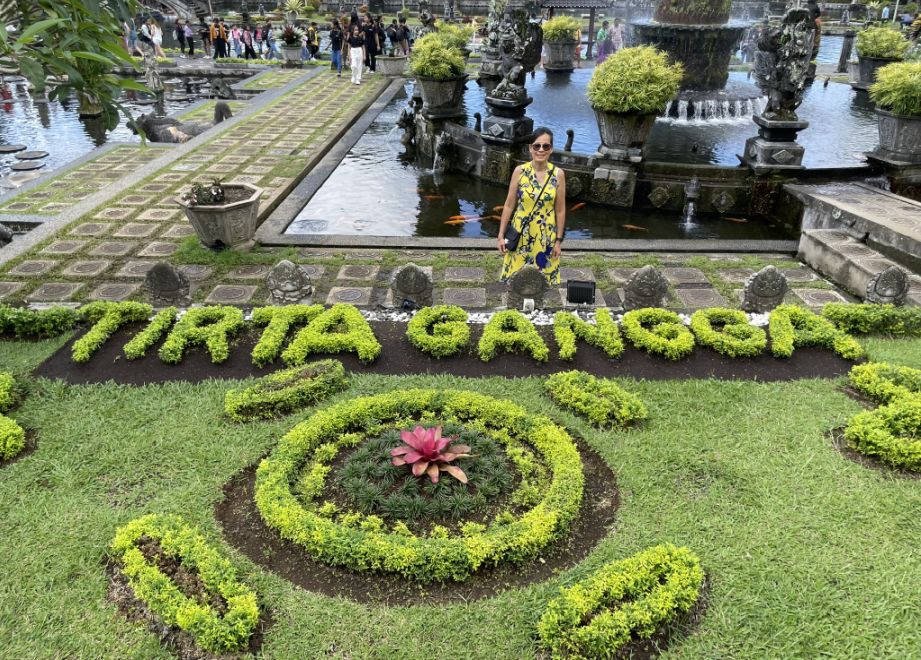
The garden with “Tirta Gangga” spelled out in plants acts as a welcoming focal point, emphasizing that this is not only a sacred water site but also a place meant to be enjoyed and remembered.
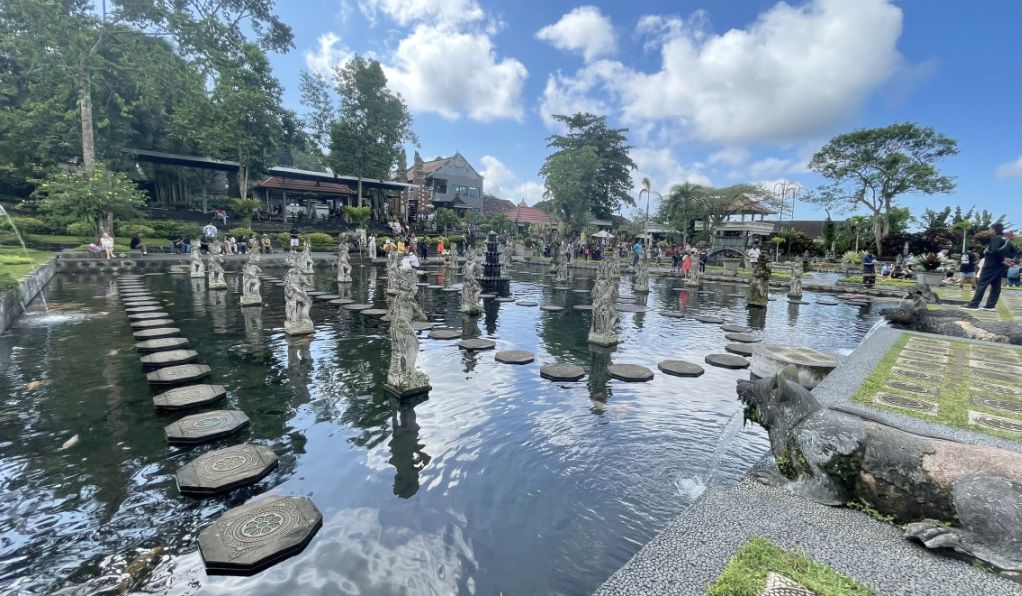
From there, the space opens up into a network of stepping stones laid across clear pools, inviting visitors to move deliberately, step by step, over the water.
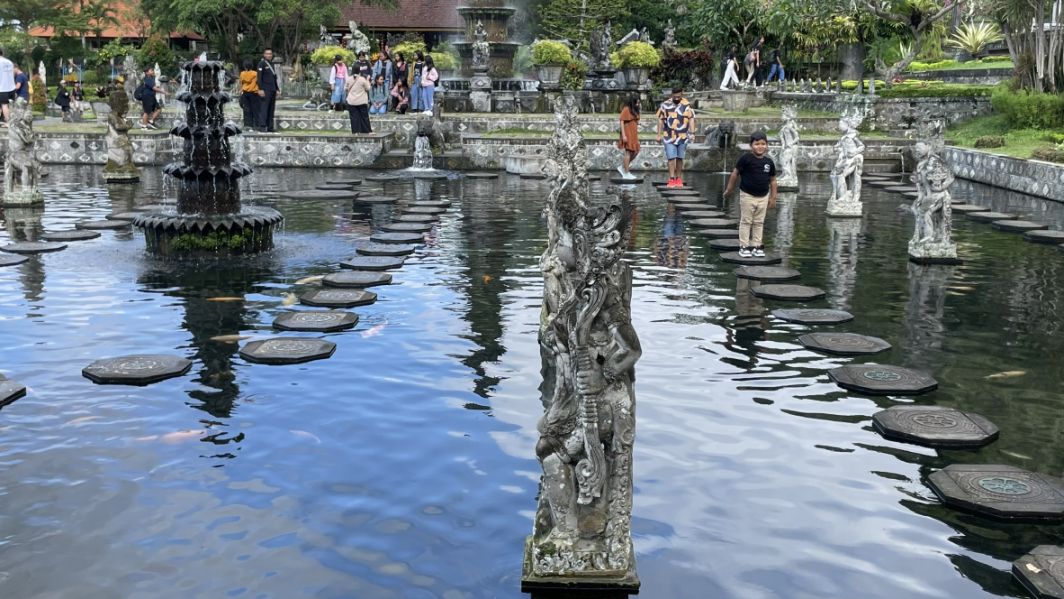
The many statues scattered throughout the area, gods, guardians, mythical creatures, and demons, serve both decorative and spiritual roles. Some figures appear serene and protective, while others are intentionally fierce or unsettling. Together, they reflect the Balinese belief in balance: beauty and danger, calm and power, coexist in the same landscape. None of the statues are random; they create a symbolic environment where nature, water, and spirituality are woven together.
 |
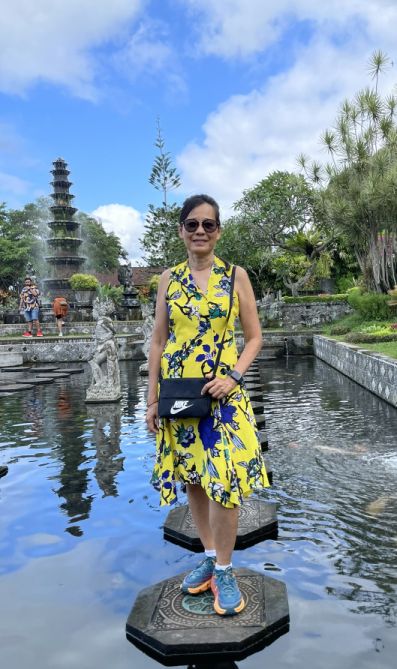 |
Walking this way naturally slows you down, turning movement into a kind of quiet ritual. This whole section is designed as the heart of the water palace, where royal leisure, religious symbolism, and garden aesthetics meet. The flowing water, open space, and abundance of stonework and greenery make it feel expansive yet intimate, a place where people can wander, pause, reflect, and connect with both the visual beauty and the deeper meaning behind it.
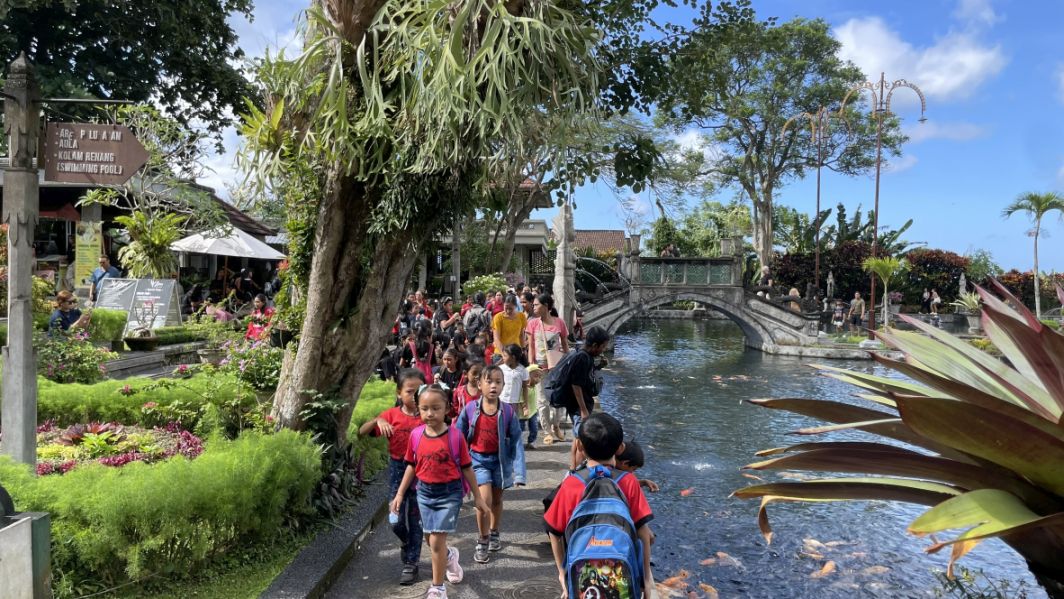
As we were leaving a bunch of little kids walked in with their teachers to spend a few hours here.
Lush plants, shaded pavilions, and open spaces give Tirta Gangga the feeling of a royal park, while its shrines and symbolic architecture remind visitors that it is also a sacred place. Altogether, Tirta Gangga feels calm yet powerful, a place where water, nature, and belief come together in a uniquely Balinese expression of harmony.
NEXT... Day 15- Abang Jungle Park