3 weeks in Bali, Indonesia- 5/28- 6/15/2024
Day 8- Jatiluwih rice terrace-6/3/2024
This morning we are headed to Jatiluwih, one of those places where the
landscape feels alive, by centuries of tradition, yet still completely
functional today. Jatiluwih is one of Bali’s most famous and historically
significant rice terrace systems.
It is part of the UNESCO Cultural Landscape of Bali, recognized for its
connection to the subak system, an ancient irrigation network created by
Balinese farmers over 1,000 years ago.

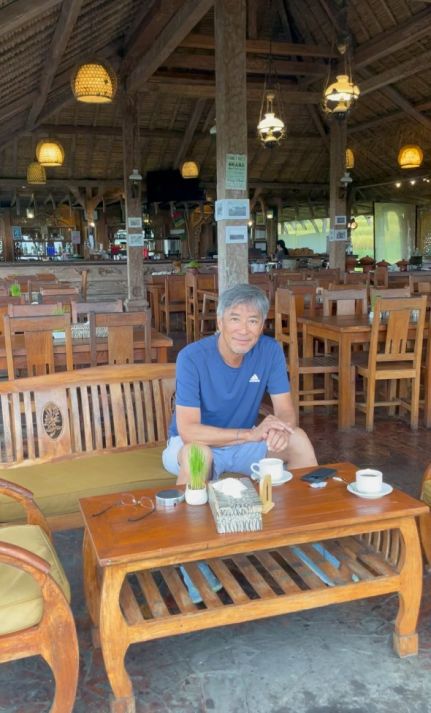
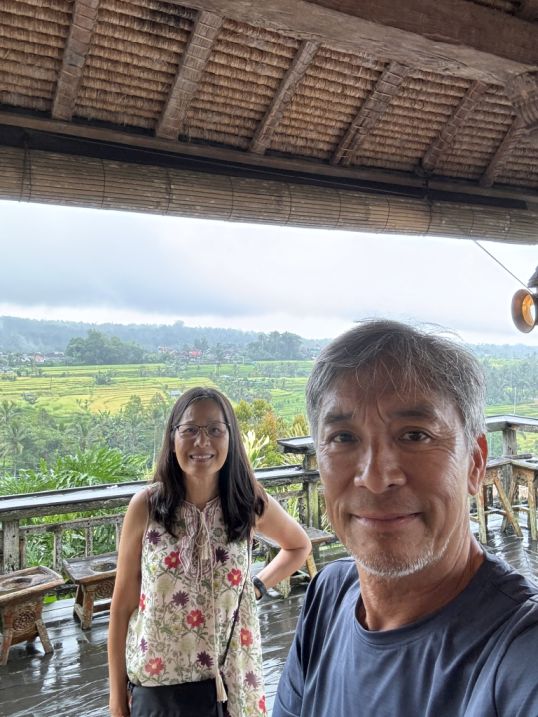
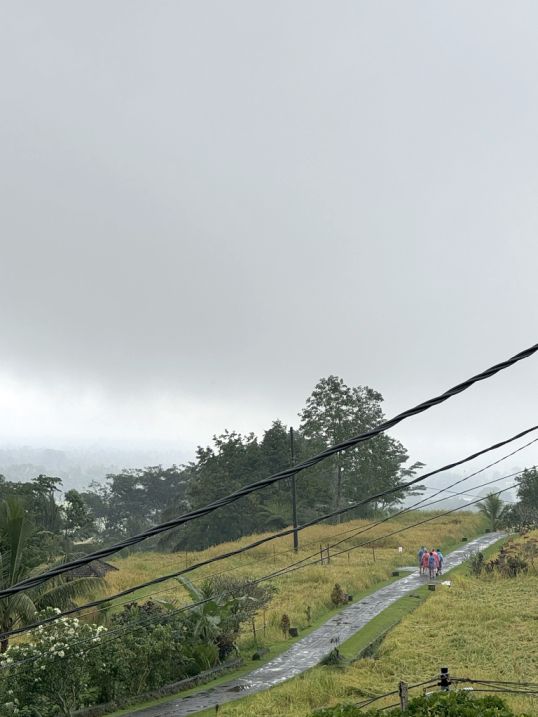
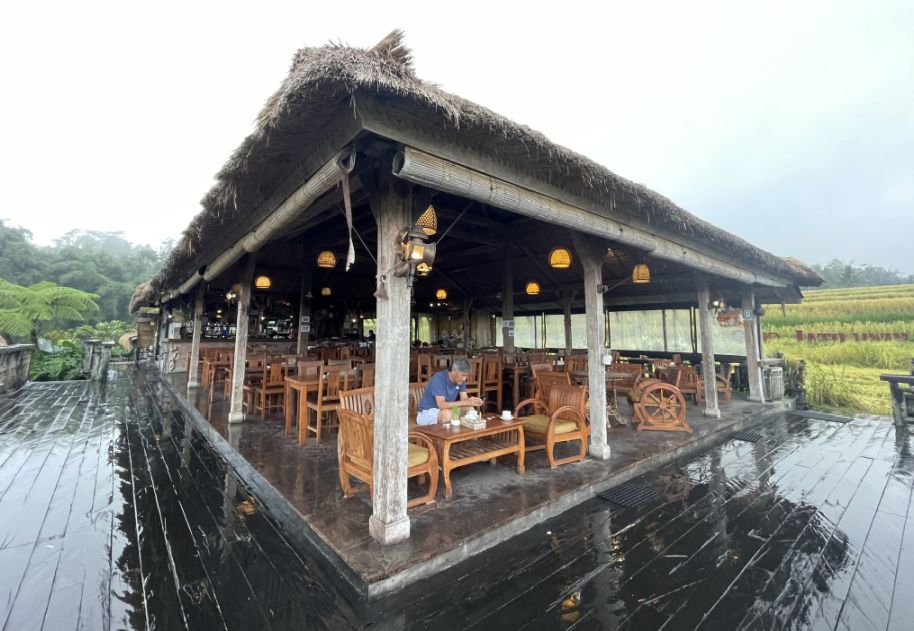
Even arriving on a rainy morning only adds to the atmosphere, with mist drifting over the hills and the terraces glowing a soft golden color. we sat down at a coffee shop near the entrance of the Rice fields.
![]() |
![]() |
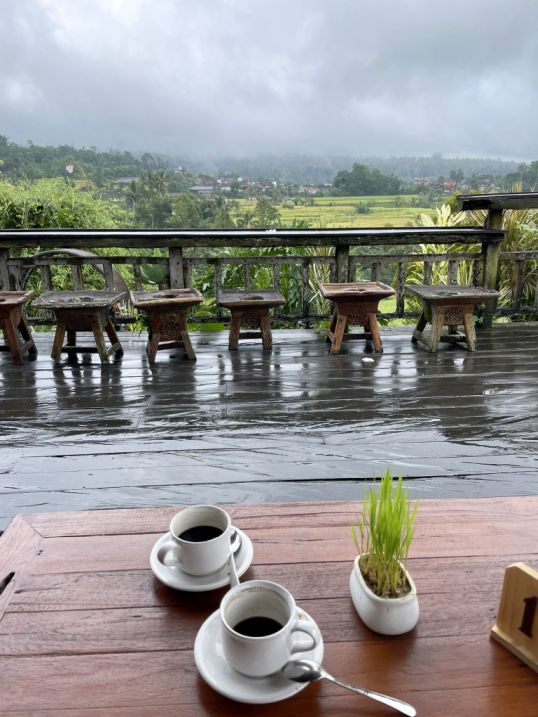
We arrived in the parking lot while it was raining, very typical weather for the higher elevations of Jatiluwih. Instead of rushing out, we stepped into the coffee shop overlooking the terraces, watching the rain fall across the golden fields. It’s one of the most peaceful ways to start a visit.

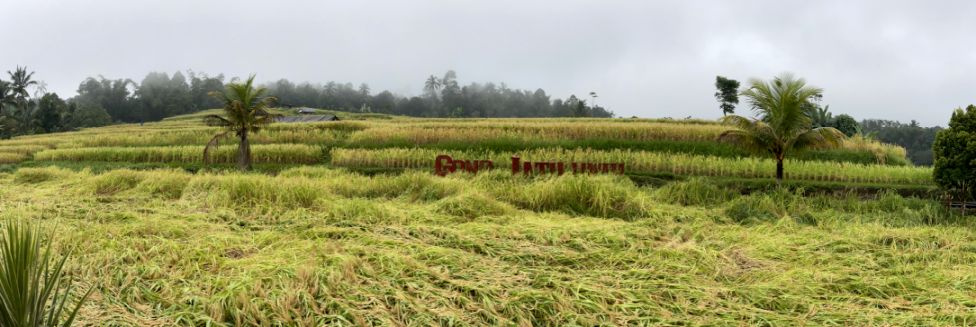
From the coffee shop terrace, the rain still lightly falling, we had a perfect elevated view of the landscape, and right below you, across the golden field, stood the huge letters spelling “Gong Jatiluwih.” They rise prominently against the terraces, almost like a landmark welcoming visitors to this UNESCO-protected valley. With the soft morning light, the letters looked almost cinematic, framed by layers of golden rice paddies behind them.
![]() |
![]() |
The rain stopped and we are ready to go down and explore the area.
![]() |
![]() |
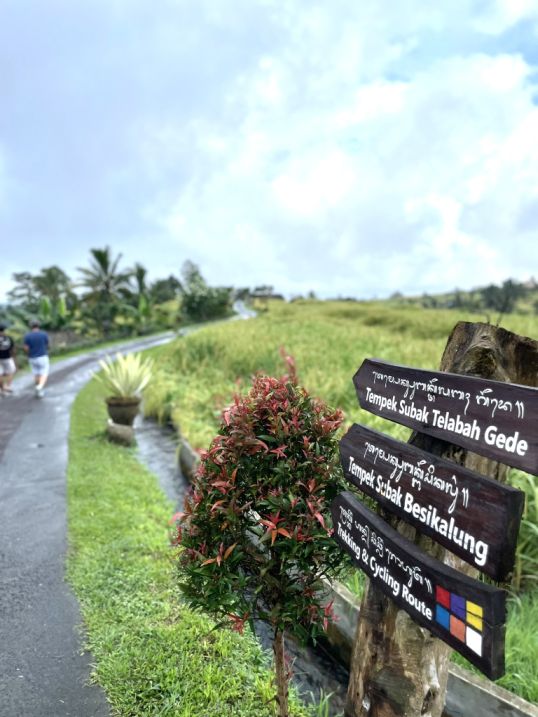
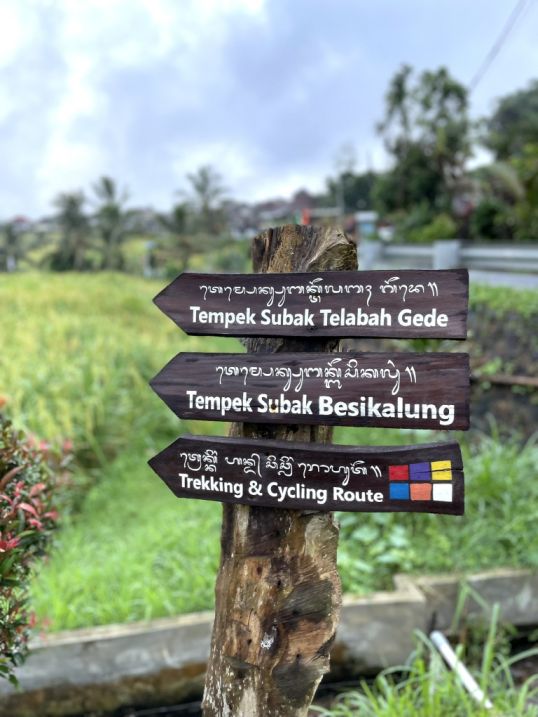
We followed the path downhill toward the terraces. That’s when we came across a cluster of arrow signs, one of them saying: Tempek Subak Telabah Gede. This is not just a direction marker; it’s the name of one of the sub-groups (tempek) within the larger subak system of Jatiluwih. We are now stepping into an area that is part of the living heritage system, where farmers still maintain the canals, plant and harvest rice in harmony, and uphold traditions passed down for centuries.

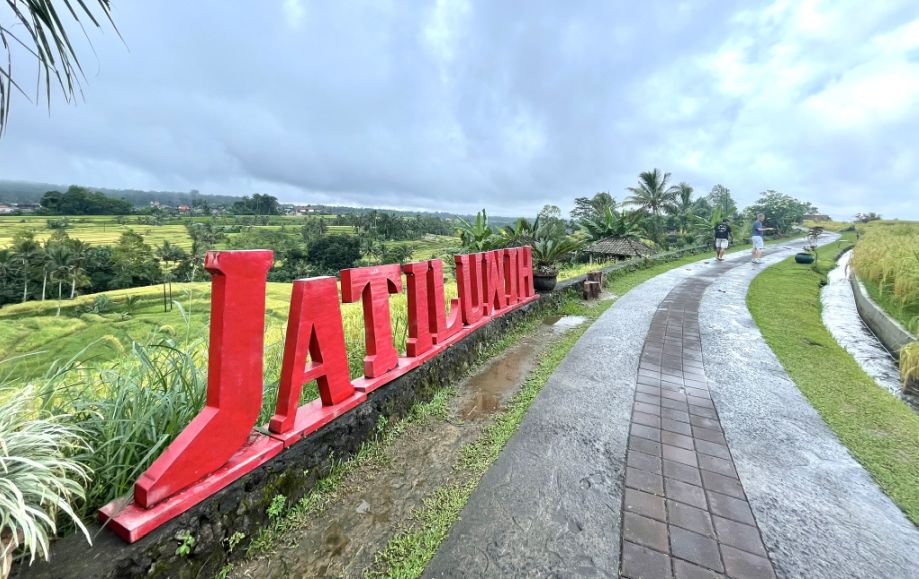
As we continued walking, this huge red sign guided us deeper into the terraces.

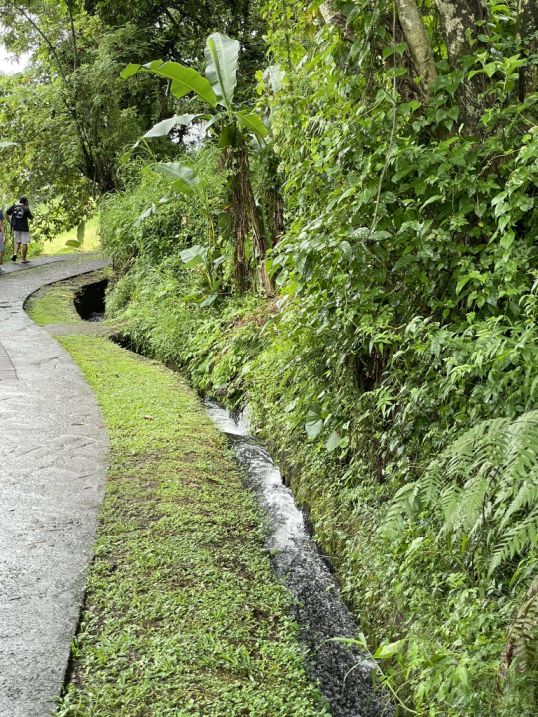
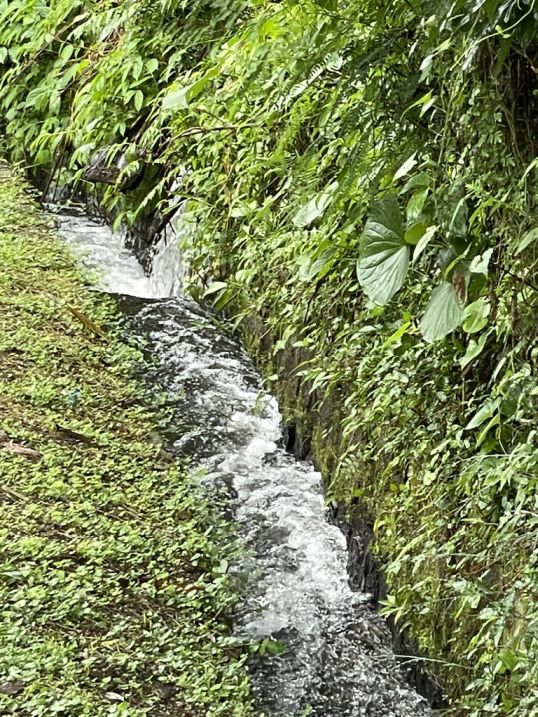
Next the rice filed is the irrigation canal, the golden rice fields, and the peaceful scenery that makes Jatiluwih feel so timeless. As we walked along the path, the irrigation canal becomes one of the most beautiful and calming parts of the Jatiluwih experience. It runs right beside the edge of the elevated rice fields that rise just above it. The water moves gently but steadily.
![]() |
![]() |
Sometimes the canal is made of smooth cement, sometimes older stone, and in a few places it narrows into a small bamboo pipe where water spills down into the next terrace. Each drop of water is part of a larger network that connects the mountain springs, the temple, and every farmer in the valley.
![]() |
![]() |
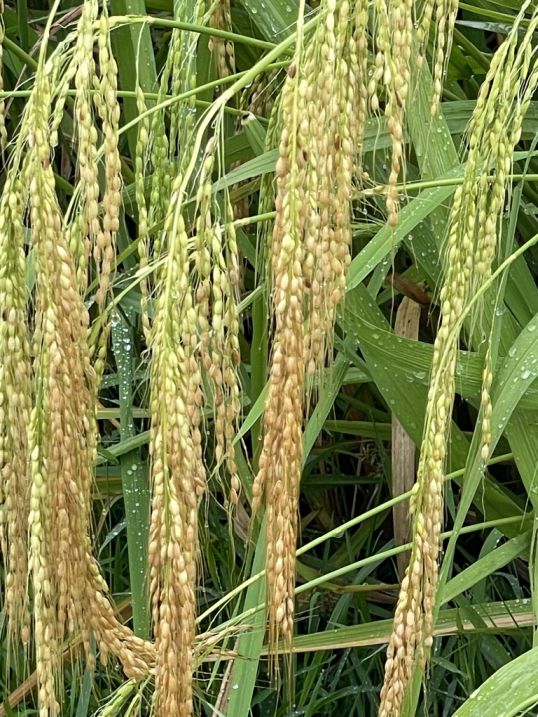
We stopped to take a close-up photo of the rice grains, and it’s the perfect moment to appreciate the beauty of the harvest season. The rice hung gracefully from the stalks, heavy with ripened grains, bending downward like tiny natural chandeliers. Up close, you could see each grain wrapped neatly in its husk, the color shifting from pale gold to deeper amber.

Looks like this field was harvested.

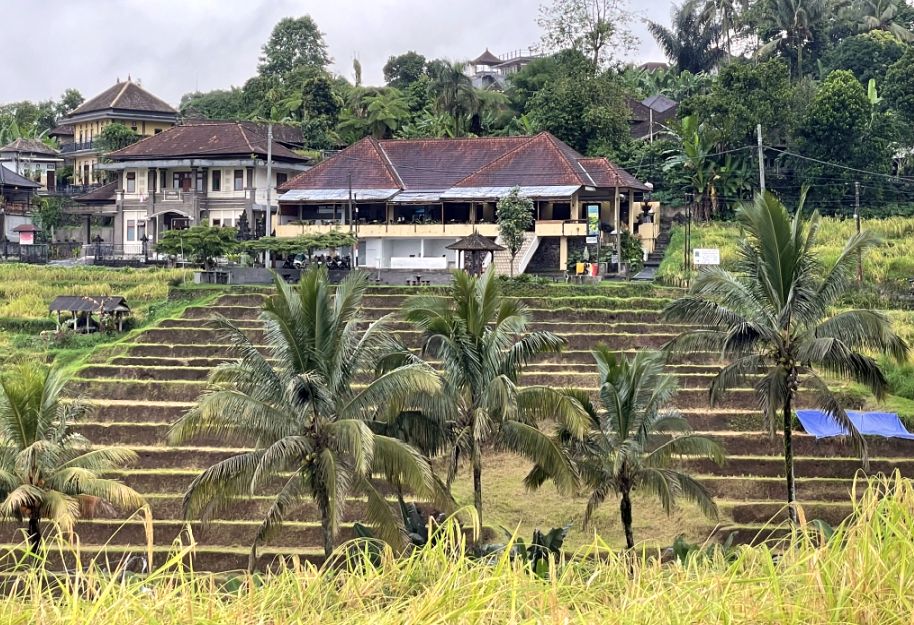
As I looked across the rice fields, in the distance those large buildings with brown roofs, elevated steps, palm trees, and rice fields surrounding them are several scenic restaurants built on higher ground so visitors can enjoy the panoramic view of the rice fields. They blend into the landscape while giving travelers a place to sit, eat, and take photos.

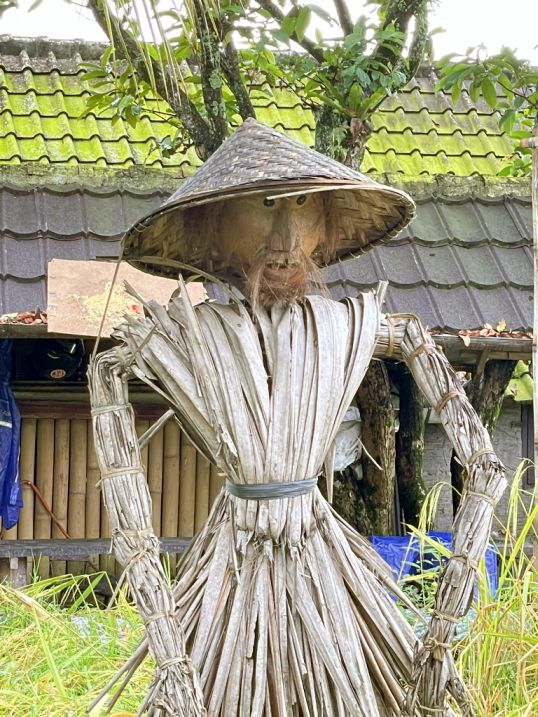
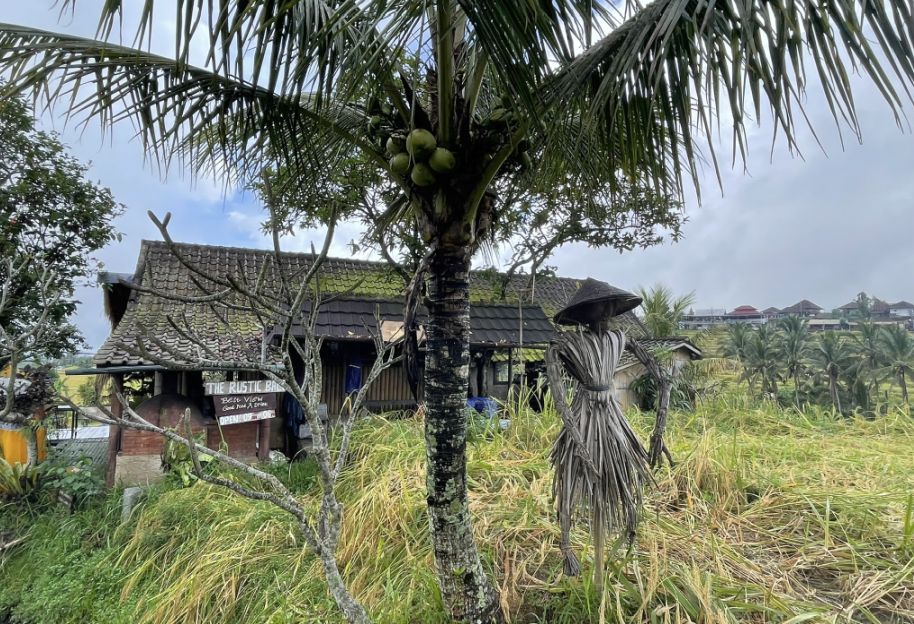
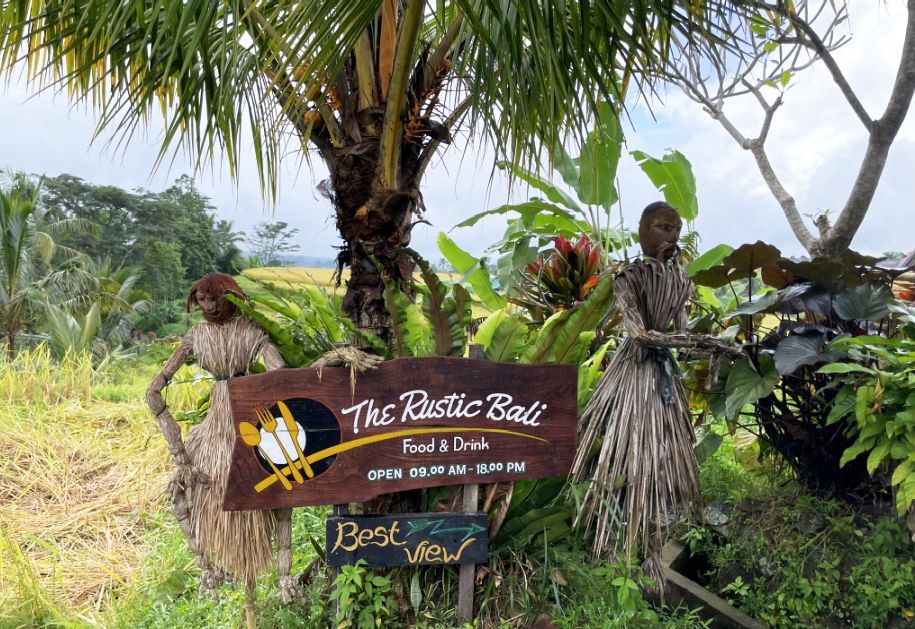
We passed a spot called Rustic Bali, and in front of it stood a charming, handmade scarecrow crafted entirely from dried palm leaves.
![]() |
![]() |
The scared crow looked both traditional and artistic, with its loose straw-like “arms” and woven body.

A little farther ahead, you saw a panel with two more scarecrows, also handmade, standing like guardians of the rice fields.
These scarecrows weren’t just practical, they fit so beautifully into the rustic atmosphere, adding personality and warmth to the landscape.

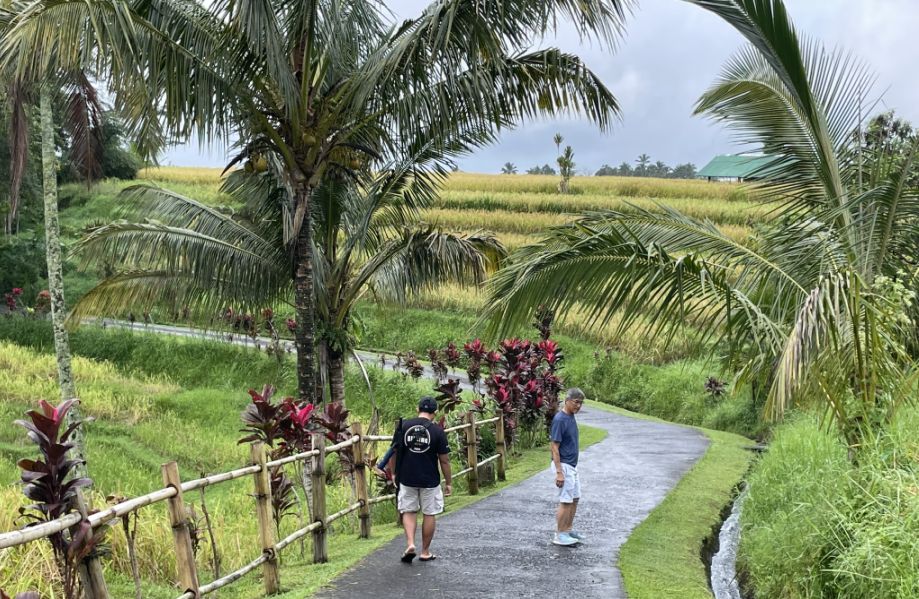
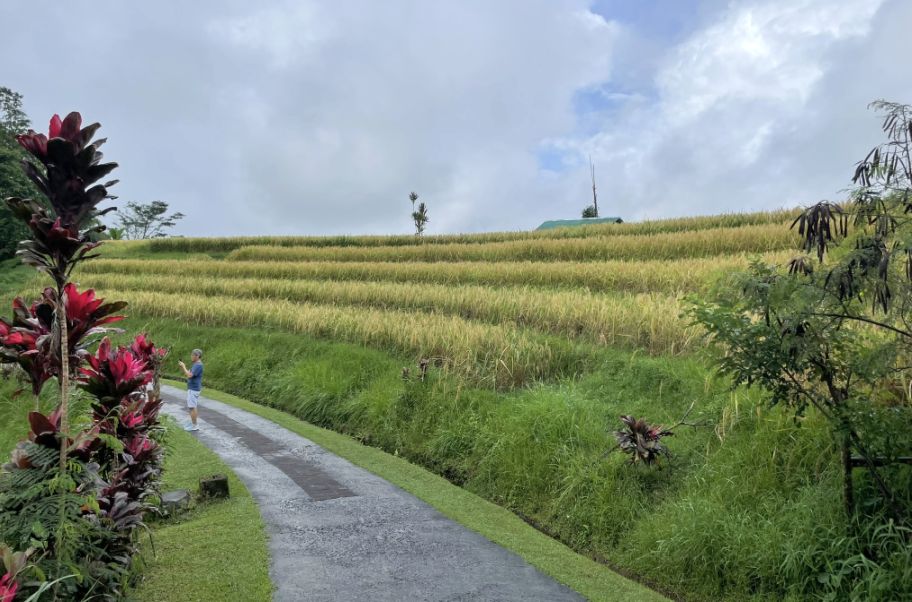
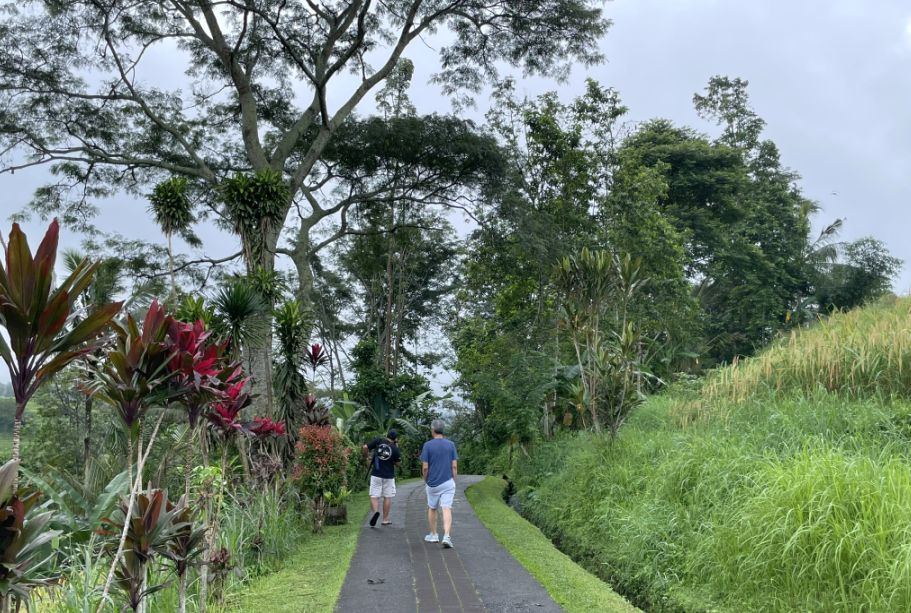
As we continued along the pathway, the walk turned even more beautiful and detailed, the kind of scenery where every few steps offers something new to admire. The path curved gently, and the edges were lined with handmade bamboo fences, their simple construction blending naturally with the landscape. The fences framed the scenery like an open-air gallery, guiding you forward between stretches of golden rice fields that glowed under the soft daylight.
![]() |
![]() |
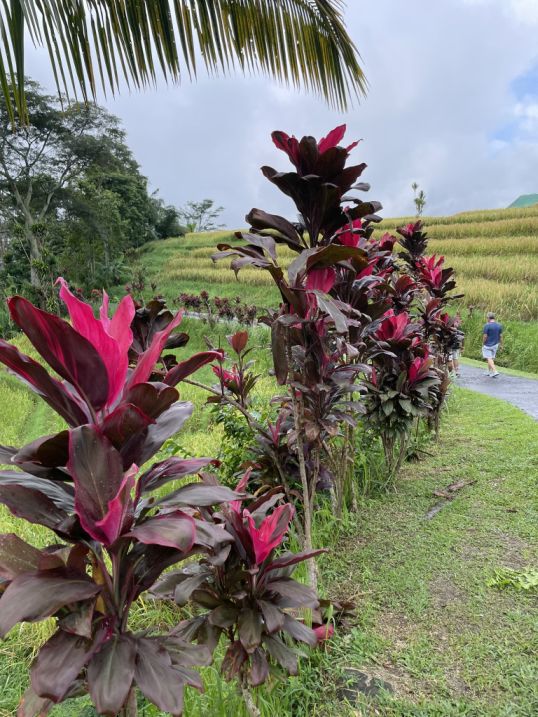
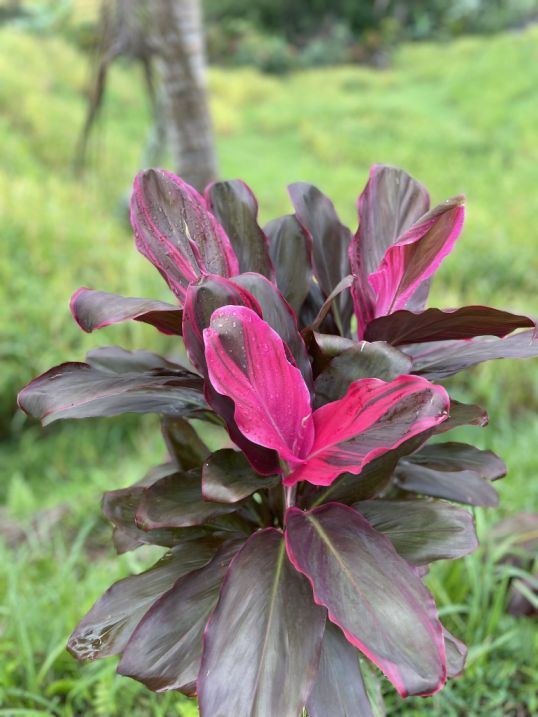
Along the roadside, the Ti plants added a burst of color to the scenery. Their red leaves were incredibly vibrant, almost glowing against the green and gold of the fields. The combination of the bright red Ti plants and the golden rice created such a striking contrast, one of those little details that makes Jatiluwih feel alive with color.

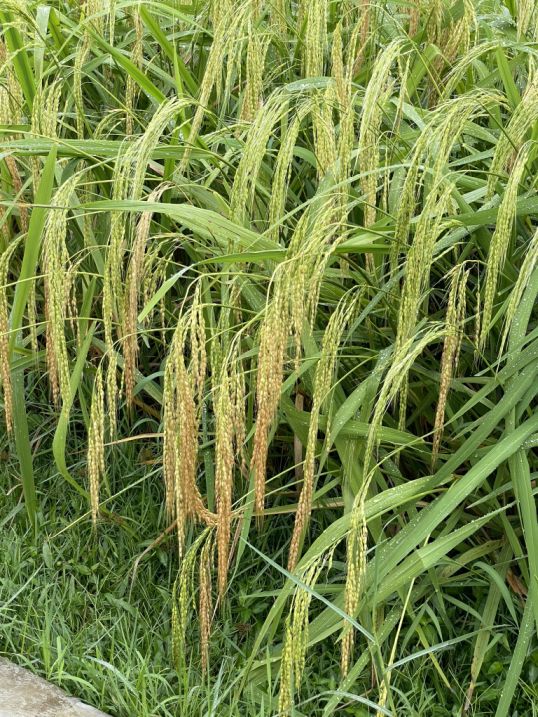
In early June, the terraces turn golden, and that’s exactly what we saw. The rice plants were tall, full, and slightly bowed under their own weight, not yet harvested, but very close.

Terraces stretch across the foothills of Mount Batukaru, creating layers of green and gold that follow the natural curves of the land.

It is truly magical standing here.

We continued by following the pathway.

The rice fields are golden in early June 2024 means the rice was fully mature and ready for harvest. This is one of the most beautiful times to visit, as the landscape shimmers in a rich yellow hue, which contrasts beautifully with the surrounding greenery and the cloudy sky.

The entire panorama is a testament to the Balinese Subak system, a traditional democratic and spiritual system for water management. The golden fields, cascading down the slopes as far as the eye can see, are irrigated through this centuries-old, cooperative method. The system itself is why Jatiluwih earned its UNESCO status.
![]() |
![]() |
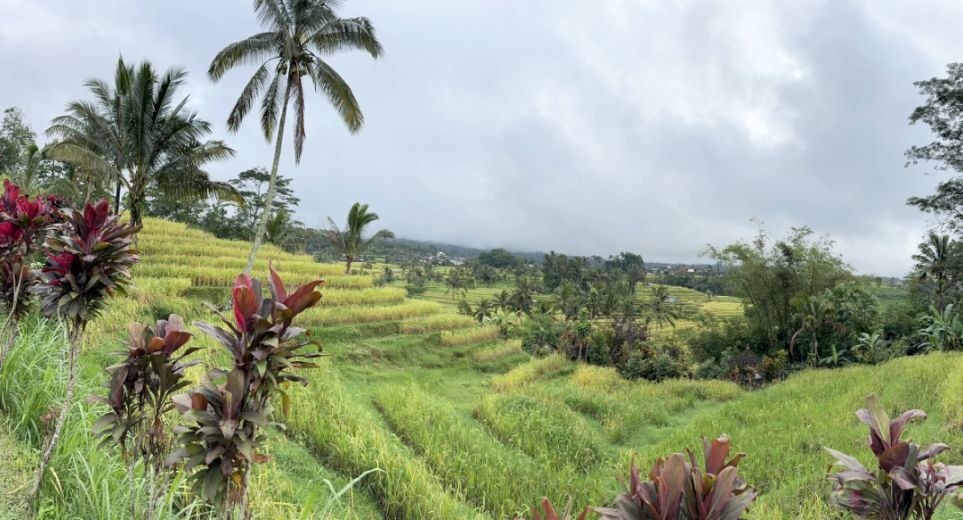
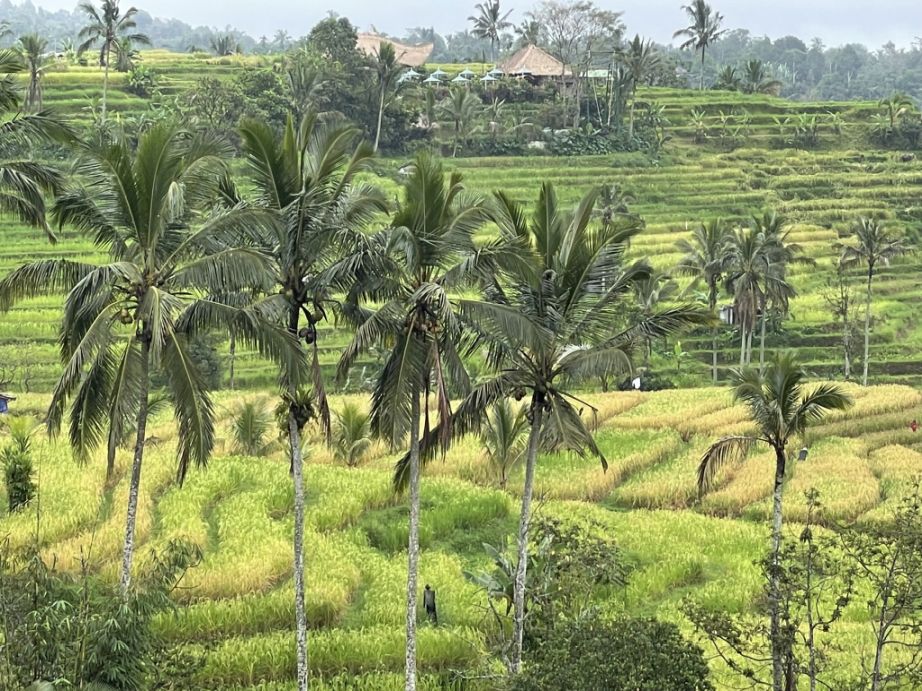
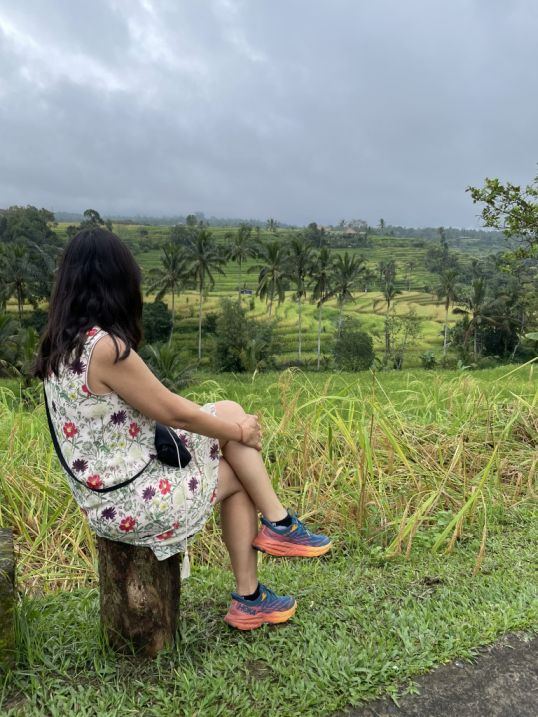
We stopped at this elevated spot where I sat down and had the full scale of the landscape. It's truly a place where you can appreciate the harmony between human effort (the terracing) and nature. The tall palm trees scattered through the fields add a classic, tropical silhouette to the view.

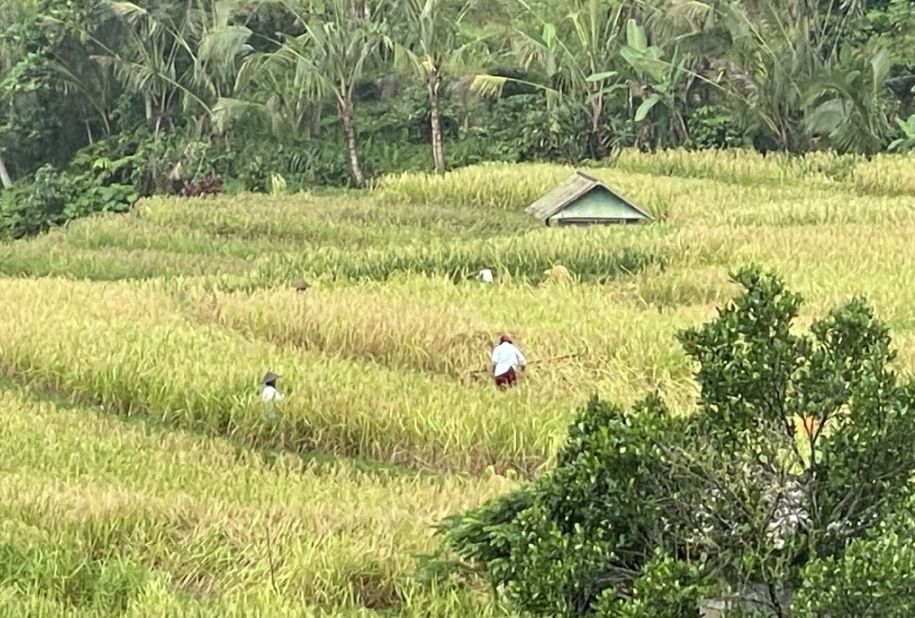
Our tour guide told us that since the rice is golden (meaning fully mature), the two workers you see are probably cutting the rice stalks by hand using a small, specialized sickle called an ani-ani. It’s a labor-intensive but communal process in the Subak system.

A bunch of tourists stopping by a souvenirs shop, right next to the field.

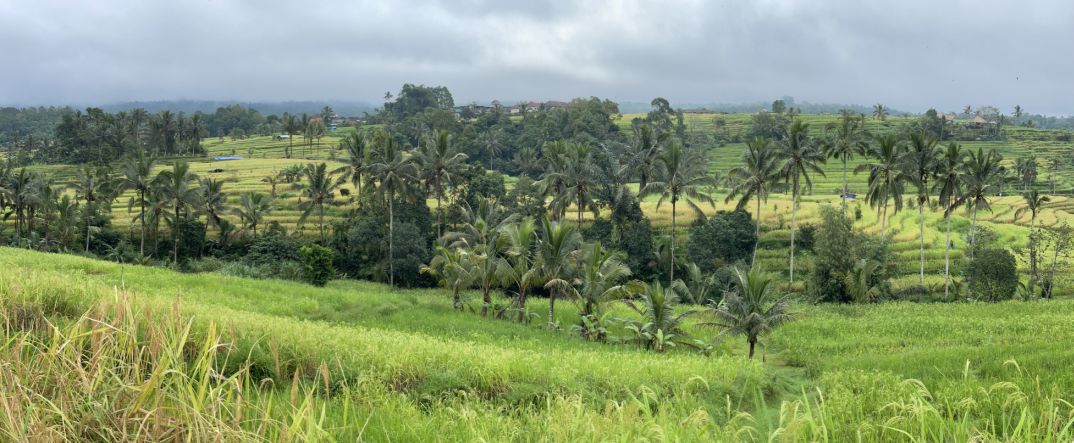
This terrace of golden rice fields surrounded by palm trees is the quintessential Jatiluwih view, the very image used on postcards and in travel guides. The palm trees (coconuts or areca palms) perfectly frame the sweeping agricultural landscape, providing shade and adding vertical interest to the wide, horizontal terraces.

More workers on the field.
![]() |
![]() |
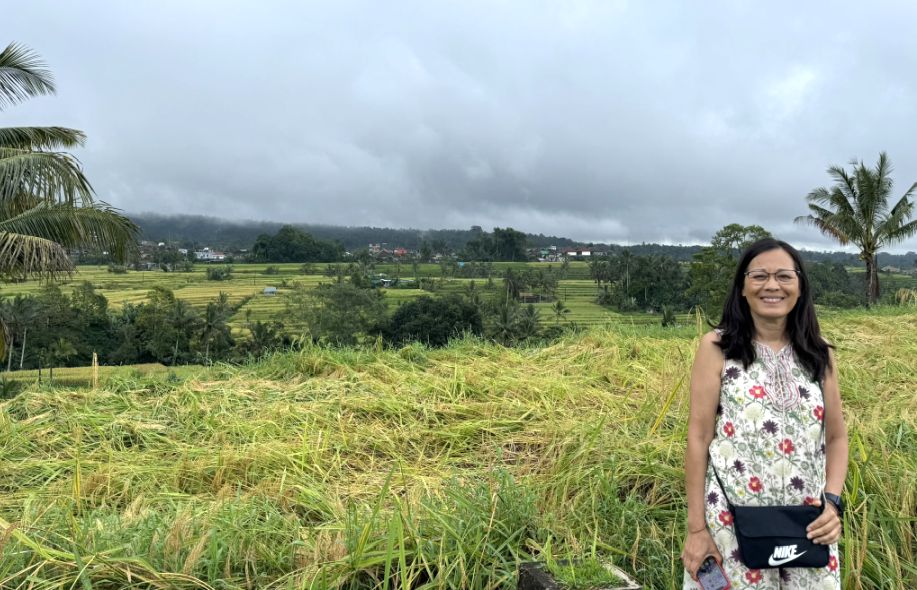
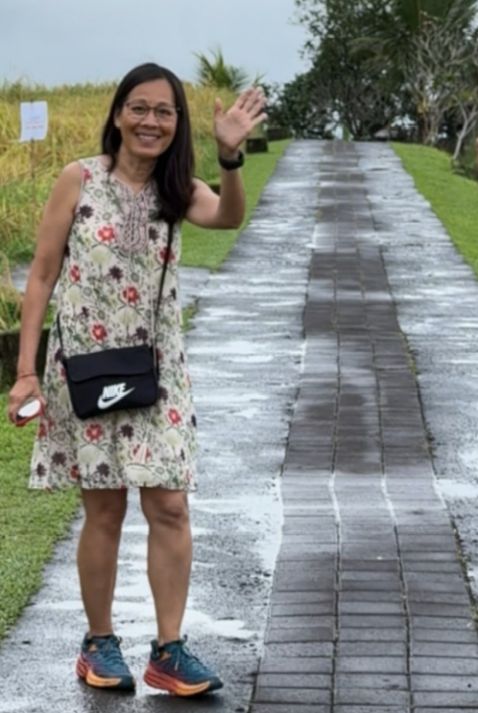
A quick picture of us around the rice fields.

Moving further down the path, we hit one of the main congregation point, where there are many visitors gathering around their tourist guide.

Tour guides often use these well-located shacks or small warungs (food stalls) as designated spots to gather their group, give historical context about the Subak system, or simply to take a break and order refreshments (like Balinese coffee or the famous es kelapa, iced young coconut).
![]() |
![]() |
Our tour guide is now taking us to the rice fields by following a narrow dirt path called a pemantang in Balinese. They are built and maintained by the farmers (members of the Subak community) and are the only way to walk through the terraces without damaging the crops.

The wooden bridge allows people to cross the vital canal without disrupting the flow of water. The entire system is governed by complex social and spiritual rituals that ensure every farmer gets an equal share of the water across the Canal is a crucial part of the Subak water management system.

This is one of the primary irrigation channels, delivering water sourced from distant springs, rivers, or streams. The water runs down from the highest terraces to the lowest, using gravity.

We are walking through a living, breathing UNESCO heritage site that is as much about spirituality and community cooperation as it is about farming. We really enjoyed the sensation of walking right next to those beautiful golden stalks!

A lady performing the harvest in the traditional Balinese way, which connects back to the spiritual significance of the rice plant.
In Balinese Hindu belief, the rice goddess Dewi Sri resides within the rice plant. The farmers do not use large sickles that slash the plant, as this would offend the goddess. Instead, they use the small ani-ani to individually cut the heads of the rice stalks, a slow, respectful, and deliberate process.
![]() |
![]() |
The bundle of rice she is holding in her arm are the mature rice heads, ready to be tied into sheaves. The reason she is holding them while simultaneously using the other hand to check the plants is totally golden, mature stalks are cut, ensuring the highest quality grain.
![]() |
![]() |
The individual rice heads, cut respectfully from the stalk, are quickly grouped together and tied into small, manageable sheaves.

They are placed on the pemantang (the earthen path) temporarily, waiting to be carried out of the field. Given the steep, sometimes slippery terraces, carrying them out is slow work, often done by hand or balanced on a shoulder pole, before being taken to a dryer area for threshing.

For the Balinese farmers, these bundles are a physical manifestation of the rice goddess, Dewi Sri's, generosity and the success of the year's labor, achieved through the communal harmony of the Subak system.
We are witnessing the transition from a beautiful field of golden plants to the actual food that feeds the community, a truly fundamental and meaningful sight in Bali.

Walking so close to the rice fields.

The golden field is the last stage, ready to be harvested and next to it the field that slopes down to green tiers shows the next stage. These fields have either just been tilled and planted with new, bright green rice seedlings, or the rice is mid-growth. This staggered planting ensures that the rice goddess, Dewi Sri, is always present in some form, and that the community has a continuous supply of food.

Seeing the two women sitting and eating their lunch is the most human and heart-warming part of the view. They are likely the farmers (or part of the Subak community) who have been working the fields nearby. Sharing a meal in the middle of the fields is a traditional way to rest and socialize, confirming that this landscape is not just a tourist attraction, but a vibrant, living workspace where people earn their living in harmony with nature.
![]() |
![]() |
We climbed up a few steps, transition from one level of the tiered rice field to the next, which is common as the terraces descend the mountain slope.

Being right next to the rice field where the stalks are full of grains gives a tangible experience of the harvest season. You can hear the subtle rustling of the heavy grain heads in the breeze, and see the weight of the kernels making the stalks bow slightly. This is the moment of peak abundance, reflecting the immense effort of the Subak community.
![]() |
![]() |
Those full grains are directly associated with Dewi Sri, the Rice Goddess. The heavy, mature stalks represent prosperity and a successful blessing from the gods.

We are surrounded by the sights, sounds, and even smells of a successful harvest!
![]() |
![]() |
Both us really enjoyed walking around the rice fields.

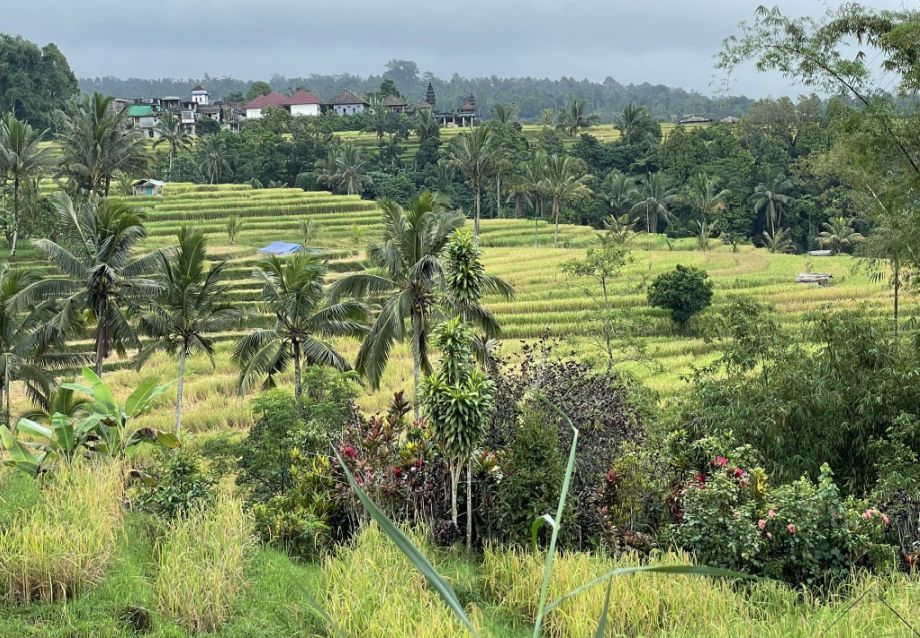
We are now at an elevated area where you can look down and see the tiered famous rice terraces.

Palm trees dotting the landscape add that perfect, iconic tropical element, contrasting their tall, thin forms against the wide, flowing lines of the terraces.

On the left is a temporary shelter for the farmers during the long, hot days of planting, tending, or harvesting. It provides a spot to rest, store personal belongings, and perhaps heat up a simple meal. The blue tent is the essential drying and processing area. The harvested rice needs to be watched constantly as it dries, and having a rest spot right next to it allows the workers to monitor it efficiently.

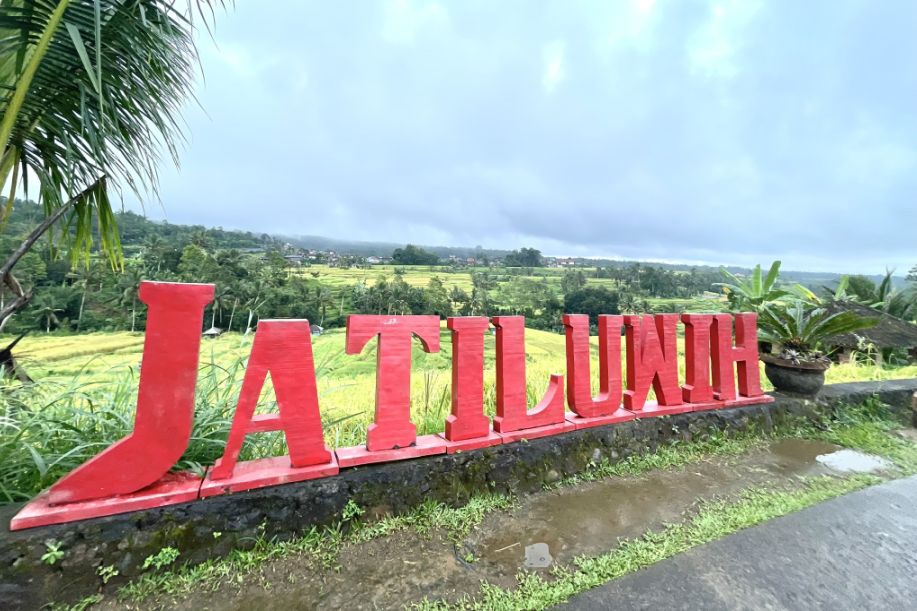
We are now leaving the heart of the terraces and heading up to the main road, where that "I ❤ Jatiluwih" sign is strategically placed.

This large, brightly colored photo-op signs have become a staple at major tourist destinations globally, and provides one last cheerful moment before we leave this area.
![]() |
![]() |
Last picture before heading to our next destination.
NEXT... Pura Ulun Danu Beratan