3 days in Nha Trang-1/26- 1/29/2025
| Day-1 Arrival Dinner at Hanh Xuan |
Day-2 Museum of Oceanography Hon Chong Po Nagar Cham Towers Christ the King Cathedral Fuit stall and Dinner |
Day-3 Cho Dam Lunch and Beach Dinner at Ot Hiem |
Day 2-Guided tour -1/27/2025
3rd stop: Po Nagar Cham Towers
Our third stop on the tour brought us to one of Nha Trang's most important historical and spiritual landmarks, the Po Nagar Cham Towers.
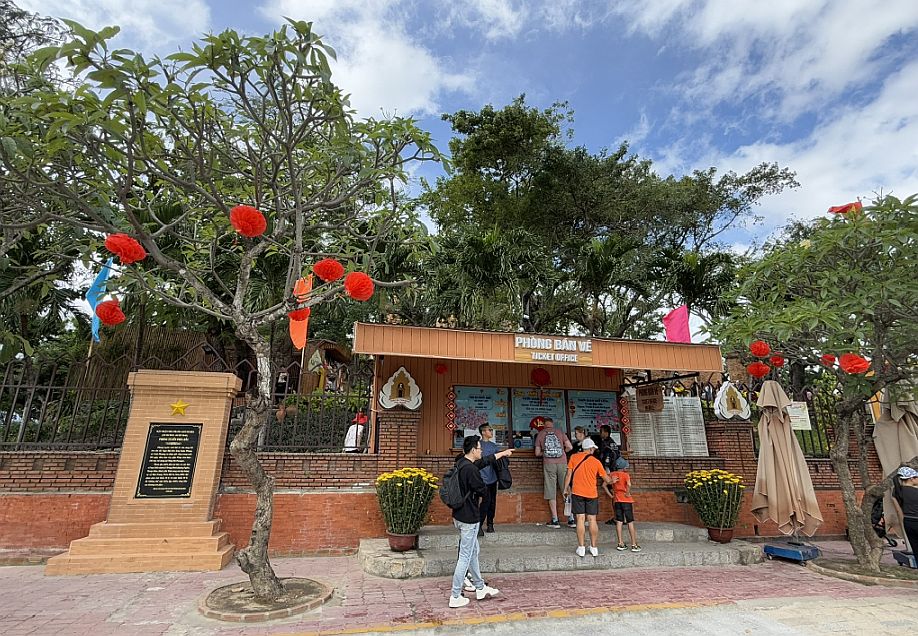
After a short drive from Hòn Chong, our bus dropped us off near the ticket office, where our tour guide had to pick up the tickets for our group.
 |
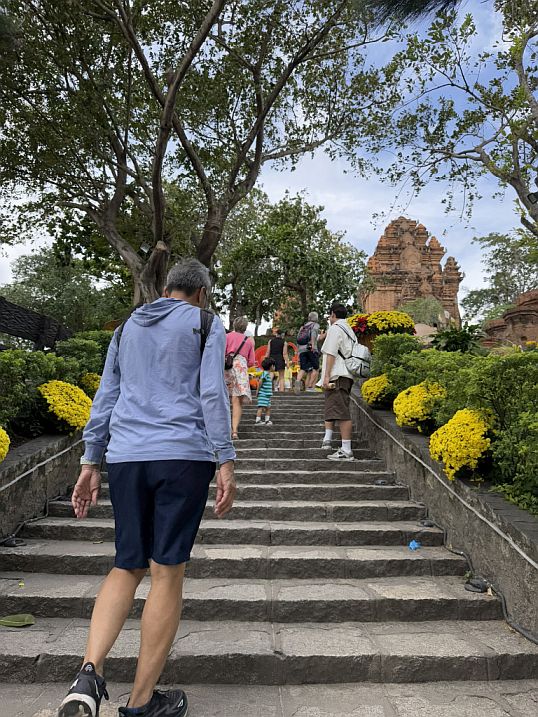 |
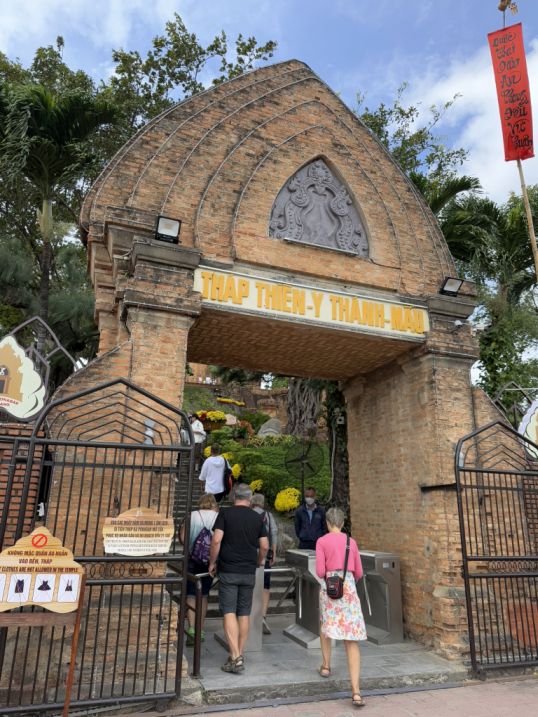
We began our walk toward the entrance of this ancient temple complex. A broad stone staircase led us upward to the first terrace, offering our first glimpse of the site.
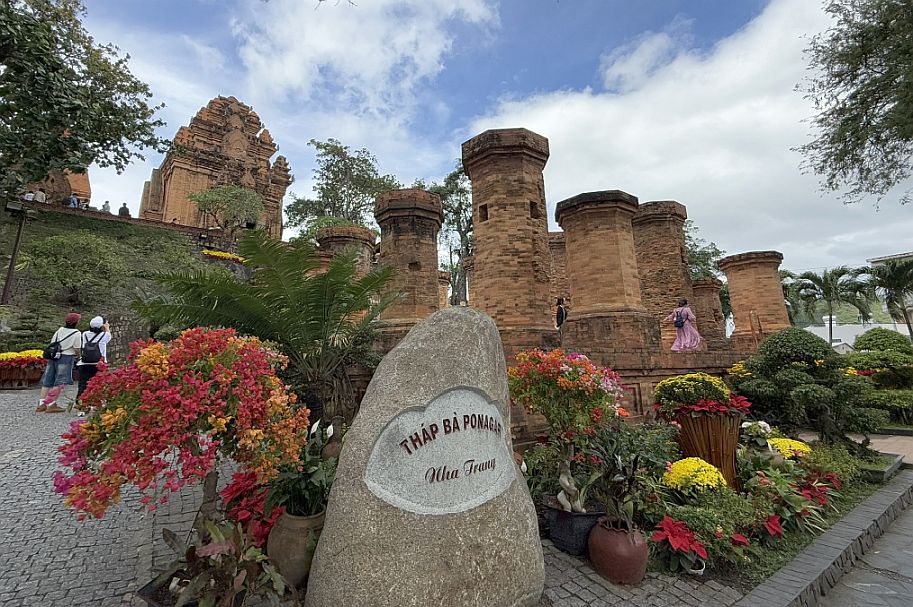
The gardens were beautifully landscaped, with manicured lawns, flowering plants, and several large stone columns standing quietly among the greenery. These cylindrical columns are all that remain of structures that once formed part of the original ceremonial complex. Although only fragments survive today, they hint at the grandeur of the temple as it would have appeared centuries ago, when worshippers gathered here for religious ceremonies.

We continued our climb up the broad stone staircase toward the upper terrace, where the ancient towers stood overlooking Nha Trang.
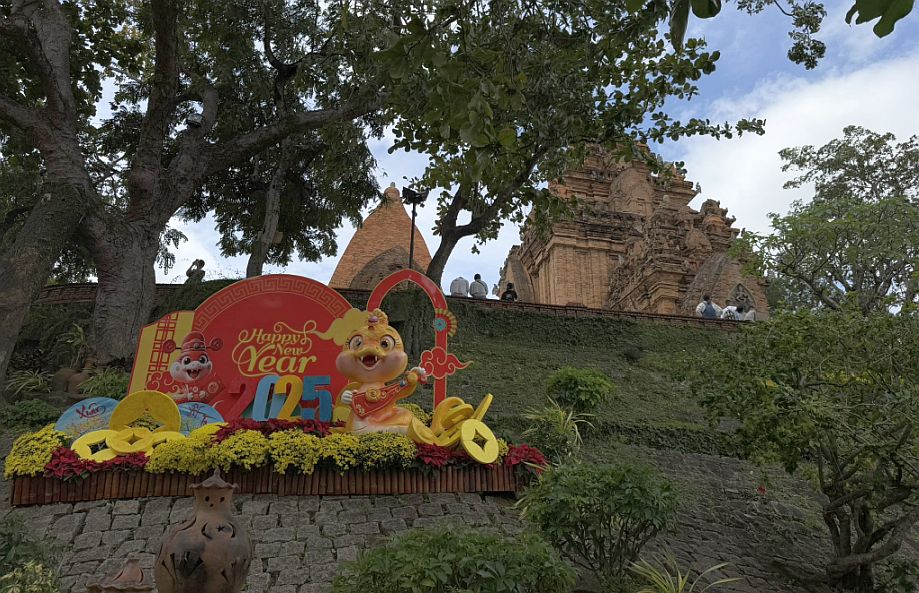
Since our visit was just days before Tet, the Vietnamese Lunar New Year, the grounds were alive with festive decorations. At the top of the stairs, a large, colorful display wishing everyone "Happy New Year 2025" welcomed visitors, adding a vibrant splash of color to the centuries-old temple complex.
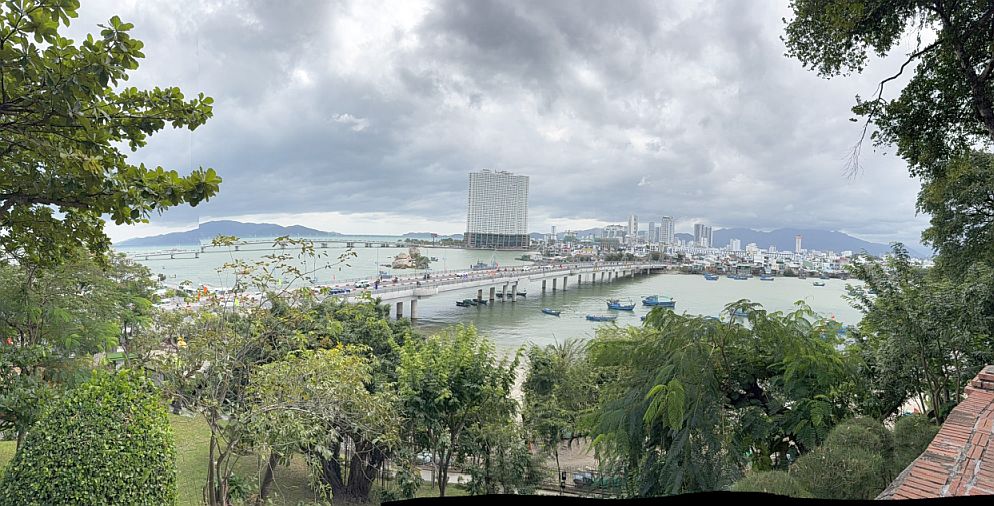
Halfway up the staircase, we paused to admire the breathtaking view behind us. From this elevated vantage point, we could see the Tran Phú Bridge stretching gracefully across the Cái River, connecting the city to the northern districts of Nha Trang. .

Modern high-rise buildings lined the waterfront, while majestic mountains rose in the distance, creating a dramatic backdrop. Below the bridge, dozens of bright blue fishing boats floated peacefully on the calm waters, gently bobbing with the tide. The colorful boats, bustling city, winding river, and distant mountains came together to create a picture-perfect panorama that was every bit as captivating as the ancient temple we had come to see
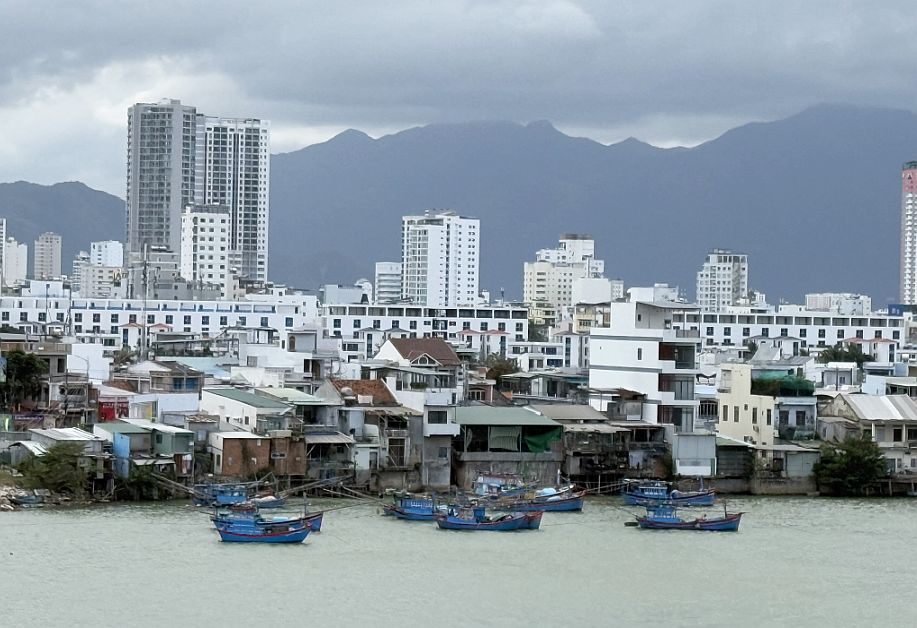
The colorful boats, bustling city, winding river, and distant mountains came together to create a picture-perfect panorama that was every bit as captivating as the ancient temple we had come to see.
For a few moments, we forgot about reaching the towers. The view itself was worth the climb, offering a beautiful contrast between Nha Trang's modern skyline and the timeless landscape that has surrounded the Po Nagar Cham Towers for more than a thousand years.
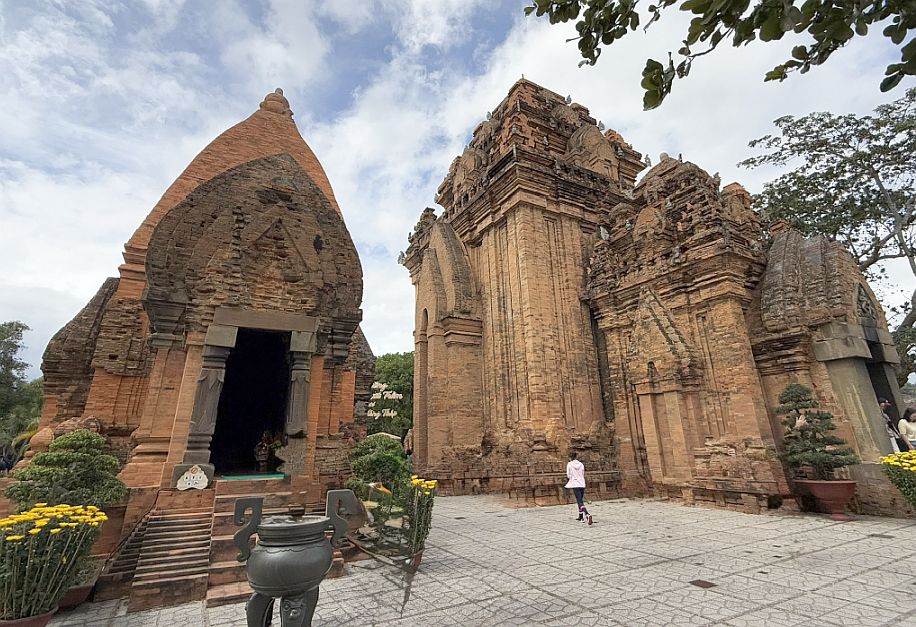
As we climbed the final steps to the second terrace, the magnificent red-brick towers of Po Nagar came into full view. Standing proudly atop the hill, the ancient structures immediately transported us back in time. Their warm reddish-brown bricks, weathered by more than a thousand years of sun, rain, and tropical storms, have stood as silent witnesses to the rise and fall of kingdoms.
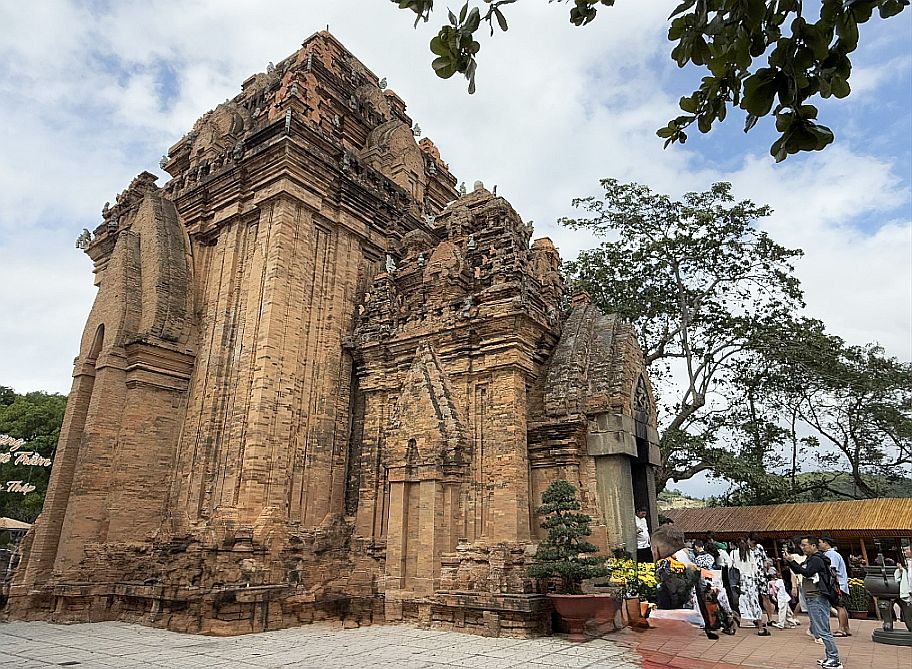
The Po Nagar Cham Towers were built between the 8th and 13th centuries by the Champa Kingdom, a powerful civilization that once ruled much of central and southern Vietnam. The complex was dedicated to Po Nagar, also known as Yan Po Nagar, the revered Mother Goddess of the Cham people. According to Cham tradition, she was the creator of the earth, the forests, and the rice fields, and she taught people how to farm, weave, and live from the land. She became one of the most important spiritual figures in Cham culture, and pilgrims traveled here from across the kingdom to honor her.
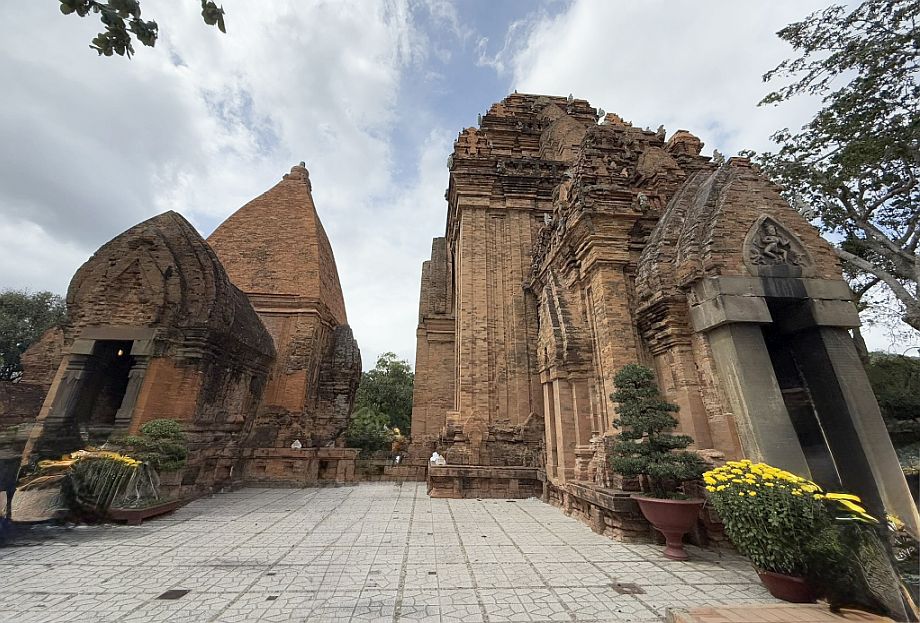
Although only four of the original towers remain today, they are among the best-preserved examples of Cham architecture in Vietnam. Built without visible mortar, the bricks fit together so precisely that historians and engineers still debate the techniques used by Cham craftsmen over a thousand years ago. Even after centuries of wars and natural disasters, the towers continue to serve as an active place of worship, where both Cham descendants and Vietnamese Buddhists come to pray and leave offerings.
 |
 |
One by one, visitors quietly entered the ancient brick towers through surprisingly low and narrow doorways. Built over a thousand years ago, the entrances seem intentionally modest, encouraging everyone to bow their heads slightly as they step inside, a gesture of humility before entering this sacred place.
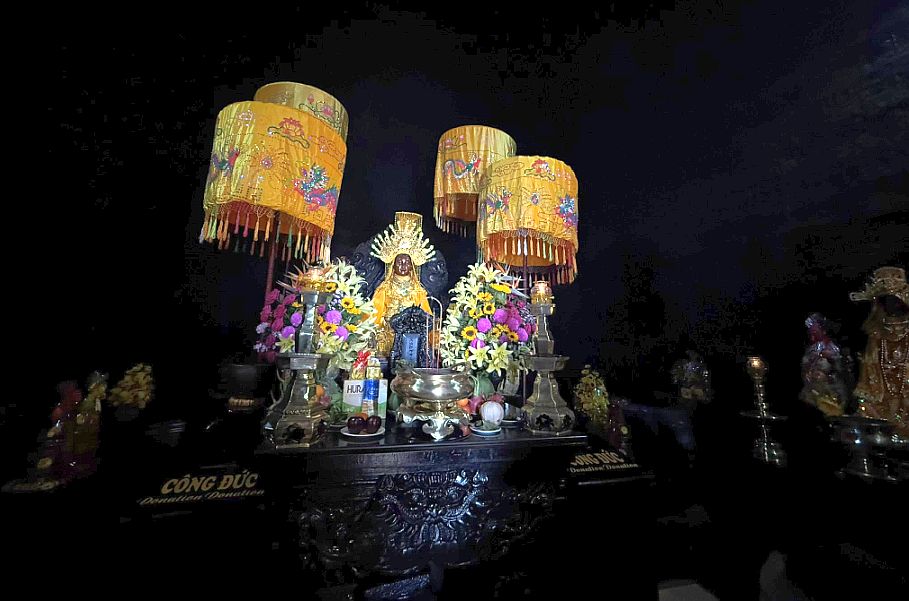
At the center of the chamber stood an altar dedicated to Po Nagar, the Mother Goddess of the Cham people. Adorned with fresh flowers, offerings, and incense, the altar remains an active place of worship, just as it has for centuries. The scent of burning incense filled the air as visitors quietly offered prayers and paid their respects.
 |
 |
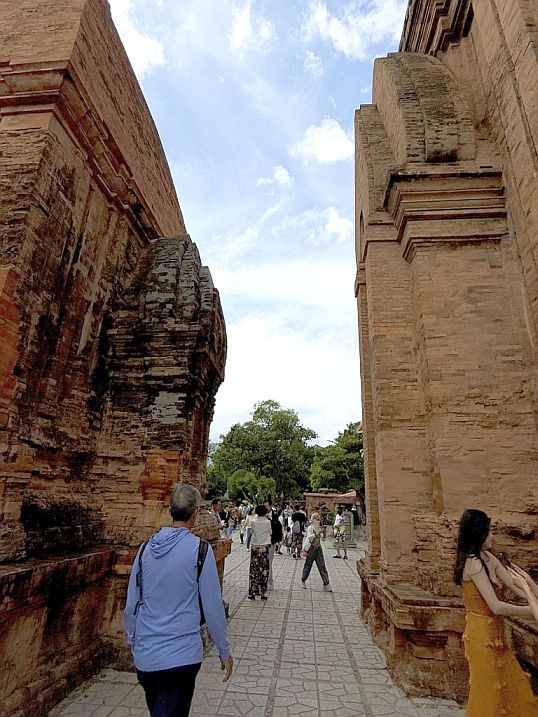
After spending a few quiet moments inside the shrine, we stepped back into the sunlight and continued our walk between two of the ancient brick towers toward the rear of the temple complex. Being so close to the structures gave us an even greater appreciation for the intricate brickwork and the remarkable craftsmanship of the Cham builders. Every brick seemed to fit perfectly, despite the towers having stood here for more than a thousand years.

Leaving the shrine, we walked between two of the ancient towers toward the rear of the temple complex. The farther we ventured, the more impressive the site became. Scattered throughout the courtyard were large stone tables, used during religious ceremonies and festivals when worshippers gather to present offerings of fruit, flowers, incense, and other gifts to the gods. Even today, Po Nagar remains an active place of worship, and the temple comes alive each spring during the annual Po Nagar Festival, when thousands of pilgrims travel here to honor the Mother Goddess.

The grounds open into a spacious courtyard where several towers stand together, each built for a different deity and purpose.
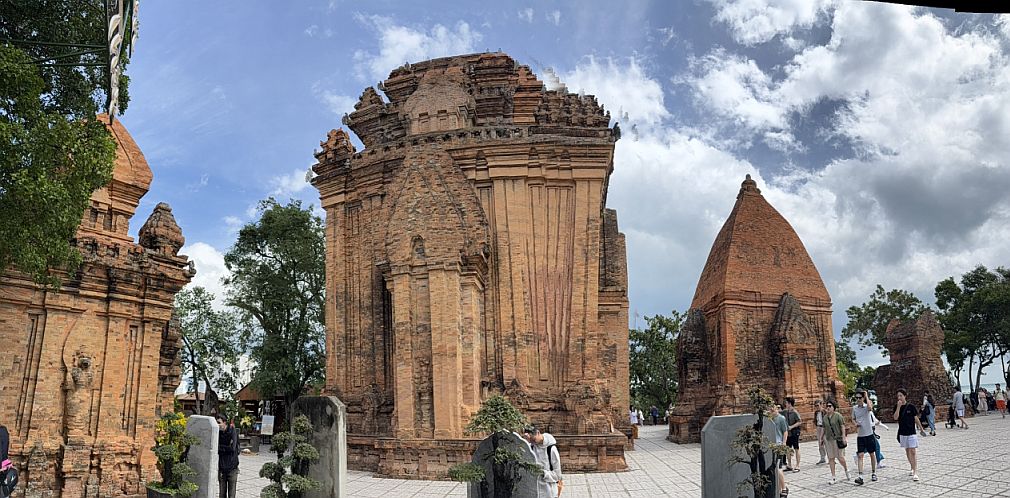
As we wandered among the towers, our guide explained that the complex originally contained ten temples, although only four remain today. The largest and most important is the North Tower (Tháp Chính), dedicated to Po Nagar, the revered Mother Goddess of the Cham people. The remaining towers are dedicated to other Hindu deities, including Shiva, Ganesha, and Skanda, reflecting the strong influence of Hinduism on the ancient Champa Kingdom
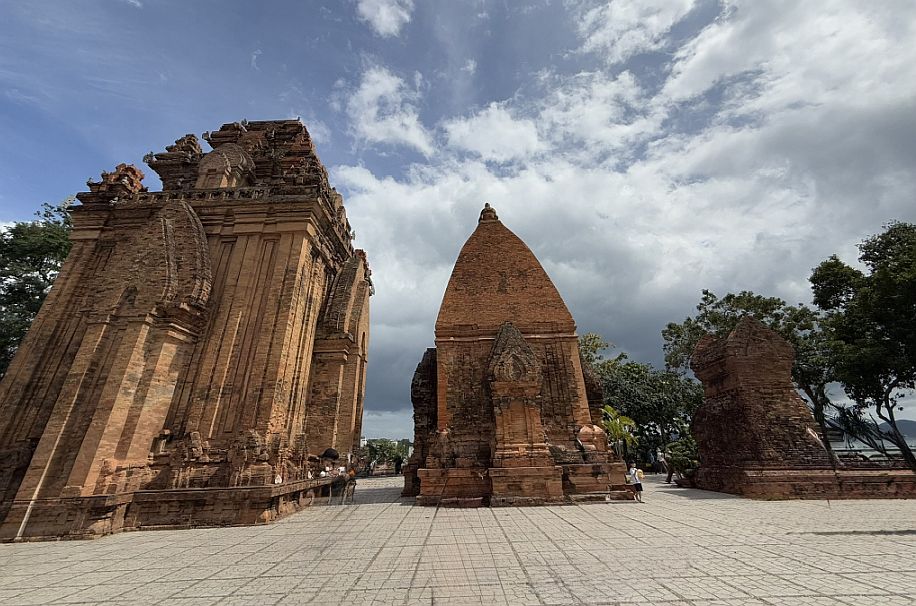
Walking through the courtyard felt like stepping into an open-air museum. Each tower had its own unique character, yet together they formed a remarkable testament to the engineering and artistic skill of the Cham civilization.

Surrounded by gardens, centuries-old brickwork, and the scent of incense drifting through the air, it was easy to imagine pilgrims making this same journey more than a thousand years ago.
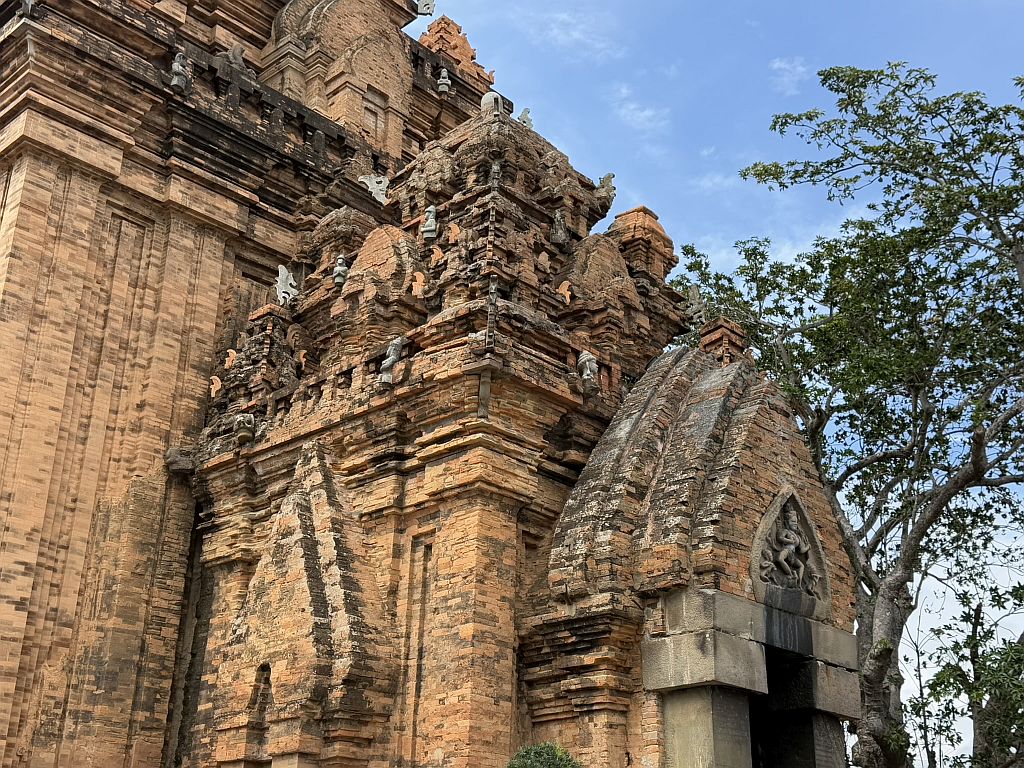
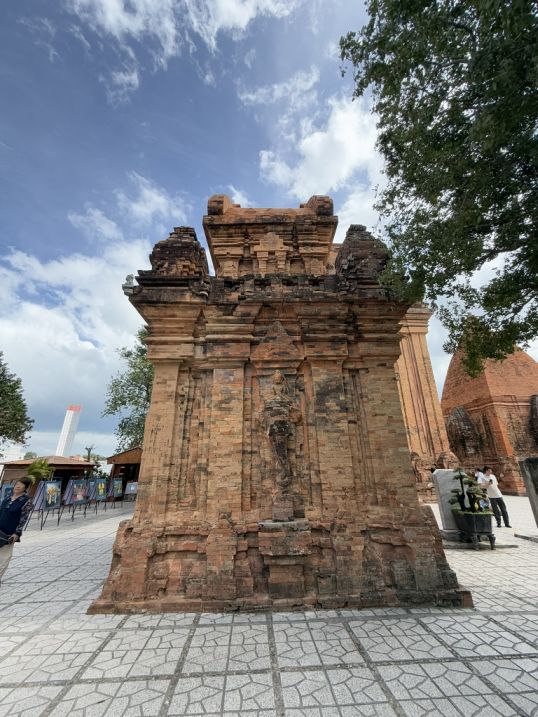
As I wandered through the courtyard, I took a few moments to admire the main tower up close. From a distance, its reddish-brown bricks appear almost uniform, but standing just a few feet away, the effects of more than a thousand years of history become unmistakable.
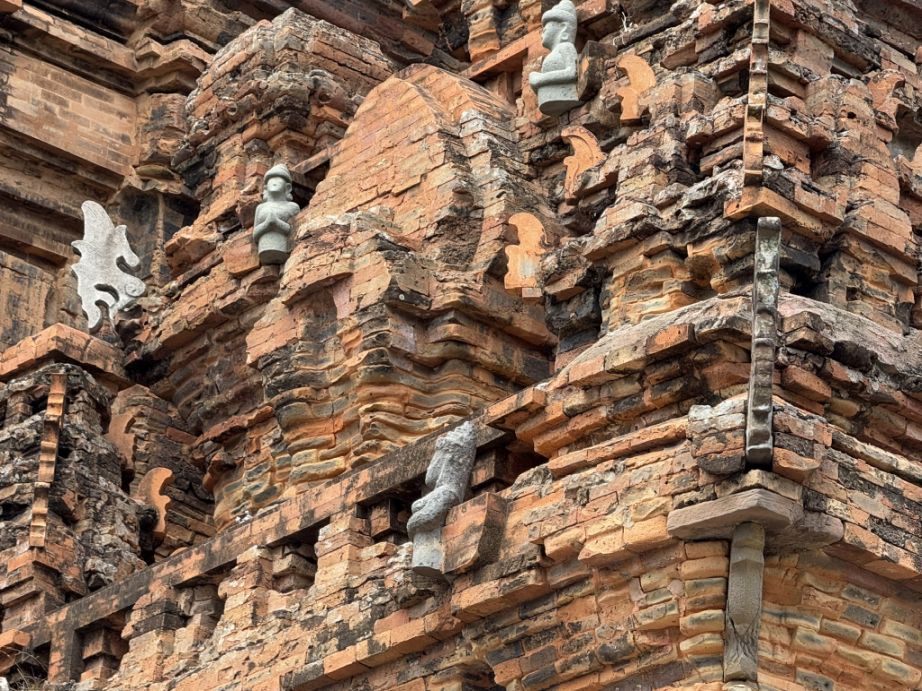
Some of the bricks have worn away with time, revealing the tower's remarkable age and the countless seasons of tropical sun, rain, and wind it has endured. Yet despite the weathering, the structure remains incredibly solid, a testament to the extraordinary craftsmanship of the Cham builders. You can also see graceful stone statue of Po Nagar, the revered Mother Goddess of the Cham people. According to Cham tradition, she was the creator of the earth and taught people how to cultivate rice, weave cloth, and live in harmony with nature. Her image appears throughout the temple complex, a reminder that this sacred site has been dedicated to her for more than a thousand years.
 |
 |
Our guide then led us into the Northwest Tower, where visitors are welcome to pause for a quiet prayer before continuing their tour. Before entering the Northwest Tower, I noticed a remarkable red-brick statue of Po Nagar standing just outside the entrance. Time has taken its toll over the centuries, and many of the statue's finer details have been softened by weather and age. Even so, the figure still radiates a quiet dignity. Po Nagar is depicted seated atop an elephant's head, a powerful symbol in both Cham and Hindu traditions representing strength, wisdom, and royal authority. Although worn by more than a thousand years of tropical sun, rain, and wind, the statue remains a beautiful reminder of the devotion the Cham people held for their beloved Mother Goddess.
 |
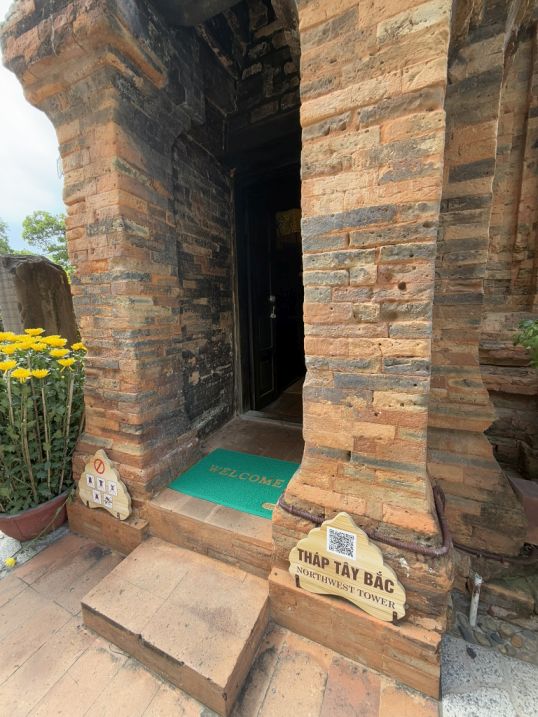 |
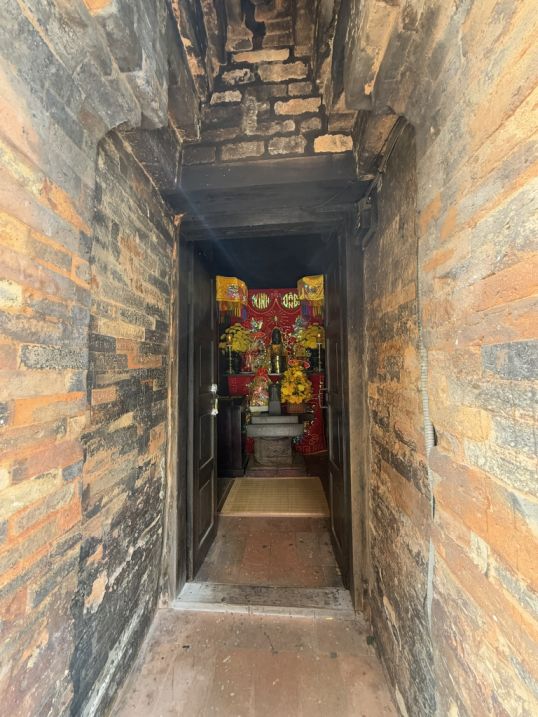
Like the other towers, the entrance was low and narrow, encouraging everyone to bow their heads slightly as they entered this sacred space.
 |
 |
Inside, I was surprised by how much natural light filled the sanctuary. Sunlight streamed through the doorway and openings in the brick tower, illuminating the warm red walls and creating a peaceful, welcoming atmosphere. At the center stood a beautifully decorated altar, adorned with fresh flowers, fruit, and offerings left by worshippers seeking blessings for health, happiness, and prosperity. The gentle scent of incense drifted through the air as visitors quietly bowed their heads, folded their hands in prayer, or simply took a moment to reflect.

Before leaving the temple complex, I spent a few minutes studying a fascinating display of historic photographs that showed what Po Nagar looked like before restoration efforts began. Seeing the "then and now" images brought the site's history to life in a way that words alone could not.
One series of photographs depicted the Mandapa, or ceremonial hall, in earlier times. The weathered stone columns that we had seen on the lower terrace stood alone, partially hidden by overgrown vegetation, giving a glimpse of how nature had gradually reclaimed the site.
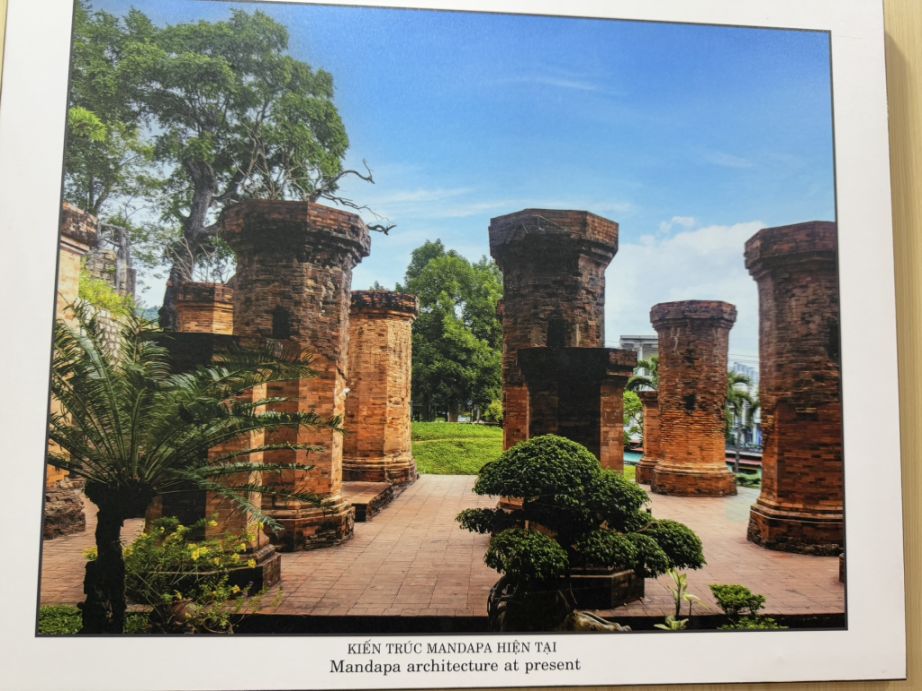
Today, the area has been carefully restored and landscaped, allowing visitors to better imagine the grandeur of the original ceremonial courtyard.

Another set of photos compared the Northern Tower before and after restoration. The older image revealed a structure worn by centuries of exposure, while the modern photograph showed the same tower carefully preserved, its distinctive Cham architecture once again standing proudly against the sky.

This is how the Northern Tower looks now.
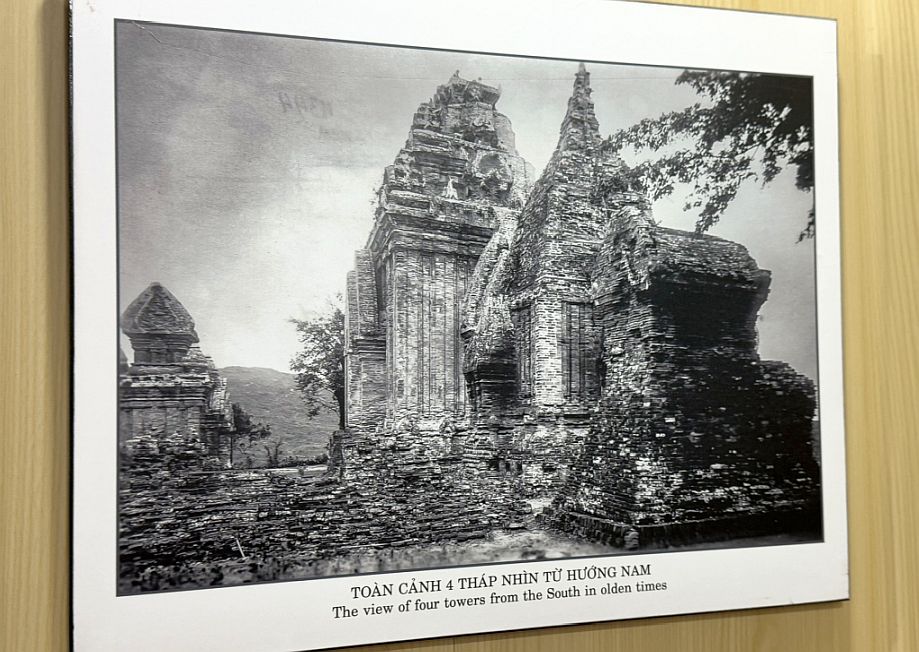
Perhaps the most striking image was a panoramic view of the four surviving towers photographed from the south many decades ago. The black-and-white photograph captured a much quieter landscape, long before modern Nha Trang developed around the temple.
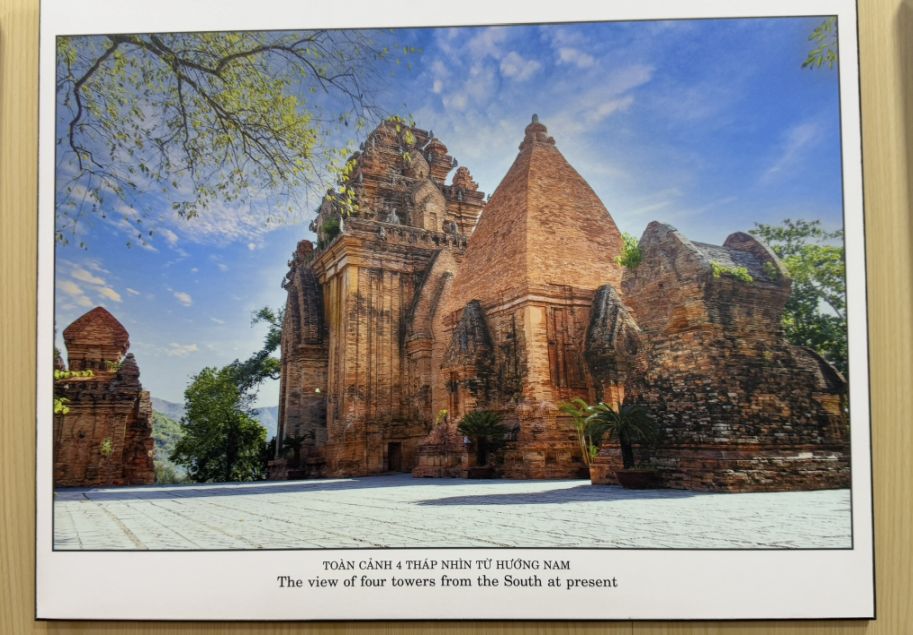
Comparing it with the present-day view reminded me that while the city has grown dramatically over the years, the Po Nagar Towers have remained steadfast, watching over the Cái River for more than a thousand years.
 |
 |
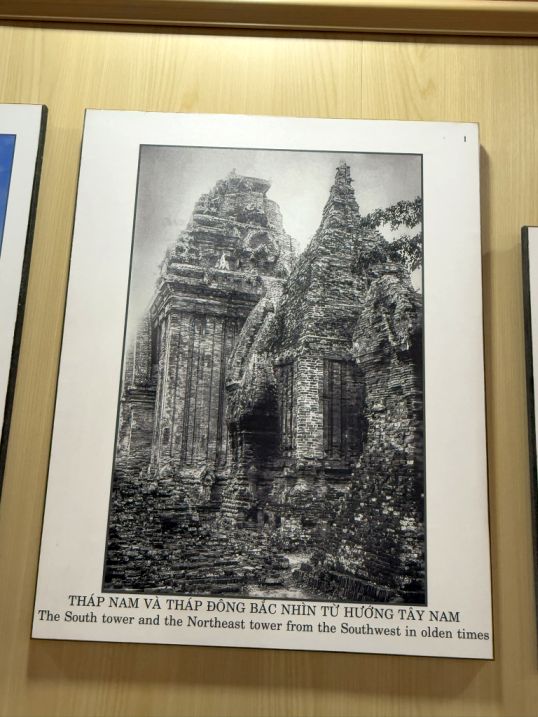
The display continued with several more fascinating historical photographs. One showed the South Tower, while another captured the Northeast Tower viewed from the southwest, both taken many decades ago. In these old photographs, the towers appeared weathered and isolated, surrounded by open ground and dense vegetation. There were no crowds of visitors, no landscaped gardens—just the ancient Cham monuments standing quietly against the sky, much as they had for centuries.

The final photograph was perhaps the most impressive. It was a modern bird's-eye view of the entire Po Nagar complex, revealing a perspective we couldn't appreciate from the ground. From above, the four surviving towers stood proudly atop the hill overlooking the Cái River. The river curved gracefully around the temple grounds, dotted with colorful fishing boats, while across the water the modern city of Nha Trang stretched toward the mountains. High-rise buildings lined the opposite riverbank, creating a striking contrast between the thousand-year-old Cham sanctuary and the vibrant city that has grown around it.
 |
 |
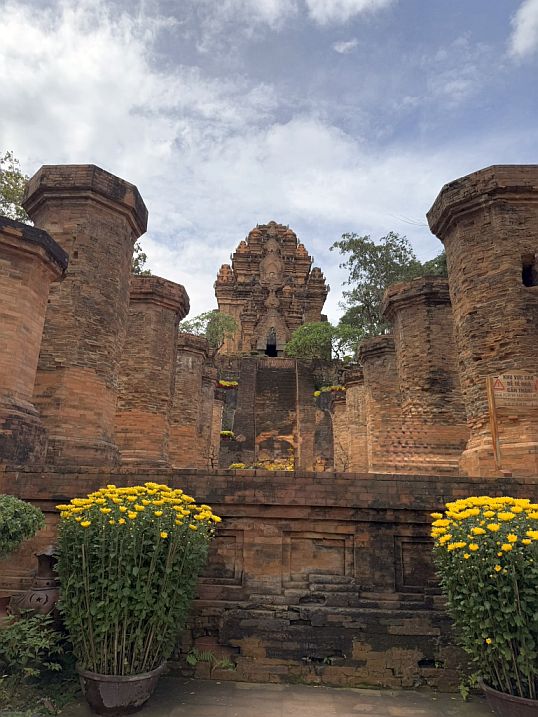
Before leaving the temple grounds, we paused one last time to admire the Tháp Bà Po Nagar complex in its entirety. From this vantage point, the majestic Central Tower dominated the skyline, its beautifully weathered red bricks glowing in the afternoon sun. Flanking the towers were the ancient stone columns, the remaining pillars of the old Mandapa, or ceremonial hall, standing as silent reminders of the grand processions and religious ceremonies that once took place here.

Framed by manicured gardens, flowering plants, and the clear blue sky, it was one of the most picturesque views of the entire complex.
As we slowly walked toward the exit, I took one last look back at the towers. It was hard to believe that these remarkable structures have stood here for more than a thousand years, surviving wars, tropical storms, and the passage of time. Our visit to Po Nagar had been much more than a stop to admire ancient architecture. It was a journey through the history of the Champa Kingdom, an opportunity to experience a living place of worship, and a chance to appreciate one of Vietnam's most enduring cultural treasures. Leaving the temple, I couldn't help but feel grateful that this extraordinary landmark has been so carefully preserved, allowing visitors from around the world to experience its beauty and rich heritage for generations to come.
NEXT... Day 2-Christ the King Cathedral