3 weeks in Bali, Indonesia- 5/28- 6/15/2024
|
Uluwatu |
Canggu &
surroundings |
Ubud & surroundings |
Sidemen/Amed |
Nusa Penida |
Day 12- Besakih Temple-6/7/2024
Besakih Temple, often called the Mother Temple of Bali is the oldest, largest, and most sacred temple complex in Bali, and its history stretches back more than a thousand years. The temple sits on the southwestern slopes of Mount Agung, the most sacred mountain in Bali. Balinese tradition teaches that the earliest foundations of Besakih date to around the 8th century, when Hindu priests first established shrines on the mountain. Over the centuries, different Balinese kingdoms expanded the complex, adding temples, courtyards, gates, and the tall multi-tiered meru towers you see today.
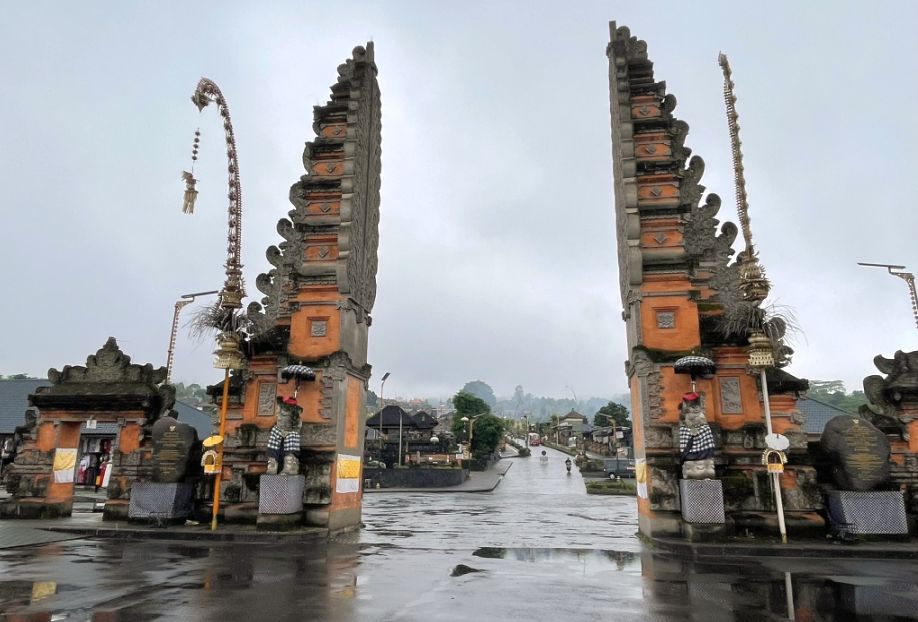
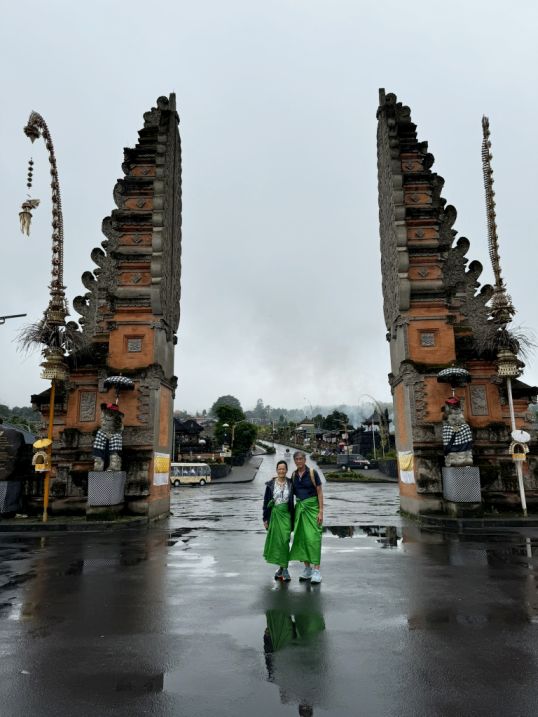
When we arrived, the first thing that stands out is the huge split gate, the candi bentar. Its tall, symmetrical halves rise sharply into the sky, and the stone has a rich orange–brown color from the volcanic material and age. In the rain, the color looks deeper and more dramatic, almost glowing against the misty background. It feels like a grand entrance to something ancient and important.
 |
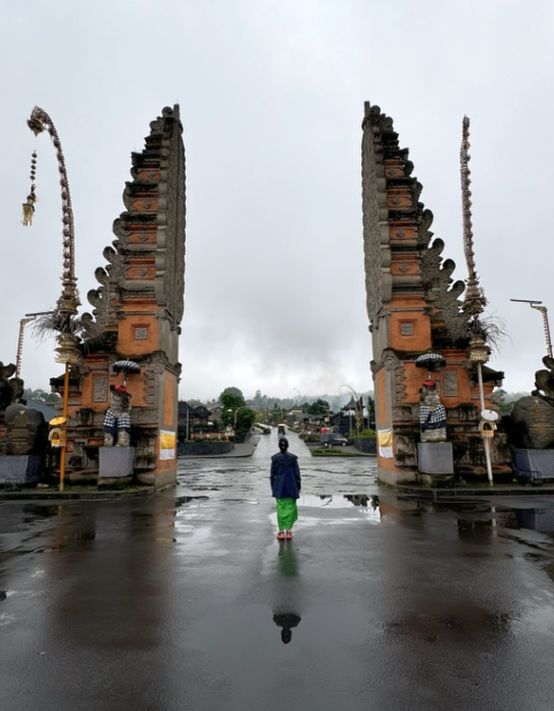 |
This gate is really grandiose.
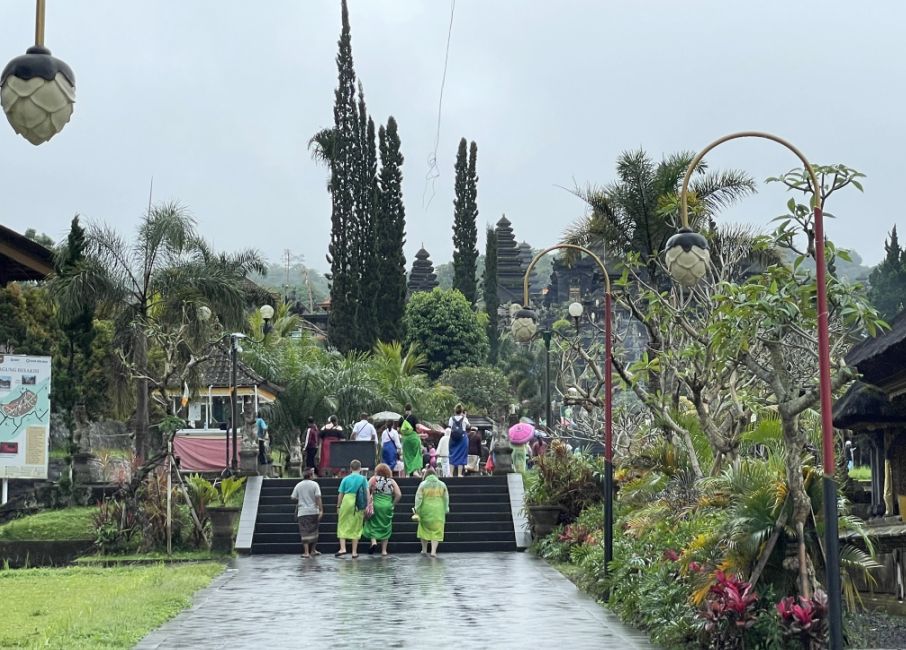
Walking inside Besakih feels like entering a sacred hillside park, where nature and temple architecture blend together beautifully. After passing through the split gate, the space opens up into wide stone paths and terraces layered up the slope.
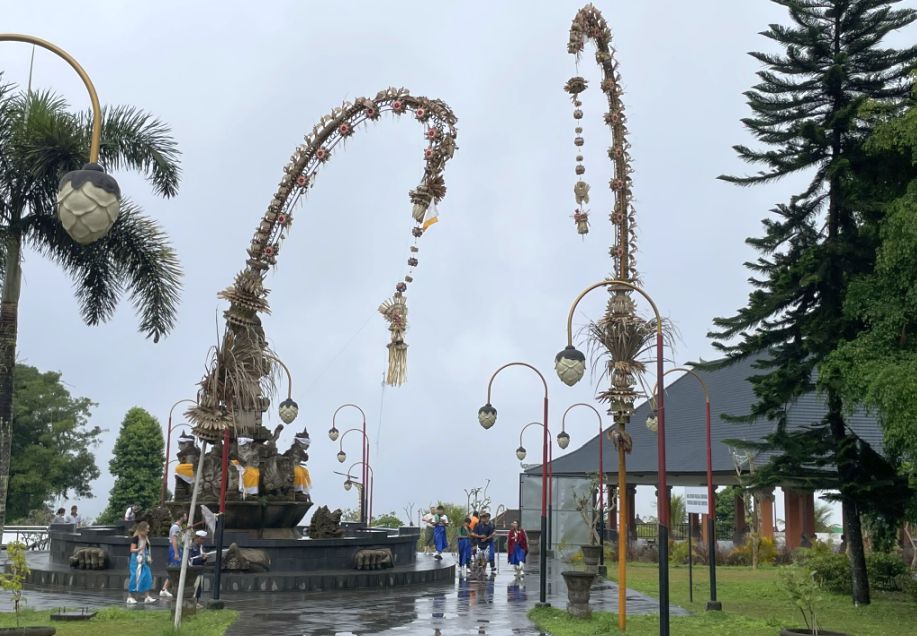
Tall decorative bamboo poles, called penjor. They arch gracefully over the walkway, decorated with woven palm leaves and ornaments. Even on a cloudy, rainy day, they add elegance and movement to the path, swaying gently in the breeze as if guiding you upward.
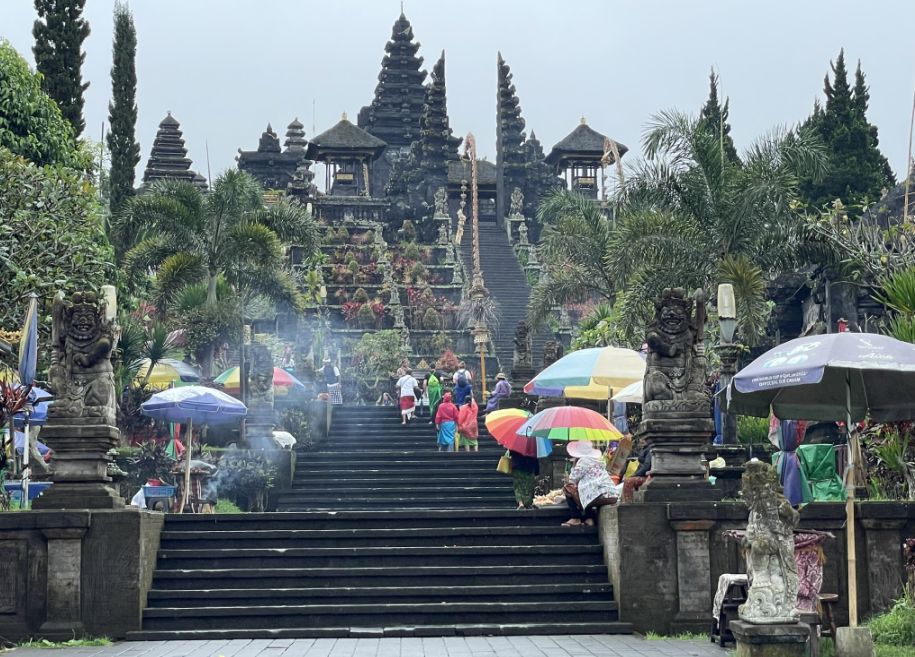
Besakih is actually not just one temple, it’s a complex of more than 80 temples, with Pura Penataran Agung being the main and most significant. This central temple is dedicated to the Hindu trinity and symbolizes the spiritual center of Bali, and is the largest and most important temple within the Besakih complex.
It’s the grand, symbolic entrance that leads worshippers and visitors up toward the upper courtyards and shrines, and on a misty or cloudy day it looks especially dramatic.
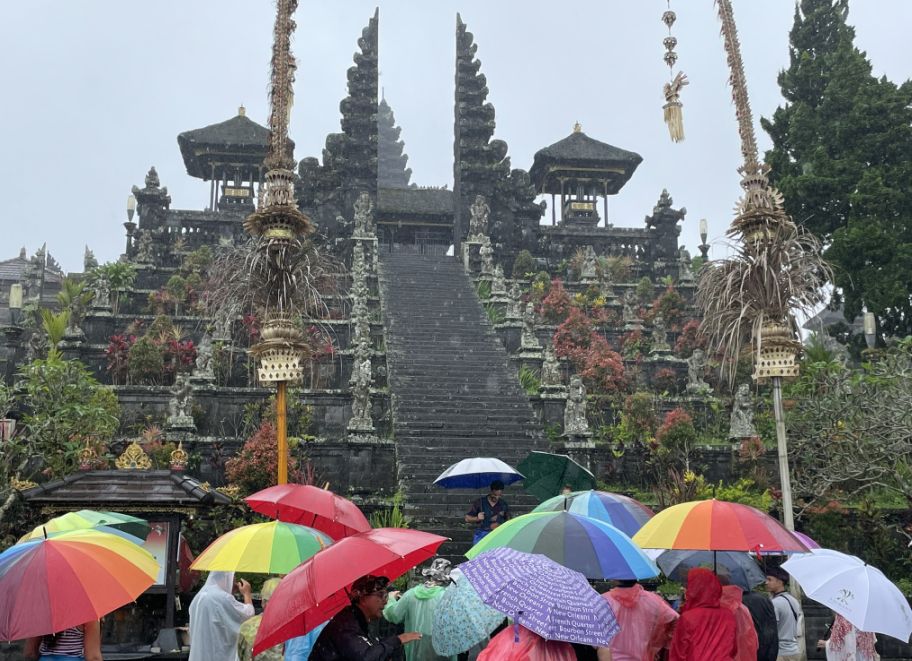
It is so pretty with all the colorful umbrellas.
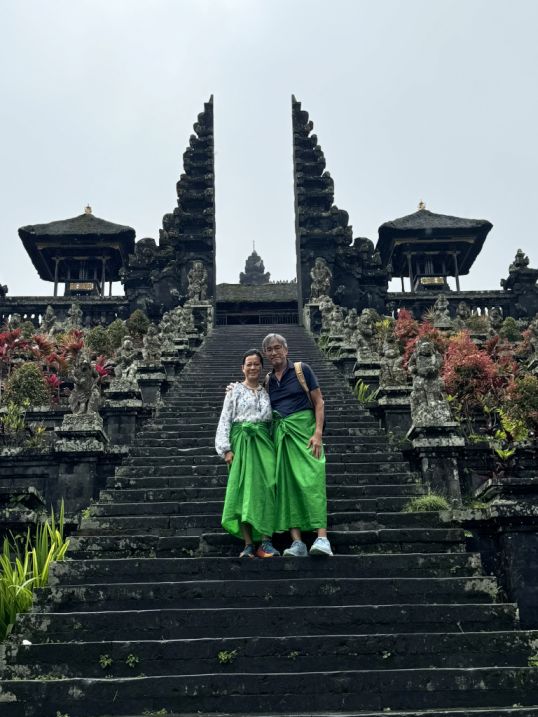
The long stairway leading up to the dramatic candi bentar (split gate) is one of the most iconic spots in the entire temple, which is why so many people line up to take photos there. This staircase is the ceremonial approach to Penataran Agung and is often the image people associate with Besakih Temple.
 |
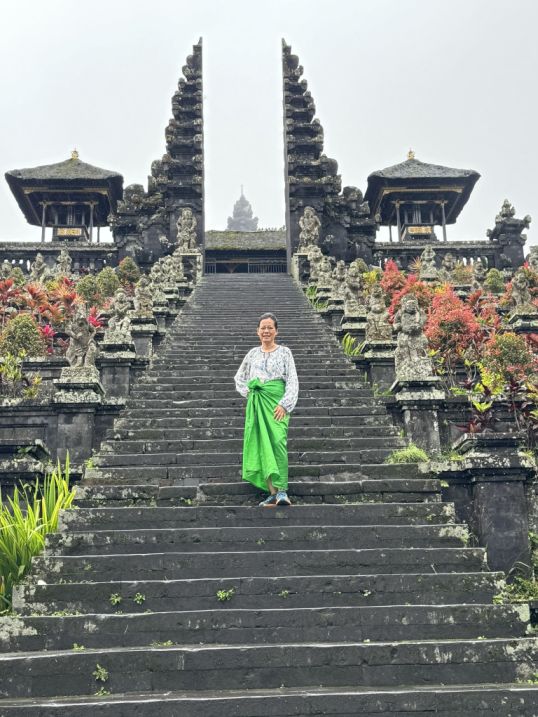 |
From this vantage point you can see multiple shrines layered up the hillside, each with its own purpose and ritual area. The view feels both grand and intimate, and with the rain thickening the air, it’s easy to feel the deep spiritual atmosphere that makes Besakih so revered.
It’s the grand, symbolic entrance that leads worshippers and visitors up toward the upper courtyards and shrines, and on a misty or cloudy day it looks especially dramatic.
 |
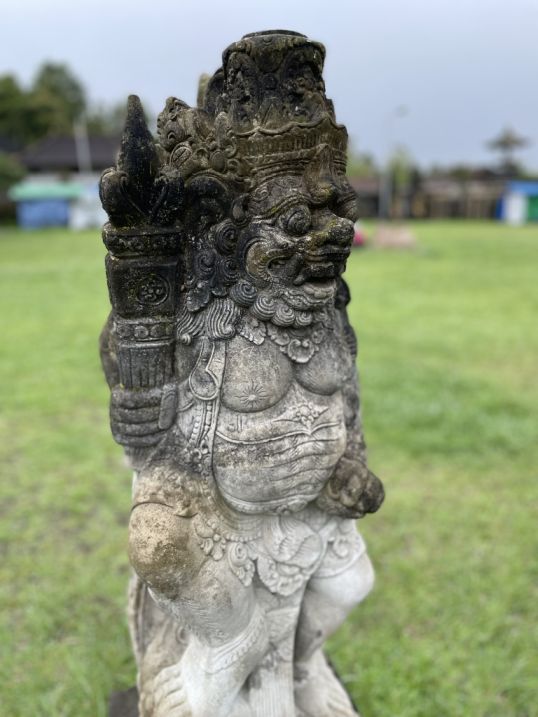 |
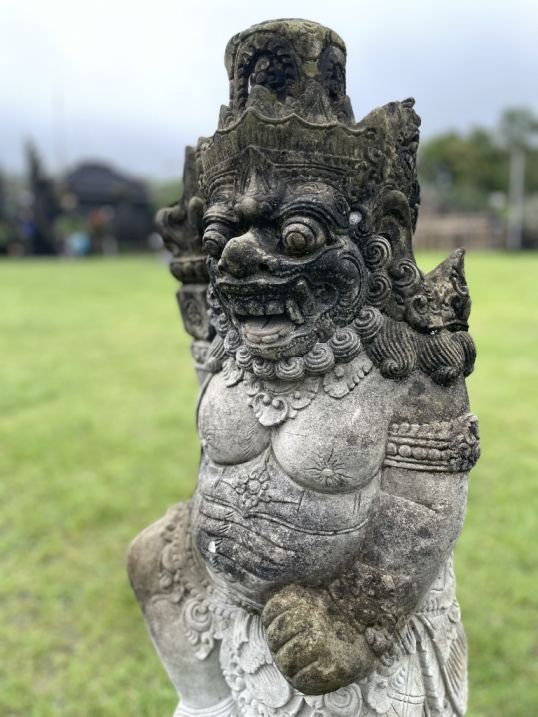
Guardians statues at the foot of the split gate.
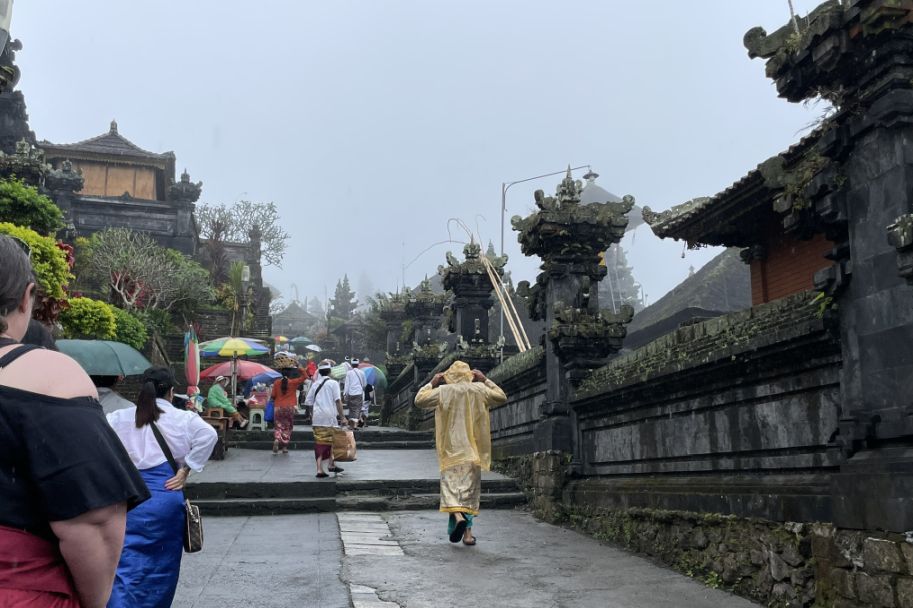
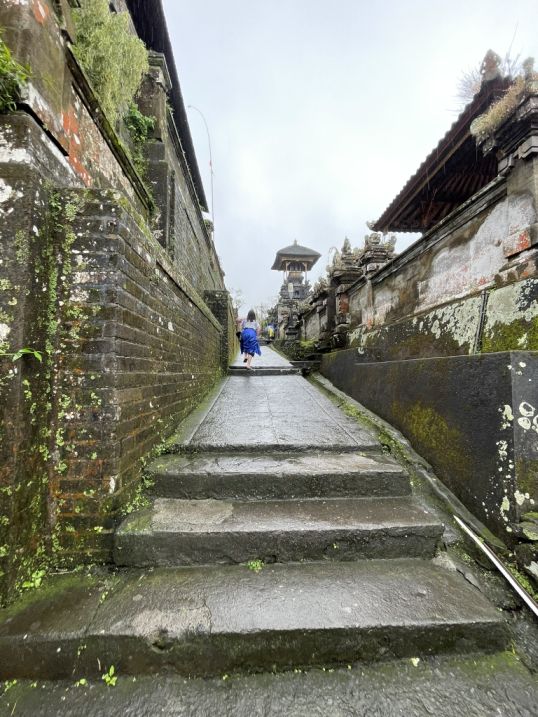
After leaving the main stairway, we continued along a quiet path that feels more local and authentic. The walkway runs beside a series of tall black stone walls, their surfaces darkened by age and streaked slightly darker from the rain. The walls create a sense of walking through the hidden corridors of the temple complex, guiding us deeper into the spiritual heart of Besakih.
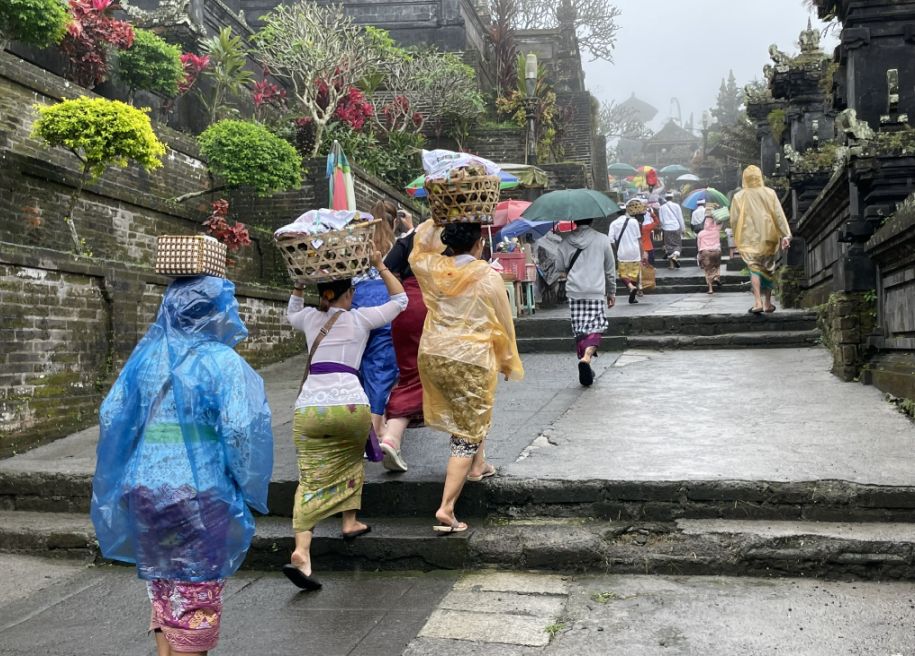
As we moved along, we noticed a group of local women carrying baskets on their heads. The baskets are filled with offerings, fruit, flowers, incense, and colorful woven trays. Watching them walk gracefully in the rain, balanced and steady, adds a beautiful cultural moment to the visit. It’s a reminder that Besakih isn’t just a historic site, it’s a living temple where ceremonies continue every day.
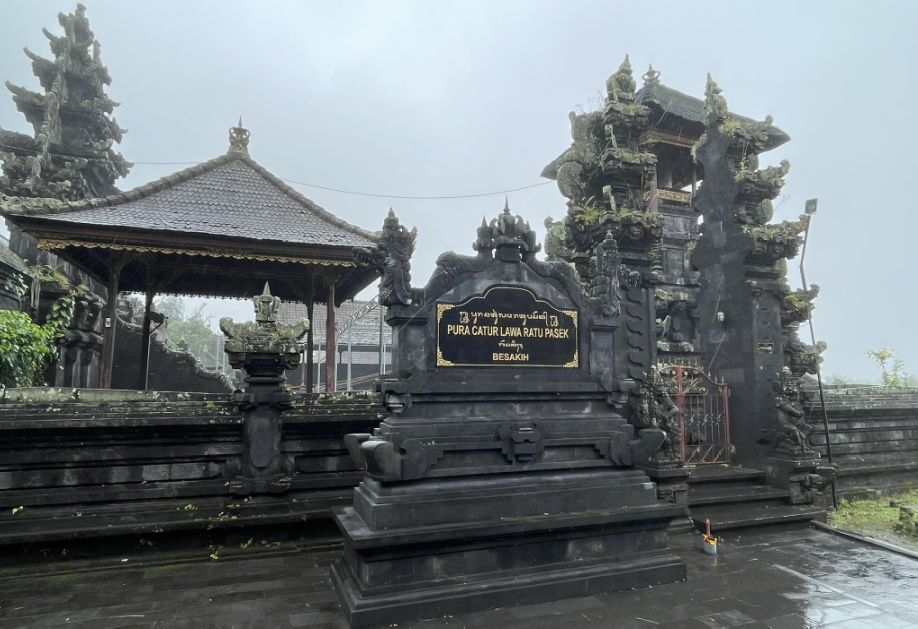
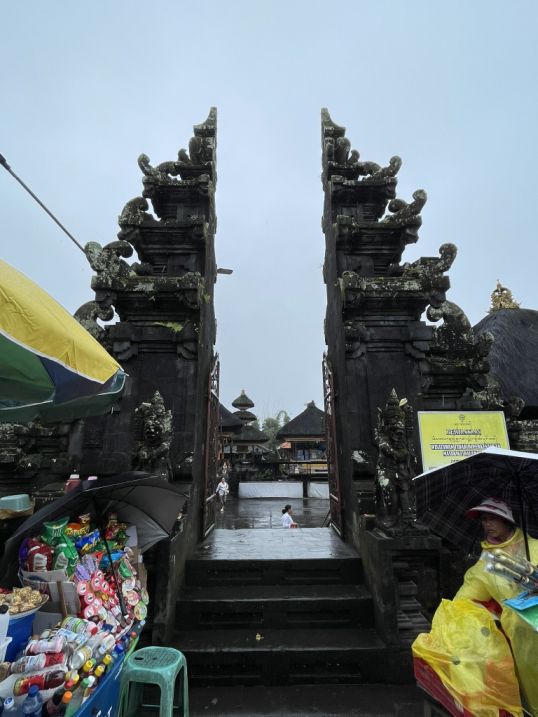
A little farther ahead, we arrived at the entrance of Pura Catur Lawa Ratu Pasek, one of the many family and clan temples within the Besakih complex. We paused there for a moment, taking in the stone gate and the quiet courtyard inside. The temple has a calm, intimate feel compared to the grand central stairway, moss-covered shrines, carved details, and the sound of rain falling softly around the sacred space.
 |
 |
We pause there for a moment, taking in the stone gate and the quiet courtyard inside. The temple has a calm, intimate feel compared to the grand central stairway, moss-covered shrines, carved details, and the sound of rain falling softly around the sacred space.
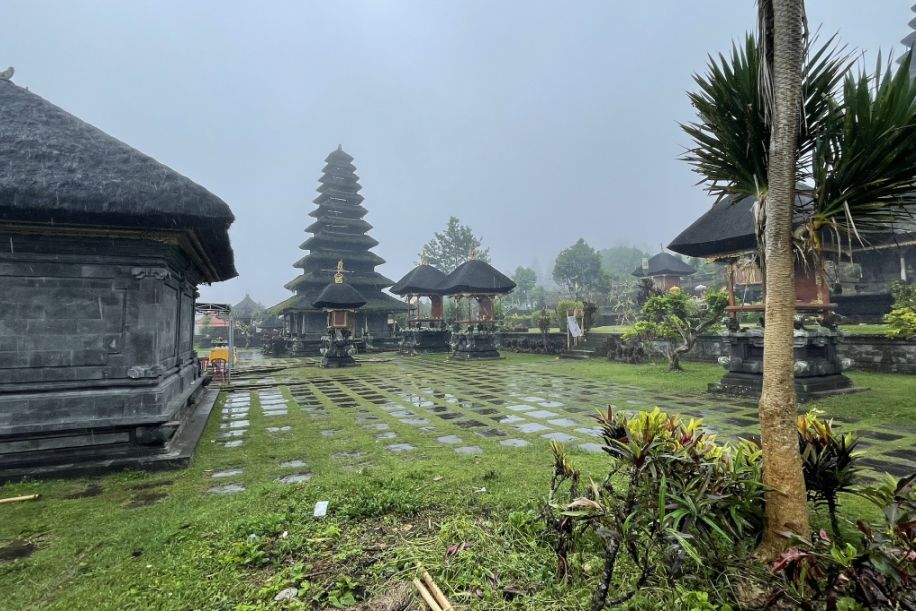
Eventually, the path opens up into one of the most impressive areas of Besakih, a large courtyard that feels expansive. After the narrow walkways and moss-covered walls, stepping into this open space is almost breathtaking.
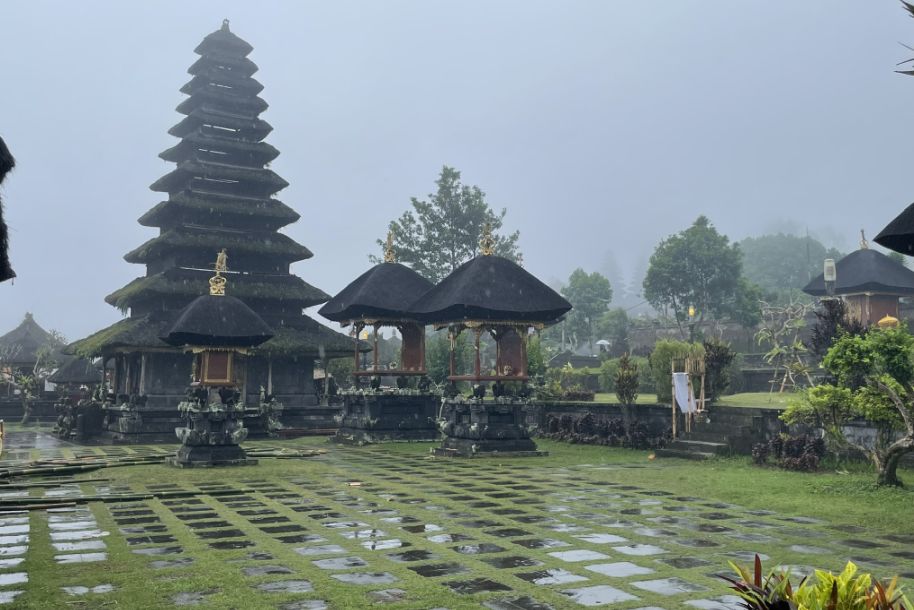
In the center and along the sides, you see the tall meru towers, their thatched roofs stacked upward like dark, elegant pagodas.
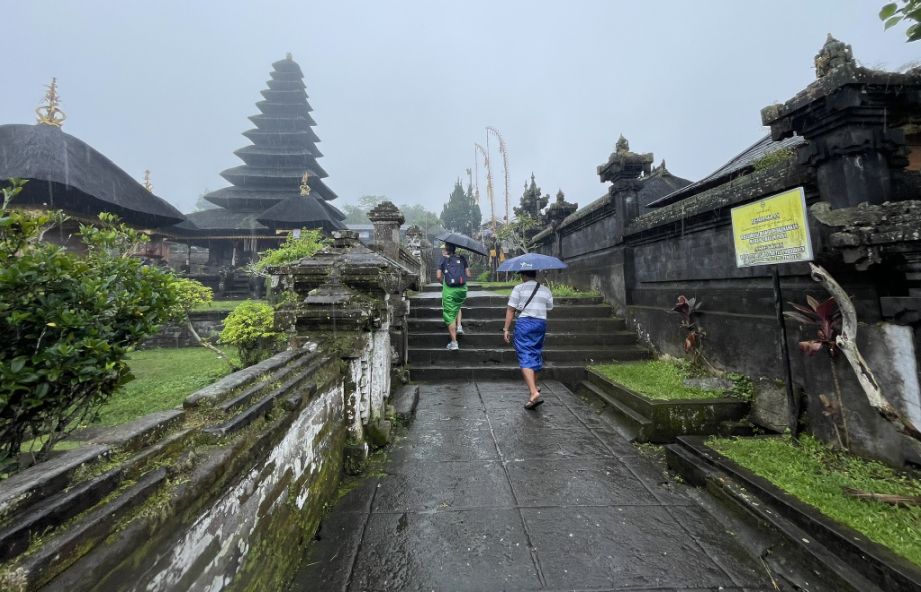
We continued the walk inside the complex.
 |
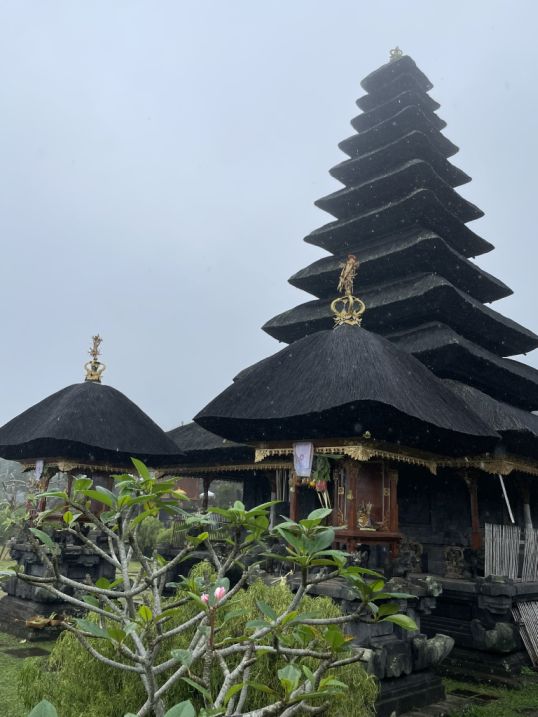 |
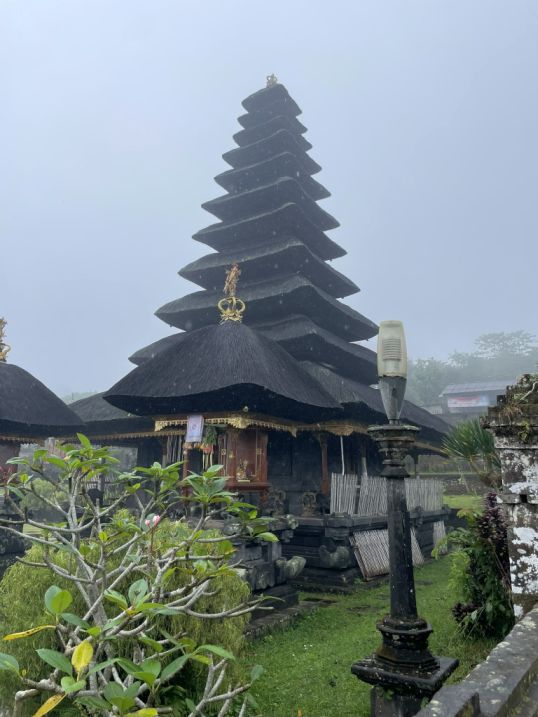
One of them rises with 11 tiers, marking it as a shrine dedicated to a major deity, these high-tier meru are rare and symbolize the highest spiritual importance in Balinese Hinduism. Against the cloudy sky, the tiers look almost like steps reaching into the mist.
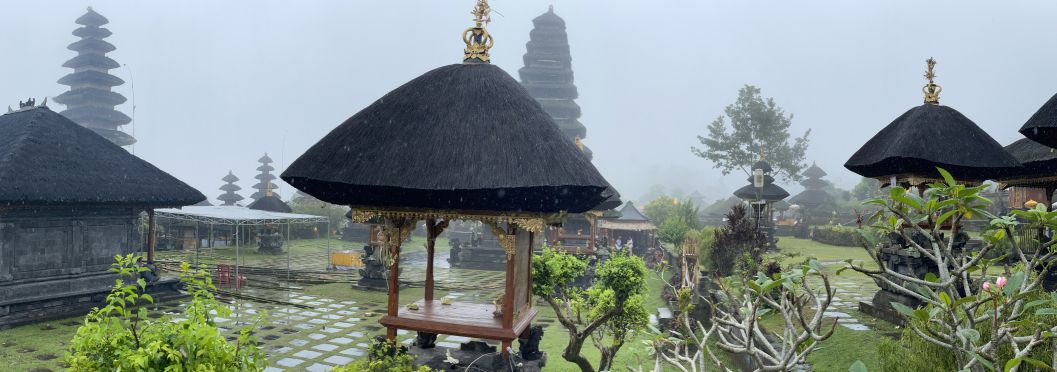
Surrounding the tall meru are many smaller shrines with single-tier thatched roofs. These simpler structures create a beautiful contrast to the towering 11-tier meru, filling the courtyard with a rhythm of rooftops and carved wooden posts. The rain makes the thatch darker and the stone bases glisten, giving the whole area a moody, atmospheric glow.
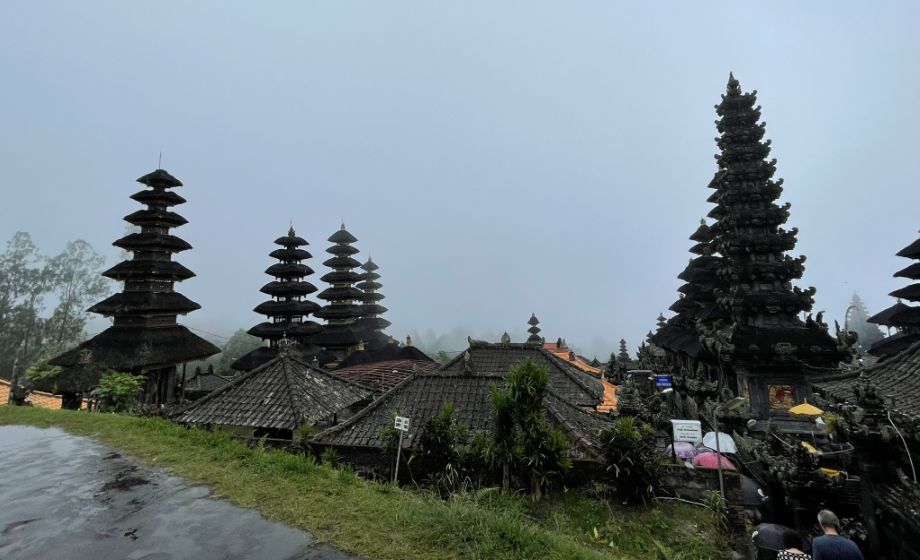
From the courtyard, we continued up a gently sloping road, and the higher you climbed, the more the view opened up. Looking down, we could see the rooftops of several temple buildings, dark, textured, and glistening from the rain, arranged neatly below you like a small sacred village. Above them, the tall meru towers rose proudly, their tiered roofs stacked against the cloudy sky, creating that iconic silhouette Besakih is known for.
 |
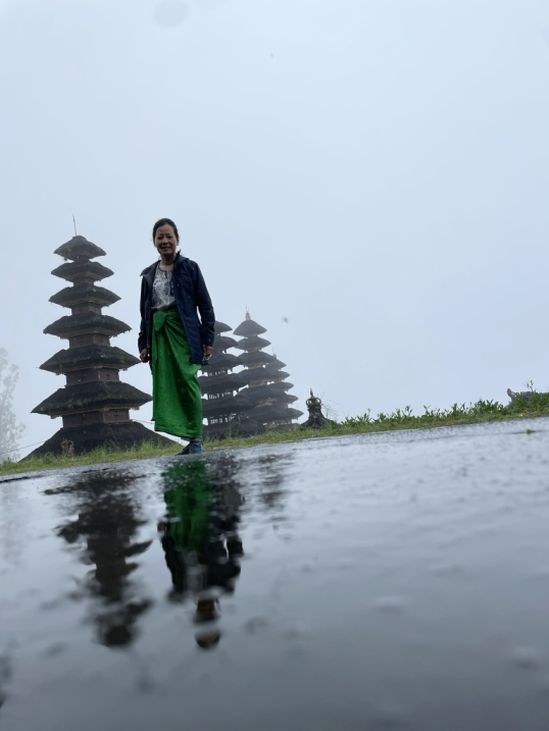 |
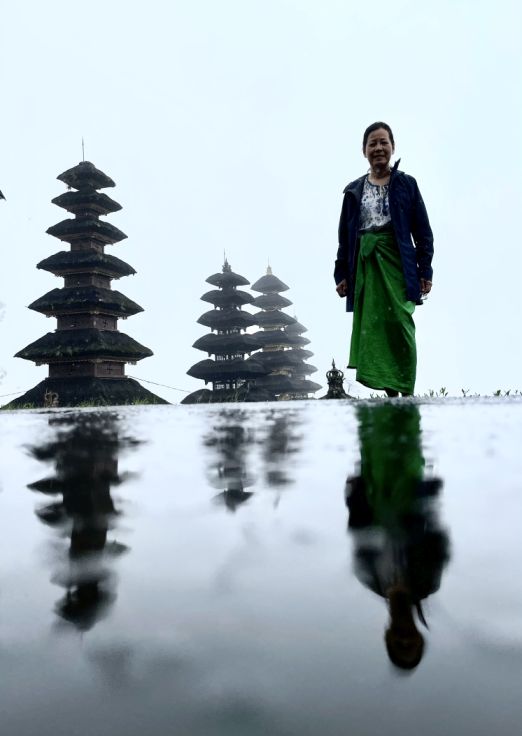
Standing on the wet road, the scene became even more beautiful. The rain had left a glossy sheen on the pavement, turning it into a natural mirror. When I posed for a photo, the meru towers appeared not only behind me, but also perfectly reflected in the thin layer of water at my feet. It created a dreamy, symmetrical image, I am in the foreground with the sacred towers rising behind and beneath me. The misty air, the soft rain, and the shimmering reflection made it one of those unexpectedly magical travel moments.
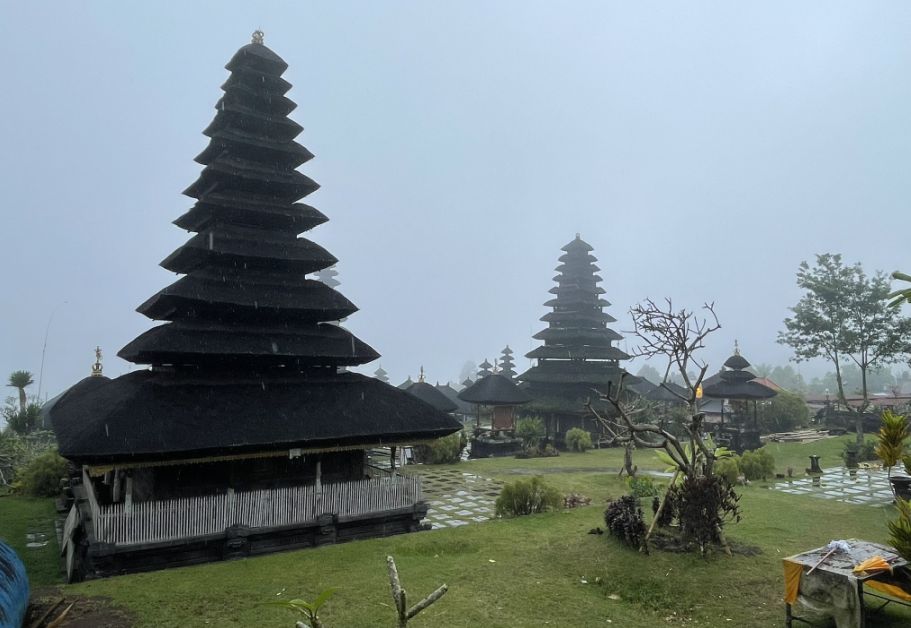
View of two Meru towers in the courtyard.
 |
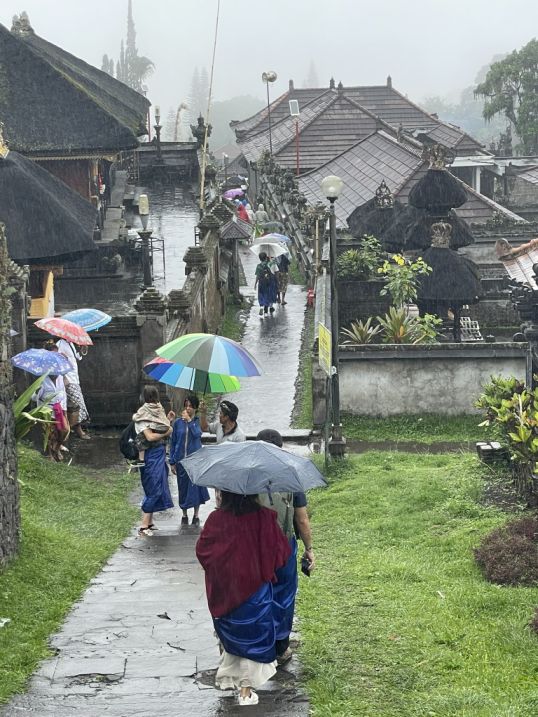 |
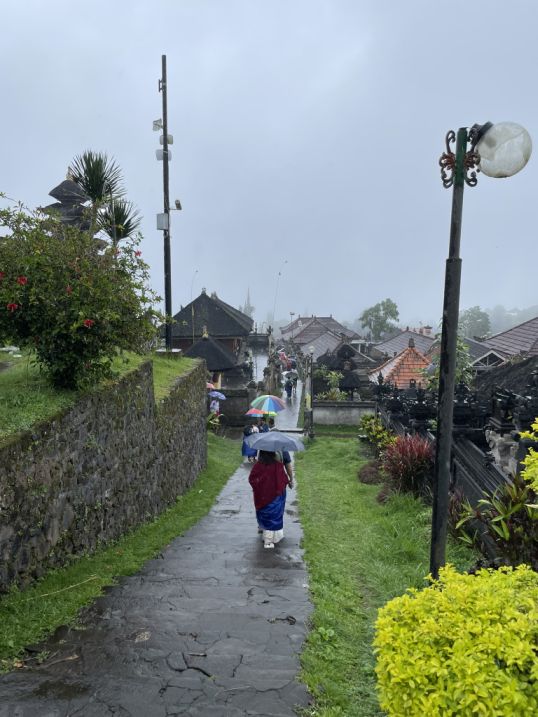
As we continued the walking, the pathway led us toward what feels like a small village tucked within the temple grounds. The rain adds a quiet, peaceful rhythm to the scene, and everywhere you look you see people moving slowly with their umbrellas, soft colors, gentle footsteps, and the sound of raindrops tapping on fabric. It gives the whole walk a serene, almost cinematic feeling.
 |
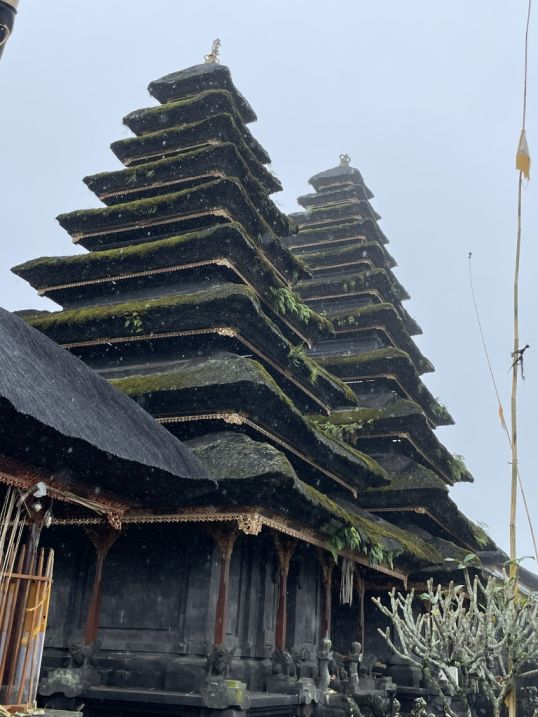 |
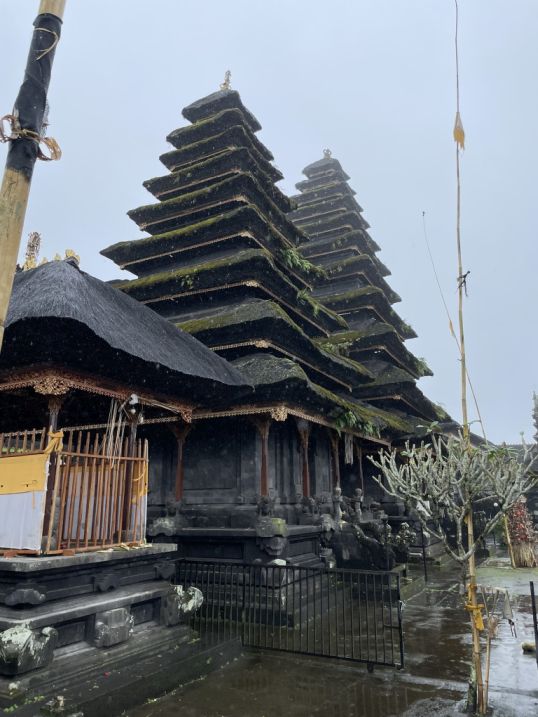
The path brought us incredibly close to the tall meru towers, so close you can see the details of the carved wooden beams and the layered thatched roofs. Standing beneath them, you really feel their height, the tiers rising one above another, dark and elegant against the grey sky. In the rain, the thatch turns almost black, making the shapes even sharper and more striking.
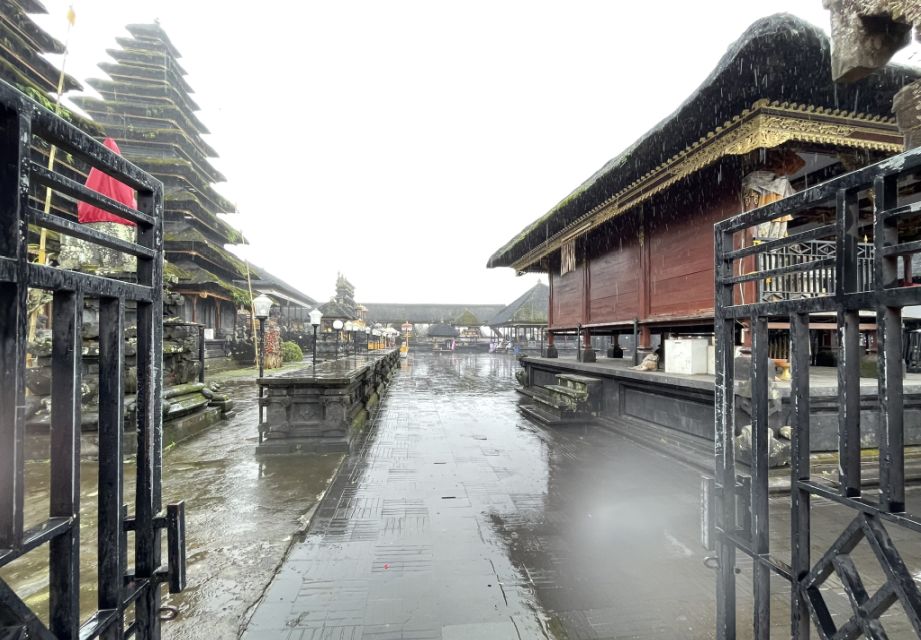
We passed by a large courtyard.
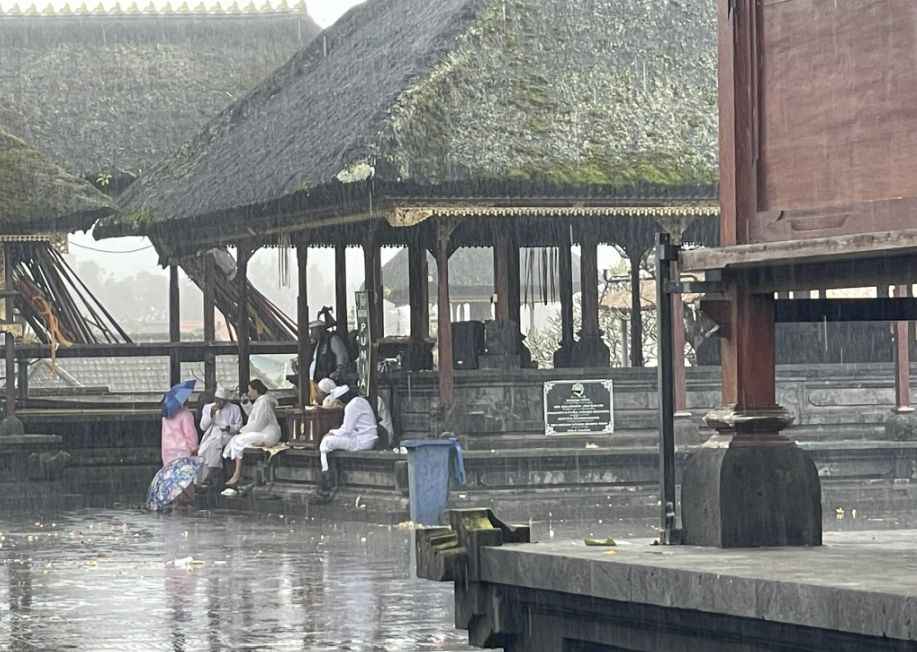
It was really raining so people are taking refuge.
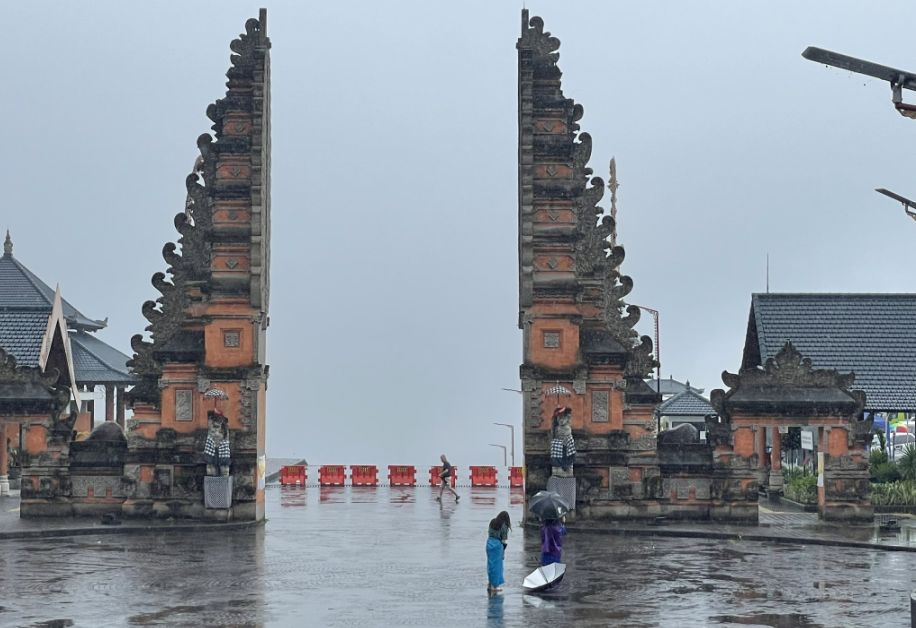
We are now leaving the temple and exiting the main gate.
 |
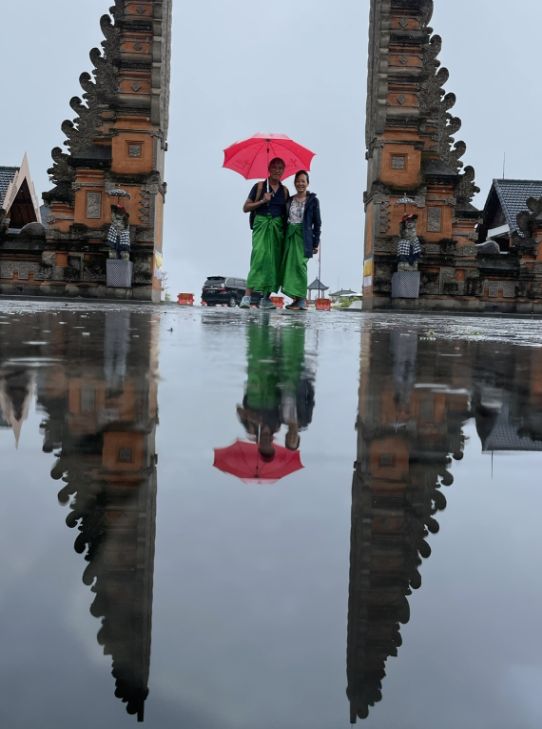 |
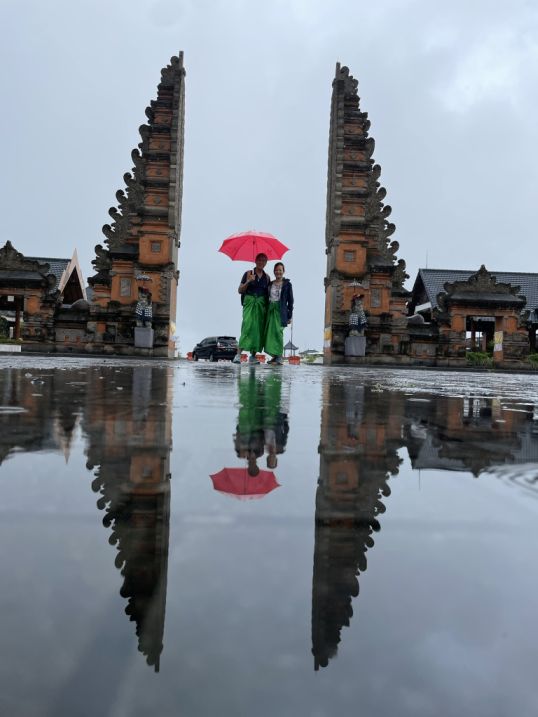
One last picture with the split gate and the perfect reflection of the water on the pavement.
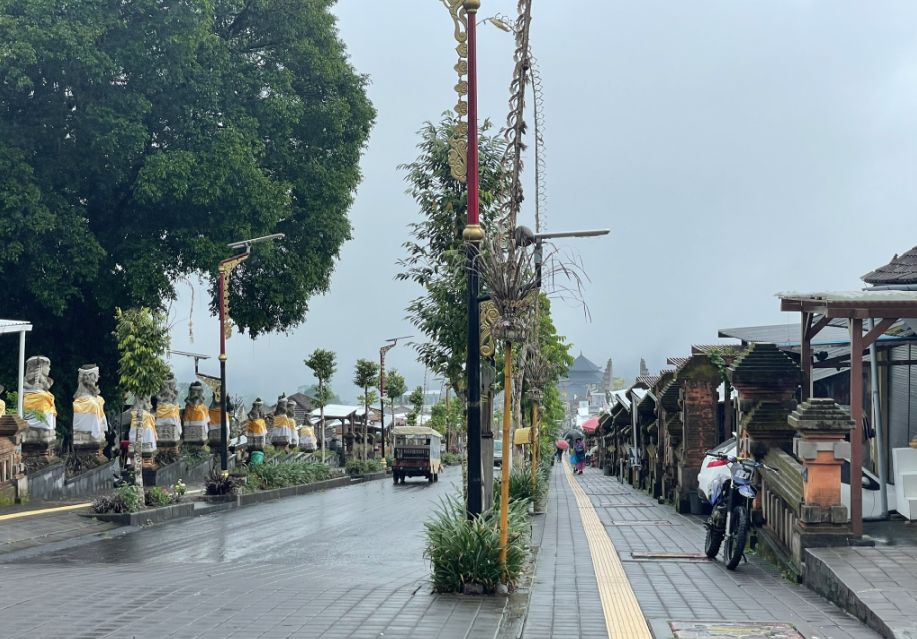
As we left the Besakih complex, the atmosphere shifts from sacred courtyards to a quieter village street. We walked briefly along the main road, where a row of small stalls normally bustling with vendors sits almost completely empty because of the rain.
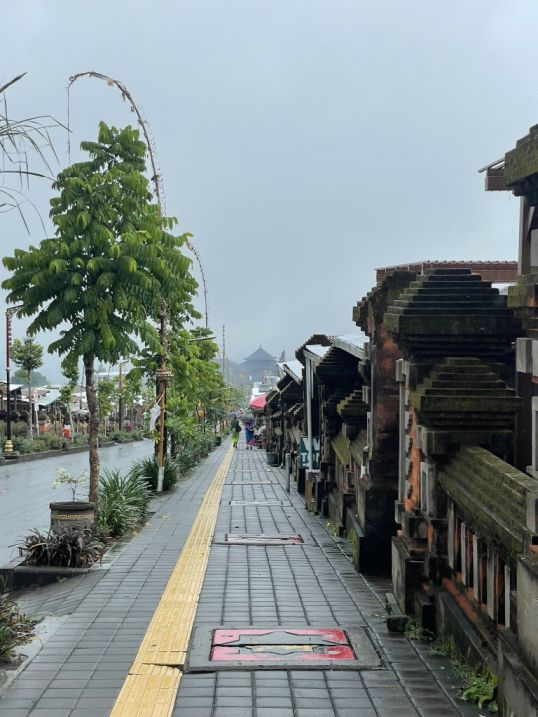 |
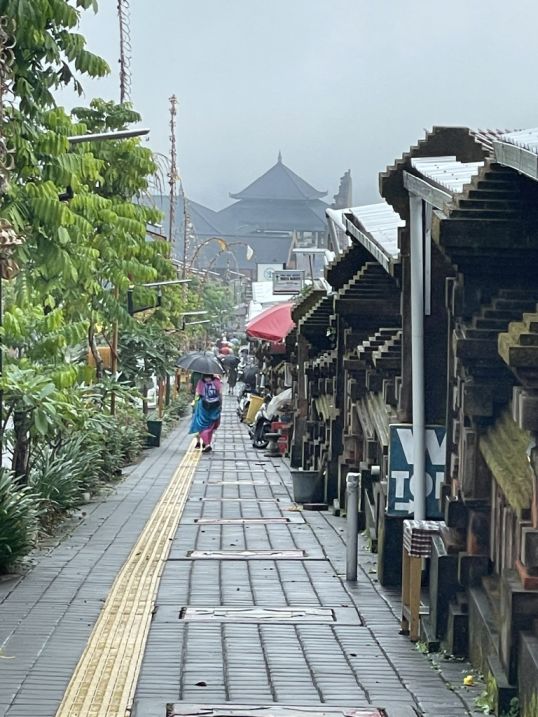 |
The whole street was totally quiet, as if the whole street is taking a break from the usual activity.
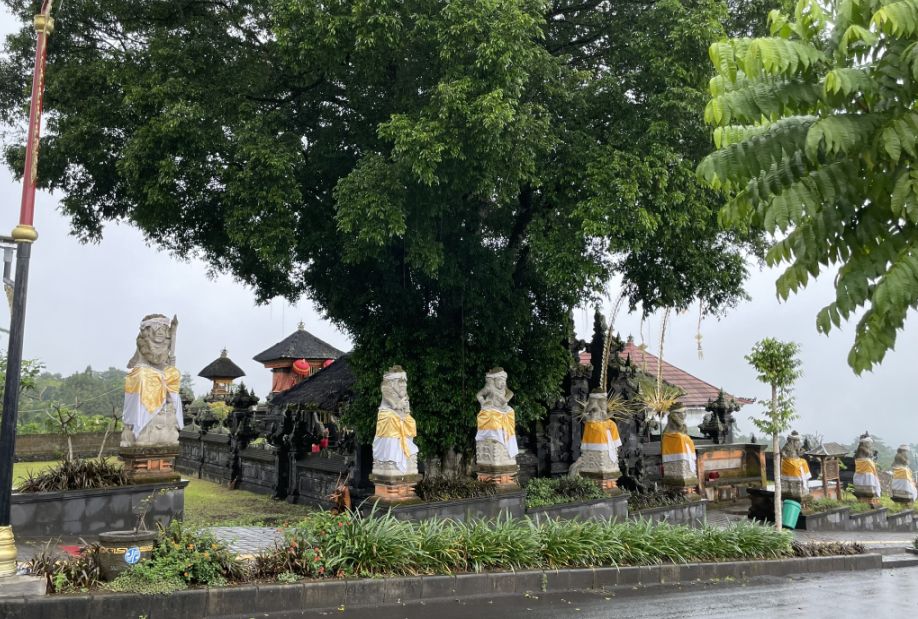
Across the road is Pura Bangun Sakti, another temple with its own presence and charm. Even from the outside, it stands out. At the front entrance are groups of statues wrapped in orange and white cloth, the traditional kain poleng used to honor and protect sacred objects. The bright colors glow softly against the grey, rainy backdrop, giving the temple a warm and lively energy despite the weather.
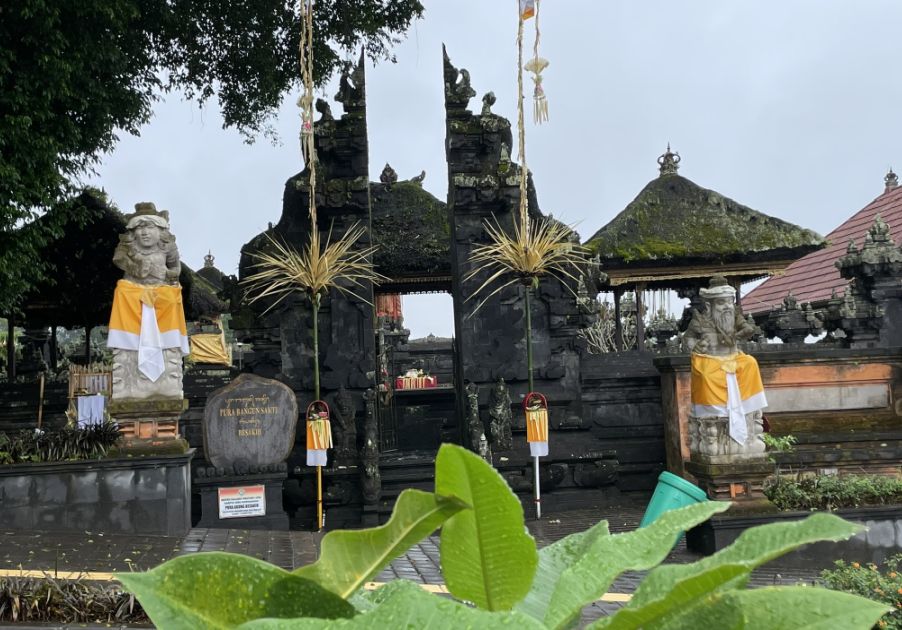
The rain, the empty stalls, and the brightly wrapped statues all create a peaceful closing moment to our visit, a small, quiet scene that feels authentically Balinese as you make your way onward.
NEXT... Day 13-Rice Field in Sidemen