3 weeks in Bali, Indonesia- 5/28- 6/15/2024
|
Uluwatu |
Canggu &
surroundings |
Ubud & surroundings |
Sidemen/Amed |
Nusa Penida |
Day 7- Batuan Temple, Ubud -6/2/2024
Batuan Temple, locally called Pura Puseh Desa Batuan is one of the oldest and most important village temples in Bali. It dates back to around the 10th–11th century, during the early Balinese kingdom period. The temple was built to honor the deities who protect the village, and it represents the spiritual “origin point” of the Batuan community.
For almost a thousand years, the families of Batuan have maintained and expanded the temple. Many of the carvings, statues, and shrines you see today were added through different eras, from the early classical period to the Majapahit influence in the 14th century, and then through generations of Balinese craftsmanship. Because of this long history, the temple is known for its incredibly detailed stone carvings and ancient architectural style.
|
|
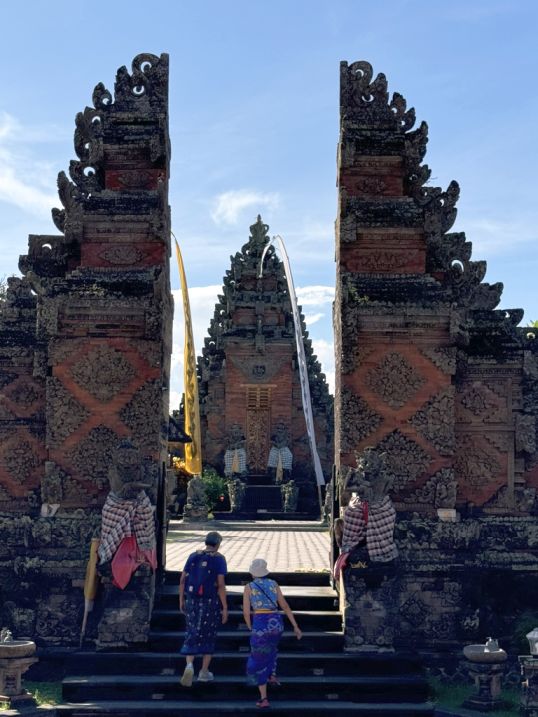
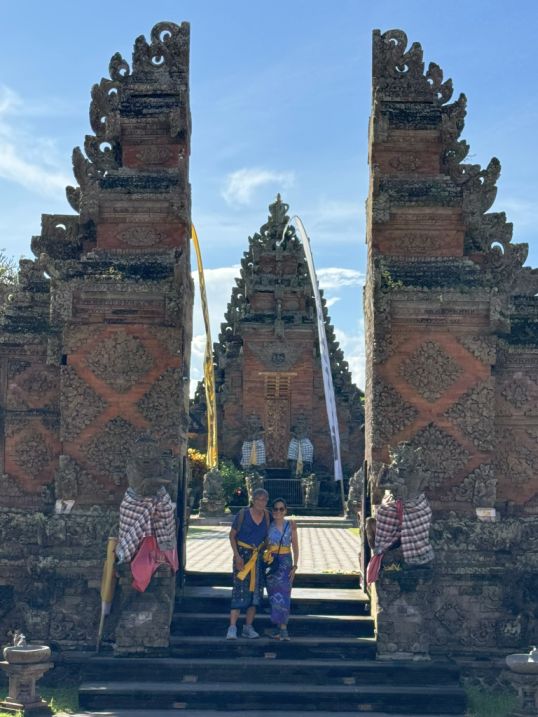
When we arrived at Batuan Temple, the first thing you notice is how deeply traditional and beautifully carved everything is. Visitors are required to wear a sarong, both as a sign of respect and because the temple is an active place of worship for the local community.
We entered through the tall, split gate called a Candi Bentar. It’s made from dark volcanic stone and decorated with intricate carvings of mythical creatures, curling patterns, and protective figures. Walking through this gate feels like stepping into an ancient sacred world.
 |
 |
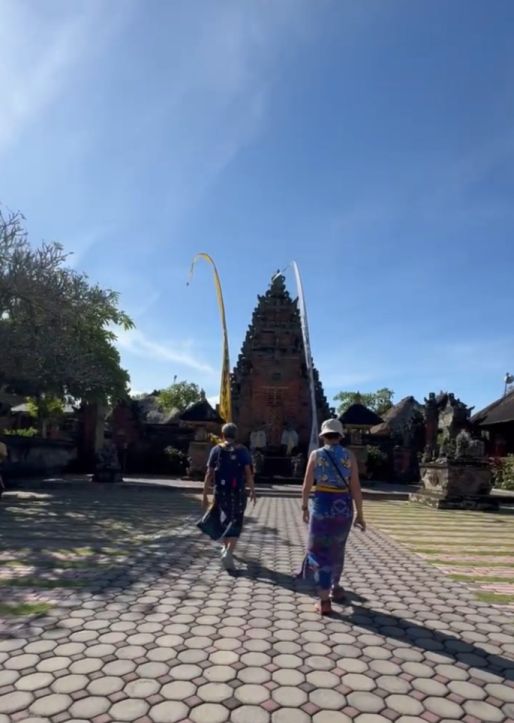
Walking inside the courtyard.
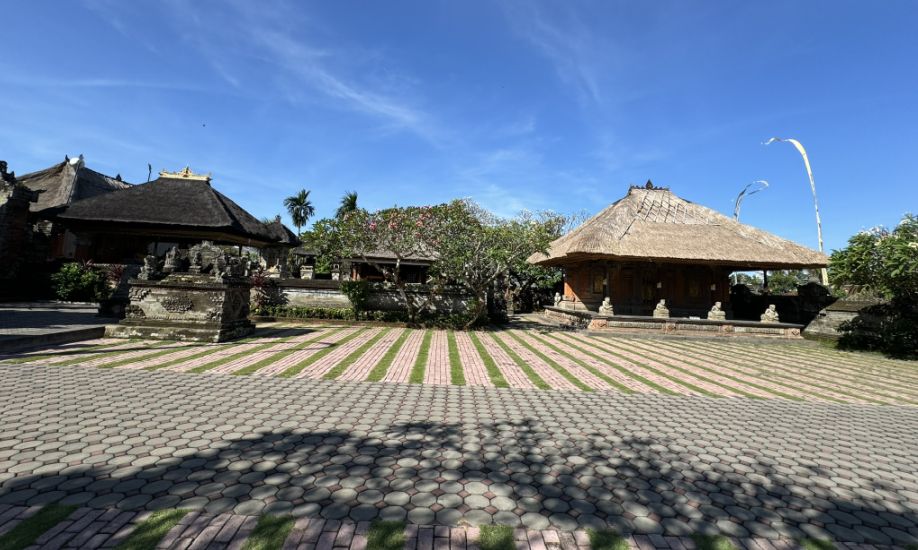
The courtyard opens up into a spacious area where the ground is beautifully arranged with horizontal stripes of brick and grass, almost like a natural carpet. This layout gives the temple a peaceful rhythm, guiding us as we walked. The open space is often used during large ceremonies, where villagers gather, prepare offerings, or watch performances connected to temple rituals.
Inside the courtyard, everything feels beautifully arranged and full of detail with each structure with its own purpose and symbolism. As you walk deeper inside, the layout becomes more impressive, and the architecture shows how much care and craftsmanship went into building this ancient temple
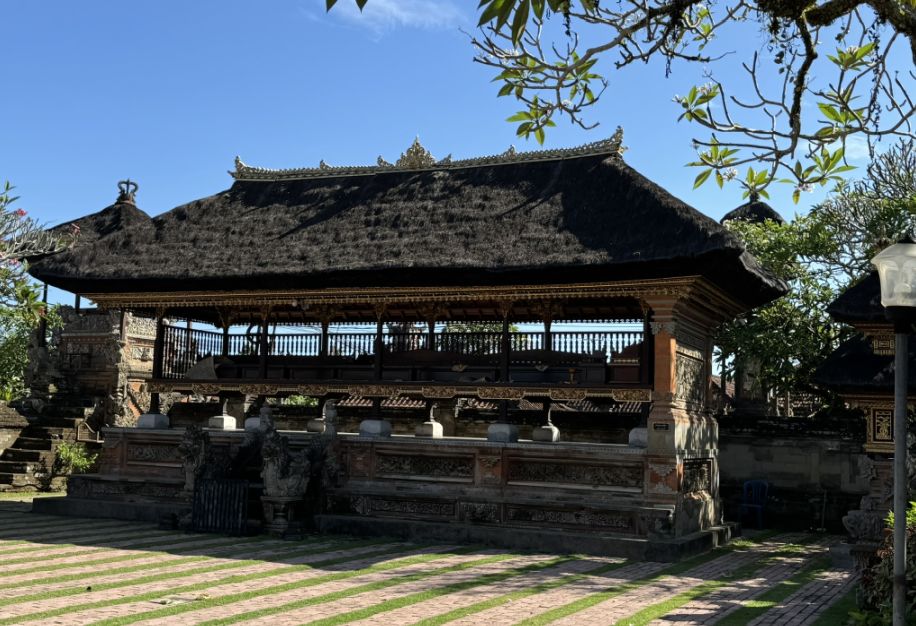
One of the first buildings is the elevated pavilion with a thatched roof made from dried alang-alang grass. This type of structure is often used for ceremonies or offerings. The platform lifts it above the ground to keep it pure, and the wooden pillars are carved with traditional patterns. It feels simple yet sacred, blending naturally into the temple surroundings.
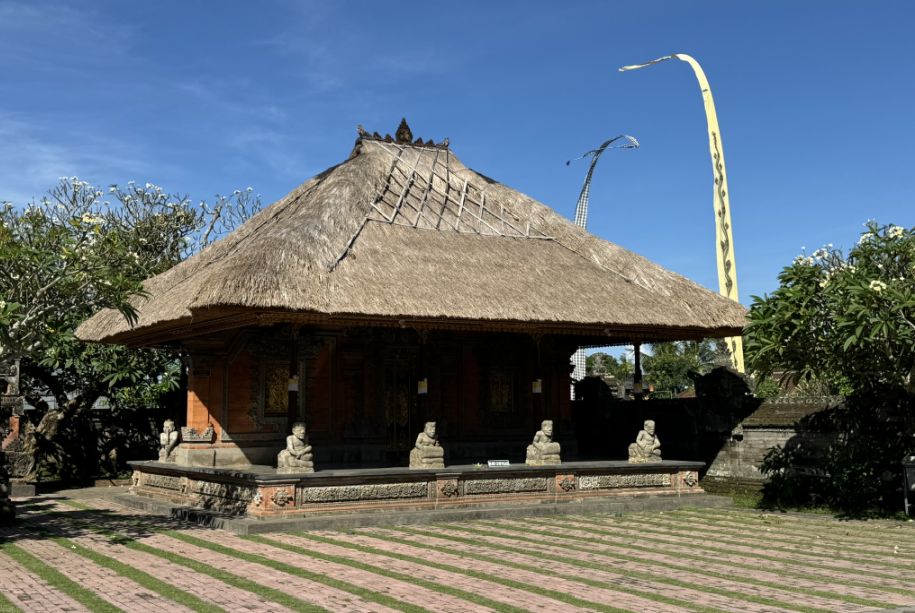
Nearby, another building with a tall thatched roof, but this one is more ornate, surrounded by guardian statues. These statues often represent dwarapala or protective spirits, standing watch at the corners and entrances of important shrines.
 |
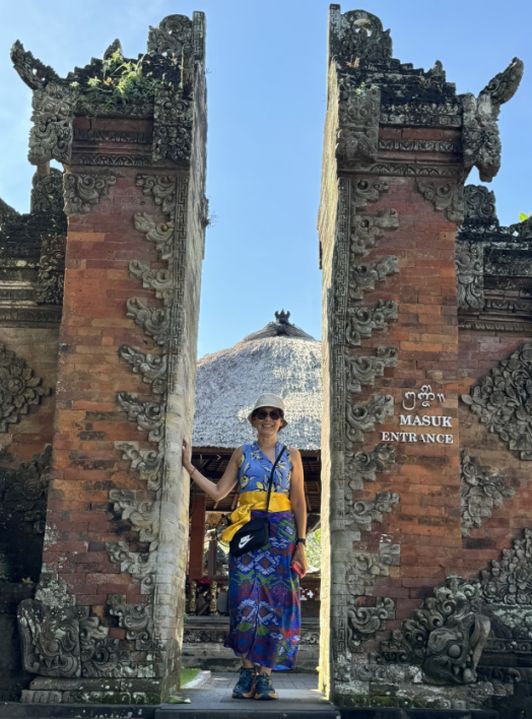 |
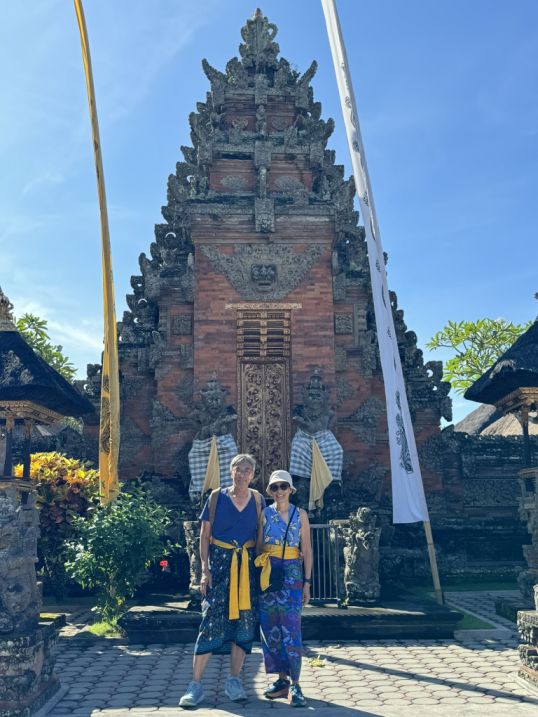
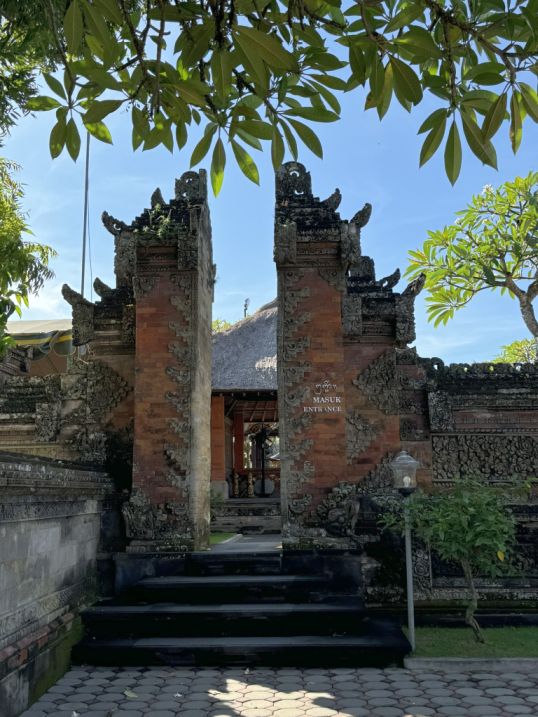
Toward the back of the courtyard, we spotted another gate marked “Masuk Entrance.” This is a Kori Agung gate, a more sacred entrance that leads to the deeper, holier part of the temple. It’s tall, richly decorated, and more dramatic than the outer gates. Passing through it feels like we are crossing into a more spiritual zone of the temple.
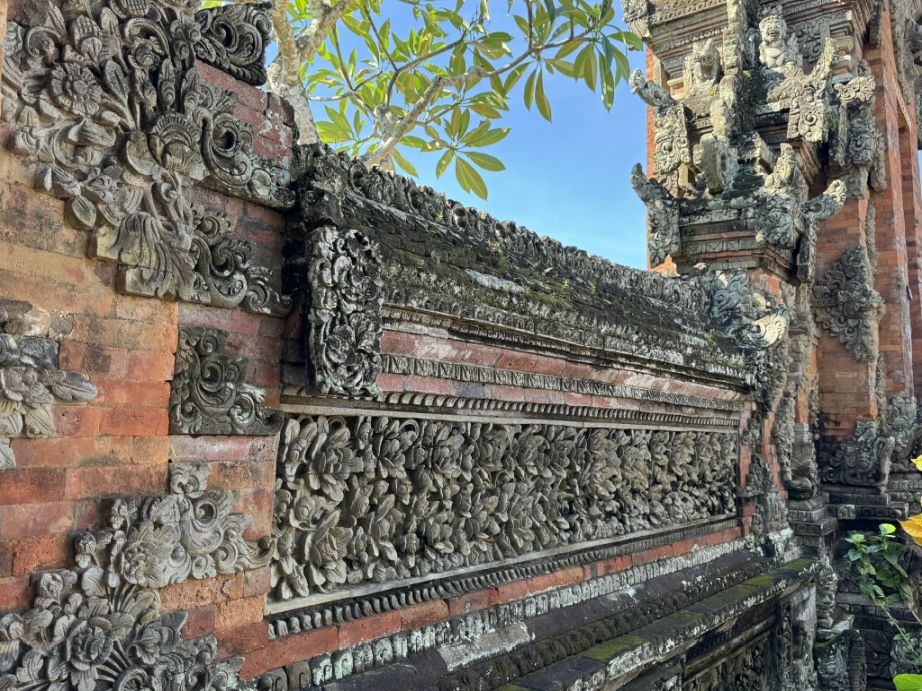
All around, the walls and gateways are covered in intricate carvings on red brick and volcanic stone. These carvings include floral patterns, mythical creatures, gods, demons, and swirling motifs. They show the classic Batuan style, dense, detailed, almost every inch filled with patterns. The red brick gives everything a warm, ancient look, especially when the carvings catch the sunlight.
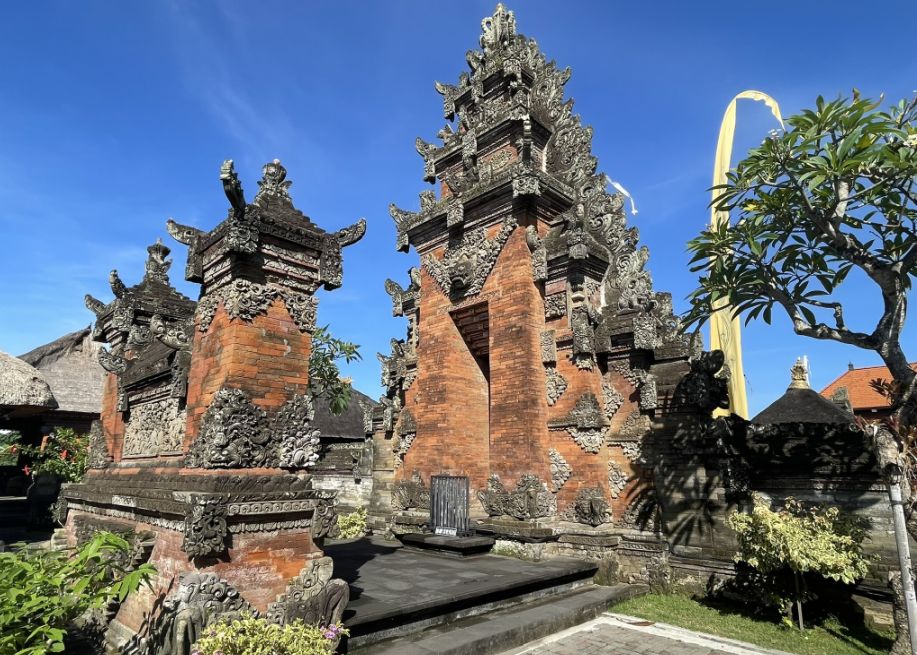
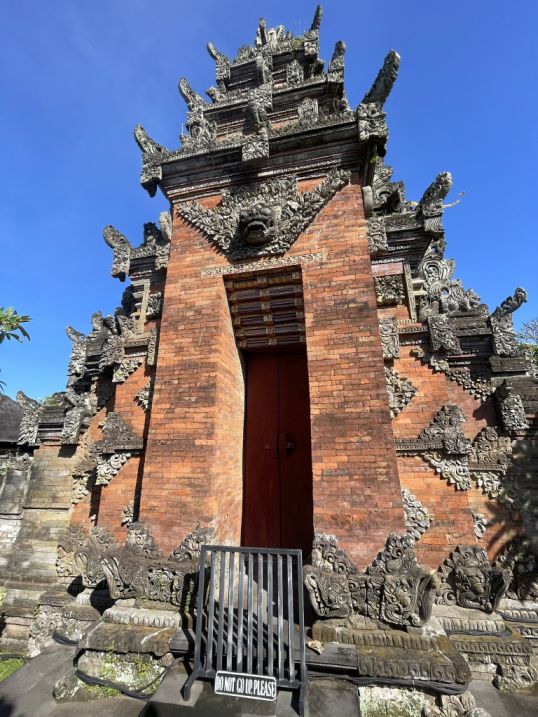
Once you get inside the gate there is a brick tower often called a Paduraksa or Protective Structure. In Balinese Hinduism, temples are designed with layers of sanctity. As you move inward, the space becomes more sacred.
 |
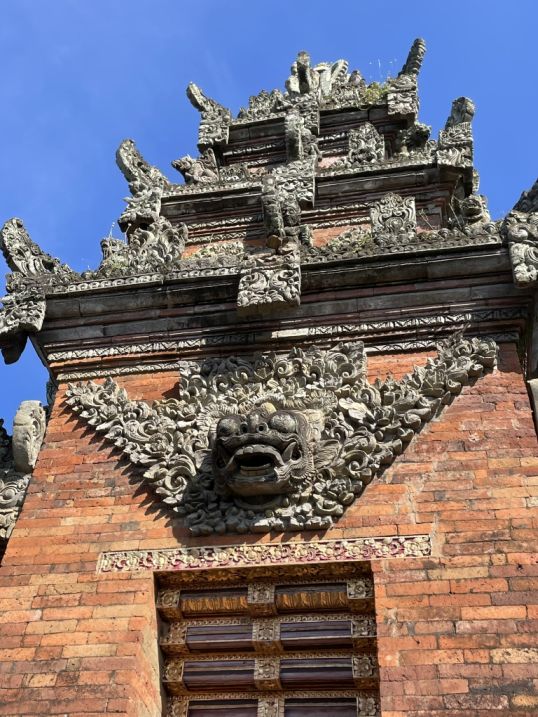 |
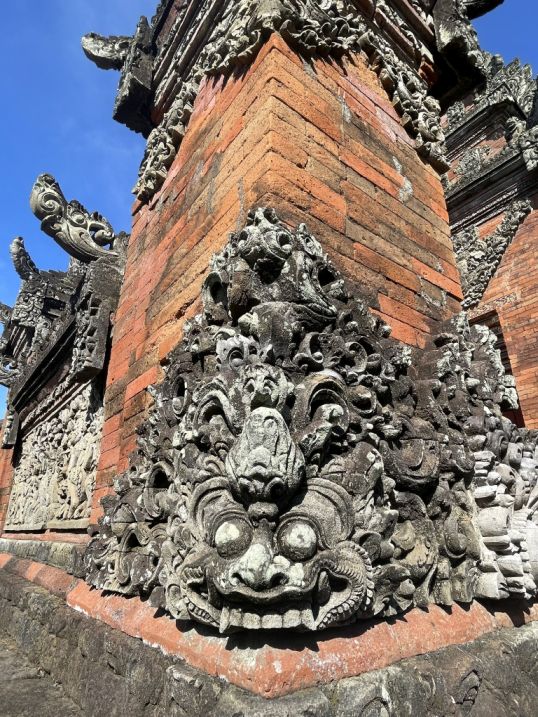
Kala head carvings, symbolizing time, protection, and purification. These features show the classical Balinese style from centuries ago, still beautifully preserved in Batuan Temple.
These are not meant to be scary,; they symbolize ancient guardians that ward
off evil spirits.
Placing them on the tower corners and above the gate strengthens the
protective power as people cross the threshold.
 |
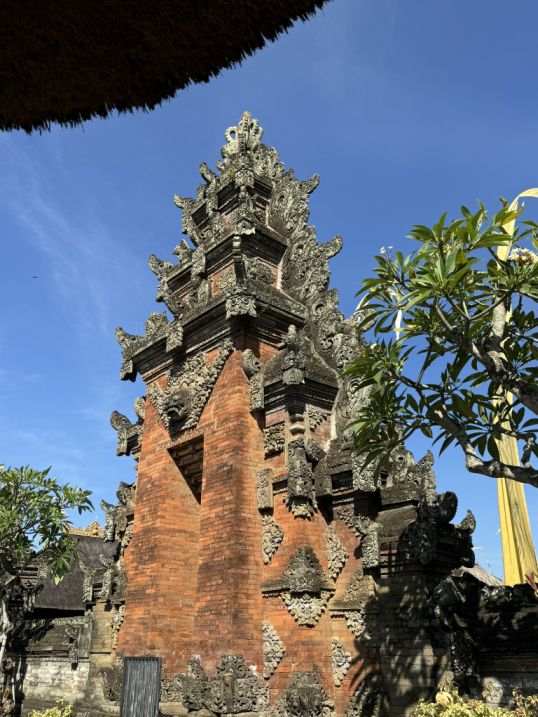 |
The tall brick tower acts as a spiritual threshold, blocking negative energies from entering the holier areas. It protects the inner courtyard and ensures that only purified or respectful intentions pass through.
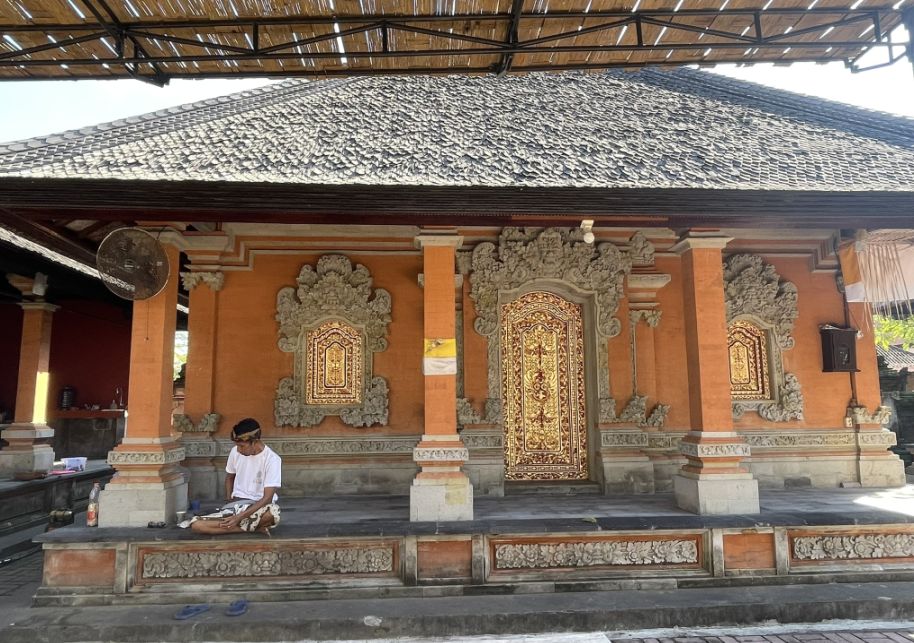
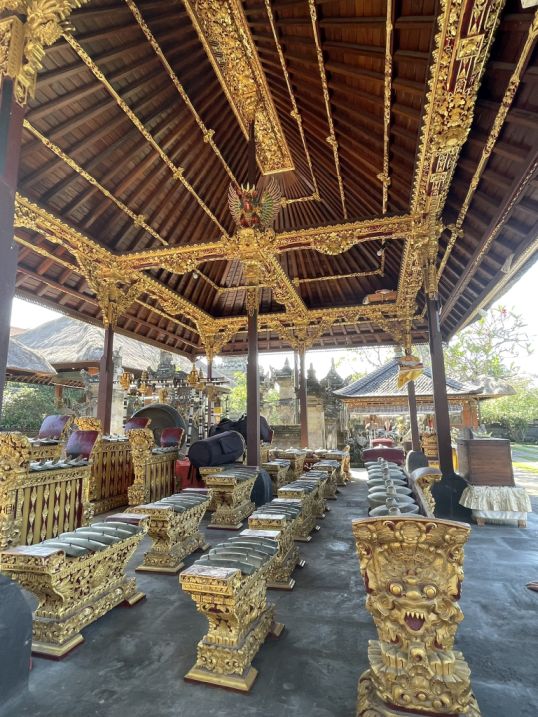
This is a Bale Piyasan (Ceremonial Pavilion), used during temple festivals to hold offerings, sacred objects, or musicians for rituals.
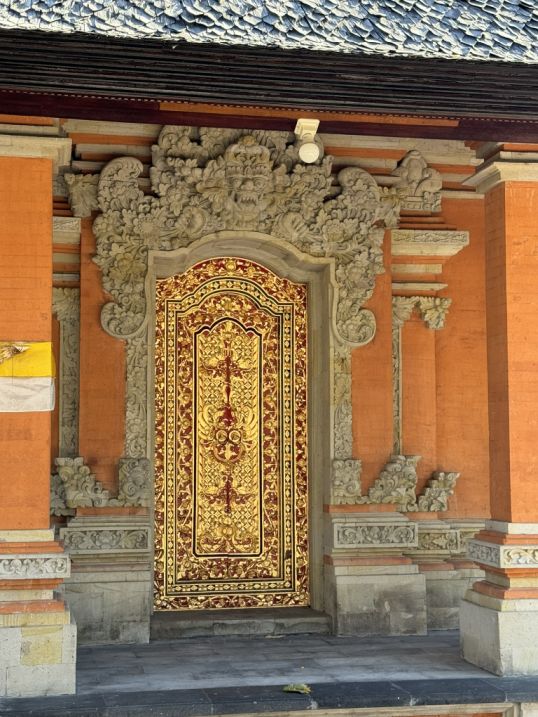
The doors and windows are made from wood, intricately hand-carved, then painted with gold leaf, and deep red lacquer.
 |
 |
The color of the door represent royalty and divine presence (gold), and energy and life force (red).
On the left you can see where sacred heirlooms or ritual items are stored and honored.
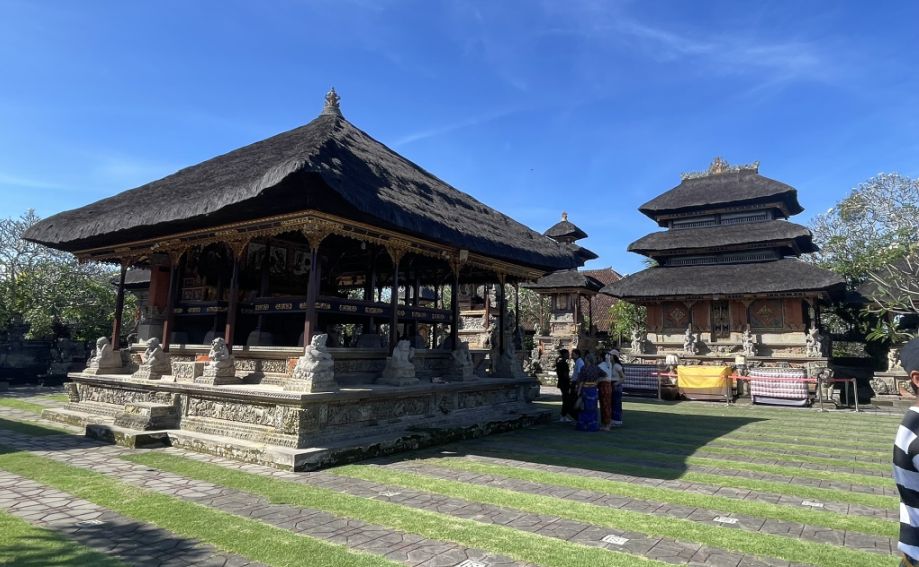
The inner court
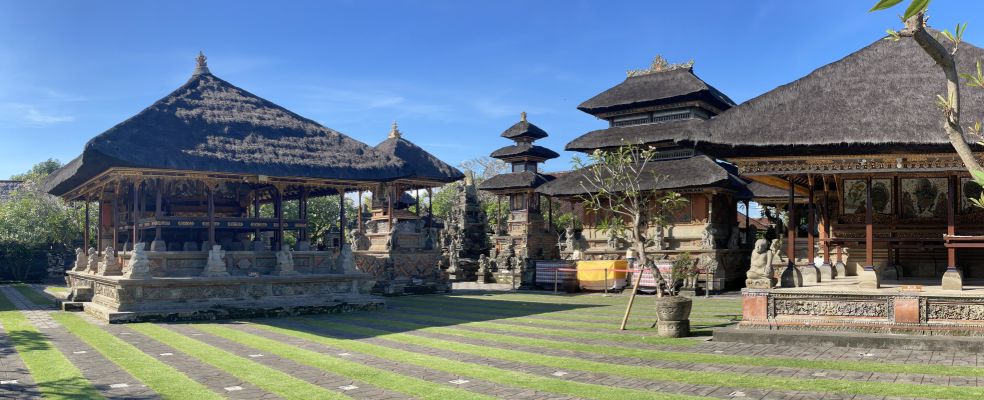
The inner court has many shrines with thatched roofs.
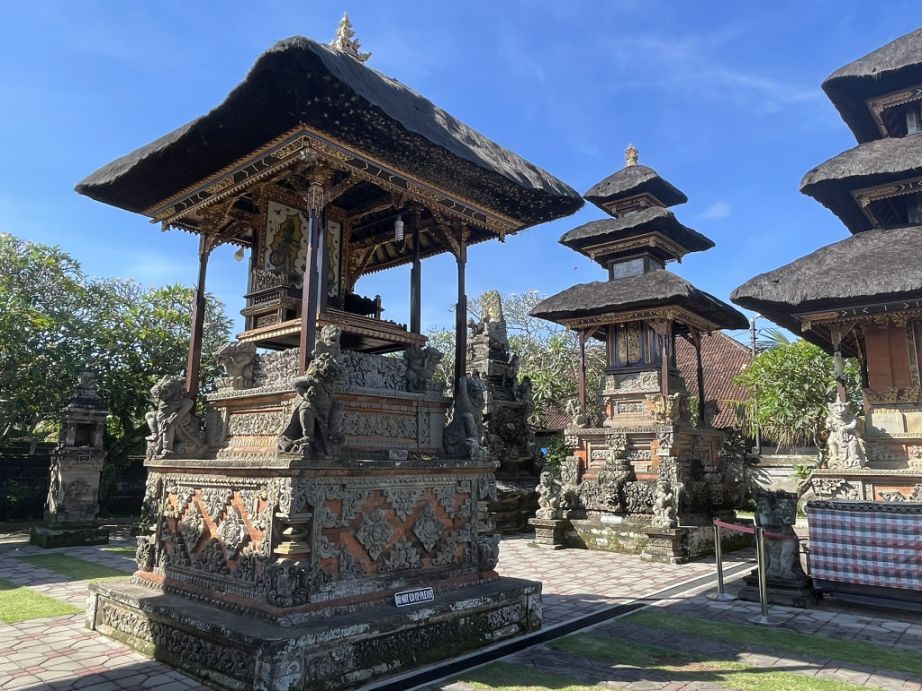
Open air pavilions on stone bases
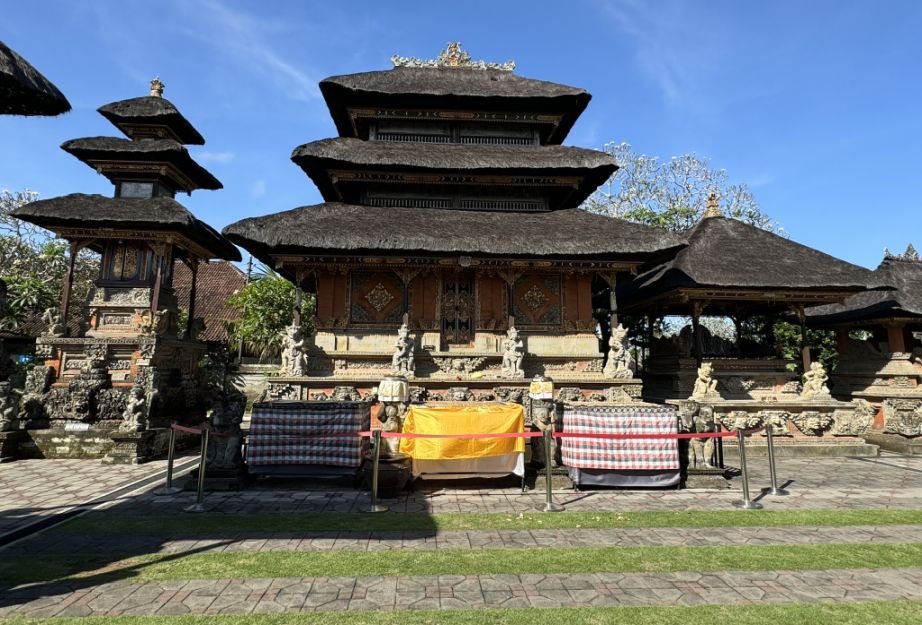
At the far end of the inner courtyard this is how Balinese temples prepare sacred spaces for offerings, ceremonies, or daily rituals.
The Two Tables with Checker Cloths (Red–Black–White) are called poleng and they represent Brahma (red) – creation, Vishnu (black) – preservation, and Shiva (white) – destruction.
The yellow table in the center represent Purity, Holiness, and light and divinity. Its placement in the middle shows that the yellow-table function is the main ceremonial focus, with the poleng tables supporting it.
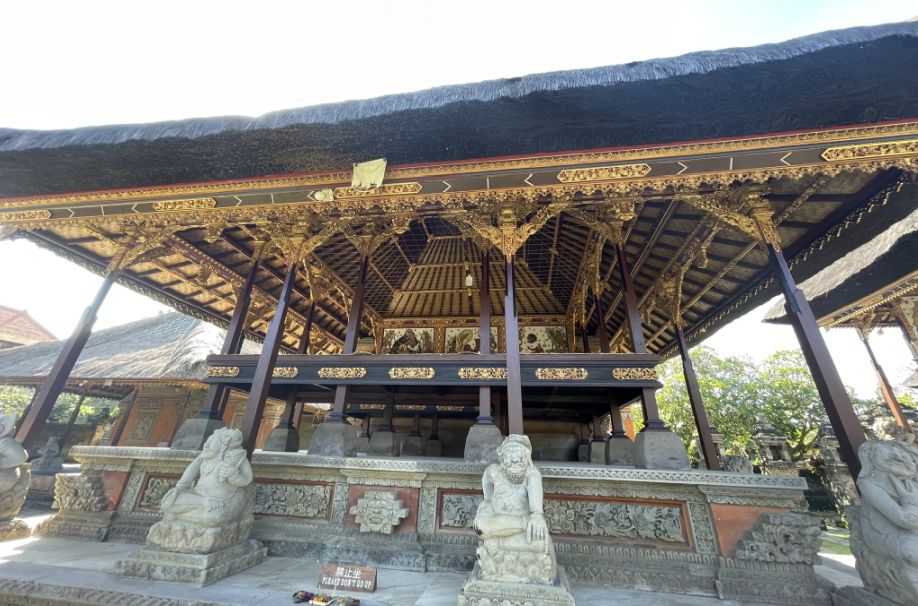
An ornate Bale (open pavilion) used for preparing offerings or hosting the temple priests.
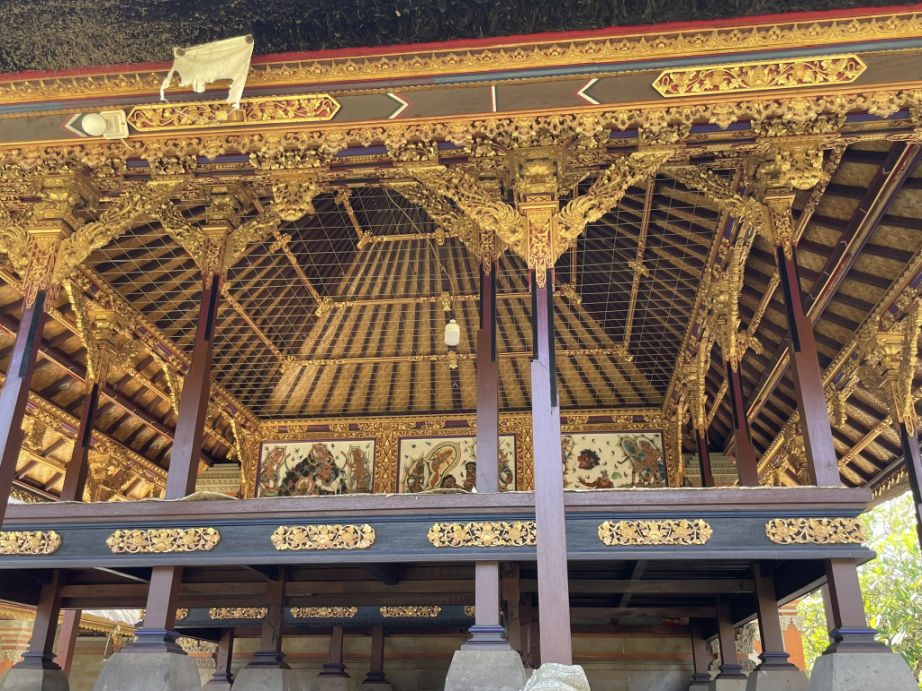
This one is really ornate and beautiful.
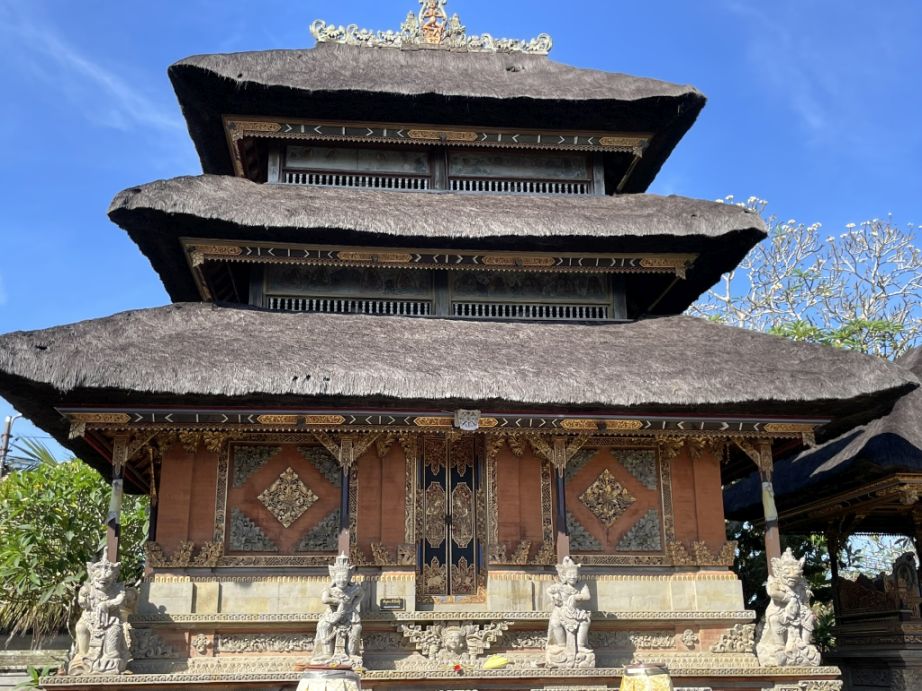
A meru shine is a multi-tiered shrine dedicated to important gods, ancestral spirits, or powerful deities. It’s named after Mount Meru, the sacred cosmic mountain in Hindu-Buddhist cosmology. The three tiers of roof has spiritul meaning and represent Tri Murti (Brahma, Vishnu, Shiva).
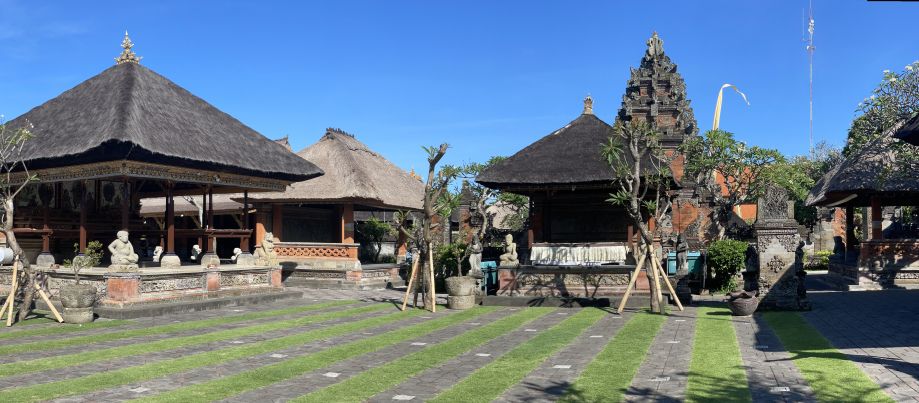
Another view of the inner court.
 |
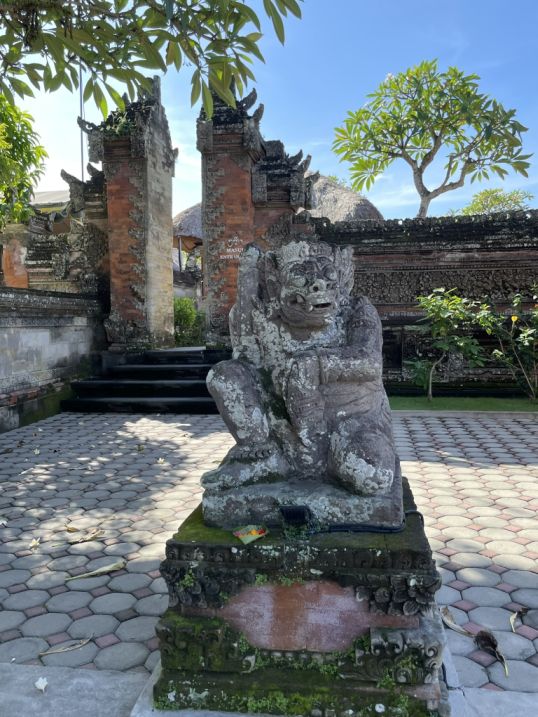 |
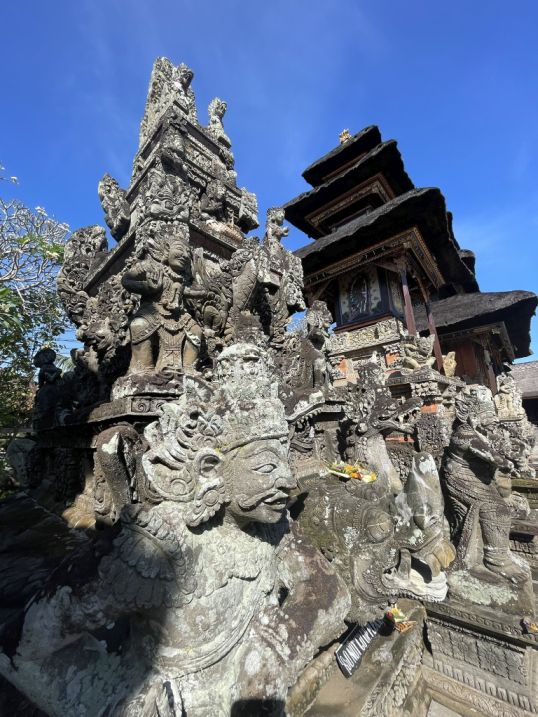
More carvings along the way...
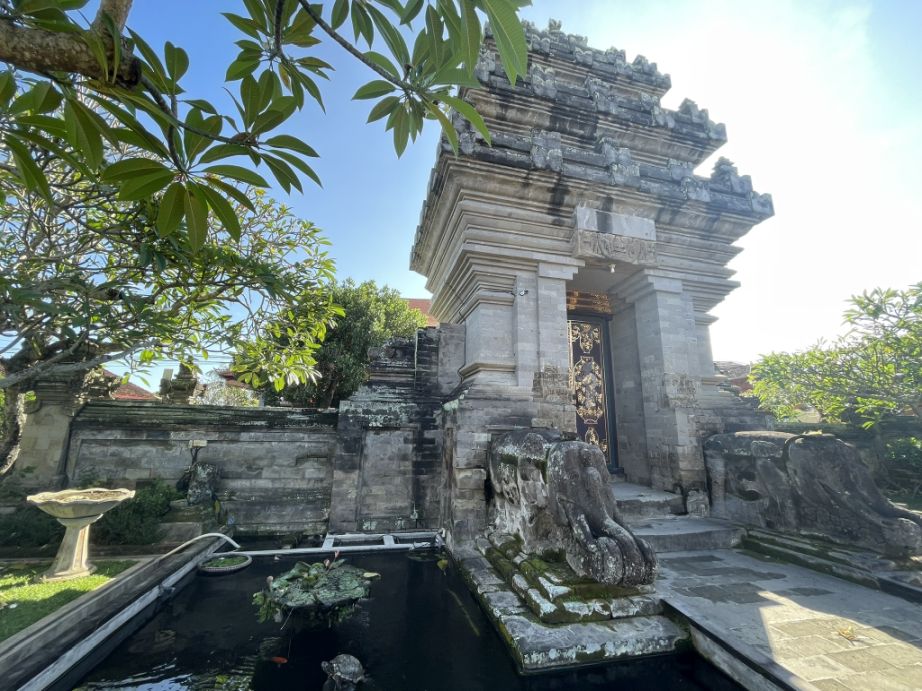
As we moved deeper into the temple grounds, the atmosphere shifts from carved stone courtyards to a much calmer, more serene area filled with ponds, a space that feels almost like a quiet garden tucked inside the temple.

A turtle perched on a rock, calmly sunning itself
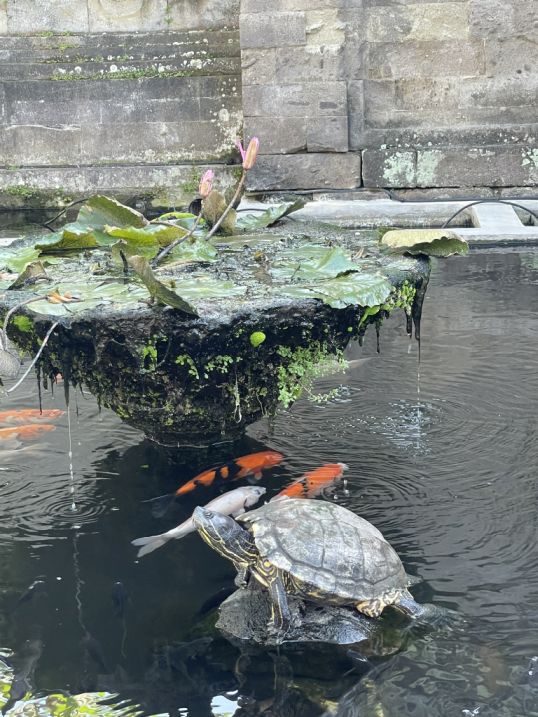 |
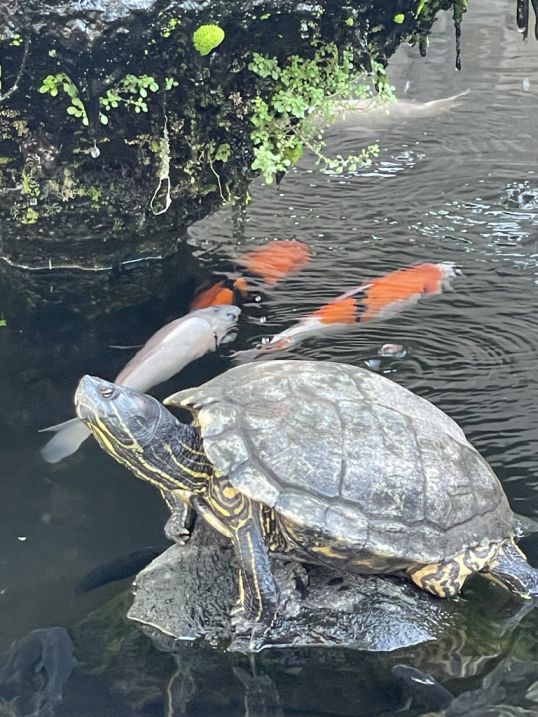 |
Goldfish gliding gently through the water, their orange bodies bright against the dark pond, and the turtle just stay there enjoying his place on the rock.
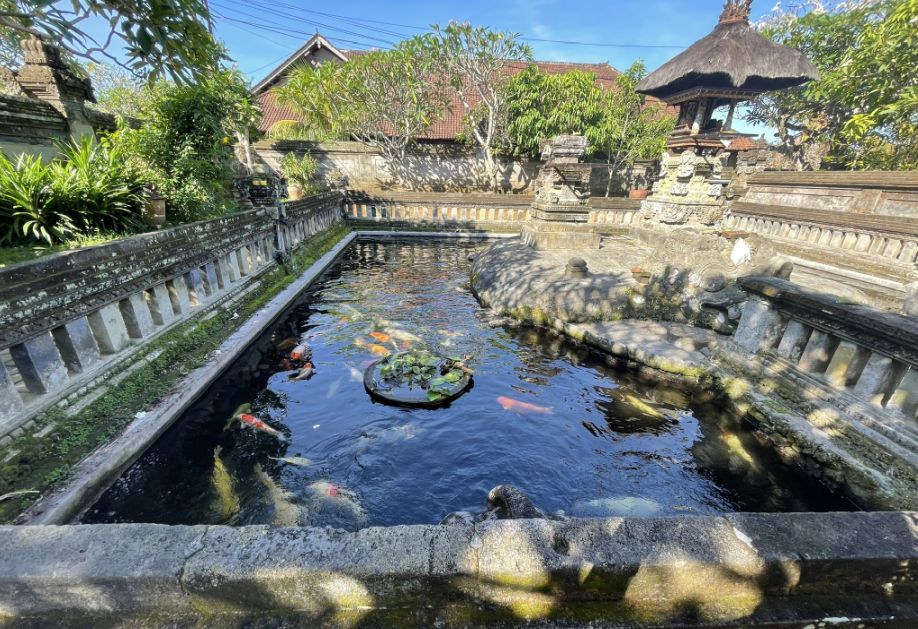
A little deeper inside, the space opens up to reveal a much
larger, elongated pond.
This one is bordered by cement walls, giving it a long rectangular shape,
almost like a reflective pool.
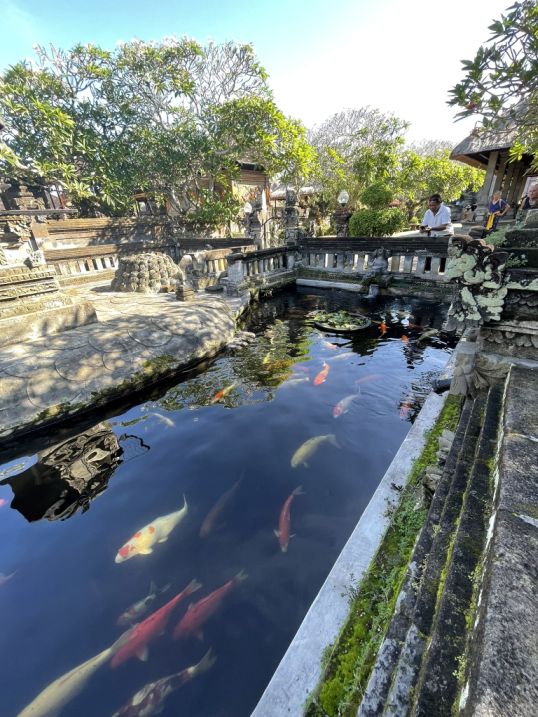 |
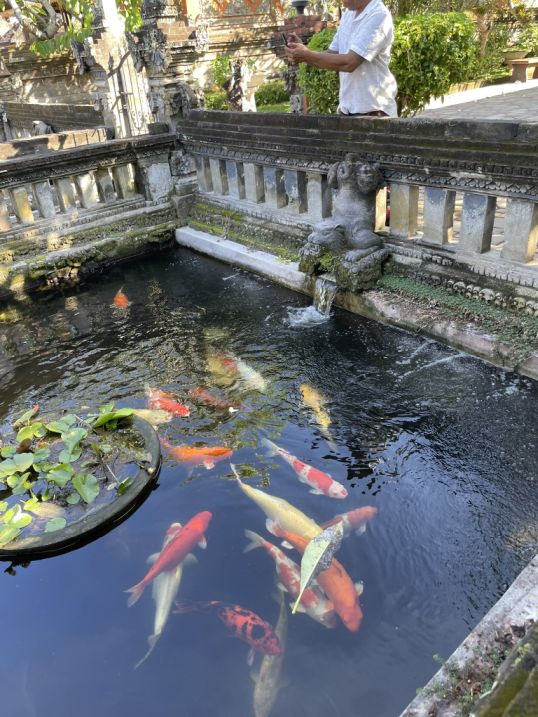 |
This part of the temple is designed for quiet reflection, away from the busier courtyards.
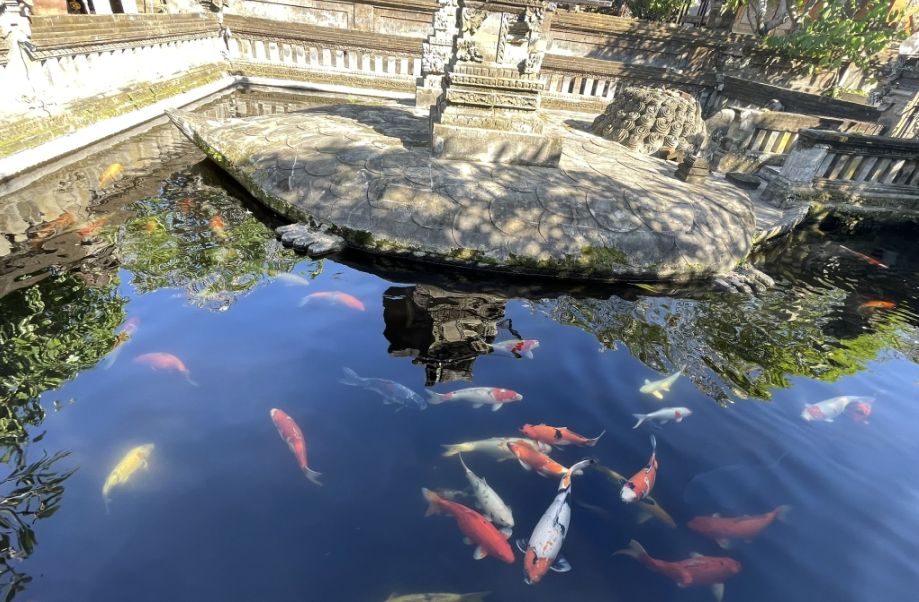
This multi-pond area often represents purification and harmony, helping guide visitors mentally and spiritually before entering the temple’s more sacred zones.
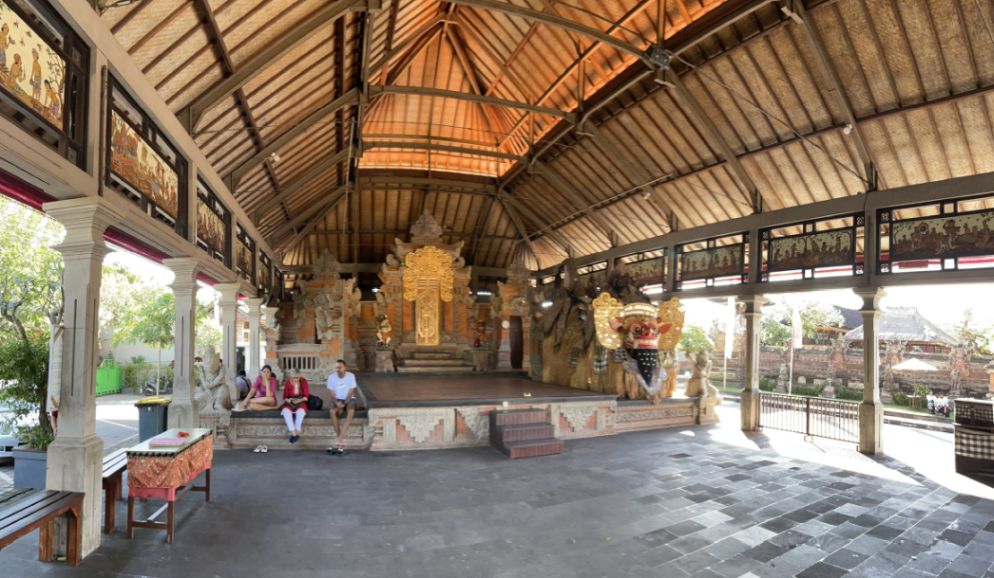
We are now leaving the temple and this is the waiting area.

Checking in our villa
Arriving at our private villa at FuramaXclusive in Ubud felt like stepping into our own little sanctuary tucked away in the jungle.
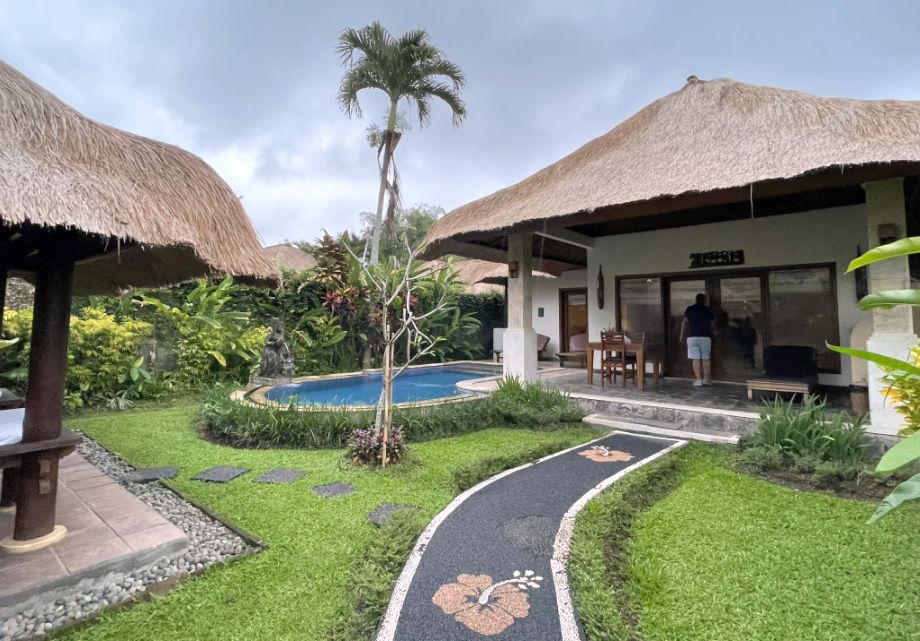
As soon as you walk through the gate, everything suddenly becomes quiet and calm. A stone walkway leads you inward, framed by tropical plants, and it gives the entrance a peaceful, almost hidden feeling, like you’re entering a secret retreat.
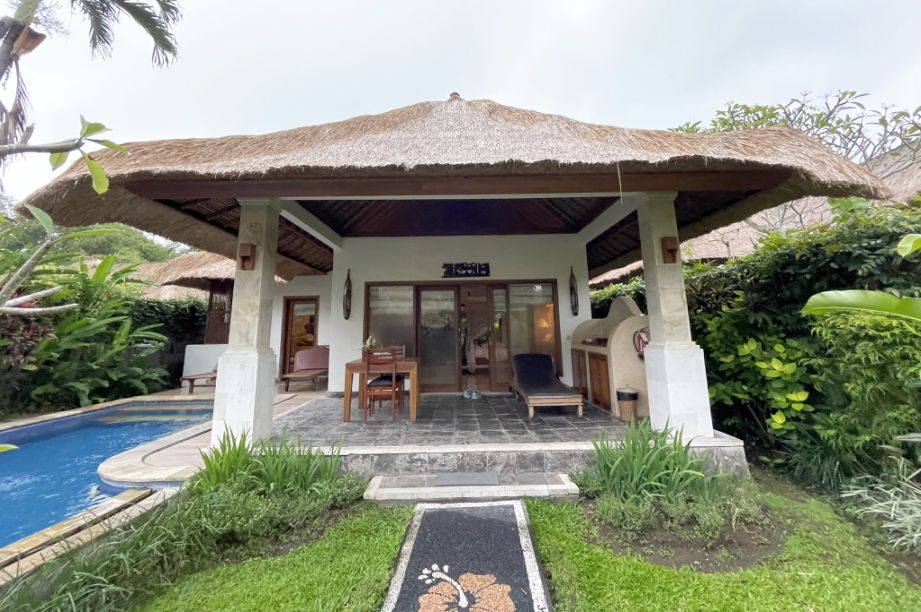
Just ahead is the villa, a blend of modern comfort and Balinese style. Large windows, warm wood, and soft lighting create a cozy, intimate atmosphere.
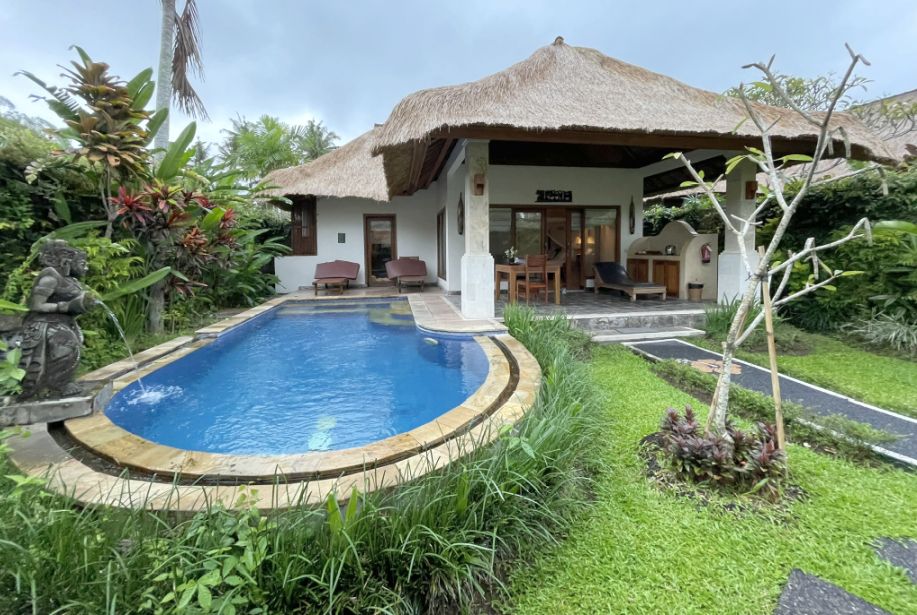
On the left, the private swimming pool stretches along the path. The water looks perfectly still and inviting. It feels close enough that you could dip your hand in as you walk by. The pool gives the villa that unmistakable Ubud luxury vibe, private, quiet, surrounded by nature.
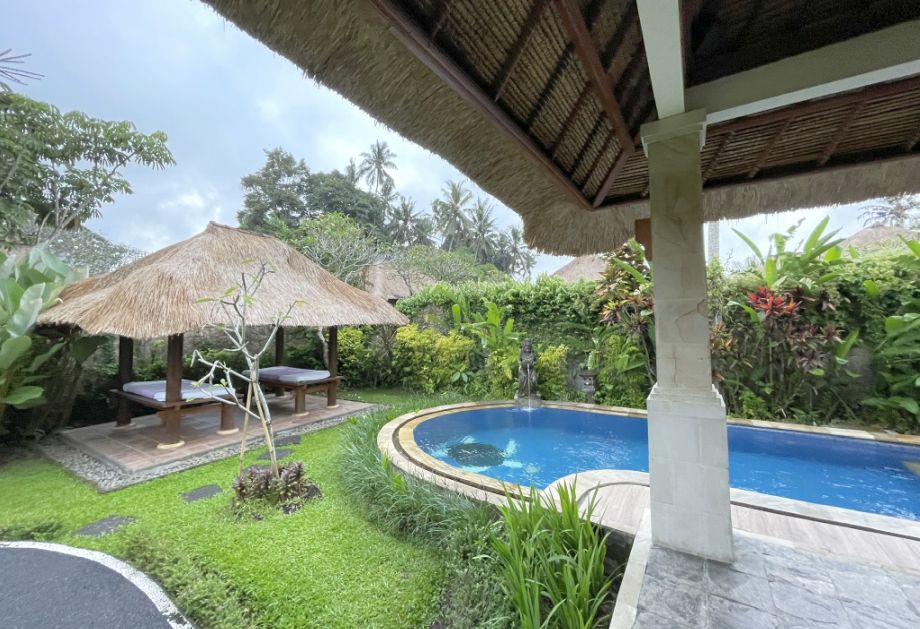
There is a covered area for private massage.
Dinner at Oops cafe in Ubud.
Taking the free shuttle from your villa to downtown Ubud is such a convenient way to ease into the evening. Once we stepped out, the energy is totally different from the peaceful villa, as Ubud’s streets are lively, full of shops, cafés, motorbikes, and that warm glow from restaurants lighting up the sidewalks.
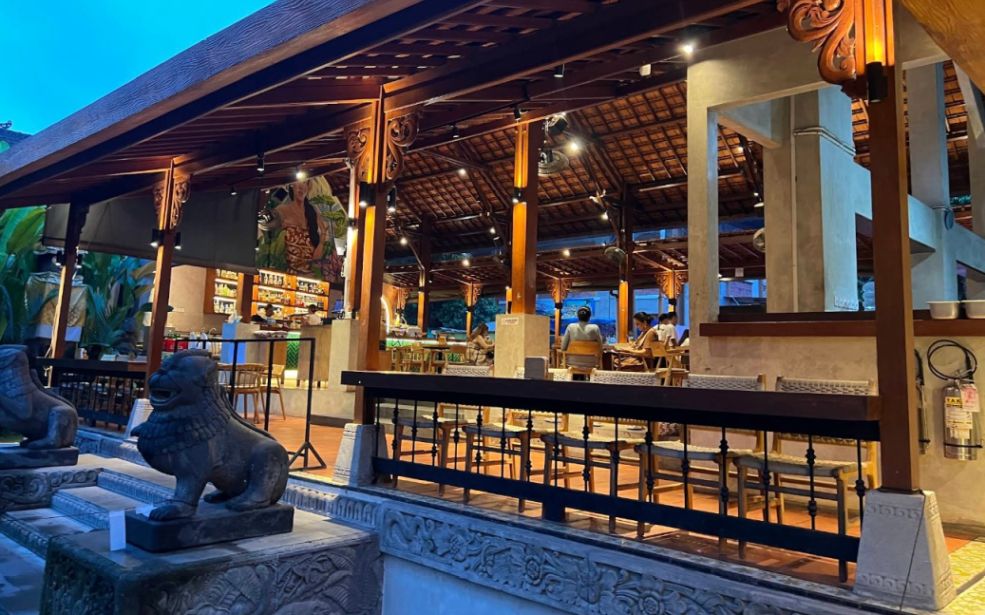
We wandered around, taking in the mix of art stores, clothing boutiques, and little market stands, until we settled on Oops Café for dinner. The café has that relaxed Ubud vibe, open-air seating, cozy lighting, and a casual layout that makes it easy to settle in after a long day of exploring.
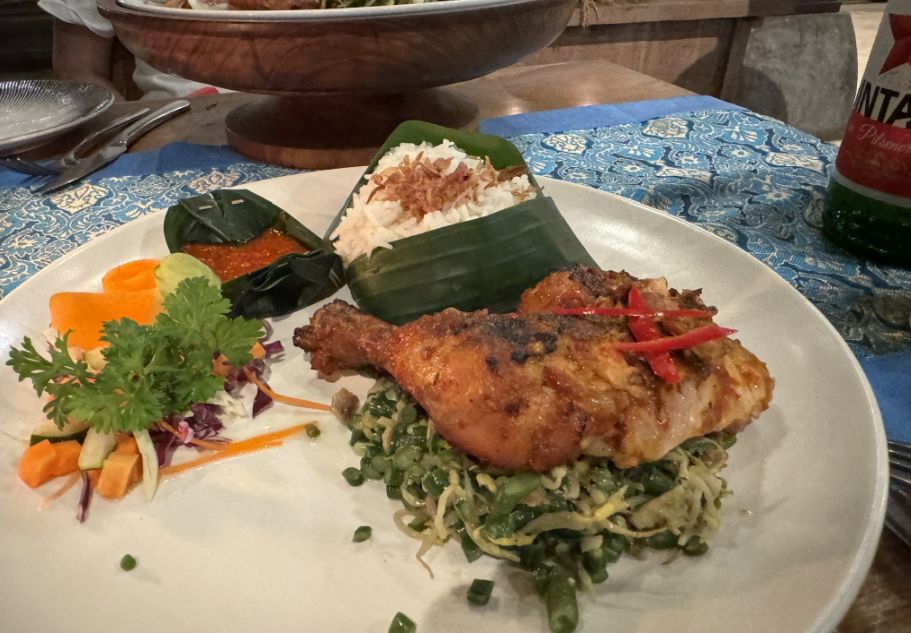
Hoa had a chicken dish served with rice, and vegetables.
 |
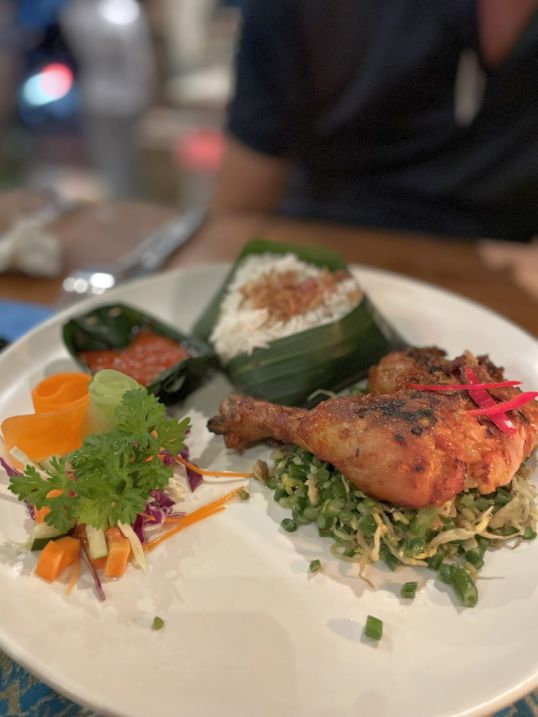 |
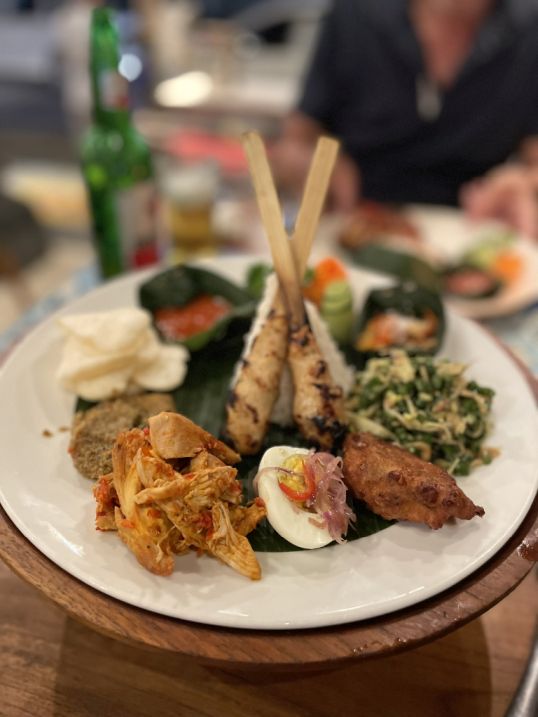
I ordered a plate of nasi campur, always a great choice with its colorful mix of small dishes, rice, vegetables, and meats, and the chicken dish that added something warm and comforting to the meal. It was the perfect way to unwind, simple, good food in a chill atmosphere right in the heart of Ubud.
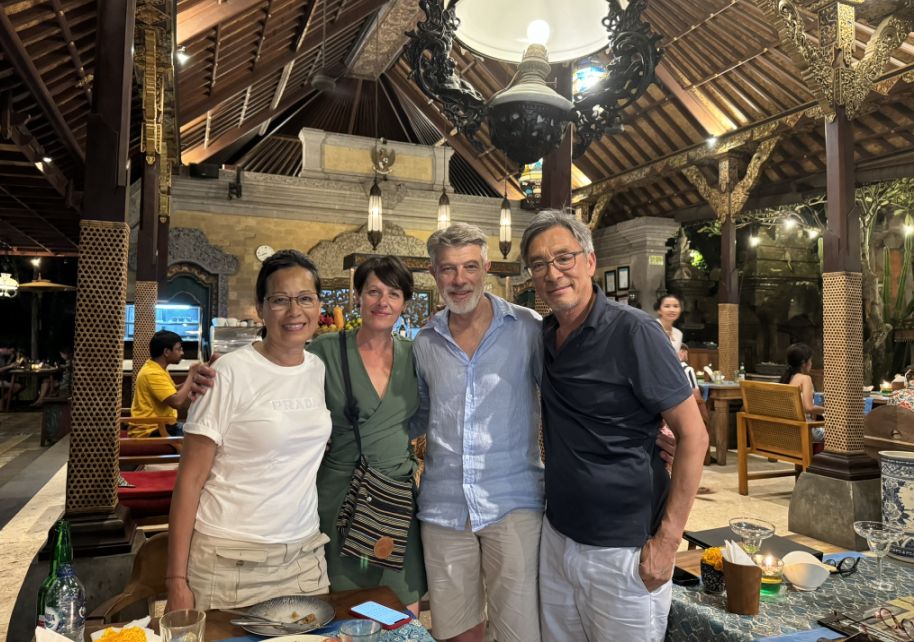
Next to our table, we met a French couples and it was really fun talking to them.
NEXT... Day 8-jatiluwih rice terrace