3 weeks in Bali, Indonesia- 5/28- 6/15/2024
|
Uluwatu |
Canggu &
surroundings |
Ubud & surroundings |
Sidemen/Amed |
Nusa Penida |
Day 8- Pura Ulun Danu Beratan -6/3/2024
Pura Ulun Danu Beratan is one of Bali’s most iconic and spiritually important
temples, famous for floating on the calm surface of Lake Beratan in Bedugul.
Its beauty is what draws people in, but its history is even more meaningful.
Pura Ulun Danu Beratan was built in the 17th century (around 1633) during the
rule of the Mengah Raja of the Kingdom of Mengwi.
The temple was constructed as a place of worship dedicated to Dewi Danu, the
goddess of lakes, rivers, and water.
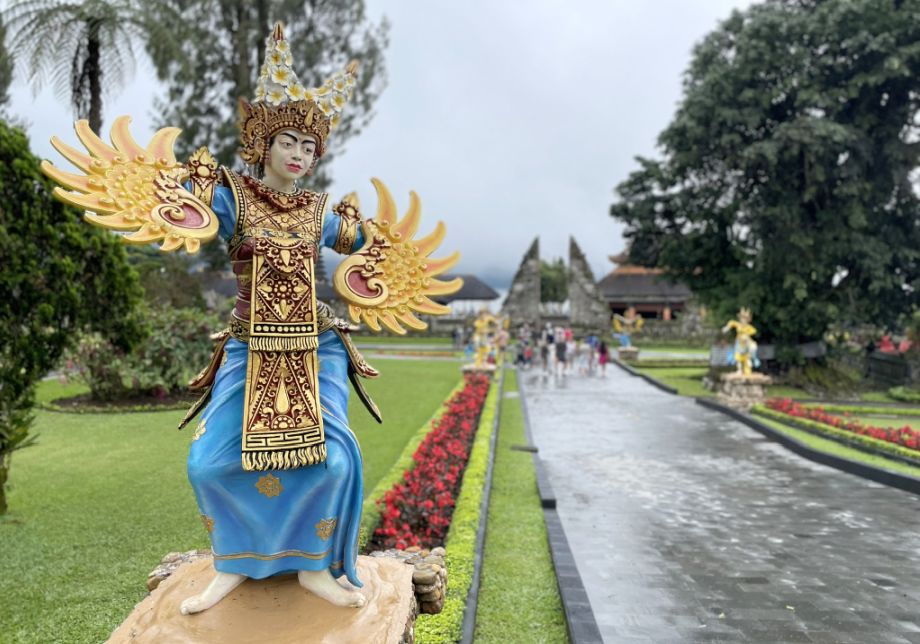
Walking into Pura Ulun Danu Beratan feels like entering a resort, and the first thing that catches your eye is the row of colorful statues lining the walkway. Their bright colors create a joyful welcome.
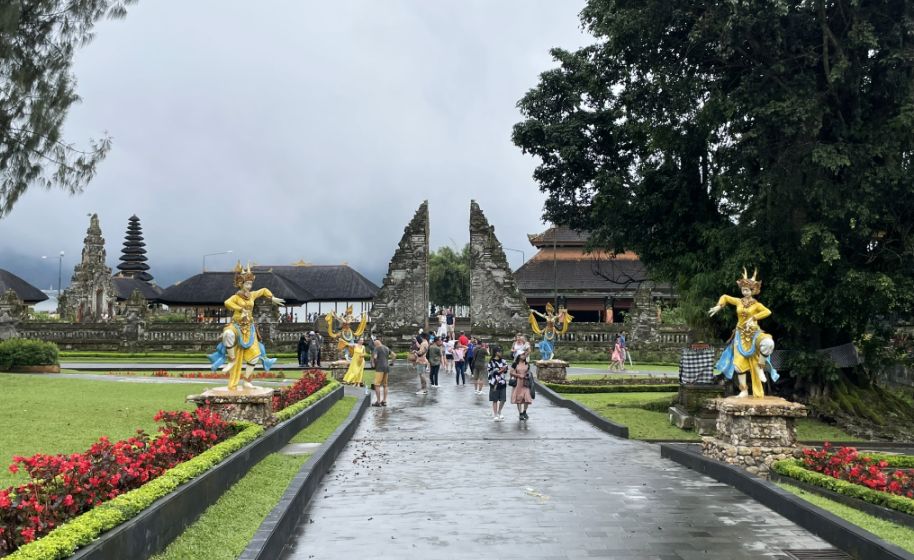
These statues are some of the most vibrant in Bali. Ahead is the main split gate, the iconic Balinese candi bentar.
The split gate symbolizes the transition from the outer world to the sacred world. Walking through it is a moment of crossing into a space of calm, purity, and devotion.
 |
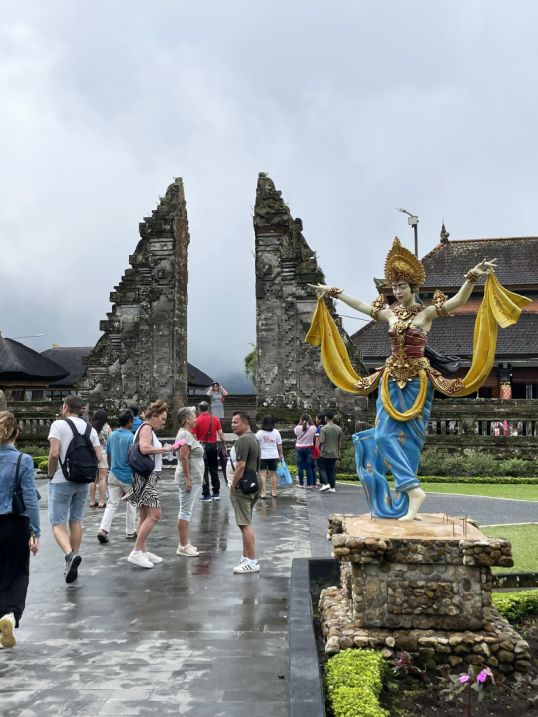 |
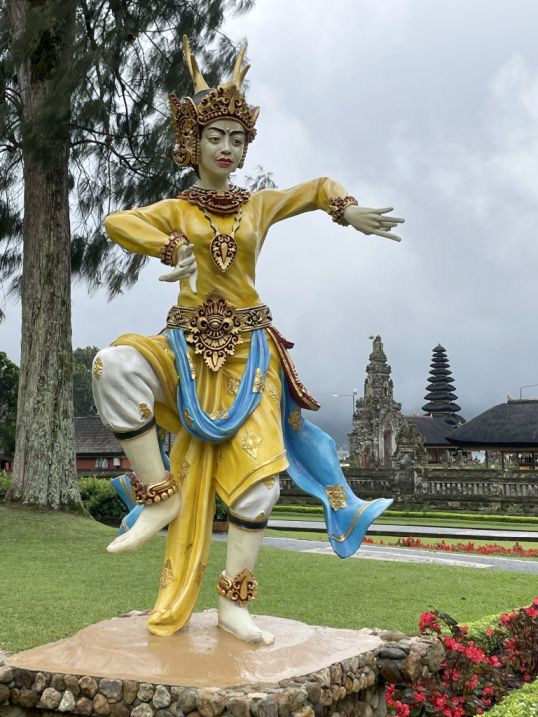
The statues are painted in bright blues, yellow, and gold, with expressive faces and graceful poses. Many of them look like they are dancing, their arms curved elegantly, their clothing flowing as if caught in motion..
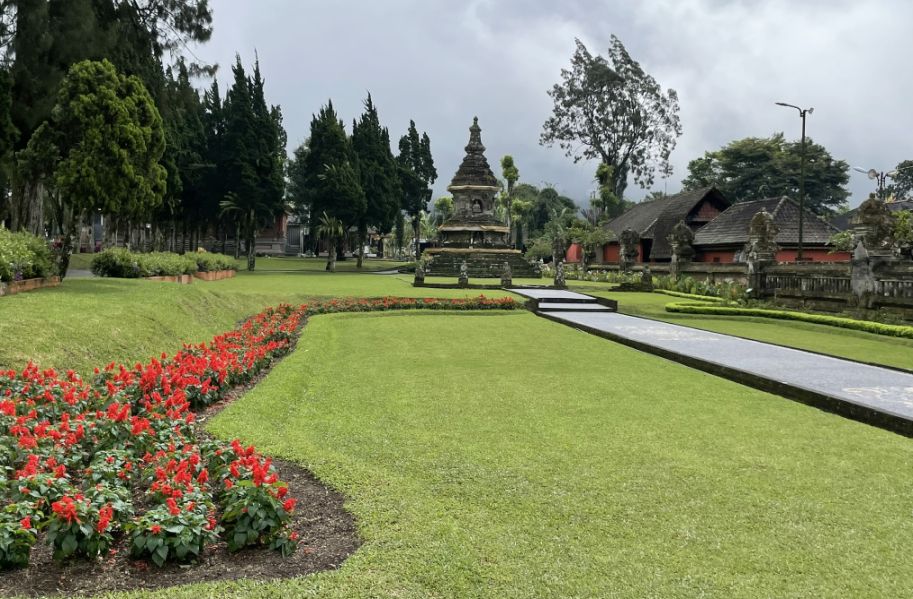
Inside Pura Ulun Danu Beratan, the atmosphere quickly becomes serene and almost park-like, with wide manicured lawns that make the sacred compounds feel open and airy. The gardens are intentionally maintained this way, Balinese temple grounds often use carefully kept grass and flowering plants to create a sense of purity before visitors approach the holiest areas.
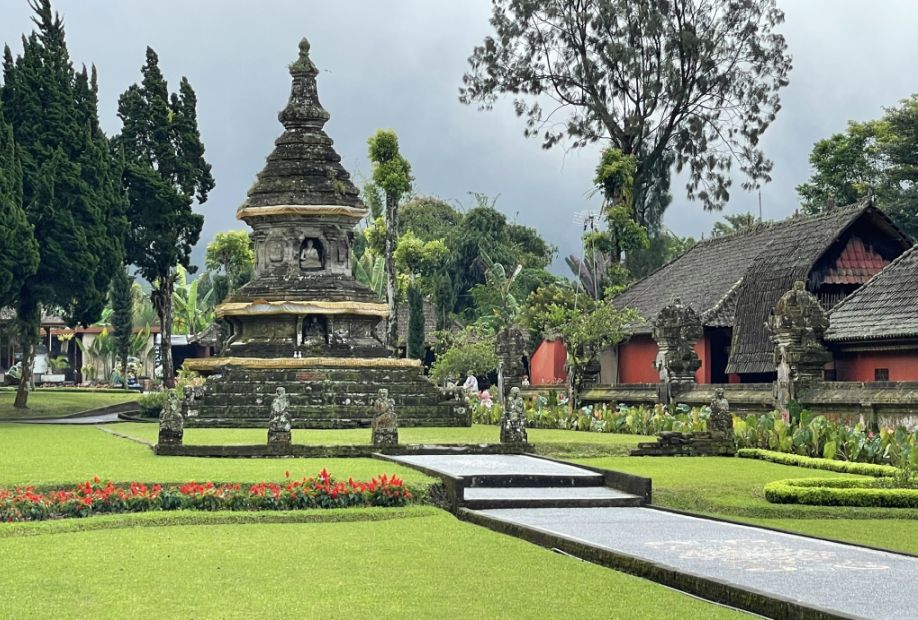
Ahead is Candi Bentuk Meru monument or a tall stone shrine often built in a tiered, pyramidal form. These monuments usually serve as commemorative shrines honoring deities or historical rulers. As we continued walking, the row of buildings on the right are part of the outer and middle temple compounds.
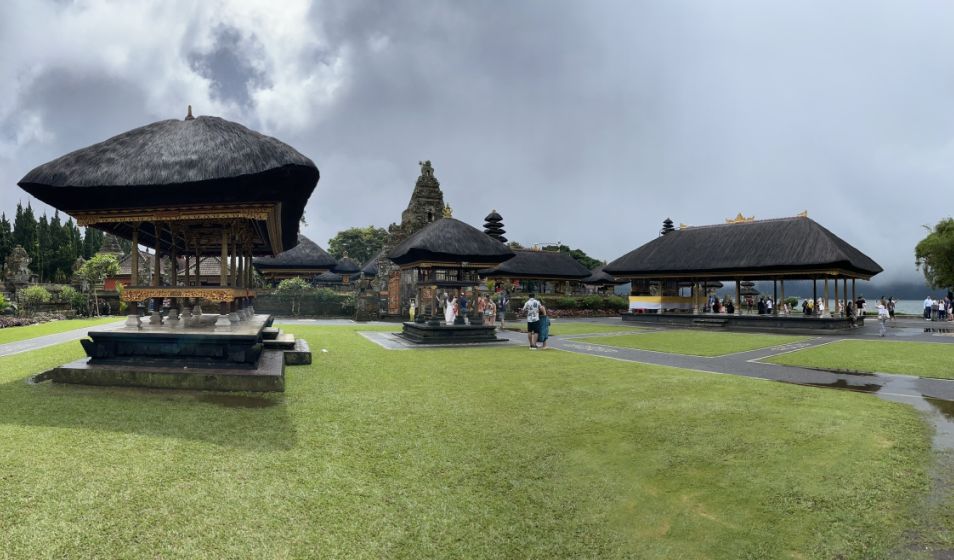
As we stepped into a wide, open grassy area with Lake Beratan shimmering on the right, the three open buildings with thatched roofs are classic Balinese bale, traditional pavilions that serve ceremonial and communal purposes.
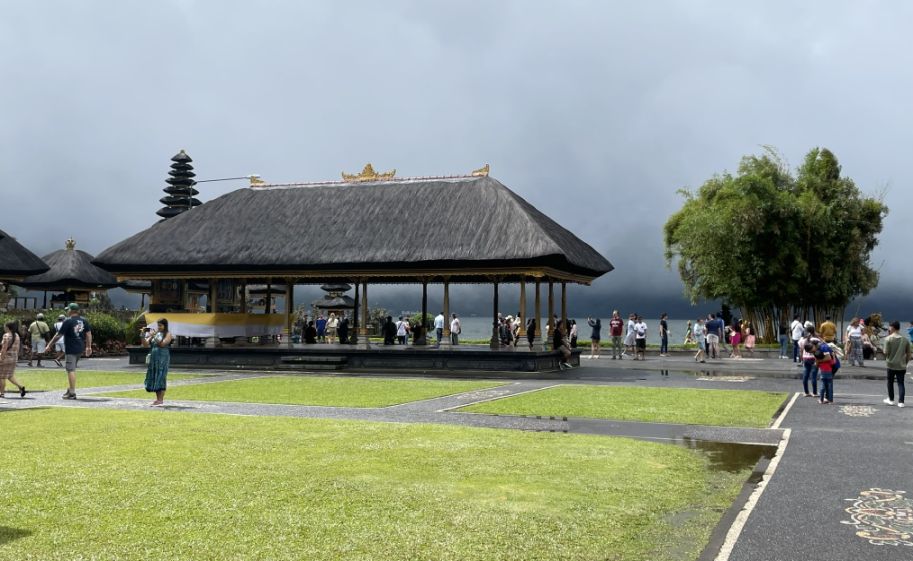
All the 3 pavilions have thick alang-alang (grass) thatched roofs that form soft, textured layers, sturdy carved wooden posts supporting the roof, open sides offering views of the lake and surrounding mountains. Because they are open to the water and mountains, these pavilions feel peaceful, perfectly blending ritual space with natural beauty.
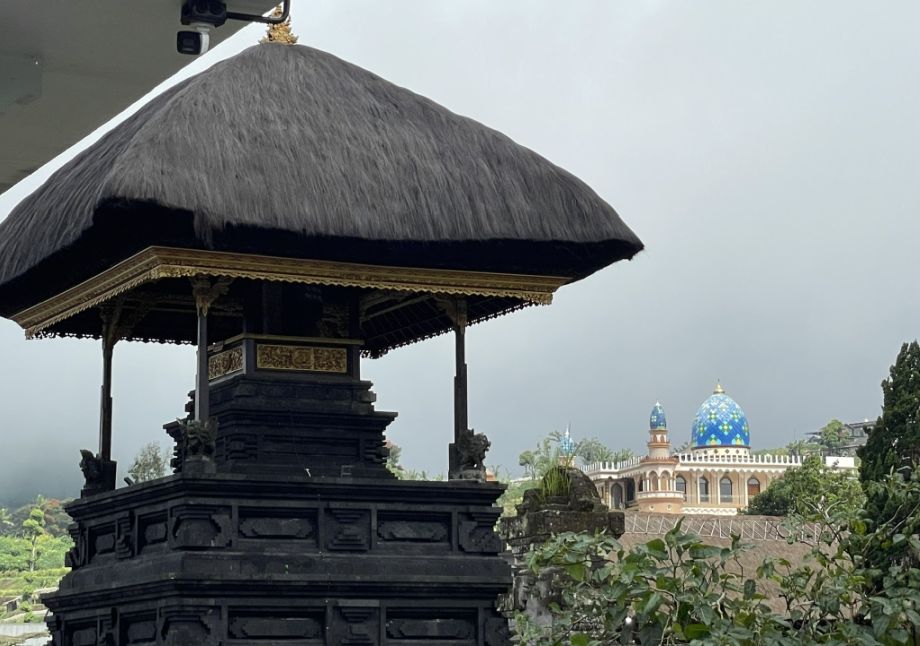
From the grassy area facing the lake, it’s easy to notice, just beyond the temple grounds a colorful, multi-tiered roof rising above the trees. That is the Masjid Besar Al-Hidayah Bedugul, the main mosque in the Bedugul area.
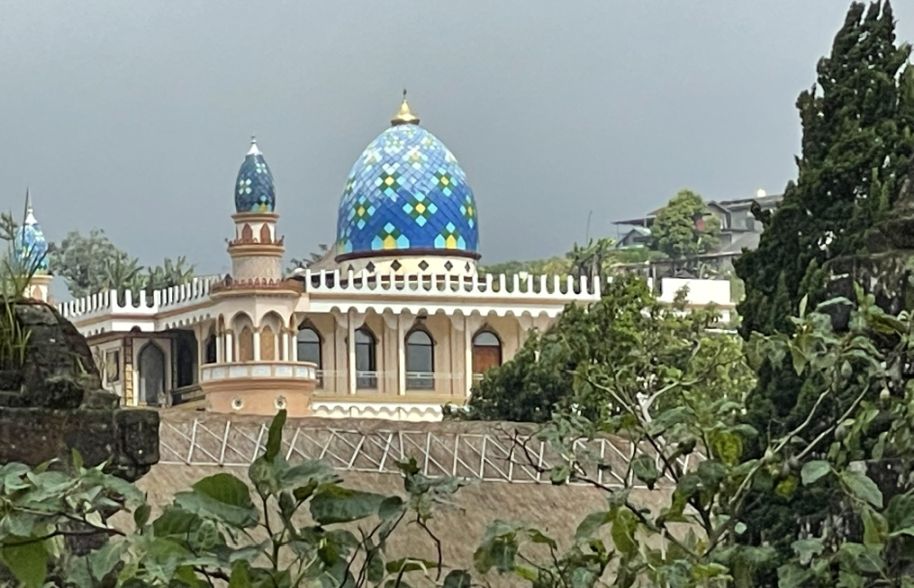
Balinese mosques often adopt local architectural features, and this one stands out because of its layered, pagoda-like roof (influenced by Balinese and Javanese styles). It’s a unique view: a Hindu water temple in the foreground and a vibrantly decorated mosque roof rising behind it, together creating a harmonious cultural scene.
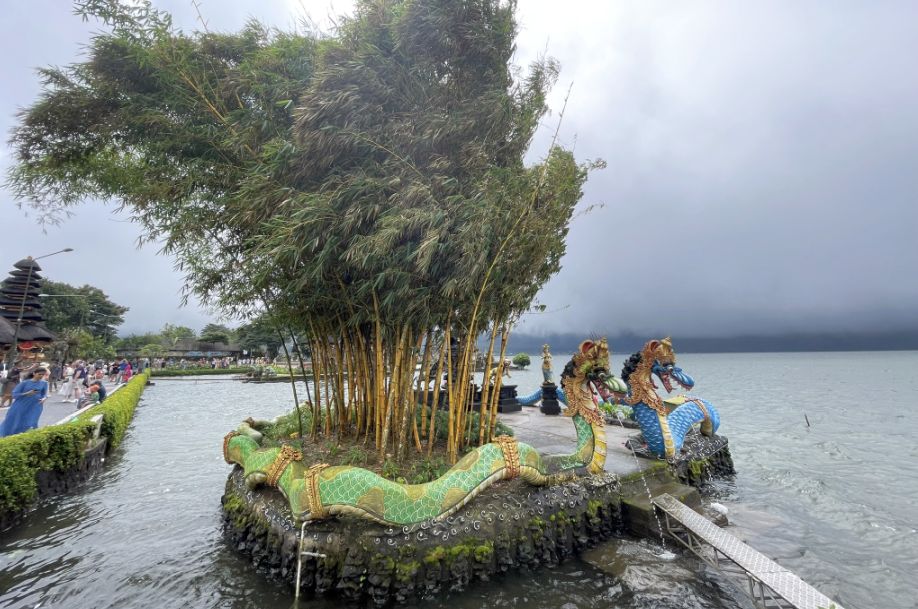
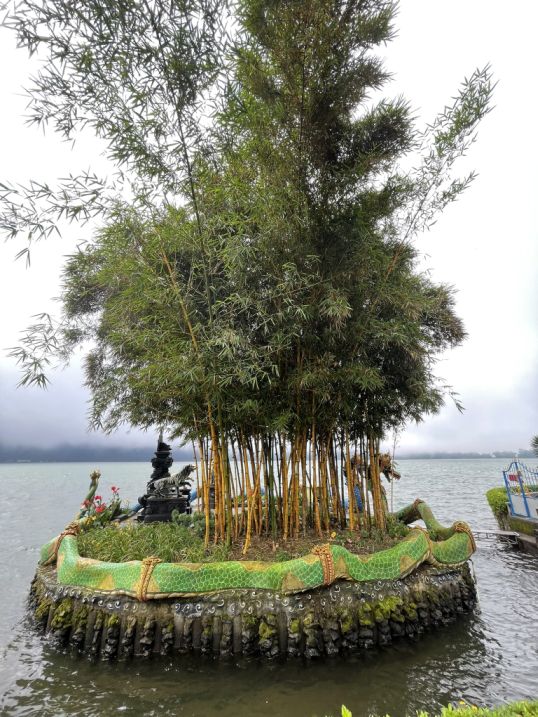
As we walked closer to the lakeshore at Ulun Danu Beratan, the cemented round platform with the blue-and-green dragon figure is one of the small lakeside shrines built slightly offshore. It adds a dramatic, almost floating appearance to the temple scenery.
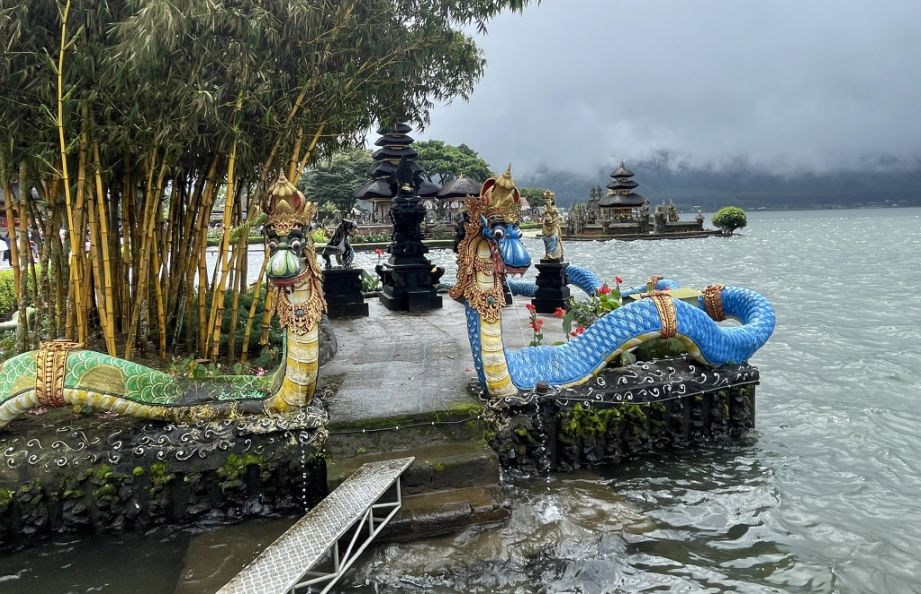
The creature is a Nāga, a mythical serpent-dragon found throughout Balinese and Hindu mythology. Its blue and green colors symbolize: Water and fertility (blue/green for lakes, rivers, and crops), and Protection (nagas guard sacred spaces, especially those near water).
 |
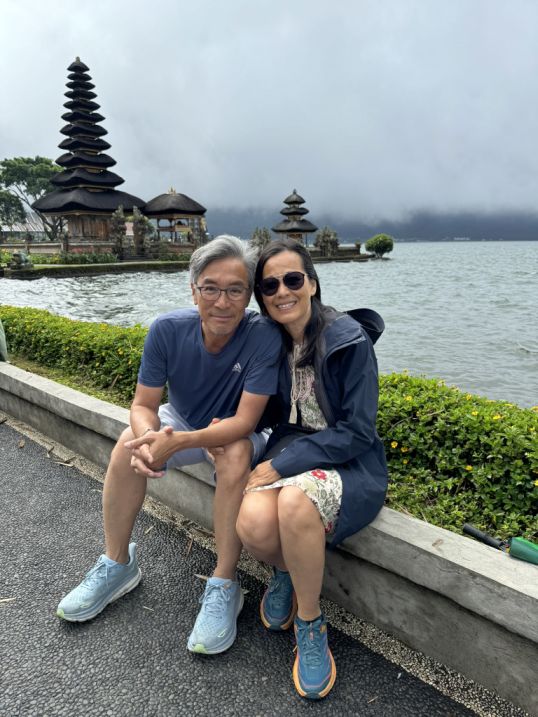 |
The cemented circle serves as a mini-shrine or guardian spot, positioned slightly offshore to symbolize a transition between the earthly realm (land), the sacred realm (water), which is especially important at this lake temple dedicated to Dewi Danu, the water goddess.
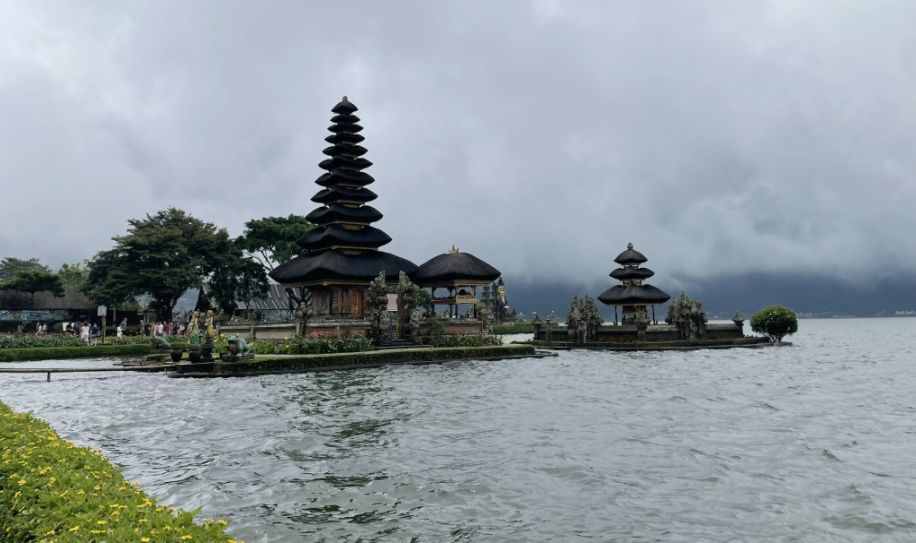
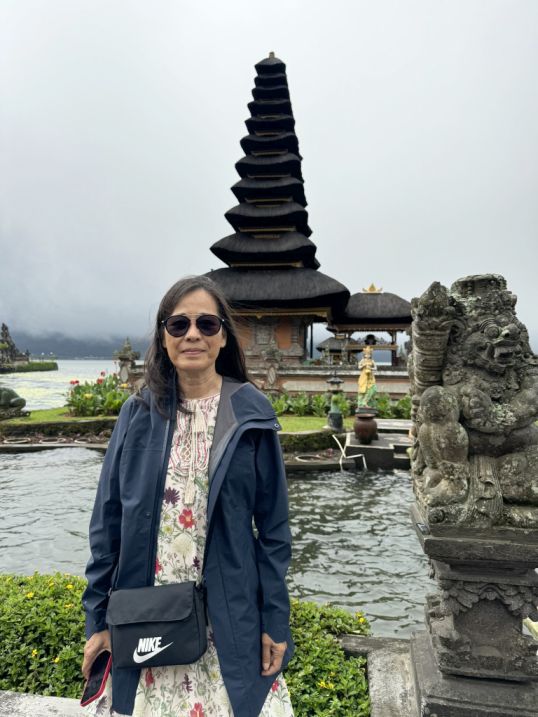
We walked a little farther along the lakeshore and the 11-tiered meru comes into view. This iconic heart of Pura Ulun Danu Beratan is one of the most photographed structures in all of Bali.
It sits right on the edge of the lake, and when the water is high, it looks like it’s floating.
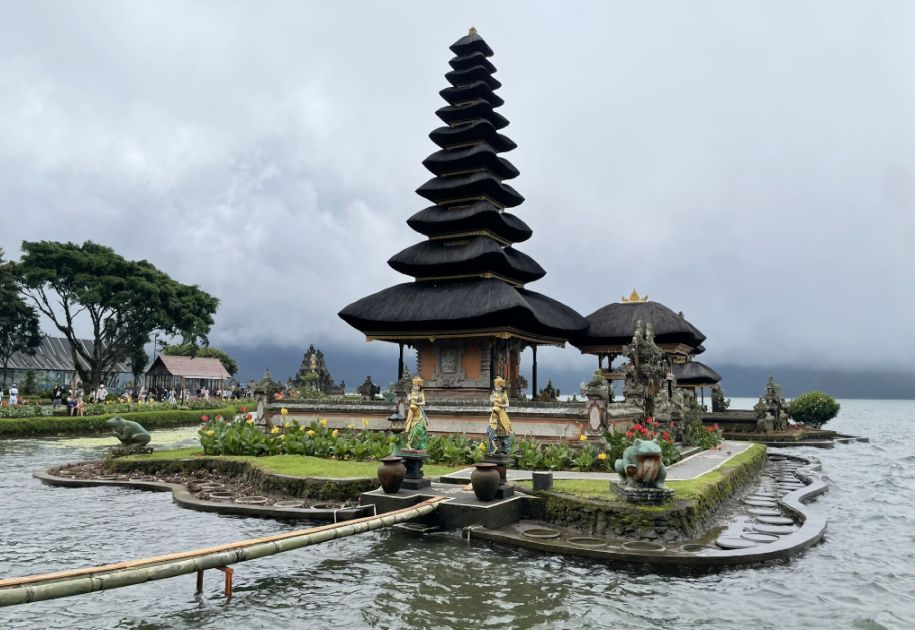
A meru is a multi-tiered shrine with overlapping thatched roofs made of black ijuk (sugar palm fiber). The tiers always come in odd numbers (3, 5, 7, 9, 11) because odd numbers are considered spiritually auspicious. The structure stands on a stone base surrounded by water. Often there are flowers, small offerings, and guardian figures placed around the platform.
 |
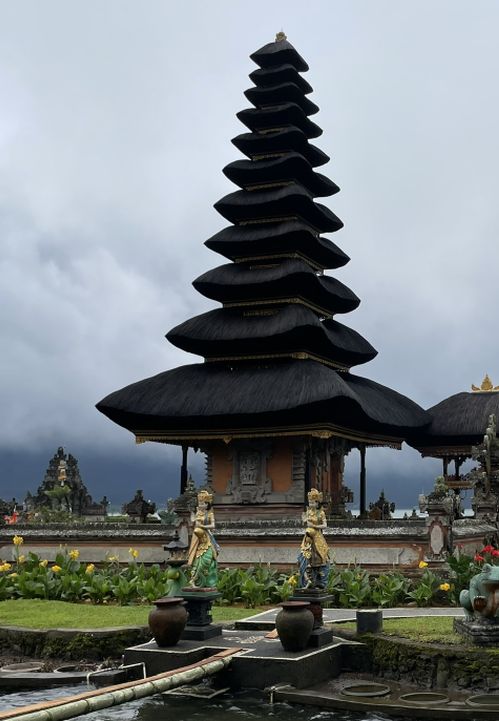 |
This particular meru with 11 tiers is the highest and holiest category, built only for the most important deities.
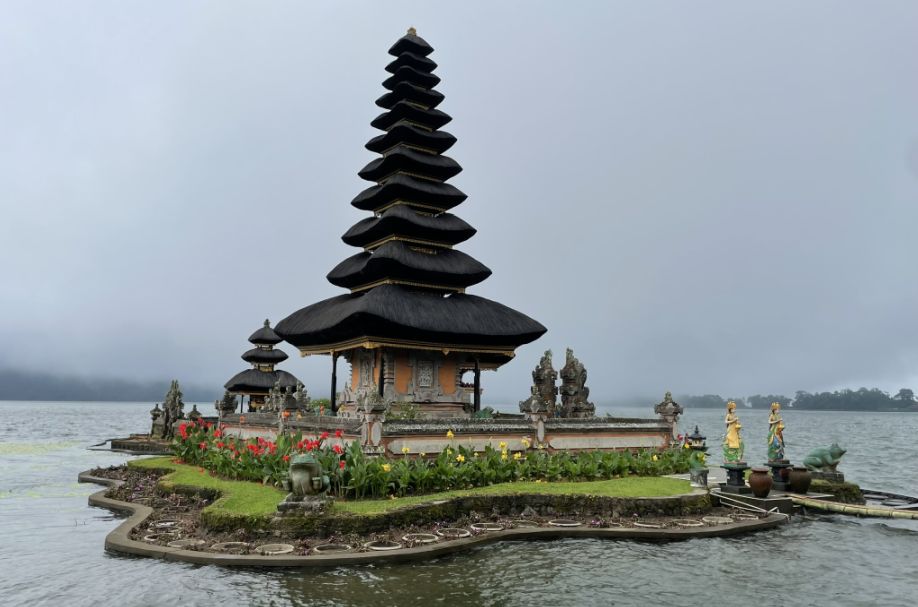
The 11-tiered meru at Ulun Danu Beratan is dedicated to Dewi Danu, the goddess of the lake and water, the Hindu Trinity (Brahma, Vishnu, Shiva) as a united cosmic force to bless agriculture.
Because Lake Beratan is one of Bali’s primary water sources, this shrine plays a symbolic role in blessing for water for the rice fields, harmony in the subak irrigation system, and fertility and prosperity of the land.
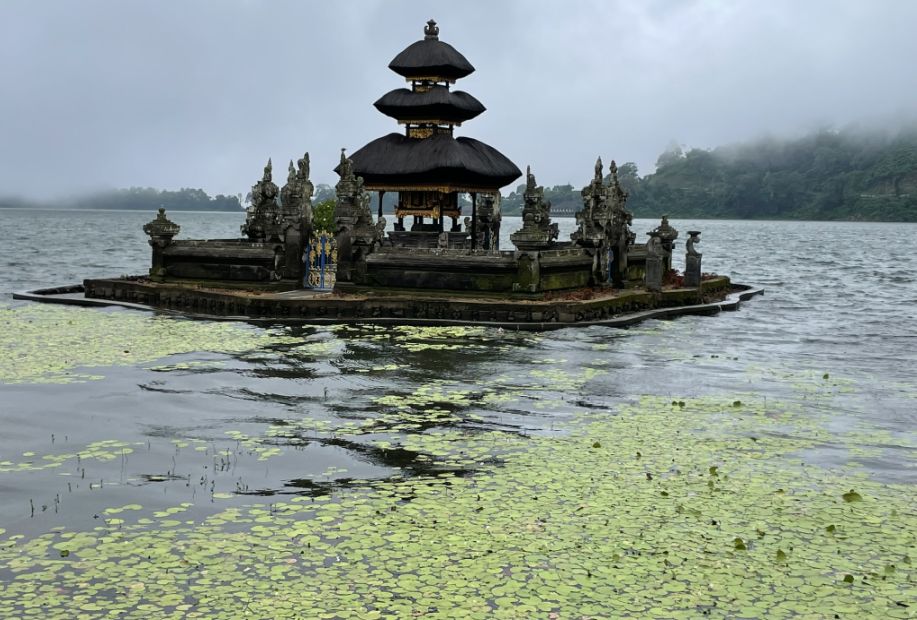
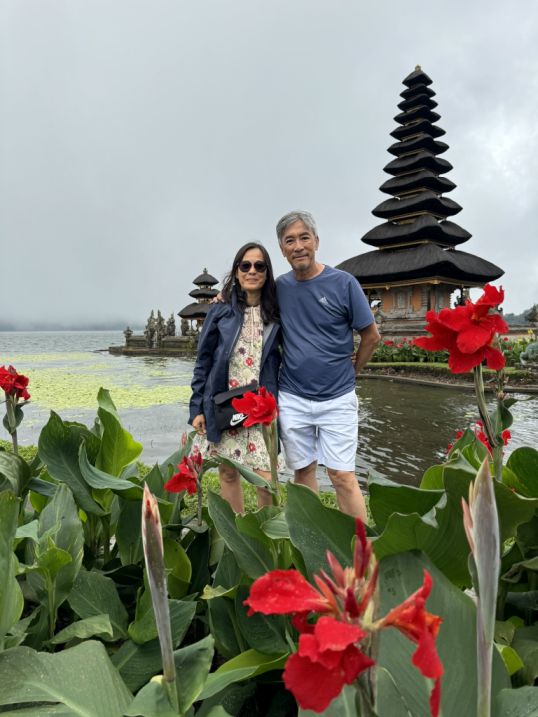
Right beside the grand 11-tiered meru, the smaller 3-tiered thatched-roof shrine creates a beautiful companion structure, especially with the lily plants growing all around it. A 3-tier meru is dedicated to lesser but still important deities or ancestral spirits, often connected to natural forces.
 |
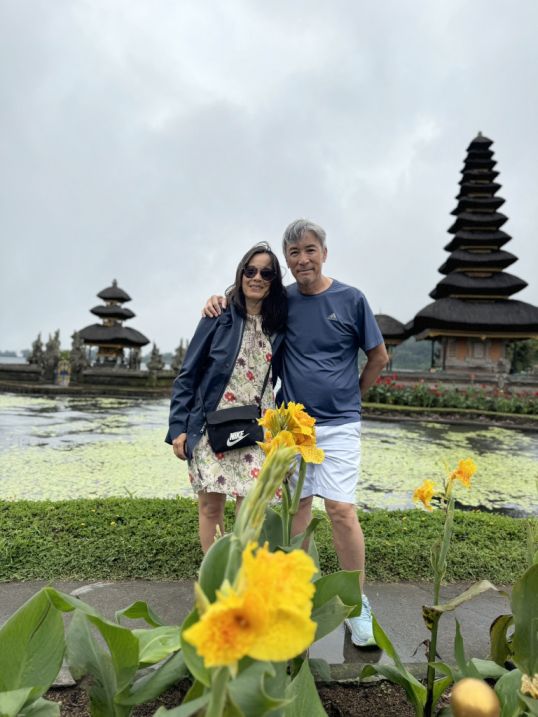 |
This spot is one of the most iconic and photogenic areas of Ulun Danu Beratan. The whole scene comes together like a perfectly arranged painting.
Right along the lake’s edge, the garden beds are planted with bright red and yellow flowers, and their vivid colors make them one of the favorite photo spots for visitors.
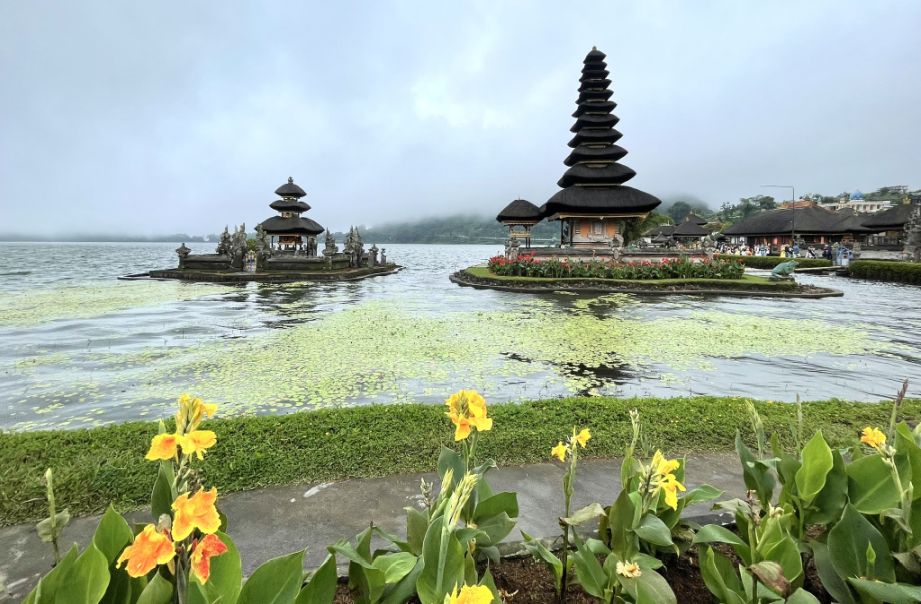
Both structures sits just above the lake, and the shallow water dotted with floating lily pads, soft green circles that drift quietly on the water.
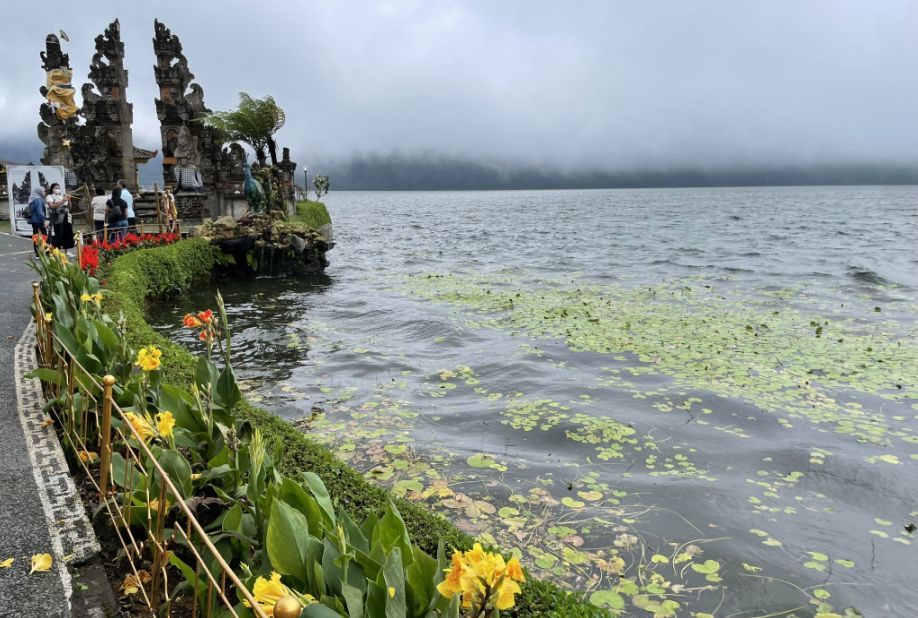
Toward the end of the lake there is a traditional candi bentar gate.
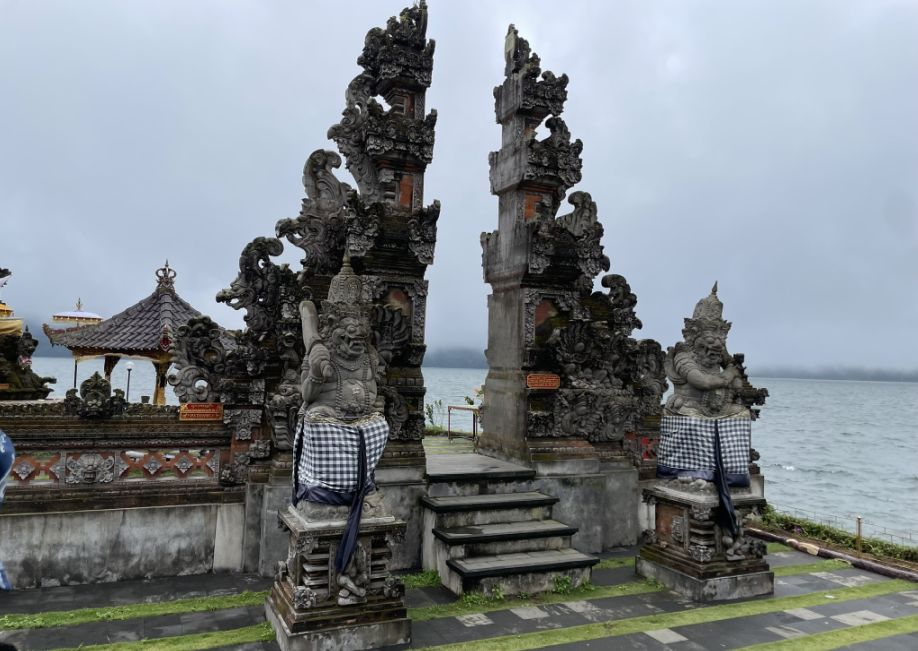
The candi bentar gate, a split stone gateway that marks the boundary between different temple zones. At the entrance stand two guardian statues (dwarapala), they are wrapped in black-and-white checkered sarongs (saput poleng), which symbolize Duality and balance (good/evil, light/dark) and Protection, the guardians watch over the area and ward off negative energy.
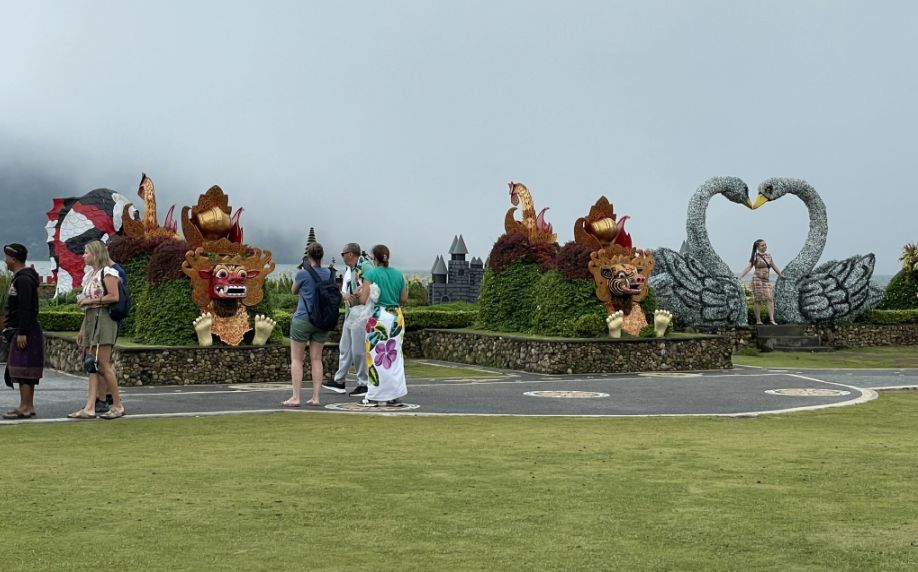
Once you pass that gate, we are in a beautifully landscaped park where visitors spread out to take photos. This area is known for being colorful, playful, and full of artistic elements. In this open area you see many sculptures, each one designed to be eye-catching and fun for tourists.
 |
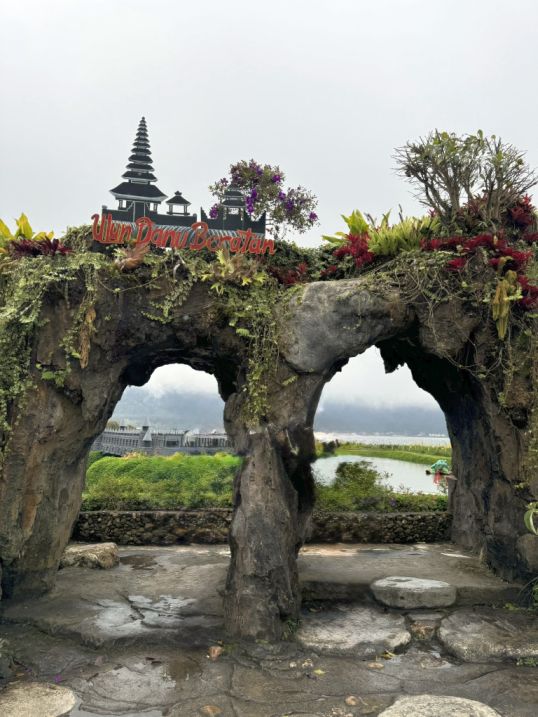 |
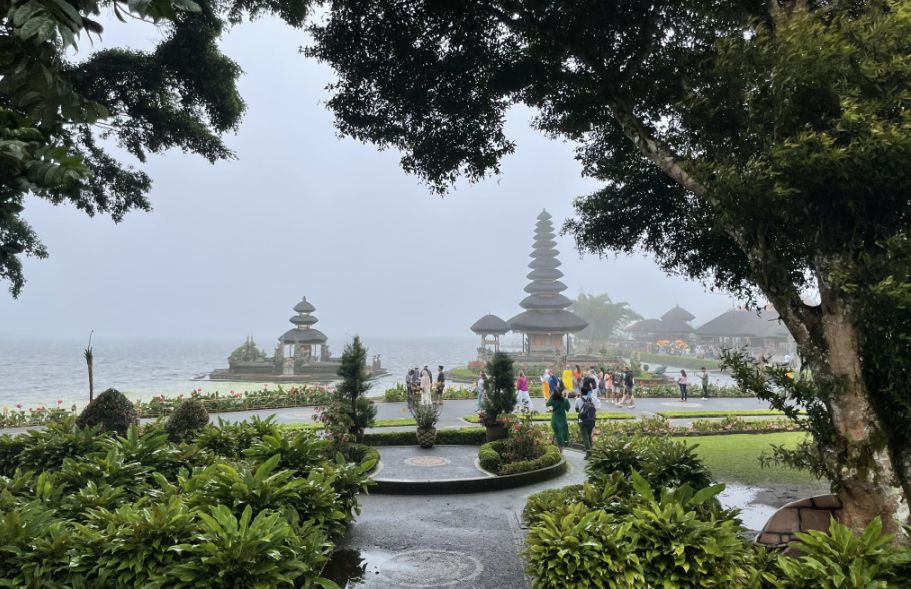
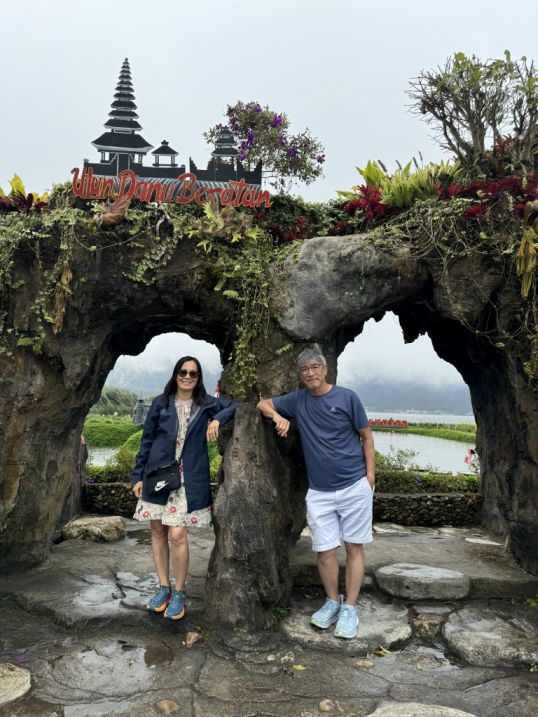
View of the lake and the Meru temple from the park.
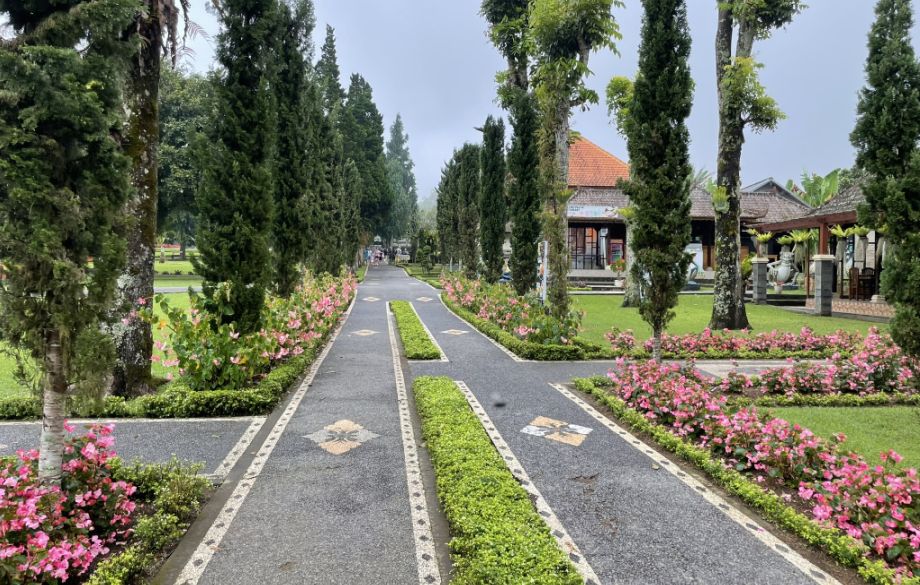
The garden is immaculate and so pretty.
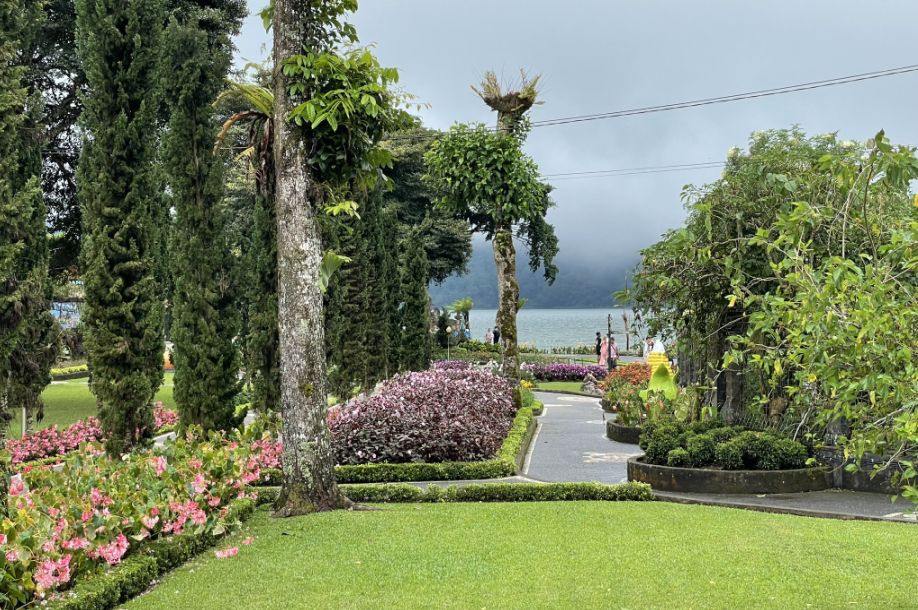
The garden path at Ulun Danu Beratan becomes almost whimsical as you move farther from the lakeside shrines, and the landscaping turns into a vibrant, colorful park filled with flowers.
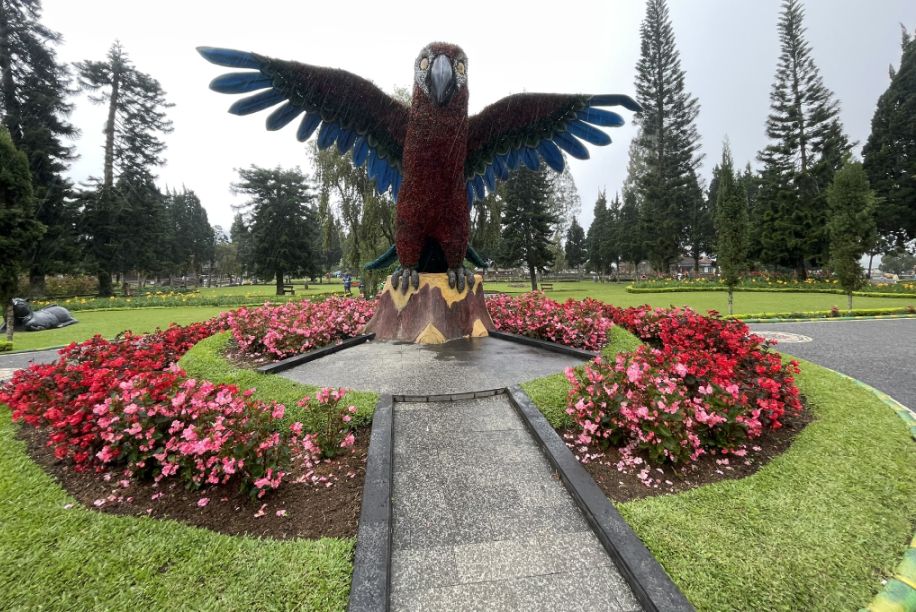
A little further ahead, we came across one of the park’s most striking sculptures of a massive parrot statue with its wings fully spread.
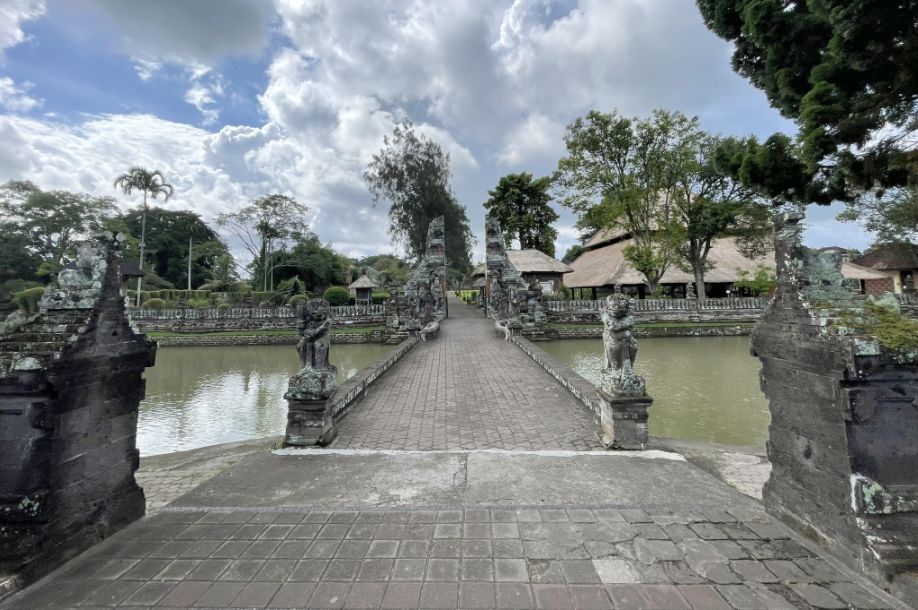
Next, we entered an area where the path leads onto a small bridge, with water on both sides. This spot feels calm and scenic.
 |
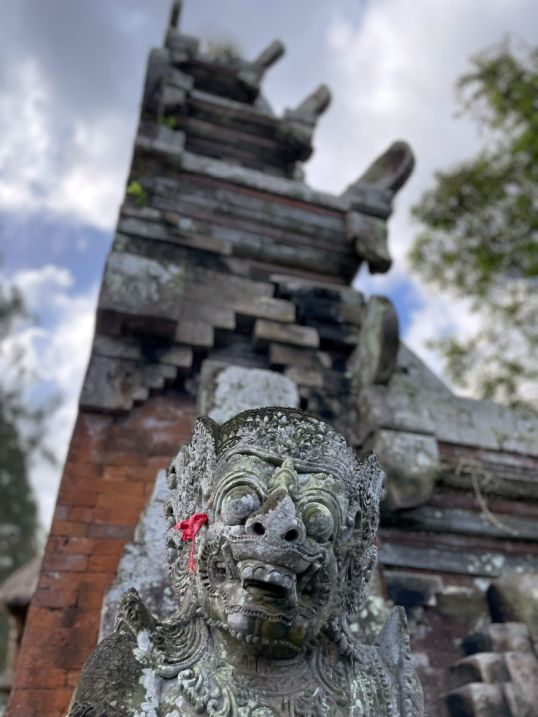 |
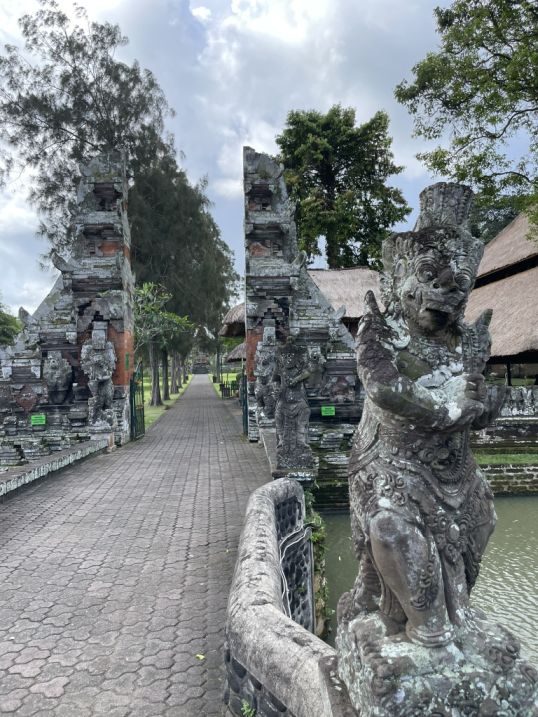
On each side of the bridge you can see two guardian statues.
 |
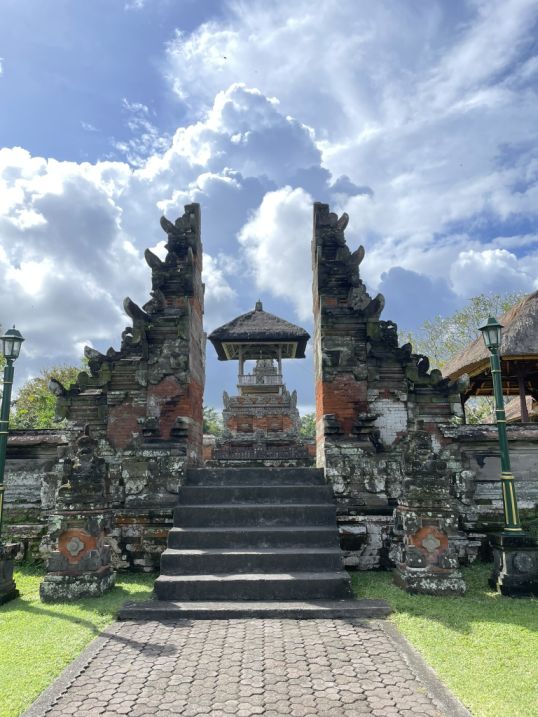 |
At the far end of the bridge stands another candi bentar, a traditional Balinese split gate.
 |
 |
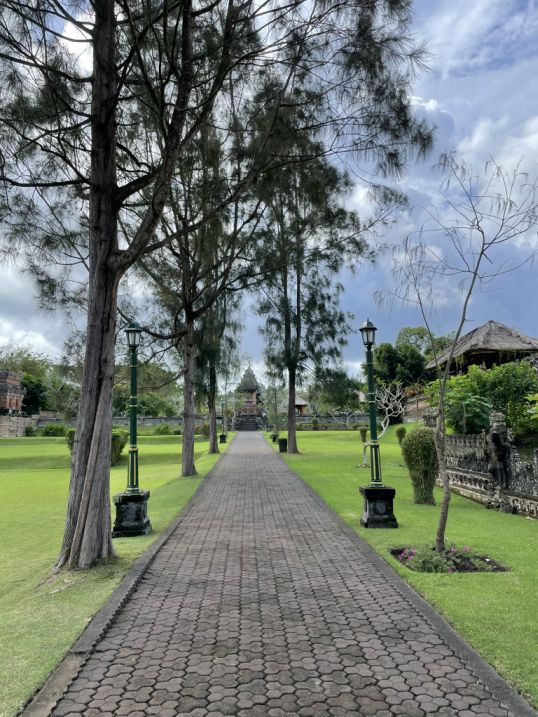
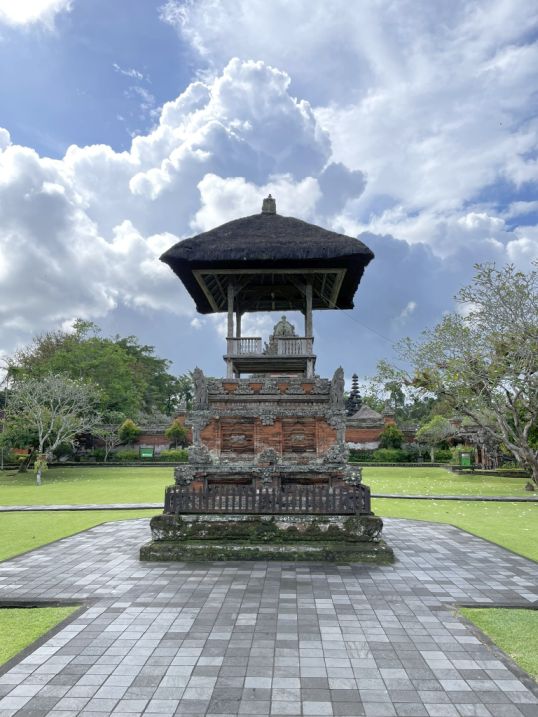
Once you step through that split gate, the setting shifts again, back into a more traditional, temple-like atmosphere that feels quieter and more spiritual. Right in the middle of the courtyard sits a small shrine topped with a thatched roof, that is usually dedicated to ancestral spirits or local protective deities.
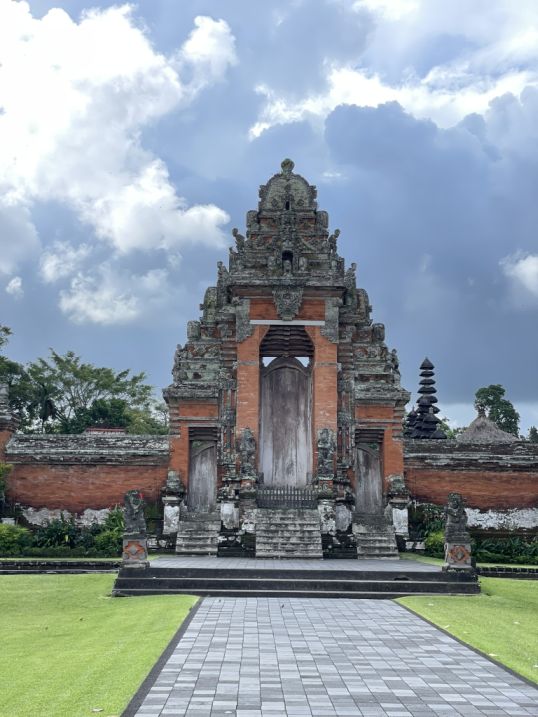
Towards the end of the courtyard is a dramatic structure made of orange-red bricks, shaped like a stepped pyramid, and covered with ornate carvings, mythical figures, and guardian statues.
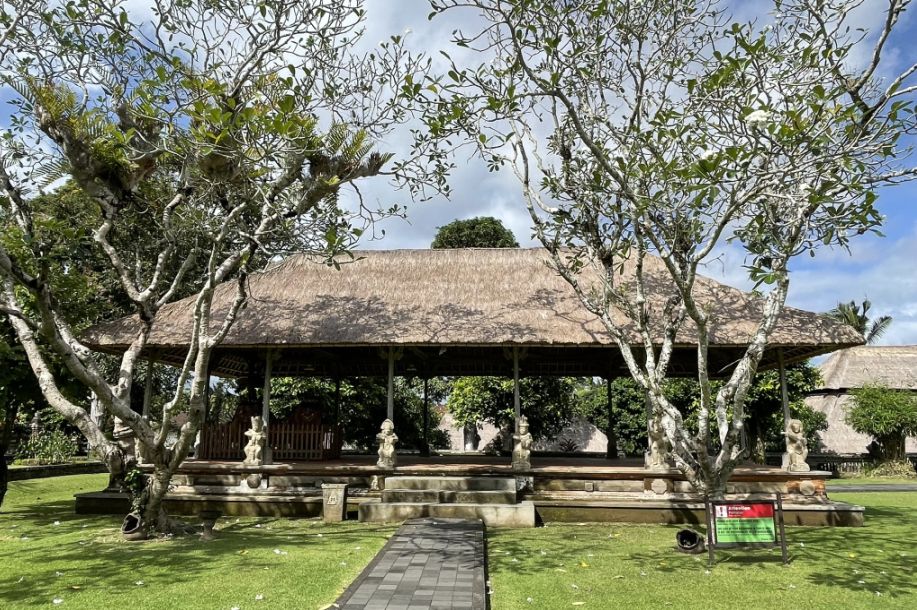
A large bale for visitors to rest.
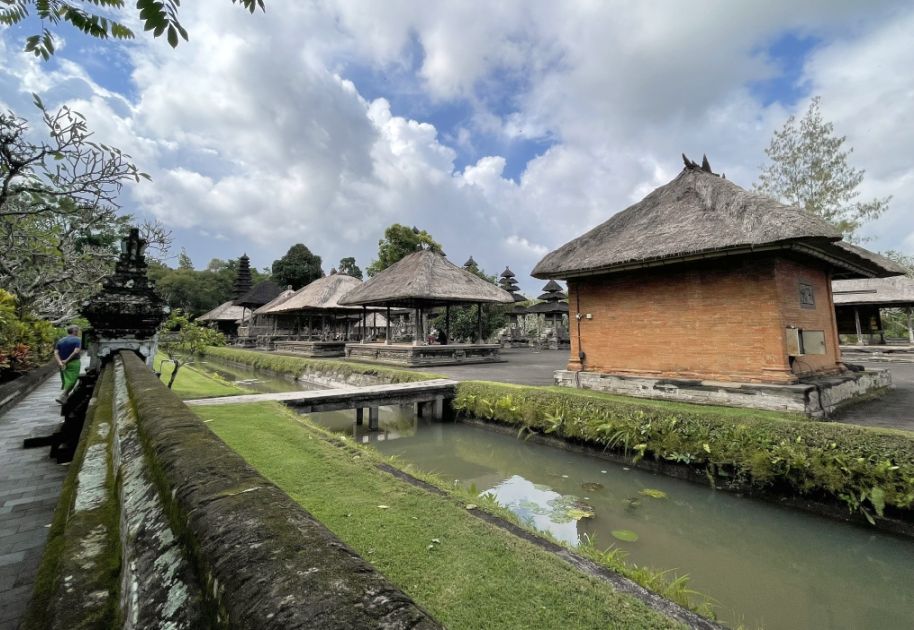
After exploring the courtyard, we followed a small pathway that runs alongside a narrow irrigation canal. The water flows quietly, adding a peaceful sound in this area.
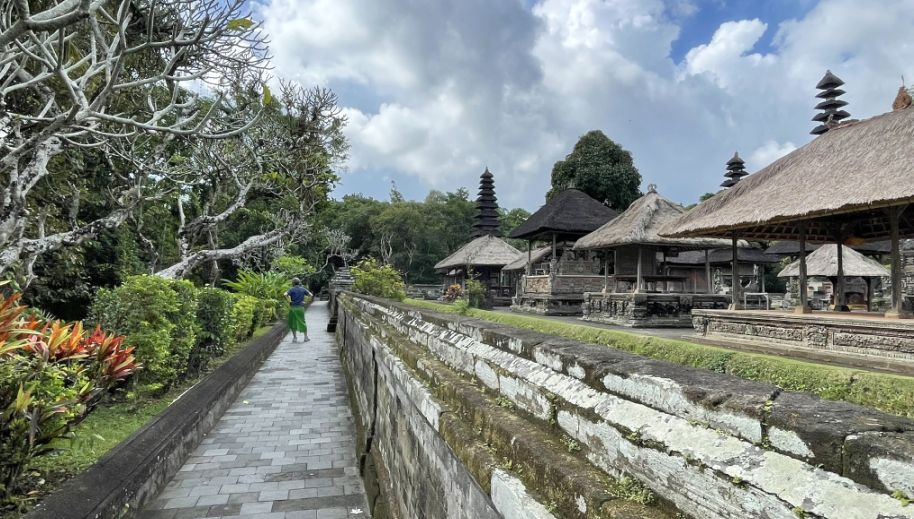
On the opposite side of the canal there are several traditional Balinese structures. This area feels like a blend between temple and village life, giving you a glimpse of how sacred architecture and everyday structures coexist in Balinese culture.
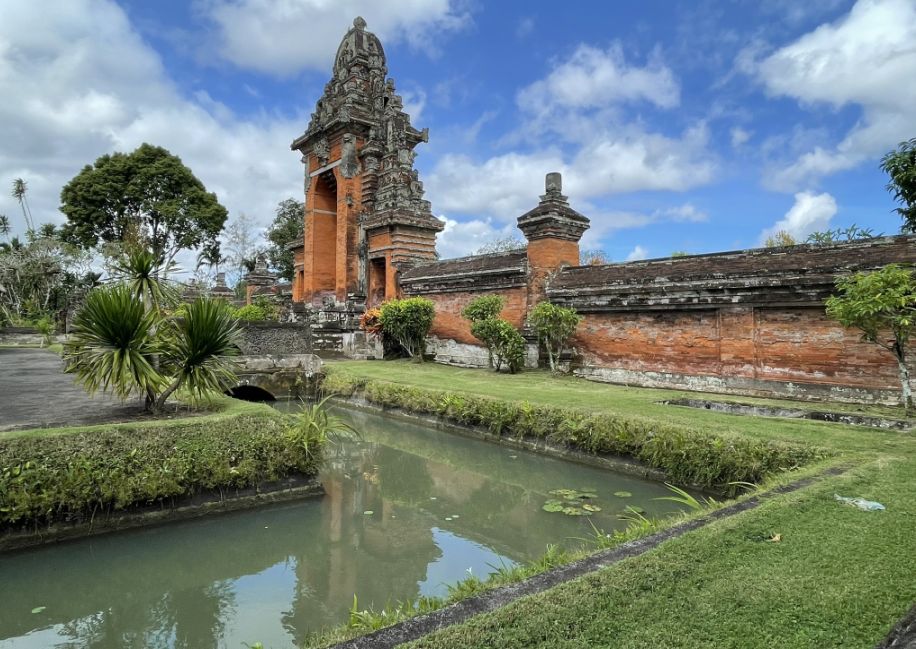
This area is very quiet, we were the only people around.
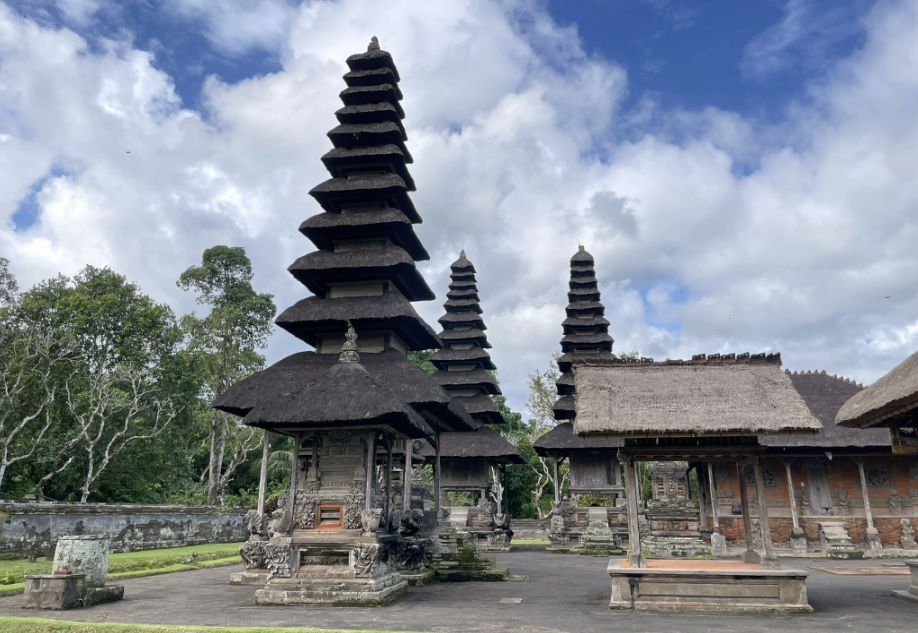
We have reached the “higher sanctum” or additional shrine complex of the temple. It’s not the main iconic meru by the lake, but an auxiliary sacred area used for major ceremonies.
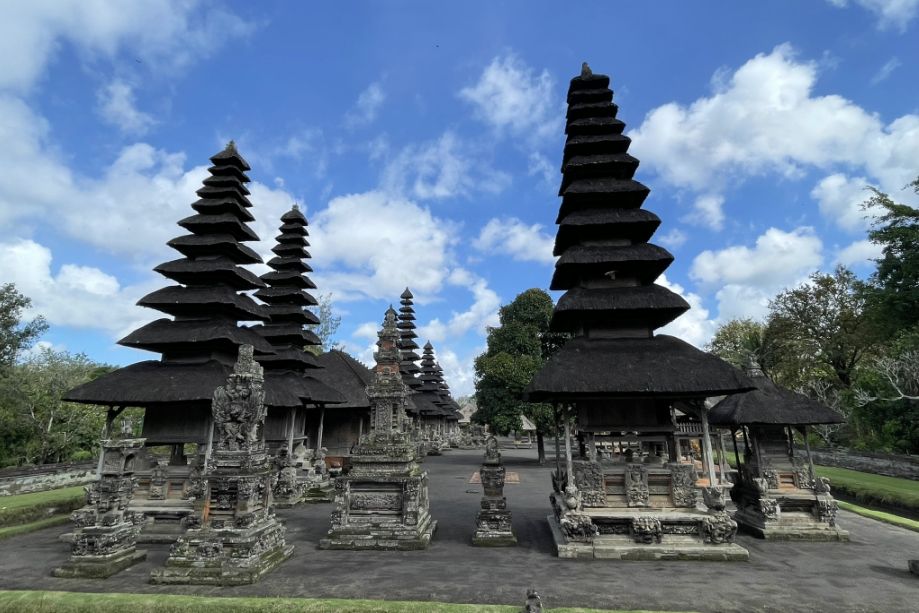
Seeing many 11-tier merus together indicates that this area is a major ceremonial zone, a sacred place where offerings are made during big festivals.
This cluster of merus symbolizes a concentrated spiritual power center, almost like several celestial towers rising together.
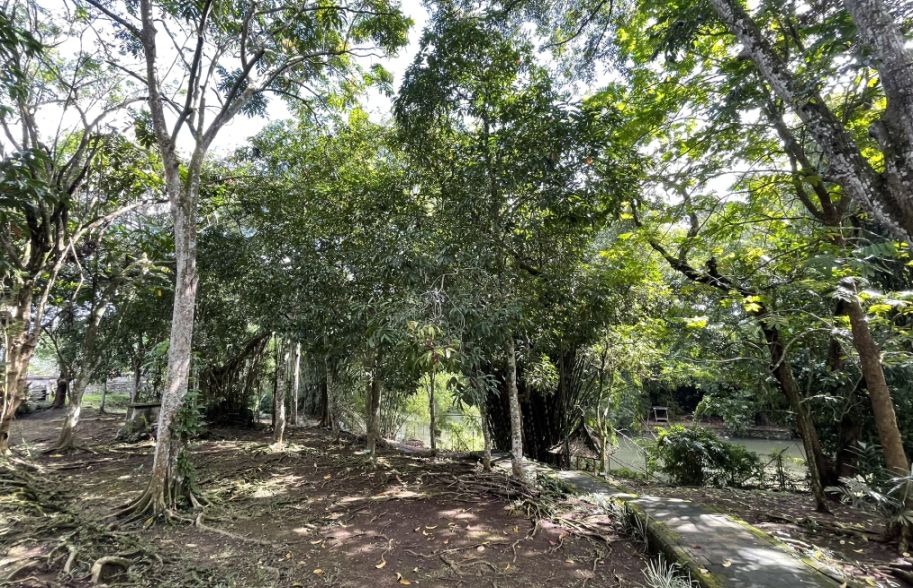
We entered a more natural zone of the temple ground.
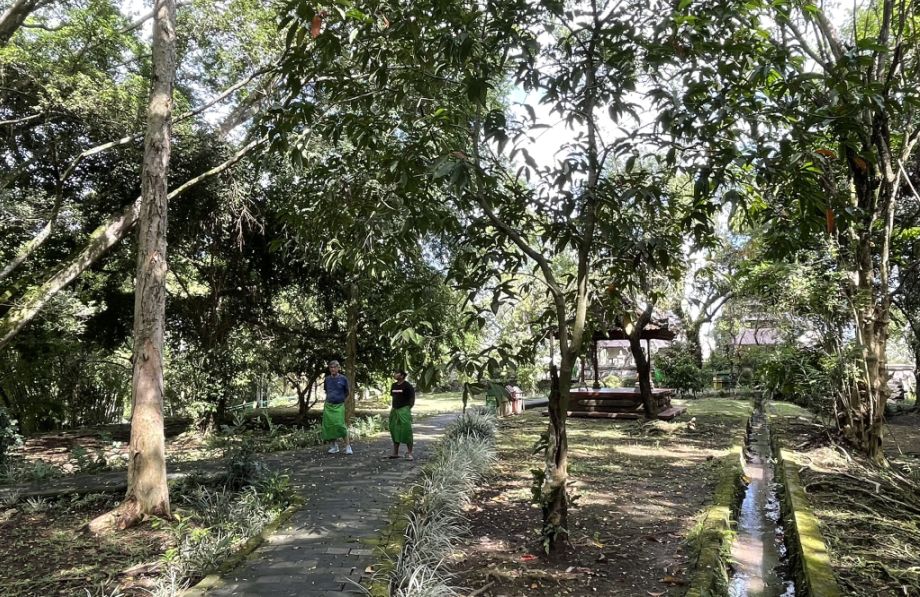
This area is shaded and cool, with tall trees. You can see Hoa and our tour guide wearing a green sarong.
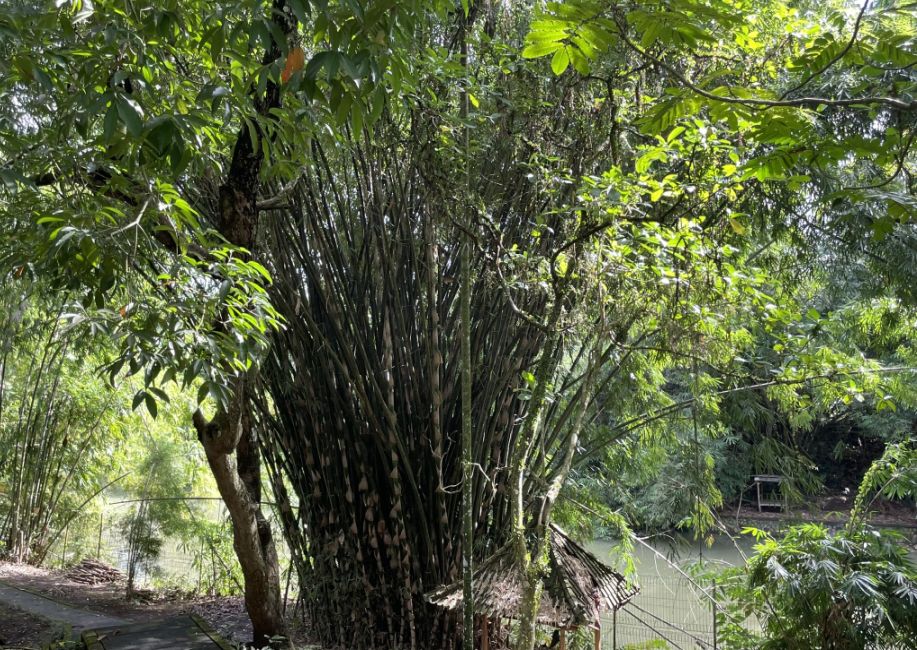
Bamboo groves growing next to a river. This wooded area represents the boundary between the sacred temple complex and the natural environment, blending spirituality with Bali’s landscape.
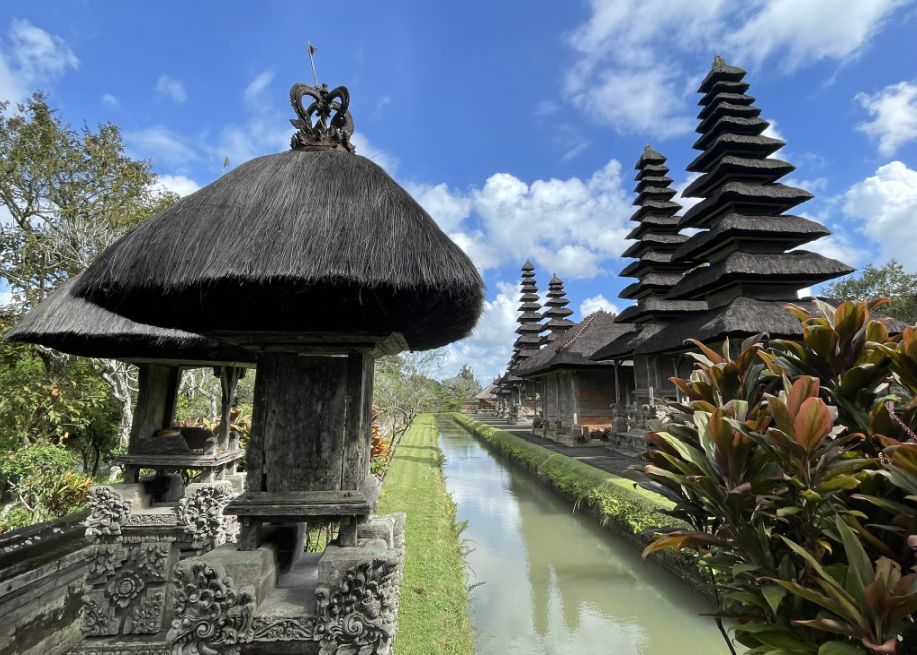
We are now in the back side of the “higher sanctum”. This view is really peaceful.
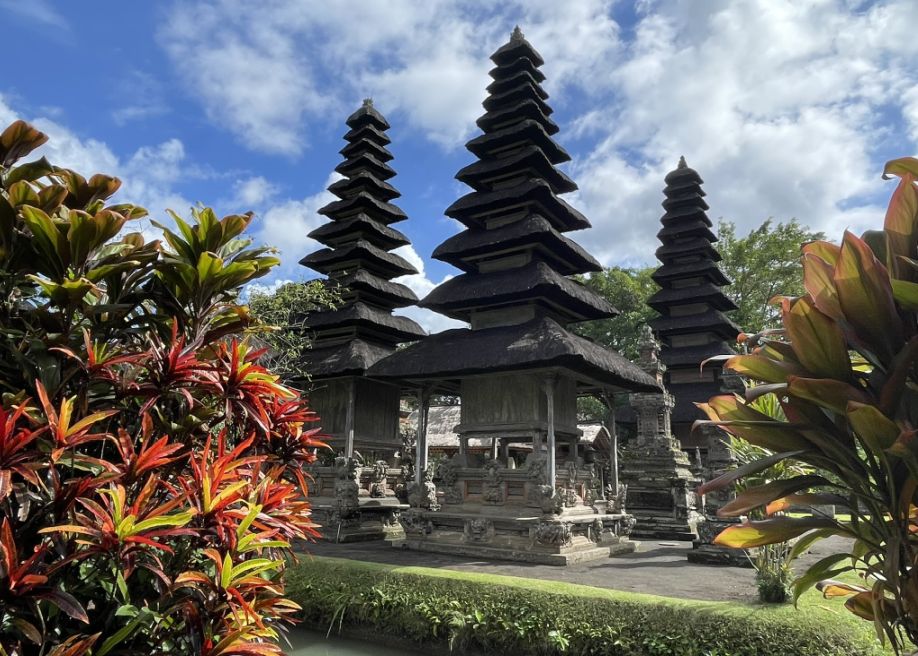
The higher sanctum view from the opposite side of the canal.

Dinner at Nusa, Ubud
Tonight we stopped for dinner at Nusa, a restaurant we noticed while walking around downtown Ubud. The warm lighting, relaxed atmosphere, and elegant décor caught our attention, so we decided to give it a try, and it turned out to be a great choice.
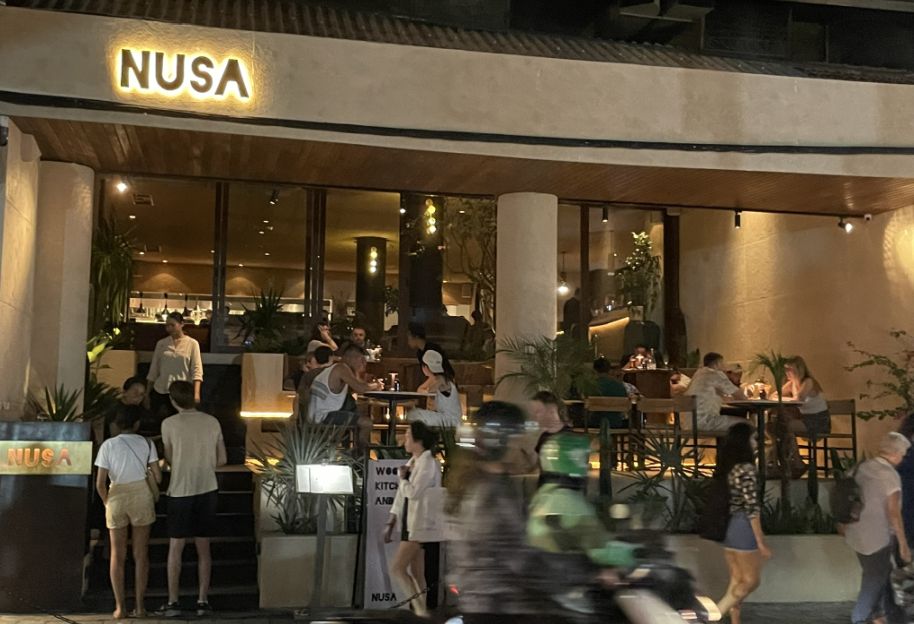
The front of the restaurant.
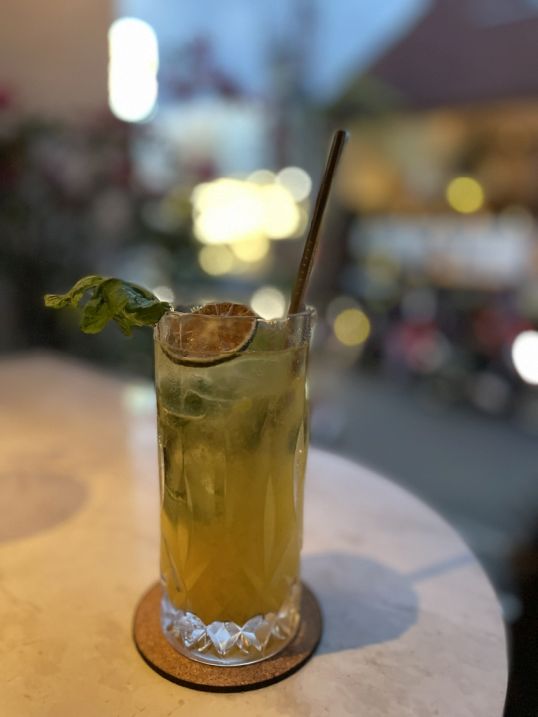 |
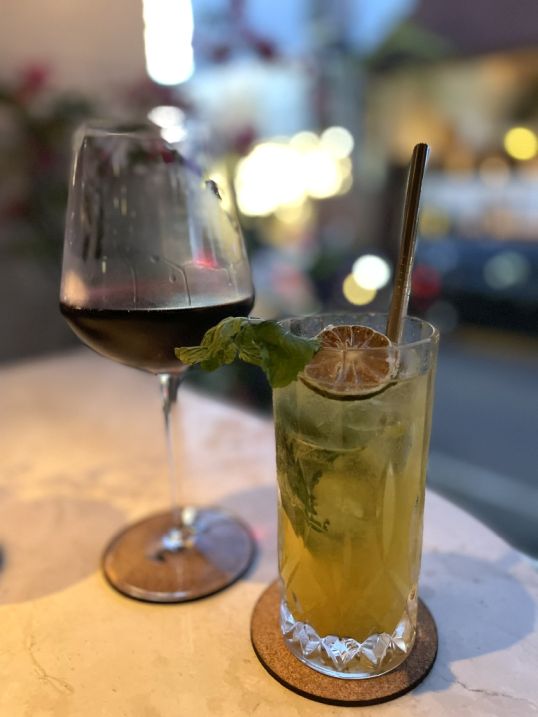 |
We started the evening with a passion fruit cocktail for me and wine for Hoa.
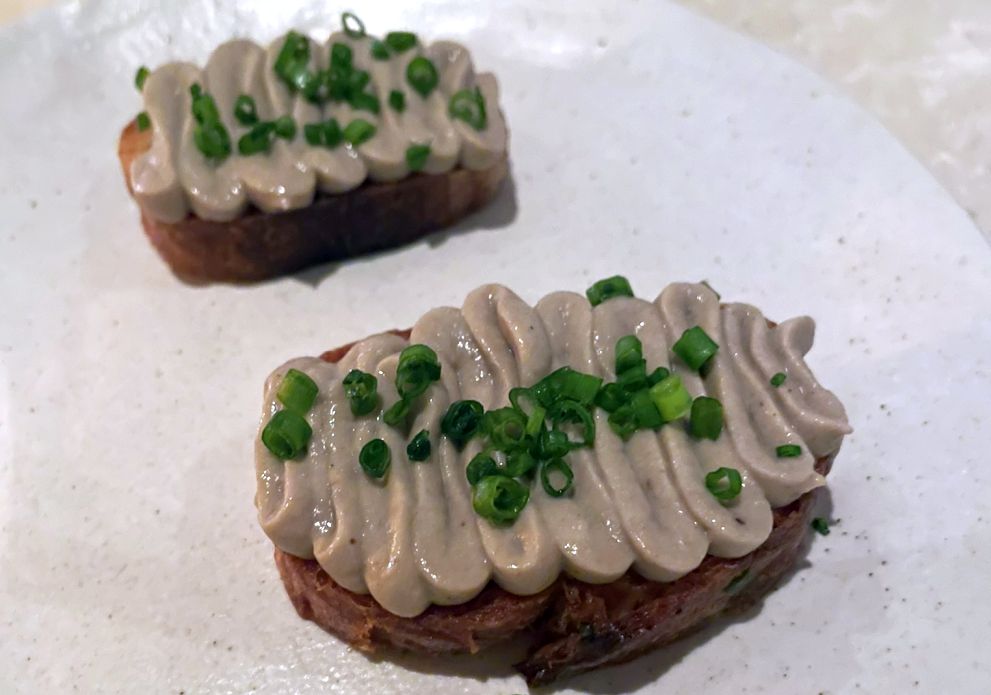
Before our orders even arrived, the restaurant surprised us with an amuse-bouche of crostini topped with a smooth rich liver pate mousse.
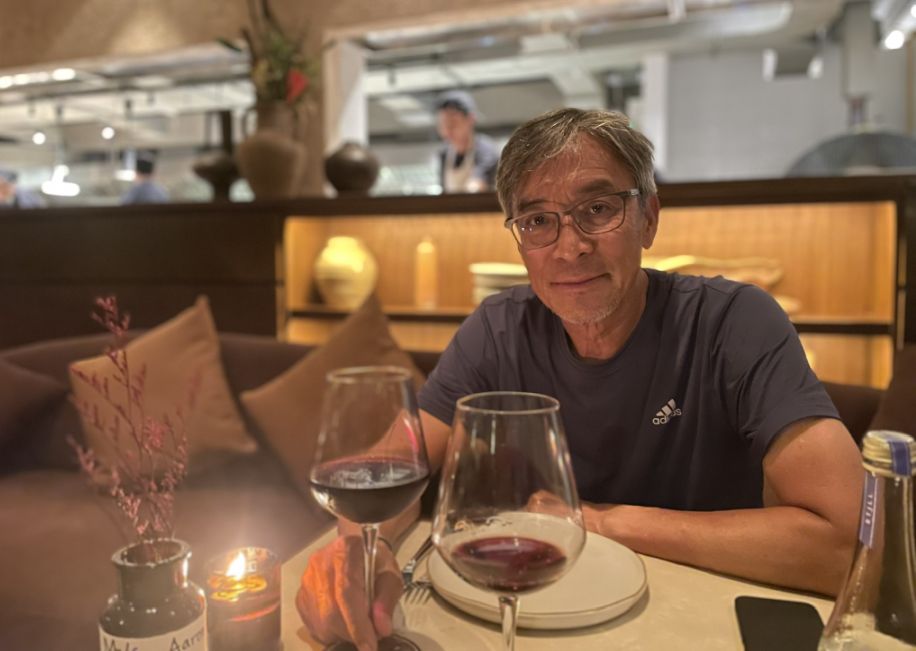
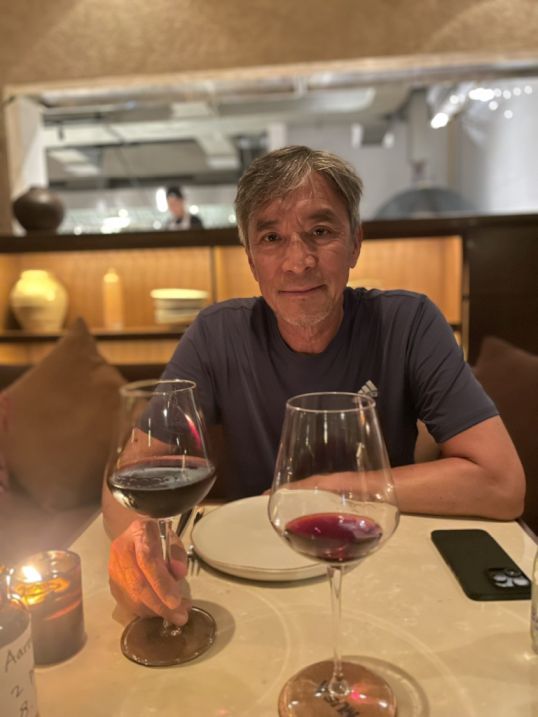
The restaurant has a really nice ambiance.
 |
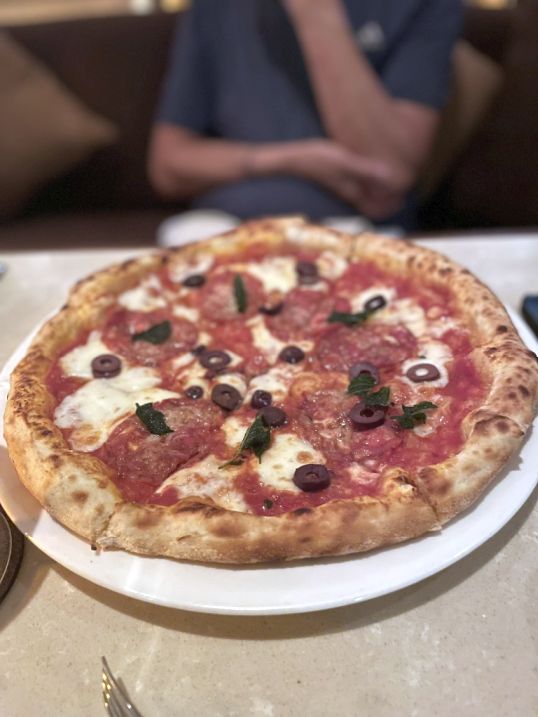 |
We shared a Pepperoni, mozzarella, and olives pizza. A simple combination but full of flavor. The crust was crispy, just the way I like it.
 |
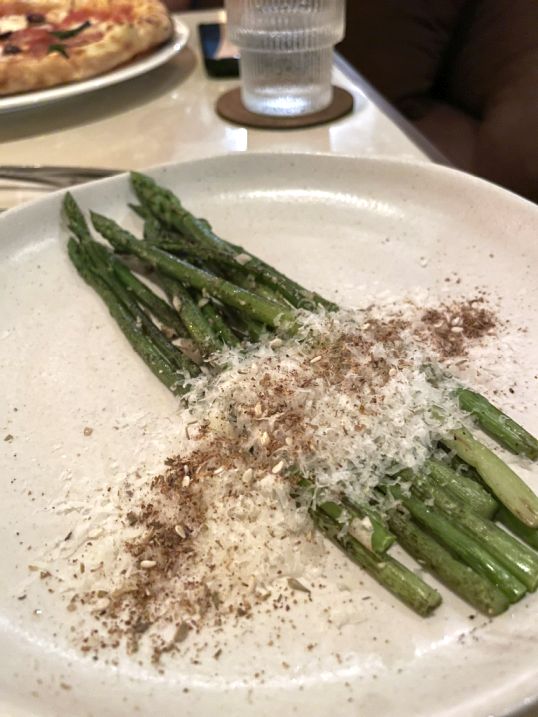 |
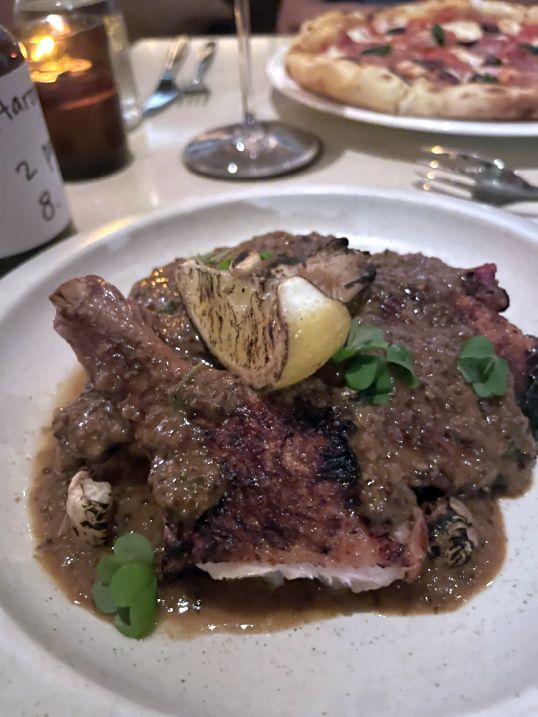
Braised beef slow cooked until soft was tender and comforting and the sauce was rich and yummy. The roasted asparagus was beautifully done too.
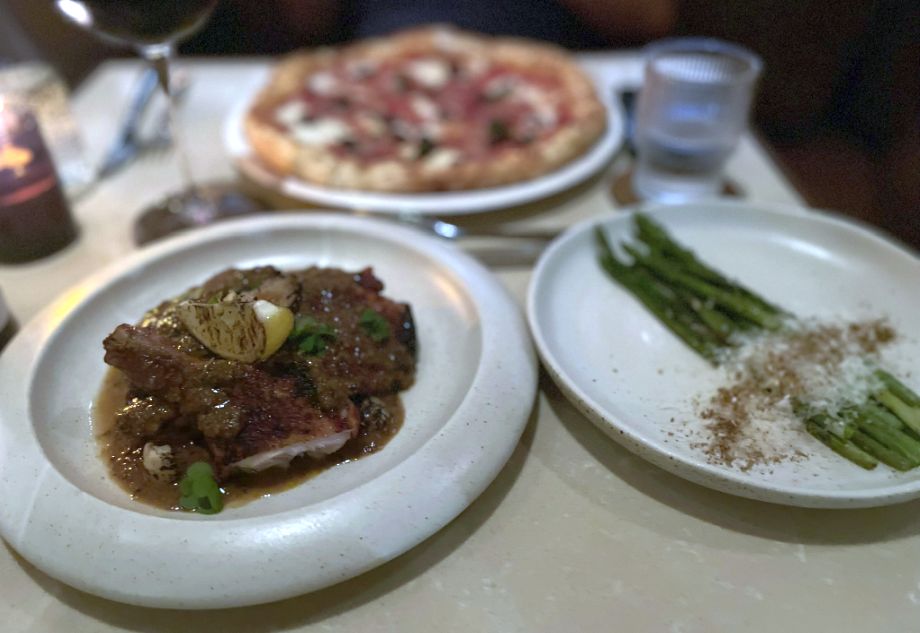
The three dishes we ordered.
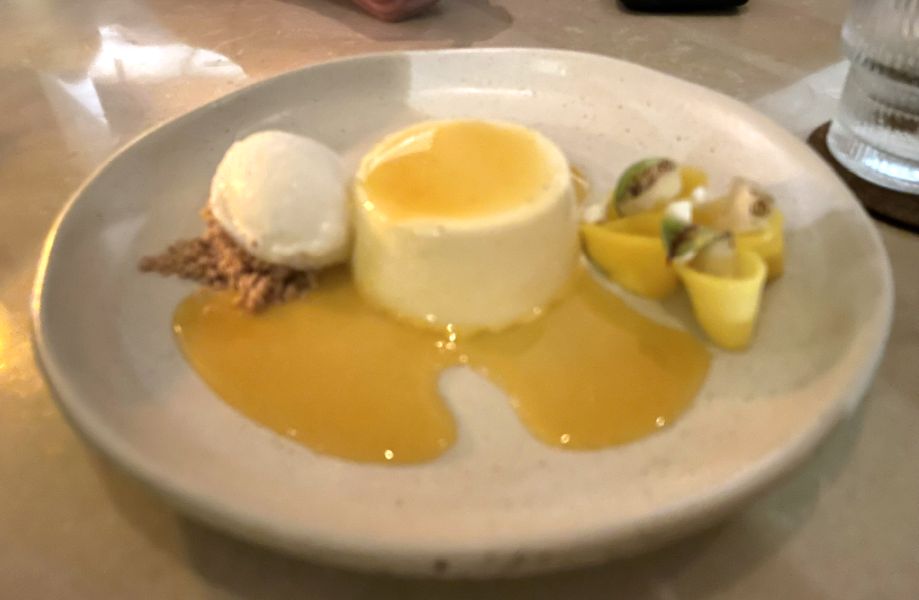
For dessert, I ordered a pana cotta with honey, vanilla ice cream and cookie crumbs.
We enjoyed our meal here, the atmosphere is intimate enough for a relaxed dinner but lively enough to feel part of Ubud’s energy. It was a spontaneous choice that turned into a delicious meal.
NEXT... Day 9-Tegalalang Rice Terrace