3 weeks in Bali, Indonesia- 5/28- 6/15/2024
|
Uluwatu |
Canggu &
surroundings |
Ubud & surroundings |
Sidemen/Amed |
Nusa Penida |
Day 9- Tegalalang Rice Terrace-6/4/2024
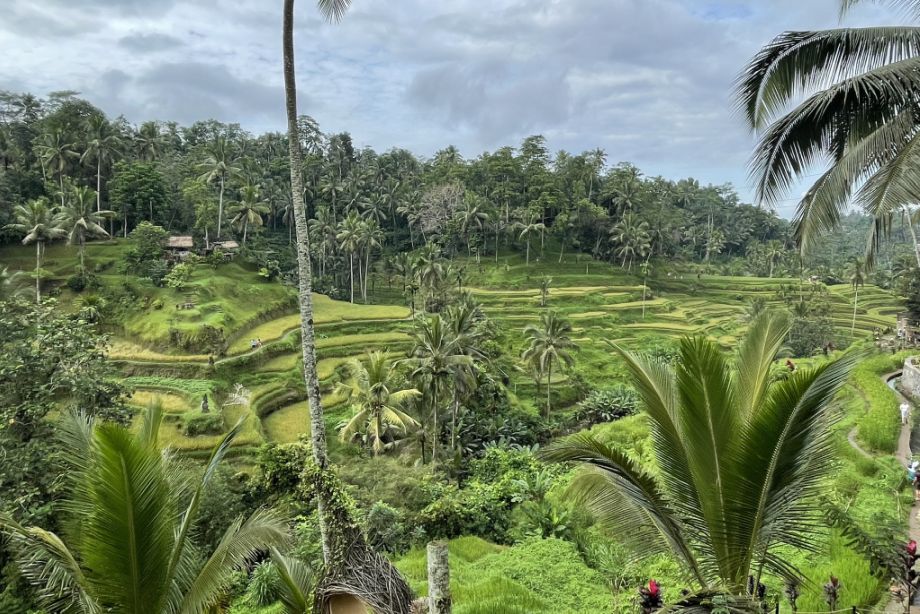
Tegalalang is known for its steep, sculpted terraces carved into a narrow valley. Unlike the broad, open rolling fields of Jatiluwih, Tegalalang is all about dramatic layers, tight curves, and deep slopes. The terraces fold into the hillside like waves, each level glowing bright gold when the rice is mature.
Tegalalang Rice Terrace is one of Bali’s most famous viewpoints, and arriving there in the morning, especially when the rice is golden feels like stepping into a postcard. But compared to Jatiluwih, it has a very different personality.
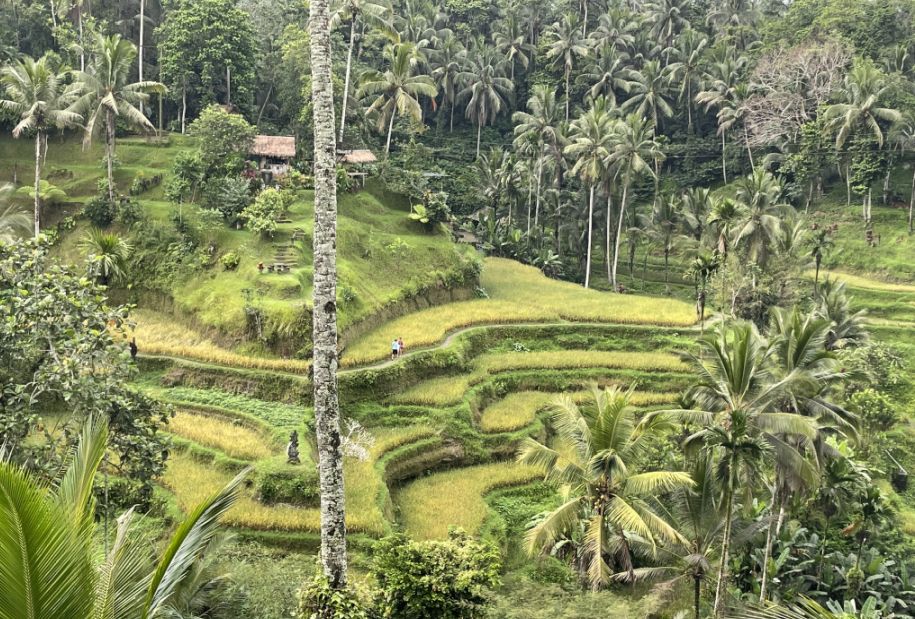
The rice terraces here are beautiful and it is still an authentic working rice terrace but with a lot of tourists.
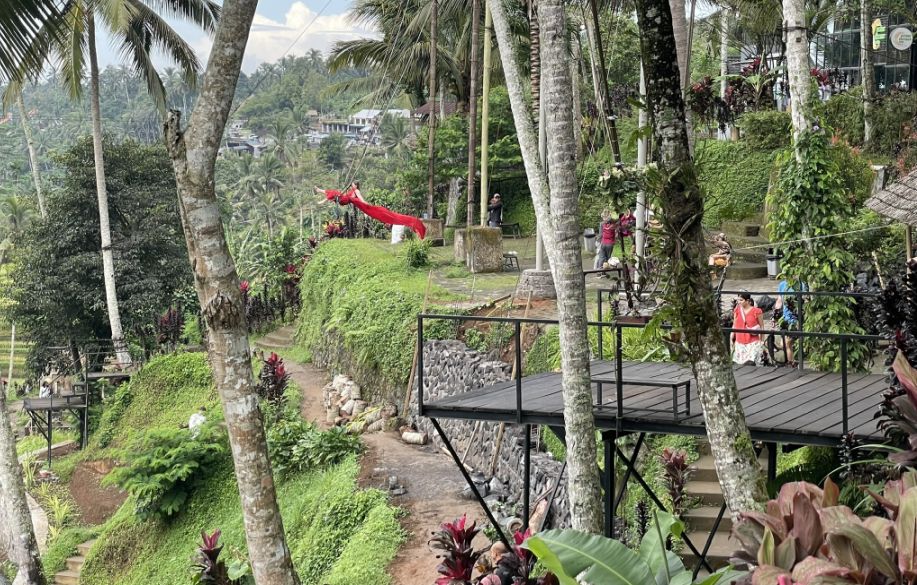
Unlike the calm, expansive countryside feel of Jatiluwih, Tegalalang is much more developed for tourism. This upper road is filled with small cafes overlooking the terraces and every viewpoint has a platform or a swing set up.
 |
 |
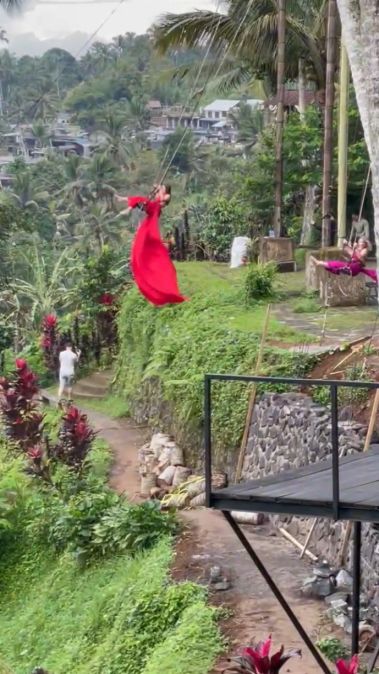 |
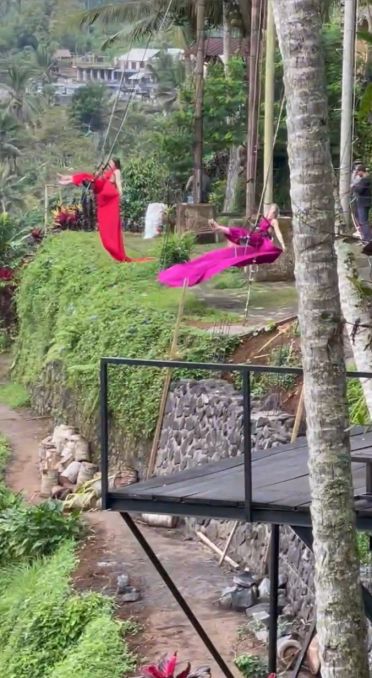
As we stepped into Tegalalang, that sense of commercial energy became obvious almost immediately. Within just a few minutes of walking in, we saw two ladies dressed in bright red and fuchsia soaring through the air on one of the famous “Bali swings.” Their vibrant outfits and the dramatic swinging motion against the backdrop of golden rice terraces made quite a striking scene, but it also highlighted how much this area has transformed into a spot built for photos, souvenirs, and quick thrills.
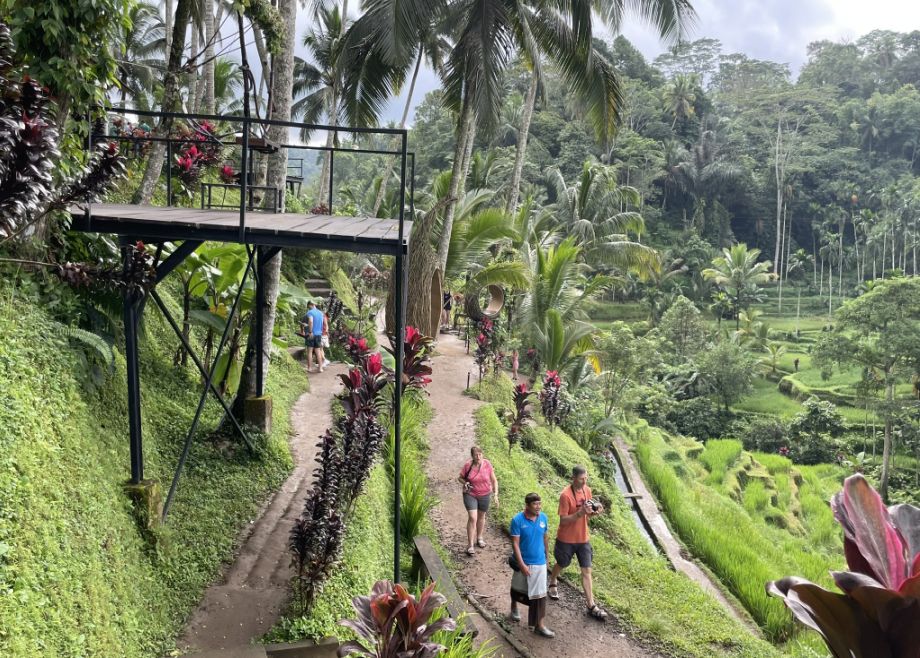
There are a lot more people here than in Jatiluwih.
 |
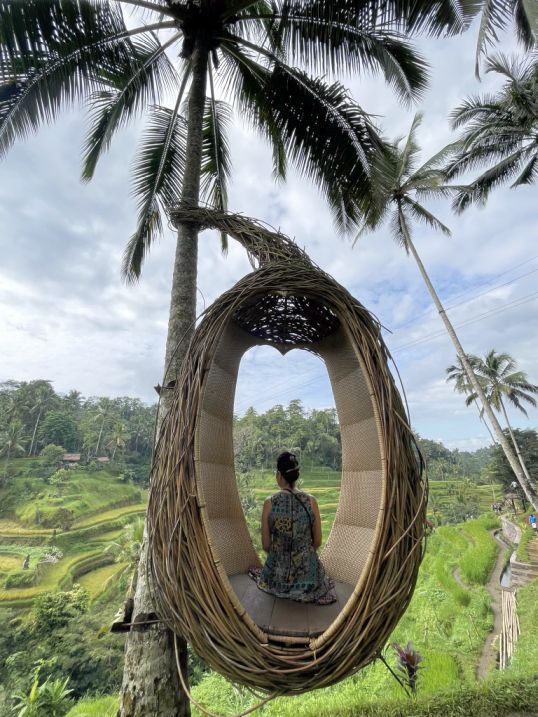 |
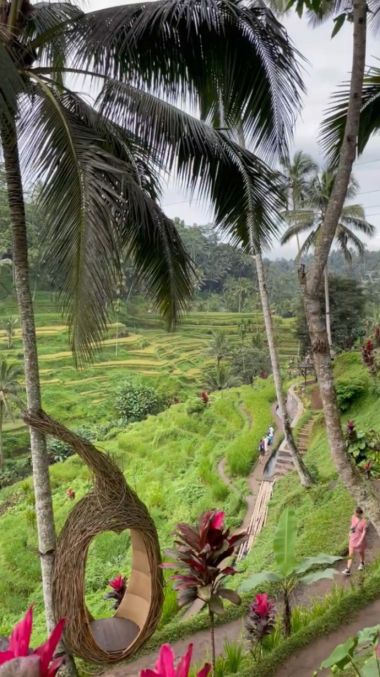
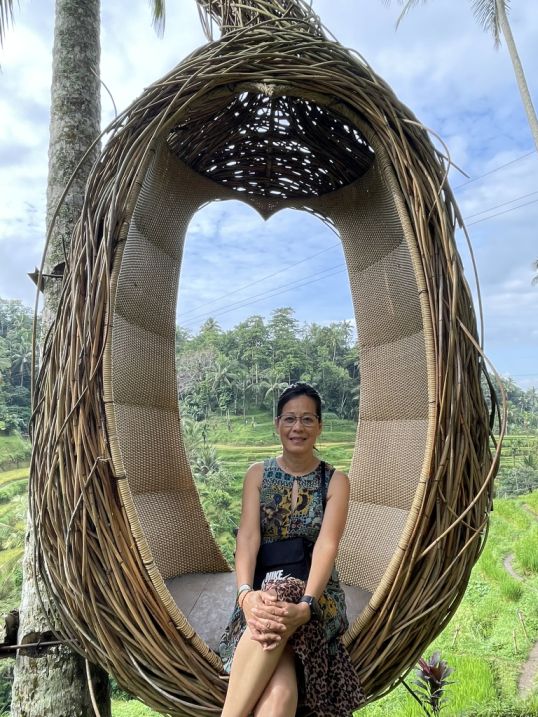
They have a lot of photo spots for tourists like this giant bamboo nest. The view is really beautiful from here.
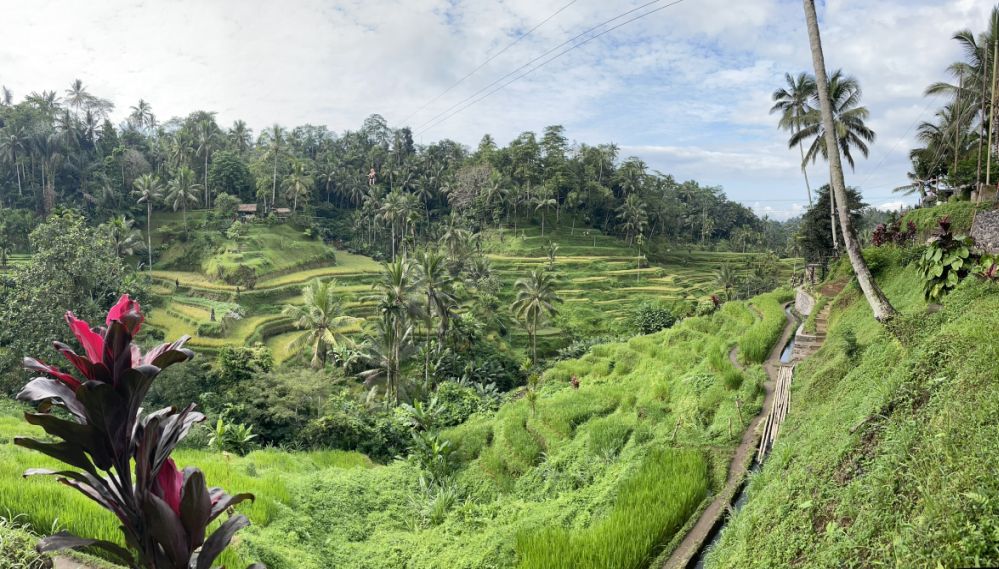
Panoramic view.
 |
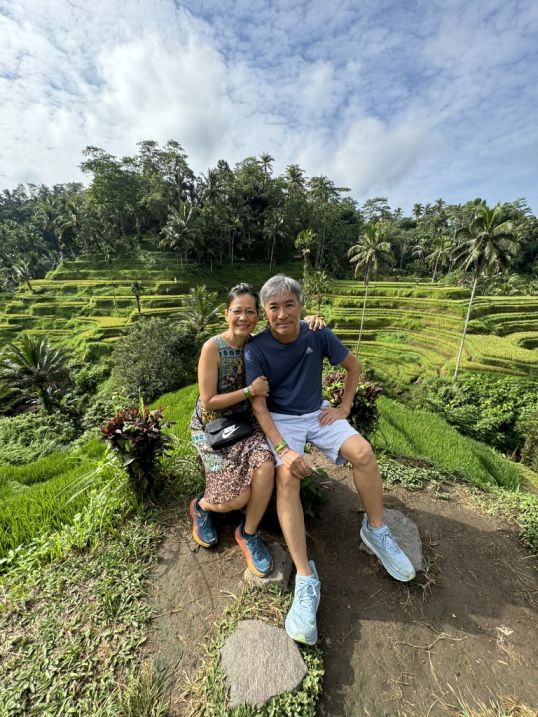 |
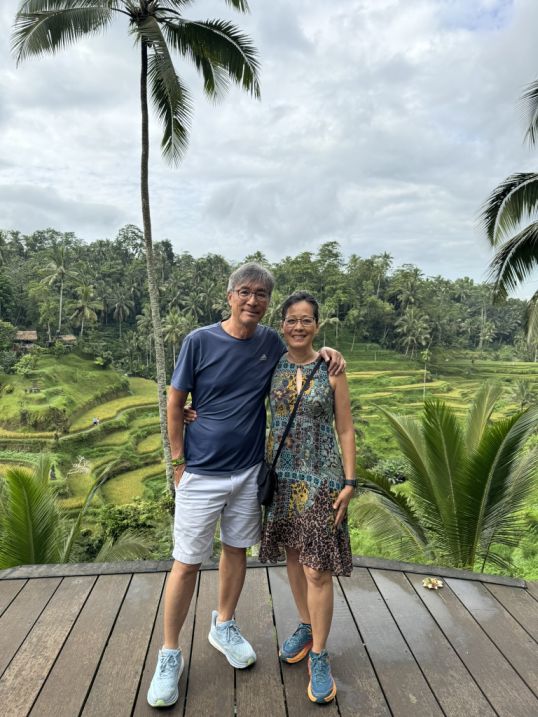
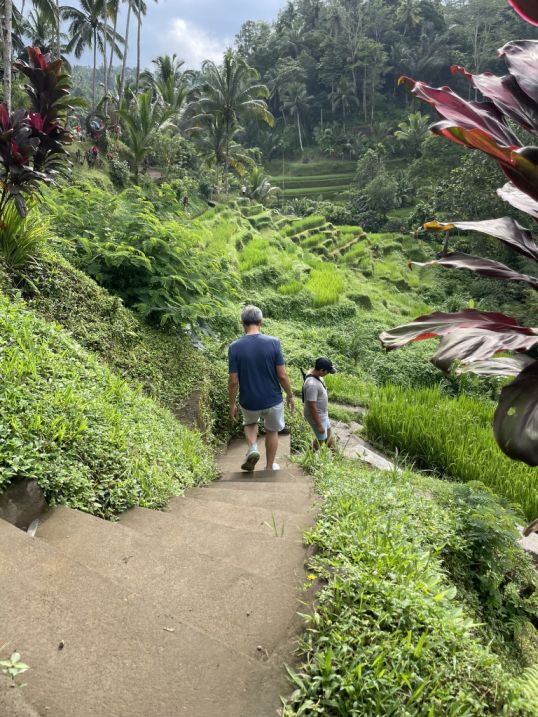
After taking a few photos at the viewpoints, especially those wooden platforms that sit right at the edge of the terraces.
 |
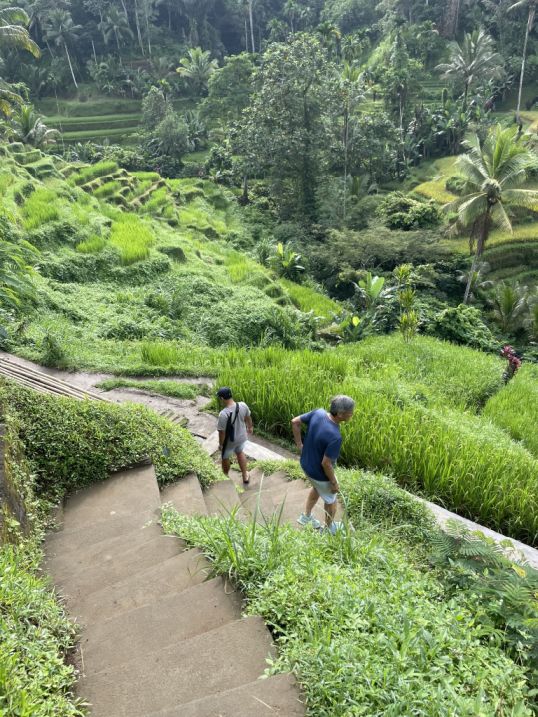 |
We began making our way down into the rice fields.
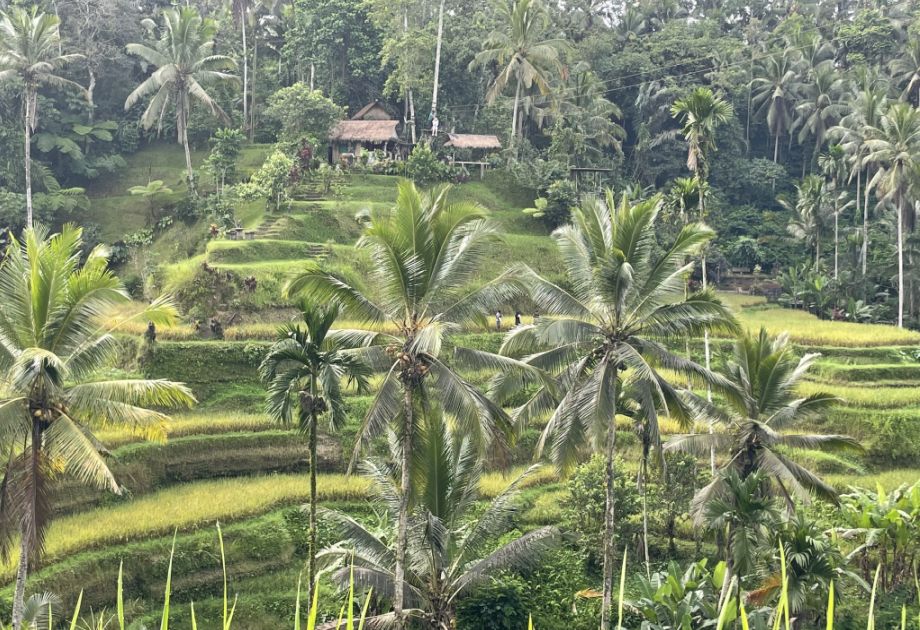
Instead of the buzz of people lining up for swings and photo props, we were suddenly surrounded by the softer, more grounded side of Tegalalang: narrow dirt paths winding between the terraces, and the rustling of rice stalks swaying in the breeze.
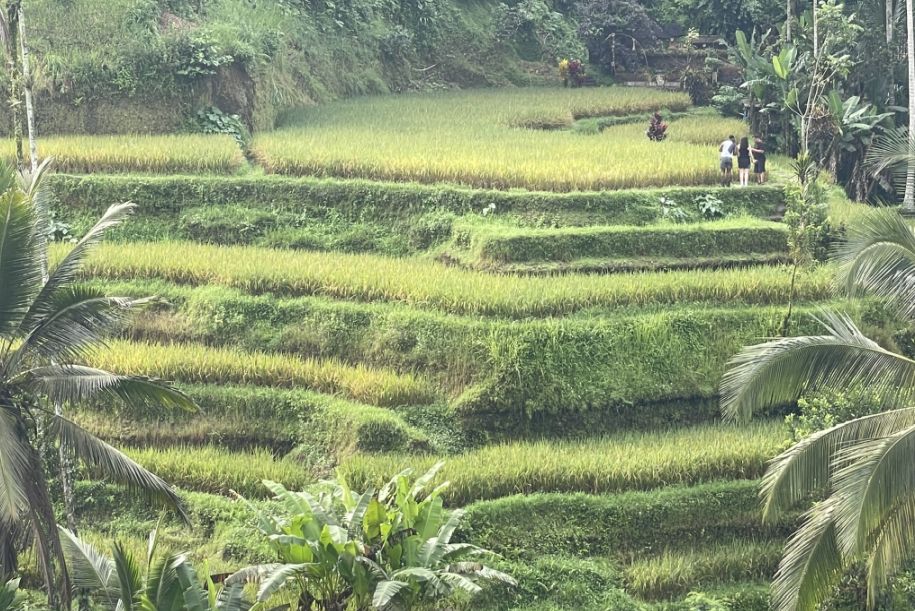
As we walked lower, the terraces rose around like green-and-gold steps, sculpted with an almost architectural precision.
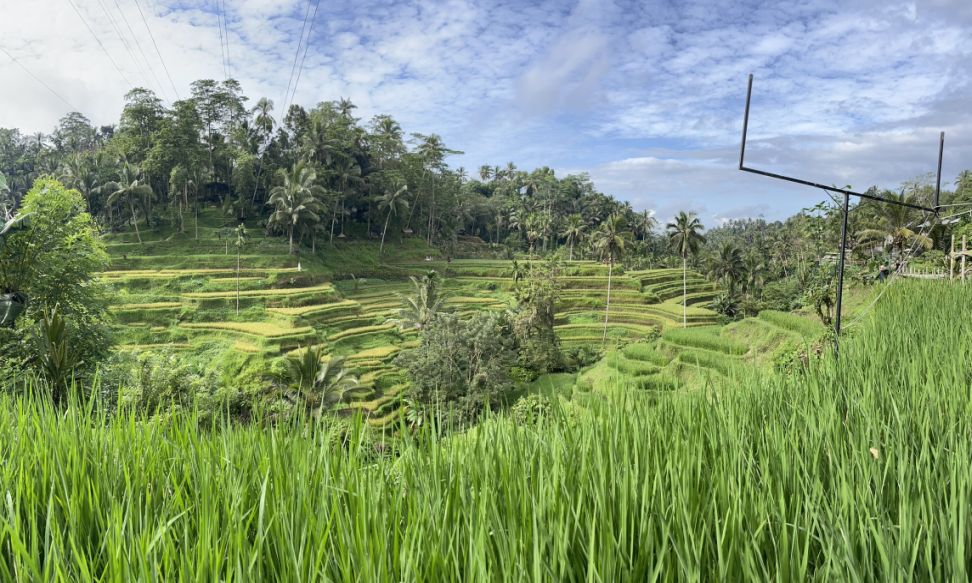
At this level, it is a beautiful contrast: the lively, commercial energy up top and the calm, earthy rhythm of the rice fields below.
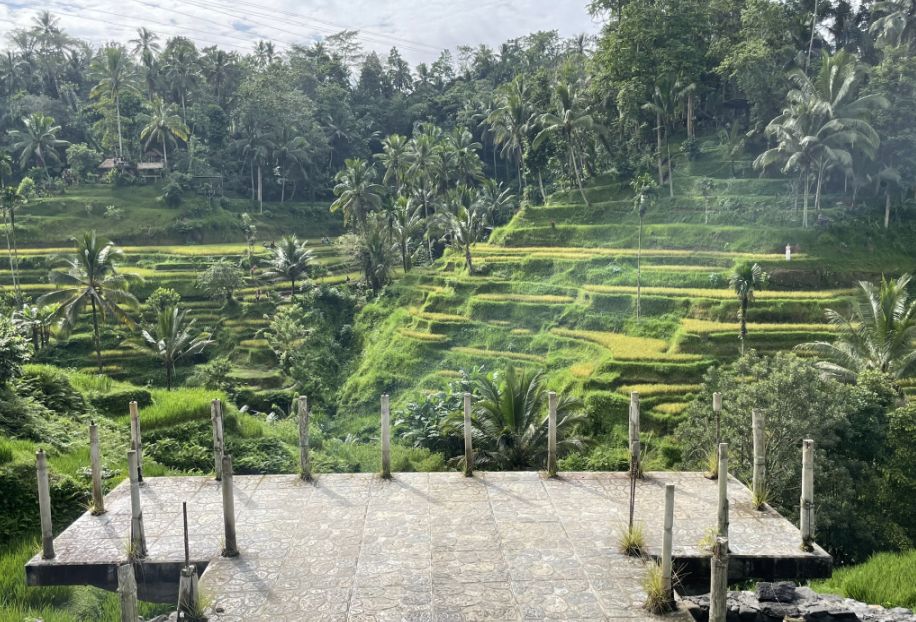
Another view point.
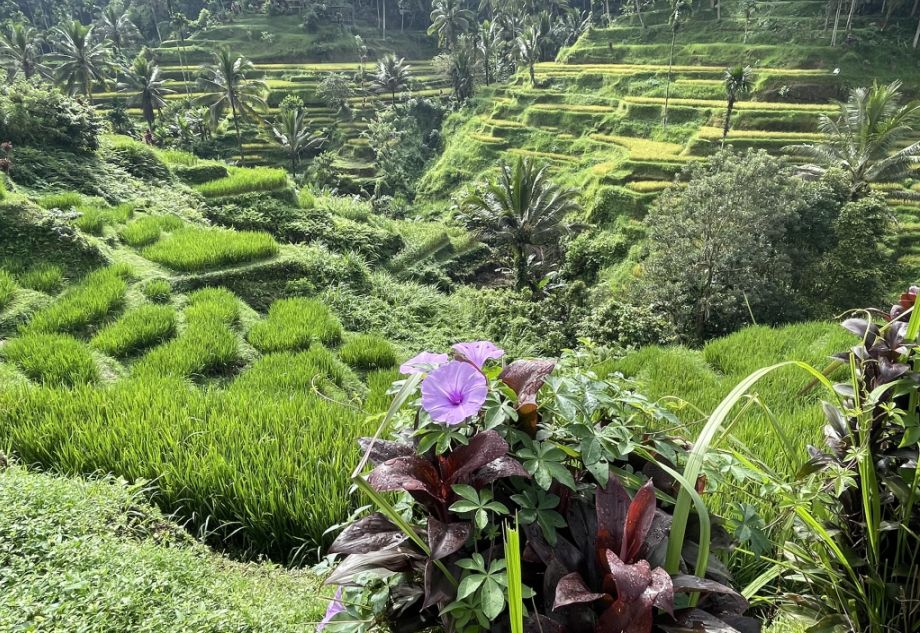
As we continued walking, we noticed splashes of color breaking through all the green and gold, clusters of purple flowers, shaped like petunias, adding a cheerful burst to the landscape. They lined parts of the path, making the fields feel even more vibrant and full of life.
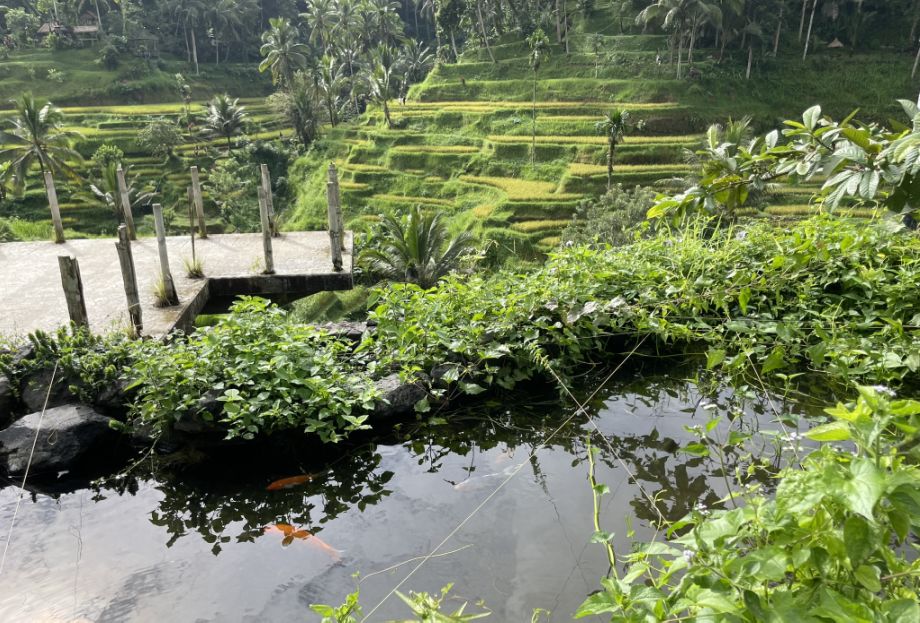
We came across a small pond where large koi drifted slowly beneath the surface. Their bright oranges, whites, and gold shimmered in the water, creating a peaceful moment tucked between the terraces, like a little oasis amid the stepped fields.
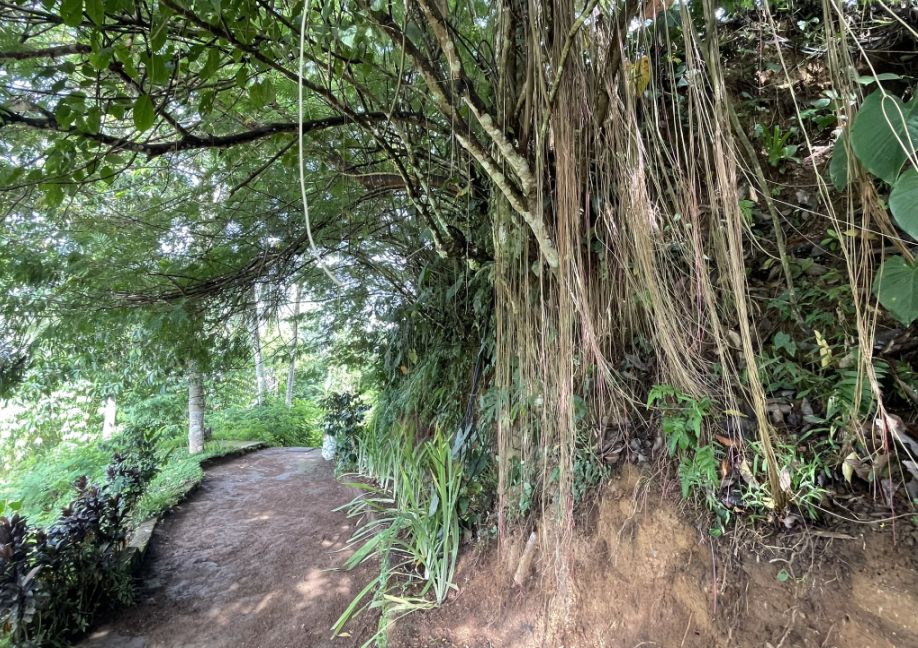
Walking deeper, the trail narrowed into a dirt pathway shaded by tall trees. These trees had long, hanging strands, like natural strings or aerial roots dangling from their branches. The way they swayed lightly in the breeze made the path feel almost enchanted, a quiet transition from the open terraces into a more forested, serene pocket of the landscape.
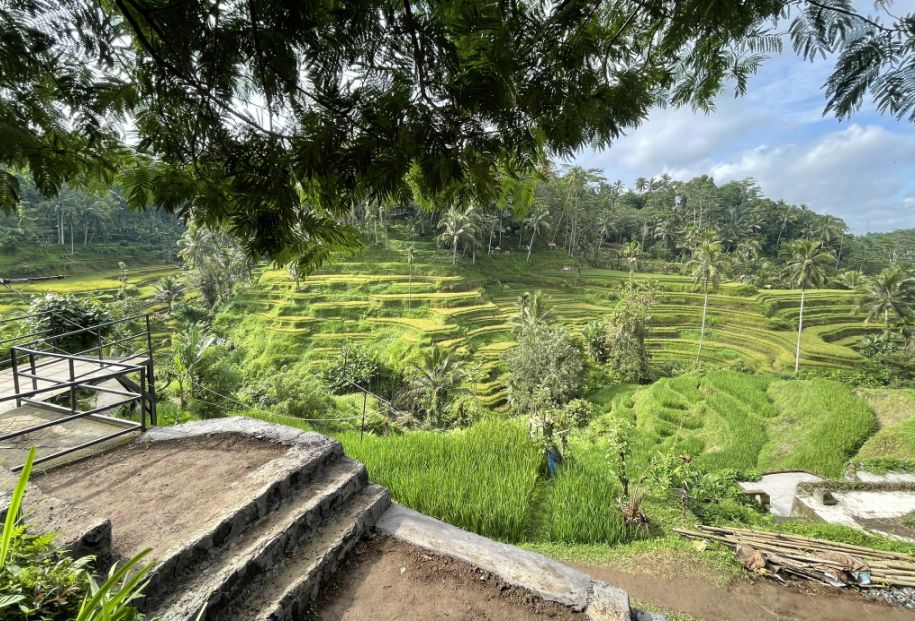
The layers of the terraces at Tegalalang are truly mesmerizing up close.
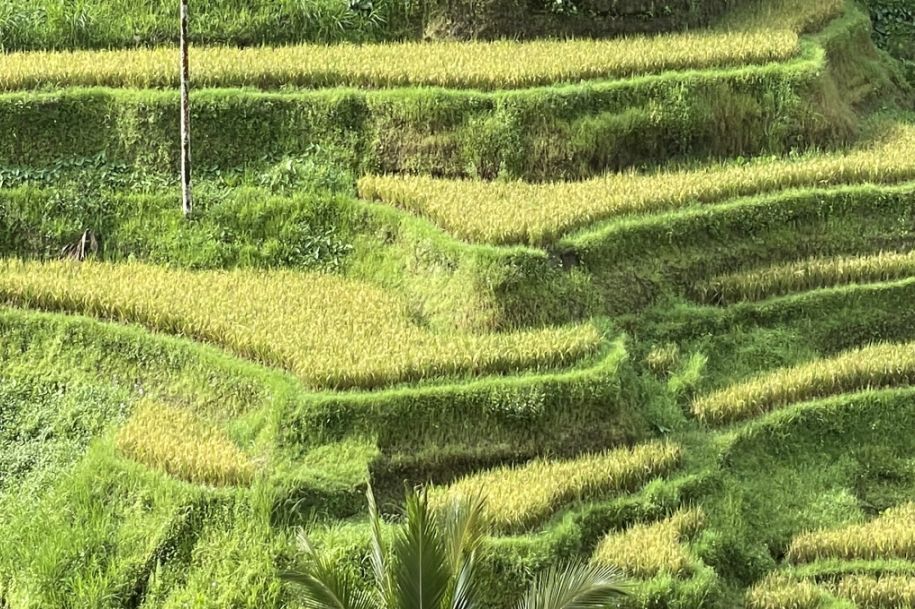
From above they look like stacked waves, but once you walk among them, you realize how sculpted and intentional each level is. Every terrace curves gently along the hillside, creating soft, sweeping lines that glow beautifully in the morning light, gold at the tops, deep green along the inner edges, and rich brown where the earth is freshly worked. The layers almost feel like a living staircase shaped by generations of farmers.
 |
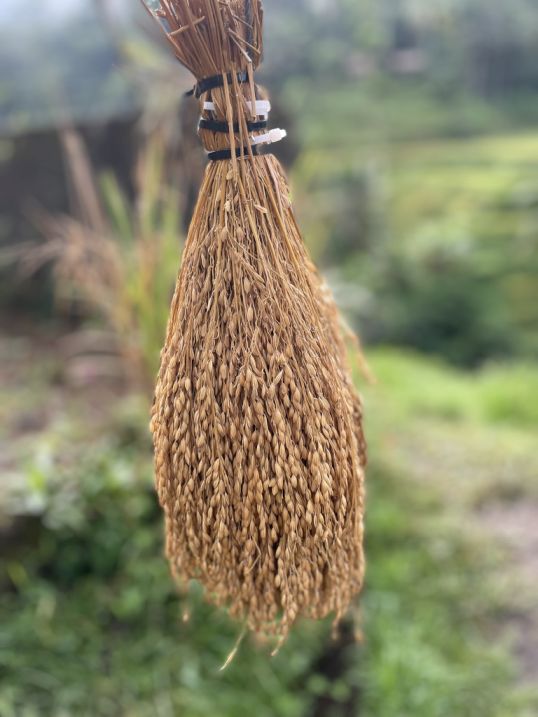 |
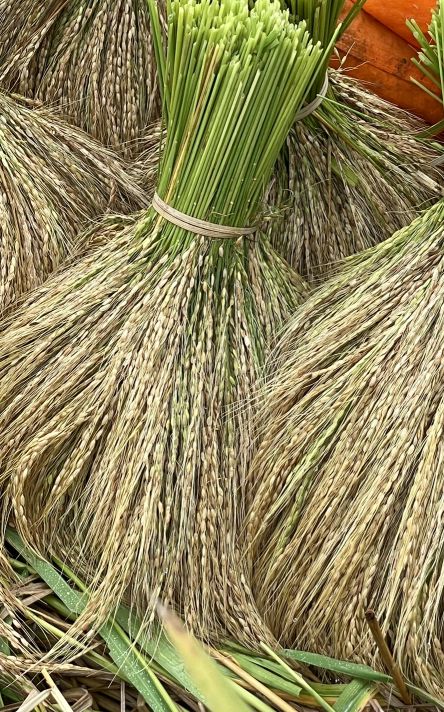
Rice bundles.
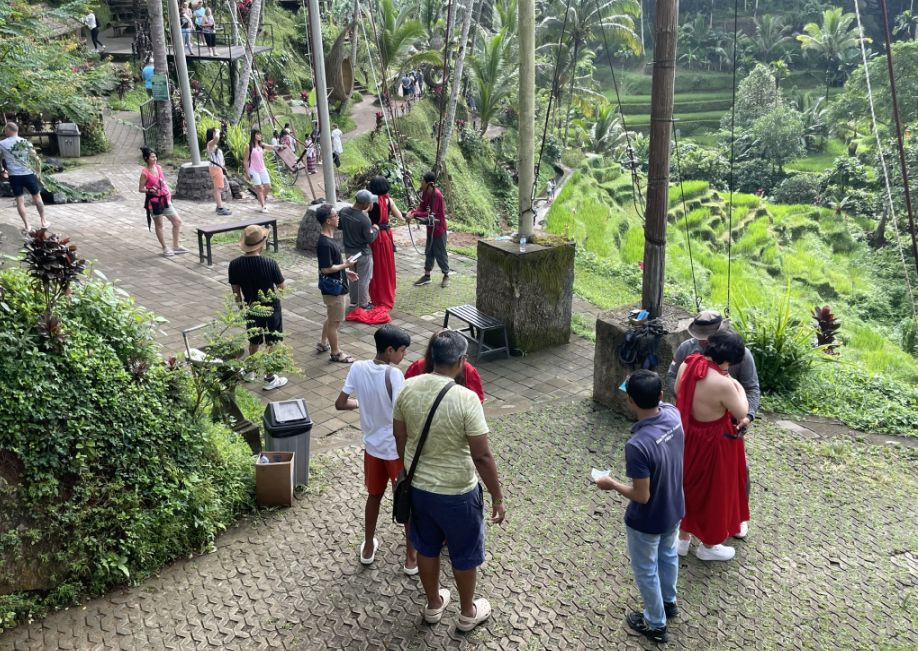
As we stepped into the large open area dedicated to the swings, the atmosphere changed instantly, much livelier, louder, and full of anticipation. Dozens of people were gathered around the platforms, most of them waiting in long lines for their turn to fly out over the rice terraces. There are a lot of excited chatter, cameras clicking, and the occasional cheer from someone taking off on the swing.
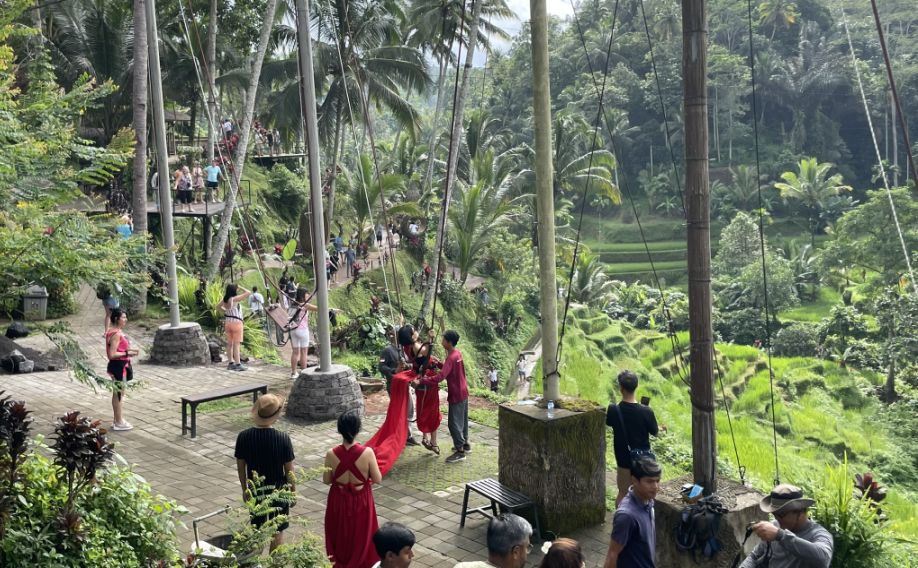
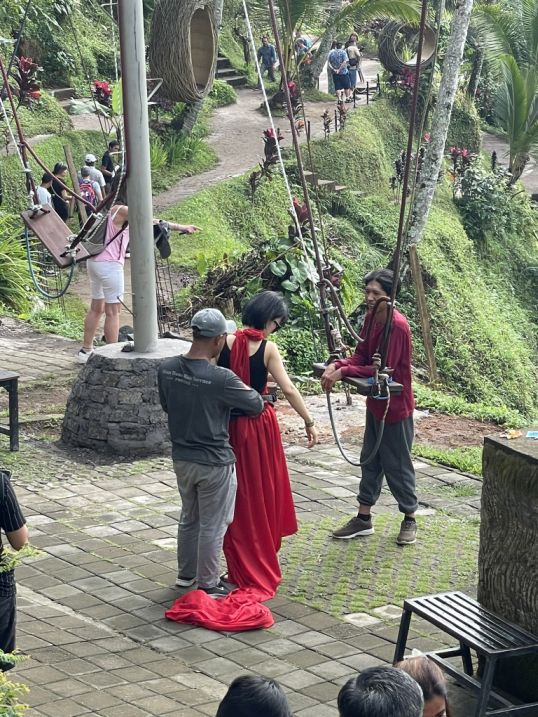
In the center of the area, the staff worked nonstop, moving with practiced efficiency. They were hooking up harnesses, tightening safety straps, and giving quick instructions to each visitor before the swing launched. Their coordination made everything feel organized despite the crowds, as soon as one person finished, another was already stepping in.
 |
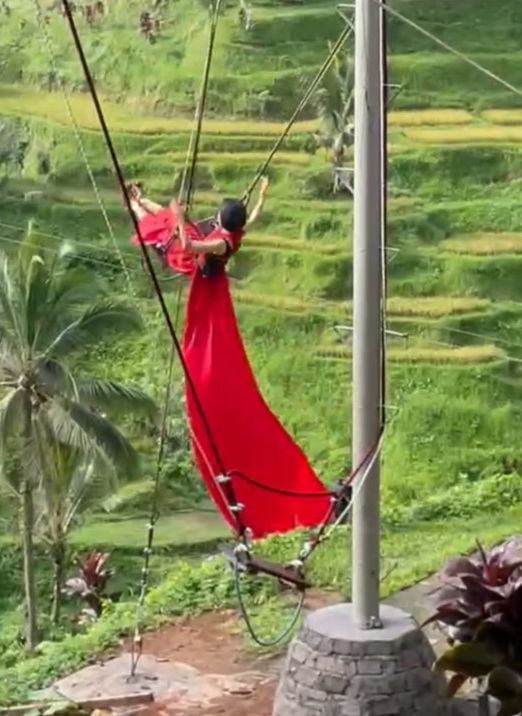 |
Many of the visitors wore flowing red dresses that billowed dramatically in the air, adding to the spectacle. The bright red fabric stood out sharply against the greens and gold of the terraces, creating those classic “Bali swing” photos everyone recognizes.
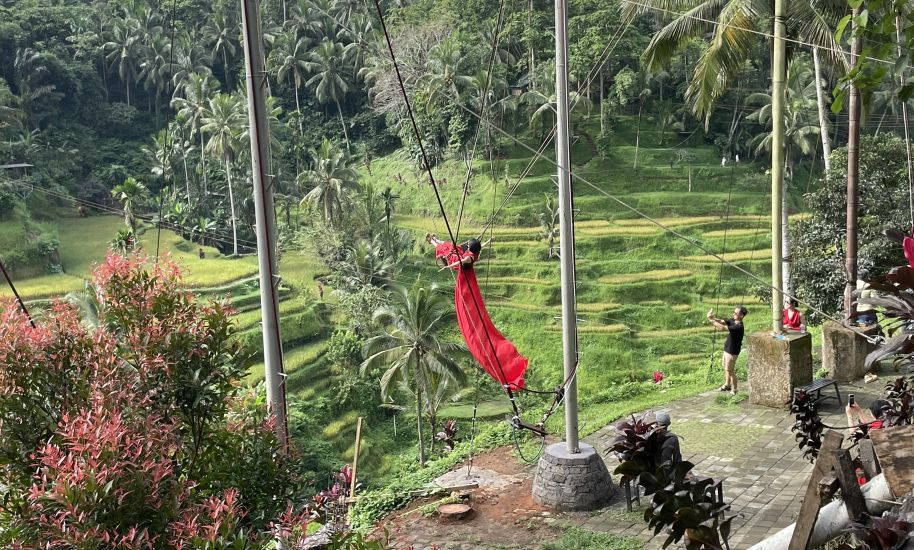
It felt less like a quiet rice field and more like a set designed for photos, fun, energetic, but undeniably commercial.
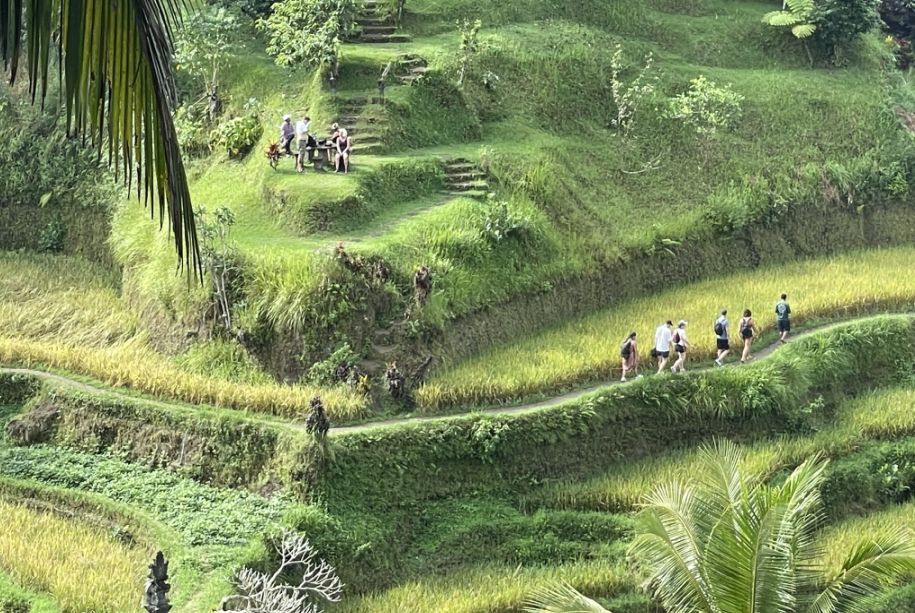
Tegalalang is undeniably stunning. The terraces here are carved into steep, dramatic layers that fold into one another like waves. The golden rice makes each step glow, and the curves of the landscape create picture-perfect angles from almost every viewpoint. From a purely visual standpoint, the layering can look more intricate and sculptural than Jatiluwih. It’s easy to see why people think it’s the “prettier” one at first glance.
But the commercial side really changes the atmosphere. With swings, photo props, ticket booths, crowds, and constant activity, the place can feel more like an attraction built around a rice field rather than a living agricultural landscape. The beauty is still there, you just have to look past the busy energy.
Jatiluwih, on the other hand, feels like the real Bali. The terraces stretch endlessly across the valley, wide and open, with farmers working, irrigation channels flowing, and villages bordering the fields. It’s quiet. It’s spacious. And it feels deeply connected to the subak tradition that has shaped Balinese culture for centuries. The authenticity makes it peaceful and grounding, even if the terraces are less dramatic in shape.
We got to experience the full contrast, the postcard beauty and the real agricultural heritage.
NEXT... Tirta Empul Temple