3 weeks in Bali, Indonesia- 5/28- 6/15/2024
|
Uluwatu |
Canggu &
surroundings |
Ubud & surroundings |
Sidemen/Amed |
Nusa Penida |
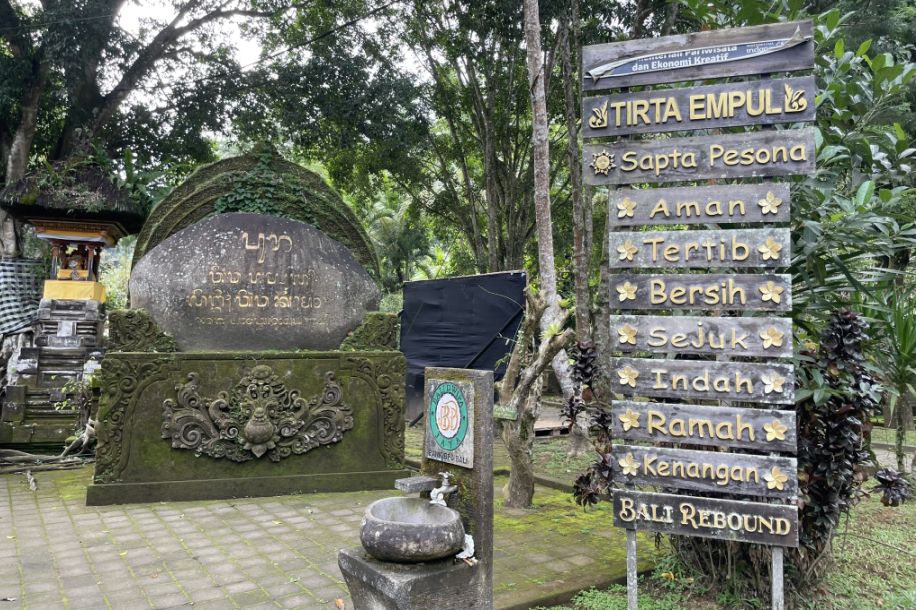
Day 9- Tirta Empul Temple-6/4/2024
Tirta Empul is one of Bali’s most important and sacred water temples that dates back to 962 AD, during the reign of the Warmadewa dynasty. The temple was built around a natural holy spring, a source of water that Balinese Hindus believe was created by the god Indra. According to legend Indra’s army was poisoned by the evil king Mayadenawa, and to save them, Indra struck the ground with his staff and created a spring of pure, healing water. That holy spring became Tirta Empul, “Holy Spring Water.” For over a thousand years, Balinese Hindus have come here for Melukat, a purification ritual meant to cleanse the mind, spirit, and body.
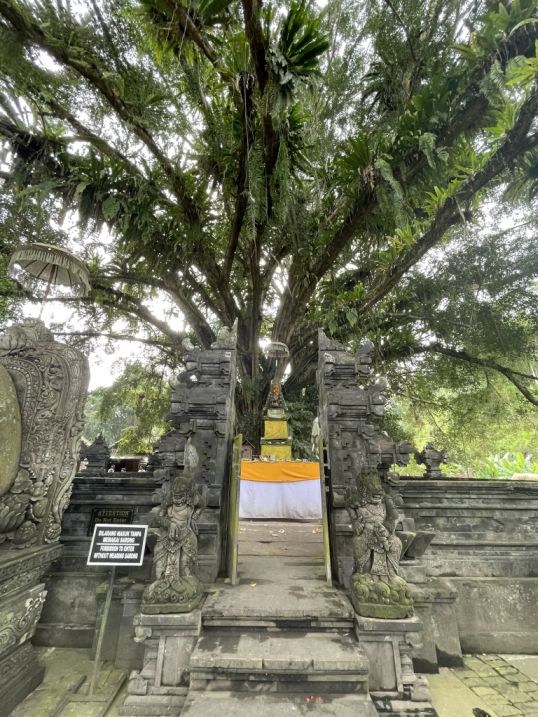
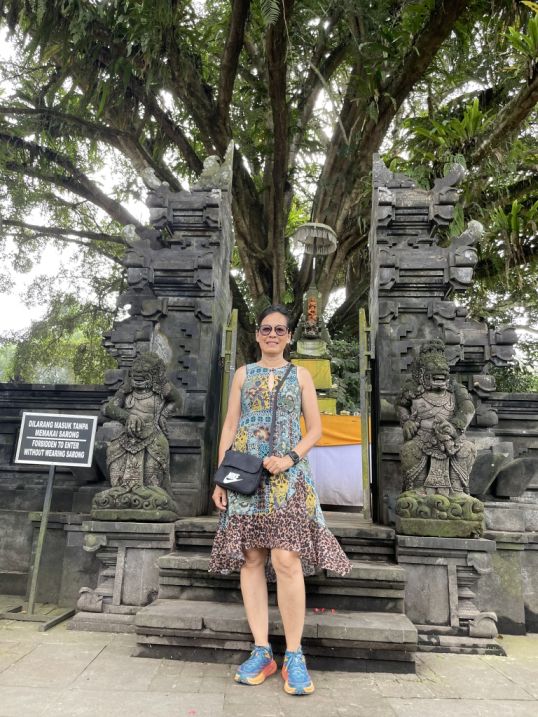
Stone gate entrance.
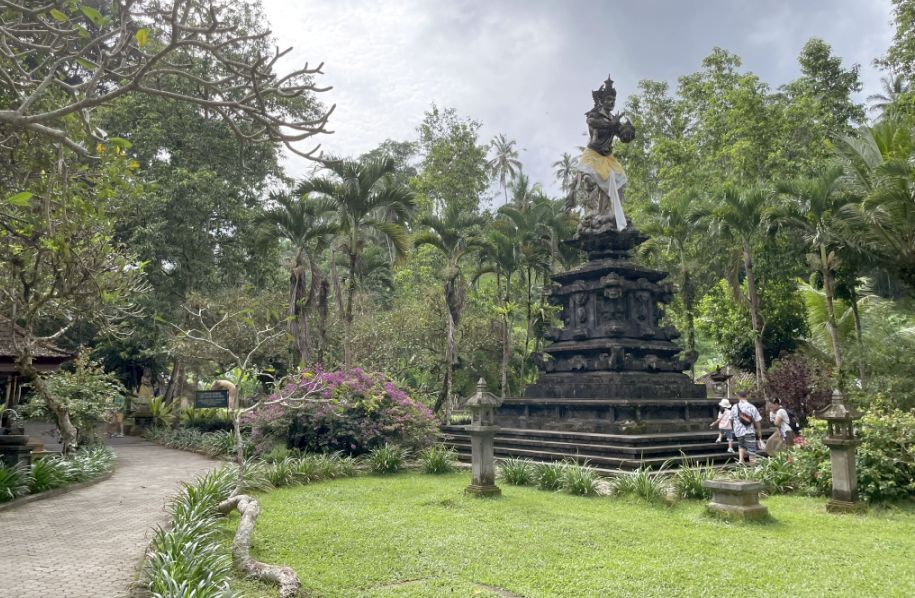
As we entered through the stone gates, we stepped into a large courtyard called the jaba or outer courtyard, which is designed to welcome visitors. In the center of the courtyard is a statue of a deity or a spiritual guardian, setting the tone for the holy site.
 |
 |
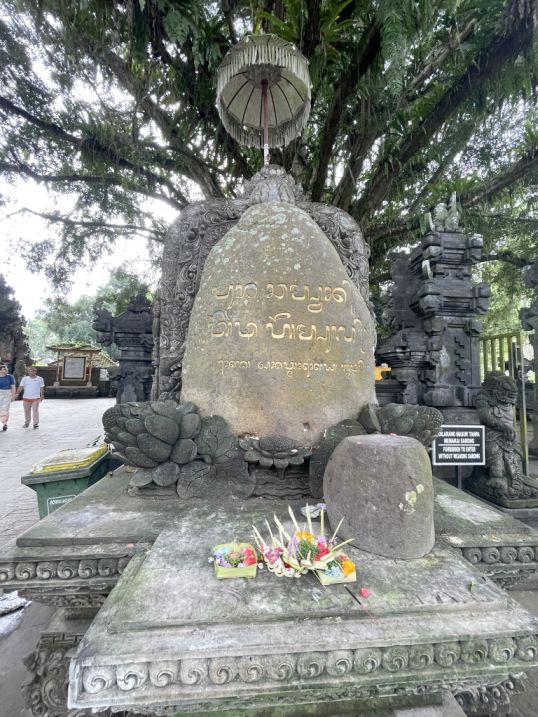
As we continued, there is temple's shrines, or pelinggih, are housed. This area is typically reserved for priests and for those performing formal worship , which is why it's often enclosed or restricted to ensure privacy and reverence.
 |
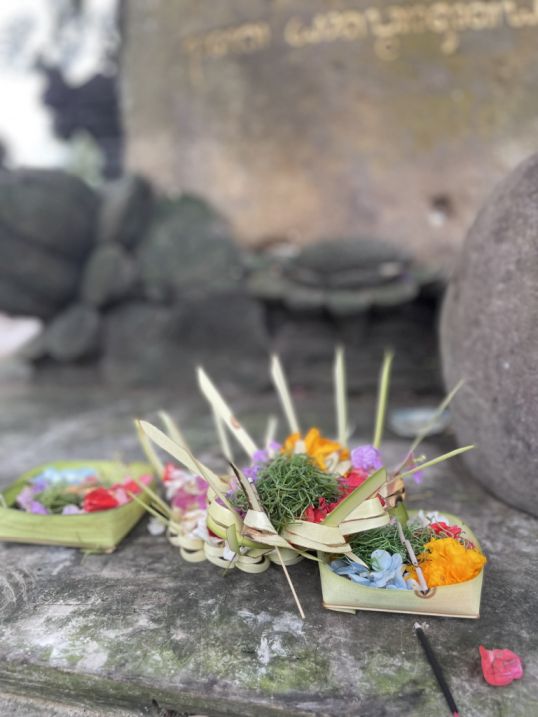 |
These small, colorful arrangements are called canang sari. They are daily offerings made by Balinese Hindus to thank the gods for peace and prosperity. You see them everywhere in Bali, but especially at temples.
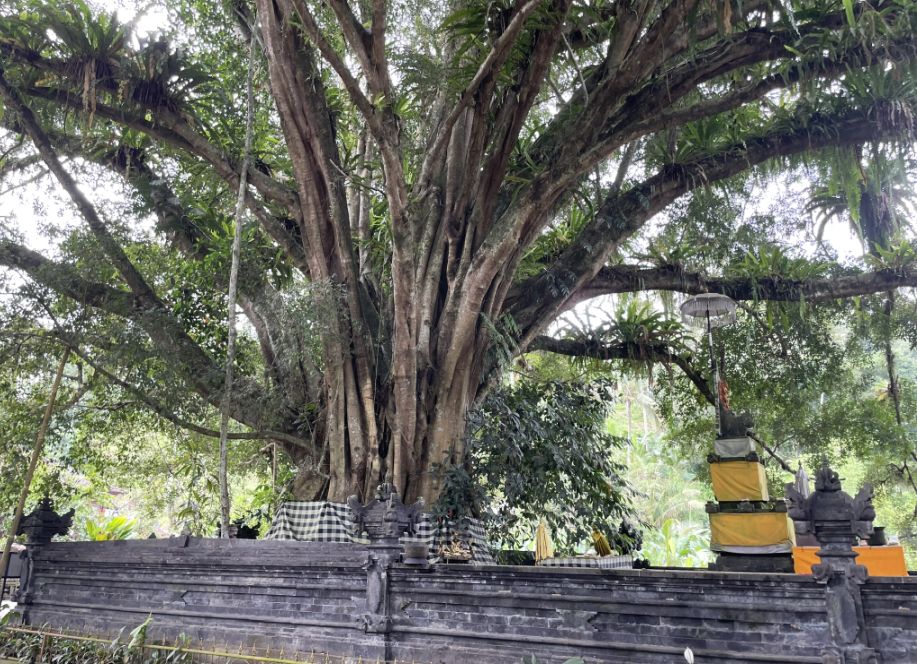
The worship area is enclosed by a cement/brick wall.
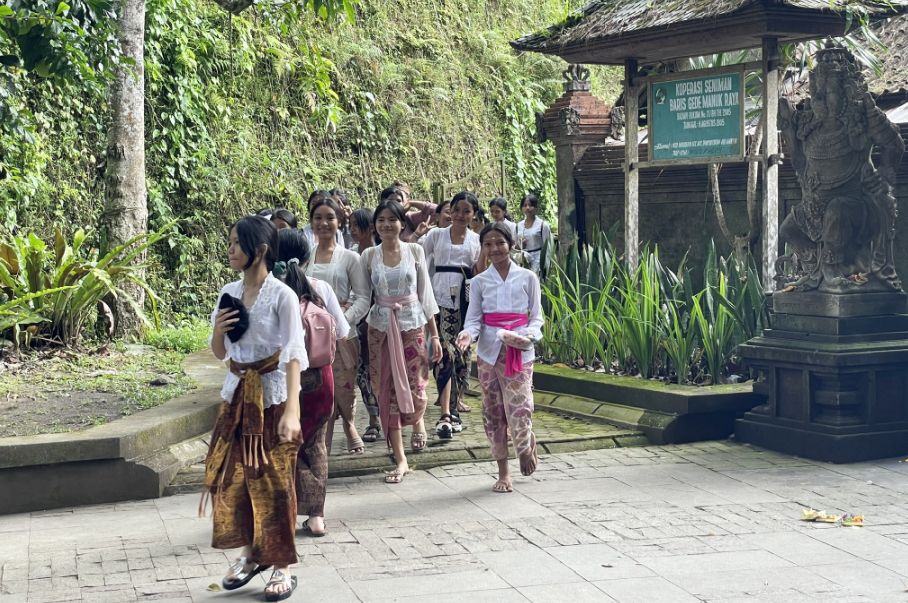
A groups of girls or young women dressed in traditional Balinese temple attire. It adds such a special, living-cultural feeling to the temple.
 |
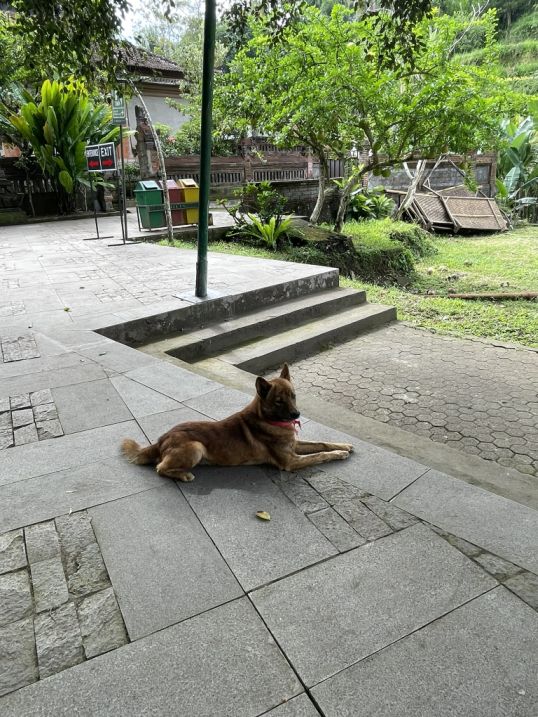 |
A dog laying around in the temple and he looks like he well taken care of.
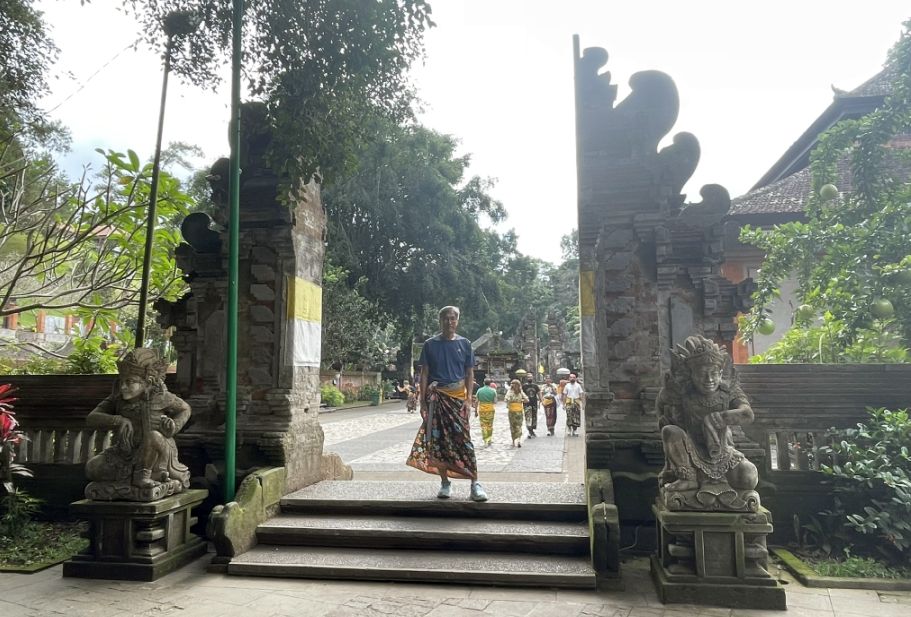
We are now entering the Middle courtyard via a split gate (Candi Bentar). Passing through this gate is considered a spiritual transition from the outer world into the sacred cleaning zone of Tirta Empul, and this is why it is more decorated and more elaborate than the earlier gates.
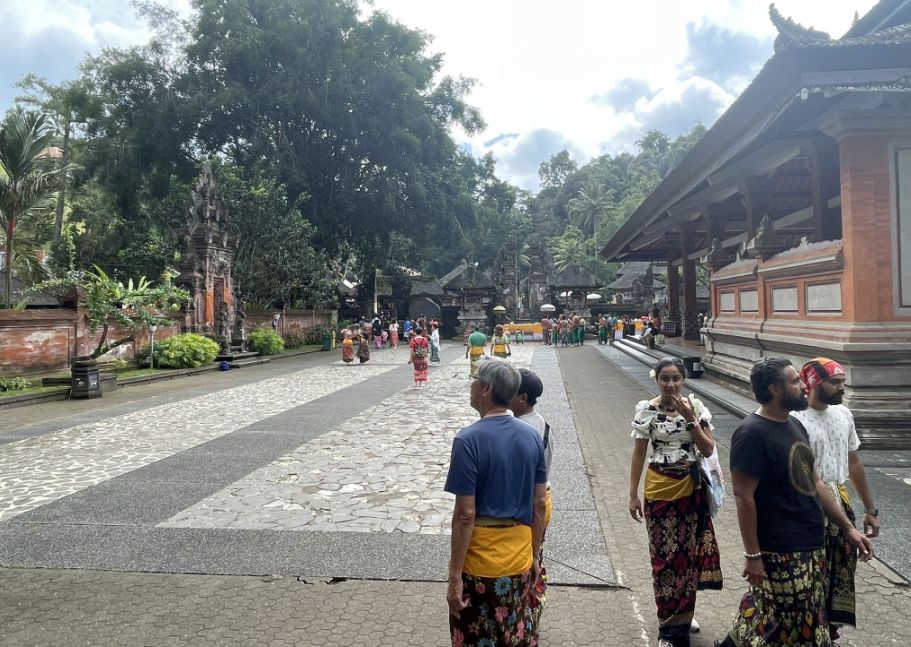
View of the Middle courtyard.
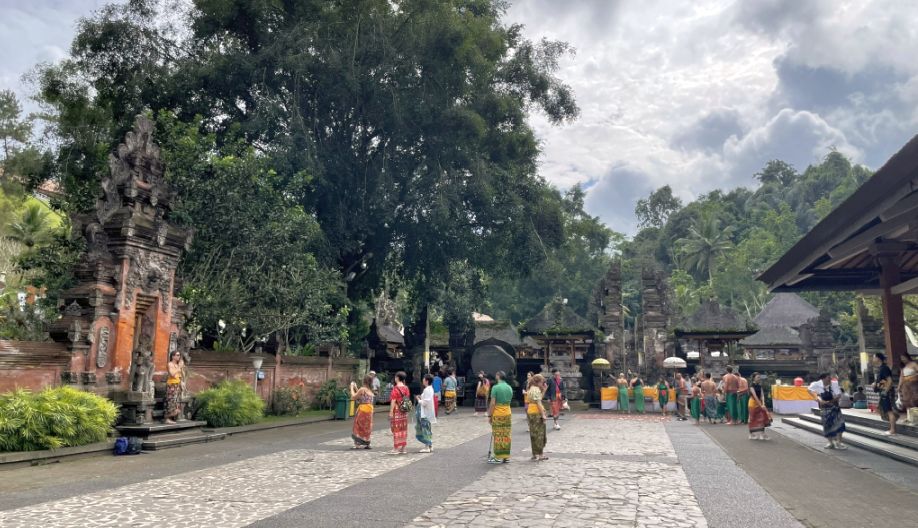
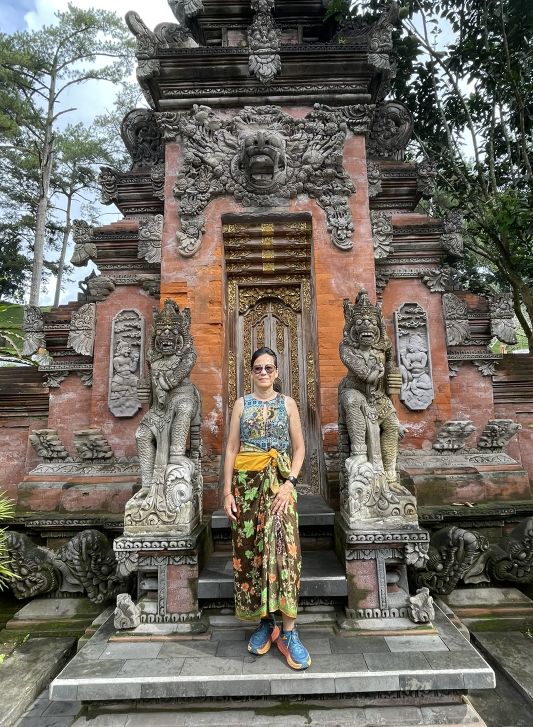
In the center of the courtyard, people are lining up to take picture in front of the Candi Kurung or Kori Agung, a closed temple gate used to enter the most sacred part of a Balinese temple.
 |
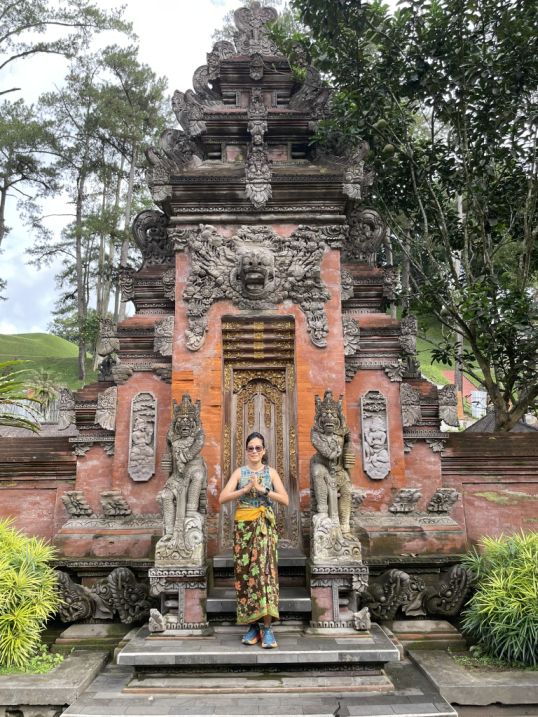 |
The Candi Kurung is very photogenic because the orange brick stands out vividly against the greenery, the guardian statues give it a dramatic, ancient look, and it frames the inner sanctum beautifully.
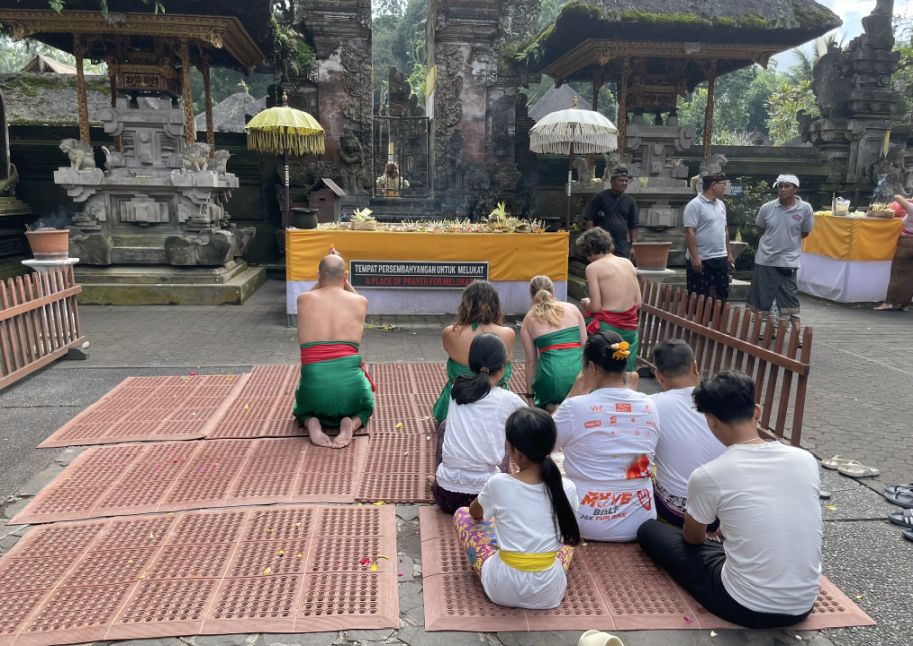
This is the preparation area before entering the holiest zones., and this area is located just before the purification pools and before the inner sanctum which is a deeply meaningful space
The people sitting on the ground and praying at the end of the middle courtyard were participating in a core part of Balinese Hindu worship.
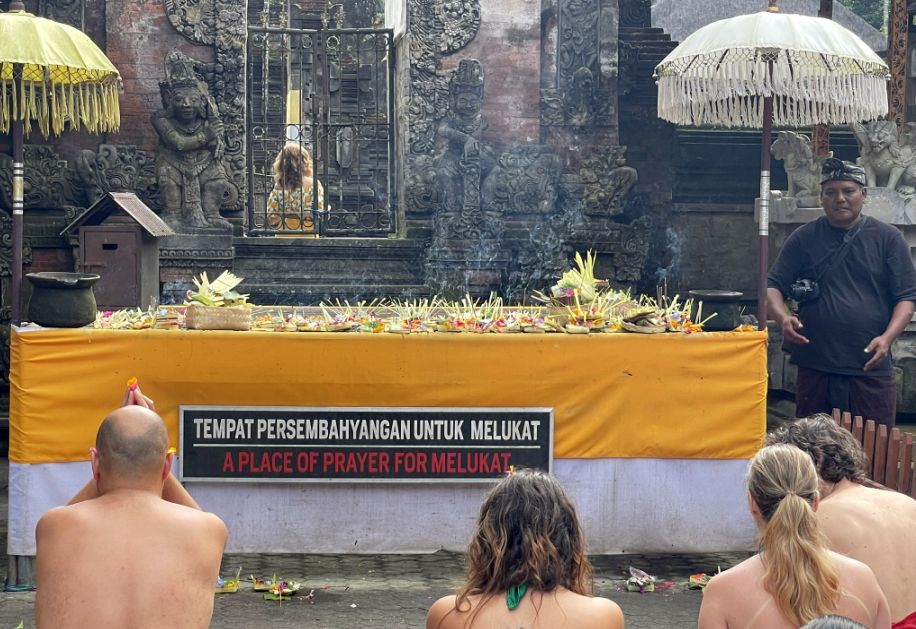
What we saw was a really interesting and meaningful moment and it shows how Tirta Empul welcomes all worshippers, not just locals. Because Tirta Empul is a functioning holy site, anyone, regardless of nationality may pray as long as they Dress respectfully, follow temple etiquette, and are guided by a priest or temple attendant.
The table wrapped in a bright yellow cloth signifies purity, holiness, and connection to the gods, and acts as a temporary altar with many offerings, where the priest prepares blessings to be shared with worshippers.
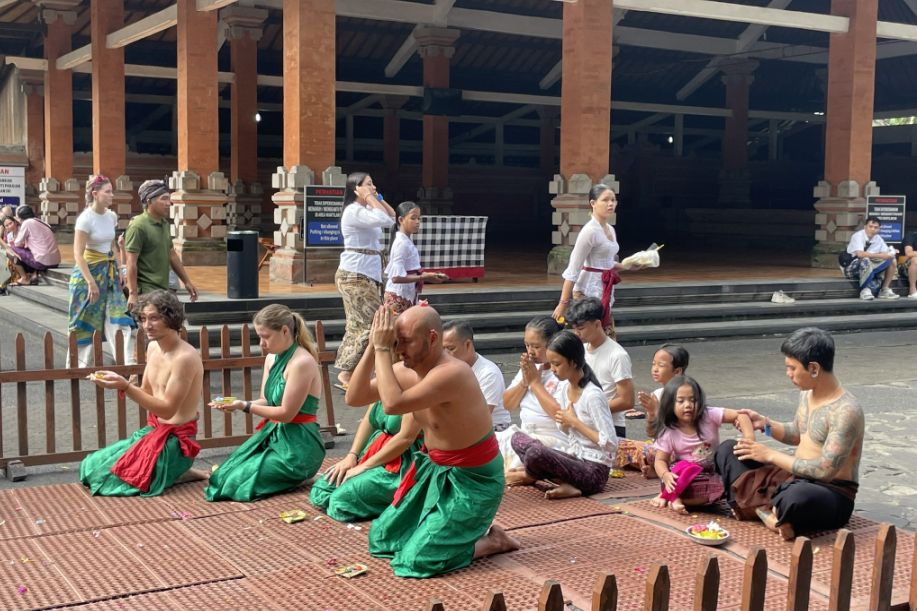
The four Western visitors dressed in green sarongs (men) and green temple dresses (women) were likely participating in a guided prayer ceremony. Many visitors choose to go beyond just watching the temple and actually take part in the ritual blessings and purification.
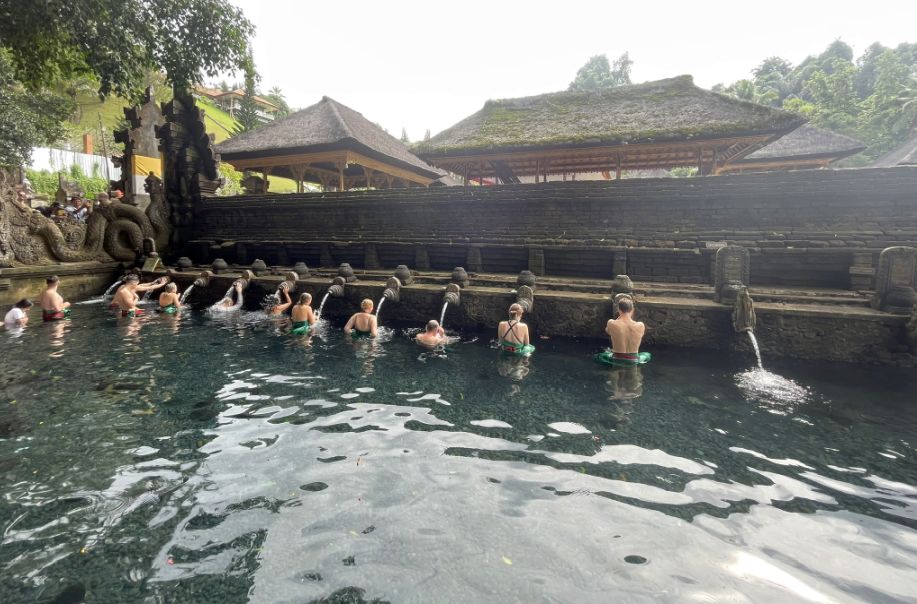
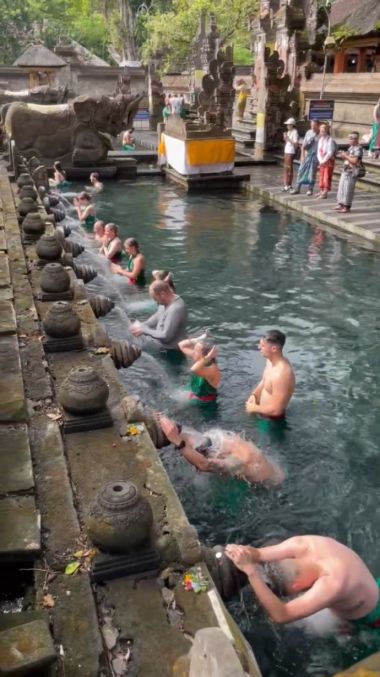
This the famous purification pool of Tirta Empul, one of the most sacred and iconic places in all of Bali. It is where people, locals and visitors come to perform the melukat purification ritual using the holy spring water. This pool is fed by the natural spring that erupts from the ground inside the temple. That source is considered Tirta, or holy water, believed to cleanse the body and mind, wash away negativity, and bring clarity and blessings.
a
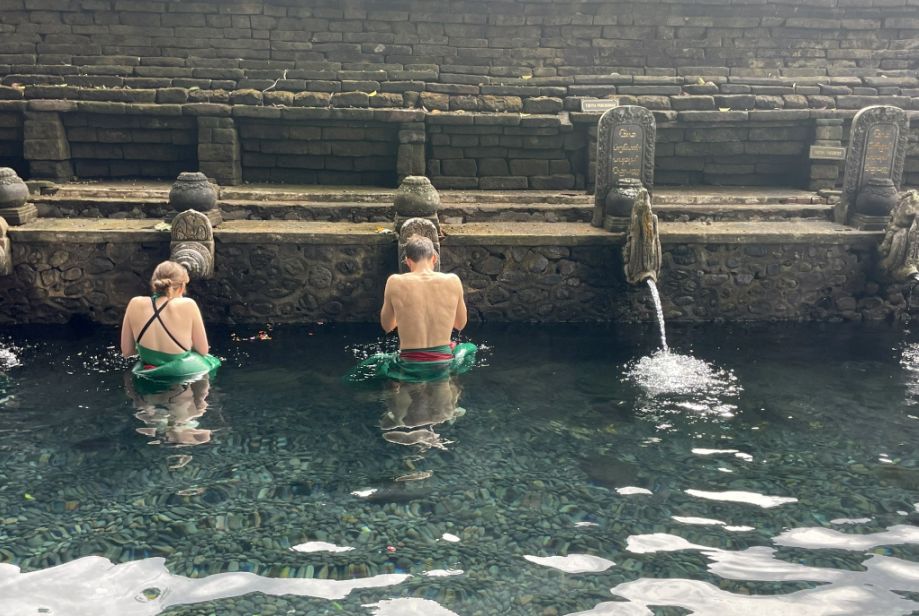
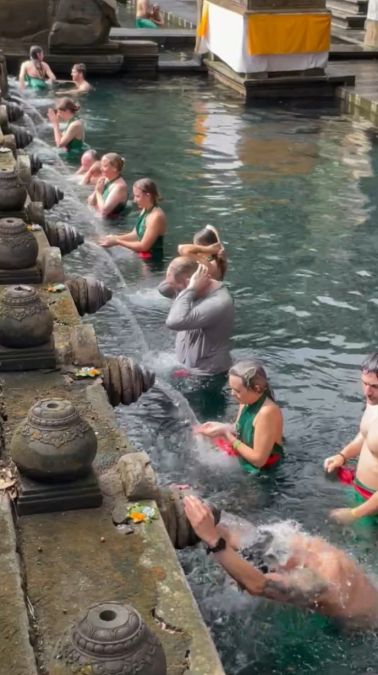
The water flows through a series of stone spouts that are lined up in a row, and each spout represents a different spiritual function.
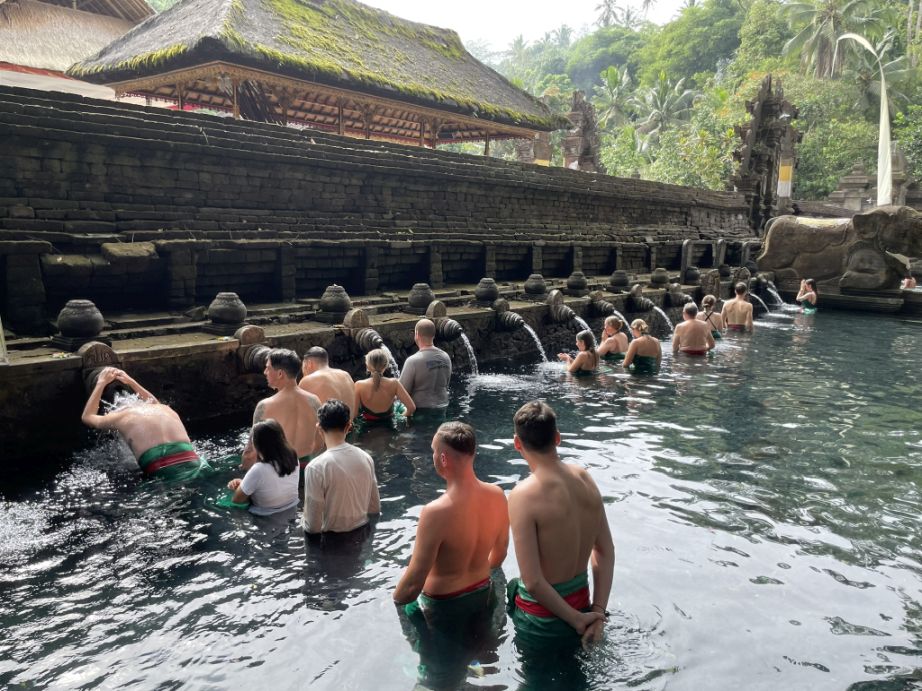
This is the heart of Tirta Empul, a sacred place where people from all over the world come to cleanse, reflect, and feel spiritually renewed.
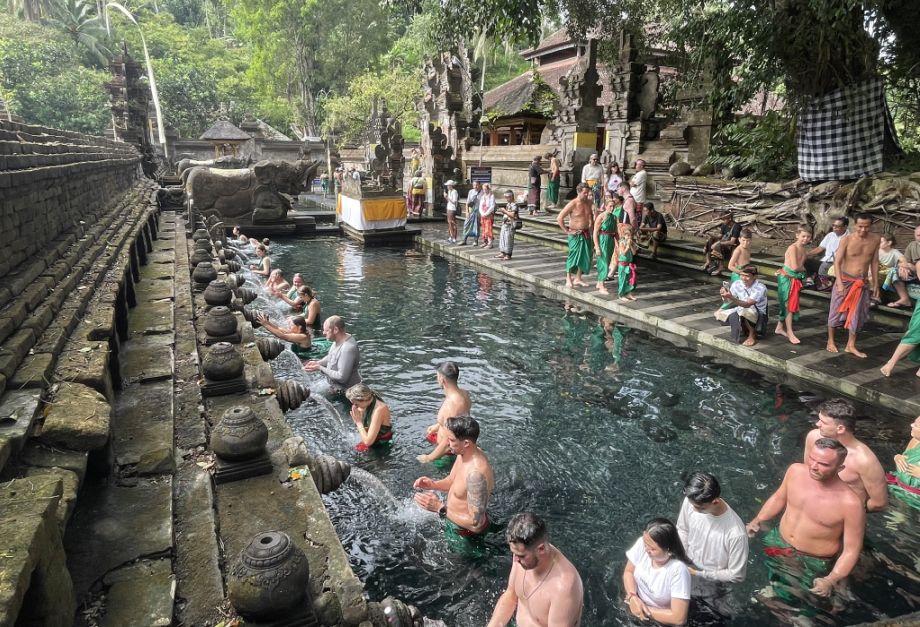
It’s extremely common to see Westerners in this pool because the ritual is open to anyone, many tourists want a spiritual experience rather than just sightseeing, and the mix of locals and foreigners symbolizes how Balinese spirituality is inclusive and welcoming.
 |
 |
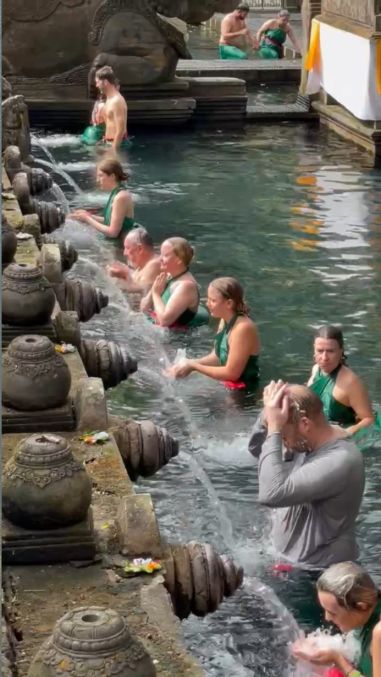 |
Each spout represents a different spiritual function. This is how it works: cup your hands to collect water, wash your face three times, drink a little, then let the water flow over your head.
Some spouts are skipped because they are meant for funeral or death purification rituals. Guides usually tell visitors which ones to avoid.
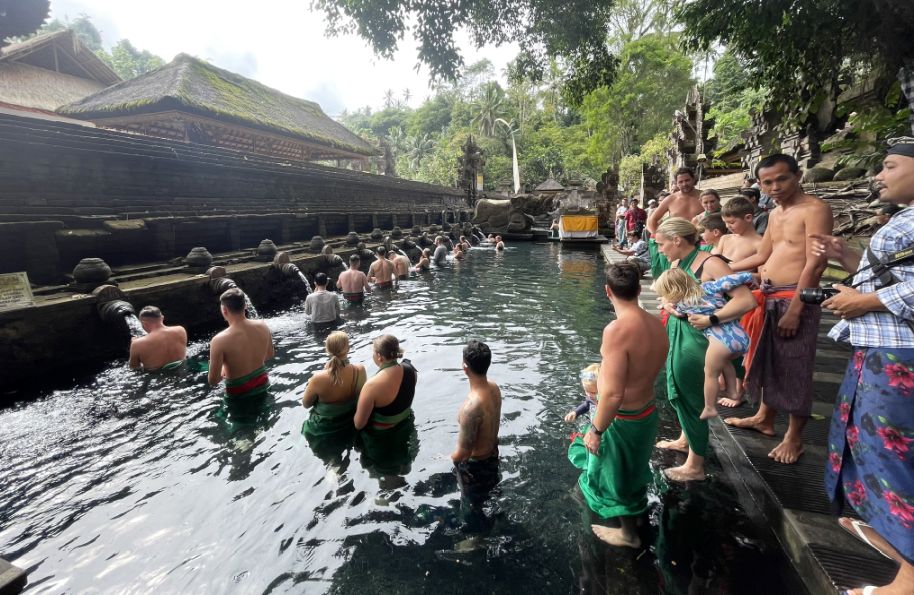
In the pool the water is cool and clear, the sound of the water falling from each spout creates a rhythmic, calming atmosphere, everyone is quiet and respectful, the light hits the water beautifully, giving the space a peaceful glow, and because the pool is surrounded by old mossy stone walls and temple shrines, it feels like stepping into a living piece of ancient Bali.
 |
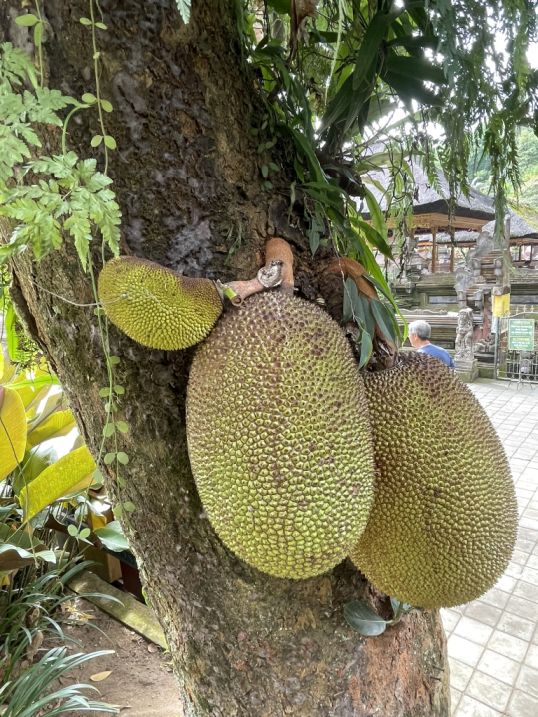 |
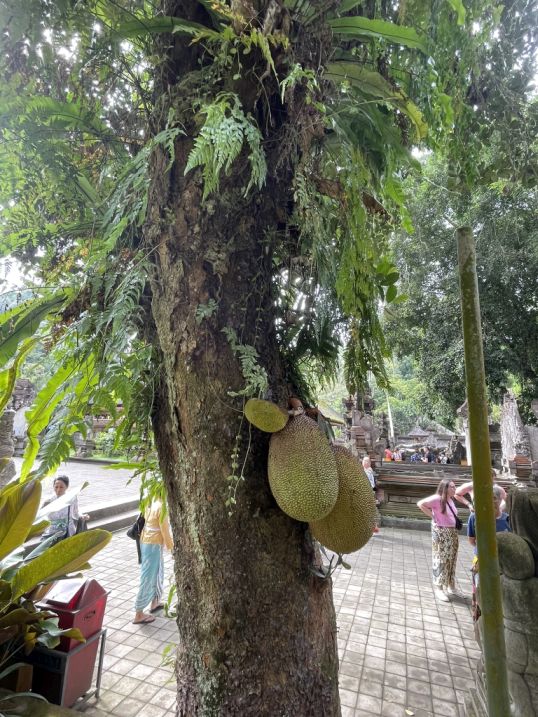
A Jackfruit tree with large spiky fruits do not hang from branches like apples or mangoes, but instead grow directly out of the trunk and larger limbs. Seeing the two large and one smaller fruit is a lovely example of this tropical growth pattern!
 |
 |
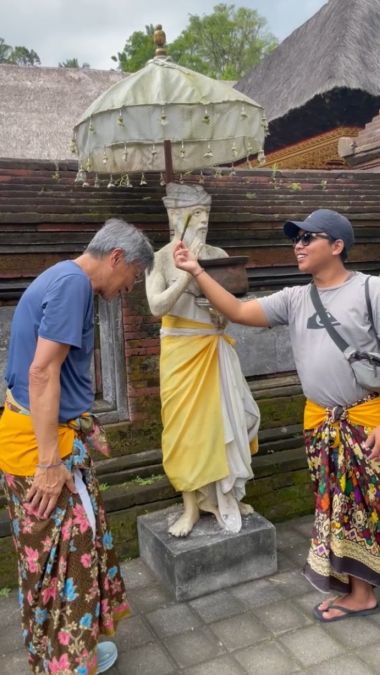 |
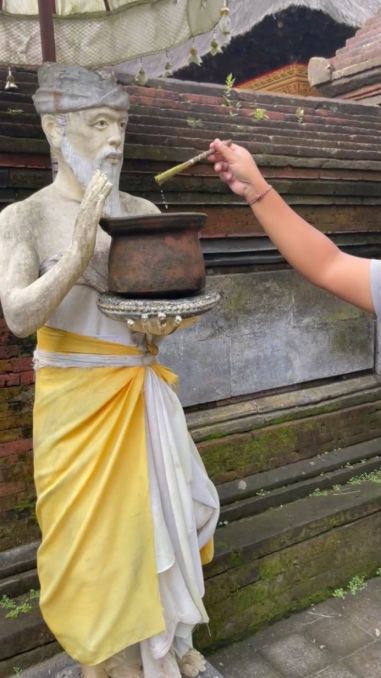
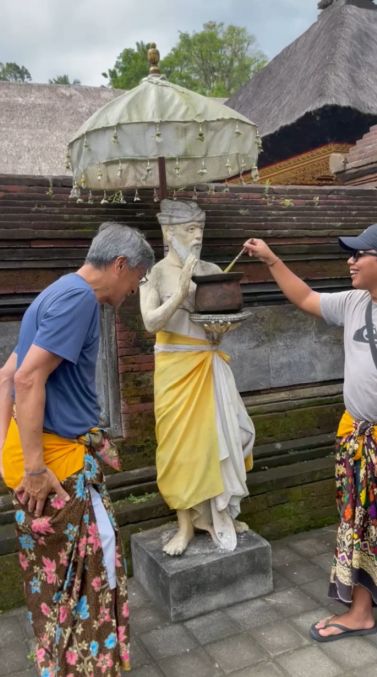
Our tour guide giving Hoa's blessing with the holy water directly from the sacred spring or the purification pool itself. The statue of the man holding a pot (or vessel) of holy water is a representation of a deity or a spiritual figure associated with the spring's sacred power, often protecting or symbolizing the source of the holy water. Receiving the blessing is the final, essential step after the purification ritual. The water is usually sprinkled over the head and often pressed onto the forehead and behind the ears, symbolizing a spiritual cleansing and receiving good fortune for your onward journey.
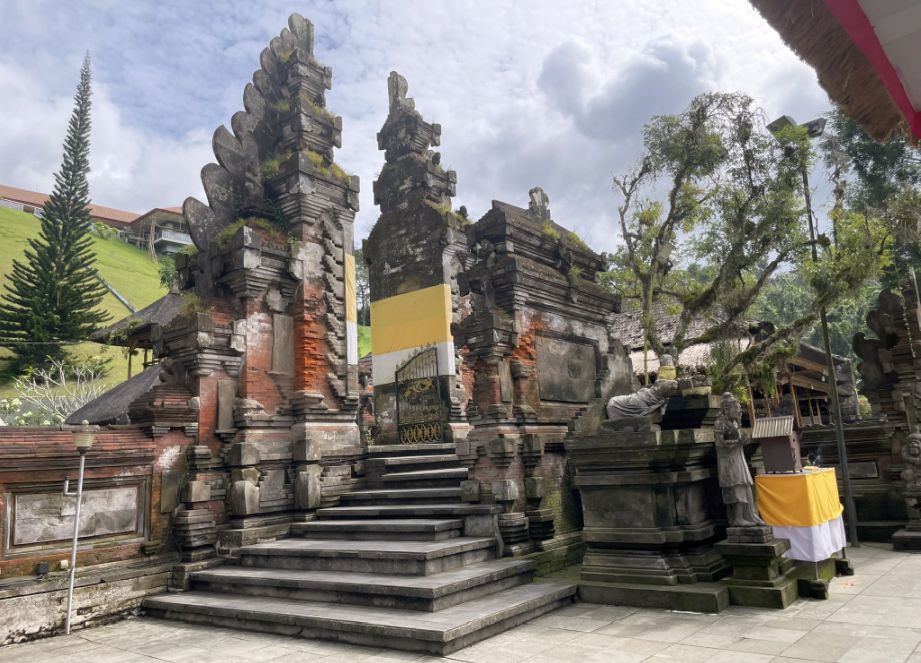
As we walked deeper into Tirta Empul, we are entered the inner sanctum area, and this second candi bentar marks another transition, every split gate in a Balinese temple represents entering a purer, more sacred space.
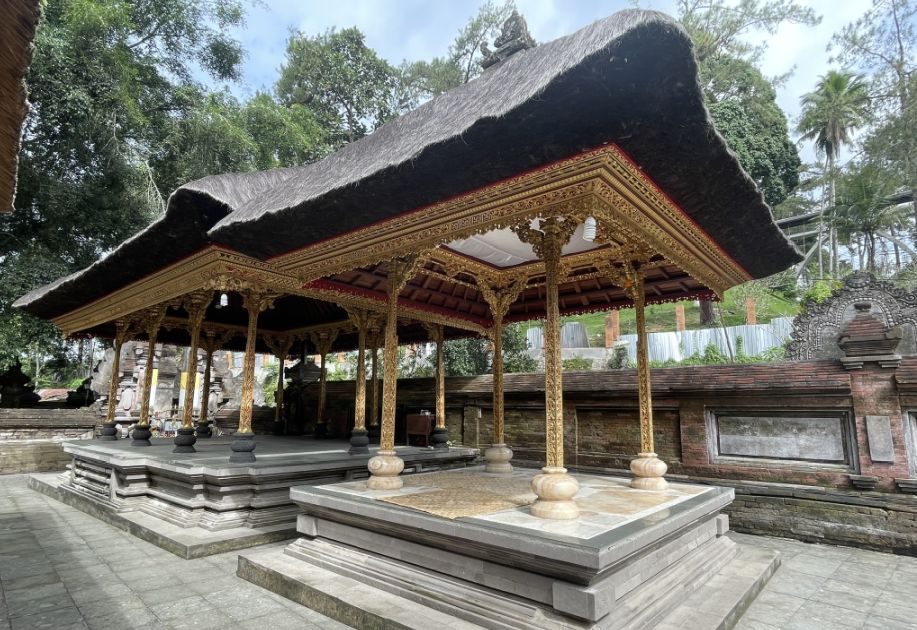
We passed by a beautiful bale with lots of gold ornamentation. It’s one of the most ornate structures in the temple, meant to honor the gods.
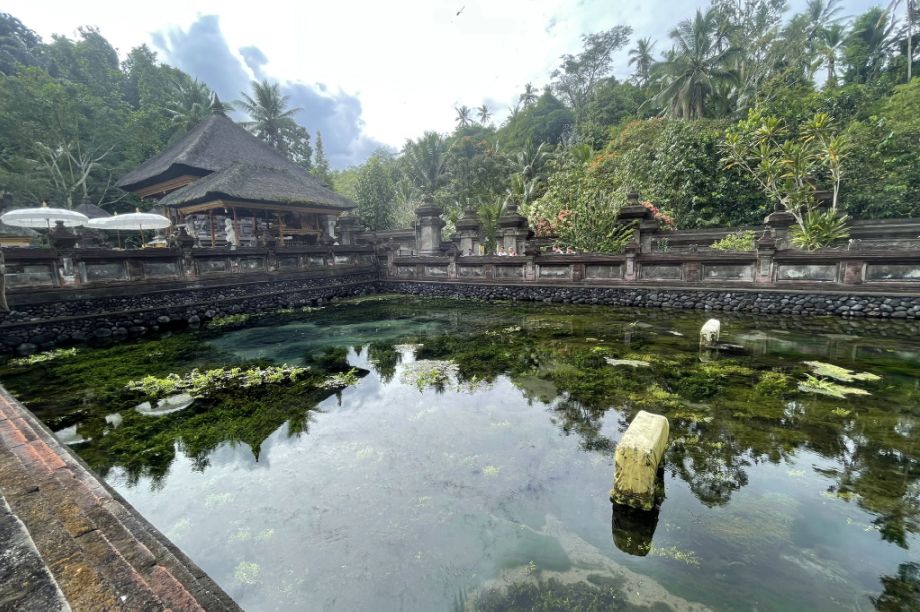
The pond with extremely clear water and plants growing underneath is the sacred spring pond, also called the “Jernih Spring” or “Petirtaan Spring”. This pond is the spiritual heart of Tirta Empul, the place where the holy water begins its journey before flowing to millions of worshippers across Bali.
It’s one of the most serene and sacred parts of the temple, and noticing it means you’ve seen a side of Tirta Empul that many tourists miss.
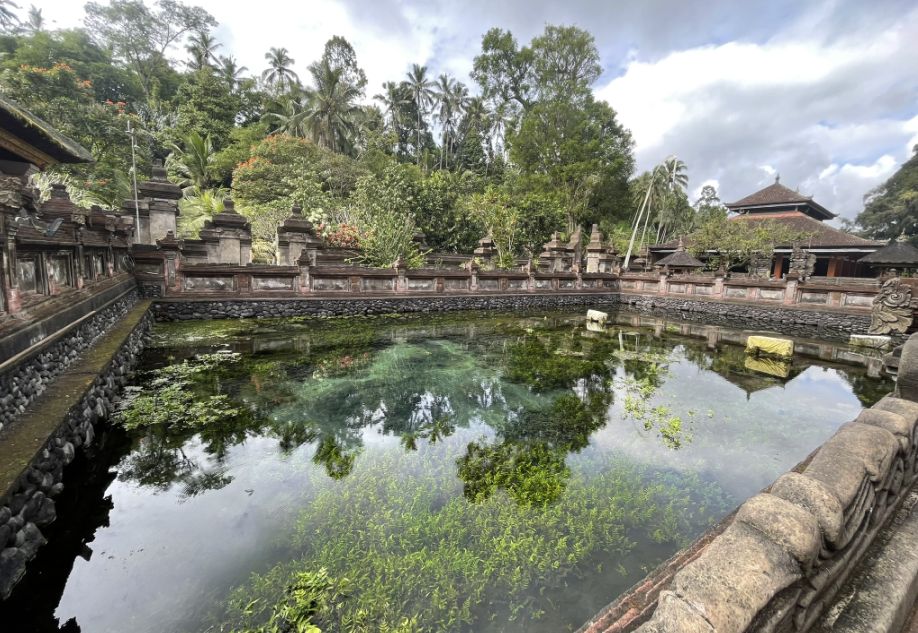
This pond is incredibly important because it is the source of the Holy Water and is flowing into the purification pools we saw earlier. The water comes straight from the underground spring and is crystal clear. Plants (like green algae and water grass) grow beautifully beneath.
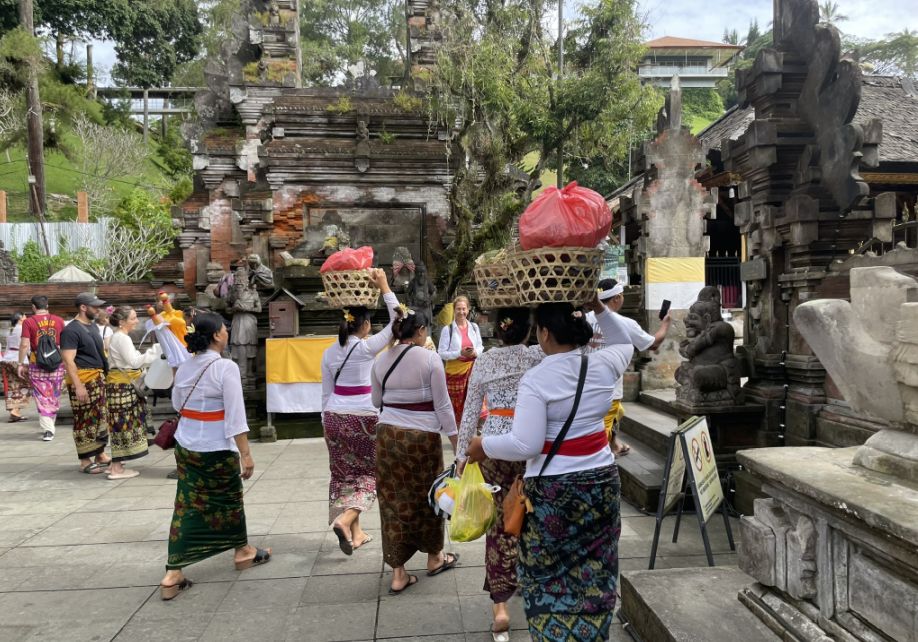
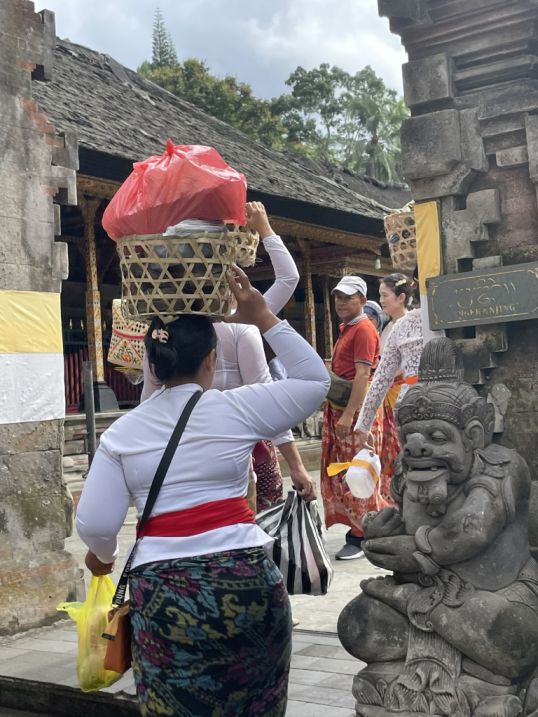
Ladies in traditional Balinese outfit consisting of the kebaya (a lace or embroidered blouse) and a sarong with a ceremonial sash, carrying bamboo woven baskets they are balancing on their heads.
 |
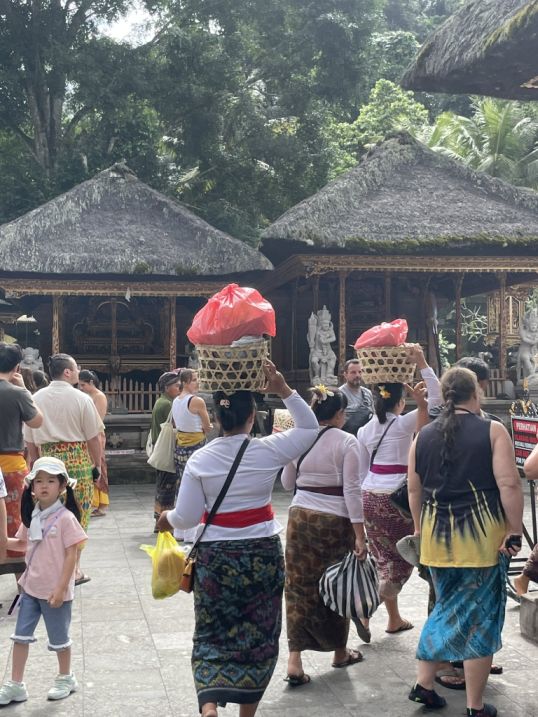 |
They are transporting these magnificent offerings, known as banten, to the temple shrines to a ceremonial offering procession. The ability to gracefully balance the tall stack on the head is a skill passed down through generations.
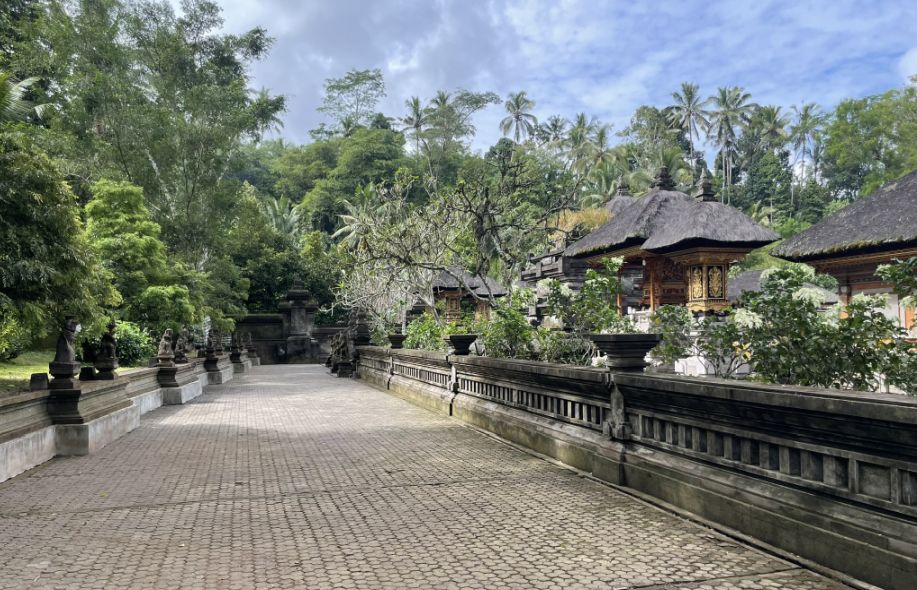
We entered one of the most atmospheric parts of Tirta Empul, an area where traditional thatched-roof buildings line both sides of a beautifully maintained pathway. This section feels quieter and more secluded, almost like stepping into an older, more intimate part of the temple grounds.
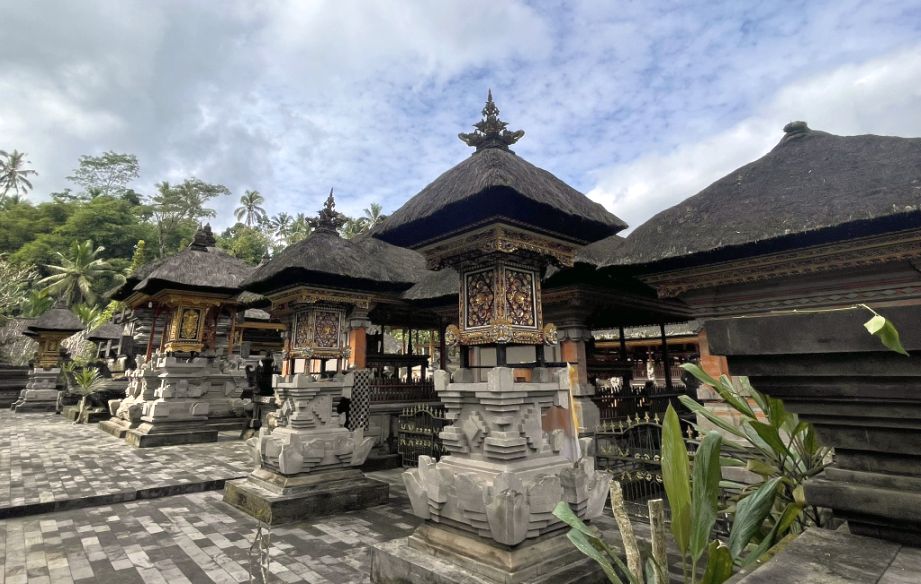
These buildings, with their thick alang-alang (thatched) roofs, create a warm, timeless feeling. They are arranged neatly along the walkway, giving the impression of a small sacred village inside the temple. Walking through it feels peaceful and almost ceremonial.
 |
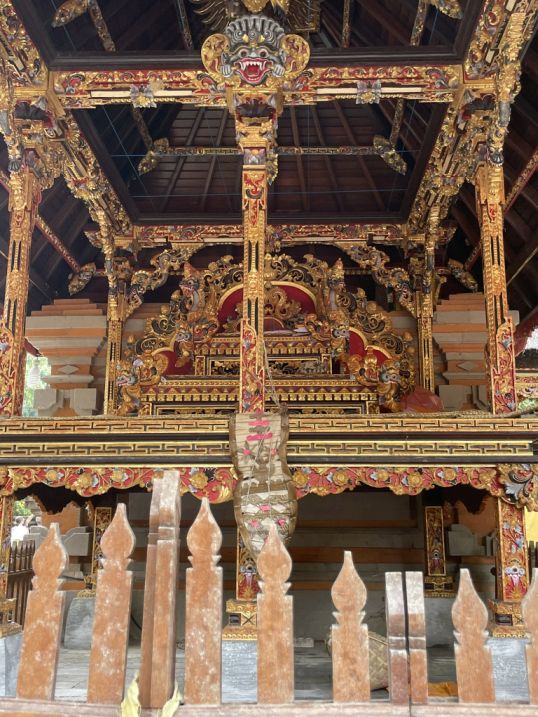 |
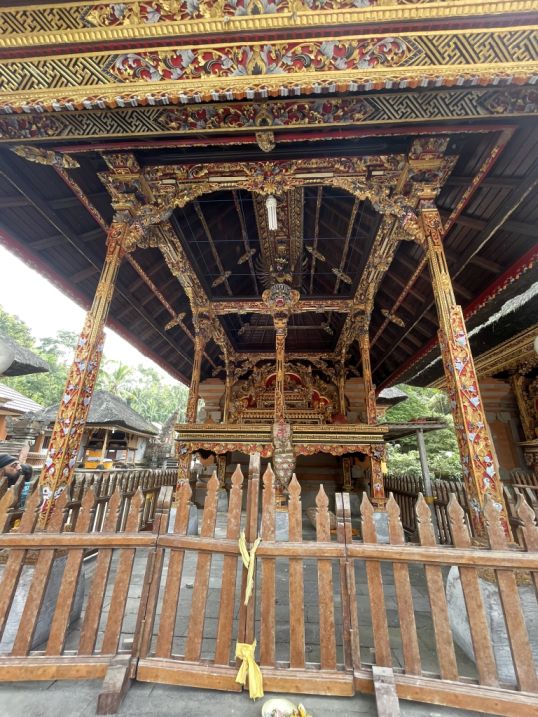
A beautiful and ornate shrine nearby.
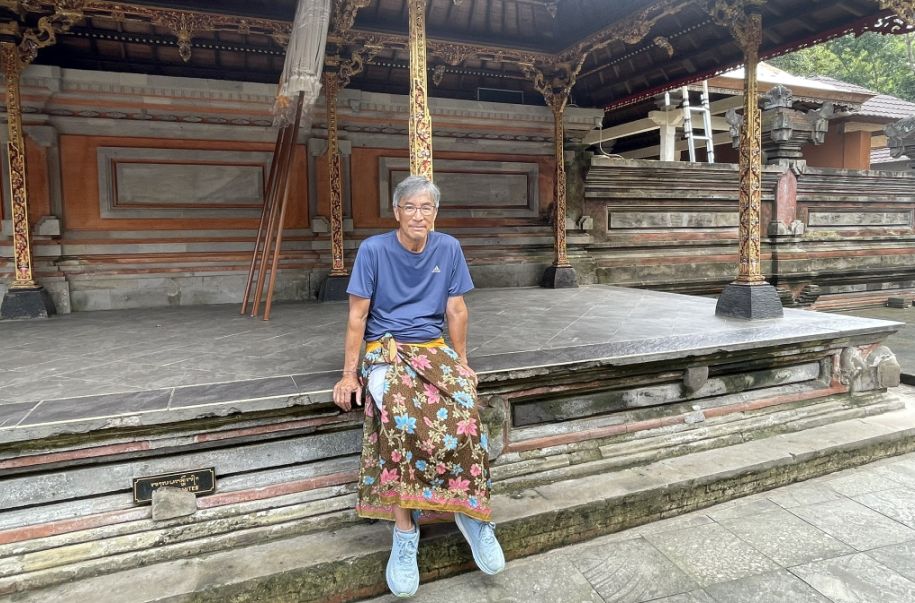
Bale for resting for families to sit and rest during rituals.
 |
 |
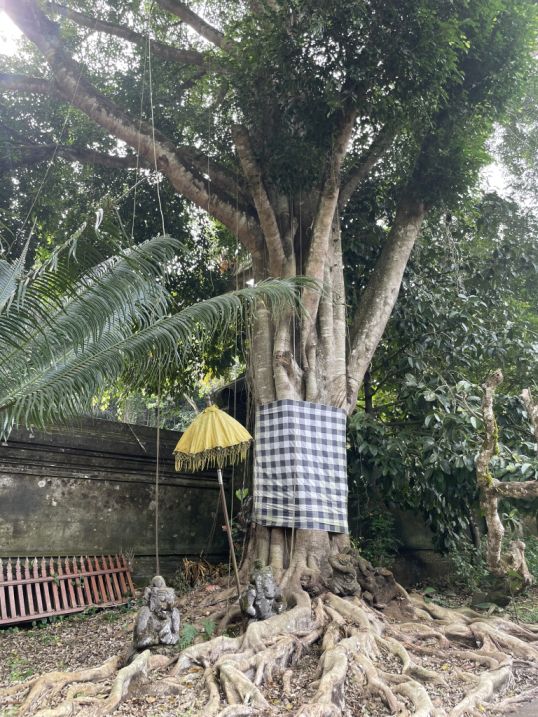
A large tree wrapped in wrapped in black-and-white checkered sarongs, which symbolize Duality and balance (good/evil, light/dark) and Protection, the guardians watch over the area and ward off negative energy.
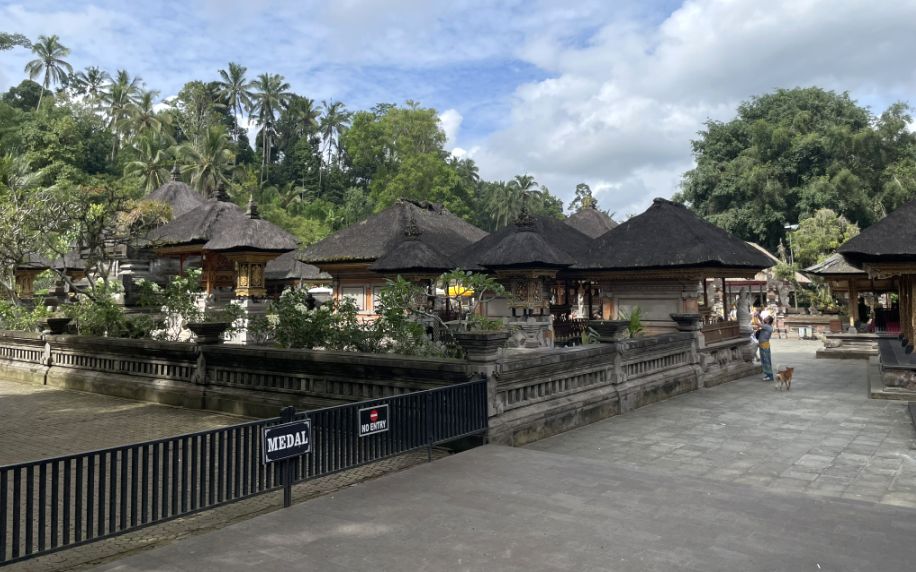
We are now leaving this quiet area.
 |
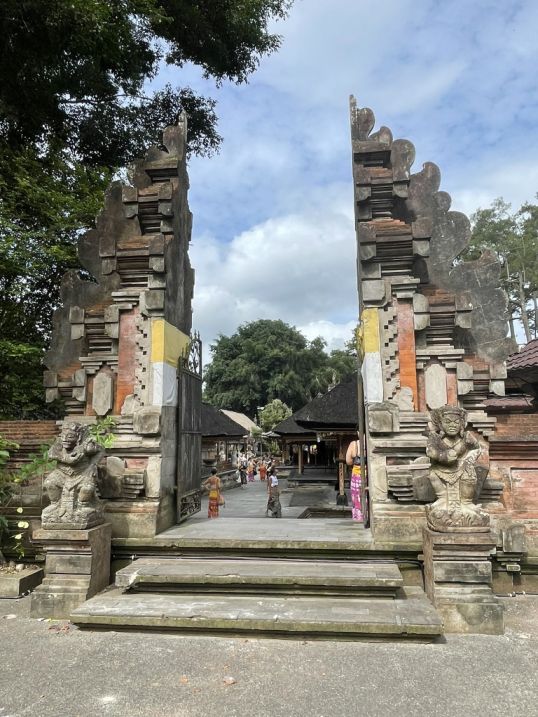 |
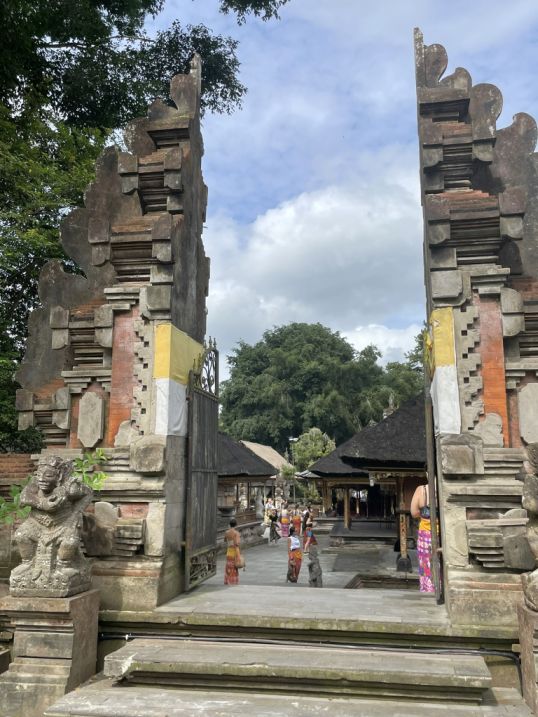
Like most significant Balinese sites, we entered through the distinctive split gate that welcomes us into the ornamental pools.
 |
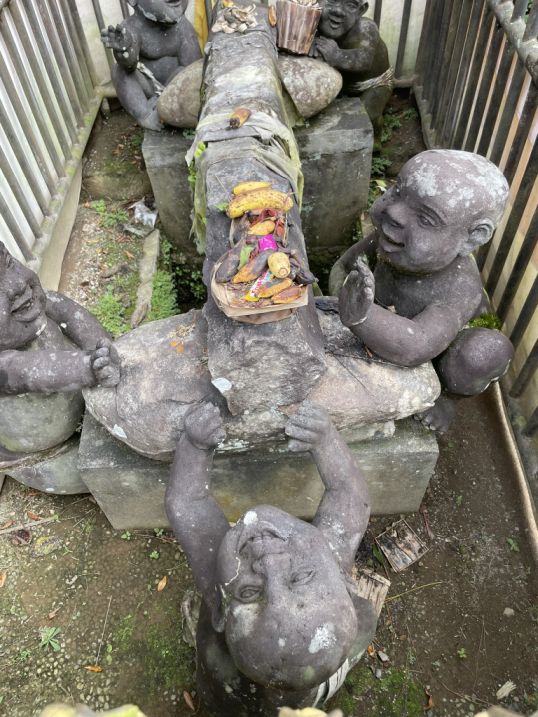 |
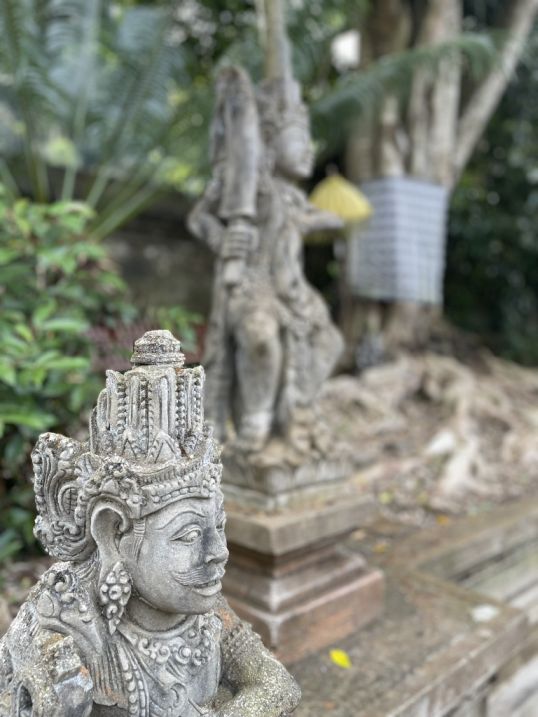
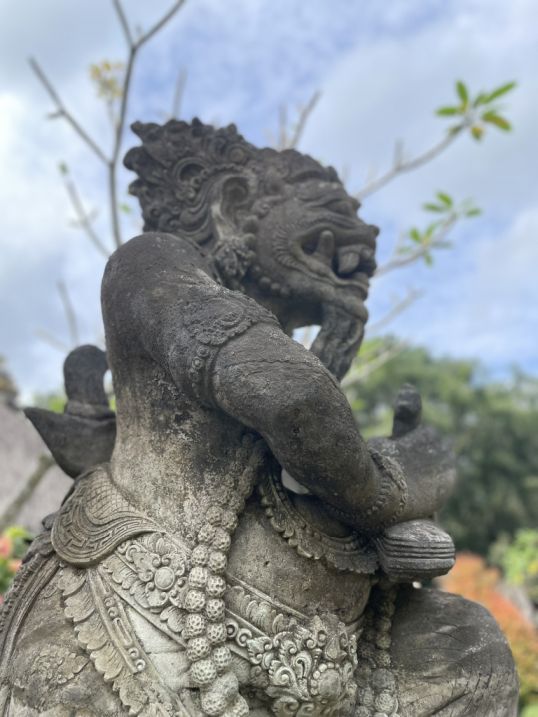
Balinese Guardian Figure or a Mythological Scene meant to protect the village. These statues forms are strategically placed at entrances to intimidate and ward off actual evil spirits from entering the sacred space. They symbolize the raw power necessary to protect the purity of the village.
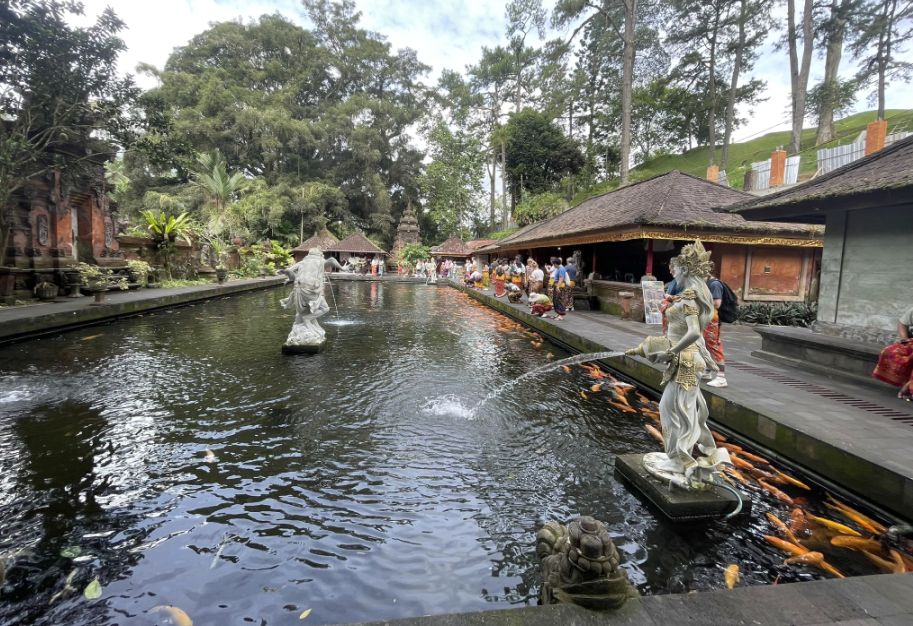
The large ornamental fish ponds located in the outer courtyard with large, colorful koi fish. The stone statues you see shooting water are often placed strategically to aerate the water for the fish and to create a pleasant, flowing sound, contributing to the overall tranquility of the temple environment. They often take the form of mythical guardians or minor deities.
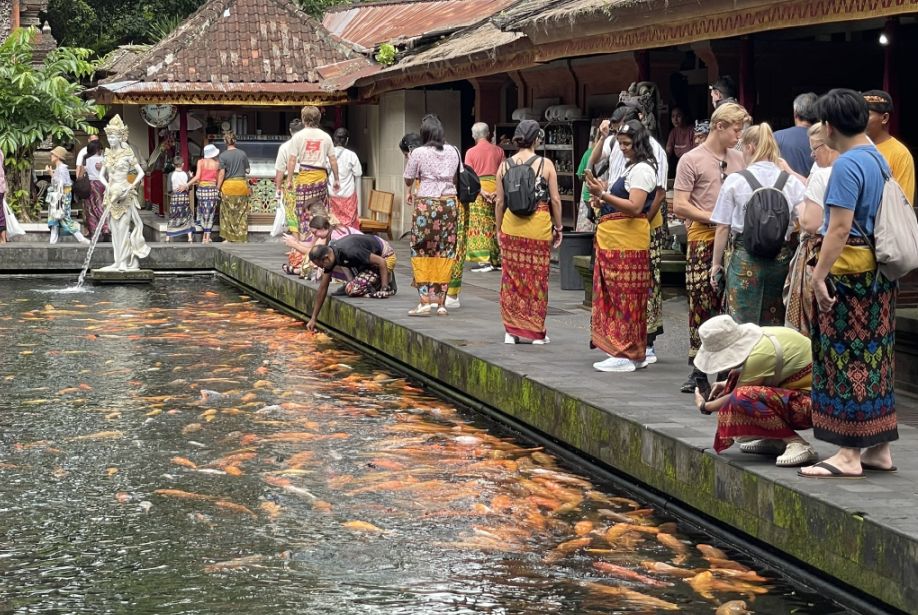
The presence of so many fish is a sign of a healthy, protected ecosystem fed by the holy springs.
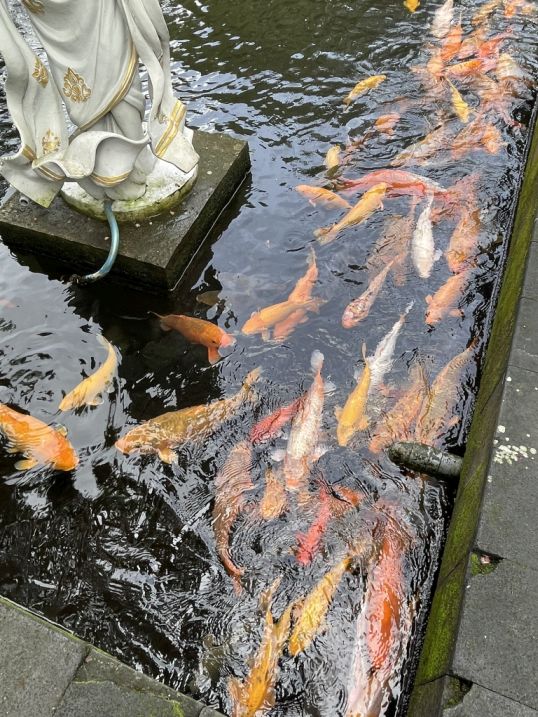 |
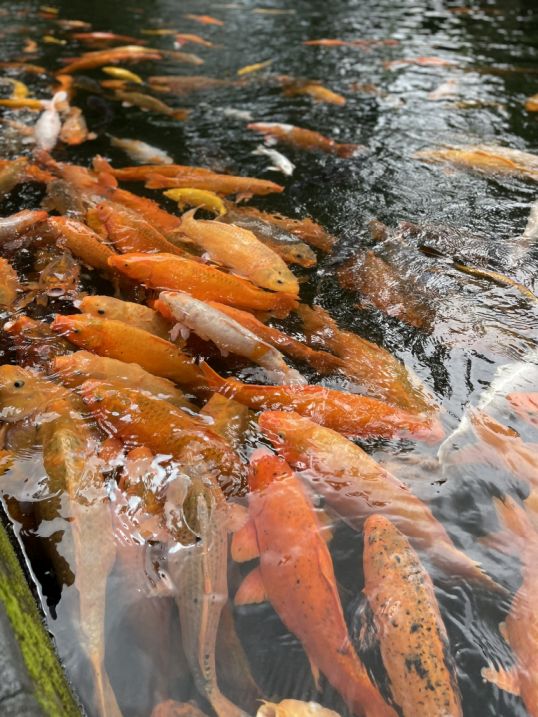 |
This area, with the vibrant fish and peaceful fountains, serves as a beautiful, tranquil garden space for quiet reflection before you leave the main temple grounds.
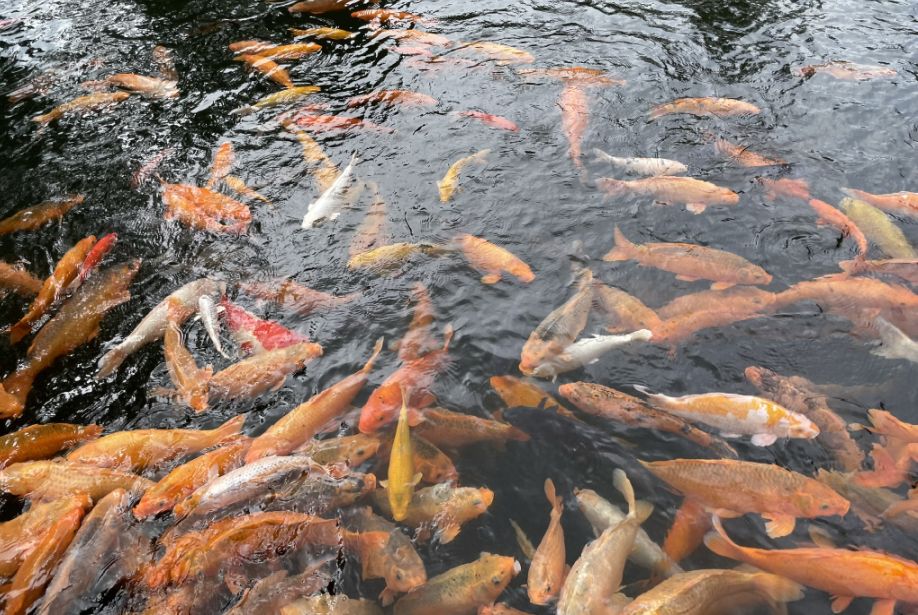
Koi are naturally very docile fish, and the serene, clean spring water helps keep them calm and healthy.
 |
 |
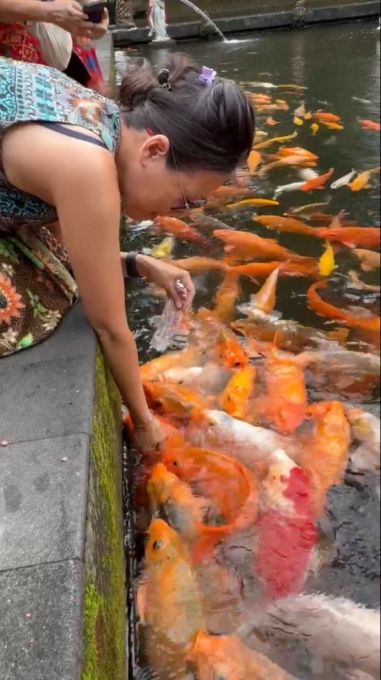 |
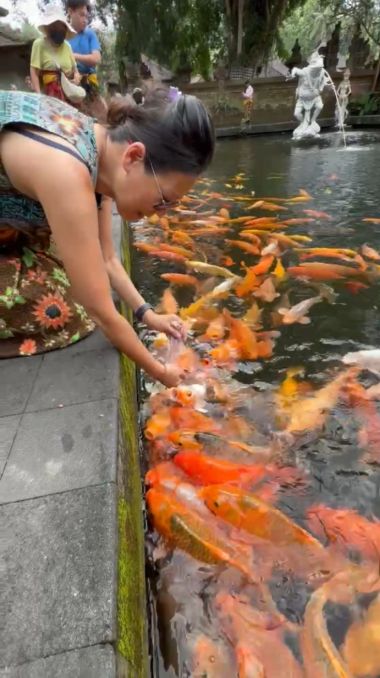
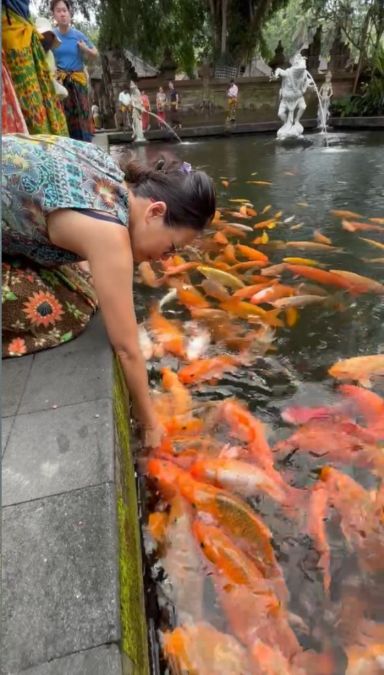
I bought some fish food to feed the Koi fish and they are not scared at all because this is a holy site, and the fish are protected. They are never fished or harmed, so they don't associate humans with danger. They are regularly fed by both the temple staff and countless visitors, so they have learned to associate human hands with the arrival of food. They are actually quite eager!
It's a beautiful moment of interaction with nature and reflects the overall peaceful environment of the sacred temple.
NEXT... Penglipuran Village