
5 days in Laos-1/31- 2/3/2025
|
Day 1 Vientiane |
Day 2-Vientiane Patuxai That Luong Buddha Park Tamnak restaurant |
Day 3-Vientiane Cope Museum Wat Si Muang |
Day 4-Luang Prabang Mekong River cruise Pak Ou Caves Lunch at Manifa Kuang Si waterfall Main Waterfall Manda de Laos |
Day 5-Luang Prabang Mount Phousi |
Day 2-That Luong, Vientiane -1/31/2025
From my old school, we continued on to That Luong, one of the most important symbols of Laos. The golden stupa is not only a national monument but also a deeply important Buddhist site. Its origins are believed to date back many centuries, although the present structure was largely rebuilt in the 16th century when King Setthathirath moved the capital to Vientiane. That Luang has been damaged and rebuilt several times over the centuries, but it has remained a powerful symbol of Lao Buddhism and national identity.
For me, though, That Luang brings back memories that go far beyond its history. Growing up in Vientiane in the 1960s and until we left in 1975, December was a special time because of the annual That Luang Festival. The area would come alive with a huge fair and exhibitions that attracted people from all over. We especially loved going at night, when the grounds were filled with lights, crowds, exhibition booths, performances, and countless street vendors.
As kids, there was so much to see and eat. Vendors sold grilled chicken, grilled offal, sweets, snacks, and all kinds of treats that seemed especially delicious to us at the time. We would wander from one exhibition stand to another, watch the shows, and simply enjoy being part of the excitement. It was one of those events that children looked forward to all year.

One of the biggest differences I noticed when I returned was the stupa itself. In my childhood memories, That Luang was dark and almost black in color. Today, it has been restored and covered in brilliant gold, giving it a completely different appearance. The change was striking, almost like seeing an old childhood photograph come to life in a new form.
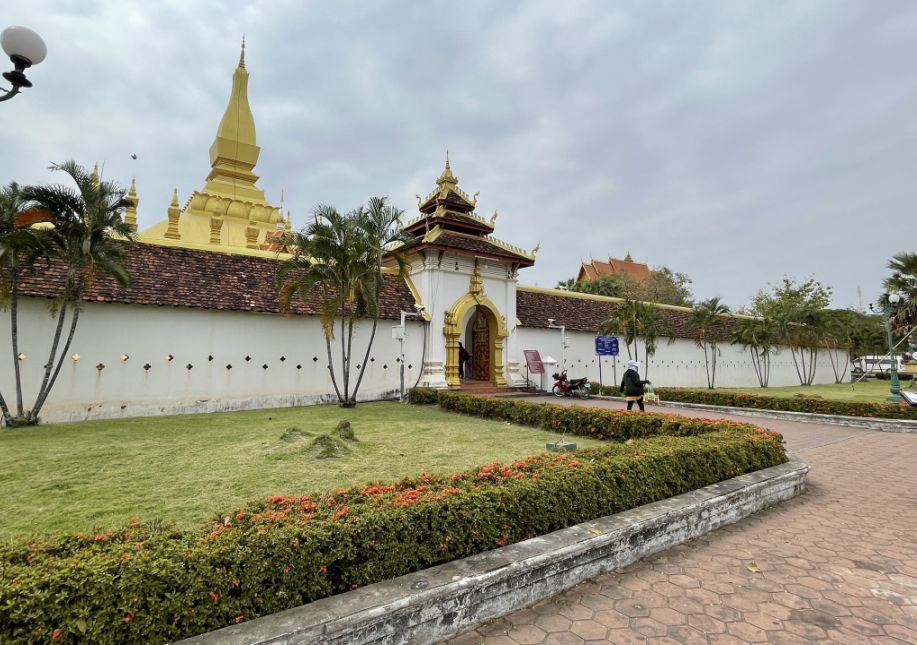
I also remembered that the roads surrounding That Luang were mostly dirt roads back then. Now they are completely paved, and the entire area feels much more developed and organized.
 |
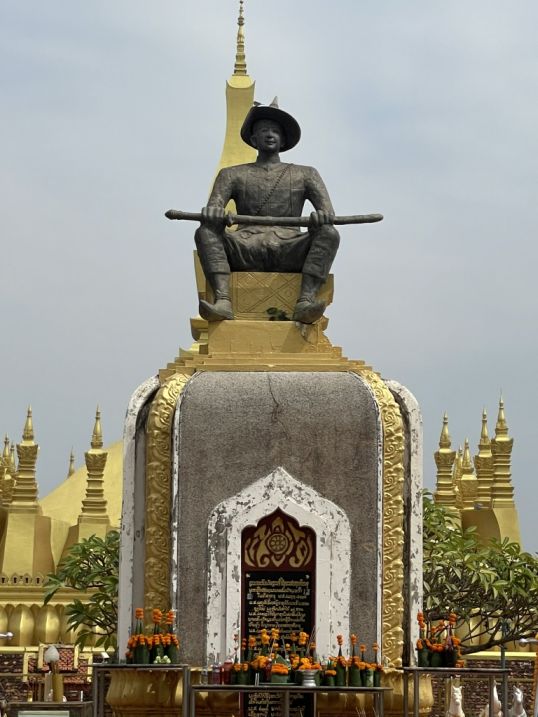 |
Before entering That Luang, we stopped at the statue of King Setthathirath, the 16th-century Lao king who moved the capital from Luang Prabang to Vientiane and is closely associated with the construction of That Luang. He sits high on an ornate pedestal, facing the great stupa, as if continuing to watch over this important national and religious landmark.

I remembered seeing his statue here as a child, so it was comforting to see that this familiar part of the entrance was still there.

We then entered the grounds of That Luang.

We found ourselves inside a large, peaceful courtyard surrounding the main stupa. The interior feels very different from the open space outside. Another golden wall encloses the central sanctuary, creating a sense of separation and reverence. The golden walls, red carpet, ornate details, and naga guardians create a beautiful combination of color and symbolism.
 |
 |
At the main entrance, a raised staircase is covered with a red carpet, leading visitors upward toward the sacred area.
 |
 |
On either side of the stairs are two impressive naga sculptures, their long bodies and raised heads guarding the entrance. The naga is an important figure in Lao Buddhist tradition and is often seen as a protector of temples and sacred places. Standing inside the courtyard, surrounded by all this gold and religious imagery, it was easy to understand why That Luang remains one of the most sacred and important places in Laos.

As we entered the courtyard, the magnificent That Luang stood directly in front of us, its brilliant gold surface shimmering and resplendent under the daylight.
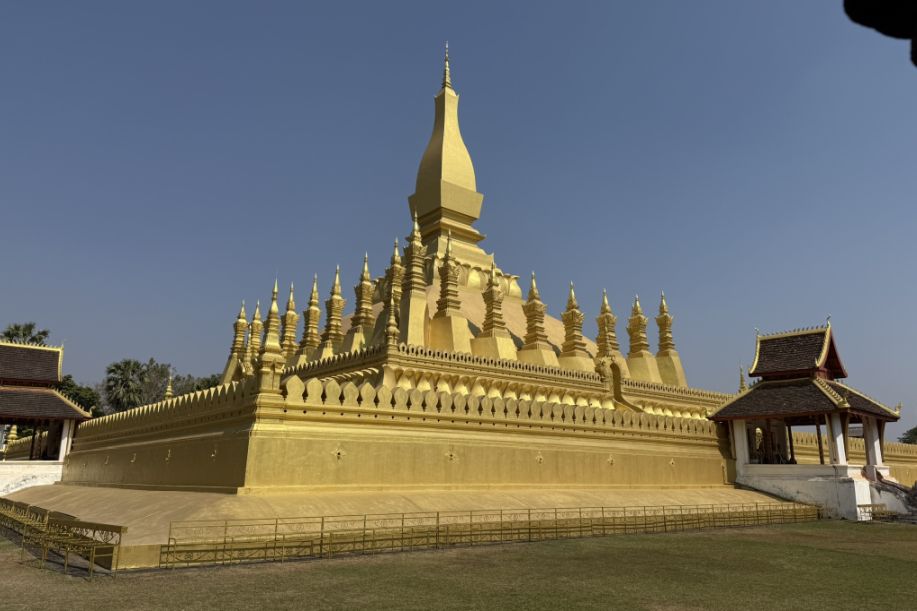
Seeing it this way was especially striking because I remembered it from my childhood as a much darker, almost black-colored monument. The transformation was remarkable.

We walked along the pathway surrounding the stupa.

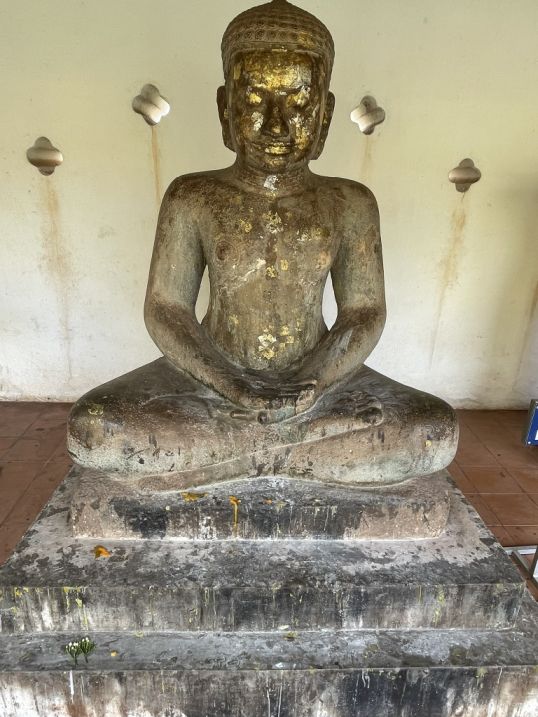
Inside the walkway where rows of Buddha statues are placed around the sacred grounds.
 |
 |
Many are seated in meditation, while others are depicted in different traditional poses, each with its own meaning in Buddhist tradition. Their calm expressions and meditative postures create a peaceful atmosphere around the enormous golden stupa.
 |
 |
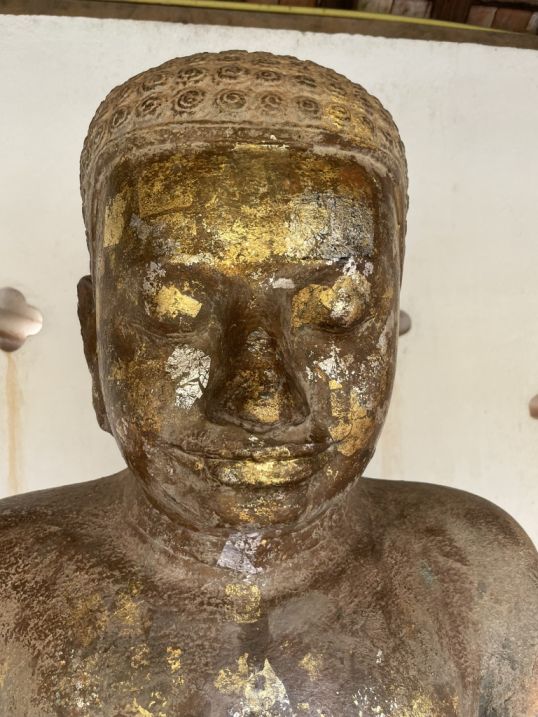
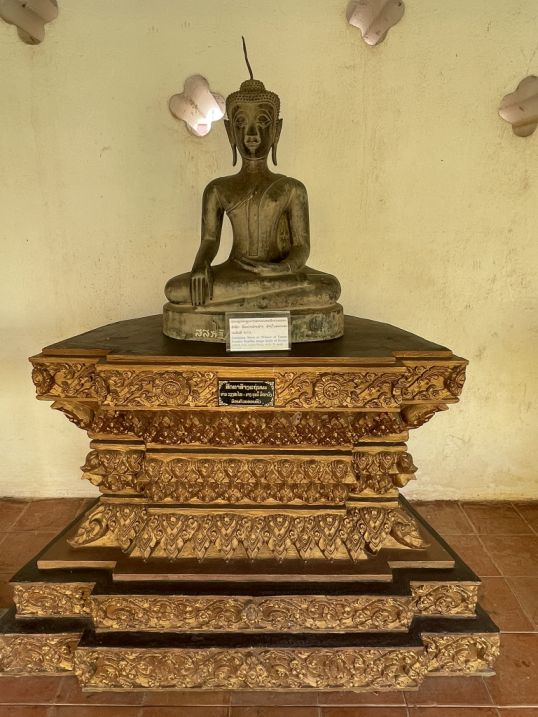
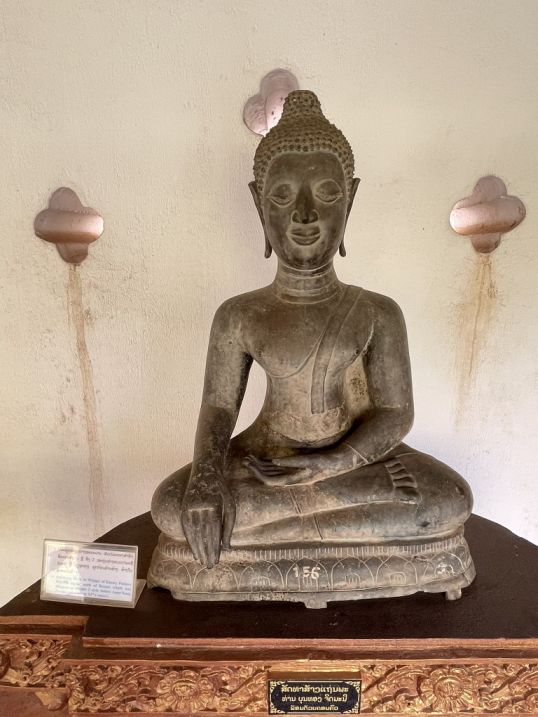
As we continued walking around the grounds, we came across something I definitely do not remember from my childhood visits, a collection of ancient statues on exhibition.
 |
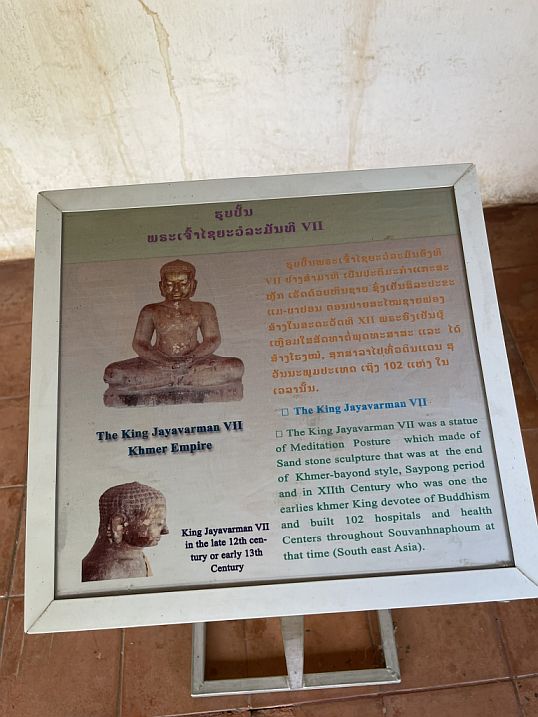 |
Among them was a striking statue identified as King Jayavarman VII of the Khmer Empire, one of the most famous rulers of the Angkor period in Cambodia. He ruled in the late 12th and early 13th centuries and was a major patron of Buddhism. His image is often shown with a serene, meditative expression, reflecting the Buddhist ideals that influenced his reign.
 |
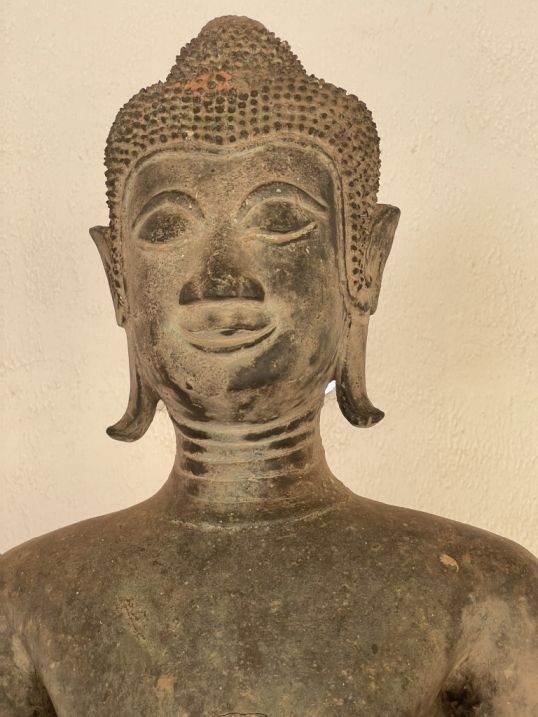 |
There were many other statues and pieces of Buddhist and Khmer art displayed around the grounds as well. . Seeing them here was fascinating because I don't remember there being any such exhibition when I was a child. Back then, my memories of That Luang were mostly of the huge December festival, the crowds, food vendors, exhibition booths, and nighttime entertainment.
 |
 |
The statues also reminded me that That Luang is much more than an architectural landmark. It remains an important Buddhist sanctuary, and the surrounding images of the Buddha reinforce the spiritual purpose of the site.
 |
 |
Walking among the ancient statues, with the brilliant golden That Luang rising behind them, gave us a glimpse into the broader history and artistic traditions of mainland Southeast Asia. It was another reminder of how much the site has evolved since the days when I came here as a child.
 |
 |
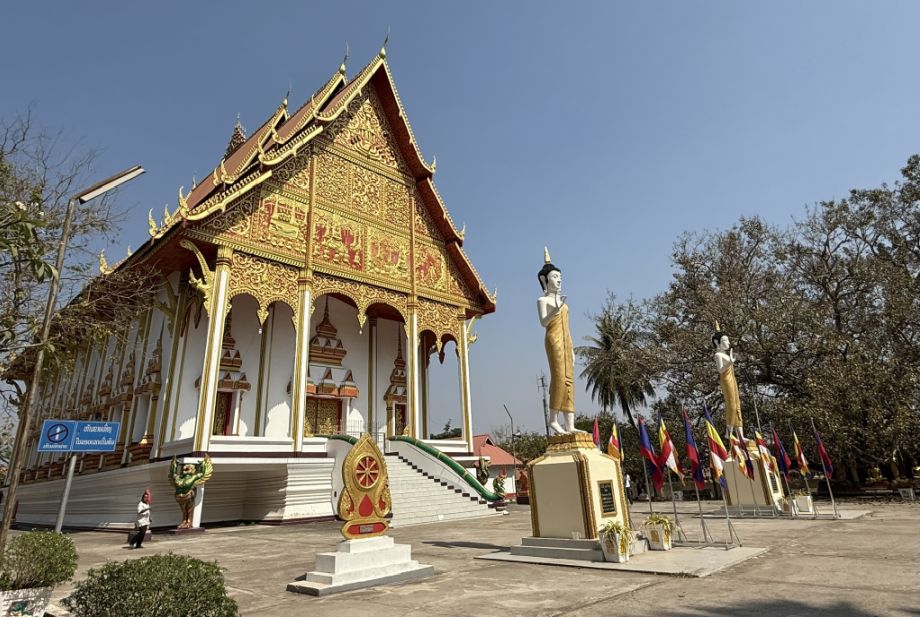
After leaving That Luang, we walked to the beautiful temple nearby, Wat That Luang Neua. The temple is located just north of Pha That Luang and is part of the important religious complex surrounding Vientiane's great golden stupa.

From the outside, the temple immediately caught our attention with its elegant Lao architecture. The roof rises in several layers, with graceful curves and ornate golden details that give the building a light, almost soaring appearance. The decorative carvings and richly ornamented entrance are typical of traditional Lao Buddhist temples, where every detail is meant to create a sense of beauty and reverence.
 |
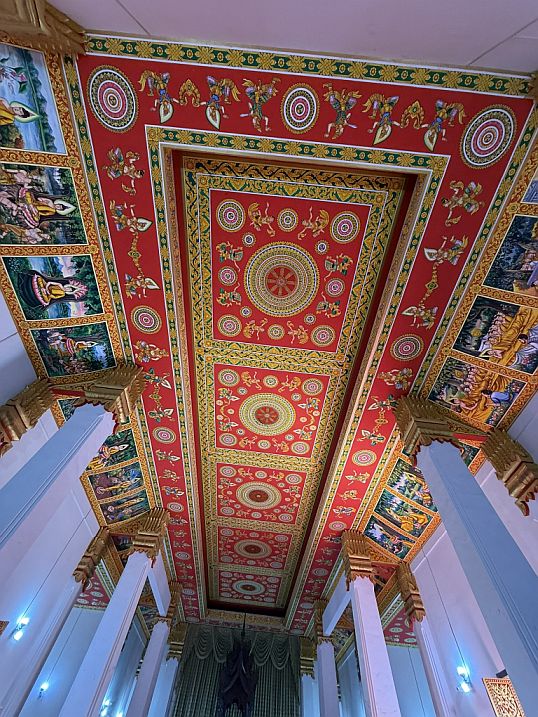 |
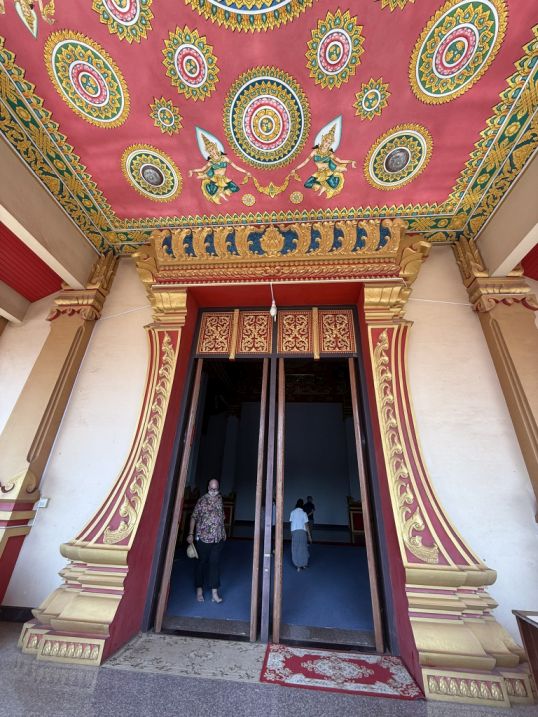
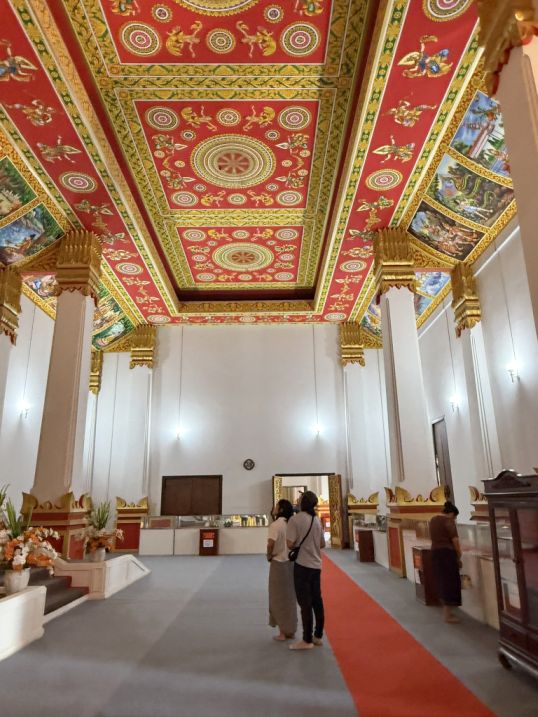
As we approached Wat That Luang Neua, the entrance immediately caught our attention. The gate was richly decorated in red and gold, with an ornate ceiling covered in intricate painted designs.
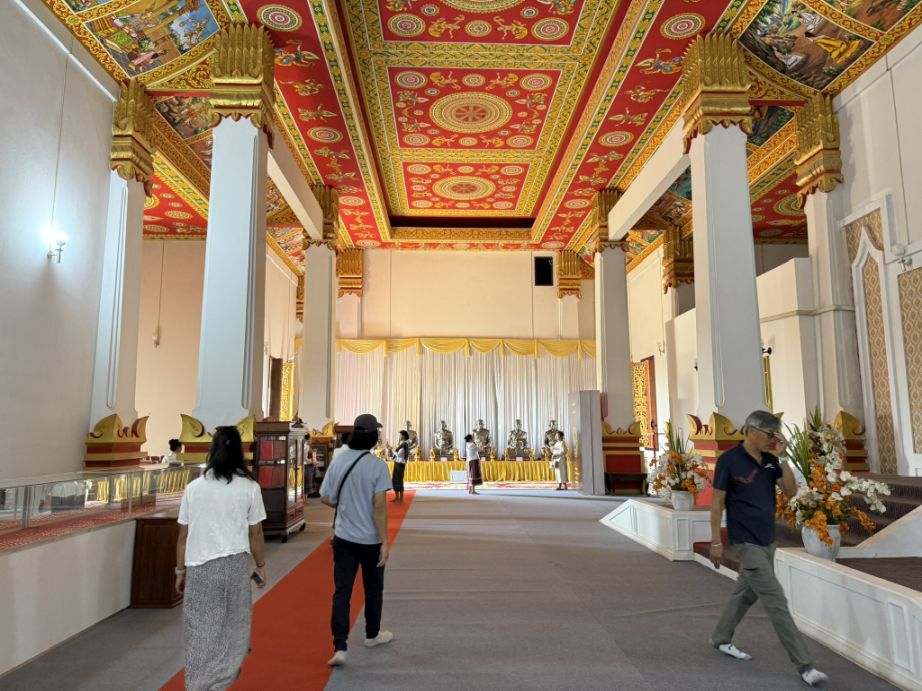
The ceiling almost looked like a richly patterned carpet, with repeating circular motifs in red and gold that gave the entrance a warm, elaborate appearance.
 |
 |
Inside the temple, the decoration became even more beautiful. The walls were covered with colorful paintings depicting scenes from the life of the Buddha and traditional Buddhist stories.
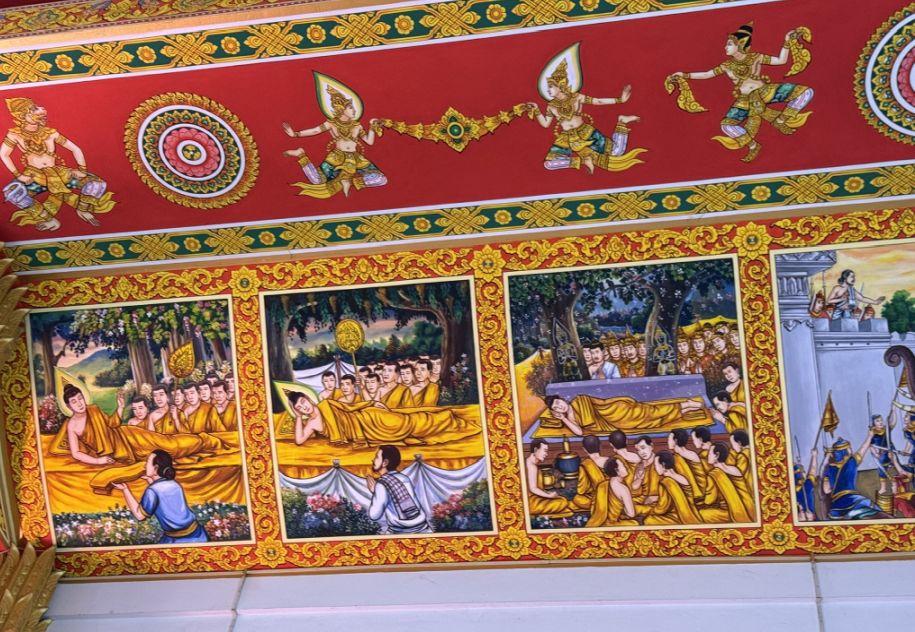
The paintings tell stories through a series of images, allowing visitors to see episodes from the Buddha's life and teachings even without words.
 |
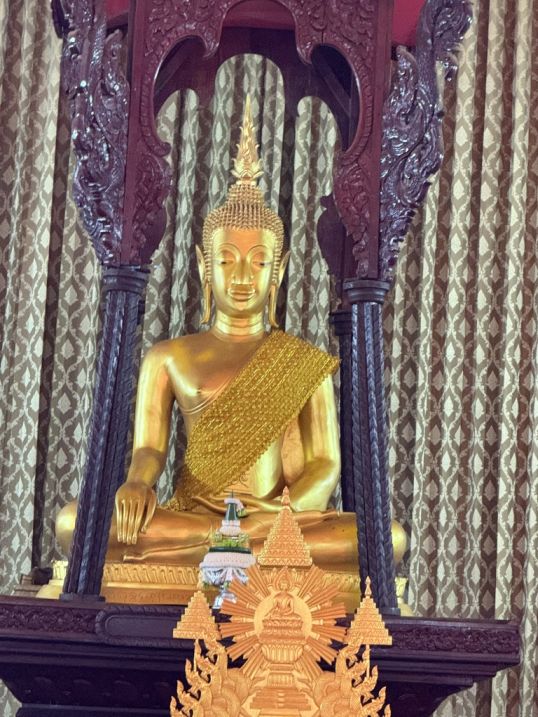 |
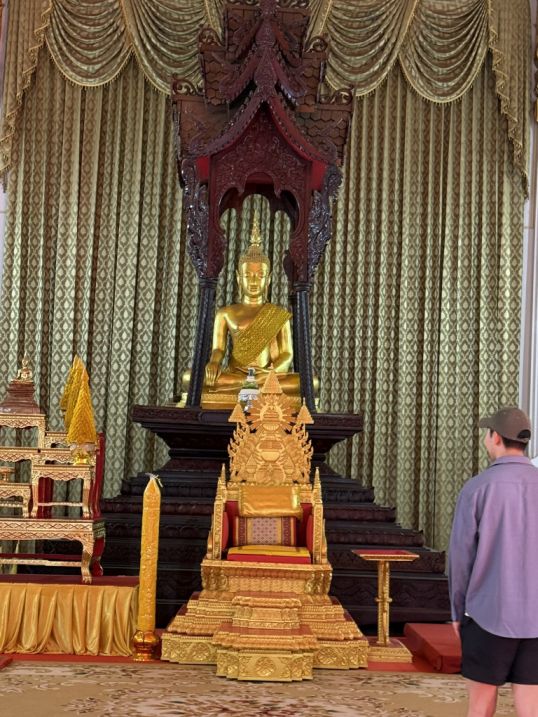
As we continued through the temple, we passed a beautiful golden Buddha statue seated on an ornate wooden pedestal. The warm gold of the statue stood out against the darker wood and colorful decorations of the temple.

Nearby, we came across a series of statues depicting Buddhist monks sitting cross-legged in meditation. Their calm expressions and upright postures created a feeling of peace and contemplation.
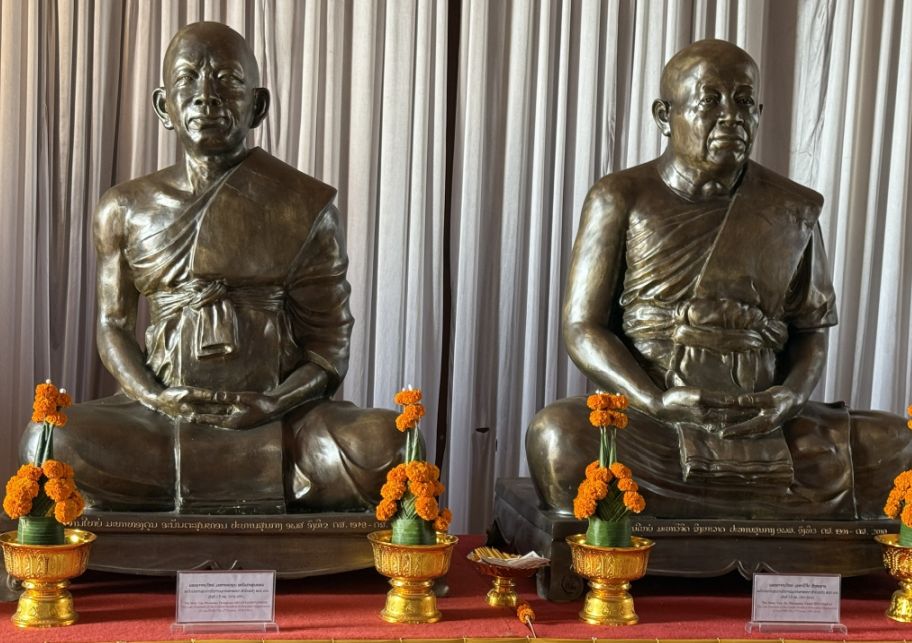
The crossed-leg position is a traditional meditation posture in Buddhism, symbolizing concentration, discipline, and the pursuit of inner peace. Seeing the monks represented in a row also gave us a sense of the importance of the monastic tradition in Lao Buddhist culture.

We are now leaving the temple
 |
Eventually, we made our way back outside, descending a long flight of stairs from the temple.
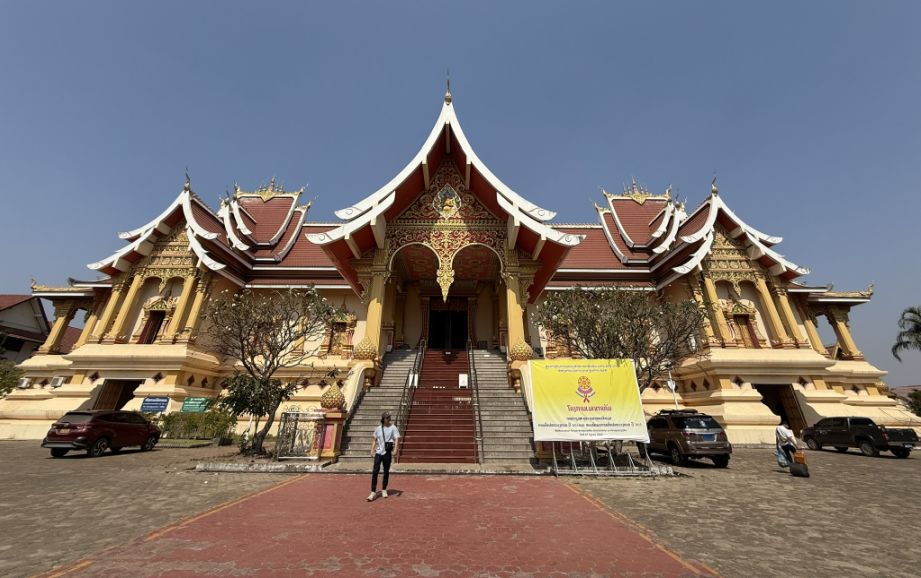
Looking back as we walked down, we could appreciate the beautiful red-and-gold architecture one more time before continuing on to our next stop.
NEXT... Day 2-Buddha Park (Wat Xieng Khouane Luang)