5 days in Laos-1/31- 2/3/2025
|
Day 1 Vientiane |
Day 2-Vientiane Patuxai That Luong Buddha Park Tamnak restaurant |
Day 3-Vientiane Cope Museum Wat Si Muang |
Day 4-Luang Prabang Mekong River cruise Pak Ou Caves Lunch at Manifa Kuang Si waterfall Main Waterfall Manda de Laos |
Day 5-Luang Prabang Mount Phousi |
Day 3-Cope Visitor center, Vientiane -2/1/2025
Today was our last day in Vientiane. Our flight wasn't until later in the afternoon, which left us with one more morning to explore the city. For our first stop, we chose somewhere very different from the temples and monuments we had been visiting: the COPE Visitor Centre.
COPE is located on the grounds of Vientiane's Centre for Medical Rehabilitation. It isn't a large museum, but it tells one of the most important, and difficult stories of modern Laos: the continuing impact of unexploded ordnance, or UXO, left behind from the war years. The exhibits explain not only the history of the bombing but also how unexploded bombs continue to affect Lao communities today. COPE's work focuses on rehabilitation and helping people with mobility-related disabilities through prosthetic and orthotic services, wheelchairs and other assistance.
 |
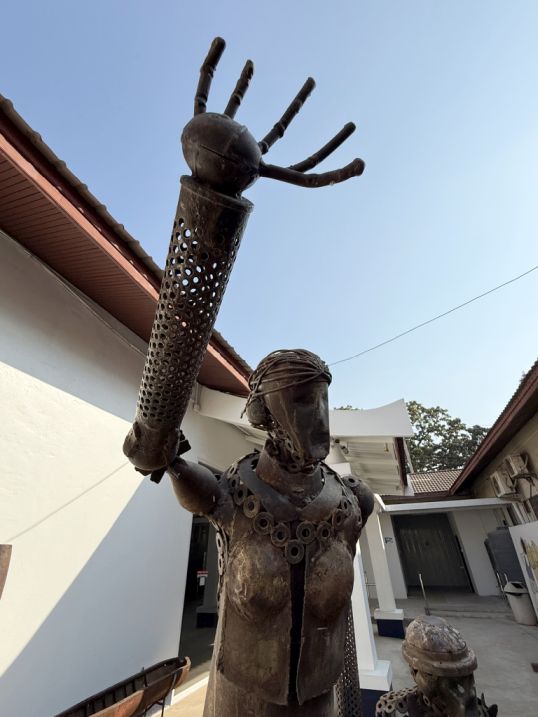 |
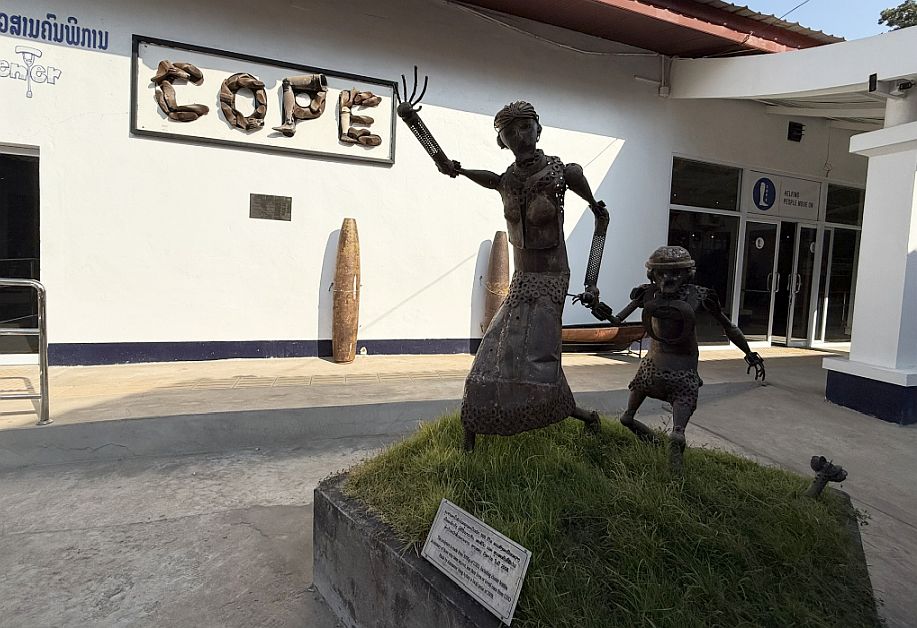
Even before we entered the museum, we encountered one of its most powerful pieces. Near the front stood a striking metal sculpture of a man holding a young boy, with another figure nearby. At first glance it looked almost skeletal, but once we understood what it was made from, it took on an entirely different meaning.
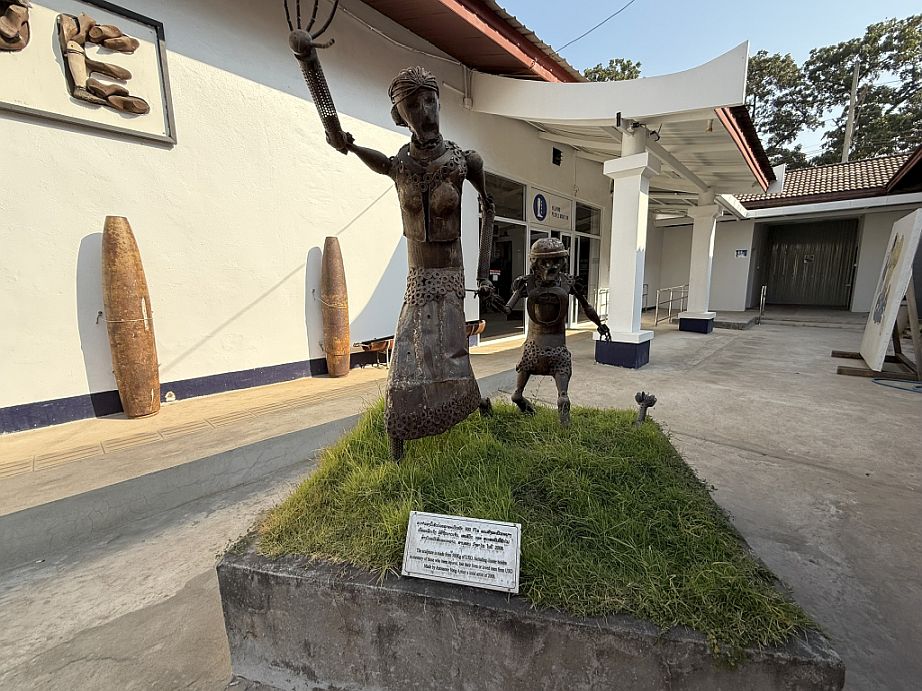
The sculpture was created in 2008 by Lao artist Anousone Vong Aphay from approximately 500 kilograms of UXO material, including remnants of cluster bombs. It was made as a memorial to people who have been injured or killed by unexploded ordnance, as well as families who have lost loved ones.
There was something particularly moving about seeing the adult holding the child. The metal that had once been associated with destruction had been reshaped into human figures, a father-like figure seemingly protecting or carrying a young boy. We hadn't even stepped inside yet, and already the sculpture gave us an idea of what this museum was going to be about: not simply bombs and war, but the people whose lives continued to be affected long after the fighting had ended.
Inside, the exhibits tell the story through photographs, personal accounts, prosthetic limbs, examples of UXO and multimedia displays. There is even a small cinema designed to resemble an underground wartime bunker, where short documentaries explore UXO and the experiences of people affected by it. Admission to the Visitor Centre is free, although donations and purchases from the shop help support COPE's rehabilitation work.
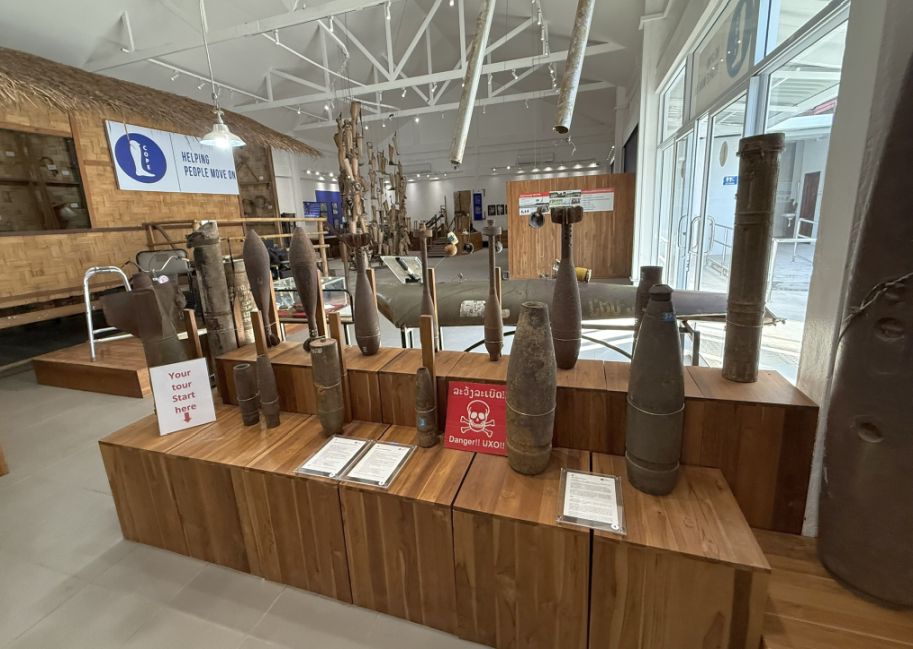
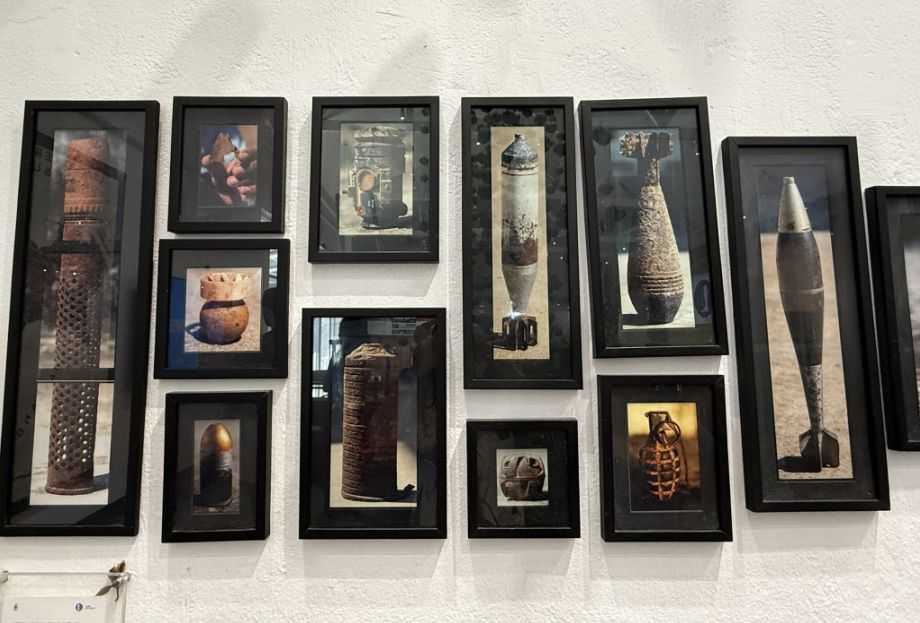
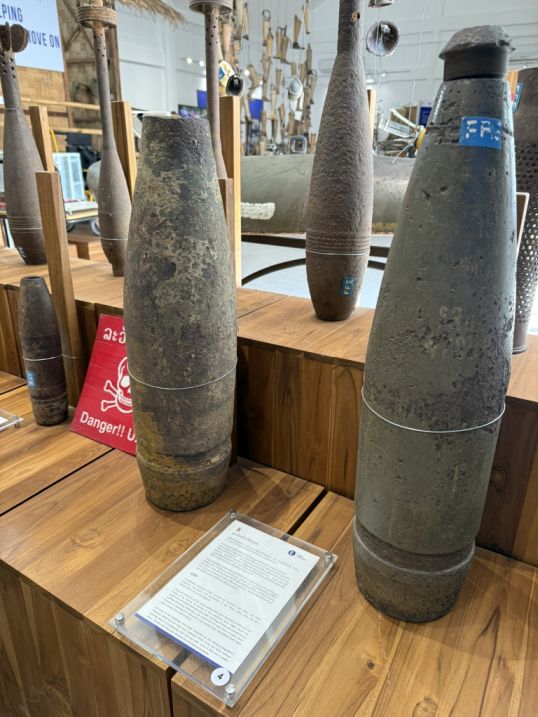
As soon as we stepped inside the COPE Visitor Centre, we were confronted with a display of bombs and unexploded ordnance in an astonishing variety of shapes and sizes. Some were large and immediately recognizable as weapons, while others were surprisingly small.
 |
 |
Seeing them together made the scale and variety of the ordnance left behind in Laos much easier to comprehend.
 |
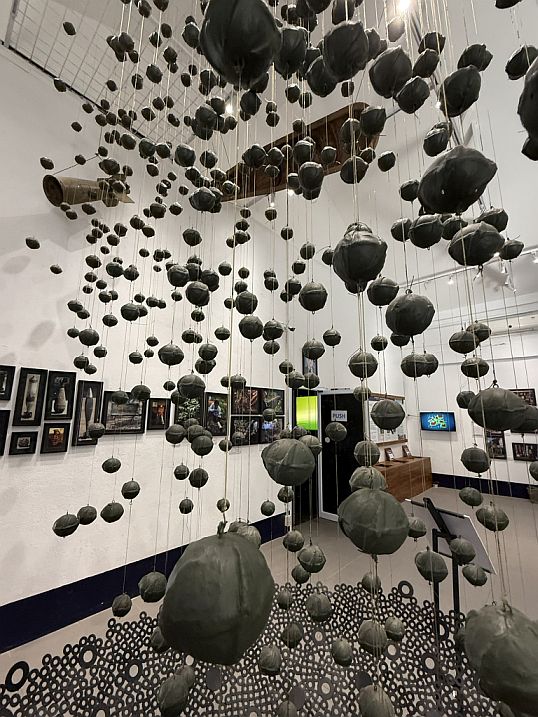 |
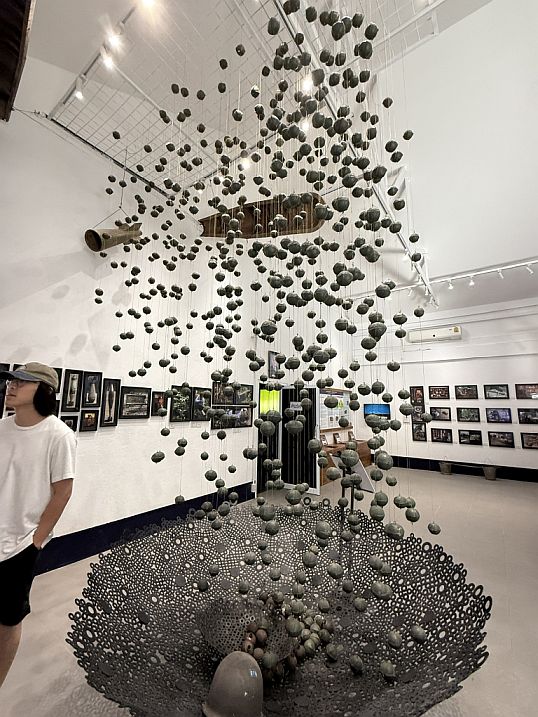
Walking farther into the museum, we looked up and saw one of the most dramatic displays: a cascade of cluster bomblets suspended from the ceiling. Dozens seemed to be falling through the air above us, frozen in time. It was visually striking, but once we understood what they represented, it became deeply unsettling.
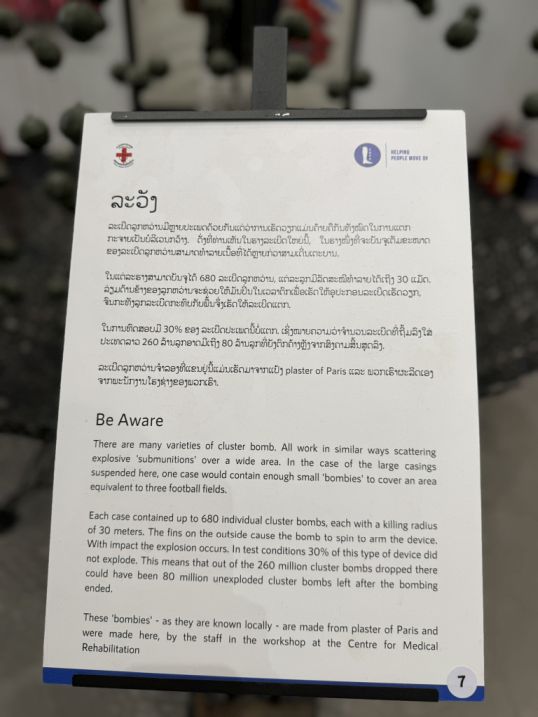
During the war, a cluster bomb container would open in the air and scatter large numbers of smaller bomblets, often called bombies in Laos, across a wide area. Many failed to explode when they hit the ground. Decades later, these unexploded bomblets can still remain hidden in fields, forests and villages, where they pose a danger to people farming, collecting scrap metal, building homes or simply playing outdoors.
 |
 |
One of the panels stopped us with a statistic that was almost impossible to comprehend. Between 1964 and 1973, the United States dropped more than two million tons of ordnance on Laos during approximately 580,000 bombing missions. That works out to roughly one bombing mission every eight minutes, 24 hours a day, for nine years.
Much of this happened during what became known as the “Secret War,” when the United States conducted an extensive bombing campaign in Laos as part of the wider conflict in Vietnam. Large areas were targeted in efforts to disrupt North Vietnamese supply routes, particularly the Ho Chi Minh Trail, and to support forces fighting in the Laotian civil war.
 |
 |
Another panel showed us how removing unexploded ordnance can completely change the future of a community. In Nosom, hundreds of bombies were discovered and safely destroyed, allowing land that had been too dangerous to use to become safe again for local farmers.
The story continued in Houaxe village, where UXO Lao cleared contaminated agricultural land so villagers could finally put it back into productive use. Once the danger hidden beneath the soil had been removed, the community began planting coffee. It was a simple example, but one that stayed with us. Clearing UXO isn't only about finding and destroying old bombs, it is also about giving the land back to the people who depend on it. A field that once represented danger could once again provide crops, income and a livelihood for a family.
 |
 |
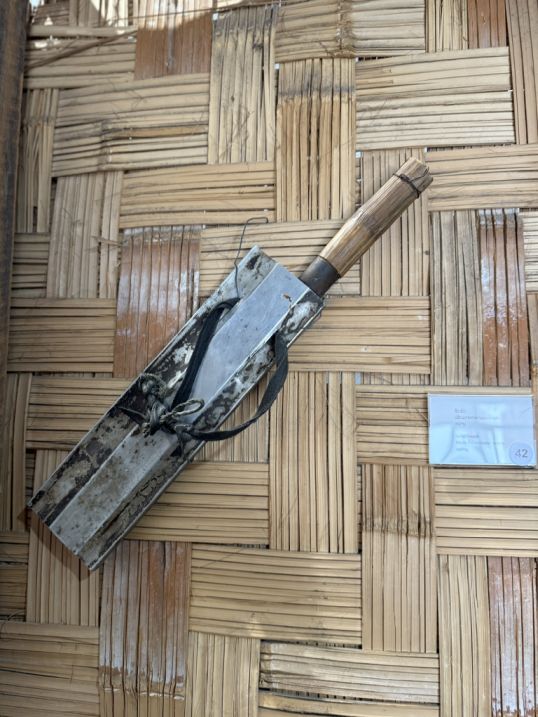
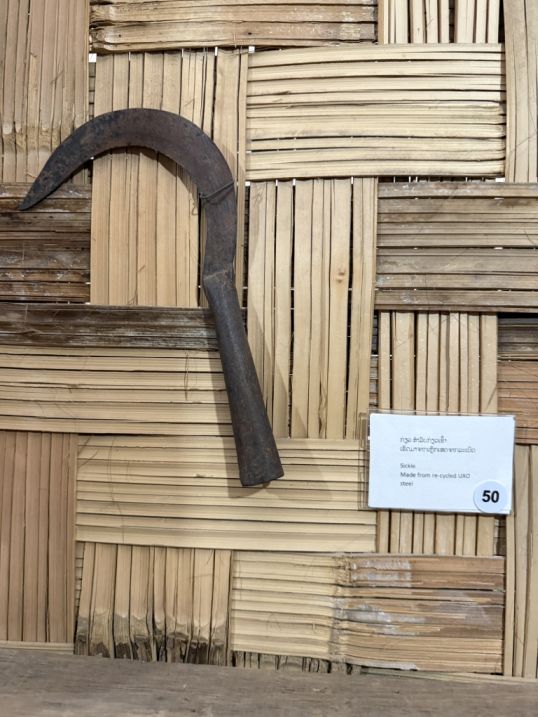
Farther into the museum, we came across another fascinating display showing how Lao villagers had found ways to reuse the remnants of war in their everyday lives. Here is a kitchen knife, a large serving spoon that was repurpose from the metal of old mortar shells and other military scrap.
 |
 |
Cow bell and pot and pan made from mortar shell.
 |
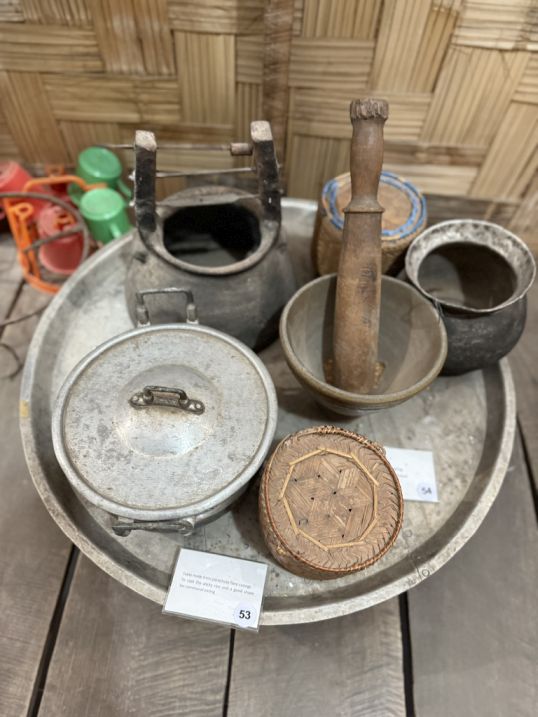 |
It was remarkable to see something originally created for destruction transformed into such ordinary and useful objects. In rural areas, where scrap metal was a valuable resource, people learned to reshape the strong aluminum and metal left from wartime ordnance into things they needed around the home and farm.
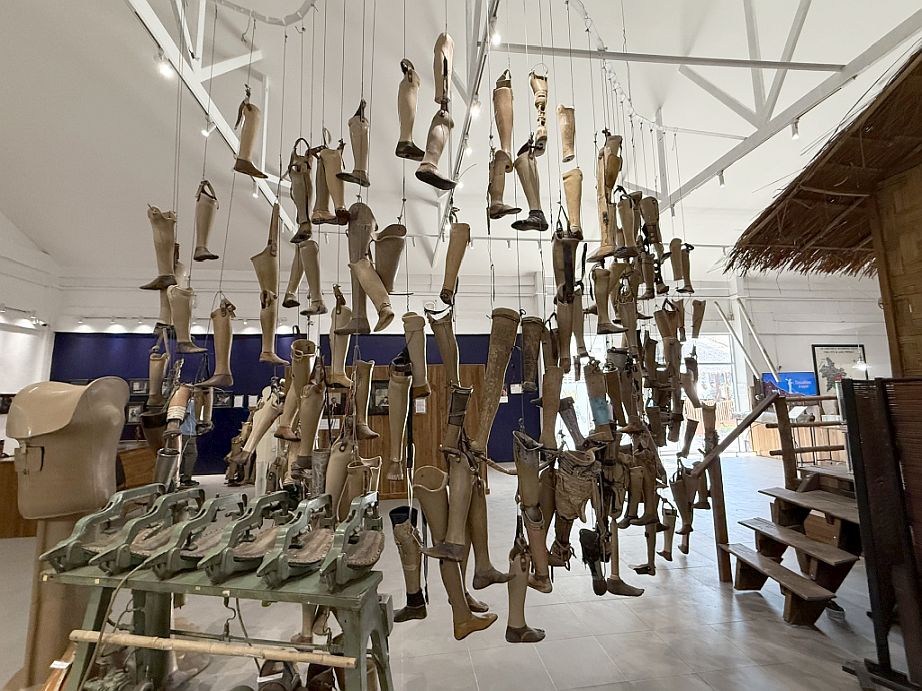
A little farther into the museum, we looked up and saw another powerful installation: dozens of prosthetic legs hanging from the ceiling. After seeing the bombs, cluster bomblets and remnants of ordnance earlier in the museum, this display brought the story back to the people who had been affected by them.
 |
 |
The prosthetic limbs represented something very different from the weapons we had just seen. For people who have lost a leg through a UXO accident, a properly fitted prosthesis can mean the ability to walk again, return to school or work, support a family, and regain independence. Providing prosthetic and rehabilitation services is an important part of COPE's work.
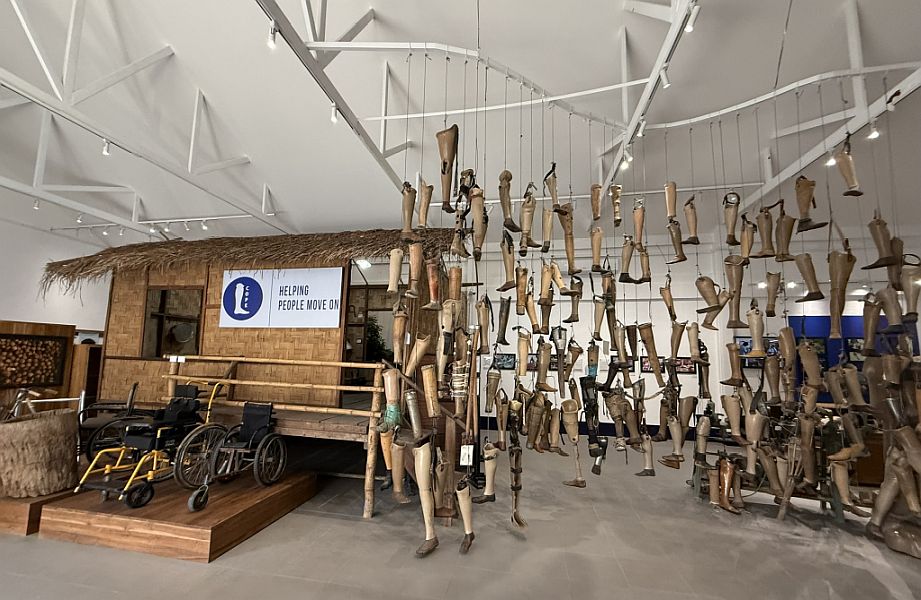
One simple sign seemed to capture the purpose of COPE particularly well: “Helping People Move On.” After everything we had seen the bombs, the cluster bomblets and the prosthetic limbs, the words carried both a literal and an emotional meaning. COPE helps people regain mobility through prosthetic limbs and rehabilitation, but it also helps them rebuild their independence and move forward with their lives.

Throughout this part of the museum, prosthetic limbs were scattered among photographs and personal stories of people whose lives had been affected by UXO. Rather than focusing only on statistics, the exhibits introduced us to individuals and their experiences, people learning to walk again, returning to their families and finding ways to continue with their lives after suffering life-changing injuries.
 |
 |
All sort of prosthetics on display.
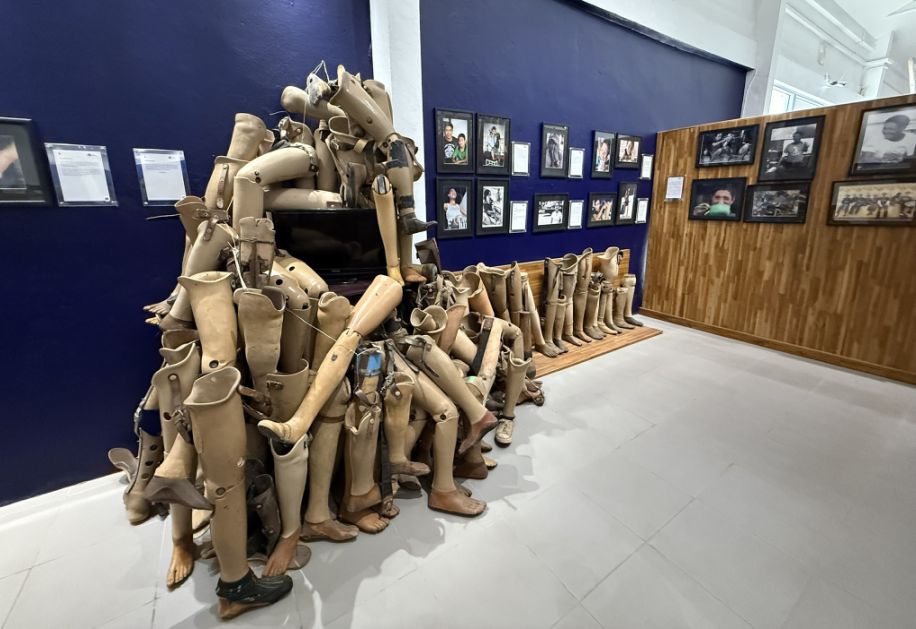
There was something haunting about seeing so many artificial legs. Each one seemed to suggest an individual story. At the same time, the display was not only about loss. It also represented recovery and the possibility of rebuilding a life after a devastating injury, which is really at the heart of what COPE is trying to accomplish.
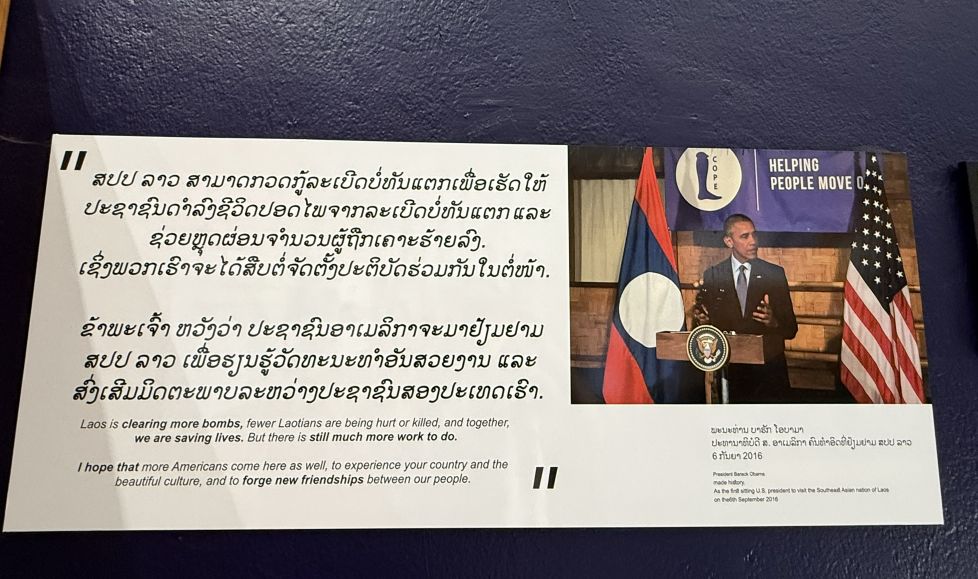
Nearby, we noticed a photograph of President Barack Obama, who visited Laos in September 2016. His trip was historic: he became the first sitting U.S. president to visit Laos. During the visit, Obama acknowledged the enormous scale of the American bombing campaign and announced increased U.S. funding for the survey and clearance of unexploded ordnance in Laos.
Seeing his photograph here felt particularly significant. More than four decades after the bombing ended, a U.S. president had finally come to Laos and publicly addressed this painful chapter of the two countries' shared history. Surrounded by the personal stories of UXO survivors, the photograph was also a reminder that clearing the land and helping those affected by unexploded bombs remains an ongoing effort, even generations later.
 |
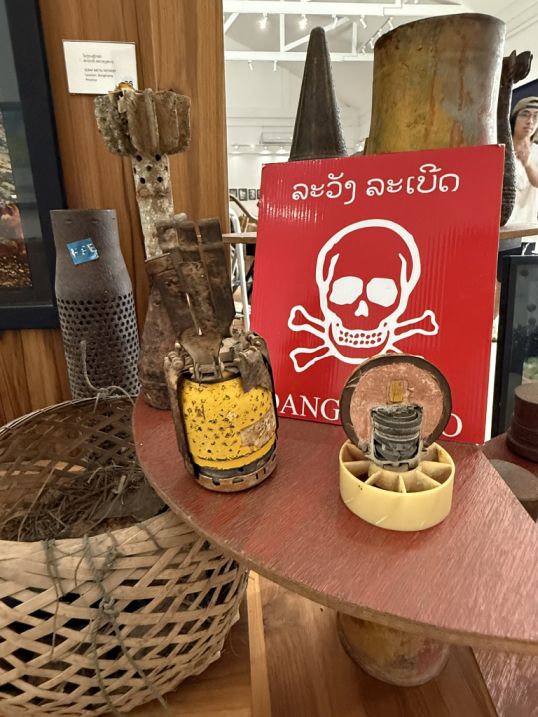 |
Dangerous objects that could still cause harm they are not cleared.
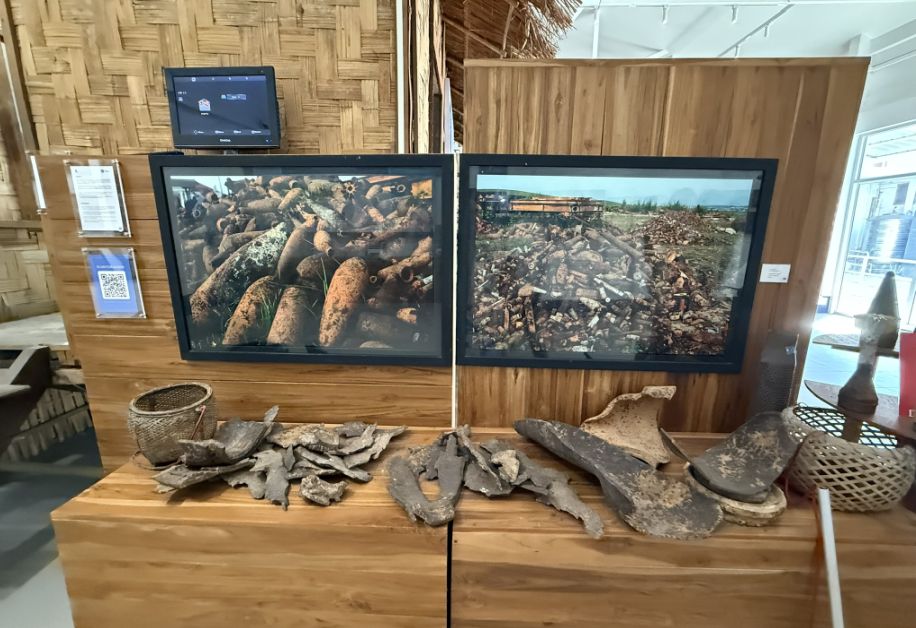
We then walked past a large display filled with twisted pieces of metal and fragments left behind from exploded bombs. Individually, they looked like little more than rusty scraps, but seeing so many of them collected together was unsettling. on the wall is a few photographs showing what looked almost like a mountain of bomb casings and metal debris, surrounded by countless smaller fragments. It was another reminder that when a bomb explodes, it doesn't simply disappear. The casing breaks apart into many pieces of metal that can be propelled outward at tremendous speed, causing devastating injuries to anyone nearby.
NEXT... Day 3-Wat Simuang/Luang Prabang