4 days in San Diego- 8/31- 9/3/2024
Day 2- Sunset cliffs Natural Park-9/1/2024
Sunset Cliffs Natural Park is one of San Diego’s most dramatic coastal landscapes, and it feels very different from Torrey Pines, wilder, more exposed, and shaped directly by the ocean. The park stretches along the western edge of Point Loma, where rugged sandstone cliffs drop straight into the Pacific. There are no wide sandy beaches here; instead, the coastline is carved into sharp edges, sea caves, arches, and jagged rock shelves, all constantly reshaped by waves. Below, the water crashes against the cliffs, sending up white spray, while tide pools form in the rocky pockets when the tide is low.
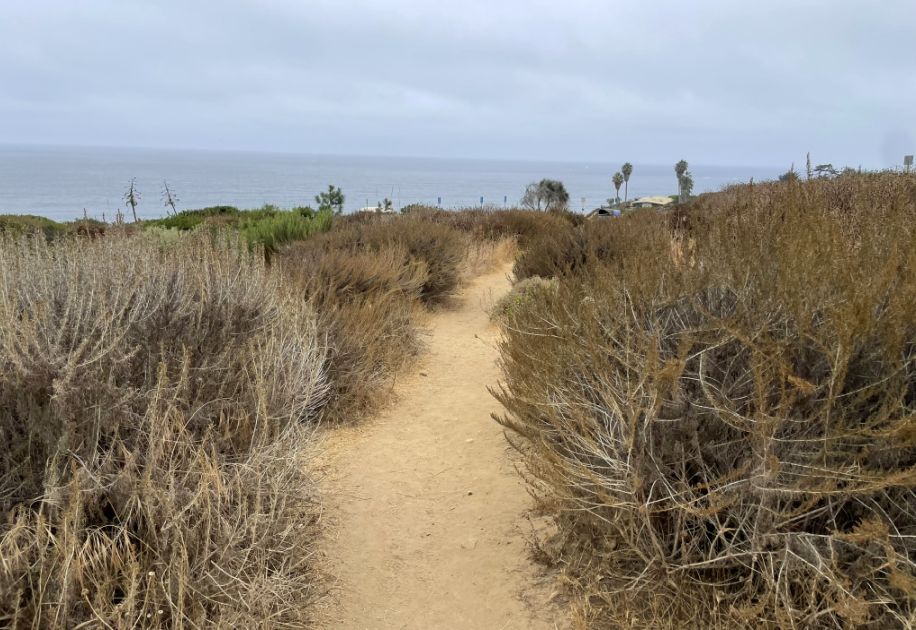
From the parking area, the dirt path narrows, lined with low bushes that have turned dry brown, shaped by salt air, wind, and a long summer without rain. At first, the ocean is only a hint,a strip of blue flickering in the distance between branches, but with every step, it pulls you forward.
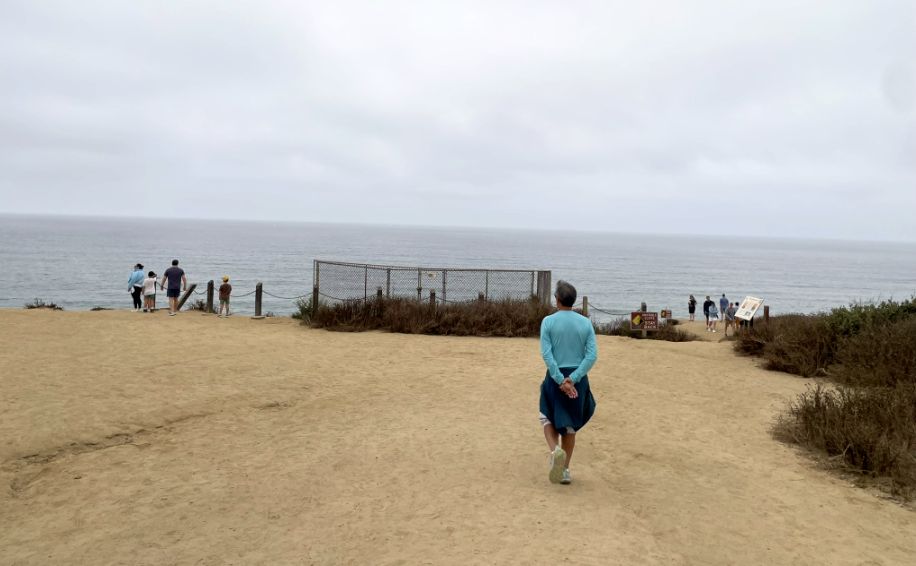
As you get closer to the edge, the land opens up with the view of the Ocean.
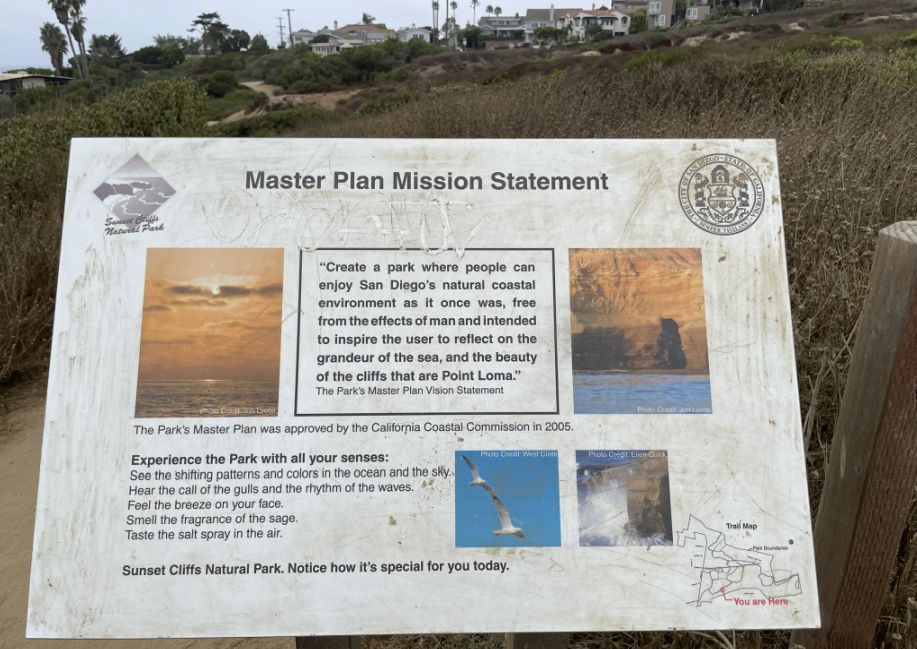
A panel marked “Master Plan – Mission Statement,” a quiet reminder that this rugged stretch is intentionally protected, meant to stay wild and largely untouched.
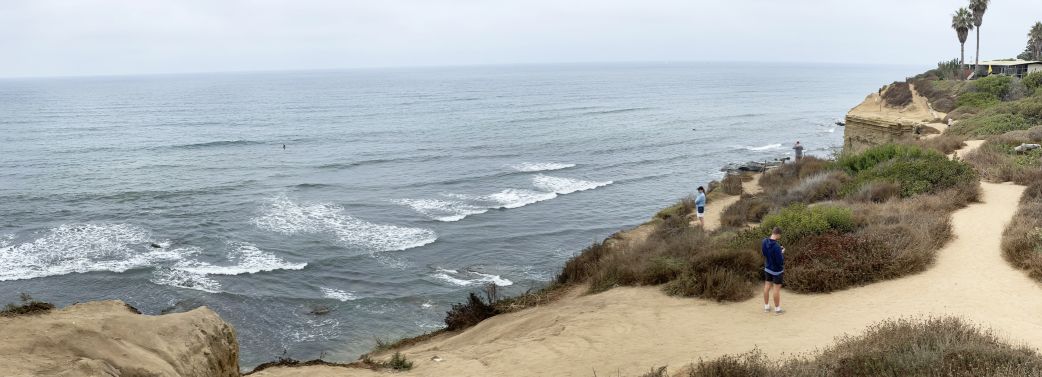
Walking along the cliff, with the ocean stretching endlessly beside us and the land falling away just beyond the signs, there’s a strong sense of exposure and respect for nature’s beauty, and for its power. Sunset Cliffs doesn’t try to soften that feeling. It lets you walk right alongside it.
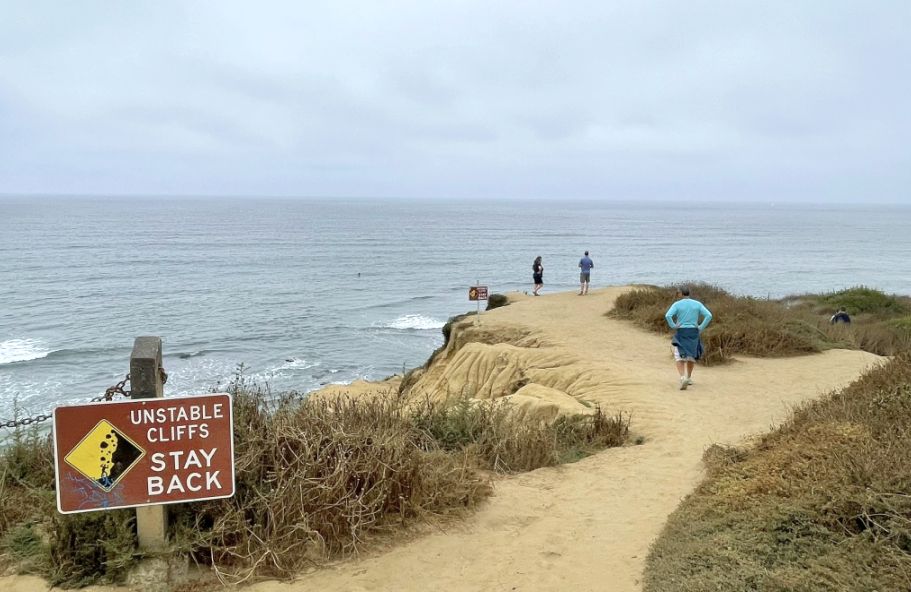
The path continues to trace the cliff, and suddenly the warning sign appears: “Unstable Cliffs — Stay Back.”
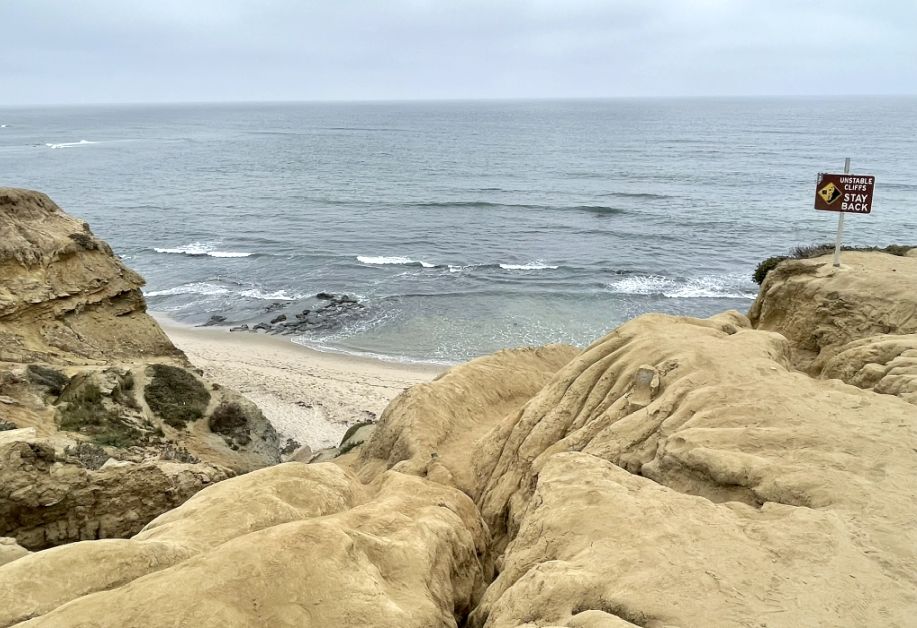
Out here, the message feels real. The ground beneath us looks solid, but the cliff edge tells another story, layered rock, fractures, and raw faces where pieces have already broken away. Below, waves crash relentlessly against the base, carving and undercutting the land. You can feel how alive the coastline is, constantly shifting, never fixed.
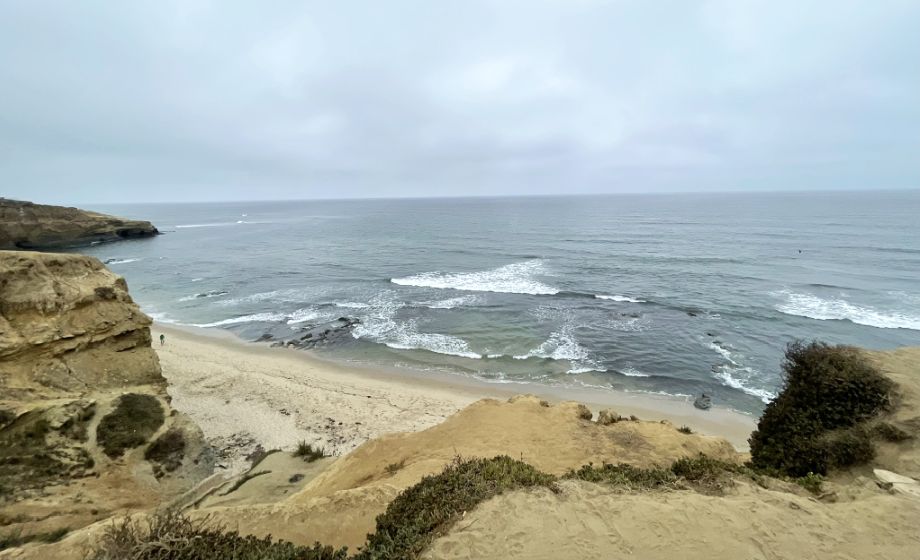
Standing above the cliff, the view suddenly softens. Below us, a long stretch of white sand beach curves along the shoreline, with a few people walking far beneath, their figures small against the openness of the coast.
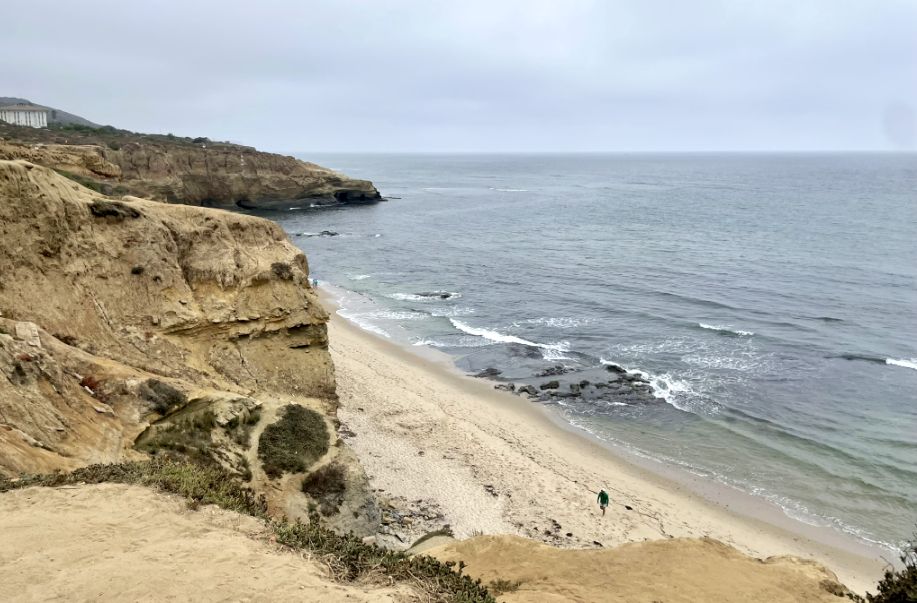
From this height, everything feels quiet and distant, as if the beach belongs to another world below.
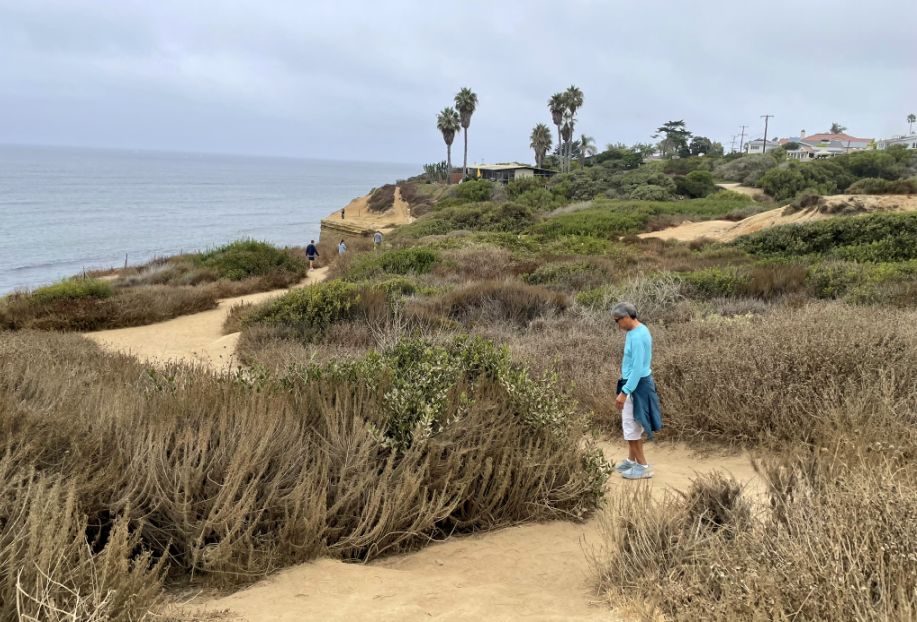
As we continue along the dirt path, the bushes rise to shoulder height, at least five feet tall, mostly dry brown from the sun and salt, with just a hint of green clinging to their tops. They form a narrow corridor that guides us forward, brushing the edges of the trail and partially hiding the ocean until it reappears between gaps. Walking here feels raw and elementa, wind, dry earth, and the constant presence of the sea just beyond the cliffs.
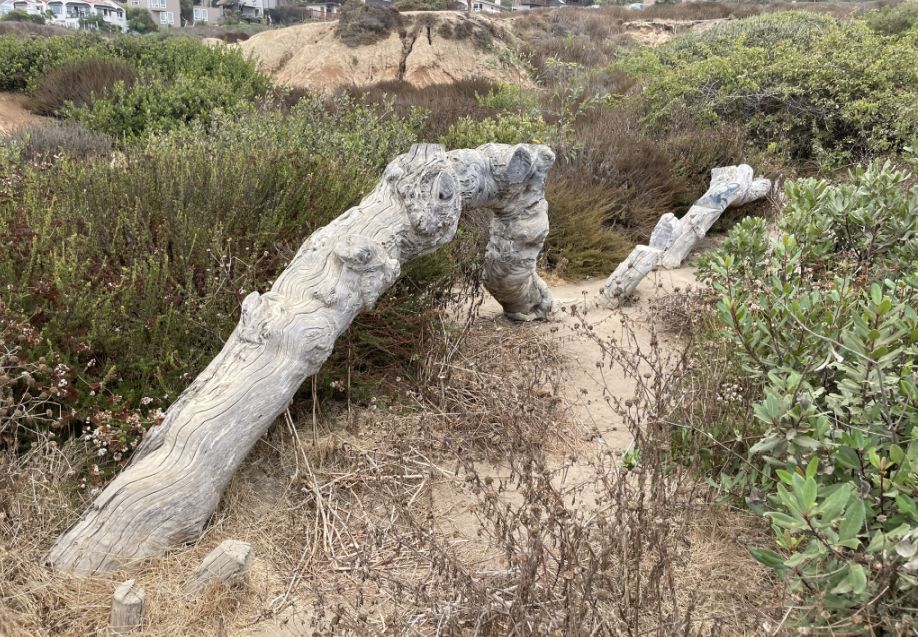
This fallen branch feels like a quiet sculpture placed right in the middle of the path. The wood has turned a soft, weathered gray, bleached by years of sun, salt air, and wind. Its surface is etched with swirling grain patterns, almost like fingerprints or flowing water frozen in time. Bent and arched, it lies low across the dirt trail, as if it slowly settled there rather than fell all at once.
On either side, coastal vegetation presses in, scrubby plants, dry stems, and patches of green clinging to life in the sandy soil. The contrast is striking: the branch looks ancient and bone-like, while the plants around it are still growing, reclaiming the space inch by inch. Sand has gathered at its base, softening its edges and anchoring it to the land.
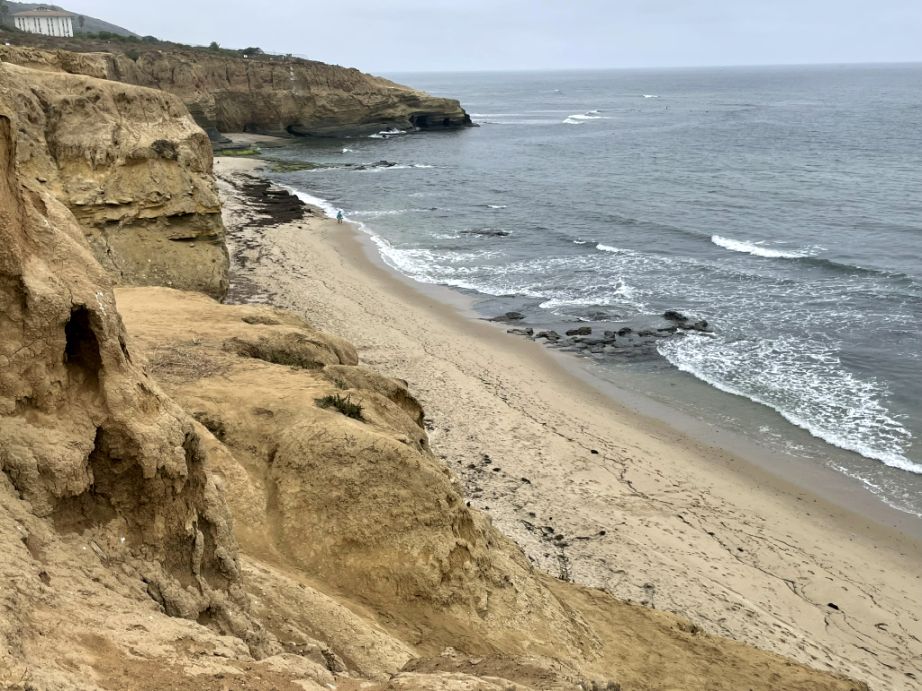
Looking down, the beach feels protected and contained. At its far end, a cliff juts out into the ocean like a long finger, enclosing the sand and giving the cove a secluded, almost hidden feeling. The waves wrap around it, softening as they reach the shore, while the open sea continues beyond.
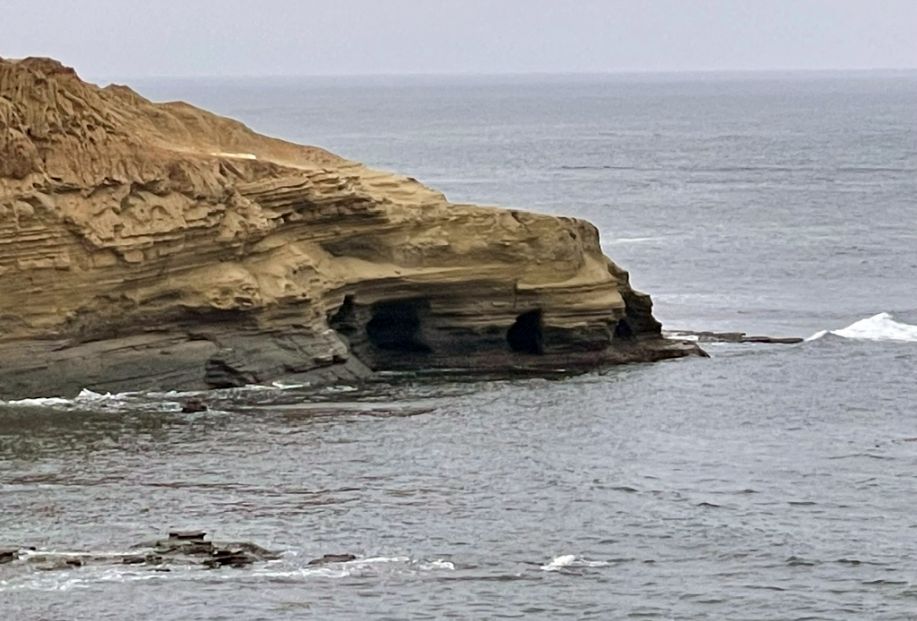
The cliffs themselves tell a deeper story. You can clearly see layers upon layers of horizontal bands running through the rock, sediments laid down over millions of years, each stripe marking a different moment in time. Near the base, where the water meets stone, the rock is darker and rougher, and it looks as though small caves and hollowed pockets have been carved out by the constant pounding of the waves. It’s erosion in action, slowly shaping the cliff from the bottom up.
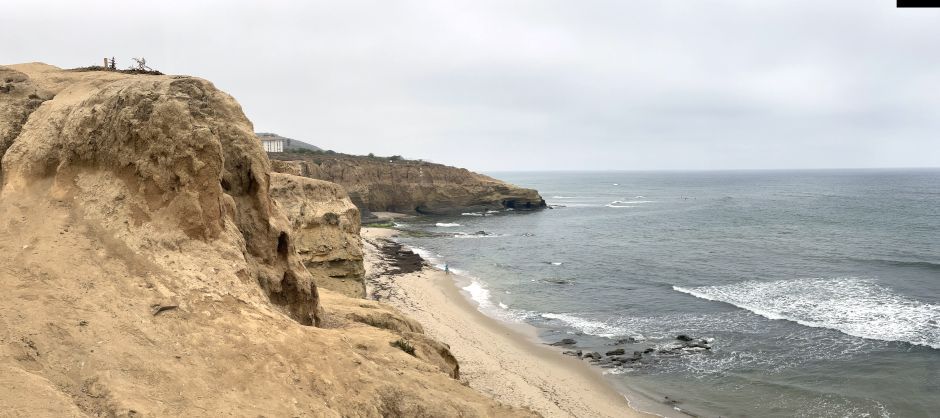
From above, the scene feels both delicate and powerful: quiet sand and a few walkers below, ancient rock holding its ground, and the ocean patiently continuing its work.
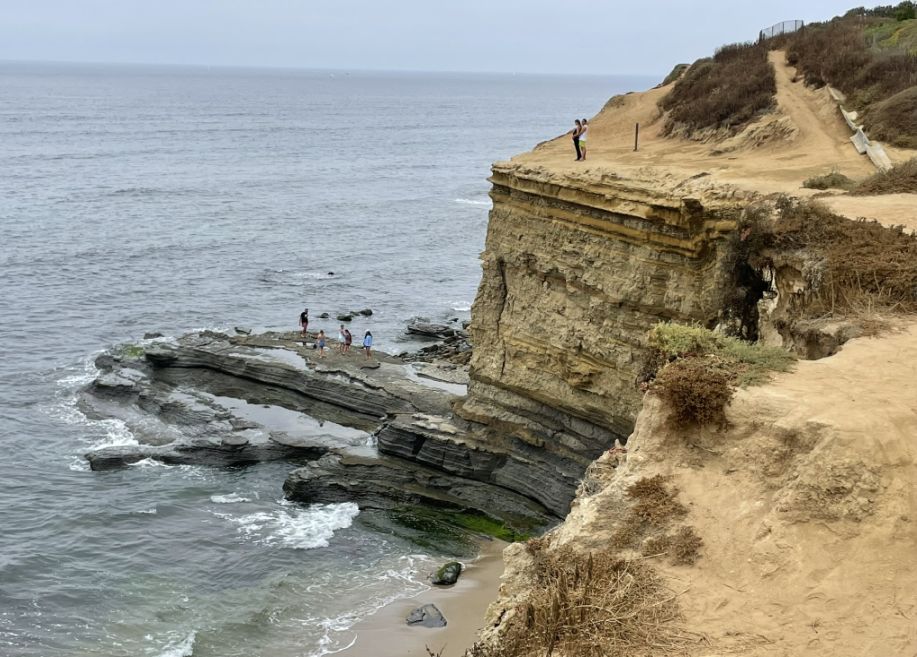
Sunset cliffs is especially beloved for powerful waves, blowholes, and swirling currents, pelicans gliding low over the water, dolphins offshore, and tide-pool creatures at low tide, and the cliffs glow as the sun lowers, which is how the park got its name.
It’s a place where you’re constantly aware of the elements, wind, water, light, and stone. Deeply atmospheric, Sunset Cliffs feels raw and honest, like standing at the very edge of land before it gives way to the sea.
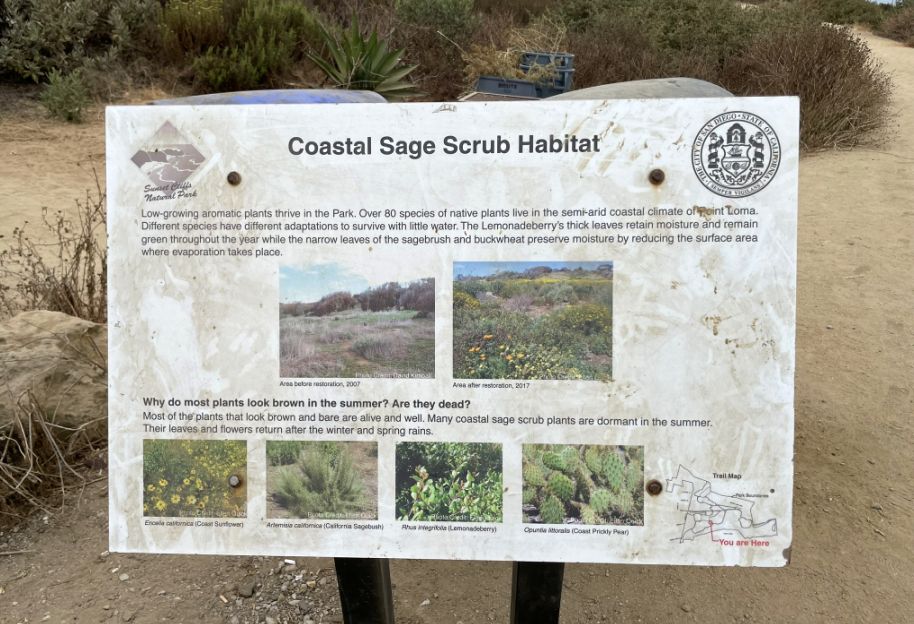
As we are leaving the area, we are walking through classic coastal sage scrub habitat, one of Southern California’s most distinctive and most endangered ecosystems.
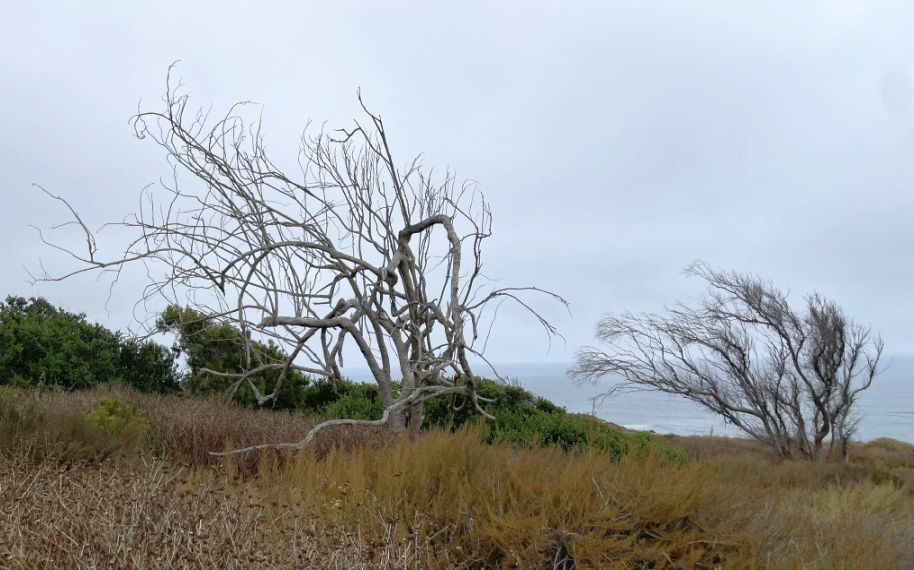
These plants are built for a dry, salty, windy life. Most are low, compact shrubs with small or narrow leaves that reduce water loss. Many turn brown or gray in late summer, which is normal, it’s a survival strategy, not a sign they’re dead. When winter rains return, they green up again almost overnight
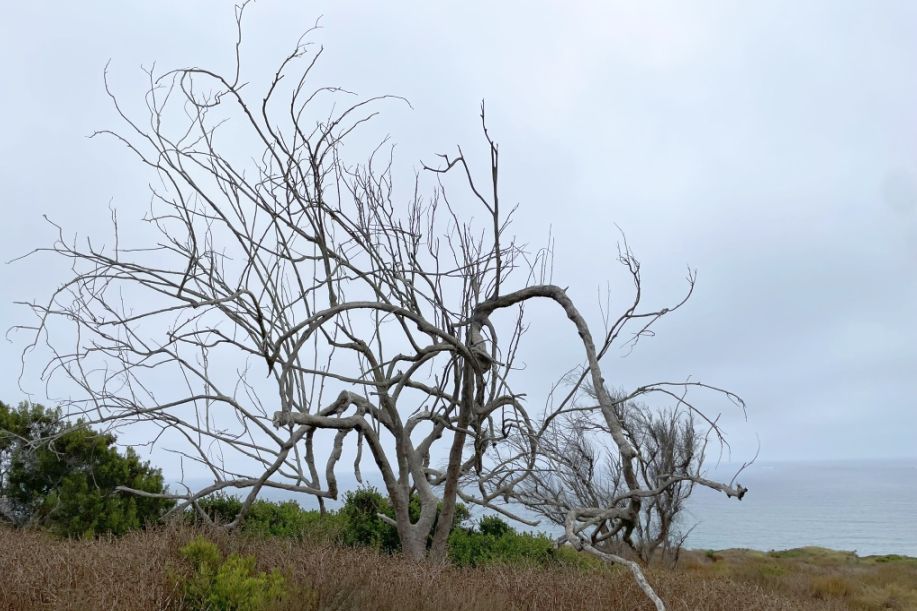
This tree looks like a piece of art to me.
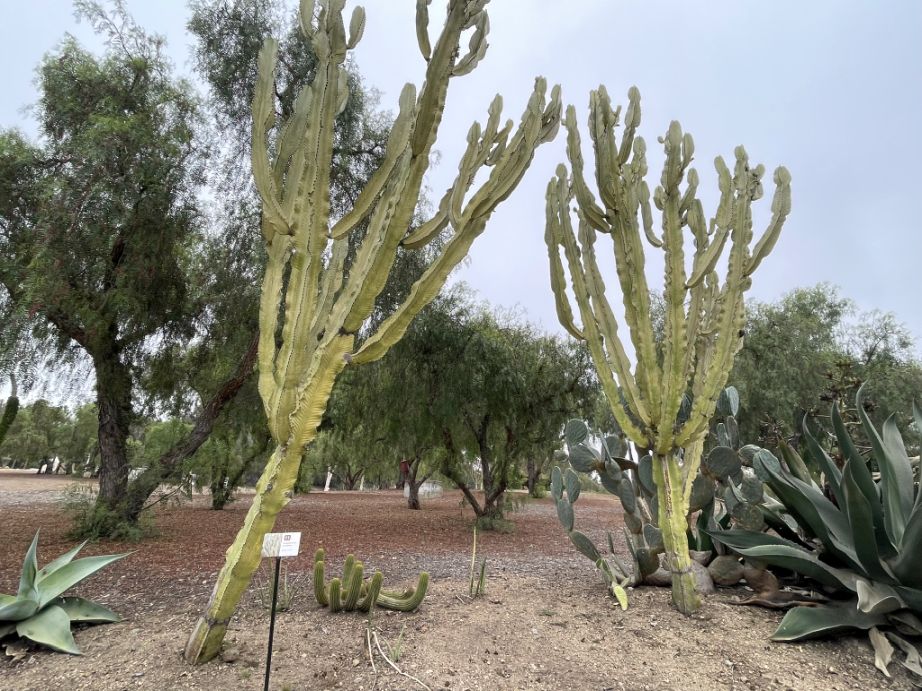
We are now walking around the park and we plants that really stand out, and they tell an interesting story about coastal landscaping mixed with arid-climate exotics, especially around Sunset Cliffs where some areas blend natural habitat with introduced species.
 |
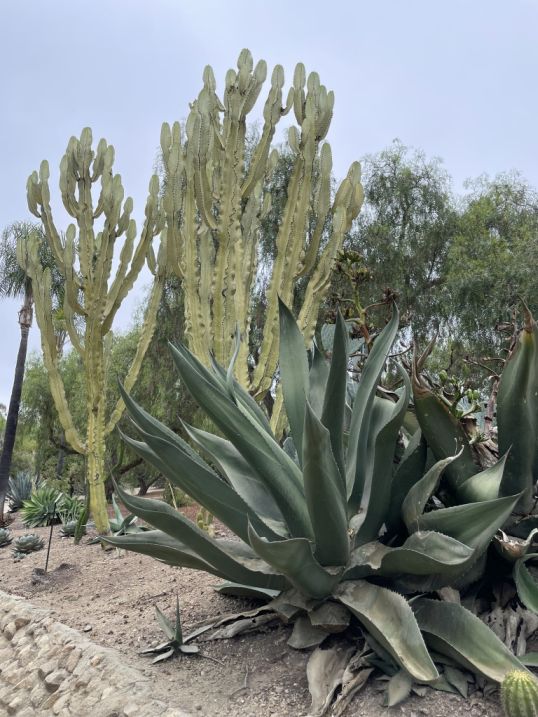 |
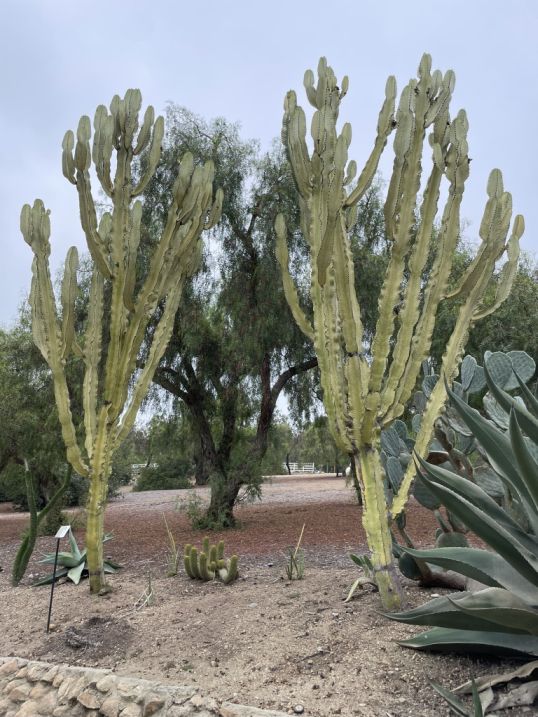
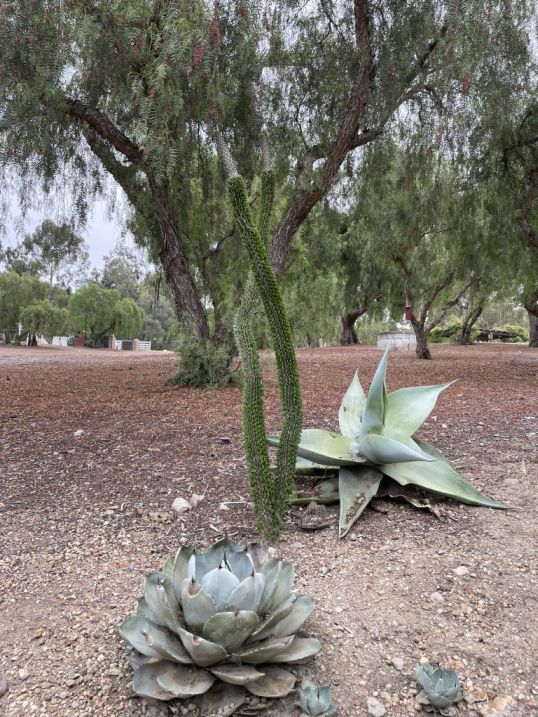
Euphorbia ammak is a striking columnar succulent, often mistaken for a cactus (but it’s not one). It has thick, upright, ribbed stems that can grow tree-like over time. Native to East Africa and the Arabian Peninsula, it’s extremely drought-tolerant and thrives in full sun. The pale green to bluish color contrasts beautifully with the dry brown scrub around it. Like all euphorbias, it contains a milky sap that’s toxic, which helps protect it from animals.
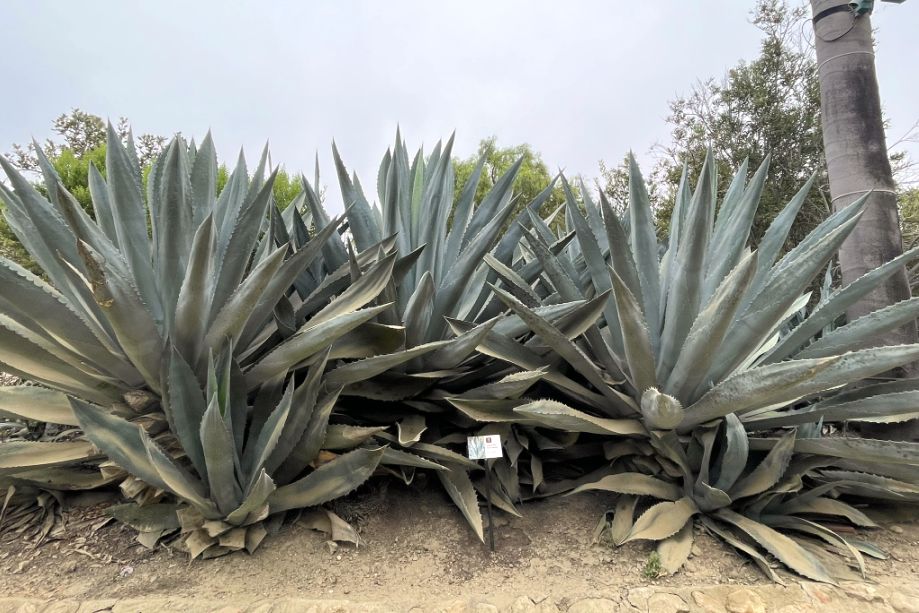
Tequila agave (Agave tequilana). This agave is best known as the plant used to make tequila in Mexico. It has long, stiff, blue-green leaves that radiate outward in a dramatic rosette, each tipped with a sharp spine. Agaves are perfectly adapted to dry coastal climates—they store water in their thick leaves and grow slowly. After many years, the plant flowers once with a tall stalk and then dies, having completed its life cycle.
 |
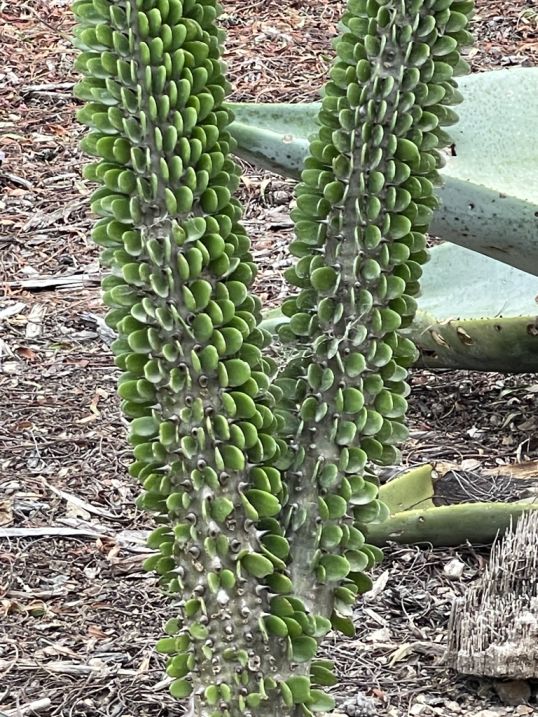 |
Alluaudia montagnacii. This one is especially unusual. Native to Madagascar, Alluaudia is a spiny, vertical shrub or small tree with thin stems lined by sharp spines and tiny leaves. It looks almost skeletal and sculptural, which fits right into the rugged, wind-shaped feel of the cliffs. It’s extremely drought-resistant and sheds its leaves easily to conserve water.
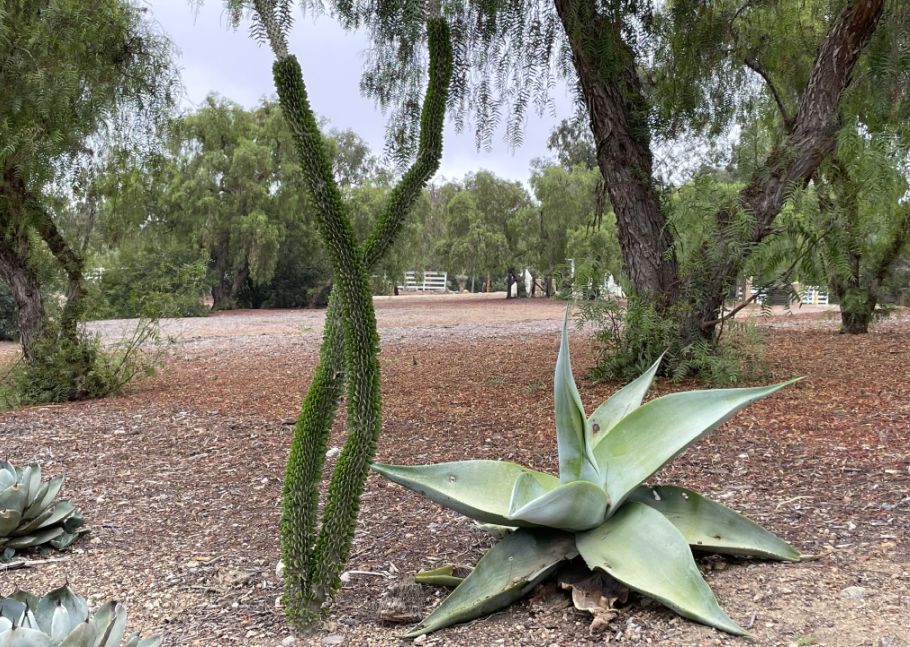
Together, these plants create a landscape that feels sculptural and almost otherworldly, echoing the harsh conditions of Sunset Cliffs—strong sun, salty air, poor soil, and little rain. While they aren’t native coastal sage scrub species, they’re often used here because they can survive where many plants can’t, adding bold shapes and textures to an already dramatic coastline.
NEXT... Day 2- Cabrillo National Monument