4 days in San Diego- 8/31- 9/3/2024
Day 4- San Diego GasLamp Quarter-9/3/2024
Today is our last day in San Diego. Our plane leave at noon so we only have the morning to check out the San Diego Gaslamp quarter.
The Gaslamp Quarter is a 16-block historic heart of downtown San Diego, where Victorian-era charm meets a high-energy nightlife scene. Originally developed in the 1860s as "New Town" to move the city's hub closer to the bay, it evolved from a sophisticated business center into the notorious Stingaree red-light district by the early 1900s. After a massive revitalization effort that began in the 1970s, its grand Romanesque and Italianate brick buildings, like the Louis Bank of Commerce and Old City Hall were meticulously restored. Today, the district is a premier entertainment destination, packed with over 100 restaurants, rooftop bars, and boutiques, all illuminated by its signature green gaslamp-style streetlights.
|
|
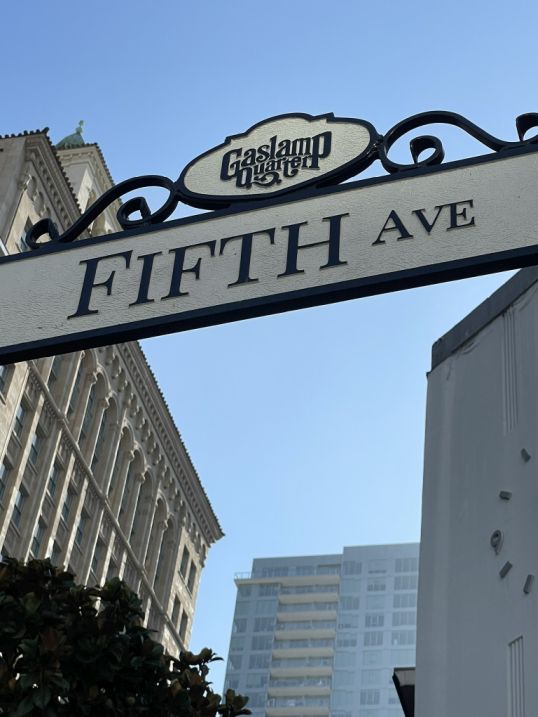
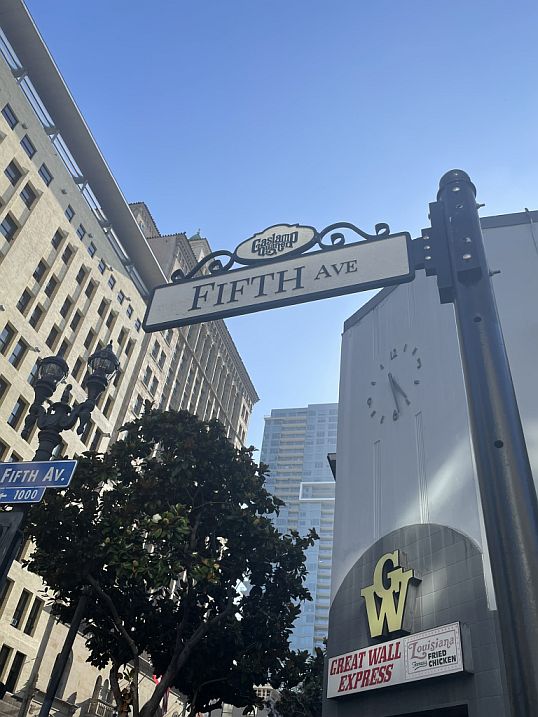
Starting on Fifth Avenue, the Gaslamp Quarter sign hangs right beneath the street sign like a welcome banner, marking the gateway to San Diego’s historic heart.
 |
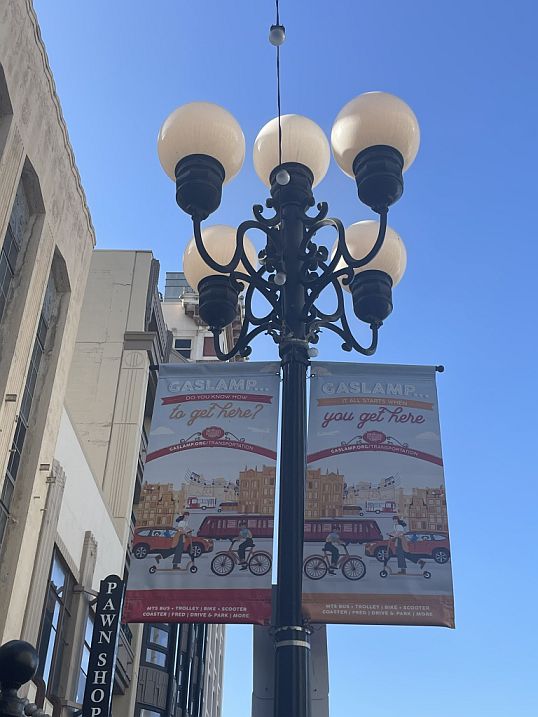 |
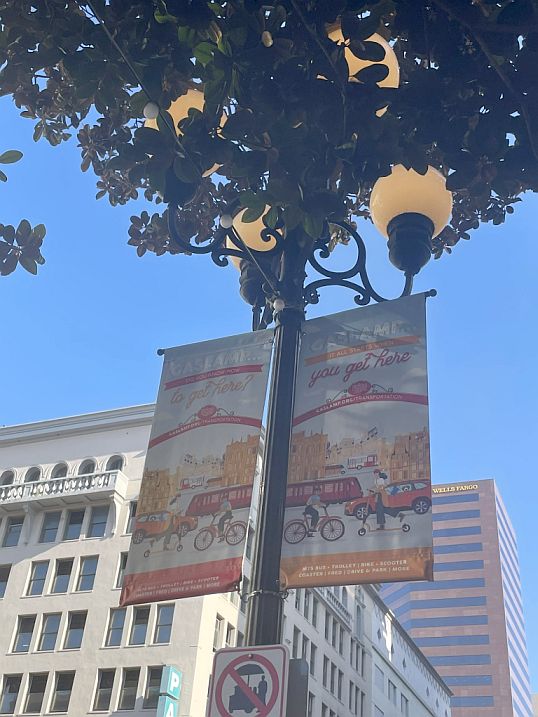
In the late 1800s, this part of San Diego was illuminated by gas-powered street lamps. At the time, gas lighting was modern and sophisticated, and these lamps became a symbol of the neighborhood’s rise as the city’s commercial and social center. When you see the lamps lining the streets today, you’re looking at faithful replicas of those originals, a quiet nod to the era when flickering gaslight defined the night.
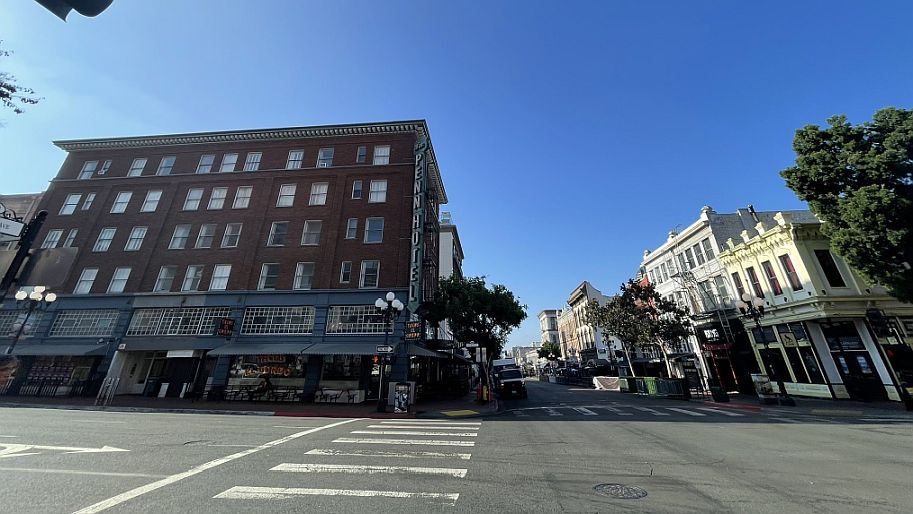
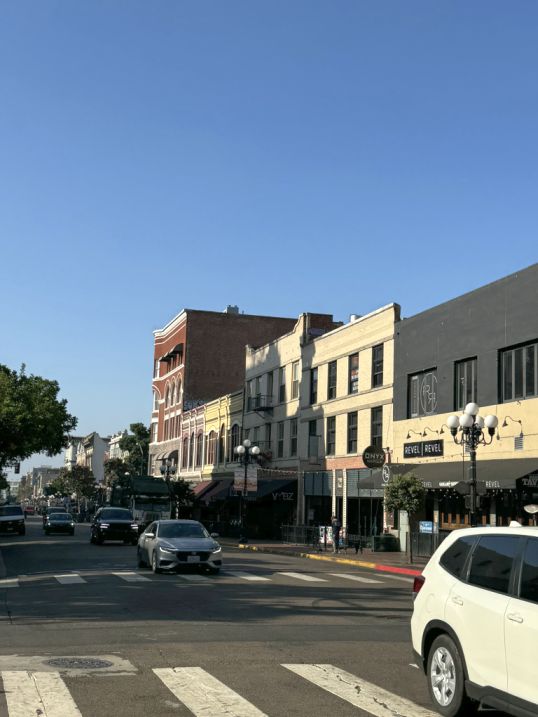
All around this area, the streets are lined with Victorian-era brick buildings, their upper floors detailed with iron railings, bay windows, and faded elegance from another century. Many of them once held boarding houses and saloons; now they’re home to cafés, boutiques, and restaurants just waking up for the day.
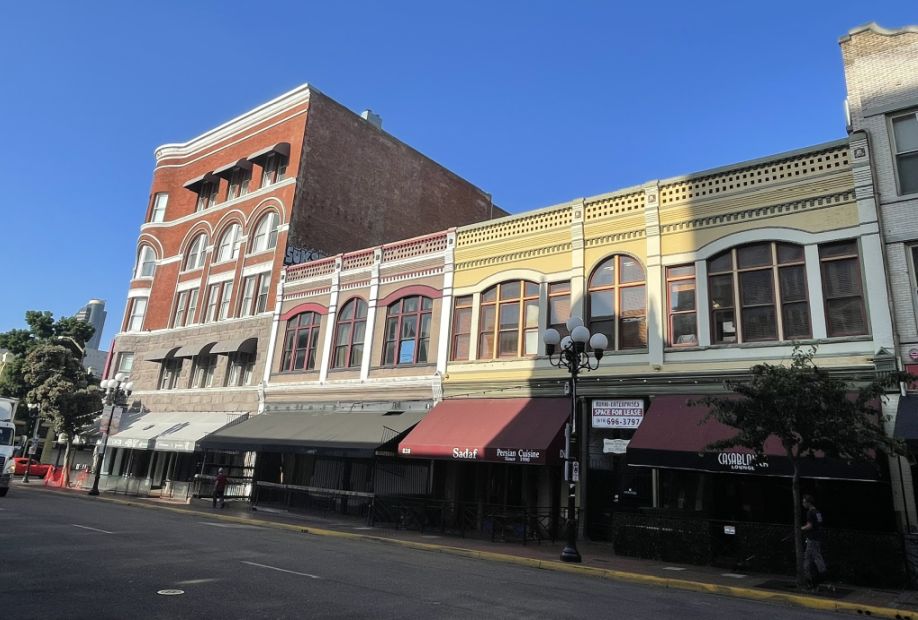
Back then, this area was known as New Town, and it was rough around the edges. The streets were packed with saloons, gambling halls, hotels, dance halls, and brothels, a classic Western boomtown scene. Sailors, gold prospectors, railroad workers, and travelers passed through, giving the neighborhood a reputation for being lively, gritty, and occasionally lawless. At the heart of it all was Alonzo Horton, often called the “father of San Diego,” who helped transform this area from dusty lots into a real downtown. The beautiful Victorian buildings you see today, many built between the 1880s and early 1900s were meant to signal prosperity and permanence, even as the nightlife below them stayed wild.
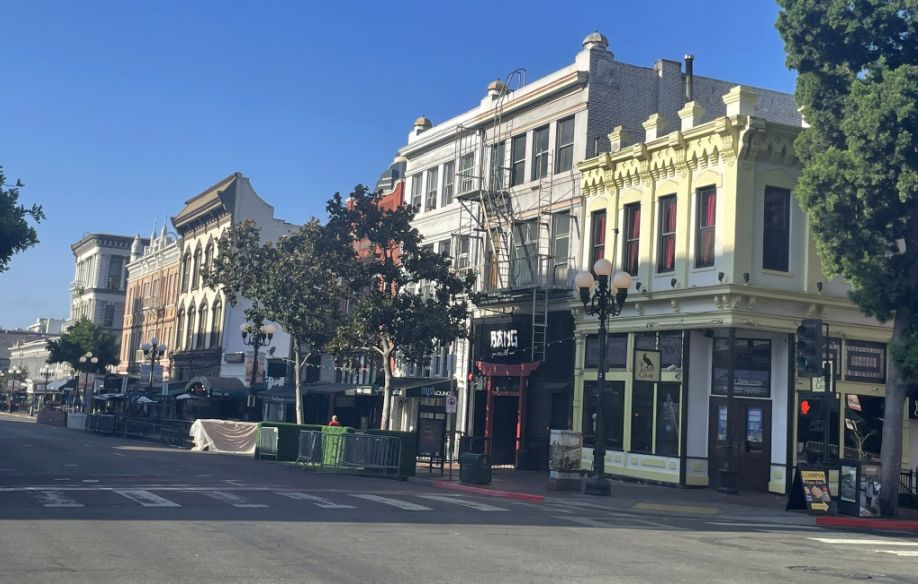
By the mid-20th century, the neighborhood fell into decline. Businesses moved away, buildings deteriorated, and many of these historic structures were nearly demolished. In the 1970s and 1980s, preservationists stepped in, recognizing that this was one of the largest collections of Victorian commercial architecture in the U.S.
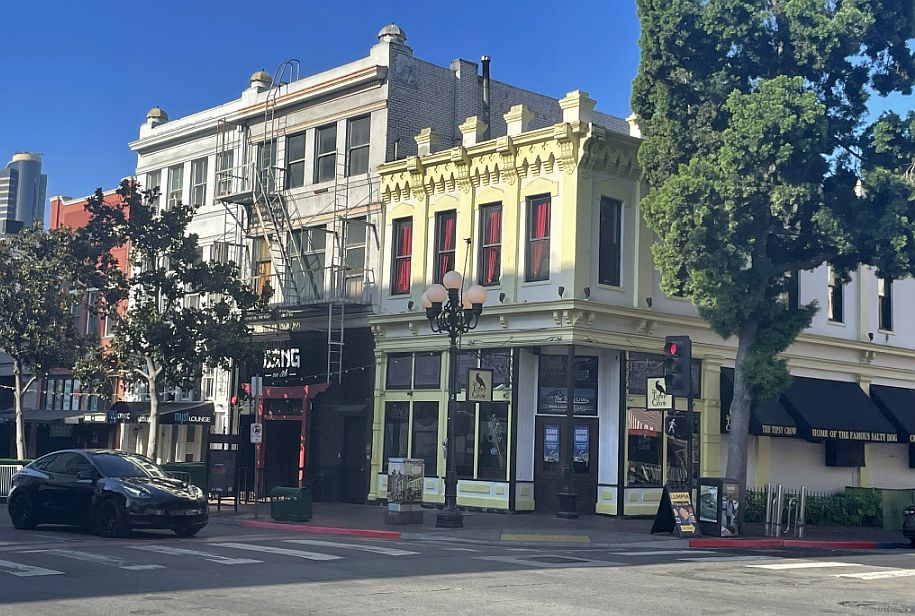
When the area was revitalized, the city leaned into its identity. The name “Gaslamp Quarter” was officially adopted, and the streetlamps were reinstalled, not as gas-powered fixtures anymore, but as they are part history lesson, part mood lighting.
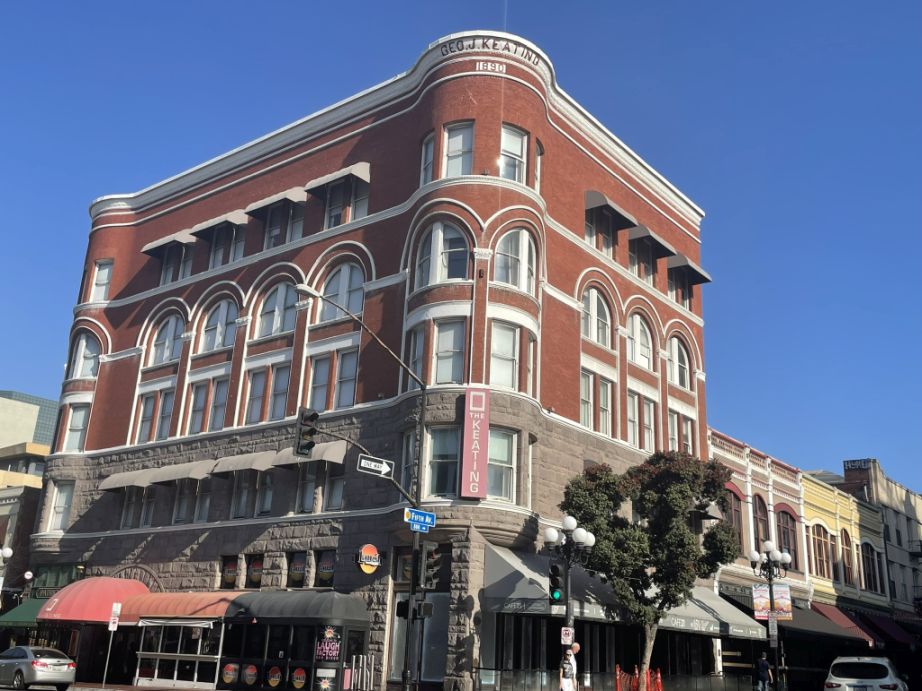
As we walked down Fifth Avenue, we are effectively traveling through a living museum of San Diego’s "Boom of the 1880s." These buildings were the city's first high-rises and represented the peak of luxury and modernity at the turn of the century. The George J. Keating Building (1890) is a Romanesque Revival landmark, characterized by its deep red brick and granite accents, was built by Fannie Keating as a tribute to her late husband, George.
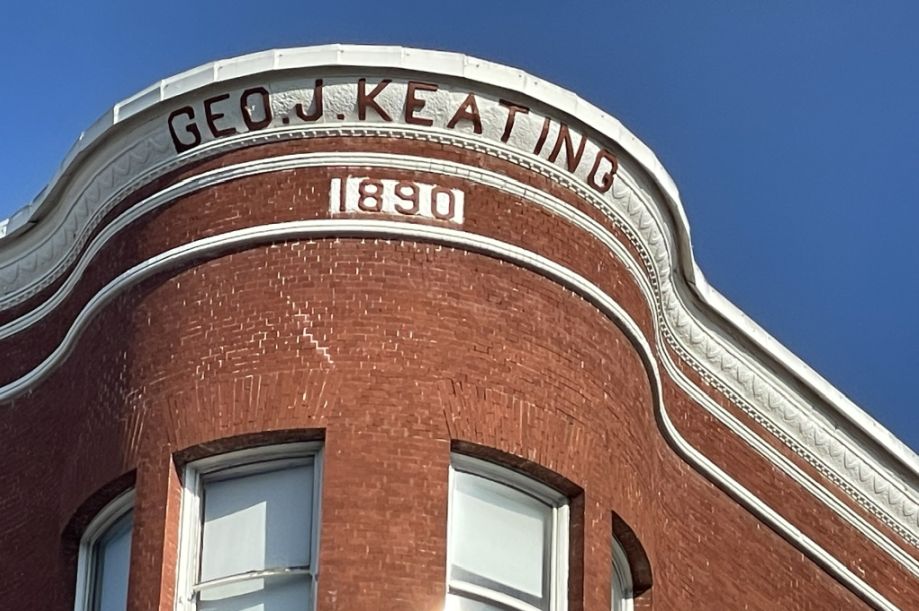
It was designed by the Reid Brothers, the same architects famous for the iconic Hotel del Coronado. At the time of its opening, it was considered the most prestigious office building in the city, featuring San Diego's very first wire-cage elevator and steam heating.
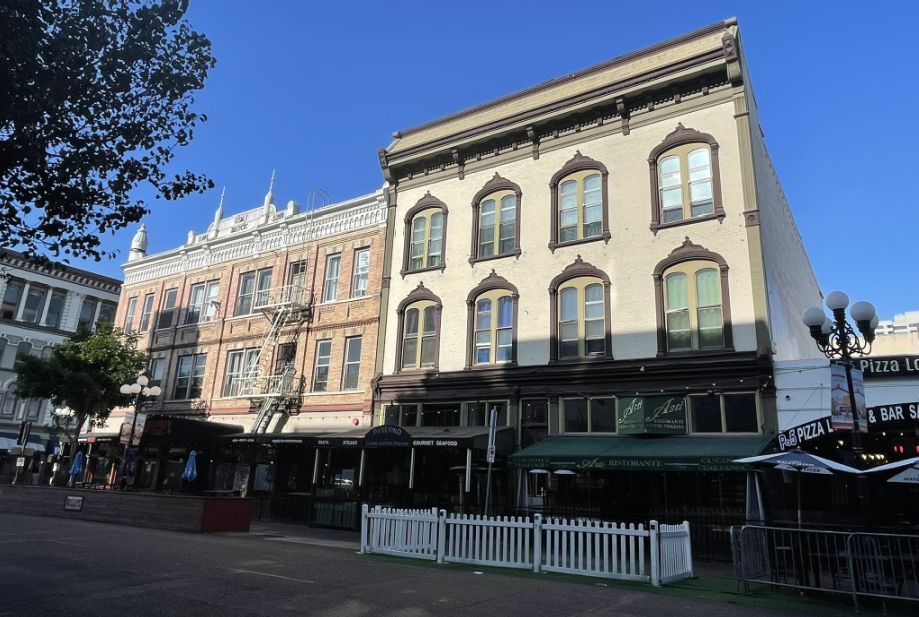
Cole Block (1892), located at 702 Fifth Avenue, this building is a classic example of the commercial structures that defined the era's business district.
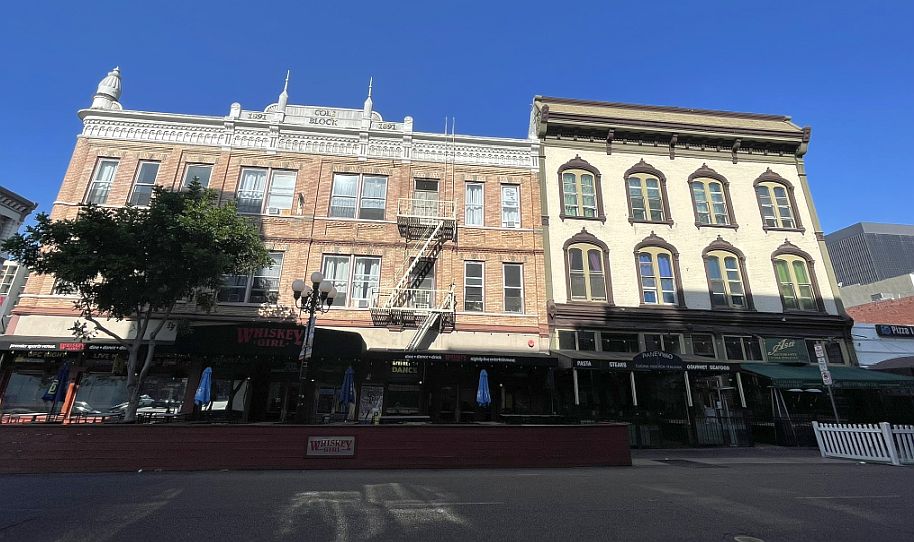
Like many of its neighbors, it provided retail space on the ground floor with professional offices or "lodgings" above.
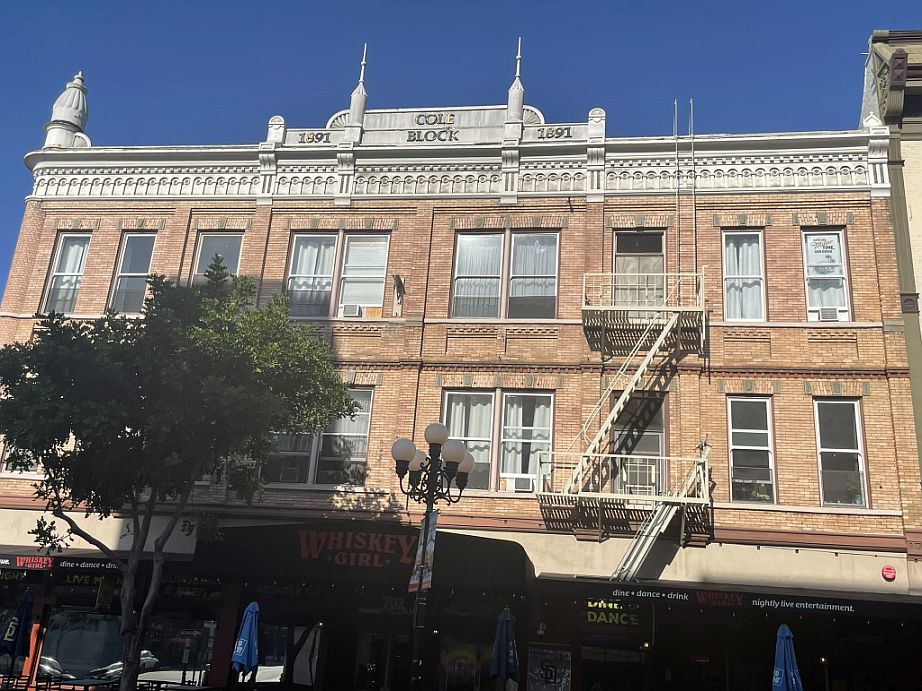
It has been meticulously restored and currently houses retail and dining establishments, maintaining the historic character of the Gaslamp Quarter.
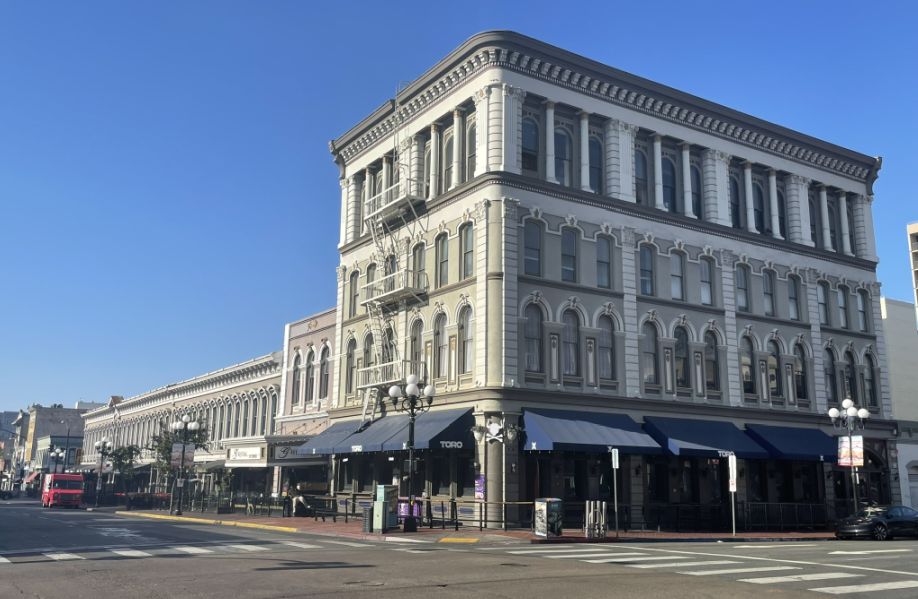
Located at the southwest corner of Fifth Avenue and G Street, the
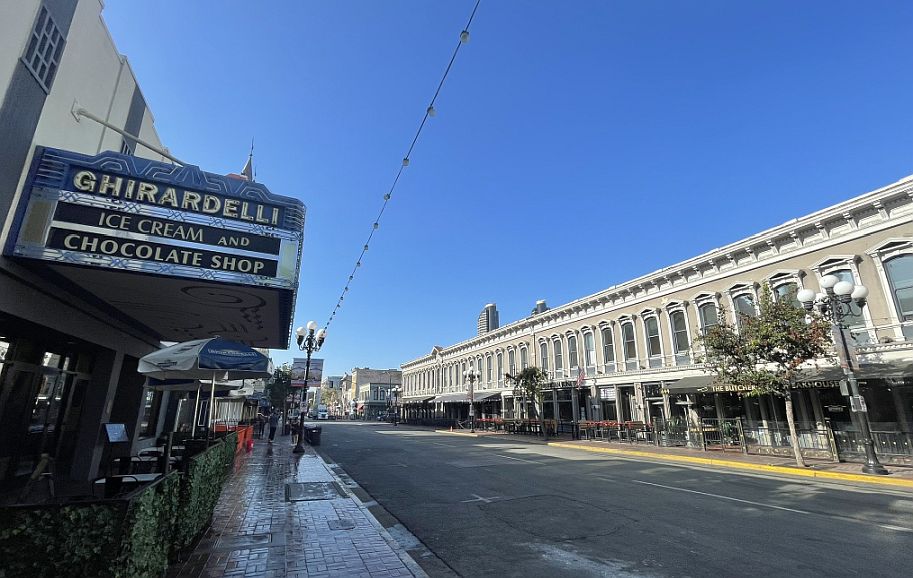
On the left is the Ghirardelli Ice Cream & Chocolate Shop (Casino Theatre, 1912). The building with the striking marquee at 643 Fifth Avenue has a more "scandalous" history than its current sweet occupants might suggest. It originally opened as the Casino Theatre, a high-end movie house. However, as the neighborhood declined in the 1970s, it famously transitioned into showing X-rated films for a clientele that largely consisted of sailors.
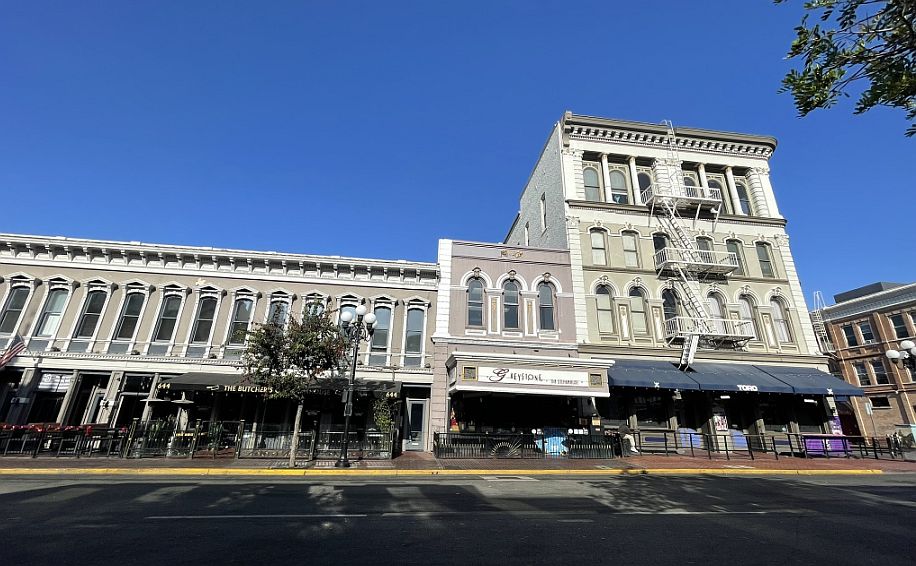
The Old City Hall building grand appearance is the result of multiple expansions during San Diego's early boom years. It began as a modest two-story brick structure but had two more stories added in 1887 to accommodate the city's growing needs, including the Public Library. By 1891, the building housed the entire city government, with the police department on the first floor and the Mayor’s office and Council Chambers on the upper levels. Today, the building has traded its prim Victorian manners for a thumping nightlife scene, housing Greystone Prime Steakhouse & Seafood and a popular nightclub.
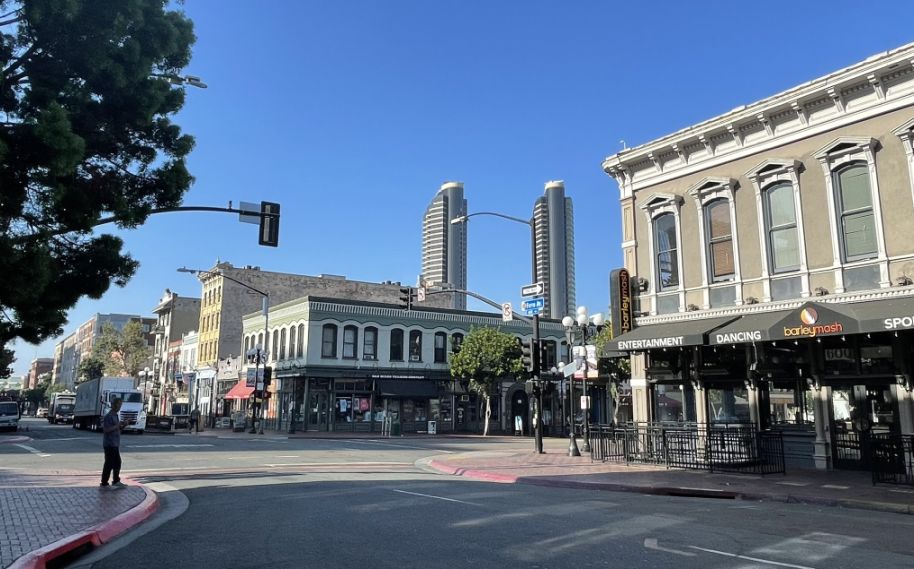
We are at the intersection of Fifth Avenue and Market street
which is often considered the
geographic and historical center of the Gaslamp Quarter.
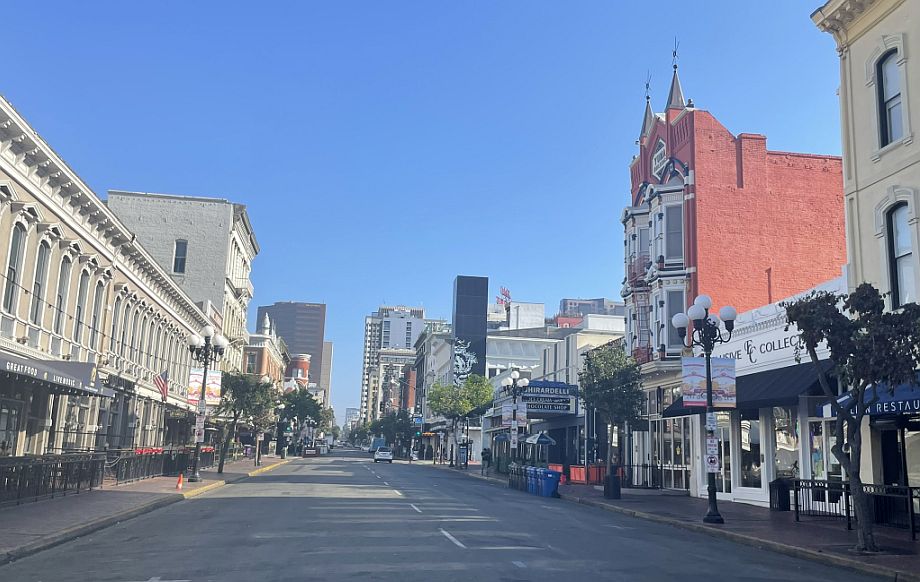
We are now making a U turn and going back.
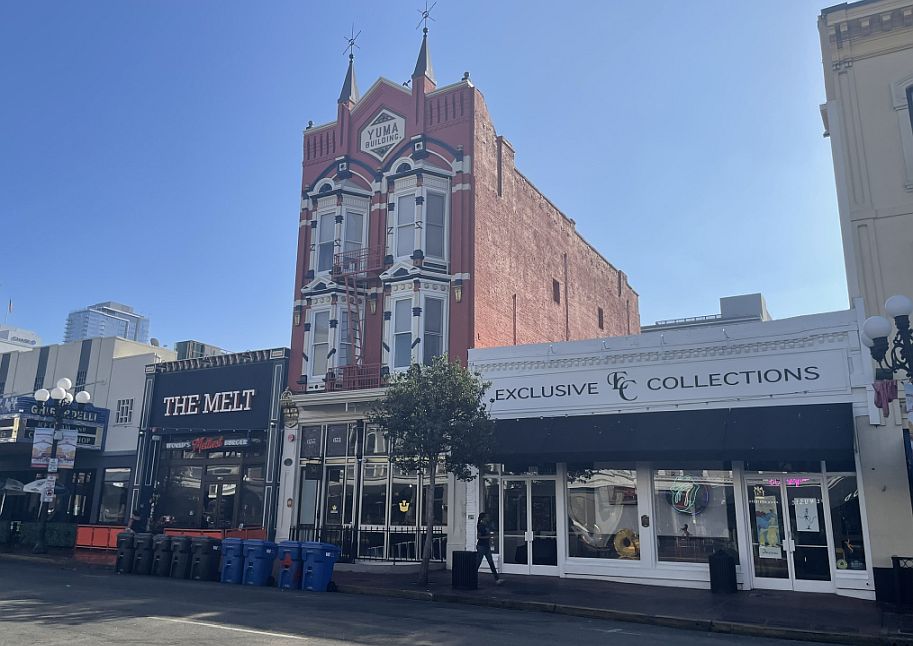
The Yuma Building (1882) is one of the oldest brick structures in downtown, built by Captain Alfred Henry Wilcox. It was named after Wilcox's shipping business in Yuma, Arizona. In 1912, it gained infamy as one of the first buildings raided and shut down during the city's crackdown on the "Stingaree" red-light district.
In a historic move in 2024, it was purchased by Ruth-Ann Thorn, making her the first Native American property owner in the Gaslamp. It now houses her Native Star Boutique, showcasing indigenous designs.
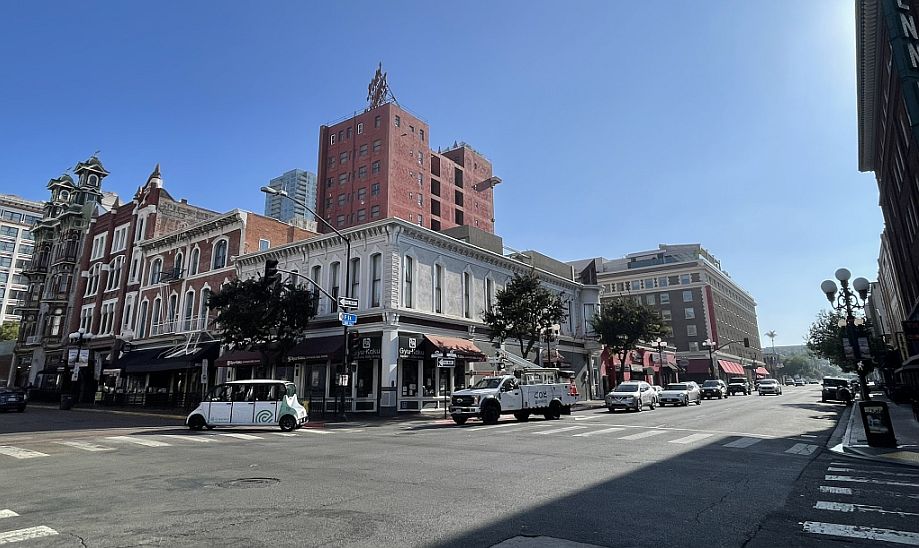
We are now at the intersection of Fifth street and F Street.
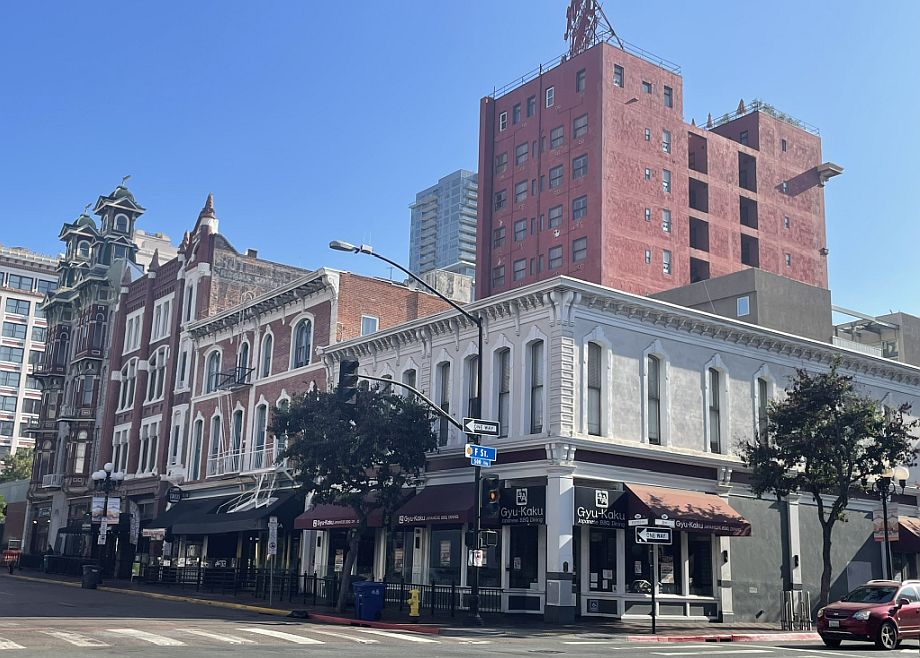
The white building is called the Liewelyn building, two-story corner building in the foreground with arched windows currently houses Gyu-kaku Japanes BBQ.
The tall red brick building is the Keating Hotel, a luxury boutique hotel.
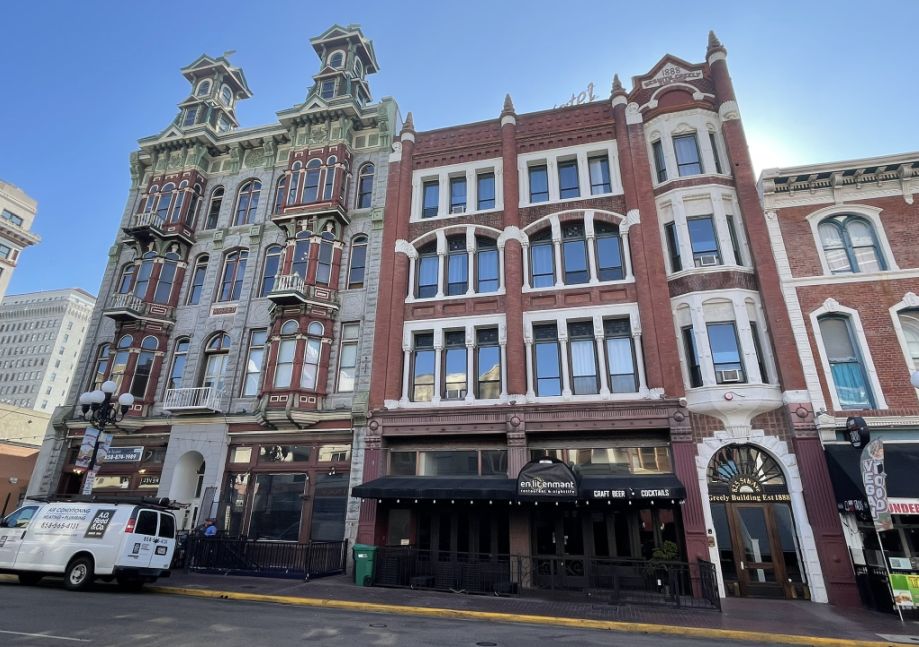
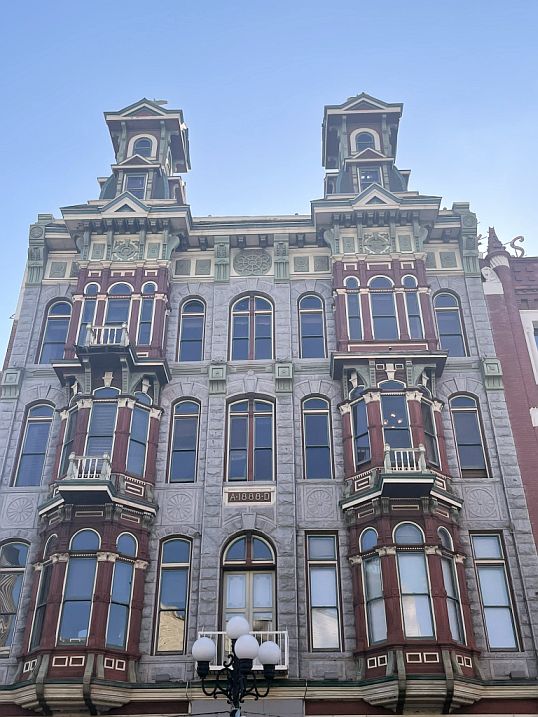
On the left is the Louis Bank of Commerce featuring beautiful arched windows and intricate detailing that made it a symbol of luxury and progress during the 1880s boom. It primarily houses creative office spaces and high-end retail on the ground floor.
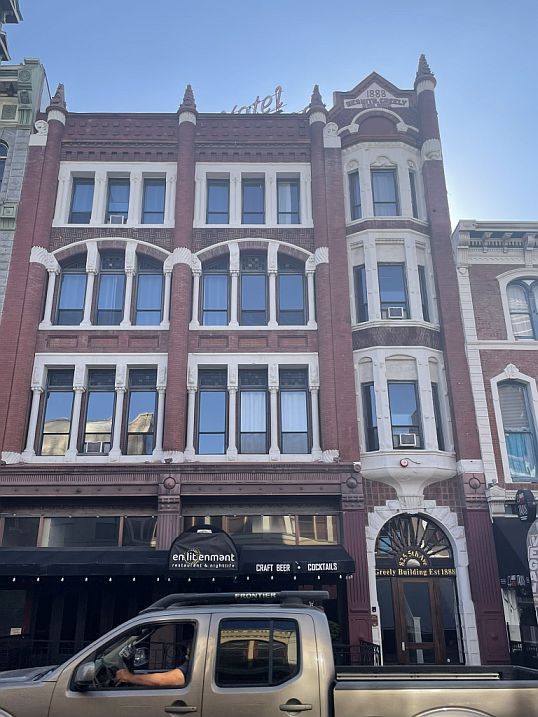
On the right is the Nesmith-Greely Building with its massive brickwork.
 |
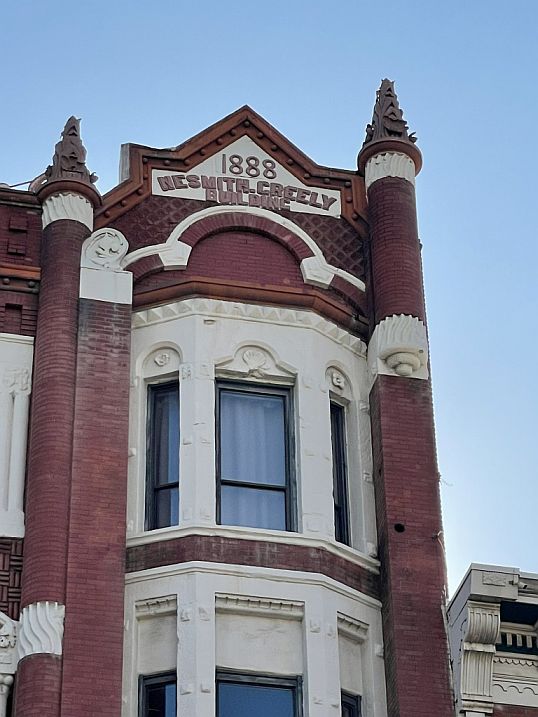 |
As you can see in picture on the right, the building is prominently marked with "1888" and is widely considered the "Queen of the Gaslamp" due to its ornate Baroque Revival architecture.
 |
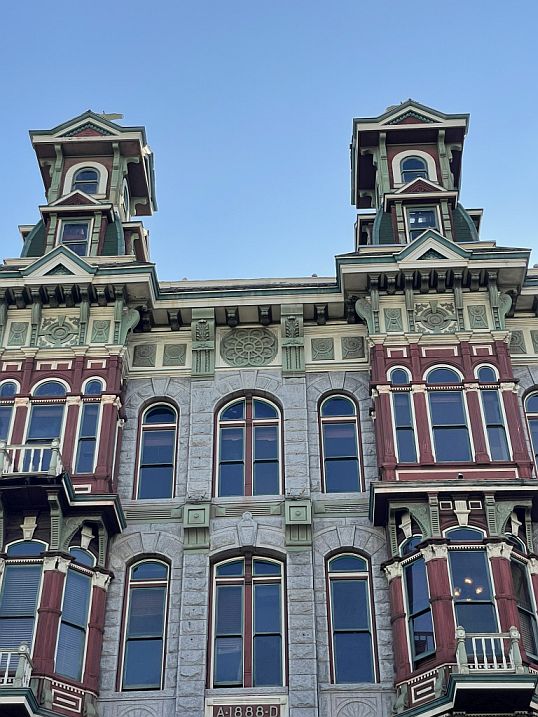 |
The Louis Bank of Commerce is famous for being the first granite structure in San Diego and for its distinctive twin towers. The granite used for the exterior was actually pre-cut on the East Coast and shipped all the way around Cape Horn to reach San Diego. It originally housed an oyster bar owned by Isidor Louis, which was a well-known favorite of the legendary Wyatt Earp during his time in the city.
Today, the building remains one of the most photographed and celebrated historic landmarks in the Gaslamp Quarter.
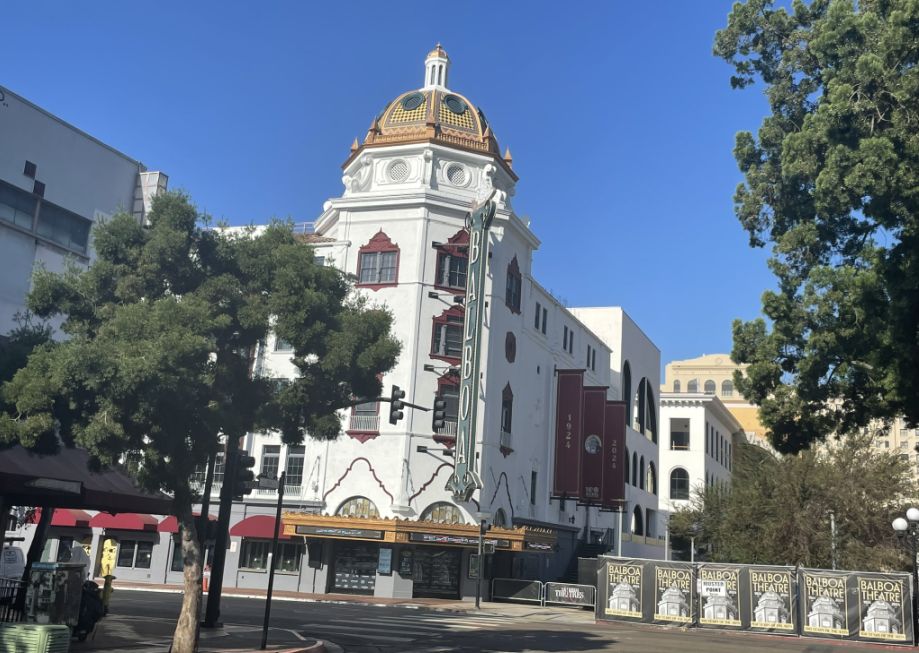
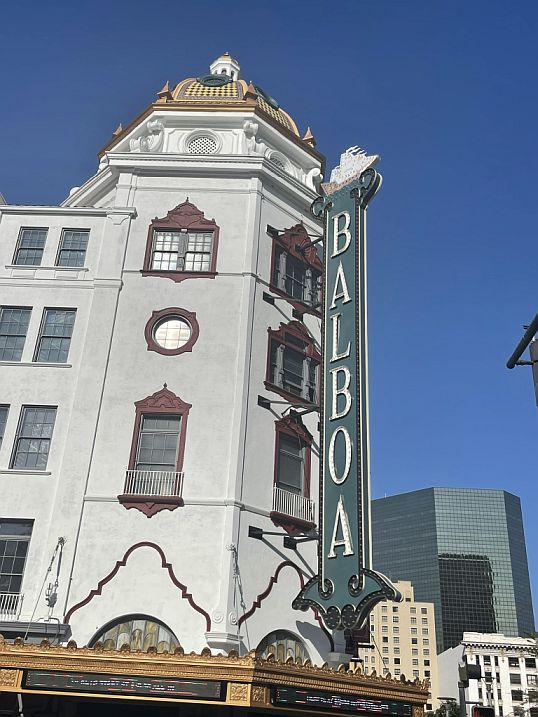
The Balboa Theatre (1924) During WWII, the office wing was used as a "holding area" for sailors before they shipped out. The theater itself fell into disrepair and was closed for over 20 years.
 |
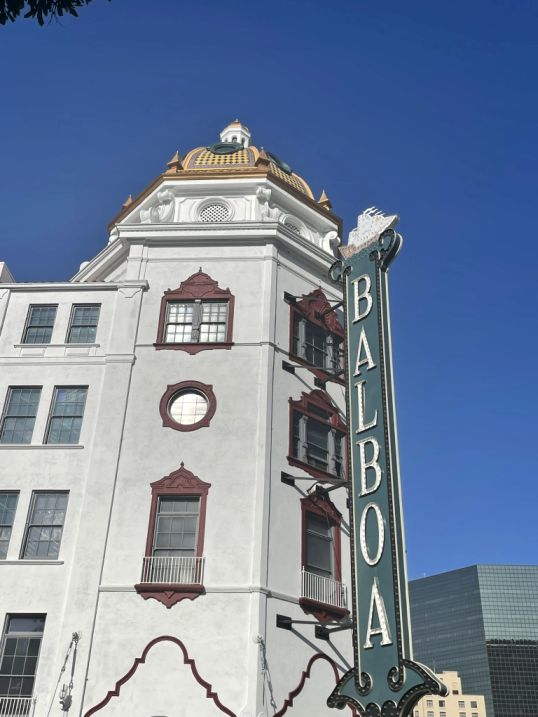 |
After a massive $26 million restoration in 2008, it is once again a premier performing arts venue. It recently celebrated its 100th anniversary in 2024.
 |
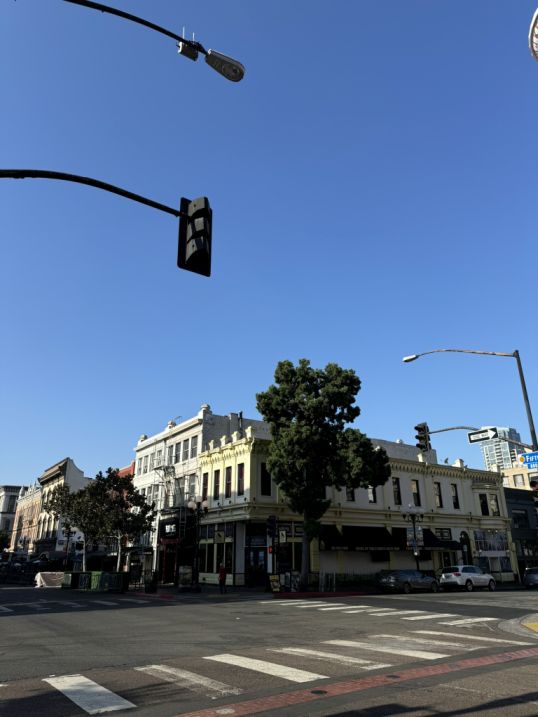 |
We had an absolutely wonderful time exploring the Gaslamp Quarter and wandering down Fifth Avenue. It was such a treat to see the city's history come alive through those beautifully preserved Victorian buildings, from the grand "Queen of the Gaslamp" to the storied Old City Hall. Walking past the iconic neon signs and arched windows really made us feel the unique charm and vibrant energy of San Diego's historic heart.
We are now leaving the area to back to our hotel, finish our packing and we are headed to the airport.