4 days in San Diego- 8/31- 9/3/2024
Day 3- San Diego Zoo, Safari Park-9/2/2024
The San Diego Zoo, Safari Park is located in Escondido, north of the city, the park is famous for its vast, open-air habitats that mimic the natural environments of the animals. Instead of small enclosures, many species roam across huge savanna-style fields, where giraffes, rhinos, antelope, and other animals live together much as they would in the wild. From a distance, it can feel like looking out over Africa rather than Southern California.
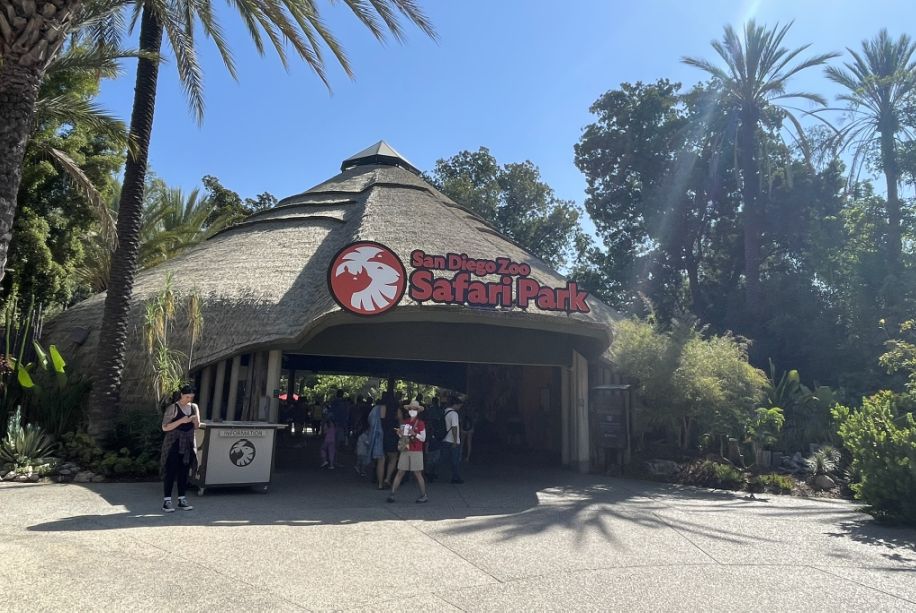
Walking into the San Diego Zoo Safari Park feels immediately expansive. The first thing you notice is that large, open cabana-style entrance, with the words San Diego Zoo Safari Park stretched across it. It is welcoming, airy, and relaxed, more like the gateway to a reserve than a theme park.
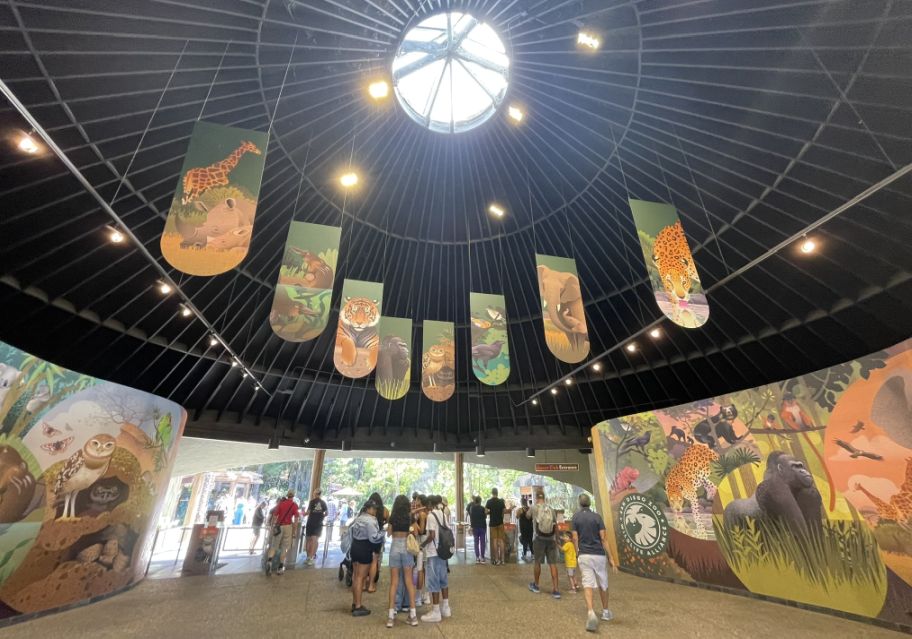
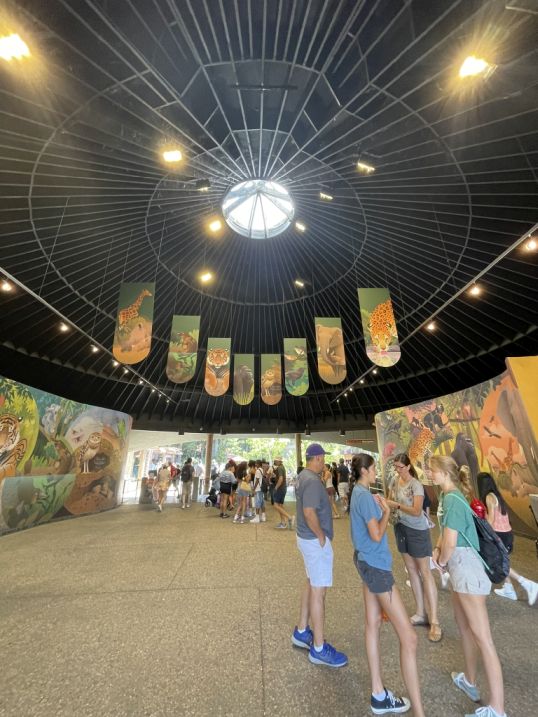
As you step in, the space wraps around you in a wide, open circle. The murals immediately draw your attention with hand-painted animals stretching across the walls, their forms bold and expressive, celebrating wildlife from different continents. They feel lively and welcoming, setting the tone for everything you’re about to see.
 |
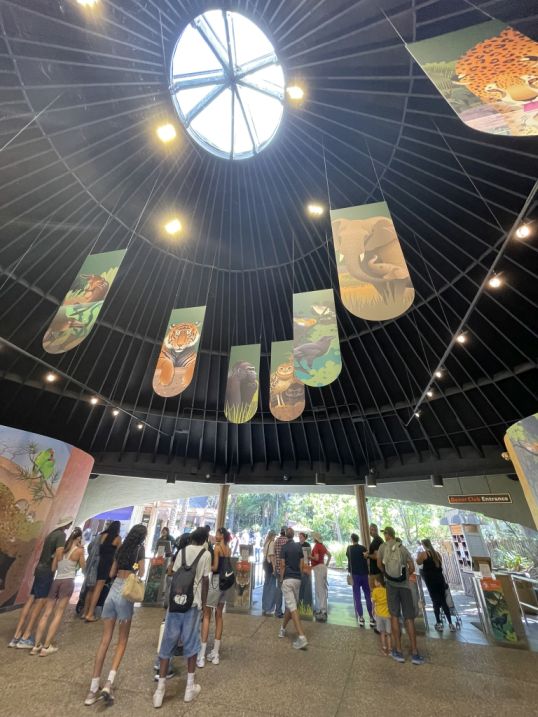 |
Above is the huge circular ceiling rises high, with a round opening at the center that lets natural light pour in. Suspended around the interior are flags adorned with animal imagery, gently framing the space and adding a sense of color and rhythm. Together, the murals, the open ceiling, the hanging banners, the cabana feels less like an entrance and more like a gateway, a place that quietly signals you’re about to step into a world shaped around animals, space, and the outdoors.
 |
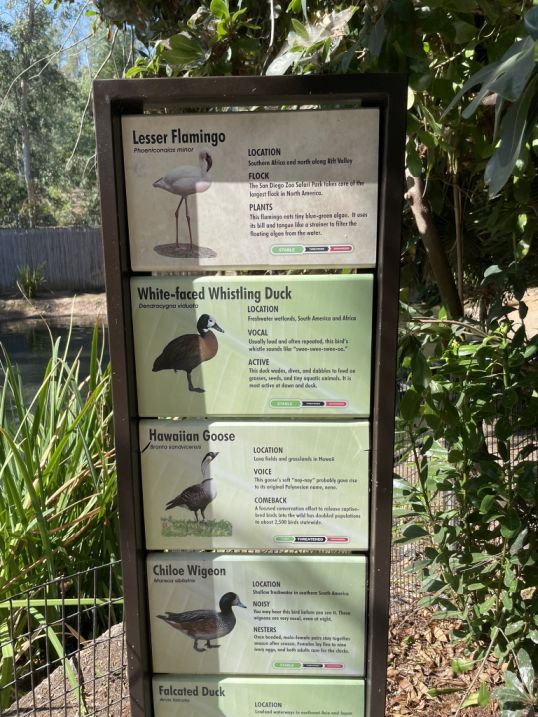 |
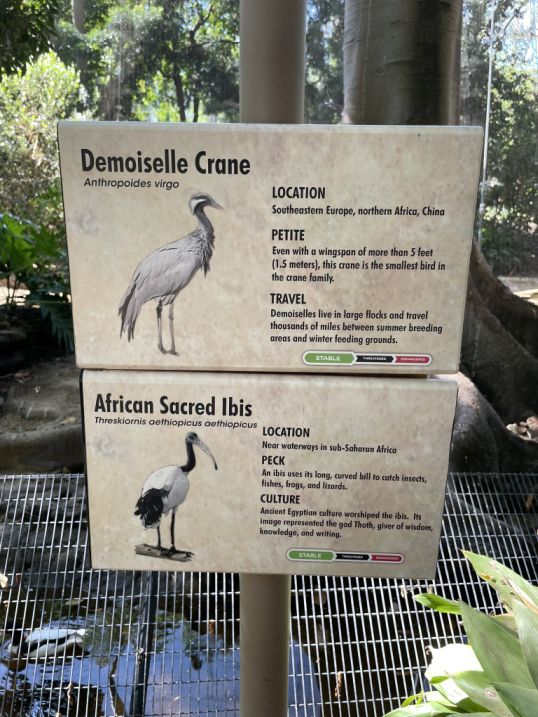
As we are following the path, it starts to feel like you’re being gently introduced to the park’s bird world. The signs with Demoiselle Crane, African Sacred Ibis, White-faced Whistling Duck, Lesser Flamingo, etc..read almost like a roll call of wetlands from around the globe, hinting at how international this place really is.
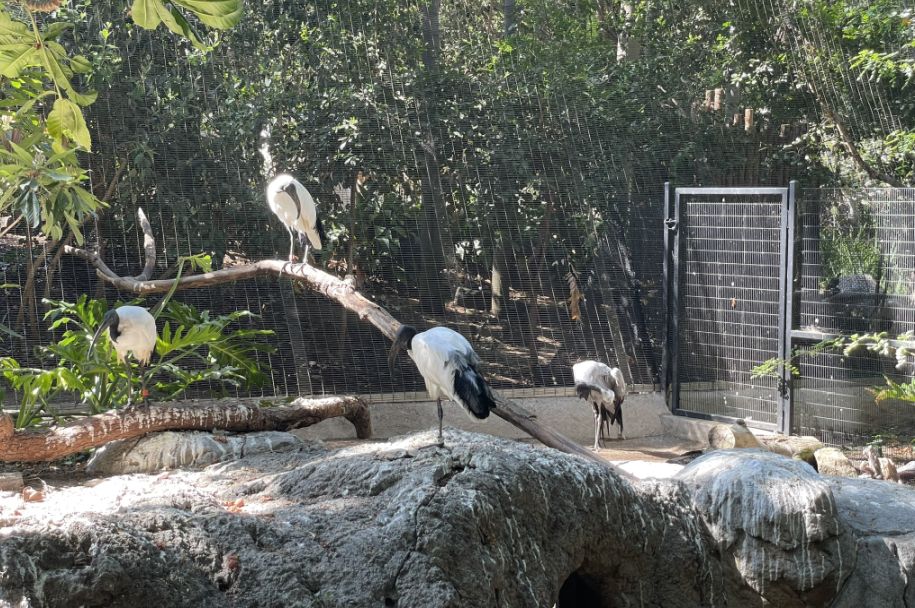
Inside the area enclosed, the birds feel suddenly close. The large birds white bodies, black wings and tails, and long, dark, curved beaks are African sacred ibises. They have a striking, almost graphic look: clean white feathers contrasted sharply by jet-black flight feathers and that long, elegant bill. They move slowly and deliberately, giving off a calm, almost statuesque presence.
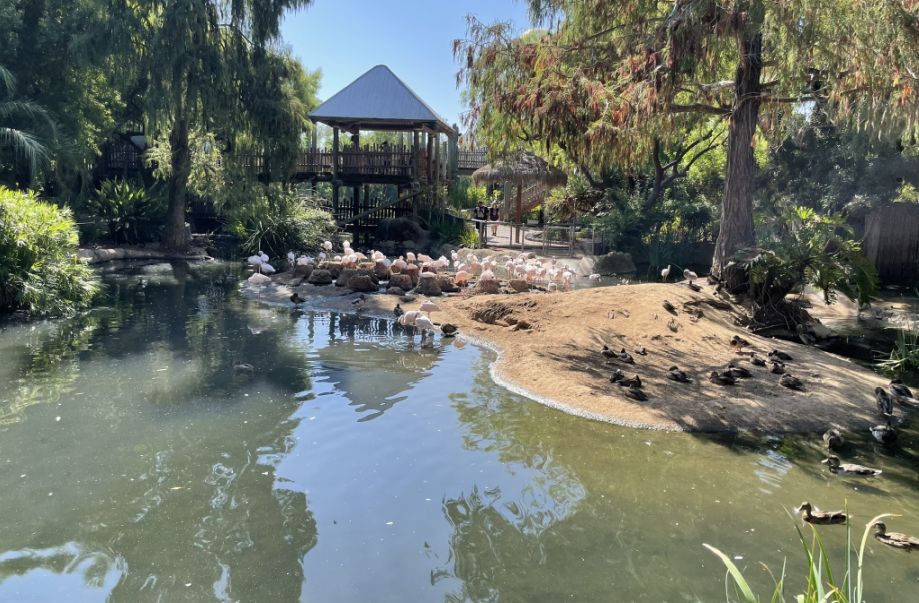
Then the path opens toward a pond filled with flamingos.
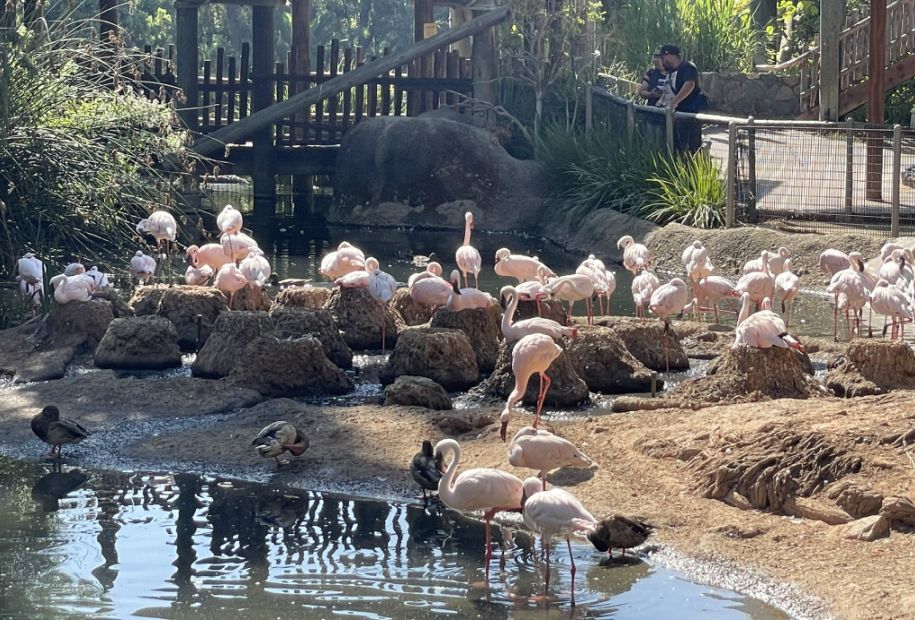
Groups of them stand in shallow water, some resting on one leg, others dipping their heads below the surface in unison.
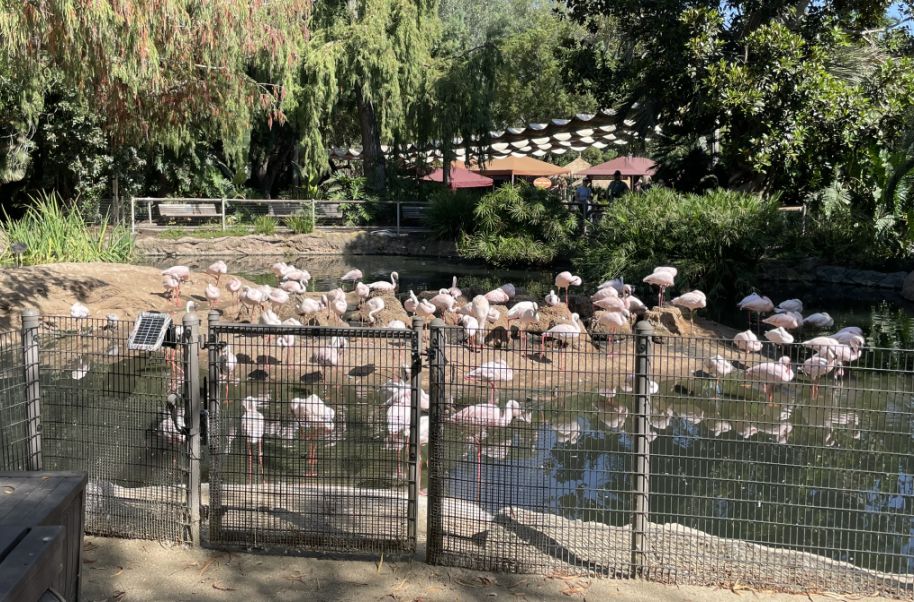
Their pale pinks and deeper rose tones reflect on the water, and the gentle movement of the flock gives the whole area a peaceful, almost rhythmic feeling.
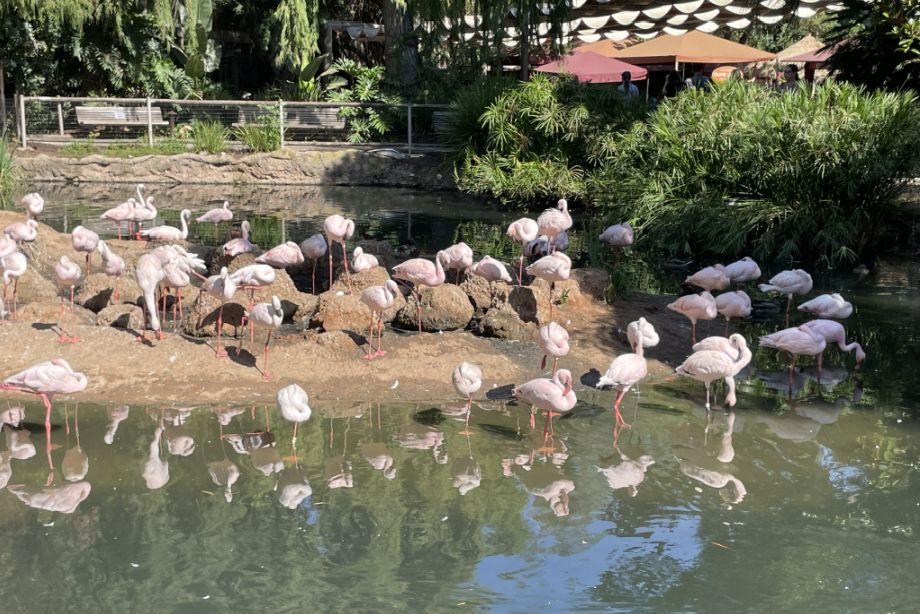
Up close, they’re more intricate than their soft pink reputation suggests. Their color comes from their diet, tiny shrimp and algae rich in pigments, and you can see subtle variations: pale blush, coral, and deeper rose across the flock.
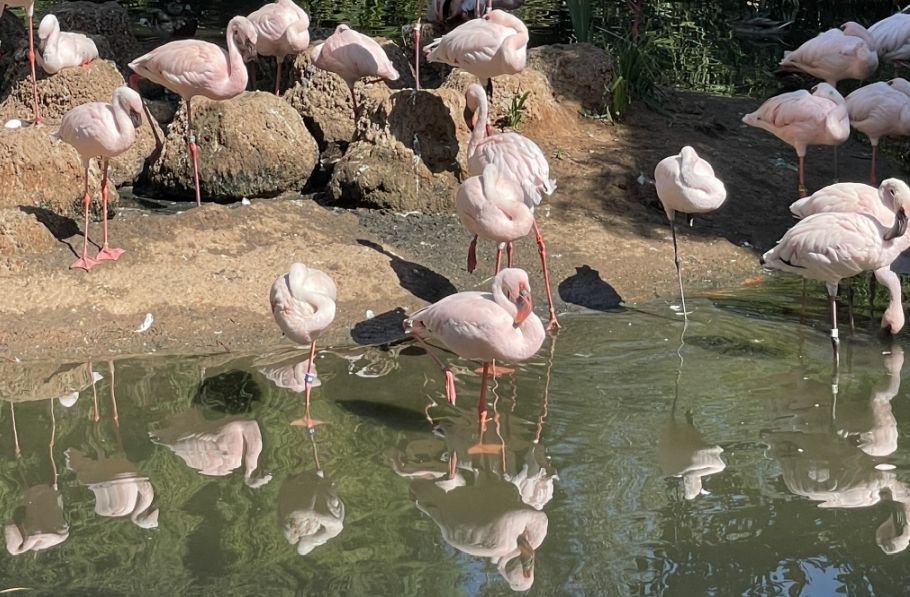
They move with a quiet elegance, long legs barely rippling the water, necks bending into perfect curves as they feed. Standing together, they feel calm and communal, almost meditative, their reflections shimmering in the pond.
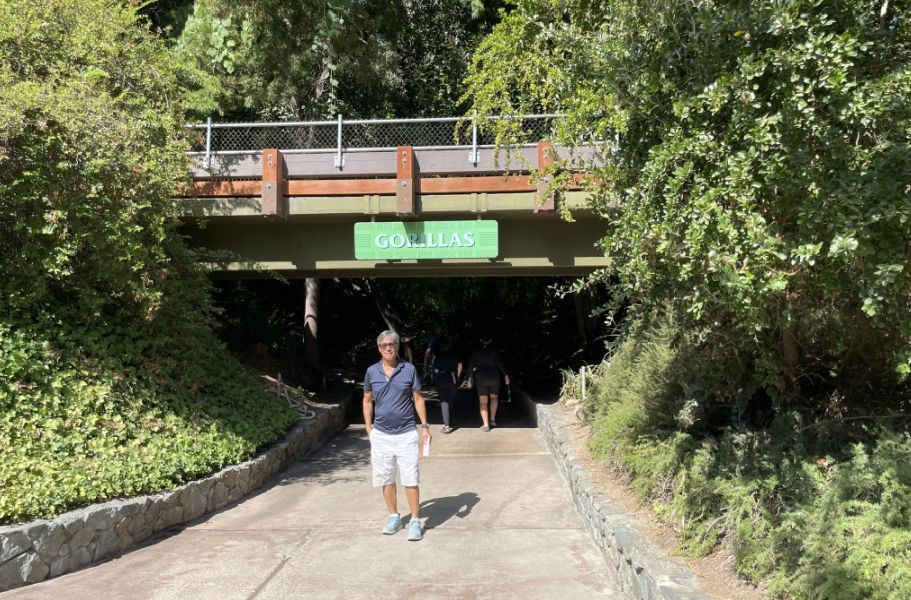
Heading into Gorilla's territory.
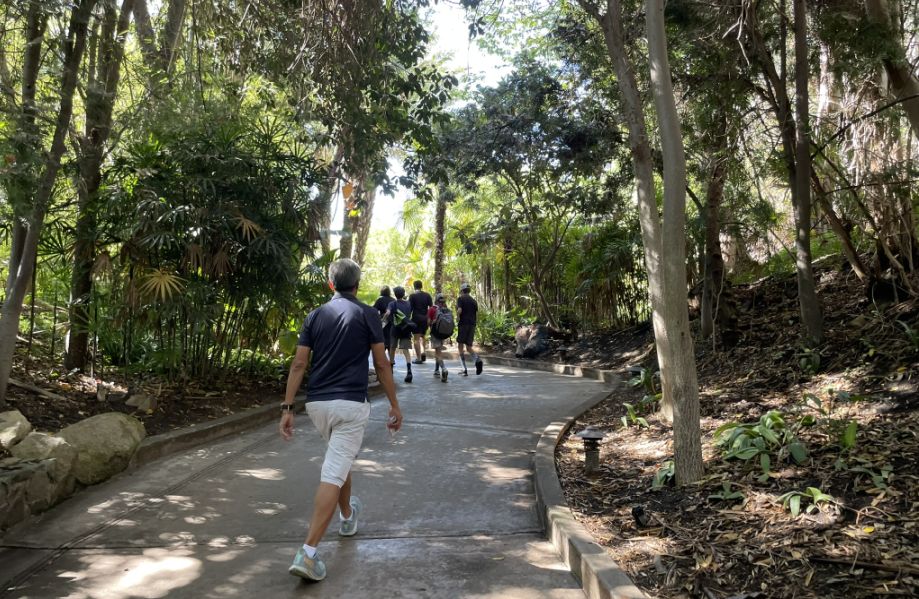
We followed a wooded area, the space becomes more enclosed and shaded, with dense greenery, rock formations, and a cooler, quieter feel.
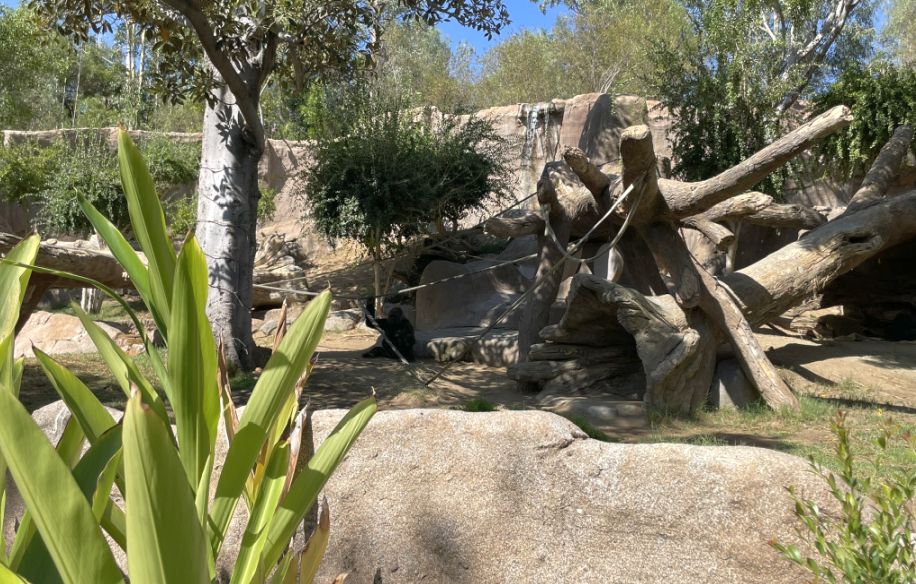
The energy shifts from light and graceful to grounded and powerful. You start looking more carefully, scanning the landscape, behind trees, along rocks, in the shadows until you spot them. Look in the center of the picture and you will see a gorilla sitting under the tree.
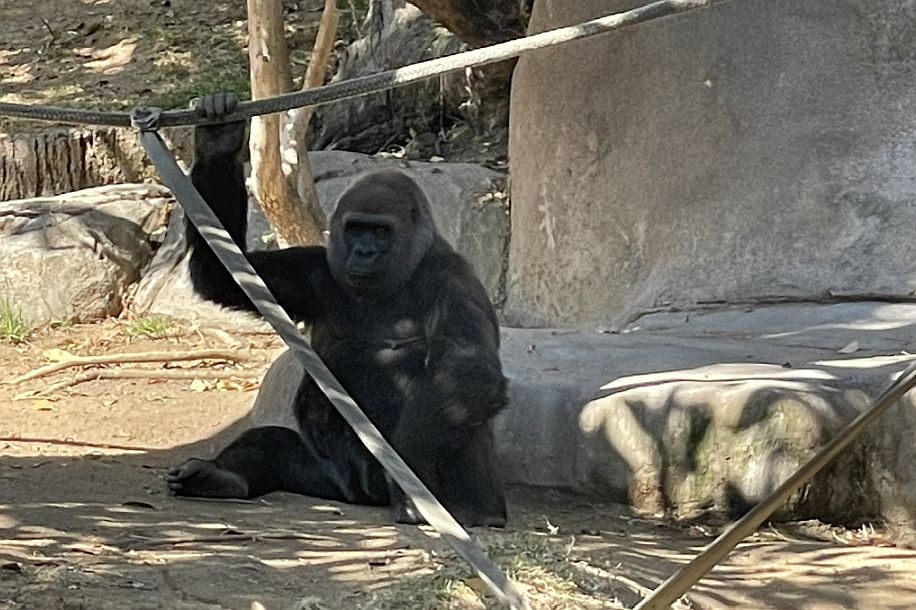
Gorillas don’t announce themselves; they simply are. Massive, still, and deeply present, whether resting, grooming, or watching quietly from a distance. They’re western lowland gorillas, the most common gorilla species in zoos, but seeing them in person feels anything but ordinary. Their bodies are massive and powerful, yet their movements are often slow and deliberate. When one sits quietly, arms resting, eyes watching, there’s an unmistakable sense of intelligence and awareness behind the calm expression.
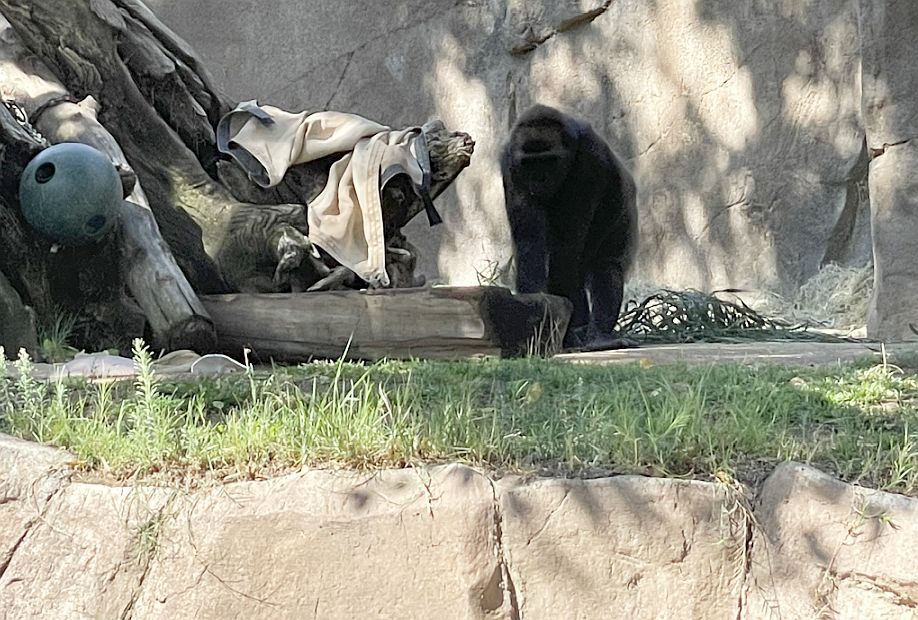
The silverback (the leader) which is an adult male gorilla, typically over 12 years old, named for the distinctive patch of silver-gray hair that develops on his back and hips as he matures. He is the primary defender. If he senses a threat, he will stand his ground, beat his chest to create a hollow "drumming" sound, and can even charge to intimidate intruders. Despite their intimidating size, silverbacks are famous for being incredibly patient and gentle, especially with infants gorillas.
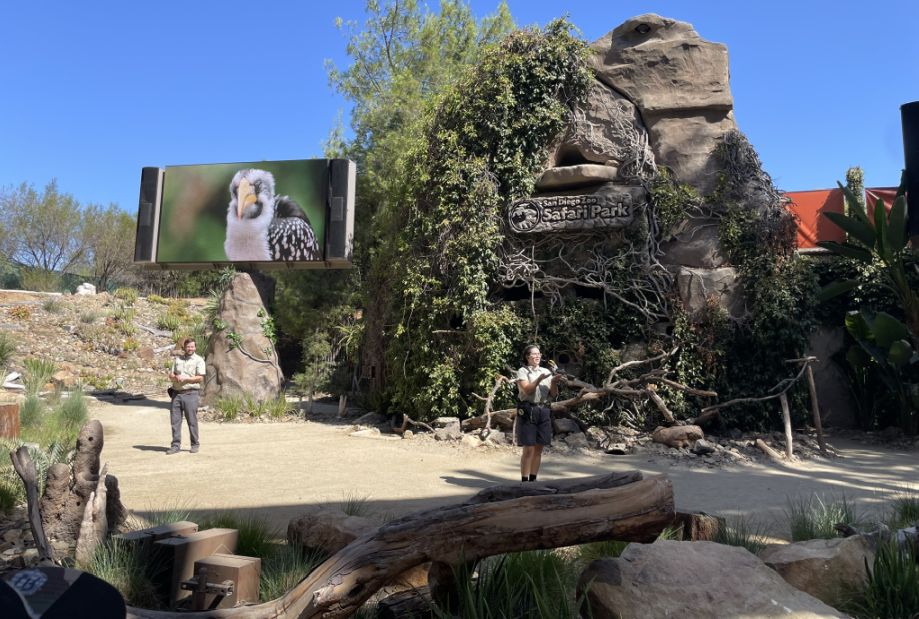
We are now watching the "Journey into the Wild", held at the Benbough Amphitheater inside the park. The show is an action-packed, 15-to-20-minute presentation that highlights the natural behaviors of animal ambassadors. Here is what makes the experience so special:
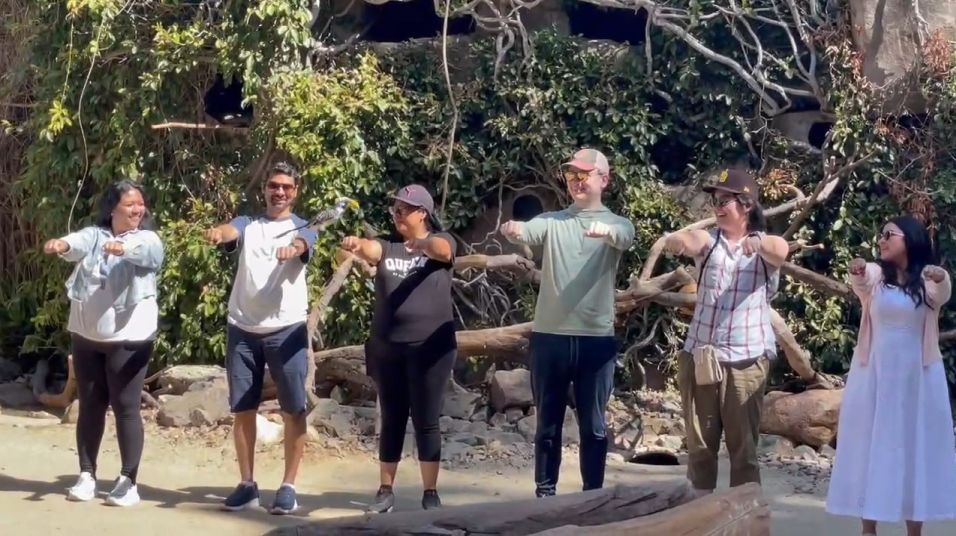
Travel, the Abyssinian Ground Hornbill was trained to hop on people's arm.
Travel does this because he has a great relationship with the trainers and knows that completing the "bridge" leads to a tasty reward (usually a mealworm or a piece of fruit).
Ground hornbills are fascinating because, unlike most other hornbill species that spend their time high in the trees, these birds are "terrestrial" meaning they prefer to spend their day walking and hunting on the ground.
 |
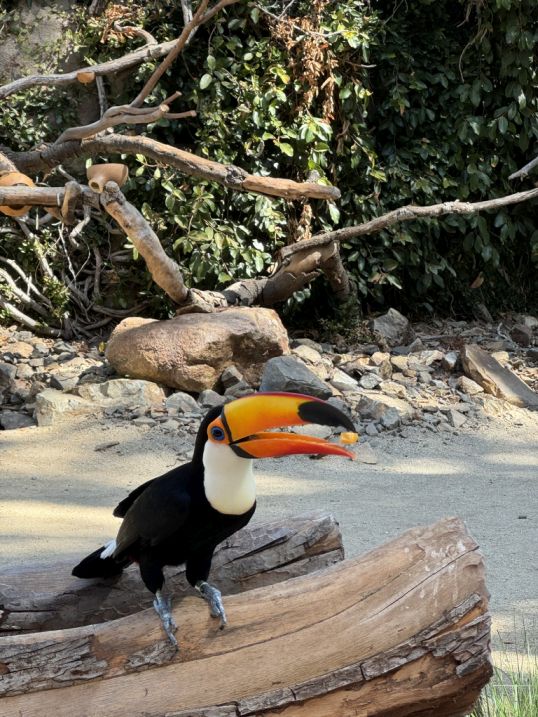 |
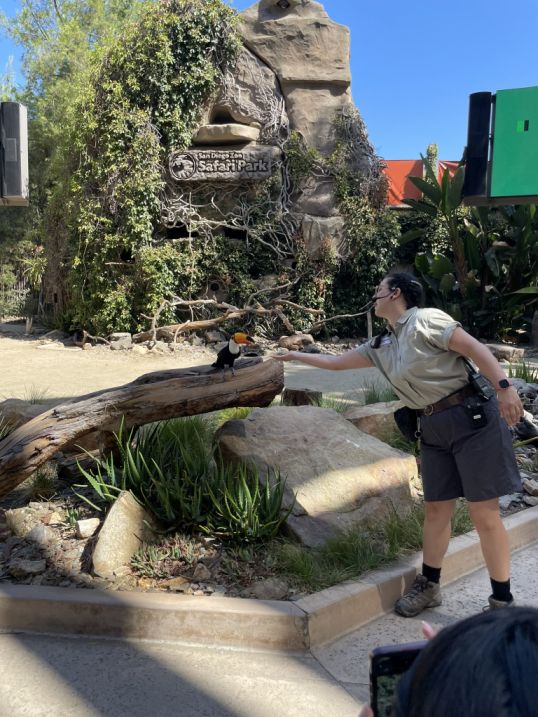
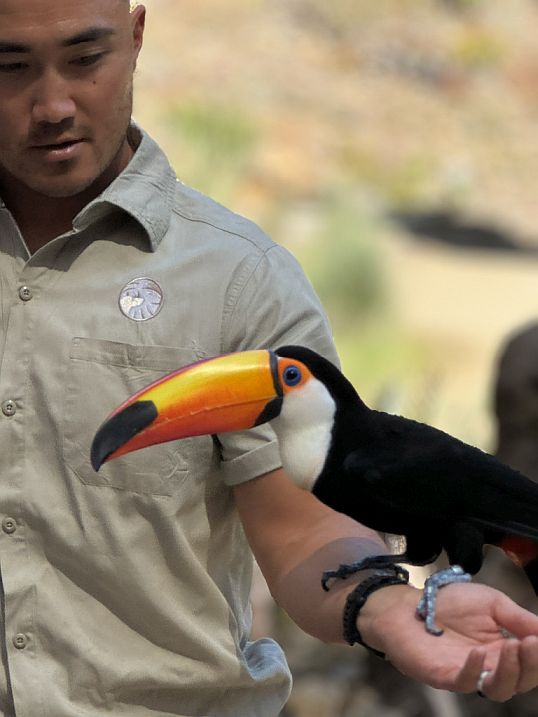
The Toco Toucan's Flight: The toucan’s signature move is flying back and forth across the stage and over the audience. Its massive, vibrant orange beak (with a distinct black tip) is actually hollow and very lightweight, allowing the bird to remain incredibly agile. Seeing it glide so close is often the highlight of the show.
 |
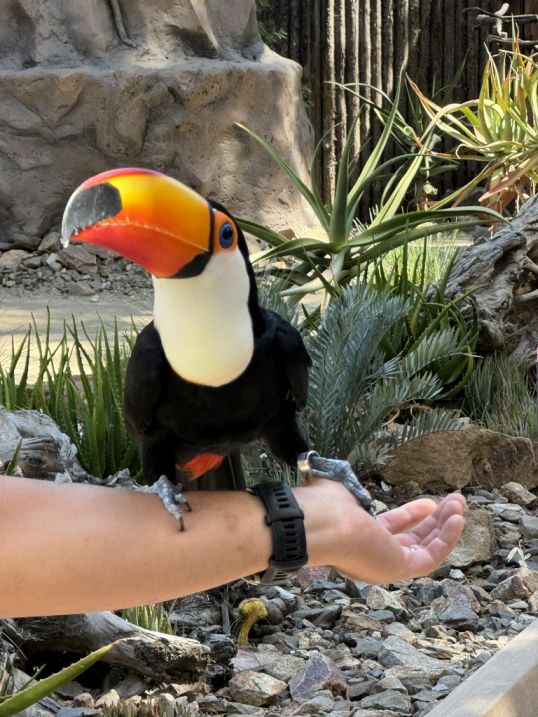 |
The trainers use "positive reinforcement," meaning the birds choose to participate because they receive their favorite treats (like fruit or insects) when they reach the trainer’s glove. If a bird decides it would rather sit in a tree or head backstage early, the trainers simply adapt the show to that bird's choice!
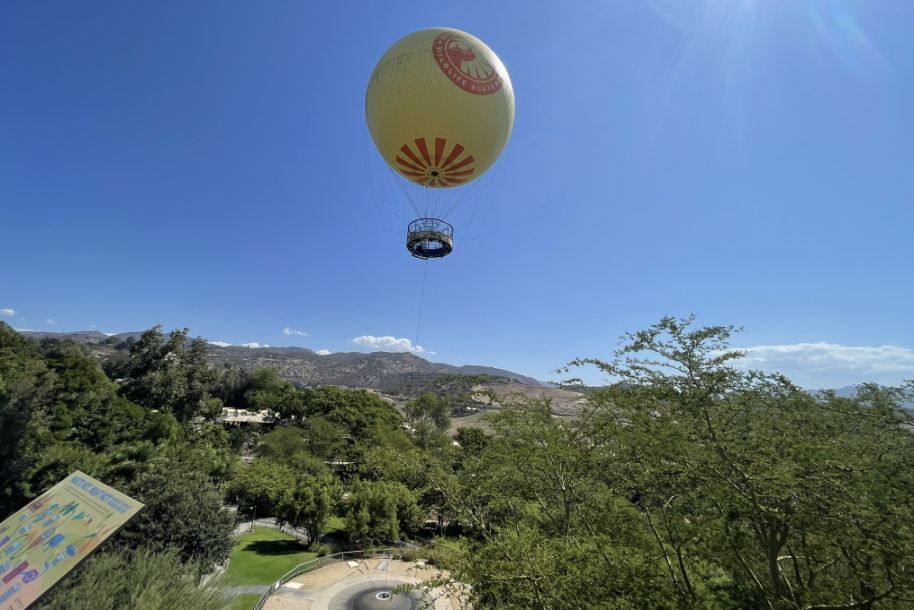
We are now heading to the Africa Tram and on our way we are passing by the Balloon Safari. It’s a tethered helium balloon (not a hot air balloon, so there are no loud flames). It rises silently up to 400 feet in the air, giving people a 360-degree view of the entire park and the surrounding San Pasqual Valley.
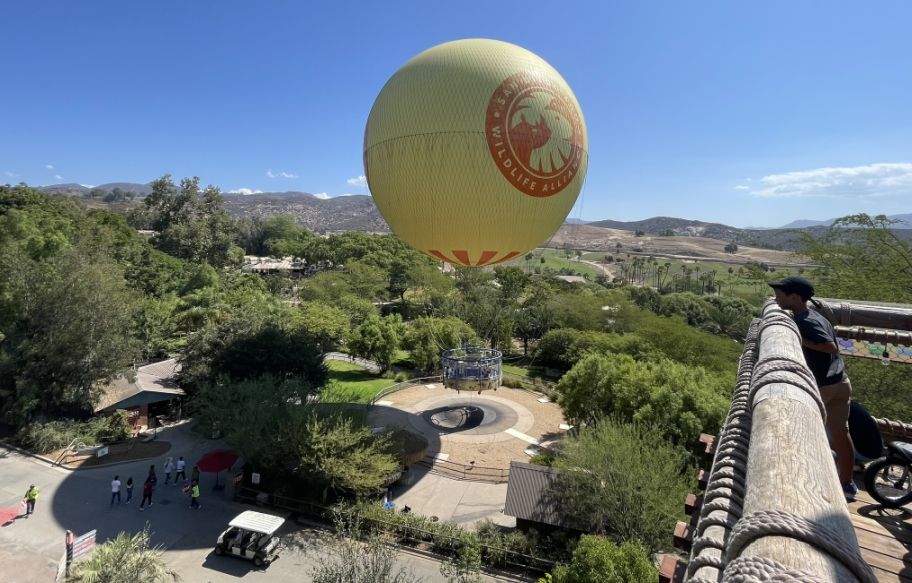
It stays up for about 10–12 minutes before the cable gently pulls it back down to the landing pad to swap out passengers.

We are now at the Africa Tram, and we entering one of the most popular areas of the park.
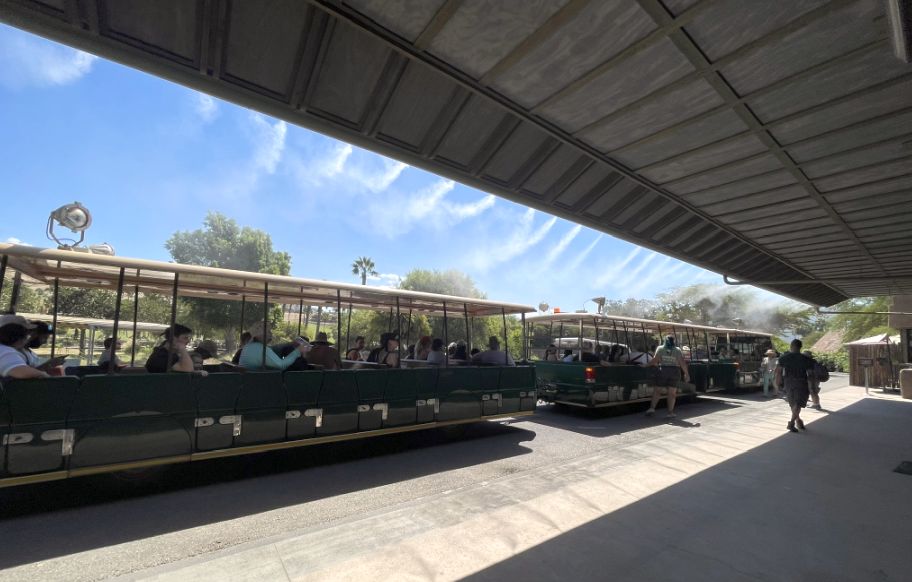
The line moves fairly quickly as the trams are quite large.
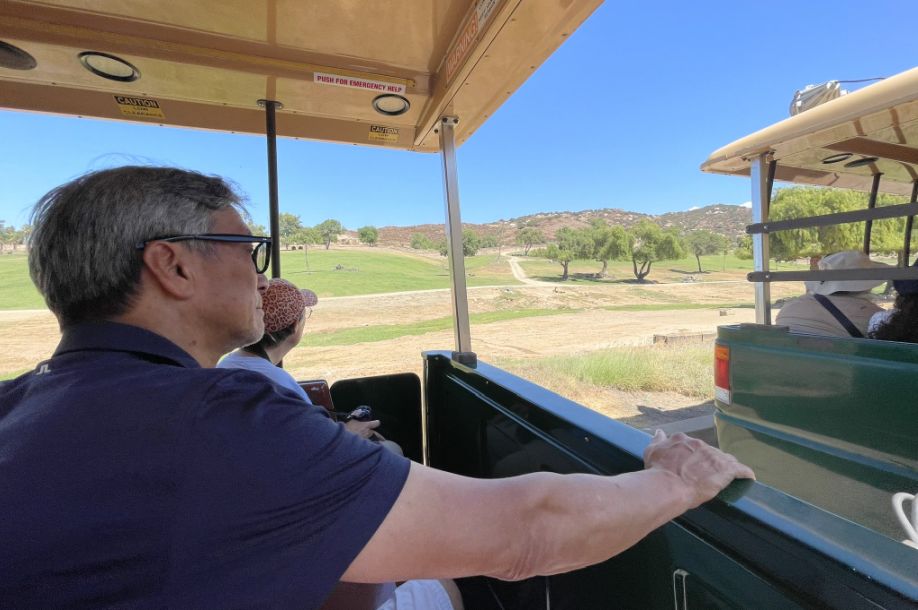
The best sit in on the right side of the tram as it often offers slightly better views of the rhinos and giraffes as people loop through the fields!
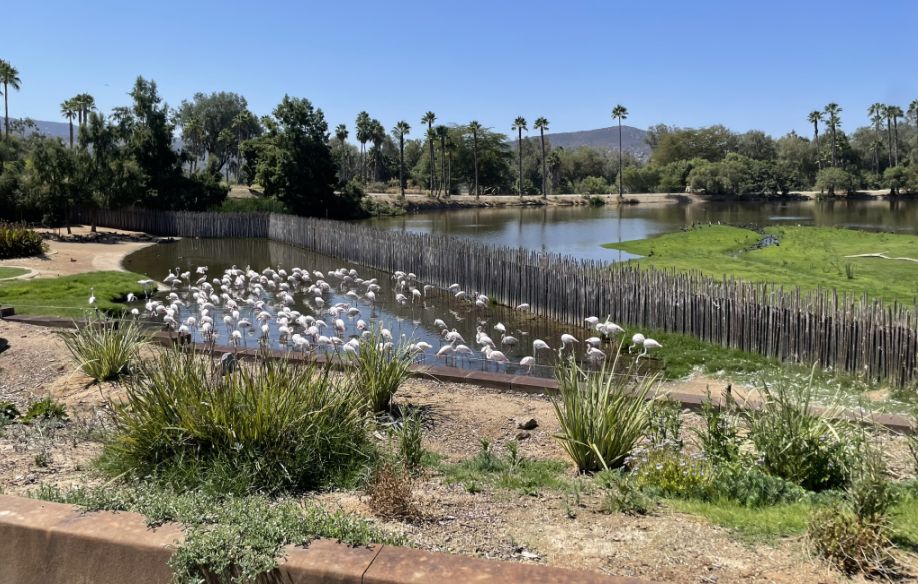
As the tram started, the first thing we saw was the Greater Flamingos. The Safari Park actually has one of the largest flocks of this species in North America! They love that shallow pond area because it mimics the alkaline lakes where they gather in the wild.
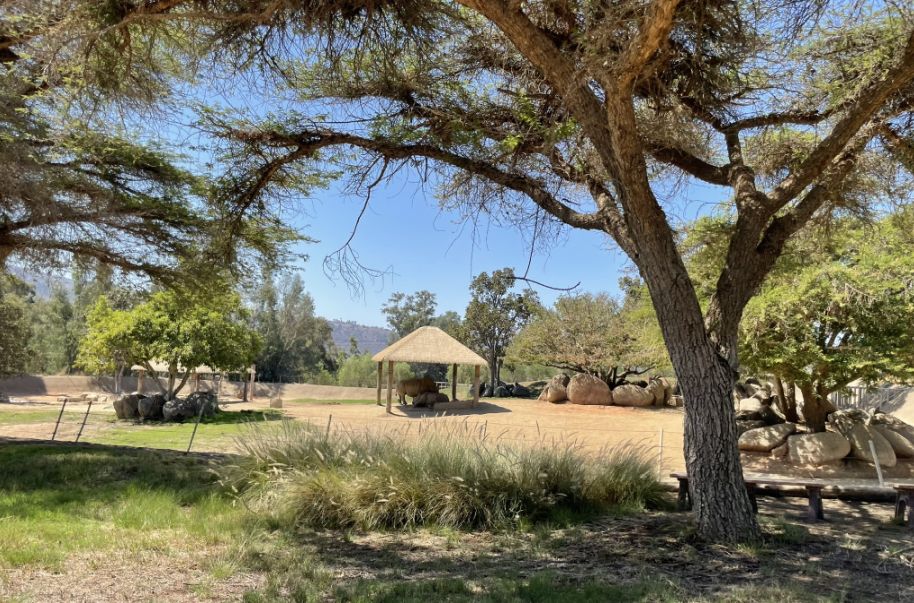
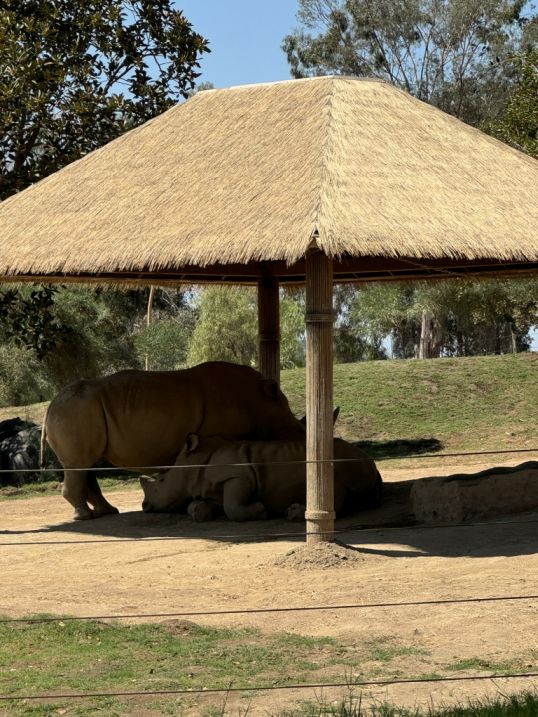
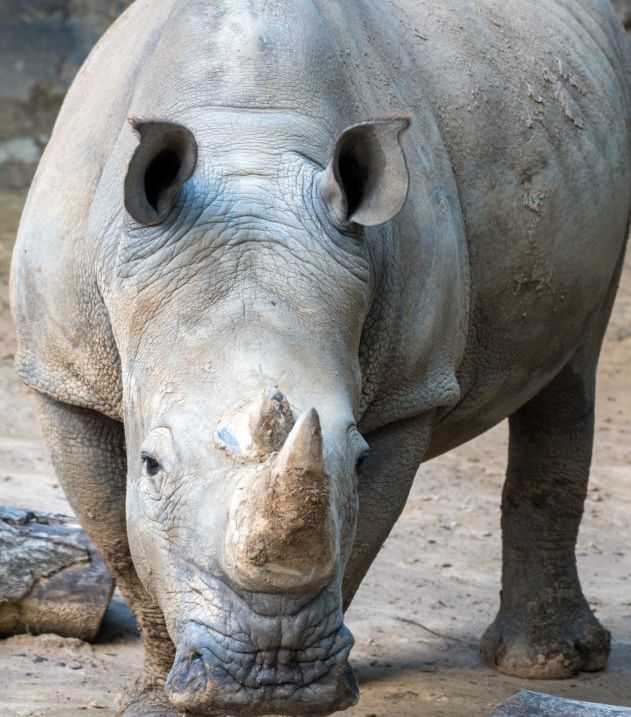
But onto the stars of the savanna are the rhinos. We were told we are in the best place in the world to see them, as the Safari Park is a global leader in rhino conservation. White rhinos are huge, second only to elephants in size, and yet they often look calm, almost gentle, as they stand or slowly move across the savanna. Their bodies are broad and solid, with thick, folded gray skin that looks like armor, especially around the shoulders and neck.
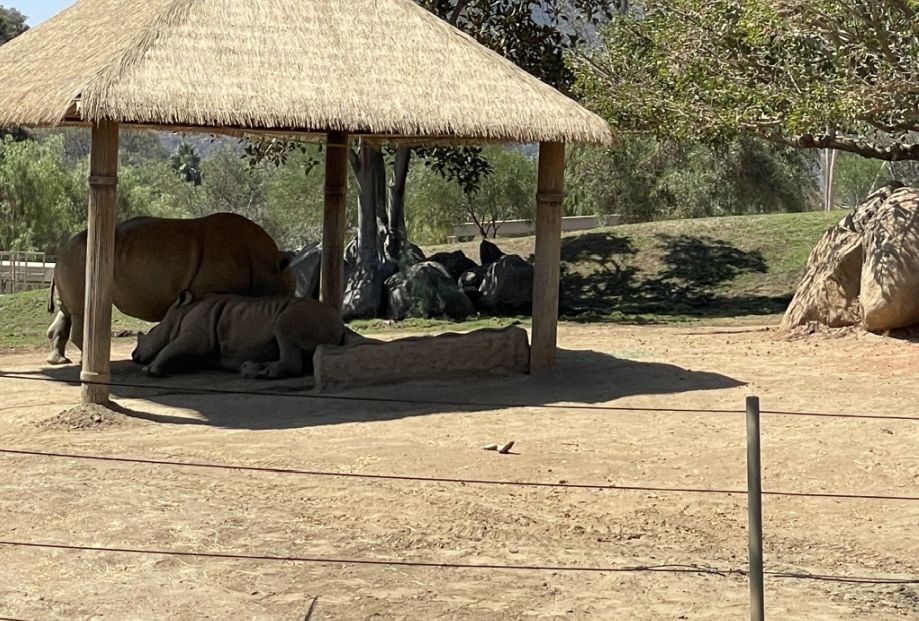
Despite the name, white rhinos aren’t actually white. The word comes from a misinterpretation of the Afrikaans word “wyd,” meaning wide, referring to their wide, square-shaped mouths. What’s especially powerful about seeing them here is knowing their story. White rhinos were once pushed to the brink of extinction due to poaching, and places like the San Diego Zoo Safari Park play a major role in conservation and breeding efforts. Watching one stand there, unbothered, surrounded by open space, feels hopeful, like seeing resilience made visible.
 |
 |
Only two northern white rhinos remain in the world, both living under constant protection. With no natural way for the species to continue, the San Diego Zoo and its global conservation partners are turning to science in a last-hope effort to prevent extinction. Through advanced reproductive technologies, using preserved genetic material and potential surrogate mothers, they are working to recreate and revive this ancient species. Standing there, it felt like witnessing both the fragility of life and humanity’s determination to not let the northern white rhino disappear without a fight.
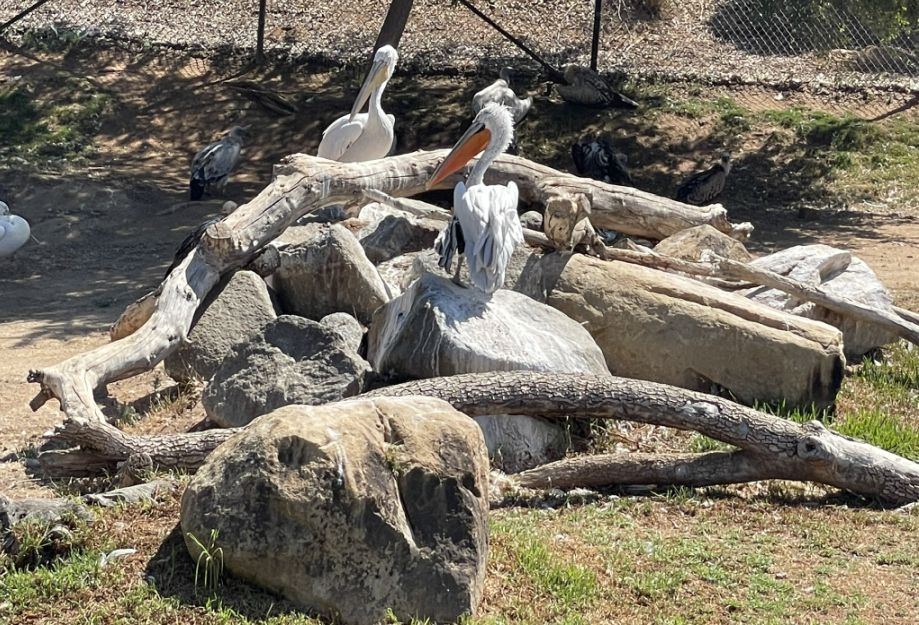
As the tram moved on, we passed an eerie yet fascinating scene where vultures and the Pelicans are perched on rocky outcrops, surrounded by scattered bleached skeletons, a stark reminder of nature’s raw cycle of life.
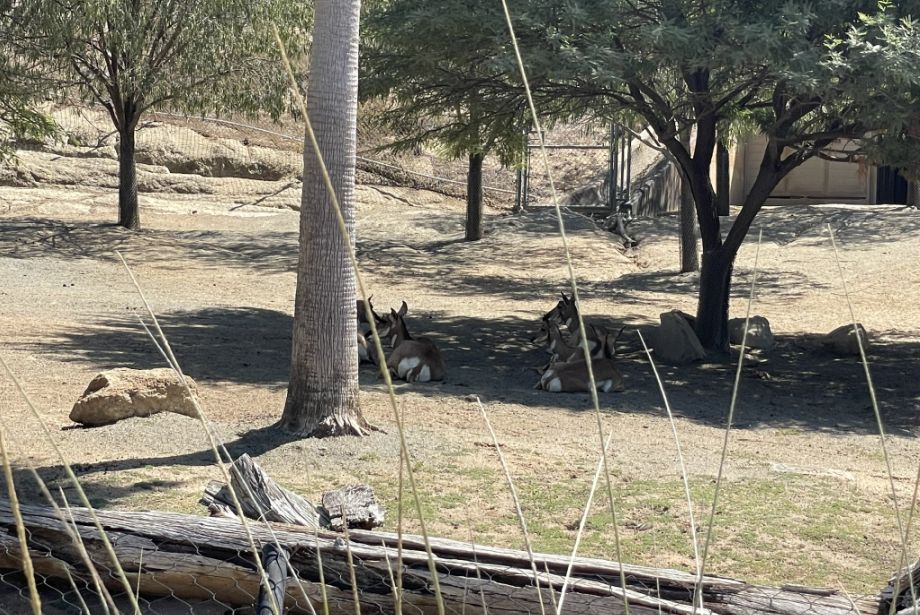
Soon after, the mood softened as we saw a group of antelopes stretched out beneath a shady tree, completely still, enjoying a quiet midday nap away from the sun.
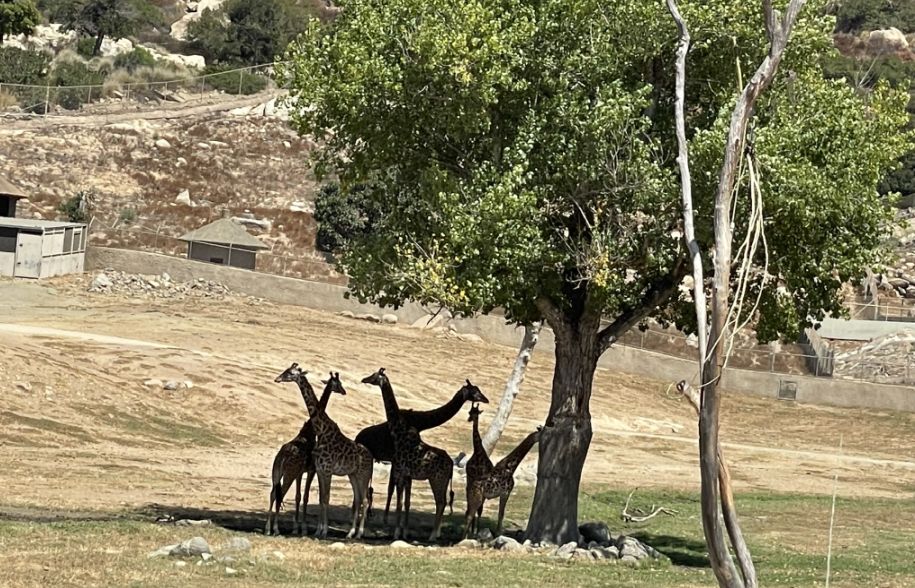
Farther along, the landscape opened up and a group of giraffes appeared, their long necks rising gracefully above the savanna, moving slowly and calmly as if in unhurried harmony with the land.
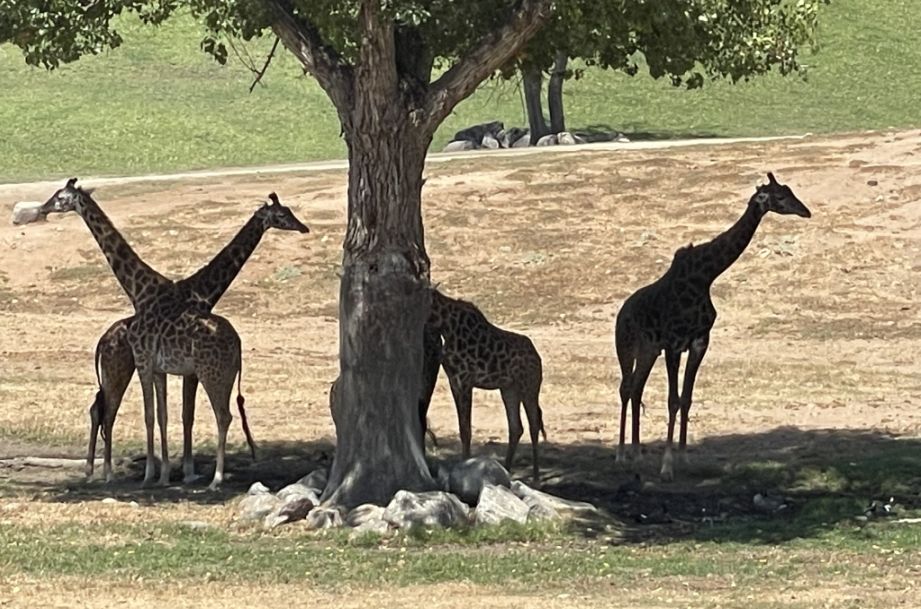
Giraffes spend most of their day eating. They are "browsers," meaning they use those long purple tongues to strip leaves from branches. They huddle under the shade to stay cool during the midday sun.
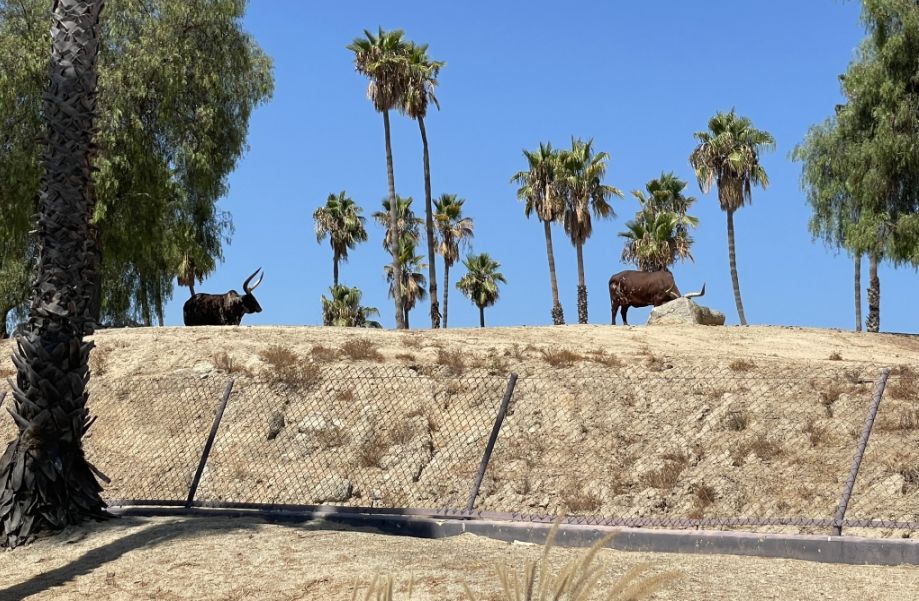
Up on a hill we saw the Ankole-Watusi with the massive, thick horns , they are often called the "Cattle of Kings."
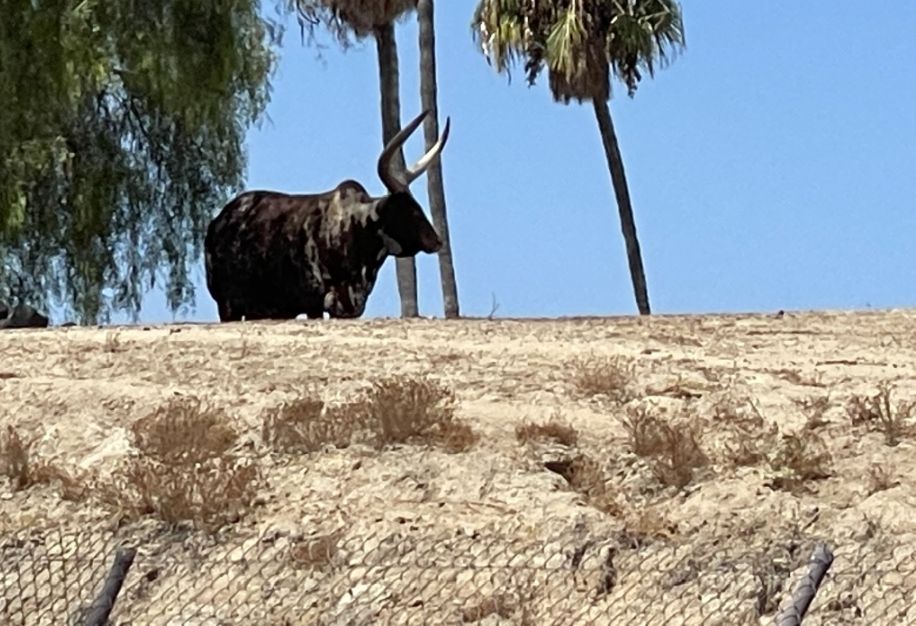
Their horns aren't just for show; they act like radiators. Blood flows through the horns and is cooled by the air before returning to the body, helping the animal stay cool in the heat.
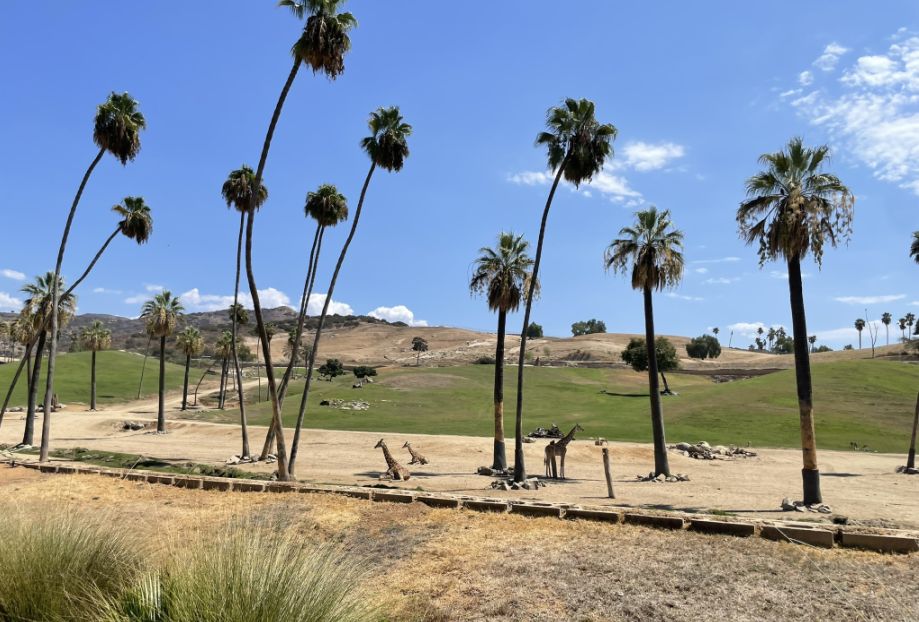
As the tram moved around we get to see another group of giraffes. It is actually quite a treat to see giraffes laying down! Because they are so large and it takes a lot of effort to get back up, they only do this when they feel completely safe. They usually tuck their legs under their bodies but keep their long necks upright to keep a lookout for "predators" (even though there aren't any in the park!).
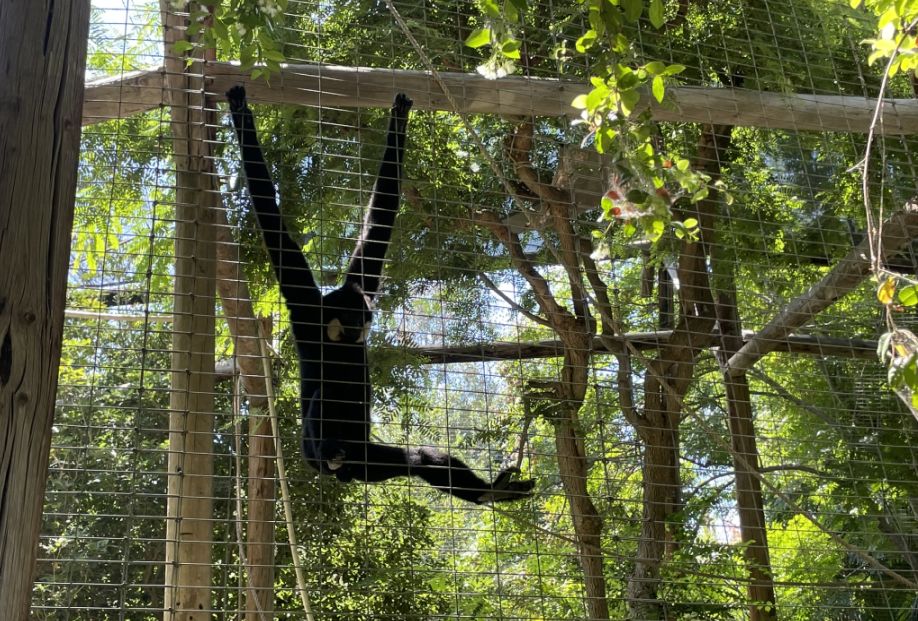
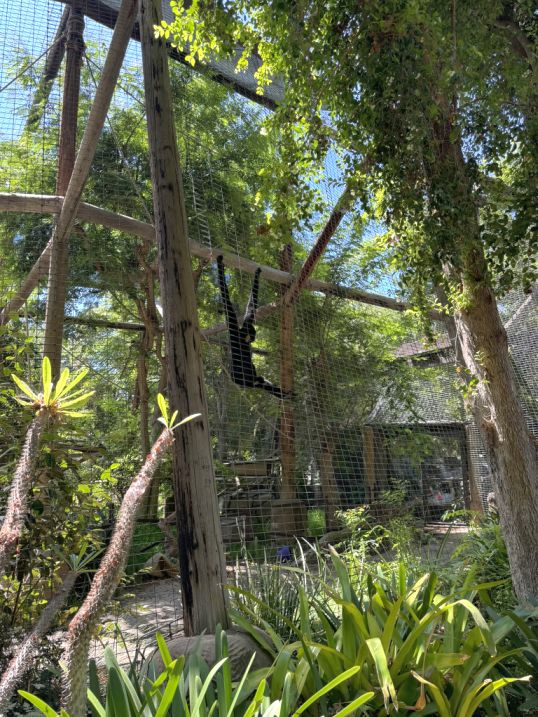
We got off the tram and we are now seeing the Red-Cheede Gibbon found in damp forests of Cambodia, Vietnam, and Laos
 |
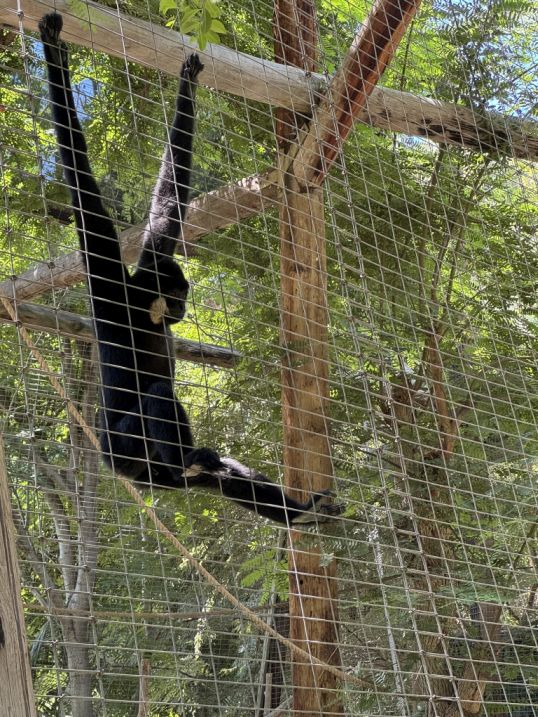 |
The swinging motion is called brachiation. Gibbons have incredibly long arms and "hook-like" hands that allow them to swing through the trees at speeds up to 35 mph.
 |
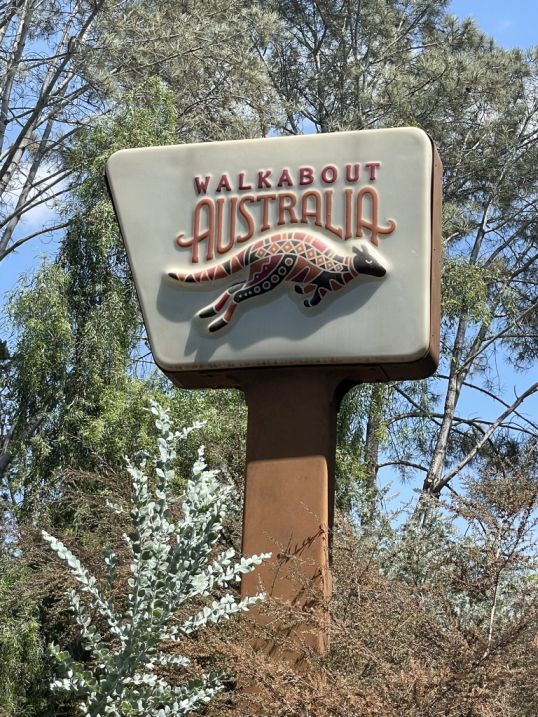 |
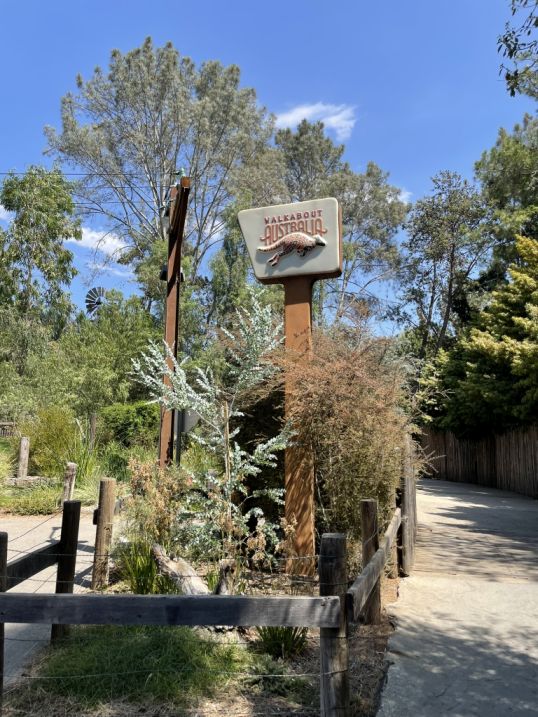
We are now heading to the Walkabout Australia area.
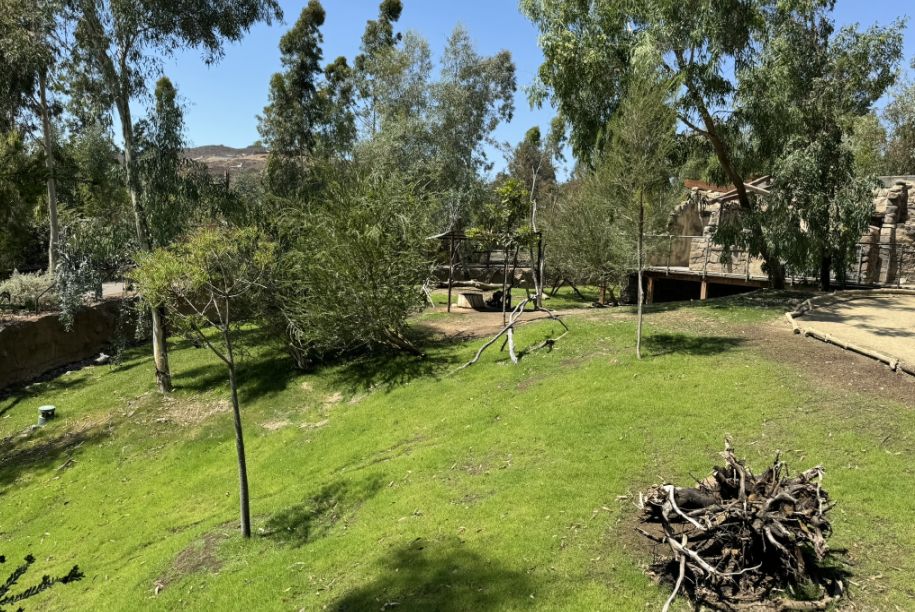
The area is a 3.6-acre area is designed to mimic the "Backcountry" of Australia.
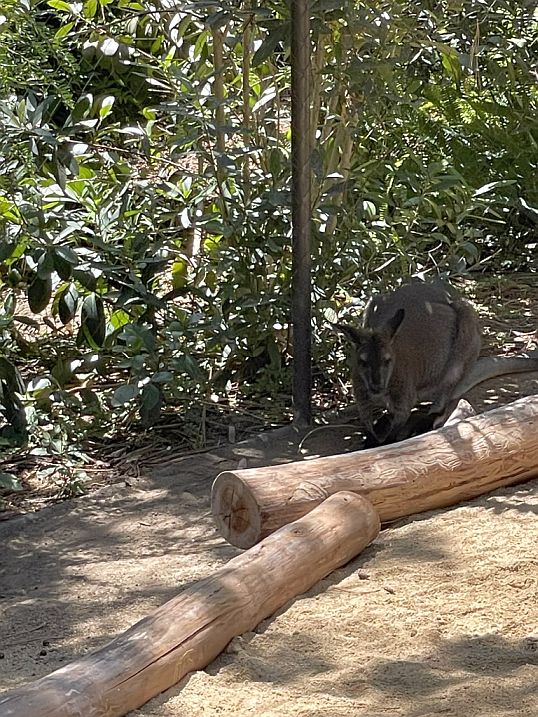 |
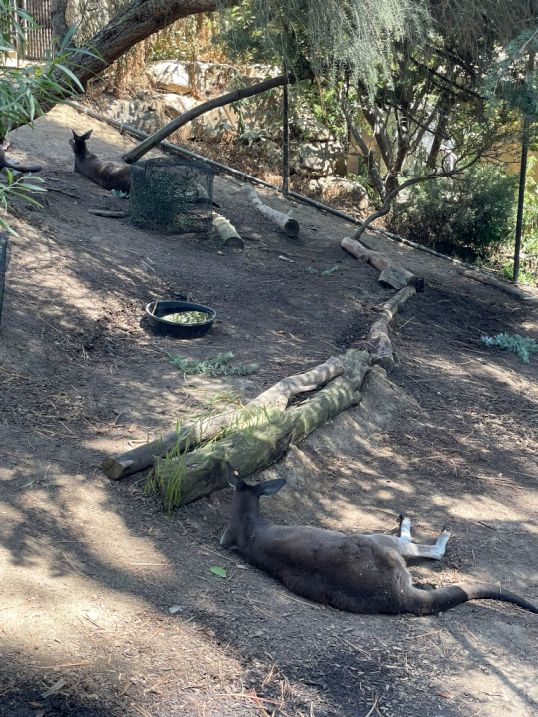 |
Since there are no fences in that specific path, you’re literally walking through the Western Gray Kangaroos's home. They are most active in the morning and evening; during the day, they love to lounge in the sun like big, fuzzy dogs.
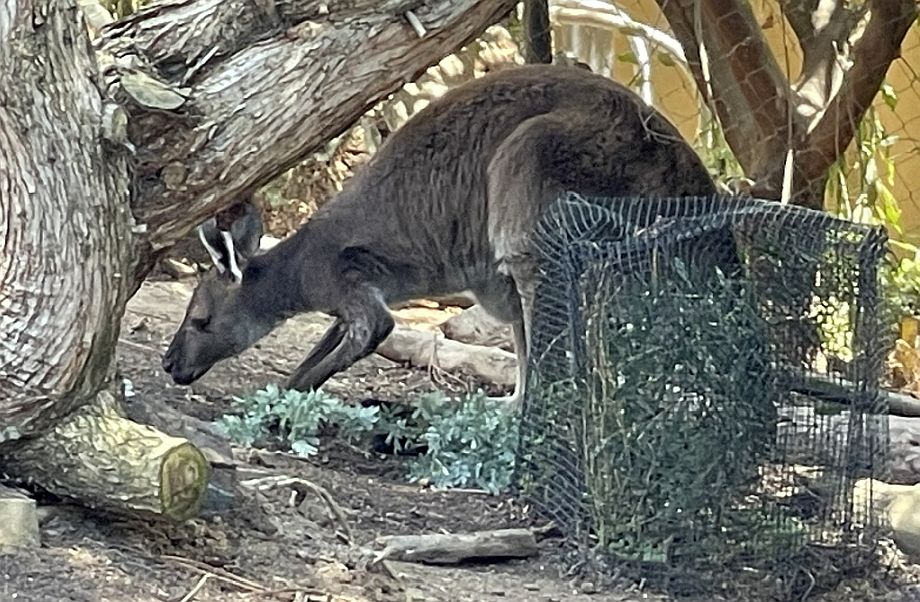
This area is designed to look like a traditional Australian wool-shearing shed (called a "station" in Aussie-speak).
 |
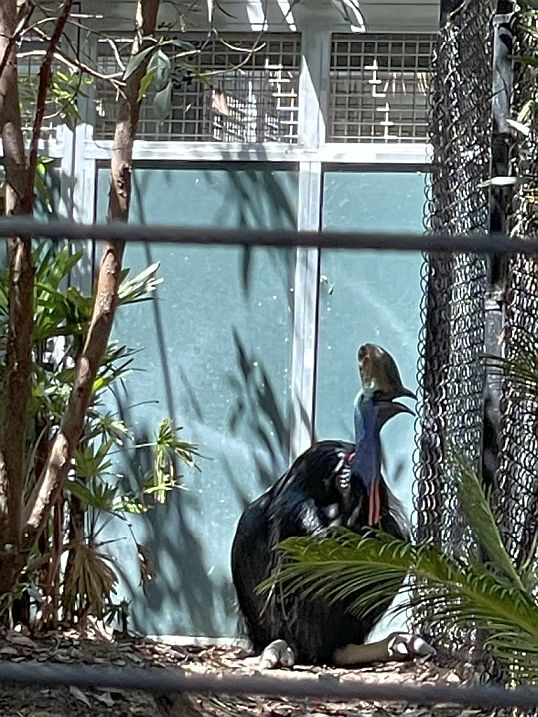 |
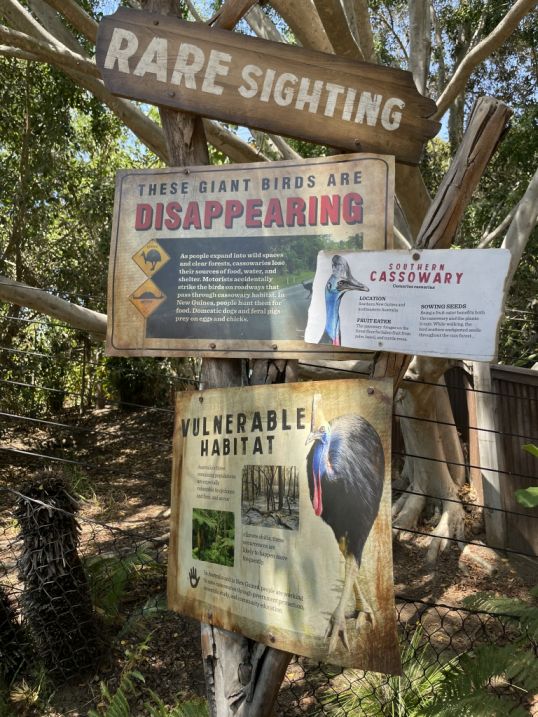
It is ironic that we went all the way to Australia and we did not see a single cassowary because they are so shy and rare in the wild! Seeing them here in the Walkabout Australia section is a treat because you are getting an up-close look at one of the most prehistoric-looking creatures on the planet. In the wild, they live in the deep rainforests of Northern Queensland.
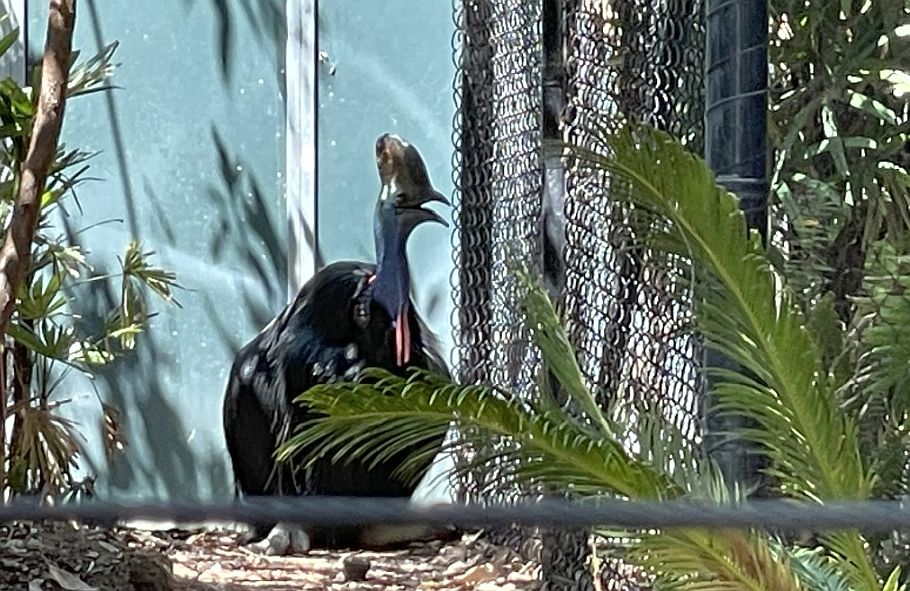
That large, bony growth on its head is called a casque. Scientists aren't 100% sure what it’s for, but they think it might help the bird "hear" low-frequency booms from other cassowaries through the thick trees, or act as a helmet as they crash through the brush. They have a 4-inch, dagger-like claw on their inner toe. In Australia, they are famous for being a bit "grumpy", it's a good thing there is a sturdy fence between you and them! They are vital to the Australian ecosystem because they eat large fruits and "plant" the seeds across the forest through their droppings.
We are now heading to the Condor Ridge.
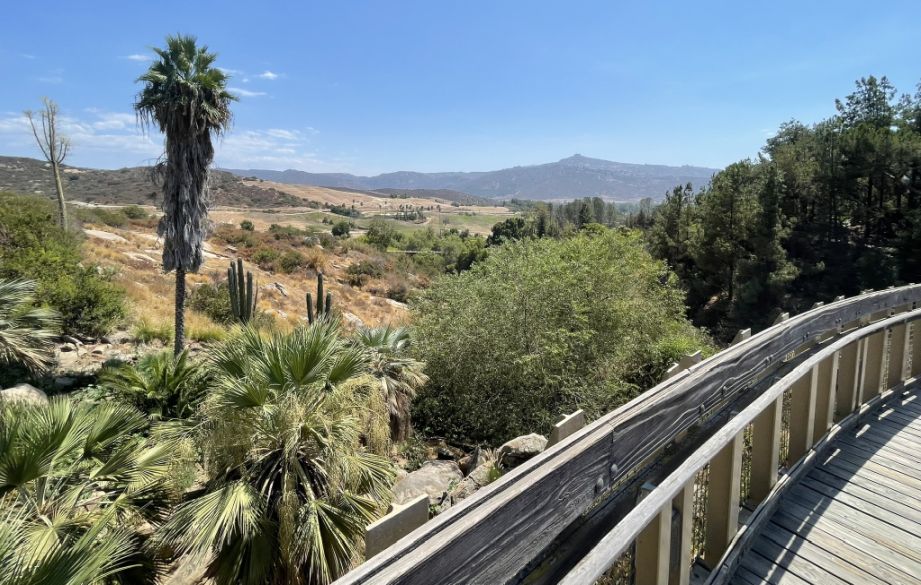
That view from Condor Ridge is arguably the best "hidden gem" in the entire park.
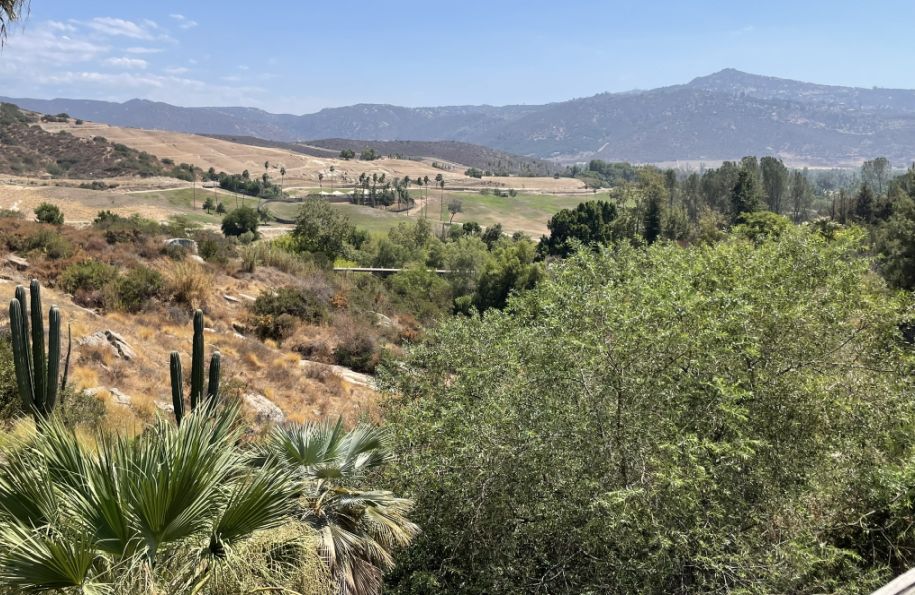
Looking out over the San Pasqual Valley, you really get a sense of how massive the Safari Park's 1,800 acres actually are.
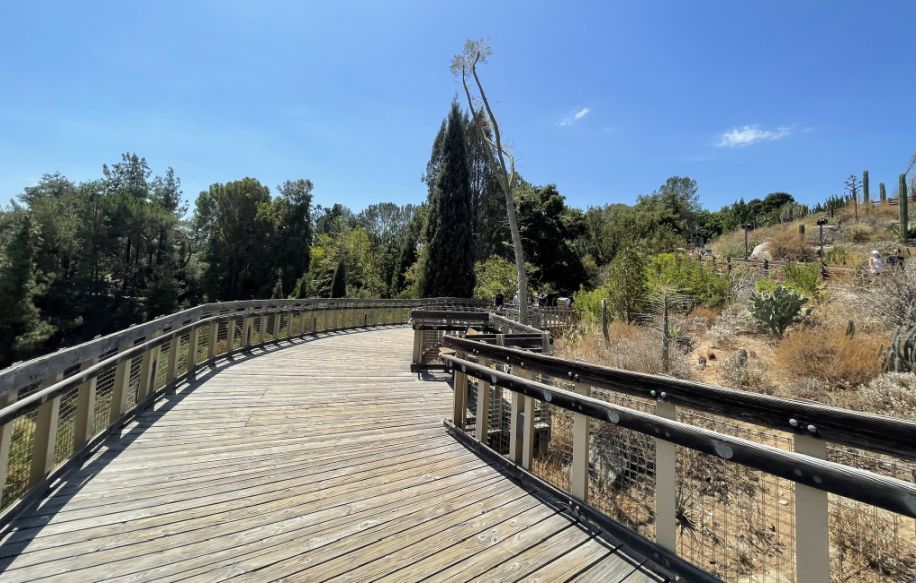
The bridge leading to the Condor Ridge
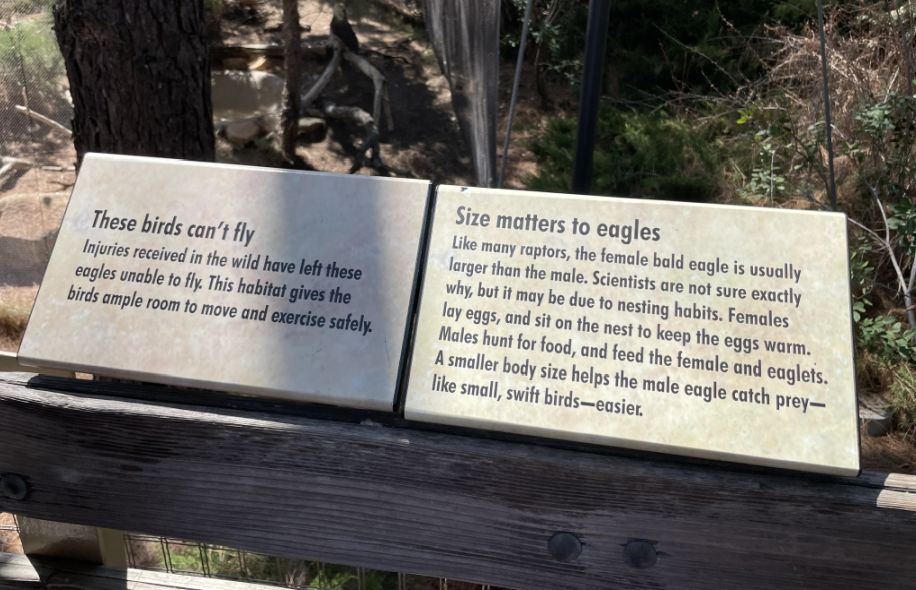
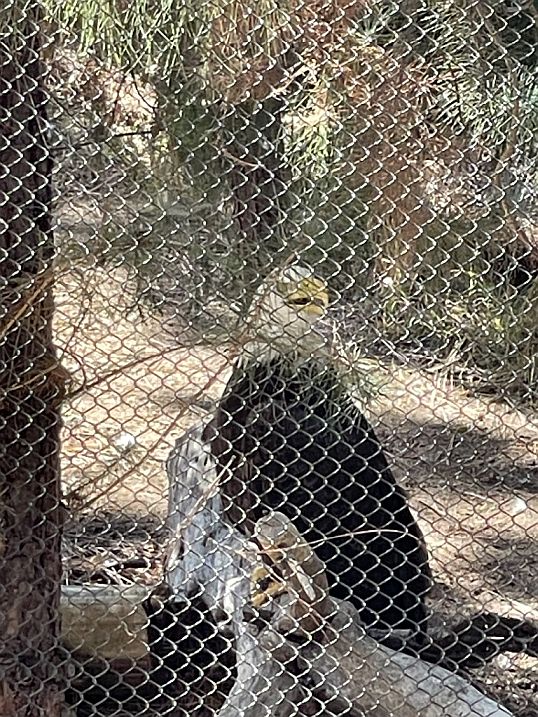
The Safari Park serves as a sanctuary for many North American birds of prey that cannot be released back into the wild. Many of the hawks, eagles, and owls here were rescued after being hit by cars, flying into power lines, or falling from nests. Because they have permanent wing injuries or have become too "comfortable" around humans, they wouldn't survive in the wild.
 |
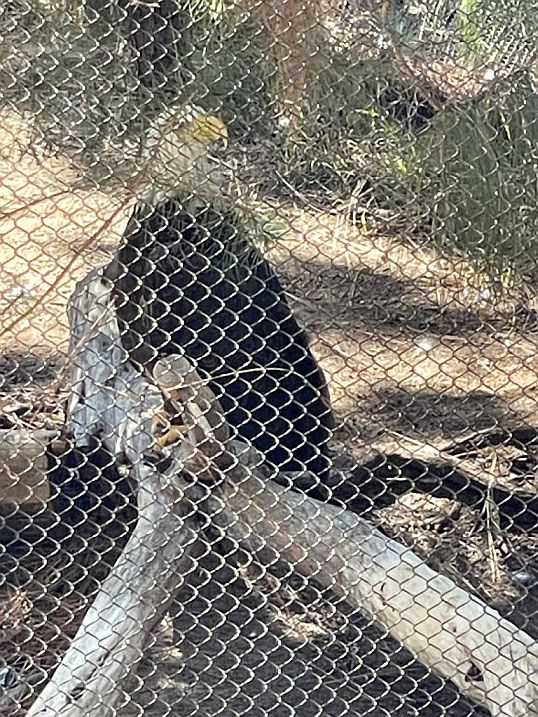 |
Here, they get a "retirement home" where they help educate people about their species. These are often birds with wing injuries that prevent them from the high-speed flight needed to hunt fish in the wild.
The "star" of this ridge is the California Condor. While some of the other birds are there because of injuries, the Condors are there as part of one of the greatest conservation success stories in history. In 1987, there were only 22 California Condors left on Earth. The San Diego Zoo Safari Park took them all in to start a massive breeding program. Today, there are over 500 of them, with many flying free again in the Grand Canyon, Utah, and Baja California!
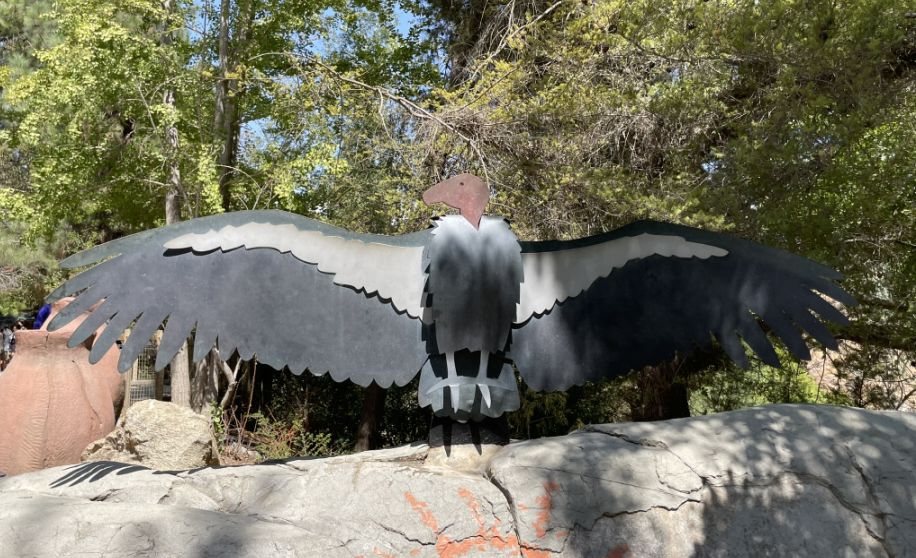
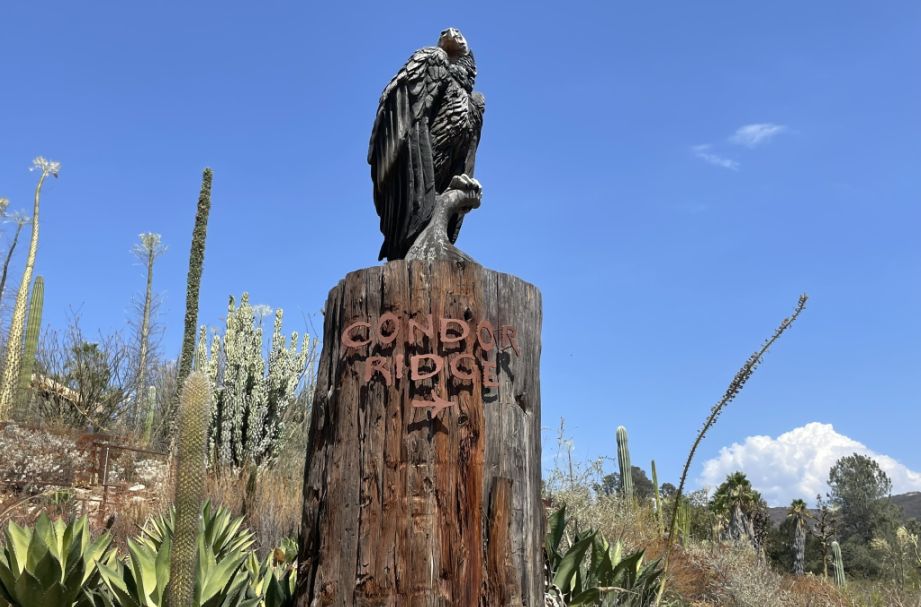
This sculpture is a stunning tribute to the California Condor. It is actually a life-sized bronze and steel sculpture of an adult California Condor. It was placed there specifically to give you a sense of the "scale" of these birds. When you stand next to it, you realize just how massive a 9.5 to 10-foot wingspan really is.
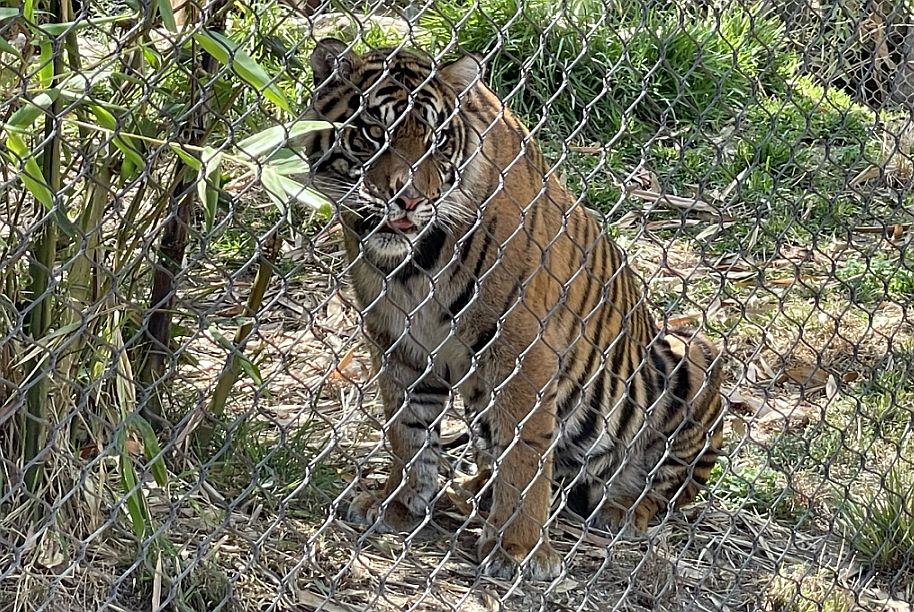
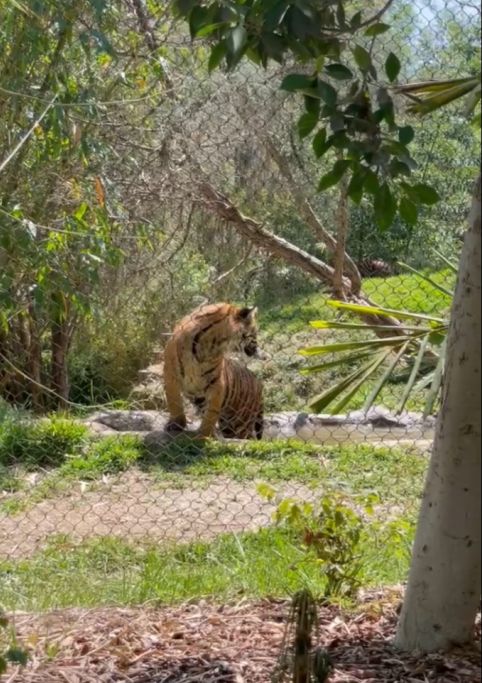
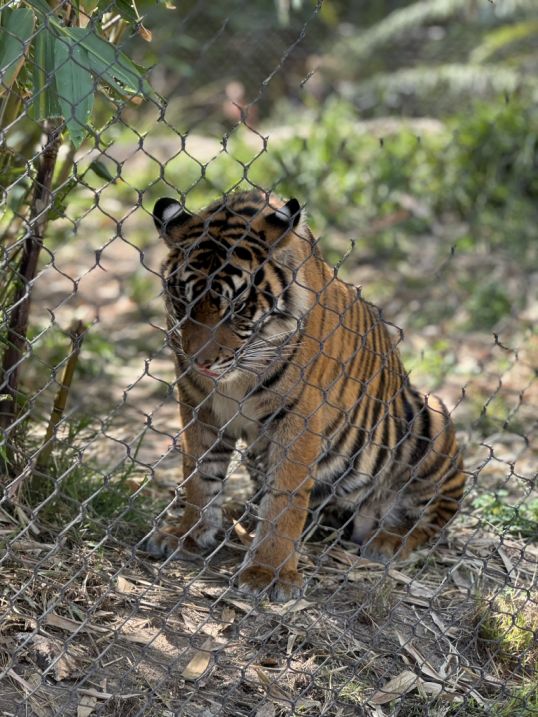
The Tull Family Tiger Trail is one of the most immersive areas in the park. It’s designed to feel like you’ve stepped onto the island of Sumatra in Indonesia. The tigers are Sumatran Tigers, and they are quite different from the ones you might see in movies or at other zoos. Sumatran tigers actually have partial webbing between their toes, which makes them excellent swimmers.
 |
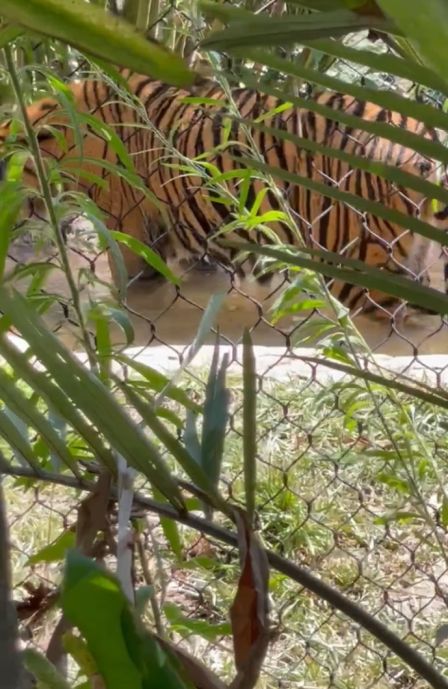 |
They love the water and will often lounge in the ponds in their habitat to stay cool.
 |
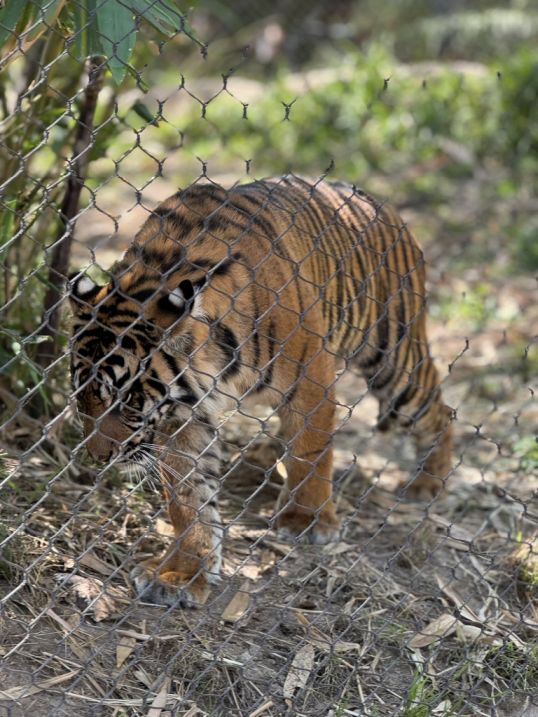 |
Their stripes are much closer together than other tigers. This helps them disappear into the shadows of the tall grass and bamboo you see around the trail.
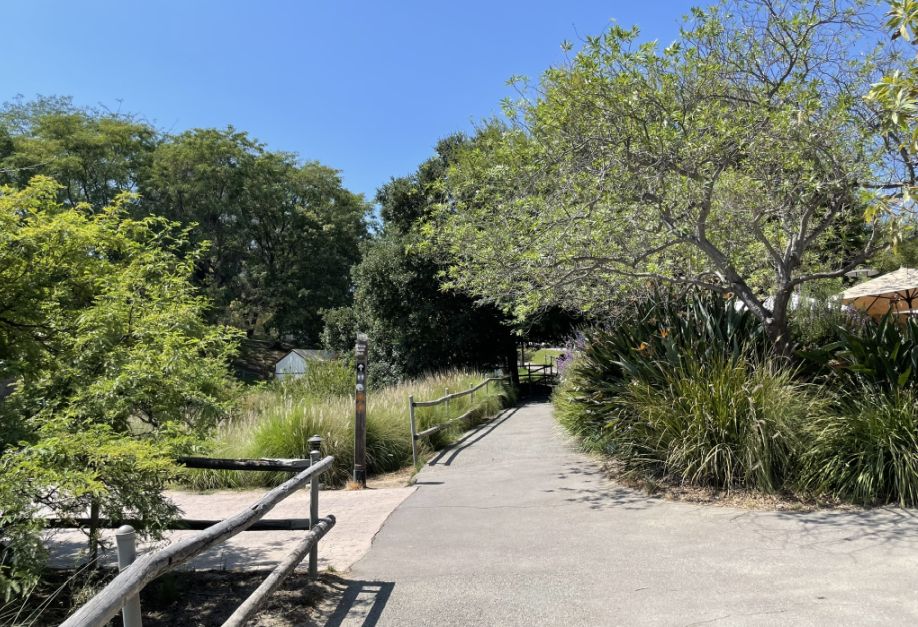
We are now heading toward the Elephant Valley which is the absolute heart of the Safari Park's conservation work.
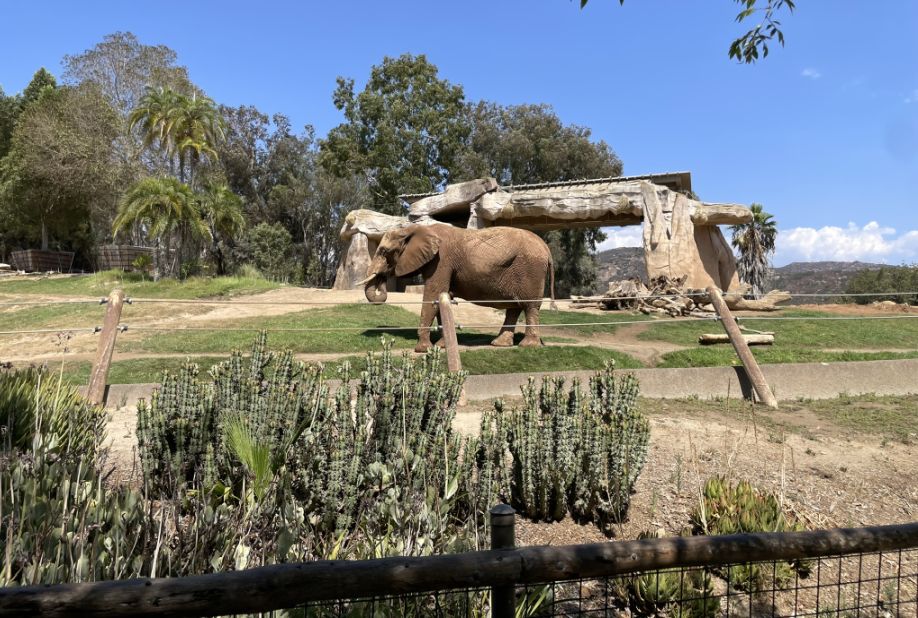
The herd is led by the oldest and wisest female. She decides where they go and when they eat. In elephant society, the ladies are in charge!
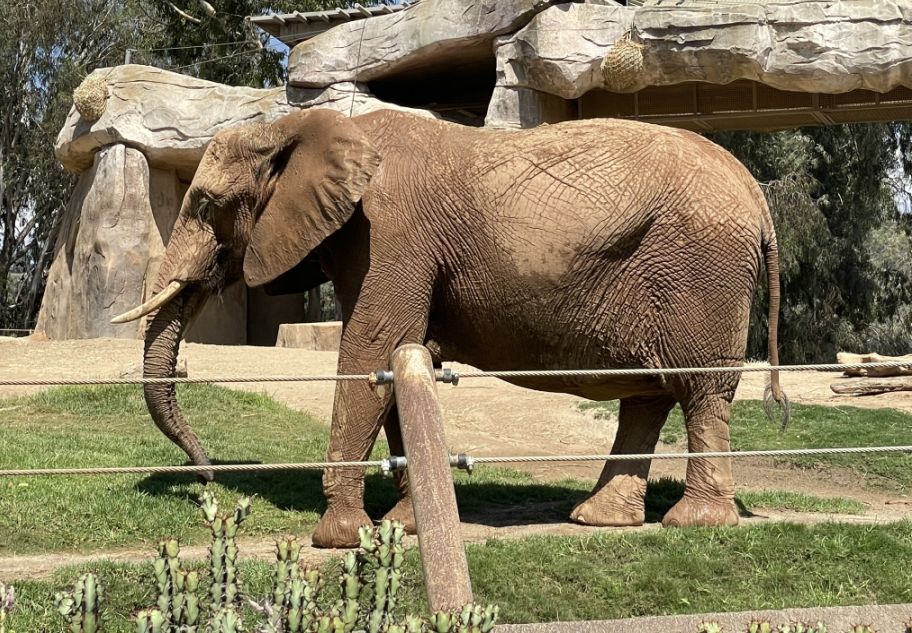
The Safari Park has a very successful breeding program. An elephant’s trunk has over 40,000 muscles (a human body only has about 600).
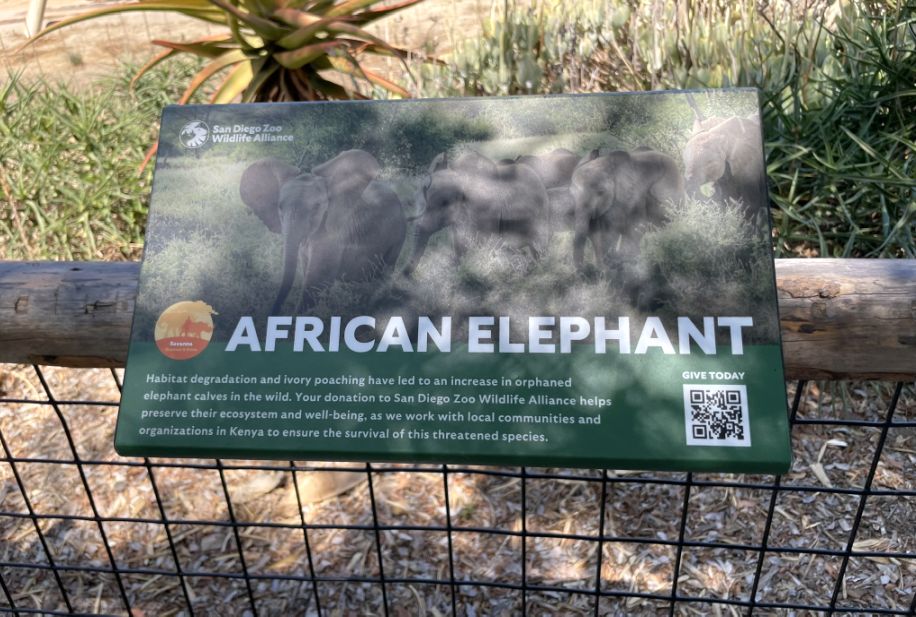
This area is also a hub for researchers who are studying elephant communication, they actually talk to each other using "infrasound," which are low-frequency rumbles that humans can't even hear!
 |
 |
Our visit to the Safari Park was a spectacular world tour that began with the Flamingoes, the quiet power of the silverback gorilla and the acrobatic "arm-hopping" antics of Travel the Abyssinian Ground Hornbill during the bird show. As we moved through the park, we witnessed the vastness of the savanna from the Africa Tram, spotting Southern White Rhinos, Ankole-Watusi cattle on the hills, and giraffes lounging among the palm trees beneath the iconic yellow Safari Balloon. The journey continued through the lush Tiger Trail to see the rare Sumatran tigers and swinging red-cheeked gibbons, followed by a trip to Walkabout Australia for a rare encounter with the prehistoric cassowary. We finished the day at Condor Ridge, standing beside the massive wingspan of the condor sculpture and looking out over the valley, before saying a final goodbye to the majestic African elephant herd.
NEXT... Day 3- Dinner at Cucina Urbana