6 days in Washington DC- 10/18- 10/23/2024
Day 2- City tour-10/19/2024
Franklin Roosevelt Memorial/Martin Luther King. Jr. Memorial
The morning in Washington, D.C. had that crisp, expectant feel that makes you want to walk a little slower and look around more closely. We left our Air B&B early, heading toward 800 Pennsylvania Avenue, where our six-hour tour would begin. The city was already awake, but not in its usual way. Streets were blocked, cones lined the avenues, and the air buzzed with quiet energy, the kind that hints something special is unfolding.
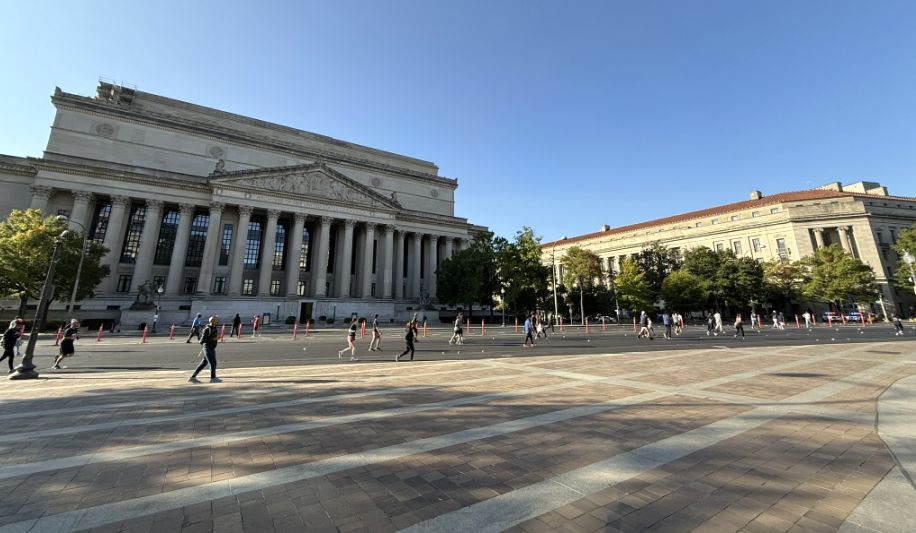
As we walked, we passed the National Archives, its grand façade standing calm and dignified against the early light. Nearby, runners gathered in clusters, stretching, chatting, adjusting bibs. Volunteers in bright shirts waved people through crossings, and police officers redirected traffic with practiced ease. It quickly became clear that this wasn’t just a random closure, some kind of race was underway, threading its way through the historic heart of the city.
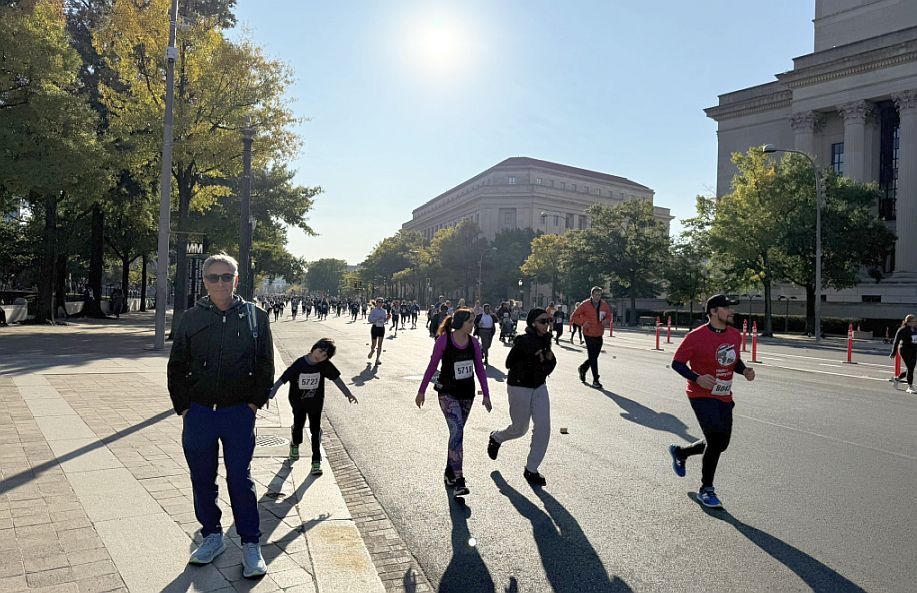
When people run here, they aren't just hitting the pavement; they are running past the National Archives, the National Gallery of Art, and various Smithsonian museums. The street was buzzing with energy.
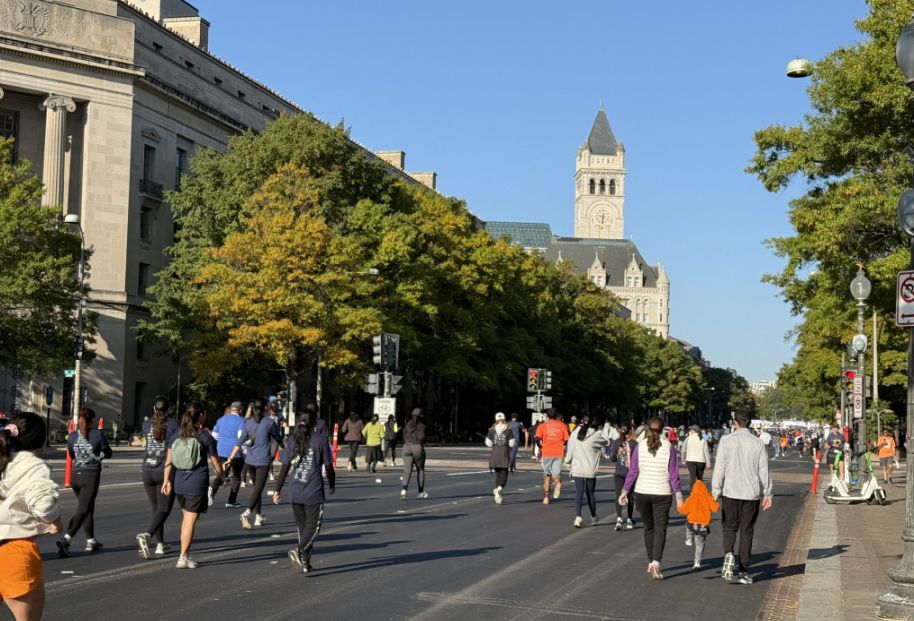
The city felt alive in layers, tourists heading for buses, athletes warming up for their run, locals navigating detours as if this were just another Saturday ritual.
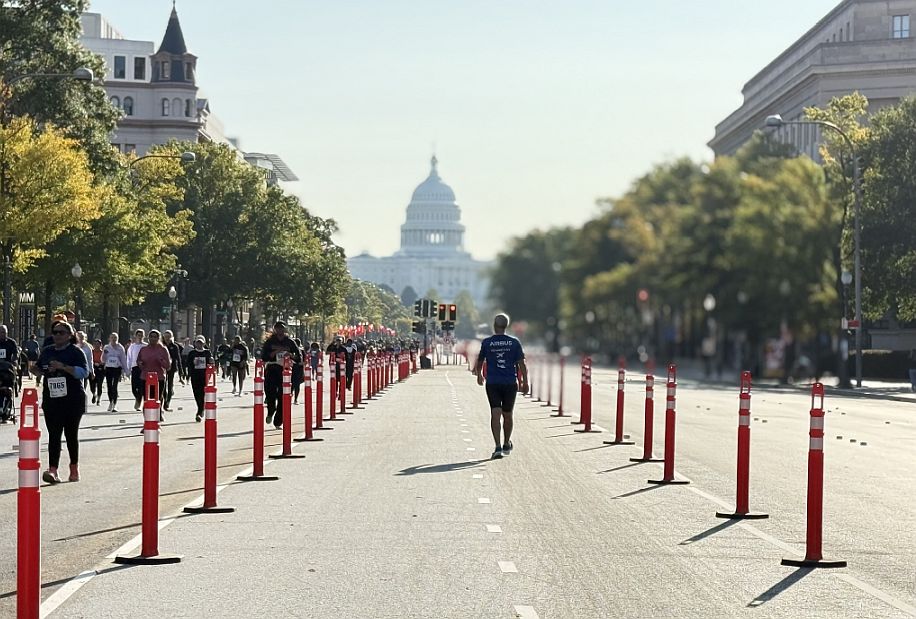
We did not know but today it is the Army Ten-Miler, one of the largest ten-mile races in the world. In this picture you are looking down Pennsylvania Avenue, often called "America's Main Street," which provides that iconic straight-shot view of the Capitol dome. The road is divided to keep the massive flow of runners organized as they head toward the finish line.
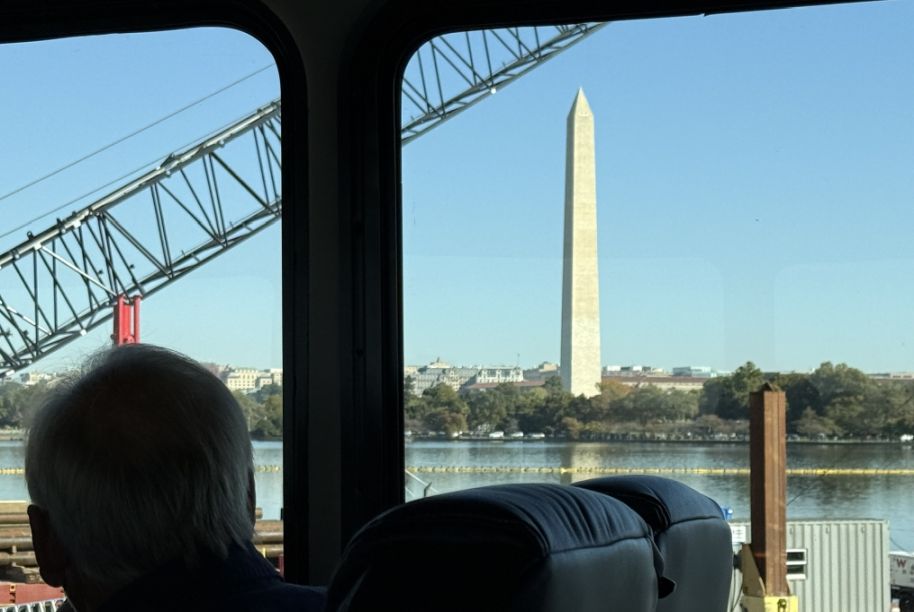
We boarded the bus, the city slowly sliding past our windows, and before long we arrived at our first stop: the Franklin Delano Roosevelt Memorial and the Martin Luther King, Jr. Memorial.
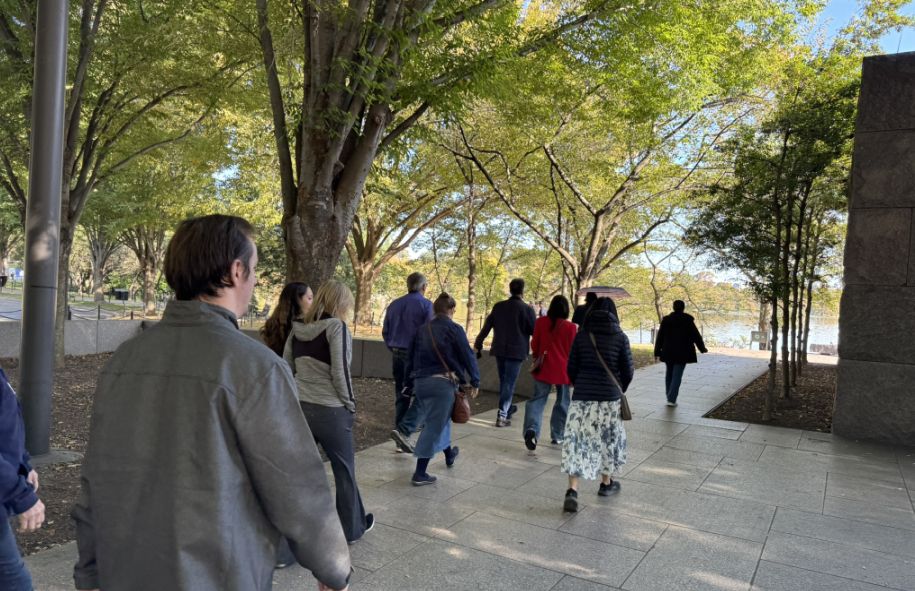
The bus dropped us off near the edge of the park, and our guide gathered us together, leading us along a long, gentle walkway that seemed to invite quiet rather than conversation.
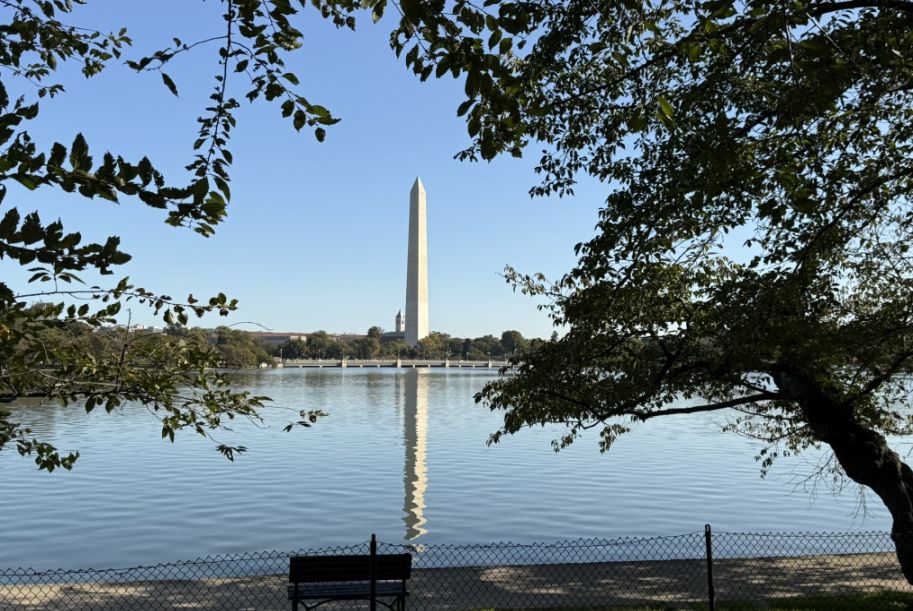
As we walked, the space opened up and I can see the across the Tidal basin is the Washington Monument. This is one of the "secret" best views in DC. Because the FDR Memorial is spread out over 7.5 acres, the perspective shifts as you walk through his four terms in office:
 |
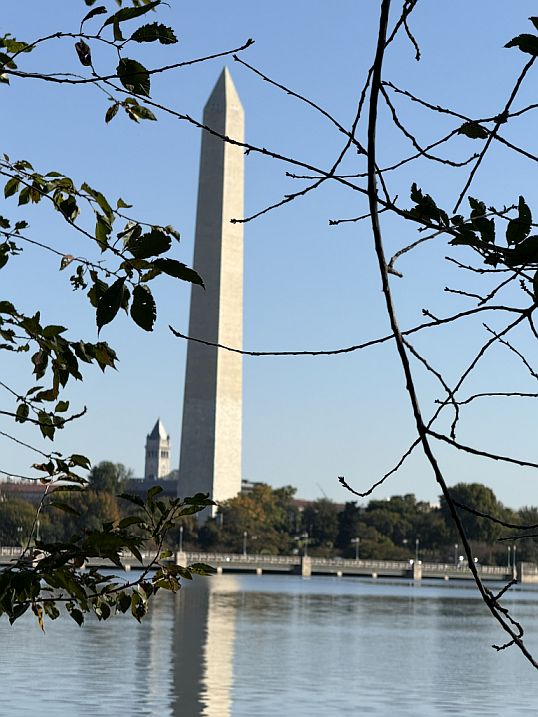 |
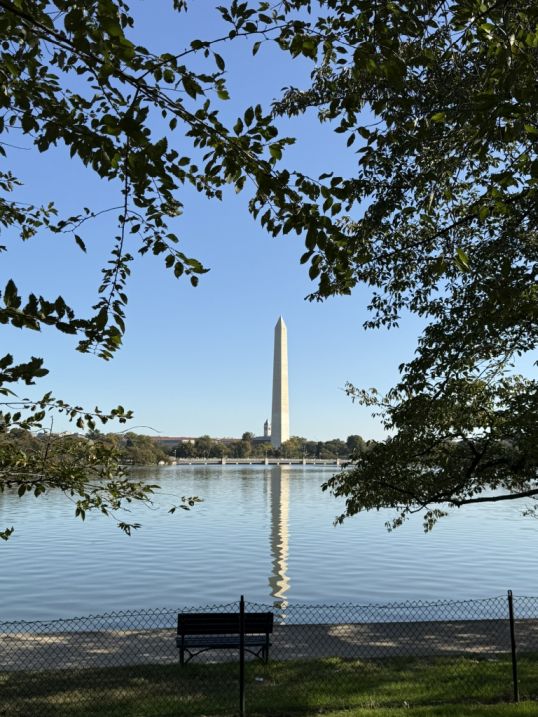
The Tidal Basin is famous for acting like a giant mirror. On a clear day, the Washington Monument reflects perfectly in the water, creating a double image of the obelisk.
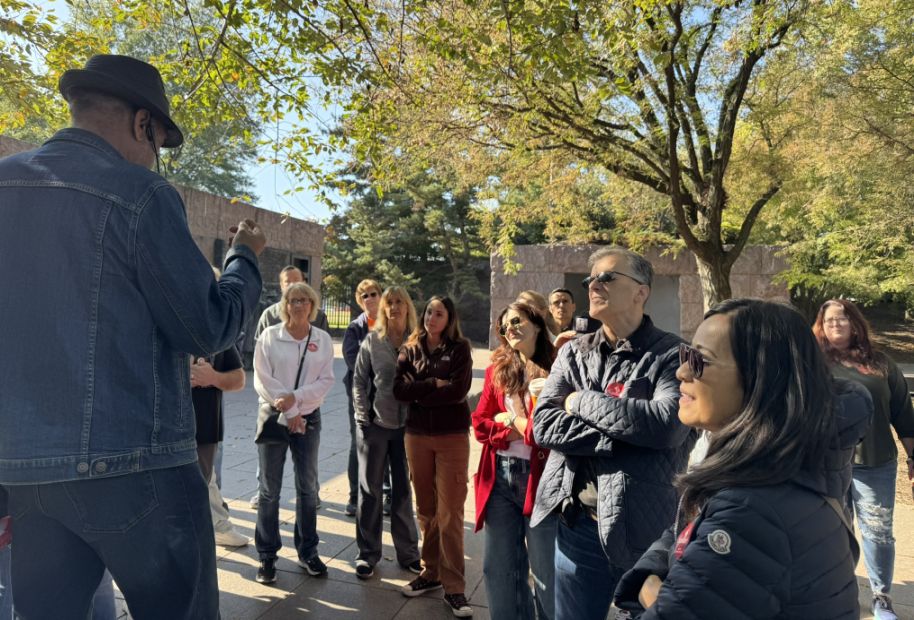
We stopped a little farther in, surrounded by trees and open space, and the city noise faded into the background. This was where our guide paused, letting us settle into the moment before beginning the story of our first two memorials.
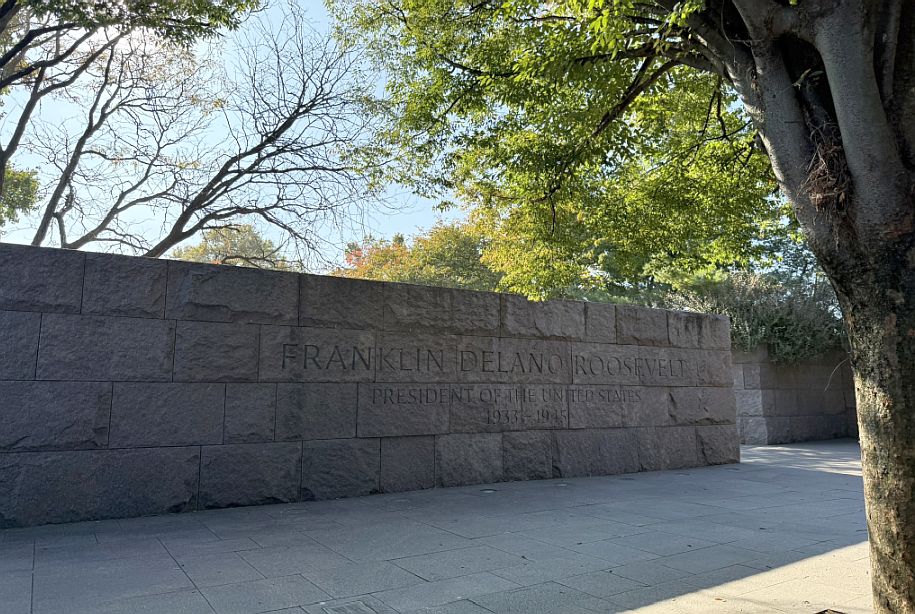
We are now entering the Franklin Roosevelt Memorial.
 |
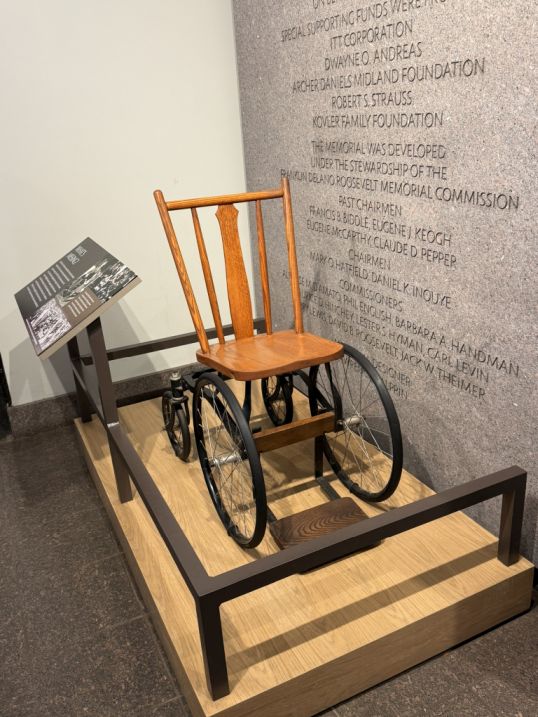 |
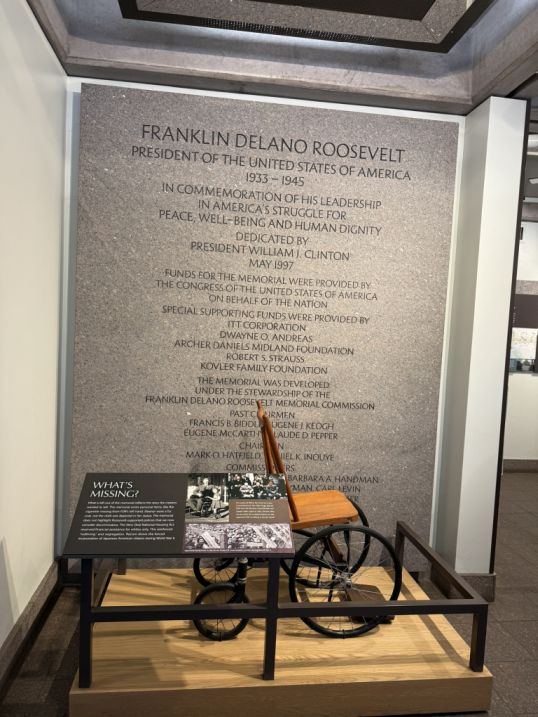
We entered the Delano Room, and the mood shifted immediately. The space felt more enclosed, quieter, as if inviting us to slow down and listen more carefully. This part of the memorial honors Franklin Delano Roosevelt’s early life, but what stayed with me most was how honestly it addresses his physical reality. For much of his presidency, Roosevelt’s paralysis was carefully hidden from public view, a reflection of his era and the expectations placed on leaders. Here, though, the memorial does not hide it. The wheelchairs are presented plainly, almost insistently, reminding us that strength and leadership are not diminished by disability. If anything, they are redefined by it.
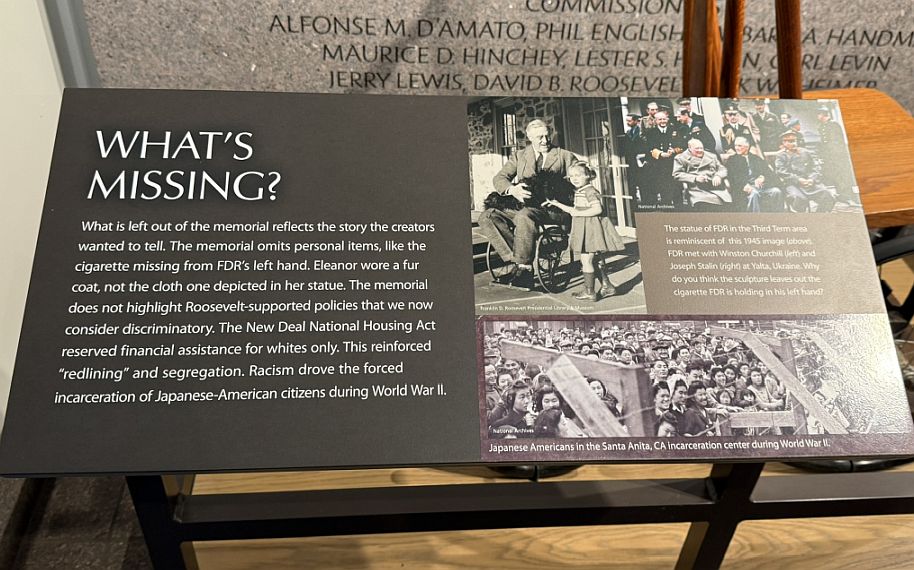
The "What's Missing" panel and that specific statue carry a lot of emotional weight. It highlights that in the original 1997 design of the memorial, there were no depictions of FDR in a wheelchair. The disability rights community fought for years to have this statue added, arguing that FDR’s struggle with polio was central to his character and his empathy for the American people during the Great Depression. By showing the wheelchair, the memorial "adds back" the part of his life that was historically hidden, proving that his disability didn't limit his greatness, it helped forge it.
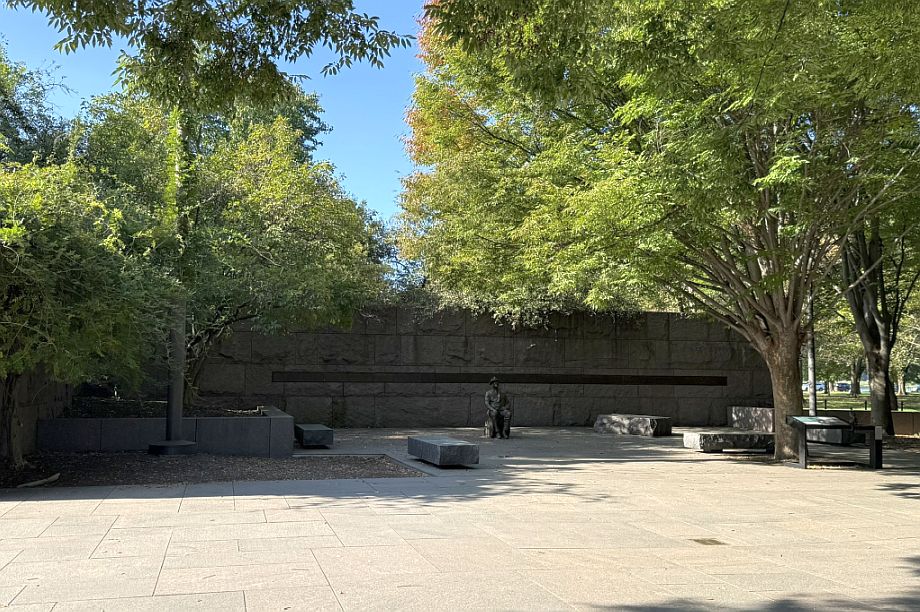
Nearby stands a bronze statue of Roosevelt seated in his wheelchair, his cape draped naturally, his posture composed and dignified.
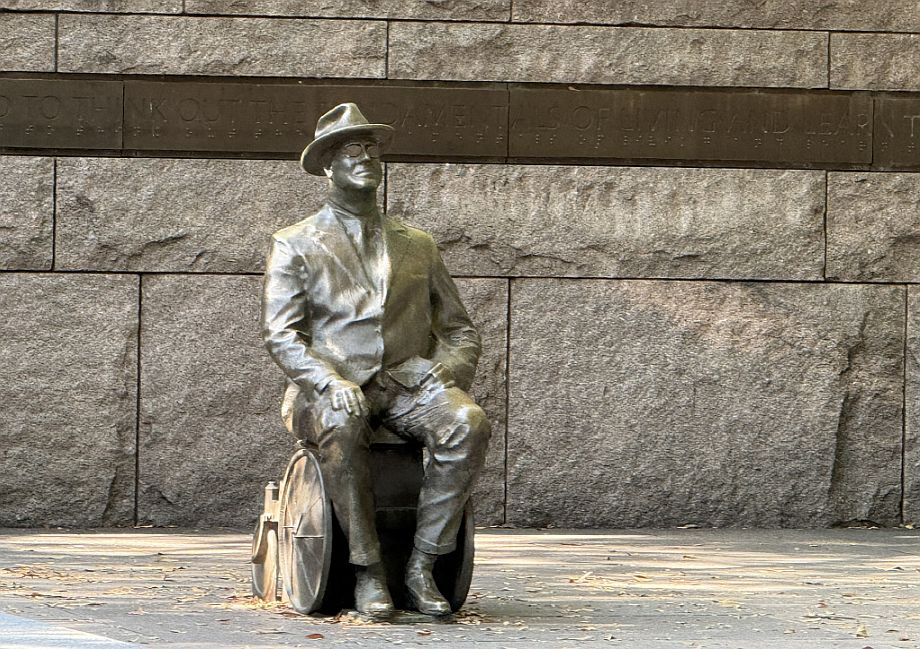
The statue doesn’t feel dramatic or heroic in the traditional sense. Instead, it feels human. His expression is calm, thoughtful, a man carrying immense responsibility while quietly navigating physical limitation. It’s striking how normal the wheelchair feels here, how it becomes part of who he was rather than something to explain away.
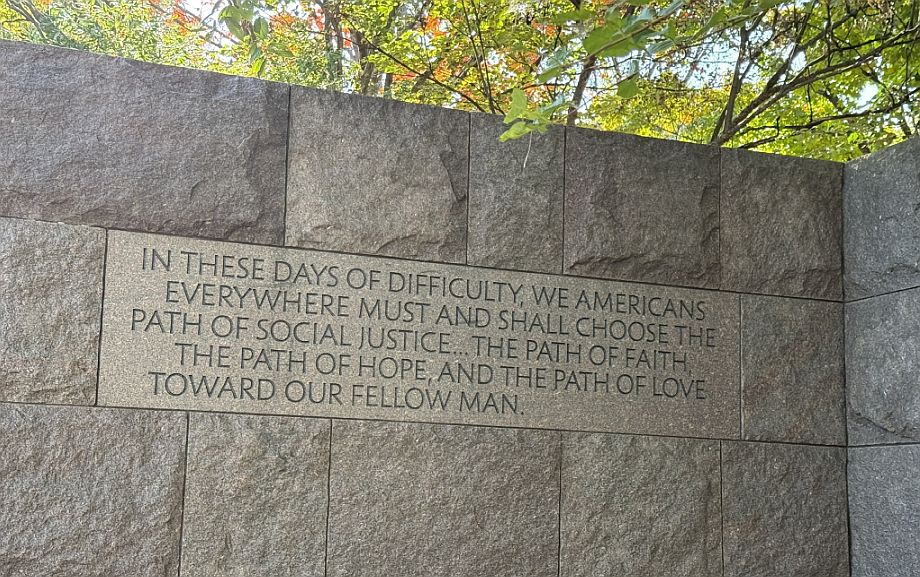
As we stepped back outside, a quote carved into the stone wall caught my eye. Our guide explained that this quote comes from Franklin D. Roosevelt’s 1936 speech, delivered during the depths of the Great Depression, as he campaigned for his second term. The country was still struggling: massive unemployment, widespread poverty, fear about the future. Roosevelt was defending the ideas of the New Deal, government responsibility to protect ordinary people, to regulate unchecked power, and to restore dignity to those left behind by economic collapse.
When he spoke these words, “justice” wasn’t abstract. It meant jobs, security, fairness, and hope, especially for people who felt forgotten. Standing there now, nearly a century later, the message feels surprisingly current as if it’s still asking each generation the same question: what path will you choose when times are hard?
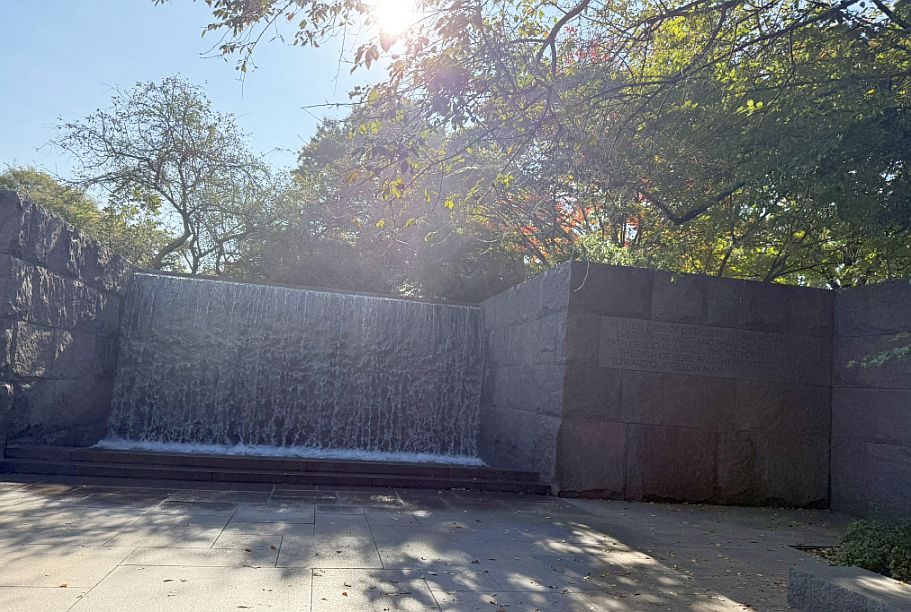
Right beside the quote is a fountain built like a wall, water rushing downward in a steady, forceful sheet. The sound is constant, almost overwhelming, and it feels intentional. The wall of water mirrors the pressure and turbulence of that era, the noise, the uncertainty, the unstoppable force of events. Yet the water keeps moving forward, never stopping, never splashing wildly beyond its boundary.
It’s impossible not to see the symbolism: hardship is loud and relentless, but progress comes through persistence. The water doesn’t leap, it endures.
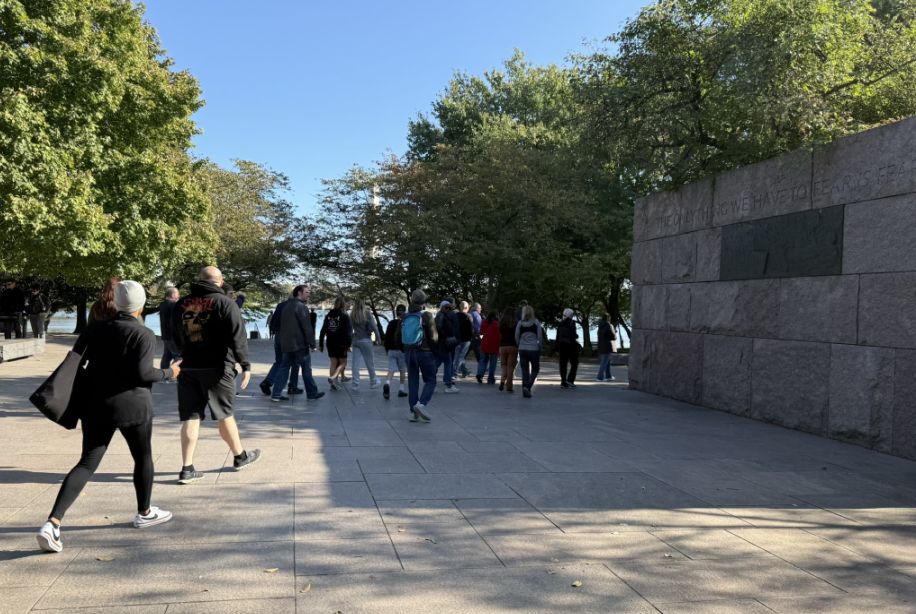
We continue on by following our guide.
 |
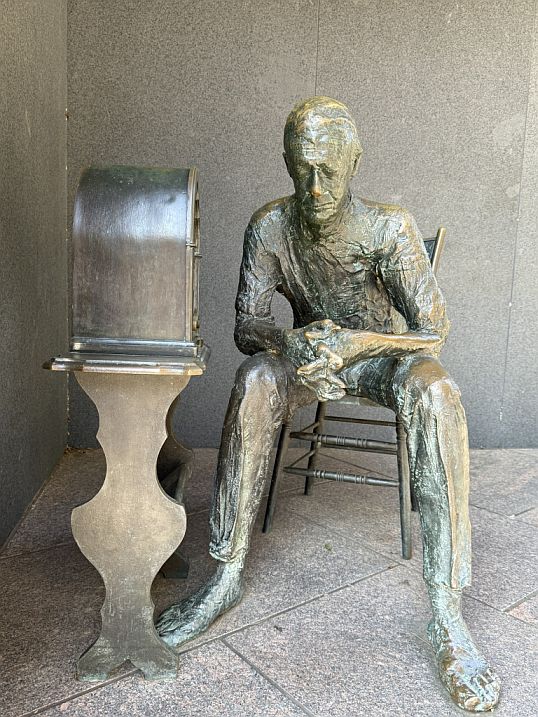 |
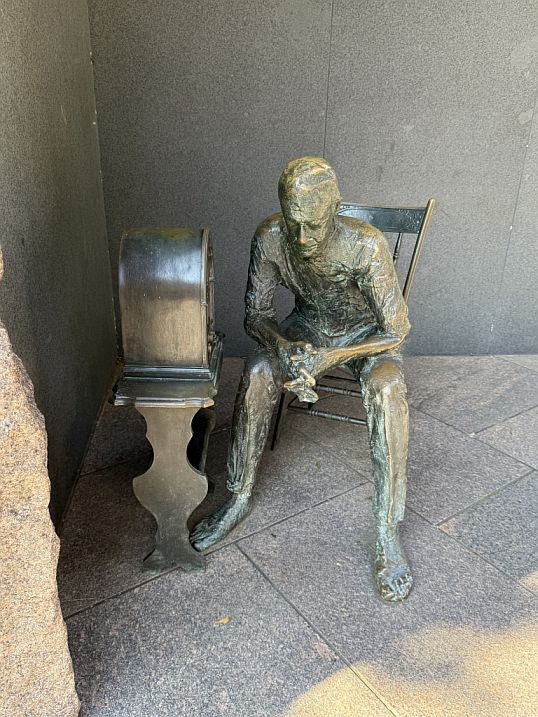
We continued along the path, and the tone quietly deepened. Ahead of us sat a sculpture of a man alone, seated, his hands clasped tightly together, his shoulders slightly hunched, his gaze turned downward. He isn’t looking at anything in particular, or maybe he’s looking inward. There’s no motion in him, no gesture toward hope or action. Just stillness.
This figure represents the ordinary American during the Great Depression, not a leader, not a symbol of power, but someone weighed down by uncertainty. His posture says everything: worry, exhaustion, dignity held together by sheer endurance. He feels private, almost intimate, as if we’ve stumbled into a moment we’re not meant to interrupt. And yet, his presence asks us to witness.
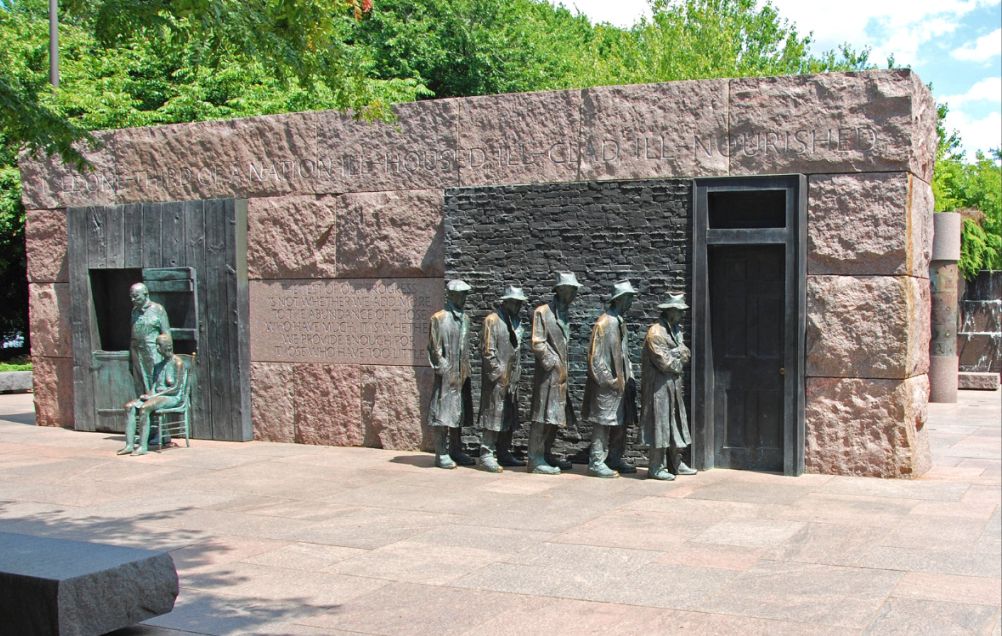
A bit farther on, the story expands. Along the wall, the Depression breadline appears, a sculpted line of figures pressed into the stone. They stand close together, coats heavy, faces worn, bodies angled forward as if time itself is dragging them down. There is no individuality emphasized here; instead, there is repetition, sameness, and quiet patience. This was not one person’s hardship, it was collective.
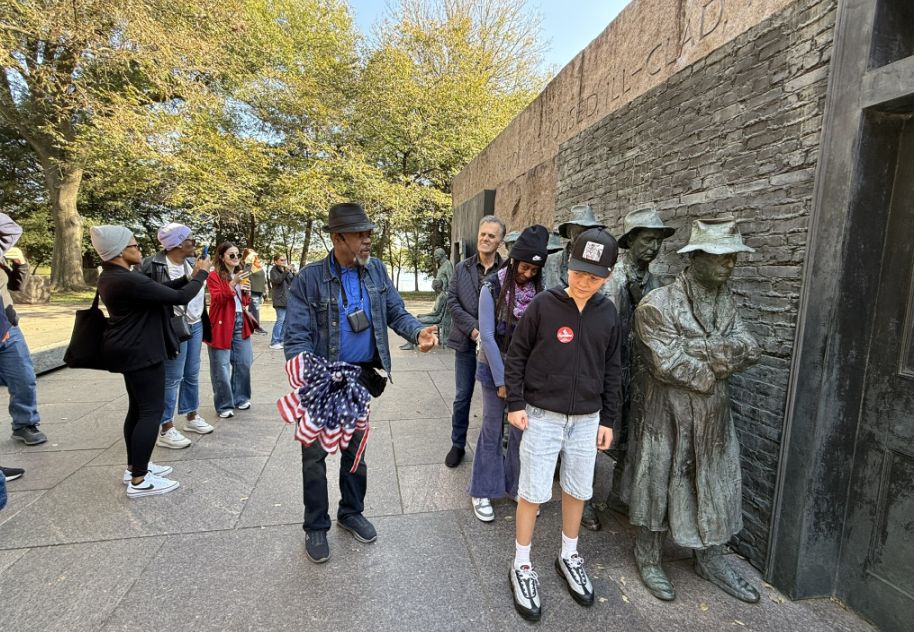
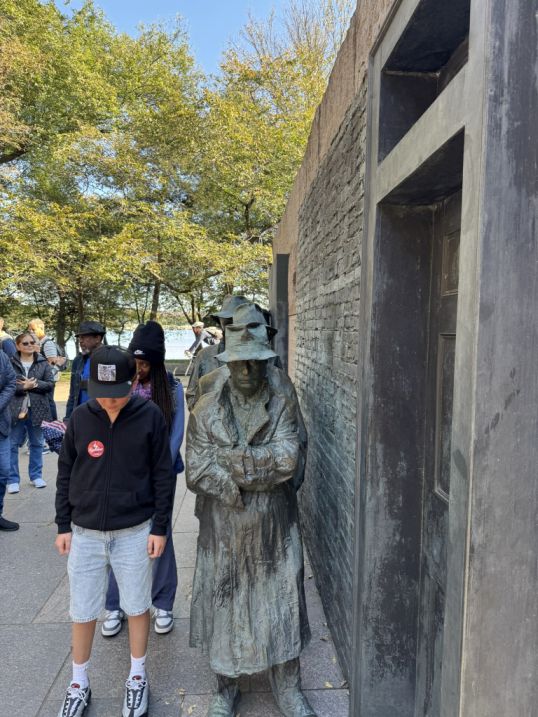
What’s striking is how restrained it all is. There’s no dramatic suffering carved into their faces, no exaggerated despair. Just waiting. Waiting for food. Waiting for work. Waiting for relief. That restraint makes it hit harder. Our tour guide asked for volunteers in our groung to stand next to the statues and to mimic their expressions.
 |
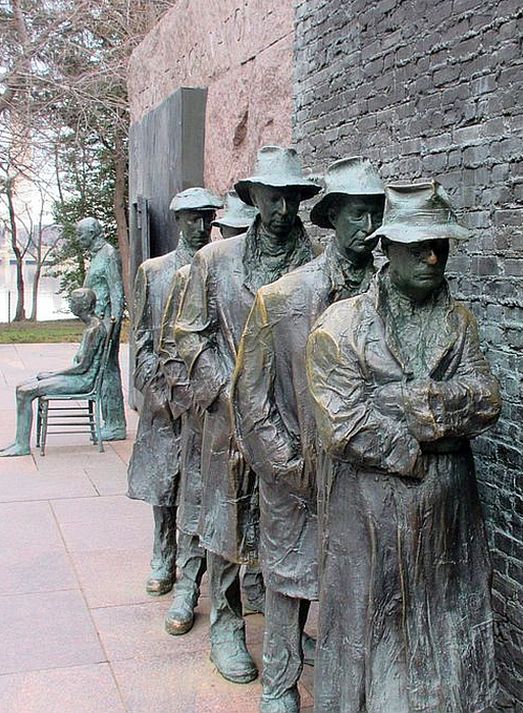 |
Standing between the solitary seated man and the long breadline, you feel the scale of the Great Depression shift from something historical to something human. Statistics fall away. What remains are people, tired, hopeful, uncertain, and the silence between them. This part of the memorial doesn’t ask you to admire it. It asks you to stand still, to acknowledge what millions lived through, and to understand why Roosevelt’s words about justice mattered so deeply.
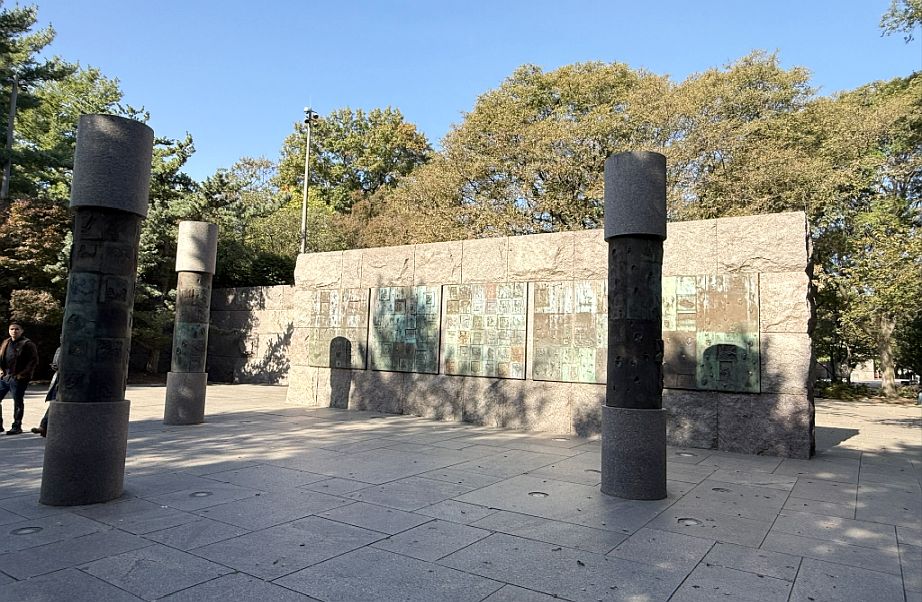
As we walked on, a low wall of green glass panels came into view, set behind metal grates and heavy cement columns.
 |
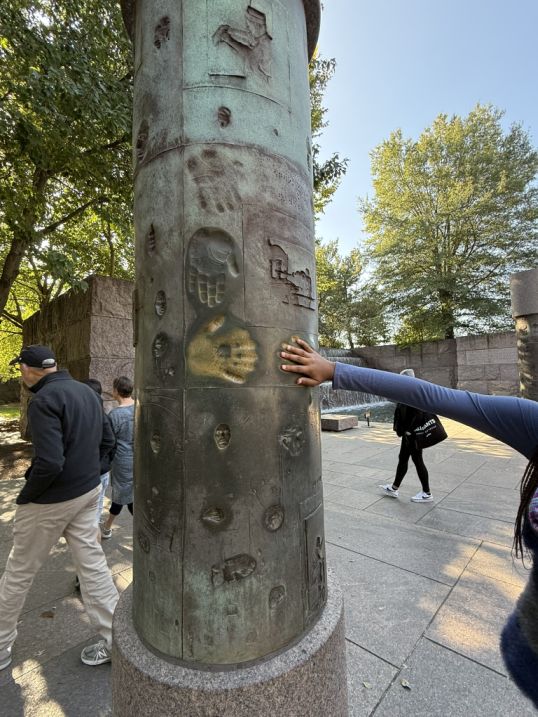 |
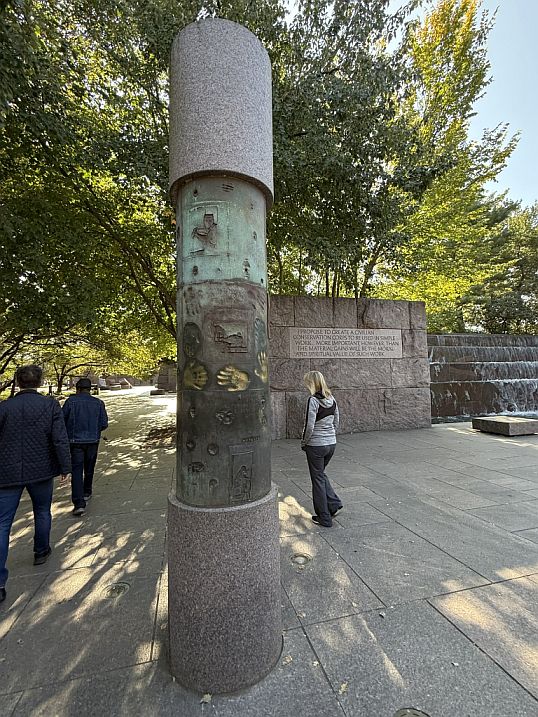
Pressed into the stone were handprints, dozens of them, some dark, some worn smooth, and a few painted in gold. I lingered here longer than I expected.
The guide explained that this space represents the American people themselves, not leaders or speeches, but participation. The handprints suggest work, effort, and presence: hands that built, farmed, repaired, voted, served, endured. They feel personal, almost contemporary, as if generations are reaching forward and backward at the same time. The golden hands stand out quietly, honoring those whose contributions carried special weight, a reminder that while everyone mattered, some sacrifices were especially profound.
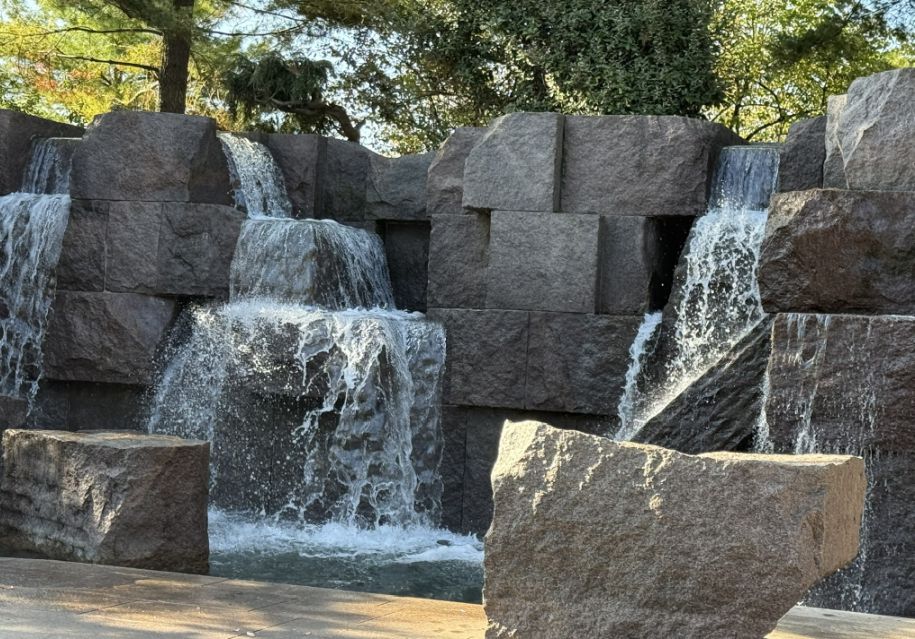
Just beyond this wall, the sound grows louder. A much stronger fountain surges downward, water cascading with force and urgency. This isn’t the gentle, controlled flow from earlier rooms. This water is powerful, relentless, echoing the intensity of World War II, when the nation was fully mobilized and the stakes were global. The roar fills the space, making conversation difficult, as if history itself is speaking over us.
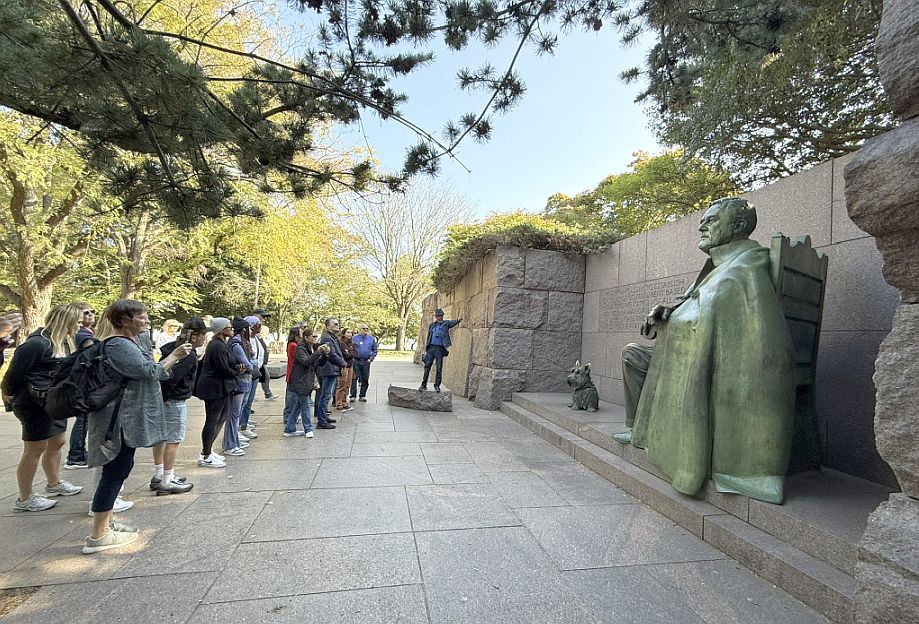
Then, emerging from that energy, stands Franklin Delano Roosevelt, wrapped in a cape, seated confidently in his wheelchair, with his dog Fala at his side.
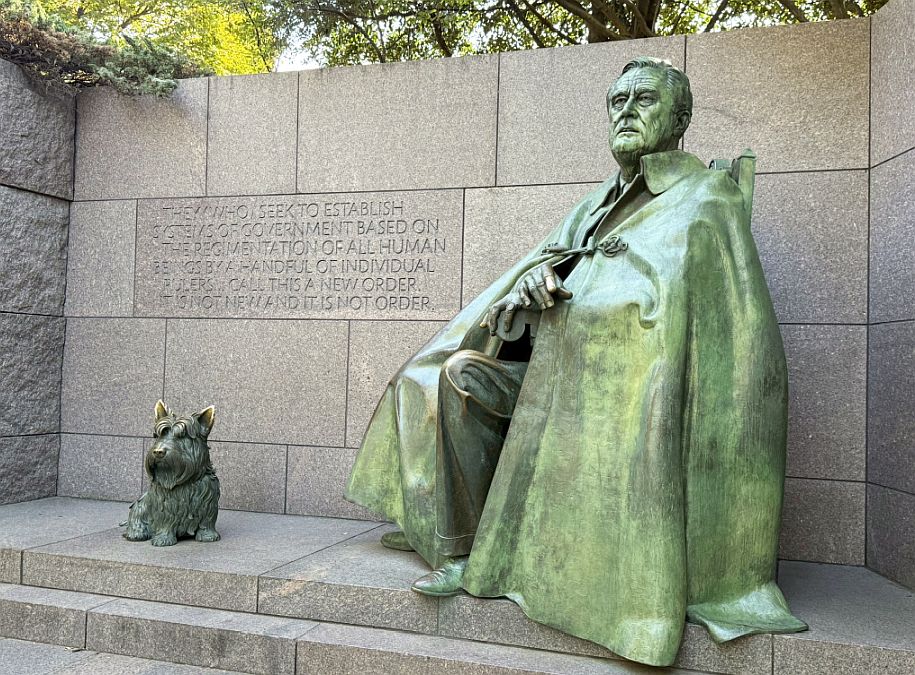
It’s one of the most human portraits of a president I’ve ever seen. The cape suggests authority and warmth at once, while the dog softens everything, loyalty, companionship, normal life continuing amid enormous responsibility. This is not Roosevelt the symbol; this is Roosevelt the man, steady and present at the height of crisis.
 |
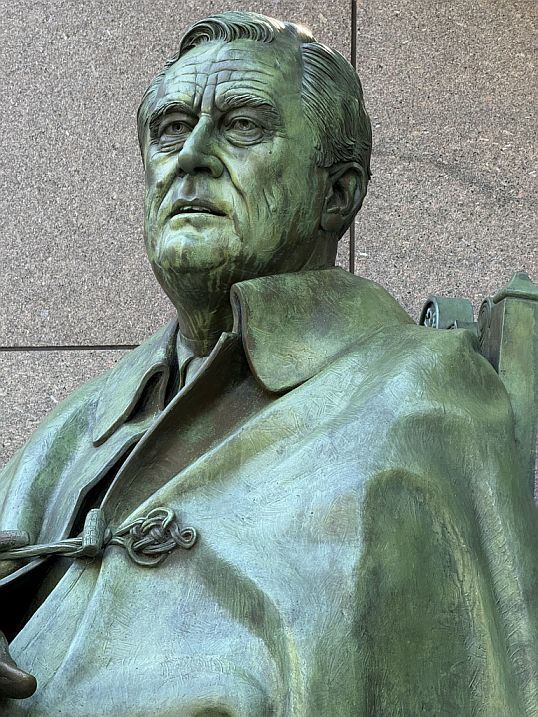 |
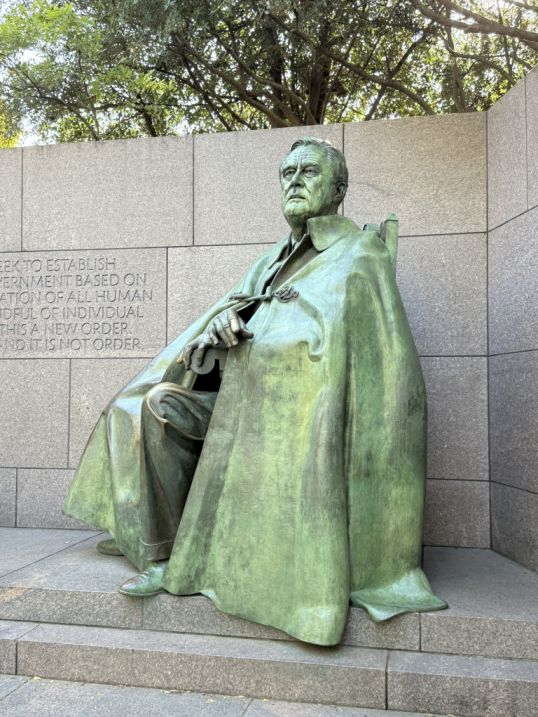
Close view of the sculpture of Franklin Delano Roosevelt.
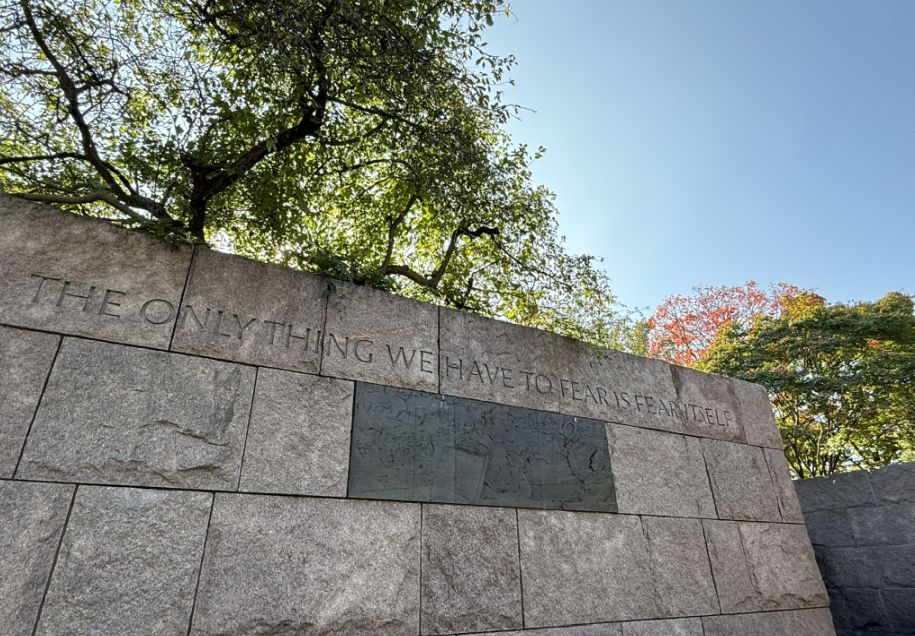
The famous quote: "The only thing we have to fear is fear itself..." was from his First Inaugural Address on March 4, 1933. The U.S. was at the absolute rock bottom of the Great Depression. Banks were failing, unemployment was near 25%, and the national mood was one of total despair. Roosevelt wasn't saying there was nothing to be afraid of; he was saying that unreasoning terror would paralyze the country and prevent the necessary recovery. He needed the American people to have the courage to try his "New Deal" programs. It is one of the most famous lines in American political history because it shifted the national psychology almost overnight.
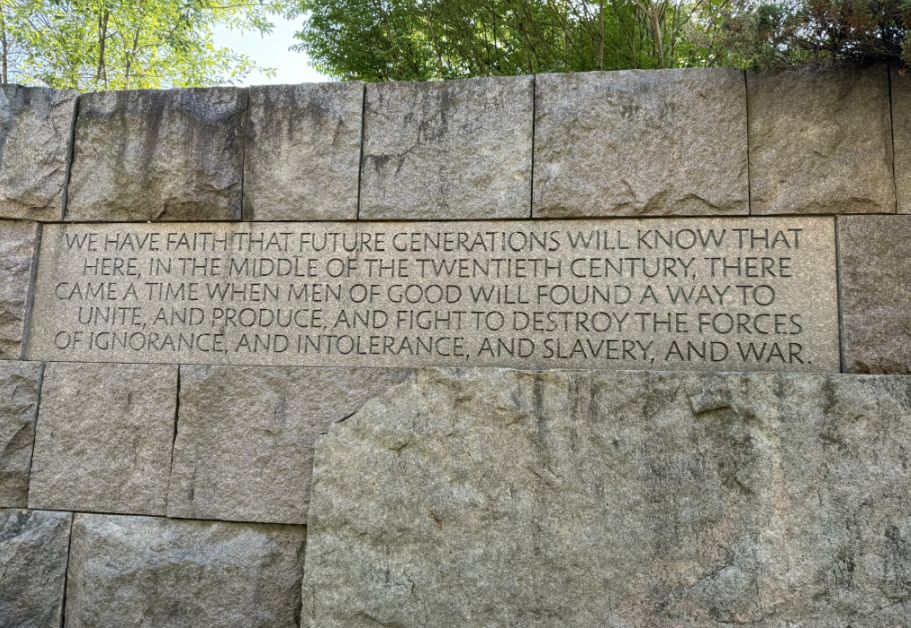
This quote was from an address to the Inter-American Conference for the Maintenance of Peace in Buenos Aires, Argentina, on December 1, 1936. While the first quote was about domestic fear (the Depression), this quote was about the growing threat of international war. FDR was a firm believer in "The Good Neighbor Policy." He was trying to unite the nations of the Western Hemisphere to stand together against the rising tide of fascism and aggression in Europe and Asia. When he speaks of "men of good will finding a way to unite," he is laying the philosophical groundwork for what would eventually become the United Nations. He wanted to prove that democracy and cooperation could overcome the "madness" of war.
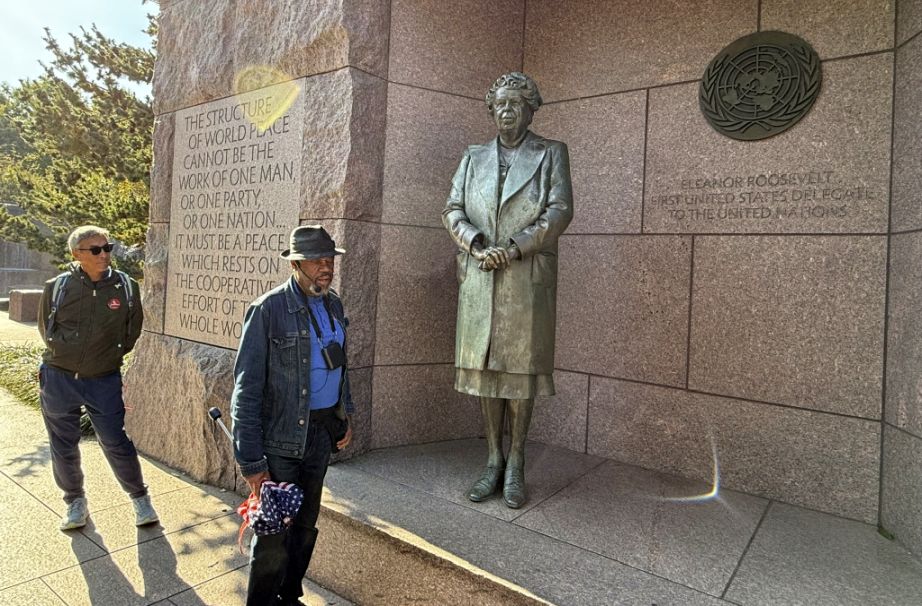
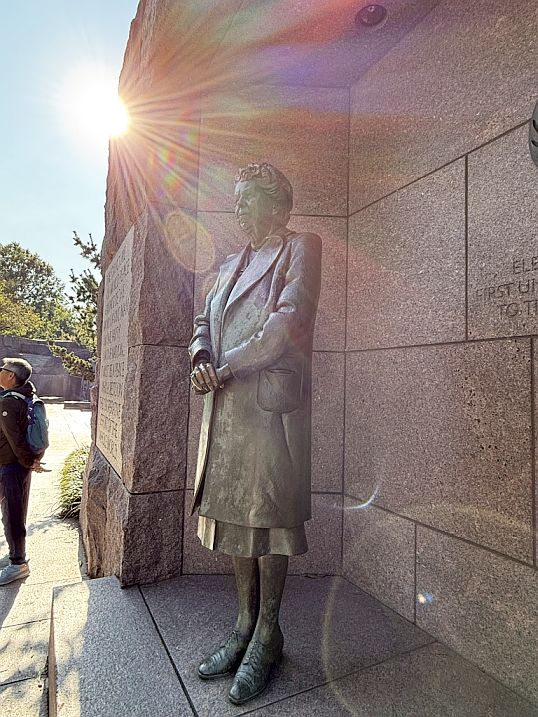
A little farther on stands Eleanor Roosevelt. Her statue is separate, intentional. She is upright, engaged, facing outward, not beside her husband, but fully her own figure.
 |
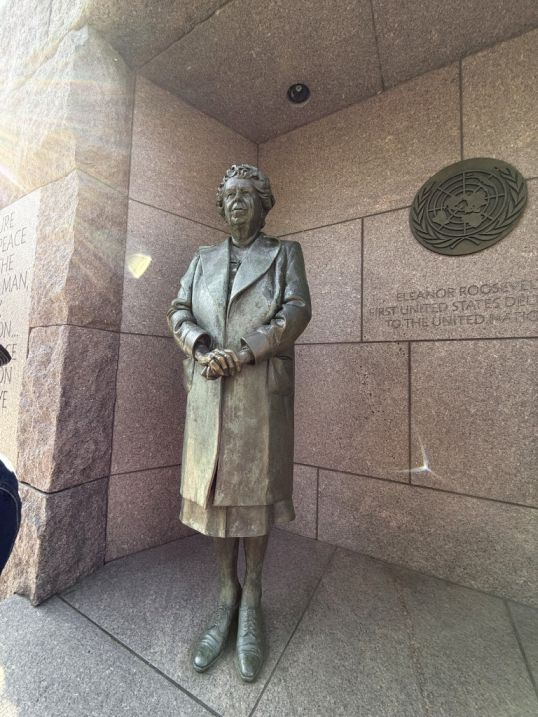 |
She represents conscience, advocacy, and the moral voice of the era, especially in her work on human rights and the Universal Declaration of Human Rights. Ending the memorial with Eleanor feels right: the story doesn’t close on power, but on purpose.
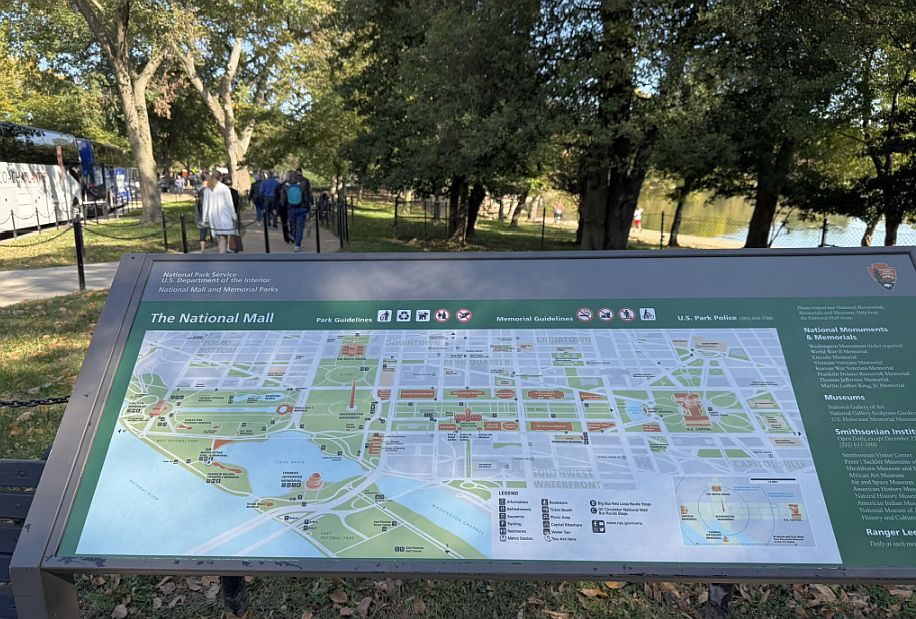
Map of the National Mall
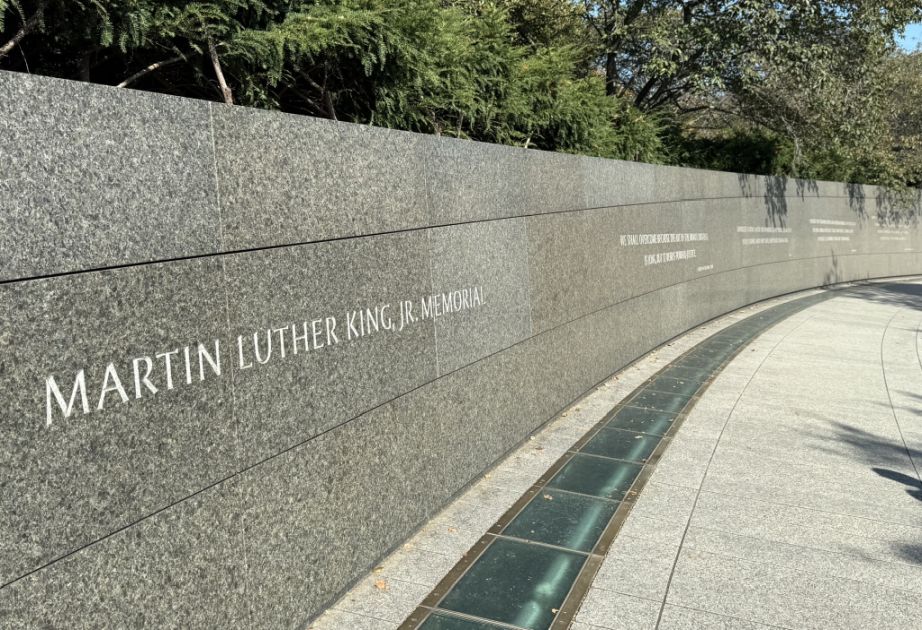
We are now headed to the Martin Luther King, Jr. Memorial
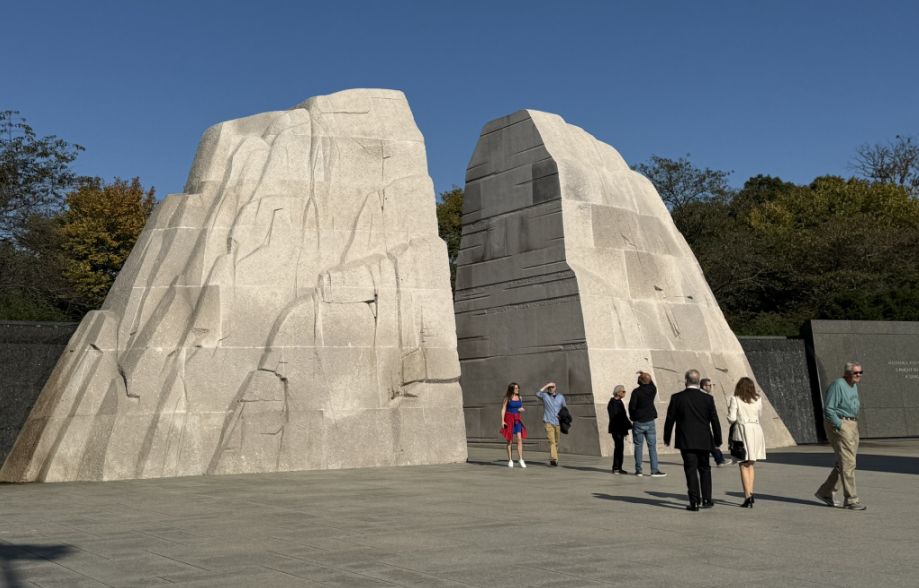
The entrance to the
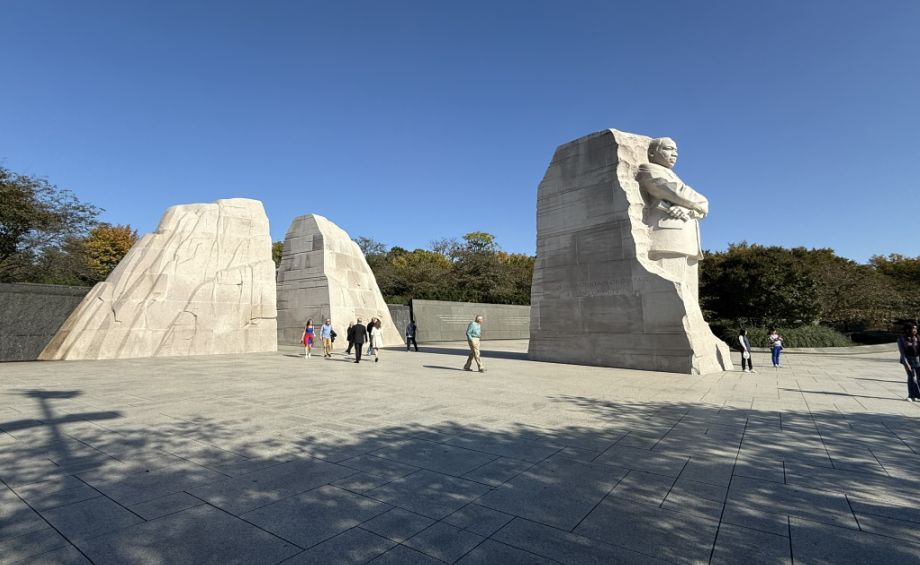
As you walk between them, the space is intentionally narrow and heavy, representing the obstacles and "mountain of despair" Dr. King sought to overcome. Once you pass through, the area opens up into a large, bright plaza overlooking the Tidal Basin, symbolizing the "open freedom" of the dream.
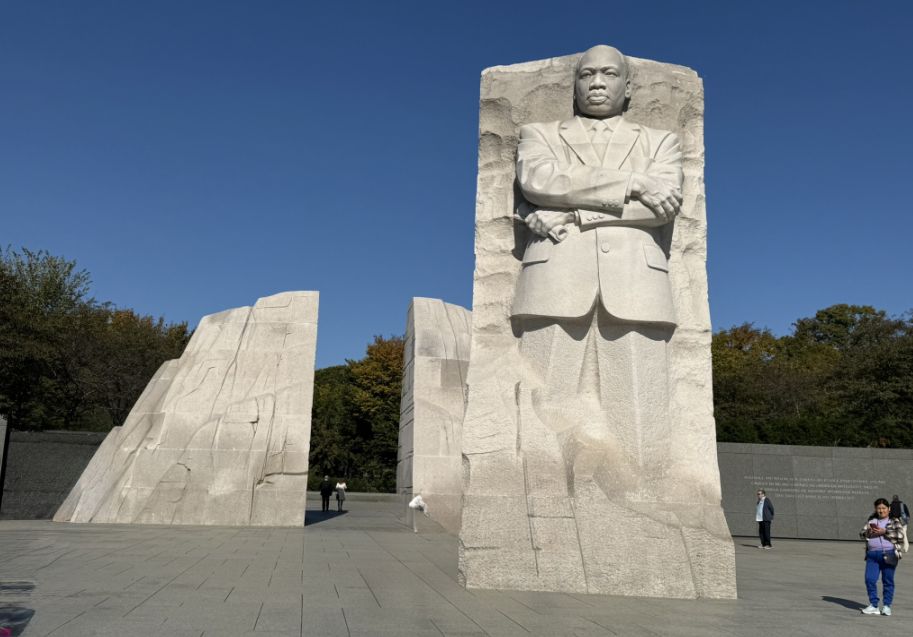
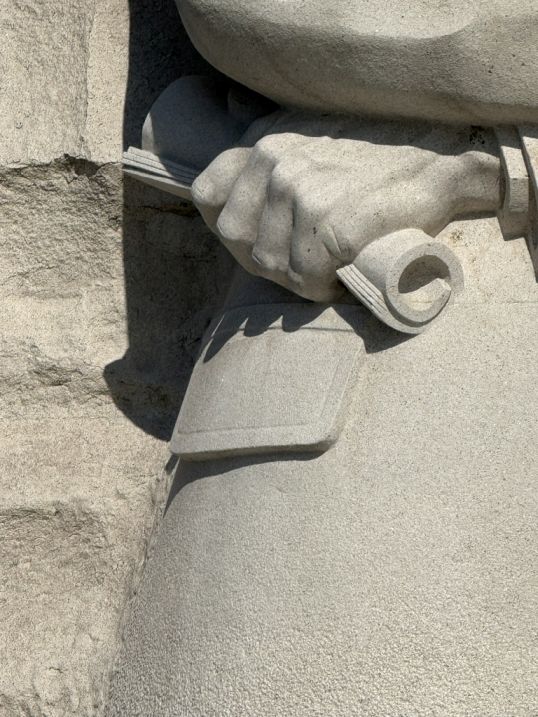
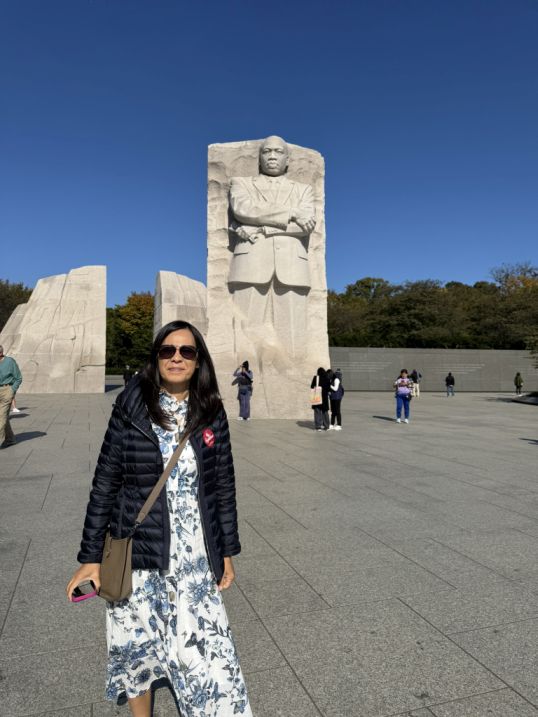
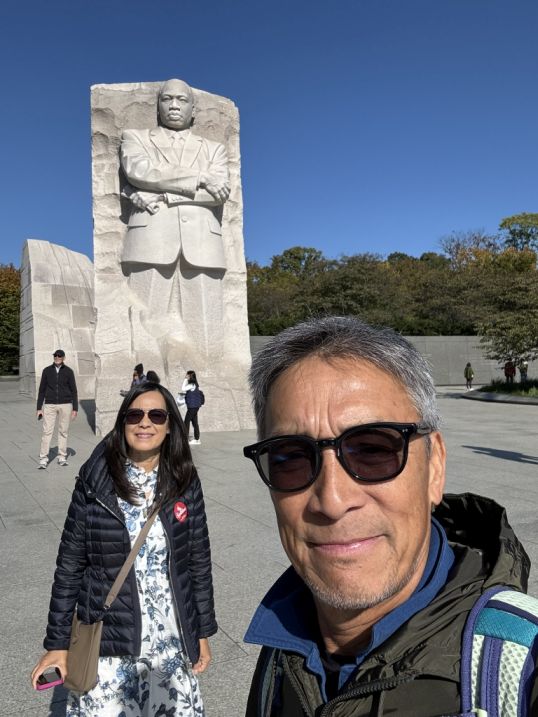
The centerpiece of the memorial is the 30-foot-tall likeness of Dr. King carved into the front of the Stone of Hope. Dr. King is depicted with his arms crossed, appearing thoughtful and resolute. He is looking out over the Tidal Basin toward the horizon, specifically toward the Jefferson Memorial.
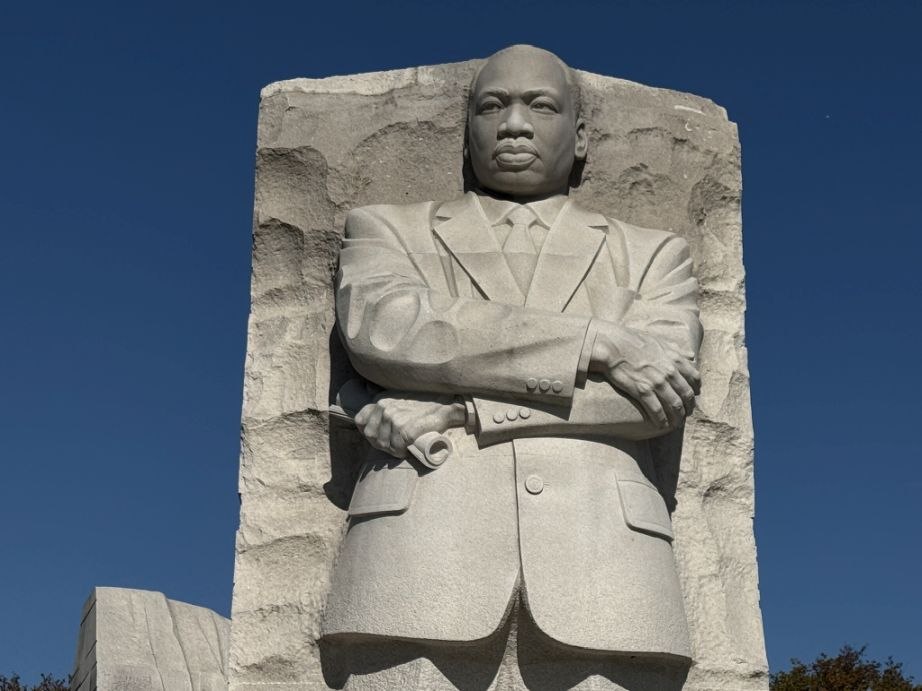
The statue was created by Chinese sculptor Lei Yixin. He was selected in 2007 for his ability to capture the "essence" of his subjects in large-scale stone works. The statue stands roughly 30 feet tall. For comparison, it is significantly taller than the statues in the nearby Lincoln and Jefferson Memorials.
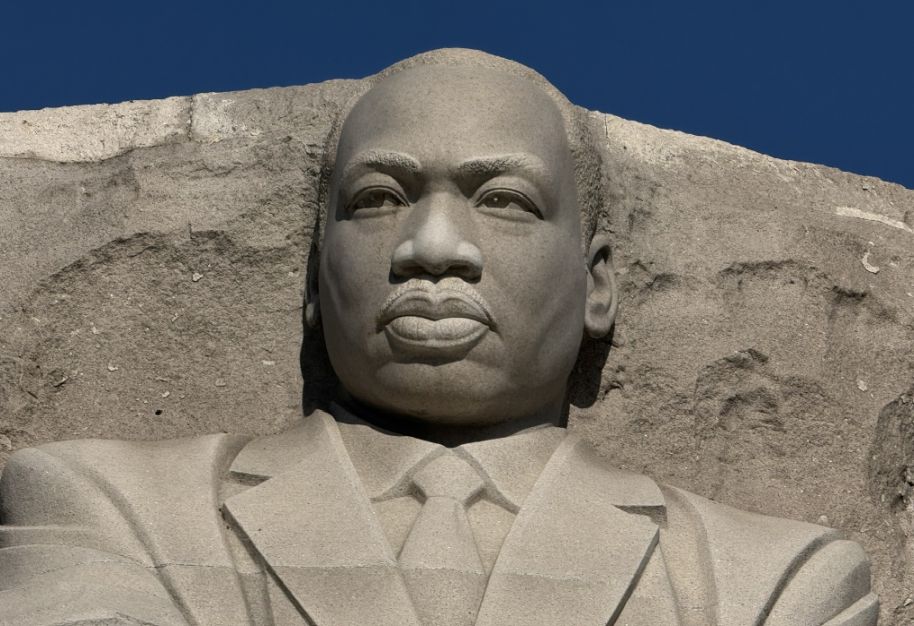
The entire memorial is made of "Shrimp Pink" granite, chosen for its durability and the way it glows in the morning and evening light. His expression is serious, not soft, not smiling, but focused and resolute. This is not the dreamer in mid-speech, not the preacher with an outstretched hand. This is Dr. King the leader, firm and unyielding, a man who understood the weight of resistance and the cost of moral courage.
 |
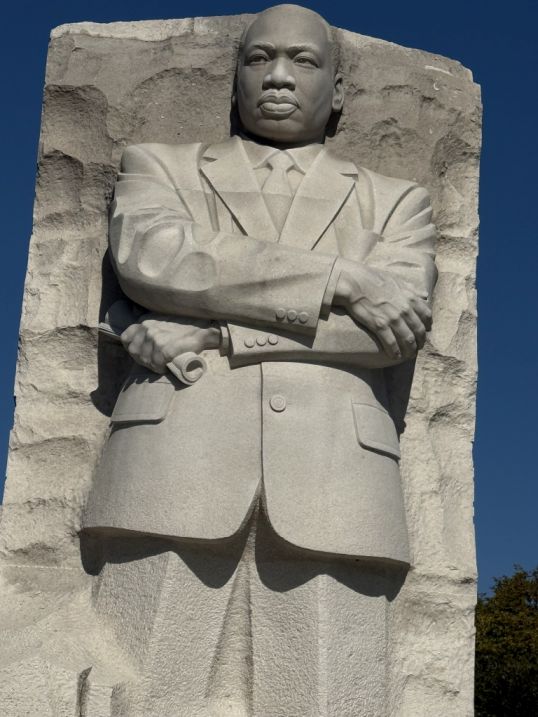 |
The statue draws its meaning from one of his most famous lines: “Out of the mountain of despair, a stone of hope.”
 |
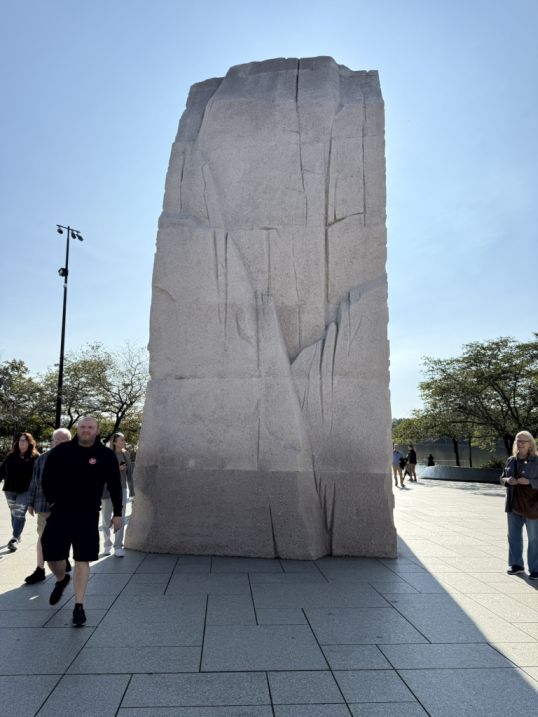 |
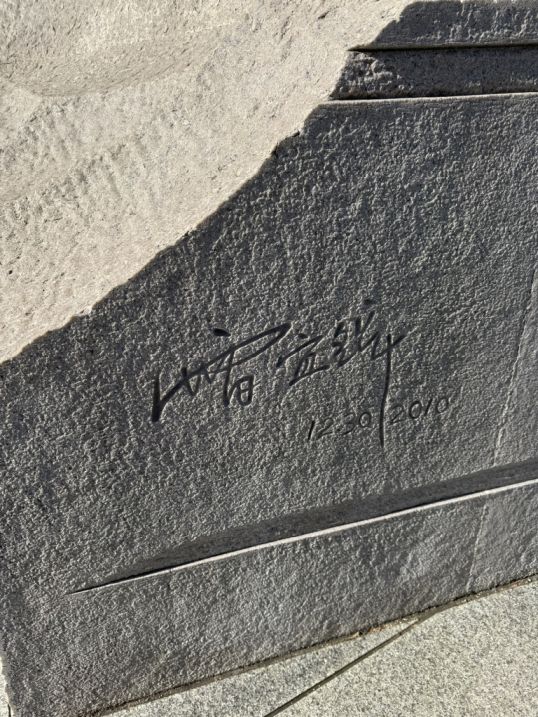
On the left is the signature of Lei Yixin signed the work in Chinese characters (雷宜欣). The "2010" represents the year the carving was completed in China before the 159 massive granite blocks were shipped to the United States and reassembled like a giant 3D puzzle.
The back of the statue is intentionally left rough and unfinished compared to the smooth, polished front where Dr. King's face is. This has a deep symbolic meaning: the horizontal striations and rough texture on the back represent the "pulling" of the stone out of the mountain. It looks as if the statue was literally dragged or sliced out of the rock behind you. It serves as a reminder that the "Stone of Hope" didn't just appear, it had to be wrestled and carved out of a very hard, difficult reality.
 |
 |
Standing there, after walking through Roosevelt’s era of economic collapse and global war, the connection becomes clear. This memorial is not an ending. It is a continuation. Justice, equality, dignity, the same ideals, carried forward by a different voice.
NEXT... Day 2- Korean War Memorial and Lincoln Memorial