6 days in Washington DC- 10/18- 10/23/2024
Day 2- City tour-10/19/2024
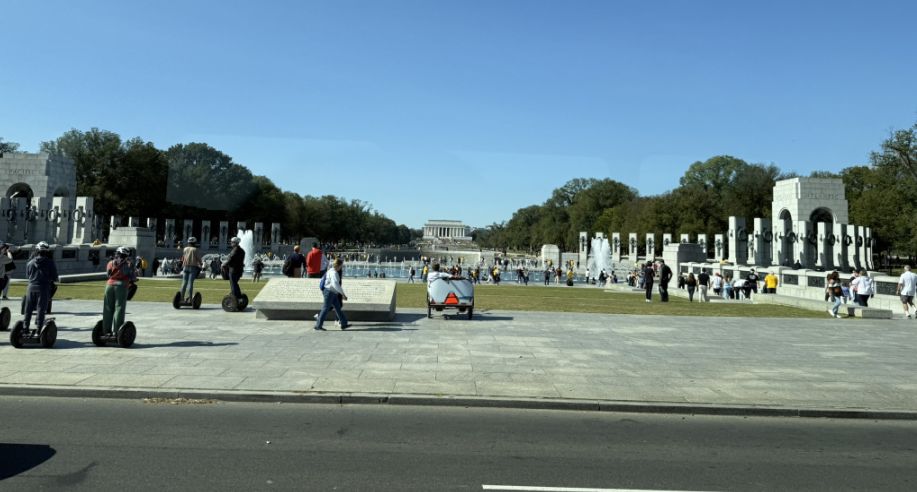
World War II Memorial -10/19/2024
The memorial sits between the Washington Monument and the Lincoln Memorial, intentionally placing World War II at the center of America’s historical axis. World War II involved 16 million Americans in uniform and reshaped the United States socially, economically, and politically. Yet for decades, there was no national memorial dedicated to those who served. Because the people who fought it came home, got to work, raised families, and didn’t ask for one. They became known as the “Greatest Generation.” By the 1990s, it became clear that time was running out. Planning began in the mid-1990s, Construction started in 2001, The memorial was dedicated in 2004. Many WWII veterans attended the dedication, some in wheelchairs, some in uniform caps, knowing this would likely be their last major gathering.
The memorial was built to recognize the global scale of World War II and the unity of the United States in fighting across two vast fronts:
To the right is the Atlantic Theater represents the fight in Europe, North Africa, and the Atlantic Ocean, from the beaches of Normandy to the liberation of Europe.
To the left is the Pacific Theater represents the war across the Pacific Ocean and Asia, from Pearl Harbor to the islands of Iwo Jima and Okinawa, and eventually Japan’s surrender.
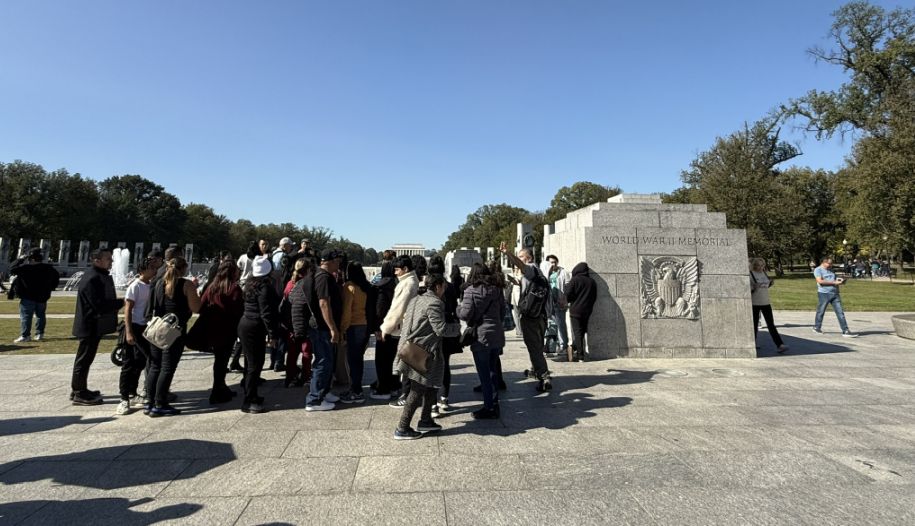
There were a lot of people at the front of the Memorial.
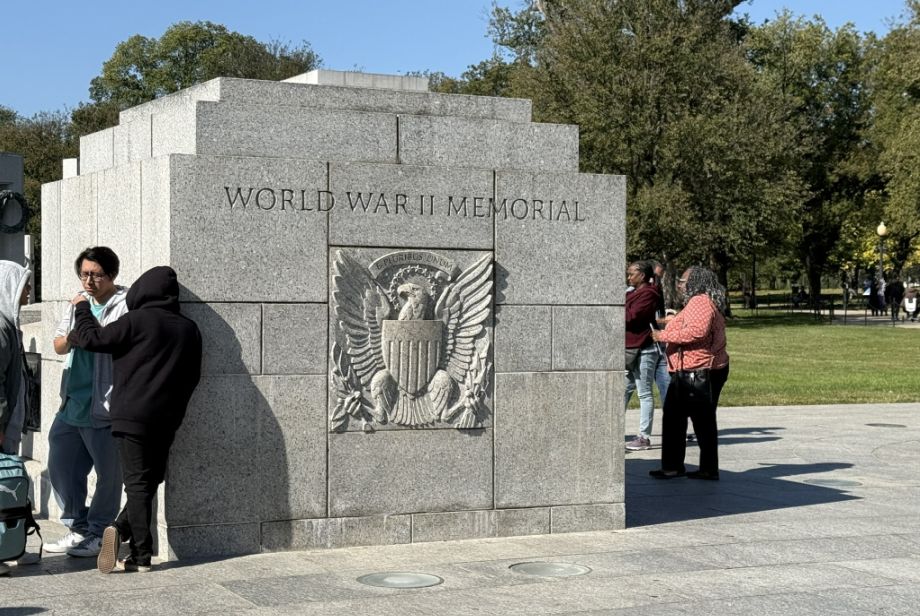
The first thing you see is the huge block of stone that was meant to announce
the place plainly and without poetry:
WORLD WAR II MEMORIAL.
No metaphor. No ambiguity. This is about scale, unity, and a war that defined
a generation.
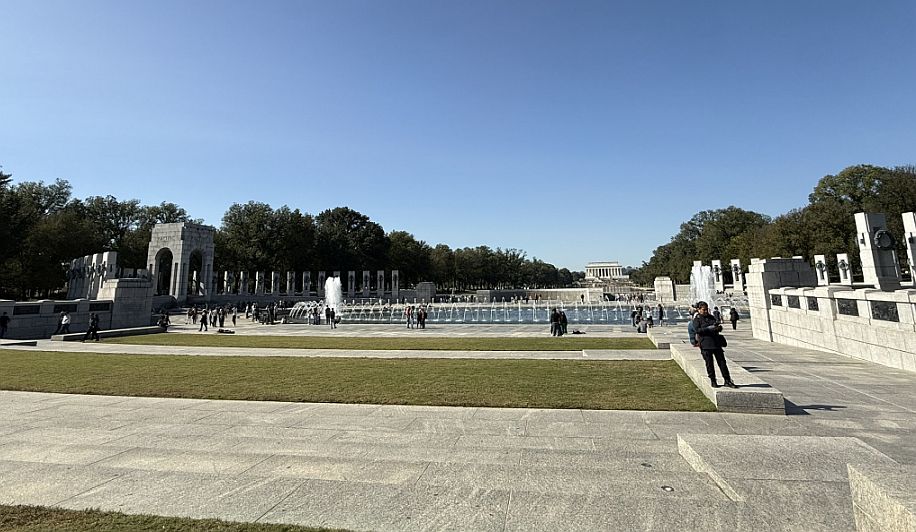
As we stepped forward, the space suddenly widens. This memorial was designed to hold many people at once, just as the war involved an entire nation. Then the pool appears. A long, rectangular pool stretches out in front, animated by rows of water jets that rise and fall in rhythm.
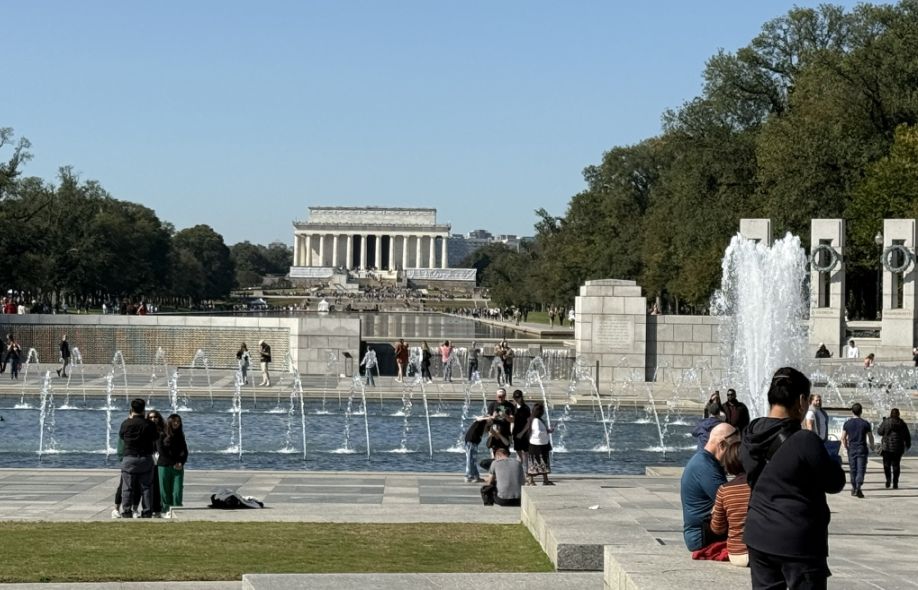
Beyond the pool, perfectly aligned, is the Lincoln Memorial, anchoring the scene with its calm authority. The alignment is deliberate, a visual line connecting: Lincoln’s struggle to preserve the Union, and to the global fight to preserve democracy.
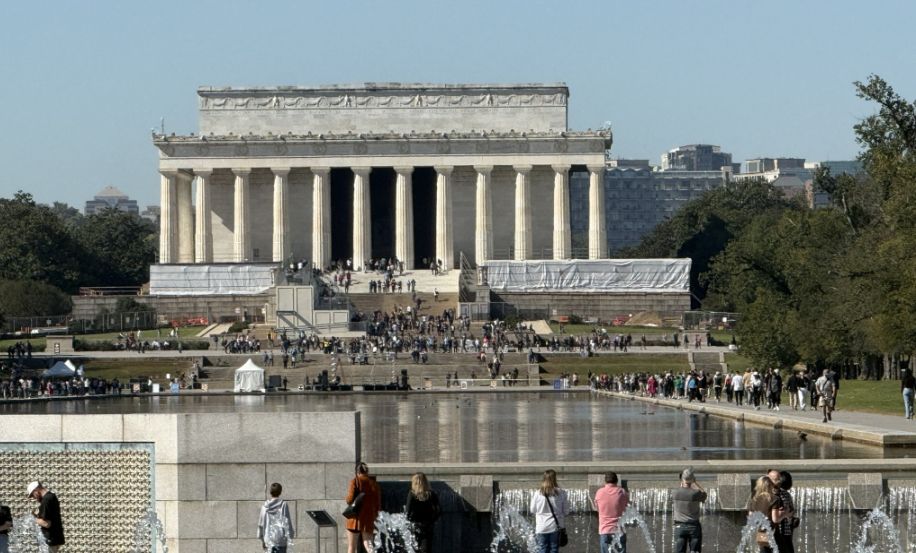
View of the Lincoln Memorial from the WWII Memorial ground.
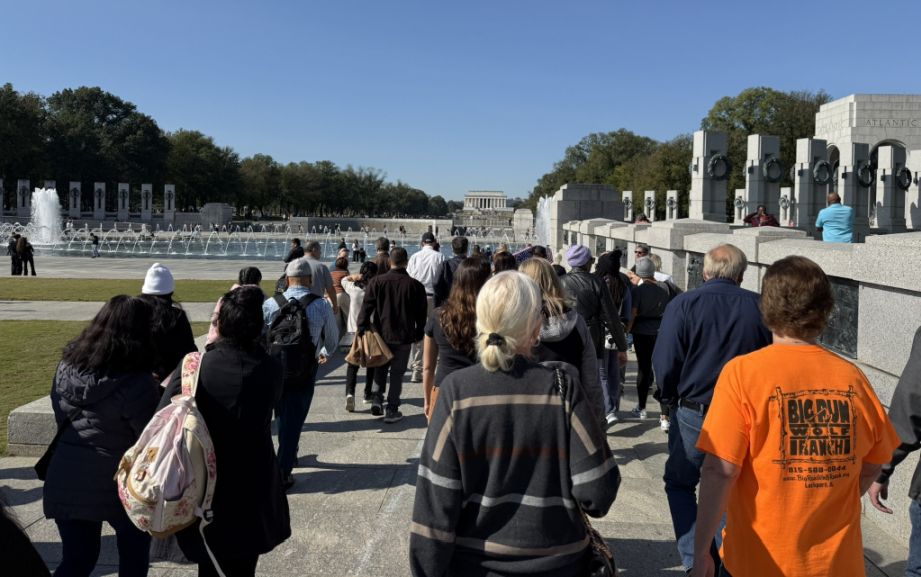
Our guide is leading us inside the Memorial and our first stop is the Atlantic Theater Pavilion.
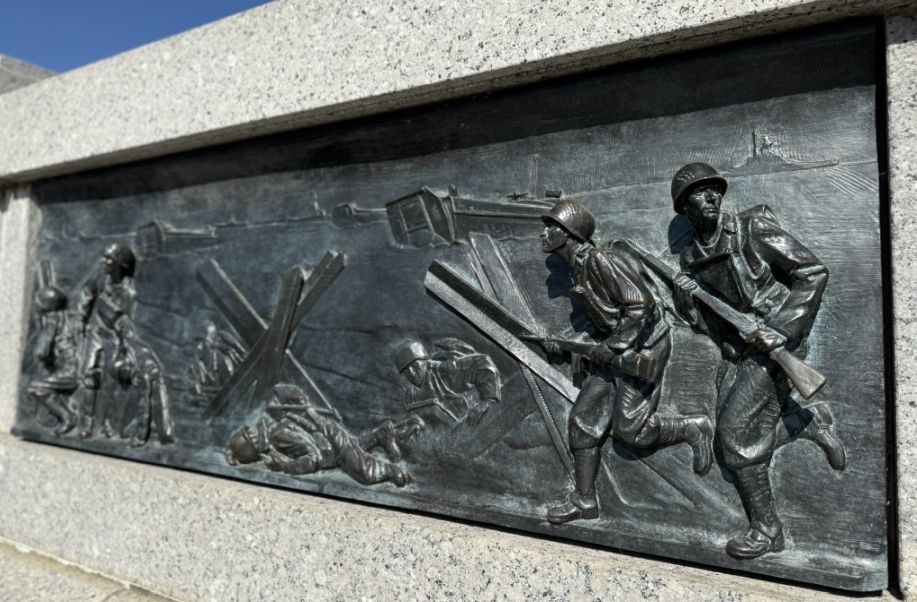
Along the pathways leading into the memorial, there are a series of bronze bas‑relief panels, sculpted story panels mounted into the stone walls. These panels, created by artist Ray Kaskey, depict moments from both the European and Pacific theaters and from the home front during World War II. Bronze bas-relief panels are arranged in a long sequence, almost like pages in a book. They show scenes from home and from the front, carved in a slightly rough, muscular style that feels busy and crowded on purpose.
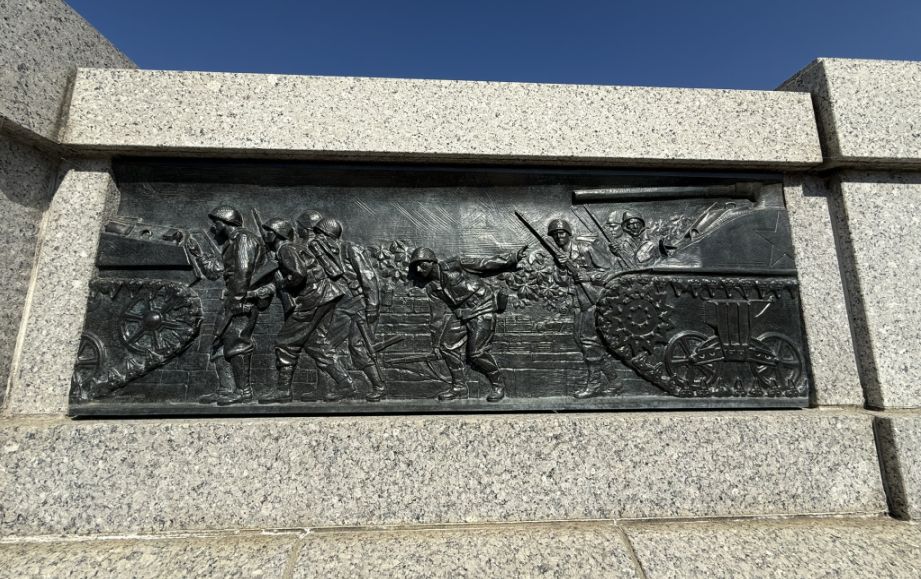
The panels are meant to convey total mobilization, shared effort, and the idea that everyone, civilian and military, was part of the war.
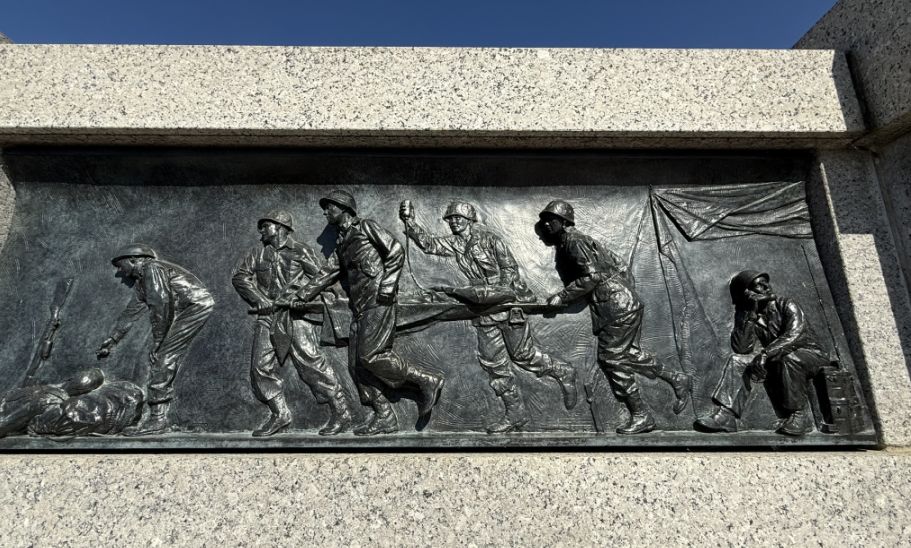
Soldier carrying a wounded comrade on a makeshift stretcher, with another holding a bottle and tube represents the care, courage, and compassion shown by soldiers in the field. The bottle likely depicts an IV fluid or plasma infusion, a reminder of the lifesaving medical advances and battlefield medicine that were so crucial to survival. These panels are not just decoration; they’re like living snapshots of the war’s countless untold acts of bravery, sacrifice, and humanity.
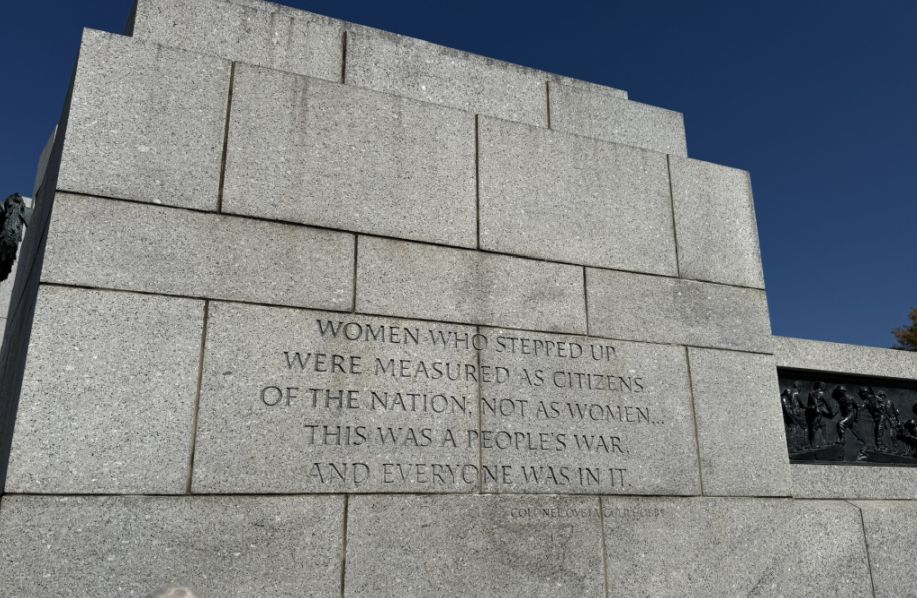
This quote came from a quote by Ovation to Eleanor Roosevelt or sometimes attributed to a summary of women’s service during WWII.
This inscription honors the roughly 350,000 American women who served in the armed forces, as nurses, pilots, mechanics, radio operators, clerks, and in countless other necessary roles, and the millions more who supported the war effort in factories, farms, and homes.
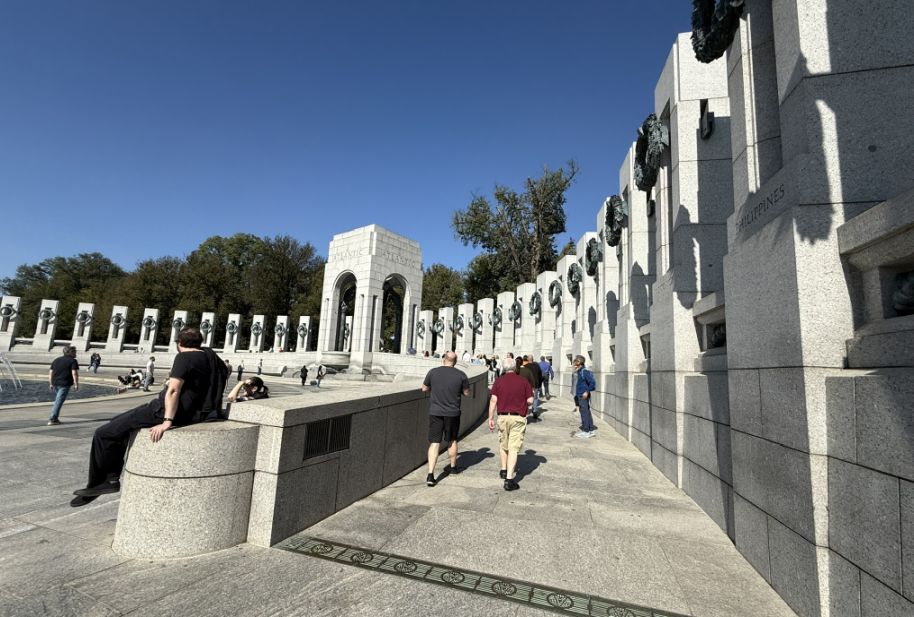
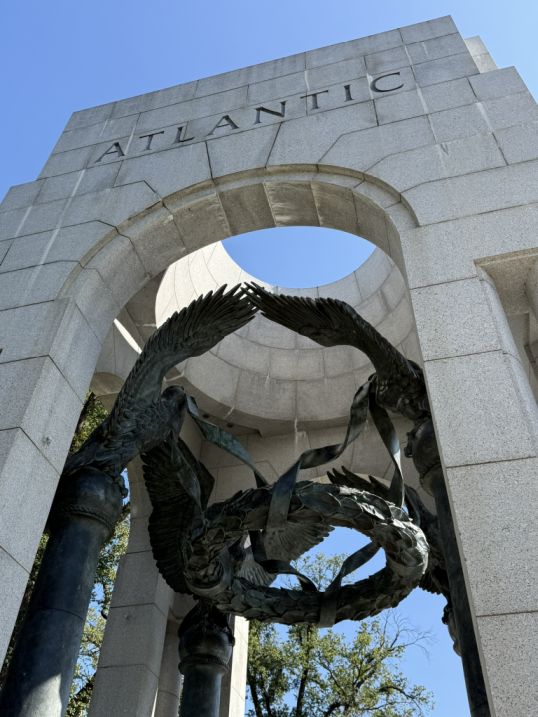
We are now walking into the Atlantic Theater Pavilion representing the European Theater of Operations, including battles fought across Europe, North Africa, and the Atlantic Ocean. Each pavilion faces inward toward the central fountain and pool, symbolizing how both halves of the world war ultimately converged toward a single victory.
 |
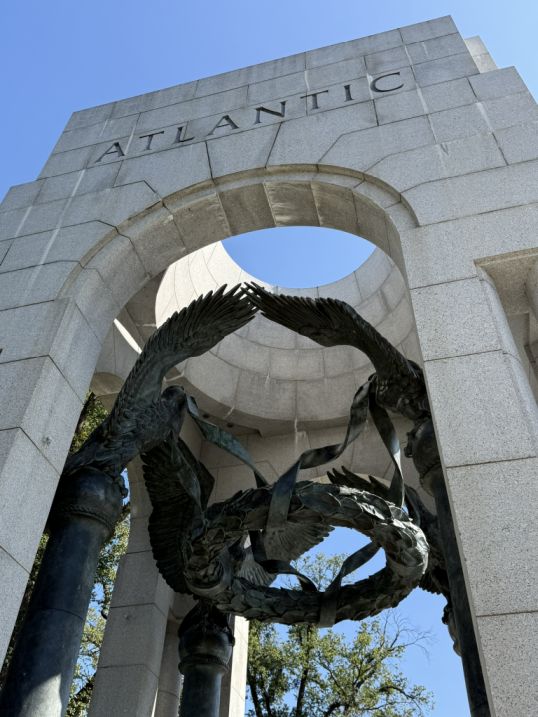 |
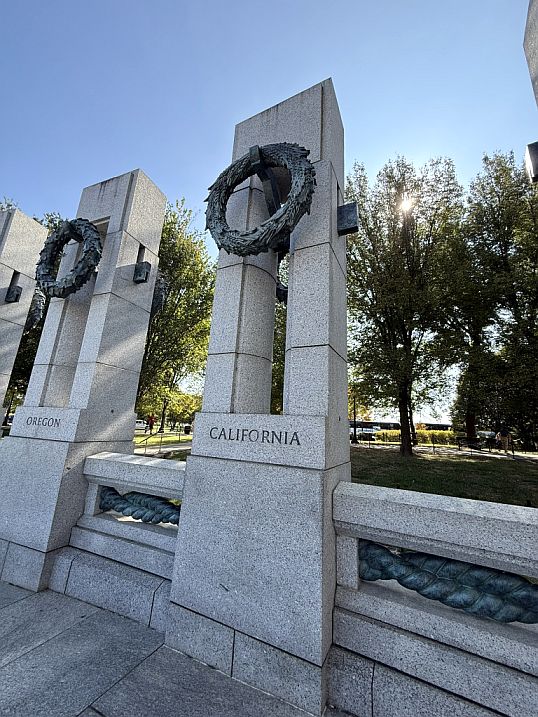
Inside both the Atlantic and Pacific Pavilions, you’ll see a large bronze laurel wreath suspended high on the wall, held in place by four stone pillars. This is not decoration, it’s ceremonial architecture.
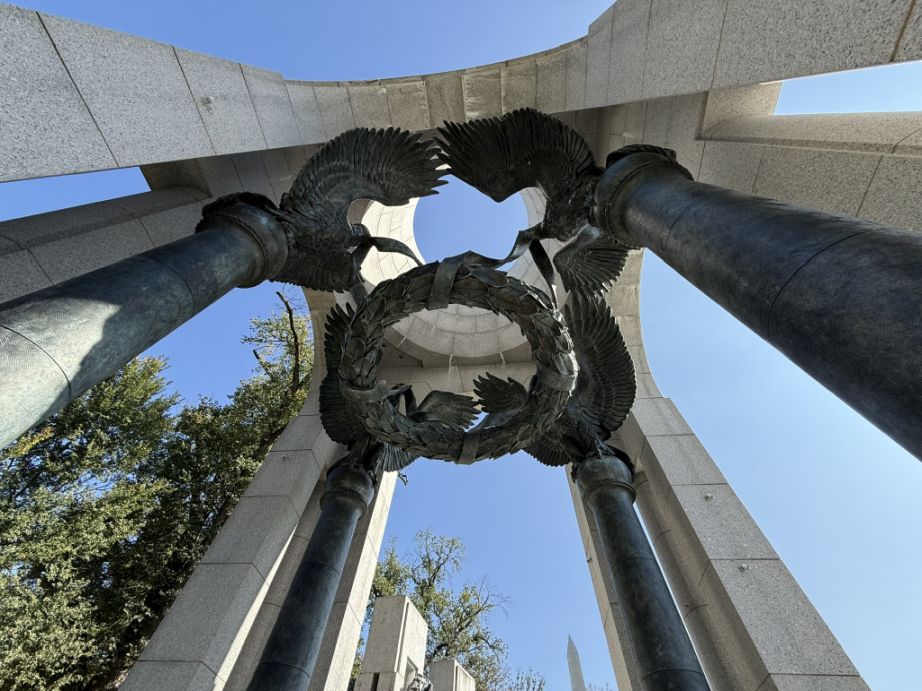
The laurel wreath comes from ancient traditions, and in the context of WWII, the wreath acknowledges victory, but in a restrained, sober way. There are no figures, no battle scenes here, just the symbol. It says: this was won, without celebrating how much was lost to do so.
The four pillars supporting the wreath are deliberate and deeply symbolic. They are commonly interpreted as representing as unity and stability, the four years of America’s active involvement, the four corners of a global conflict.
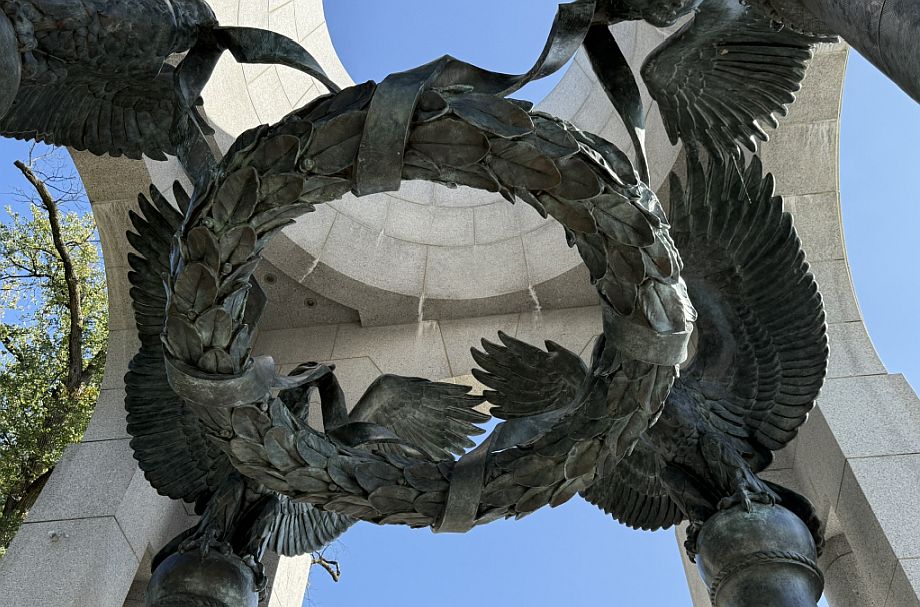
Casting the wreath in bronze makes the act of remembrance permanent. This is a wreath that will never wither, never be removed. Placing the wreath inside the pavilion, not outside turns the space into a kind of open-air sanctuary. You’re not just passing by a symbol; you’re standing within it.
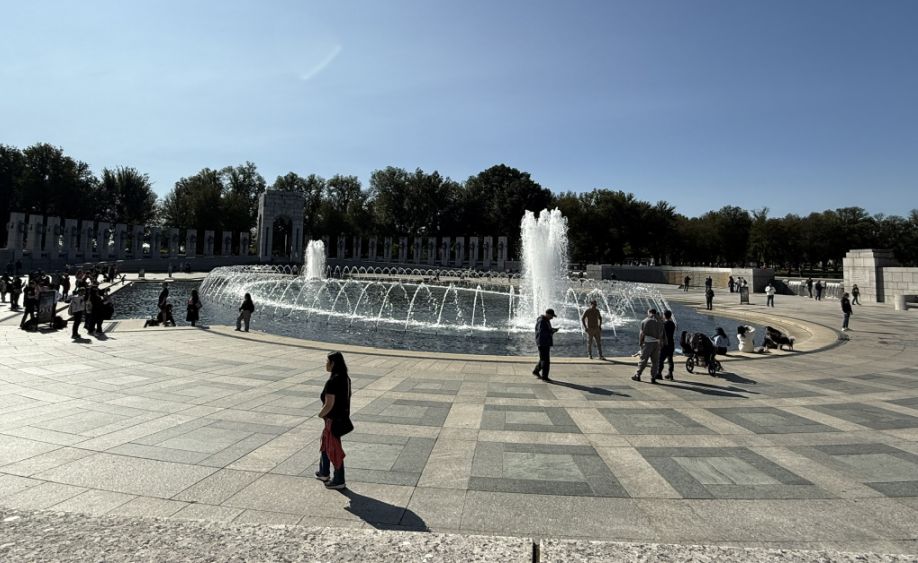
Each pavilion faces inward toward the central fountain and pool, symbolizing how both halves of the world war ultimately converged toward a single victory.
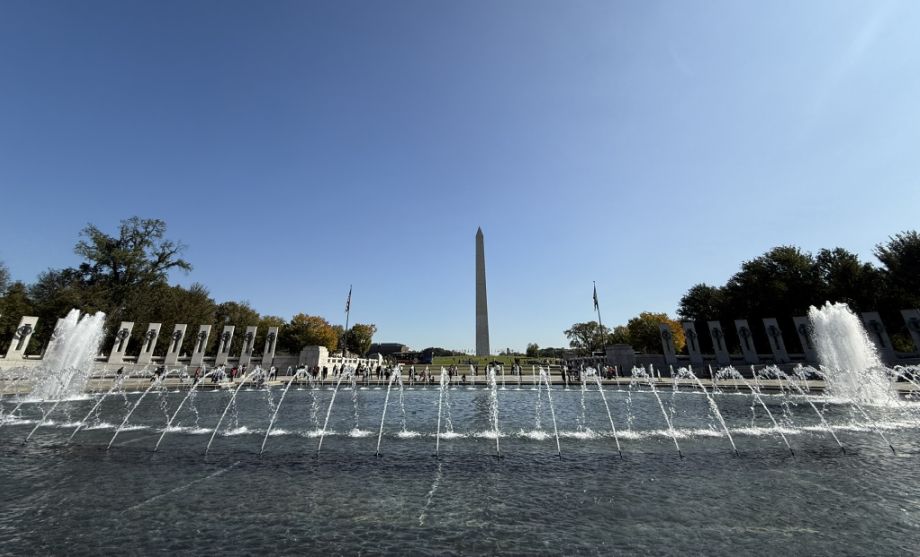
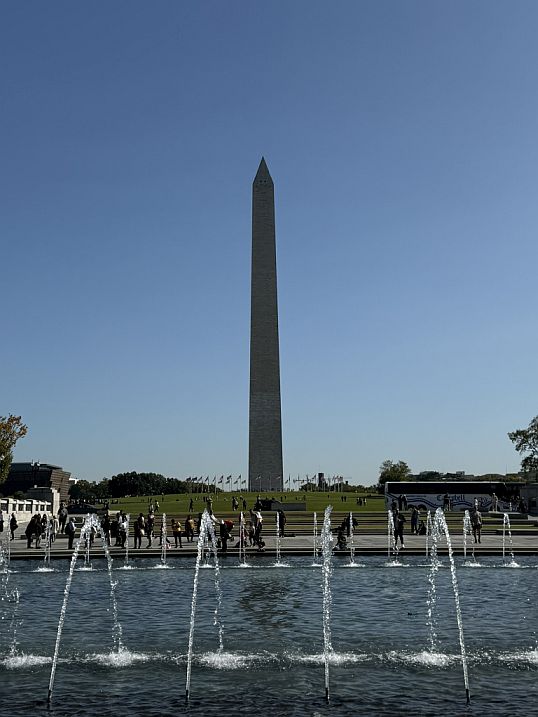
As we are standing in the middle section of the World Memorial’s pool, surrounded by the gentle roar of the fountains, the Washington Monument rises perfectly in line to the east. This alignment is intentional, a way of visually connecting the sacrifices of World to the enduring ideals of the nation’s founding.
 |
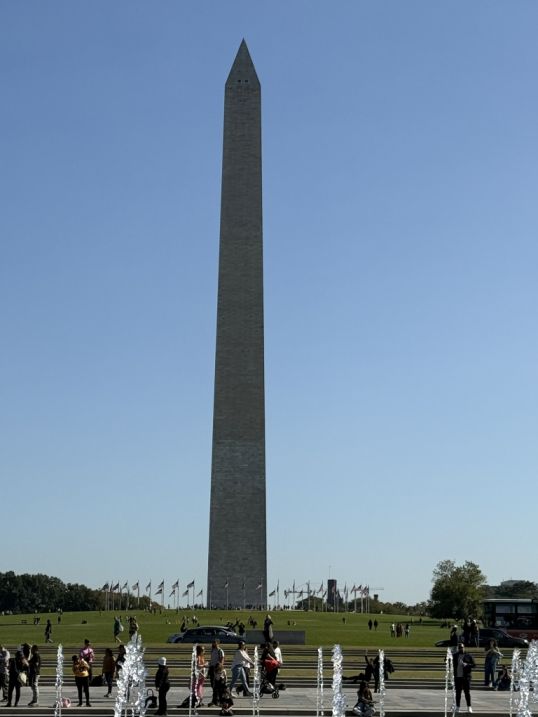 |
The Washington Monument, tall and serene against the sky, symbolizes the permanence of democracy and the strength of the principles for which those who served fought. Its reflection in the pool ties the present moment to history — unity, perseverance, and hope. When the day is calm, you sometimes see the tip of the monument shimmering in the rippling water among the arcs of the fountains below — symbolizing both remembrance and renewal.
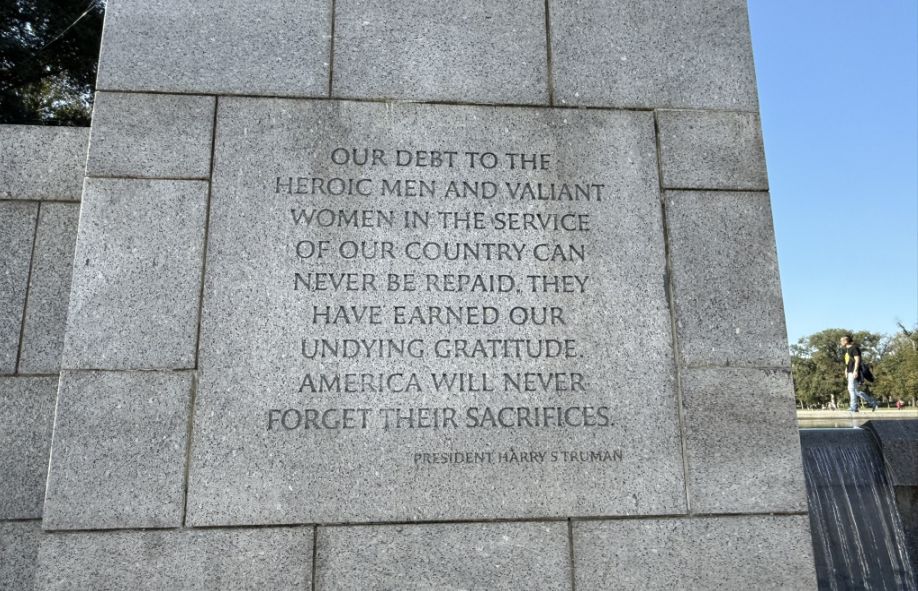
Quote from President Harry Truman captures the enduring gratitude the nation owes to all who served.
Harry S. Truman was the U.S. president at the end of World War II. He took office in April 1945 after Franklin D. Roosevelt’s death and oversaw the final months of the war, including the surrender of Germany in May 1945 and Japan in August of that year. This quote expresses what Truman felt when the war concluded, that the peace and freedom achieved came at a cost beyond measure, paid by ordinary Americans who rose to extraordinary courage. He wanted those words to remind the public, not just in victory, but for generations to come that the gratitude owed to those who served and sacrificed could never truly be repaid.
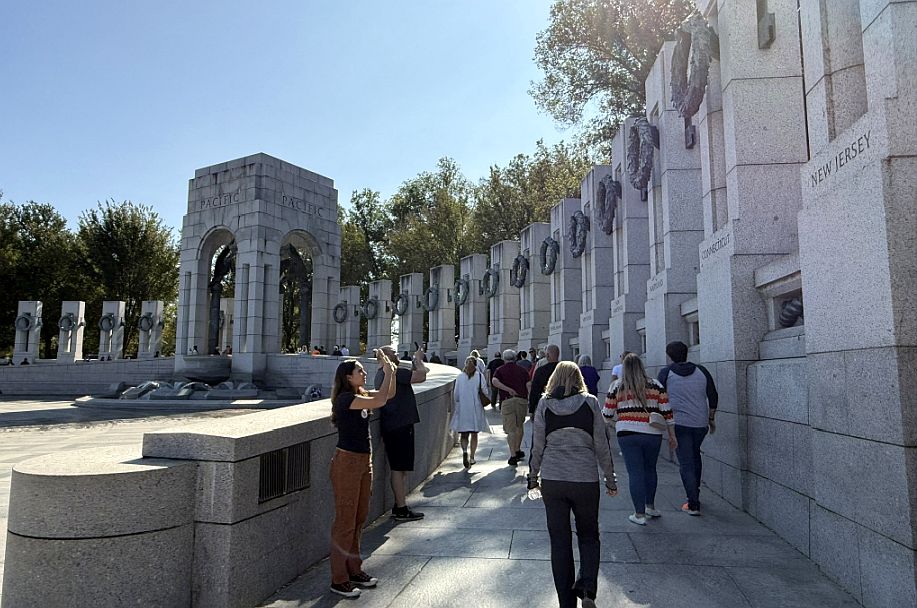
Encircling the memorial are 56 granite pillars, arranged in a great oval around the two pavilions, the Atlantic and the Pacific. Each pillar is about 17 feet tall and bears the name of a U.S. state or territory that contributed to the war effort during World The lineup includes the 48 states that were part of the Union at that time, along with 7 U.S. territories (like Puerto Rico, Guam, and Alaska and Hawaii, which were not yet states) plus the District of Columbia, one pillar for each, totaling 56.
Each of those state names is carved prominently into the granite, and the pillars are linked together by bronze ropes, which symbolize how the entire nation, every state and territory was bound together in common cause.
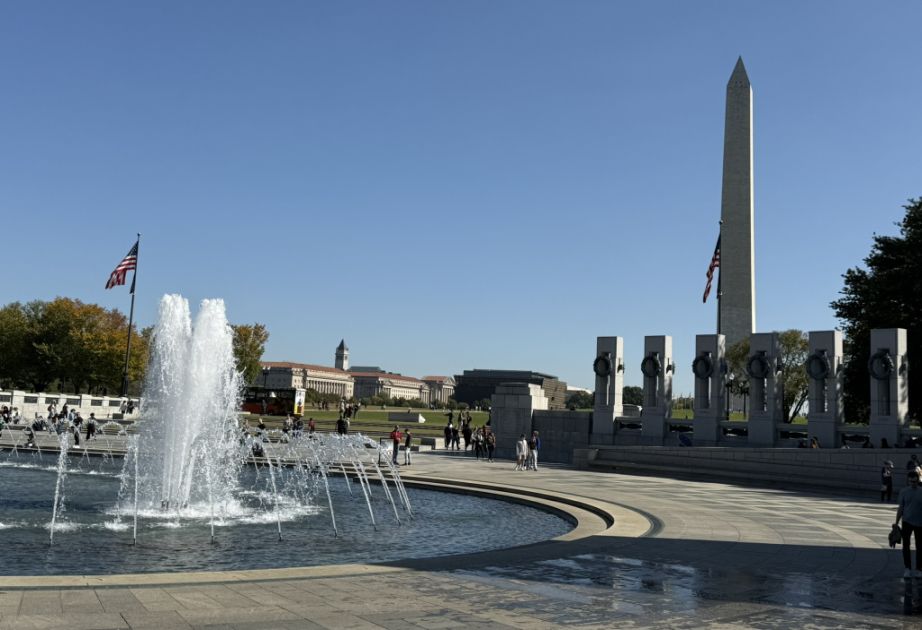
We are now leaving the Atlantic area and heading toward the Pacific side.
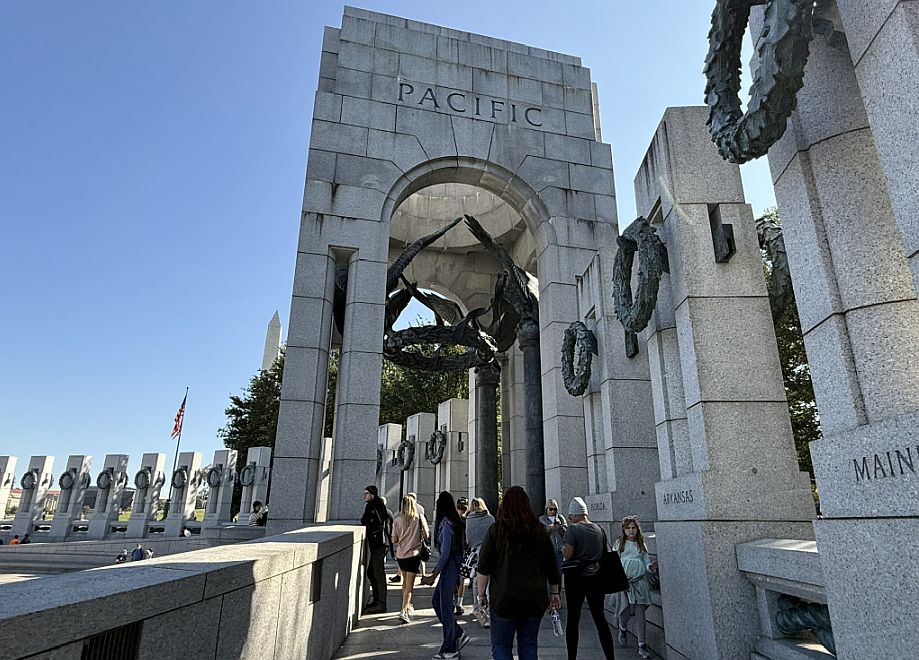
Both sides are designed in perfect symmetry. The Pacific Theater represents the war across the Pacific Ocean and Asia ,from Pearl Harbor to the islands of Iwo Jima and Okinawa, and eventually Japan’s surrender. Together, these two pavilions symbolize how one nation engaged on opposite sides of the world, yet remained connected in purpose.
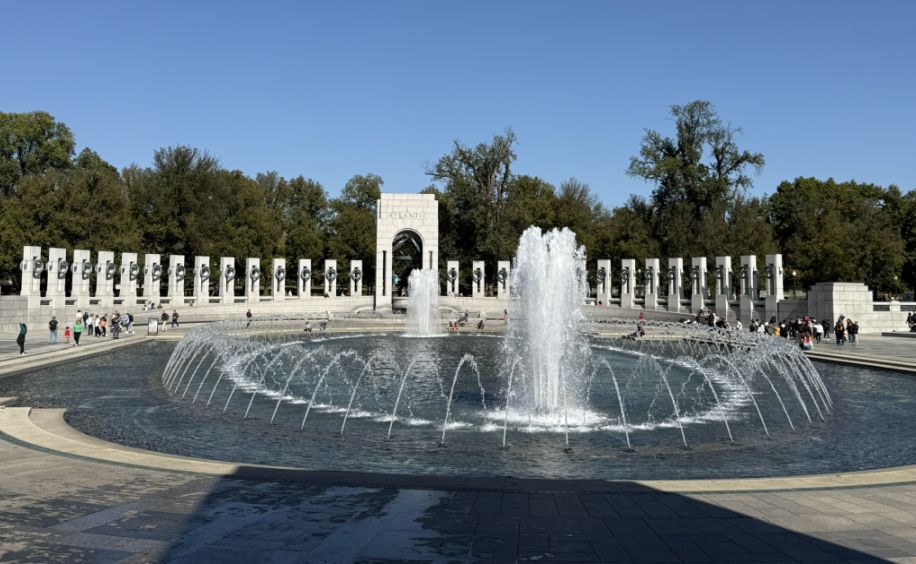
Standing on the Pacific Theater Pavilion looking straight a the Atlantic Theater Pavilion
 |
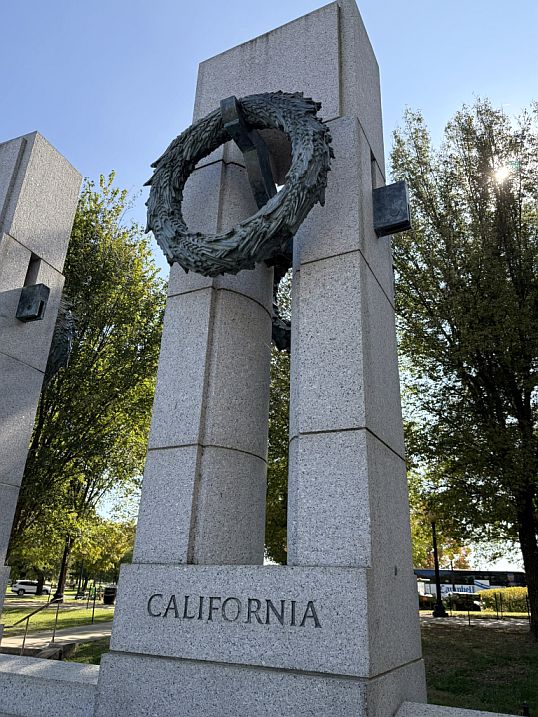 |
Finding California’s pillar on the Pacific side of the World Memorial connects the vast history of the war directly to home. The Pacific Theater was, in many ways, California’s front line at home, and carries special weight because California’s coast was home to major naval and air bases, San Diego, Long Beach, San Francisco, and Alameda were crucial staging points for ships, aircraft, and troops deployed to the Pacific. California’s factories and shipyards turned out a massive number of planes and ships, Lockheed, North American Aviation, and Douglas Aircraft produced thousands of aircraft, while Richmond and Marin shipyards launched Liberty and Victory ships at record speed. The famous “Rosie the Riveter” image was inspired by Bay Area shipyard workers, California women by the tens of thousands stepped into industrial roles to support the war effort.
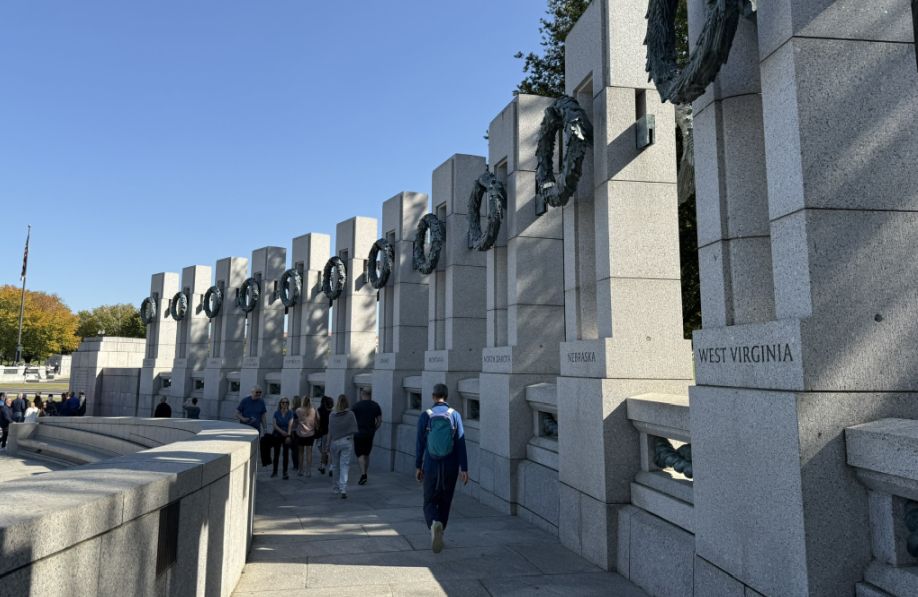
Walking along these pillars is a reminder that victory required courage, coordination, and sacrifice across all distances.
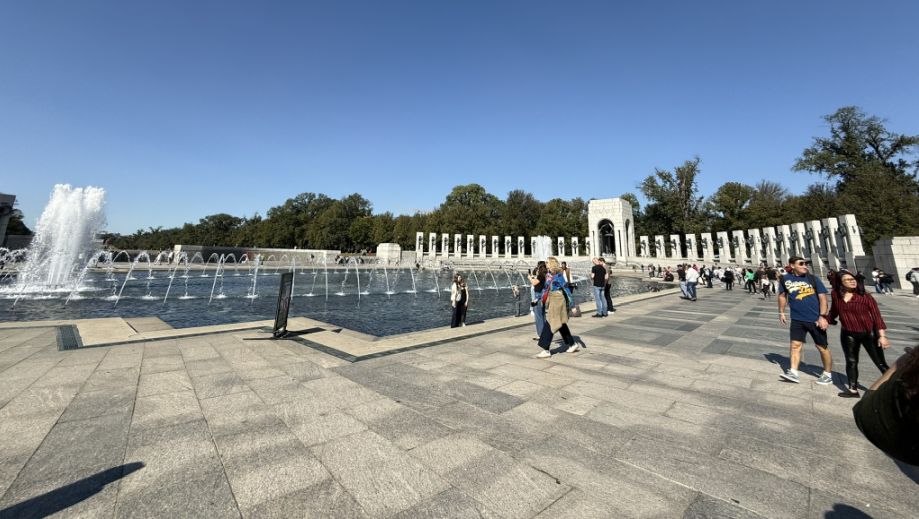
The two sides face each other across the central pool, mirroring each other in design. as though the Atlantic and Pacific arms of the war are joined in a final embrace.
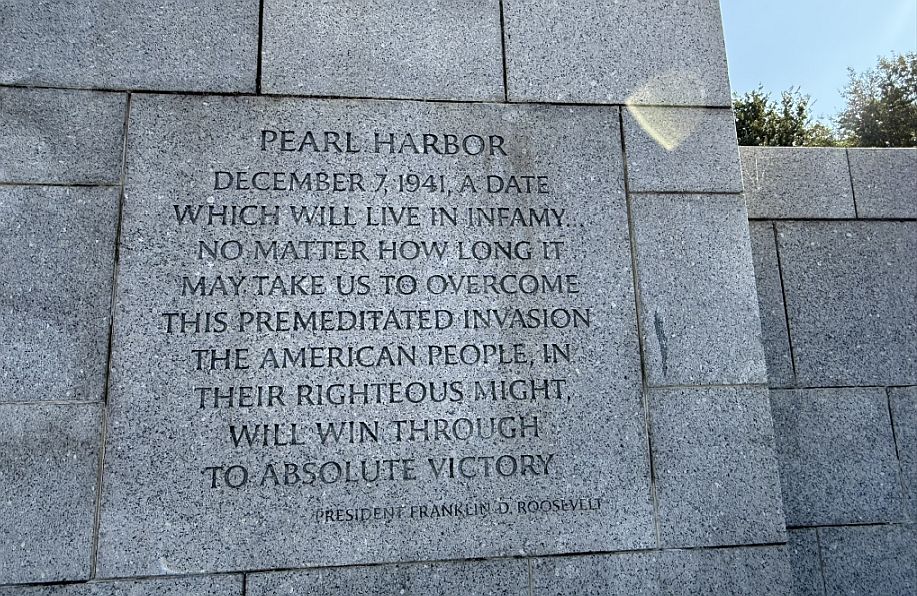
This quote from President Franklin D. Roosevelt is one of the most powerful and iconic inscriptions at the World Memorial, and it comes from one of the defining moments in American history. The words are part of President Franklin D. Roosevelt’s address to Congress on December 8, 1941, the day after the attack on Pearl Harbor. It’s the speech that brought the United States formally into World and marked the turning point, a moment of national shock and unity. Roosevelt’s calm but resolute tone gave the country a clear sense of purpose: that despite the devastating attack on Pearl Harbor, the nation would rise, mobilize, and ultimately prevail.
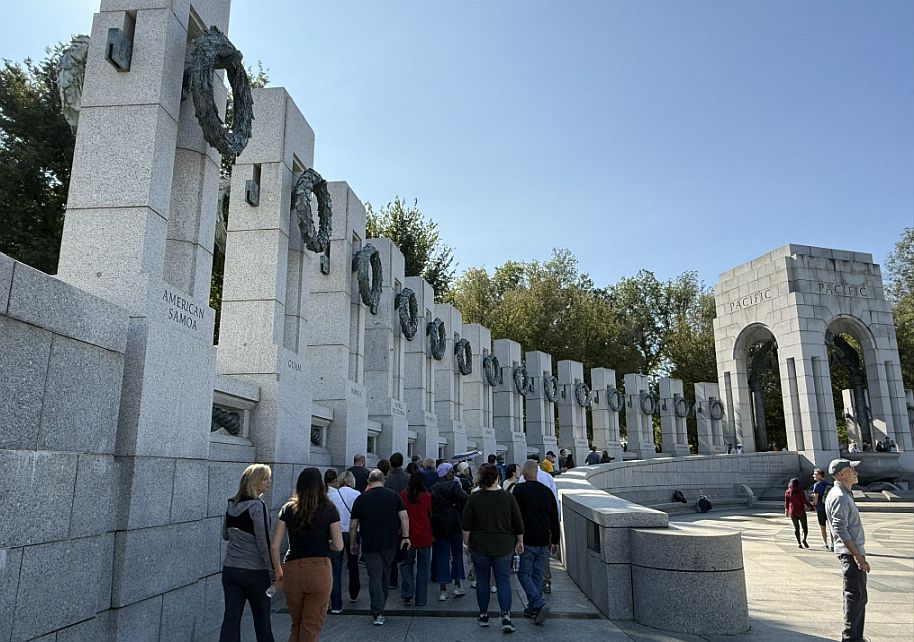
We are now done with our visit here and we are leaving the area.
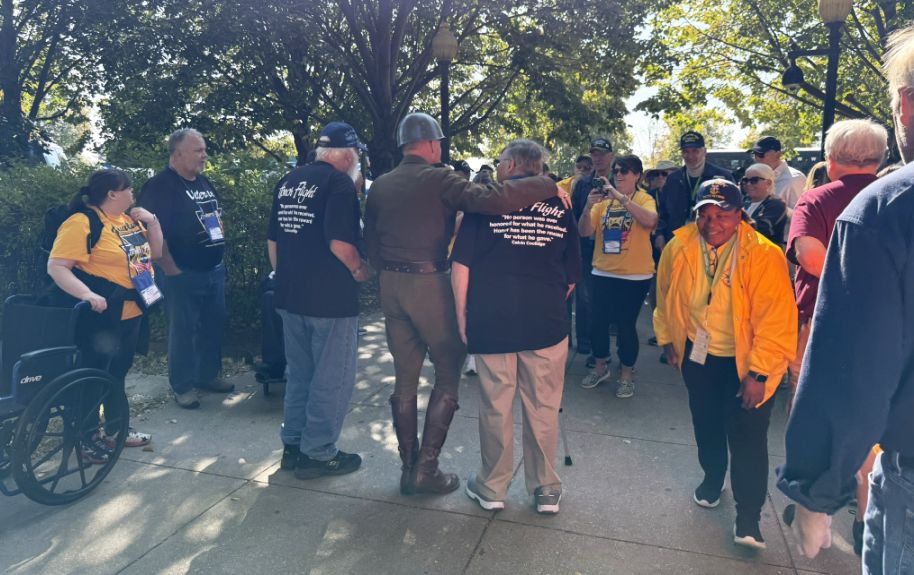
On our way to catch our bus we encounters a gathering of people surrounding a man wearing a WWII Army uniform.
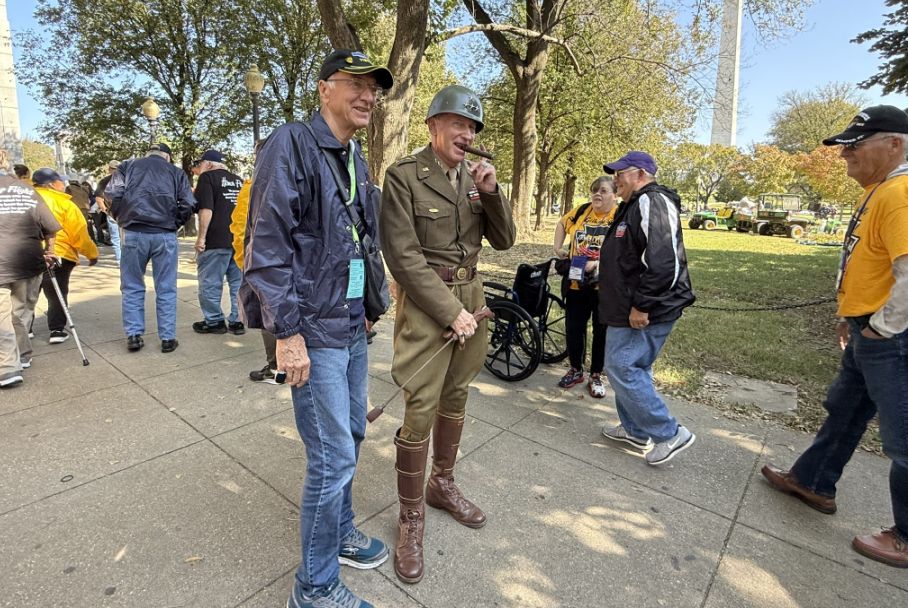
That man isn’t part of the memorial, he’s almost certainly a World War II veteran, wearing his original uniform (or a carefully preserved one). When you see people gathering, asking for photos, leaning in close, it’s because moments like this are vanishingly rare now. Most WWII veterans are in their late 90s or older.
 |
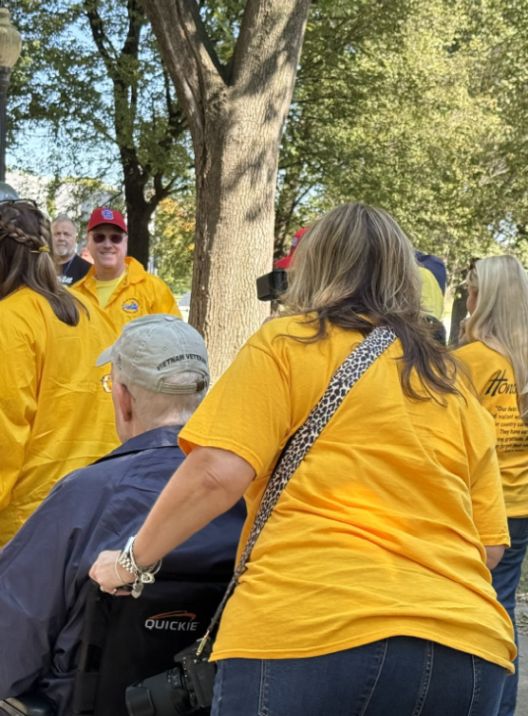 |
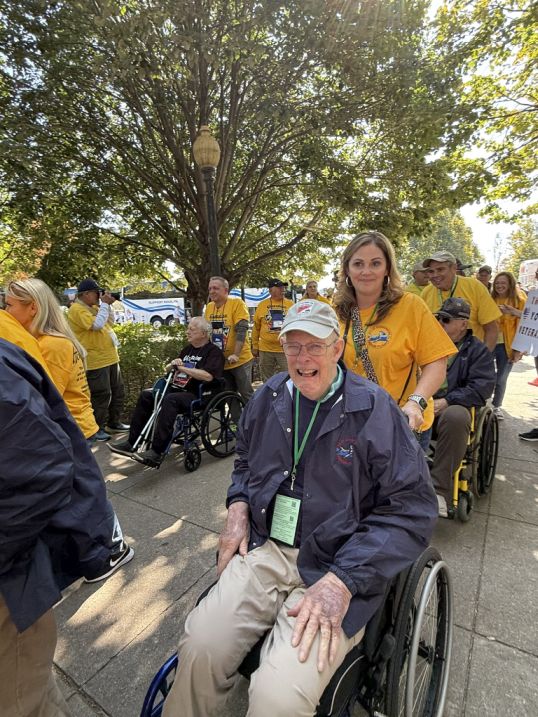
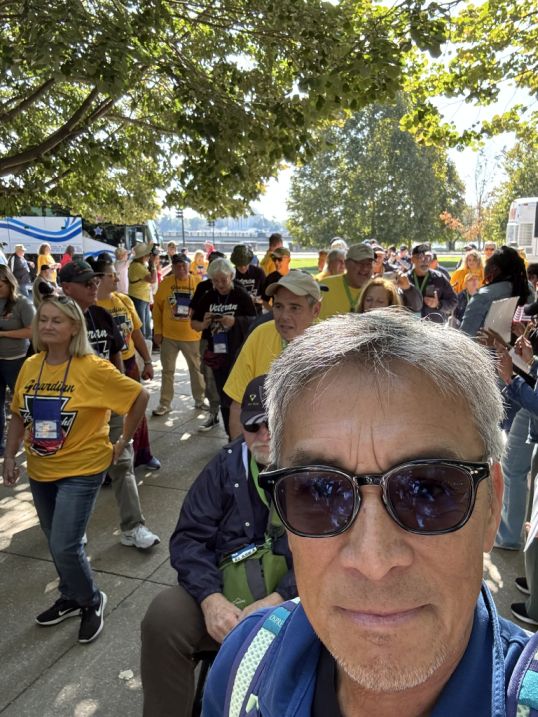
The group in bright yellow shirts are part of an Honor Flight organization to bring WWII, Korea, and Vietnam veterans to Washington, DC, free of charge.
It is very moving to see how happy the veterans are and people around them are clapping and thanking them for their service.
 |
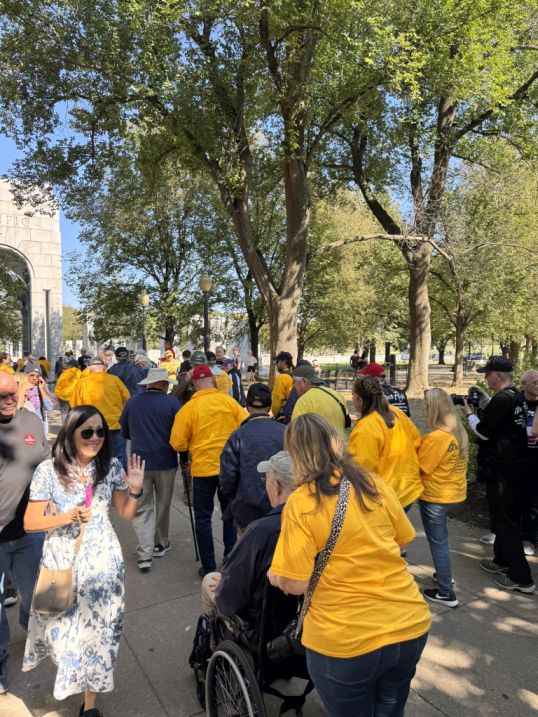 |
The volunteers in yellow shirts are typically guardians, each assigned to accompany and assist a veteran for the day, helping them move comfortably between memorials, taking photos, and sharing in their stories. Many visitors and passersby hold thank you signs, often spontaneously, to show appreciation and respect for the veterans’ service.
It’s humbling and joyful at the same time: the veterans surrounded by appreciation, laughter, and companionship, the very values they helped preserve.
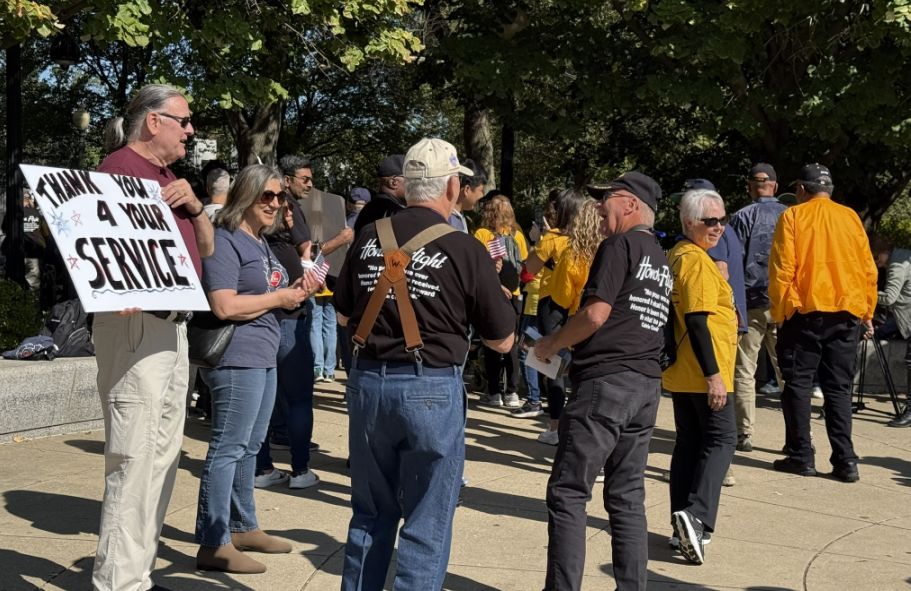
Many visitors and passersby hold thank you signs, often spontaneously, to show appreciation and respect for the veterans’ service.
For many WWII veterans, this is the first time in their lives they’ve heard that phrase directed at them publicly. When they returned home in the 1940s, there were parades, but then life moved on. No long-term recognition. No national memorial for decades. These signs are a kind of belated homecoming.
NEXT... Day 2- Landmarks