6 days in Washington DC- 10/18- 10/23/2024
Day 6- Walking in D.C.-10/23/2024
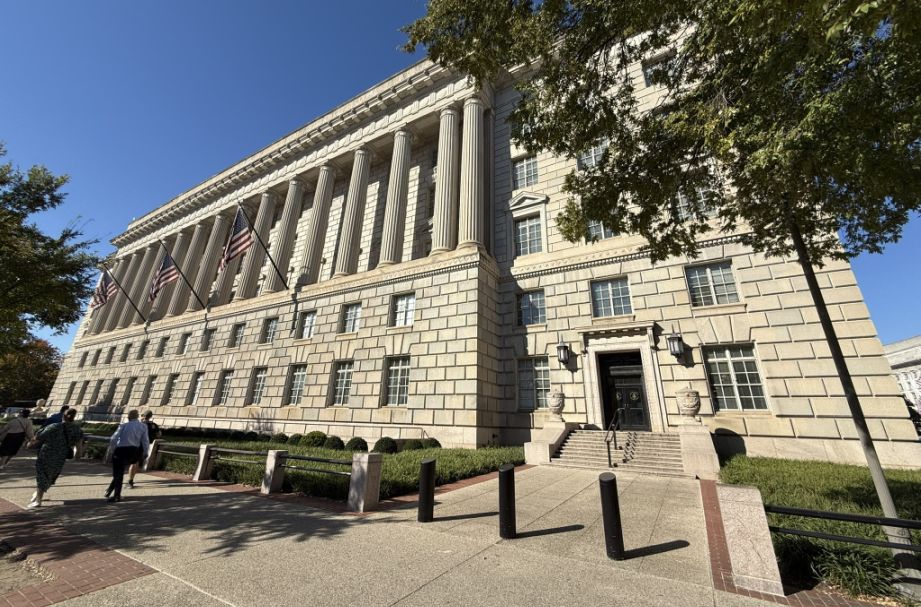
We are now walking in an area where Washington shifts from the museum landscape of the National Mall into the working center of the federal government.
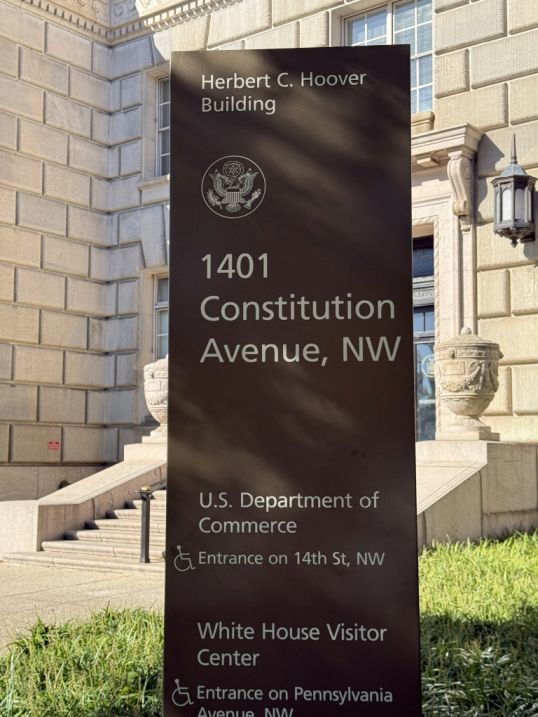
We are on 1401 Constitution Avenue NW, home of the Herbert C. Hoover Building, headquarters of the United States Department of Commerce. It was named after Herbert Hoover served as Secretary of Commerce before becoming president.
 |
 |
Completed in 1932, this massive structure is part of the Federal Triangle, the grand government complex built between the 1920s and 1930s to give Washington a unified civic appearance. It was designed to look permanent and orderly, and reflecting the expanding role of the federal government during the early 20th century.
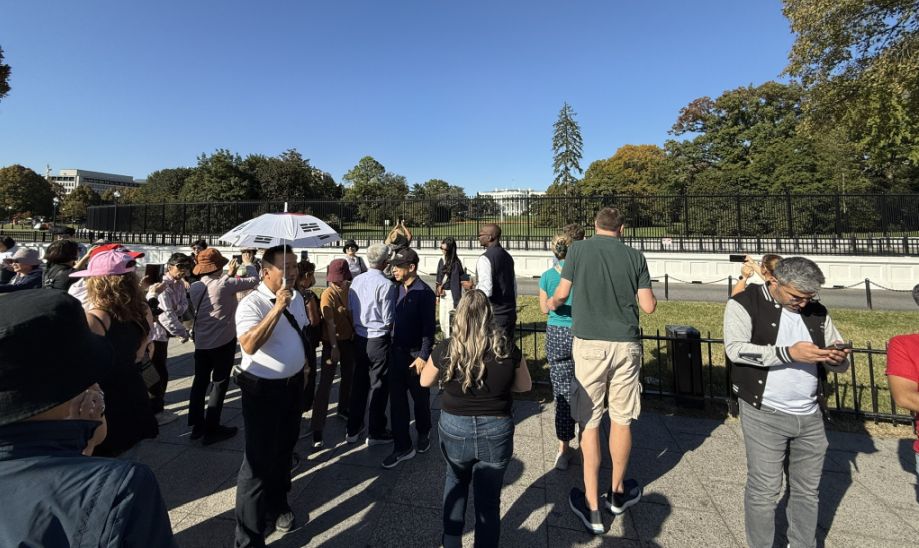
When we arrived at the White House, we noticed something many first-time visitors find surprising that people cannot walk directly up to it. What you see is a large lawn, a road/security perimeter. a fence, and security officers beyond. This layered separation is very intentional. Pennsylvania Avenue in front of the White House used to be open to cars; today it is closed to regular traffic.
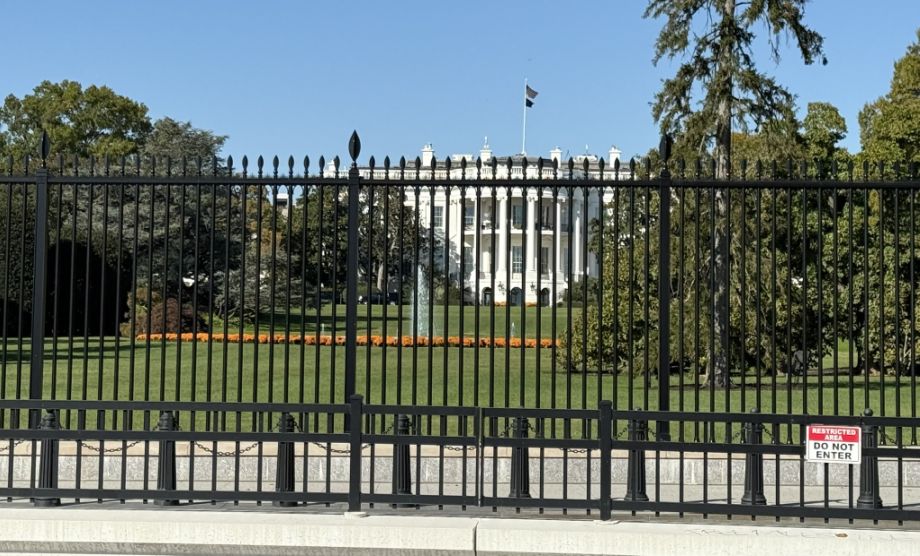
Originally, in the 1800s, the White House grounds were far more accessible, people sometimes walked right up to the door to seek meetings with the president. Security changed dramatically over time, especially in the modern era. The White House is a home, an office, and a major national security site and modern threats require distance between the public and the building.
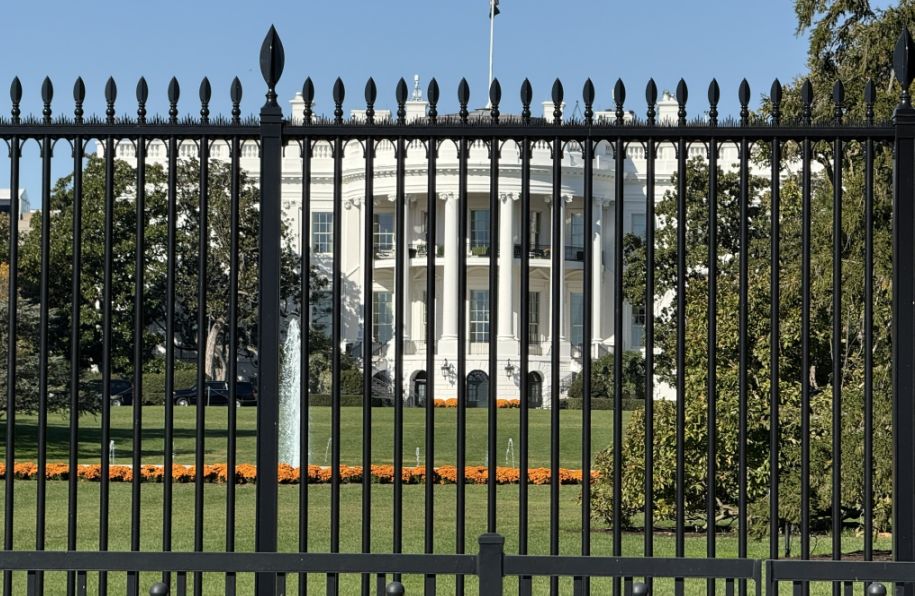
View of the front lawn through the metal fence. The North Lawn serves several purposes: it creates a ceremonial setting for the presidency, provides clear sightlines to the building (symbolic openness), and Acts as a security buffer zone.
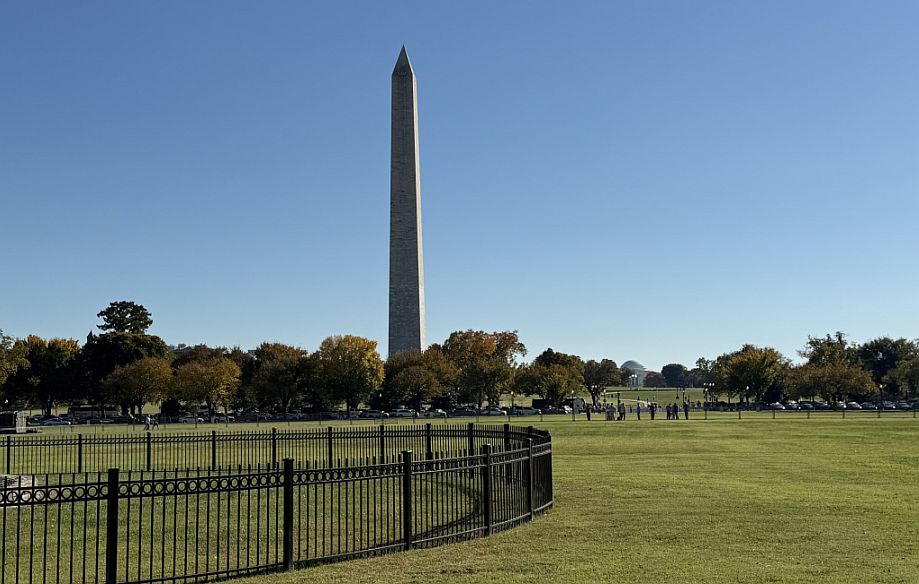
As we turned around from the White House, we saw the wide sweep of lawn stretching toward the Washington Monument. As we were looking across the Ellipse, part of President’s Park. That long open view is intentional. It creates one of the most dramatic sightlines in Washington: the White House on one end, the Monument rising in the distance. This alignment symbolizes the connection between the presidency and the nation founded by George Washington.
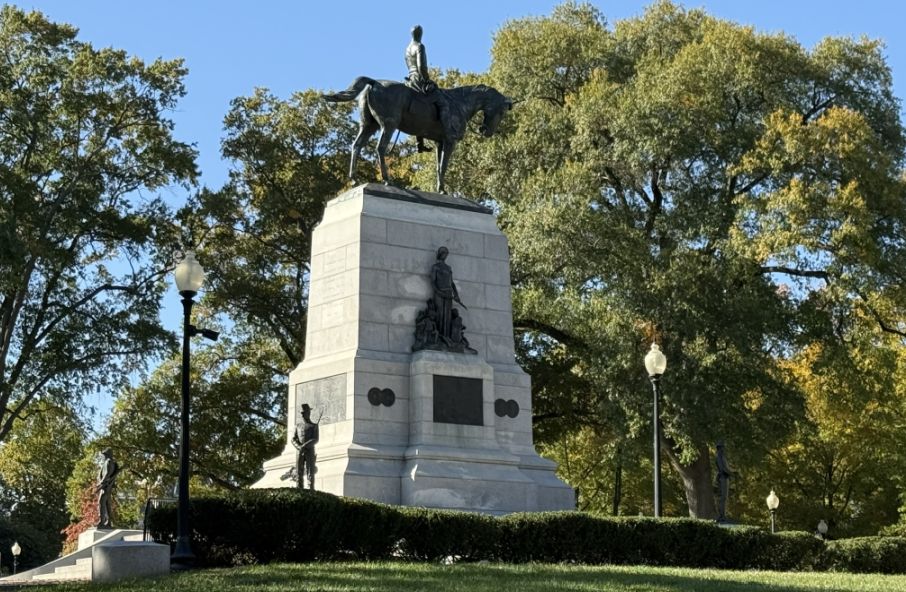
Along the way, we came upon The General William Tecumseh Sherman Monument. Created by renowned sculptor Augustus Saint-Gaudens and dedicated in 1903, the monument shows: Sherman riding confidently on horseback.
Sherman was one of the most important Union generals during the American Civil War.
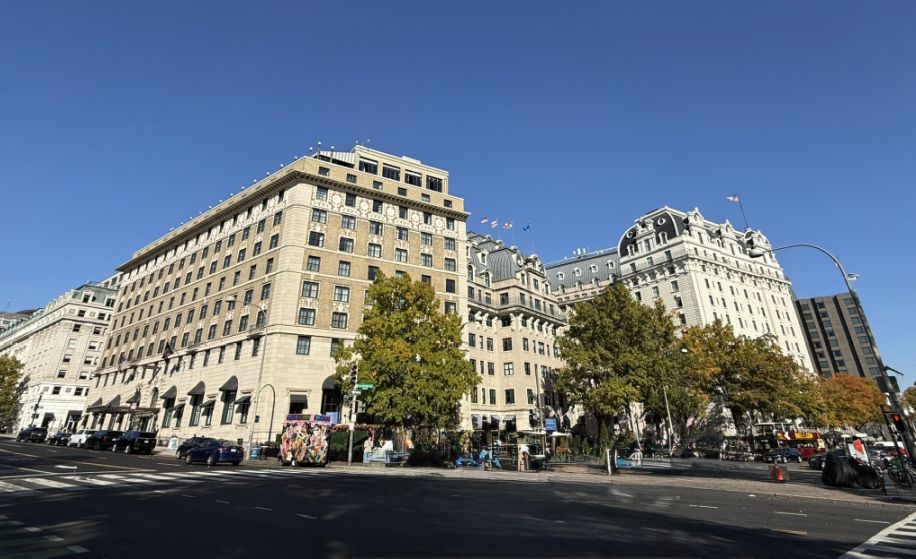
We are now downtown D.C.
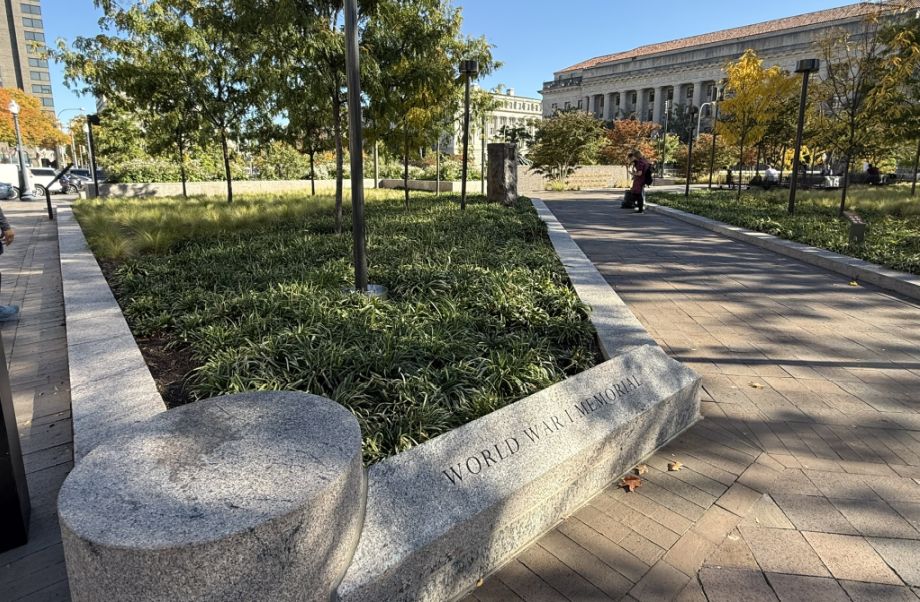
After crossing the street, we arrived at the World War I Memorial, located in what was historically called Pershing Park, but was transformed into a modern remembrance space.
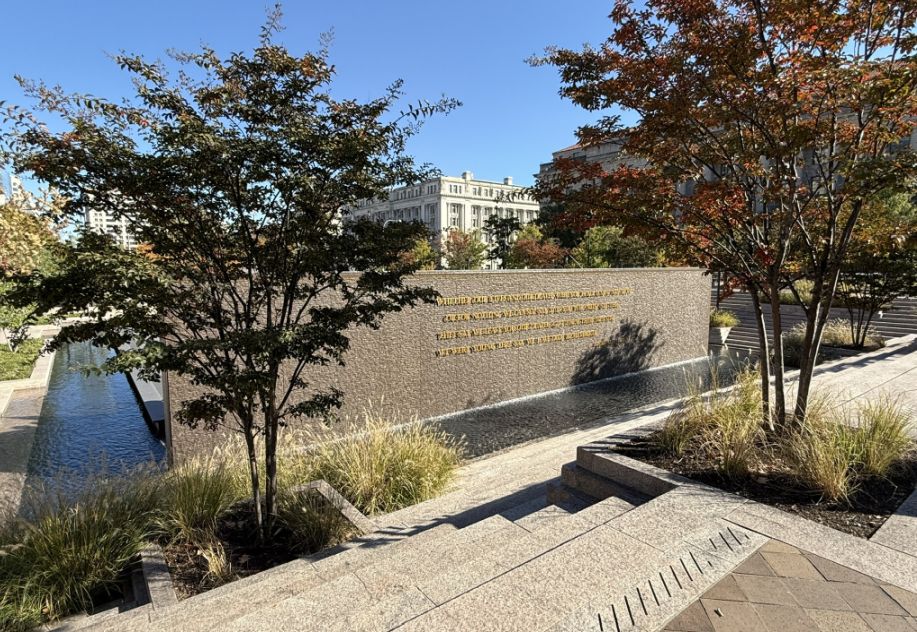
For many years, World War I did not have a prominent national memorial on the Mall. This site was redesigned and rededicated in 2021, finally giving the war a central commemorative space.
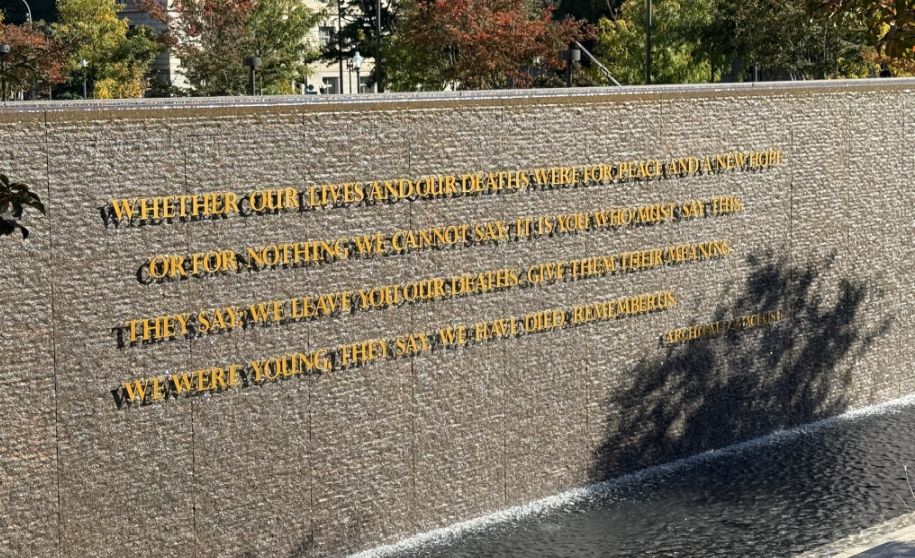
This quotation reflects the uncertainty soldiers felt after the war. World War I was called “the war to end all wars.” Yet only two decades later, the world entered World War II. The words invite visitors to ask: Did sacrifice truly bring peace? What was the cost of modern warfare? The memorial avoids giving an answer, it asks for reflection instead.
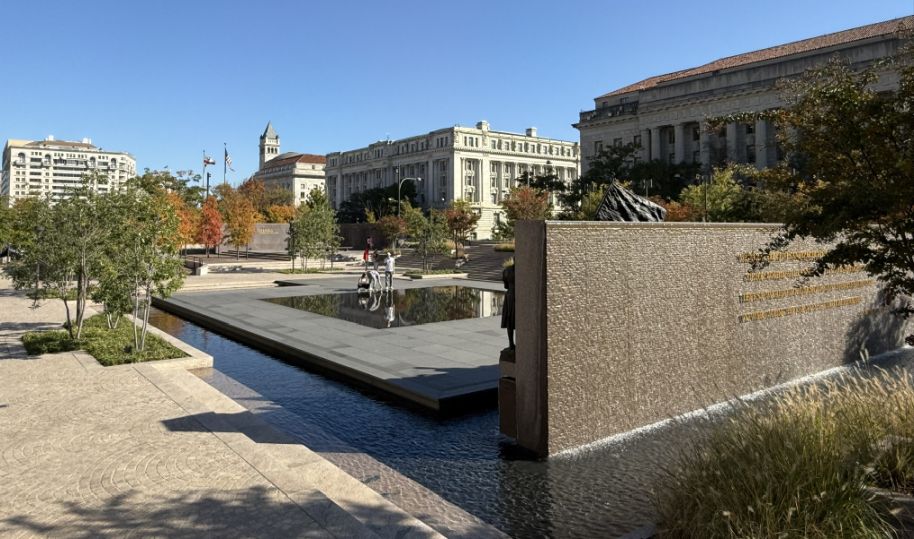
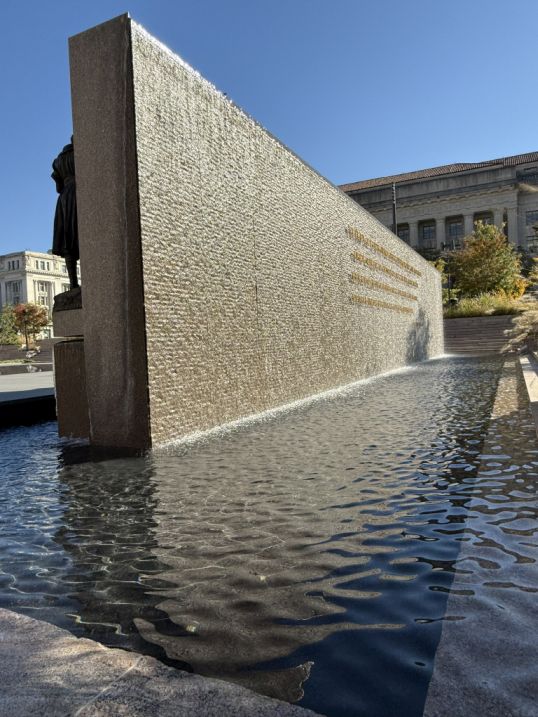
Cascading water wall with the sound of continually flowing water creates a gentle, soothing white noise that helps to muffle the sounds of the bustling city.
 |
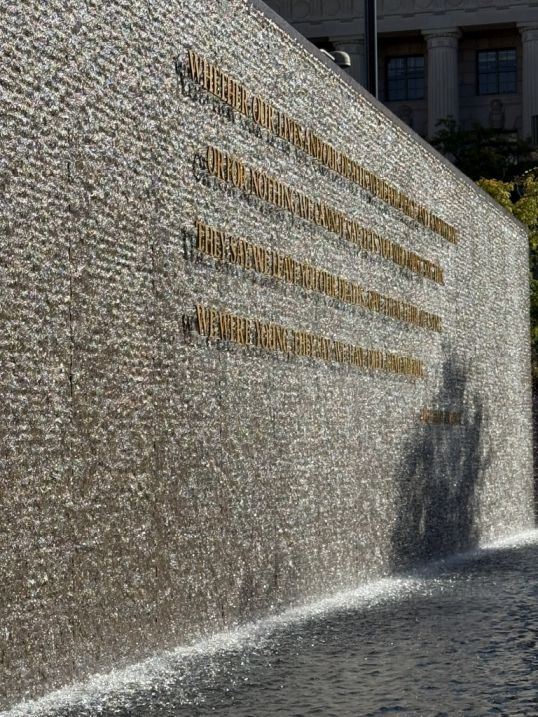 |
Moving water often symbolizes life, memory, purification, and the passage of time. The cascading nature can evoke tears, loss, or the relentless flow of history. It invites visitors to pause and reflect in a quieter space.
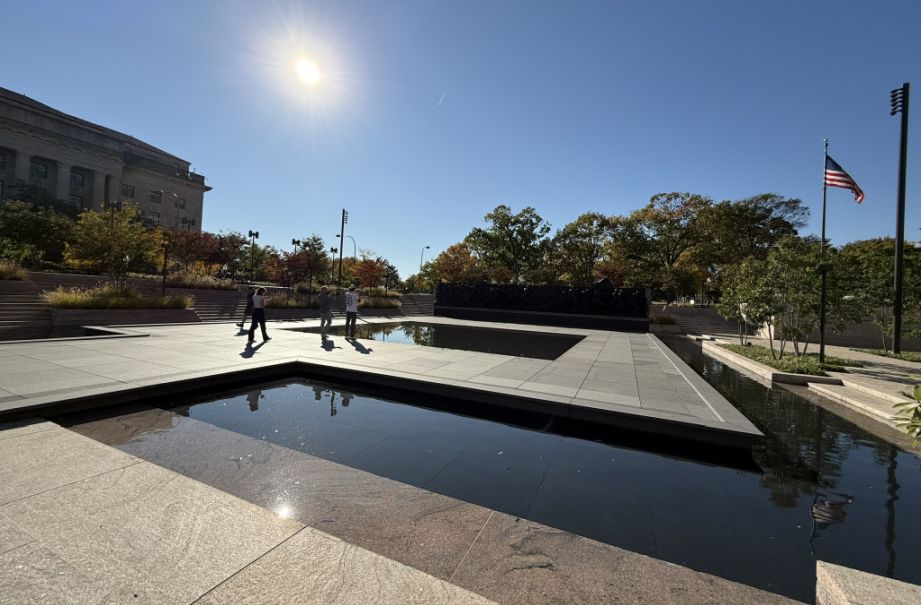
The reflecting pool adjacent to the water wall, a calm reflecting pool serves as a tranquil counterpoint to the nearby city life.
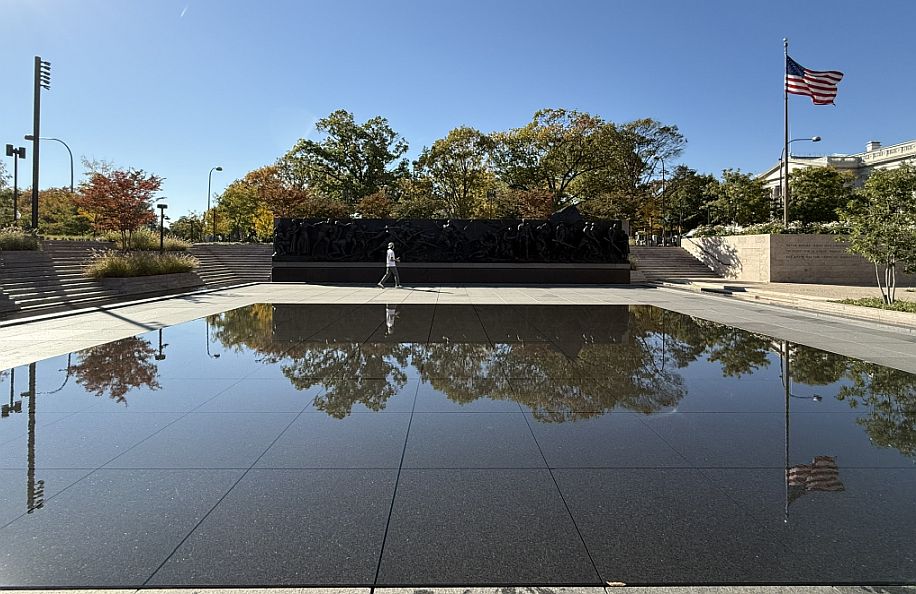
Reflecting pools are common in memorials globally. They create a mirror-like surface that reflects the sky, surrounding trees, and visitors themselves, promoting introspection. The stillness invites contemplation about the enormity of the conflict and the individuals involved. It offers a moment of peace to consider the sacrifices made.
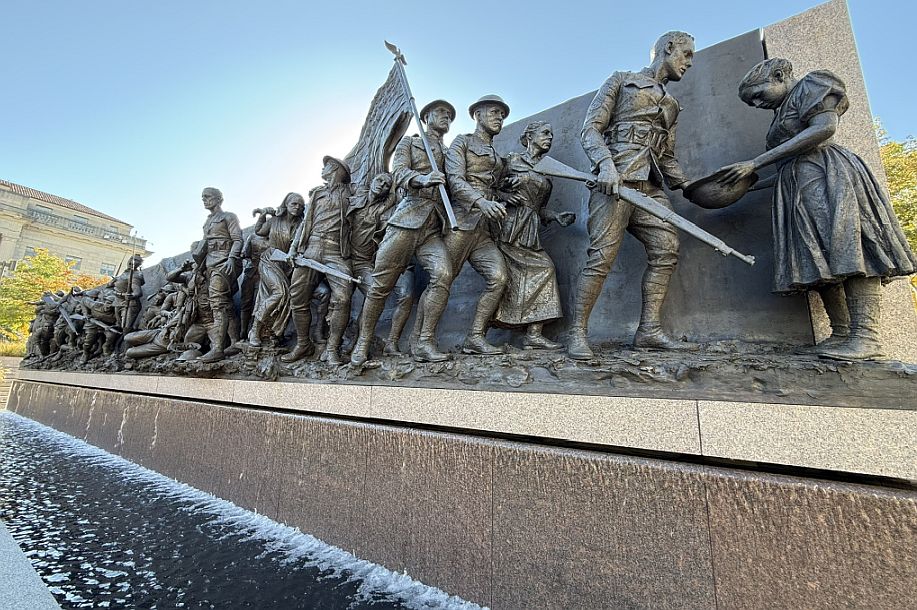
The centerpiece of the new memorial is an enormous, 38-panel, 58-foot-long bronze frieze called "A Soldier's Journey" by sculptor Sabin Howard. Instead of showing generals or battles, it is an epic narrative sculpture that depicts the journey of an American soldier throughout the war, from leaving home, through combat, injuries, loss, and the return home.
The sculpture emphasizes that World War I was fought largely by civilians suddenly drawn into global conflict.
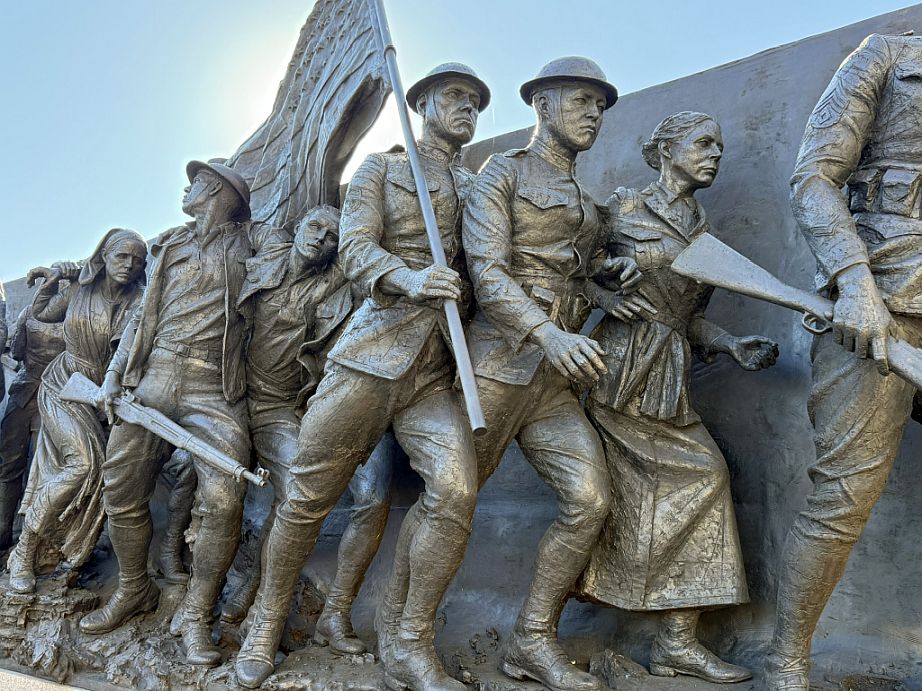
World War I (1917–1918 for the U.S.) marked: America’s emergence as a global power, The beginning of modern warfare (machine guns, trench warfare, chemical weapons), Massive social changes at home. For decades, it was sometimes called “the forgotten war” because World War II overshadowed it. This memorial corrects that absence.
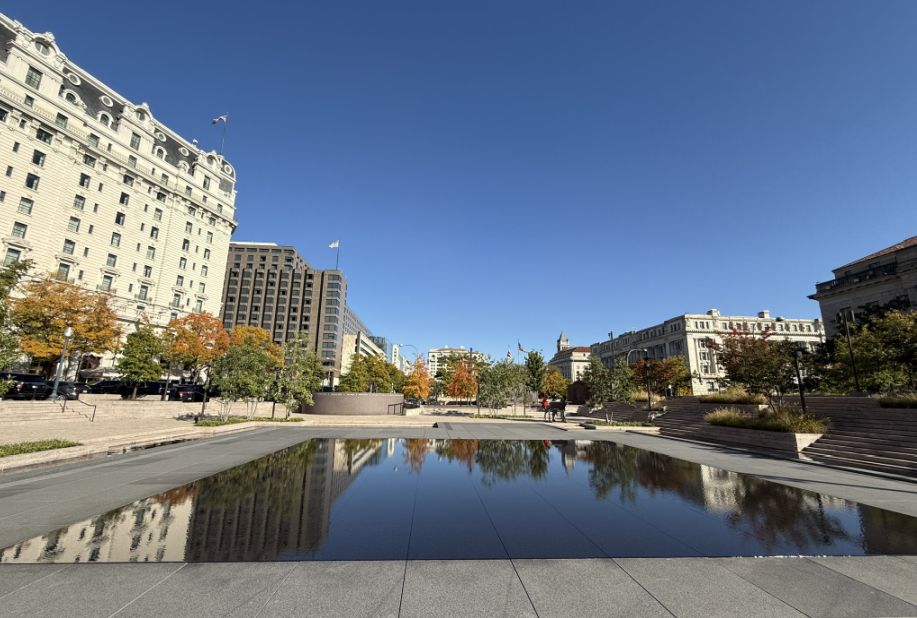
Standing behind "A Soldier's Journey" and looking towards the reflection pool, with the urban skyline as a backdrop, creates a powerful juxtaposition of past and present, contemplation and activity.
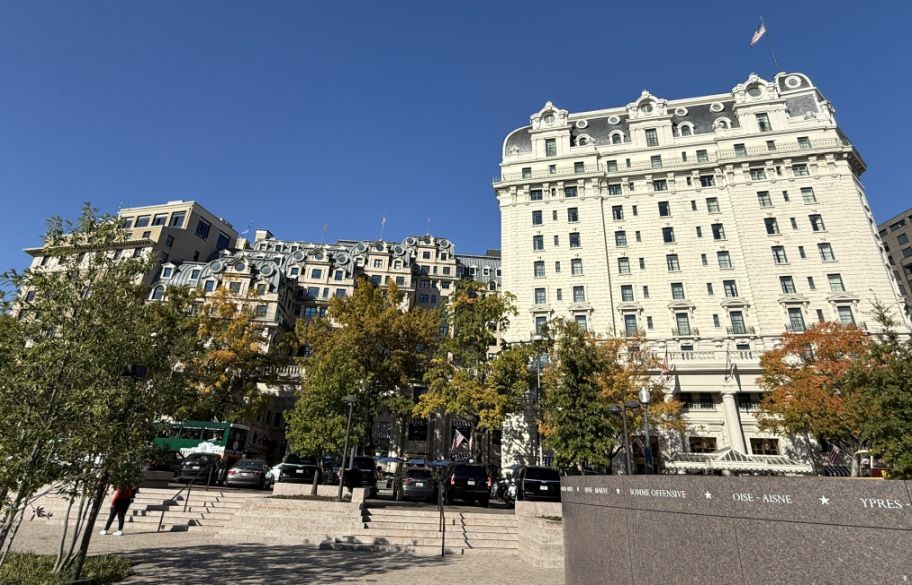
Buildings surrounding the Memorial.
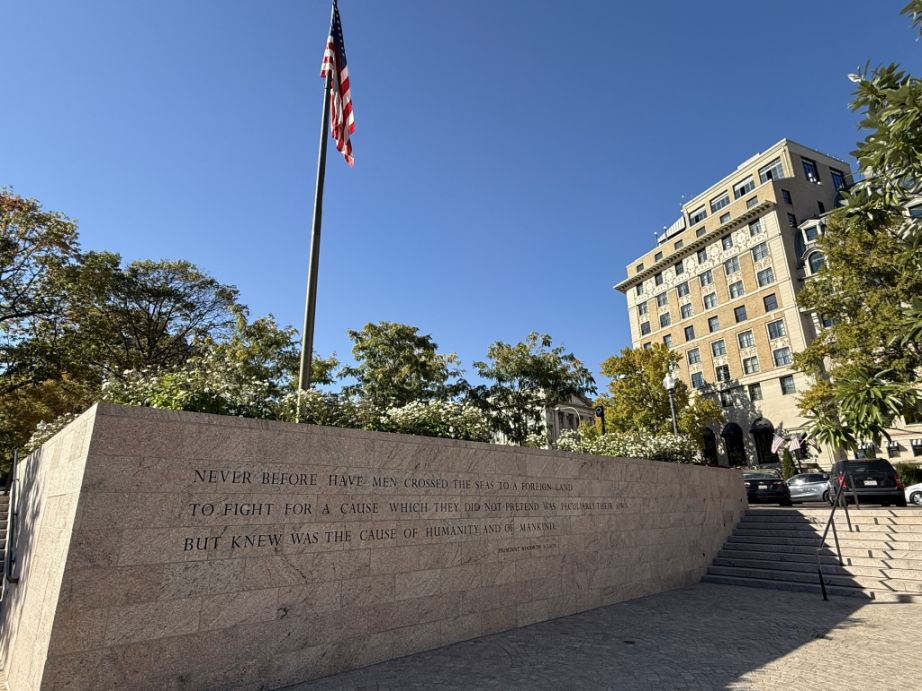
We are now leaving the park and on our way out I notice this wall with a direct quote from President Woodrow Wilson. This particular quote comes from a speech Wilson delivered to the Continental Congress of the Daughters of the American Revolution on April 17, 1917, just days after the United States officially entered World War I.
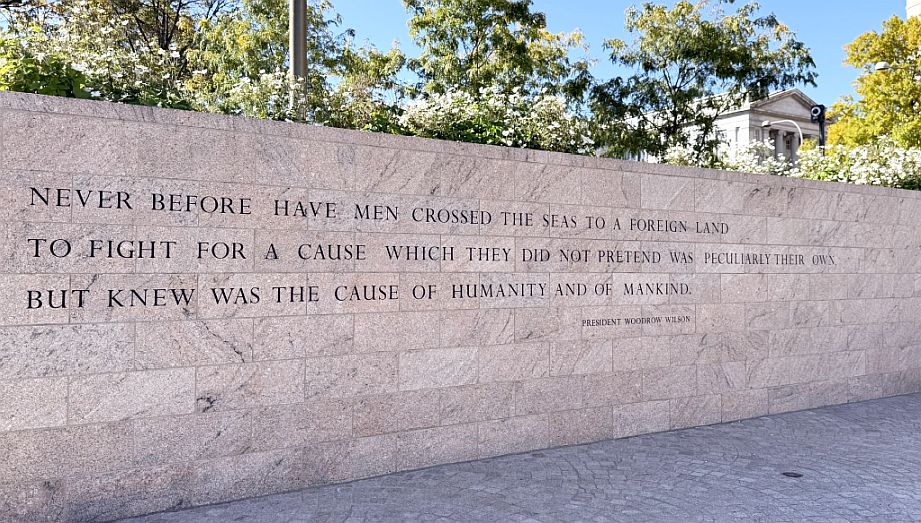
"never before have men crossed the seas to a foreign land to fight for a cause which they did not pretend was peculiarly their own, but knew was the cause of humanity and of mankind".
This specific inscription perfectly sets the tone for the National World War I Memorial. It articulates the grand, idealistic purpose behind the immense sacrifice detailed in "A Soldier's Journey" and remembered throughout the memorial. It explains why those millions of Americans "crossed the seas" and what they were told they were fighting for, even if the realities of war were often far more brutal and complex. It's a foundational statement for understanding America's role in the 20th century and its evolving place in global affairs.
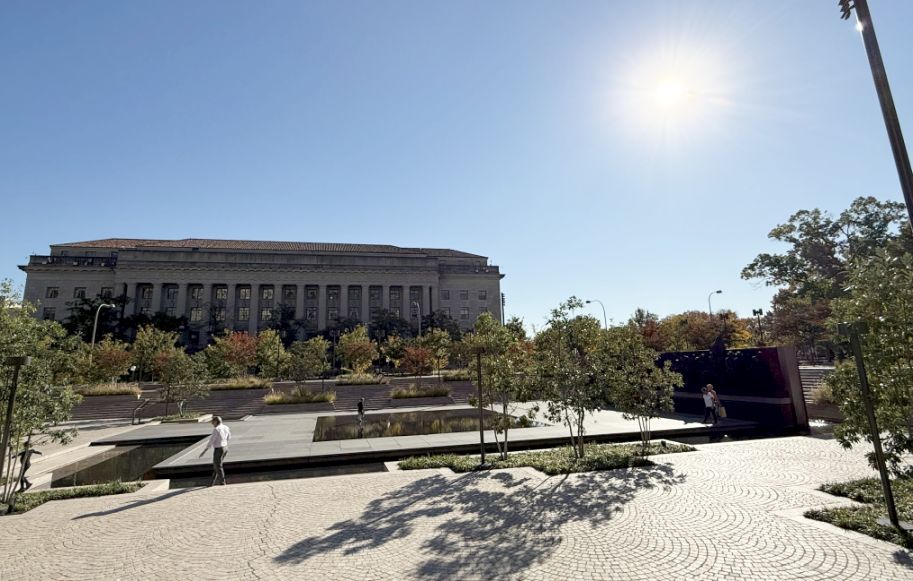
We are now leaving the memorial.
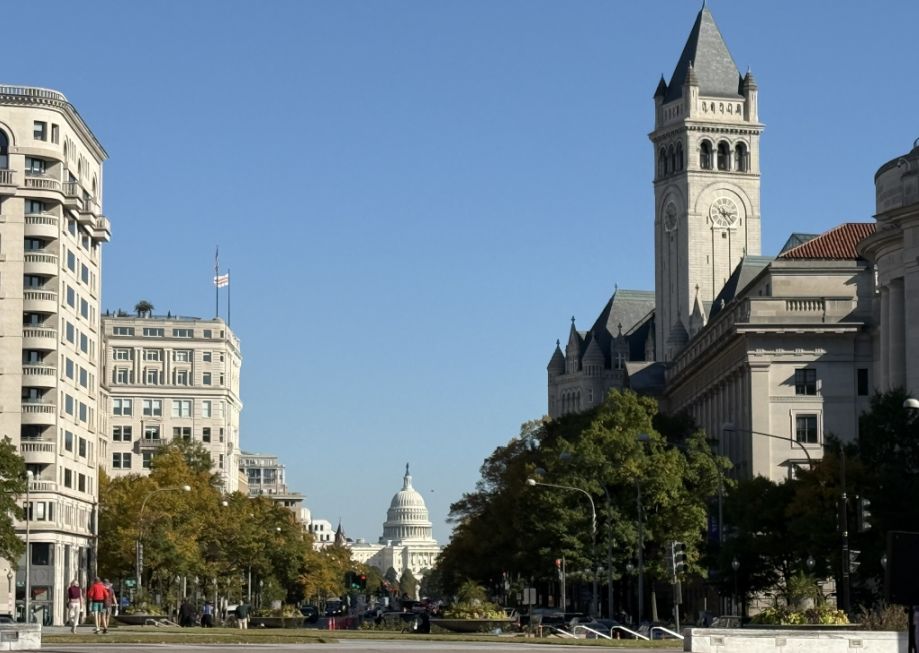
We are now walking on Pennsylvania Avenue NW, the city reasserts itself with a vibrant hum. The avenue itself is steeped in history, a ceremonial artery connecting the White House to the Capitol, lined with federal buildings and monuments. Looking eastward down this grand boulevard, past the everyday bustle of traffic and pedestrians, our gaze is drawn to a quintessential American icon: the majestic U.S. Capitol Building. Even from a distance, with other structures perhaps obscuring its lower levels, the dome of the Capitol rises above the urban skyline, a radiant symbol against the backdrop of the sky.
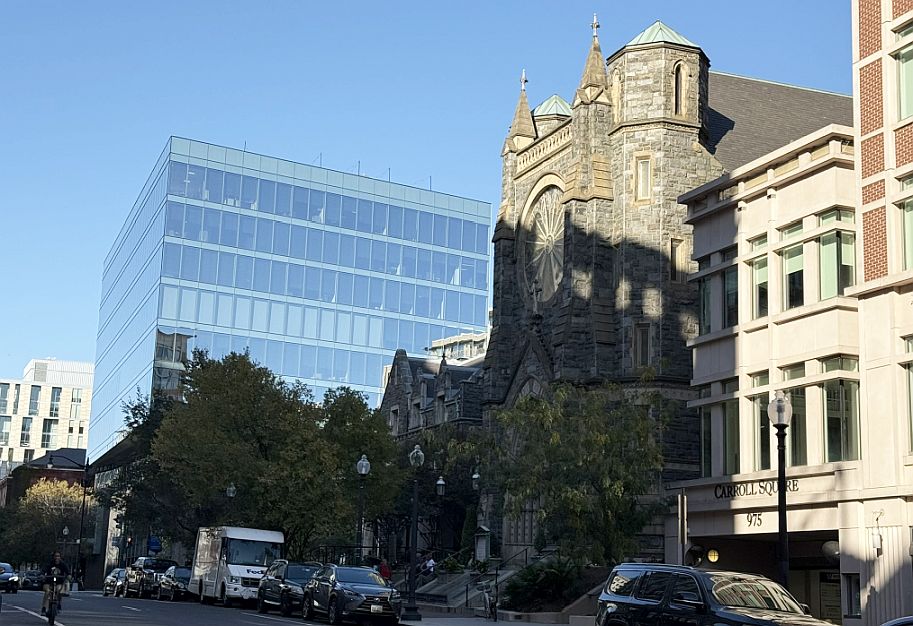
On the left is St. Patrick's is one of the oldest Catholic churches in Washington D.C., with roots tracing back to the early 19th century. The current building is in a Gothic Revival style, dates from later periods or renovations, but it retains a sense of solemnity and history. Churches of this era were built to last, often from stone, brick, or masonry, giving them a heavy, grounded, and permanent feel. In stark contrast to the church, the modern glass building next to it.
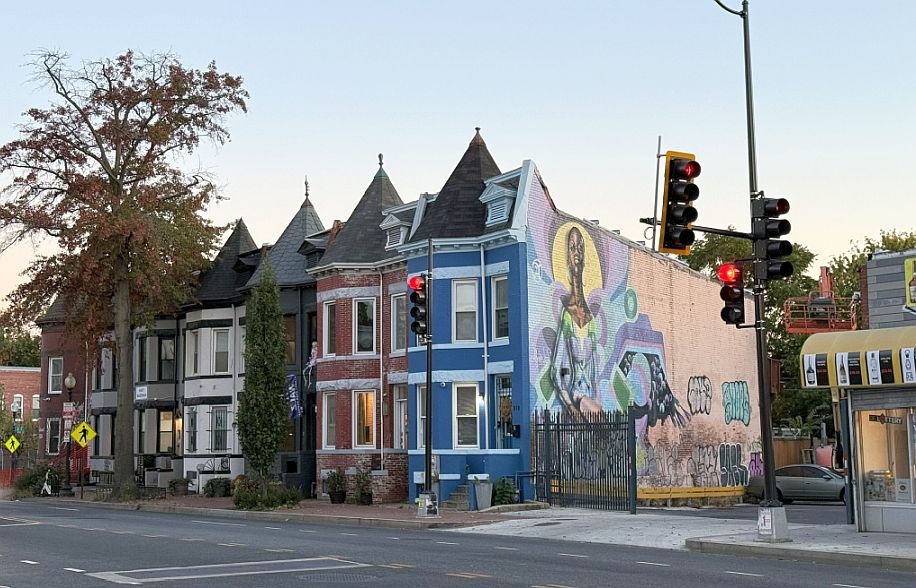
In the evening we are headed to dinner and on our way we passed by colorful Victorian and Federal-style rowhouses.

Mural by Aniekan Udofia. The artist typically uses bold lines, vibrant colors, and often a photorealistic yet stylized approach to his portraits. His subjects often exude power, dignity, and a strong sense of identity.

Many houses are late 19th or early 20th-century rowhouses, often built before zoning laws restricted color palettes.
 |
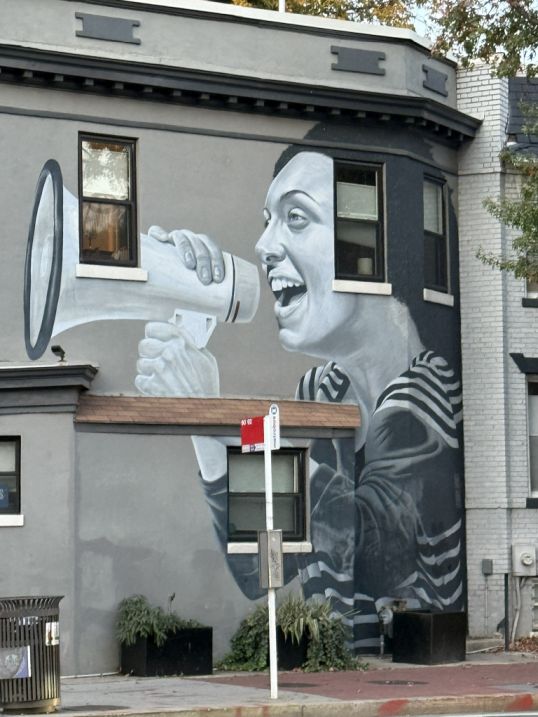 |
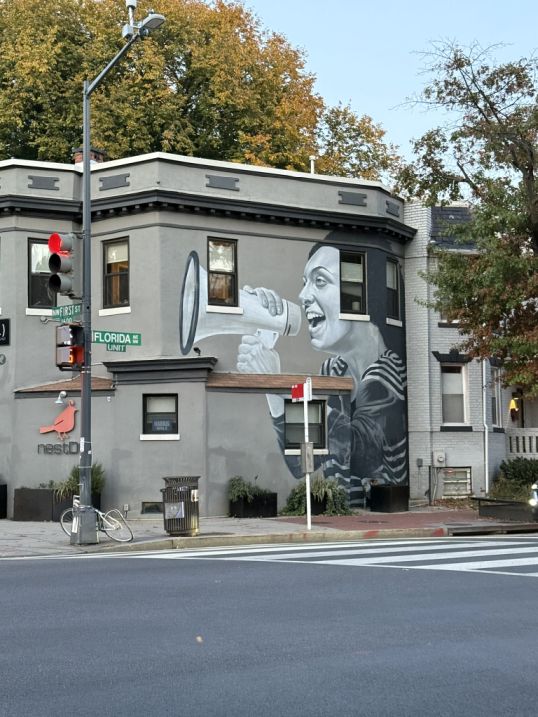
Mural by Shepard Fairey, represents generations of activists, youth engagement, and the continuing fight for social justice. The image of a "young man" can be symbolic of new energy, idealism, and the future.
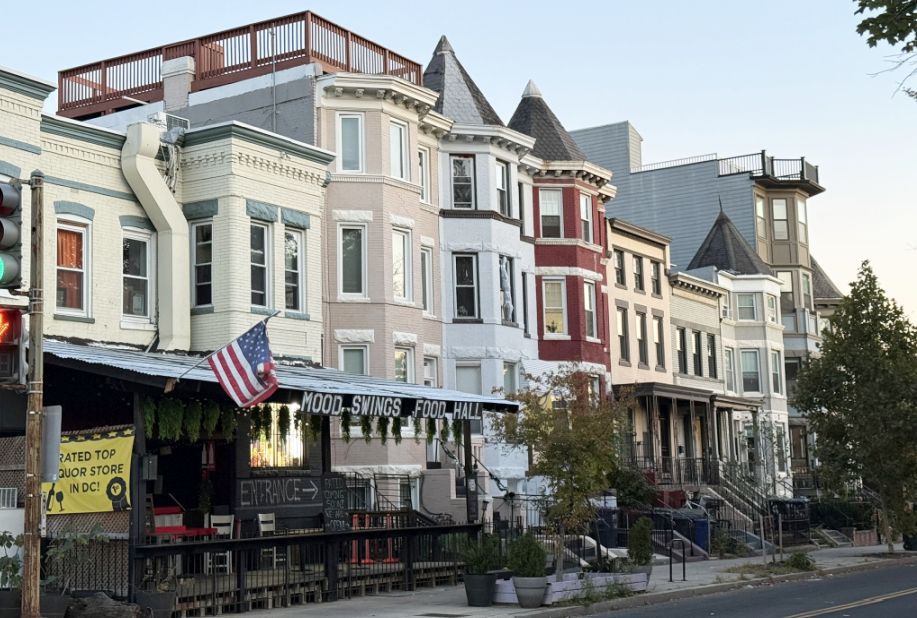
The use of bright colors contributes to a lively and distinctive neighborhood character, making these streets feel more intimate and less uniform than some of the grander, more monochromatic avenues elsewhere in D.C.
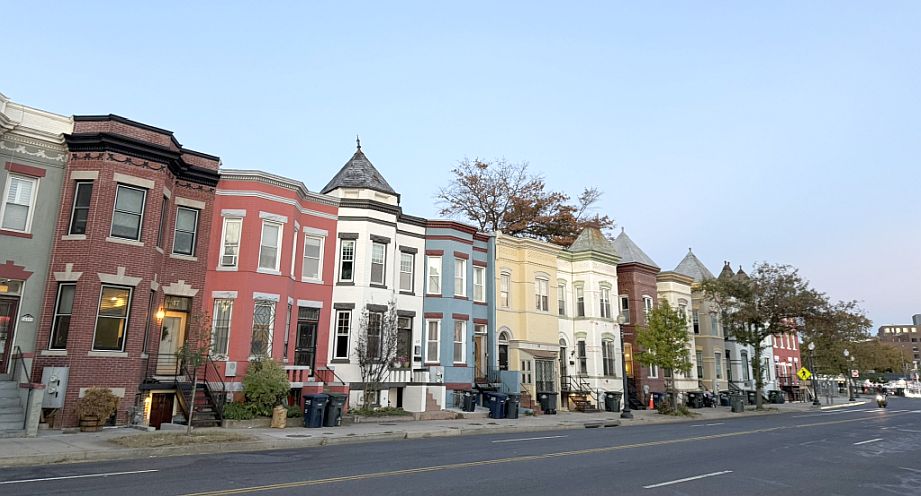
In recent decades, as these neighborhoods have experienced revitalization and gentrification, homeowners have often embraced vibrant colors (blues, greens, yellows, reds) to express personality, enhance curb appeal, and honor the architectural details of their homes, moving away from more muted tones sometimes seen in other parts of the city.
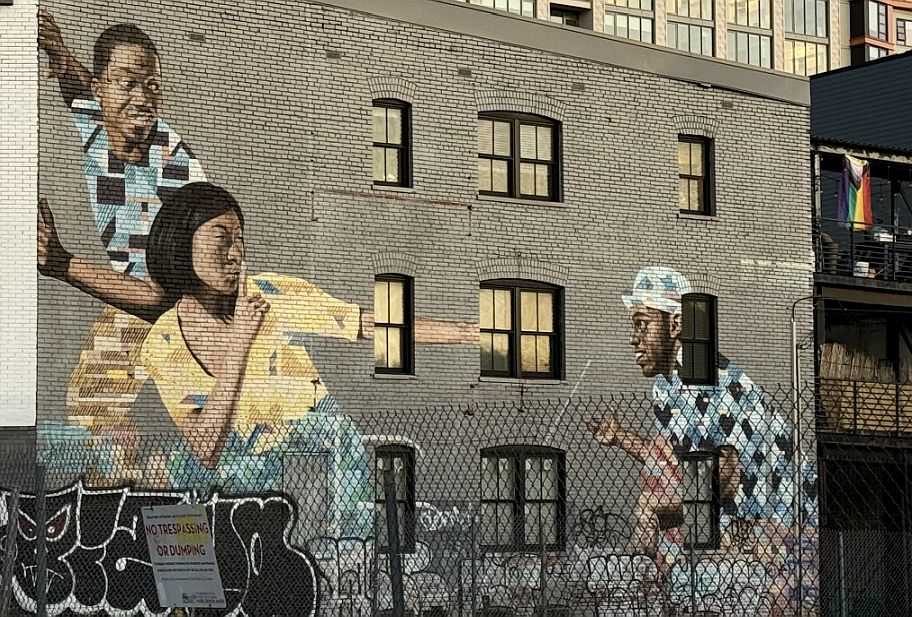
Another mural along the way. The "shushing" gesture strongly suggests a need for caution or secrecy. This could relate to sensitive community issues, historical struggles where discretion was paramount, or a shared understanding of a critical moment. The three figures, of slightly different ages, could represent different generations within the Black community. The "shush" could be a warning passed down; the watchful figure a reminder of past struggles, and the engaged boy a symbol of future action.
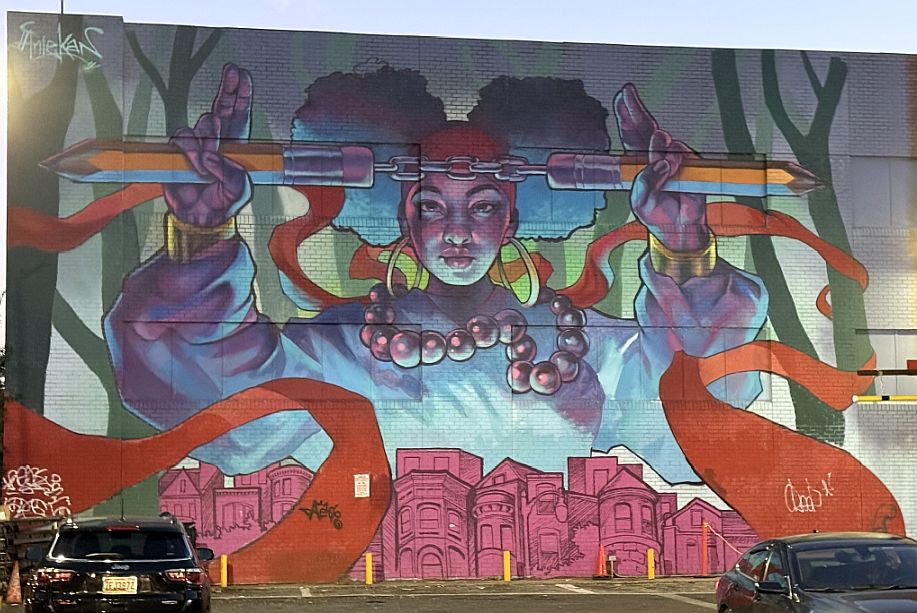
and finally another mural, at 1300 First Street NE by Aniekan Udofia in 2021.
NEXT... Day 6- Dinner at Laos in Town