6 days in Washington DC- 10/18- 10/23/2024
Day 1- Arrival in DC-10/18/2024
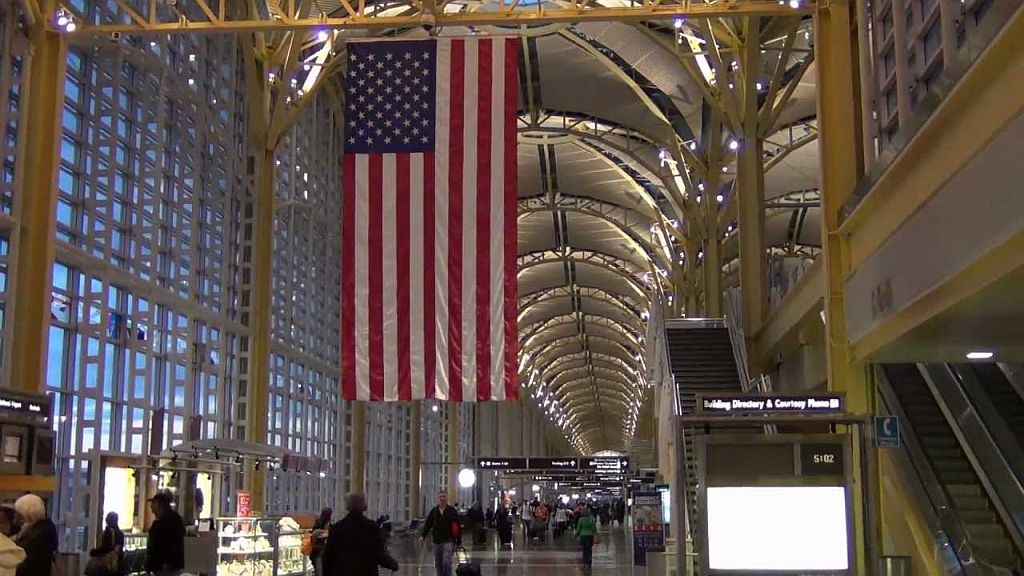
We flew from SFO directly into Ronald Reagan Washington National Airport (DCA), which turned out to be a great choice for getting into the city.
 |
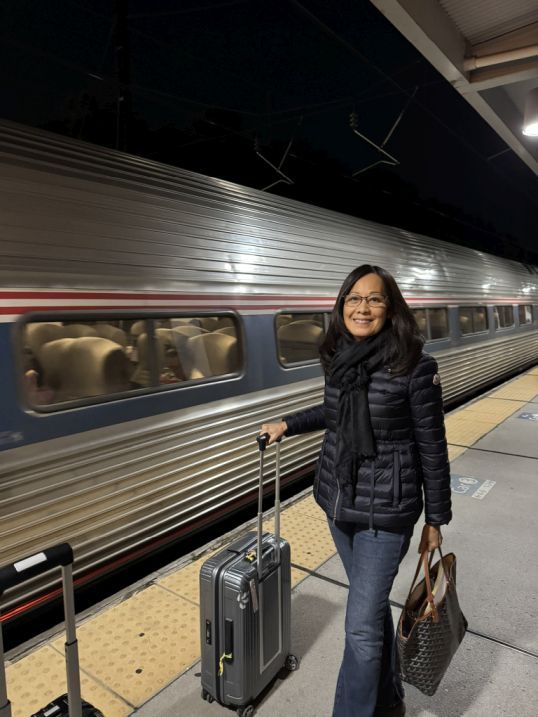 |
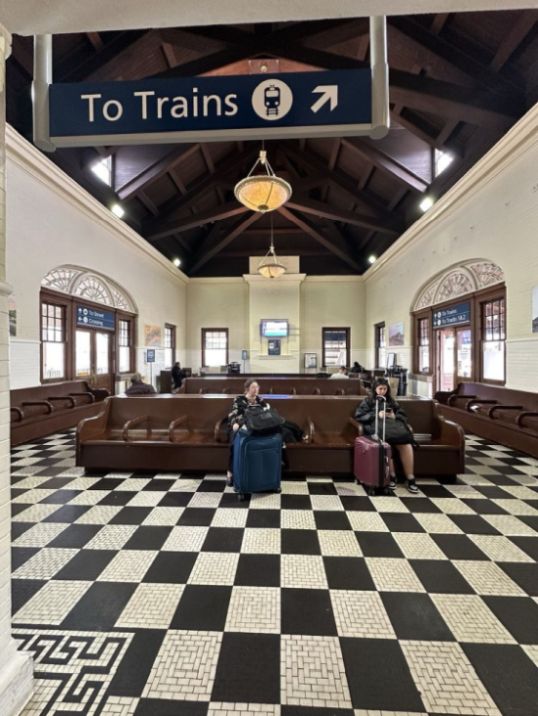
From there, we hopped on the Amtrak to head into downtown DC.
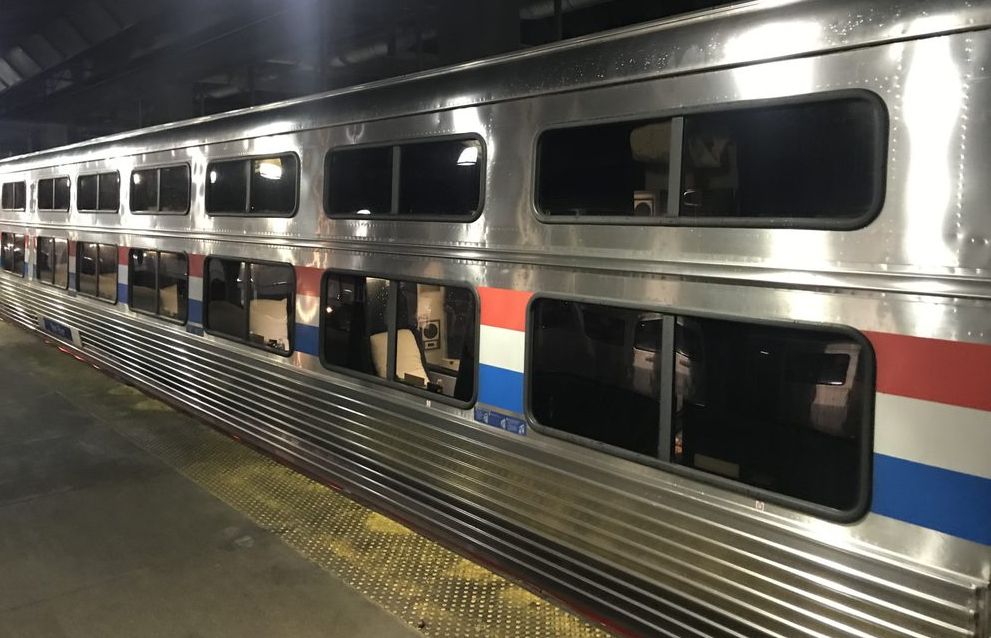
The train ride is about 25/30 minutes to Washington Union Station
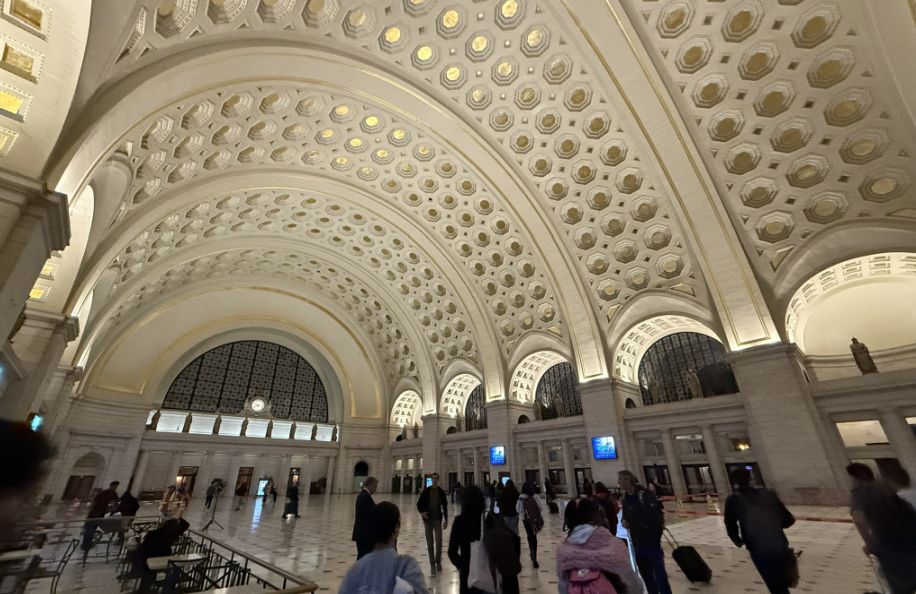
We were so shock to see how beautiful the Washington Union Station. Opened in 1907 and designed by the legendary architect Daniel Burnham, it was built to be a monumental "city within a city" that would match the grandeur of the nation's capital. Burnham drew inspiration from classical Rome, specifically the Baths of Diocletian and the Arch of Constantine. This "Beaux-Arts" masterpiece was intended to impress travelers the moment they stepped off the train, featuring white granite, massive archways, and a Main Hall so large that the Washington Monument could nearly fit inside it if laid on its side.
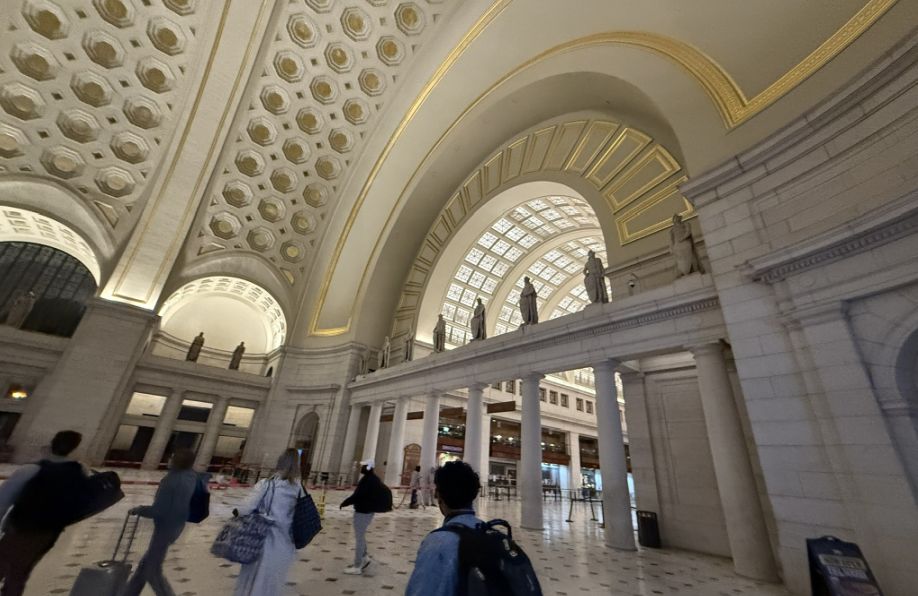
This is the main Hall with the statues overlooking the whole area.There are 46 "centurions" modeled after Roman soldiers, one for each state in the Union at the time the station was built.
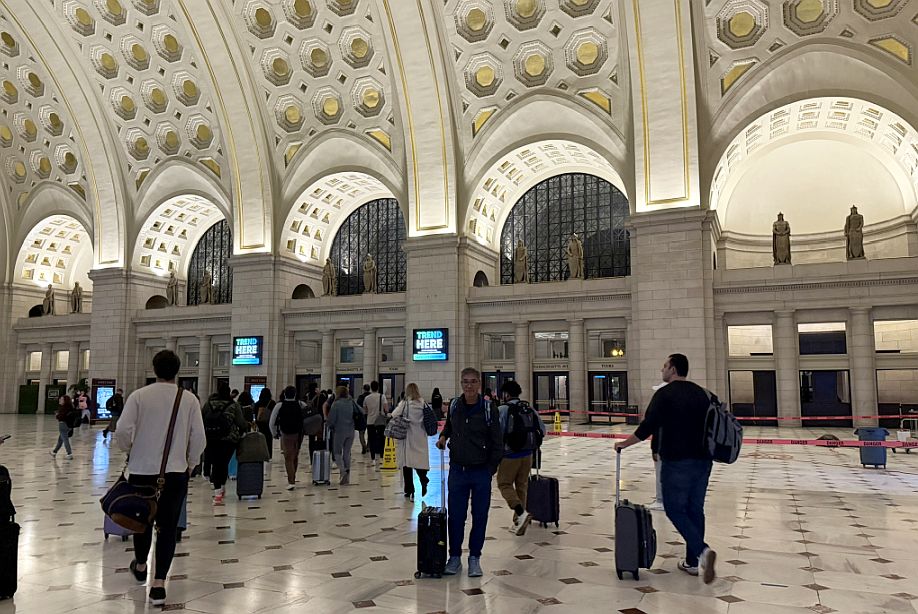
The barrel-vaulted ceiling in the Main Hall is adorned with roughly 70 pounds of 22-karat gold leaf, which was meticulously restored after years of neglect. By the 1980s, the station had fallen into such disrepair that mushrooms were growing in the damp floors and the roof was caving in. A massive $160 million restoration project in the late 1980s saved the building, transforming it into the shopping and transit hub as you see today.
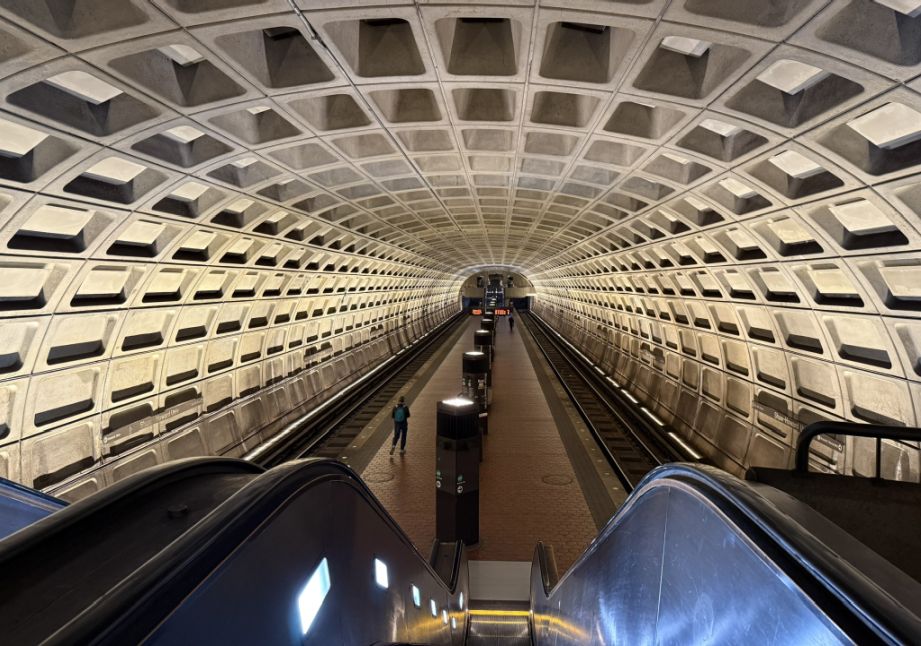
Once we got off the Washington Union Station, we too the subway and it is another shock to see how grandiose it is. The ceiling is called the "Waffle Vault," and it is a world-renowned example of Brutalist architecture. While many subways feel like cramped, dark pipes, the DC Metro was designed to feel like a "Modernist Cathedral."
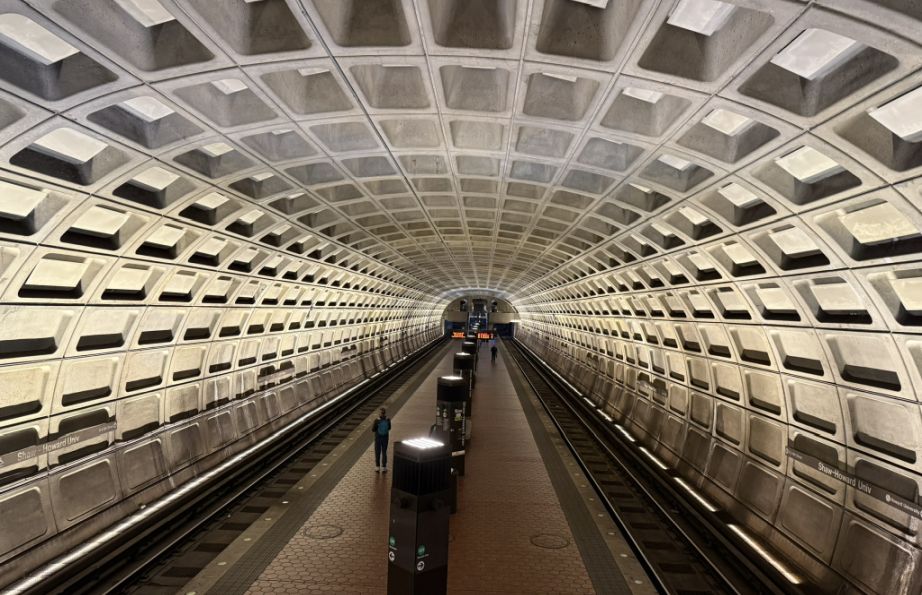
The repetitive, recessed square blocks (coffers) in the concrete ceiling serve three main purposes.
1-Aesthetics: They are a modern nod to the Pantheon in Rome, linking the underground subway to the classical monuments above ground, like the Lincoln Memorial.
2-Structural Strength: The "waffle" design allows the station to be incredibly strong while using less concrete than a solid slab would require.
3-Acoustics: The deep recesses help trap and diffuse the screeching sound of the trains, which is why the stations are surprisingly quiet compared to the New York City subway.
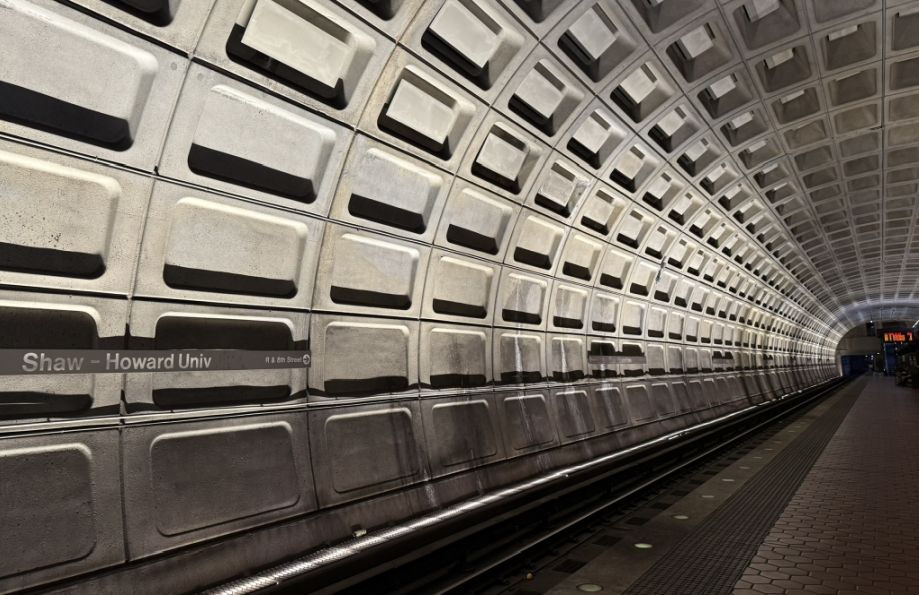
We got off Shaw-Howard Univ. station.
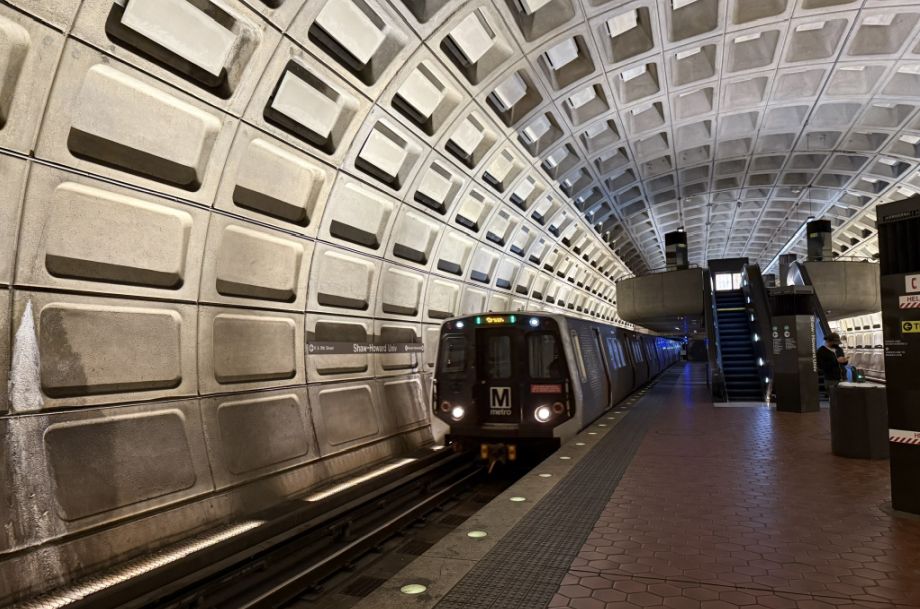
The system was designed in the 1960s by Chicago architect Harry Weese. He insisted on column-free platforms. By using that massive arch to support the weight of the earth above, he created a wide-open space where you can see from one end of the 600-foot platform to the other. This was actually a safety feature, the open sightlines were meant to make passengers feel more secure.
The red hexagonal floor tiles on the floor were specially chosen to be slip-resistant and to match the "earthy" tones of the raw concrete.
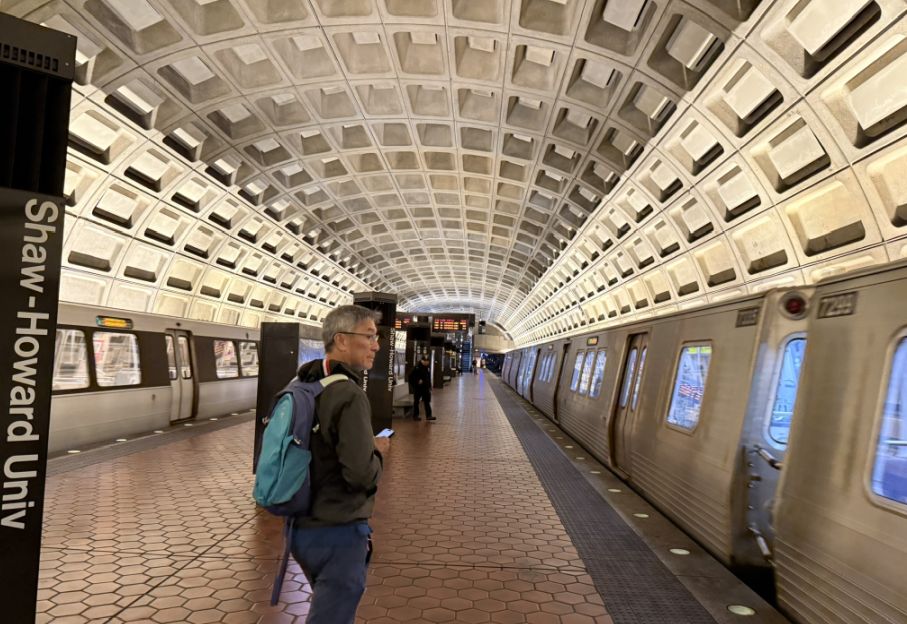
The system was designed in the 1960s by Chicago architect Harry Weese. He insisted on column-free platforms. By using that massive arch to support the weight of the earth above, he created a wide-open space where you can see from one end of the 600-foot platform to the other. This was actually a safety feature, the open sightlines were meant to make passengers feel more secure.
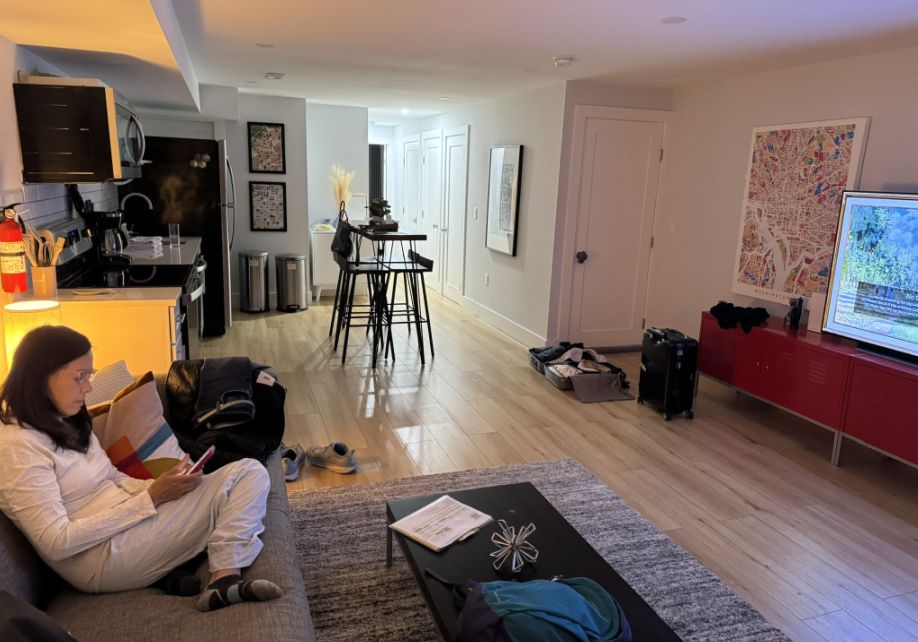
We made it to our Air B&B and resting for the evening.
NEXT... Day 2- Guided City tour