6 days in Washington DC- 10/18- 10/23/2024
Day 5- National Museum of the American Indian-10/22/2024
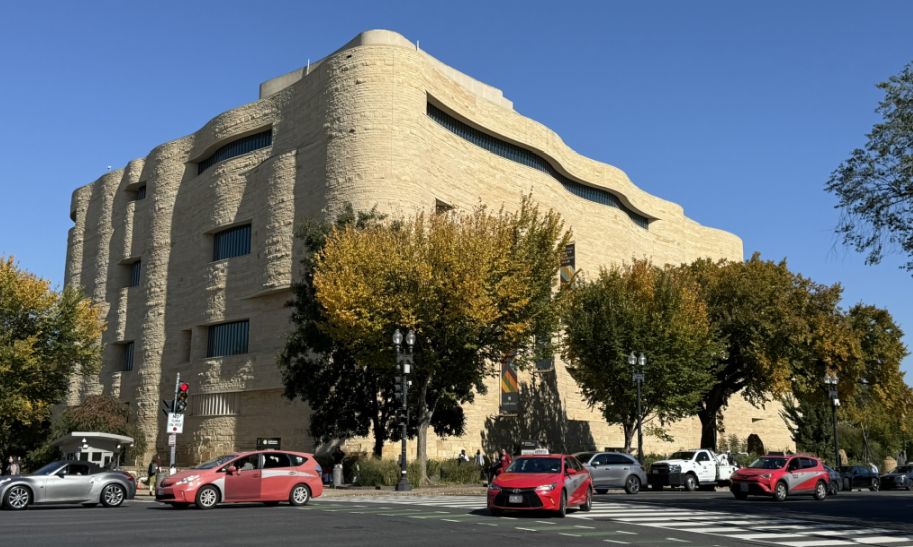
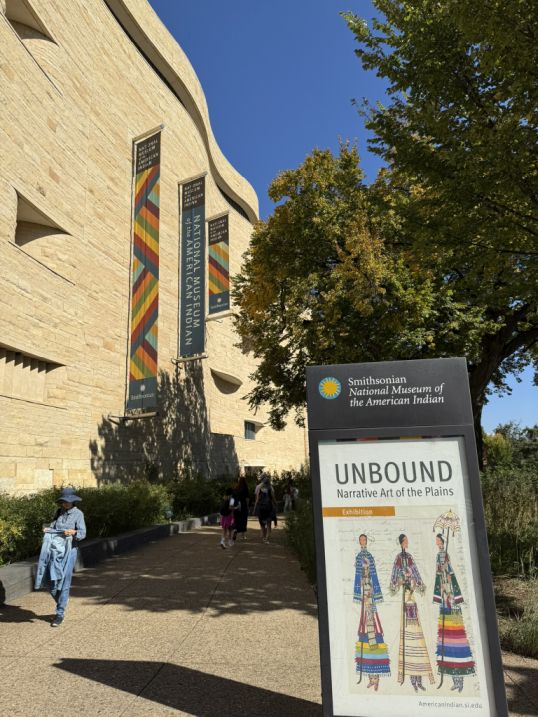
The National Museum of the American Indian (NMAI) in Washington D.C. is a fascinating institution dedicated to the life, languages, literature, history, and arts of Native Americans of the Western Hemisphere.
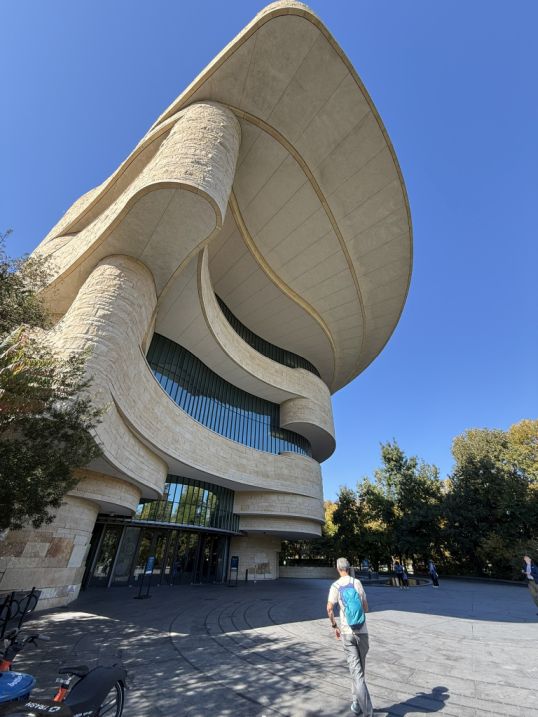
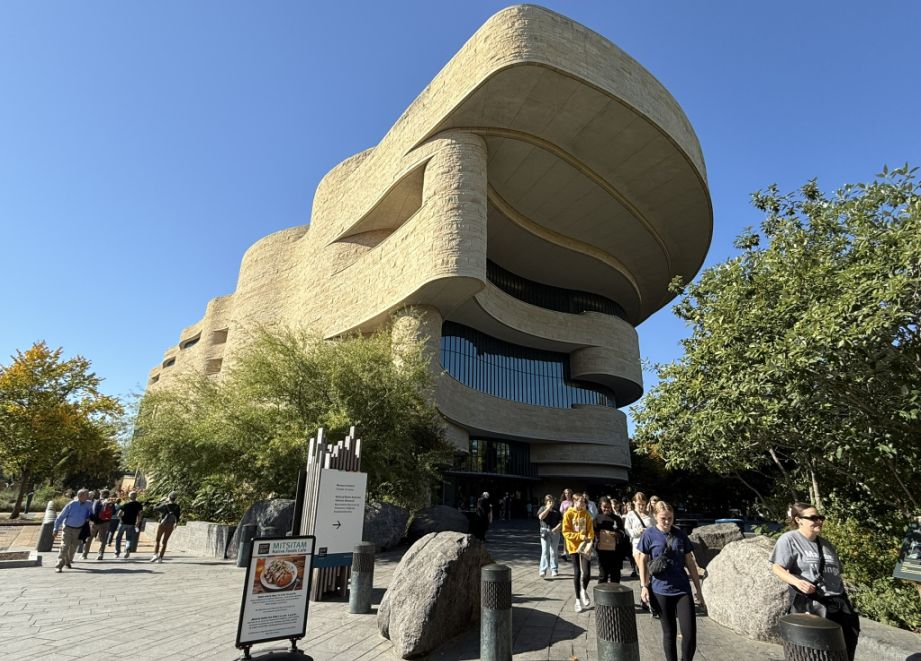
The museum building itself is a significant part of the experience. It was designed by Douglas Cardinal, a Blackfoot architect, along with John Paul Jones (Cherokee/Choctaw), and others. The design consciously departs from the neoclassical architecture common in Washington D.C., instead drawing inspiration from natural forms and Native American architectural traditions.
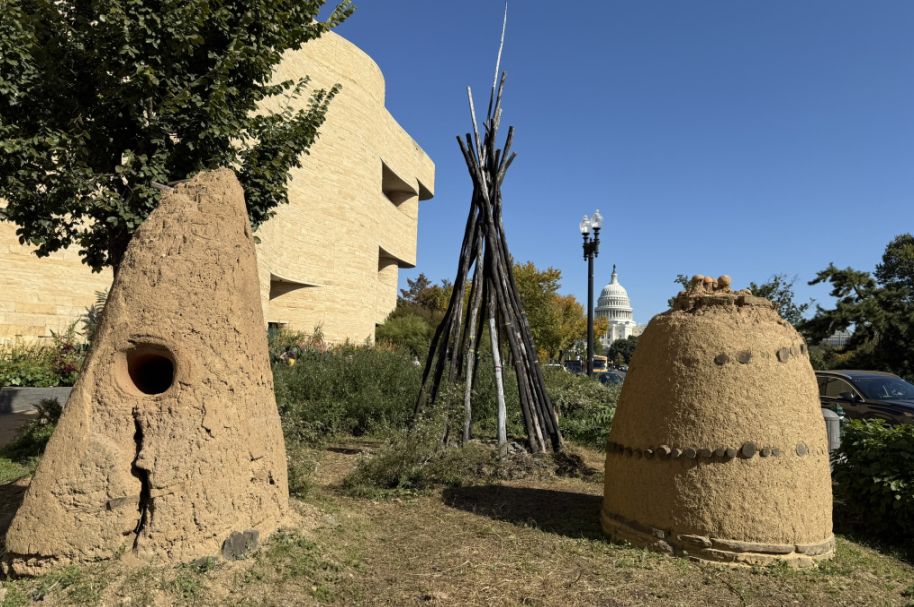
The museum is surrounded by an innovative "living landscape" that features more than 33,000 trees and plants representing four distinct natural habitats native to the North American continent: an upland hardwood forest, a lowland freshwater wetland, an eastern deciduous forest, and a cultivated crop area. This landscape is integral to the museum's message, showcasing a sustainable relationship with the environment.
 |
 |
The National Museum of the American Indian is part of the Smithsonian Institution and has a relatively recent but impactful history. The museum was established by an act of Congress in 1989. Its creation was largely a result of decades of advocacy by Native American communities and activists who felt that existing institutions did not adequately represent their cultures and histories from their own perspectives. The museum was founded around the collection of George Gustav Heye, a wealthy New Yorker who amassed over 800,000 artifacts from Native cultures throughout the Americas. This collection formed the core of the museum's holdings.

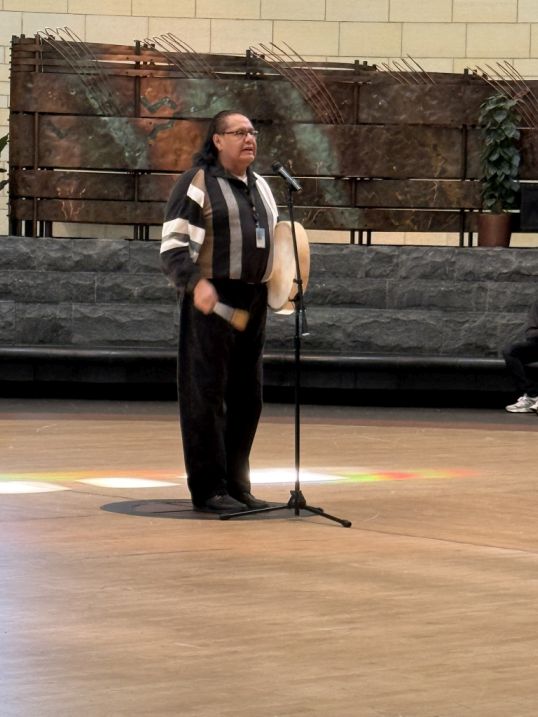
The Potomac Atrium with a dome-shaped ceiling, an opening at the top is a key feature of the Atrium. This oculus allows natural light to flood the space, creating a spiritual and uplifting atmosphere. It also connects the interior of the building to the sky, a symbolic gesture often found in traditional Native architecture.
 |
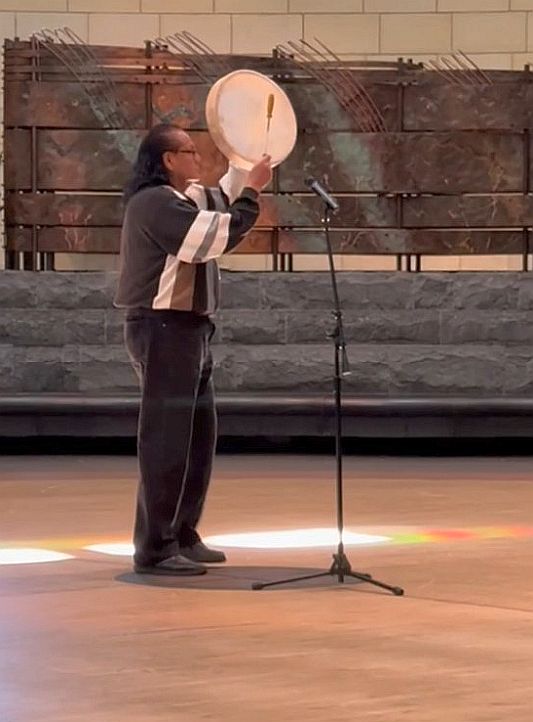 |
A Native American drumming demonstration. Drumming is a profoundly important part of many indigenous cultures across the Americas. The drum is often considered the heartbeat of Native American music and culture. Its rhythmic pulse is believed to connect the physical and spiritual worlds, community members with each other, and present generations with their ancestors. The sound of the drum pulsating through the Potomac Atrium is an incredibly powerful and evocative experience, perfectly embodying the museum's mission to celebrate the living cultures of Native peoples. It's a fantastic way to be introduced to the spirit and cultural depth of the Museum of the American Indian.
 |
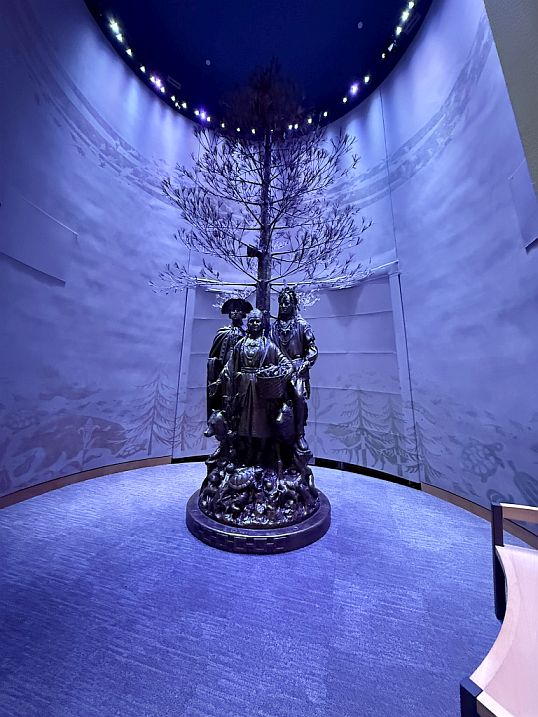 |
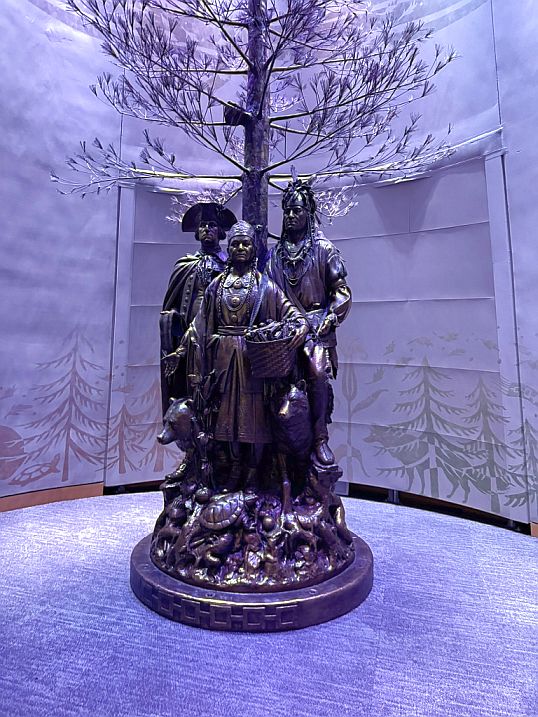
Allies in War, Partners in Peace, 2004 by Edward E. Hlavka, 1964
This statue honors the alliance between the Oneida Indian Nation and the United States during the American Revolution. General George Washington stands alongside the Oneida diplomat Oskanondonha, of Skenendoah, and Polly Cooper, and Oneida woman who came to the aid of Washington troops at Valley Forge in 1777-78.
The enhanced presentation of Allies in War, Partners in Peace is made possible by support from the Oneida Indian Nation.
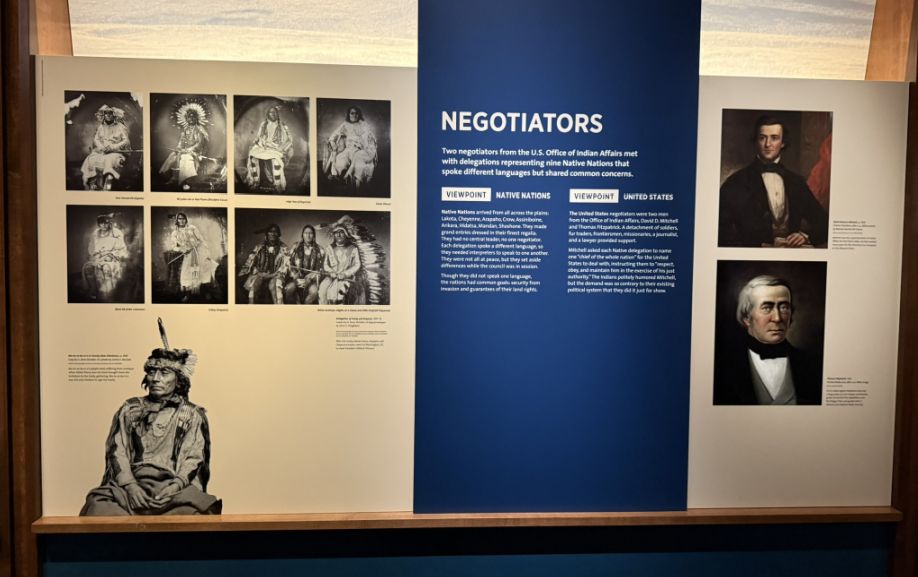
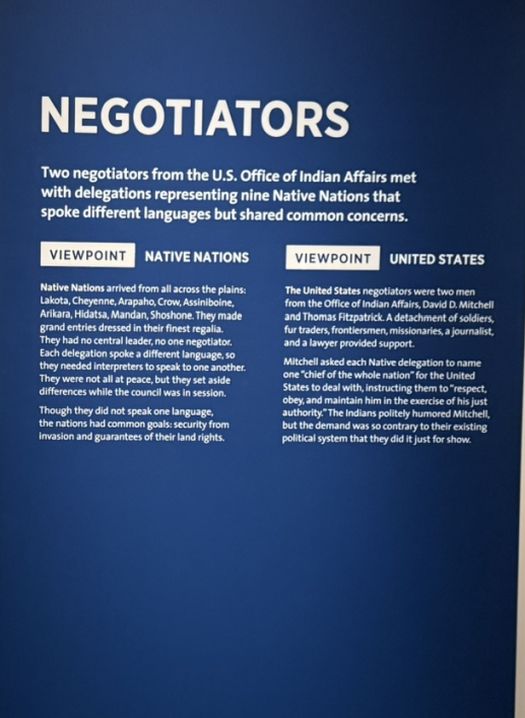
Two negotiator from the U.S. office of Indian Affairs met with delegations representing nine Native Nations that spoke different languages but shared common concerns.
This section explains how treaties between Native nations and the United States were created in the mid-1800s, especially during the rapid American expansion into California after the Gold Rush (1848). After California became a U.S. state in 1850, violence, displacement, and conflict between settlers and Native peoples increased dramatically. The U.S. government sent commissioners to negotiate treaties with California tribes. Between 1851–1852, federal negotiators signed 18 treaties with more than 100 Native California tribes. Native leaders believed these agreements would protect their homelands, provide food supplies, and establish reservations where they could live safely. Many tribal leaders negotiated in good faith, often under extreme pressure and language barriers.
 |
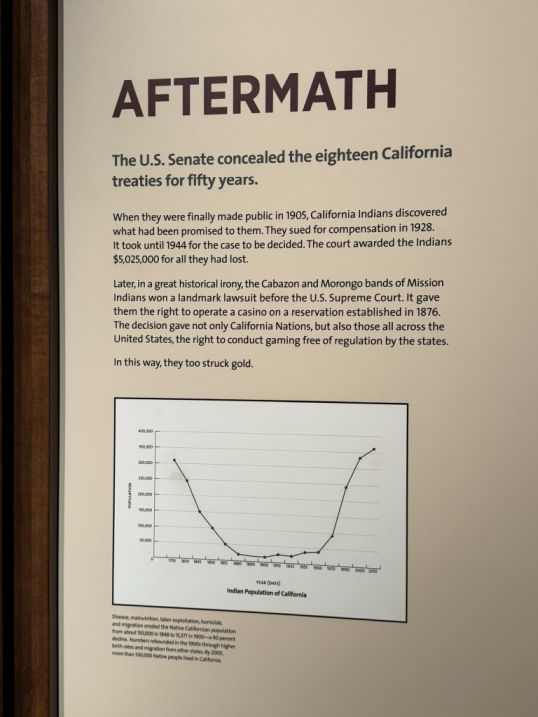 |
The shocking part, shown in the aftermath chart is what happened next: California settlers strongly opposed giving land to Native peoples. Political pressure from California lawmakers and settlers led the U.S. Senate to secretly reject all 18 treaties. Instead of announcing the rejection, the Senate placed the treaties under an injunction of secrecy. Native communities believed agreements existed that would protect them. But legally, no reservations were created under those treaties. Many Native Californians were displaced, forced into labor, or suffered devastating population loss.
In the 20th century, Native groups brought claims against the United States through special legal processes, especially the Indian Claims Commission, created by Congress in 1946 to address historical injustices. California tribes argued that the U.S. had taken millions of acres of land without compensation. In 1964, the Commission awarded 29 Million compensation to Native Californians. The payment was calculated based on the value of the land in the 1850s, not modern value. The land involved covered tens of millions of acres. The payment amounted to only a few cents per acre by modern standards. Tribes received money, but not the return of land.
 |
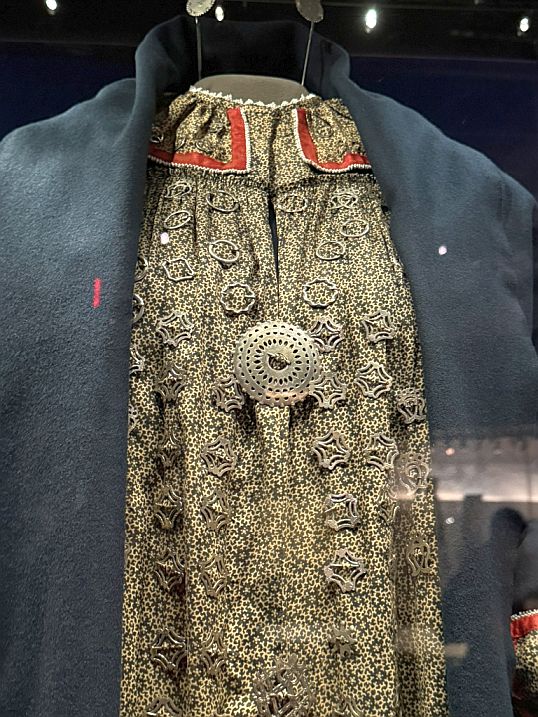 |
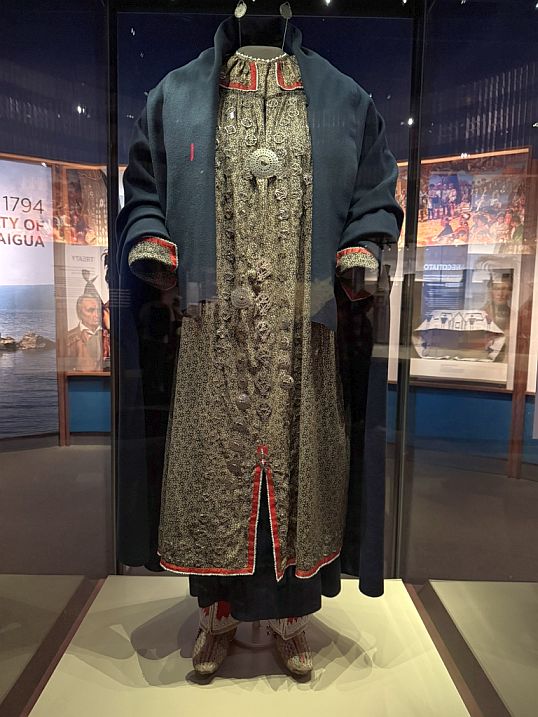
Seneca dress, 1870- Tonawanda Reservation, New York Cotton cloth, Silk ribbon, dye, silver and copper alloy brooches, glass beads, cotton thread. Although dating to a later period this calico dress laden with brooches is similar to dresses that Seneca clan mother would have worn.
Traditionally, Haudenosaunee women did not speak in councils. But when a white female evangelist was allowed to speak at the Canadaigua treaty sessions, three clan mothers demanded their turns. Speaking through Red Jacket, they said, "the whites ought to five them back the lands that had taken from them... One of the white women had yesterday told the Indians to represent; and they now called on the white people to repent... and.. wrong the Indians no more.
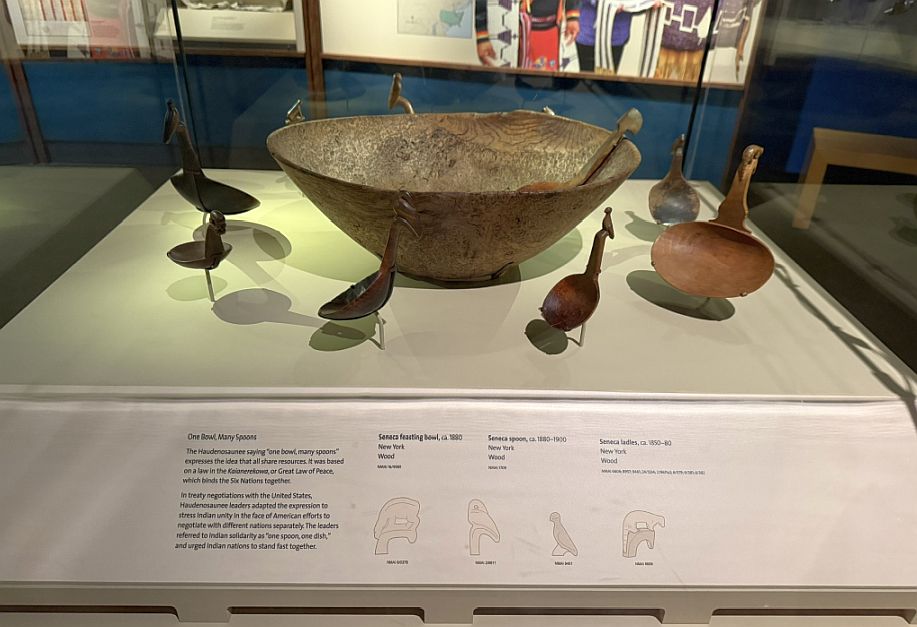
One Bowl, Many spoons.
The Haudenosaunee saying "one bowl, many spoons" expresses the idea that all share resources. It was based on a law in the Kaianerekowa, or Great Law of Peace, which binds the Six Nations together. In treaty negotiations with the United States, Haudenosaunee leaders adapted the expression to stress Indian unity in the face of American efforts to negotiate with different nations separately. The leaders referred to Indian solidarity as "one spoon, one dish," and urged Indians nations to stand fast together.
 |
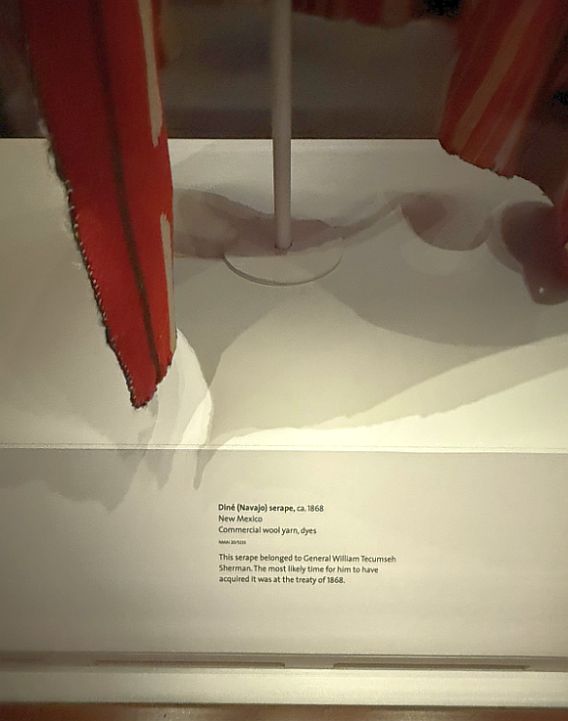 |
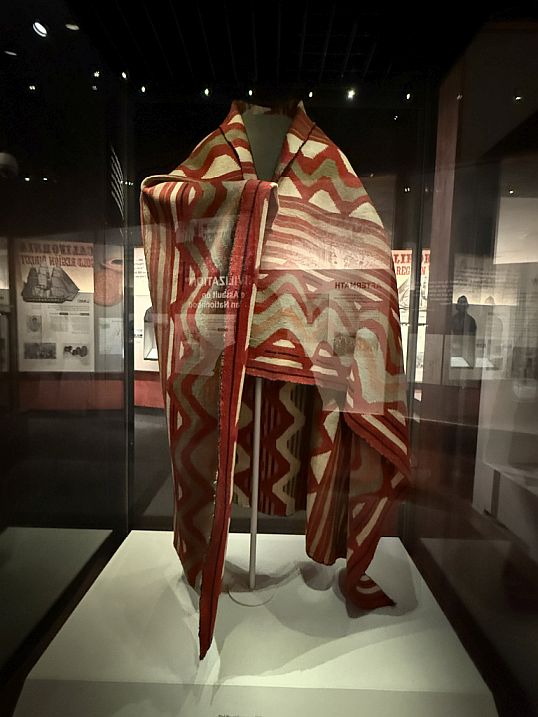
Dine (Navaja) serape, 1868, New Mexico, Commercial wool yarn, dyes
This serape belonged to General William Tecumseh Sherman. The most likely time for him to have acquired it was at the treaty of 1868
 |
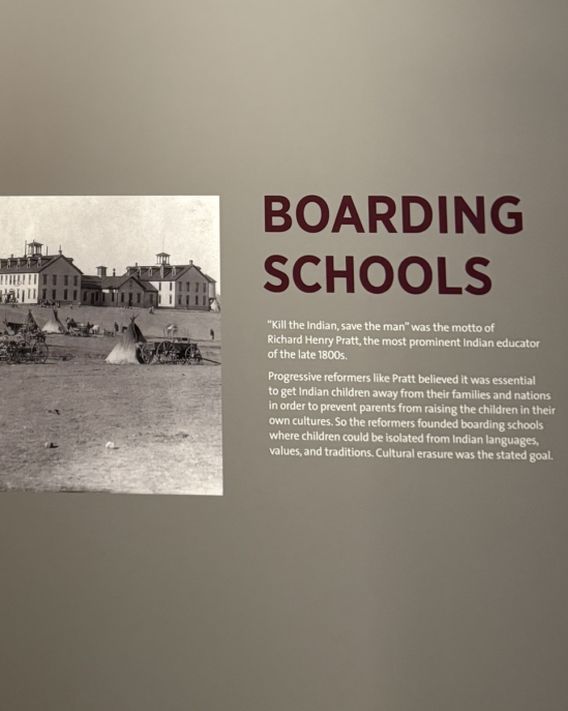 |
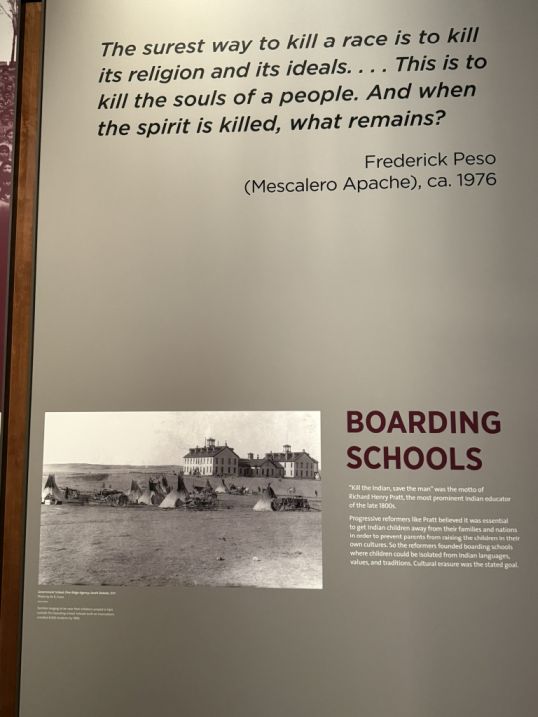
Boarding schools: " Kill the Indian, save the man" was the motto of Richard Henry Pratt, the most prominent Indian educator of the late 1800s.
Progressive reformers like Pratt believed it was essential to get Indian children away from their families and nations in order to prevent parent from raising their children in their own cultures. So the reformers founded boarding schools where children could be isolated from Indian languages, values, and traditions. Cultural erasure was the stated goal.
 |
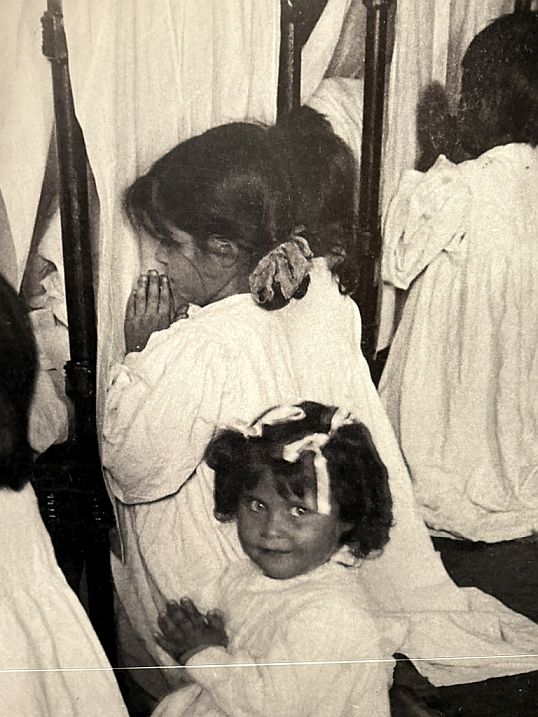 |
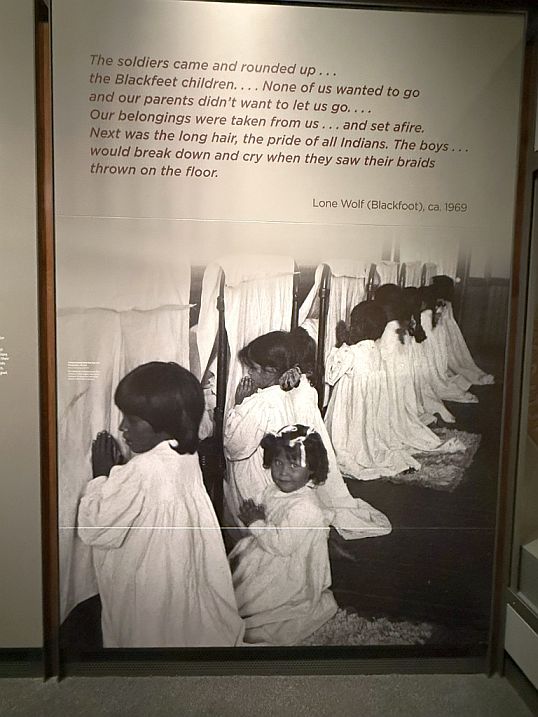
The soldiers came and rounded up...the Blackfeet children... None of us wanted to go and our parents didn't want to let us go... Our belongings were taken from us... and set afire. Next was the long hair, the pride of all Indians. The boys.. would break down and cry where they saw their braids thrown on the floor. Lone Wolf (Blackfoot), 1969
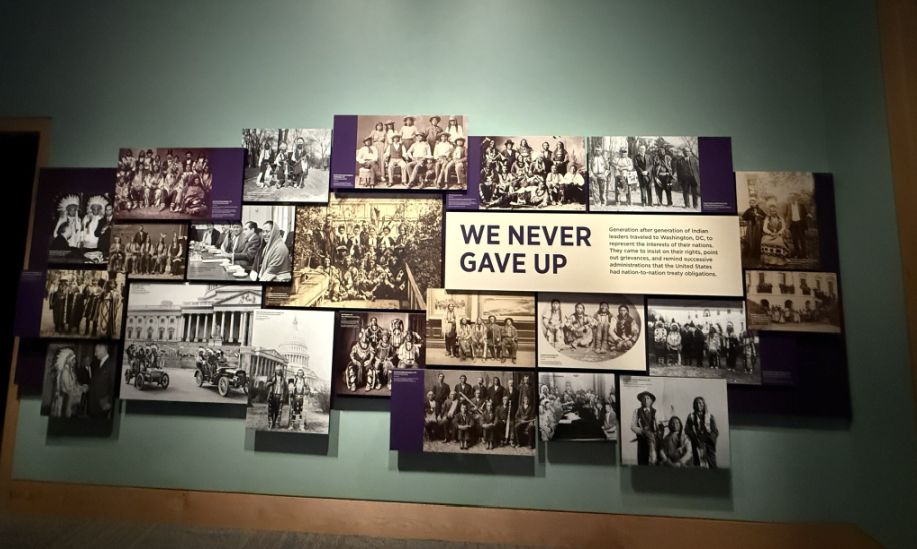
We Never Gave Up-Generation after generation of Indian leaders traveled to Washington, D.C, to represent the interest of their nations. They came to insist on their rights, point out grievances, and remind successive administrations that the United States had Nation-to nation treaty obligations.
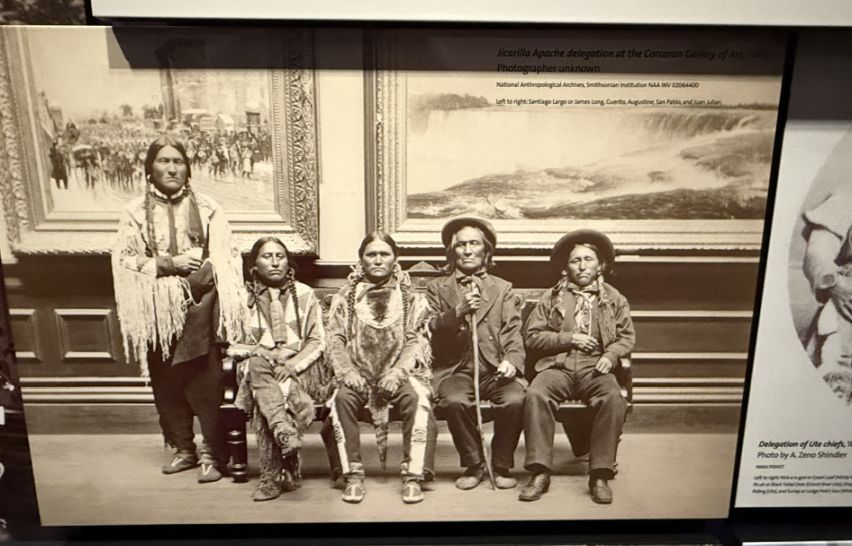
Jicarlilla Apache delegation at the Corcoran Gallery of Art.
 |
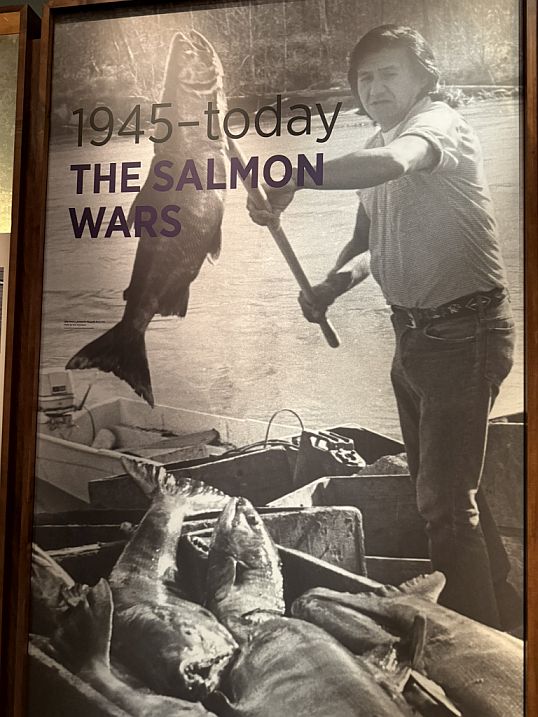 |
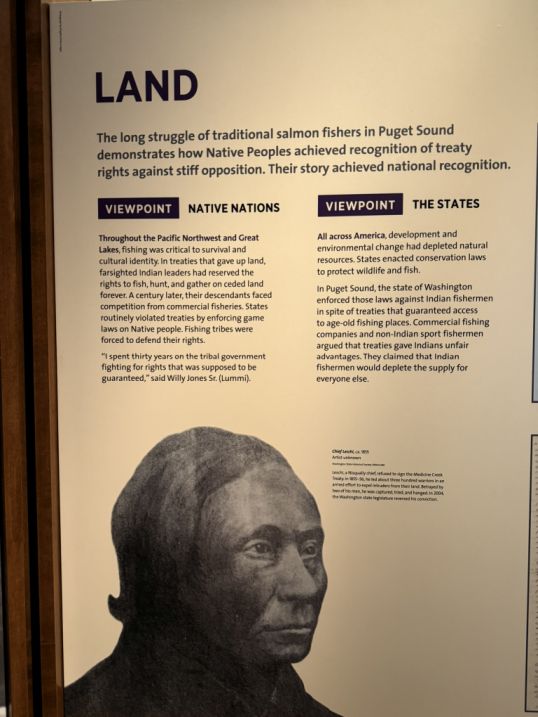
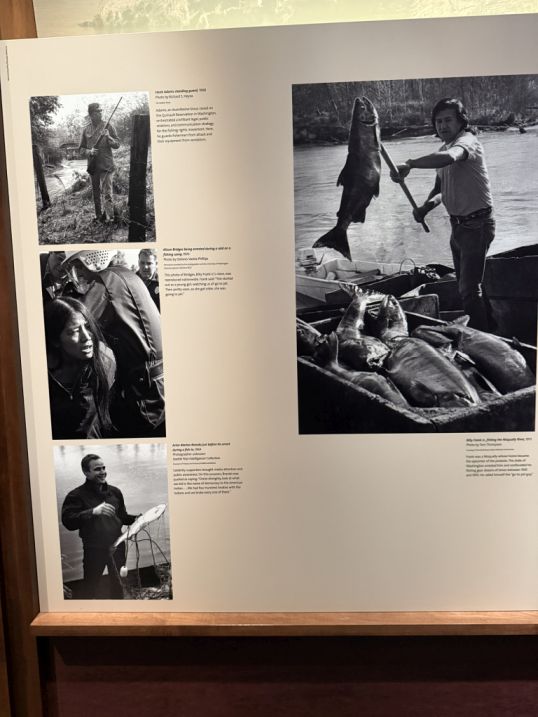
We are re now looking at a story centered in the Pacific Northwest, one of the most important modern Native rights struggles in the United States: the fight over salmon fishing rights in Puget Sound. The long struggle of traditional salmon fishers in Puget Sound demonstrated how Native People achieved recognition of treaty rights against stiff opposition. Their story achieved national recognition. Why Salmon Matters. For Native nations around Puget Sound, salmon are not just food, they are central to: culture and spirituality, economy trade, identity and treaty rights going back thousand of years. Tribes such as the Nisqually, Puyallup, Yakama, and others depended on seasonal salmon runs long before the United States existed.
 |
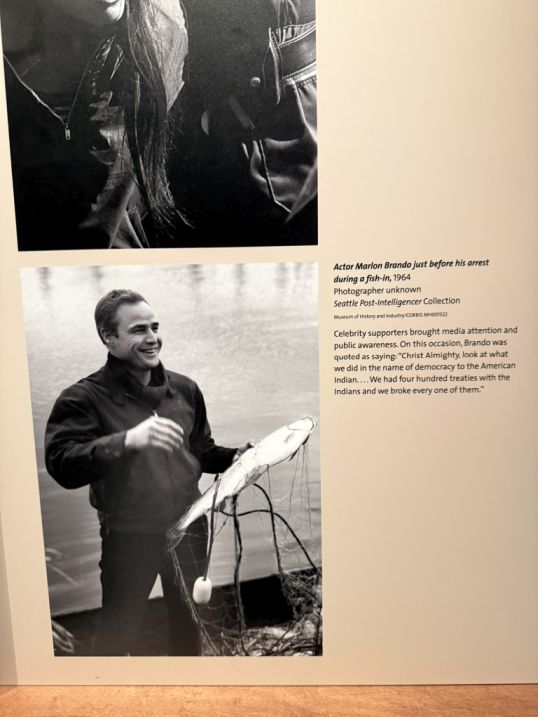 |
Marlon Brando became involved in the fish-ins in 1964, lending his celebrity status to the cause. He traveled to Washington State to support the Nisqually and Puyallup tribes. In March 1964, Brando participated in a "fish-in" on the Nisqually River alongside tribal members, including Native American activist and actor Richard Oakes. They were engaged in fishing with nets, which was illegal under state law at the time for tribal members at that particular location unless they had state-issued licenses and followed specific regulations. Brando, Oakes, and others were arrested for illegally fishing. Brando's presence significantly amplified the media attention surrounding the fish-ins, bringing national and international scrutiny to the struggle for Native American treaty rights. While his involvement
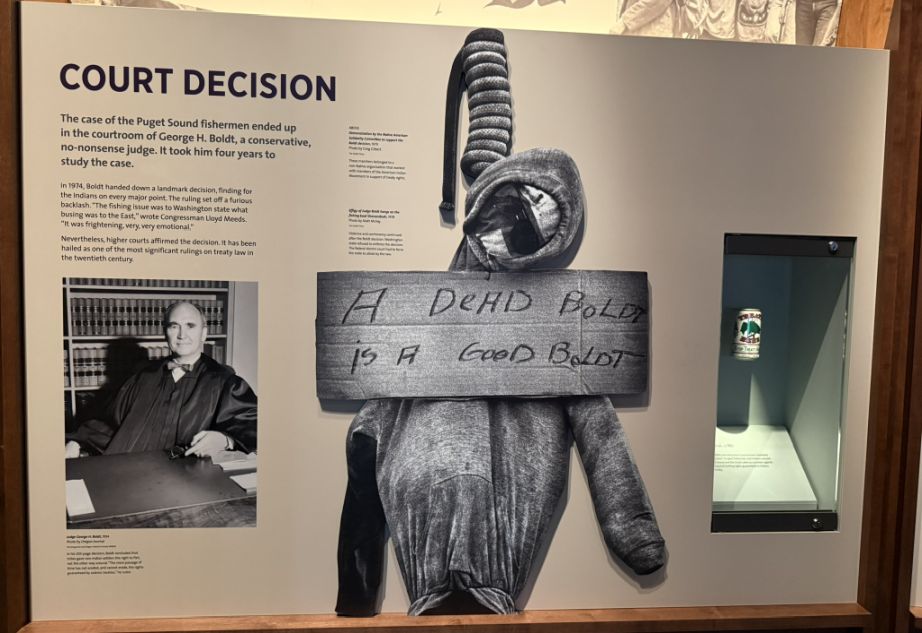
The fish-ins were crucial in paving the way for extensive legal battles. The most significant outcome was the U.S. v. Washington case, which led to the landmark Boldt Decision in 1974.
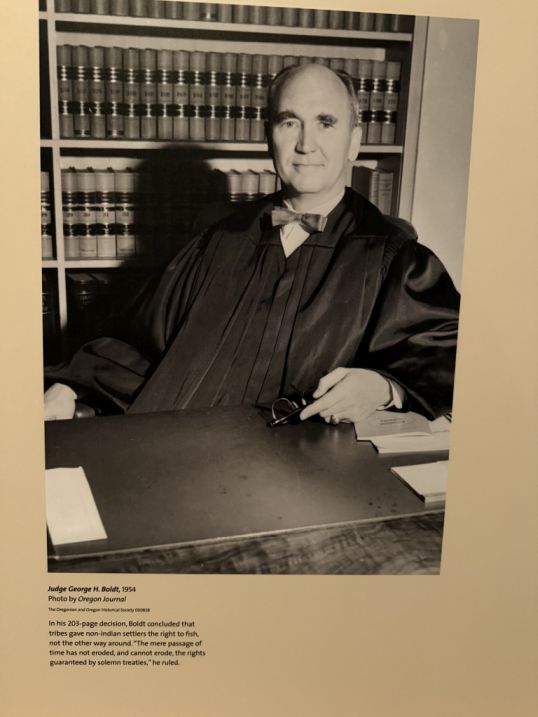
The turning point was a historic court decision. In 1974, federal judge George Hugo Boldt ruled that the treaty tribes of Western Washington were entitled to 50% of the harvestable salmon and steelhead returning to their traditional fishing grounds. He also ruled that the tribes had a co-management role in salmon fisheries, meaning they had to be consulted and involved in decisions about resource management.
The Boldt Decision, while a monumental victory for tribal rights, was met with fierce resistance from many non-Native fishermen and state officials. This led to further confrontations and protests, sometimes referred to as the second phase of the "Fish Wars," due to the drastic changes it imposed on the fishing industry.
 |
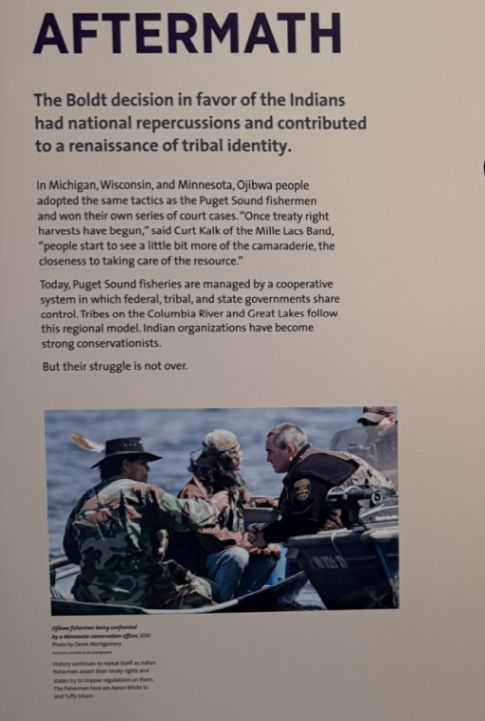 |
The Salmon Wars and the Boldt Decision were pivotal in affirming Native American sovereignty and treaty rights. They highlighted the enduring significance of treaties and the importance of traditional ecological knowledge. While challenges remain in managing salmon populations and ensuring equitable access, the legacy of the fish-ins continues to inspire tribal nations in their ongoing efforts to protect their sovereignty, culture, and natural resources.
Today, tribes help manage salmon conservation, hatcheries, and habitat restoration, showing that treaty rights also carry responsibility for protecting ecosystems.
 |
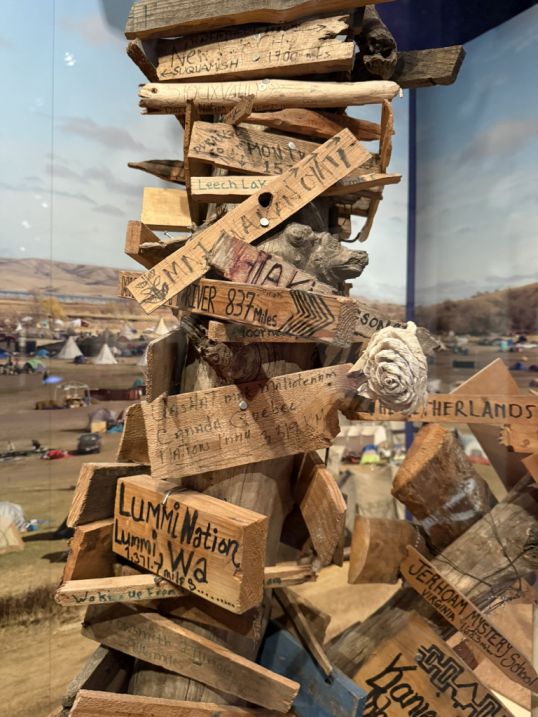 |
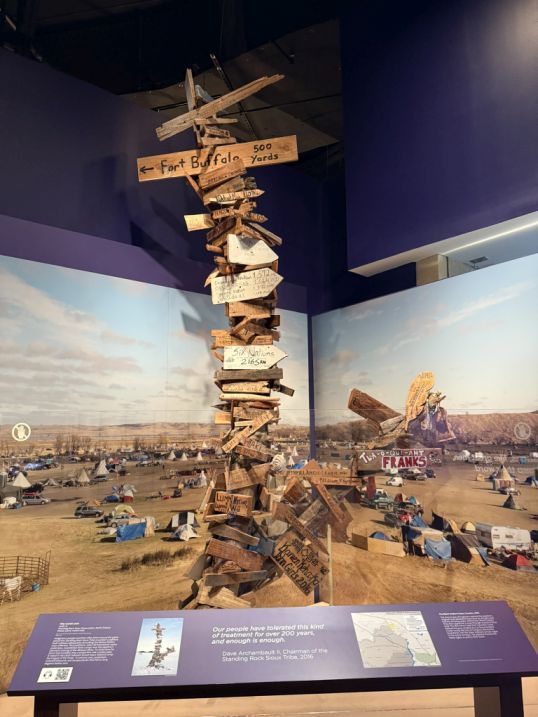
The Dakota Access Pipeline (DAPL) Protests (2016-2017): This was a massive, sustained protest movement led by the Standing Rock Sioux Tribe and supported by hundreds of other Native American tribes, environmental activists, and human rights organizations from around the world. The images and stories from Standing Rock garnered immense international attention, putting Native American issues and environmental concerns back into the global spotlight.
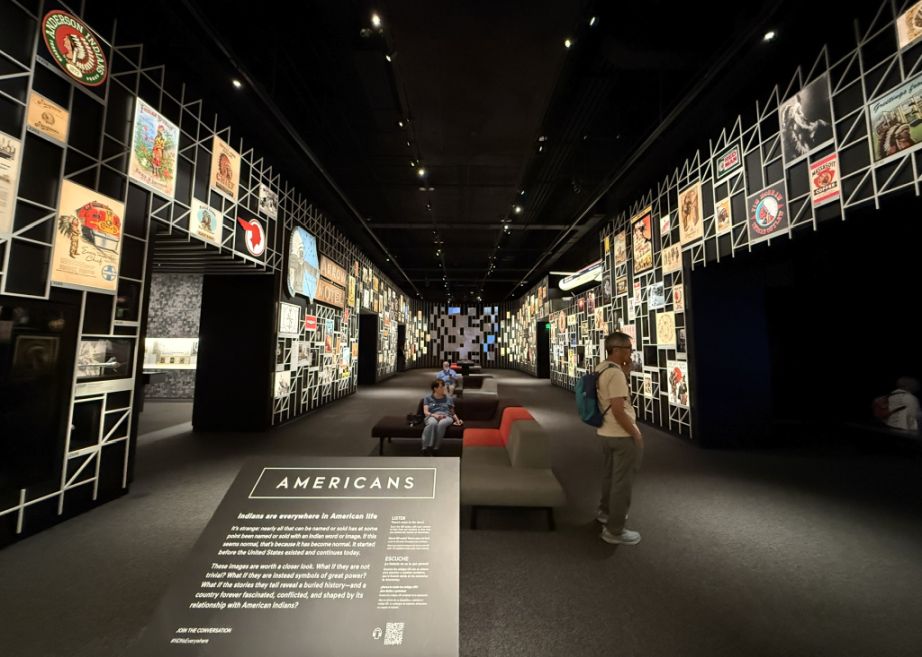
The Americans exhibit
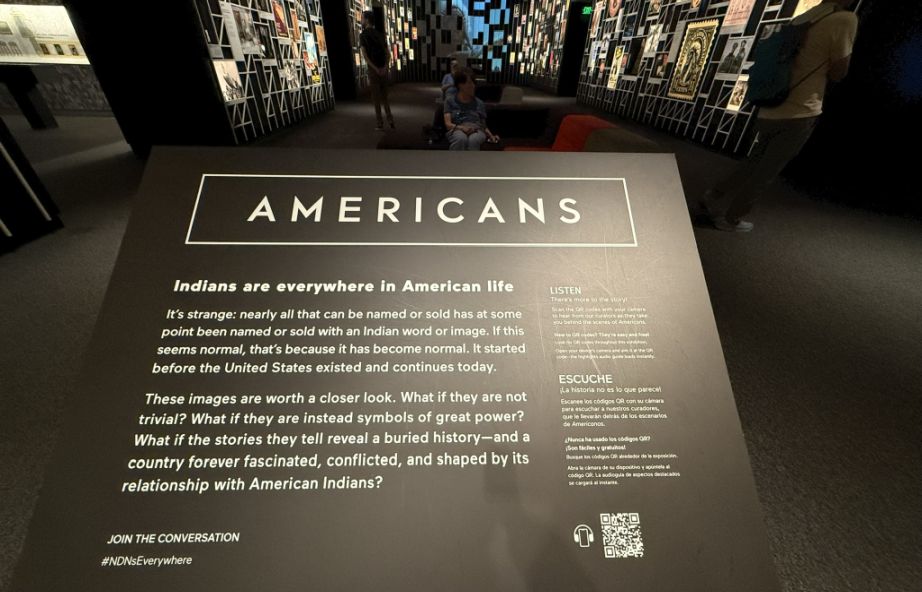
The section titled "Indians Are Everywhere in American Life" (or similar phrasing like "Native Americans Are Still Here," or "Why We Serve") is designed to specifically challenge persistent stereotypes and correct historical misconceptions.
 |
 |
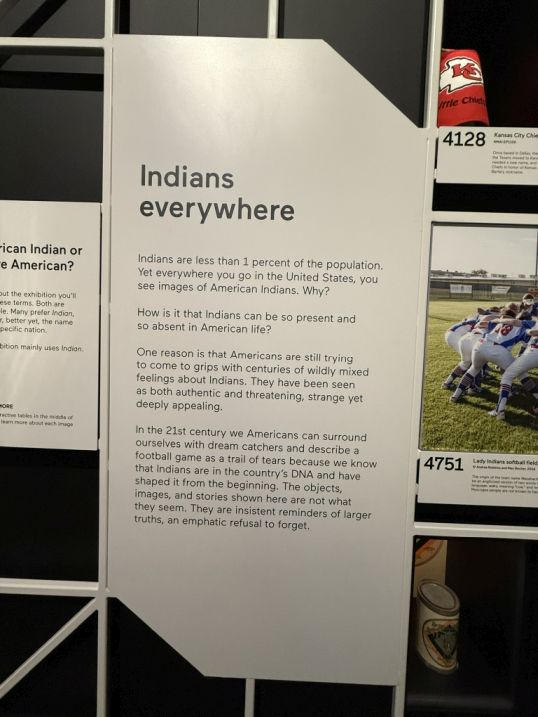
Native Americans and Alaska Natives constitute a very small percentage of the total U.S. population, indeed, less than 1% as a sole race, and around 2.5% when including those who identify as multiracial. Yet, their images and names are, as you noted, "everywhere you go in the U.S." This includes: Sports Mascots: Teams like the Cleveland Guardians (formerly Indians), Kansas City Chiefs, Florida State Seminoles, Chicago Blackhawks, and many high school teams.
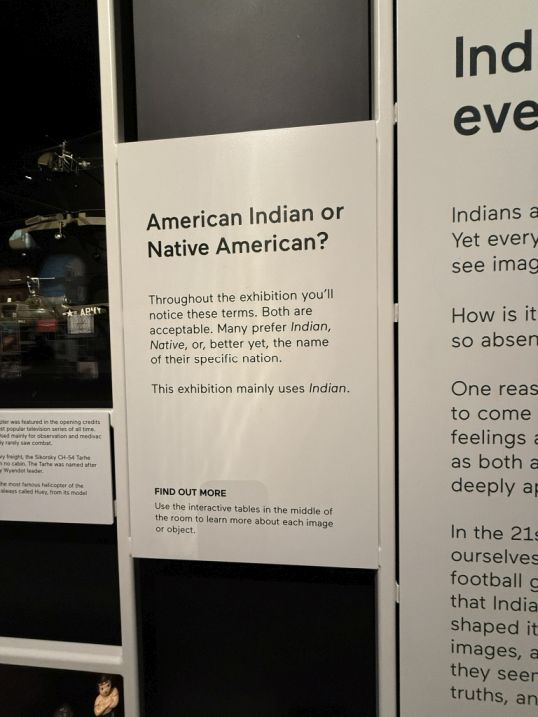
American Indian or Native American? Throughout the exhibition the term Indian is used. Both are acceptable. Many prefer Indian, Native, or better yet, the name of their specific nation.
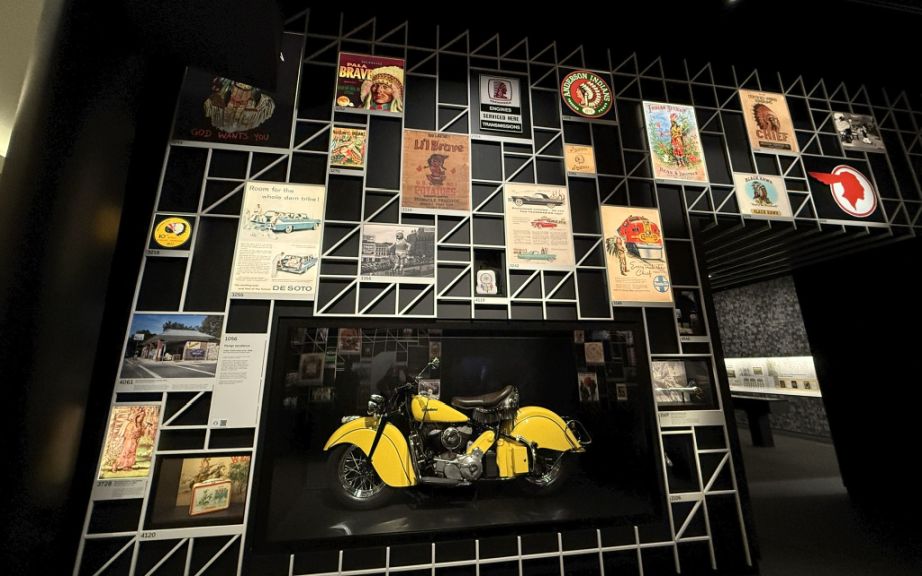
We are in the core of what that "Indians Are Everywhere" section that aims to expose. The museum specifically uses those posters, advertisements, product packaging, and other commercial imagery to visually demonstrate the widespread appropriation and stereotypical portrayal of Native Americans in American popular culture.
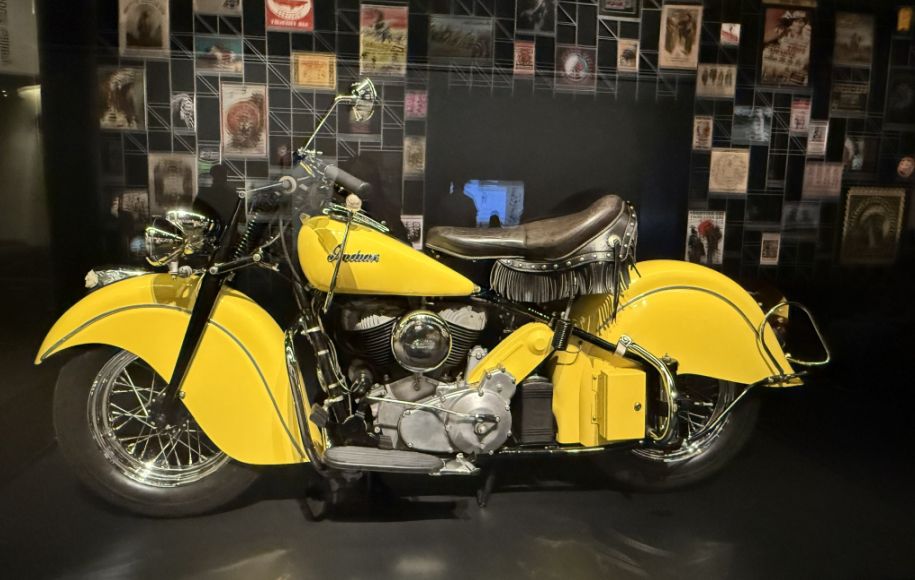
Indian Chief motorcycle, 1948
A classic, the Indian is considered the most stylish of mass-produced motorcycles. In 1897 American-made bicycles named Indian were sold overseas. The name stuck when the company sold its first motorcycles in 1902, It became a true brand, with a feathered headdress as the logo and Indian Red as the signature color. In the 1930s, models could be customized with colors such as Mohawk, Green, Seminole Cream, Navajo Blue, and Apache Red. This Model's fender ornament is and Indian figure with headdress, and the word Indian is written in stylist script on the tank. The Company's first advertising executive said, "no more popular or wealth-producing name could have been chosen." Through the Indian Motorcycle Company has changed hand many times, it name and distinctive logo have endure.
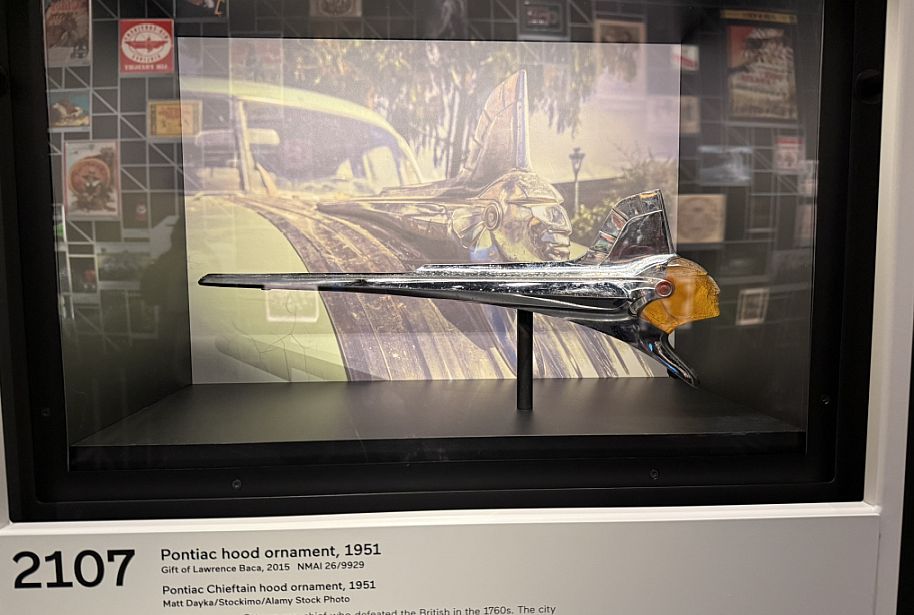
Pontiac Chieftain hood ornament, 1951
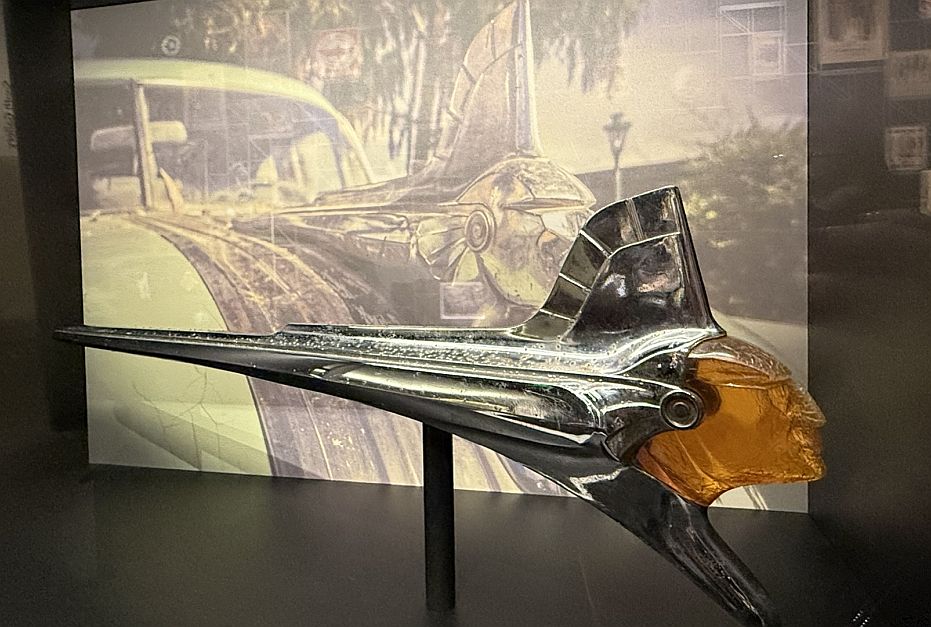
Pontiac was an Ottawa war chief who defeated the British in the 1760s. The city near Detroit is named for him, as was the General Motors brand of cars, which featured a hood ornament in the form of and Indian-head profile. During the 1950s its design was meant to suggest jet planes and rockets. The last Pontiac rolled off the assembly line in 2010.
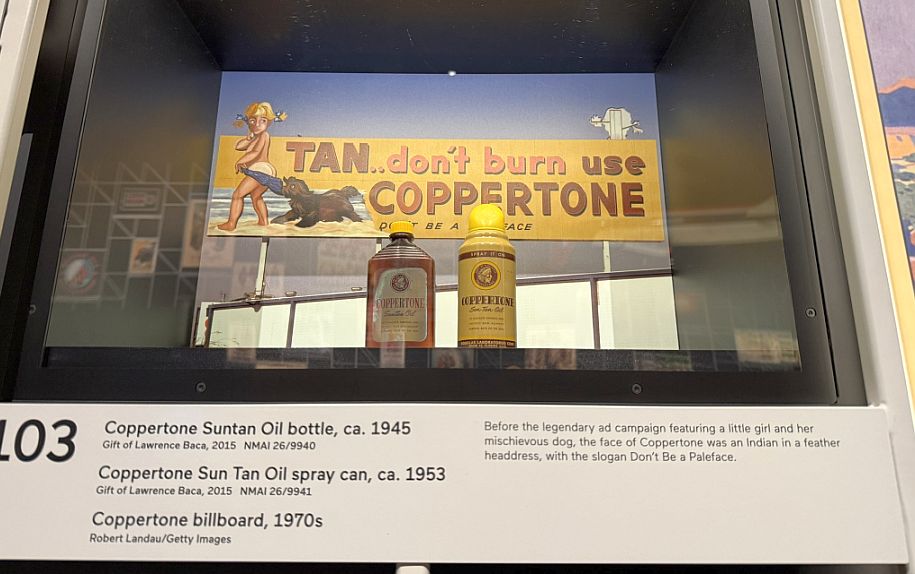
Coppertone billboard, 1970. Before the legendary ad campaign featuring a little girl and her mischievous dog, the face of Coppertone was an Indian in a feather headdress, with the slogan "Don't be a Paleface.
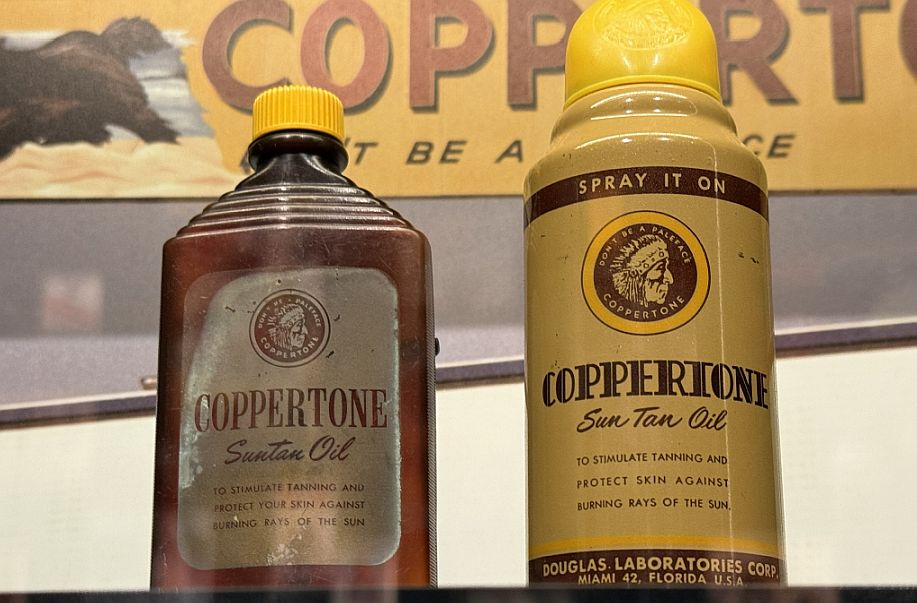
Coppertone Suntan Oil bottle, 1945
Coppertone Sung Tan oil Spray can, 1953
Both has the logo of an Indian in headdress, with the slogan "Don't Be a Paleface.
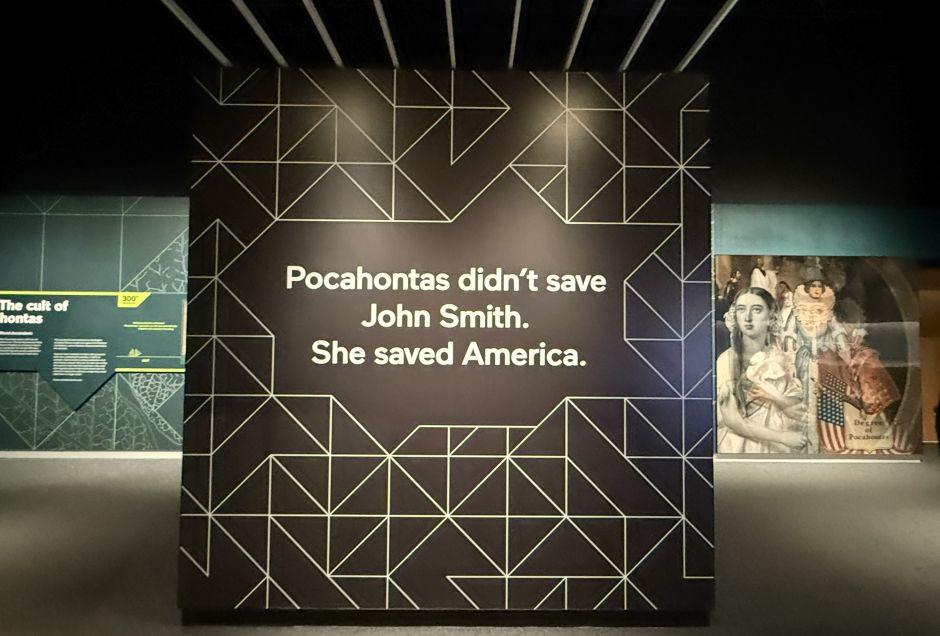
The popular narrative, largely popularized by John Smith's own accounts (especially his much later 1624 "General History" account), goes something like this: Smith Captured: Captain John Smith, an English colonist, is captured by Powhatan warriors. Execution Ritual: He is brought before Chief Powhatan (Pocahontas's father) and is about to be executed by having his head bashed in with clubs. Pocahontas's Intervention: Suddenly, young Pocahontas (who would have been around 10-12 years old at the time) rushes forward and places her head upon Smith's, saving him from death. Peace and Relations: This act leads to a period of peace and trade between the English colonists at Jamestown and the Powhatan Confederacy.
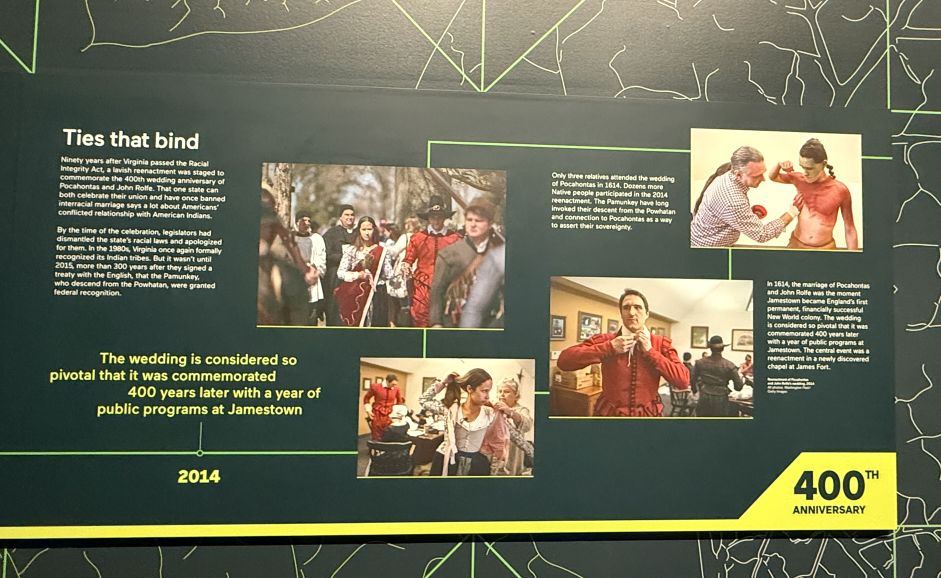
The 400th anniversary of the marriage of Pocahontas and John Rolfe, which indeed took place in 1614. Jamestown did hold a year-long commemoration of this event in 2014, including reenactments and public programs, underscoring its perceived historical significance.
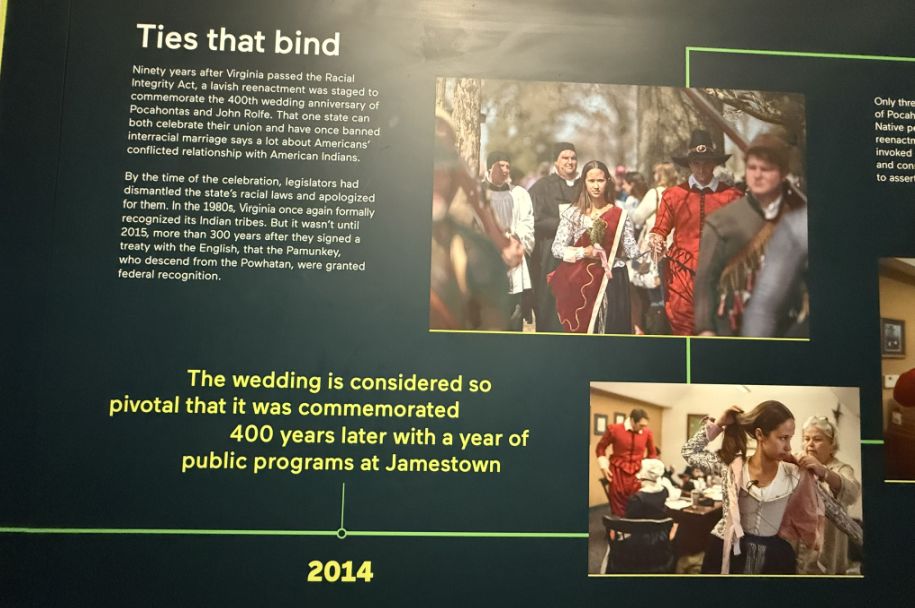
The commemoration of this wedding at Jamestown directly supports the idea that she "saved America." The "America" being saved, in this context, is the embryonic English colony that would eventually become the foundation of the United States. Her marriage was a critical turning point that allowed the English experiment in North America to succeed.
So, while the reenactment celebrates a moment historically crucial for the English colonists, the NMAI's broader message encourages visitors to think critically about whose story is being told and what "America" was truly being "saved" or initiated by these early interactions.
 |
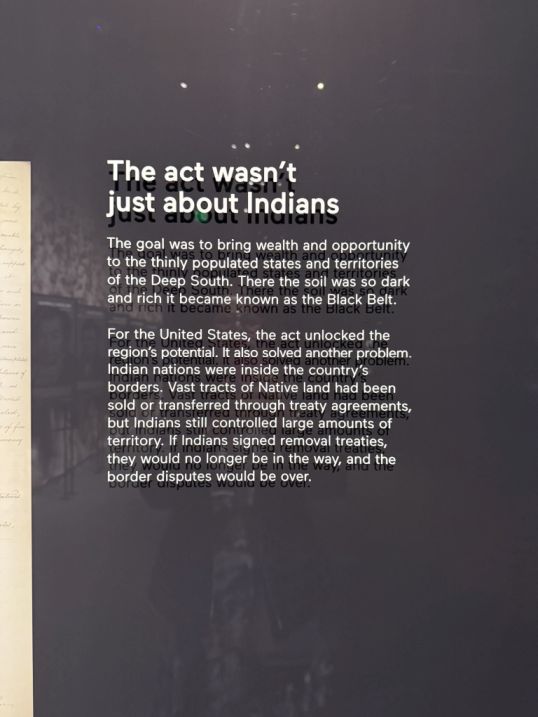 |
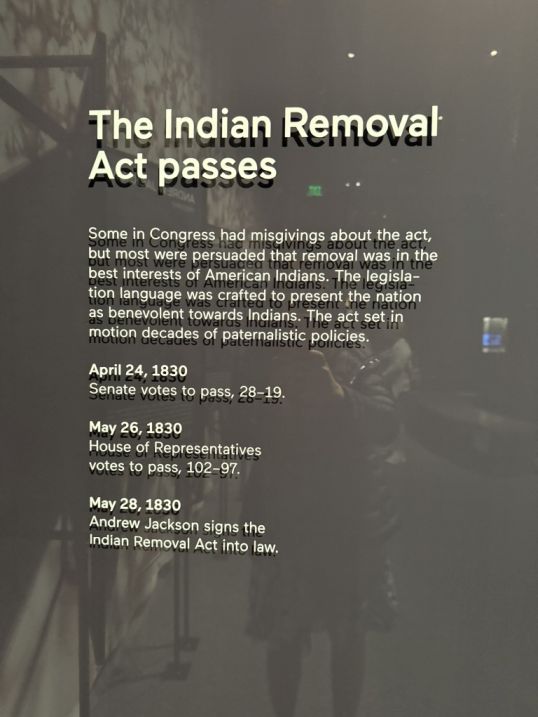
The Indian Removal Act was signed into law by President Andrew Jackson on May 28, 1830. Its stated purpose was to negotiate with Native American tribes for their removal from lands east of the Mississippi River to federal territory west of the Mississippi, primarily present-day Oklahoma. The Reality of Coercion: In practice, the negotiations were often far from voluntary. Tribes faced immense pressure, intimidation, and sometimes outright fraud. Treaties were frequently signed by minority factions of tribes who did not represent the will of the majority, leading to internal tribal conflicts and illegitimate land cessions. Targeted Tribes: The primary targets were the "Five Civilized Tribes" of the southeastern United States: the Cherokee, Chickasaw, Choctaw, Creek (Muscogee), and Seminole. These tribes had largely adopted many aspects of European-American culture, including farming, writing systems (Cherokee syllabary), constitutional governments, and even slaveholding plantations, yet this did not protect them from removal.
 |
 |
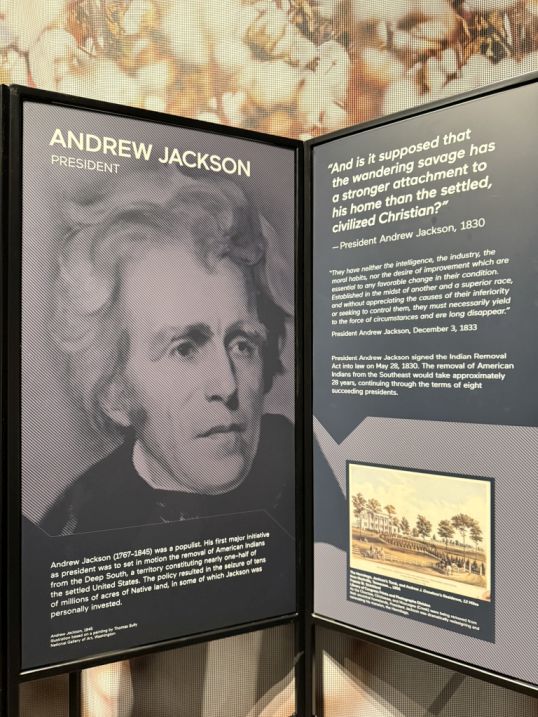
Andrew Jackson, as President of the United States from 1829 to 1837, was undeniably the main architect and most powerful proponent of the Indian Removal Act. Jackson had a long history of military campaigns against Native American tribes (e.g., the Creek War), and he firmly believed that Native Americans were "savages" who could not coexist with white society and needed to be removed for the sake of "progress" and "civilization."
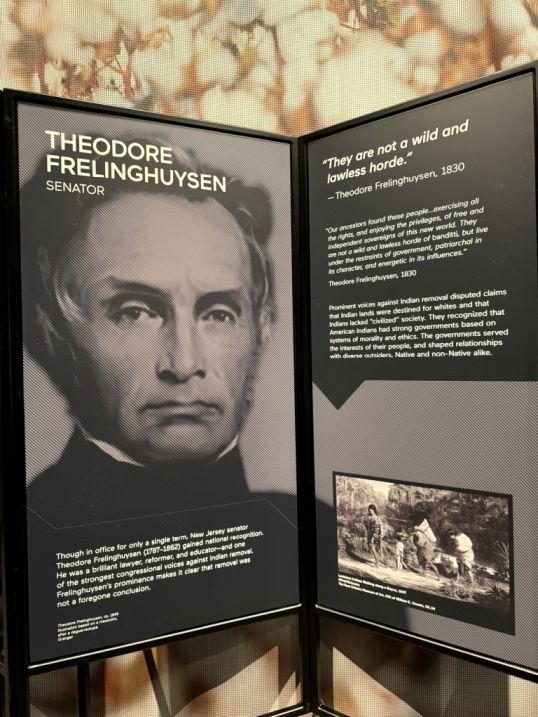
Theodore Frelinghuysen was a Prominent Opponent of the Law. He was a U.S. Senator from New Jersey, was one of the leading and most eloquent opponents of the Indian Removal Act. He was a prominent figure in the humanitarian and religious opposition to the bill.
In summary, the Indian Removal Act was far more than just a policy against Native Americans; it was a foundational moment that solidified federal power, shaped the racial landscape of the U.S., fueled economic expansion driven by slavery, and left an indelible scar on the nation's history, the repercussions of which are still felt today.
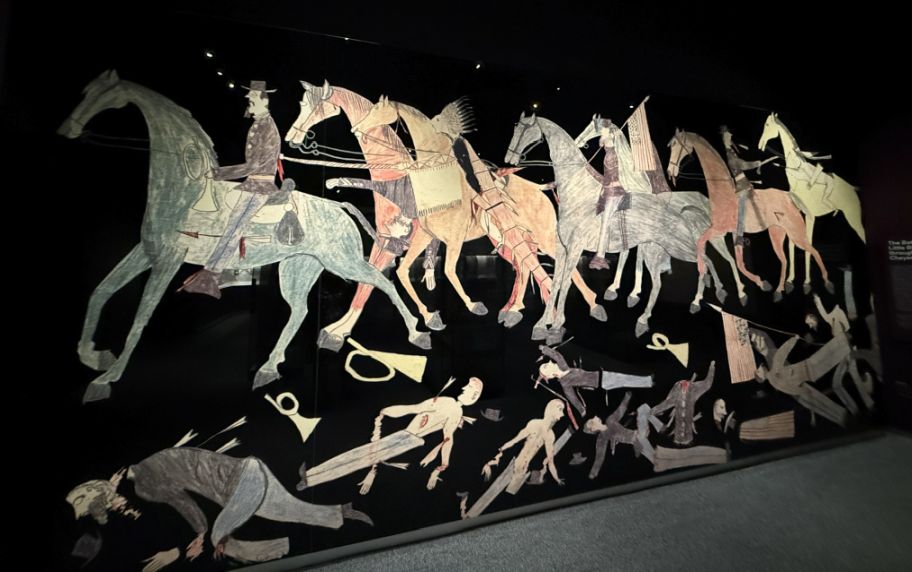
Depiction of the Battle of Wounded Knee, a massacre of Native Americans by U.S. forces, designed to evoke the tragic end of the "Indian Wars."
The massacre took place amidst the backdrop of the "Ghost Dance" movement, a spiritual revival promoting peace and hope that caught on among the Lakota Sioux. U.S. authorities viewed the Ghost Dance as a threat. The U.S. 7th Cavalry intercepted a band of Minissjou Lakota, led by Chief Spotted Elk (also known as Big Foot), demanding they surrender their weapons. During the disarmament, a shot was fired (it's unclear from which side), and the cavalry opened fire with rifles and four Hotchkiss revolving cannons (a type of rapid-fire artillery). The result was a slaughter. Approximately 300 unarmed or lightly armed Lakota men, women, and children were killed, many as they attempted to flee. The bodies were left frozen on the ground. Twenty-five U.S. soldiers also died, many from friendly fire.
Wounded Knee is widely considered the last major armed conflict between the U.S. federal government and the Plains Indians, symbolizing the violent end of the "Indian Wars" and the complete subjugation of Native American resistance.
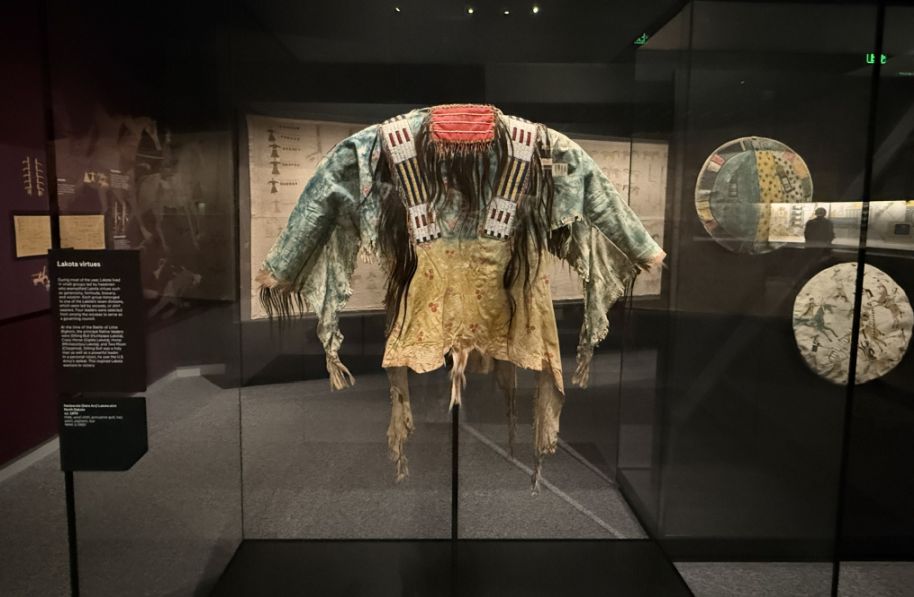
The Dakota Virtues refers to a specific group of Native American people who are part of the larger Sioux nation (along with Lakota and Nakota). The Dakota historically resided in the upper Midwest (North and South Dakota, Minnesota, Nebraska, etc.).
Bridging Past and Present Identity: The modern-looking top (if it's contemporary regalia/fashion) directly contrasts with the historic warbonnet, powerfully showcasing that Native cultures are not static. They are living, evolving, and continually expressed in new ways, while still holding onto foundational values.
 |
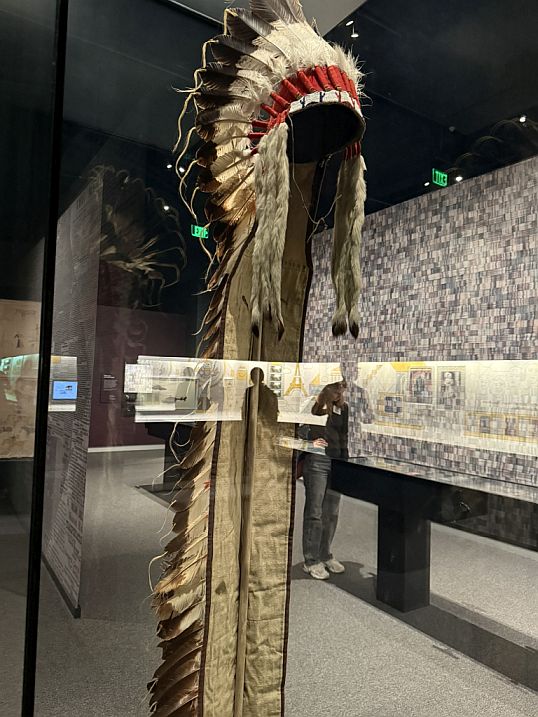 |
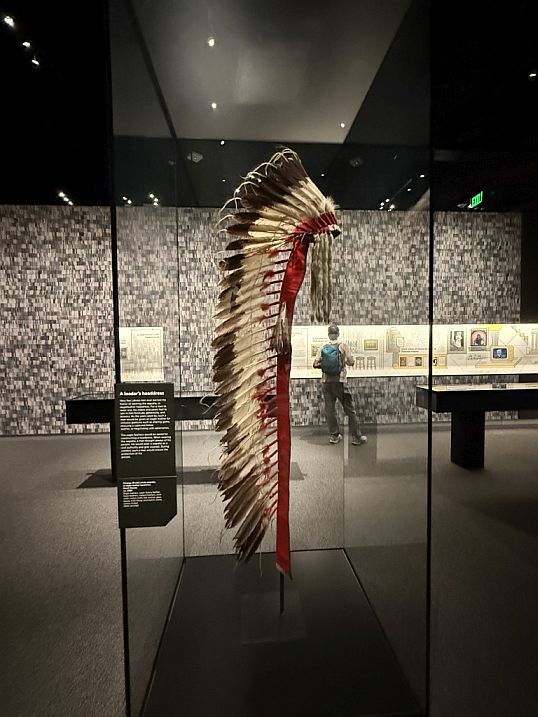
The headdress is arguably the most widely recognized, and often most misappropriated, symbol of Native American culture globally. This conical feather headdress, often referred to as a "warbonnet," is specifically associated with Plains Indian tribes (like the Lakota, Cheyenne, Crow, Blackfoot, etc.).
Our visit to the National Museum of the American Indian moved from understanding the building's design and significant events like the "Salmon Wars" to a profound reflection on the pervasive yet often inaccurate imagery of Native Americans in popular culture, exemplified by figures like Pocahontas and the impact of the Indian Removal Act. The experience culminated with a compelling exhibit on "Dakota Virtues," reinforcing the museum's critical message that Native cultures are vibrant, continuously evolving, and deserving of authentic representation and respect. It highlighted that indigenous histories and contemporary struggles are fundamentally intertwined with the broader narrative of the United States.
NEXT... Day 5- The united States Botanic Garden