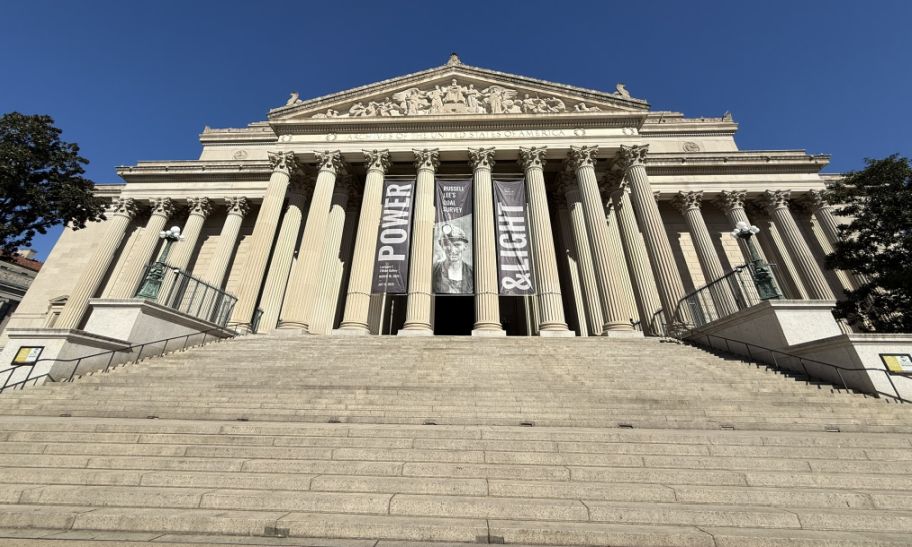
6 days in Washington DC- 10/18- 10/23/2024
Day 4- Archives of the U.S.A -10/21/2024
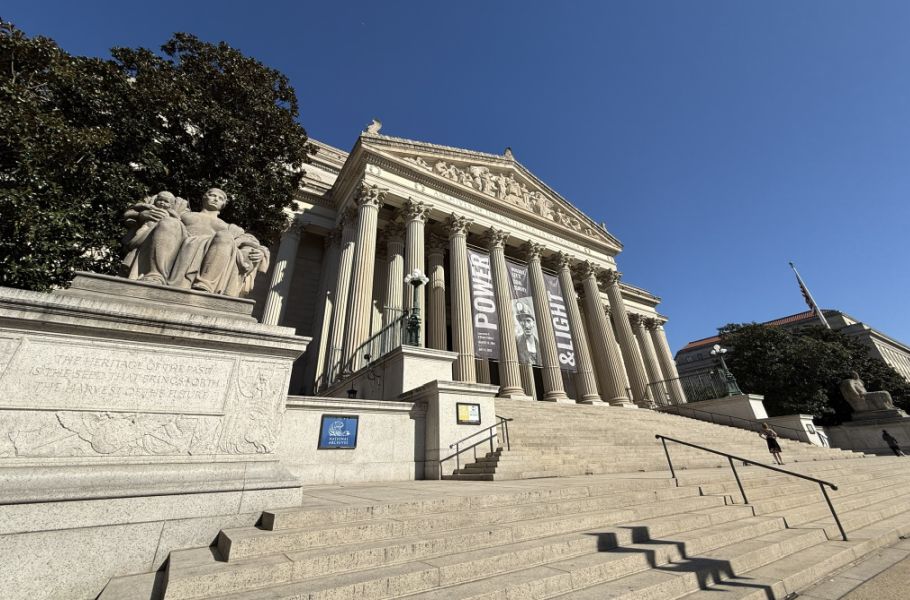
The National Archives Building sits in Washington, D.C., on Pennsylvania Avenue NW between 7th and 9th Streets, right in the heart of the federal government area, and roughly halfway between the White House and the U.S. Capitol. It’s part of the Federal Triangle complex of monumental government buildings.
The building was designed by John Russell Pope, a prominent American architect also known for the Jefferson Memorial and the National Gallery of Art (West Building). Its style is Classical Revival (neoclassical), evoking the temples of ancient Greece and Rome, symbolic of democracy and enduring national ideals.
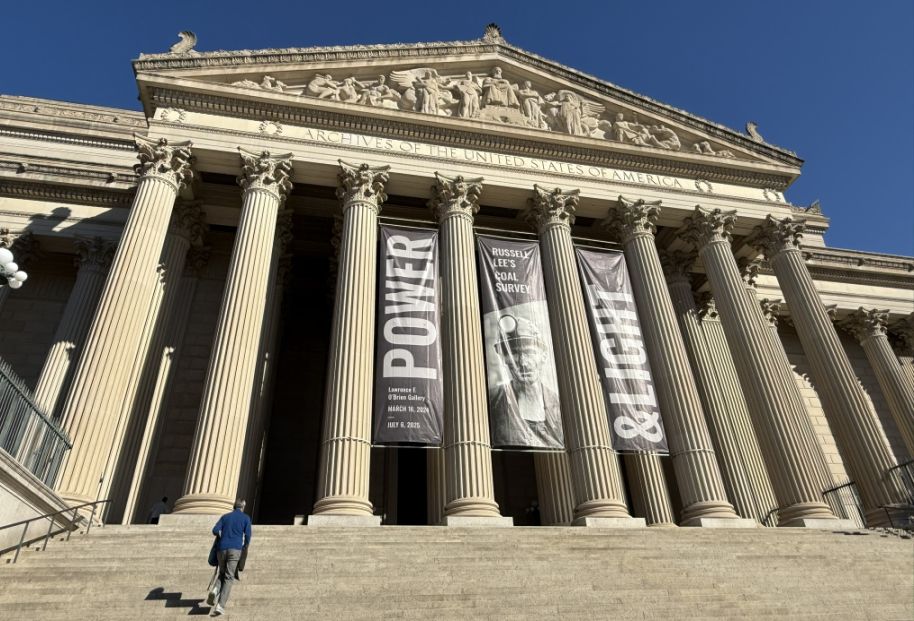
The façade is made of limestone from Vermont with a granite base, giving it impressive solidity and permanence. The 72 towering Corinthian columns that line the exterior, each many stories tall giving the building a grand, temple-like presence. The building is massive, occupying an entire city block, underscoring the importance of the records it houses.
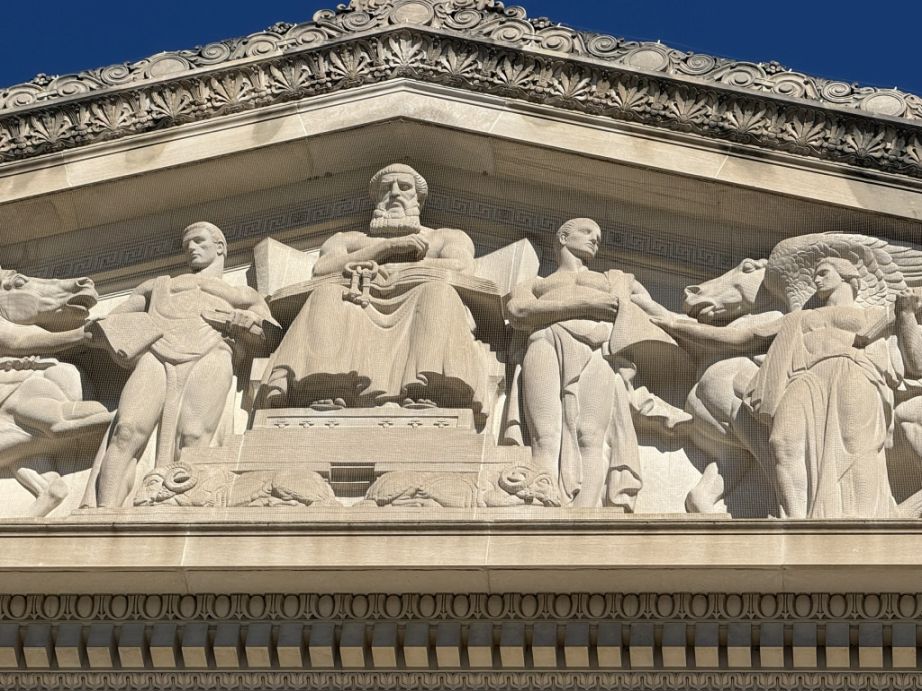
Sculpture group at the very top of the entrance, right above the colonnade. This monumental sculpture is part of a larger ensemble, but the specific figure in the center is designed to convey the guardianship of the national records. This prominent male figure is often interpreted as "The Recorder" or the "Eternal Archivist." He is typically depicted as a robust, often bearded figure, symbolizing wisdom, authority, and meticulous attention to detail. His downward gaze would naturally be symbolic of overseeing the entrance and the precious documents within.
 |
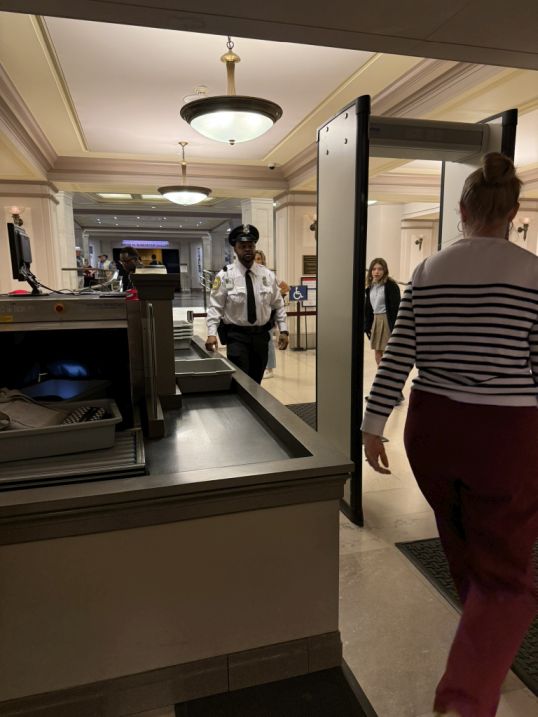 |
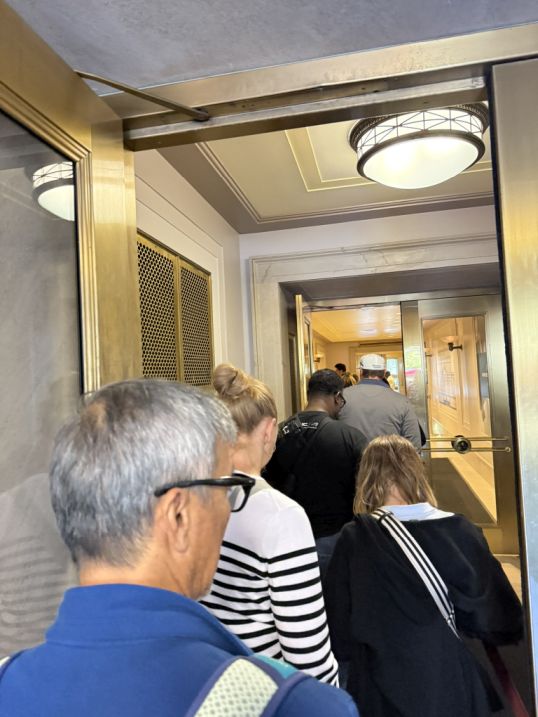
To get inside we had to line up and passing through a metal detector in order to get inside the building.
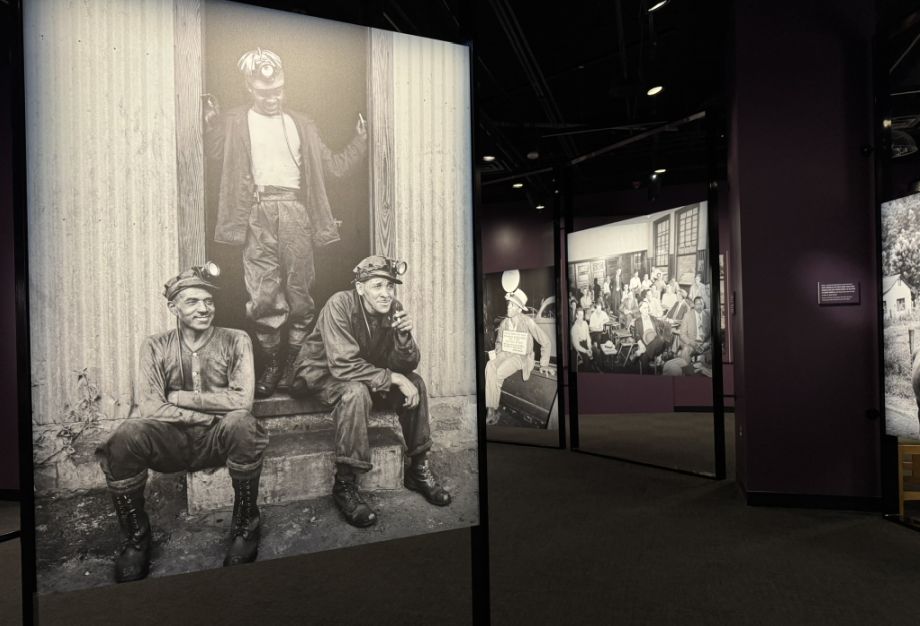
This area with the large historical photographs, including miners workers and
portraits, many of those powerful worker photographs were taken in the
1930s and 1940s to document American life during the Great Depression and
World War II. T
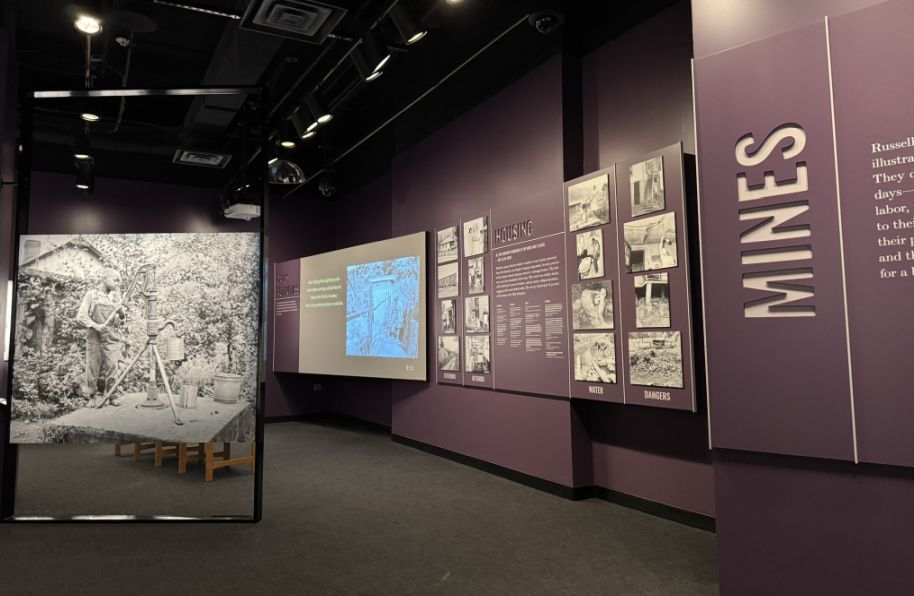
The government intentionally hired photographers to capture real conditions across the country, mines, farms, factories, schools, and family life.
 |
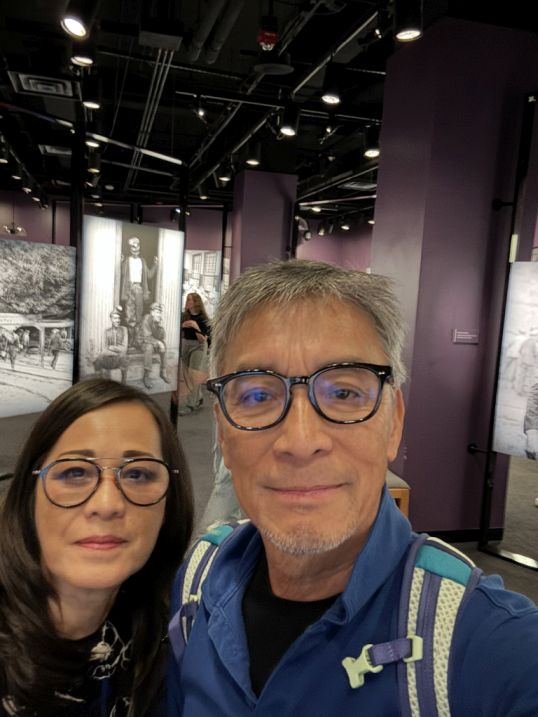 |
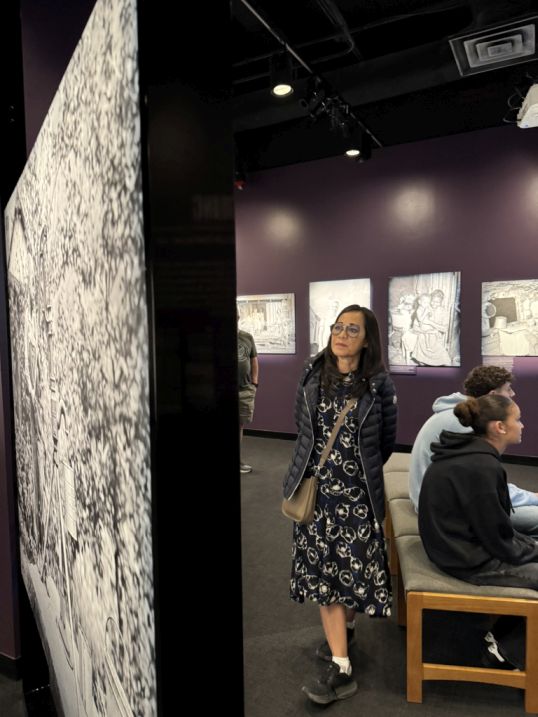
The goal wasn’t just art, it was historical documentation. The Archives preserves millions of such images.
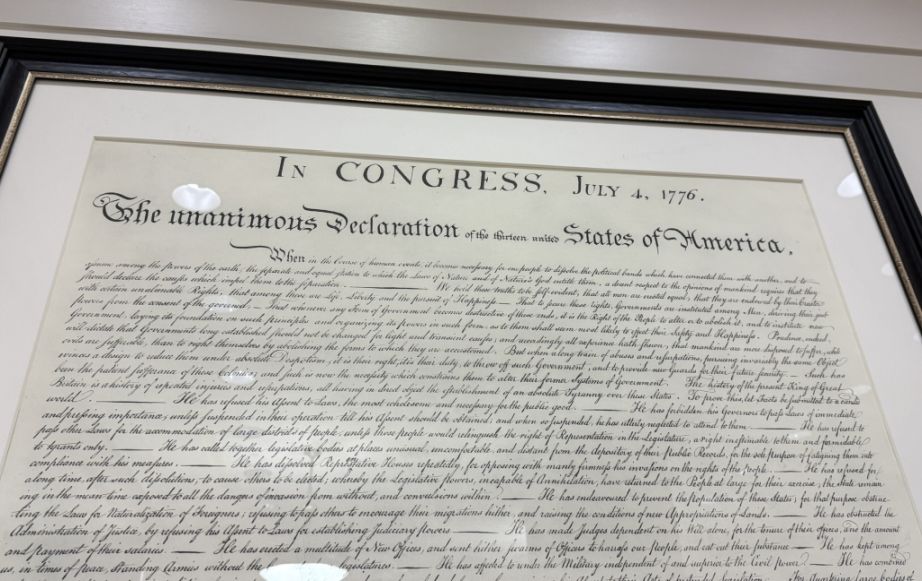
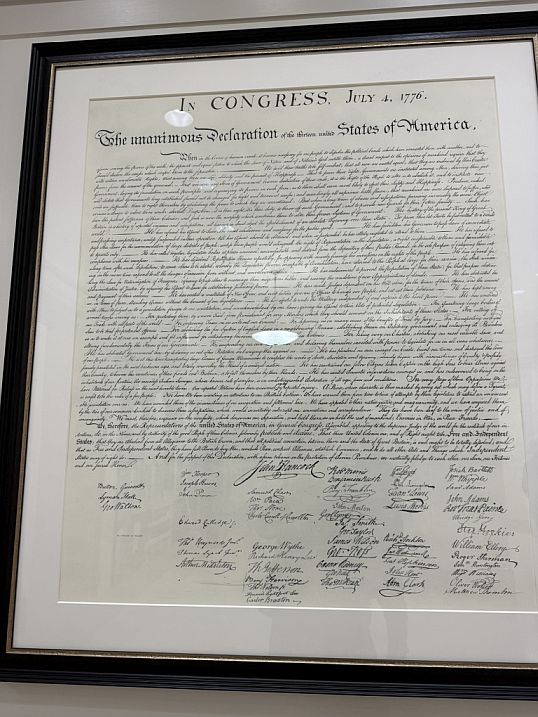
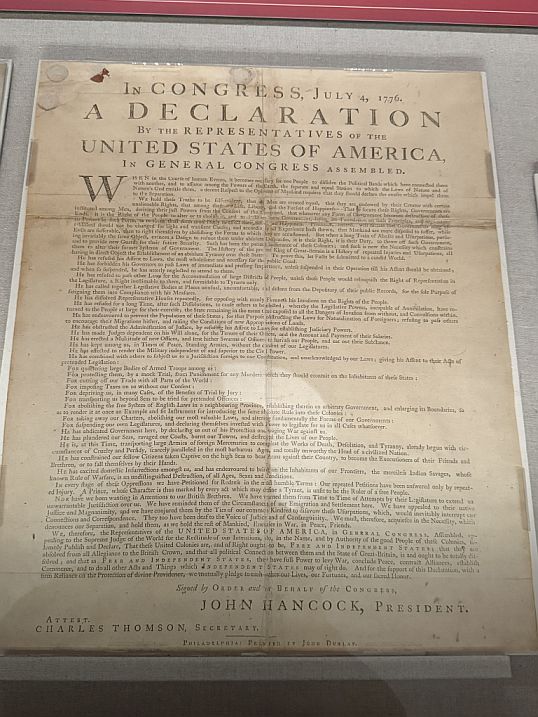
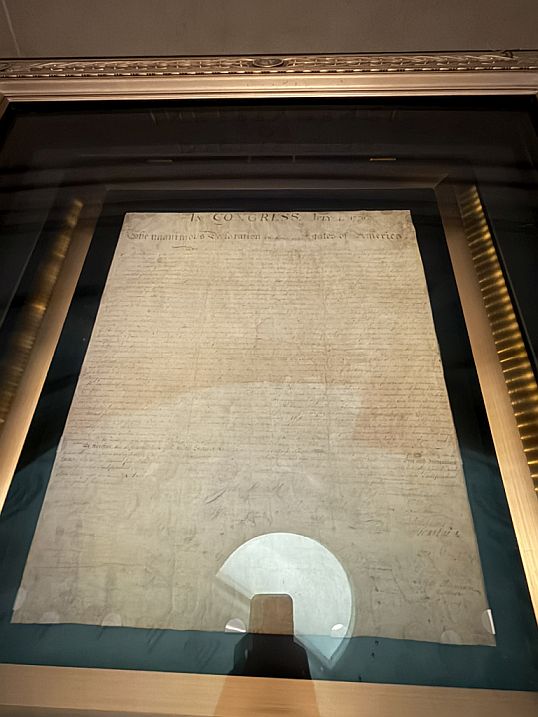
This document is the full format tile of the United States Declaration of Independence.
The word “unanimous” was crucial. It signaled that the colonies were united, no longer thirteen separate entities, but one nation acting together.
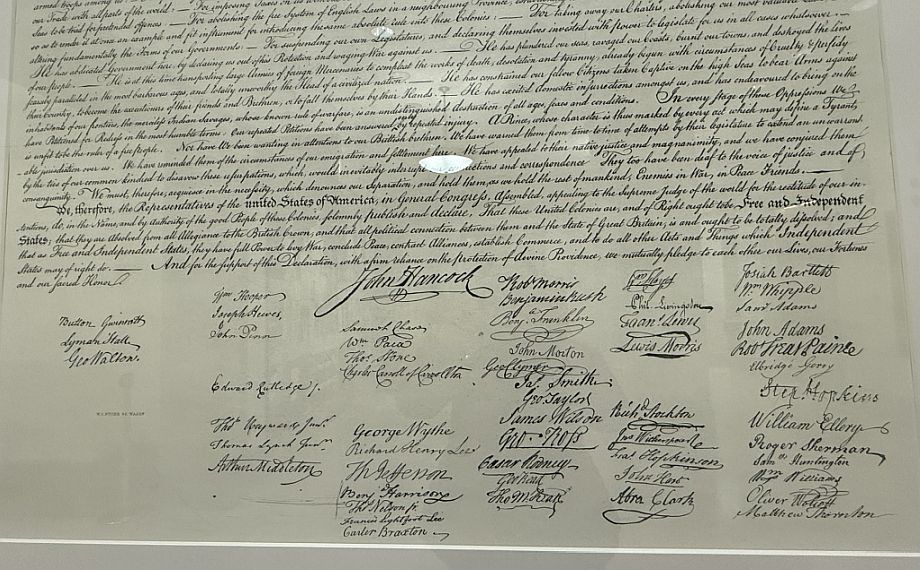
This is the original copy engrossed parchment signed by 56 delegates.
Adopted on July 4, 1776, drafted primarily by Thomas Jefferson, edited by a committee that included John Adams, Benjamin Franklin, Roger Sherman, and Robert R. Livingston, and announced the colonies’ separation from King George III
 |
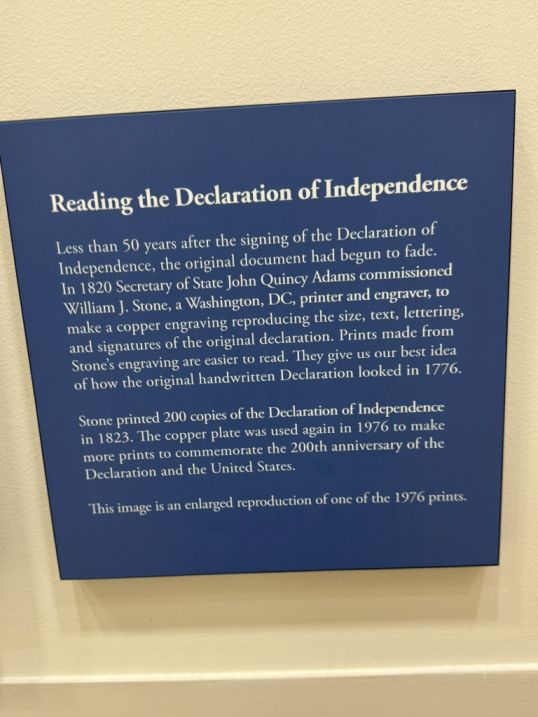 |
Over time, the ink has faded significantly (it was exposed to light for many years in the 19th century before modern preservation techniques were developed). Today, it’s kept in a specially designed, climate-controlled case filled with inert argon gas to prevent further deterioration.
 |
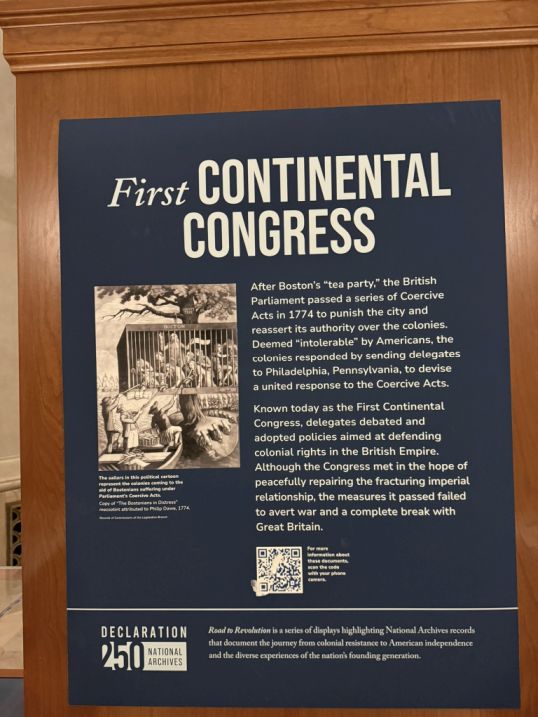 |
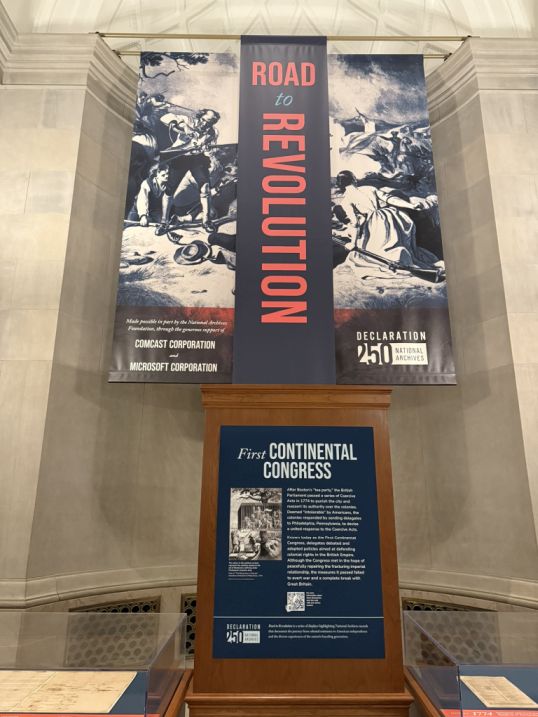
The First Continental Congress was a meeting of delegates from 12 of the 13 British colonies in North America (Georgia did not send delegates initially). It convened in Philadelphia, Pennsylvania, from September 5 to October 26, 1774.
The Congress was called in response to the increasingly harsh policies of the British government, particularly the Intolerable Acts (known in Britain as the Coercive Acts). These acts were passed by the British Parliament in 1774 following the Boston Tea Party, and they included: Shutting down Boston Harbor until the East India Company was compensated for the destroyed tea. Taking significant power away from the Massachusetts colonial assembly and placing it under royal control. Allowing British officials accused of crimes in the colonies to be tried in Britain or other colonies, effectively denying justice to colonists. Allowing British troops to be housed in private homes. These acts were seen by the colonists as an intolerable infringement on their rights and liberties.
The delegates to the First Continental Congress aimed primarily to formulate a measure response to the Intolerable Acts.
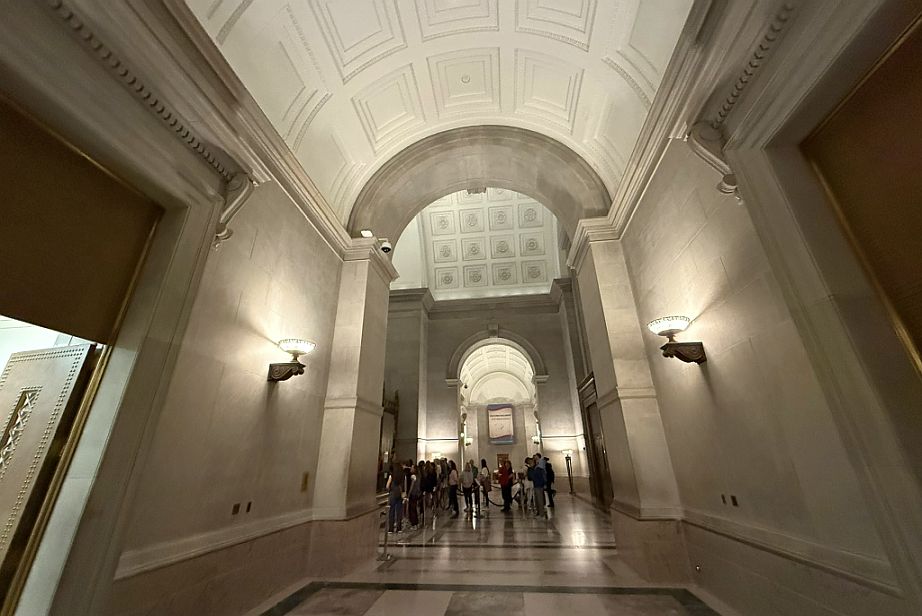
Afterwards we walked in this beautiful corridor.
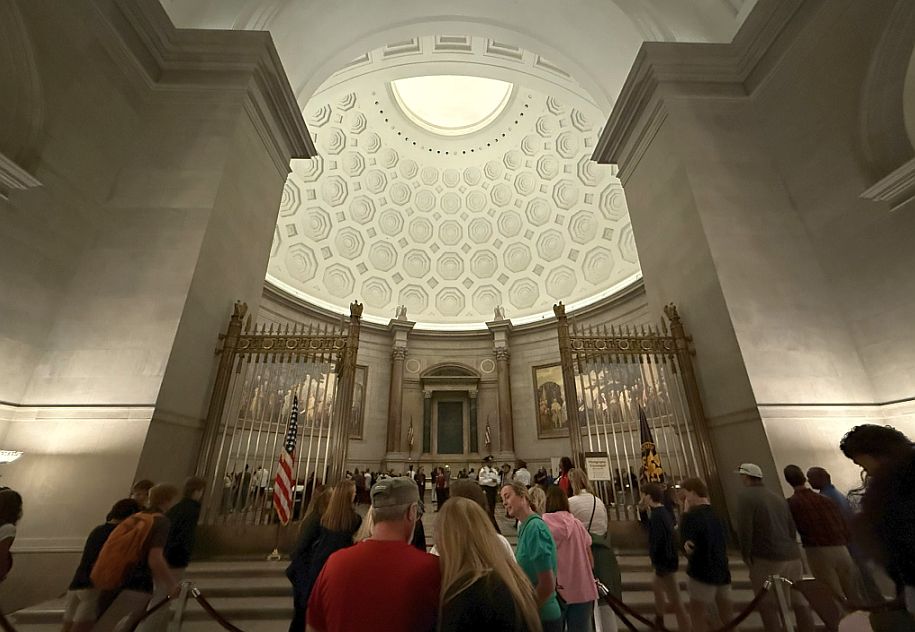
The Rotunda for the Charters of Freedom is the ceremonial heart of the building.
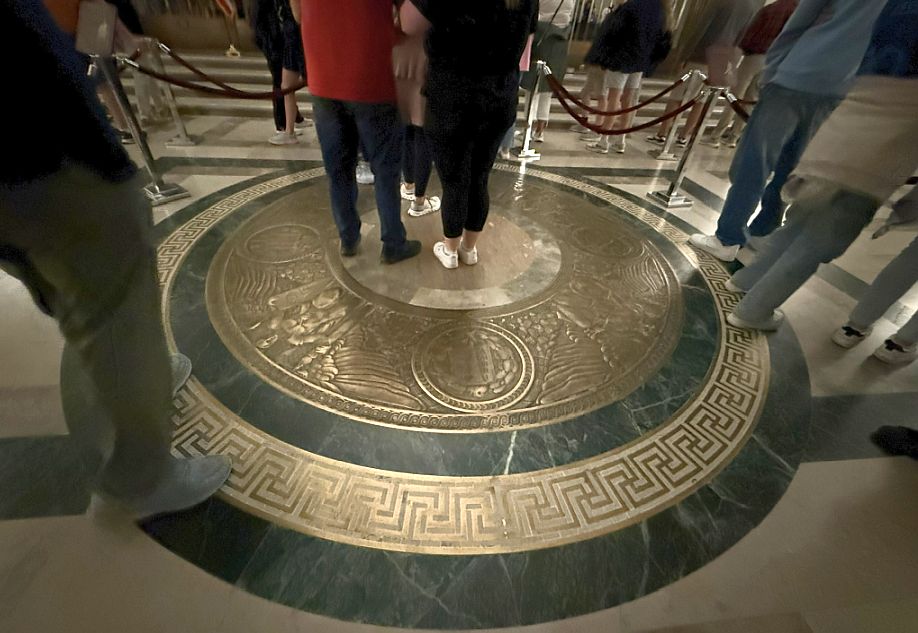
The large golden circle with green marbles on the floor before entering the Rotunda is the Bronze Floor Compass.
This compass rose is a striking feature located just outside the entrance to the Rotunda. It's indeed made of bronze and inlaid with green marble, representing the points of the compass. It's meant to symbolize the nationwide reach of the National Archives and its mission to preserve records from all corners of the United States.
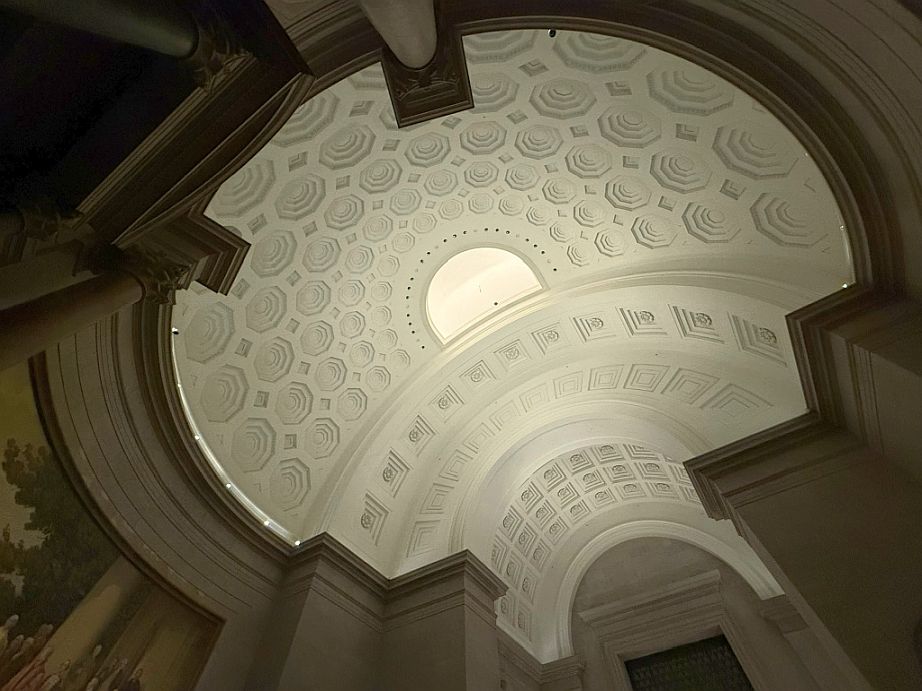
When you stand in the Rotunda and look up, the dome is meant to make you pause. It was intentionally designed to feel solemn, almost sacred. like a civic cathedral. The building was designed by John Russell Pope, who also designed the Jefferson Memorial. He loved classical architecture, and the dome reflects that influence. The Rotunda rises about 70 feet high, t is circular, symbolizing unity and continuity. The coffered ceiling (recessed square panels) creates depth and rhythm, Natural light was originally part of the design, though today lighting is carefully controlled to protect the documents. The dome’s proportions echo Roman and Renaissance civic spaces, suggesting permanence, democracy, and balance.
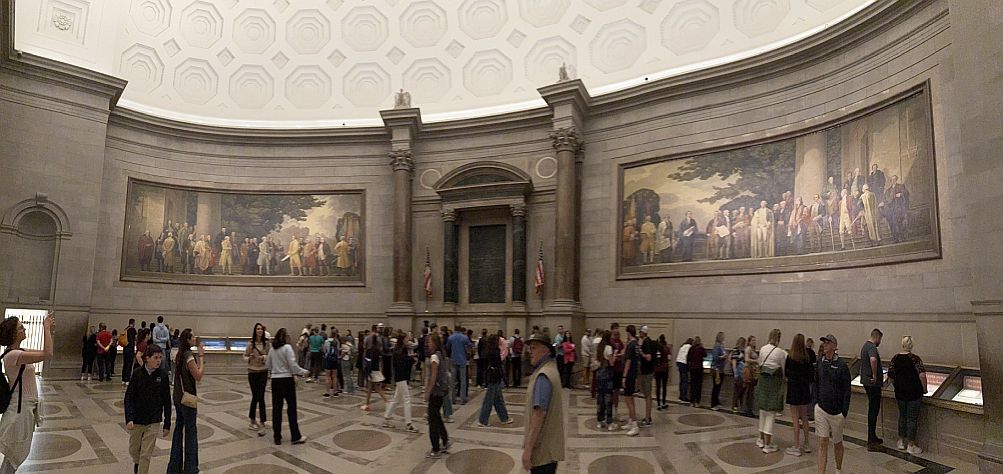
Panoramic view inside the Rotunda.
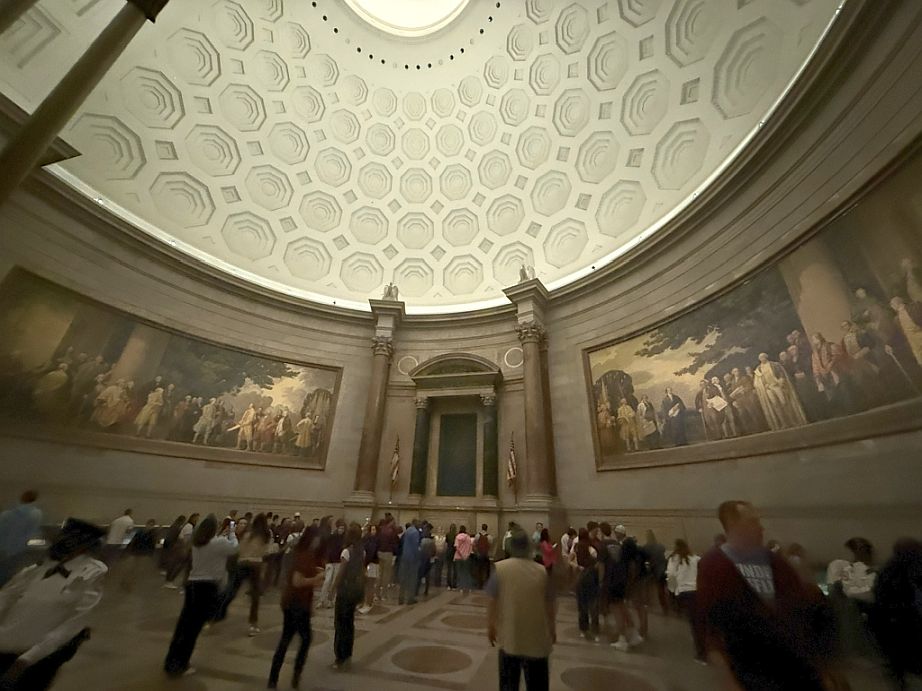
Once we stepped inside, we are all in awe. The Rotunda is a grand, semicircular hall designed to inspire reverence for the documents it houses. The main attractions here are: The Declaration of Independence: The founding document of the United States. The Constitution of the United States: The supreme law of the land, outlining the framework of the federal government. The Bill of Rights: The first ten amendments to the Constitution, guaranteeing fundamental rights and freedoms.
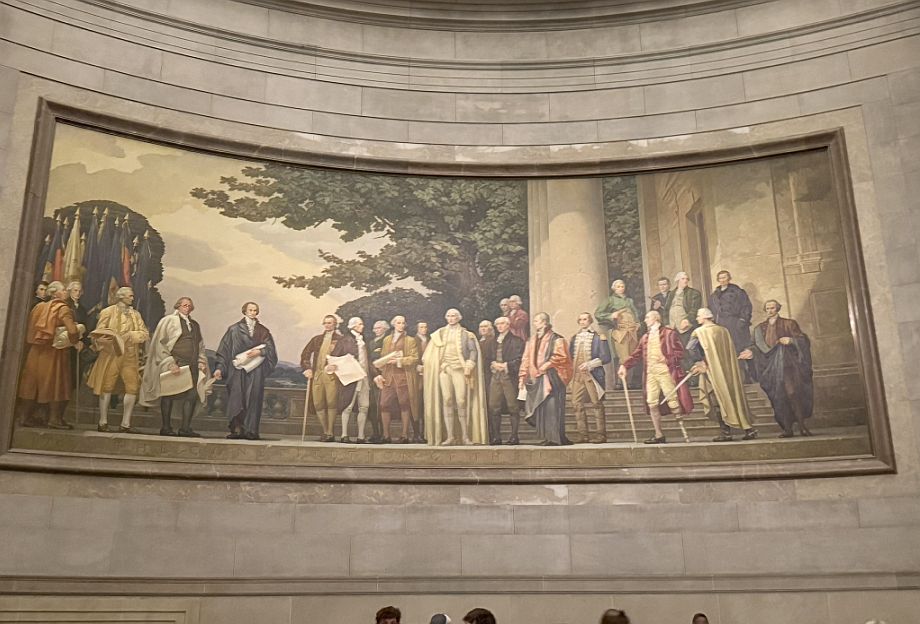
There are two monumental murals that adorn the curved walls of the Rotunda. These are among the largest paintings ever created in the United States and were commissioned specifically for the National Archives building. This one is "The Constitution of the United States" by Barry Faulkner (on the west wall). This mural illustrates the crucial moment on September 17, 1787, when the Constitutional Convention in Philadelphia completed its work and presented the newly drafted United States Constitution for signing. George Washington, who presided over the Convention, stands central, symbolically offering the document to the assembled delegates.
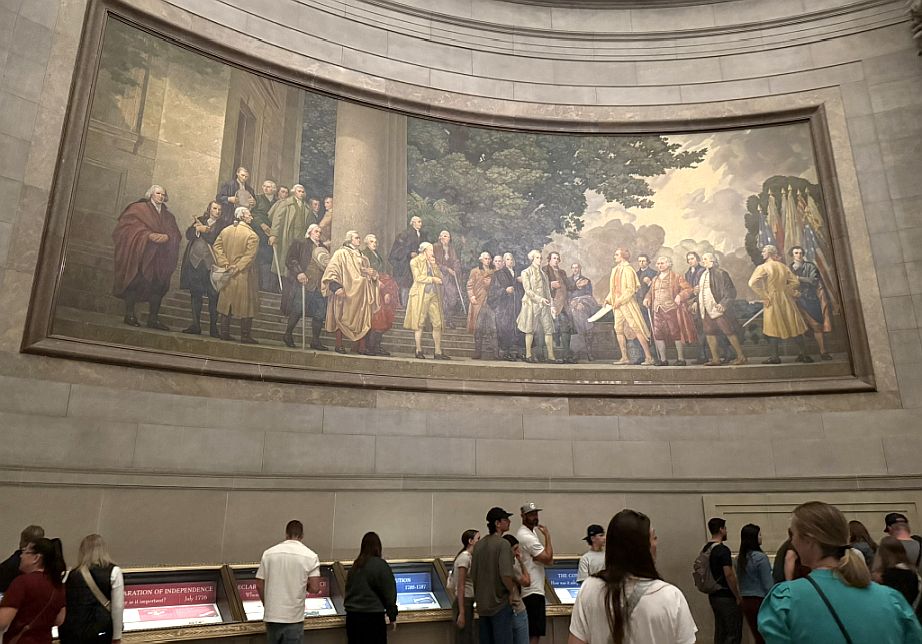
The painting above is the "The Declaration of Independence" by Barry Faulkner (on the east wall): This painting depicts the moment on June 28, 1776, when the first draft of the Declaration of Independence was presented to the Continental Congress for consideration. You'll see Thomas Jefferson, who was the principal author, presenting the document to John Hancock, the President of the Continental Congress.
 |
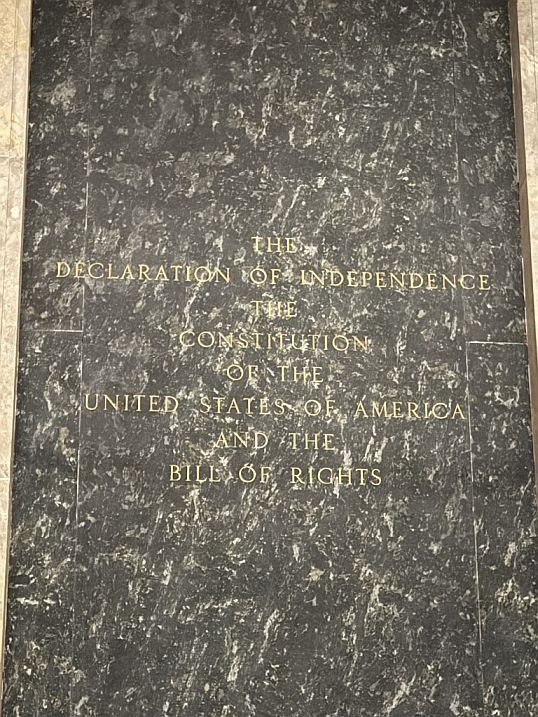 |
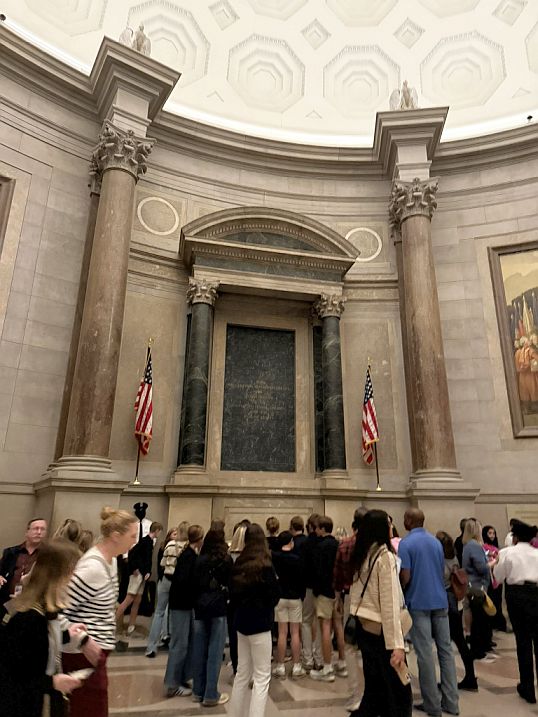
You're looking at a very important element within the Rotunda! The "large green metal plaque" situated above and between the two darker pillars, is actually the display case for the Declaration of Independence and the U.S. Constitution, and the Bill of Rights.
Inside that dark, recessed area are the original, priceless parchment copies of the Declaration of Independence, the U.S. Constitution, and the Bill of Rights. These are the Charters of Freedom.
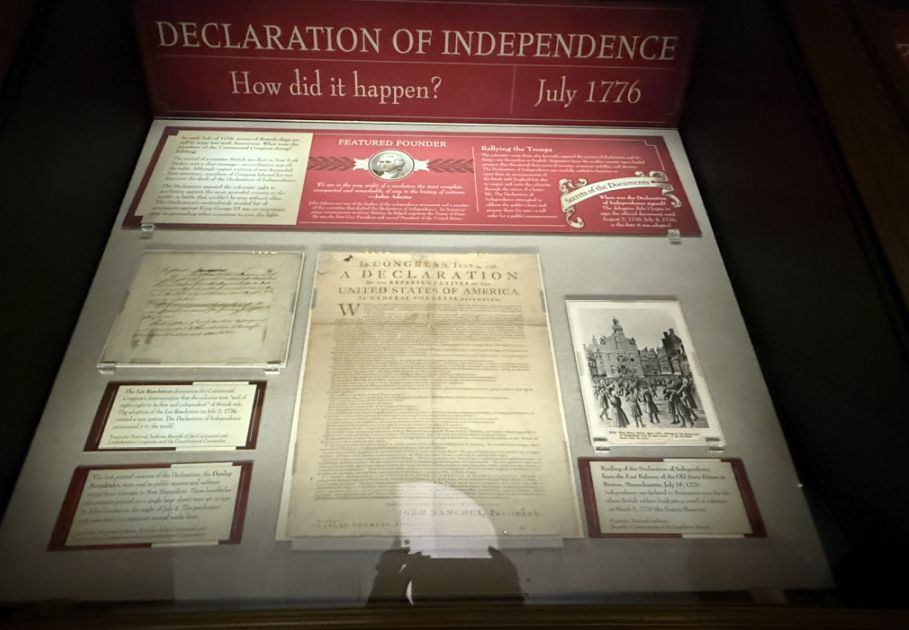
The original Declaration of Independence is housed within a hermetically sealed glass and titanium case inside the Rotunda. This is one of the "Charters of Freedom" documents.
The Declaration of Independence is the founding document of the United States. It was adopted by the Continental Congress on July 4, 1776, announcing the separation of 13 North American colonies from Great Britain.
It articulates fundamental principles such as: All men are created equal. They are endowed with certain unalienable rights, including Life, Liberty, and the pursuit of Happiness. Governments derive their just powers from the consent of the governed. It served as a declaration of war, an assertion of natural rights, and a statement of national identity. Its ideals continue to inspire democratic movements around the world.
 |
 |
Due to age, environmental exposure over centuries, and previous display methods (including being rolled up and carried around), the original parchment is now faded and fragile. The text is very difficult to read with the naked eye, even up close. The sophisticated display case is designed to preserve it for as long as possible.
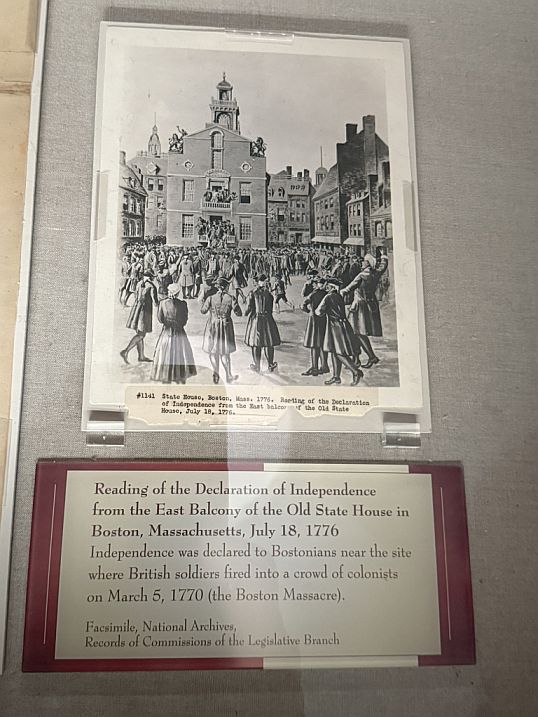
On the right is a fascinating historical depiction often associated with the Declaration. This picture commemorates a significant public event: the first public reading of the Declaration of Independence in Boston. This took place on July 18, 1776, two weeks after its adoption in Philadelphia. The Old State House in Boston was a central location for political activity during the colonial period and the American Revolution. The balcony served as a public forum from which important announcements were made to the citizens gathered below in what is now State Street.
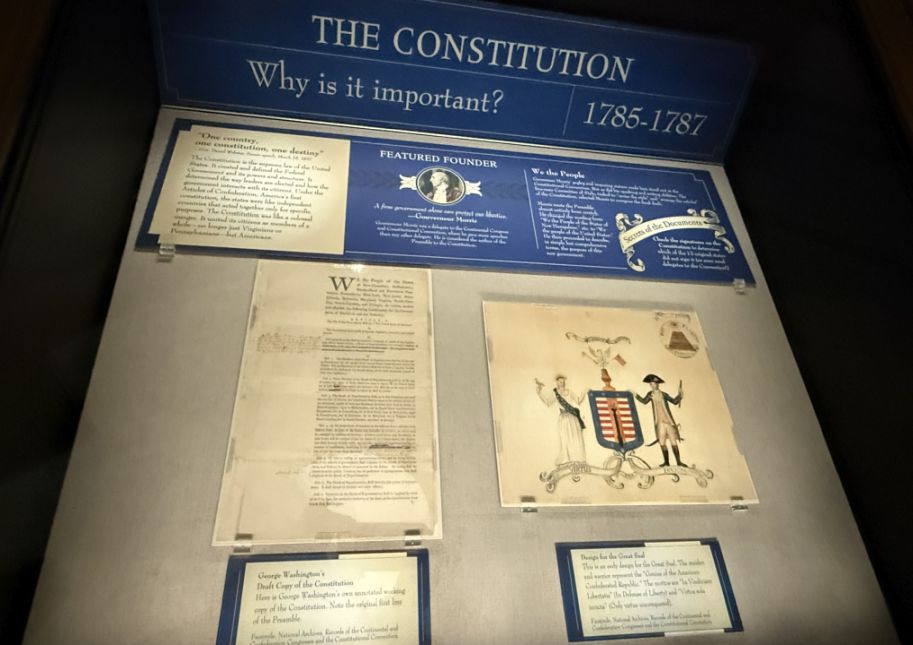
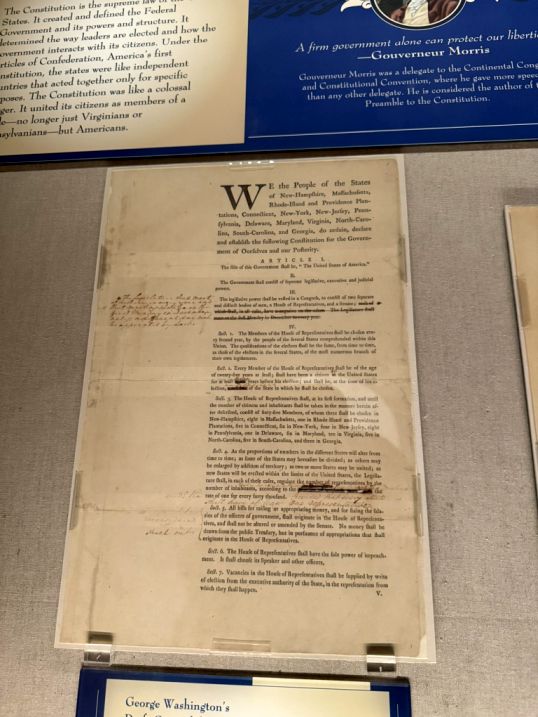
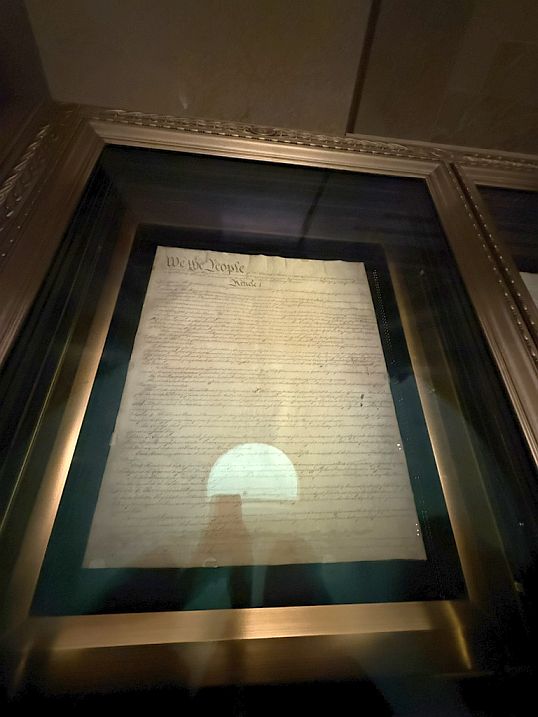
The document that famously begins with the words "We the People" is the United States Constitution. This is the original, handwritten parchment document that was drafted during the Constitutional Convention in Philadelphia in 1787 and subsequently ratified by the states. This phrase is the opening of the Preamble to the U.S. Constitution and is incredibly significant because it establishes that the power and authority of the government come from the citizens of the United States, rather than from a king, a parliament, or a divine right. It underscores the concept of popular sovereignty and self-governance.
The case for the U.S. Constitution is a marvel of conservation technology, it contains a mixture of inert gases, primarily helium. This gas helps protect the parchment from oxidation and degradation caused by oxygen and atmospheric pollutants.
 |
 |
When you stand before the Constitution in its case, you are looking at the document that has guided American governance for over 230 years. The case itself is a testament to the nation's commitment to preserving its foundational history for future generations.
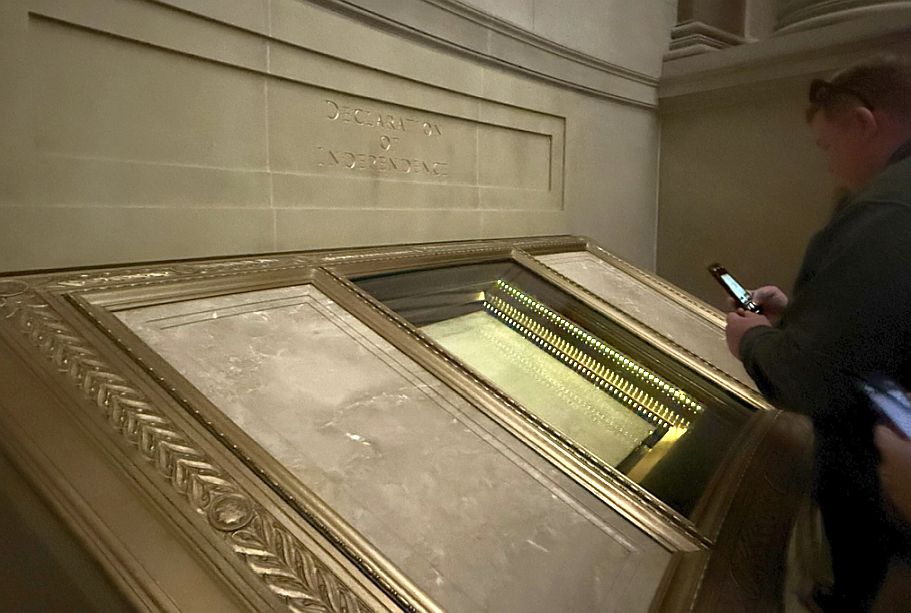
The Declaration of Independence is one of the most pivotal documents in human history, laying the philosophical groundwork for the United States and influencing countless movements for freedom and self-determination worldwide.
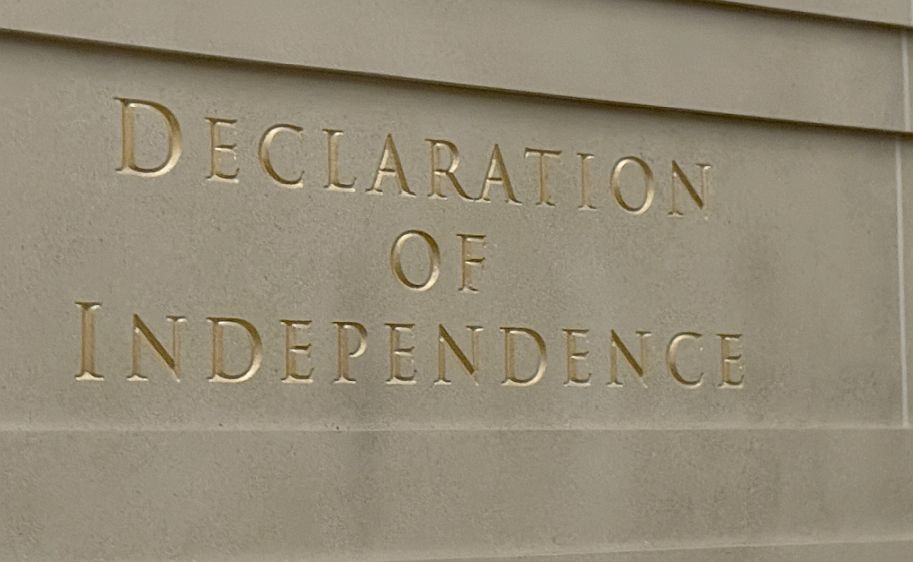
The Declaration of Independence is the foundational document of the United States. It was adopted by the Second Continental Congress at Pennsylvania State House (now Independence Hall) in Philadelphia, Pennsylvania, on July 4, 1776. Its primary purpose was to explain to the world why the thirteen American colonies were seeking to separate from Great Britain and establish themselves as an independent nation.
 |
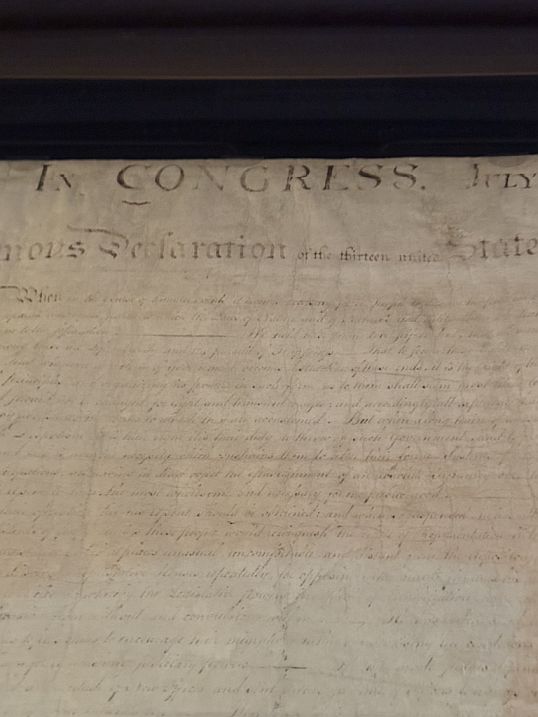 |
The Declaration is most famous for its powerful preamble, which articulates a philosophy of human rights and governance that was revolutionary for its time and remains profoundly influential.
The bulk of the Declaration is a long list of specific complaints against King George III and the British Parliament. These grievances illustrate how the British government had violated the colonists' rights and abused its power. The document concludes with a clear and unequivocal statement: "That these United Colonies are, and of Right ought to be Free and Independent States; that they are Absolved from all Allegiance to the British Crown, and that all political connection between them and the State of Great Britain, is and ought to be totally dissolved."
Thomas Jefferson is widely recognized as the principal author of the Declaration. He drafted the initial text over several weeks in June 1776.
 |
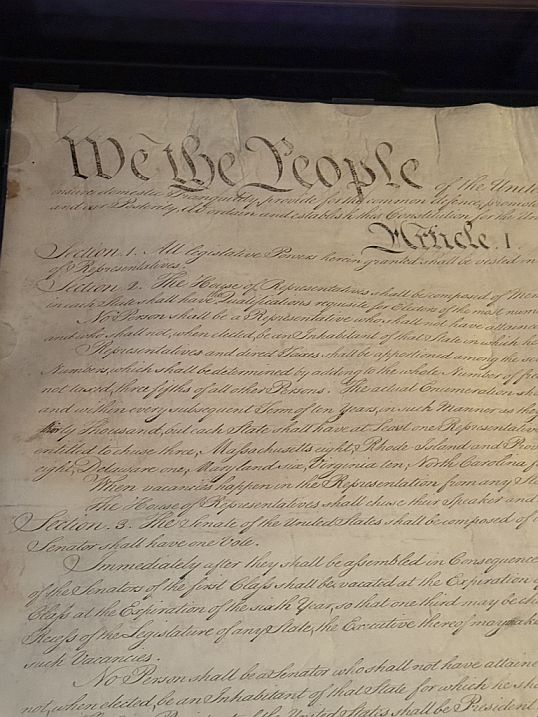 |
The United Constitution. While the Declaration of Independence declared the colonies' separation and laid out the philosophical ideals of the new nation, the U.S. Constitution is the practical blueprint for how that nation would actually govern itself. It is the supreme law of the United States.
The document begins with its famous Preamble, which sets the stage for the entire Constitution:
"We the People of the United States, in Order to form a more perfect Union, establish Justice, insure domestic Tranquility, provide for the common defense, promote the general Welfare, and secure the Blessings of Liberty to ourselves and our Posterity, do ordain and establish this Constitution for the United States of America."
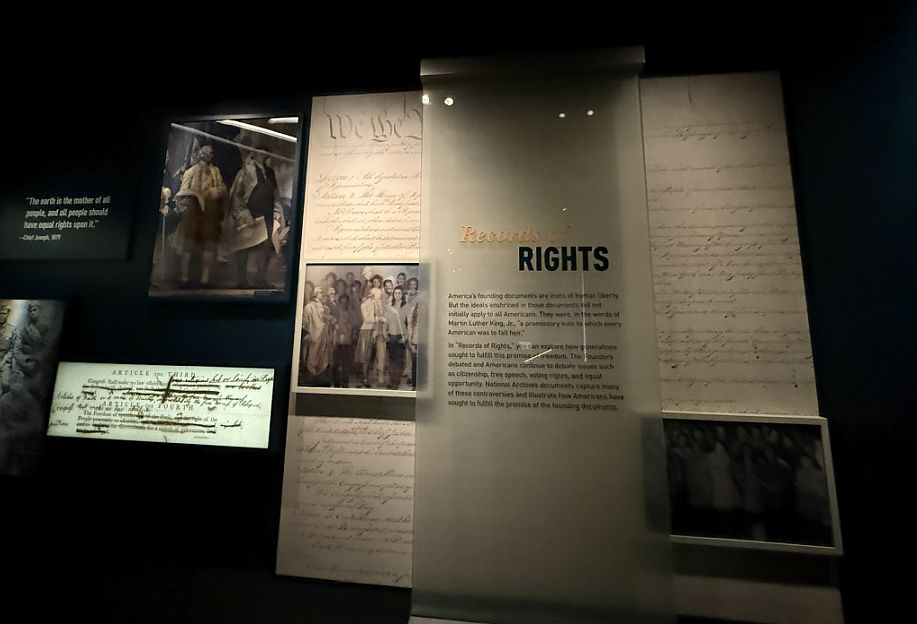
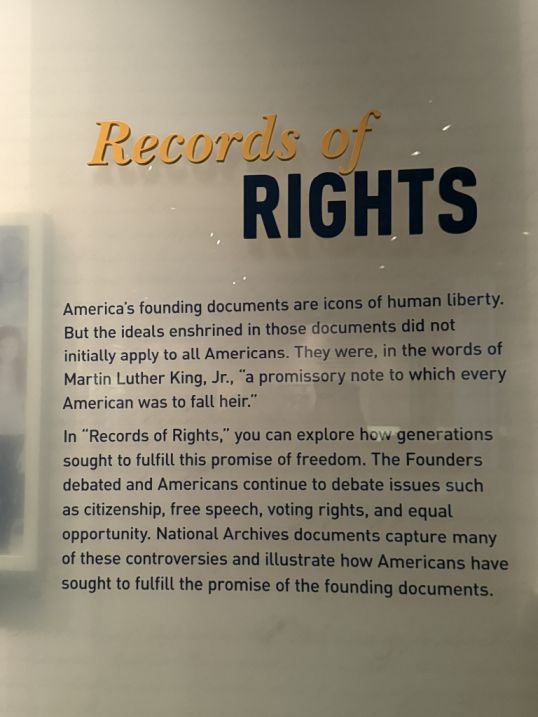
The "Records of Rights" is a permanent exhibition, and it is a very powerful section that directly addresses the struggles and triumphs in the fight for civil rights and liberties in American history.
 |
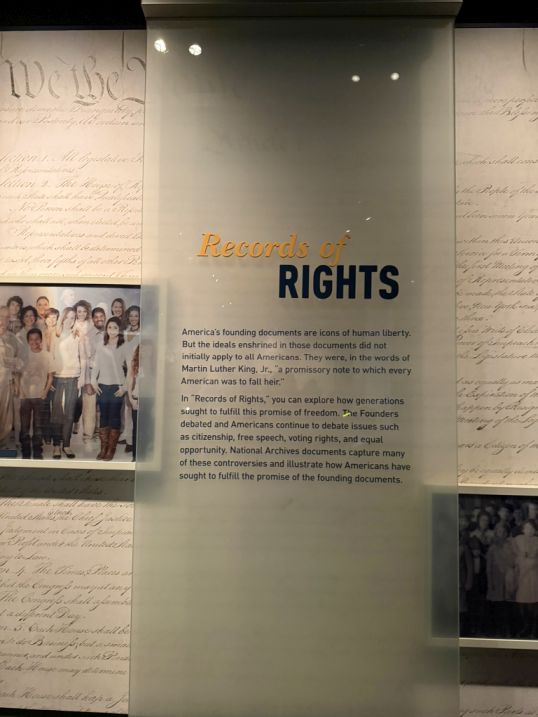 |
This is the overarching theme of the exhibition. It highlights various documents, photographs, and artifacts from the Archives' collection that illustrate the continuing struggle for civil rights, human rights, and the expansion of freedom in the United States. It connects these struggles directly to the promises made in the Declaration of Independence and the Constitution ("We the People").
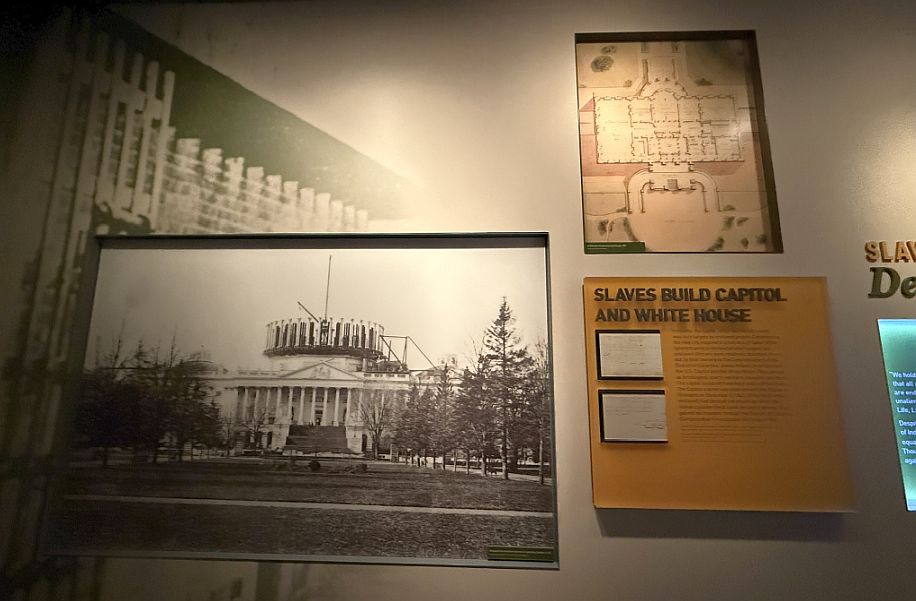
"Slaves Build Capitol and White House, Slaves Records": This section confronts the painful truth of American history regarding slavery.
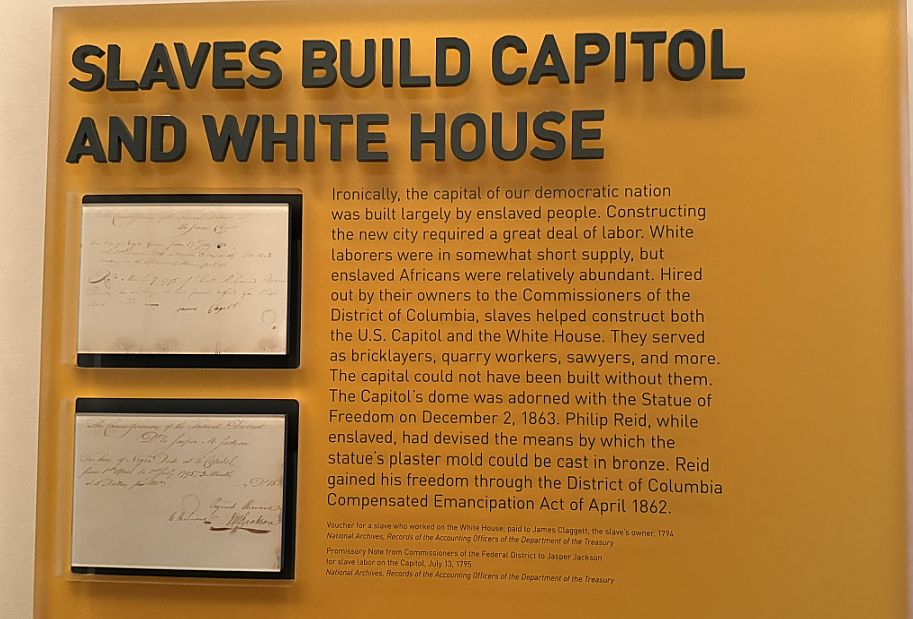
It directly acknowledges that enslaved African Americans were instrumental in the physical construction of fundamental American institutions and symbols of democracy, including the U.S. Capitol Building and the White House. This challenges a sanitized view of history.
 |
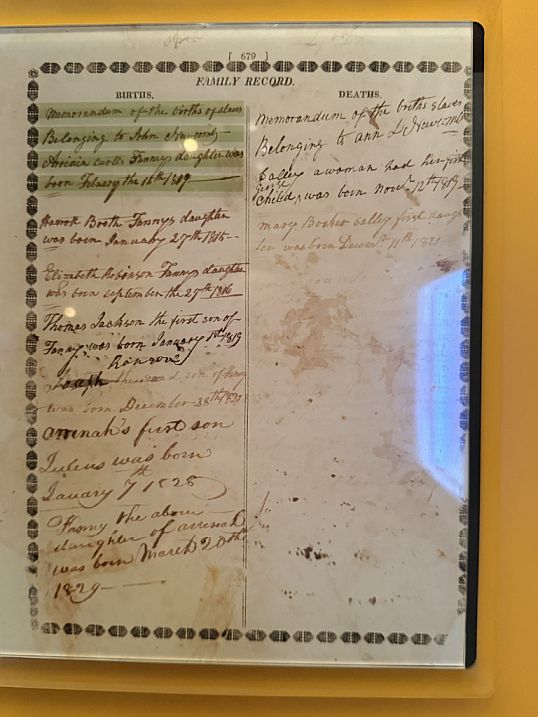 |
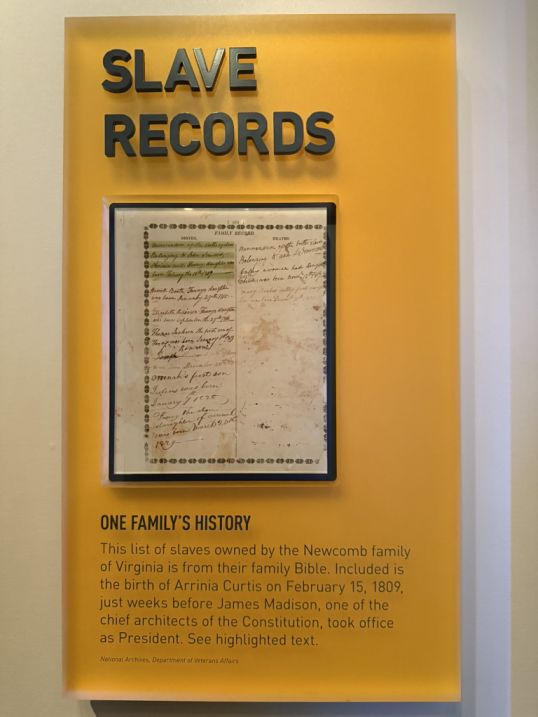
The "slave records" likely refer to various archival documents, such as census records, bills of sale, plantation records, runaway slave ads, and emancipation papers that provide tangible evidence of the institution of slavery and the lives of enslaved people. These documents are crucial for understanding the realities of slavery and for genealogical research.
Focusing on a particular family, like the Newcomb family, and their list of enslaved individuals brings the abstract horrors of slavery into sharp, personal focus.
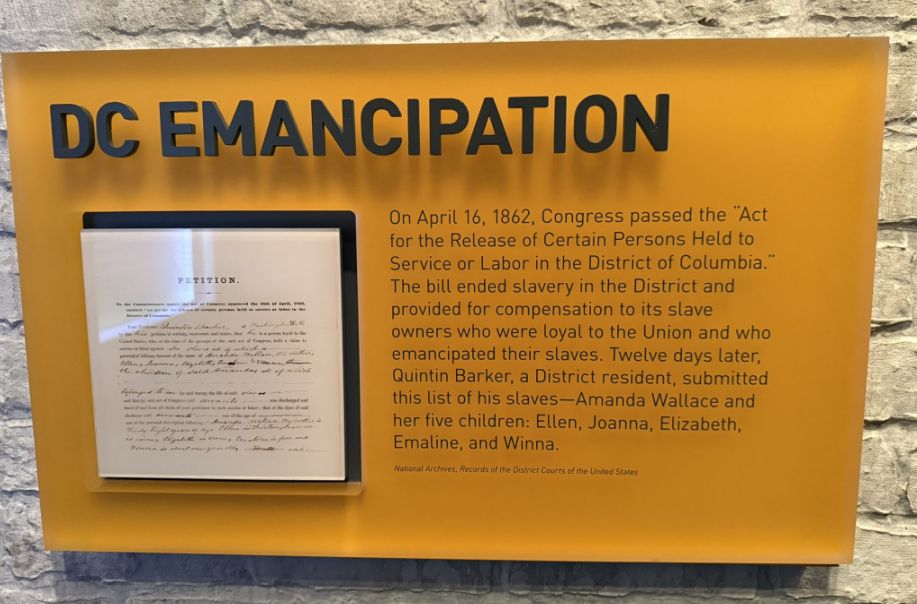
"D.C. Emancipation": This refers to the Compensated Emancipation Act of 1862, which freed enslaved people in the District of Columbia on April 16, 1862, making D.C. the first jurisdiction in the United States to abolish slavery. While the Emancipation Proclamation (effective January 1, 1863) eventually freed slaves in Confederate states, D.C.'s emancipation preceded it. This exhibit highlights the local fight for freedom.
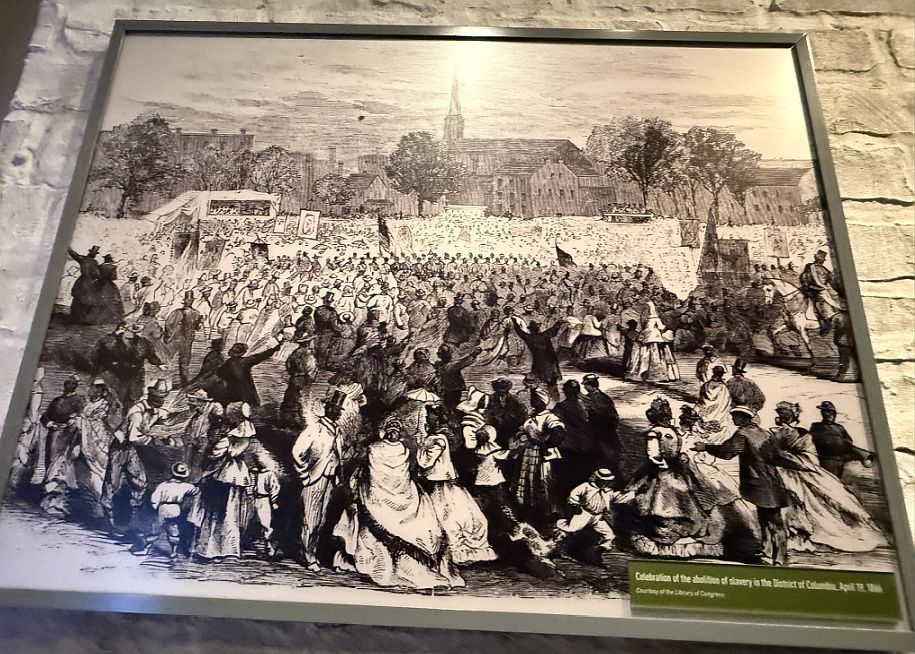
Painting of Slaves Celebrating the Abolition of Slavery depict the joyous reactions and celebrations following liberation, likely tied to the Emancipation Proclamation or the passage of the 13th Amendment. These images capture the profound significance of freedom for those who had been enslaved.
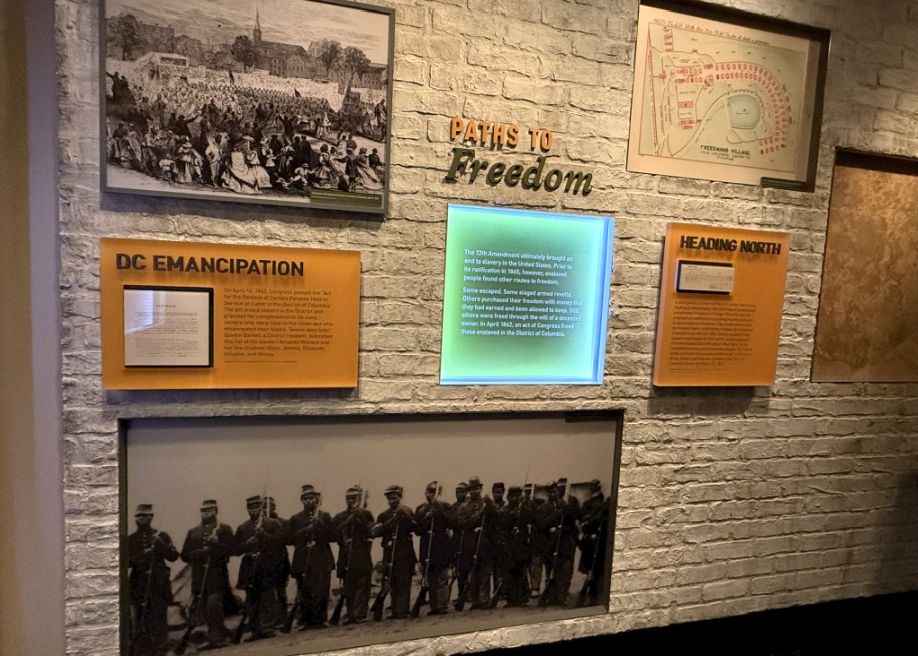
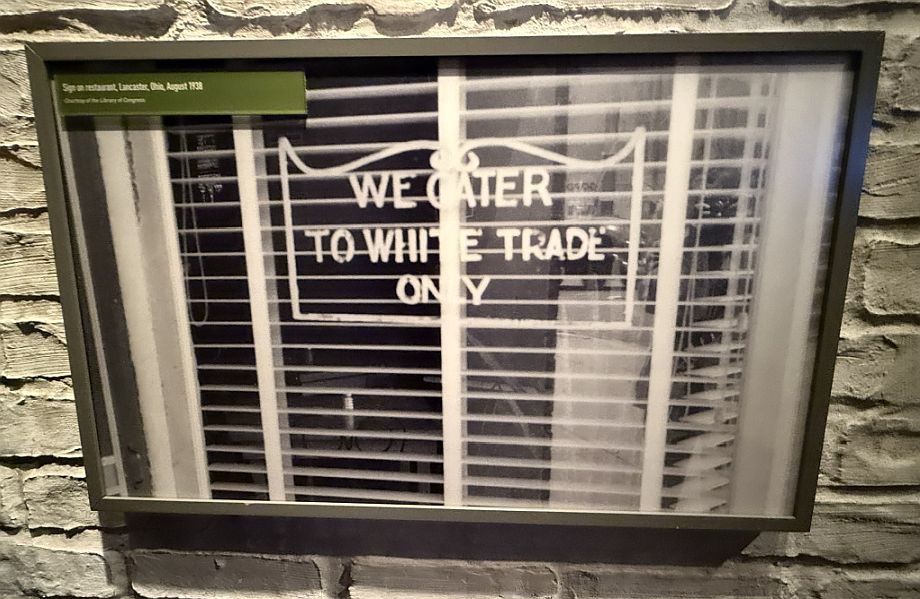
"We Cater to White Trade Only" sign: This is a stark and painful artifact of the Jim Crow era (roughly 1877-1960s) in the American South and sometimes elsewhere. Such signs were ubiquitous and enforced racial segregation, denying African Americans access to businesses, restaurants, hotels, and other public accommodations. It visually represents the systemic discrimination faced by Black Americans.
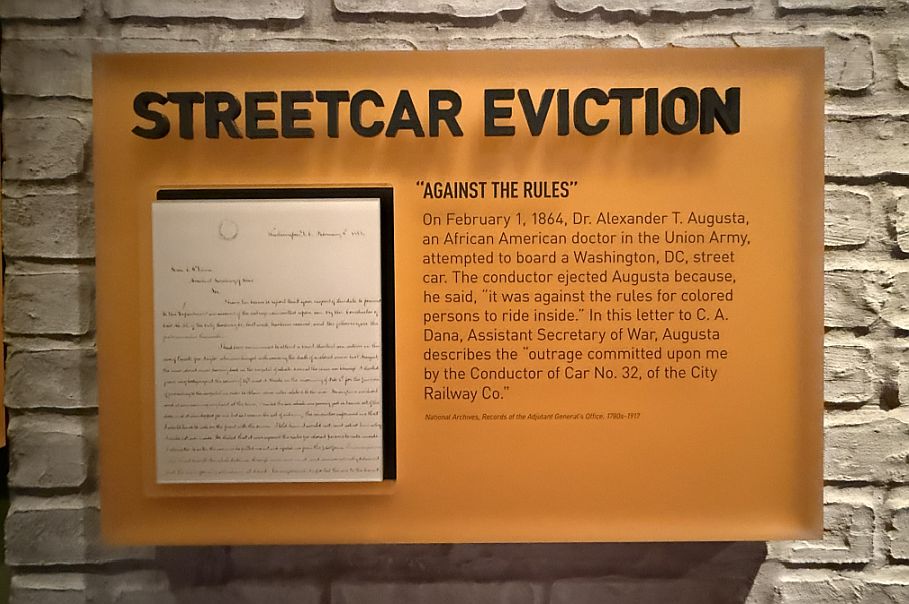
The "streetcar eviction" is referencing an event that Dr. Augusta experienced in Washington D.C. in 1864, during the height of the Civil War. Dr. Alexander T. Augusta (1825–1890) was an incredibly accomplished and pioneering African American physician, surgeon, and abolitionist. Here's what makes him remarkable. He was born free in Maryland, denied admission to medical schools in the U.S. due to his race, he studied medicine in Toronto, Canada, at the University of Toronto's Trinity Medical College, earning his degree. During the Civil War, he returned to the U.S. and was commissioned as a major in the Union Army in 1863, becoming the first African American commissioned officer and the highest-ranking Black officer at that time. He was a surgeon for the 7th United States Colored Troops. As a commissioned officer and a respected professional, Dr. Augusta regularly faced racial discrimination, particularly on public transportation in Washington D.C., where streetcars were often segregated, or Black passengers were relegated to specific sections or even forced to ride outside on the platform. In 1864, despite his military uniform and rank, Dr. Augusta was forcibly removed from a streetcar in Washington D.C. because he was Black. This incident, and similar ones experienced by other prominent Black citizens and soldiers, sparked significant public outcry and drew national attention to the issue of segregation in the nation's capital, even during a war fought, in part, to end slavery. His case, and the activism surrounding it, played a crucial role in bringing about legislation.
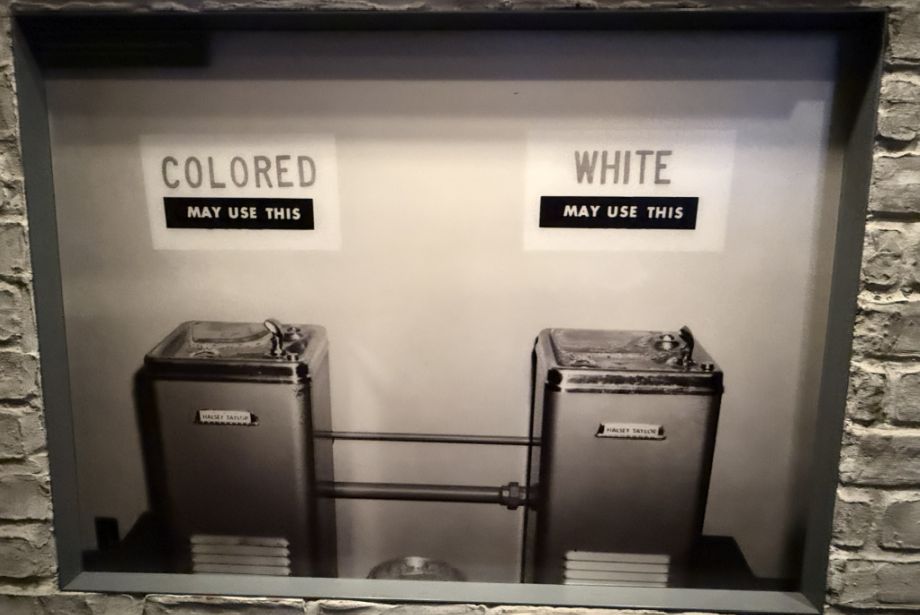
Another powerful visual symbol of Jim Crow segregation, these photographs show the dehumanizing practice of separate and unequal facilities for Black and white Americans, reinforcing a system of racial hierarchy and discrimination.
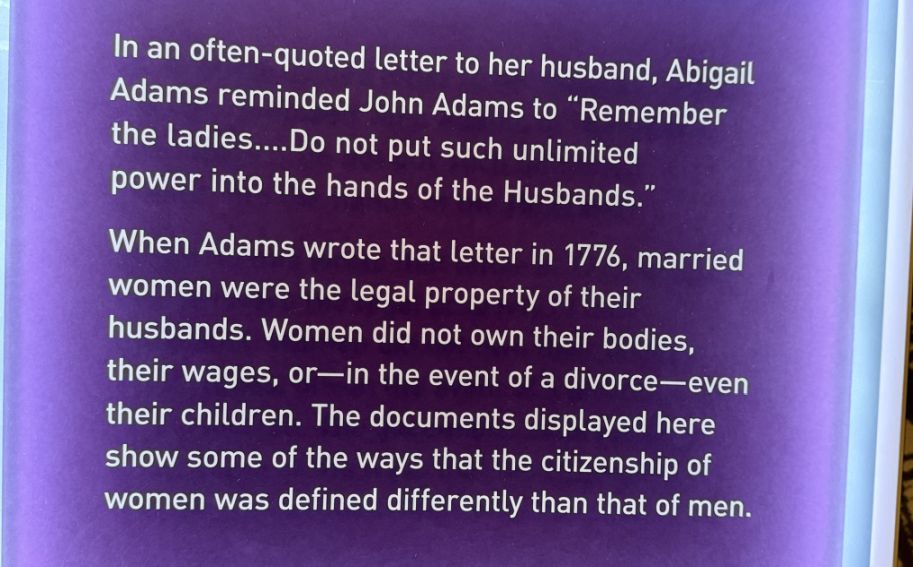
"Remember the Ladies" Panel: This refers to a famous letter written by Abigail Adams to her husband John Adams (who was attending the Continental Congress) in March 1776. In this letter, she urged him to "Remember the Ladies" and to be more generous and favorable to them than their ancestors had been when drafting the new laws for the independent nation. It's an early and articulate plea for women's rights and inclusion in the new republic. This panel signifies the long fight for women's suffrage, property rights, and equal legal standing.
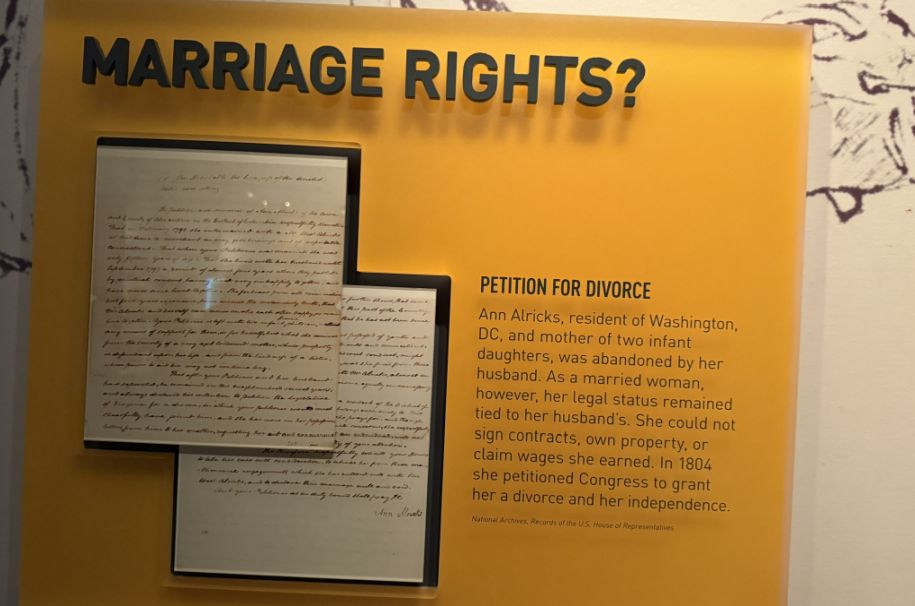
At this time, women had very limited legal rights separate from their husbands. In English common law (which formed the basis of American law), a married woman's legal identity was subsumed by her husband's (a concept known as "coverture"). This meant women often couldn't own property, enter into contracts, or even sue or be sued independently. Grounds for divorce were usually very narrow and varied by colony/state. They often included adultery, desertion, or extreme cruelty, but proving these could be challenging, and some states only allowed legislative divorces (requiring an act of the legislature). A woman petitioning for divorce, particularly if successful, was a significant act of agency and often a bold challenge to societal norms and legal structures. Her case would illuminate the difficulties women faced in attempting to dissolve an unhappy or abusive marriage.
We are now leaving the building.
NEXT... Day 4- National Museum of African American History and Culture