
6 days in Washington DC- 10/18- 10/23/2024
Day 5- The United States Botanic Garden10/22/2024
We are now headed to the United States Botanic Garden, right next to the U.S. Capitol. It is one of the oldest botanical gardens in North America. It’s a wonderful place to slow down after the museums, and seeing roses still blooming in October and it is actually fits perfectly with how this garden was designed.
The garden’s story goes all the way back to 1820, when Congress established a national collection of plants to promote botany, agriculture, and plant science in the young United States. It is considered the oldest continuously operating public garden in the U.S.
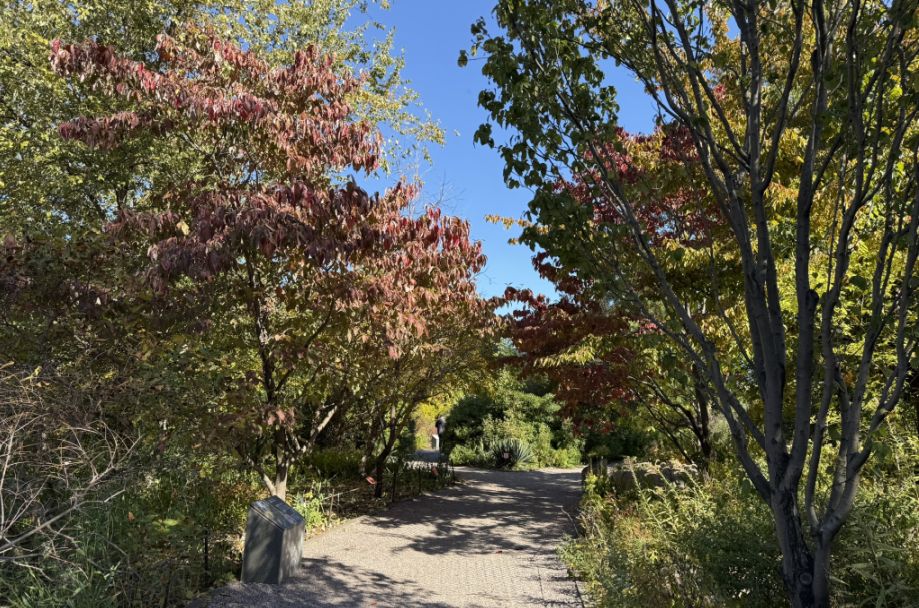
We are now entering the garden by following a beautiful walkway where the landscaping is designed to feel natural, seasonal, and educational at the same time. he U.S. Botanic Garden is dedicated to showcasing the diversity and importance of plants.
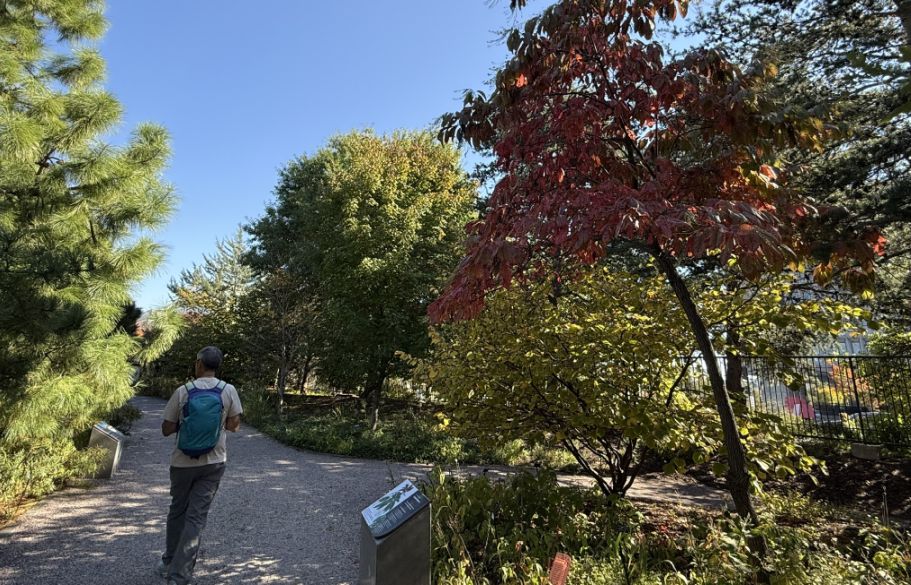
This beautiful entrance path is intentional as the designers wanted visitors to experience the changing American seasons the moment they step inside. Many trees begin turning reds, oranges, and golds, especially native species adapted to Mid-Atlantic climates.
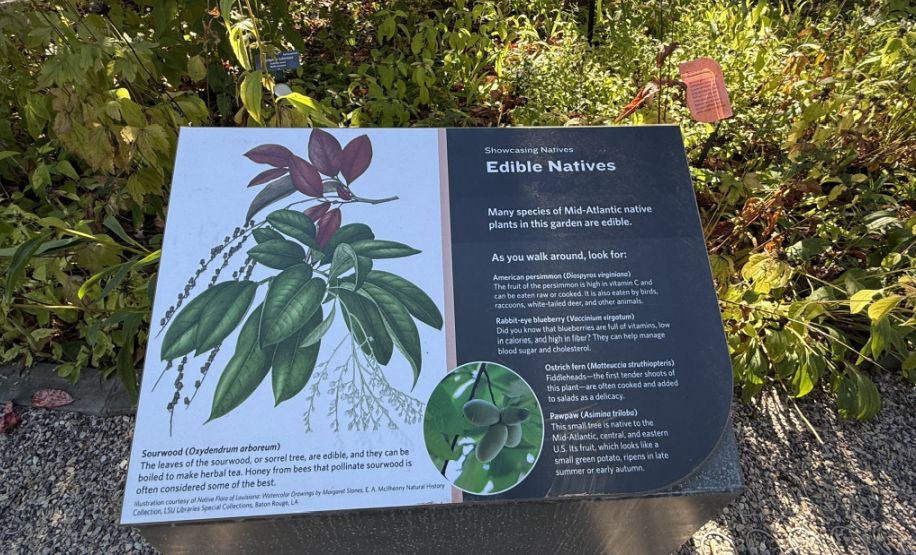
The Edible Native Plants section teaches an important idea that many plants native to North America were traditional food sources long before modern agriculture.
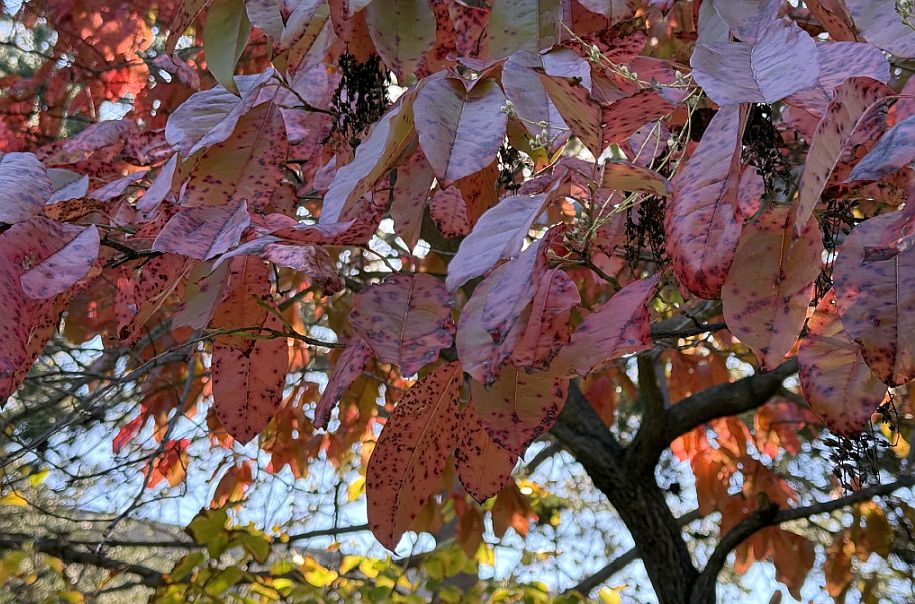
A beautiful tree with red leaves and berries.
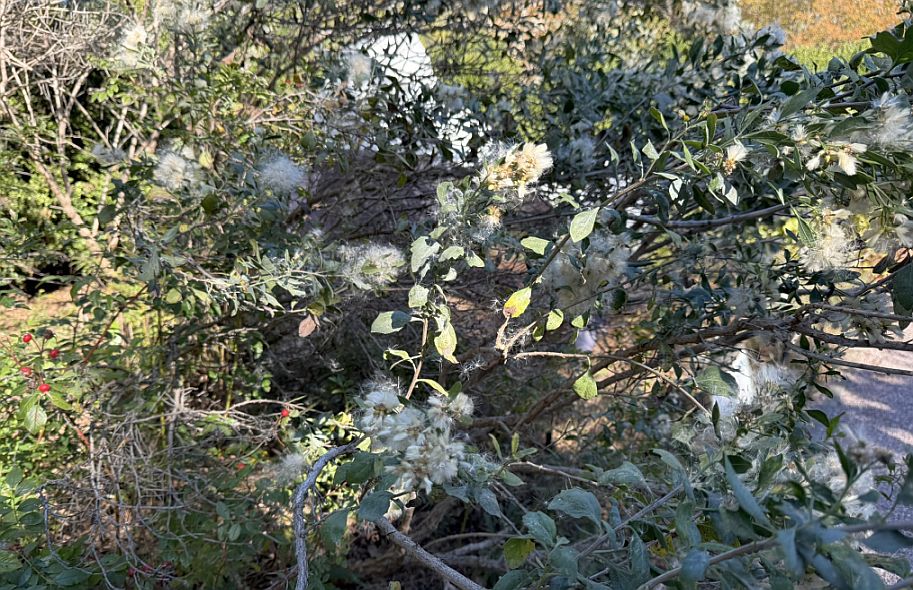
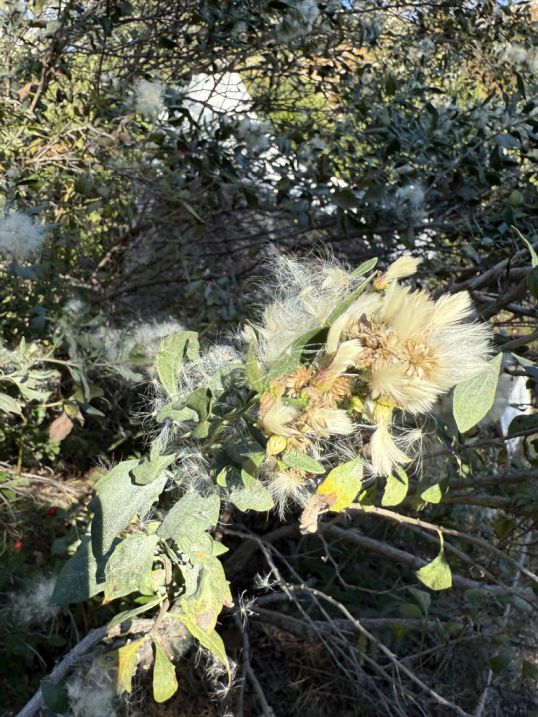
This plant is often called Eastern Baccharis, Groundsel Bush, Saltbush, or Sea Myrtle. It's a fascinating native shrub, particularly beautiful in the autumn. It's native to the southeastern United States, typically found in coastal areas, salt marshes, and disturbed sites due to its tolerance for salty and brackish conditions (hence "Saltbush"). It can also tolerate a wide range of soil types. Bloom Time: The female plants are typically covered in their showy, fluffy white seed heads from late September through October and even into November, making it a standout in the autumn landscape when many other plants are fading.
 |
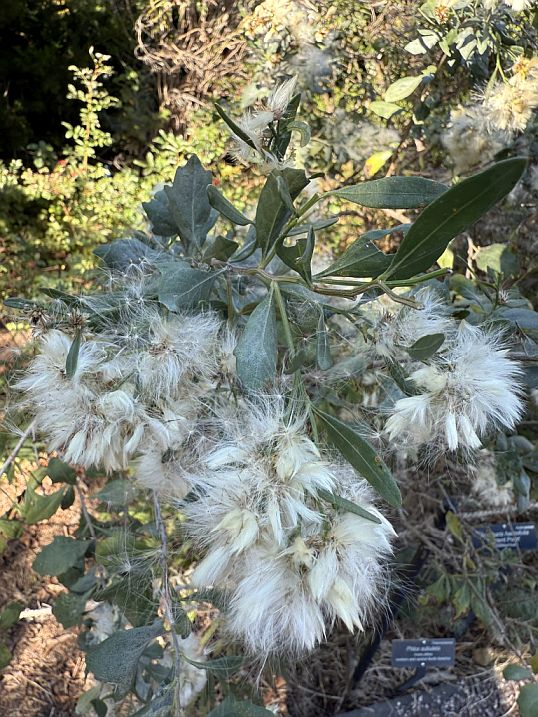 |
They are at their peak beauty for this time of year! Eastern Baccharis is dioecious, meaning individual plants are either male (staminate) or female (pistillate). alignment is deliberate, a visual line connecting: Male plants produce numerous small, inconspicuous white-to-cream flowers that are mainly pollen-bearing. Female plants are the real show-stoppers in the fall. After their tiny white flowers are pollinated, they develop into clusters of plumed, silvery-white achenes. These achenes each have a long, silky pappus. These feathery plumes are crucial for wind dispersal of the seeds. They catch the wind, allowing the seeds to be carried long distances, which is why you can often find Baccharis colonizing new or disturbed areas.
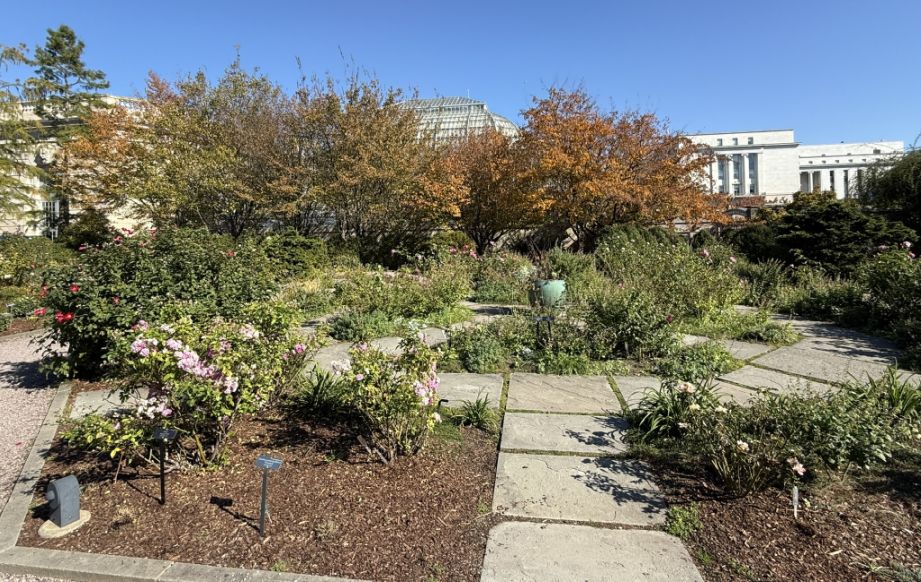
The Rose garden
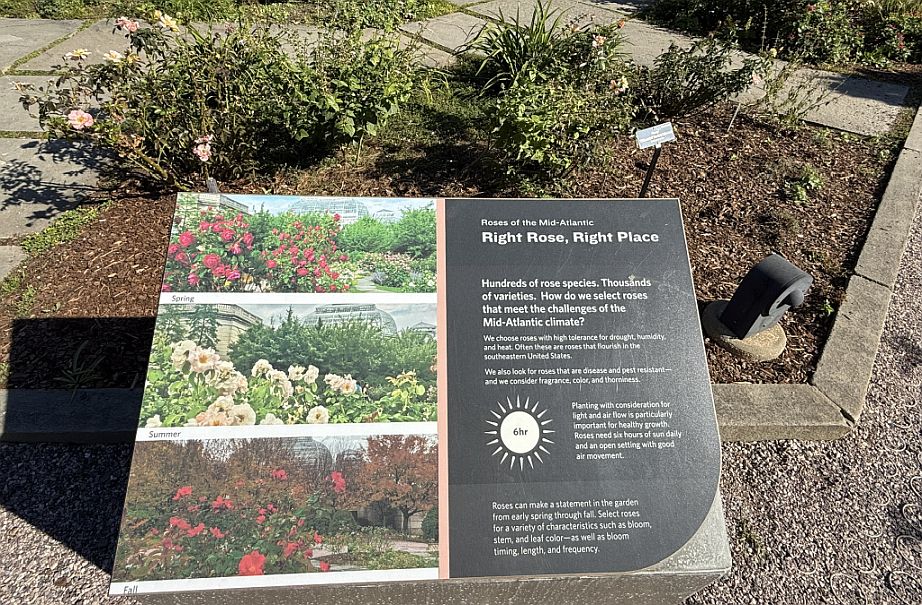
Little motto for a rose garden, "Right Rose, Right Place"! It encapsulates a fundamental principle of successful gardening, especially for a plant as iconic and sometimes particular as the rose.
 |
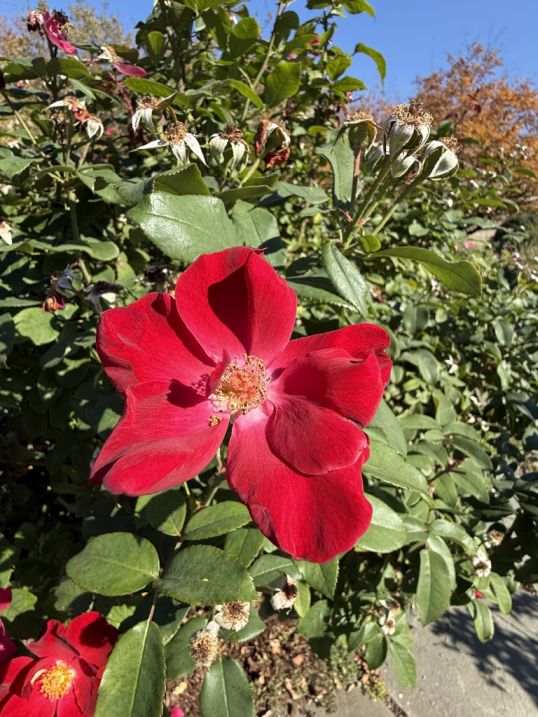 |
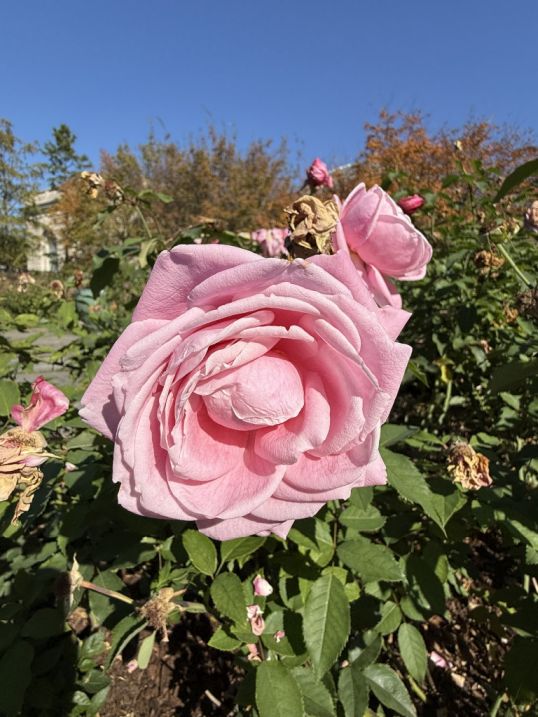
Climate: Not all roses thrive in all climates. Some are more cold-hardy, some tolerate heat and humidity better, some need more sun, etc. "Right Place" means selecting a rose variety that is well-suited to the local climate.
 |
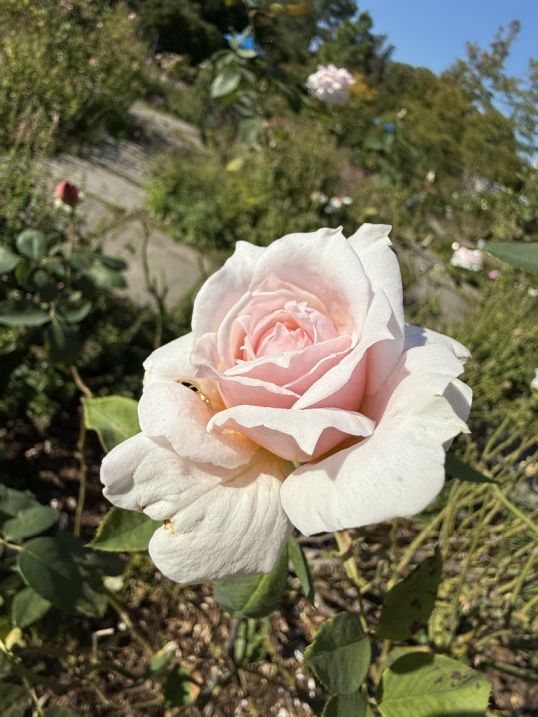 |
Sunlight: Roses are generally sun-loving plants. "Right Place" often means a spot that gets at least 6-8 hours of direct sunlight per day.
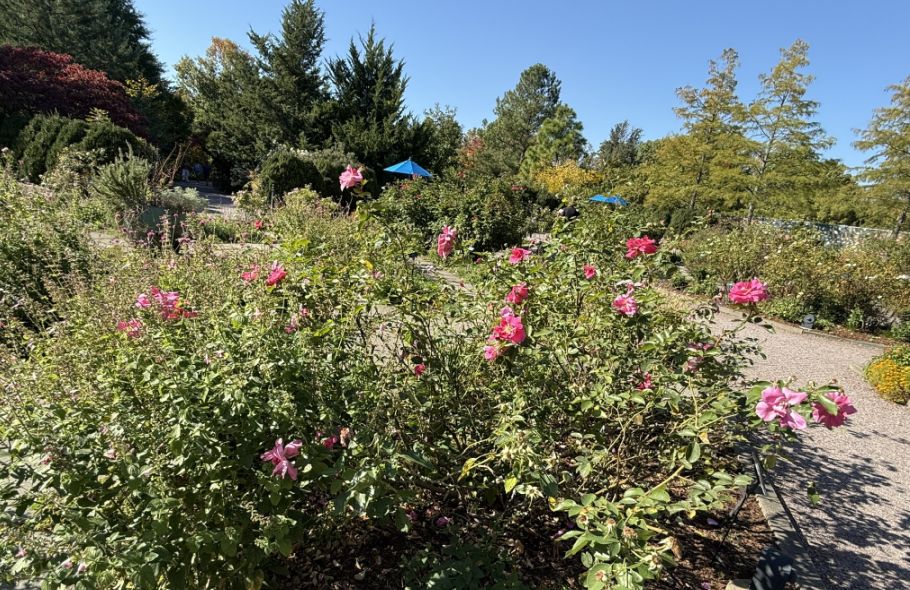
Soil: They prefer well-draining, rich soil. The "Right Place" considers the soil conditions and whether they can be amended to suit the rose.
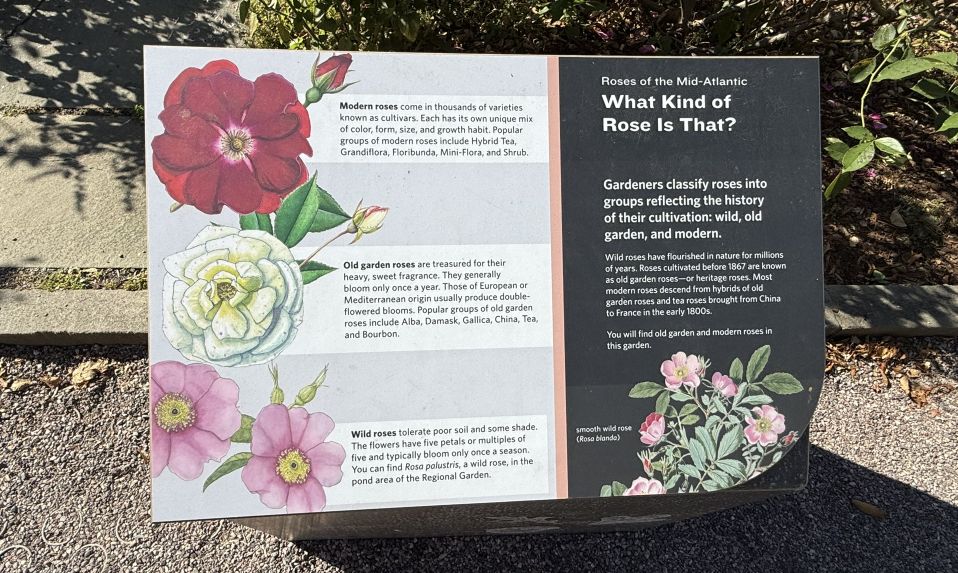
Many types of roses. Roses come in various sizes and growth habits, climbers, shrubs, miniatures, grandifloras, hybrid teas. "Right Place" means ensuring the rose has adequate space to grow to its mature size without being overcrowded.
 |
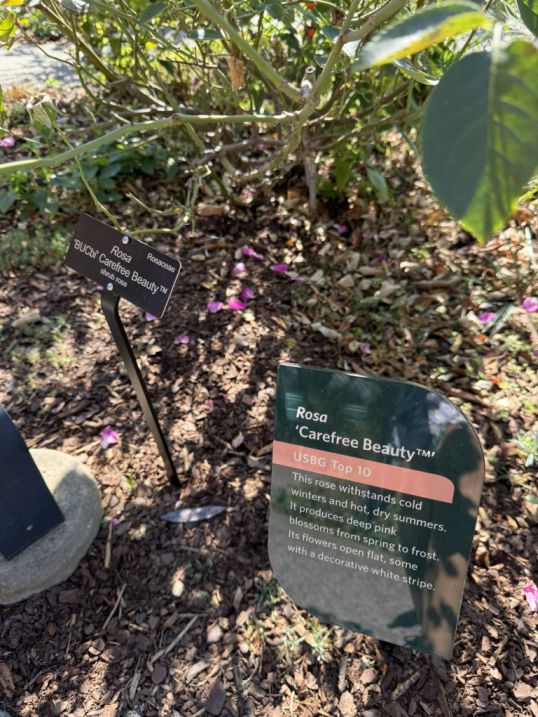 |
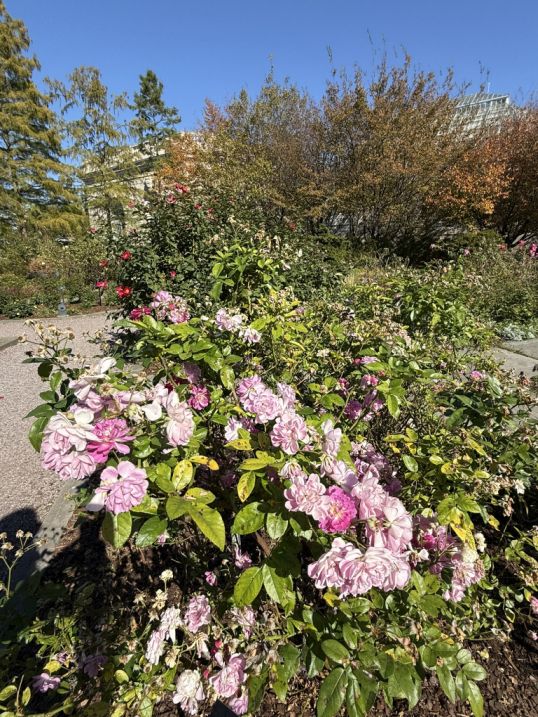
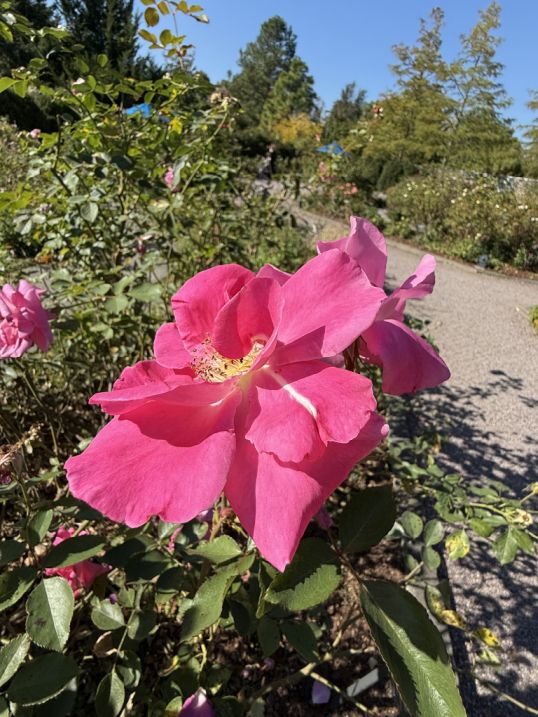
Rosa dubbed the Carefee Beauty as it can withstand cold winters and hot, dry summers. It produces deep pink blossoms from spring to frost. Its flowers open flat, some with a decorative white stripe.
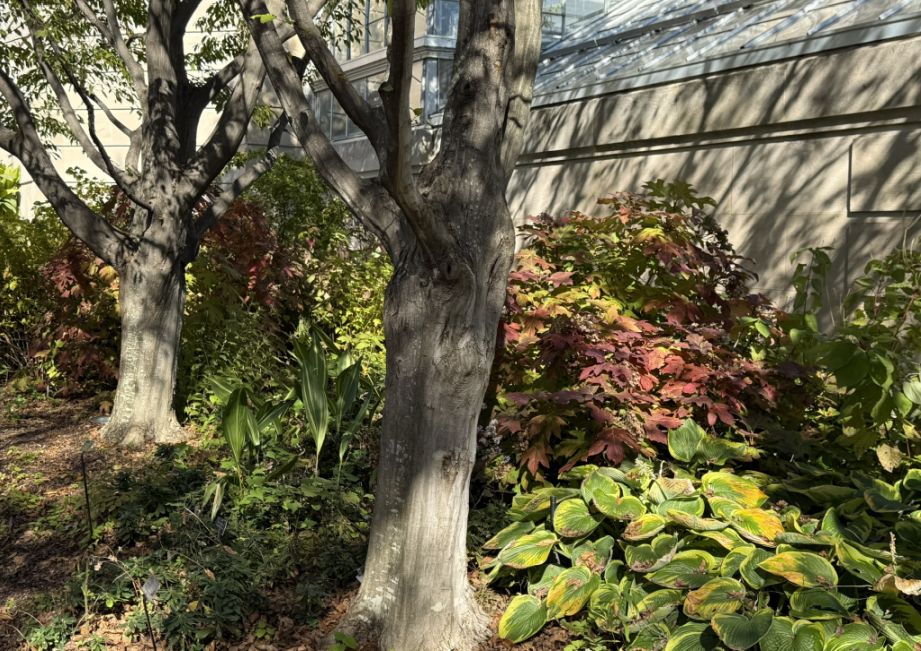
The Garden i is beautiful, especially in the fall with all the deep colors.
 |
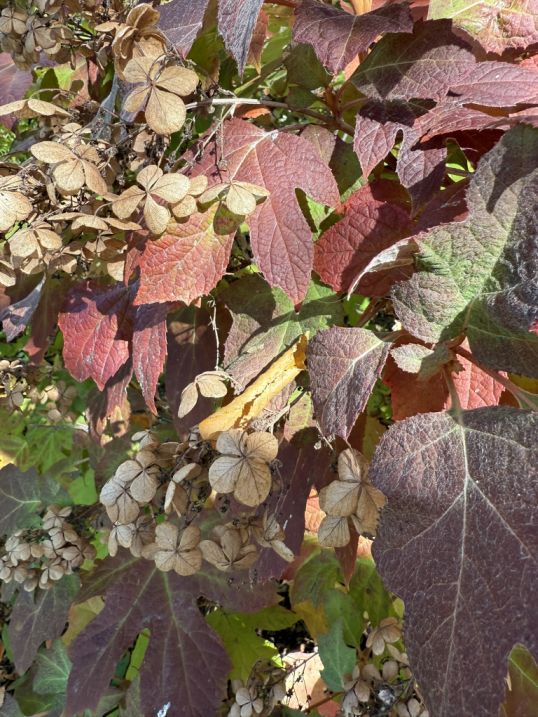 |
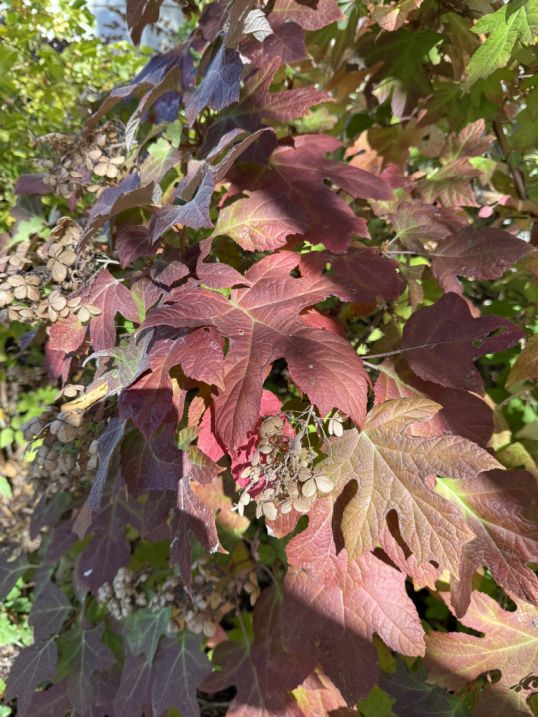
It's interesting how some plants, like the Epimedium franchetii, that retain their faded flowers, adding a delicate touch to the autumn colors. The burgundy-red foliage is stunning . Enjoy the

We are now walking in the Conservatory at the U.S. Botanic Garden! It's a magnificent, enclosed glasshouse with different rooms showcasing plants from various habitats around the world, from deserts to rainforests.
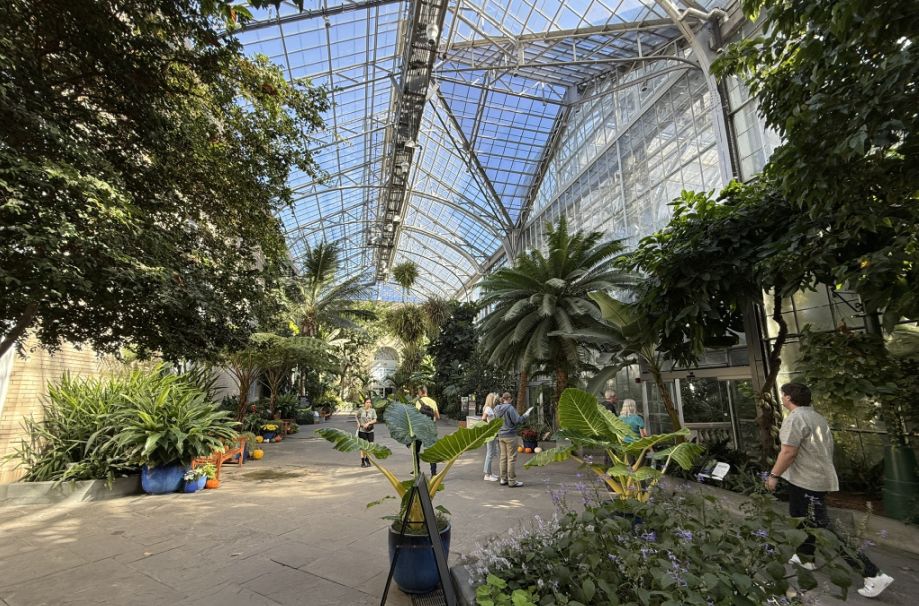
It's a magnificent, enclosed glasshouse with different rooms showcasing plants from various habitats around the world, from deserts to rainforests.
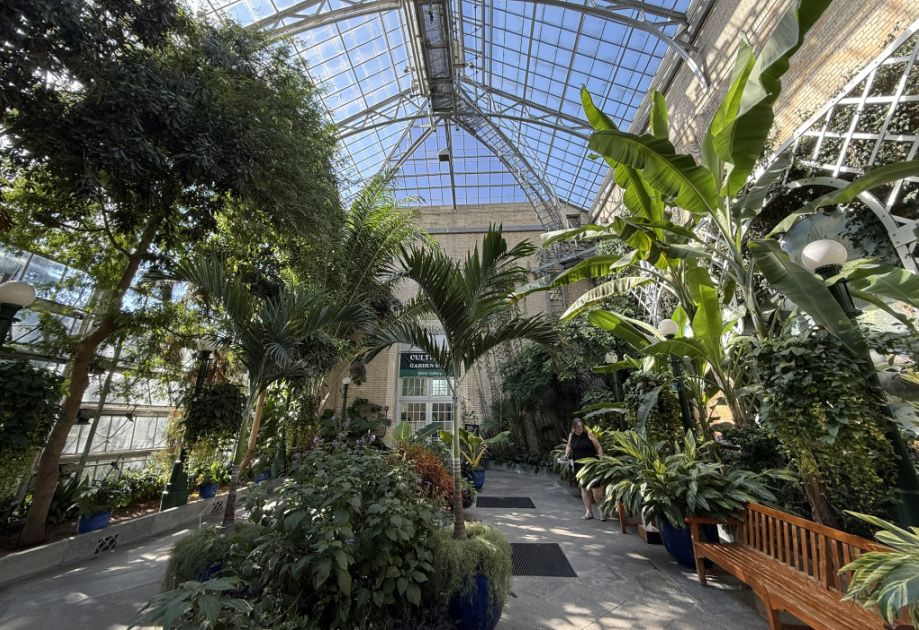
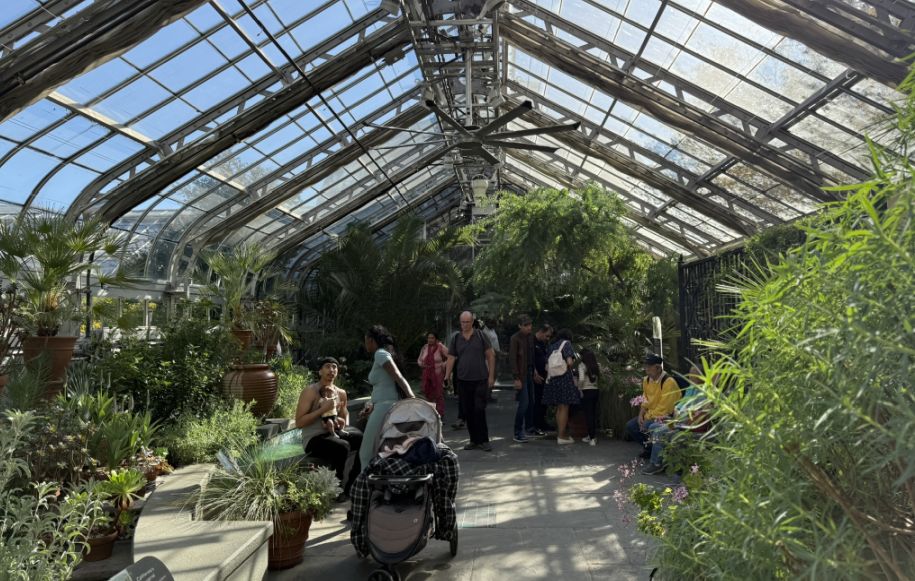
The tall, glass-enclosed ceiling is one of its most defining characteristics. This architectural marvel allows an abundance of natural light to flood the interior, creating an ideal environment for the diverse plant collection. It also gives the space an incredibly open and airy feel, despite being indoors. The structure itself is a beautiful blend of historic and modern design, reflecting the garden's long history.
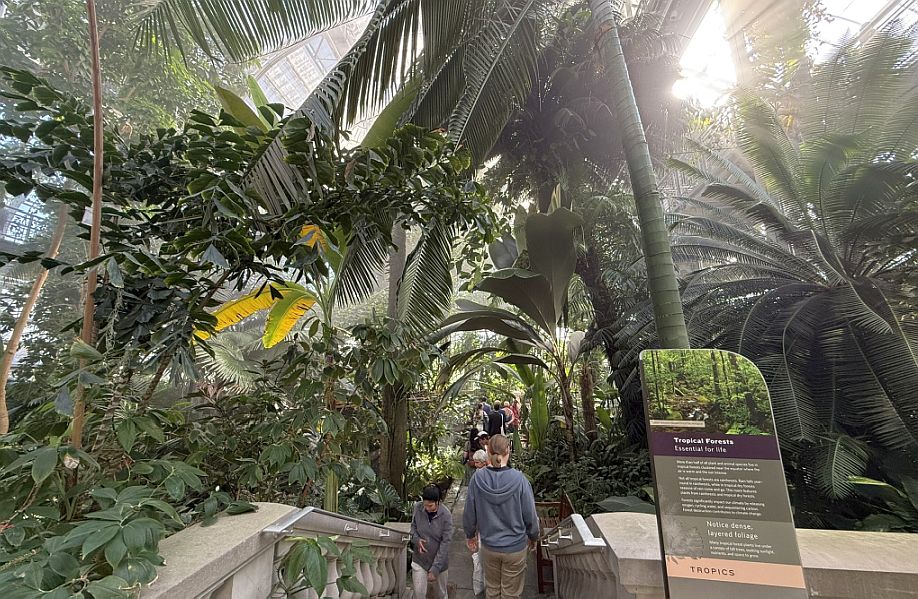
We are headed to the Tropical Forests. As we stepped in, there is an immediately distinct shift in the atmosphere.
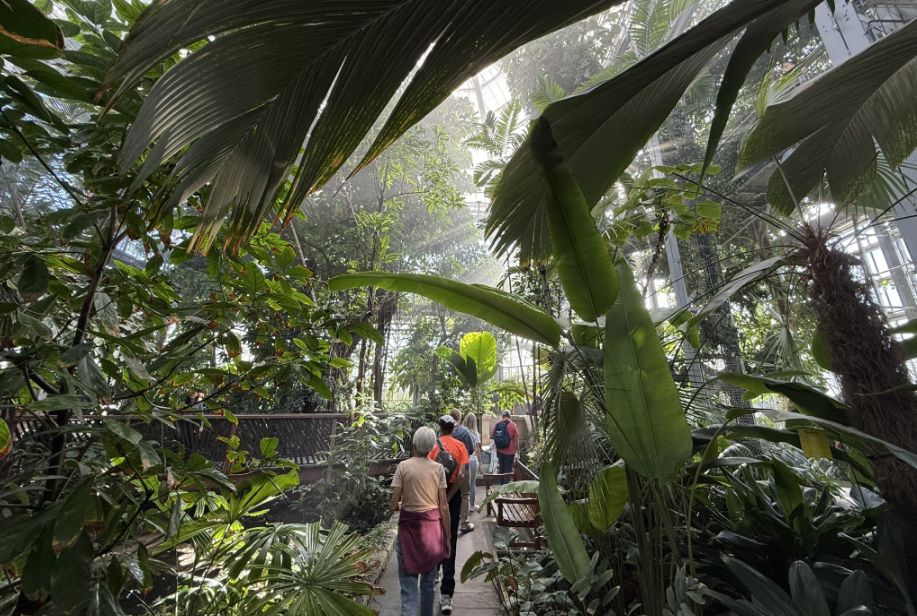
The air becomes noticeably warm and very humid, mimicking the steamy conditions of a true tropical rainforest. There is even a fine mist in the air from the humidifiers working to keep the plants happy. Every available space, from the ground to the towering glass ceiling, is filled with dense foliage.
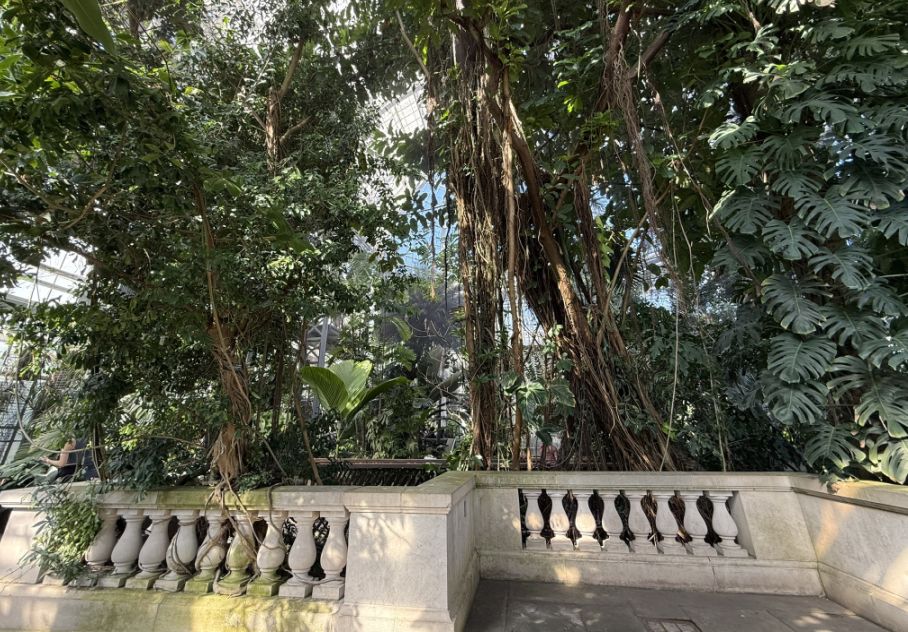
Vines and Lianas: Draping dramatically from branches and structures. Towering Trees with many reaching high overhead, providing a canopy effect.
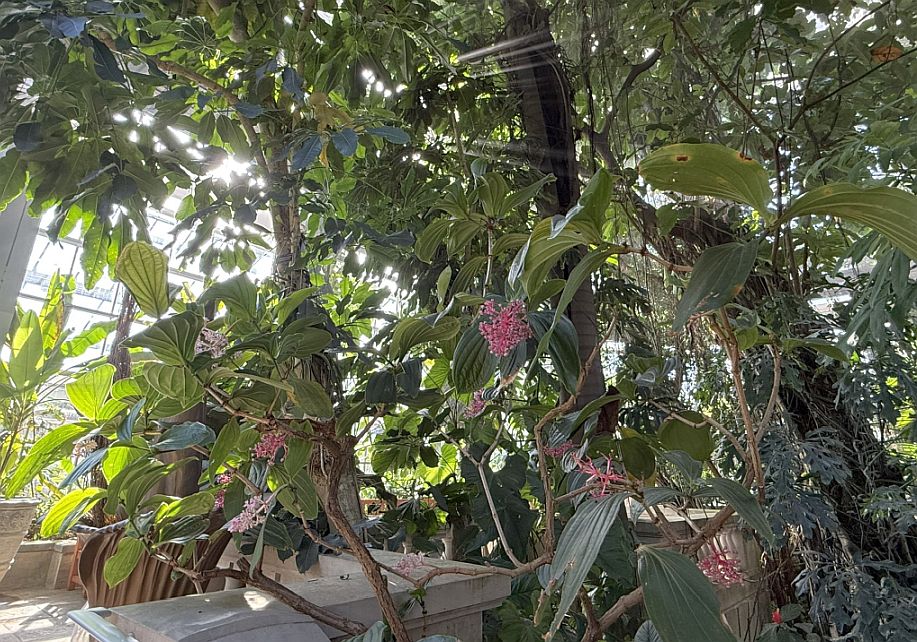
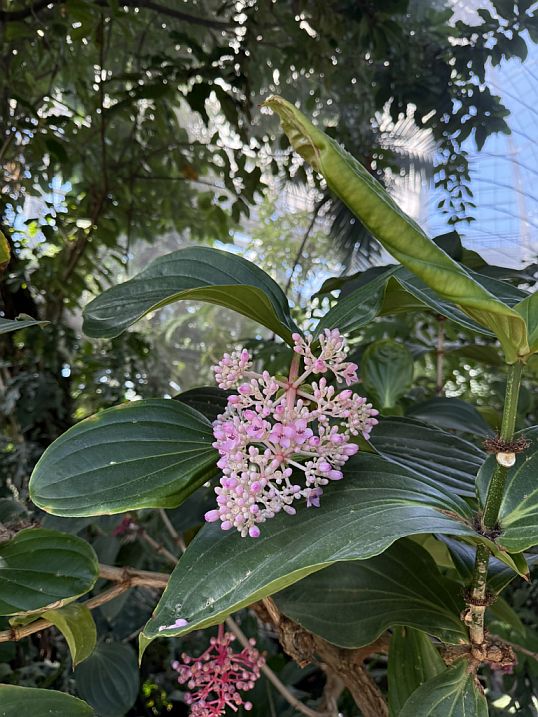
We spotted the Rose Grape, that's a beautiful common name for Medinilla magnifica, and it certainly lives up to its name with its stunning, often rose-pink flowers that hang in grape-like clusters. It's a truly spectacular plant often found in tropical conservatories. It naturally grows on other plants (like trees) for support in its native habitat, rather than in the soil. In the Conservatory, you see it nestled among tree branches to mimic its natural growth.
 |
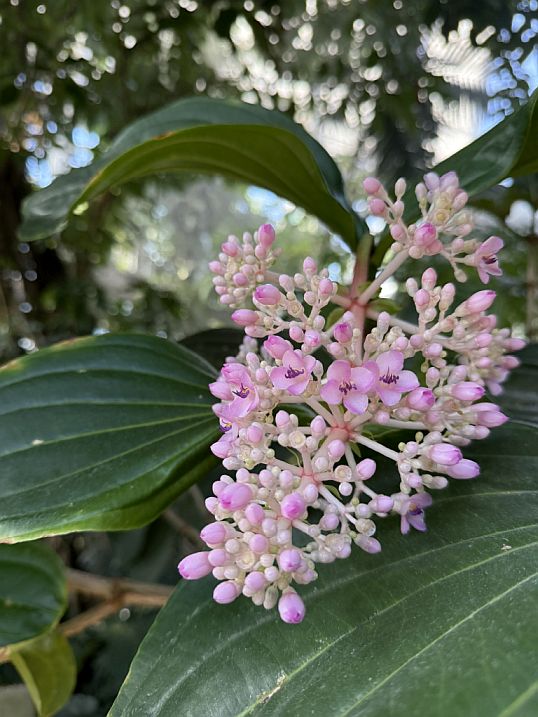 |
Flowers: The most striking feature is its large, pendulous clusters of pink to reddish flowers. What are often mistaken for the petals are actually showy, large, salmon-pink bracts (modified leaves) that surround the true, smaller, deeper pink flowers. These clusters can hang down quite dramatically, sometimes over a foot long. It's native to the Philippines, particularly in the tropical forests, where it thrives in warm, humid conditions. This is why it's a perfect fit for the Tropical Forest room in the Conservatory.
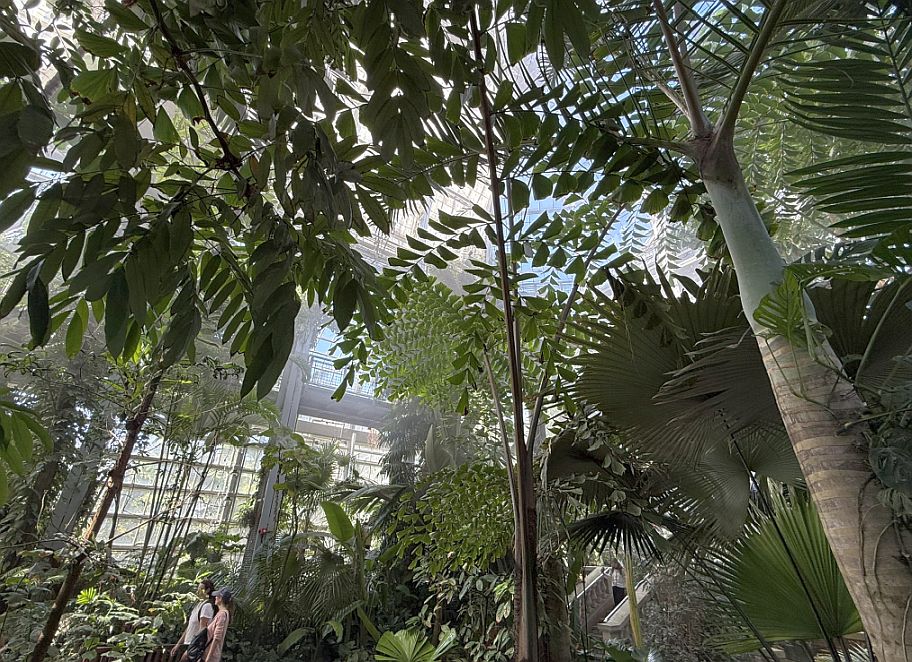
Beautiful tropical tress.
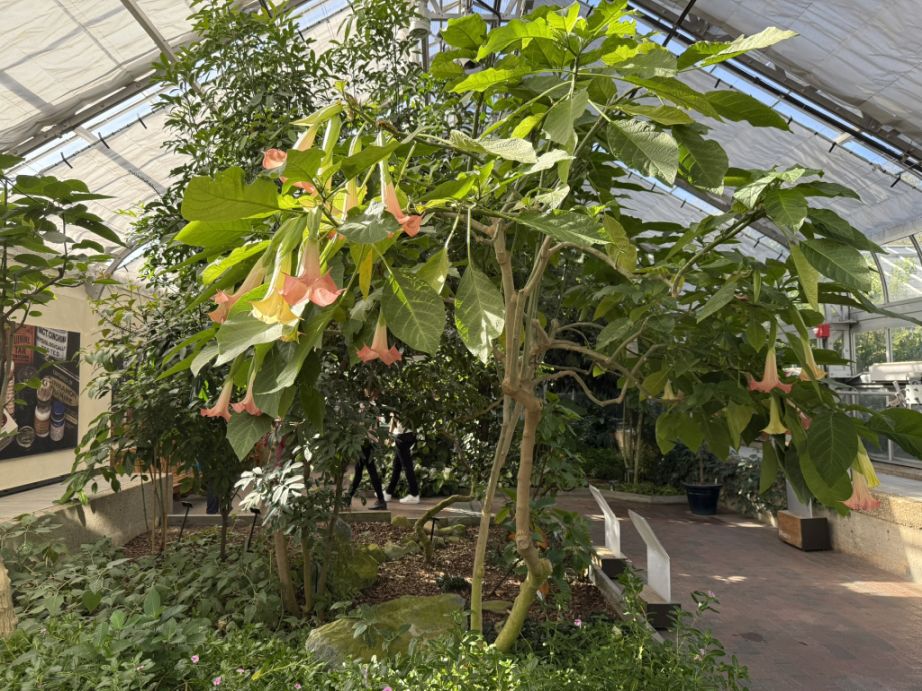
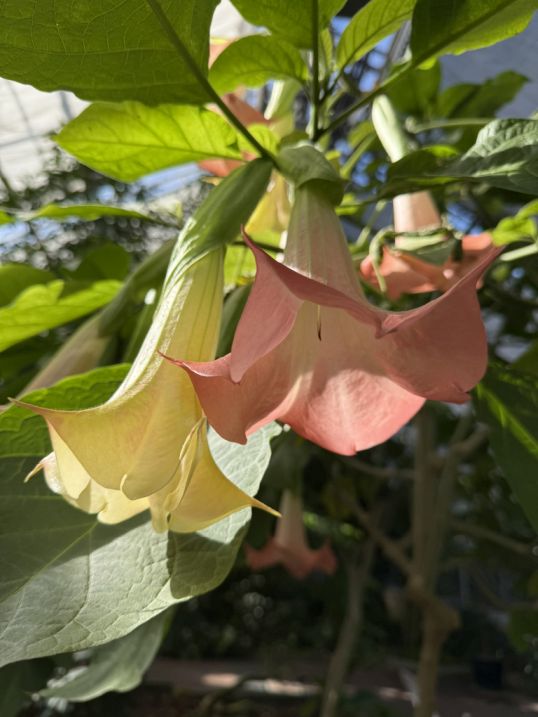
Brugmansia suaveolens (Angel's trumpet), Brazil is truly striking and one of the most dramatic flowering trees/shrubs you'll encounter in a tropical setting.
 |
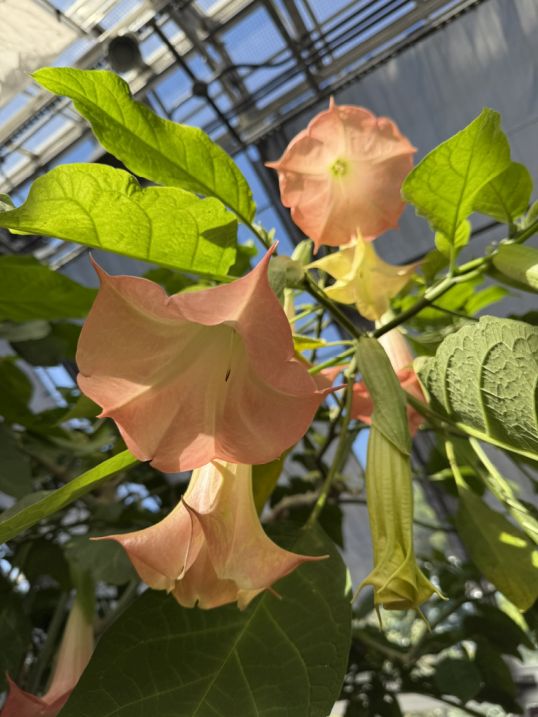 |
Flowers: This is their most iconic feature. The blooms are large, pendulous, and trumpet-shaped (hence the common name!), often dangling gracefully downwards. They come in a variety of colors, including white, yellow, orange, as well as pinks. Many are also highly fragrant, especially in the evening. They can grow quite large, developing into multi-stemmed shrubs or small trees, sometimes reaching heights of 10-20 feetor more in ideal conditions.
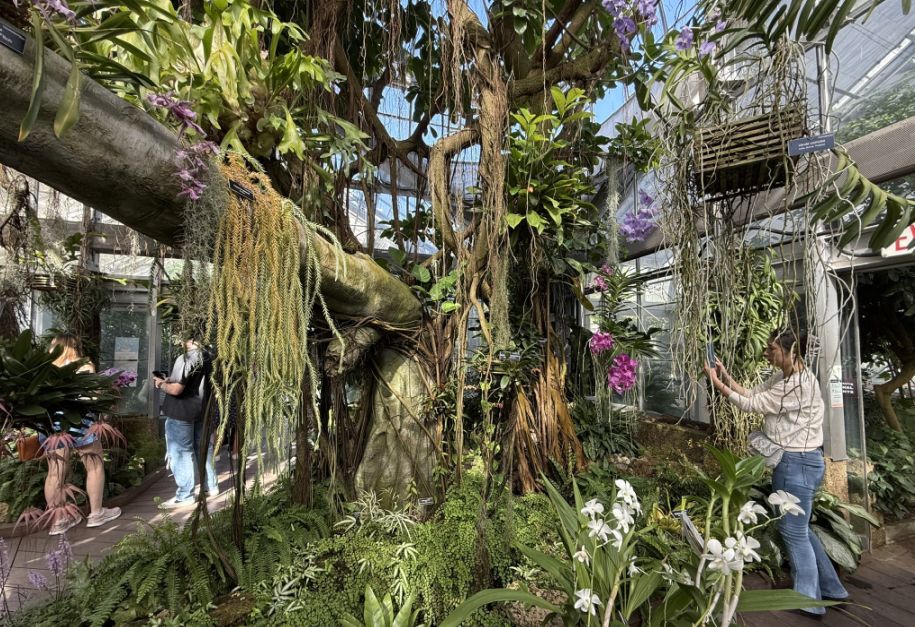
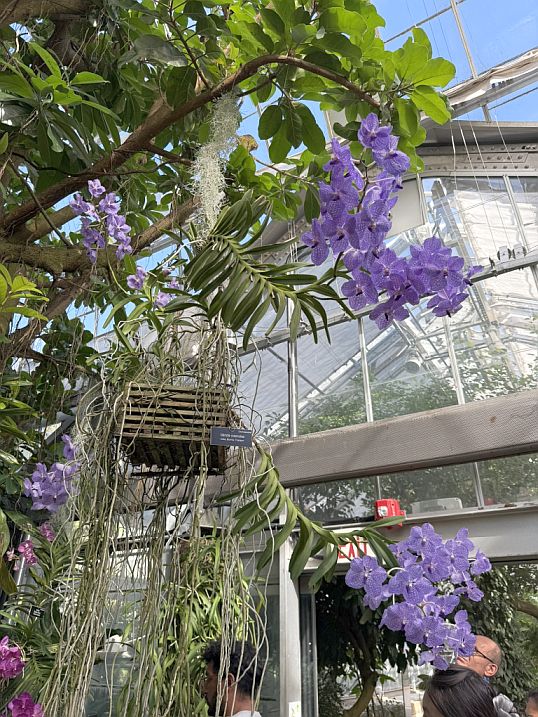
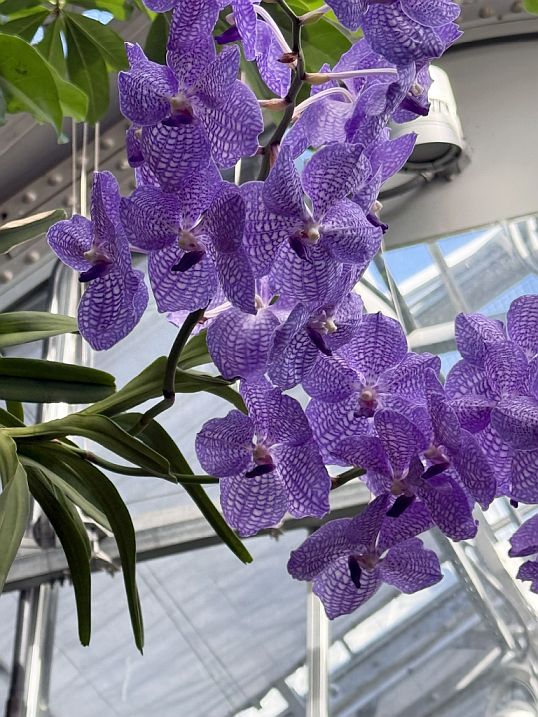
We are now entering the enchanting world of the Orchid House, with a stunning array of colors, shapes, and sizes.
 |
 |
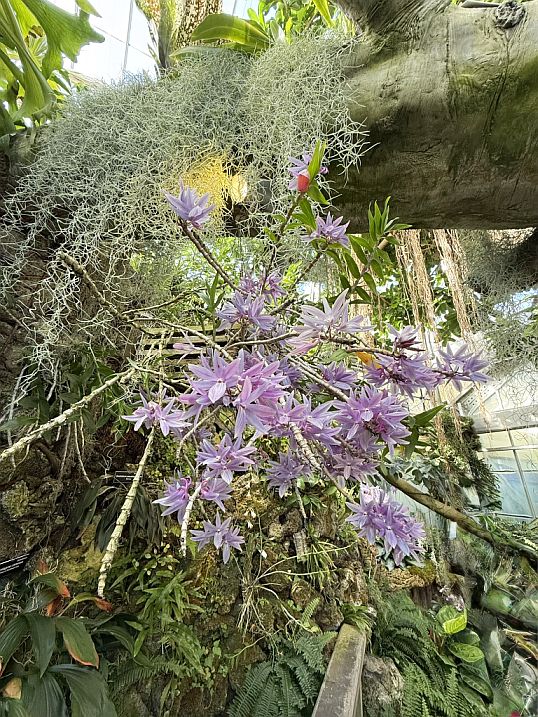
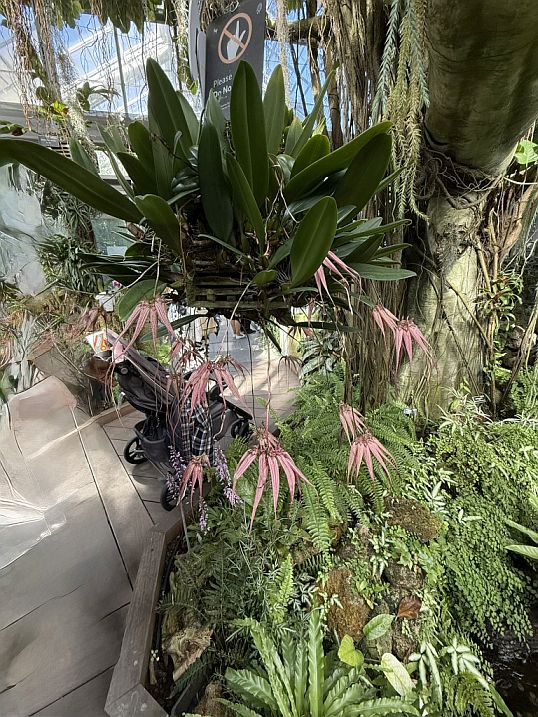
How they grow: They don't grow in the soil. Instead, they attach themselves to the branches and trunks of trees. They use the tree purely for physical support, not as a parasite (they don't take nutrients from the tree).
 |
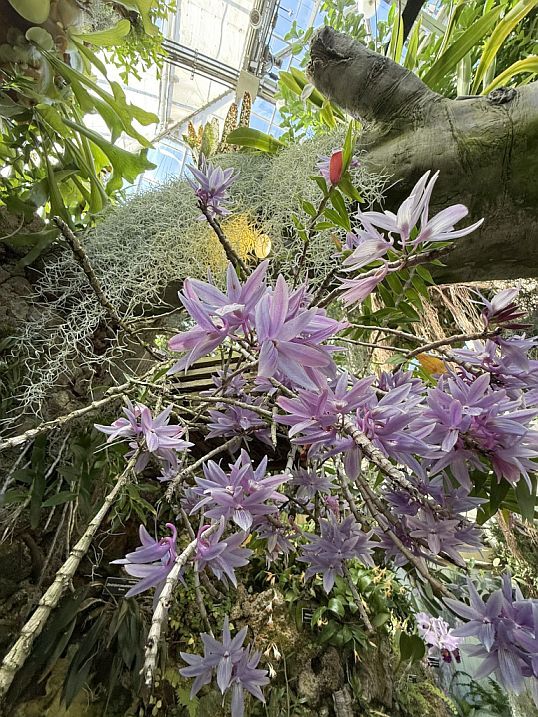 |
Nutrients: They get water and nutrients from rain, dew, and decaying organic matter that collects around them (like fallen leaves or bark).
 |
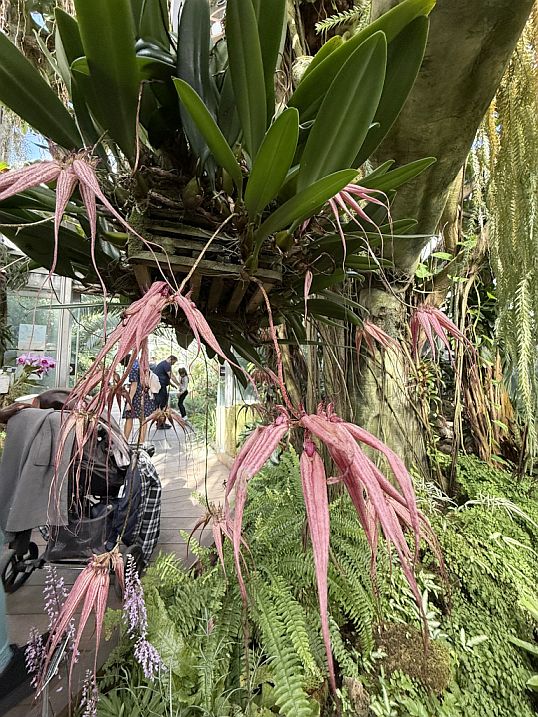 |
Air Roots: You'll often see their thick, silvery-green roots clinging to bark or hanging freely in the air. These are specialized roots designed to absorb moisture and nutrients directly from the humid air.
 |
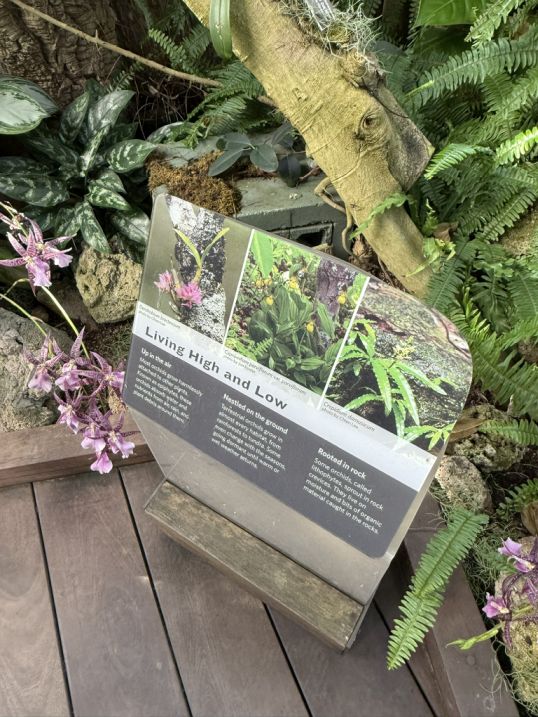 |
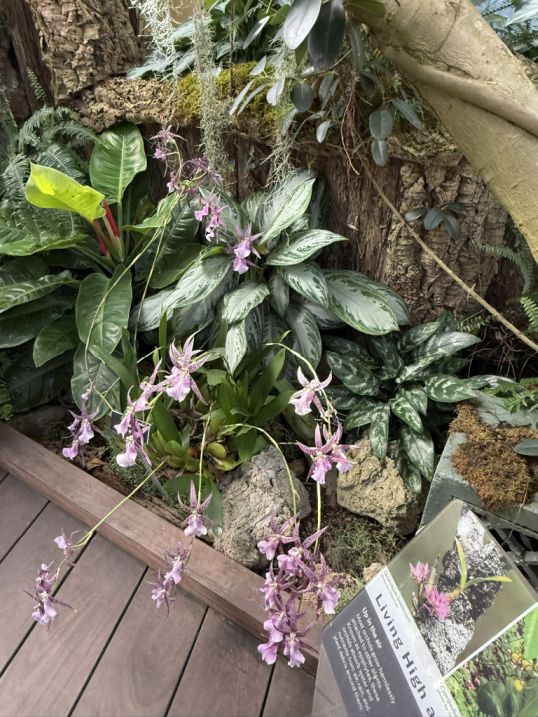
Terrestrial Orchids (Living "Low"): These orchids grow in the soil like most other plants.
 |
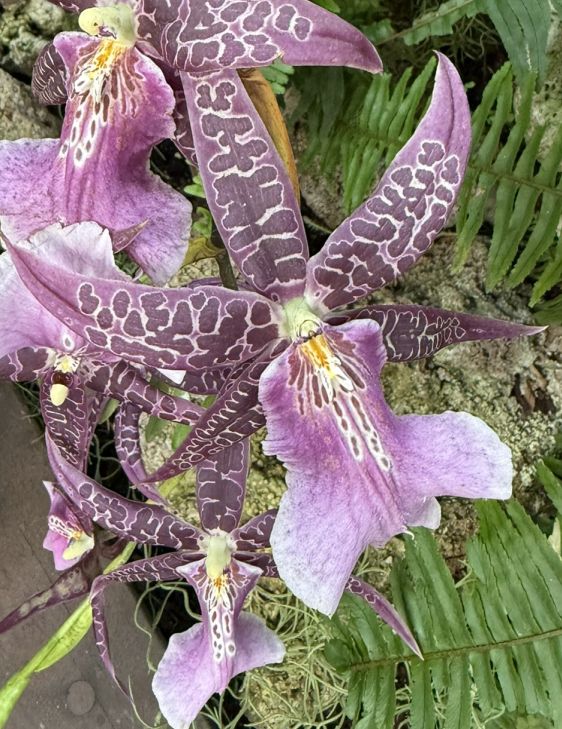 |
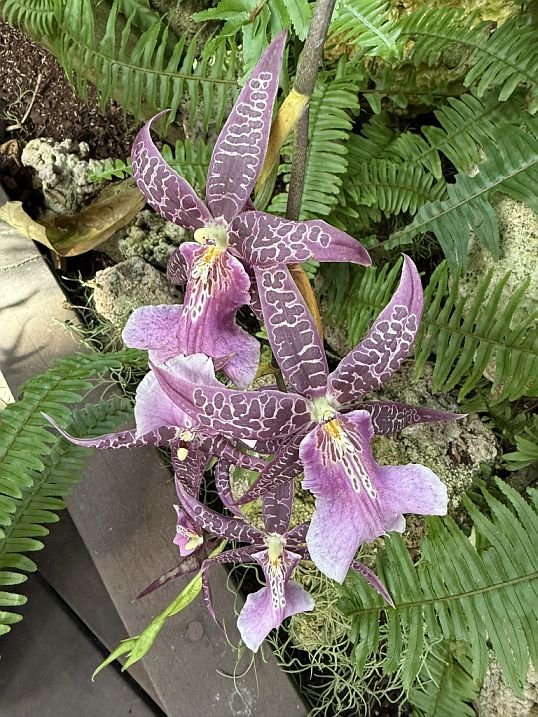
One of the most charming and distinct orchids is the "Dancing Lady" Orchid! This common name almost universally refers to Oncidium orchids. The most striking feature is the large, modified lower petal called the labellum. In many Oncidium species, this labellum is broad and often ruffled or skirt-like, resembling the flowing skirt of a dancer. The other petals and sepals often look like the "head," "arms," and "legs" of a tiny figure. When a breeze blows through a cluster of these flowers, they appear to be twirling and dancing, creating a truly delightful sight.
 |
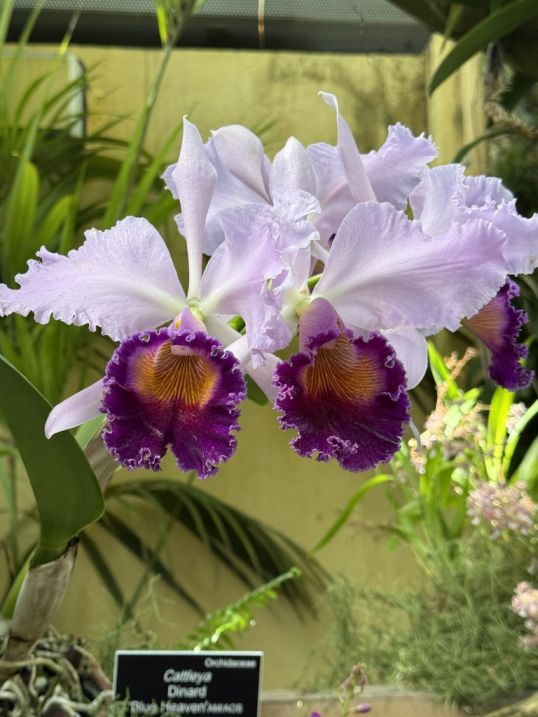 |
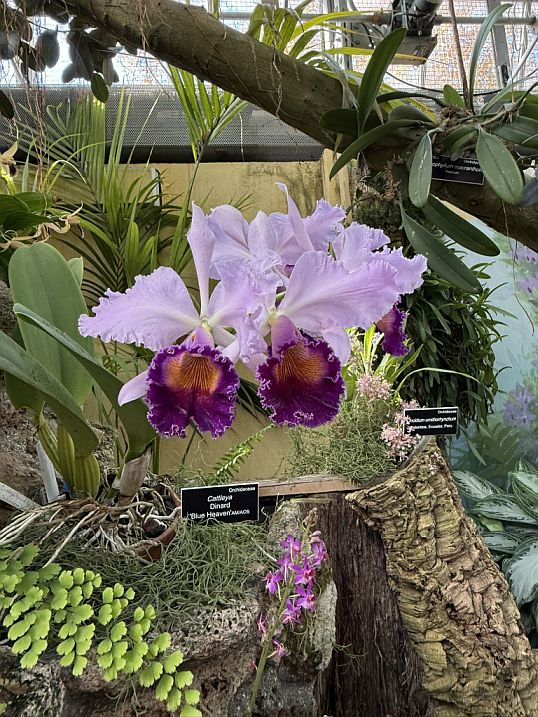
The "Queen of Orchids": Cattleya orchids are often referred to as the "Queen of Orchids" for a very good reason. They were among the first tropical orchids to be widely cultivated and hybridized, and their large, showy, often fragrant flowers defined the era of "orchid mania" in the 19th and early 20th centuries. Most are epiphytic, growing on trees in their native Central and South American habitats. They have pseudobulbs (swollen stems) that store water and nutrients.
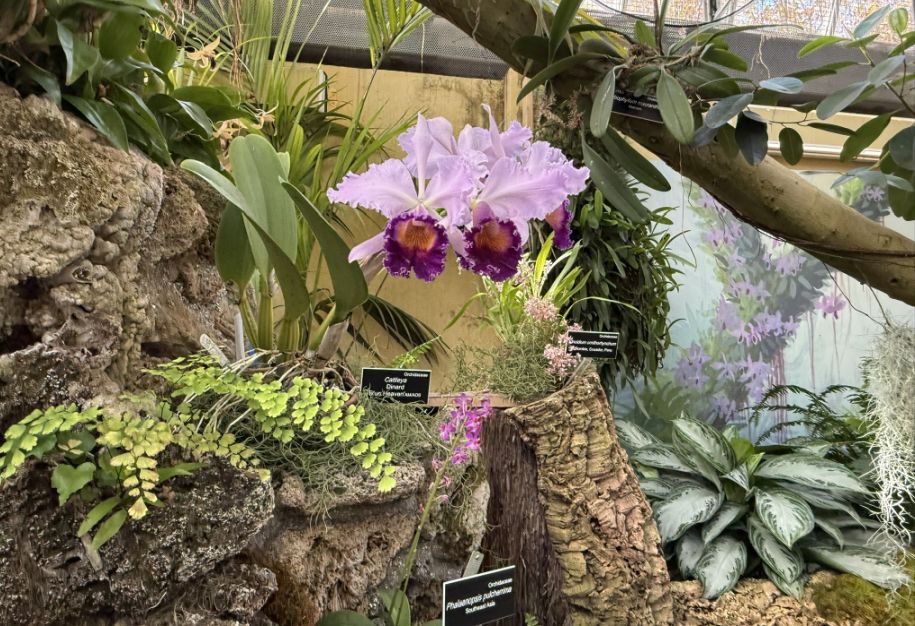
Their blooms are typically quite large, ranging from a few inches to sometimes 6-8 inches across. They come in a breathtaking array of colors, including various shades of white, yellow, orange, pink, lavender, magenta, and even complex bicolors. A hallmark of Cattleya is its prominent, often ruffled or frilly labellum (the modified lower petal). This lip is frequently a different, contrasting color and often has intricate markings or veins, acting like a landing pad for pollinators.
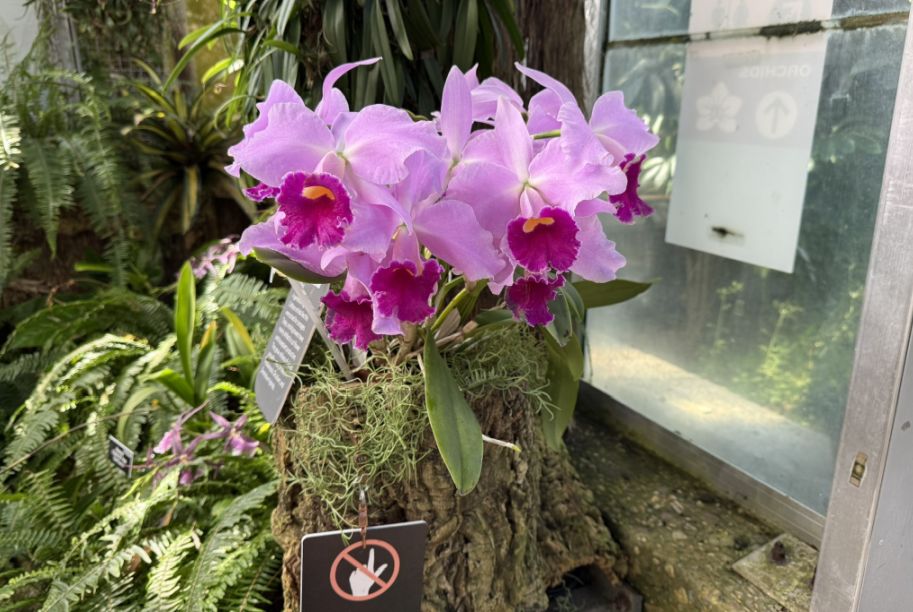
The Guaria Morada is a specific species that is deeply important. Its scientific name is Cattleya skinneri (though some taxonomists now place it in the genus Guarianthe as Guarianthe skinneri). This is its most significant distinction. The Guaria Morada symbolizes the beauty, joy, hope, and love of Costa Rica. It's deeply ingrained in the country's culture and traditions. Also epiphytic, native to Central America, particularly Costa Rica and Guatemala.
 |
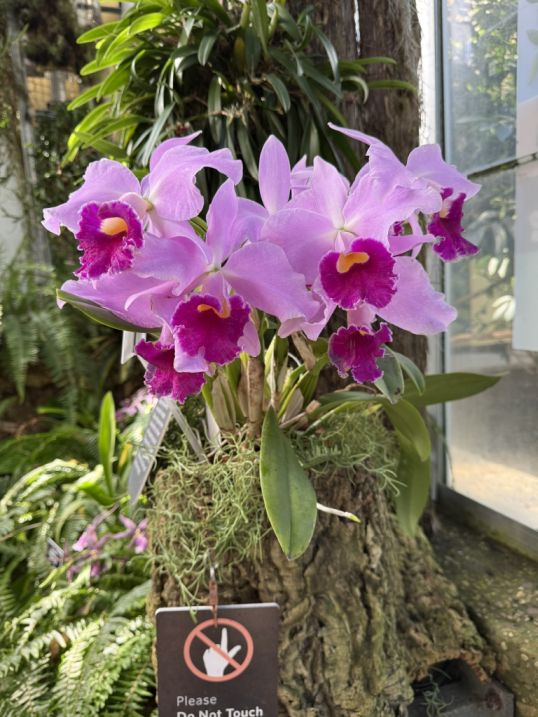 |
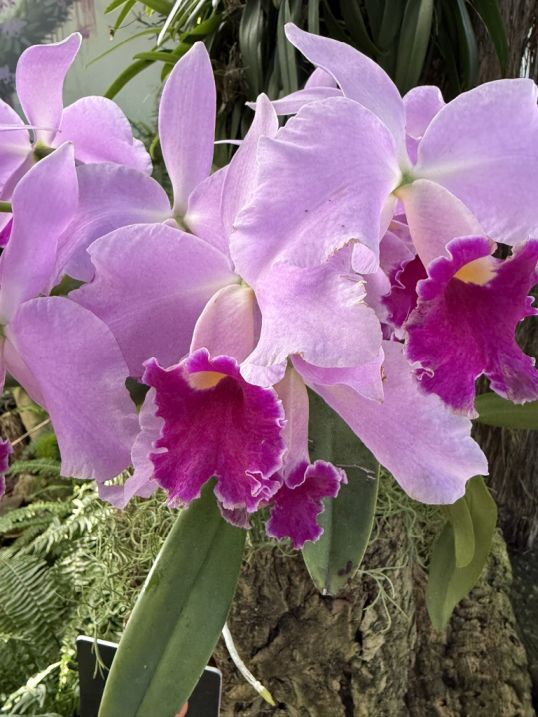
"Morada" means purple in Spanish, and true to its name, this orchid typically boasts stunning clusters of deep lavender-purple or magenta flowers. There are also rarer alba (white) forms. Unlike some other large Cattleya species that produce one or two large blooms per stem, Guaria skinneri is known for producing impressive clusters of multiple flowers (often 3-15) on a single stem, creating a very full and vibrant display. Its lip is usually a slightly darker shade of purple, sometimes with a white or yellowish splash in the throat.
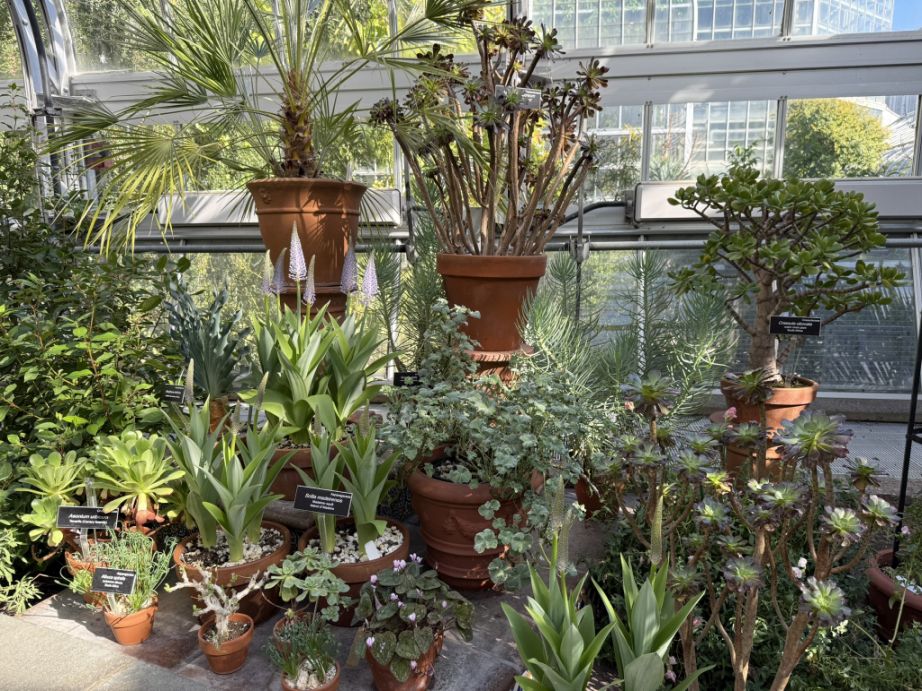
We are transitioning from the lush, humid world of the Conservatory to something entirely different, the Desert and Succulent Houses. This is always a dramatic shift and a favorite for many visitors.
Gone are the flowing vines and broad leaves of the tropics. Here, plants exhibit incredible adaptations to conserve water, resulting in a fascinating array of shapes and textures.
Arid Atmosphere: The air feel much drier, warmer, mimicking the conditions of deserts and semi-arid regions.

The United States Botanic Garden (USBG) is located on the grounds of the U.S. Capitol, at the base of Capitol Hill. On our way we passed by the States Capitol.
NEXT... Day 5- National Gallery of Art