6 days in Washington DC- 10/18- 10/23/2024
Day 4- Museum of African American-10/21/2024
We are now on our way to the National Museum of African American History and Culture (NMAAHC). It is a powerful and significant institution dedicated to the documentation of African American life, history, and culture.
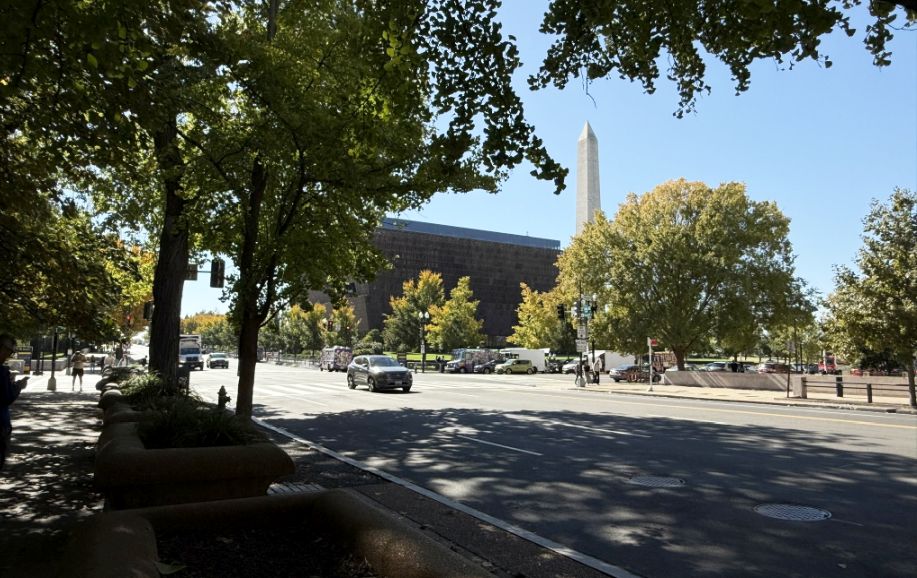
As we walked along 14th Street, the striking bronze-colored facade of the National Museum of African American History and Culture comes into view, with the pale stone of the Washington Monument rising cleanly into the sky behind it. The contrast is powerful, the warm, intricate lattice of the museum set against the simple, towering obelisk that has long symbolized the nation.
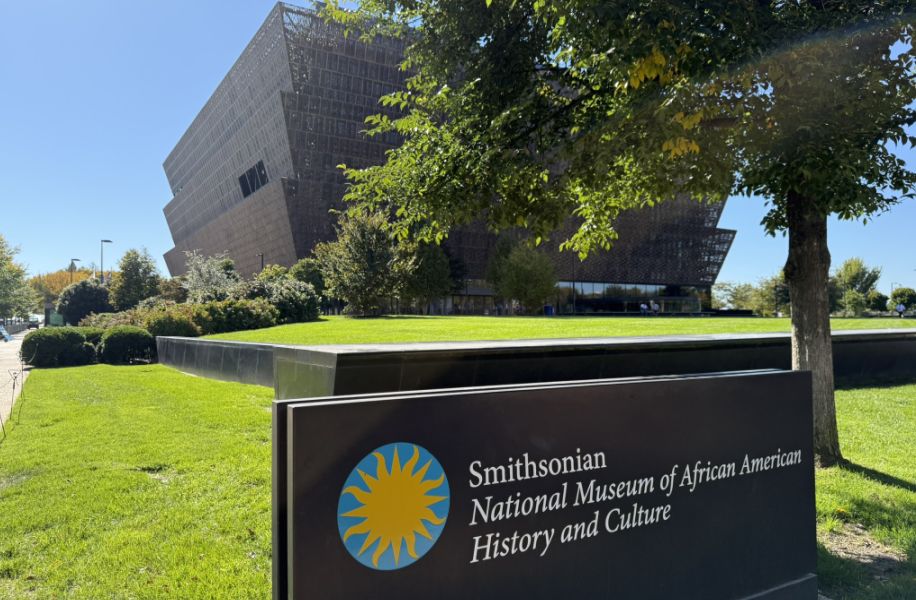
The museum’s exterior is unlike any other on the National Mall. Designed as a three-tiered, inverted pyramid. Designed by Ghanaian-British architect David Adjaye, the building's most distinctive feature is its three-tiered, bronze-colored "Corona" design. This draws inspiration from a Yoruban caryatid, a traditional African sculpture. The corona is wider at the top than at the bottom, creating a sense of uplift and aspiration.
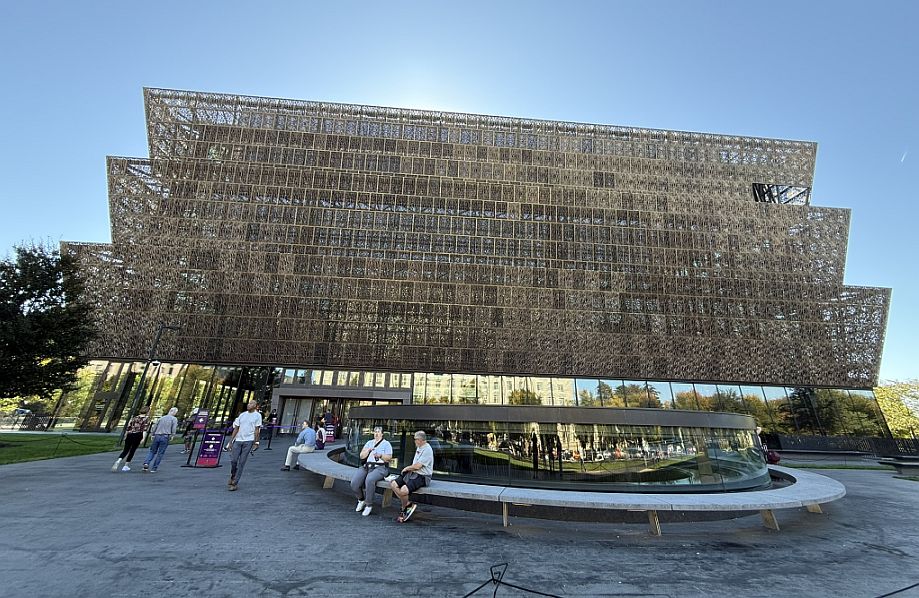
The bronze-colored corona is wrapped in a patterned metal screen that filters light into the galleries while echoing the ornamental ironwork crafted by enslaved African Americans in the South. Depending on the time of day, the surface glows gold, deep brown, or almost amber — giving the building a living presence as you approach.
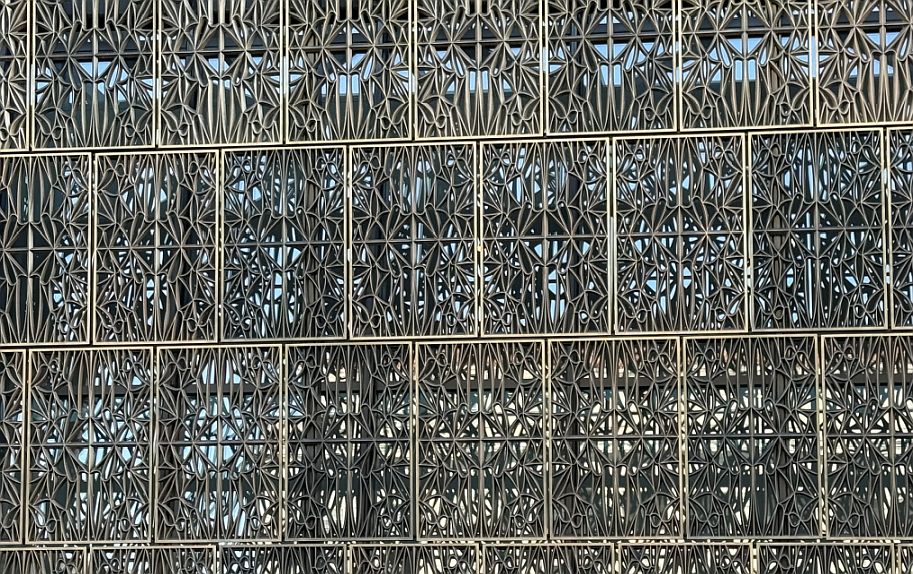
The bronze-colored aluminum panels that form the corona are perforated with intricate patterns. These patterns reference historical ironwork crafted by enslaved African Americans in the American South, particularly from cities like Charleston and New Orleans. The panels allow light to filter into the museum during the day and glow from within at night.
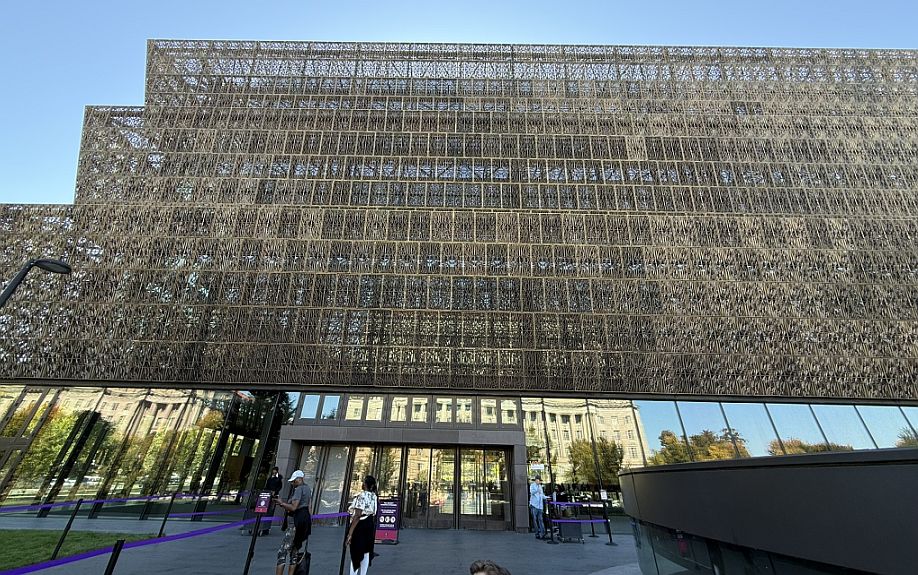
At the base of the building, there's a large, welcoming porch area. This element is a nod to the American South, where porches often served as gathering places for communities, symbolizing hospitality and sharing stories.
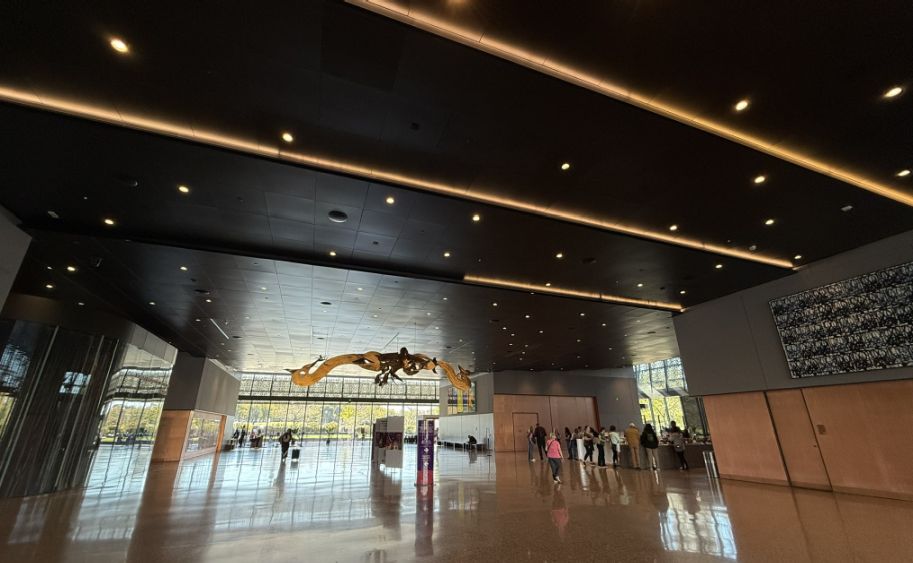
As we stepped inside the National Museum of African American History and Culture, the space opens into a soaring, light-filled hall.
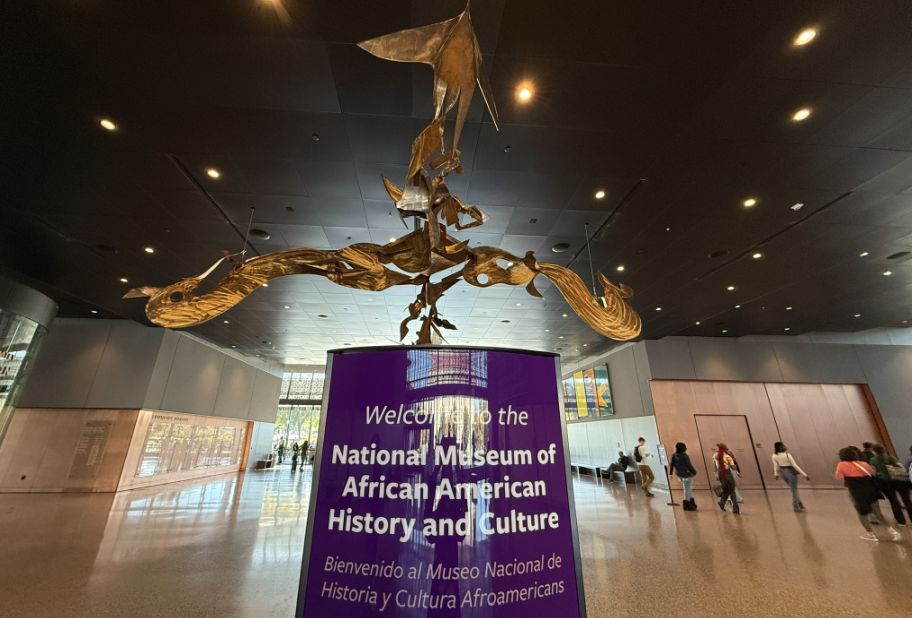
Suspended above the welcome area is a striking contemporary artwork, often a sculptural or textile installation, drawing your eyes upward and setting a reflective, almost reverent tone. The filtered daylight coming through the bronze lattice outside creates a warm glow across the walls, making the space feel both grand and intimate at the same time.
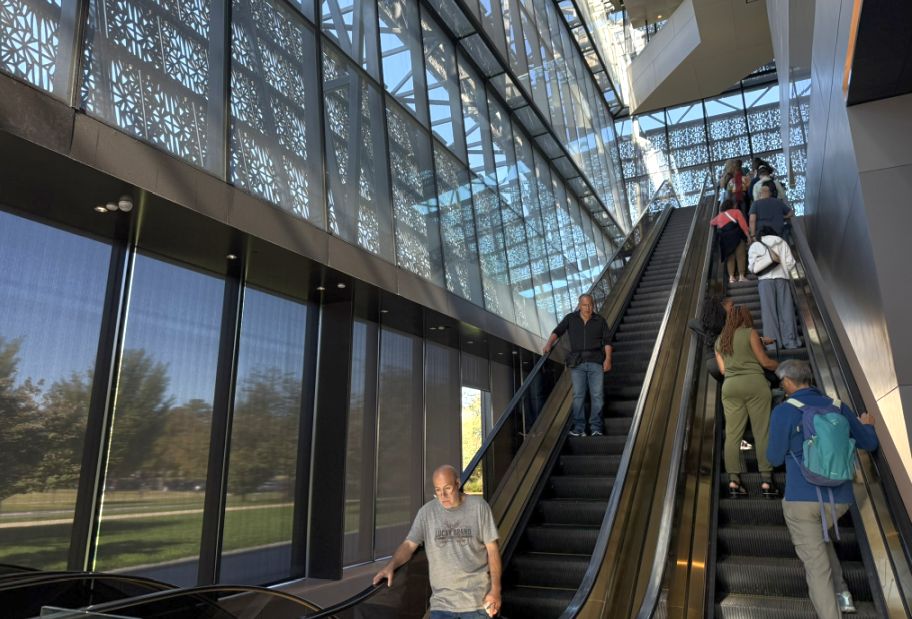
Heading upstairs where the museum's exhibits are organized chronologically and thematically, starting in the lower levels with the transatlantic slave trade and gradually ascending through eras of segregation, the Civil Rights Movement, and culminating in contemporary African American achievements. This upward journey symbolizes progress and resilience.
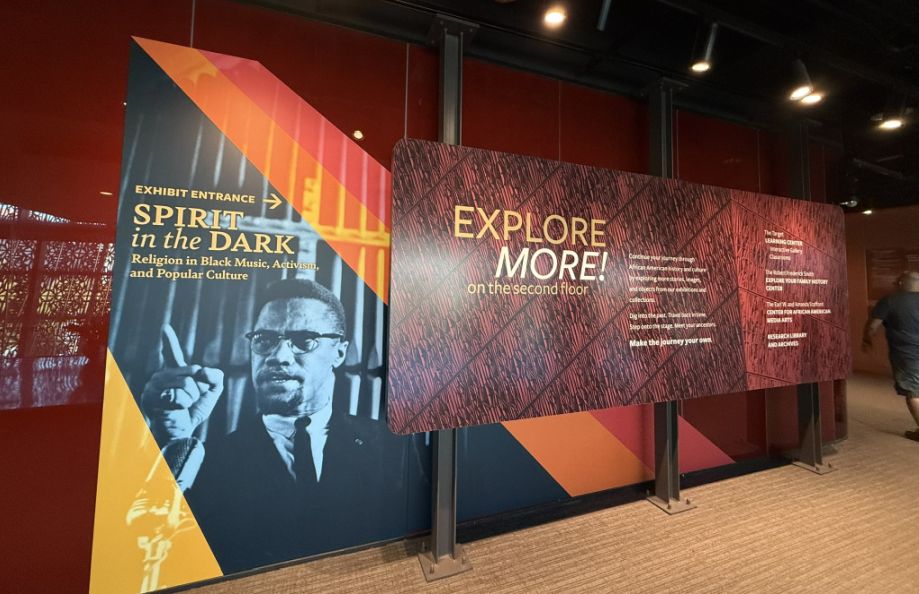
The first thing we see going upstairs is a powerful large-scale image of Malcolm X. His presence is commanding. a reminder of his fierce advocacy for Black empowerment, dignity, and self-determination during the Civil Rights era. The bold panel captures his intensity and conviction, anchoring the gallery in the voices and movements that shaped modern American history.
 |
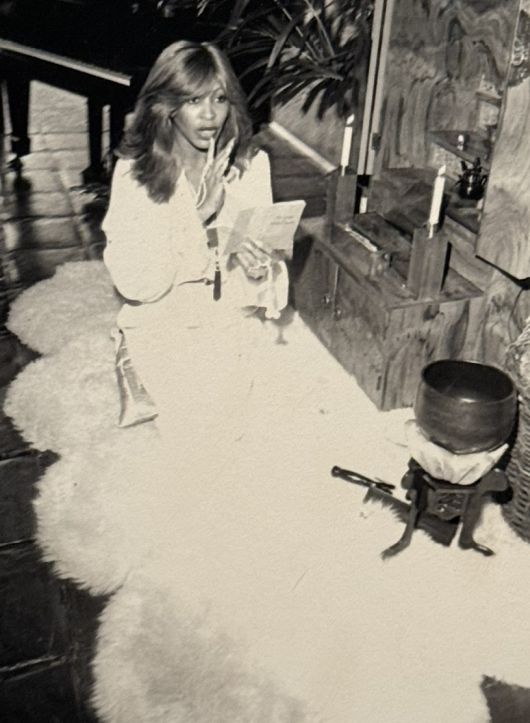 |
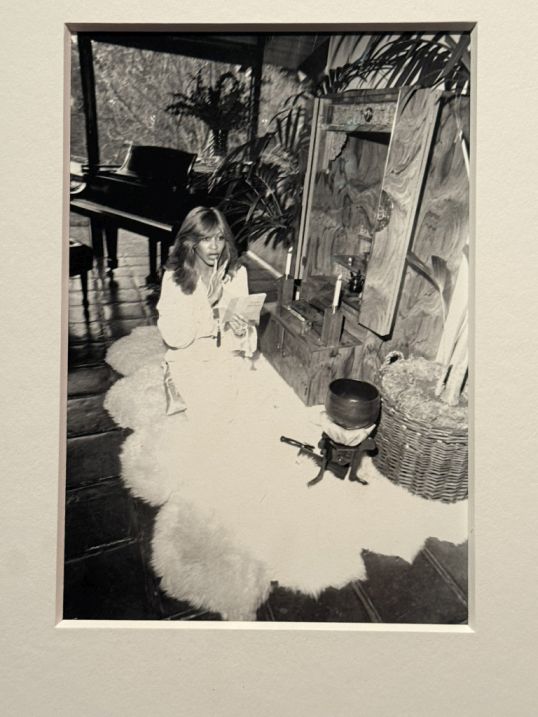
Tina Turner performing a Buddhist ritual at her home altar, California 1979. Photograph by Isaac Sutton (1923-1995)
Growing up Anna Mae Bullock, powerhouse singer Tina Turner used the Lord's Prayer as a mantra, a habit that continues well into adulthood when se was longer a practicing Baptist. In the mid-1970, she converted to a school of Buddhism that emphasized chanting the scripture Nam Myoho Renge Kyo. She told Ebony in 1982 that daily changing was key to her happiness and success. "it give you what you need inside. ..You actually become a better person:. Despite being know for a fiery person on stage, Turner incorporated her Buddhist beliefs into her music by co-founding a spiritual music project in 2009 called Beyond.
 |
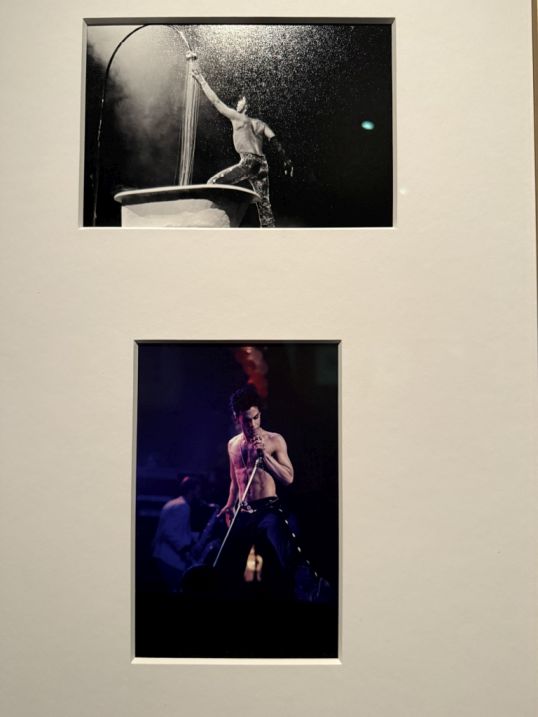 |
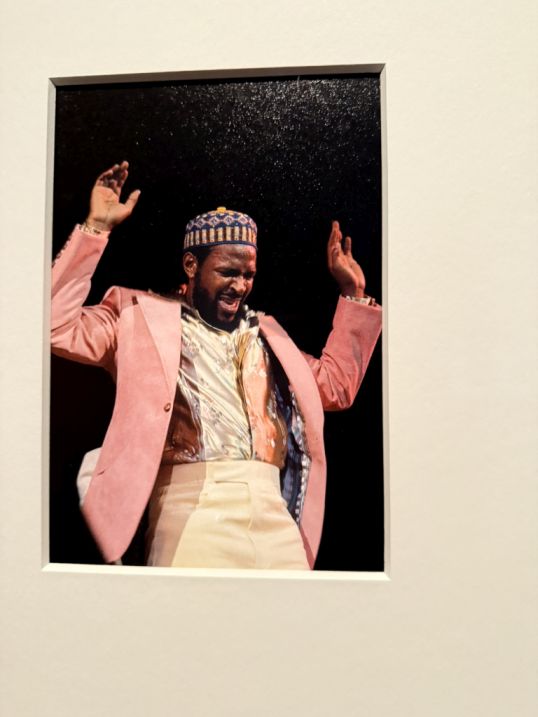
On the left Marvin Gaye (1939-1984) by G. Marshall Wilson (1905-1998)
On the right Prince (1958-2016) top picture: Prince during the Purple Rain tour in 1984 and in the bottom Prince performing at First Avenue during the Parade Tour Minneapolis in 1986
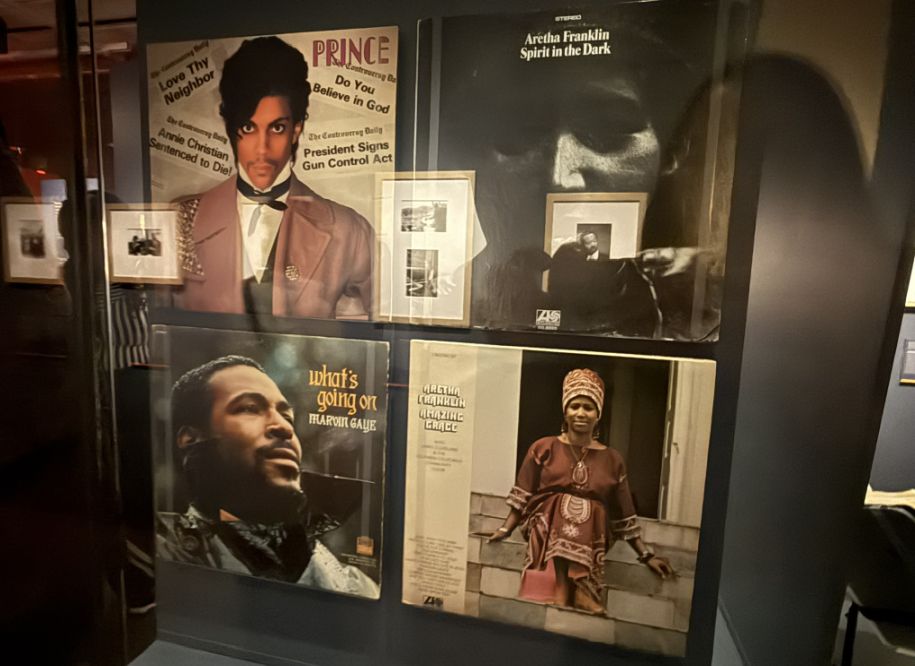
Music Galleries surrounded by album covers that shaped American sound.
Prince whose genre-defying style blended funk, rock, R&B, and pop, redefining musical boundaries.
Aretha Franklin the “Queen of Soul,” with albums like Spirit in the Dark and Amazing Grace, which showcase both her gospel roots and her commanding presence in soul music.
Marvin Gayle with What’s Going On, one of the most influential albums ever recorded, blending smooth Motown sound with powerful social commentary.
These LP covers aren’t just records, they represent cultural milestones. Gospel, soul, funk, and R&B became vehicles for expression, protest, faith, love, and identity. Seeing them displayed together highlights how African American musicians didn’t just influence American music, they defined it.
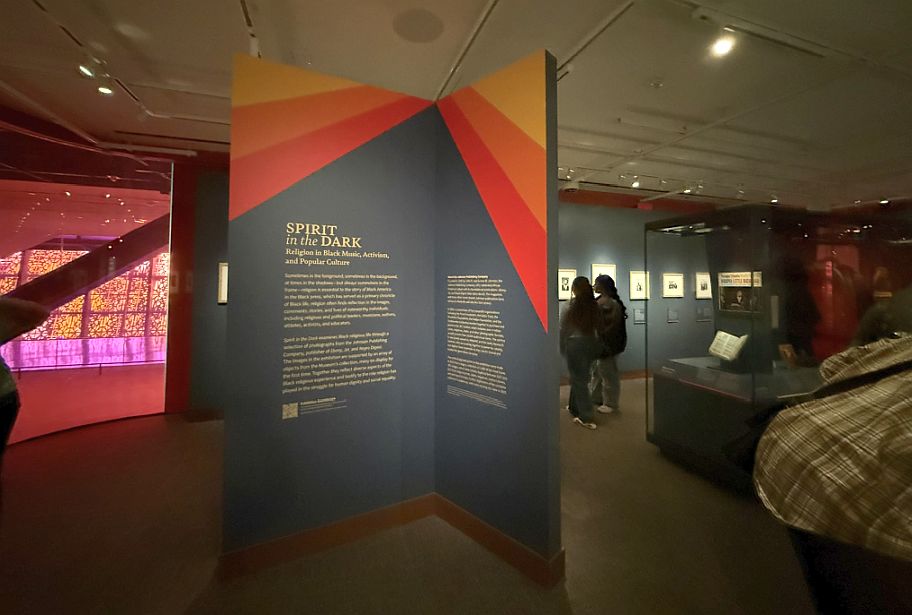
The "Spirit in the Dark" exhibit is a specific art exhibition is part of the museum's broader mission to explore and celebrate African American culture, history, and artistic expression. The exhibition delved into the rich tapestry of Black spiritual and religious practices and their profound influence on American life and culture. It explored how African American spirituality, encompassing various faiths and belief systems, has been a source of resilience, resistance, creativity, and community building. Examining the history and impact of Islam, particularly organizations like the Nation of Islam, on African American identity and activism.
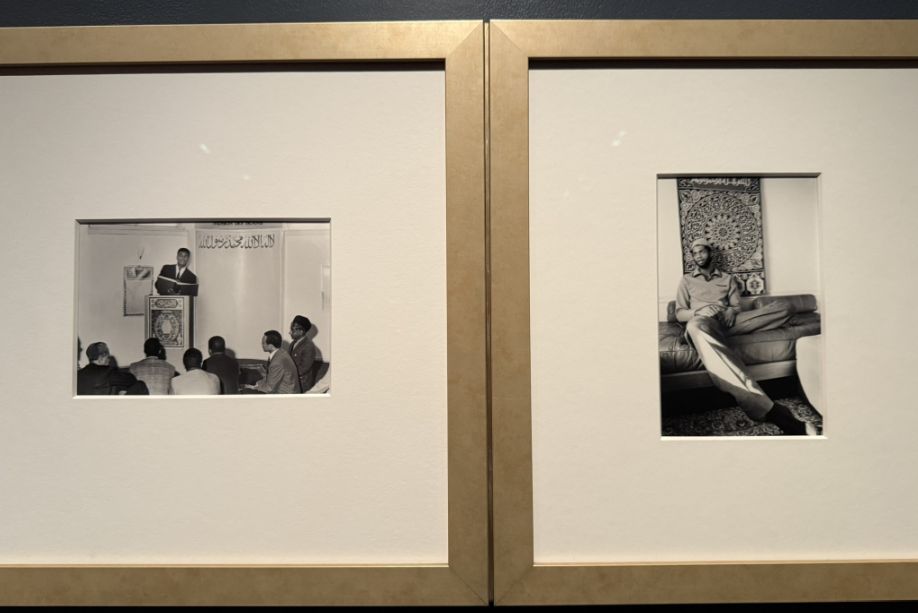
On the left Muhammad Ali reading the Koran at a mosque in Frankfurt, Germany, 1966 - Photograph by Isaac Sutton (1923-1995)
On the right is Kareem Adul-Jabbar at home in Milwaukee, Wisconsin, 1975
Both Muhammad Ali and Kareem Abdul-Jabbar (formerly Lew Alcindor) are legendary athletes who embraced Islam and became significant voices for their faith and civil rights.
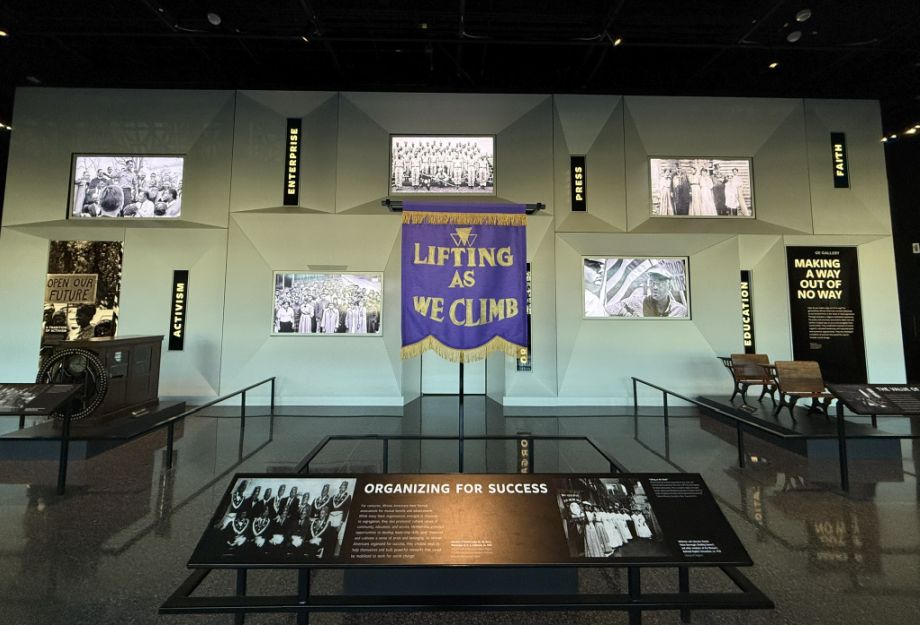
The NACWC was founded in 1896 by several prominent African American women, including Mary Church Terrell, Josephine St. Pierre Ruffin, and Anna Julia Cooper, through the merger of various local women's clubs. It was one of the most important and influential African American organizations of its time. Their Mission: "Lifting as We Climb": This motto perfectly encapsulated their philosophy. It meant that as they worked for their own personal and intellectual advancement ("climbing"), they were equally committed to helping other African Americans, especially women and children, improve their lives ("lifting"). It was a philosophy of collective uplift and mutual aid.
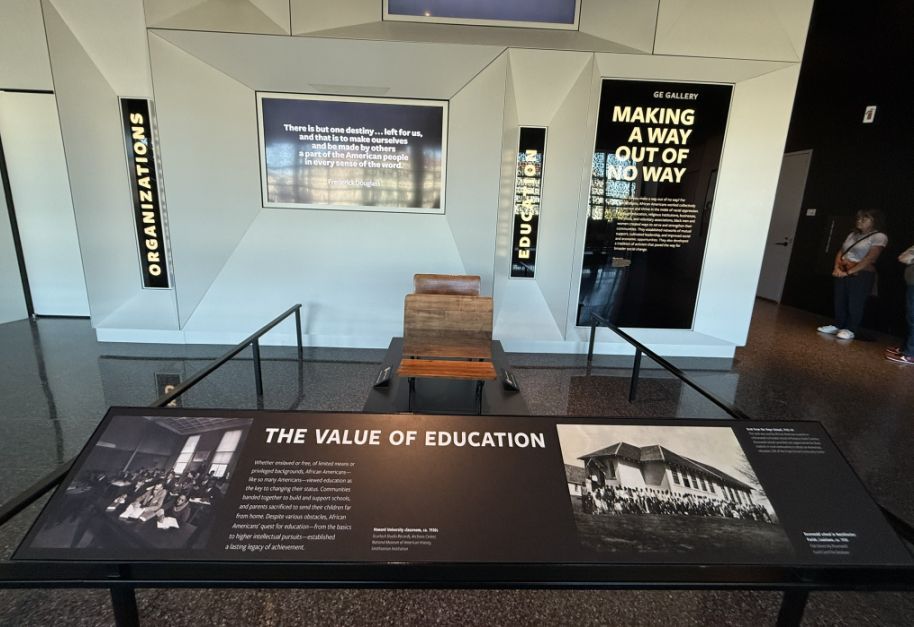
"The Value of Education": Education, often pursued at great personal risk and sacrifice, was seen as both a personal liberation and a tool for racial uplift. After emancipation, formerly enslaved people rapidly established schools, demonstrating an insatiable thirst for knowledge.
 |
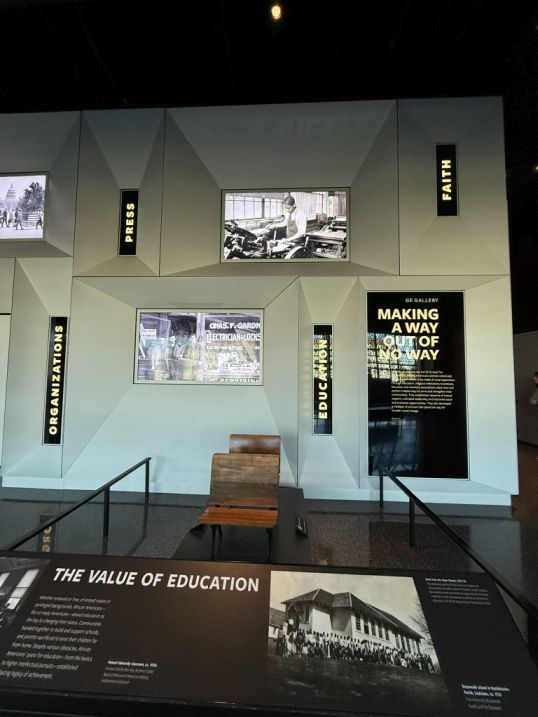 |
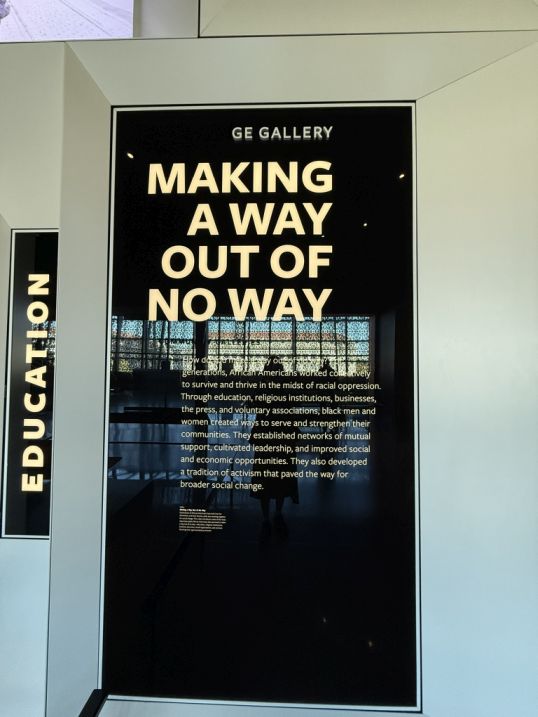
"Making a Way Out of No Way": This is a powerful phrase that speaks to the incredible resilience, resourcefulness, and adaptability of African Americans who, despite overwhelming obstacles and lack of resources, found creative solutions to survive and thrive. It refers to building something from nothing, creating opportunities where none existed.
These are central themes throughout the NMAAHC, especially in the "Making a Way Out of No Way" gallery. They highlight the agency and determination of African Americans in constructing their own lives and futures against a backdrop of discrimination and violence.
 |
 |
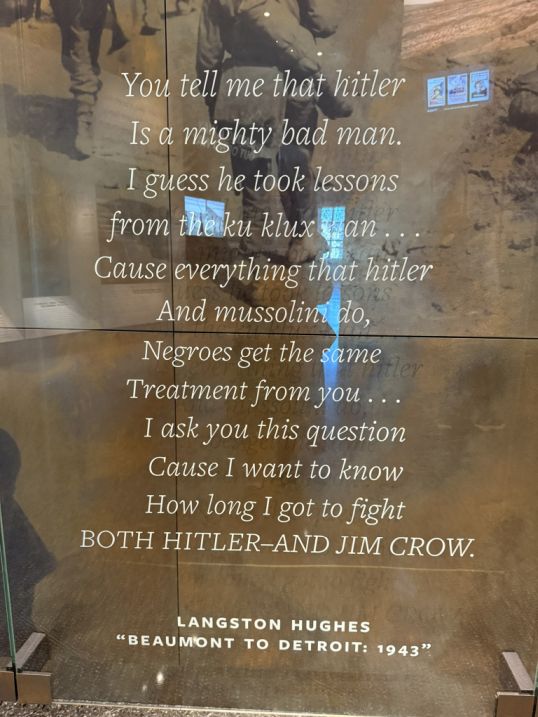
On the left a quote attributed to Langston Hughes, one of the most prominent figures of the Harlem Renaissance, and it captures the bitter irony and profound disillusionment felt by many African Americans during World War II. The core of Hughes's statement lies in the glaring hypocrisy. African Americans were being asked to fight and die for a country that denied them basic human rights, subjected them to systemic segregation (Jim Crow laws), racial violence, and economic oppression. By directly comparing Hitler's brutal ideology and actions to the Ku Klux Klan and the Jim Crow system in the American South, Hughes highlights that the racial prejudice and violence faced by Black Americans at home felt just as oppressive, if not more so, than the totalitarian regimes they were fighting abroad. This comparison was not meant to minimize the atrocities of the Nazis but to elevate the severity of American racism to a global standard of injustice.
Black soldiers have served in every American war, often fighting for freedoms abroad they were denied at home. The drawings could honor their sacrifice and highlight the irony and injustice of their experiences.
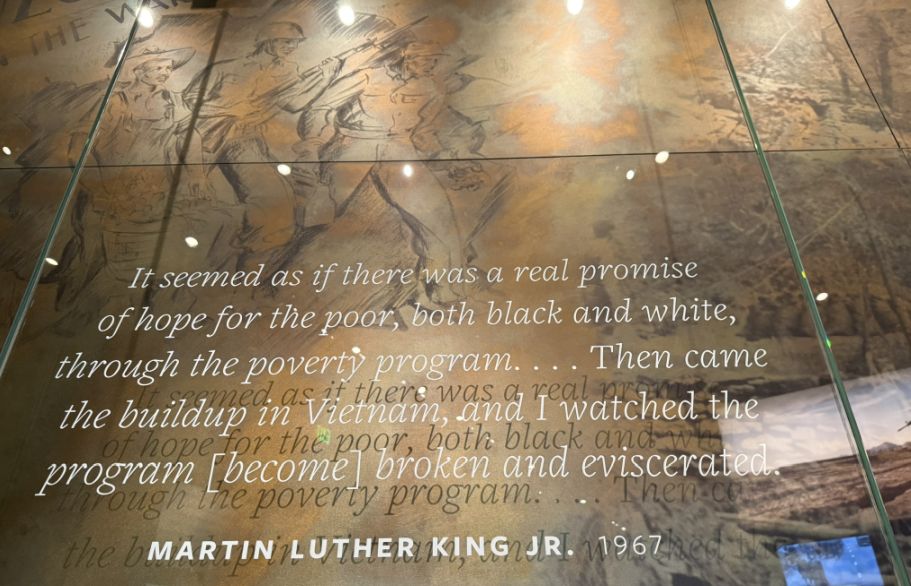
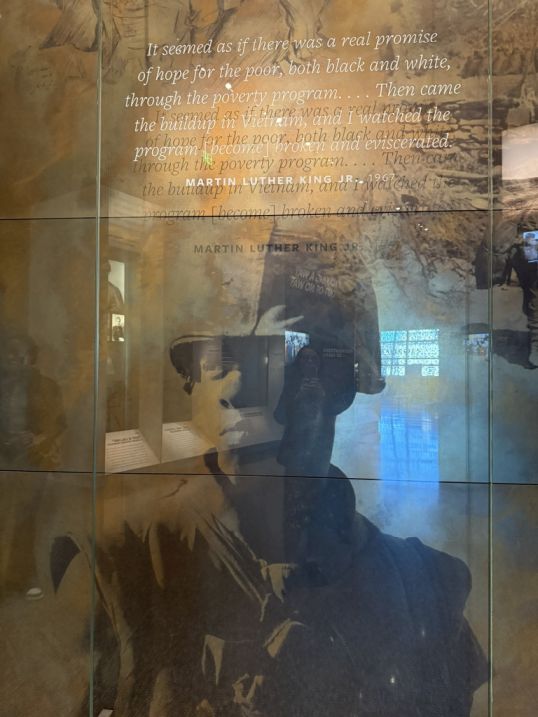
This quote likely comes from a period when Dr. King was reflecting on the Civil Rights Movement's early successes, but also the growing challenges, particularly the Vietnam War and the persistent urban poverty and racial inequality in the North.
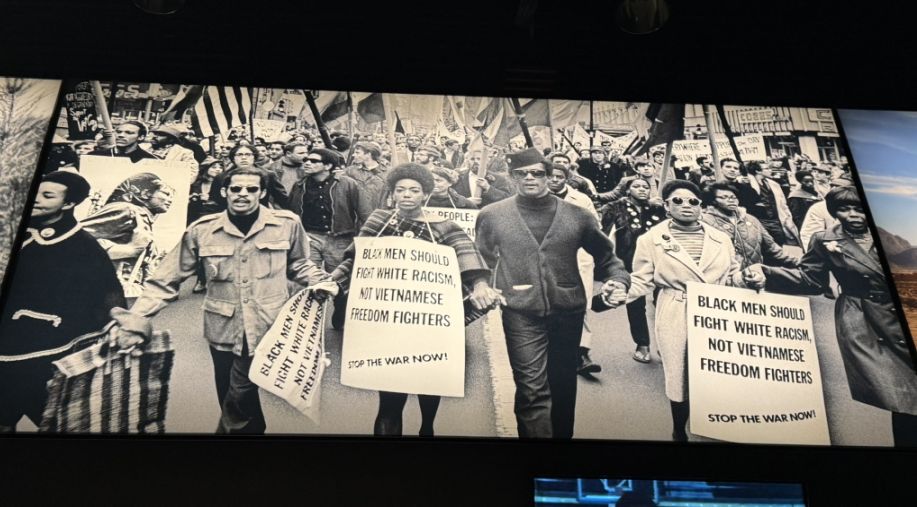
"Black men should fight white racism, not Vietnamese freedom fighters - Stop the War Now," is an incredibly powerful and iconic image from the Civil Rights era and the anti-Vietnam War movement. It captured a moment that encapsulates a profound intersection of two major struggles in American history.
During the mid-to-late 1960s, a growing number of civil rights leaders and activists began to explicitly connect the struggle for racial equality at home with the immorality and injustice of the Vietnam War. This photo is a direct manifestation of that connection.
 |
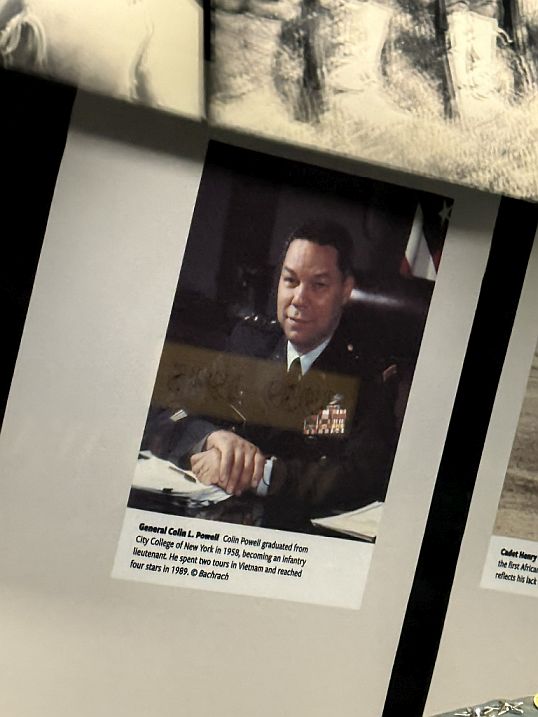 |
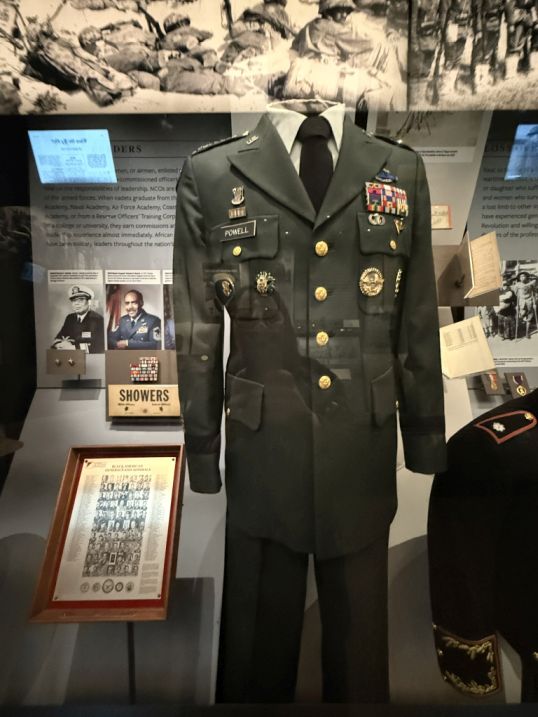
Seeing the uniform of General Colin Powell and one of his portraits at the Museum is a very significant experience. His presence in the museum underscores his monumental achievements and his role as a pioneering figure in American history, particularly for African Americans. He was the First African American Chairman of the Joint Chiefs of Staff (1989-1993): This was the highest military position in the United States, making him the principal military advisor to the President. He oversaw significant events like Operation Desert Storm. He served as the nation's chief diplomat under President George W. Bush. This made him the highest-ranking African American in the history of the U.S. executive branch at that time. Powell's life story, from his humble beginnings as the son of Jamaican immigrants in the Bronx to achieving such high offices, is often seen as an embodiment of the American Dream. He represented excellence, discipline, and dedicated public service.
 |
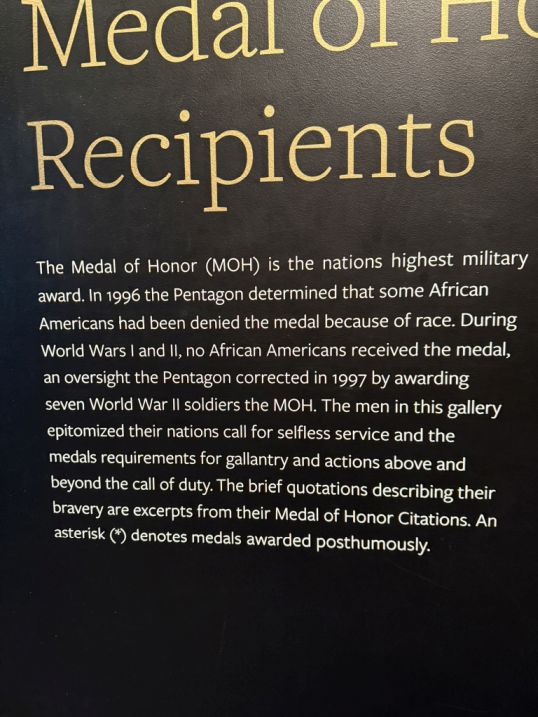 |
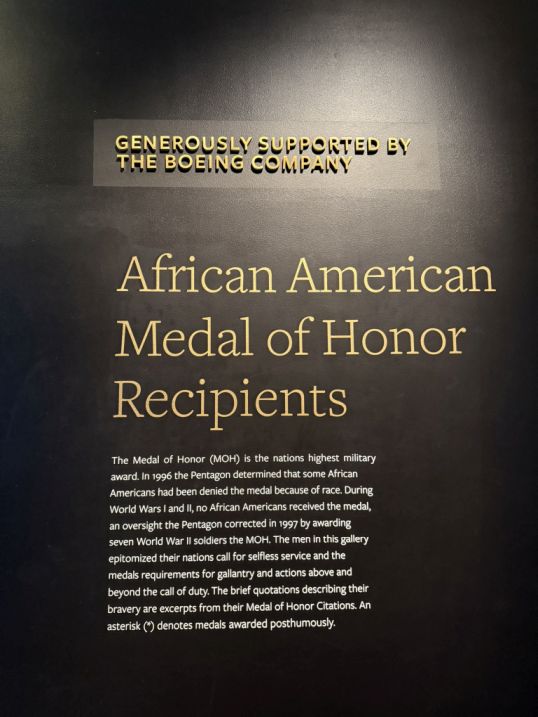
For much of American history, due to entrenched racism and discrimination within the military and society at large, African American acts of supreme courage were often overlooked, downplayed, or intentionally denied the nation's highest military honor. The museum's dedication to these recipients highlights the systemic bias that prevented Black soldiers from receiving the Medal of Honor, even when their bravery was undeniable. Over time, particularly in the late 20th and early 21st centuries, efforts were made to review past records and posthumously award the Medal of Honor to deserving African American soldiers who were previously denied due to their race.
 |
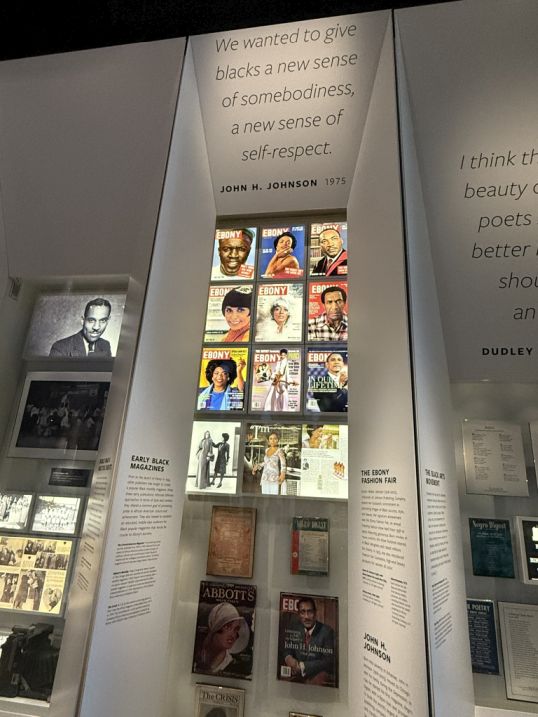 |
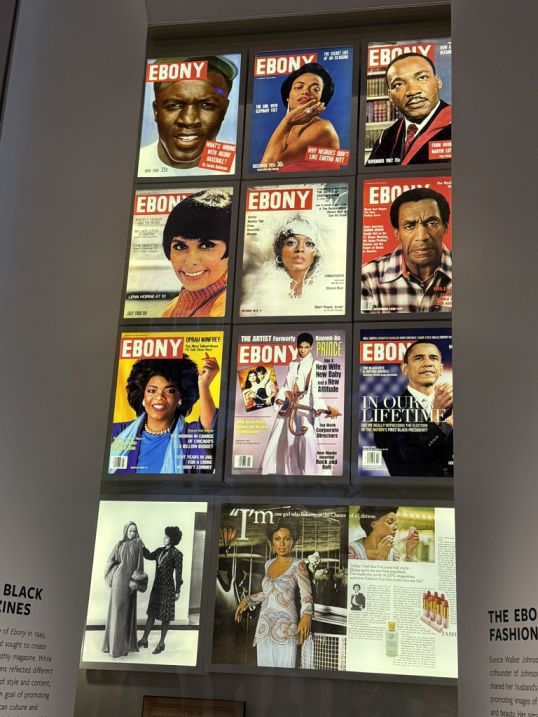
A Vintage issues of Ebony, a powerful visual timeline of Black life in America. Founded in 1945 by John H. Johnson, Ebony was created to celebrate African American achievement at a time when mainstream media largely ignored or stereotyped Black communities. Its glossy covers featured politicians, entertainers, athletes, activists, and everyday families, presenting dignity, success, beauty, and resilience.
Seeing the covers together feels like watching history unfold: the Civil Rights Movement, cultural icons, moments of struggle and triumph. The magazine didn’t just report history, it helped shape identity and pride, offering representation that was both aspirational and affirming.
 |
 |
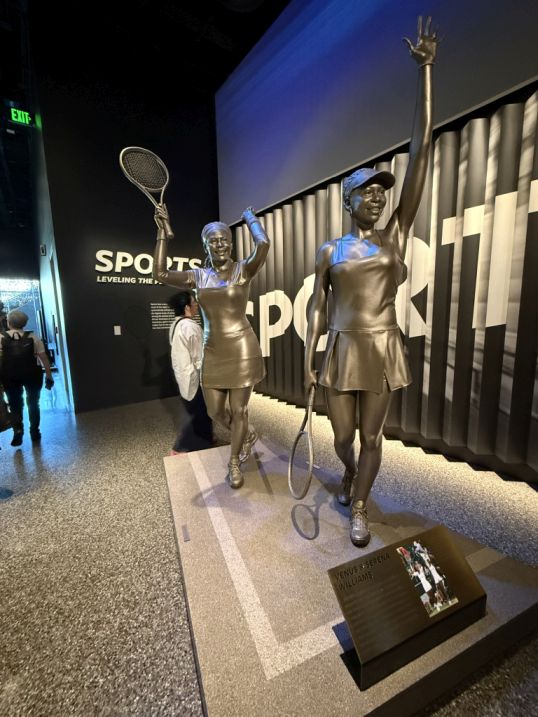
This part celebrates the monumental impact of African American athletes not only in competition but also in breaking social barriers and advocating for civil rights.
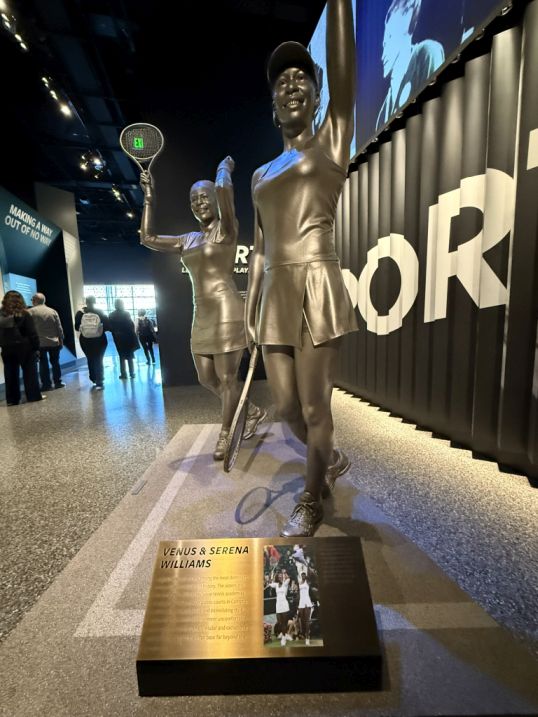
Sculpture of Venus and Serena Williams. These sisters are arguably the greatest female tennis players of all time. Their dominance, athleticism, and enduring careers have shattered racial and social stereotypes in a predominantly white sport. A sculpture would honor their incredible achievements and resilience, and their cultural impact.
 |
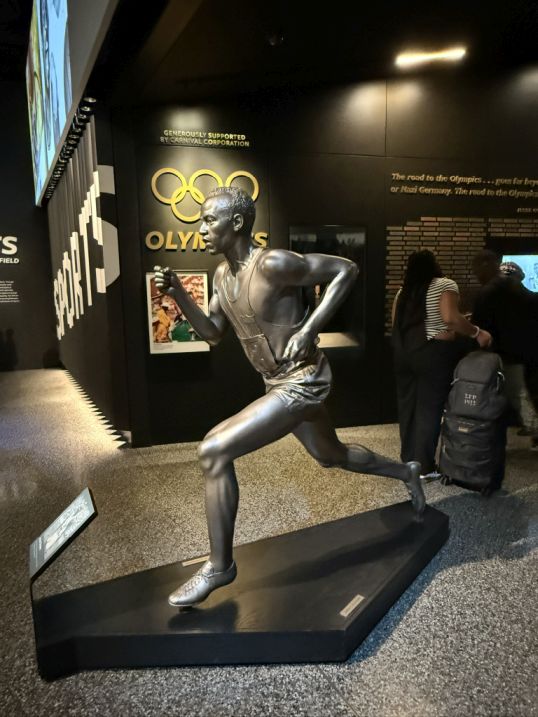 |
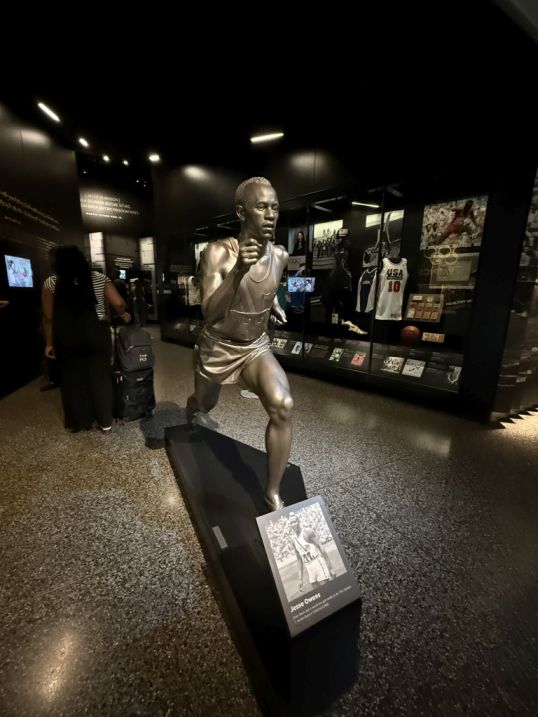
Jesse Owens. Significance: An icon of courage and athletic prowess. His four gold medals at the 1936 Berlin Olympics famously defied Hitler's Aryan supremacy ideology, becoming a powerful symbol against racism and fascism on the world stage.
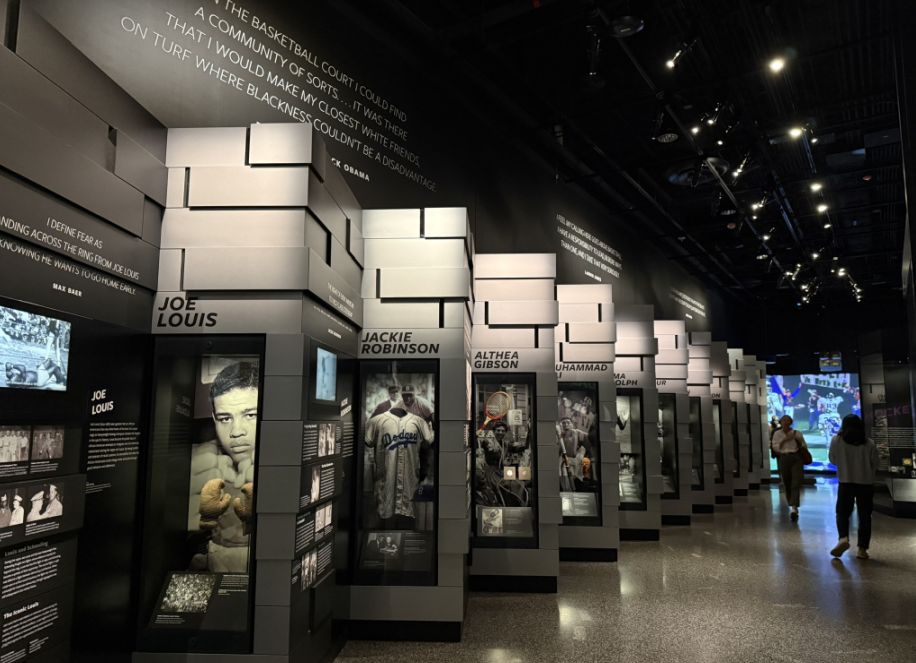
Row of Athletes.
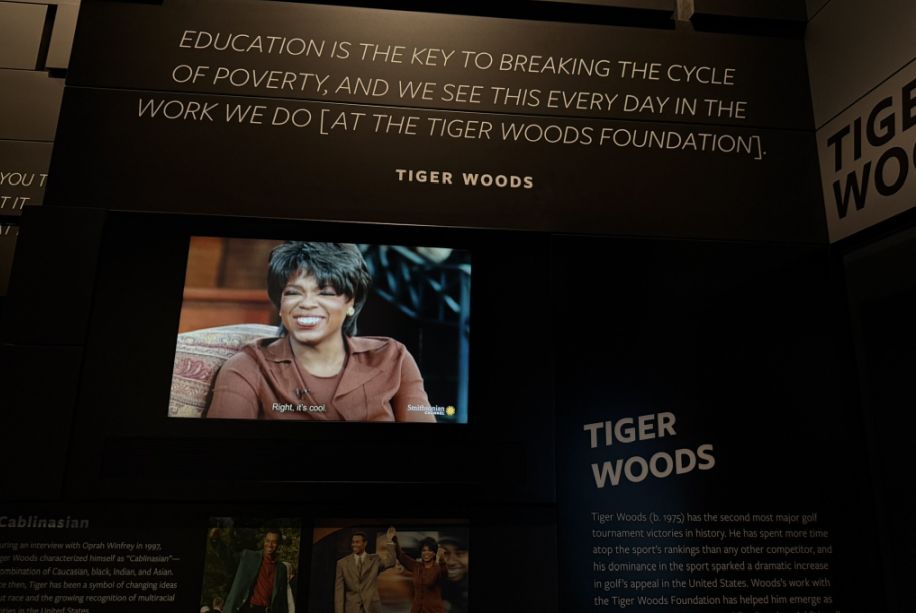
Breaking Racial Barriers in Golf: Tiger Woods utterly transformed the sport of golf, which was historically exclusive and predominantly white. As a child prodigy, his undeniable talent forced the sport to confront its racial biases. His father, Earl Woods, a former U.S. Army officer, played a pivotal role in nurturing his talent while instilling discipline and a strong mindset. Woods, through his foundation, has become a significant advocate for educational opportunity, especially for children from underrepresented backgrounds. He uses his platform and resources to ensure that young people have access to the tools and knowledge they need to succeed in a competitive world.
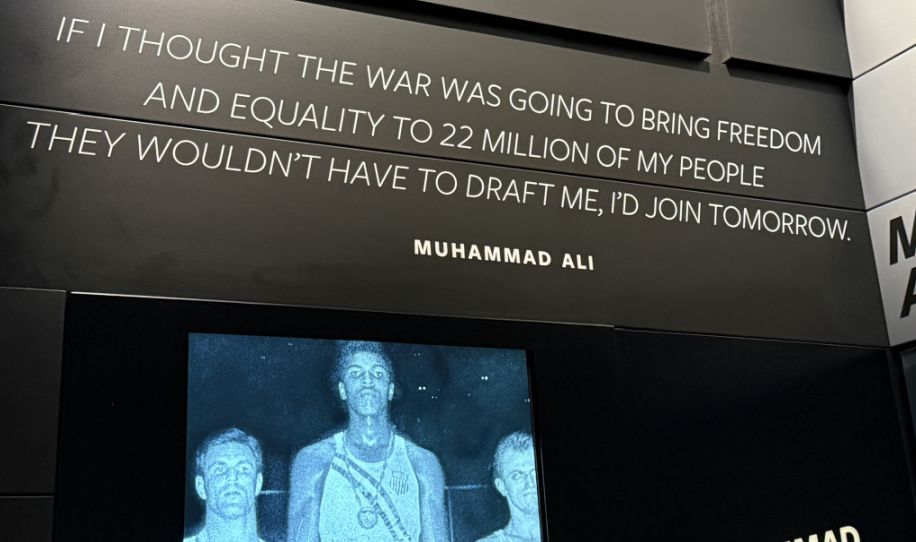
Muhammad Ali: As discussed before, not just a boxing legend but a cultural icon, civil rights activist, and anti-war spokesperson. His inclusion highlights the intersection of sport, faith, and activism.
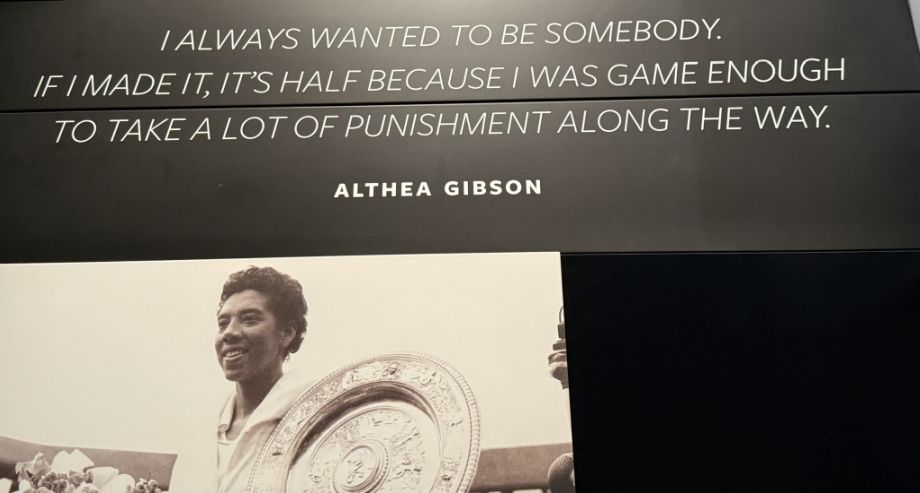
Althea Gibson: A pioneering tennis player and golfer, she was the first African American to win a Grand Slam title (French Open, 1956) and later Wimbledon and the U.S. Nationals (now US Open). Her achievements broke the color barrier in elite sports and paved the way for future generations.
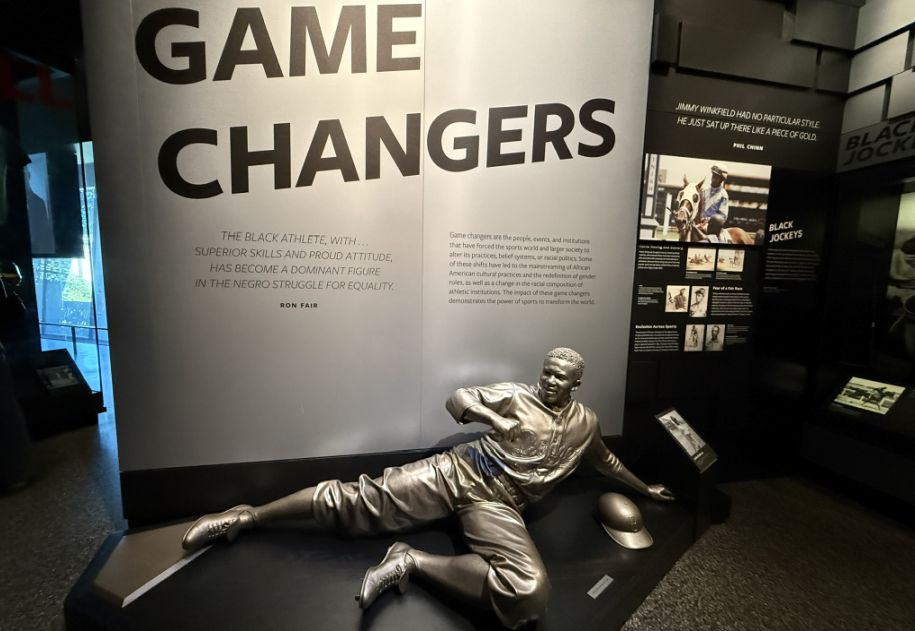
"Game Changers": This refers to a broader display or concept recognizing athletes who not only excelled in their sports but also used their platforms to advocate for social change and civil rights, fundamentally altering the landscape of American society.
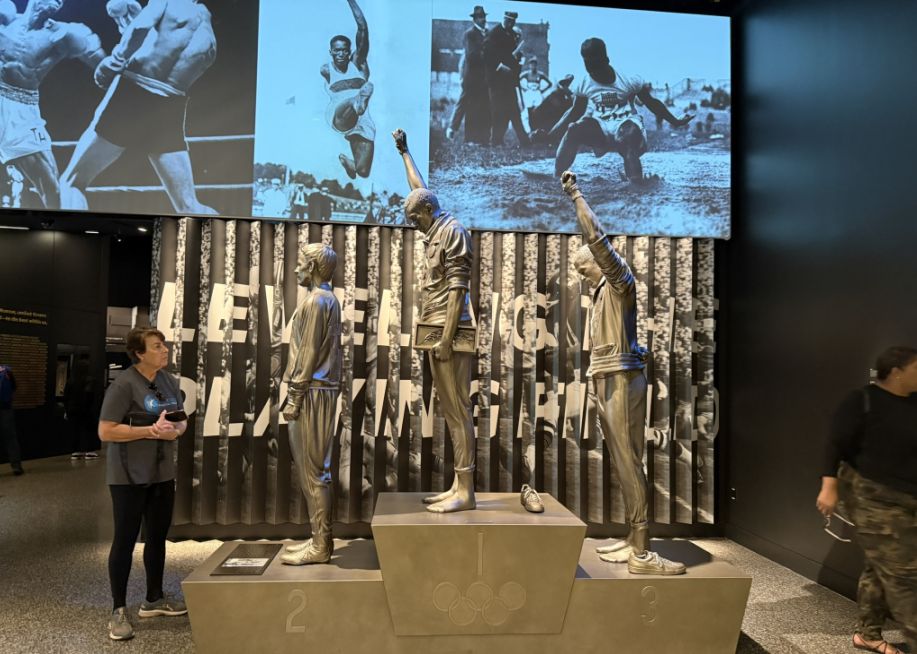
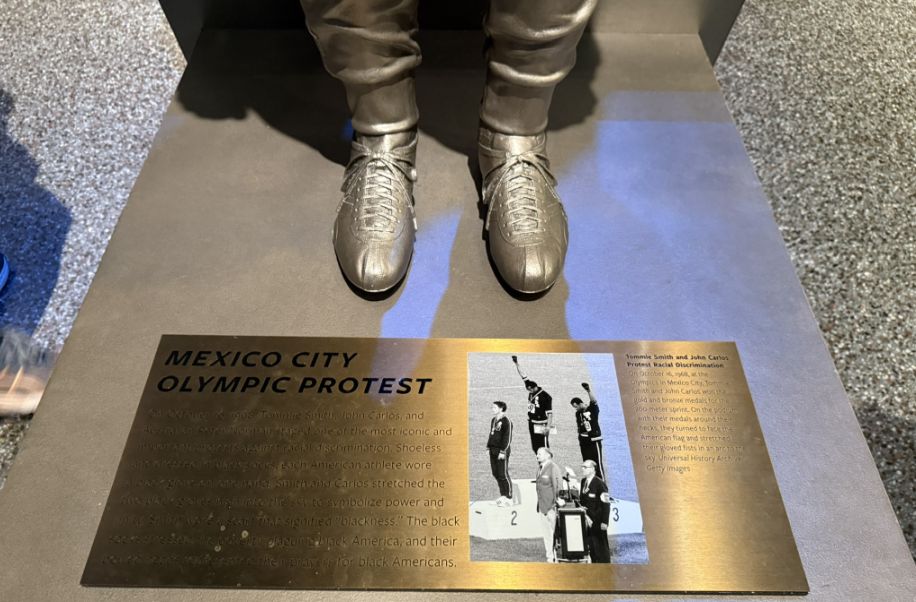
Statue of 3 Athletes Protesting at the Mexico Olympics (1968)
This is a direct reference to the iconic "Black Power salute" by Tommie Smith (gold) and John Carlos (bronze) during the medal ceremony for the 200-meter dash at the 1968 Mexico City Olympics. Peter Norman (silver), a white Australian runner, also wore a human rights badge in solidarity. The gesture, a raised fist clad in a black glove was a powerful, silent protest against racial injustice, poverty, and war in the United States and around the world. It sparked massive controversy but became an enduring symbol of athlete activism.
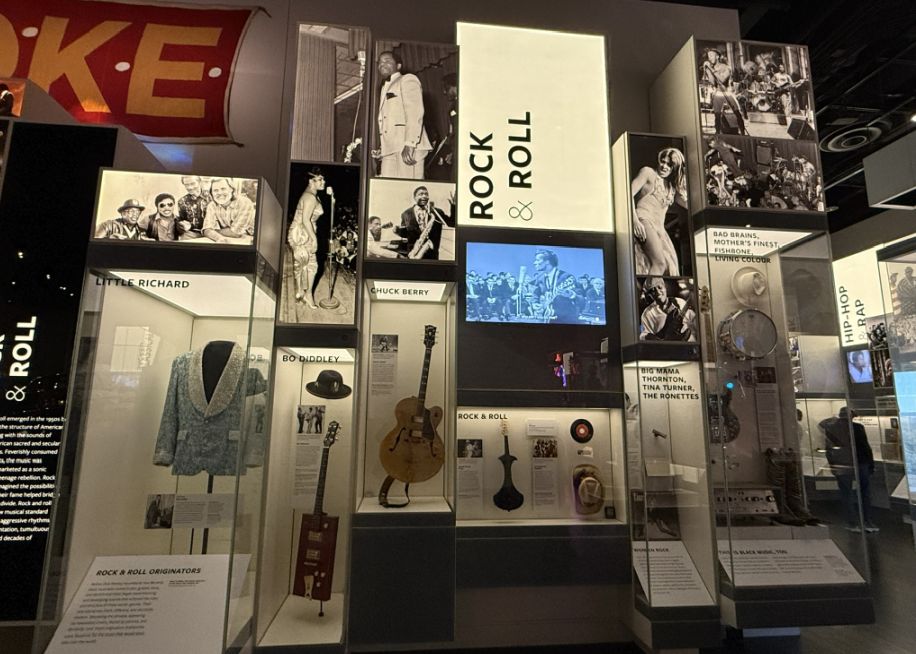
Music and Entertainment Section. Rock & Roll Emphasizes the African American roots of rock and roll, usually attributed to artists like Sister Rosetta Tharpe, Chuck Berry, Little Richard, and many others whose innovations were foundational to the genre, often without receiving due credit or recognition for decades. The instruments themselves are tangible links to this rich musical heritage. This area highlights the profound contributions of African Americans to various forms of music, television, and film, demonstrating their creative genius and influence on global culture.
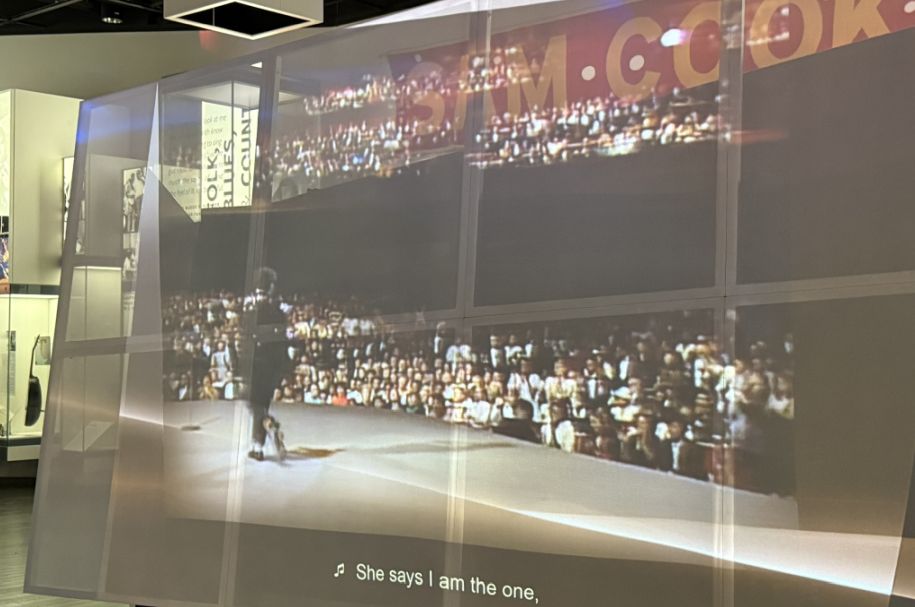
Michael Jackson, the "King of Pop" and one of the most successful and influential entertainers of all time. His music, dance, and cultural presence transcended racial and geographic boundaries. The quote "She Says 'I Am the One'" is from one of his iconic songs, perhaps "Billie Jean" ("She says I am the one, but the kid is not my son"), highlighting his revolutionary impact on music videos and popular culture.
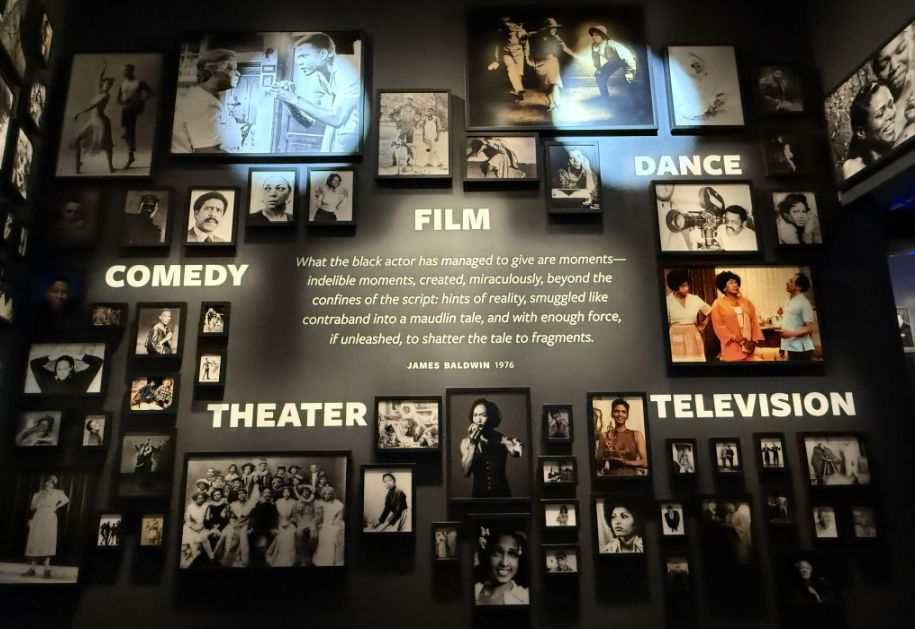
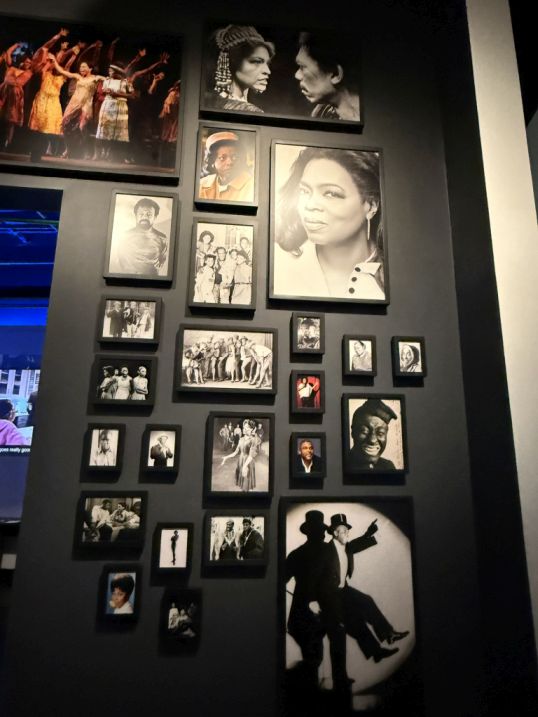
Film. Theater and television section explore the history of African Americans in cinema, from early pioneers like Oscar Micheaux to actors, directors, and writers who have shaped the industry. It would cover the struggles against stereotypical portrayals, the fight for representation, and the triumphs of Black filmmakers and performers in telling their own stories.
 |
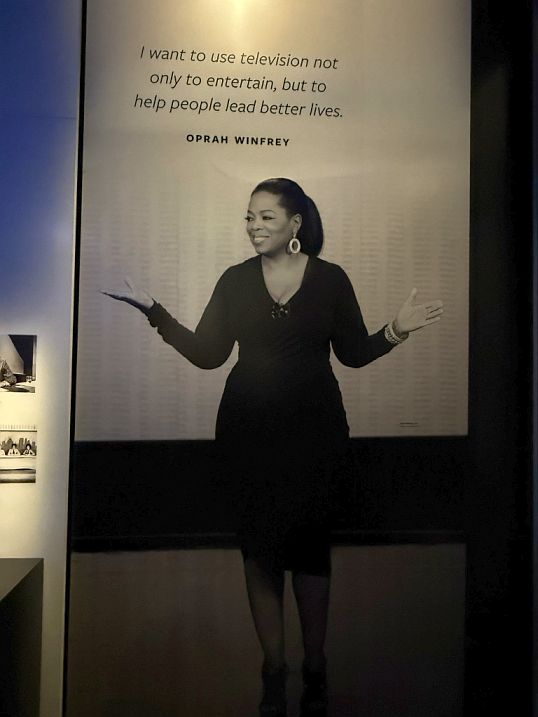 |
The quote from Oprah Winfrey: "I want to use television not only to entertain but to help people lead better lives" encapsulates her entire career philosophy and is a perfect fit for the Museum section on cultural expression, particularly within the context of media and entertainment.
Oprah Winfrey is arguably the most influential media personality of her generation. She transformed the talk show format, building a media empire that includes television, film, magazines, and digital content. Her success is unprecedented for any woman, and especially for an African American woman.
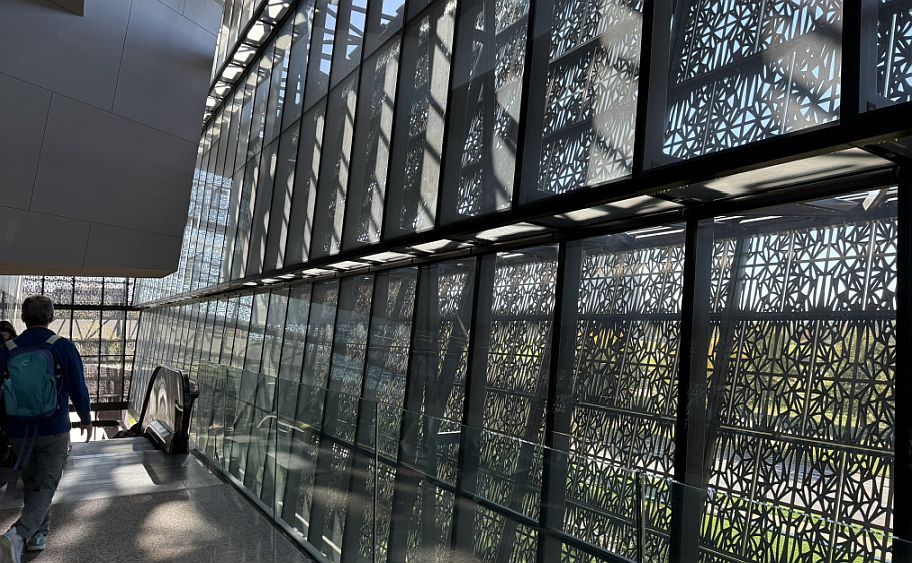
As you make our way down the stairs of the National Museum of African American History and Culture, the building itself feels like one final exhibit. Along the stairwell, the magnificent bronze-colored metal screen, the corona, stretches upward, its intricate pattern filtering daylight into soft, golden beams. The light shifts as you descend, casting delicate shadows that move across the walls and floors.
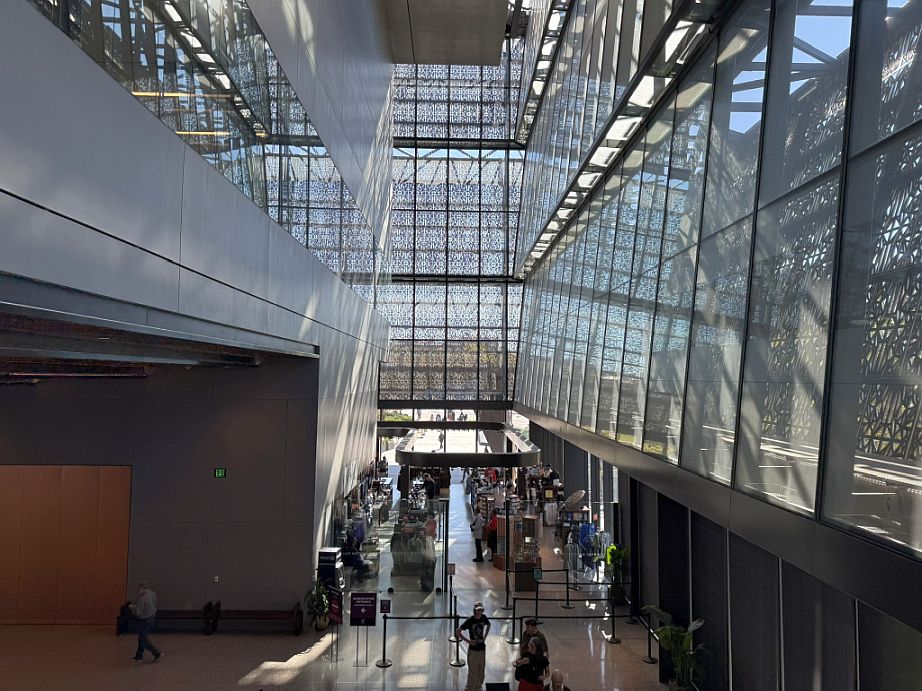
From the second-floor escalator, you can look out over the open central atrium. The first floor spreads wide below, with the museum store nestled at the base, and warm light washing down from the patterned exterior walls. The space feels airy and connected, as if the architecture is inviting you to reflect on everything you’ve just seen. Even as you leave, the building’s design, rooted in history yet reaching upward stays with you.
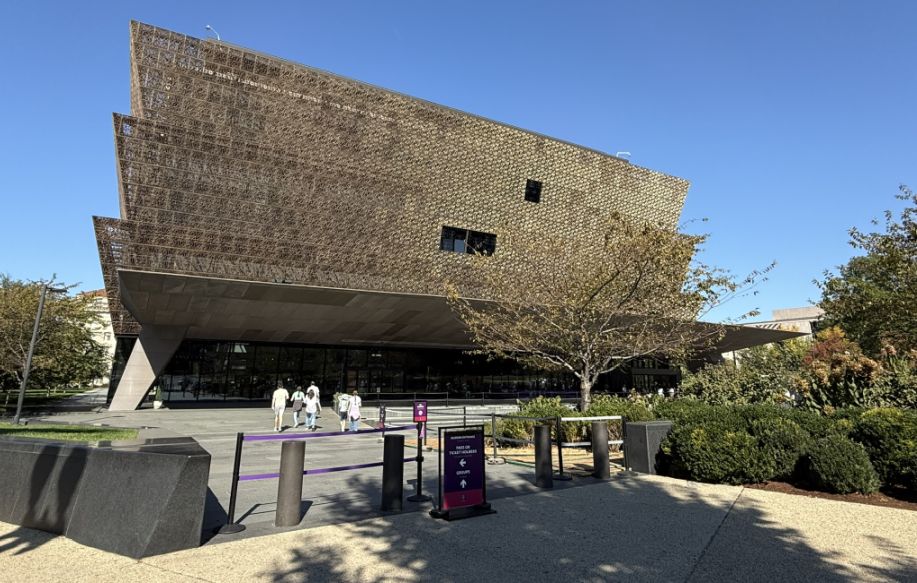
We are now leaving the museum
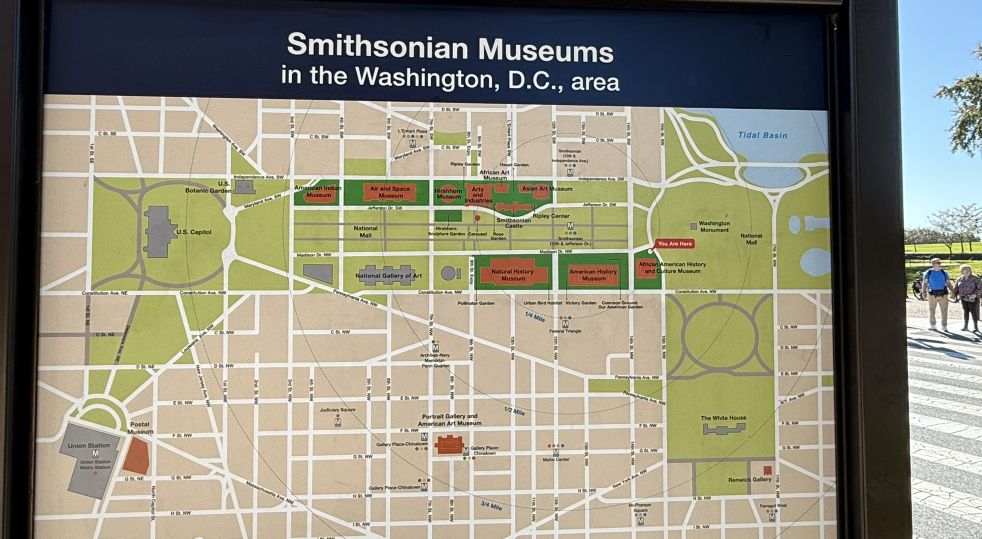
As we stepped outside, we noticed a large map of the Smithsonian Institution spread across the Washington area, and it really is amazing how many museums are gathered here along the National Mall and beyond in Washington, D.C.. From art and air and space to natural history and African American history, the range is extraordinary.
What makes it even more remarkable is that they are all free. The Smithsonian was founded on the idea of increasing and diffusing knowledge, and that mission still feels alive when you see how accessible these world-class museums are. It’s rare to find such a concentration of cultural treasures open to everyone, inviting visitors to explore, learn, and reflect without barriers.
NEXT... Day 4- Holocaust Memorial Museum