6 days in Washington DC- 10/18- 10/23/2024
Day 2- City tour-10/19/2024
Vietnam War Memorial
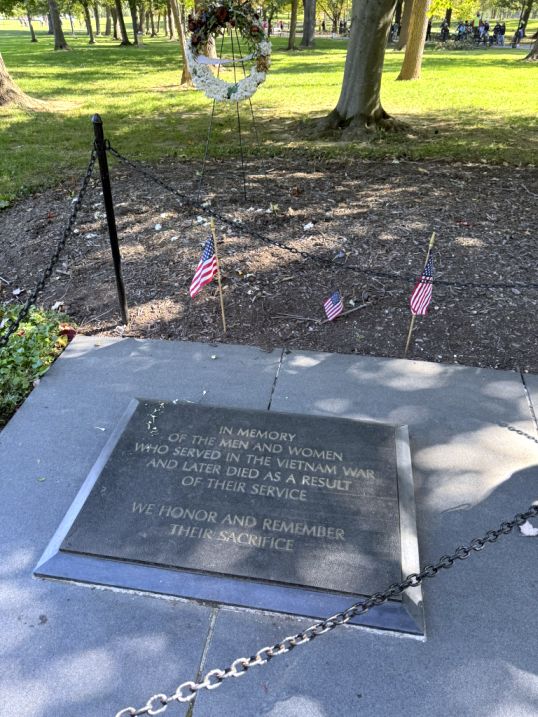
The Vietnam Veterans Memorial in Washington, D.C. is a national memorial that honors service members of the U.S. armed forces who fought in the Vietnam War, veterans who died in service in Vietnam, and those service members who were unaccounted for during the war. It consists of three separate parts: the Three Soldiers statue, the Vietnam Women's Memorial, and the Vietnam Veterans Memorial Wall, which is the most famous part.
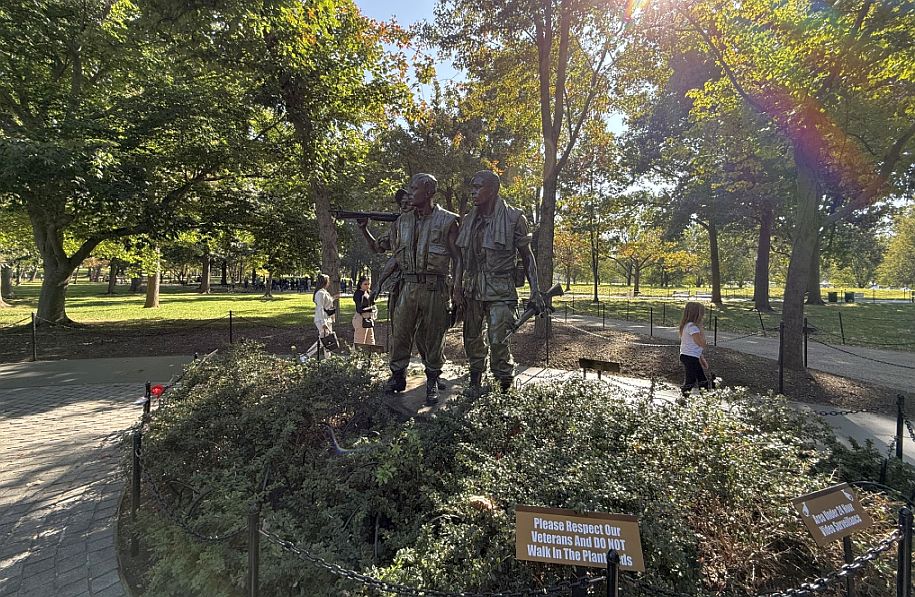
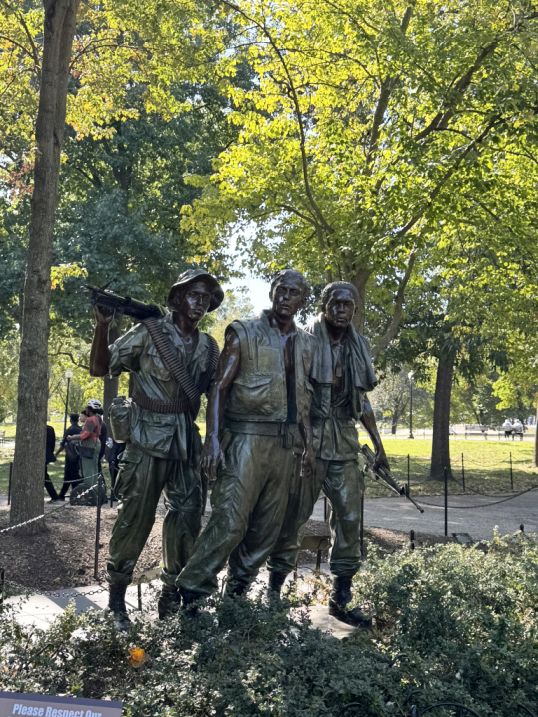
The first thing we encountered is a statue called the Three Soldiers. The statues are positioned so they appear to be looking toward the black granite Wall, as if searching for their friends’ names.
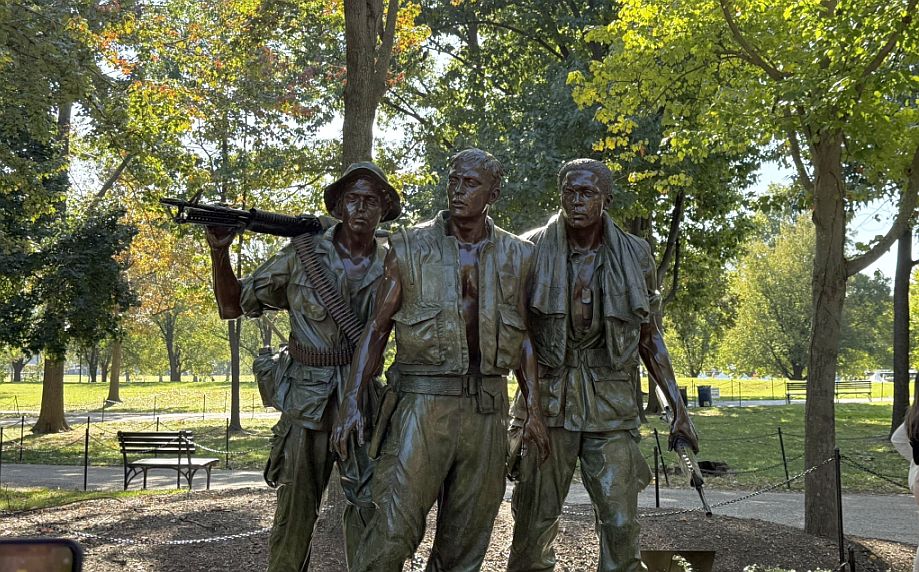
They are young servicemen in combat gear, one white, one Black, one Hispanic, very deliberately chosen to represent the diversity of those who served. Their faces are realistic, alert, almost tense. They’re not heroic or triumphant; they look like they’re watching, waiting, trying to understand what happened.
 |
 |
This statue was added after the Wall was built because some veterans felt the abstract design needed a human presence. These three figures quietly bridge the living and the fallen.
 |
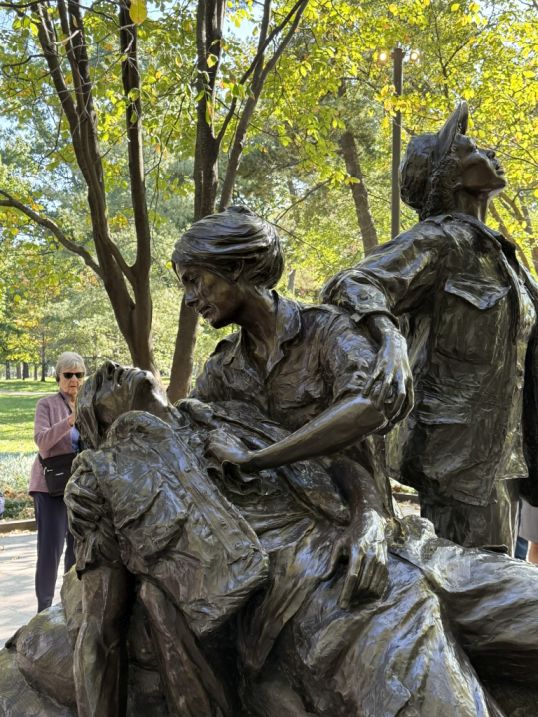 |
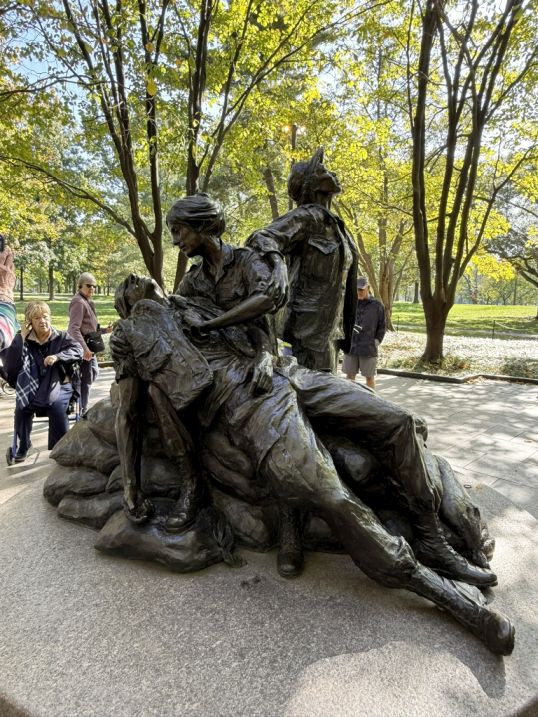
This is the Vietnam Women’s Memorial, and it’s incredibly powerful. The scene captures: exhaustion, urgency, compassion, and helpless hope. It’s one of the few war memorials that centers caregiving rather than combat. The Vietnam Women’s Memorial was dedicated in 1993, almost a decade after the main Vietnam Veterans Memorial Wall (1982). Women who served, especially nurses were largely invisible in early public memory of the war. Many came home without recognition, and some weren’t even acknowledged as veterans.
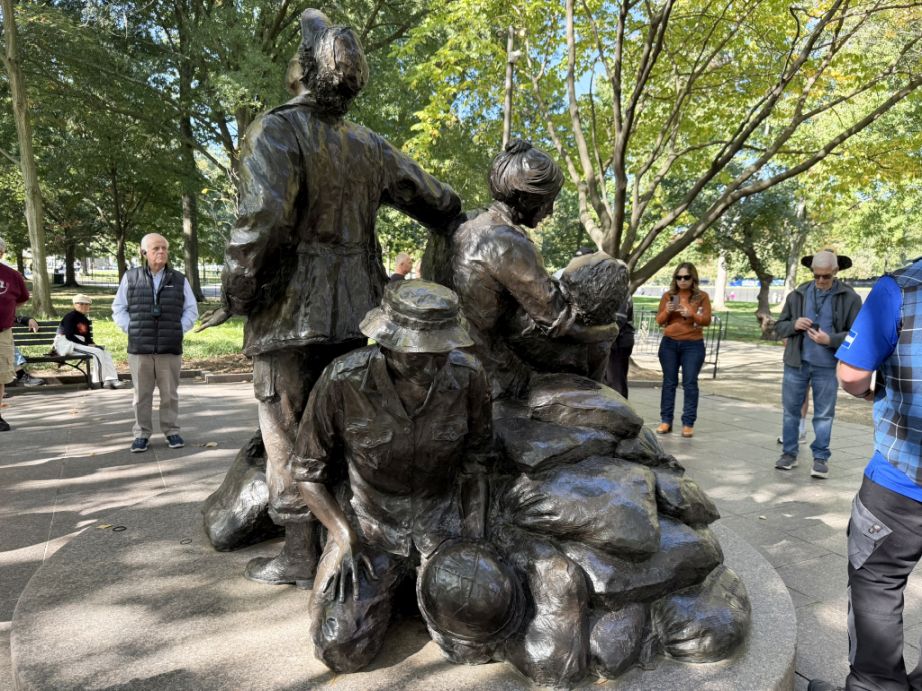
It depicts three women, all military nurses with a nurse kneeling, intensely focused on caring for him.
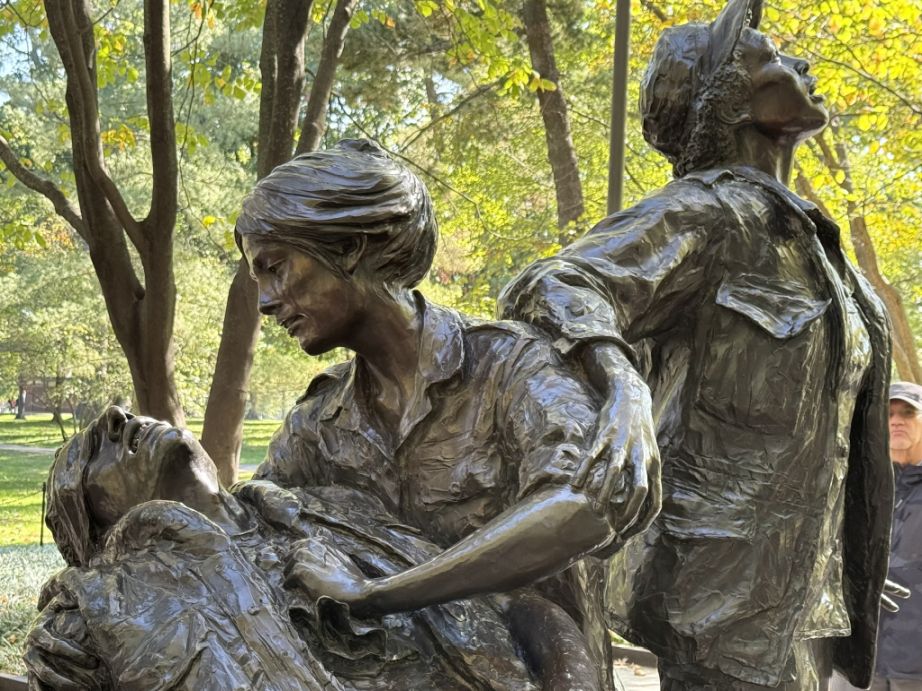
One woman cradles a wounded soldier lying on the ground, the second one looking upward, scanning the sky, waiting for a helicopter, hoping for help.
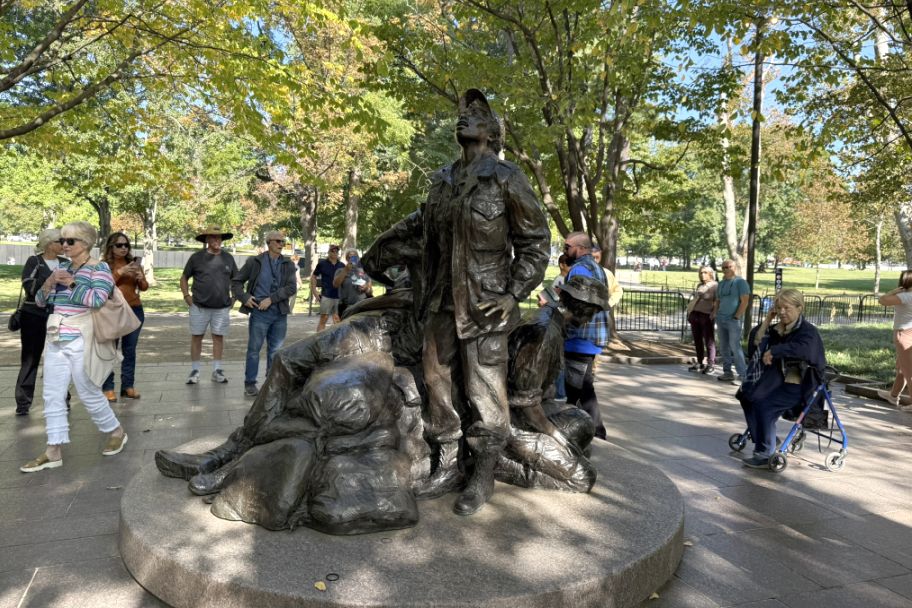
This memorial honors the 11,000+ women who served in Vietnam, most of them nurses, often very young, working under brutal conditions with limited supplies and constant danger.
 |
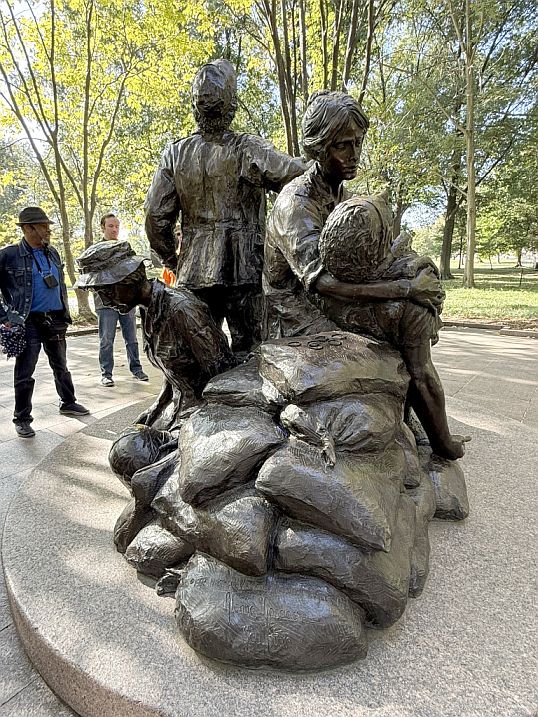 |
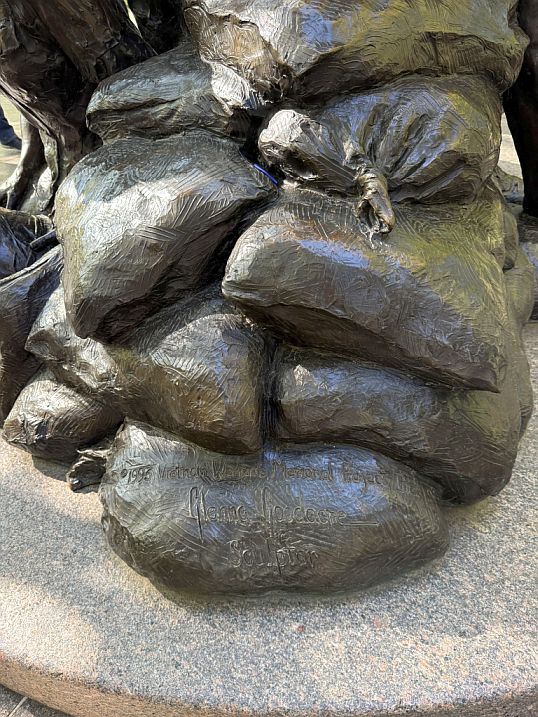
The bags you see around the women are medical aid bags, the kind combat nurses carried in Vietnam. They’re heavy, awkward, always within reach, and in the sculpture they’re scattered on the ground, half-open, like they’ve been dropped in a rush. That chaos is intentional, it captures the split second between routine care and life-or-death emergency.
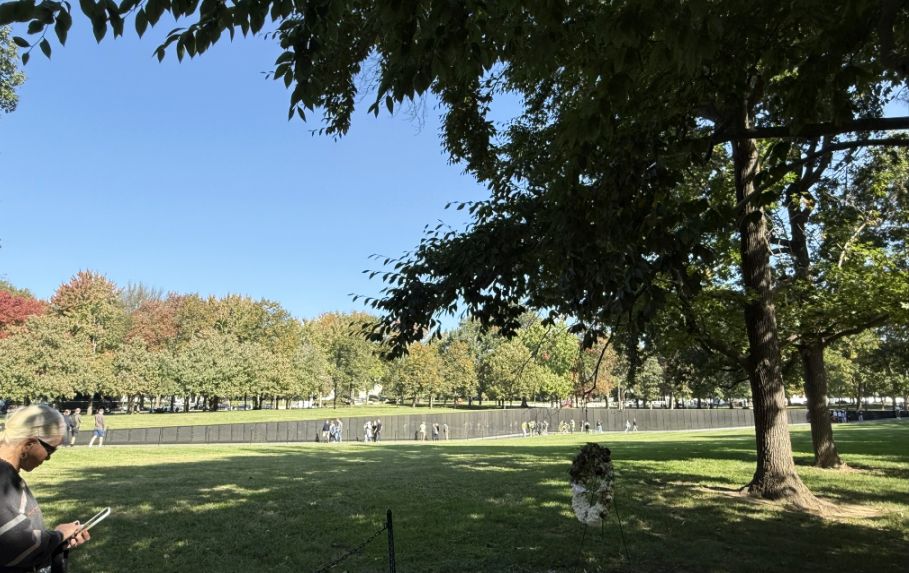
From across we can see the Vietnam war memorial wall.
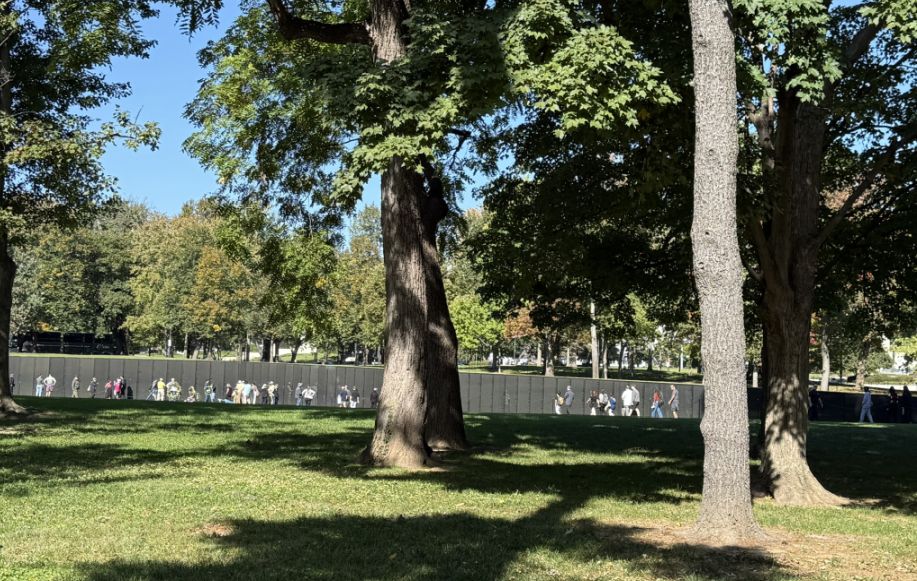
From where we stand, the Vietnam War Memorial wall is surrounded by trees .
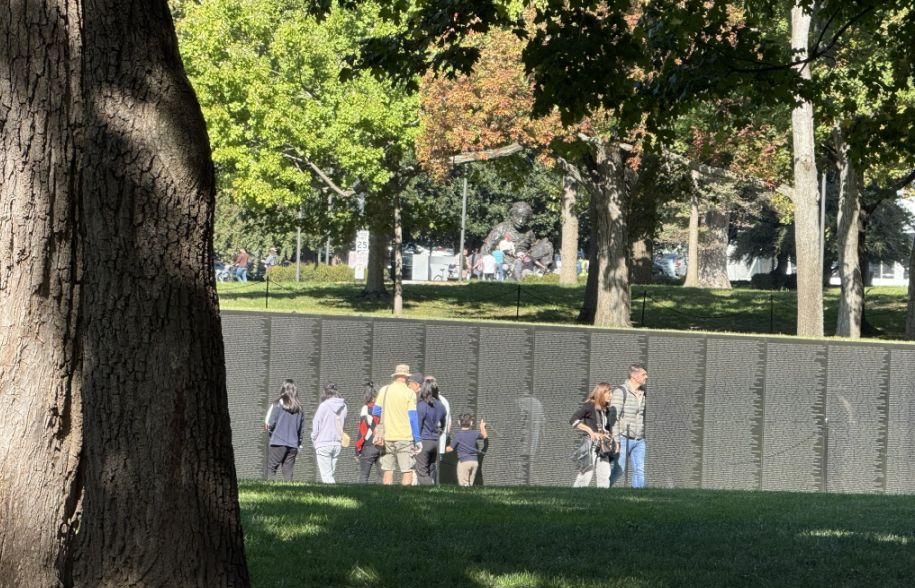
As I am looking at the Vietnam War Memorial Wall, I noticed across the street, just beyond it, over the trees and the fence, a glimpse Albert Einstein statue, calm, seated, almost outside of time. The Einstein Memorial was dedicated in 1979, just before the Vietnam Wall (1982). It sits near institutions devoted to science, policy, and reason, while the Wall sits in a landscape devoted to
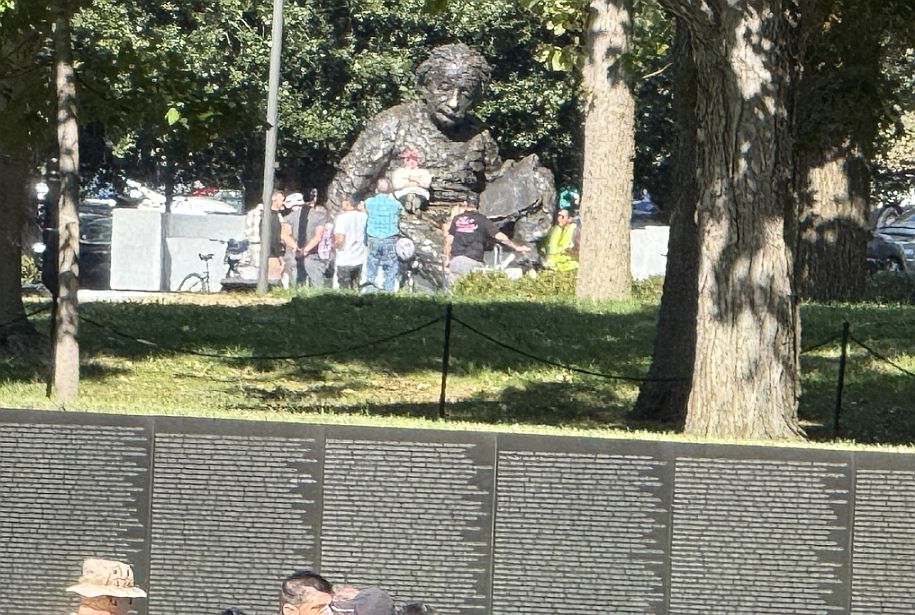
That statue is the Albert Einstein Memorial, located just northwest of the Vietnam Veterans Memorial, near the National Academy of Sciences. People often sit beside him, touch his shoulder, let children climb onto his knee. It’s one of the most human statues in Washington.
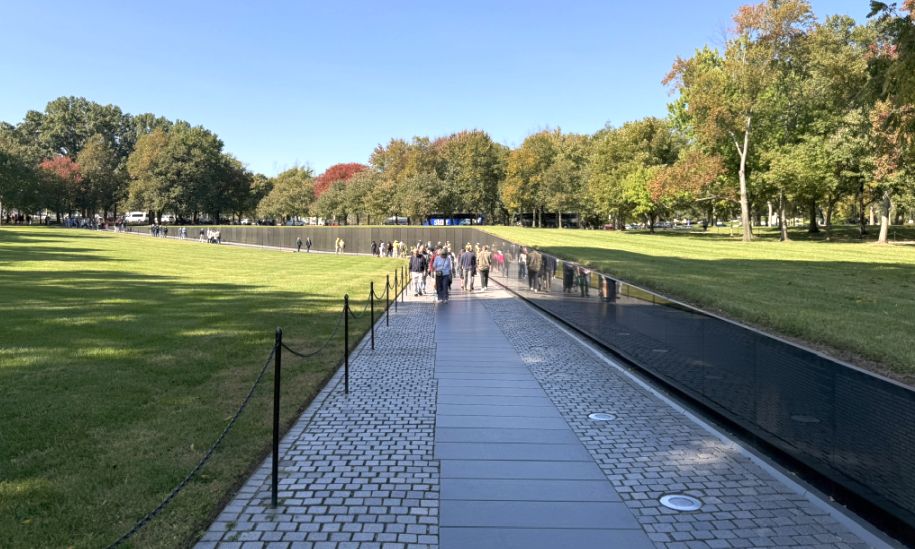
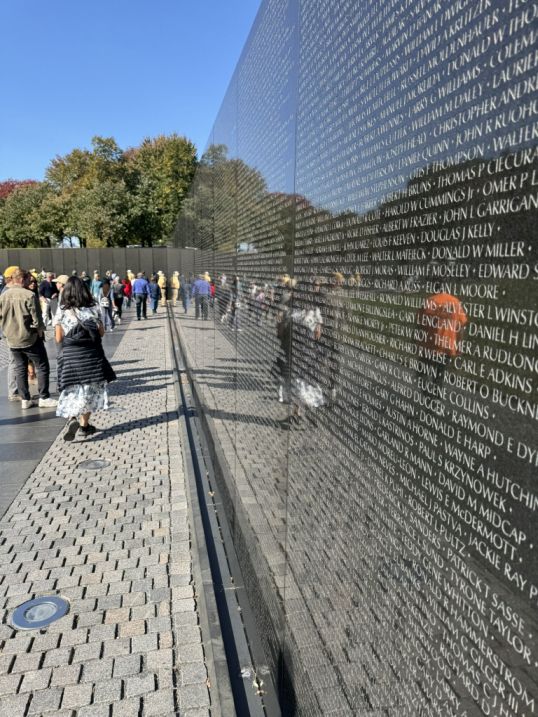
The Memorial Wall was designed by American architect Maya Lin. It is made up of two black granite walls, 246 feet 9 inches long, inscribed with the names of 58,318 service members killed or missing in action. The polished surface of the wall is highly reflective, so visitors can see their own reflection superimposed over the names, connecting the past and present. The names are listed in chronological order of their casualty dates.
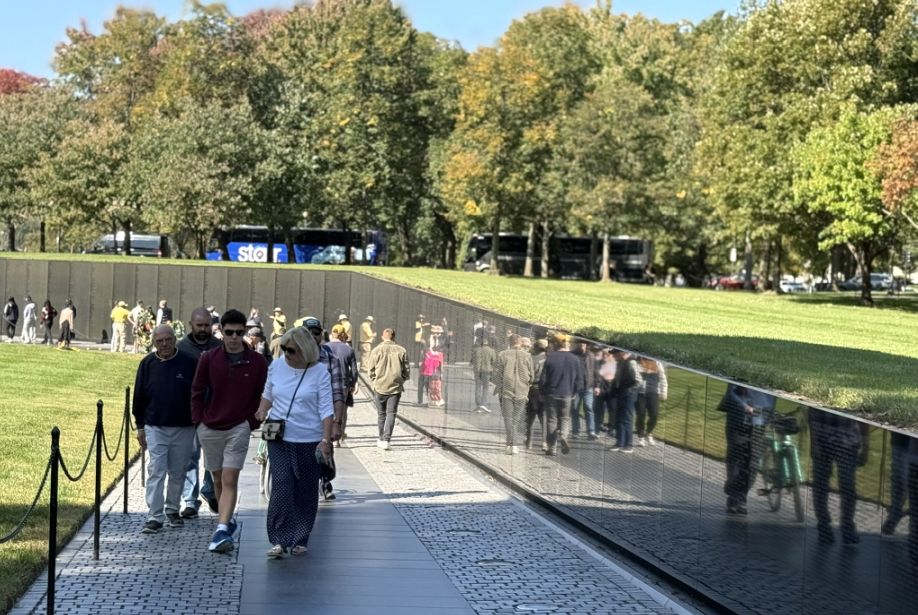
As you follow the gently sloping pathway, the black granite wall starts low to the ground, almost unnoticeably at first. The path then gradually descends as the wall rises higher beside you, culminating at the center, the "vertex", where two angled wings meet to form the memorial’s signature V-shape. This angle is about 125 degrees, symbolizing both a wound that is closed and a gesture of healing and reflection.
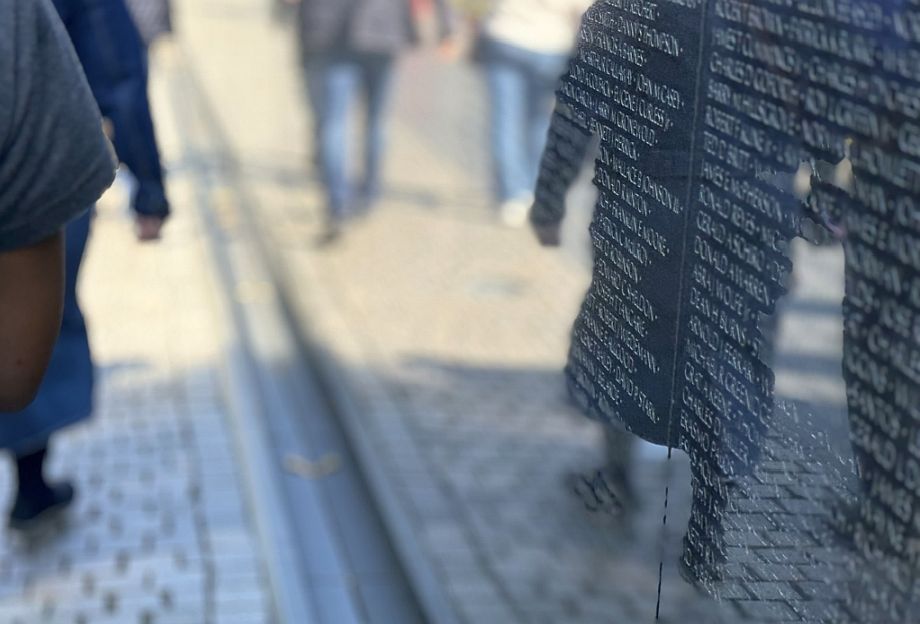
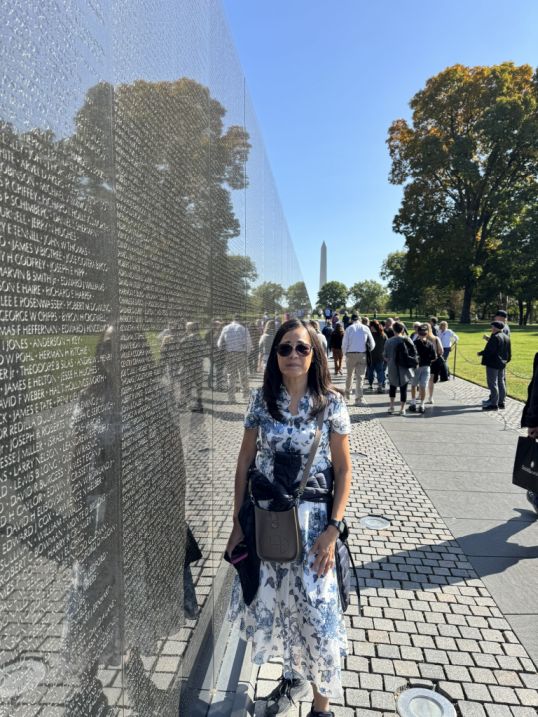
The granite is so reflective that people own image appears among the names, and visitors can see their own reflection superimposed over the names, connecting the past and present.
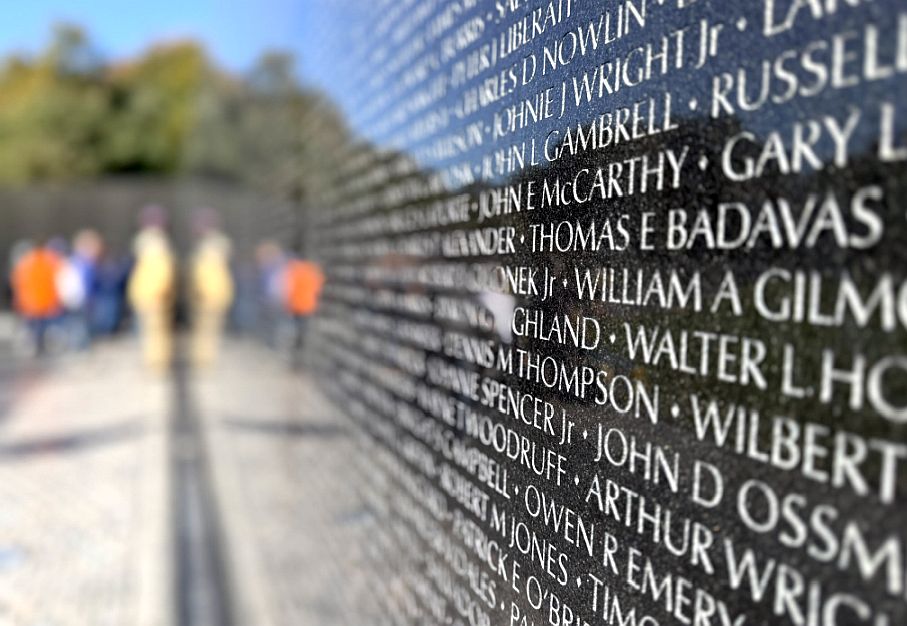
As we walked along the walls of the Vietnam Veterans Memorial, the arrangement of the names creates a continuous story of the war and those who served. The names are listed in chronological order of casualty, beginning at the center of the wall (Panel 1E) with the earliest deaths in 1959. As we moved to the right along the eastern wall, the names progress through the years of the war. The panels grow taller as the number of casualties increases, peaking near the middle years of the conflict.
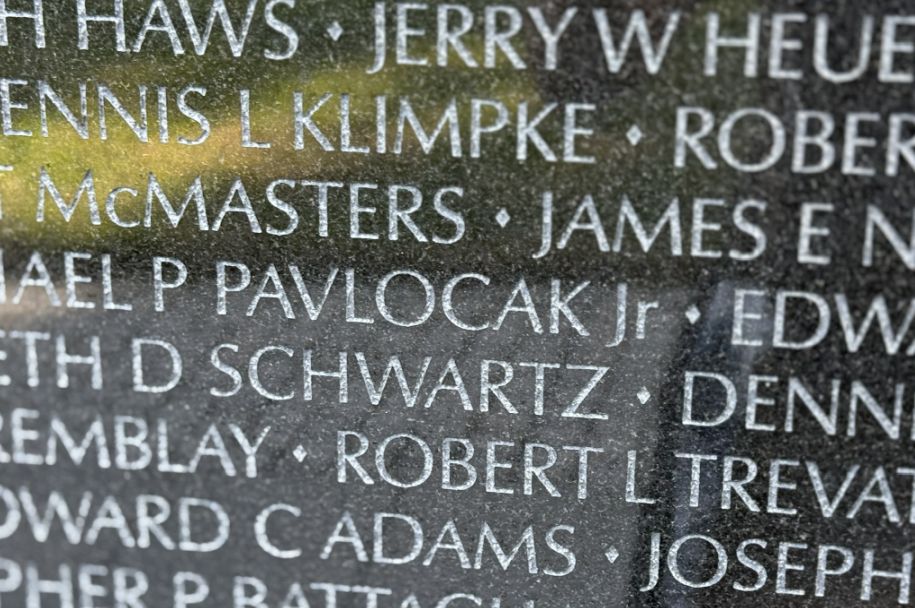
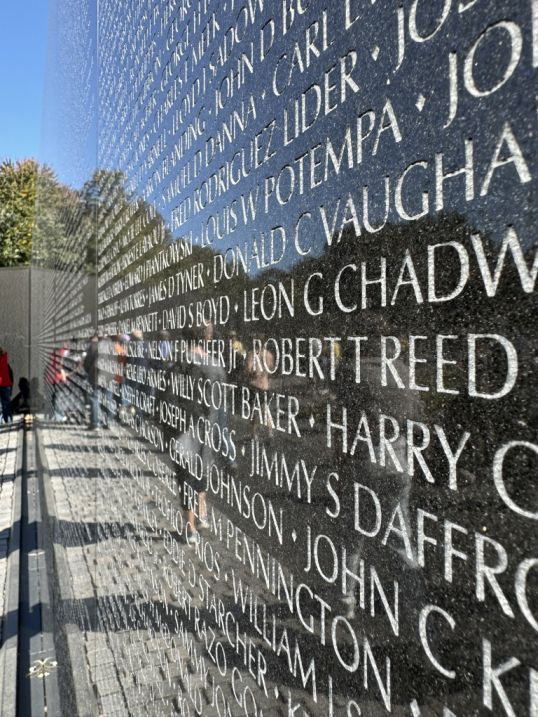
Carved into the stone are more than 58,000 names of Americans who died or are missing in the Vietnam War. They are not listed by rank or alphabet. Instead, they are placed in chronological order of death. Across every inch of it, thousands upon thousands of names are engraved, evenly spaced, letter by letter, without rank or distinction. Each one represents a life lost or missing in the Vietnam War. If a person was confirmed dead, their name is followed by a diamond (◆). If a person was missing in action or otherwise unaccounted for, their name is followed by a cross (✚). These small symbols carry great meaning. The diamond represents a life lost, a story brought to its end. The cross stands for uncertainty, a life not yet fully accounted for, a family still waiting for closure.
 |
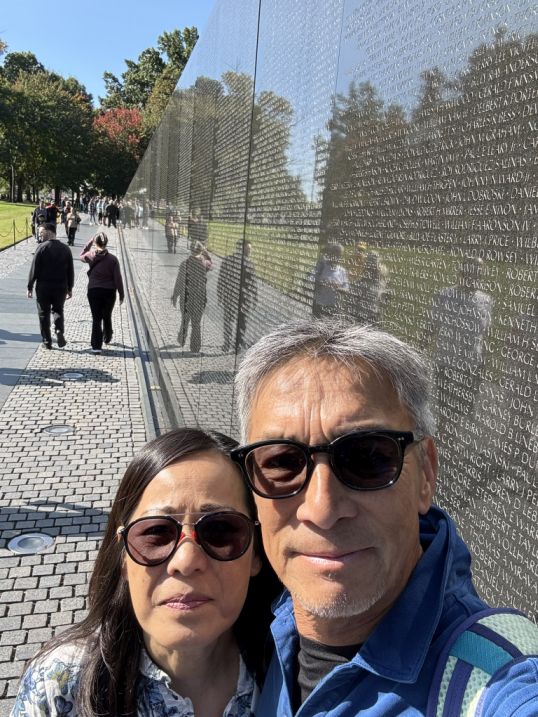 |
The polished surface of the wall is highly reflective, so visitors can see their own reflection superimposed over the names, connecting the past and present.
 |
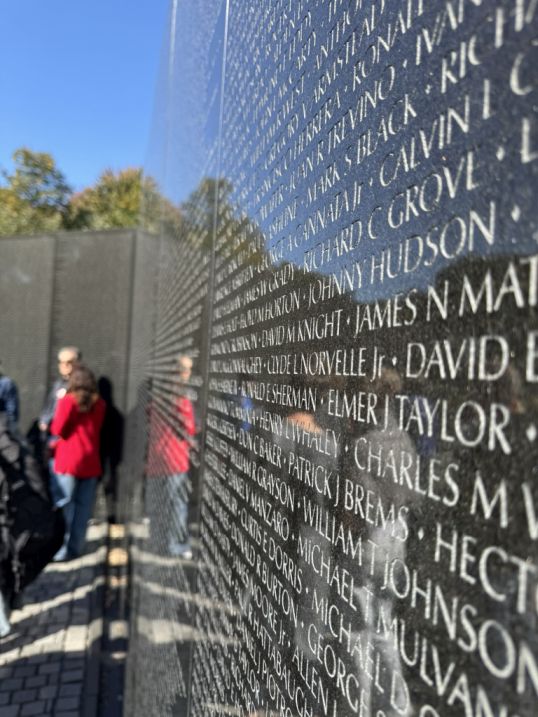 |
The black granite, polished to a mirror, doesn’t just hold names, it holds memory. It reflects each visitor back into the story it tells, reminding everyone that remembrance is not just about the past, but also about the act of bearing witness in the present.
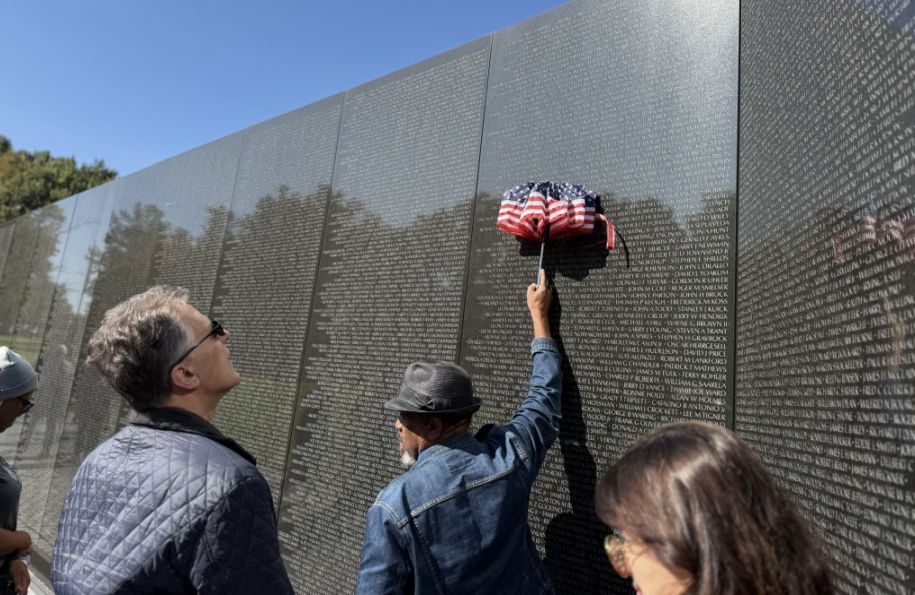
Our guide was referring to the Niland brothers, who inspired the story behind Saving Private Ryan. The Niland family from Tonawanda, New York, had four sons who served during World War II.
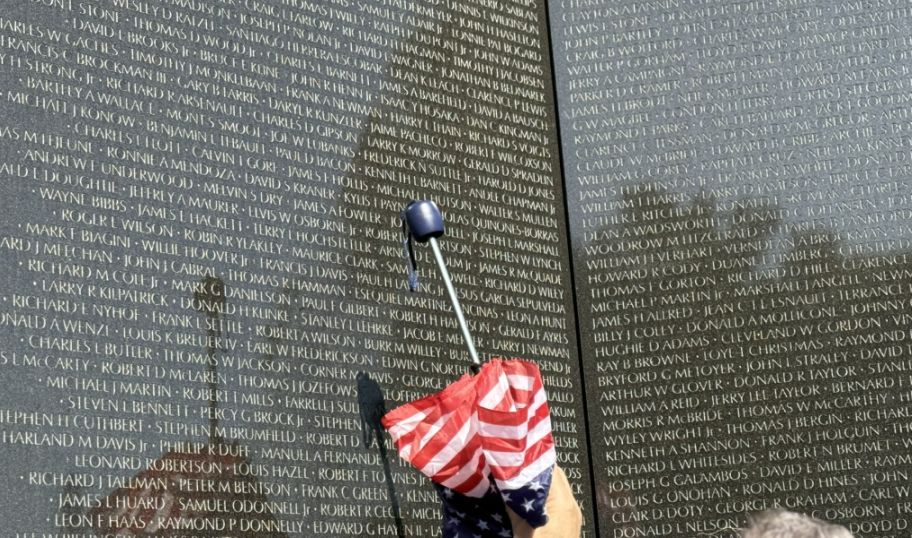
Our guide linked this story to the Vietnam Veterans Memorial Wall to illustrate how the wall honors family sacrifice, many families lost multiple sons during Vietnam, just as the Nilands did during World War II. After 3 of his brothers were killed, Frederick “Fritz” Niland who served with the 501st Parachute Infantry Regiment, 101st Airborne Division, he was sent home under what became known as the Sole Survivor Policy, to prevent the family from losing all its sons. It’s a powerful reminder of both individual and family loss in war.
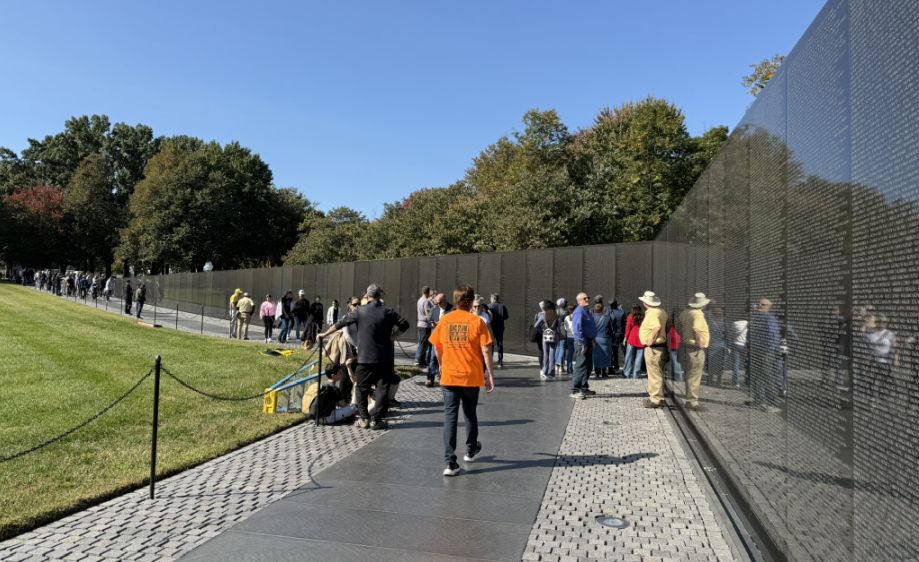
We did not walk the whole length of the wall, we stopped at the curve of the wall. The area just beyond the curved section, near the heart of the wall, often becomes a quiet field of remembrance.
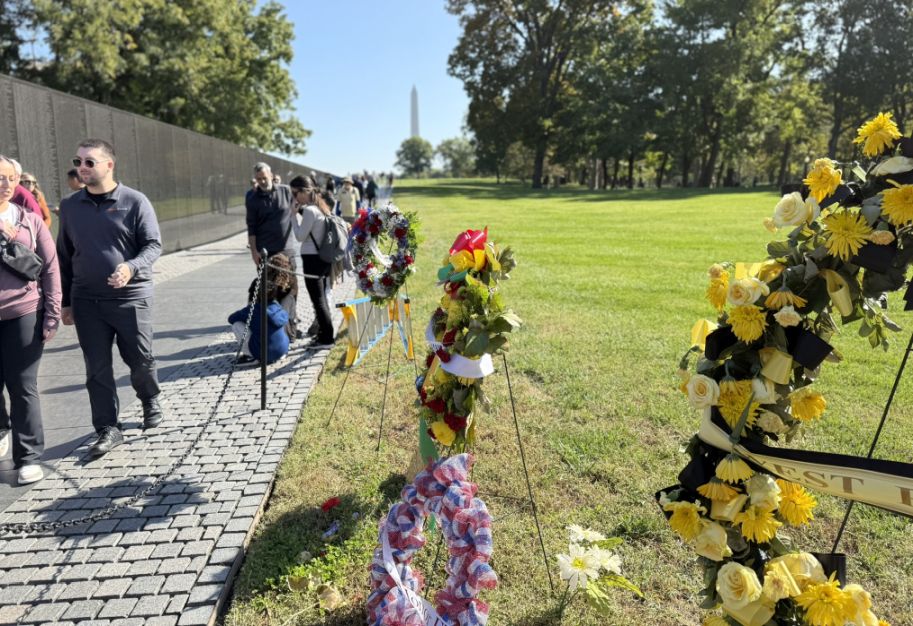
Visitors, veterans, family members, and friends leave all kinds of tributes here, flowers, wreaths, letters, photographs, medals, dog tags, and even personal mementos. Every single item left is treated with care and respect.
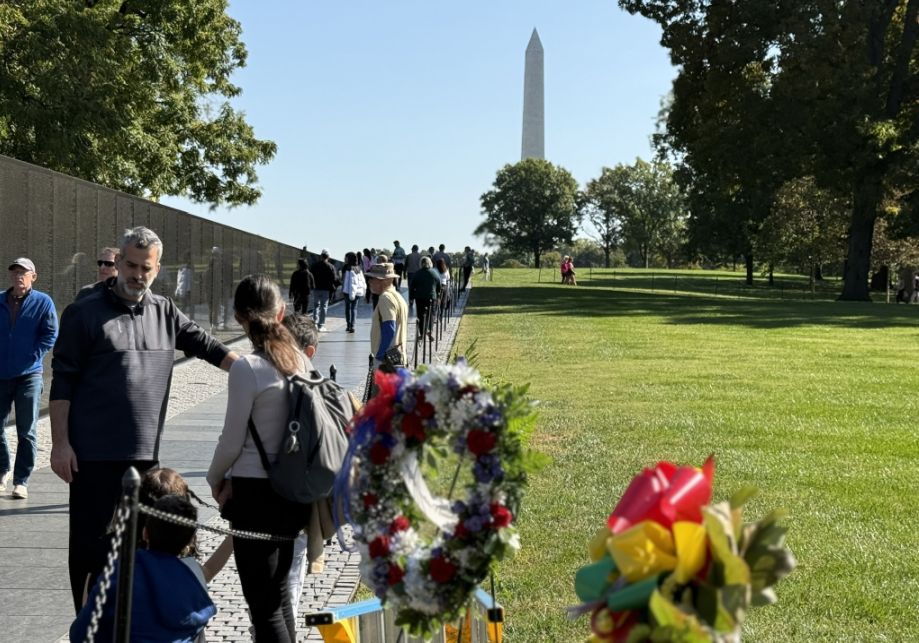
The National Park Service actually considers these offerings part of the memorial itself. Each evening, rangers collect the items that have been placed along the base of the wall. Many are preserved and cataloged in the Vietnam Veterans Memorial Collection, which contains over 400,000 artifacts stored in a special facility in Maryland. Some of these items are exhibited in museums or rotating displays to help tell the human stories behind the names on the wall.
 |
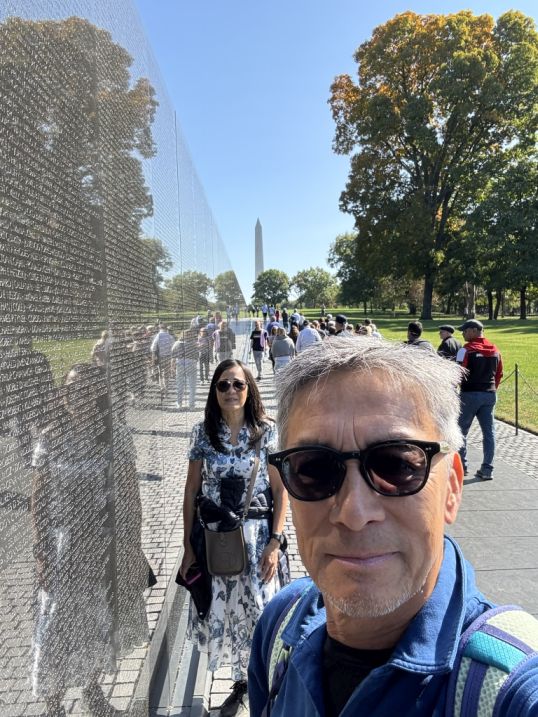 |
Last moment at the Vietnam War Memorial Wall.
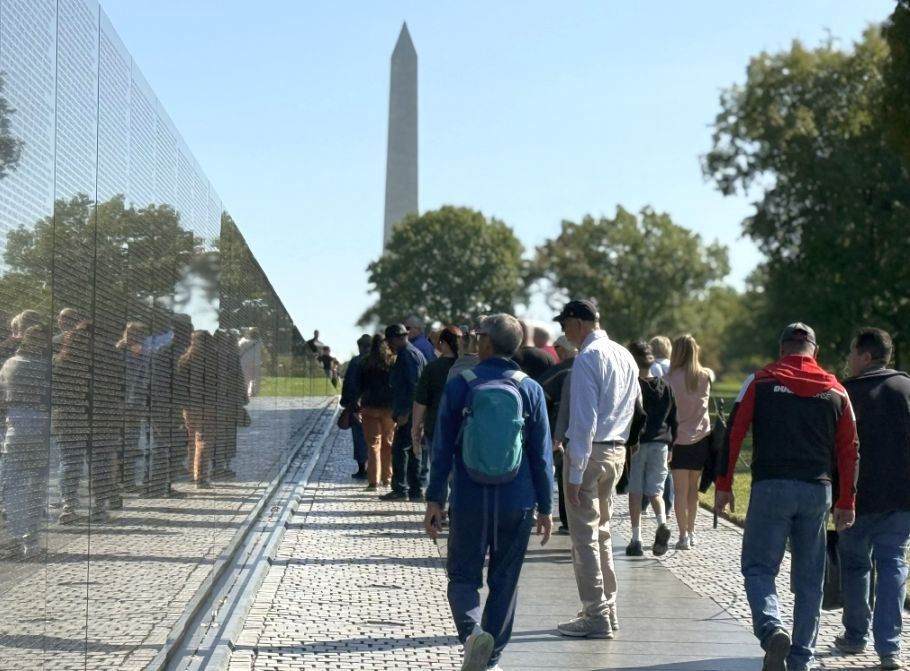
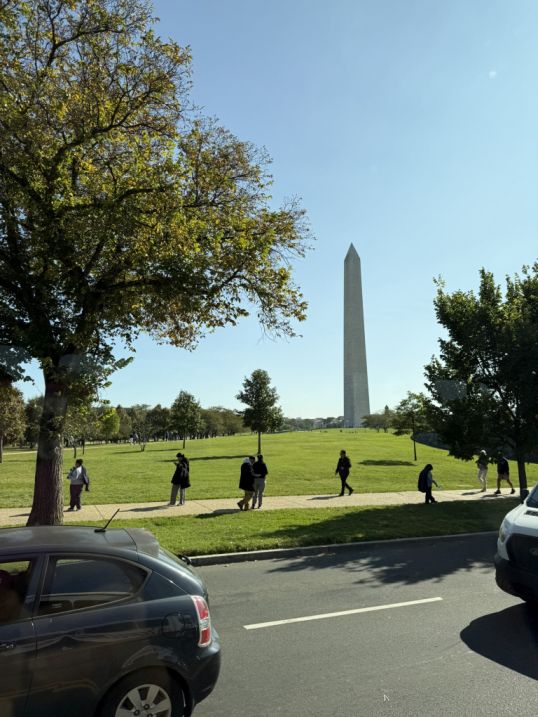
As we are walking back from the Vietnam Veterans Memorial, the black granite wall gradually slopes back down toward the surface of the earth, and our view opens up again with the Washington Monument rising in the distance, it creates a powerful visual and emotional contrast.
This relationship between the two structures wasn’t accidental. When Maya Lin designed the Vietnam Veterans Memorial, she carefully oriented the walls so that one end points toward the Lincoln Memorial (representing unity, compassion, and healing) and the other toward the Washington Monument (symbolizing the founding principles of the nation).
 |
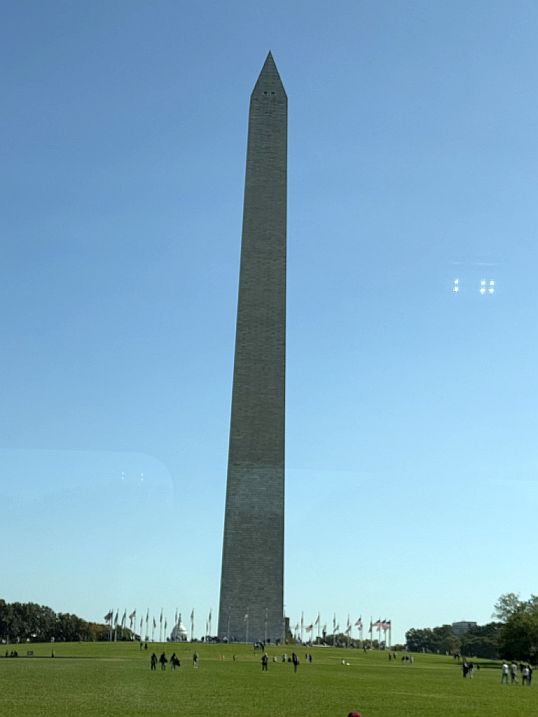 |
We are now following our tour guide to catch a bus to our next destination and in front of us is the Washington Monument, soaring white and vertical, drawing our eyes upward once more, toward light, resilience, and the enduring ideals that those names represent.
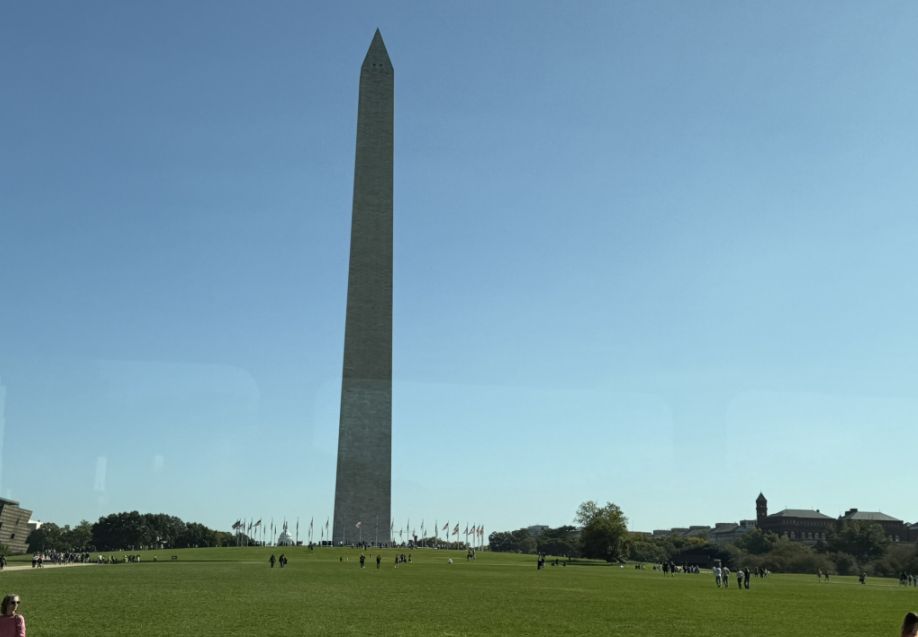
The bus dropped us off at a broad green lawn that spreads out around the Washington Monument is known as the Washington Monument Grounds, and it forms the centerpiece of the National Mall. The circle of American flags that surrounds the monument represents all 50 states, encircling it in unity. It’s a patriotic image that many visitors find especially moving after visiting memorials that commemorate sacrifice and service.
NEXT... Day 2 World War II Memorial