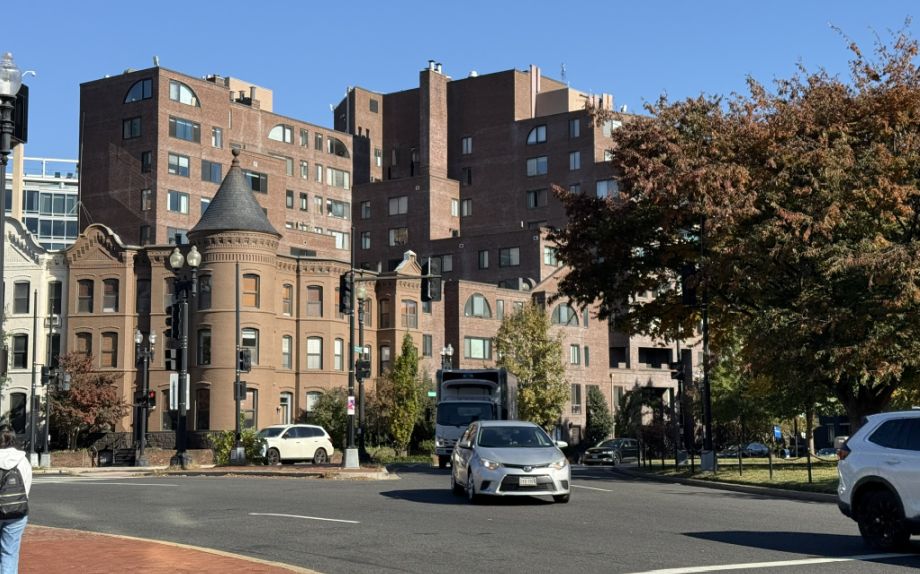
6 days in Washington DC- 10/18- 10/23/2024
Day 6- Georgetown-10/23/2024
This morning we are headed to Georgetown, a historic neighborhood in Washington, D.C., is well-known for its beautiful waterfront along the Potomac River, often referred to as Georgetown Harbor or Washington Harbour.
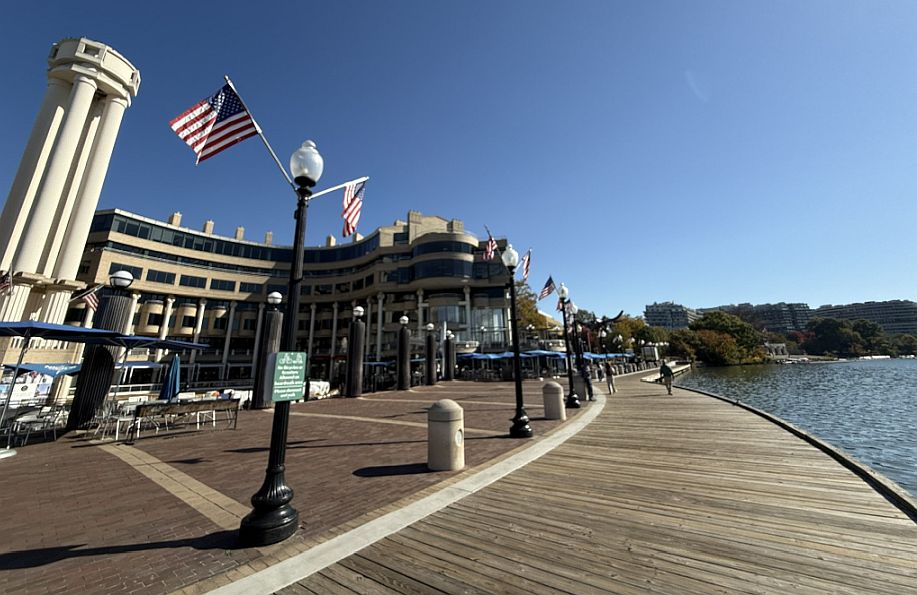
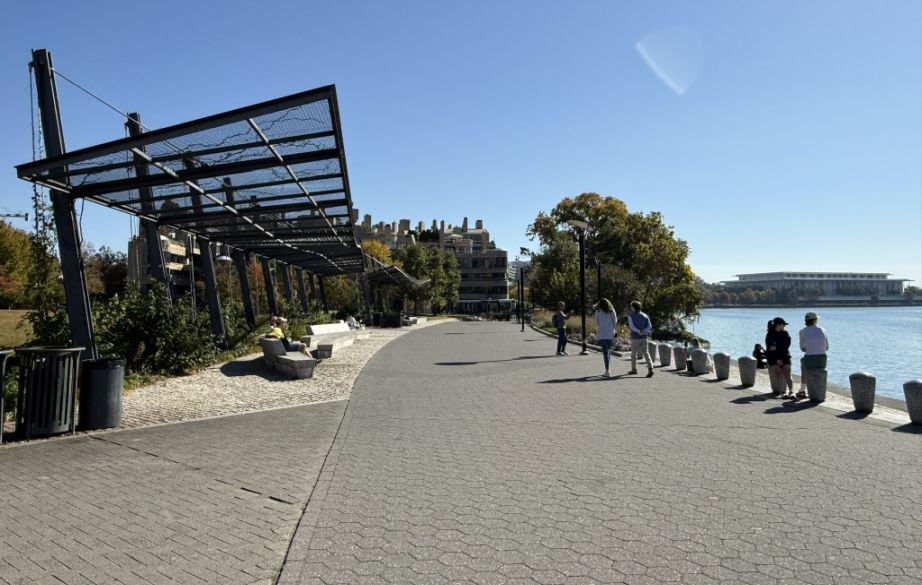
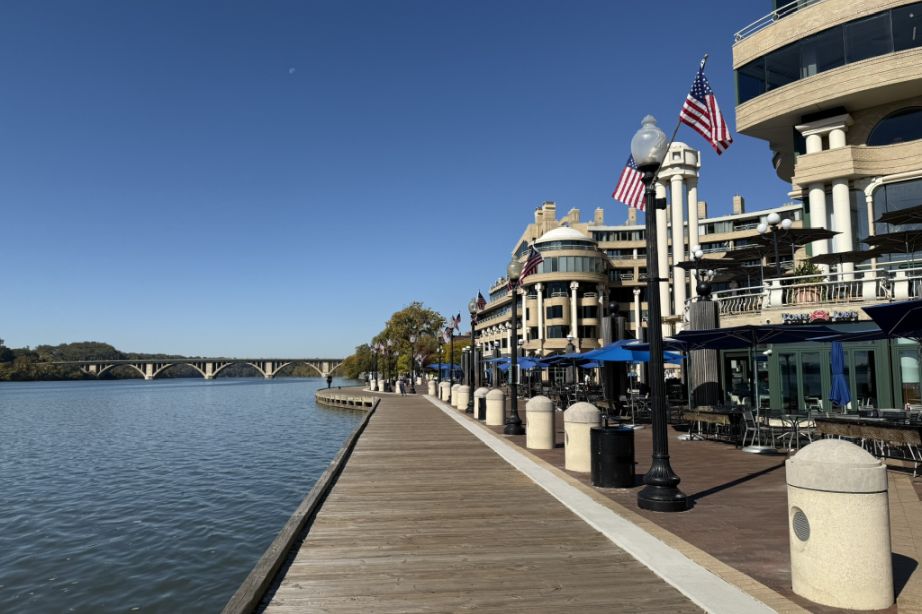
The harbor sits along the Potomac River, where Washington’s historic port once handled tobacco trade and goods arriving from overseas. Today, the area has been transformed into a welcoming waterfront park and promenade. The boardwalk curves gently along the river, lined with restaurants, outdoor seating, and wide walking paths where locals jog, stroll, or simply sit facing the water. The open design lets the sky and river dominate the scene, giving a relaxed, almost coastal atmosphere.
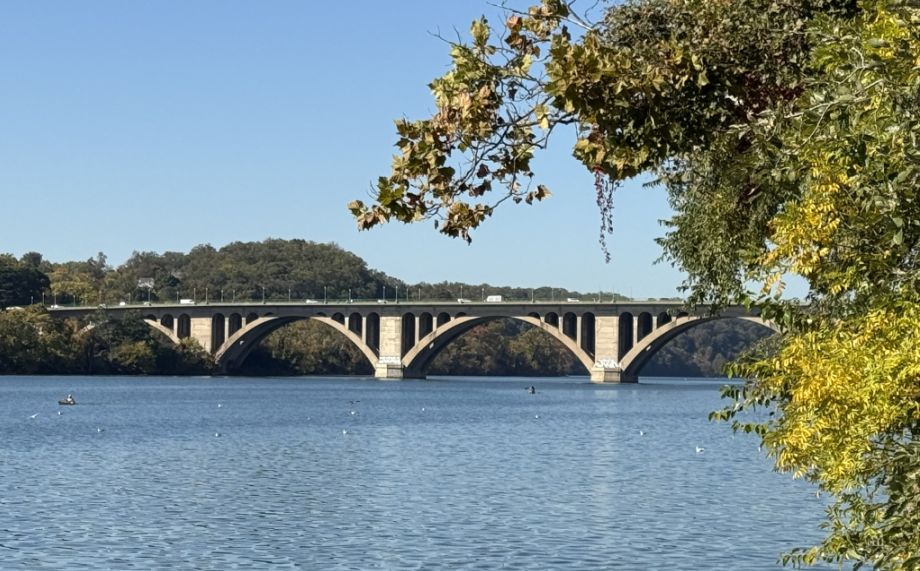
In the distance is the Francis Scott Key Bridge, built in 1923, its low stone arches stretch gracefully across the river, connecting Georgetown to Rosslyn, Virginia. From afar, the arches create a rhythmic pattern that frames boats moving underneath, one of the most picturesque views in the city.
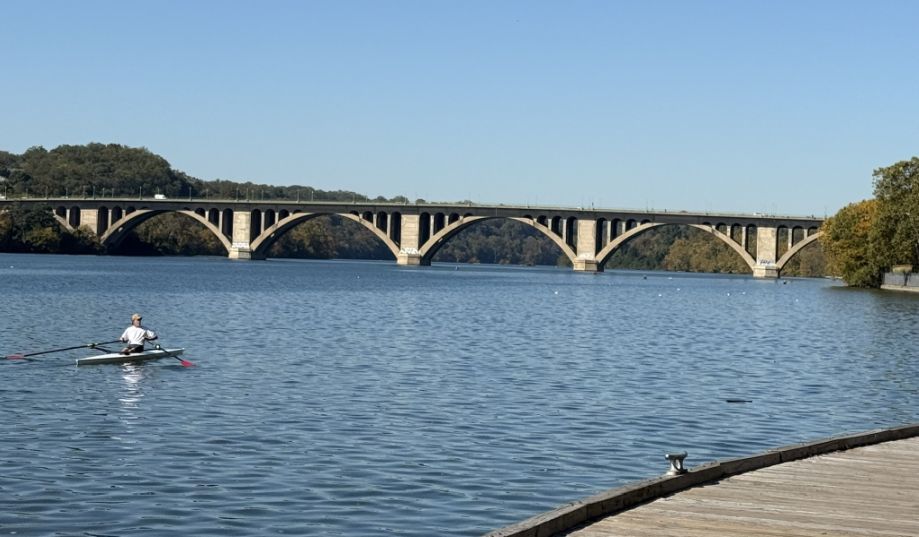
On the water, you’ll often see people boating, rowing, and kayaking, especially near the historic Thompson Boat Center, where many rent kayaks or launch rowing shells. The slow movement of boats adds energy without disturbing the peaceful atmosphere.
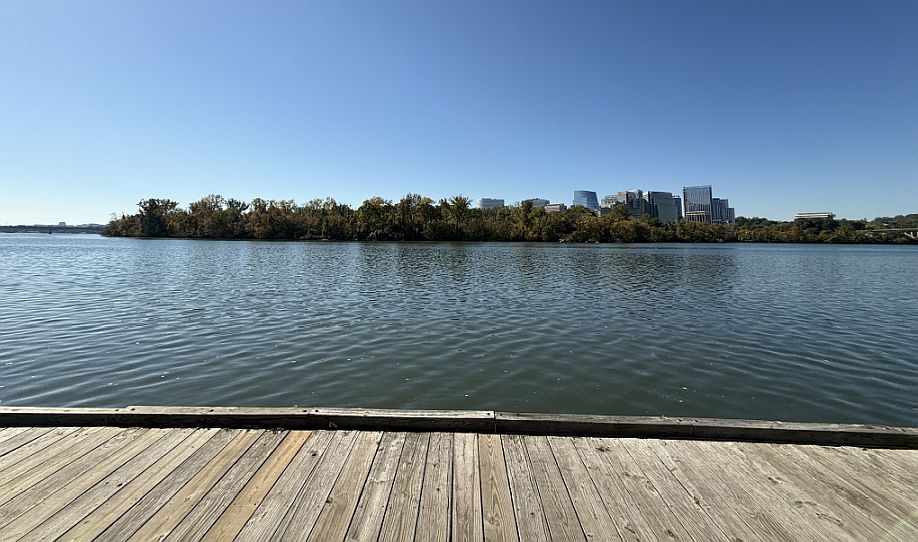
Standing on the Georgetown waterfront and looking across the Potomac River, the "high-rise buildings" are part of Rosslyn, Virginia.
Rosslyn is a densely developed urban area in Arlington, Virginia, directly across the Key Bridge from Georgetown. It's known for its modern office buildings, apartment towers, and hotels, which contribute to its distinctive skyline. Many businesses and government contractors have offices there, and it's a popular residential area for those who want to be close to D.C.
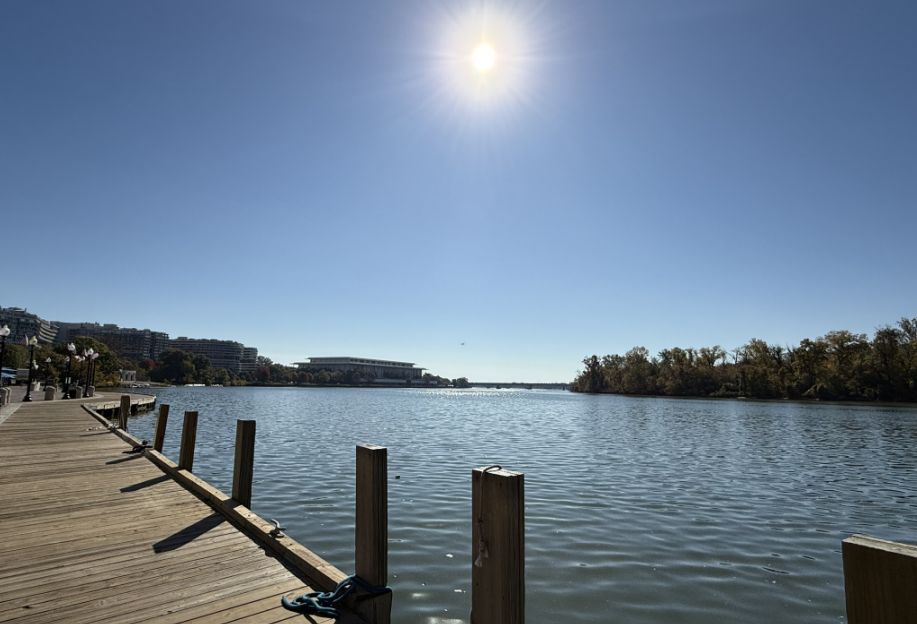
It was a beautiful day with the sun shinning above.
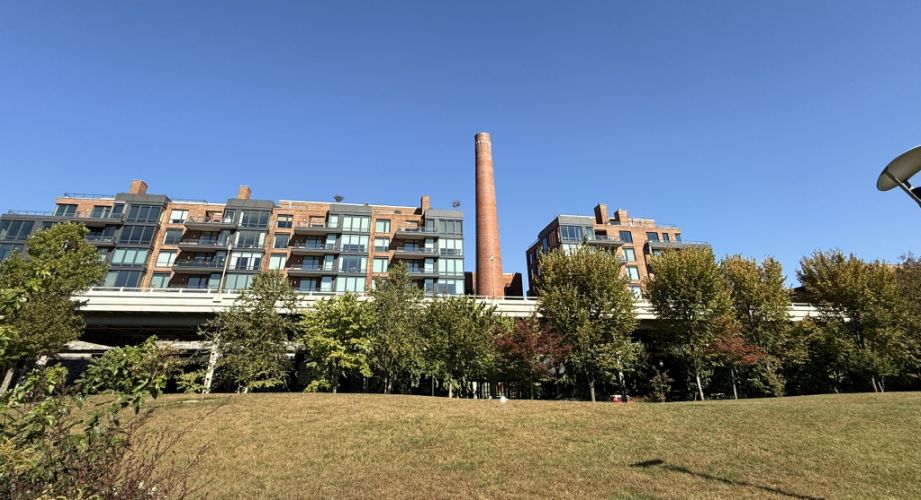
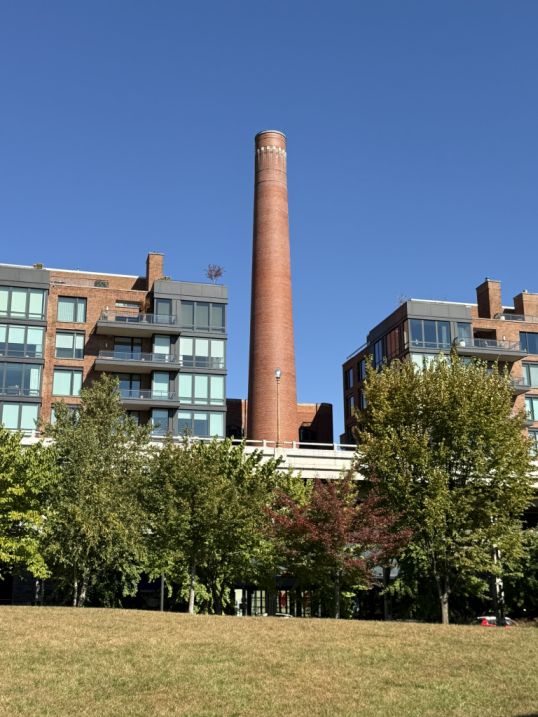
We are still walking on the boardwalk but looking inland, across the street, there is a tall brick chimney among a cluster of buildings, which I found out was the old Capital Traction Company Power Plant, more commonly known as the Ex-Georgetown Incinerator Stack.
 |
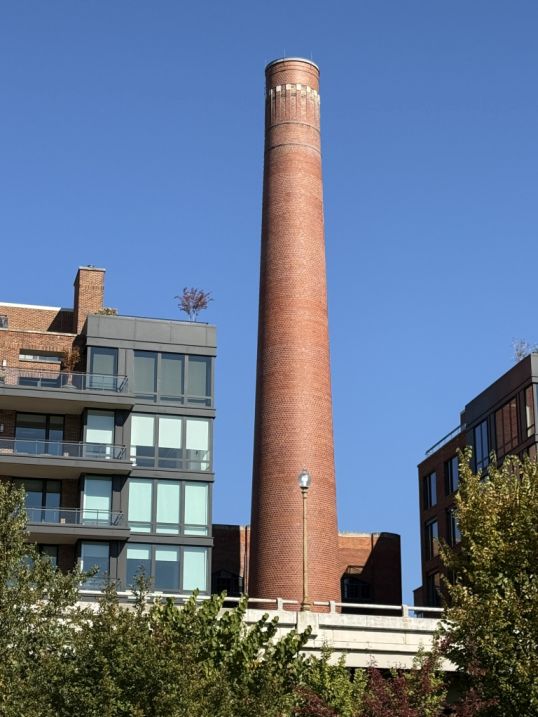 |
Historic Landmark: The tall brick chimney is a prominent and historic landmark in Georgetown. It's truly a relic from an earlier industrial era. Original Purpose: It was originally built in 1910 as part of a power plant for the Capital Traction Company, which operated Washington D.C.'s streetcar system. The plant generated electricity to power the city's streetcars.
Later Use as Incinerator: After its life as a power plant, the facility was repurposed and, for many years, served as a municipal incinerator, burning trash for the city. This is why many locals still refer to it as "the old incinerator stack."
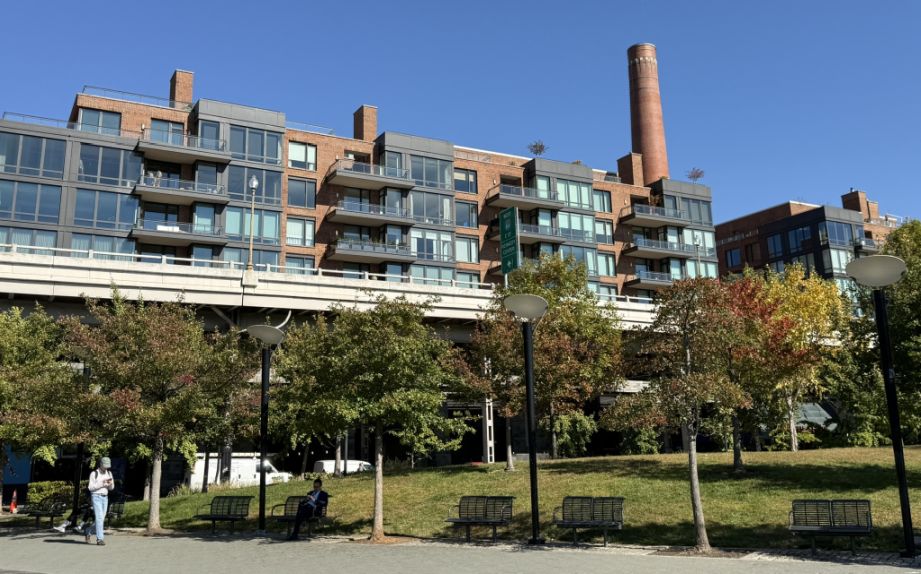
The building complex surrounding the chimney is a great example of industrial architecture from the early 20th century. While the power plant and incinerator operations ceased decades ago, the structure, particularly the chimney, has been preserved due to its historical significance. The area around it has undergone significant redevelopment. The old power plant building itself has been adaptively reused and now houses various businesses, including offices and retail spaces.
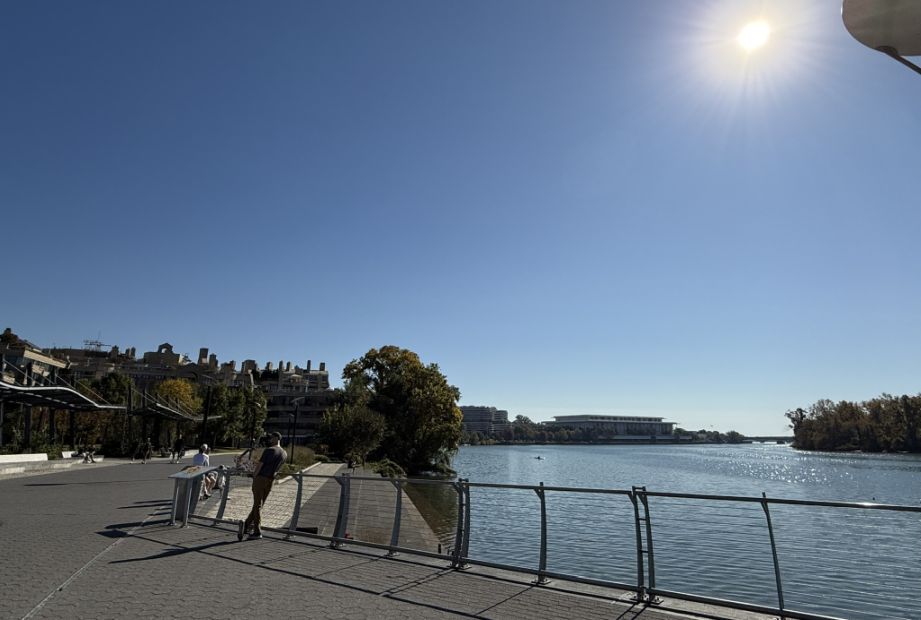
We continued our walk following the Potomac River. This area is a section where the natural riverbank is being preserved, or where there might be ongoing environmental restoration projects. Sometimes, it's simply an area not designed for public access due to safety or ecological reasons. It keeps people from disturbing the immediate river ecosystem.
 |
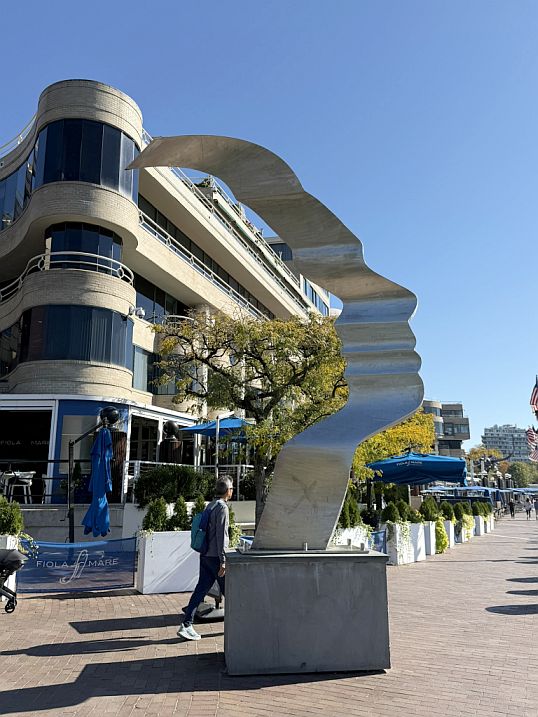 |
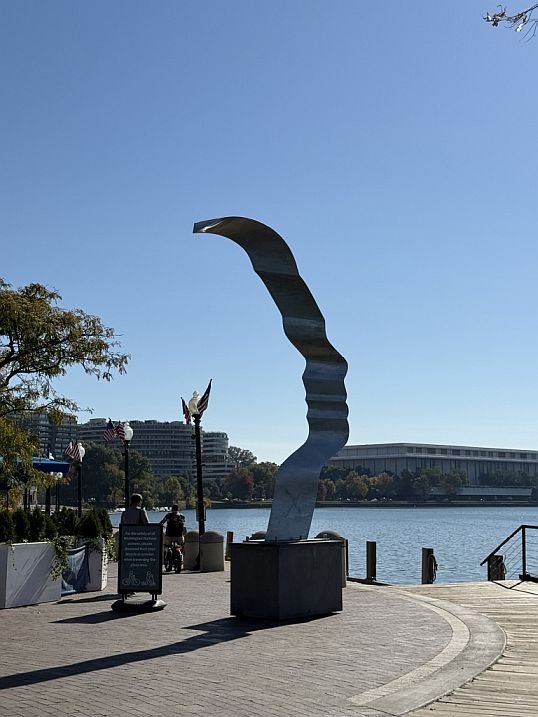
Modern Sculpture of a Woman's Face which is called "Mother Earth" was installed on January 19, 2017, the Mother Earth Sculpture made a bold debut along the Potomac River in Georgetown, Washington, D.C., just a day before the U.S. Presidential Inauguration. Its installation served as a powerful statement of America’s enduring commitment to sustainability. The official dedication took place on April 29, 2017, coinciding with the Climate March, when thousands gathered to demand action against climate change. Positioned on the banks of the Potomac, the sculpture stands as a visual reminder of the urgency to protect our planet.
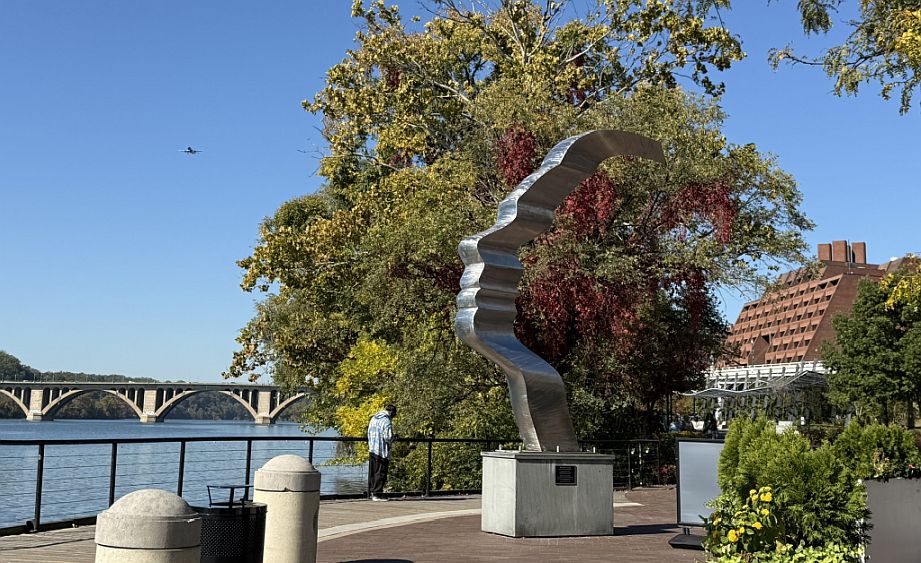
The Mother Earth Sculpture was conceived by scientist and public artist Barton Rubenstein, who, alongside his family, founded the Mother Earth Project in 2015. Crafted from stainless steel, the sculpture takes the form of a silver ribbon of energy, rising gracefully from the earth. It depicts a human figure in profile, symbolizing the delicate balance between humanity and the natural world.
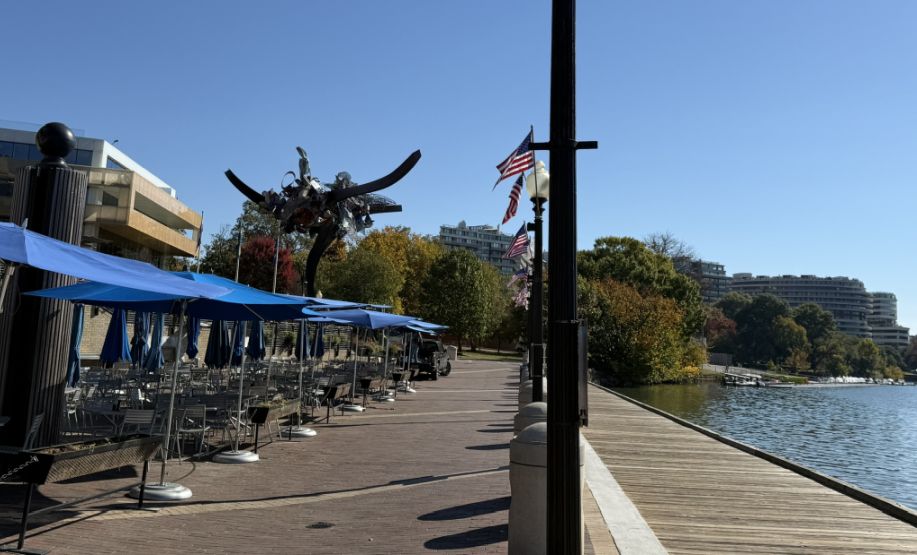
This area is a bustling hub of activity, especially when the weather is pleasant. There are a variety of restaurants with outdoor seating, offering everything from casual fare to upscale dining.
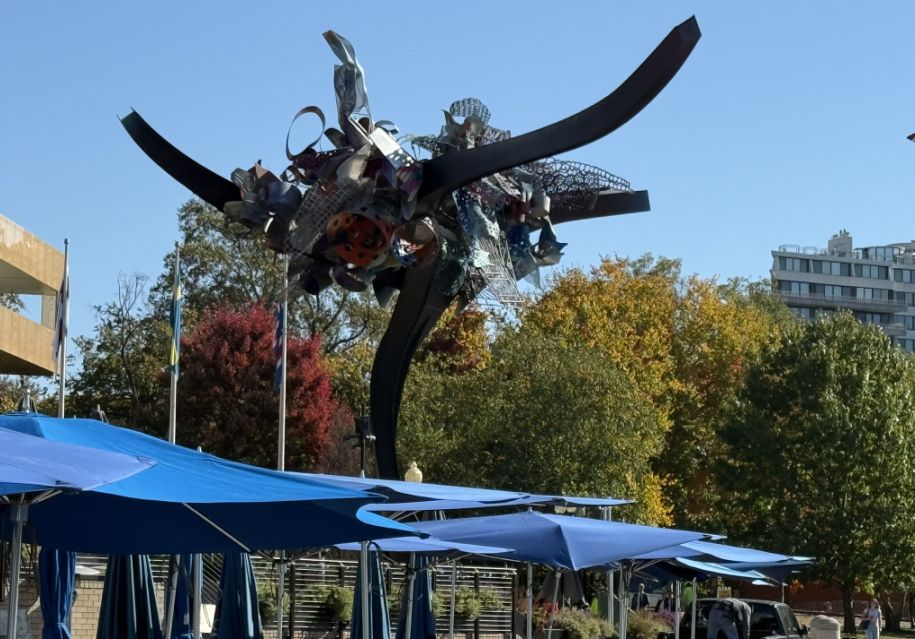
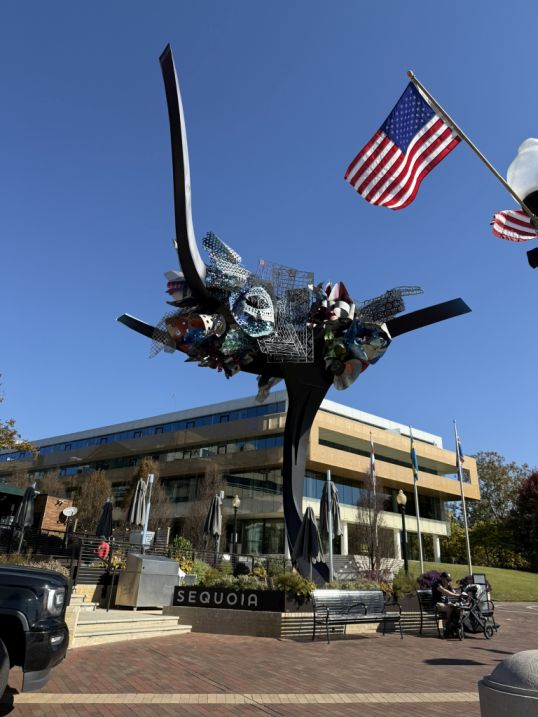
Another modern sculpture entitled “Scarlet Natural Chaos” by Arnie Quinz was completed in 2017.
 |
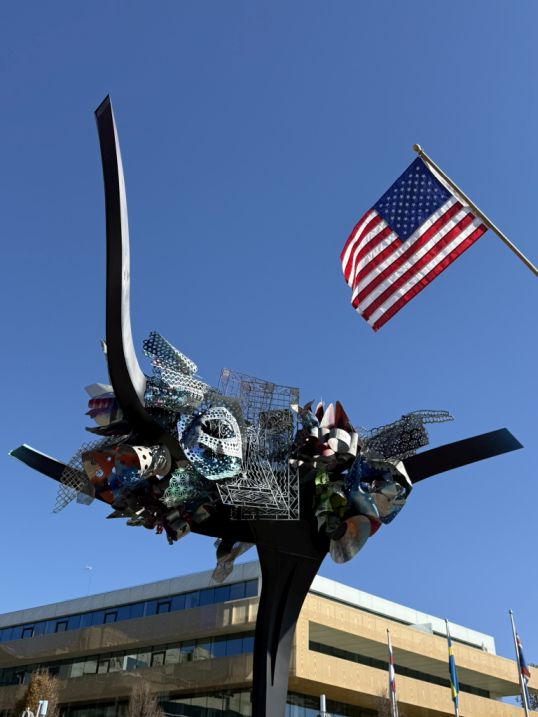 |
The statue is weighing 28 tons and measuring 41 feet tall. It is Overlooking the Georgetown Waterfront, the sculpture behind Sequoia restaurant features an assemblage of unique, sculpted organic forms brought together in a nest-like composition. According to the artist, the piece was inspired by both femininity and the Scarlet Oak tree, rooted in the history of DC, and reinforcing the cultural link between civic symbolism and natural imagery. Quinz says it’s a statement on modern culture’s loss of connection with nature.
We are now done with the visit and we are leaving the harbor.
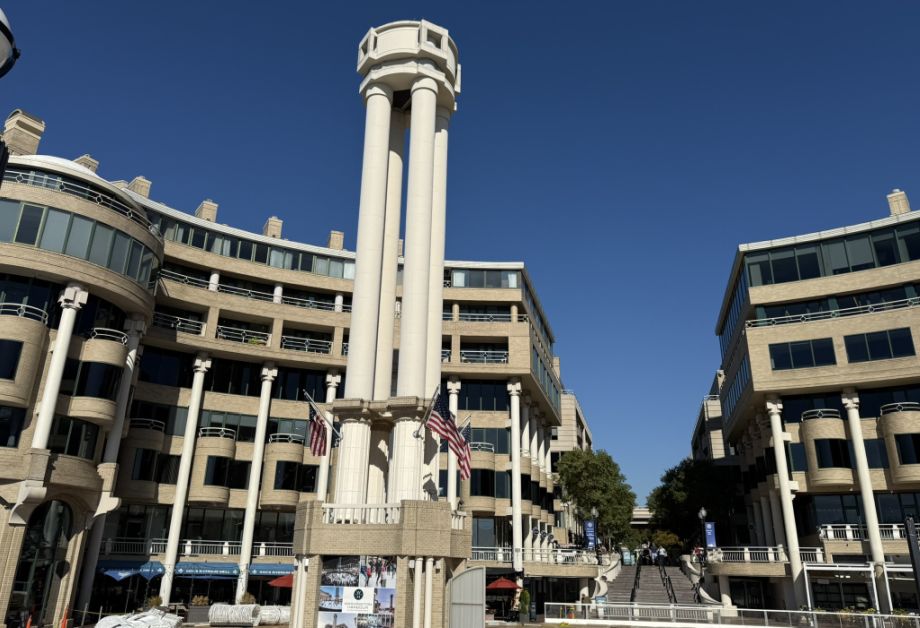
This is the main square before accessing the harbor. The tall white tower is the Washington Harbour.
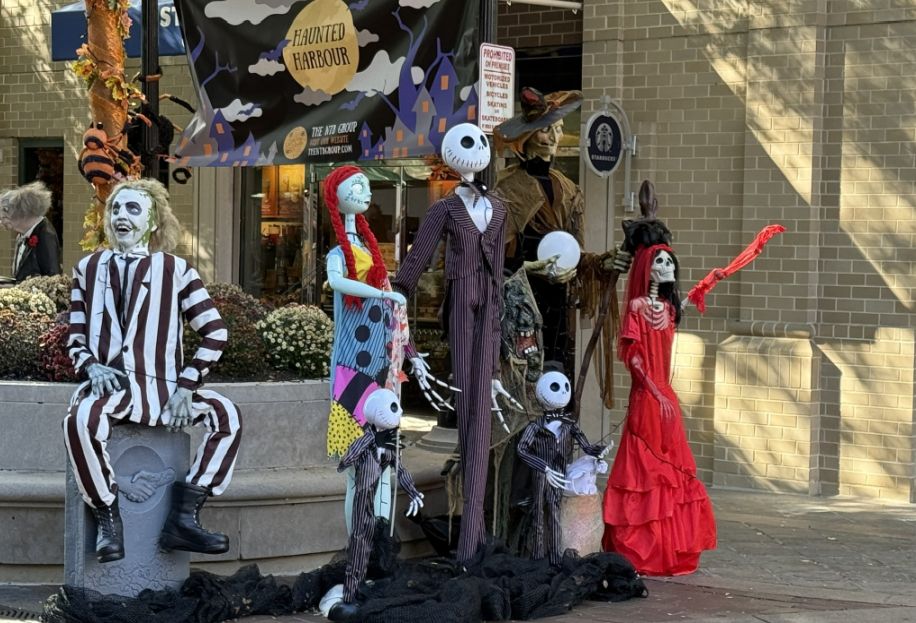
Washington Harbour has become famous in recent years for its incredibly detailed and thematic Halloween decorations. They often create large-scale, immersive scenes that draw crowds.
This is a scene for Beetlejuice.
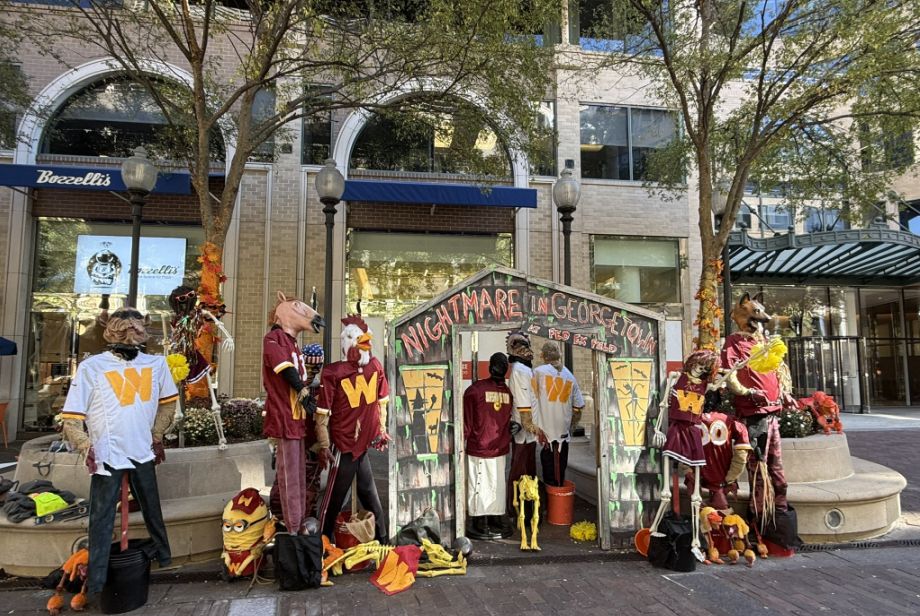
A nightmare in Georgetown, this is a clever play on words, likely referencing "The Nightmare Before Christmas" in a Georgetown context, further emphasizing the elaborate, spooky, but fun, Halloween atmosphere they create.
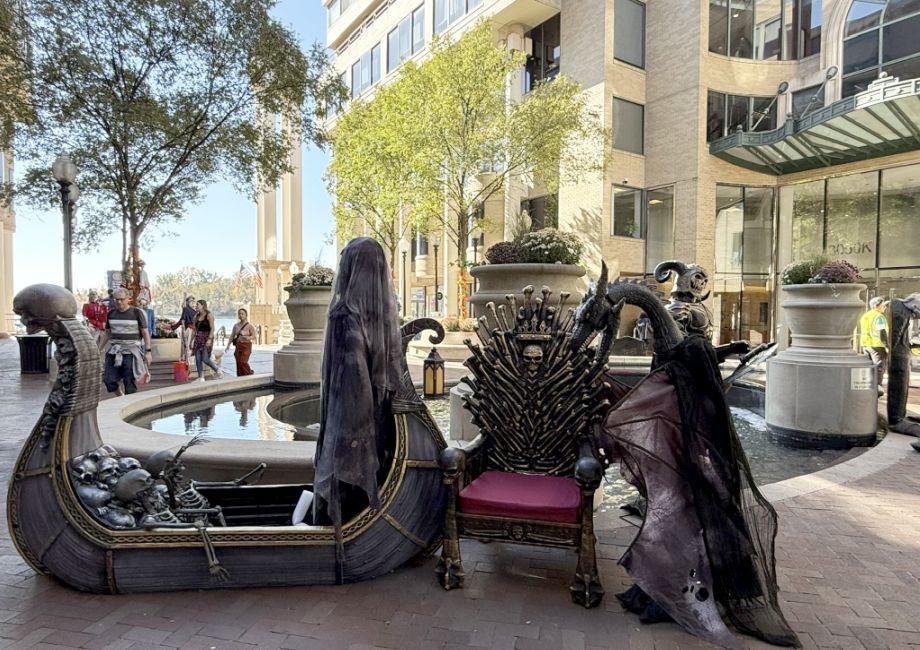
As we walked away from the waterfront, up towards M Street, there is a large, circular fountain called e Georgetown Waterfront Park Fountain. The fountain is also decorated and ready for Halloween.
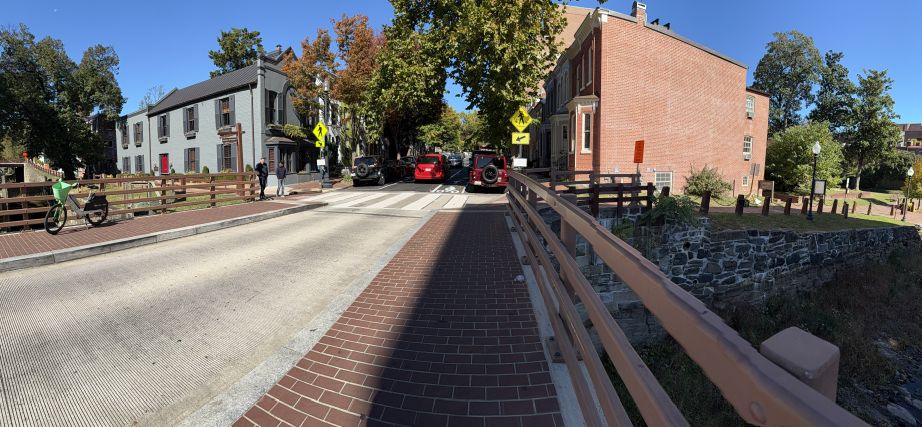
We are standing along one of Georgetown’s most historic features, the Chesapeake and Ohio Canal, usually called the C&O Canal, and what you’re seeing is a preserved piece of early American infrastructure from the 1800s.
The road or towpath (center): This is the historic towpath, where mules walked while pulling boats using long ropes. What looks like a simple path was once a busy transportation route. When railroads overtook canal transport in the late 19th century, the canal fell into decline. Flooding repeatedly damaged it, and by the early 1900s it was abandoned. Instead of disappearing, it was later preserved and became the Chesapeake and Ohio Canal National Historical Park, turning an industrial corridor into a peaceful historic park.
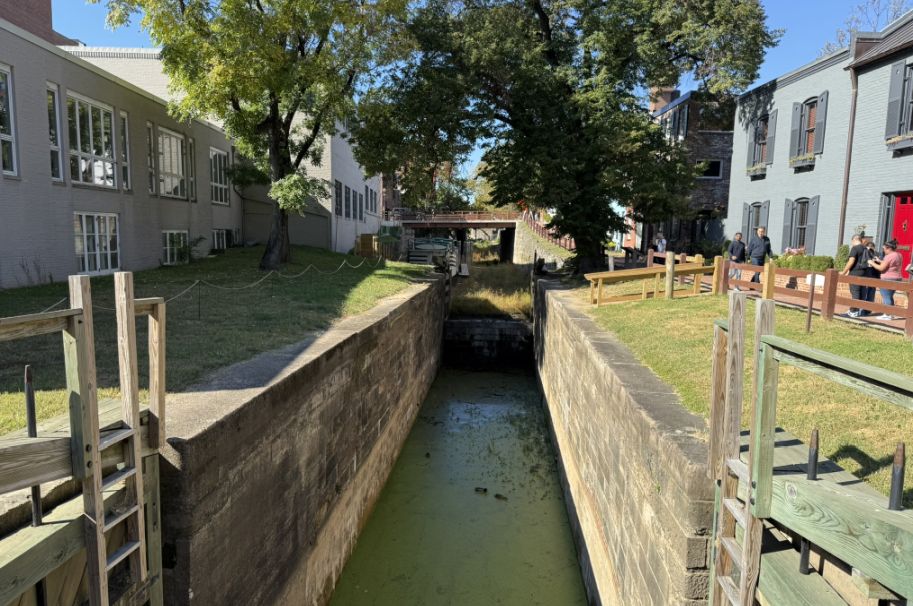
The canal (to the left of the street) held the water where cargo boats floated. Today, some sections still contain water, but others are intentionally dry during restoration or maintenance periods.
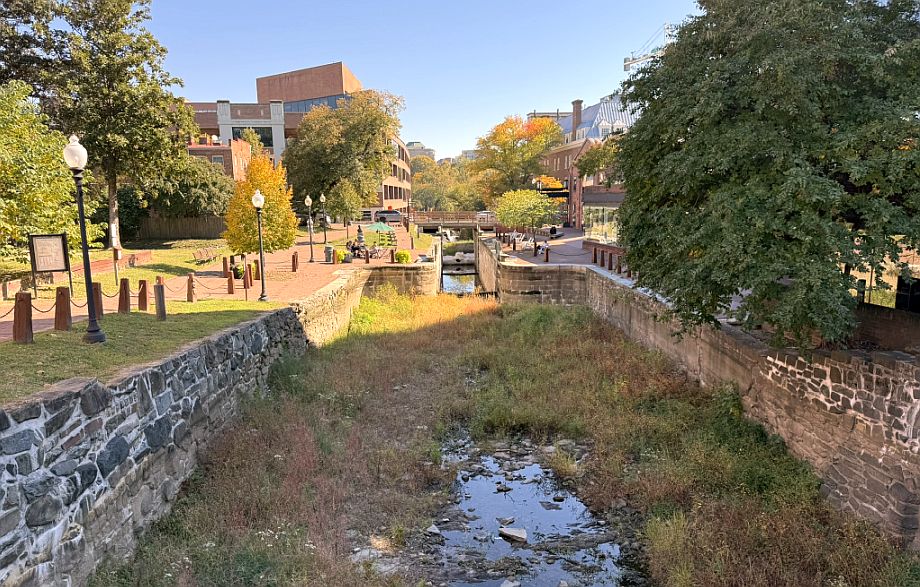
Raised stone walls (to the right of the street) are parts of the canal’s retaining walls and sometimes old lock or warehouse foundations. Their length shows just how extensive the canal system was, stretching 184.5 miles from Georgetown all the way to Cumberland, Maryland.
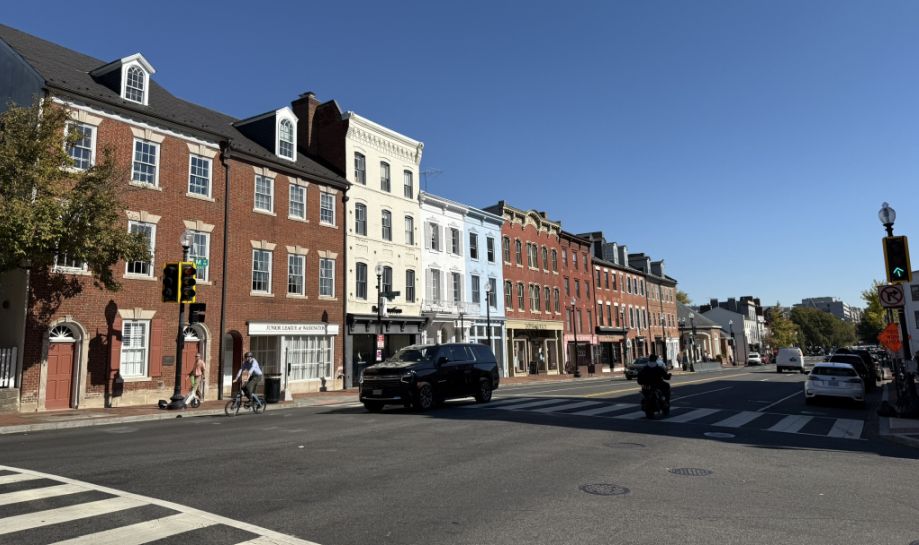
We are now in the heart of historic Georgetown, and the buildings along M Street between 31st Street NW reflect more than two centuries of architectural history layered together. Many façades were updated in the late 1800s or early 1900s with painted stucco or decorative trim to modernize older brick structures. The beige and white tones soften the streetscape, while blue accents are often used to highlight shutters, cornices, or storefront framing, a nod to historic color palettes common in port cities.
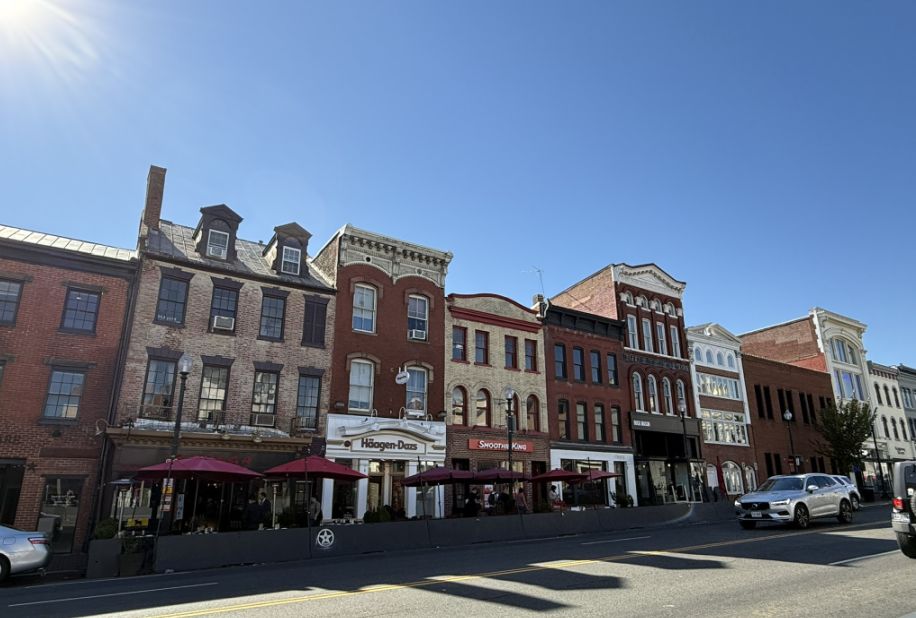
Most of the brick buildings lining M Street date from the late 18th and 19th centuries, when Georgetown was an independent port town before Washington, D.C. fully developed. Originally, many of these buildings had shops or warehouses on the ground floor and living quarters above. Merchants, ship captains, and craftsmen lived and worked here when the nearby canal and harbor were busy trade centers. These buildings are protected within the Georgetown Historic District, which means strict preservation rules keep the neighborhood’s scale and character intact. That’s why you don’t see skyscrapers here,
heights, materials, and even storefront designs are carefully controlled to preserve the historic atmosphere.
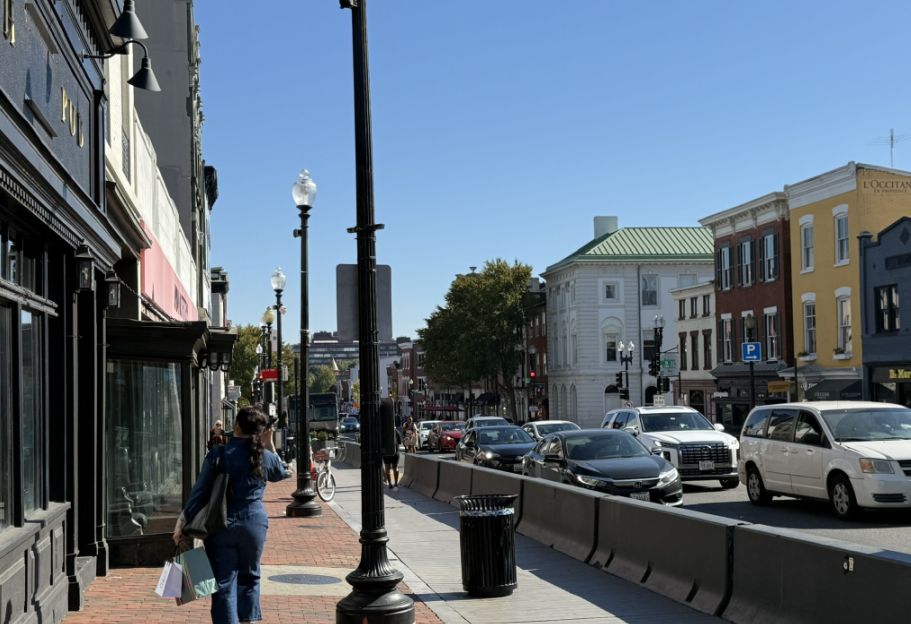
M Street has always been Georgetown’s main commercial artery. What feels like a charming shopping street today was once filled with wagons, canal workers, and cargo heading to the waterfront. The mix of brick textures, painted façades, and small-scale buildings creates the intimate, walkable feeling that makes Georgetown one of Washington’s most beloved neighborhoods.
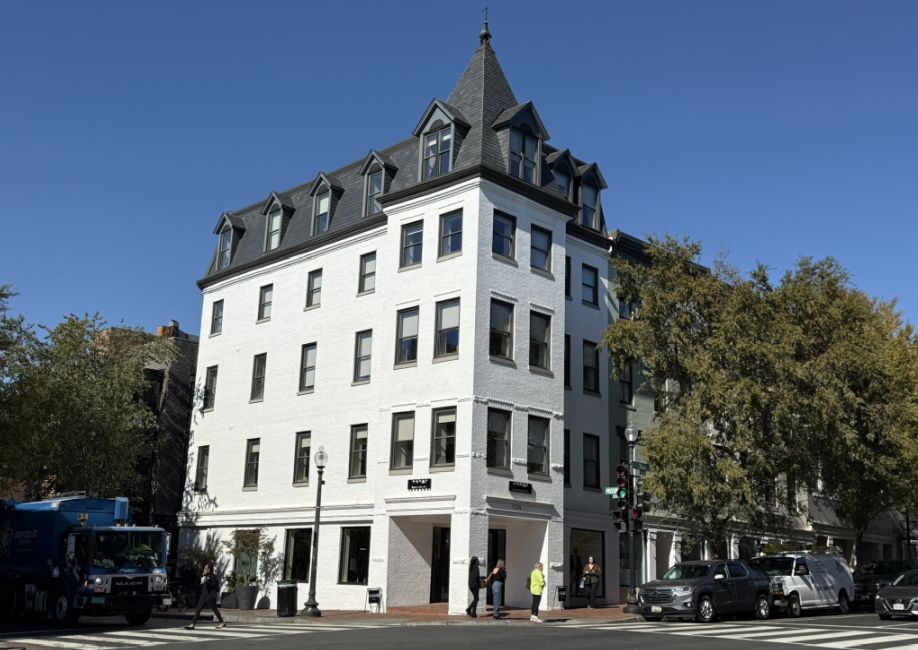
We are now between Prospect Street NW and Wisconsin Avenue NW,
 |
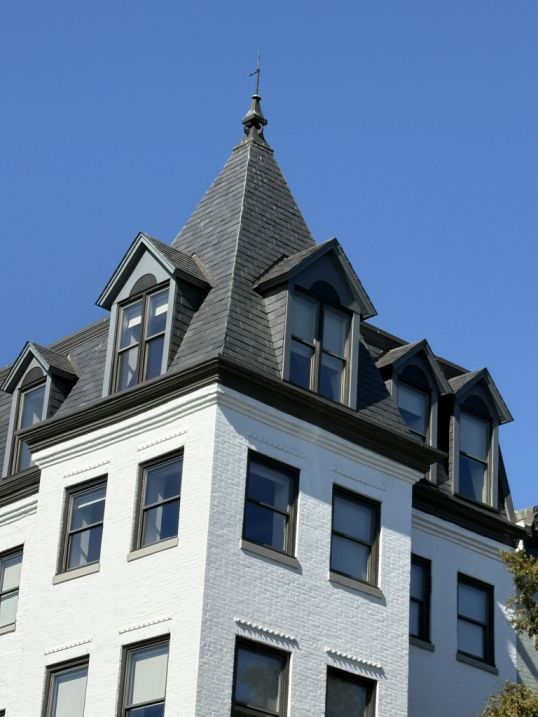 |
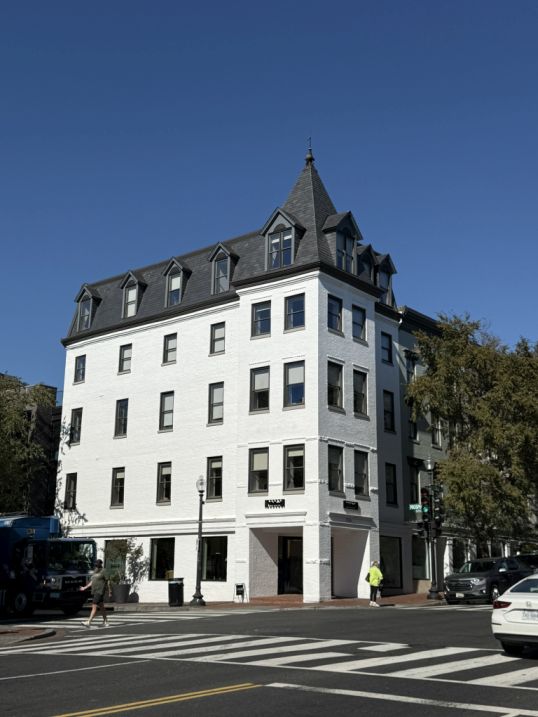
This building really stands out, it's likely a commercial or residential building from a later period, perhaps late 19th or early 20th century, designed to fit the historic aesthetic of the neighborhood.
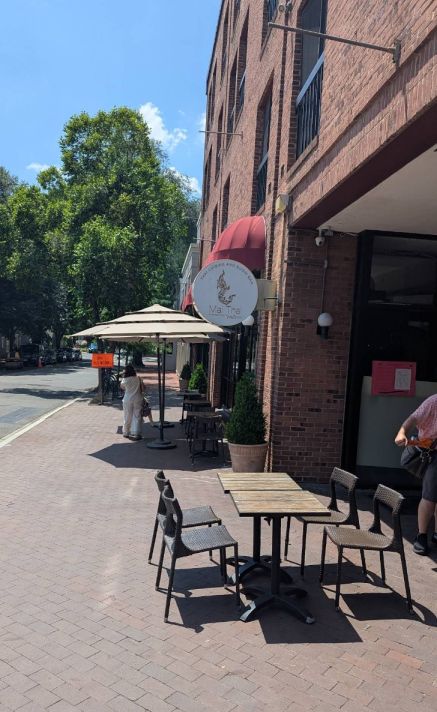 |
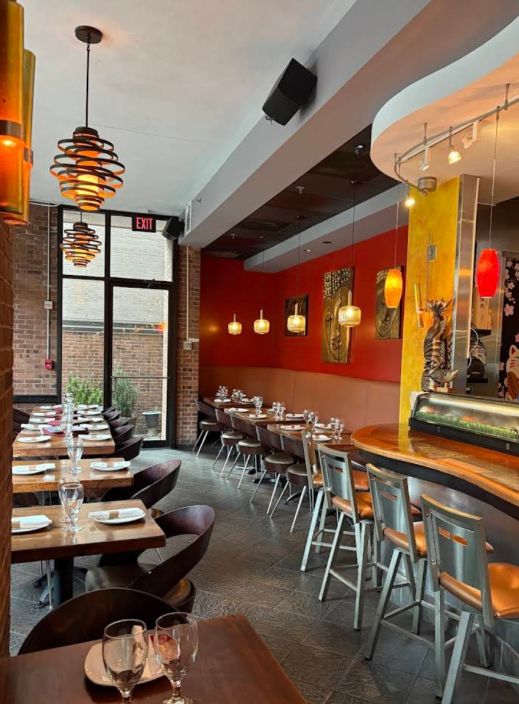 |
It was lunch time and we saw Mai Thai, a Thai restaurant along the way and we stopped by.

We ordered two classic Thai dishes.

Pad See Ew, and Thai Fried rice. Both dish were really good and it was perfect for a light lunch.
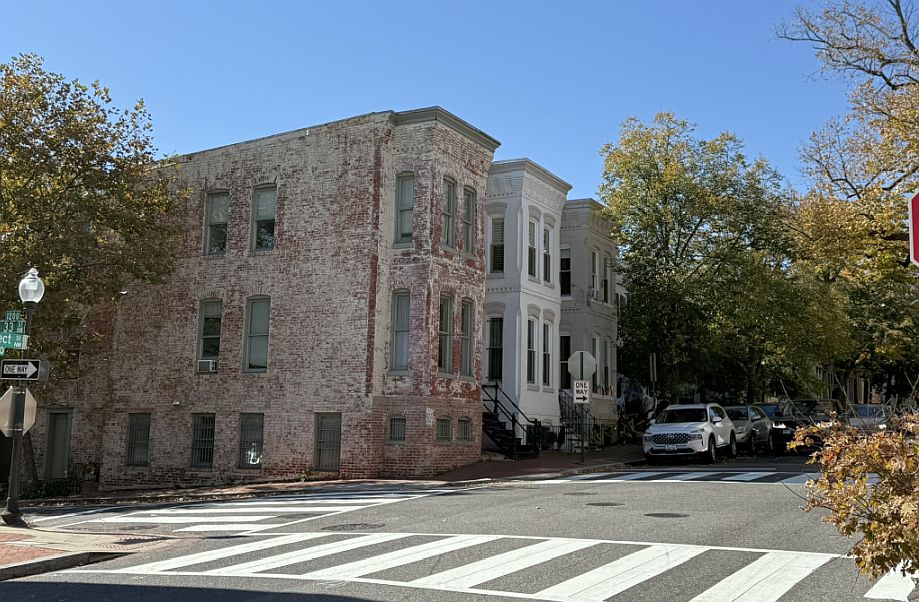
We are now at one of the most picturesque intersections in Georgetown, where Prospect Street climbs slightly above M Street and the architecture becomes more residential and historic in character. The mix of a brick building, a white building, and a gray building perfectly shows how Georgetown evolved over different periods while keeping a cohesive look. The brick structure is likely a Federal- or early Victorian-era townhouse or commercial house dating from the early–mid 1800s. Georgetown’s red brick was locally made and durable, which is why so many original buildings survive.
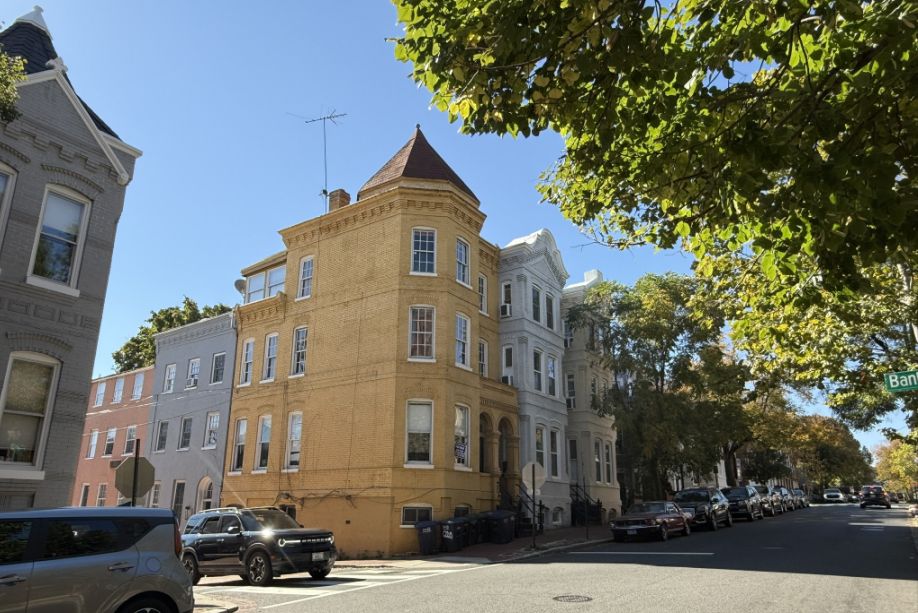
A row of Victorian rowhouse with pointed roofs. The 4-story colorful buildings are typically Victorian-era rowhouses, many built in the late 1800s when Georgetown was expanding and architectural tastes became more decorative and expressive.
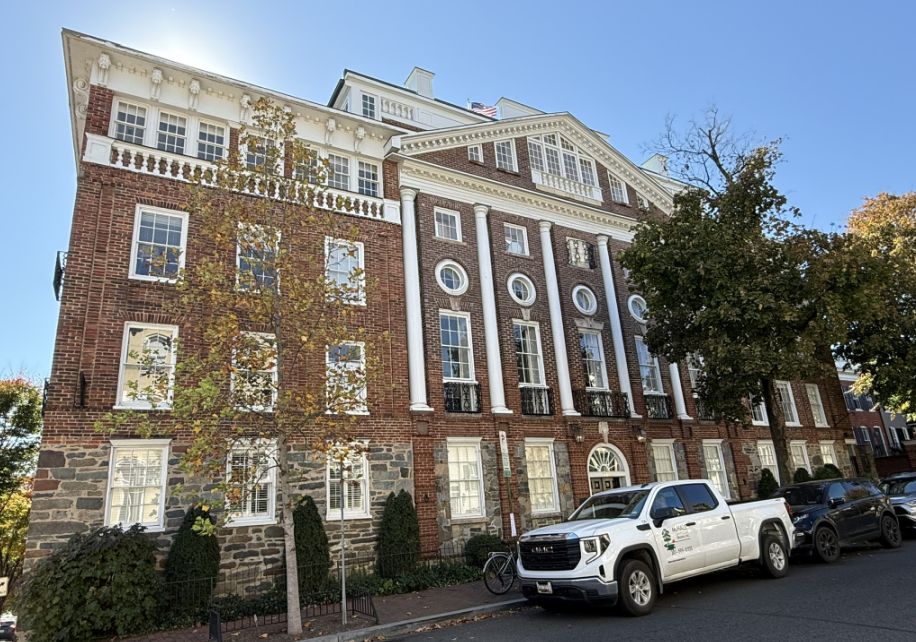
Halcyon House is a very significant and historic estate in Georgetown. Perched high on a hill overlooking the Potomac River, giving it commanding views. It was built in 1787 by Benjamin Stoddert, who later became the first Secretary of the Navy under President John Adams. This makes it one of the oldest and most historically important residential structures in Georgetown. The house has undergone numerous transformations and additions over the centuries. Its original architecture was Federal style, but later owners added elements that have given it a more eclectic and sometimes an almost Gothic or castle-like appearance. It's known for its somewhat idiosyncratic design elements, including unusual turrets, battlements, and varying rooflines that give it a peculiar charm. It remains a private residence. Due to its private ownership and the high walls and foliage surrounding it, it's not generally accessible to the public, adding to its mysterious allure. You can usually only glimpse parts of its exterior from Prospect Street or from certain vantage points along the river.
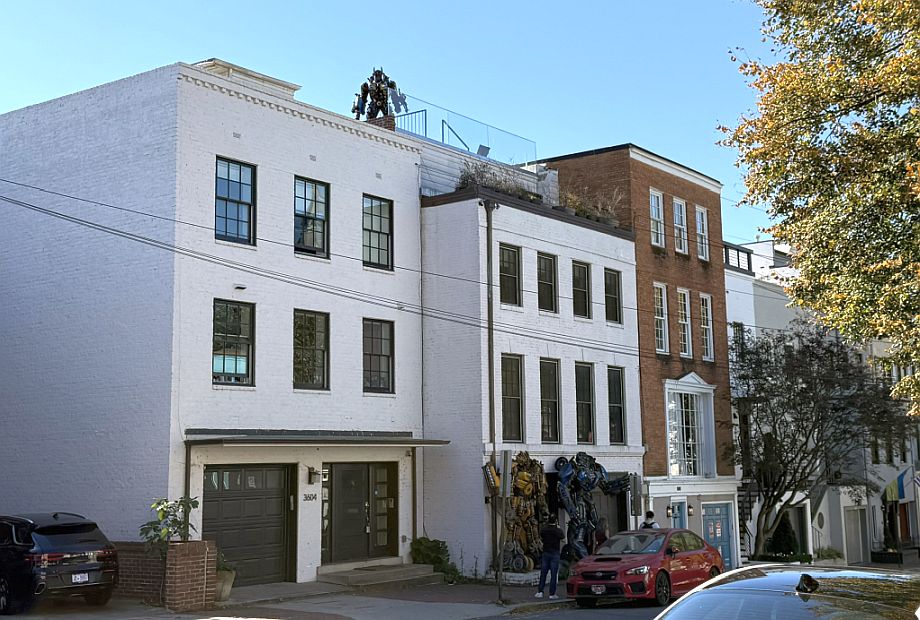
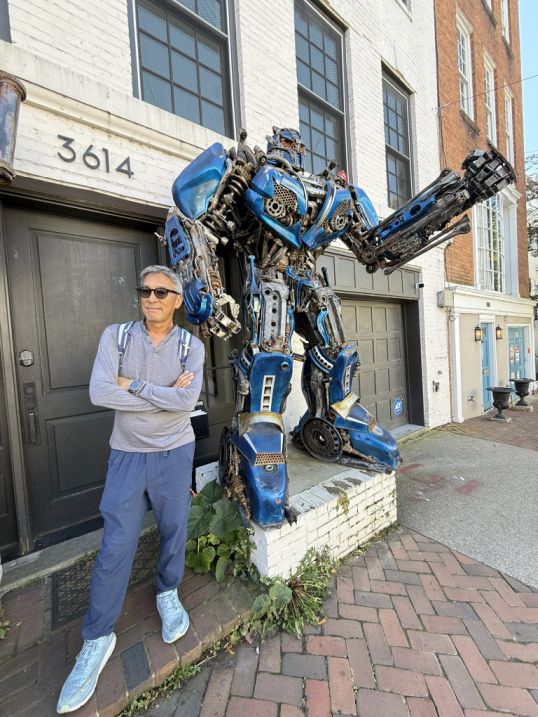
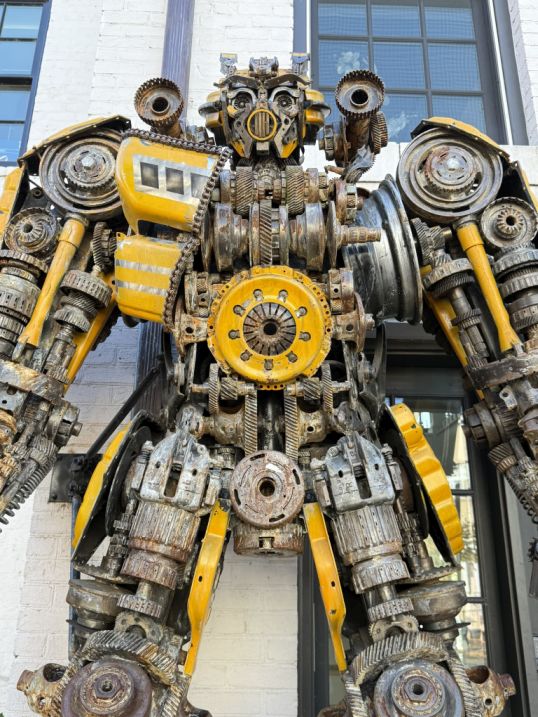
The building is known as the Georgetown Robot House, a private residence that became locally famous because of the large robot sculptures installed outside and on the roof. The colorful robots, two at street level and one perched above were created by the homeowner, an artist and designer who wanted to add a playful, futuristic contrast to Georgetown’s historic streetscape. Because this home sits inside the Georgetown Historic District, any exterior changes visible from the street must be approved by preservation authorities. Georgetown has strict rules intended to protect its 18th- and 19th-century character, materials, colors, additions, and even decorations can be regulated. City preservation officials have argued that the robots alter the historic appearance of the neighborhood, and rooftop installations are especially sensitive because they affect skyline views,
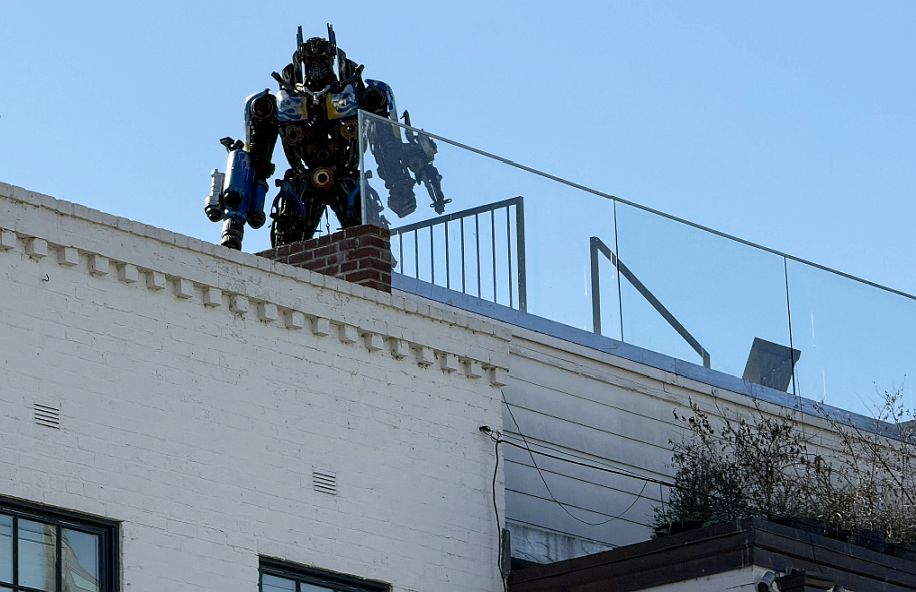
The owner, on the other hand, has argued that: the sculptures are art, not structural alterations, Georgetown should allow contemporary artistic expression alongside history.
This disagreement has turned the house into a small local landmark and a symbol of an ongoing question in historic cities: How do you preserve the past while allowing creativity in the present?
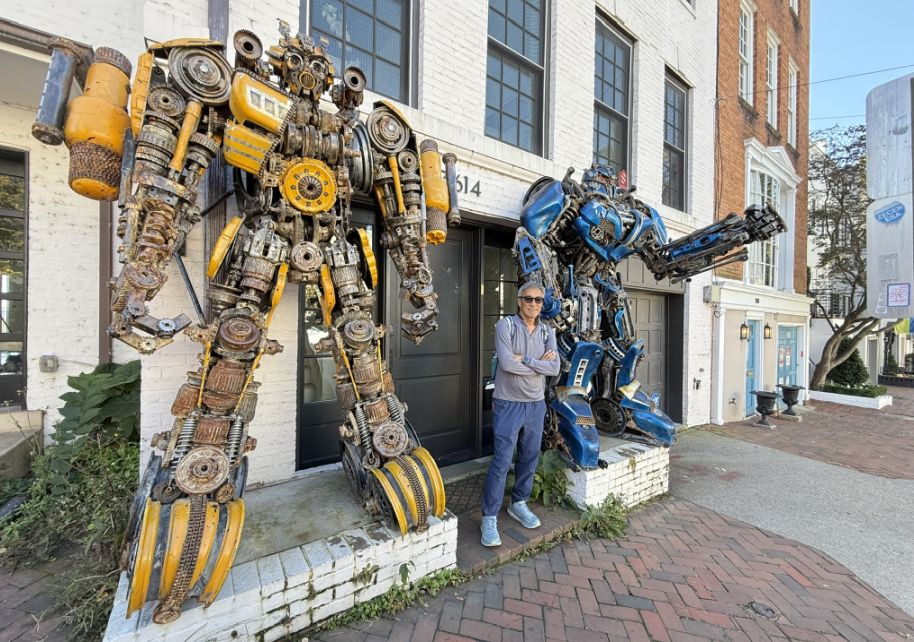
The robots at street level (the yellow and blue ones) were interactive or at least designed to engage passersby. They were often designed to represent the spirit of creativity and innovation that FIRST champions. These robots became a beloved landmark.
 |
 |
It’s unexpected, a little humorous, and very Georgetown, a neighborhood where history, art, and strong opinions often meet.
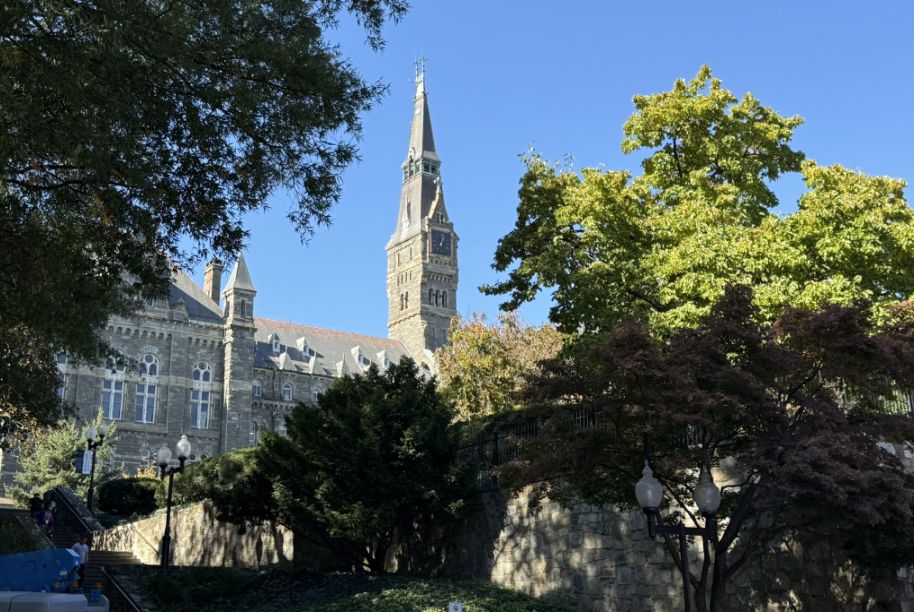
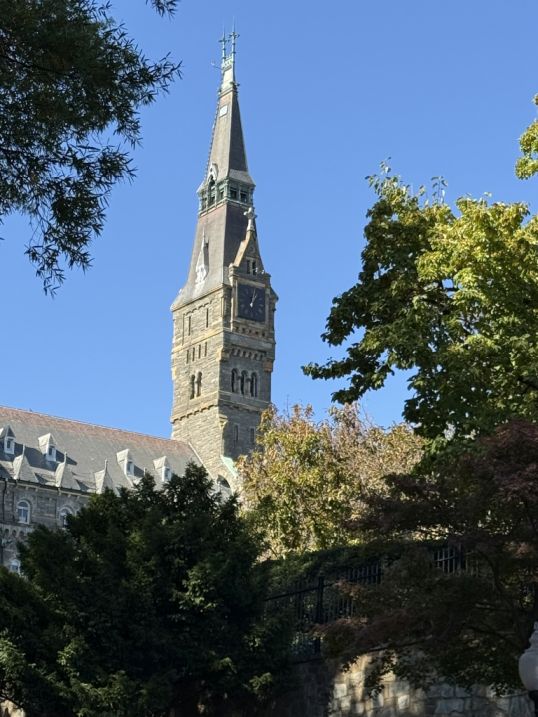
We arrived at one of Washington’s most beautiful and unexpected landmarks, Healy Hall, the historic centerpiece of Georgetown University.
 |
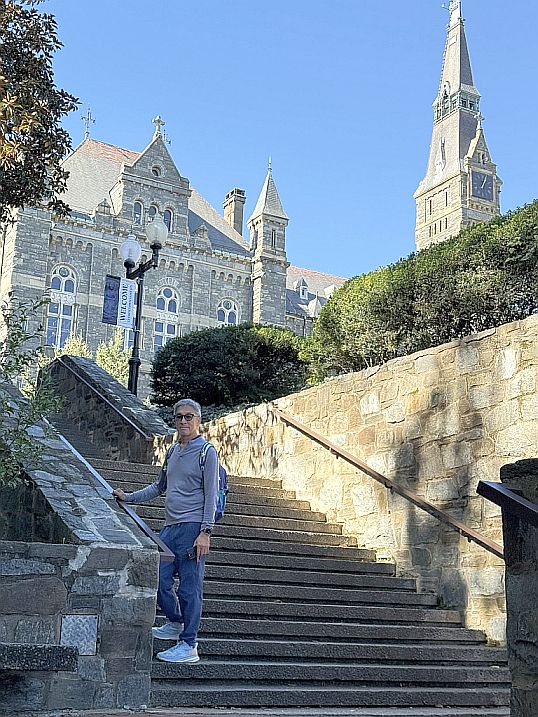 |
We walked through a garden, climbing stairs, and suddenly seeing the building rise in front of us is actually very close to how the campus was intentionally designed to be experienced.
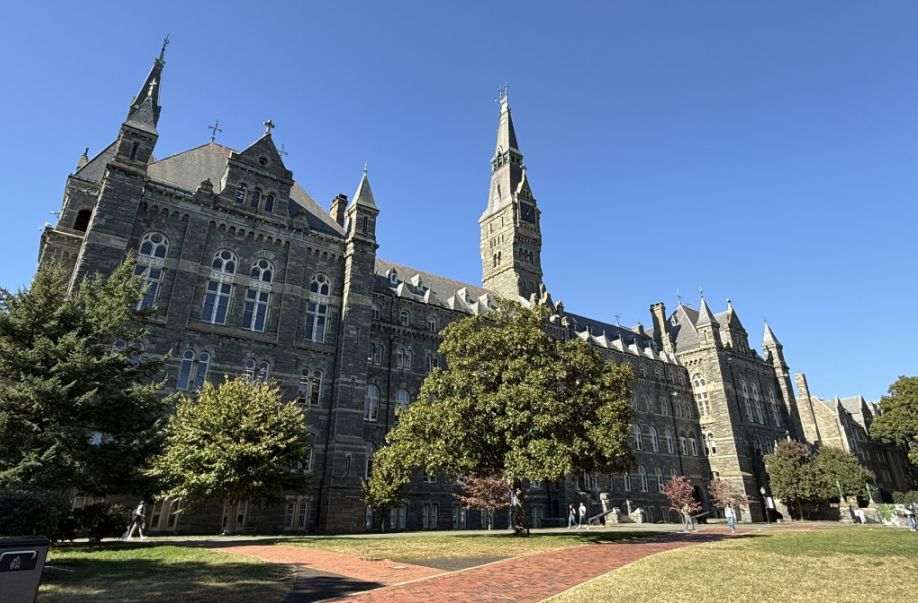
Healy Hall looks almost like a European castle set above the city. Built between 1877 and 1879, it was designed during a time when American universities wanted architecture that conveyed tradition, scholarship, and permanence. Its dramatic presence atop the hill makes it visible from parts of the Potomac and Georgetown below. The style is called High Victorian Romanesque, inspired by medieval European buildings. Healy Hall is named after Patrick Francis Healy, Georgetown’s president in the late 19th century, who transformed the school into a modern university.
 |
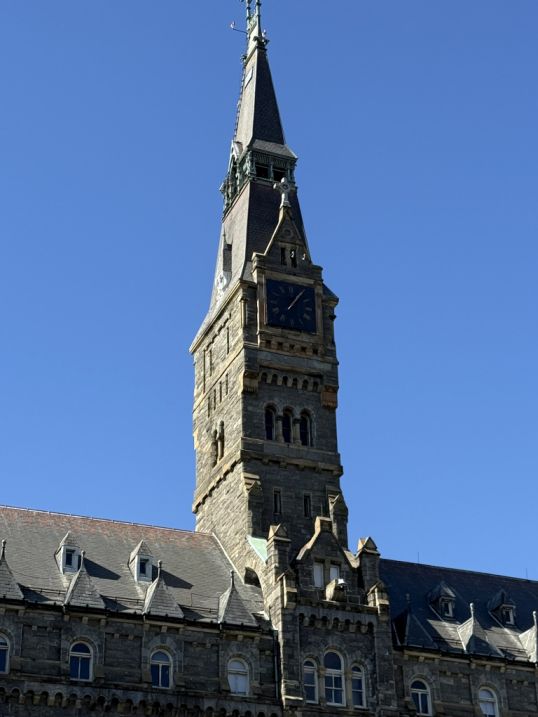 |
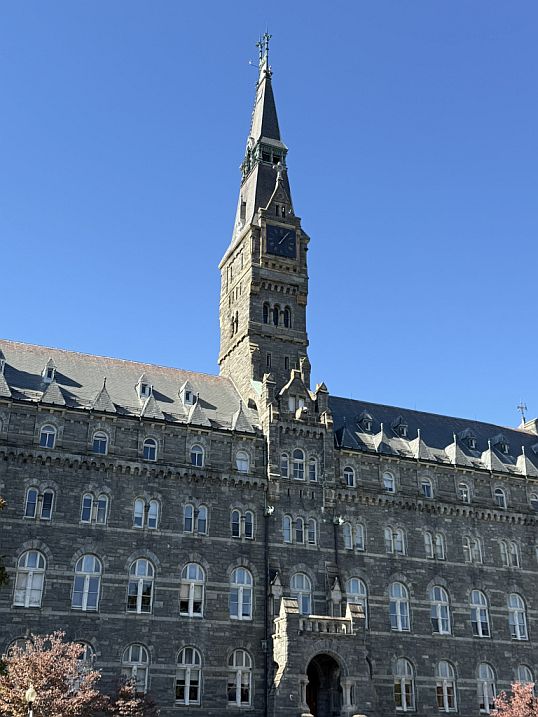
The tall central tower is Healy Hall’s most recognizable feature. Rising about 200 feet, it serves both symbolic and practical purposes. Architecturally, it represents intellectual aspiration, literally reaching upward. Historically, it contained a clock and bells that regulated campus life, and visually, it anchors the Georgetown skyline and can be seen from across the river.
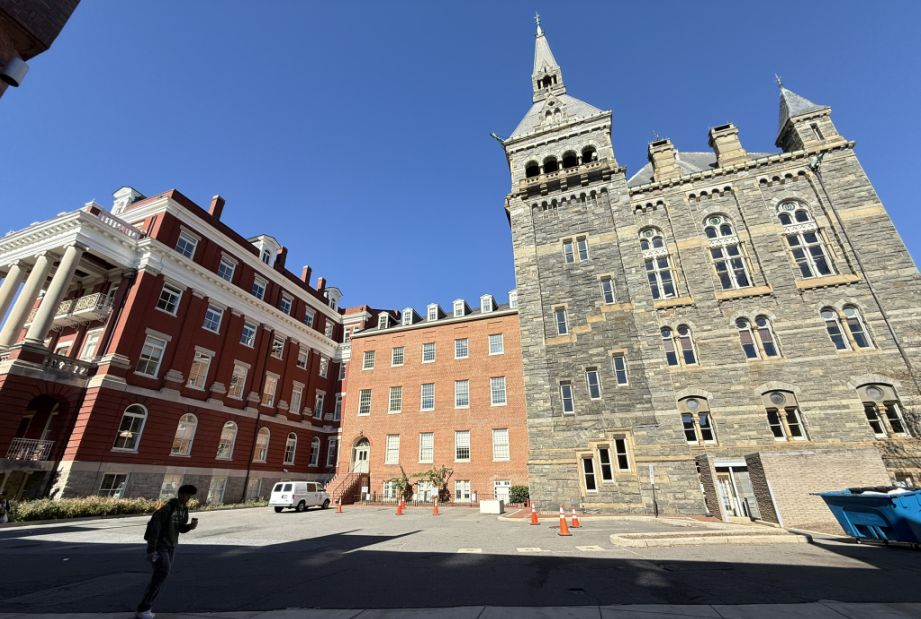
We are on Library Walk where several architectural eras of the university stand side by side and tell the story of its growth over nearly two centuries.
On the left the burgundy building is university’s residence halls or academic buildings. The brick building reflects Georgetown’s earlier architectural tradition, echoing the Federal and collegiate styles common in the 1800s. Brick was practical, locally available, and visually connected the university to the surrounding Georgetown neighborhood. The stone building with the tower is part of the Gothic-inspired campus core and visually connects back to Healy Hall nearby.
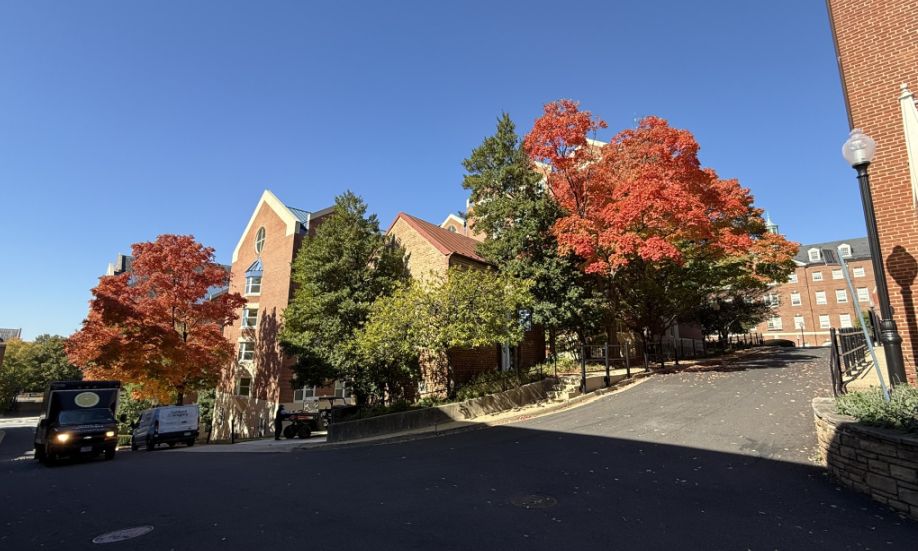
Walking around the University's campus. In autumn, the red and copper leaves echo the tones of Georgetown’s historic brick buildings, making the architecture feel naturally connected to the landscape.
Our visit to Georgetown came to a perfect close after a morning filled with waterfront views, historic streets, and a beautiful university campus. We enjoyed the relaxed atmosphere of the Georgetown Waterfront, watching boats and kayaks move along the Potomac before wandering through the charming downtown area with its colorful houses, brick buildings, and lively streets. The walk eventually led uphill to Georgetown University, where gardens, autumn trees in red and brown hues, and historic stone buildings created a peaceful and picturesque setting. Together, the harbor, the historic neighborhood, and the university captured a side of Washington, D.C. that felt intimate, vibrant, and full of character. It was a memorable and relaxing end to your Georgetown exploration.
NEXT... Day 6- National Museum of American History