6 days in Washington DC- 10/18- 10/23/2024
Day 2- City tour-10/19/2024
Landmarks
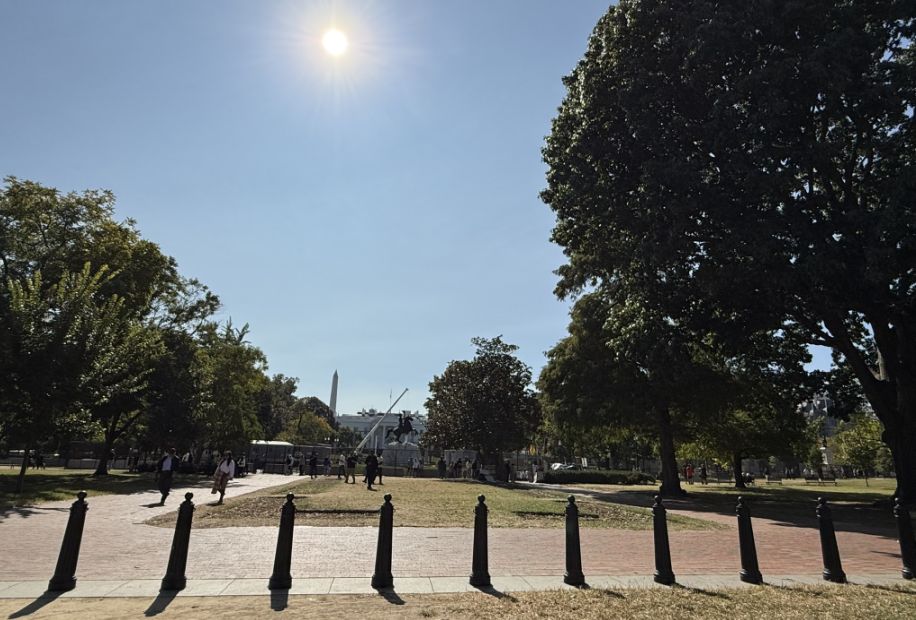
Out next stop is Lafayette square, a historic public park located directly north of the White House. It's often called "the Nation's front yard."
Originally part of the President's Park, it was separated and designated as a park in 1804. It was named in honor of Major General Gilbert du Motier, Marquis de Lafayette, a French hero of the American Revolutionary War.
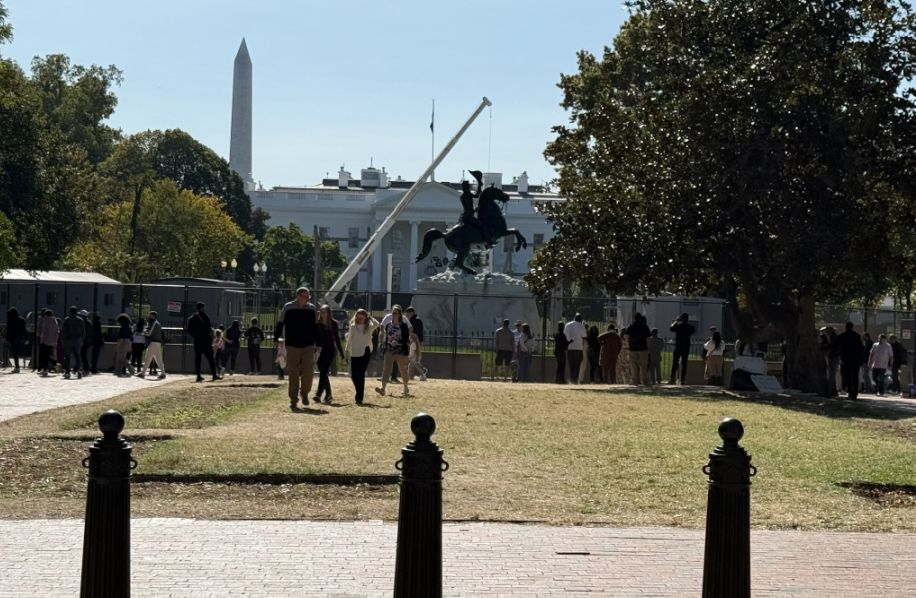
Lafayette Square has been a focal point for American political and social life. It's often a site for protests, celebrations, and public gatherings due to its proximity to the White House.
As you can see the White House is fenced off but visitors can still tour the White House! Public tours of the White House are available, but they must be requested through your Member of Congress (if you are a U.S. citizen) or your country's embassy in Washington D.C. (if you are a foreign citizen).
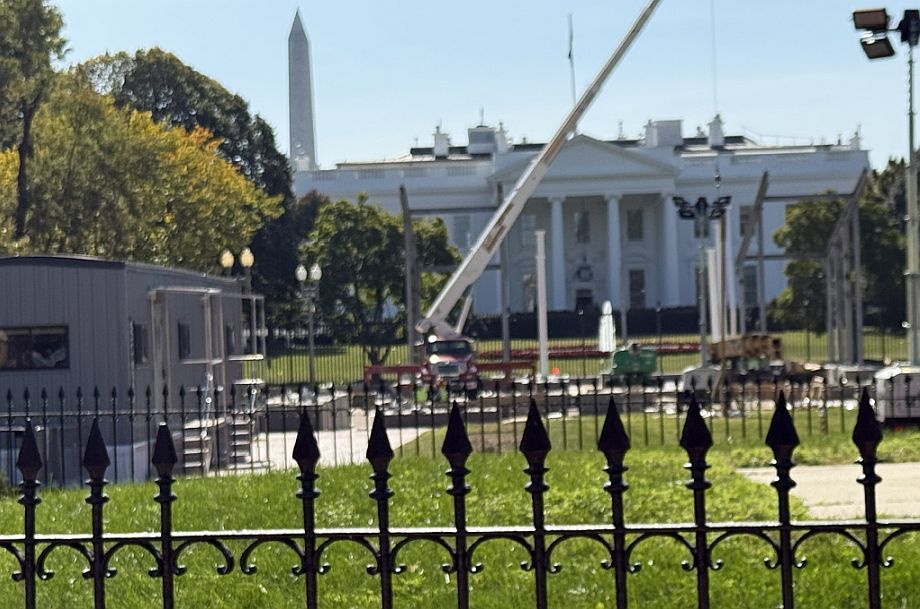
The presence of cranes and equipment, it's highly likely that preparations were indeed underway for the upcoming presidential inauguration. The sight of cranes and equipment in front of the White House paints a vivid picture of the immense undertaking involved in hosting one of the most significant events in American democracy.
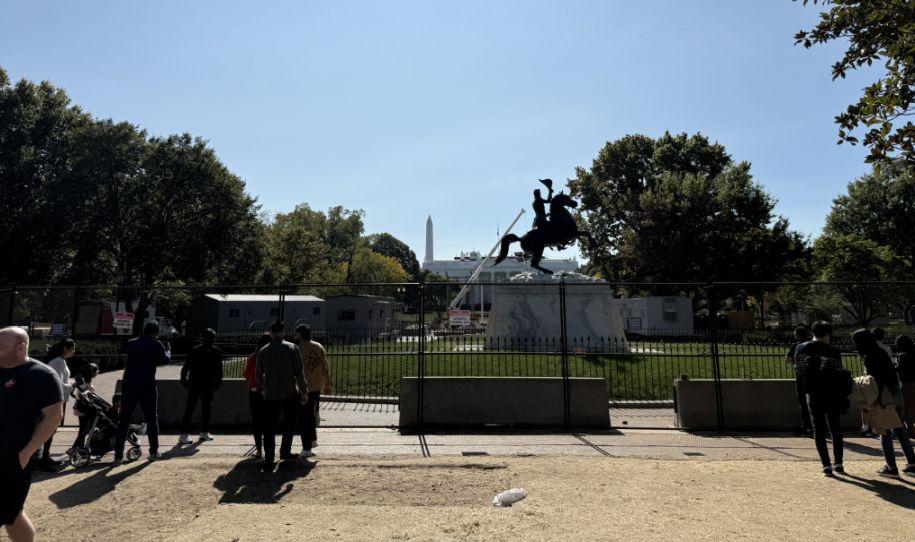
The park is home to several statues, including one of Andrew Jackson in the center, and statues of foreign military heroes who aided the American Revolution, such as Lafayette, Rochambeau, Kosciuszko, and von Steuben.
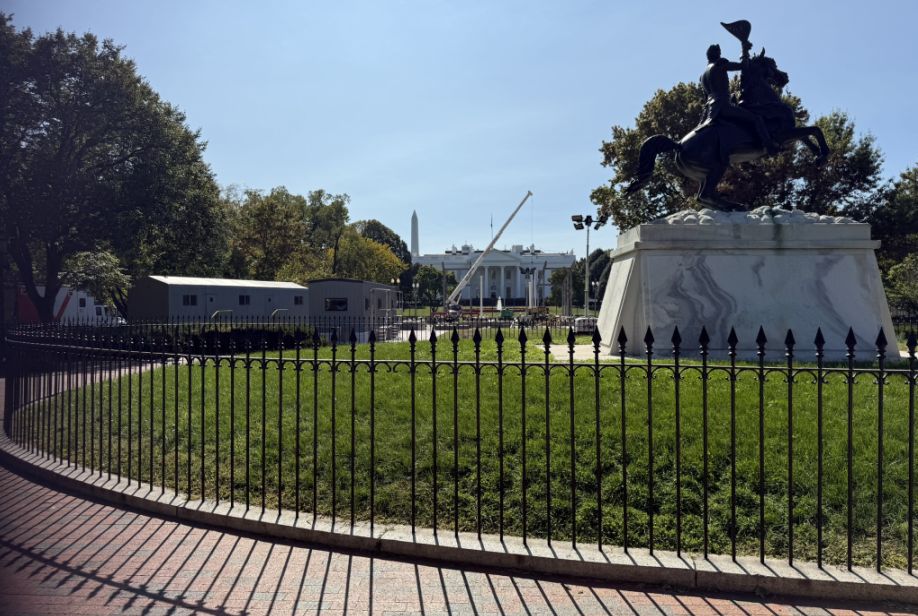
The statue on the left is of Andrew Jackson on horseback facing the front of the White house.
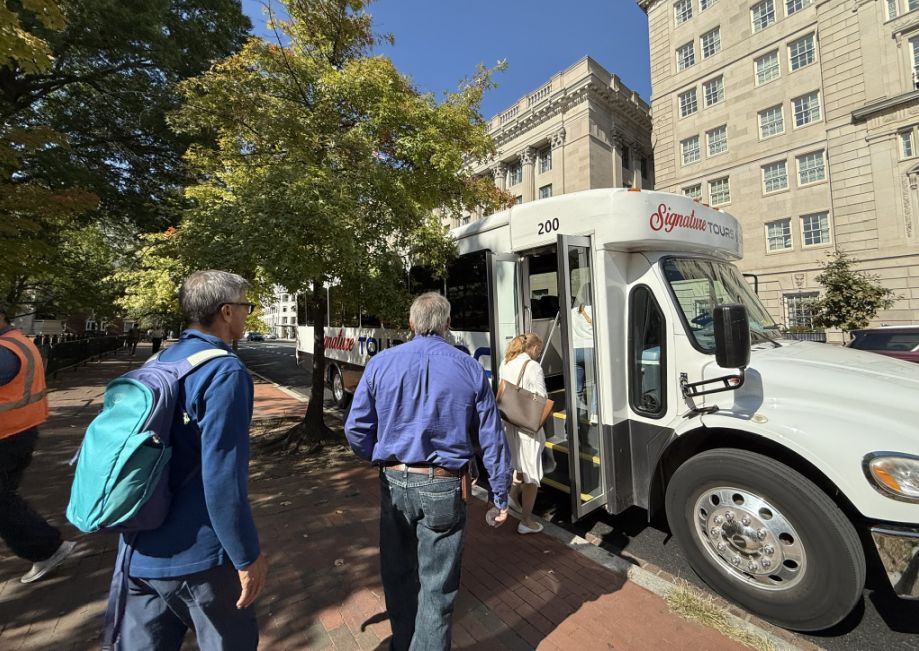
We stayed in front of the White house very briefly and then hopped on our bus to the next destination.
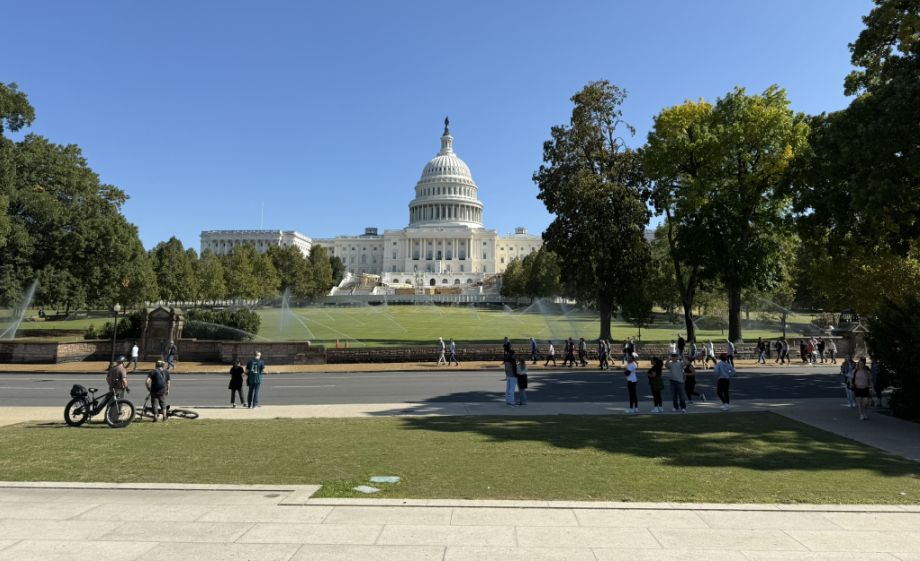
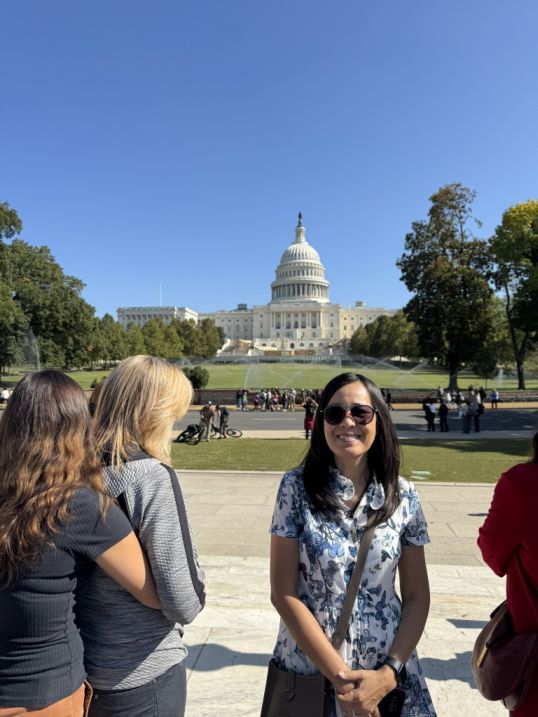
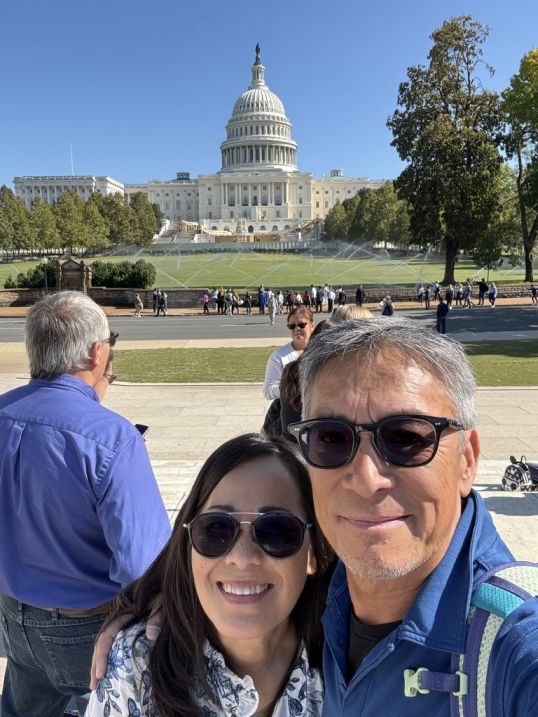
Stepping off the bus on 1st Street NW and seeing the U.S. Capitol rise at the far end of that long, open lawn feels ceremonial, almost like the city is asking you to slow down and take it in. Situated at the eastern end of the National Mall, it's one of the most recognizable symbols of American democracy. The dome of the U.S. Capitol Building is one of its most distinctive features, and the statue atop it adds to its grandeur and symbolism.
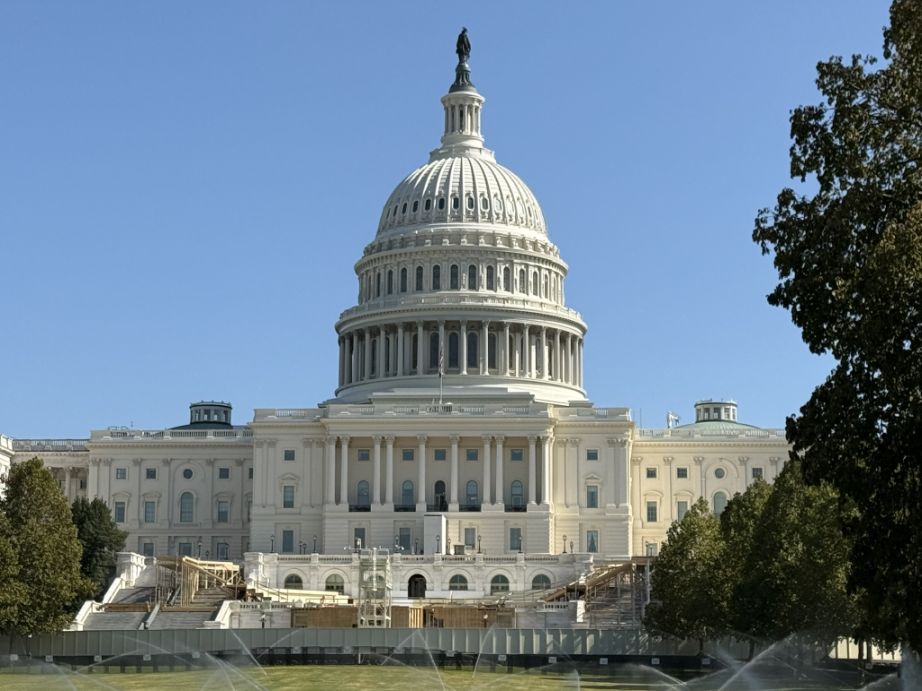
The United States Capitol is the symbolic heart of the country’s democracy. Perched on Capitol Hill, it was deliberately placed on higher ground so it would be visible from far away, a reminder that the legislative branch belongs to the people and stands above any single neighborhood or interest.
Late October 2024 was the time when crews were building part of the inaugural platform and related infrastructure for the upcoming presidential inauguration (which happens every four years on January 20). Large platforms, ramps, security fencing, and staging all show up around the Capitol and National Mall during this period.
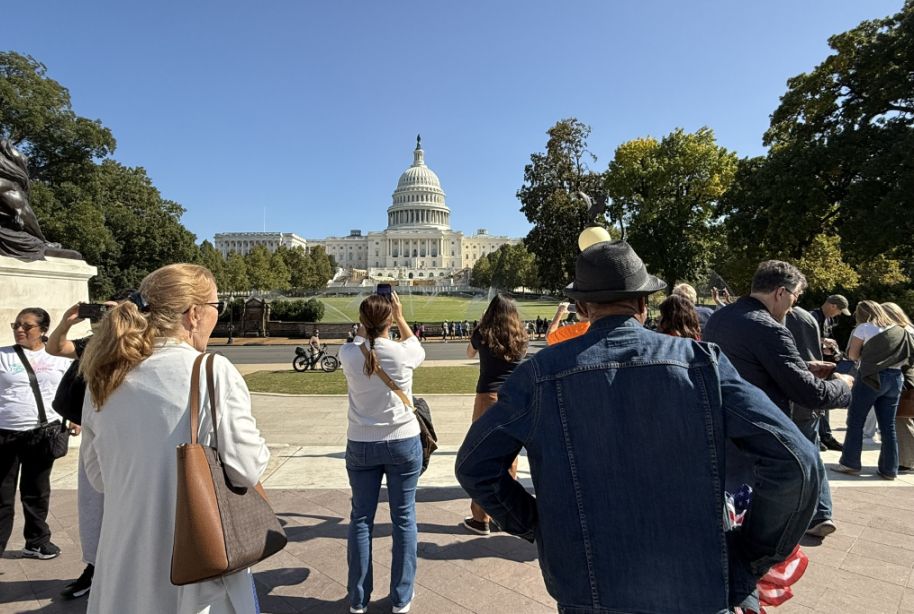
Our guide (with the hat) telling us the story of the U.S. Capitol.
 |
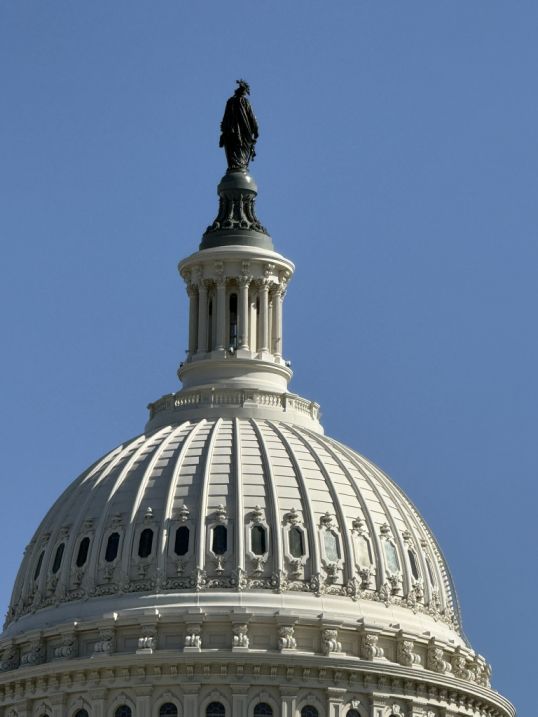 |
The current cast-iron dome is not the original. The original dome was much smaller. As the Capitol Building expanded in the mid-19th century, a larger, more imposing dome was deemed necessary to match the scale of the wings. Construction of the present dome began in 1855 and was completed in 1866, notably during the American Civil War, serving as a powerful symbol of the Union's perseverance. It's made of cast iron, weighing approximately 9 million pounds. On top is the "Statue of Freedom," though sometimes referred to as "Armed Freedom" or simply "Freedom." It was placed atop the dome on December 2, 1863, another significant moment during the Civil War, enhancing its symbolic message of unity and perseverance. The bronze statue stands 19 feet 6 inches tall and weighs approximately 15,000 pounds. She faces east, typically toward the rising sun.
 |
 |
Together, the majestic dome and the inspiring Statue of Freedom create an enduring image that is recognized worldwide as a beacon of American democracy and freedom.
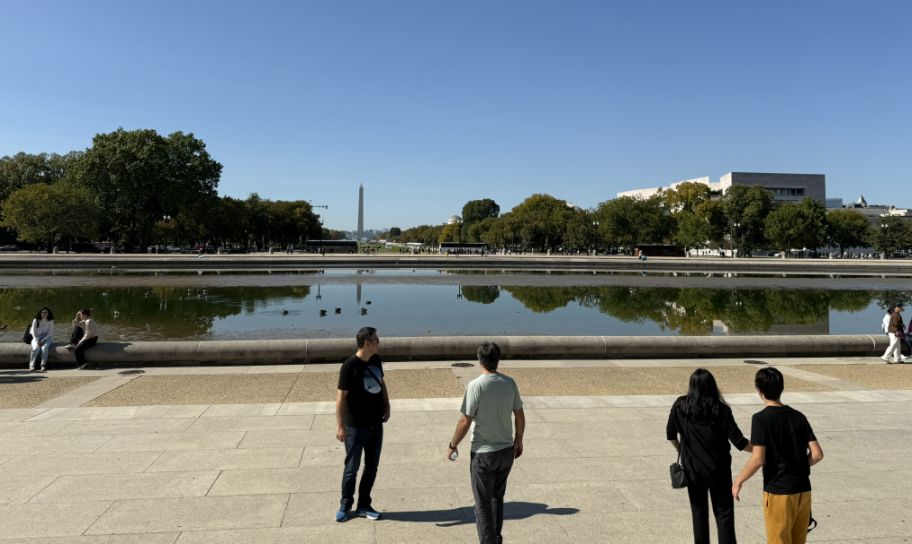
Just west of the U.S. Capitol Building, at the base of Capitol Hill is the Reflecting Pool. This rectangular pool provides a stunning reflection of the Capitol Dome, especially on clear days. It's a popular spot for photography and a peaceful area for visitors.
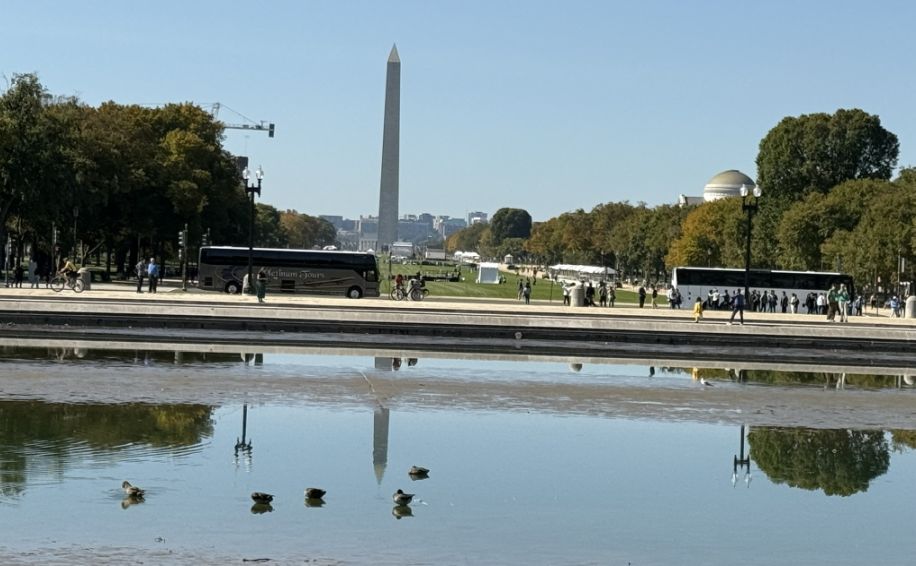
Like other parts of the National Mall, it has been the backdrop for many significant historical events and public demonstrations.
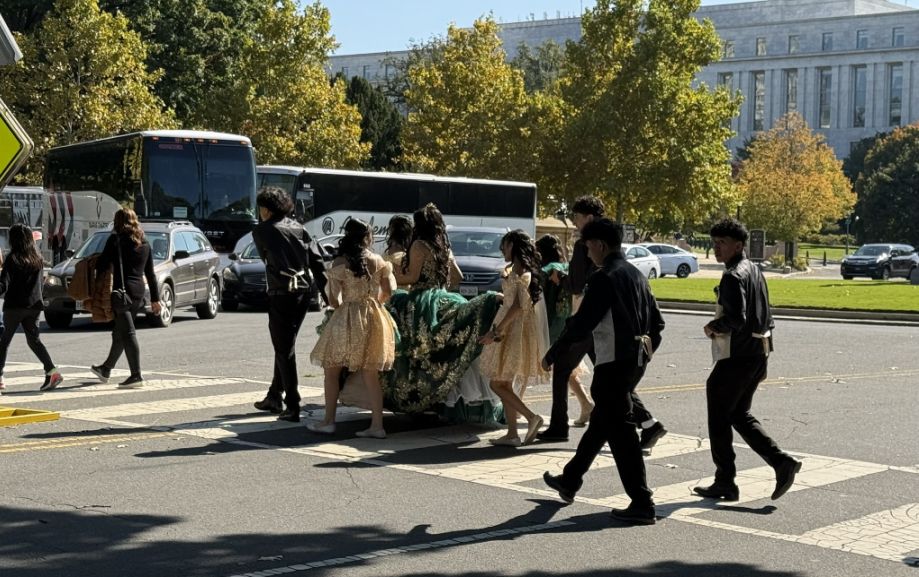
We crossed the street and encountered a group going to a quincera.
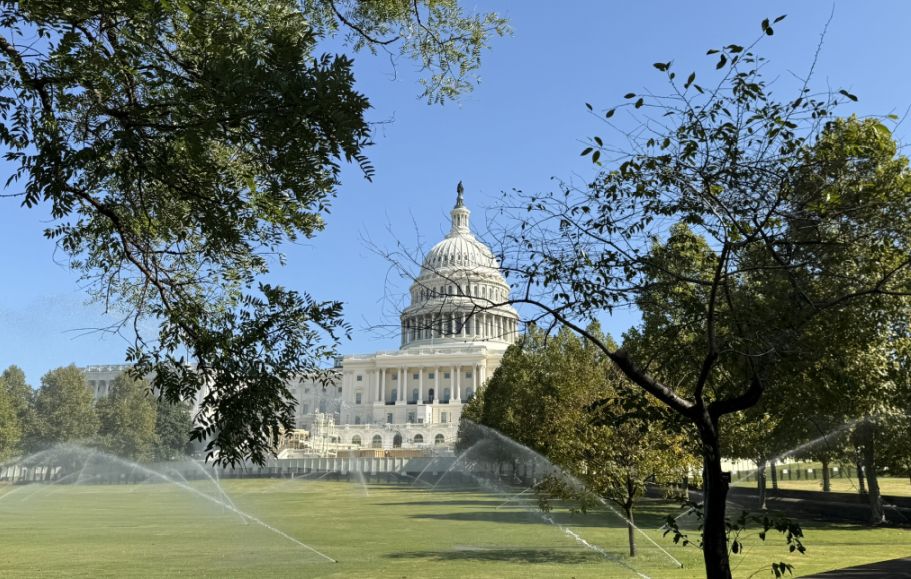
After crossing the street from the U.S. Capitol Building, we are now directly on the National Mall. This expansive green space is much more than just a "lawn"; it's arguably the most symbolically significant public park in the United States and truly the nation's civic stage. Stretching approximately two miles from the U.S. Capitol Building in the east to the Lincoln Memorial in the west, and flanked by monuments, museums, and other significant structures, it truly is a monumental urban park.
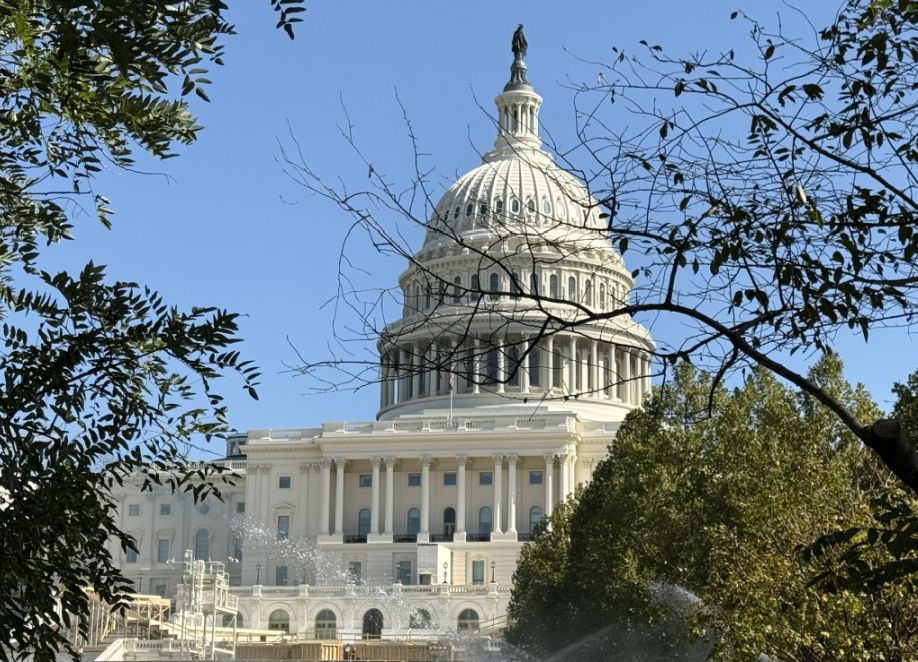
The State Capitol view from the Lawn.
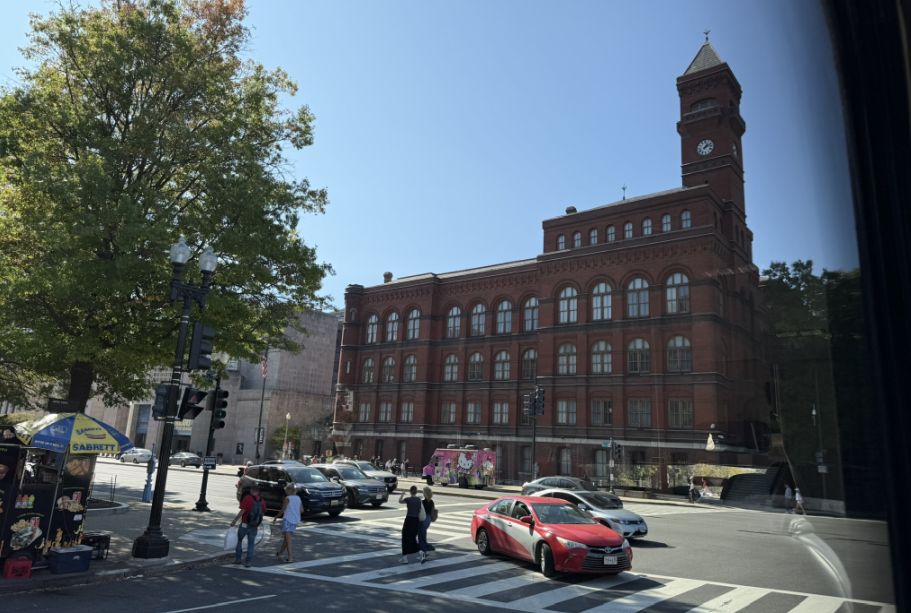
We hopped on the bus again and the brick building you see is the Holocaust Memorial Museum..
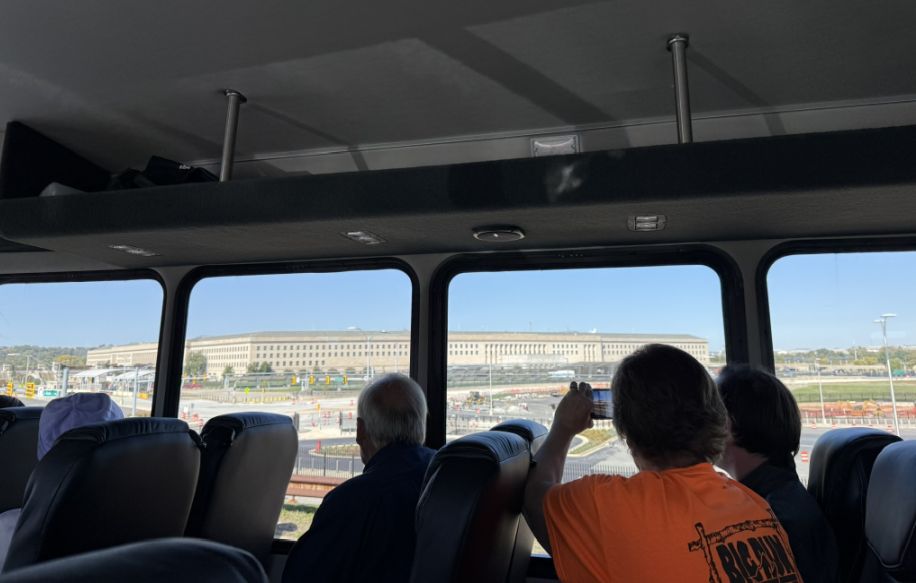
We also passed by the Pentagon on our way to see the United States Air Force Memorial
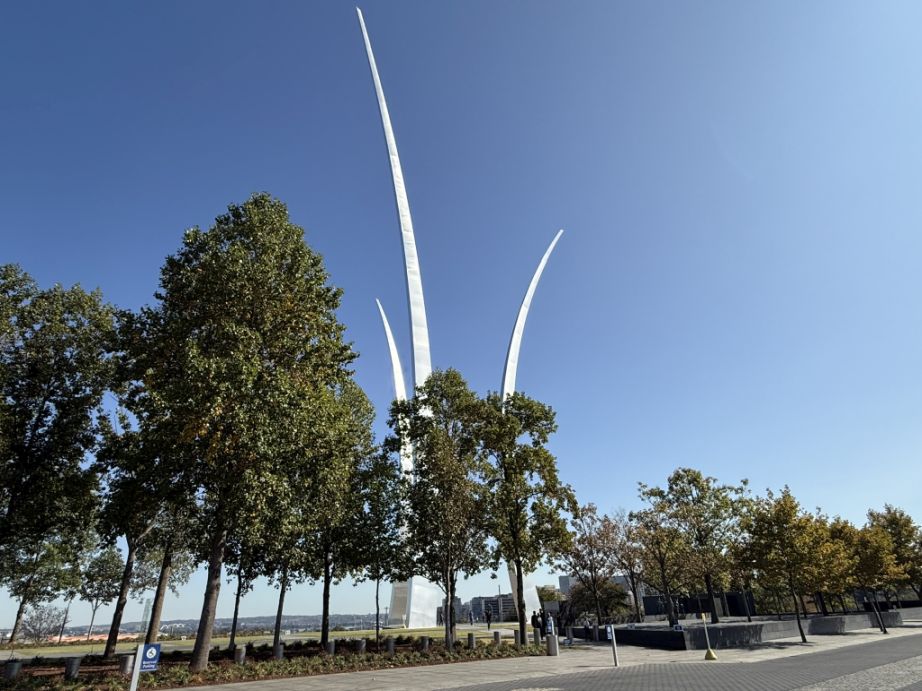
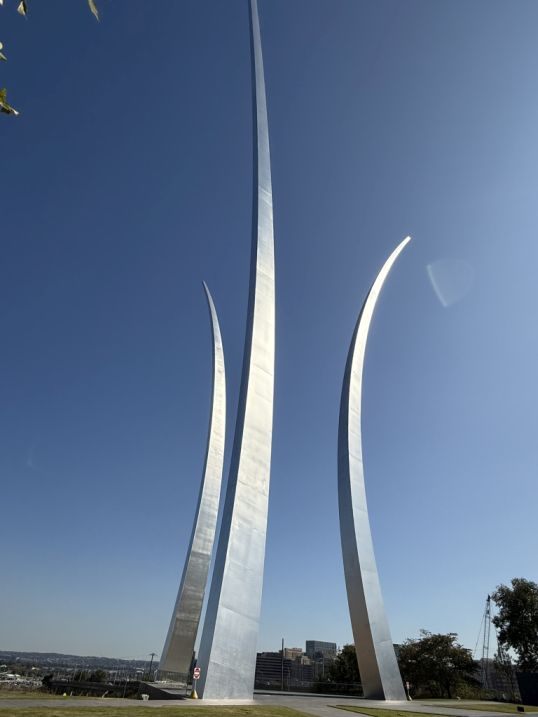
From the Parking lot the memorial suddenly rises into view: three stainless-steel spires, tall and elegant, curving upward like aircraft pulling into a vertical climb. While not on the National Mall itself, it's located in Arlington, Virginia, offering a commanding view of the Pentagon, Arlington National Cemetery, and the Washington D.C. skyline. Its elevated position adds to its majestic presence.
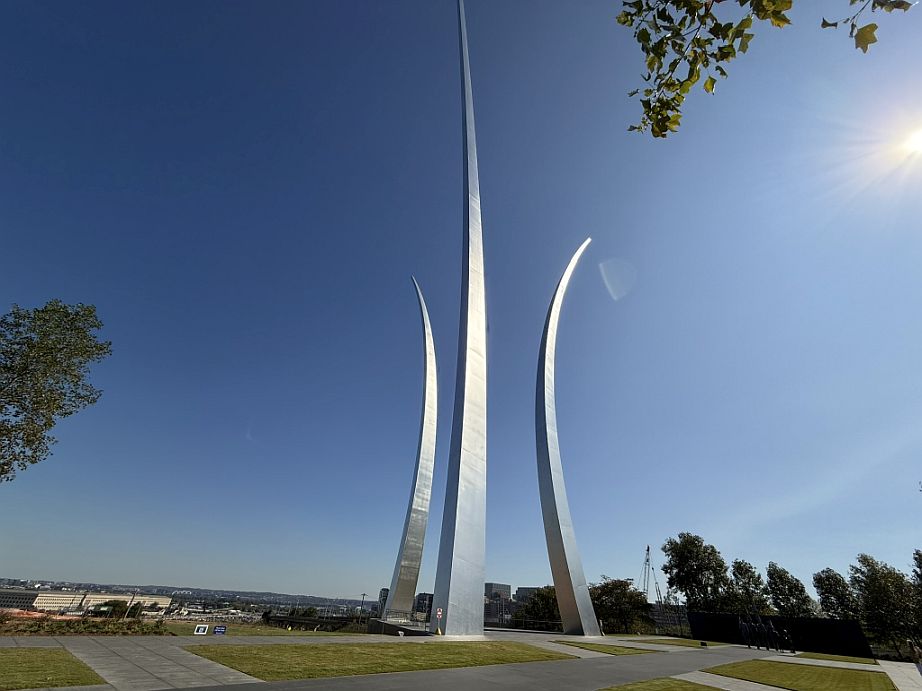
They’re meant to suggest contrails, the white vapor trails left by jets—and they give the whole place a feeling of motion, lift, and quiet power. It feels less like a statue and more like a moment frozen in flight. Dedicated in 2006, the memorial honors the service and sacrifices of the millions of men and women who have served in the U.S. Air Force and its predecessor organizations (like the Army Air Forces). It's a place for reflection and remembrance of those who have defended the nation in the air and space.
 |
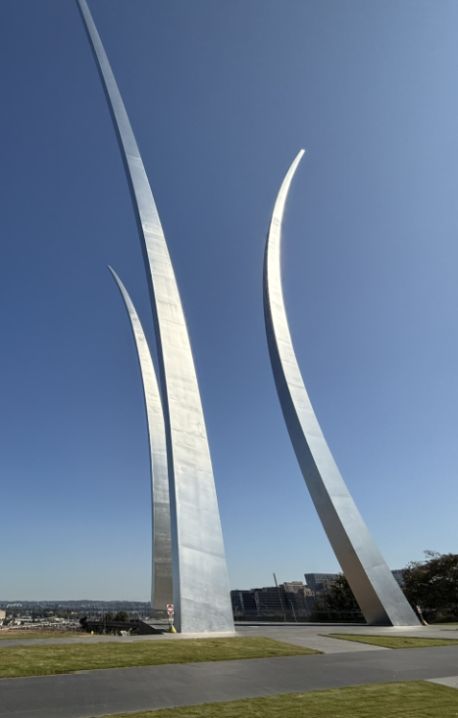 |
The most distinctive feature of the memorial is its three polished stainless steel spires, which rise from the ground at varying heights and angles. The spires reach heights of 201 feet, 210 feet, and 270 feet. Their varying heights are part of the dynamic design.
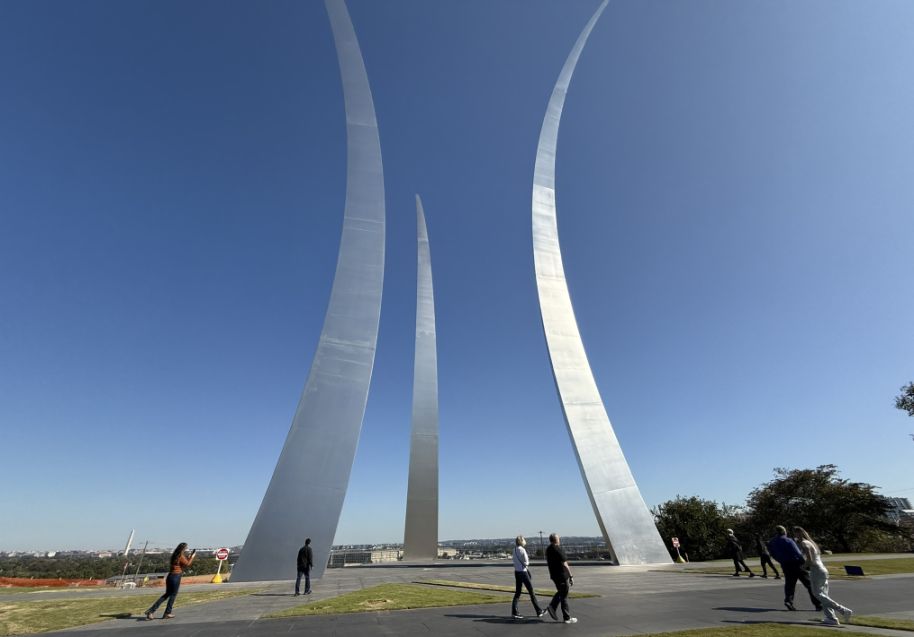
The arcs also suggest past, present, and future, honoring those who served before, those serving now, and those who will follow.
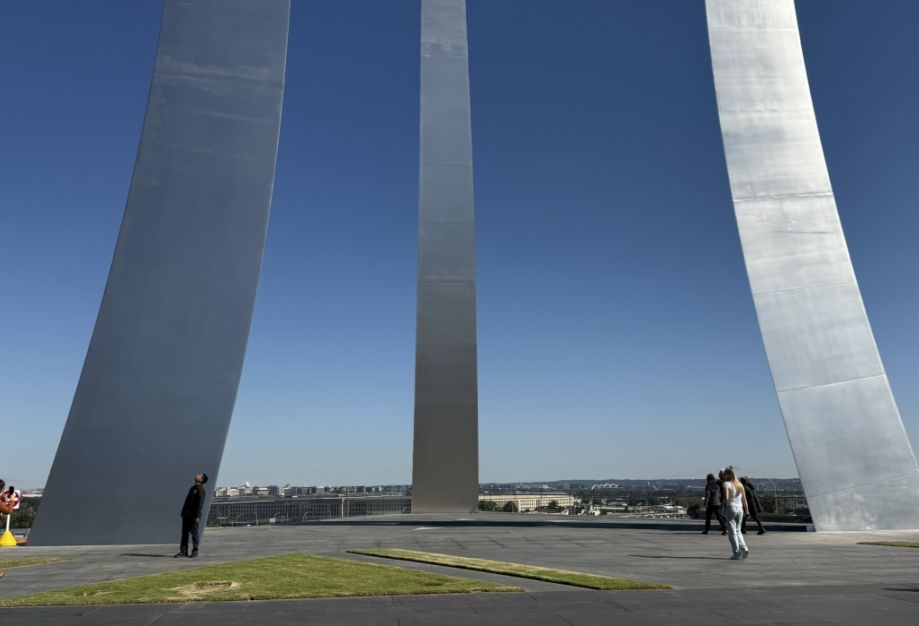
Material matters here too. The use of stainless steel gives the arcs a mirror-like quality. They catch the light, reflect the clouds, and change with the weather, bright and almost white in sun, muted and solemn under gray skies. That shifting appearance mirrors the nature of air power itself: fast, adaptive, and often unseen.
Standing beneath them, you feel small—but not in a diminishing way. The arcs don’t enclose you; they open the space, pointing upward and outward. It’s a quiet reminder of flight, freedom, and the courage of those who left the ground, often knowing they might not return.
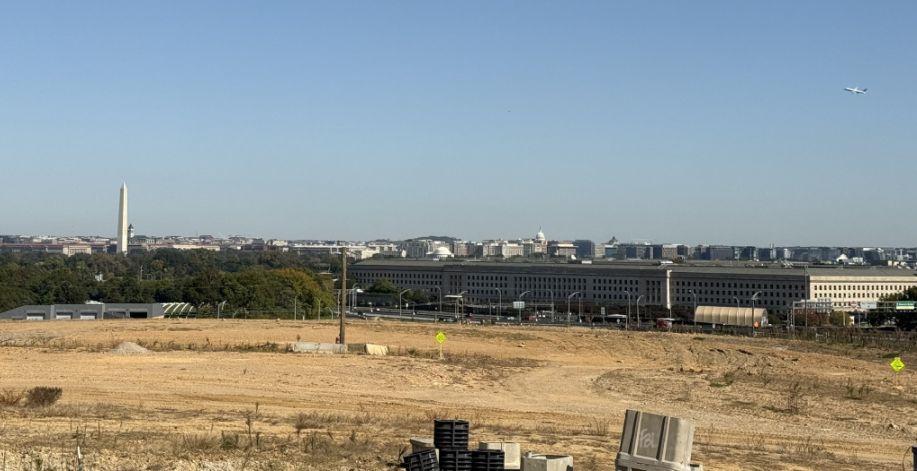
What really sets this memorial apart is the setting. From the terrace, the view opens wide across the Potomac with a view of the Lincoln Memorial, the Washington Monument, the U.S. capitol far in the distance.
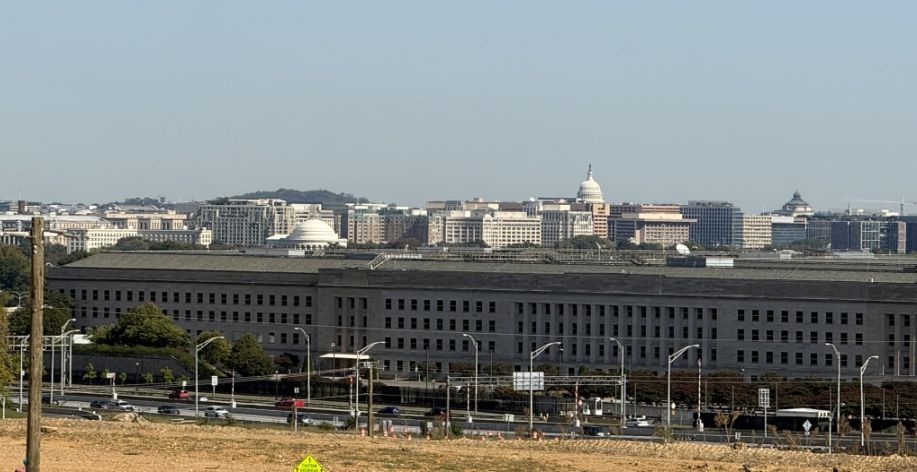
The row of gray buildings you see below the Air Force Memorial, particularly the very large, unmistakable one, is the Pentagon. It has a direct and tragic history connected to the terrorist attacks. On September 11, 2001, just over an hour after the World Trade Center towers were struck in New York City, American Airlines Flight 77, hijacked by five al-Qaeda terrorists, crashed into the western side of the Pentagon. The plane struck the building at 9:37 AM EDT, flying so low that its wings clipped lamp posts and a generator before impact. The force of the crash caused a section of the Pentagon's outer ring to collapse. The attack resulted in the deaths of all 64 people on board Flight 77 (including the 5 hijackers) and 125 people in the Pentagon building.
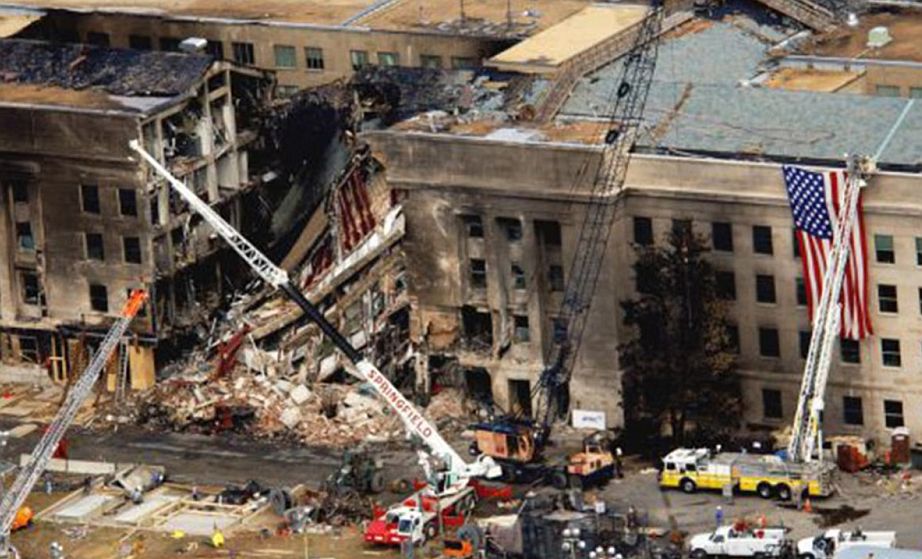
This was the damage of the Pentagon during the 9/11 terrorist attacks.
The affected section of the Pentagon, known as "Wedge 1," had recently undergone renovations, which ironically may have saved lives by strengthening the structure and making less of it occupied. The immediate response and recovery efforts were immense, and the damaged section was subsequently rebuilt and reoccupied within a year, a testament to the resilience of the American spirit.
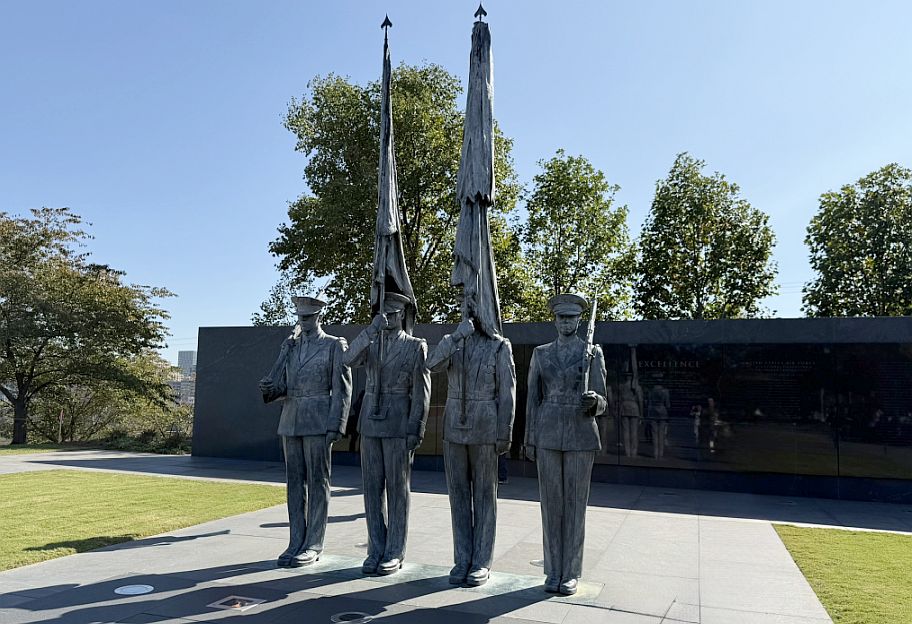
The sculpture shows four life-sized Air Force personnel standing together. Two of them are flag bearers, one carrying the U.S. flag and the other holding the U.S. Air Force ceremonial flag. The other two are depicted as weapons bearers, completing the traditional formation you’d see with an honor guard
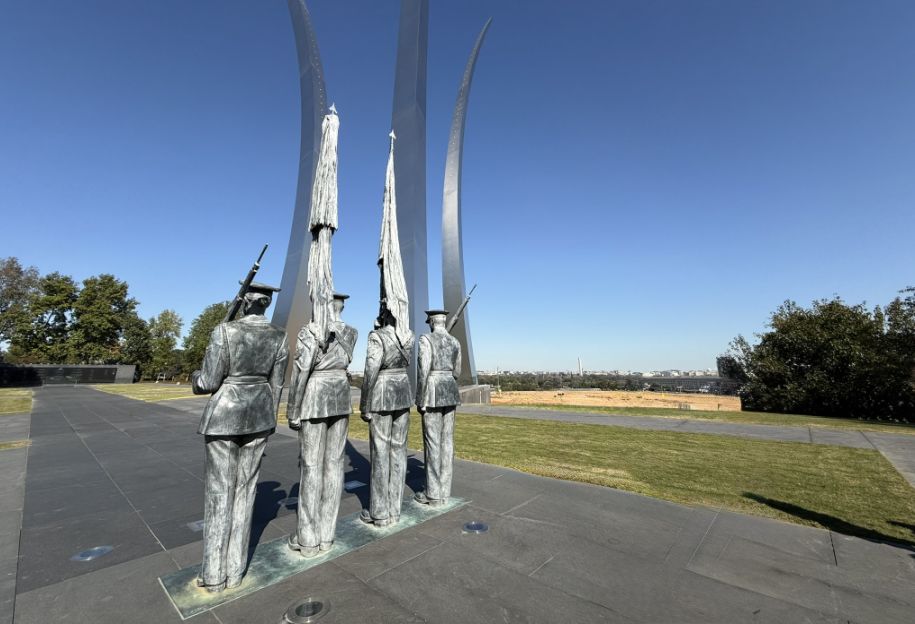
This group adds a human element to the memorial. The massive steel spires symbolize the Air Force’s reach into the skies, while the Honor Guard sculpture represents the real people who serve, their discipline, diversity, and shared commitment. The sculptor, Zenos Frudakis, designed them so that each figure has distinct features, making them feel like individuals, not just symbols
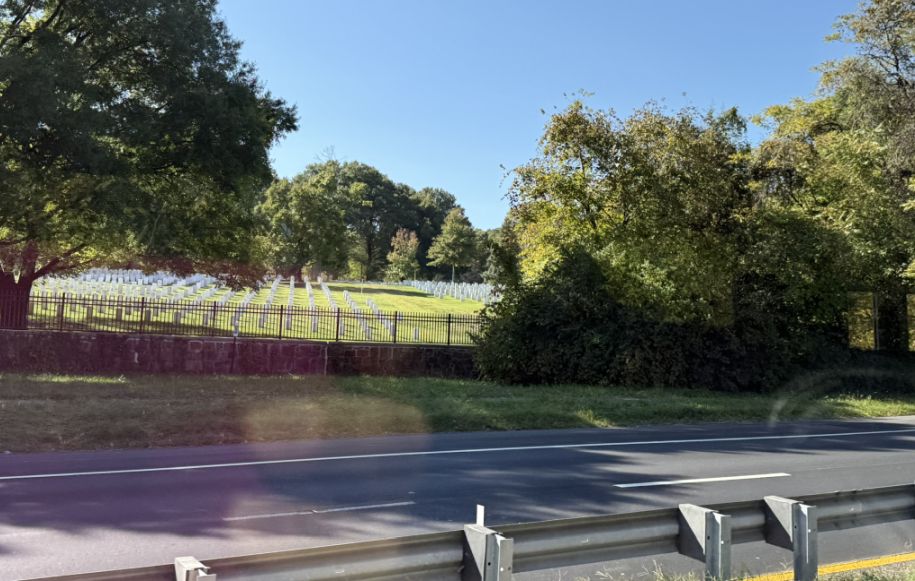
As the bus passed Arlington National Cemetery, we were moving alongside one of the most sacred landscapes in the United States. The cemetery was established during the Civil War, in 1864, on land that once belonged to Robert E. Lee’s family. The idea was deliberate and symbolic: the Union buried its dead here so the property could never again serve as a Confederate home.
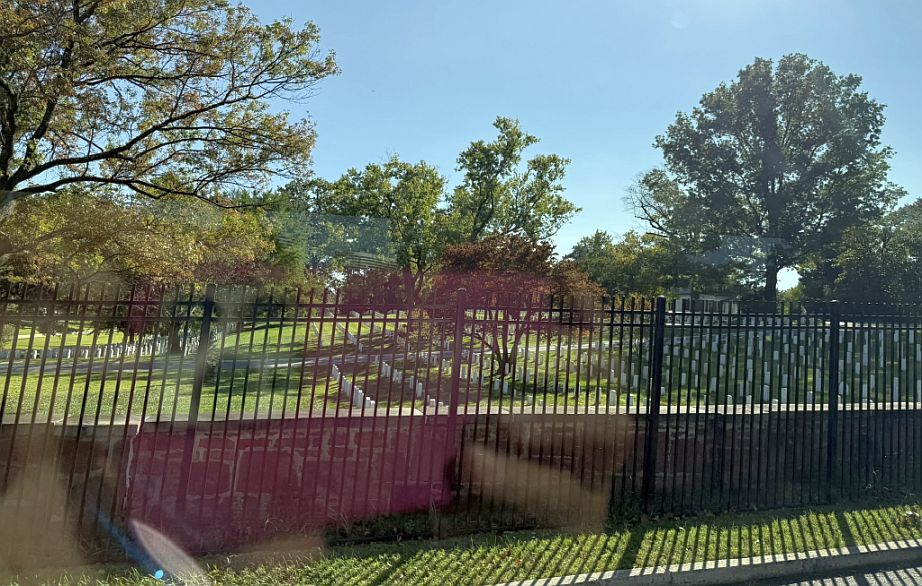
Today, Arlington is the final resting place for over 400,000 service members, veterans, and their families from the Civil War to the most recent conflicts. The endless rows of white marble headstones, aligned with near-perfect precision, stretch across rolling hills. Each one marks an individual life, rank doesn’t change the size of the stone, a quiet statement that in death, service is equal.
 |
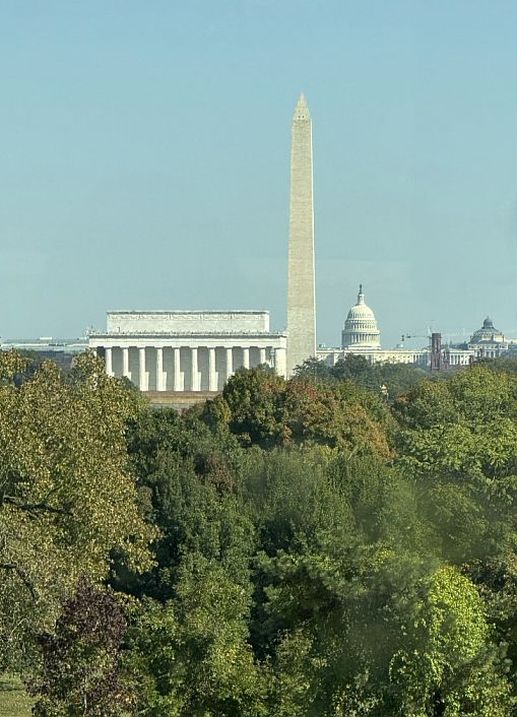 |
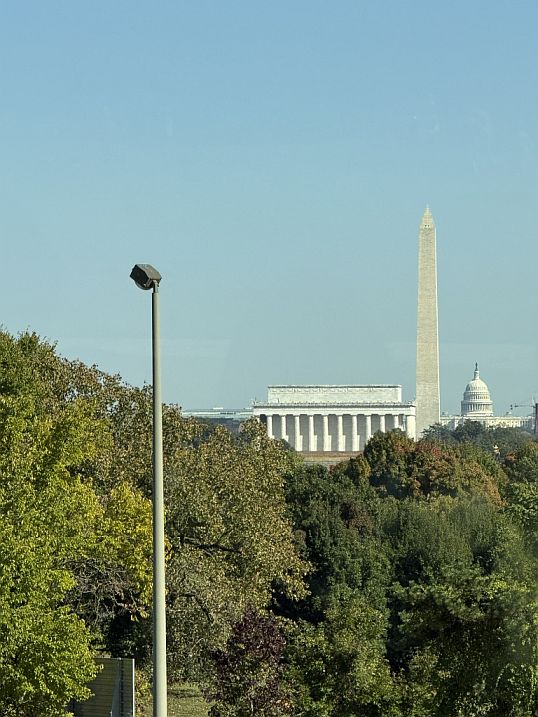
Before entering the U.S. Marine Corps War Memorial, the bus dropped us off and from a spot that offers one of the most iconic panoramic views of Washington D.C.'s monumental core: the Lincoln Memorial, the Washington Monument, and the U.S. State Capital next to each other.
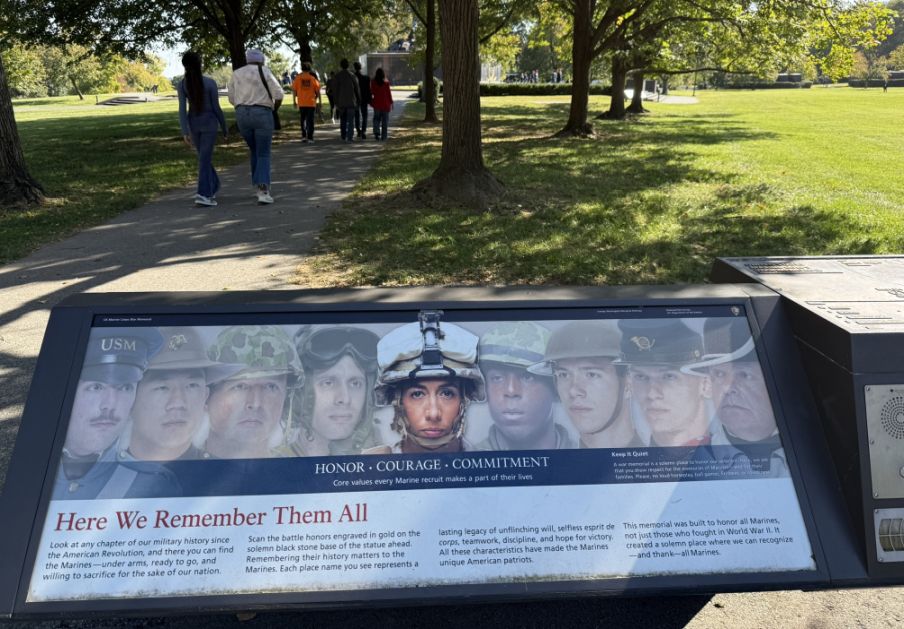
We are now at one of the most powerful and emotive memorials in the United States, the U.S. Marine Corps War Memorial, more commonly known as the Iwo Jima Memorial. The sign "Here we remember them all" perfectly encapsulates its purpose. Located on Arlington Ridge in Arlington, Virginia, adjacent to Arlington National Cemetery. Its elevated position provides that commanding view of Washington D.C.'s monuments.
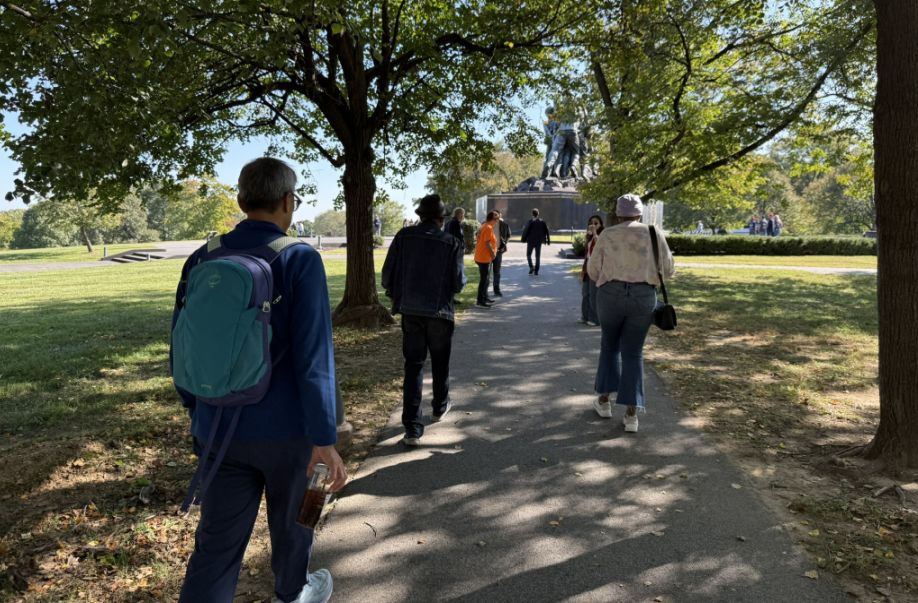
The pathway surrounded by trees, builds anticipation as you approach the central sculpture. This deliberate design creates a sense of solemnity and reverence, preparing visitors for the powerful scene ahead. The trees might also serve to partially obscure the view until you are closer, making the reveal of the sculpture more impactful.
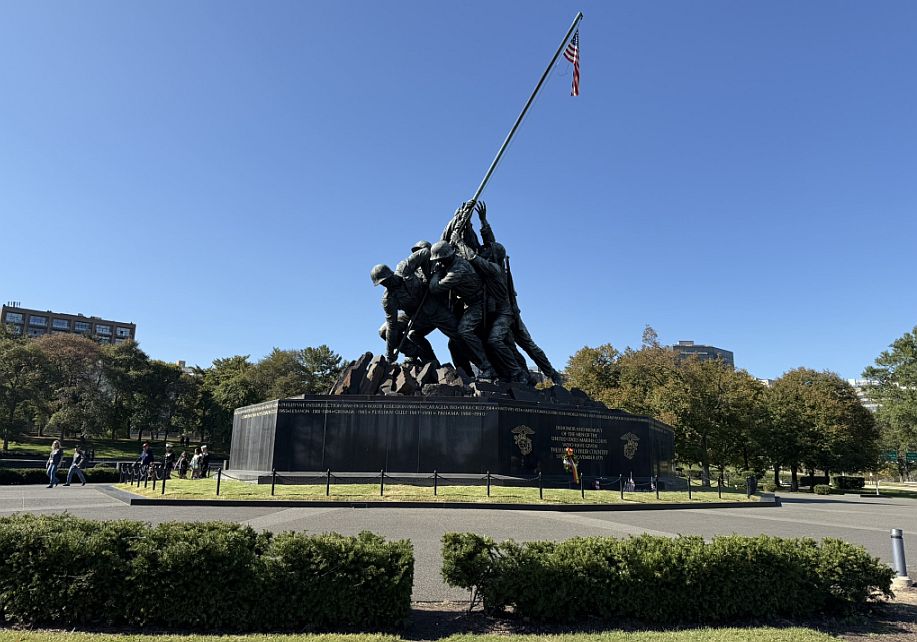
And then the iconic Sculpture: Raising the Flag on Iwo Jima. Felix de Weldon, who was so moved by Rosenthal's photograph that he created a preliminary model in clay over a single weekend. This bronze sculpture is colossal. The figures are 32 feet tall, and the flagpole itself is 60 feet long. It weighs approximately 100 tons.
The memorial is dedicated to all U.S. Marine Corps personnel who have died in the defense of the United States since 1775. It is, however, most famously associated with the Battle of Iwo Jima.
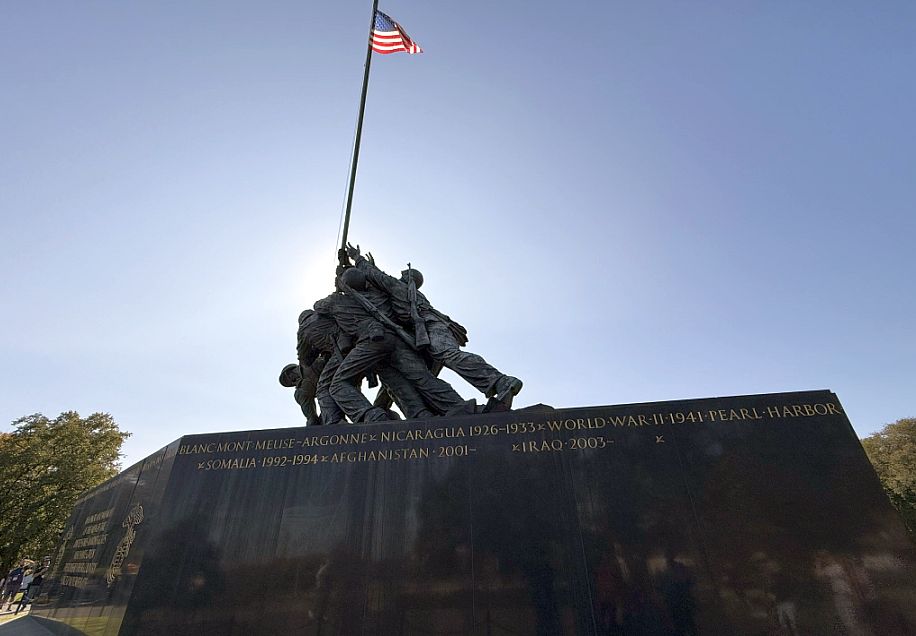
It depicts six U.S. Marines (five Marines and one Navy corpsman) struggling together to raise the American flag atop Mount Suribachi during the brutal Battle of Iwo Jima. The figures are meticulously detailed, capturing the strain, effort, and unity required in that moment.
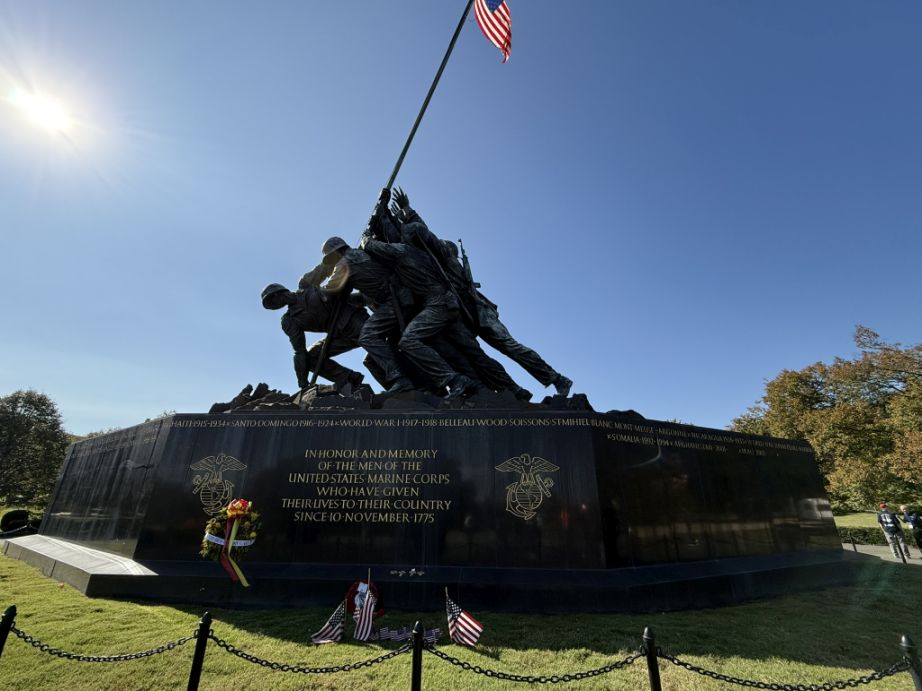
Three of the men depicted in the photo (Harlon Block, Franklin Sousley, and Michael Strank) died in combat on Iwo Jima. The others (John Bradley, Rene Gagnon, and Ira Hayes) survived the battle. The sculpture accurately portrays these individuals.
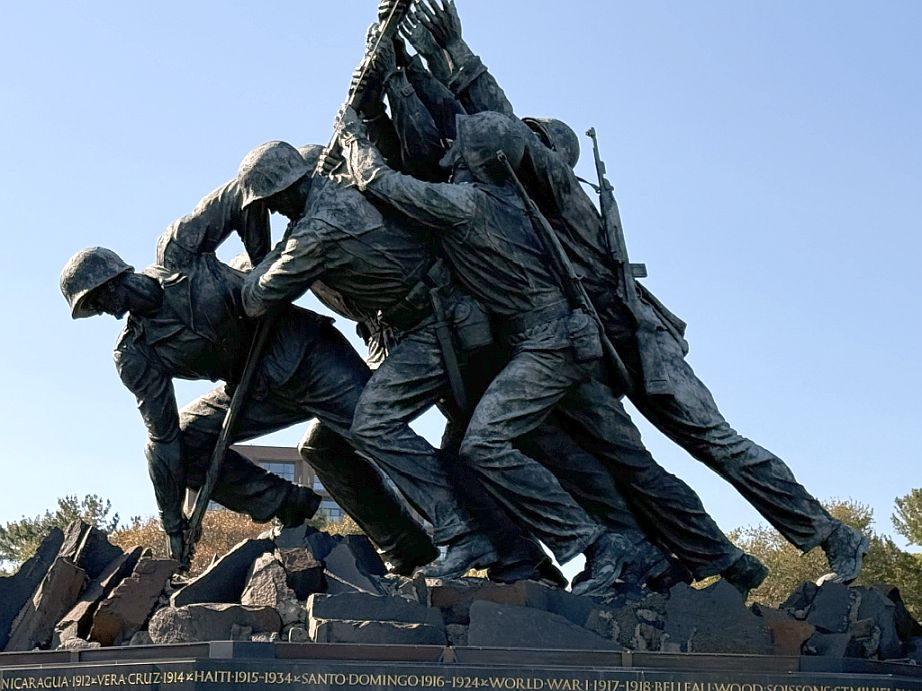
Around the base of the sculpture, inscribed in gold, are the dates and locations of every Marine Corps battle and engagement since its founding. On the granite base, there is also the famous quote by Fleet Admiral Chester W. Nimitz: "Uncommon Valor Was a Common Virtue."
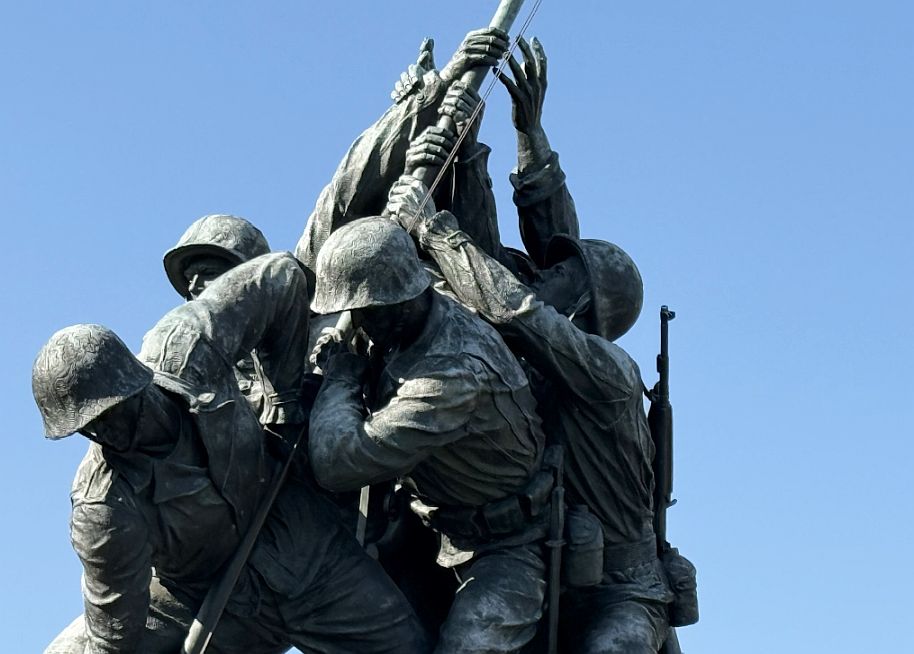
The sculpture is a powerful testament to the teamwork, courage, and immense sacrifice of the Marines and all service members. It shows individuals working together for a common, vital cause. While the flag-raising didn't mean the end of the battle (fighting continued for weeks), it became a symbol of eventual victory and the unyielding spirit of the American forces.
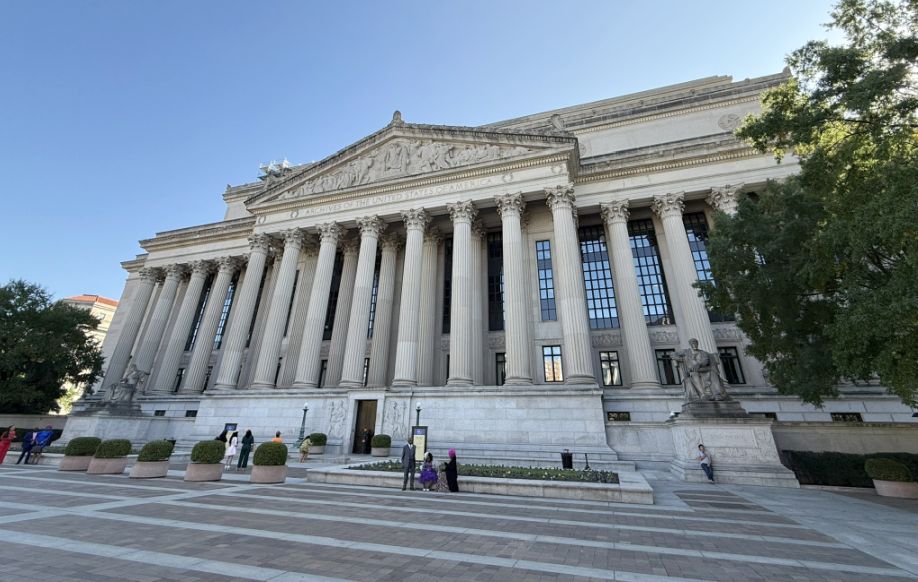
It felt fitting that the tour ended where it began back at the National Archives, like closing a full circle through the country’s memory.
Over six hours, the tour unfolded as a moving journey through American history, ideals, and sacrifice. From the grand openness of the National Mall to the solemn power of the U.S. Capitol, each stop revealed a different chapter of the nation’s story. We passed memorials that honor leadership and conscience, Lincoln, FDR, Martin Luther King Jr., and others that speak quietly but deeply of service and loss, like the World War II Memorial and the reflective spaces along the Mall. Crossing into Virginia, the mood shifted again at the U.S. Air Force Memorial, where the soaring steel arcs lifted your eyes skyward, and then along Arlington National Cemetery, where endless white headstones reminded you of the cost behind the ideals.
The tour reached a powerful emotional peak at the U.S. Marine Corps War Memorial, where the iconic Iwo Jima statue stood alone in an open field, strength, teamwork, and sacrifice frozen in bronze. And then, almost gently, the day brought you back to the Archives, home of the founding documents, grounding everything you had seen in the words and principles that started it all.
What made the tour special wasn’t just how much we saw, but how thoughtfully it was woven together. Historic buildings, memorials, and landscapes flowed from one to the next, turning a busy city into a living timeline. By the end, it didn’t feel like sightseeing, it felt like understanding, and that’s why it stayed with us.
NEXT... Day 2- Dinner at Jaleo